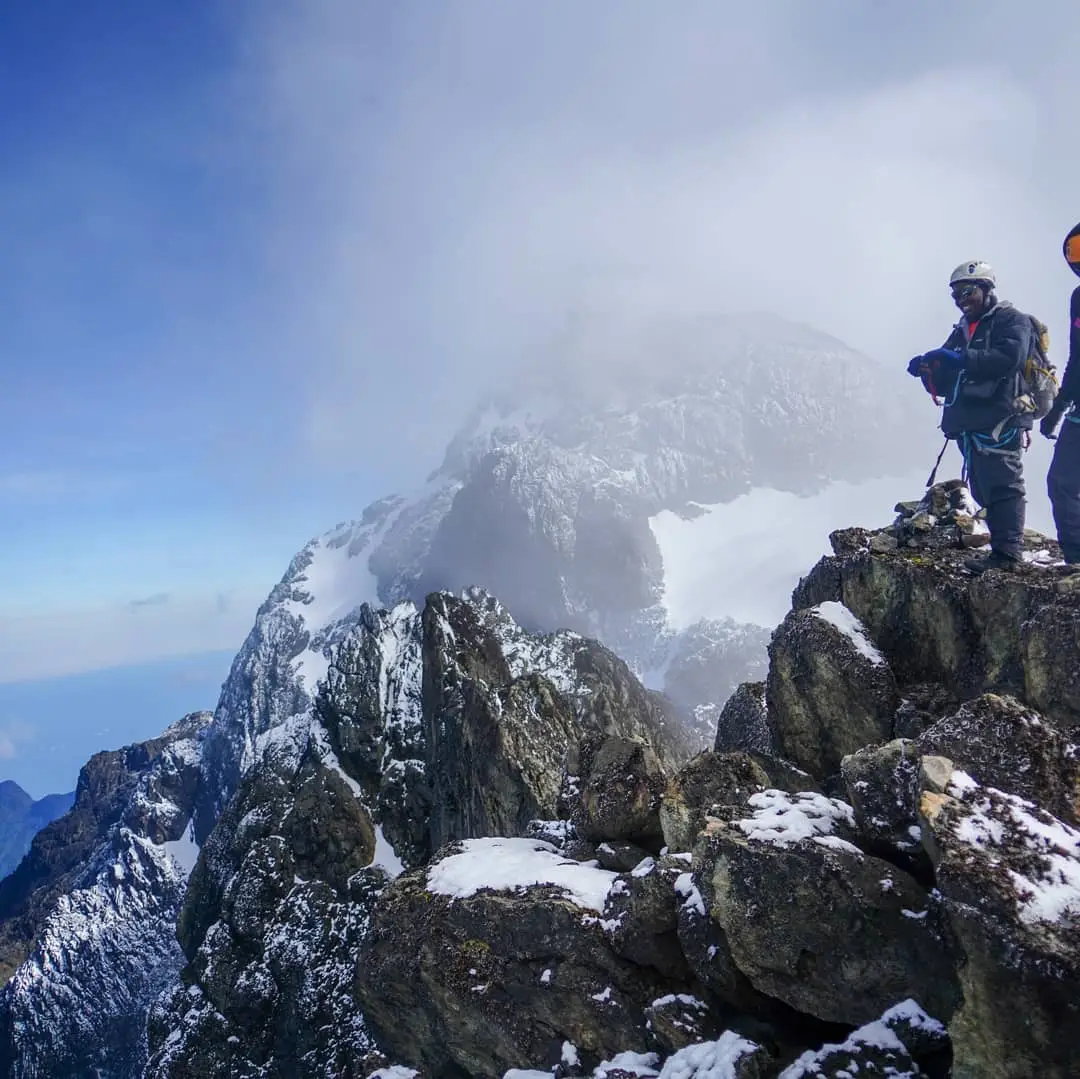

Can you trek the Rwenzori Mountains alone? Unguided treks are banned, but solo travellers can join groups or book private guided treks. Rules and costs.
Somewhere on your screen there is probably a map of western Uganda, a trail line curling up through the deep green of Rwenzori Mountains National Park, and a question you have been turning over for days: could I just do this myself? No tour group, no timetable, nobody else’s pace to match. Just you, a pack, and the legendary Mountains of the Moon. It is a natural instinct in anyone who has hiked the Alps unsupported, walked a long-distance trail alone, or trekked the teahouse routes of Nepal without a guide, and it is a question that reaches us in one form or another almost every week.
I will give you the honest answer now, before you spend an hour reading, because you deserve it. You cannot trek the Rwenzori Mountains alone in the sense of walking into the park without a licensed guide. Uganda Wildlife Authority rules forbid it, the trailheads enforce it, and having guided these mountains for many years I can tell you that the terrain would make it a poor idea even if the rule did not exist. But you can absolutely travel to the Rwenzori alone. A single traveller with no partner, no friends and no group can book a guided trek, join a small party of other trekkers, or take a private team all to themselves, and walk all the way to the glaciers of Margherita Peak on the same terms as everyone else.
This guide explains both halves of that answer in full: exactly what the rules say and why they exist, what “alone” actually looks like on a Rwenzori trek, how solo travellers book, what it costs, which routes suit someone travelling without a companion, and how to prepare. If you are seriously planning a solo trip to one of Africa’s last true wilderness ranges, this is everything you need to make the decision with confidence.
| THE SHORT ANSWER
No, you cannot trek the Rwenzori Mountains unaccompanied. Uganda Wildlife Authority regulations require every trekker inside Rwenzori Mountains National Park to be accompanied by a registered, licensed guide at all times, and there is no independent or self-guided permit. Yes, you can trek as a solo traveller: you can join a scheduled group departure, book a private guided trek for one person, or form a small party. Solo travellers are welcome on every Rwenzori route, from a two-day forest walk to the full summit expedition. |
Two Different Questions Hiding Inside “Alone”
When someone types “Can I trek the Rwenzori Mountains alone?” into a search engine they usually mean one of two quite different things, and the answers to them point in opposite directions. Untangling them is the fastest way to plan properly.
Can I trek without a guide?
The first meaning is about independence: can I walk these trails on my own responsibility, the way I might on a national trail at home? The answer is no. Inside Rwenzori Mountains National Park the guide is not an optional extra or an upsell; the requirement is written into how the park is managed and how entry is processed. The park’s own regulations are covered in detail in our guide to whether guides are mandatory for Rwenzori trekking, and the same message appears whichever operator you speak to, because it does not originate with any operator.
Can I go as a solo traveller?
The second meaning is about companionship: I have nobody to come with, so can I book a Rwenzori trek as a single person? The answer here is a clear yes, and it is far more common than most people expect. Trekkers arrive in Uganda alone regularly, some because their friends could not take the leave, some because they prefer to travel on their own terms, and some because a mountain like this is exactly the kind of challenge they want to meet by themselves. One recent trekker who reviewed our four-day Mutinda Lookout trek describes exactly this: arriving solo and being folded into a welcoming group of six. You travel alone, but you are never unsupported, and, as we will see, you are rarely lonely either.
Why You Cannot Trek the Rwenzori Unaccompanied
What the park rules actually say
Rwenzori Mountains National Park is administered by the Uganda Wildlife Authority, and its regulations require every trekking party to be accompanied by a registered, licensed guide from the moment it enters the park. There is no permit category for independent trekkers, no waiver you can sign, and no exemption for experience. The rule applies equally to a first-time hiker and to someone with a long alpine record, and it applies to every route in the park, from a one-day walk to Nyabitaba to a multi-week expedition across all the massifs. Our companion piece on what Rwenzori Mountains National Park is and how it is managed explains the wider protected-area framework, including the park’s status as a UNESCO World Heritage Site.
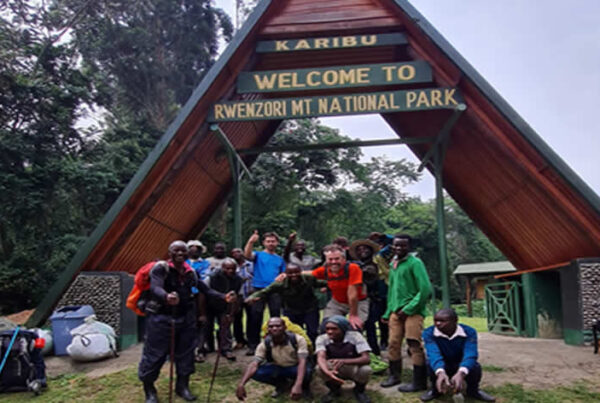
The enforcement is practical rather than theoretical. On the Central Circuit Trail, registration and briefing take place at Nyakalengija, where Rwenzori Mountaineering Services operates the trailhead compound alongside the UWA park office. The Kilembe Trail is managed under a separate concession by Rwenzori Trekking Services, and nobody can walk that route without going through it. The Bukulungu Trail, the wilderness route developed by UWA and WWF in 2018, is guided in the same way. At each gate a ranger checks that your party is registered and accompanied, and further checks happen at posts along the route. If you want to see how that process unfolds from the traveller’s side, our walkthrough of what happens at Nyakalengija on registration day covers it step by step, and our guide to UWA permit booking explains why the booking always runs through a licensed operator rather than a public online portal.
Why the rule is about more than paperwork
I have heard the argument that the guide requirement is simply a way of keeping tourism revenue in local hands. It does support the Bakonzo communities whose families have worked these slopes for generations, and that matters.
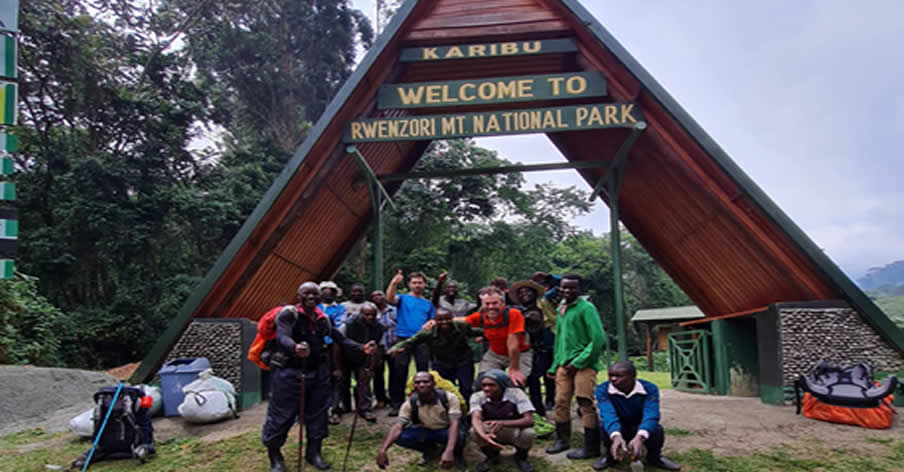
But if the regulation vanished tomorrow I would still tell every trekker I care about to walk with a guide, because the Rwenzori is not a mountain that forgives improvisation.
Start with the ground itself. The Rwenzori is among the wettest mountain ranges in Africa, and the lower and middle trails are a continuous negotiation with mud, roots, and saturated moss. Each step needs attention, and the famous Bigo Bog is crossed on long wooden boardwalks laid over swampy valley floor that a stranger would struggle to read in poor light. Trails fork and cross old, misleading tracks; the vegetation zones change faster than most trekkers expect; and cloud can drop in minutes so that the path ahead disappears at ten paces. Rivers that are ankle-deep in the morning can swell after afternoon rain. Route-finding here is not a matter of following a marked footpath; it is local knowledge accumulated over many seasons, and it is the reason our guides are trusted in conditions in which a map alone would not be enough.
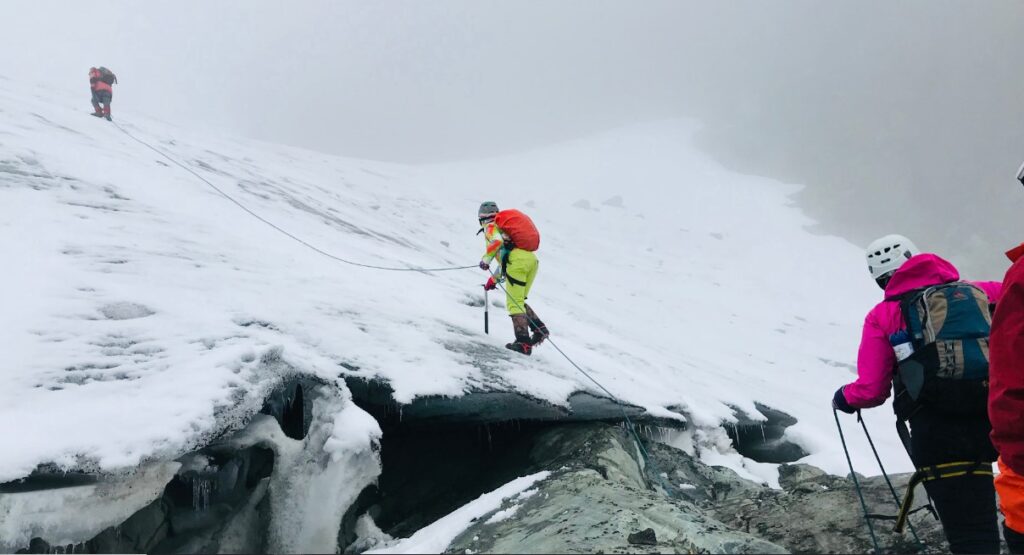
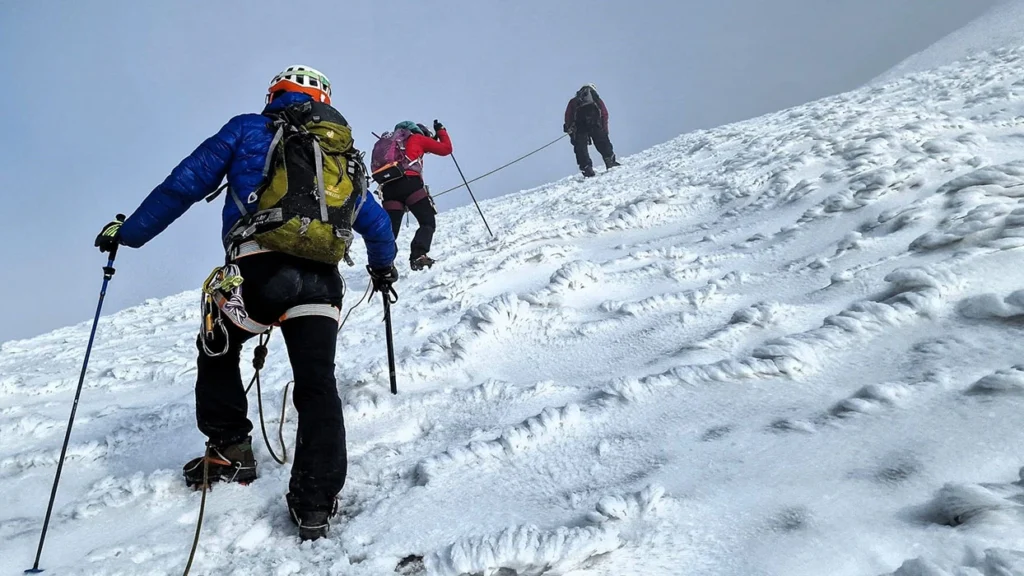
Then comes the altitude. Elena Hut, the high camp beneath the Stanley glaciers, sits at 4,541 metres, and above about 4,800 metres the ascent to Margherita becomes genuinely technical, with a glacier crossing, fixed ropes on steep icy rock, crampons, an ice axe and a harness. Our guides fit and check that equipment, teach the technique the evening before, and manage the rope teams; our detailed breakdown of how technical the climb to Margherita Peak really is and our Rwenzori glacier crossing guide show what that involves. This is not something a person can safely improvise alone, and it is certainly not something to attempt without anyone who can call for help.
The subtler danger of solo travel at altitude is that altitude sickness impairs the very judgement you would need to notice it. A headache, nausea, poor sleep and unusual fatigue can be dismissed as the ordinary hardship of a wet mountain, and by the time confusion or unsteadiness is obvious the person experiencing it is usually the last to agree that something is wrong. On our treks the guides watch every trekker daily and enforce a descent when symptoms worsen. Our acclimatization guide and the full medical guide to trekking the Rwenzori explain how that monitoring works, and it is a safeguard that simply does not exist when you are alone.
Finally, consider how remote the mountain is. There are no roads inside the park, no huts you can reach by vehicle, and no rescue service standing by. The range receives only about a thousand to fifteen hundred trekkers a year across all routes, which is precisely why it feels so wild, but it also means that on many days you will not meet another party between one camp and the next. A twisted ankle at 3,500 metres in cold rain is an inconvenience with a team around you and a genuine emergency without one. Ground evacuation is the primary way of getting an injured trekker off this mountain, and our guide to what happens if you get injured or sick on the Rwenzori sets out how the porter and guide teams handle it. It is a serious undertaking even for a trained crew.
The loopholes trekkers ask about, and why they do not work
Because the question comes up so often, it is worth answering the common workarounds directly. Hiring a porter and skipping the guide does not change the requirement; the regulation is about a registered guide, and porters are a separate role, which is explained in our guide to how many porters you need on the Rwenzori. Wild camping outside the huts and designated campsites is not an alternative either, since it still takes place inside the park and still needs registration. Choosing a cheaper operator with looser standards will not help, because no legitimate operator can waive a park rule, and any offer that suggests otherwise should make you question the legality of the whole operation, a point our budget trekking guide makes forcefully. Being an experienced mountaineer does not exempt you either; experienced trekkers generally do very well on the Rwenzori, but they do it accompanied like everyone else.
Some travellers also ask about the Congolese side of the range, since the summit platform of Margherita sits directly on the Uganda-DRC border. The standard approach, and the only one we operate or recommend, is from Uganda. The Congolese flank lies in a part of eastern Congo where most governments’ travel advisories warn against travel, and it offers nothing like the established, supervised trekking infrastructure found on the Ugandan routes. Walking in the farmland and villages below the park gate is a different matter and is pleasant in its own right, but the moment you pass the gate you are inside the national park, and the guide requirement begins.
What “Solo” Really Looks Like on a Rwenzori Trek
The team that walks with you
The word “guided” can make people imagine a leader marching ahead with a flag and a group trailing behind. A Rwenzori expedition is nothing like that. Every trek is supported by a small mobile team of professionals: a lead guide who handles navigation, hazard assessment, river crossings, glacier safety and the daily health checks; assistant guides on larger or technical itineraries; porters who carry your kit, the communal cooking equipment and the food; and a cook who turns out remarkably good hot meals in a mountain hut kitchen. Porter loads are capped at 25 kilograms and checked at the trailhead. Our guide to Rwenzori porters and guides explains how the team is structured, and our account of a day in the life of a Rwenzori porter is worth reading if you want to understand the people you will be spending a week with.
By the second or third day most trekkers describe the team as less like hired staff and more like companions whose competence they trust completely. That is the real answer to the worry that a guided trek means giving up the feeling of a personal journey. On the Rwenzori the guiding is the reason the journey is possible. You still choose your route, your pace of thought, your moments of quiet at the Kitandara Lakes or on the Stanley Plateau; the team simply makes sure you get to them safely.
Finding solitude anyway
Travellers who dream of walking alone are usually seeking one specific thing: solitude, the sense of having a wild landscape to yourself. The Rwenzori delivers that better than almost any other African mountain, guide requirement included. Because so few people trek here, the trails are quiet, the huts are rarely crowded, and even on the busiest routes in the driest months you may see only a handful of other parties. Our analysis of how many people hike the Rwenzori each year puts that in perspective against Kilimanjaro. Guides are also perceptive people; if you tell yours that you would like to walk quietly for an hour at the back of the line, or take a moment alone at a viewpoint, that is an easy request to accommodate, and the mountain provides the rest.
For those who want the deepest sense of remoteness, a private booking on the Kilembe Trail or a route such as the wilderness-style Bukulungu Trail, which sees only a few dozen visitors a year, offers the greatest space. If, on the other hand, you are travelling alone precisely because you would like some company on the hard days, a group departure will provide it. Many trekkers find that the pre-dawn summit push at altitude, when motivation can waver in the cold, goes better with other people moving through the same fatigue beside them.
How a Solo Traveller Can Book a Rwenzori Trek
There are three practical routes to the mountain for someone without a ready-made party. Each has different implications for price, pace and atmosphere, and the right choice depends on what you value most. Our in-depth comparison of a group versus a private Rwenzori trek covers the trade-offs at length; here is how they apply to a single traveller.
Join a scheduled group departure
This is usually the most economical choice for a solo traveller. Solo travellers or pairs who would prefer not to trek with only a guide team can ask us to place them on an upcoming scheduled group departure, sharing the guide, the porter team, the hut accommodation and the daily itinerary with other trekkers who booked independently. Group departures commonly range from about four to eight people, and the cost of the fixed elements of the expedition is divided among everyone, which brings the per-person price down. The trade-offs are that you work around fixed start dates and that the overall pace settles around the collective group rather than around you, which many people, and especially first-time high-altitude trekkers, find reassuring rather than restrictive.
Book a private trek for one
If your dates are fixed, if you want to set your own pace, or if you simply prefer your own company, you can book a private trek in which the guide and porter team belongs to you alone. It is worth being clear about the terminology, because on this mountain a private trek does not mean trekking alone in the unaccompanied sense; it means the team is dedicated to you. You keep full control over stops, rest days and pacing, and you get the highest ratio of guide attention, which is especially valuable on the technical glacier section. The cost is that you carry the full fixed cost of the team yourself, so the per-person price is higher.
Form a small party
A third option is to bring one or two companions, whether friends, colleagues or family members, and book as a small custom group. Group discounts formally apply to parties of three or more, and every additional person lowers the cost per head, so a solo traveller who can recruit even one or two companions often finds that the economics improve considerably. The same principle applies to team events; our article on corporate and team-building treks shows how it scales for larger groups.
| Format | Who you trek with | Cost per person | Best for |
| Scheduled group departure | Other trekkers who booked independently, typically four to eight people | Lowest, because fixed costs are shared | Sociable solo travellers with flexible dates |
| Private trek for one | A guide and porter team dedicated to you alone | Highest, because you carry the full fixed cost | Fixed dates, personal pacing, maximum solitude |
| Small custom party | Friends, family or colleagues you bring, with group pricing from three people | Falls with each additional person | Solo travellers who can recruit companions |
Whichever option you choose, tell us at the outset that you are travelling alone. It helps us find the most suitable departure, quote accurately, and think through practical points such as who you will be sharing a hut with. You can start that conversation directly through our contact page or by messaging a guide on WhatsApp, and the booking guide covering what is included explains exactly what the price covers in each case.
What a Solo Rwenzori Trek Costs
The economics of a Rwenzori trek are driven by fixed costs. Your lead guide’s wage, park fees, transport to the trailhead, communal cooking equipment and a share of the porter team exist whether one person or eight are on the trek. Group size therefore changes the price per person, while the standard of guiding, safety equipment and hut accommodation does not change at all. Our published prices start from around USD 280 for the two-day Lake Mahoma hike and USD 645 for the four-day Mutinda Lookout trek, and from about USD 1,400 for the seven-day Margherita Peak climb via the Central Circuit and USD 1,750 for the eight-day Kilembe Trail expedition.
For a solo traveller the practical point is this. Moving from a private two-person trek to a shared group of six can lower the per-person cost by roughly USD 200 to 400 without any reduction in guiding quality or safety, and a private departure for one person will price higher per head than the published starting figures, so ask for an exact quote. Uganda Wildlife Authority fees are charged per person and do not fall with group size, which is part of why the cost floor is firm; our full cost breakdown and the article on what climbing the Rwenzori actually costs show where every dollar goes, while the park entrance fees guide explains the UWA element specifically.
Remember what sits outside the trek price: international flights, your Ugandan visa, travel insurance, personal gear, any nights in Kasese before and after, and tips for your guide and porter team, which are customary and a meaningful part of the mountain economy. If cost is a concern, the budget trekking guide identifies genuine ways to reduce it, such as joining a group, choosing flexible dates, and picking a shorter itinerary, without compromising safety. Be wary of any quote far below the norm; a low price on this mountain almost always means something safety-critical has been cut.
Which Rwenzori Trek Suits a Solo Traveller?
Almost any Rwenzori itinerary works for a solo traveller; the question is which one matches your time, experience and ambitions. Here is how I would think about it from the perspective of a guide who has watched many solo trekkers set out and return.
Short treks for first-timers and limited time
If you want to test the mountain before committing to a longer expedition, or you are combining the Rwenzori with a wider Uganda trip, the shorter options are excellent. The one-day trek to Nyabitaba gives a taste of the Central Circuit, while the two-day trek to Sine Camp and the two-day Lake Mahoma hike offer deep forest immersion, birdlife and, with luck, three-horned chameleons. The three-day Mahoma Loop, the three-day Sine Camp and Samalira Falls trek and the four-day Waterfalls Hike extend that into the heathland and higher forest. None requires glacier gear. If you are unsure whether you want to summit at all, our guide to trekking the Rwenzori without summiting explains the non-summit options.
Summit expeditions to Margherita Peak
For most people who want the full experience, the classic choice is the seven-day Central Circuit or the eight-day Kilembe Trail. The extra days are not padding; they are what makes acclimatization work, and rushed itineraries are the single most common reason summit attempts fail. Shorter formats, such as the four-day, five-day and six-day summit treks, exist and are popular with fast, well-acclimatized trekkers, but they carry a meaningfully higher risk of altitude illness, and a solo traveller with no companion to compare notes with is well advised to choose more time rather than less. Our guides to how long a Rwenzori trek takes, the difference between the Central Circuit and the Kilembe Trail and the summit success rate will help you choose.
Multi-peak expeditions
Experienced trekkers who want more than a single summit can look at the eight-day three-peaks trek, the ten-day four-peaks expedition, the thirteen-day six-peaks expedition, or the eighteen-day traverse of all eight major summits. These take in Mount Speke, Mount Baker, Mount Emin, Mount Gessi and Mount Luigi di Savoia as well as Mount Stanley. Solo travellers do them regularly; a longer expedition simply gives you more time with the team and the mountain.
Combining the mountain with gorillas and wildlife
Many solo travellers pair the Rwenzori with other Ugandan highlights, since the logistics of reaching western Uganda are the same whether you spend four days or twelve there. Our 12-day Rwenzori and gorilla trekking itinerary and the 16-day gorillas, chimpanzees and Rwenzori journey are built for exactly that, and the 18-day and 19-day versions add Queen Elizabeth National Park and the Nile. Our overview of combining a Rwenzori trek with gorilla trekking explains the sequencing, and it is worth knowing that gorilla permits are limited and need booking well ahead of time.
Is It Safe to Trek the Rwenzori as a Solo Traveller?
How the team manages the real hazards
The main risks on the Rwenzori are altitude sickness, hypothermia driven by the range’s relentless moisture, and falls on steep, muddy ground. All of them are manageable with proper preparation, an appropriately paced itinerary and an experienced team, and our overview of whether it is safe to trek the Rwenzori lays out the safety record and protocols in detail. Our guides carry medical kits that include altitude medication, wound supplies and fracture splints, along with communication equipment that links to the park’s ranger system, and on the glacier they carry emergency shelter and spare technical gear. The point for a solo traveller is that you are never managing a problem alone; the team is trained to.
Travel insurance is the one thing you must arrange yourself and it is not optional. A policy that explicitly covers mountaineering or high-altitude trekking up to at least 5,200 metres, with emergency evacuation and repatriation, is a condition of booking on our summit routes, and standard holiday policies frequently exclude it. The UWA rescue levy included in park fees does not cover evacuation costs. Our travel insurance guide explains what to look for, and the health precautions and vaccines guide covers what to sort out with your doctor before you travel.
Solo women trekkers
Solo women considering the Rwenzori naturally ask whether it is a comfortable place to travel alone, and it is a fair question to raise. In our experience the Ugandan side of the range has seen no significant security problems affecting trekkers for many years, and you are accompanied throughout by a team drawn from the communities that live on the mountain, with UWA rangers stationed at the gates. Mountain huts are shared spaces by design, so tell us at the time of booking if you have preferences about sleeping arrangements, and we can discuss what is practical on your chosen route. As with any international trip, check your own government’s current travel advice before you book, and our Kasese travel guide for trekkers will help you feel oriented in the gateway town.
Keeping people at home informed
Signal is patchy and often absent on the mountain, so leave your itinerary, camp names and our contact details with someone you trust, and agree in advance when you will be back in range. Our connectivity and SOS guide explains what to expect regarding signal and satellite devices. A solo traveller has nobody at the next bunk to notice a delayed message, so being deliberate about this before you go is worth the five minutes it takes.
Preparing to Trek the Rwenzori on Your Own
When you travel alone there is no partner to share the mental load, no friend to carry the tent or remind you where you put your gloves, and nobody to compare aches with over dinner. That makes preparation more personal, and it is worth taking seriously. Fitness comes first. The trekkers who enjoy the Rwenzori most are those who have trained for what the mountain actually tests: sustained steep ascent, uneven and heavily loaded terrain, and the ankle stability that mud and roots demand. Our guide to how fit you need to be, the complete fitness guide and the 16-week training plan build that up progressively, and loaded hikes over steep, uneven ground are the most revealing preparation of all. First-timers should read our guide for beginners, and trekkers over fifty will find honest advice in the guide for older hikers. Our overview of how hard the Rwenzori trek really is sets realistic expectations, and the Rwenzori vs Kilimanjaro comparison explains why the terrain, not the altitude, is what surprises people.
Gear is the second pillar. The most important item is footwear: conventional hiking boots will not survive the deep bogs, and rubber Wellington-style boots with warm liners and gaiters are the right choice, as our boot guide explains. The full packing list covers everything else, the guide to staying warm near the summit deals with the cold, and our article on whether you need special gear separates baseline kit from the technical items that only summit routes require. Technical equipment such as crampons, ice axes, harnesses and helmets can be rented, so a solo traveller flying in from far away need not carry a full mountaineering kit; the crampons and ropes guide explains what to bring and what to borrow.
Finally, mindset. A solo trek asks you to be honest with yourself, and with your guide, about how you are feeling. Report headaches early, eat even when your appetite dips, drink more than seems necessary, and accept the pace that is set for you. The trekkers who reach the summit are rarely the strongest; they are the ones who listen to their bodies and their guides. Our collection of field notes for hiking the Rwenzori and the expectations guide prepare you for the daily rhythm.
Getting to the Mountain When You Are Travelling Alone
The gateway to the Rwenzori is Kasese in western Uganda. From Entebbe International Airport you can fly to Kasese on a small domestic service, take a private transfer, or use public transport, and the journey by road takes roughly five to six hours via Fort Portal. Our travel guide to reaching the Rwenzori Mountains covers every option in detail, including costs and comfort, and for a solo traveller arriving in a new country a pre-arranged transfer removes a great deal of stress. Most trekkers spend a night in Kasese before the trek and at least one afterwards, and our guide to accommodation before and after your trek and the overview of lodging inside and outside the park will help you choose, including the huts and camps on each route.
Timing matters more than most trekkers realize. The two preferred windows are December to February and June to August, when rainfall is lower and summit conditions are more reliable, though the mountain receives some rain in every month. Our guide to the best time to visit the Rwenzoris and the month-by-month trekking guide go into the trade-offs. Since group departures follow a published schedule, solo travellers who want to join one should tell us their preferred window early so we can match it to a departure.
From “Can I Go Alone?” to Standing at the Trailhead
The process is simpler than most people fear. You begin by getting in touch and telling us that you are travelling alone, when you hope to go, how much time you have and what you want from the mountain. We then recommend a route and a format, a group departure or a private trek, and quote accordingly. Once you have decided, you provide your passport details and proof of insurance, and we handle the Uganda Wildlife Authority registration and guide assignment on your behalf, since the booking always runs through a licensed operator. Before you fly, you sort out your visa, vaccinations and gear. You arrive in Kasese the day before the trek starts, rest, and on the first morning you drive to the trailhead, where you meet your guide and porters, sign the register, have your load weighed and receive the orientation briefing described in our guide to Nyakalengija registration day. From that moment you are inside the mountain, and there is nothing left to do but walk.
If Independence Is What You Really Want
If what draws you to the idea of trekking alone is freedom, the sense of unhurried, self-directed travel, it helps to know that the Rwenzori can deliver much of that within the guided format, and that Uganda offers plenty more. Ranger-guided access is the norm across the country’s national parks, but the country is compact, the scenery is varied, and a well-designed itinerary leaves generous room for quiet. You can pair a short forest trek with days of your own in Kibale for chimpanzees, a boat safari at Murchison Falls, gorillas in Bwindi or Mgahinga, or white-water rafting at Jinja. Our Uganda safari portfolio shows what is possible, and we can build a custom itinerary around a solo traveller’s interests and timeframe. For a broader introduction to the range and its place in African mountaineering, start with what Rwenzori trekking is and where it takes place, and see how the Rwenzori compares with Mount Kenya if you are weighing it against other African peaks.
Frequently Asked Questions About Trekking the Rwenzori Alone
Can I trek the Rwenzori Mountains alone?
No, not without a guide. Uganda Wildlife Authority regulations require every trekker inside Rwenzori Mountains National Park to be accompanied by a registered, licensed guide at all times, and independent or self-guided trekking is not permitted on any route. You can, however, travel to the Rwenzori as a solo traveller and book a guided trek on your own, either by joining a scheduled group departure or by arranging a private trek for one person. In both cases you walk with a full team of guide, porters and cook, and you reach the same summits and camps as any other trekker.
Is it illegal to hike the Rwenzori without a guide?
Yes, in the sense that it breaches the park’s regulations. There is no permit for unguided trekking, rangers check registration at the trailhead and at posts along the route, and no legitimate operator can waive the requirement. The rule applies to every route, including the Central Circuit, the Kilembe Trail and the Bukulungu Trail, and to every level of experience. The guide requirement is also built into the booking price, so it is not something you can opt out of to save money.
Can I book a Rwenzori trek if I am travelling solo?
Yes. Solo travellers are welcome on every Rwenzori itinerary, from the two-day forest hikes to the eighteen-day all-peaks expedition. The simplest way to book is to contact us, tell us you are travelling alone along with your preferred dates and how much time you have, and we will recommend a route and suggest either an upcoming group departure or a private trek. Insurance and passport details are needed before the trek, and we arrange the park registration on your behalf.
Is a solo Rwenzori trek more expensive?
It can be, if you book a private trek for one person. Fixed costs such as the lead guide, park fees, transport, cooking equipment and part of the porter team are the same whether one person or several are on the trek, so a private booking for one carries the full cost alone. Joining a group departure divides those costs among everyone; moving from a private two-person trek to a group of six can reduce the per-person price by roughly USD 200 to 400. Park fees are charged per person and do not fall with group size.
Can I join a group if I am travelling alone?
Yes. Solo travellers can ask us to place them on an upcoming scheduled group departure, where they share the guide, the porter team, the huts and the daily itinerary with other trekkers who booked independently. Group departures commonly involve around four to eight trekkers, and our comparison of group and private treks explains how the two formats differ. Because departures follow a published schedule, it helps to tell us your preferred travel window as early as possible so we can match it to an available date.
Is the Rwenzori safe for solo female travellers?
In our experience the Ugandan side of the Rwenzori has had no significant security incidents affecting trekkers for many years, and you are accompanied throughout by a guide and porter team drawn from the local Bakonjo communities, with Uganda Wildlife Authority rangers at the park gates. The main risks on the mountain are altitude, cold and wet weather, and falls on muddy terrain, and these are managed by the team. Huts are shared spaces, so mention any preferences about sleeping arrangements when you book, and check your own government’s travel advice before departure.
Do I have to hire porters as well as a guide?
In practice, yes, for any multi-day trek. The written regulations treat the guide and the porters as separate matters, but porters carry your kit, the food, the fuel and the communal cooking equipment, and the logistics of a multi-day expedition on this terrain are not workable without them. Porter loads are capped at 25 kilograms and checked at the trailhead. The porter team is built into the price of a standard package, and our guide to how many porters you need explains how the team scales with group size.
What happens if I get sick or injured while trekking?
Your guide leads the response. Guides carry medical kits, communication equipment linked to the park’s ranger system, and, on summit routes, emergency shelter and supplementary oxygen. There is no rescue service standing by inside the park, so ground evacuation by the guide and porter team is the primary method of getting a trekker off the mountain, and a serious case is taken to hospital in Kasese or onward to Kampala. This is why insurance covering high-altitude trekking and evacuation, with a limit of at least 5,200 metres, is a condition of booking on summit routes.
Can I trek the Rwenzori from the Congo side?
We do not operate on the Congolese side and do not recommend it. Margherita Peak sits on the Uganda-DRC border, but the standard approach is entirely from Uganda, where the routes, huts, guides and rangers are established and supervised. The Congolese flank lies in a part of eastern Congo where most governments’ travel advisories warn against travel, and it has no comparable trekking infrastructure for visitors.
What is the best Rwenzori trek for a solo traveller?
It depends on your time and experience. First-timers or those with only a few days can choose the two-day Lake Mahoma or Sine Camp treks, the three-day Mahoma Loop or the four-day Mutinda Lookout trek. Those who want the summit of Margherita Peak are best served by the seven-day Central Circuit or the eight-day Kilembe Trail, whose extra days support acclimatization. Sociable travellers benefit from a group departure, while those who value solitude and pacing should consider a private booking.
How fit do I need to be to trek the Rwenzori alone?
You need solid cardiovascular endurance, strong legs and good ankle stability, and you should train with a loaded pack on steep, uneven ground for several months beforehand. Fitness improves your endurance and reduces injury risk but does not protect you from altitude illness, which affects athletes and non-athletes at similar rates. Non-summit treks require considerably less preparation than summit expeditions, and prior technical mountaineering experience is not required for Margherita Peak because the guides teach and supervise the glacier section.
How far ahead should a solo traveller book?
Unlike gorilla trekking, the Rwenzori has no permit lottery or fixed daily quota, so there is no need to book many months ahead purely to secure a permit. Group departures follow a set schedule, and the drier months of December to February and June to August are the most popular, so early contact gives you the widest choice of dates. If you plan to combine the trek with gorilla trekking, gorilla permits are limited and should be arranged three to six months in advance.
Ready to Plan Your Rwenzori Trek?You do not have to trek the Rwenzori alone to travel to it alone. Tell us your dates, how much time you have, and what you hope to feel on the mountain, and we will recommend the route and the format, group or private, that fits you. Our guides have stood on Margherita Peak more than two hundred times between them, and they would be glad to talk it through with you honestly and without any sales pressure. Message a guide on WhatsApp at +256 773 256 104, request a personalised quote, or email rwenzoritrekkingsafaris@gmail.com. Browse our full range of Rwenzori treks and expeditions, read the FAQ for quick answers, or learn more about our team. Ten percent of your trip proceeds also supports the Bakonjo communities who make these mountains possible, as explained in where your 10% goes. |