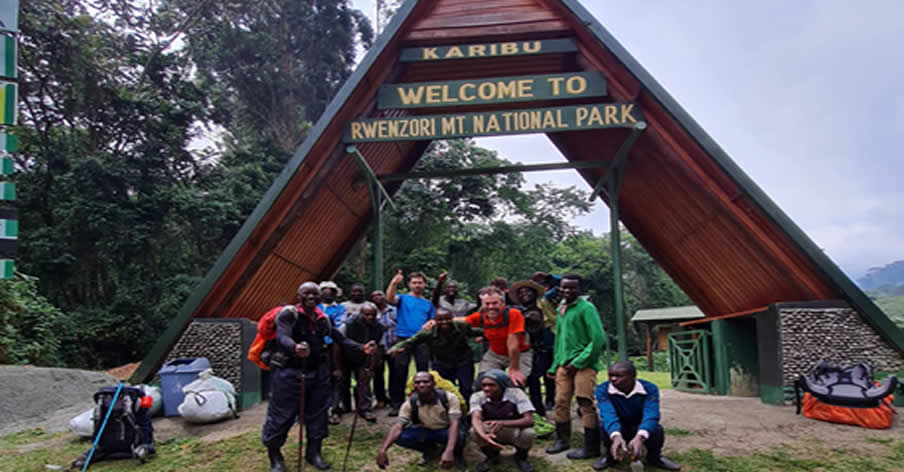
Yes , guides are legally required for all Rwenzori trekking. Learn why, who guides you, and what it means for your trek and budget.
Somewhere below Nyabitaba Hut, on a morning when the cloud has come down so thick that the trail ahead disappears at ten paces, I have watched fit, well-travelled, thoroughly capable trekkers stop dead at a fork that isn’t on any map and wasn’t there, in quite that shape, the last time the bog shifted. That small, ordinary moment is the entire answer to the question you came here with. Yes, guides are mandatory for Rwenzori trekking. Every route, every day, every trekker, with no exception carved out for experience, fitness, or confidence. This is not a sales line dressed up as policy. It is Ugandan national park law, it is physical necessity on some of the most disorienting terrain in East Africa, and it is, if you ask anyone who has actually stood at that unmarked fork in zero visibility, plain common sense. What follows is everything you need to know about why the rule exists, how it works in practice, and what it means for the trek you are planning, whether that’s a short introduction on the Mahoma Loop or a full expedition to Margherita Peak.
The Short Answer, and Why It Isn’t Negotiable
Under Ugandan law, the Rwenzori Mountains National Park is administered by the Uganda Wildlife Authority, and UWA does not issue park entry to unaccompanied trekkers.
This is not a soft recommendation that operators exaggerate to sell guided packages; it is written into how the park is managed, how permits are processed, and how ranger posts at the trailheads actually operate. Whether you’re booking a two-day introduction to Lake Mahoma, the classic seven-day traverse of the Central Circuit Trail, the steeper and quieter Kilembe Trail, the Bukulungu Trail, or a multi-peak expedition that takes in Mount Speke, Mount Baker, Mount Emin, Mount Gessi, and Mount Luigi di Savoia alongside Stanley, the rule is identical. You cannot register at the park gate without a licensed guide attached to your booking, and you cannot walk beyond the first kilometre of trail without one physically present. We cover the mechanics of that registration process in detail in our guide to UWA permit booking, but the short version is this: the guide requirement is baked into the permit itself, not an optional add-on you can decline at checkout.
The Legal Foundation: A UNESCO World Heritage Site Under UWA Management
The Rwenzori range carries UNESCO World Heritage status, inscribed for its glaciers, its extraordinary Afro-alpine vegetation, and its role as one of the last great unclimbed frontiers of African mountaineering when it was first surveyed. You can read the formal case for that inscription on UNESCO’s own listing for the site. What that status means practically is that the Rwenzori Mountains National Park is managed with a level of regulatory seriousness closer to a protected wilderness area than a commercial hiking trail, and the guide requirement is one of the primary tools UWA uses to enforce it. Every trekker who enters pays a park entry fee and a rescue levy, both of which we break down fully in our guide to Rwenzori park entrance fees and permits, and both of those payments are processed against a guide assignment, not against your name alone. There is no mechanism, official or otherwise, for a foreign national to purchase a standalone permit and walk the trail independently. If you’re coming from a country where wilderness trekking has traditionally been unrestricted, this can feel like an unfamiliar level of oversight. On the Rwenzori, it is simply how the mountain has been protected for decades, and it is a large part of why the trails remain in the condition they’re in.
It’s worth understanding what the guide requirement is protecting against, because it isn’t only about you.

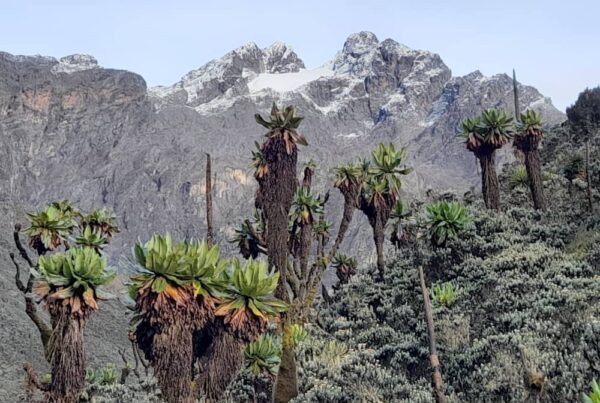
The lower forest zones shelter black-and-white colobus, blue monkeys, chimpanzees, and the striking Rwenzori Turaco, while the upper zones hold plant communities found almost nowhere else on Earth, including the giant groundsels and lobelias that give the Afro-alpine zone its otherworldly look. Licensed guides are trained to keep trekking parties on established trail, away from fragile vegetation, and clear of wildlife in a way that an unsupervised group, however well-intentioned, generally isn’t.
Who Actually Guides You: The Two Operating Bodies
New trekkers researching this topic often picture a single pool of freelance guides available for hire at the trailhead. That isn’t how it works on the Rwenzori. Two community-based operating bodies hold the concession to run trekking on the mountain, and each is tied to a specific trail system. Rwenzori Mountaineering Services manages the historic Central Circuit, the original route pioneered during the early exploration of the range and still the most popular way to reach Mount Stanley and Margherita Peak. Rwenzori Trekking Services manages the Kilembe Trail, a newer, generally steeper approach from the town of Kilembe that many experienced trekkers prefer for its quieter huts and different forest ecology.
We’ve written a full comparison of the two systems, including how their guiding structures differ in practice, in our article on the difference between the Central Circuit and Kilembe trails. Whichever system your route falls under, the guides who work it are drawn from the local Bakonjo community, hold recognised mountain guiding certification, and know the mountain in a way that simply cannot be replicated by a GPS track downloaded before your flight.
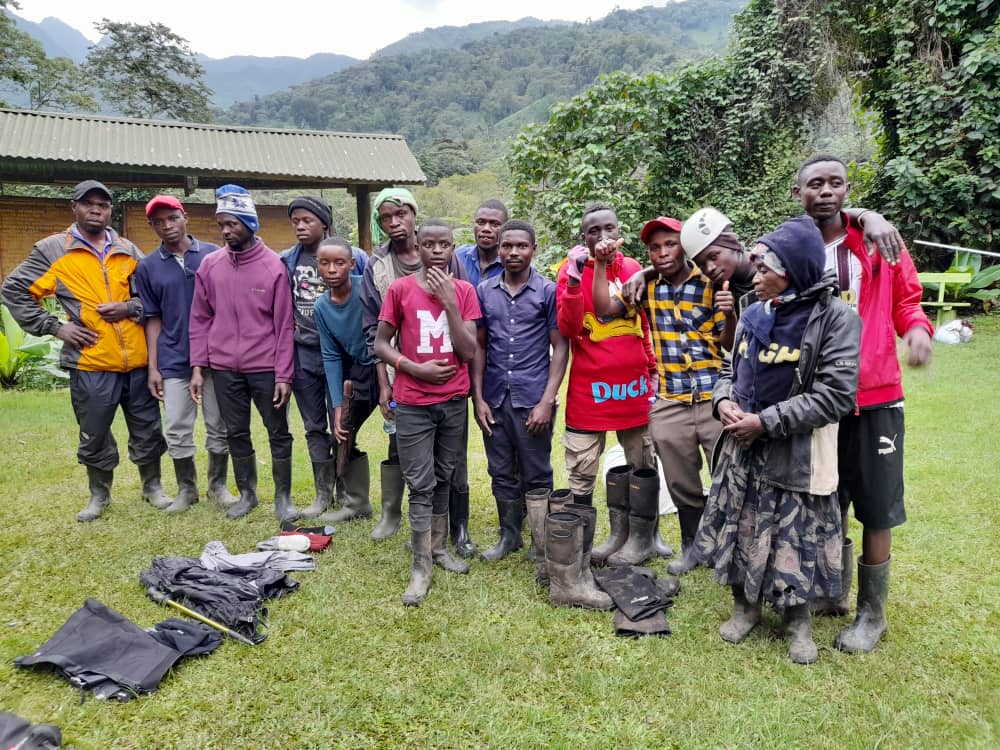
A guide is not the same thing as a porter, and understanding the distinction matters when you’re planning your team size and budget. The guide leads the route, makes real-time decisions on pacing, weather, and safety, and is your primary point of contact for anything that goes wrong. Porters, by contrast, carry group and personal equipment and are typically assigned in a ratio based on trip length and personal luggage; we cover exactly how that ratio works in our guide to how many porters you need for a Rwenzori trek. Both roles are essential, both are drawn from the same mountain communities, and both are described in vivid, ground-level detail in our piece on a day in the life of a Rwenzori porter and our broader look at porters and guides on the Rwenzori.
Why the Terrain Itself Would Demand a Guide, Rule or No Rule
Set the legal requirement aside for a moment, because even if UWA allowed unguided trekking tomorrow, we would still tell every client to take a guide. The Rwenzori is not a mountain that rewards confidence built on other ranges. It is genuinely, distinctively difficult to navigate, and the reasons are worth understanding in detail.
A Landscape Engineered to Disorient
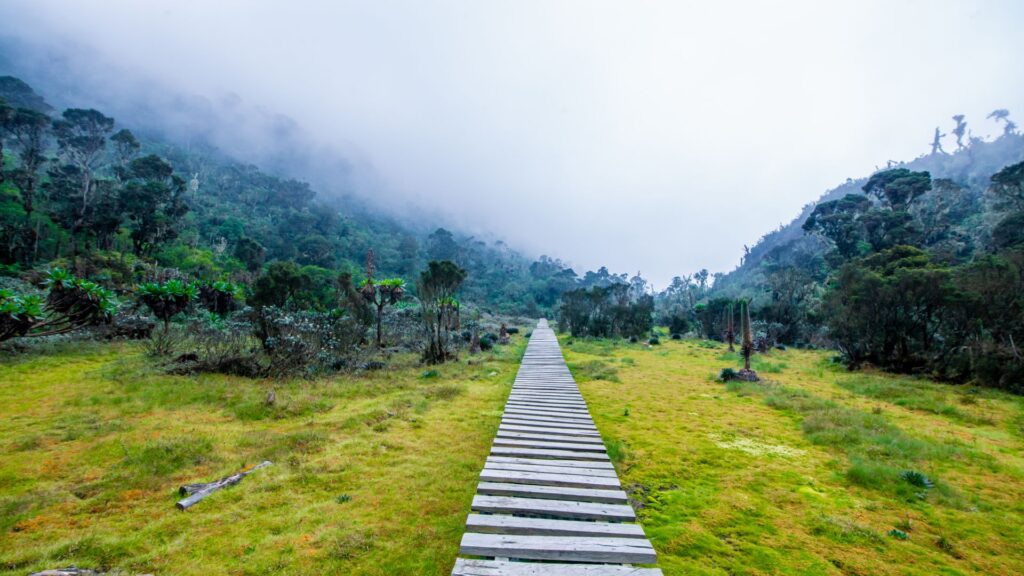
Between roughly 2,600 and 4,000 metres, the trail passes through bamboo forest and then the notorious mixed heather and moss zone, where knee-deep bog, slick root systems, and waist-high vegetation can make a trail invisible from a few metres away. Wooden boardwalks and ladders exist in places precisely because the ground beneath is unstable or seasonally flooded. Add the rivers that the trail repeatedly crosses and re-crosses, several of them prone to sudden volume changes after rain, and the network of side paths worn by porters and wildlife that look, to an untrained eye, exactly like the main route. The lush, layered valley around Bujuku is spectacular precisely because of this density of vegetation and water, and that same density is what makes independent navigation genuinely hazardous, not merely inconvenient.
Weather That Rewrites the Mountain by the Hour
The Rwenzori sits directly under the equator and pulls in moisture from the Congo Basin, which means visibility can collapse from clear sky to zero-metre cloud in the time it takes to eat lunch. We go into this in depth in our guide to the climate of the Rwenzori Mountains and in our dedicated look at trekking the Rwenzori in winter, including how conditions shift across the year and why we guide clients toward the best time to visit the Rwenzoris. A guide who has walked a given stretch of trail dozens of times in every kind of weather reads the terrain from memory when the cloud closes in. Someone relying on a downloaded GPX track, however good their intentions, is reading a screen that cannot show them which side of a boulder the safe footing is on.
Glacier and Technical Terrain Near the Summits
The final approach to Margherita Peak on Mount Stanley crosses genuine high-mountain terrain: exposed scrambling, fixed ropes, and remnant glacier that requires crampons and roped travel. We’ve documented exactly how technical this stretch is in our article on how technical the climb to Margherita Peak really is and walked through the final hours minute by minute in our account of the summit push. This is not terrain that a general mountaineering background from another range automatically prepares you for, because the Rwenzori’s combination of equatorial glacier, volcanic-rock scrambling, and near-constant moisture is genuinely its own animal. Summit guides are specifically trained and equipped for this stretch, a subject we address directly in our guide to whether you need crampons and ropes for the Rwenzori and in our guide to glacier crossing on the mountain. Attempting that section without a summit-qualified guide isn’t just against the rules; it would be genuinely reckless.
“But I’ve Climbed Without a Guide Before” — Why Experience Doesn’t Change the Answer
We hear this objection often, usually from trekkers who have done independent routes in the Alps, the Rockies, or on well-marked trails elsewhere in Africa. It’s a reasonable question, and it deserves a straight answer rather than a brush-off. Experience on other ranges genuinely helps with fitness and altitude, a subject we cover in our guide on how hard trekking the Rwenzori actually is and in our detailed look at altitude sickness on the Rwenzori, but it does not change the legal position, and it does not substitute for local knowledge of a trail system this specific. There’s an added wrinkle unique to this mountain: the Rwenzori straddles the border between Uganda and the Democratic Republic of Congo, and Margherita Peak itself sits almost exactly on that boundary, a fact we explore in our piece on the highest point in the DR Congo. Guided access through the correct, permitted routes is what keeps that border geography a non-issue for trekkers; wandering off-trail near it is not a risk worth taking. Seasoned mountaineers are welcome, and genuinely excel, on the Rwenzori’s technical sections, but they climb them roped to a Rwenzori-qualified guide exactly like everyone else.
What This Means for Your Booking and Your Budget
Because the guide is a structural part of the permit, not an optional extra, guiding fees are already built into any quote you receive from a licensed operator; you are not choosing between a guided and unguided price. What you are choosing is the shape of your group. Trekking with a private party generally means a guide focused solely on your pace and priorities, while joining a scheduled group changes the cost dynamics and, to some extent, the pacing; we lay out exactly how those trade-offs play out in our comparison of group versus private Rwenzori treks. For the full breakdown of what a quoted price actually covers, from park fees to hut accommodation to the guide and porter team, see our guide to how to book a Rwenzori trek and what’s included, and for the underlying numbers, our detailed cost guide to climbing the Rwenzori. If budget is a genuine constraint, the lever to pull is trip length, group size, or gear rental rather than guiding, since guiding itself isn’t a line item you can remove; our guide to reducing Rwenzori trekking costs covers the levers that actually are adjustable.
Beyond the Requirement: What You’d Be Missing Without One
It would be easy to write about the guide requirement as a bureaucratic hurdle to clear, but that misses most of what actually happens on the trail. The guides and porters who work these routes are almost entirely Bakonjo, the community indigenous to the foothills of the range, and their relationship with this landscape goes back generations, long before it was a national park or a UNESCO site.
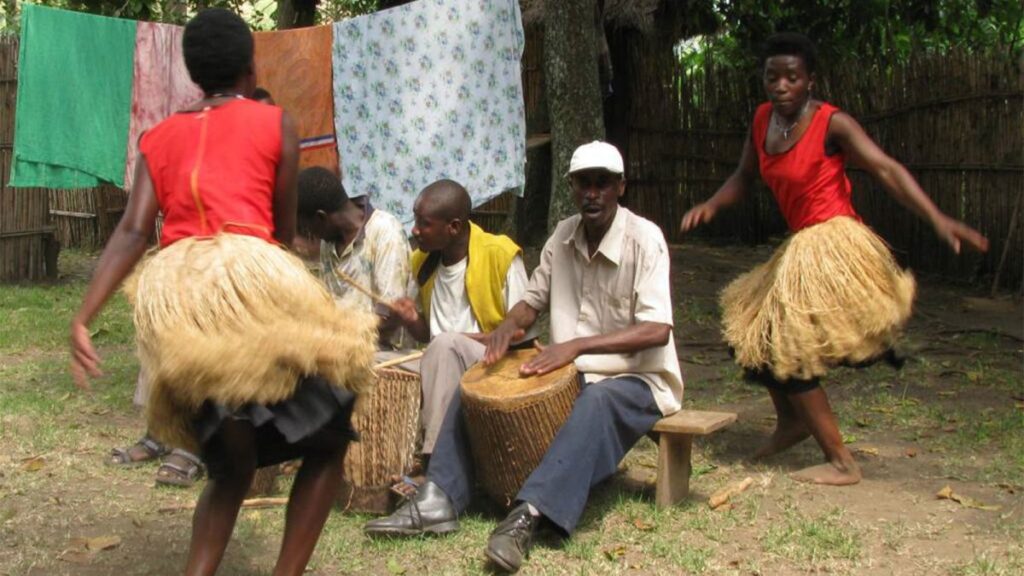
We tell that story properly in our piece on the Bakonjo people as indigenous guardians of the Rwenzori and in our broader portrait of mountain life in the Rwenzori. A significant share of what you pay in park fees and guiding costs flows directly back into those communities, a mechanism we detail transparently in where your trekking fees actually go. None of that context reaches a trekker walking alone with a GPS track. It reaches you because a guide who grew up on this mountain is walking beside you, naming the birds, reading the weather, and telling you, at the right unmarked fork in the trail, exactly which way to go.
Frequently Asked Questions
Is it possible to trek any part of the Rwenzori Mountains without a guide?
No. Every trail inside the Rwenzori Mountains National Park, from the shortest two-day introduction to Lake Mahoma to the full multi-peak expedition routes, requires a licensed guide as a condition of park entry. Uganda Wildlife Authority does not issue permits to unaccompanied trekkers, and rangers at the trailhead check for a registered guide before allowing anyone onto the trail. There is no unguided or self-service option on this mountain, regardless of prior mountaineering experience.
Why are guides mandatory on the Rwenzori when some other African mountains allow independent trekking?
The requirement reflects both the mountain’s UNESCO World Heritage status and terrain that is genuinely more disorienting than most comparable ranges, with dense bog, moss forest, and fast-changing weather concentrated between roughly 2,600 and 4,000 metres. Licensed guides also protect fragile, endemic plant communities like the giant groundsels and lobelias and keep trekkers away from wildlife corridors used by chimpanzees and colobus monkeys. The rule exists for safety, conservation, and route-finding reasons that are specific to this particular mountain’s ecology and geography.
Do I need a different, more qualified guide for the summit push to Margherita Peak?
Yes. Standard trekking guides lead you through the forest and moorland zones, but the final glacier and scrambling sections near Margherita Peak on Mount Stanley require a summit-qualified guide trained in roped travel, crampon use, and the fixed-line sections close to the top. Licensed operators automatically assign the correct guide for whichever section of the route you’re on, so this isn’t something you need to arrange separately, but it’s worth knowing that “a guide” on the lower trail and “a guide” on the final push aren’t necessarily doing identical jobs.
Is the guide fee separate from the cost of my Rwenzori trek, or is it included?
Guiding is built into the park permit structure itself, so any quote from a licensed operator already includes it as part of the overall package cost alongside park entry fees, hut or camping fees, and the porter team. You won’t see it broken out as an optional add-on you can decline, because it isn’t optional. What does change your total cost is trip length, route choice, and whether you travel privately or join a scheduled group departure.
Can experienced mountaineers who’ve climbed other ranges independently skip the guide requirement on the Rwenzori?
No, and this holds regardless of prior experience on ranges like the Alps, the Rockies, or Kilimanjaro. The requirement is a matter of Ugandan national park law tied to the permit itself, not an assessment of individual skill. Experienced trekkers generally do very well on the Rwenzori’s technical sections, but they do them roped to a Rwenzori-qualified guide, the same as every other trekker on the mountain.
What’s the difference between a guide and a porter on a Rwenzori trek?
Your guide leads the route, makes real-time decisions about pacing and safety, and is your primary point of contact throughout the trek. Porters carry group and personal equipment and are assigned in a ratio based on trip length and how much luggage you’re bringing. Both roles are filled by trained members of the local Bakonjo community, and both are essential to how a Rwenzori trek actually runs, but they are distinct jobs with distinct responsibilities.
Ready to Plan Your Rwenzori Trek?
There is no version of a Rwenzori trek that happens without a guide beside you, and once you’ve felt what the mountain can do to visibility in under an hour, you’ll understand exactly why. The team we work with lives on this mountain, not near it, and every itinerary we run, from the Mahoma Loop to a full Margherita Peak summit expedition, is led by guides who know it in every season and every mood. If you’re ready to start planning a trek where the guide requirement stops being a rule you had to look up and starts being the reason your trip actually works, get in touch with our team and let’s build your Rwenzori itinerary together.