A complete guide to travel insurance for the Rwenzori Mountains: medical evacuation, altitude sickness clauses, gear coverage, and the best providers for Ugandan high-altitude trekking.
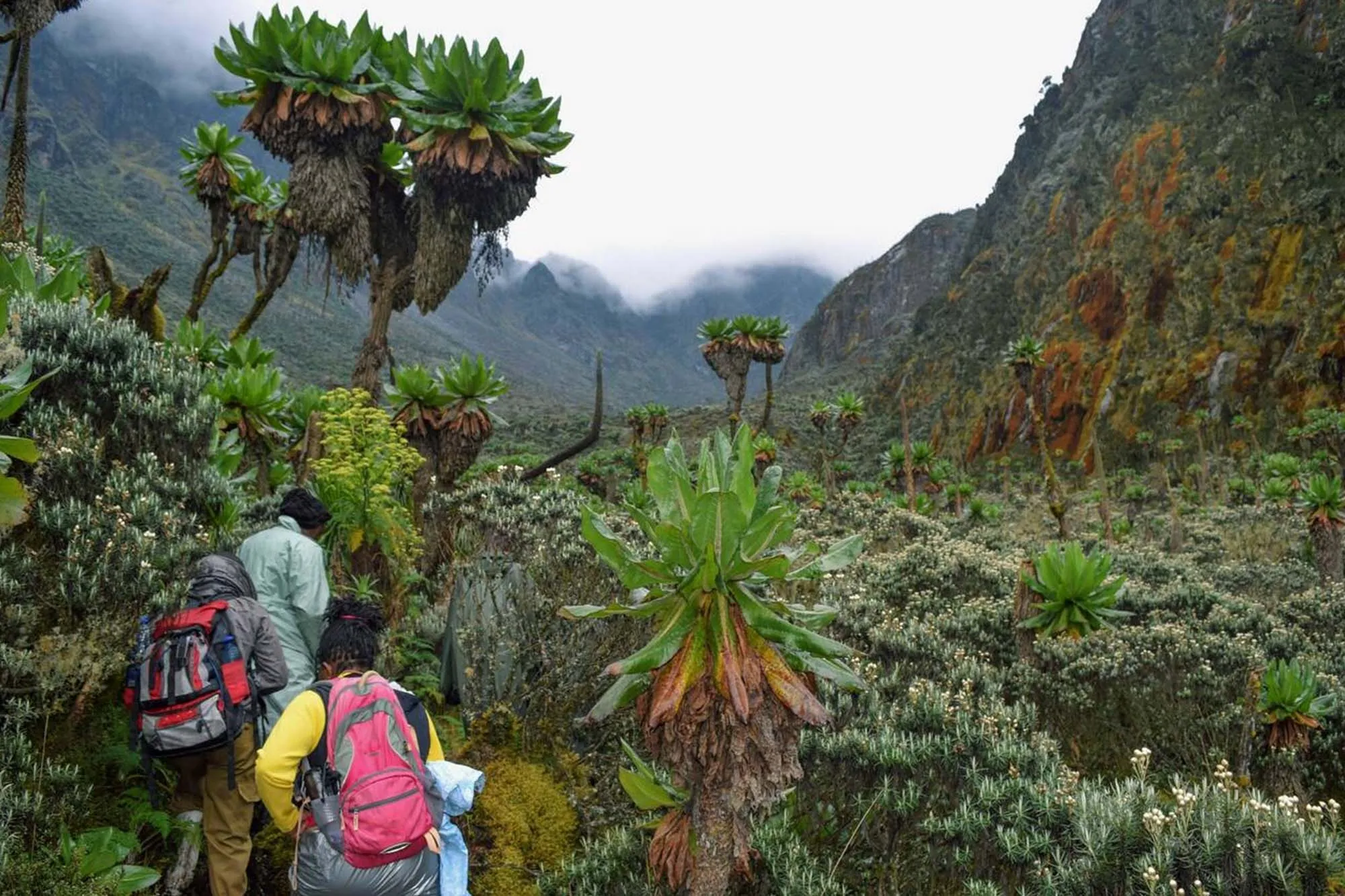
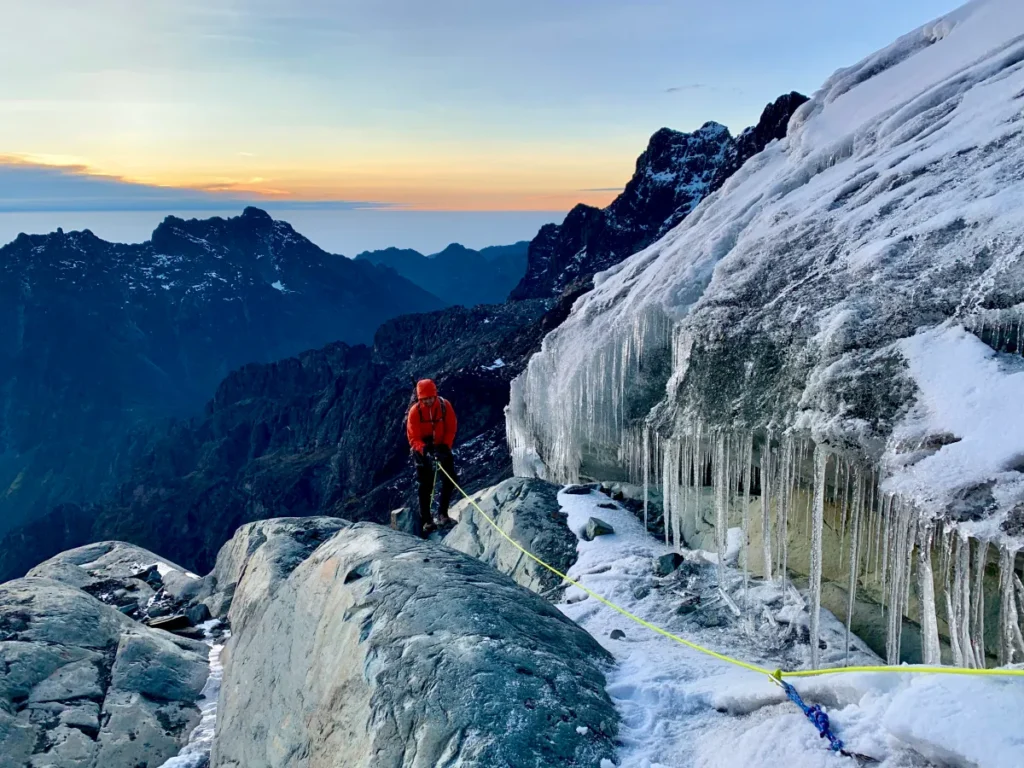
Before You Set a Single Boot on the Trail; There is a particular kind of silence that settles over the Rwenzori Mountains just before the weather turns. You might be somewhere above 4,000 metres, perhaps pushing through the spectral heather moorland below Elena Hut on Mount Stanley or inching across a rock-cut ledge on the approach to Margherita Peak at 5,109 metres, when the cloud rolls in from the Congo Basin without warning and the temperature drops fifteen degrees in twenty minutes. In that moment, the insurance policy folded inside your trekking pack is not a bureaucratic formality. It is the document that will determine whether a helicopter reaches you within two hours or whether you are left to manage a medical emergency with whatever resources exist at the nearest Ugandan district hospital.
I have guided expeditions in these mountains for many years, and I can tell you honestly that the question I hear least often from trekkers and the one that matters most is this: does my insurance actually cover what could happen to me up here? The Rwenzori is not Kilimanjaro. It is not a commercial conveyor belt with a clear evacuation protocol and a satellite phone every hundred metres. It is one of Africa’s most remote and technically demanding mountain environments, a UNESCO World Heritage Site straddling the Uganda-Congo border where logistical complexity, equatorial weather, and genuine high-altitude risk combine in ways that demand a calibre of insurance coverage most travellers have never considered.
This guide will take you through everything you need to know: why standard travel insurance is structurally inadequate for a Rwenzori trek, what specific coverage you truly must have, how to identify altitude sickness exclusions before they catch you out, which providers currently offer policies that genuinely work for Uganda high-altitude mountaineering, and how to read the fine print so that the document in your pack is one you can actually rely on. Whether you are planning a 7-day Central Circuit, an 8-day Kilembe Trail ascent, or a full 13-day six-peak expedition, the insurance requirements are the same: comprehensive, altitude-specific, and confirmed in writing before you board your flight.
Why Standard Travel Insurance Will Leave You Exposed.
The travel insurance market is largely designed around a particular kind of traveller: someone flying to a beach resort, perhaps renting a scooter, maybe doing a boat excursion. When insurers price their standard policies, they are not thinking about a trekker at 4,800 metres in a mountain range that receives more annual rainfall than almost anywhere in Africa, where trails are famous for knee-deep bog sections, where the nearest facility capable of managing a genuine medical emergency is hours away, and where the weather can make a helicopter approach impossible for twelve to eighteen hours at a time.
Standard travel policies typically cap medical evacuation at figures between $50,000 and $100,000 USD. On the surface, that sounds generous. In practice, a dedicated mountain rescue helicopter operation in East Africa, one equipped and certified to operate at altitude, costs between $5,000 and $25,000 USD depending on the distance and complexity of the extraction. That is the helicopter alone. Add the subsequent medical transport from Kasese or Fort Portal to a specialist facility in Kampala or Nairobi, and you begin to understand why the advertised ceiling is not the ceiling that matters.
Standard policies also routinely exclude ‘mountaineering’, ‘technical climbing’, and activities above a specified altitude, often 3,000 or 4,000 metres. The Rwenzori’s summit ridge sits above 5,000 metres. Even approaches to Mount Speke, Mount Baker, and Mount Emin take you well above the altitude thresholds embedded in most standard policies. And unlike many trekking destinations, the Rwenzori has no fixed-wing aircraft landing strip accessible to medical personnel within the national park boundary, which makes the evacuation logistics even more expensive and complicated.
Critical Warning
A policy that excludes altitudes above 4,000m, or that lists “mountaineering” as a blanket exclusion, provides zero coverage for the majority of a Margherita Peak expedition. Confirm your exact altitude coverage in writing from your insurer not just the sales brochure.
There is also the matter of what insurers classify as ‘pre-existing conditions’ and how altitude illness fits within those classifications. The medical realities of high-altitude trekking mean that altitude sickness is not a fringe risk; it is a physiological probability that anyone ascending above 3,500 metres must be prepared to manage. A policy that treats AMS (Acute Mountain Sickness) as a condition arising from a ‘known risk’ and uses that framing to deny evacuation claims is not a policy worth the paper it is printed on.
Medical Evacuation Coverage: The Non-Negotiable Core
If there is a single line item in your insurance policy that you must read, interrogate, and confirm before you depart for Uganda, it is the medical evacuation clause. Everything else, trip cancellation, gear loss, and delayed flights, is a financial inconvenience. A medical evacuation inadequacy can be fatal.
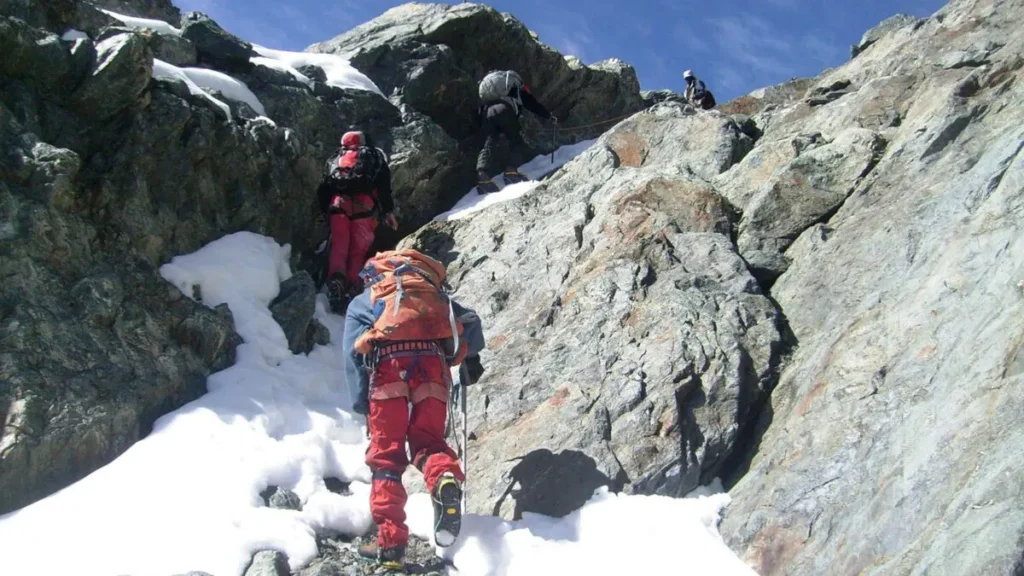
The Rwenzori Mountains sit in Kasese District in western Uganda. The nearest hospital capable of managing serious trauma or altitude-related emergencies is in Fort Portal or Kasese town, roughly 30–45 minutes from the park entrance by road. But the park entrance is not where emergencies happen. Emergencies happen on the Elena Glacier at 4,500 metres, in the Bujuku Valley during a storm, or on the technical headwall approaches to Margherita Peak when weather closes in and a trekker is incapacitated with High Altitude Cerebral Oedema (HACE). At those locations, mountain rescue requires a helicopter, either a Ugandan military asset or a contracted East African emergency aviation operator, and a qualified guide team capable of getting a litter patient to a suitable landing zone.
What Your Evacuation Coverage Must Specify
Your policy must explicitly state that medical evacuation is covered in Uganda, that it applies to mountain rescue operations at the altitude of your planned trek, and that the coverage limit is sufficient to fund a helicopter extraction plus air ambulance transport to a suitable medical facility. The minimum coverage most experienced expedition operators recommend for a Rwenzori summit attempt is $200,000 USD in medical and evacuation coverage combined. Many serious mountaineers carry policies with $500,000 USD or unlimited medical cover.
The policy must also specify whether it covers evacuation to the nearest adequate medical facility or whether it includes repatriation to your home country. These are two very different things. Evacuation to Kampala’s Aga Khan University Hospital, a well-equipped private facility, may cost $15,000–$40,000 in air ambulance and specialist care. Repatriation to Europe or North America, if required, can exceed $100,000. A policy that only covers the former, when the latter is what your condition requires, is not a complete policy.
Guide Insight
We strongly advise all trekkers on our expeditions to contact their insurer specifically and confirm three things in writing: (1) the exact altitude covered, (2) that Uganda mountain rescue operations are included, and (3) whether the insurer has a 24-hour emergency line that can initiate a rescue call directly. An insurer who cannot answer these three questions clearly is not the right insurer for a Rwenzori trek.
It is also worth understanding the practical infrastructure. Uganda does not have the same mountain rescue infrastructure as, say, Switzerland or Nepal. There is no established and permanently staffed mountain rescue service dedicated to the Rwenzori. Our guides carry emergency communication equipment, and we maintain relationships with helicopter operators and emergency services, but the activation of those services ultimately depends on communication, coordination, and critically, a payment guarantee from an insurer. Policies that require upfront payment by the client before the insurer reimburses are deeply problematic in emergency situations. You want a policy where the insurer will provide a guarantee of payment directly to the service provider. This is standard with insurers like Global Rescue and Ripcord Rescue Travel Insurance, both of which we discuss in detail below.
Altitude Sickness Clauses: Read This Before You Sign
Altitude illness is the medical risk that sits at the intersection of almost every Rwenzori evacuation scenario, and it is the risk that insurance policies handle most inconsistently. Understanding what your policy says about altitude sickness and what it does not say is one of the most important pre-departure tasks you have as a trekker. The full medical context is explored in our complete medical guide to Rwenzori trekking, but for the purposes of insurance, the key distinctions are these.
Altitude sickness exists on a spectrum. Acute Mountain Sickness (AMS) is the mildest end of headaches, nausea, fatigue, and disrupted sleep. It is common above 3,000 metres, affects a significant proportion of hikers, and usually resolves with rest or a short descent. High Altitude Pulmonary Oedema (HAPE) and High Altitude Cerebral Oedema (HACE) are at the severe end. They are life-threatening emergencies that require immediate descent and evacuation. HAPE involves fluid accumulation in the lungs; HACE involves fluid accumulation in the brain. Both can deteriorate rapidly, and both, without prompt intervention, are fatal.
The Rwenzori is genuinely susceptible to altitude illness in a way that many trekkers underestimate, partly because the mountain’s reputation for difficulty is associated with the terrain and the weather rather than the altitude per se. Our article on how cold it gets on Margherita Peak explains the temperature extremes involved, and the related physical stresses, wet cold, sustained exertion, and sleep deprivation from weather accelerate the onset of altitude illness symptoms. Trekkers who have managed well on Kilimanjaro sometimes underestimate the Rwenzori because its maximum elevation is lower, but the Rwenzori is technically harder and physiologically more demanding in almost every practical respect.
How Policies Handle Altitude Sickness Differently
Some policies treat altitude illness as a standard medical event covered under the general medical emergency clause exactly as a broken ankle or a cardiac episode would be. This is what you want. Other policies contain exclusions for ‘conditions arising from participation in mountaineering or high-altitude activities’, which can be used by claims departments to deny evacuation for HACE or HAPE on the grounds that the condition is an inherent risk of the activity the trekker chose to undertake. This exclusion language is legally contested in some jurisdictions but routinely used in others, and it can result in a claim denial at exactly the moment you most need cover.
A third category of policy, often the most problematic, covers altitude illness as a medical emergency in principle but contains altitude caps that exclude the elevation at which the emergency is actually occurring. A policy that covers ‘mountaineering up to 4,500 metres’ provides no coverage for a trekker suffering HACE at Elena Hut at 4,541 metres. The distinction between 4,500 and 4,541 metres is clinically irrelevant. Insurers are aware that it is contractually significant.
Key Question to Ask Your Insurer
Ask explicitly: “If I develop High Altitude Cerebral Oedema (HACE) at 4,800 metres in the Rwenzori Mountains, Uganda, and require helicopter evacuation, is this covered under my policy, and are there any exclusions that could prevent the claim from being paid?” If the answer is not an unequivocal yes, find a different policy.
Our guide on acclimatisation strategy for the Rwenzori covers the physiological protocols that reduce altitude illness risk, but no amount of good preparation eliminates it. Itineraries like our 7-day Central Circuit are specifically designed with sensible altitude gain profiles, but the Rwenzori’s weather means that even well-paced itineraries occasionally require rapid ascent or descent in response to conditions. Your insurance must be in place before you begin, and it must cover the full altitude range of your planned route.
Trip Cancellation and Interruption Coverage
A Rwenzori trek is a significant financial commitment. Depending on the itinerary, total expedition costs, including flights, park fees, guiding, accommodation, and equipment, can range from $1,500 to well over $5,000 per person. Our complete cost breakdown gives a realistic picture of what to budget. The point, from an insurance perspective, is that you are committing a substantial sum to a trip that can be disrupted by any number of factors well before you reach the trailhead and that disruption does not automatically mean you recover those costs.
Trip cancellation coverage reimburses your pre-paid, non-refundable costs if you are forced to cancel before departure. The covered reasons vary considerably by policy. Standard cancellation triggers include serious illness or injury (to you or a close family member), bereavement, redundancy, and, in some policies, natural disasters or civil unrest at the destination. Less commonly covered but increasingly available as policy riders are ‘cancel for any reason’ (CFAR) clauses, which reimburse a percentage (typically 50–75%) of your costs regardless of the reason you cancel.
Trip interruption coverage is the parallel protection for cancellation that occurs after your trip has begun. If a medical evacuation removes you from the mountain mid-trek, if a family emergency requires you to return home, or if the trail is formally closed by the Uganda Wildlife Authority due to safety conditions, all of which have happened on the Rwenzori trek, interruption coverage reimburses the unused portion of your trip costs and the additional expenses of getting home early.
For trekkers planning multi-peak expeditions, like our 18-day all-peaks expedition or our 13-day six-peaks itinerary, for instance, the sunk cost of a disrupted expedition is especially high, and the case for robust cancellation and interruption coverage is correspondingly stronger. Always confirm that the policy covers the full trip cost, including any pre-trip accommodation in Kampala or Kasese, guide fees, and park entrance fees, many of which are non-refundable once paid.
Weather and Trail Conditions
The Rwenzori is one of the wettest mountain ranges on Earth. Even in the relative dry seasons, December to February and June to August, rain is a daily feature of the mountain environment. Extreme weather events can make trails impassable, close summit approaches, or ground helicopters for extended periods. Most standard trip cancellation policies do not cover ‘bad weather’ as a standalone cancellation trigger; weather is generally considered a known risk of adventure travel. However, if inclement weather leads to a formal trail or park closure by an authority, that administrative closure may be a covered trigger. Confirm this distinction carefully with your insurer.
Gear and Equipment Coverage
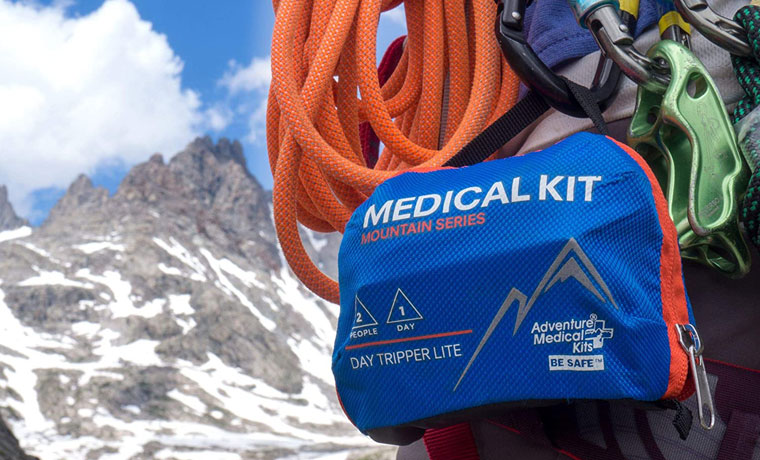
Mountaineering equipment for a Rwenzori expedition is expensive, specialised, and difficult to replace at Kasese or Fort Portal on short notice. A complete high-altitude kit including technical boots, crampons, an ice axe, a harness, a helmet, layering systems, a sleeping bag rated to -20°C, and a waterproof shell represents an investment of $2,000–$5,000 for most serious trekkers. Our guide on whether to bring your gear or rent locally covers the equipment decisions in detail, but from an insurance perspective, the question is straightforward: does your policy cover the replacement cost of your gear if it is lost, stolen, or damaged in transit or on the mountain?
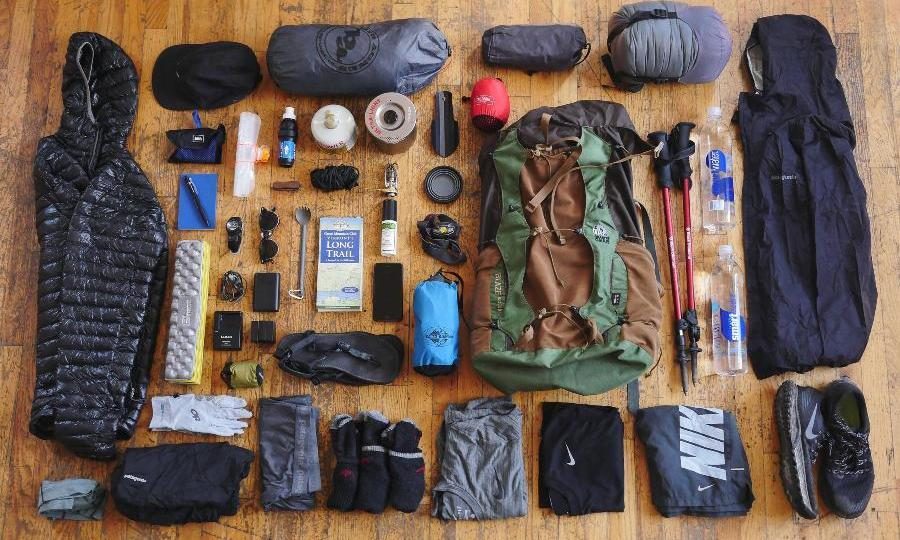
Standard travel insurance policies typically provide baggage coverage of $1,500–$3,000, with per-item limits of $300–$500. A single pair of technical mountaineering boots costs $400–$700. A quality sleeping bag rated for high-altitude use costs $300–$600. The per-item cap makes standard baggage coverage structurally inadequate for most mountaineering equipment kits. If you are bringing high-value technical gear, you need either a specialised adventure sports rider on your travel policy or a separate gear insurance policy.
Some providers, notably World Nomads and certain specialist adventure insurers, offer gear coverage with higher per-item limits designed specifically for adventure sports equipment. These policies typically require you to list high-value items specifically (often items over $500) and may require purchase receipts. Carry receipts or valuation certificates for any high-value equipment, and photograph your gear before departure. If something is lost or damaged, you want a clear record of what you had and what it was worth.
It is also worth noting that on the Rwenzori, the environment itself is hard on equipment. Our guide on crampons and ropes for the Rwenzori explains the technical demands of summit routes, and the sustained wet, boggy, and rock-scrambling conditions mean that boots, waterproofs, and trekking poles take significant punishment. Damage from use, as opposed to damage from accidents, is generally not covered under travel insurance, but damage from unexpected events (a rockfall, a river crossing accident, or a porter accident) may be.
What to Look for in a Rwenzori Trekking Insurance Policy
Distilling the above into a practical checklist of what your Rwenzori policy must include (not should include, but must include), the following requirements are non-negotiable for any trekker planning to ascend above 4,000 metres on the Rwenzori.
The policy must cover medical emergencies and evacuation in Uganda; specifically, some policies exclude specific regions or countries. Check that Uganda is listed as a covered destination.
The altitude coverage must extend to at least 5,200 metres ideally with no altitude cap whatsoever. Margherita Peak stands at 5,109 metres, and technical approaches take you onto glaciated terrain above this. Any policy with an altitude cap below 5,200 metres is inadequate.
The evacuation limit must be a minimum of $200,000 USD, with unlimited cover strongly preferred. The policy should specify that this includes helicopter rescue, air ambulance, and medical repatriation.
Altitude illness, including HACE and HAPE, must be explicitly covered as a medical emergency, with no exclusion for ‘activities that carry a known risk of altitude illness’. If the policy excludes conditions that are an ‘inherent risk’ of mountaineering, altitude illness will routinely fall into that excluded category.
The insurer must have a 24-hour emergency assistance line capable of initiating rescue coordination directly, not simply providing claims guidance. In a real emergency on the Rwenzori, the last thing you or your guide needs is an automated phone system that cannot authorise a helicopter.
The policy must cover your specific activities. The policy should explicitly state that it covers ‘trekking’, ‘hiking’, ‘glacier travel’, and ideally ‘high-altitude mountaineering with guides’. Some policies have activity lists; ensure your planned summit route is covered.
Trip cancellation coverage should equal your total non-refundable expenditure, adding up flights, park fees, guide and operator fees, pre-trip accommodation, and any equipment purchases specific to this trip.
Pre-Departure Checklist
Before you fly: (1) Confirm altitude coverage in writing. (2) Confirm Uganda is covered. (3) Confirm altitude illness is not excluded. (4) Save your insurer’s 24-hour emergency number on your phone. (5) Share your policy number and insurer emergency contact with your trek operator.
Recommended Providers for Uganda High-Altitude Trekking
The following insurers are those most consistently recommended by mountain guides, expedition operators, and experienced trekkers specifically for high-altitude and remote wilderness travel in East Africa and Uganda. This is not an exhaustive list, and policies change; always verify current terms directly with the provider before purchasing.
Global Rescue
Global Rescue is the provider most frequently cited by high-altitude expedition operators worldwide. It is technically not a travel insurance policy in the traditional sense; it is a membership-based rescue and evacuation service, which means it is structured specifically around the evacuation problem rather than the broader travel coverage picture. Global Rescue membership guarantees field rescue from anywhere in the world to the hospital of your choice in your home country, with no altitude caps and no per-incident limits. The membership fee is modest relative to the coverage. Annual memberships start around $329 USD. The service has operated extensively across East Africa and has a strong track record in Uganda. The critical caveat: Global Rescue covers rescue and evacuation but not medical treatment costs at the destination, so it must be paired with a comprehensive travel medical insurance policy.
World Nomads
World Nomads offers policies tailored to independent adventure travellers and is one of the few providers with explicit, named coverage for a wide range of adventure activities, including mountaineering and trekking at altitude. Their Explorer plan covers a longer list of activities than the Standard plan, and for Rwenzori-level expeditions, Explorer is the appropriate tier. World Nomads covers emergency medical, evacuation, trip cancellation and interruption, and baggage. They cover trekking at altitude and include many mountaineering activities, though the specific altitude limit and activity list should be confirmed at time of purchase. World Nomads’ policy terms are country-specific and change periodically. They offer an emergency assistance line that operators can contact directly.
Battleface
Battleface is a specialist adventure and expedition insurer that offers genuinely high-altitude coverage up to 8,000 metres on some plans and is designed explicitly for the kind of remote, technical travel that Rwenzori represents. Battleface is particularly notable for its willingness to cover activities in regions that many mainstream insurers treat as exclusion zones due to perceived political risk. Battleface offers flexible multi-activity coverage for trekkers who are combining a Rwenzori expedition with a gorilla trekking extension in Bwindi.
Ripcord Rescue Travel Insurance
Ripcord is a hybrid product combining medical evacuation services (similar to Global Rescue) with comprehensive travel insurance. It is designed specifically for adventure travellers and provides unlimited emergency evacuation, search and rescue, and medical repatriation, paired with trip cancellations, interruptions, and medical expense coverage. Ripcord’s emergency line can be contacted by the trek operator directly, and their authorisation process for helicopter rescues is straightforward and fast, a meaningful practical advantage in a genuine mountain emergency. Coverage extends to any altitude with no caps.
Allianz Travel and IMG (International Medical Group)
Both Allianz Travel and International Medical Group (IMG) offer comprehensive travel medical and evacuation policies that can be configured for adventure travel. Allianz’s OneTrip Prime and AllTrips Premier plans offer strong medical evacuation coverage, though their adventure sports provisions require specific activity endorsements. IMG’s GlobeHopper Senior plan is particularly relevant for trekkers over 65, a demographic increasingly present on Rwenzori expeditions, as our article on trekking the Rwenzori in your 50s and 60s discusses in depth. Both providers have 24-hour emergency assistance lines with direct authorisation capabilities.
Reading the Fine Print: Common Exclusions to Identify and Avoid
Insurance policies are written to be purchased, not to be read. The exclusions are typically buried in schedules and subsidiary documents rather than highlighted on the product page. Below are the specific exclusion patterns that trip operators and experienced guides consistently identify as the ones that catch Rwenzori trekkers off-guard.
The ‘known risk’ exclusion, a clause stating that conditions arising from ‘participation in activities known to carry specific risks’ are excluded, is the most dangerous broad exclusion for mountain trekkers. Altitude illness, hypothermia, rockfall injury, and fall-related trauma can all be classified under this exclusion by an aggressive claims department. The safest approach is to find a policy that explicitly covers these conditions rather than relying on the absence of specific exclusion language.
Altitude caps in obscure schedule language The main policy document may not mention an altitude cap, but the activity schedule or endorsement terms might contain one. Always read the activity schedule specifically, not just the main policy summary.
‘Professional guide required’ clauses: some adventure sports policies only extend altitude coverage when trekking with a licensed professional guide. Since all reputable Rwenzori expeditions use qualified guides, this requirement is easily satisfied, but it must be documented. Keep your guide’s credentials and your operator contract accessible.
Sub-limits on evacuation: a policy may advertise $500,000 USD in medical coverage but contain a sub-limit of $50,000 specifically for ’emergency evacuation and rescue’. Since the evacuation is often the most expensive component of a mountain emergency, this sub-limit is effectively the ceiling that matters.
Search and rescue cost exclusions in some jurisdictions: mountain rescue involves government search and rescue teams whose costs are subsequently billed to the rescued party. In Uganda, this mechanism is less formalised than in, say, the Swiss Alps, but it exists in principle. Confirm whether your policy covers search and rescue costs as distinct from medical evacuation costs.
Practical Tip
Request a copy of the full policy document not the product summary before purchasing. Read the exclusions schedule specifically. If anything is unclear, call the insurer and ask for written clarification. Save that written confirmation. Insurance claims are legal processes, and verbal assurances are not binding.
Insurance and Your Rwenzori Operator: How They Work Together
A competent Rwenzori trekking operator does not wait for an emergency to happen before thinking about evacuation logistics. At Rwenzori Trekking Safaris, our guides carry communication equipment; maintain emergency contacts with Kasese district emergency services and helicopter operators; and are trained in wilderness first aid, including altitude illness recognition and initial management. But the guide team’s ability to act swiftly in an emergency is enormously strengthened when the trekker’s insurance is in order. When I know a trekker has valid evacuation coverage and I have the insurer’s 24-hour emergency number in my radio log, I can initiate an evacuation call within minutes of a decision being made. When the insurance situation is unclear, uncertain, or absent, that process becomes legally and logistically complicated at exactly the wrong moment.
We ask all trekkers on our expeditions to provide their insurance details: policy number, insurer name, and 24-hour emergency line before the trek begins. This information is carried by the lead guide throughout the expedition. If you are joining a group hike, the same requirement applies to every member of the group. An uninsured trekker in a group is not merely a risk to themselves; they are a potential complication for the entire team if their evacuation requires group resources or delays a summit attempt.
If you have questions about the insurance requirements for our specific itineraries, whether you are planning a 5-day summit push, a technical 8-day Kilembe route, or a 3-day Mahoma Loop introduction, our team is available to advise on what is appropriate for your specific route and altitude profile. The Mahoma Loop operates at much lower elevations and has a different risk profile from a Margherita summit expedition; the insurance requirements, while still important, are correspondingly less demanding.
Special Considerations: Pre-Existing Conditions, Age, and Combined Itineraries
Trekkers with pre-existing medical conditions, particularly cardiovascular conditions, respiratory conditions, or a history of altitude illness, face an additional layer of insurance complexity. Insurers may exclude coverage for conditions that are directly related to a pre-existing diagnosis, meaning that a trekker with a history of heart arrhythmia who suffers a cardiac event at altitude could find their evacuation claim denied on the grounds that the condition was pre-existing. The solution is not to conceal medical history from your insurer, as this voids your policy entirely, but to disclose fully and seek a policy that explicitly provides cover for declared pre-existing conditions, usually at an additional premium. Our medical guide for Rwenzori trekkers discusses the medical pre-assessment process in detail.
Age is a related consideration. Insurers typically increase premiums for trekkers over 65, and some mainstream travel insurers cap coverage at 70 or 75. Specialist adventure insurers, including IMG, Battleface, and Ripcord, are more accommodating of older trekkers, and the Rwenzori is genuinely accessible to fit trekkers in their 60s on appropriate itineraries, as our piece on trekking the Rwenzori Mountains over 50 discusses. The key is ensuring that the age-appropriate policy also provides the altitude and evacuation coverage required for your specific route.
For trekkers combining a Rwenzori expedition with other Ugandan activities, a gorilla trek in Bwindi Impenetrable Forest, a chimpanzee tracking permit, or a Queen Elizabeth National Park safari, the insurance policy must cover all the activities in your itinerary, not just the mountain component. A policy that covers mountaineering but excludes ‘game viewing activities in national parks’ is unusual but not unknown. Confirm that your combined itinerary is fully covered as a single policy rather than requiring separate policies for each activity. Our combined Rwenzori and gorilla trekking itinerary is a popular option that spans both mountain and safari environments.
Frequently Asked Questions: Rwenzori Mountains Travel Insurance
The following questions and answers are designed to address the most common insurance queries raised by trekkers planning a Rwenzori expedition.
Do I really need specialist travel insurance for the Rwenzori Mountains, or will a standard policy work?
A standard travel insurance policy is almost certainly inadequate for a Rwenzori Mountains expedition. Standard policies typically cap evacuation coverage well below the cost of a mountain helicopter rescue in East Africa, and they frequently contain altitude exclusions, often at 3,000 or 4,000 metres that exclude coverage at the elevations where Rwenzori emergencies are most likely to occur. Summit routes on Mount Stanley, Mount Speke, Mount Baker, Mount Gessi, Mount Emin, and Mount Luigi di Savoia all take trekkers above 4,500 metres. For any itinerary that includes high-altitude sections, you need a policy that explicitly covers the altitude of your planned route, explicitly covers Uganda, explicitly covers the activities in your itinerary, and provides a minimum of $200,000 USD in combined medical and evacuation coverage.
What altitude does travel insurance need to cover for the Rwenzori?
Your policy must cover at least 5,200 metres for a full summit expedition on the Rwenzori, which includes Margherita Peak at 5,109 metres on Mount Stanley. A small margin above the summit altitude is prudent because evacuation landing zones may be at varying elevations, and altitude reads on GPS devices vary. Many experienced mountaineers and expedition operators recommend purchasing a policy with no altitude cap at all, which removes any ambiguity about what is and is not covered. Policies from providers like Global Rescue, Ripcord, and Battleface do not impose altitude caps. The World Nomads Explorer Plan covers significant altitude but should be confirmed for your specific departure country and itinerary. Policies that cap at 4,000 metres or 4,500 metres should not be used for Margherita Peak expeditions.
Is altitude sickness covered by travel insurance for the Rwenzori?
This depends entirely on the specific policy. Some travel insurance policies cover altitude illness, including Acute Mountain Sickness (AMS), High Altitude Pulmonary Oedema (HAPE), and High Altitude Cerebral Oedema (HACE) as standard medical emergencies, identical to how they would cover a broken limb or appendicitis. Other policies contain exclusions for conditions that are an “inherent risk” of the activity, which allows claims departments to deny altitude illness evacuations on the basis that the risk was foreseeable. Before purchasing any policy for a Rwenzori trek, explicitly ask your insurer whether HACE and HAPE are covered under the medical emergency provisions, and request a written confirmation. Do not rely on verbal assurances from a sales line. The written policy wording is the binding document.
How much does travel insurance typically cost for a Rwenzori Mountains trek?
The cost of appropriate travel insurance for a Rwenzori expedition varies by provider, your country of residence, your age, and the length and value of your trip. As a general indication: a comprehensive single-trip policy with strong evacuation coverage for a two-week expedition typically costs between $80 and $200 USD for a healthy adult under 50. Specialist providers like Ripcord and Battleface may charge more for their higher-altitude and more comprehensive evacuation services. Global Rescue membership, which covers rescue and evacuation but not medical treatment costs, starts at approximately $329 USD annually. For trekkers over 60, premiums are typically higher, and specialist providers are often more appropriate than mainstream travel insurers. Given that a single helicopter evacuation from the Rwenzori can cost $10,000–$25,000 or more, the cost of insurance is negligible relative to the financial exposure of being uninsured.
Which is the best travel insurance for trekking in Uganda?
For trekking in Uganda specifically, particularly for the Rwenzori Mountains, the most consistently recommended providers among expedition guides and operators are Global Rescue (for evacuation coverage, best combined with a travel medical policy); Ripcord Rescue Travel Insurance (a hybrid evacuation and travel insurance product with no altitude caps); World Nomads Explorer Plan (strong for adventure travel and activity-specific coverage; confirm altitude terms for your country); and Battleface (specialist adventure insurer, strong coverage for remote and high-altitude travel). International Medical Group (IMG) is an excellent option for older trekkers or those with pre-existing conditions. Allianz Travel is a reputable mainstream provider that can work well if configured with appropriate adventure sports endorsements. Whichever provider you choose, confirm coverage for Uganda, your specific altitude, and altitude illness in writing before your policy is purchased.
Does my travel insurance need to cover the entire Rwenzori trek, including days below the summit?
Yes. Your policy should be active for the entire duration of your trip, not just the summit day or high-altitude sections. Accidents and medical emergencies can and do occur at lower elevations: trail injuries during ascent or descent, river crossing accidents and gastroenteritis from water contamination, and your policy must cover the full trip duration from departure to return. The high-altitude provisions are the critical differentiator, but the base travel medical and trip cancellation coverage is equally important for the lower-elevation portions of the expedition and the travel days themselves.
What information should I give my trek operator about my insurance before the trek begins?
Before your Rwenzori trek begins, provide your trek operator with your insurance company name, your policy number, the 24-hour emergency assistance phone number (not the general claims line, but the direct emergency line that authorises rescues), and the name under which the policy is held if it differs from your passport name. Your guide should carry this information throughout the trek. In an emergency, the guide needs to be able to contact your insurer immediately to authorise evacuation. The difference between a quick authorisation and a lengthy confirmation process can matter enormously in a high-altitude medical emergency. At Rwenzori Trekking Safaris, we ask all trekkers to complete a pre-trek information form that includes this information alongside emergency contacts and medical history.
Do I need travel insurance for a short Rwenzori trek, such as the 3-day Mahoma Loop?
Yes, though the requirements are less demanding than for a summit expedition. The 3-day Mahoma Loop operates at elevations below 3,000 metres, which means altitude-specific coverage is less critical. However, you still need comprehensive travel medical coverage, evacuation coverage appropriate for remote Uganda, and trip cancellation/interruption protection for your investment in the trip. The altitude clause requirements of a summit policy do not apply, but the other core requirements, Uganda coverage, adequate evacuation limits, and a 24-hour emergency line remain relevant. A good-quality standard adventure travel policy from World Nomads or a comparable provider is appropriate for the Mahoma Loop and similar lower-altitude Rwenzori itineraries.
Ready to Plan Your Rwenzori Expedition?
The Rwenzori Mountains are one of the last truly wild high-altitude places in Africa, recognised by UNESCO for their amazing variety of plants and animals, where glaciers meet old rainforests and every path offers a chance for real adventure. We have been guiding expeditions in these mountains for years, and we believe that with the right preparation physically, logistically, and in terms of the coverage that protects you, a Rwenzori trek is one of the most rewarding experiences available to any serious mountain traveller.
If you have questions about insurance for your specific itinerary, whether you are considering our 7-day Central Circuit, the 8-day Kilembe Trail to Margherita Peak, or the full 13-day six-peak expedition, or if you want honest advice on whether a particular policy is appropriate for the Rwenzori, get in touch. We are here to help you plan a safe, well-prepared, and unforgettable expedition to the Mountains of the Moon.
→ Contact Rwenzori Trekking Safaris and start planning your expedition today.