Join a Rwenzori group trek of 8 or fewer to Margherita Peak. The trek starts and finishes in Kampala, with full-moon summit dates available for every month from 2027 to 2028. Book your place.
Rwenzori Group Treks 2027/28: Small-Group Margherita Climb
Rwenzori Group Treks: Small-Group Margherita Peak Set-Off Departures.
Somewhere around the fourth morning on the mountain, usually just after the cloud tears open above the Bujuku valley, a group of trekkers who started as strangers stops talking. Ahead of them in the clouds, the Stanley Plateau rises out of the mist, black rock and shinny-white ice, and the most experienced person present, often our Rwenzori guide who has stood on the summit more than a hundred times, says nothing whatsoever. And at this point nobody needs to be explaining why the ancient Greeks believed the Nile began here or why Ptolemy wrote of the Mountains of the Moon. You are standing in the only place on the equator where you can walk from tropical rainforest to a glacier crossing in just four days or even less, and you are doing it with seven other people who, by the time you reach Margherita Peak, will feel like old climbing partners.
That is what a Rwenzori group trek feels like. It is not a bargain version of a private expedition, and it is not a tour bus on a trail. It is a scheduled, fixed-date departure from Entebbe, limited to about eight trekkers per group, led by licensed Rwenzori guides, built exclusively around a summit of Margherita Peak (5,109 m), the third-highest point in Africa. You join on a published date, share the guides (each with a dedicated porter team), and split the transport cost to and from Entebbe. You finish back in Kampala with a summit certificate, a mud-streaked set of boots, and, if the mountain is kind, a view across the Congo border that most travelers never see.
Rwenzori Group Trek Dates for 2027, Month by Month
Our Rwenzori Small Group SetOff Departures calendar gives one proposed departure per month for each Rwenzori trekking trail, so there is one group per month on the Central Circuit and another group on the Kilembe trail. The Central Circuit Group Trek follows a 10-day Kampala-to-Kampala format, with the first night in Entebbe. This allows us to accommodate different flight schedules among trekkers, giving us a buffer day to wait for everyone to transfer together before returning to Kampala on the tenth evening for departure. The same schedule applies to the Kilembe Scheduled setoff departures, which last 11 days, including 8 days in the Rwenzori mountains, 2 transfer days, and one buffer day to accommodate all flight schedules on day one in Entebbe. Our group treks are all-inclusive, and our prices are competitive. They include all costs for transport, accommodations in Entebbe and Kasese, trekking fees, and hiking gear, so you only need to bring your personal gear; everything else is provided at the trailhead.
| Route | Arrival Date | Departure Date | Price (USD) | Trek Availability |
|---|---|---|---|---|
| Central Circuit | Jan 3, 2027 | Jan 12, 2027 | $2,040 | Open |
| Kilembe Trail | Jan 17, 2027 | Jan 27, 2027 | $2,300 | Open |
| Central Circuit | Feb 3, 2027 | Feb 12, 2027 | $2,040 | Open |
| Klembe Trail | Feb 17, 2027 | Feb 27, 2027 | $2,300 | Open |
| Central Circuit | Mar 3, 2027 | Mar 12, 2027 | $2,040 | Open |
| Kilembe Trail | Mar 17, 2027 | Mar 27, 2027 | $2,300 | Open |
| Central Circuit | Apr 3, 2027 | Apr 12, 2027 | $2,040 | Open |
| Kilembe Trail | Apr 17, 2027 | Apr 27, 2027 | $2,300 | Open |
| Central Circuit | May 3, 2027 | May 12, 2027 | $2,040 | Open |
| Kilembe Trail | May 17, 2027 | May 27, 2027 | $2,300 | Open |
| Central Circuit | Jun 3, 2027 | Jun 12, 2027 | $2,040 | Open |
| Kilembe Trail | Jun 17, 2027 | Jun 27, 2027 | $2,300 | Open |
| Central Circuit | July 3, 2027 | July 12, 2027 | $2,040 | Open |
| Kilembe Trail | July 17, 2027 | July 27, 2027 | $2,300 | Open |
| Central Circuit | Aug 3, 2027 | Aug 12, 2027 | $2,040 | Open |
| Kilembe Trail | Aug 17, 2027 | Aug 27, 2027 | $2,300 | Open |
| Central Circuit | Sep 3, 2027 | Sep 12, 2027 | $2,040 | Open |
| Kilembe Trail | Sep 17, 2027 | Sep 27, 2027 | $2,300 | Open |
| Central Circuit | Oct 3, 2027 | Oct 12, 2027 | $2,040 | Open |
| Kilembe Trail | Oct 17, 2027 | Oct 27, 2027 | $2,300 | Open |
| Central Circuit | Nov 3, 2027 | Nov 12, 2027 | $2,040 | Open |
| Kilembe Trail | Nov 17, 2027 | Nov 27, 2027 | $2,300 | Open |
| Central Circuit | Dec 3, 2027 | Dec 12, 2027 | $2,040 | Open |
| Kilembe Trail | Dec 17, 2027 | Dec 27, 2027 | $2,300 | Open |
The Prime Windows: December to February
The northern winter is the Rwenzori’s finest season for most trekkers. The January and February setoff departures sit in the heart of the dry window, and they are the dates most likely to fill early. The cold on the high ground is real, so read our advice on staying warm on the summit and check your sleeping bag against our guide to sleeping bag ratings for Margherita Peak because some sleeping bags aren’t up to the standards of the cold weather in the Rwenzori Mountains, some trekkers always underestimate the mountains, thinking it’s just a walk in the park since it’s in Savannah Africa and near the equator, but the Rwenzori Mountains always shock everyone. Furthermore, the December group trek closes the year in the same drier window and is ideal for trekkers who want to be home in time for the holidays, even if they still have goosebumps from the Rwenzori Mountains.
The Second Window: June to September
The second dry season begins in mid-June and runs through August, with September typically the first month in which rain returns more steadily. Our June, July, and August setoff departures are the cornerstone of the northern summer and are ideal for trekkers on school or summer breaks, or for pairing the climb with a safari. September is the strong shoulder departure: the trails are usually still in good condition, but the weather is less predictable, and the group should be comfortable with that. And since the seasons have been changing dramatically in East Africa in the past years, nowadays September is always a dry season in some parts, and heavy rain sometimes comes in mid-October.
The Shoulder and Wet Months
March, April, May, October, and November are the months in which the mountain tests you. The bogs are deeper, the cloud lower, and the glacier less often clear. We list departures in all five months to give experienced, flexible trekkers options and keep the calendar complete, but we are frank that the odds of a clear summit morning are lower in these months. If flexibility on dates is your priority, choose a prime window and book early.
What a Rwenzori Group Trek Actually Is
A Rwenzori group trek, in the way we use the term, is a departure with a date on the calendar before anyone has booked it. Instead of designing an itinerary around one party’s dates, we choose the dates in advance on the strength of the mountain’s weather and the lunar calendar, publish them, and let trekkers from different countries fill the places. The result is a trek with a clear start day in Entebbe, a clear finish day in either Kampala or Entebbe, and a group of up to about eight people who have all chosen the same window.
Every group departure aims for the summit of Margherita Peak, the highest point of Mount Stanley and of the whole Rwenzori range. We do not run scheduled group departures for short treks or for the multipeak expeditions in the mountains. What the group shares is the route, the guiding team, the transport from and to Kampala, the huts and camps along the trail, and the national park permits. You also share the same lodge but have different rooms. Everyone sleeps privately in the accommodation in Entebbe and Kasese before and after the trek and shares the same cabins in the mountains while hiking.
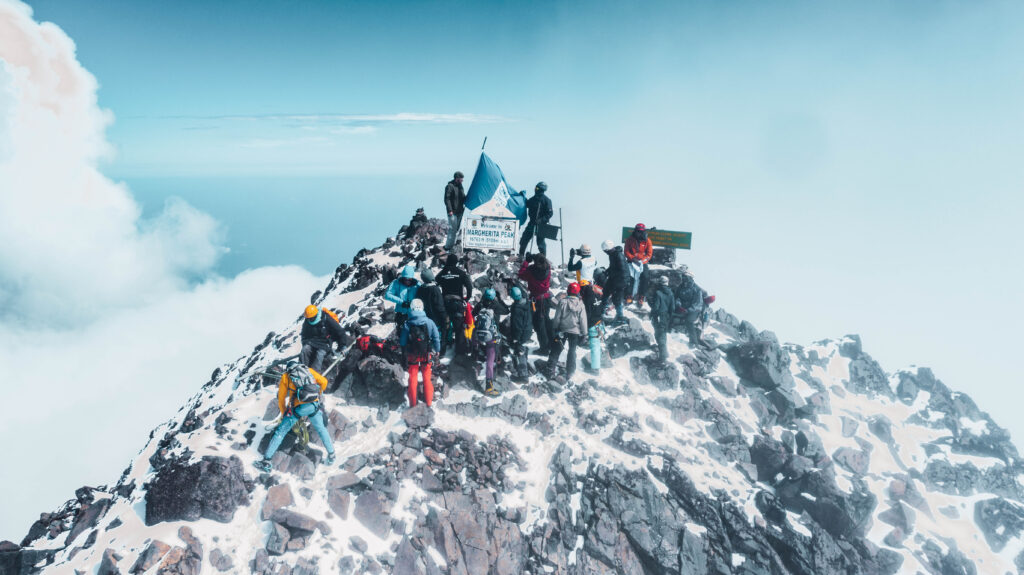
A Rwenzori group trek suits solo travelers, couples, and friends who are flexible on dates, enjoy company on the trail, and want the per-person cost that sharing guides and logistics allows. A private trek suits families, corporate parties, anyone with fixed dates, and anyone who wants to set their own pace. If you are a pair who want the mountain to yourselves, a private Rwenzori trek for two is the better fit, and if your whole office wants to go, a corporate team-building trek is built for that.
The Two Routes Our Group Departures Are Built Around
You can reach Margherita Peak from two sides of the Rwenzori mountains range. Both Rwenzor routes cross the same high-altitude vegetation, and both finish with the same glacier approach from Elena Hut on the Central Circuit or Margherita Camp on the Kilembe Trail, but they start in different valleys and feel entirely unique underfoot. We schedule group treks on both hiking trails, and the choice between them is the first decision a prospective trekker needs to make.
The Central Circuit Trail
The Central Circuit Trail starts at Nyakalengija and runs in a loop through the Bigo Bog, the Bujuku and Kitandara lake basins, and the high passes between them. It is the classic Rwenzori experience and the route that has built most of the mountains’ legend. Our 7-day Central Circuit trek and the Central Circuit alpine expedition to Margherita Peak follow it, passing through the bamboo and giant heather zones before opening into the strange Afro-alpine moorland of giant lobelias and groundsels, which makes the Rwenzori look like another planet, and most trekkers feel they are in the real-life Jurassic Park because of the alien vegetation.
The Central Circuit is one of the 2 routes we build our group calendar around, as it has the gentlest altitude gain of the two. You sleep at a succession of huts that climb steadily, and you reach Elena Hut at 4,541 m with several nights of acclimatization behind you.
The Kilembe Trail
The Kilembe Trail climbs from the old copper-mining village of Kilembe through Sine and Mutinda before joining the high altitude glacier lakes. It is steeper and generally quieter, and it rewards trekkers with some of the finest viewpoints in the range. Our 8-day Kilembe Trail trek to Margherita Peak is the route for people who prefer solitude and don’t mind a stiffer first two days.
For anyone wanting a longer itinerary, we also offer Margherita-inclusive expeditions that add further peaks, such as the 9-day Rwenzori trek and the 10-day four-peaks trek. These are available on request when enough trekkers share the same dates. But we offer the 8-Day Kilembe Trek to Margherita Peak as the primary group trek set for one group of like-minded trekkers per month.
Why Every Rwenzori Group Trek Goes to Margherita Peak.
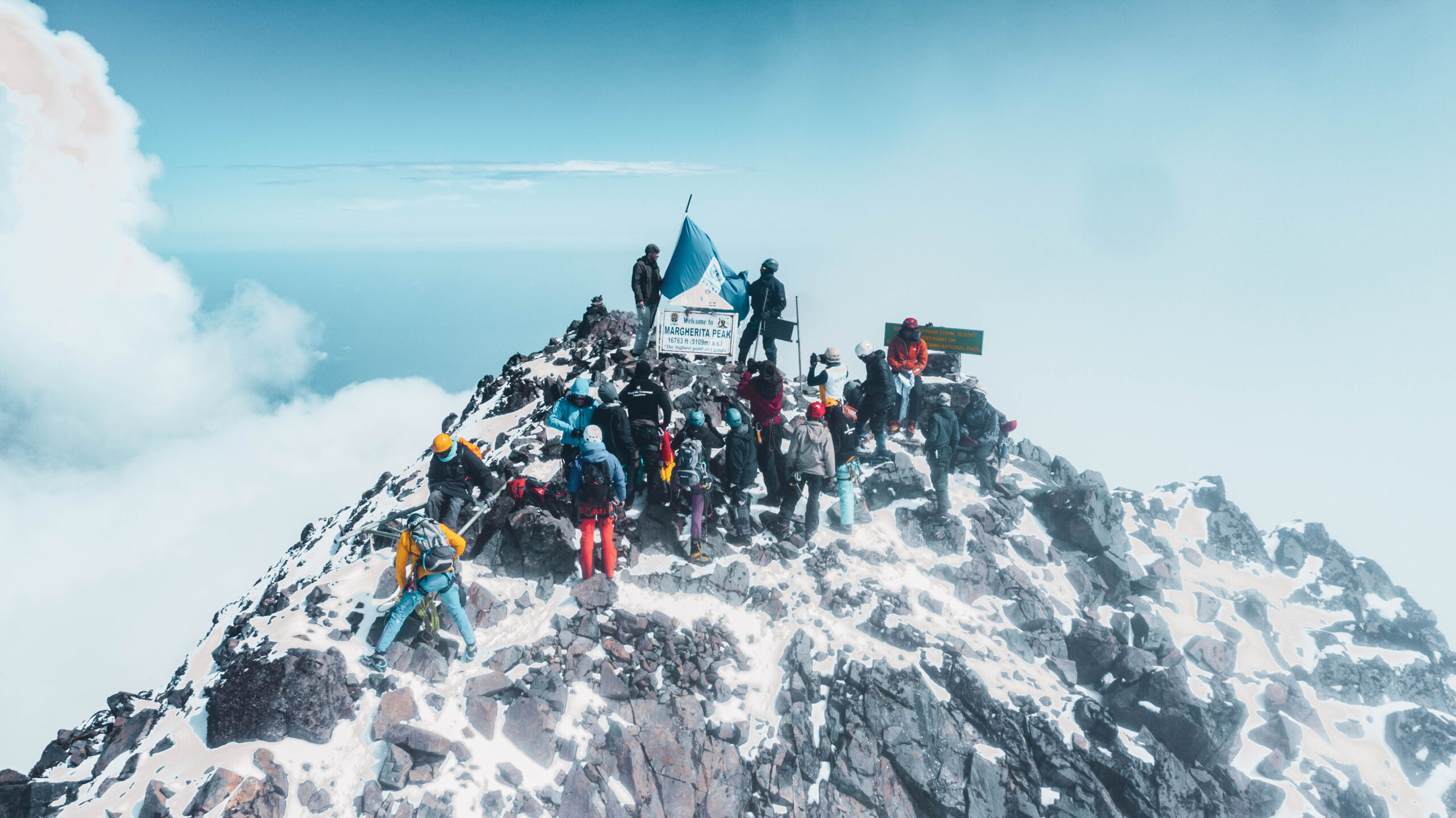
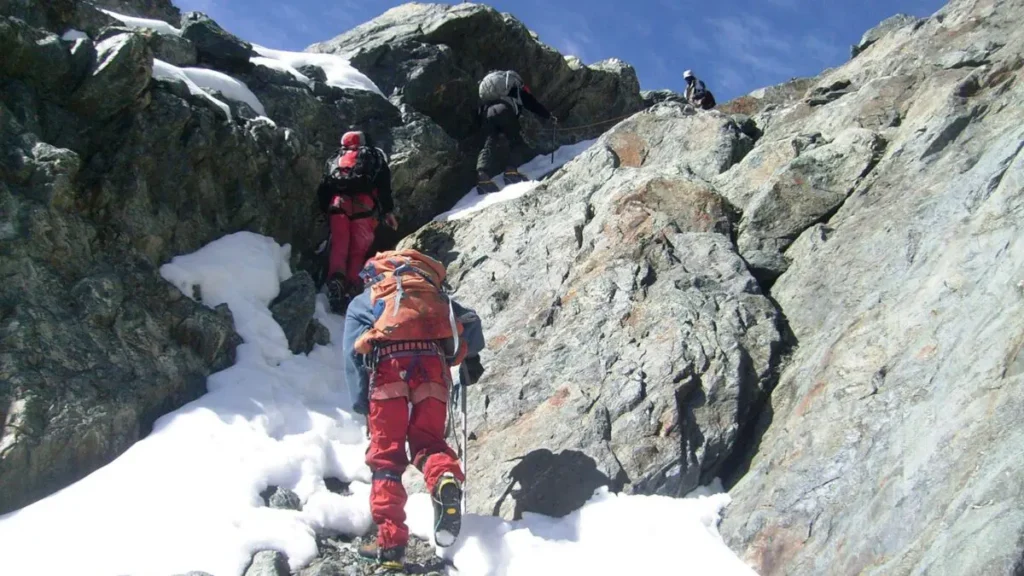
Margherita Peak is the reason most people come. At 5,109 meters on Mount Stanley, it is the third-highest summit in Africa behind Kilimanjaro and Mount Kenya, and, unlike Kilimanjaro, a mountain whose standard summit route crosses a glacier with rope, crampons, and ice axes.
We reserve scheduled group dates for Margherita departures for a practical reason as much as an aspirational one. A group must move together, and the summit day on Stanley is the one day of the trek that we cannot improvise. Everyone sets out from Elena Hut or Margherita in the dark, crosses the glacier on a roped team, climbs the final rock, and returns before the afternoon cloud builds. A group built around that single shared objective works because everyone has trained for the same thing, packed for the same thing, and arrived with the same expectations. If you would rather experience the range without a summit attempt, we have separate treks for that, described in our guide to trekking the Rwenzori Mountains without summiting, but they are arranged privately rather than as a scheduled group.
Margherita is not a technical climb like an Alpine four-thousand, but it is also not an easy walk. Before you book, confirm the current status of the summit route with us, since park authorities occasionally restrict access during ladder and fixed-line maintenance.
Why We Keep Groups to About Eight People
Our group departures are capped at roughly eight trekkers, and we hold that line deliberately. The Rwenzori is not a wide-trail mountain. The route passes through huts of limited capacity, narrow ridgelines, and boggy sections where a single large group churns the path into a trench. Eight people can eat together at one table in a hut, move at a steady pace behind two or three guides, and be roped into manageable teams on the glacier. Beyond that number the experience degrades quickly, and the guide-to-client attention that safety depends on thin out.
Our Rwenzori small trekking groups also build the kind of trust that matters when the weather turns. On a mountain where the forecast changes by the hour, guides need to know who is struggling, who is cold, and who is quietly planning to go further than they should. With eight people, that knowledge is possible. With twenty, it is not.
Rwenzori Porters
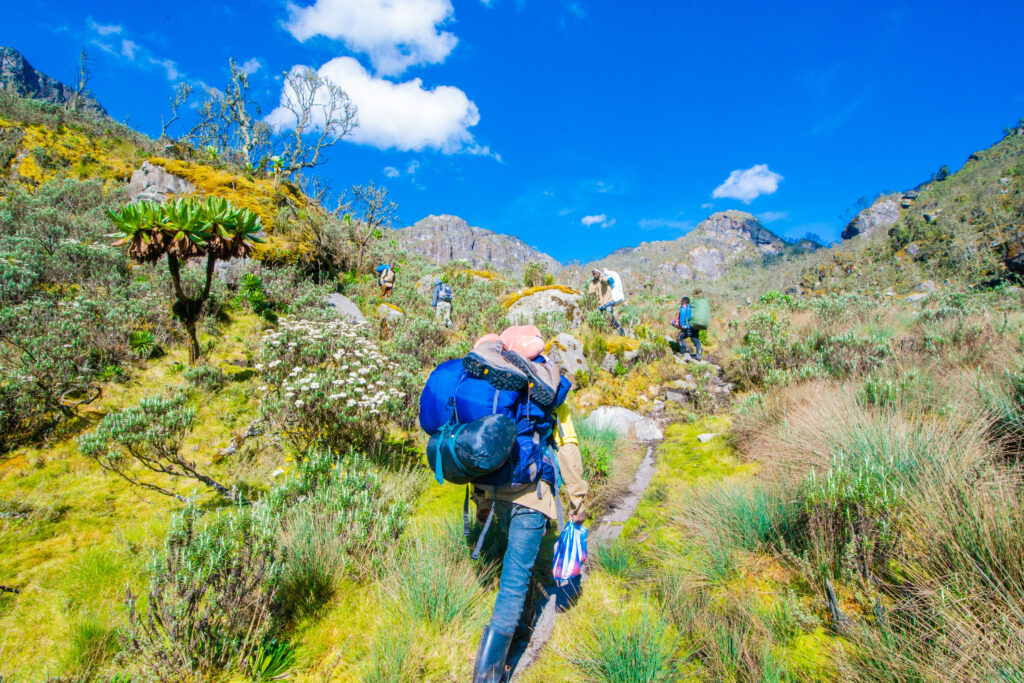
Behind the trekkers stands a larger team than most visitors expect. Park rules require a guide, and porters carry the group’s kit, food, and your bags. Many crew members come from the local Bakonzo communities that have lived on these slopes for centuries, and their story as guardians of the Rwenzori is part of why we think the mountain is worth the journey. A share of what you pay returns to the community.
How the Logistics Work
Every Rwenzori group trek we run starts and finishes in Kampala/Entebbe. That is a deliberate choice, because the vast majority of international trekkers arrive through Entebbe, and it removes the single biggest planning headache: getting yourself to a remote mountain town on the right day. But we also sometimes organize transfers from Kigali; some trekkers always first explore Rwanda for the gorilla expeditions and after decide to come and hike the Rwenzori Mountains, so we are very flexible on pickup points
The Road to the Mountain
The drive from Entebbe to Kasese and the foothills of the range covers roughly 420 kilometers and takes between 7 and 9 hours, depending on traffic through Mubende and Fort Portal and the stops along the way. We drive on the departure morning, break for lunch in Fort Portal, and arrive at the lodge near the trailhead in time for a briefing, a gear check, and an early night. On the first trekking morning, the group registers at the park gate and then gets ready to embark on the Rwenzori Adventure.
The Shape of a Rwenzori Group Trek
Our standard group treks on the Central Circuit and Kilembe Trail are built on the 7-day Central Circuit and 8-day Kilembe Trail Hike, adding the two road days that a Kampala/Entebbe start and finish require, plus a buffer day in Entebbe, giving 10 days and 11 days, respectively, from the morning you leave Kampala/Entebbe to the evening you return. The first day always involves picking up trekkers from the airport and transferring them to the lodge in Entebbe, where we wait for everyone to arrive, and we may also explore a little bit of Lake Victoria while waiting. Day 2 is the drive to the trailhead and briefing. Days 3 to 5 take you up the valley through forest and bog, past the high-altitude glacier lakes, and on to Elena Hut or Magheritah Camp on the Kilembe trail. The summit attempt is on day 6 or day 7, depending on which Rwenzori trail you choose, starting in the early hours. After the summit, the group descends over the coming days, and the 10th or 11th day is the drive to Kampala for your departure flight. Because trekking days are fixed, the summit day falls five days after the departure date, a fact we use to time each group around the moon in the calendar.
The Kilembe Trail version follows the same Kampala-to-Kampala principle with the trail days of the 8-day itinerary and 11 days of the overall group trek with transfers and the buffer day in Entebbe.
Before and after the trek, most guests need a comfortable night in Kampala or Kasese, and we provide that in our small group treks.
Choosing the Best Month for a Small Rwenzori Group Trek.
Selecting departure dates for a mountain range as wet as the Rwenzori is not a matter of copying a generic season chart. We started by studying how operators on other major mountains schedule their group climbs, then tested that against what we know about the Rwenzori’s ever-changing weather, while also ensuring we don’t compromise the Rwenzori’s privacy or make it as crowded as the other African mountain ranges.

The Rwenzori sits on the equator, so it has two rainy seasons and two drier ones, but because it is a high mountain range catching moisture from the Congo basin, it is never truly dry. The two windows in which trails are firmest, the bogs are least punishing, and the summit has the best odds of a clear morning are December to February and June to mid-September. Between them, March to May and October to November bring the heaviest and most persistent rain. Rain is possible in any month, and no one can promise otherwise.
We treat December, January, February, June, July, and August as our prime trekking windows; September as a strong shoulder month; March and October as shoulder months with a chance of rain; and April, May, and November as wet-season months for which departures run only when the group is experienced and flexible. We set each date so that the summit morning falls on or around the full or half moon, which gives the final climb a soft silver light on the glacier and the best chance of the dramatic photographs that people remember for decades. The moon cannot clear a cloud, but when the sky is open, a full-moon summit is something you do not forget.
Fitness, Altitude, and the Mountain’s Real Difficulty.
People ask how hard the Rwenzori is, and the honest answer is that it is not a technical mountaineering challenge, but it is a demanding trek, harder in some ways than Kilimanjaro because of the mud, the long days, and the cold.
Preparation matters more than raw athleticism. A steady training base built over four months, as we lay out in our 16-week training plan for a Rwenzori trek, makes the trek more enjoyable. Altitude is the other half of the equation.
Packing for our Rwenzori Small Group Trek.
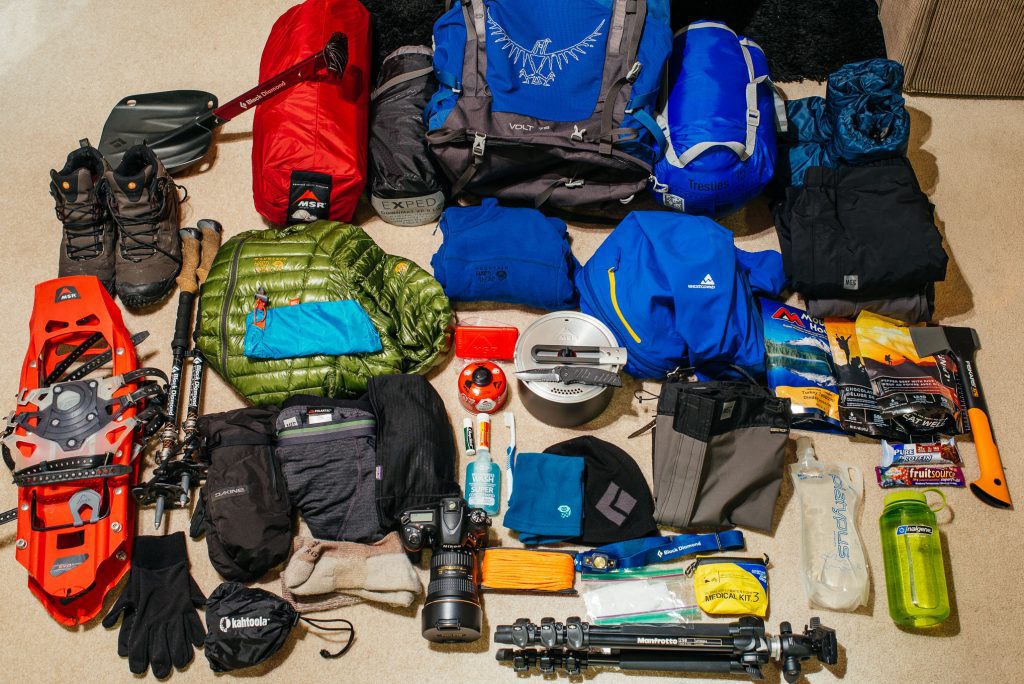
You will carry a daypack, and your porter will carry the rest, but what is in those bags decides whether the trek is comfortable. Our packing list for a Rwenzori hike is thorough, and the single most important item on it, the boots, gets its own treatment in our guide to the best boots for the Rwenzori’s bogs. Expect mud up to your knees on most days, and plan accordingly.
How to Join a Group Departure
Joining is straightforward. You choose a date from the calendar, send us your details, and pay a deposit to hold your place, and we confirm the group list as it fills. We then handle the national park permits, which you can read about in our step-by-step guide to booking Uganda Wildlife Authority permits for the Rwenzori, and the Uganda Wildlife Authority itself publishes the official park information. Because group places are limited to about eight and the prime windows are popular, we advise booking three to four months ahead for December to February and June to August.
Many of our guests combine the trek with other Ugandan highlights. If you are adding gorilla trekking or chimpanzee trekking, or a stay in Queen Elizabeth National Park, our Rwenzori and gorilla trekking safari combination and the broader range of Uganda safaris can be arranged around your group departure. We also host travelers from the United Kingdom, the United States, Australia, and South Africa, with country-specific planning advice for each.
Frequently Asked Questions About Rwenzori Group Treks.
What is a Rwenzori group trek?
A Rwenzori group trek is a scheduled, fixed-date guided trek to Margherita Peak (5,109 m) in Uganda’s Rwenzori Mountains, in which a small group of about eight trekkers shares the guides, porters, transport, and park permits. Our group departures start and finish in Kampala, follow the Central Circuit or Kilembe Trail, and are timed around the mountain’s driest weather and the full moon.
Unlike a private expedition, you join a published date rather than choosing your own, which usually lowers the per-person cost and means solo travelers are never trekking alone. Every group trek is built around a summit attempt on Margherita Peak, the highest point of Mount Stanley.
How many people are in a Rwenzori group trek?
Our Rwenzori group treks are limited to about eight trekkers. This number is small enough for everyone to share hut space and move at a steady pace behind several guides, and it keeps roped glacier teams manageable on summit day. Larger groups damage the narrow, boggy trails and thin out the guide attention that safety depends on.
Each group is supported by guides and a porter team in addition to the trekkers themselves.
What is the best month for a Rwenzori group trek?
The best months for a Rwenzori group trek are December, January, and February and from mid-June to August, when the trails are firmest and the chance of a clear summit morning is highest. September is a good shoulder month, while March to May and October to November are the wettest periods and carry a noticeably lower chance of good weather.
Rain is possible in any month on the Rwenzori, so no date guarantees dry conditions. Our group calendar sets each departure so that the summit morning falls on the full moon, and the month-by-month trekking guide explains the seasonal pattern in more depth.
Do Rwenzori group treks start and finish in Kampala?
Yes. Every Rwenzori group trek we run starts and ends in Kampala, so you do not need to organize your transfer to Kasese or the trailhead. The drive from Kampala to the foothills is roughly 420 kilometers and takes five to seven hours, and the group makes the same journey back at the end of the trek.
A standard Central Circuit group departure therefore takes 10 days from Kampala to Kampala, including two road days. Most international guests fly into Entebbe the day before departure.
Do group treks always go to Margherita Peak?
Yes. All of our scheduled group treks focus on the summit of Margherita Peak, 5,109 meters on Mount Stanley, the third-highest peak in Africa. Giving the whole group the same objective means everyone has trained, packed, and prepared for the same summit day, which keeps the group together and safe.
If you want to trek the range without attempting the summit, we can arrange that privately.
How much does a Rwenzori group trek cost?
Group pricing is per person and covers guiding, porters, park permits, accommodation, meals, and transport from and to Kampala, with international flights, visas, insurance, and tips normally excluded. Sharing guides and logistics across a group of up to eight brings the per-person cost below that of a comparable private trek.
How fit do I need to be to join a Rwenzori group trek?
You need a good level of general fitness and the ability to walk for six to nine hours a day on muddy, uneven ground for several consecutive days, but you do not need mountaineering experience. The glacier section is taught and guided on the mountain. Most successful trekkers train for around sixteen weeks with long loaded hikes, stair work, and some strength training.
Do I need mountaineering experience to reach Margherita Peak?
No prior mountaineering experience is required, but you must be comfortable with exposure, steady on rock, and willing to follow guide instructions on the glacier. On summit day the group is roped, uses crampons and an ice axe, and is led by licensed guides. Our guides give a short instruction session before the glacier crossing.
The technical difficulty of Margherita Peak is moderate rather than extreme, but the cold, altitude, and weather make it a serious undertaking that deserves proper preparation.
What is the success rate on the Rwenzori group treks?
Success depends on the weather, acclimatization, and the fitness of each trekker, and it is noticeably higher in the dry months than the wet ones. The Central Circuit’s gradual altitude profile helps most trekkers reach Elena Hut well acclimatized, and the small group size lets guides adjust the pace to the weakest member.
We do not quote a single guaranteed figure because no honest operator can.
Can I join a group trek if I am travelling alone?
Yes, and it is one of the best reasons to choose a group departure. Solo travelers join a small group of up to about eight people, share the guiding team and costs, and are never left walking alone. Many solo trekkers tell us that the group was one of the things they remember most about the trek.
How do I book a Rwenzori group departure?
Choose a date from the calendar, contact us with your details and preferred route, and pay a deposit to hold your place. We then arrange national park permits, accommodation, and transport and send a detailed pre-trek briefing and gear list. For prime months, booking three to four months ahead is wise.
What happens if a group departure does not have enough trekkers?
If a scheduled departure has not filled, we tell you well before the trip and give you the choice of moving to another date, converting to a private trek or receiving a refund under our booking terms.
Your Place on the Mountain Is Waiting
The Rwenzori Mountain does not reward the hurried or the unprepared, and it does not give itself up cheaply. It does reward people who arrive in the right month, with the right boots, in the right company, and who let the mountain set the pace. A small group, a clear date, a guide who knows every bog and every ridge, and a full moon on the glacier at five in the morning are as perfect a recipe for a life-defining trek as exists anywhere in Africa.
If one of the dates in the calendar fits your plans, the next step is simple. Look at the Margherita Peak itineraries, choose the route that suits you, and contact our team with your preferred month, your trekking experience, and any questions at all. We will confirm availability, walk you through the preparation, and hold your place in a group of no more than about eight people. You can also message us directly on WhatsApp if that is easier for you. The mountain has been there for millions of years; the 2027 dates will not last long.


