
Complete guide to the 3-Day Mahoma Loop Hike in the Rwenzori Mountains. Day-by-day itinerary, Lake Mahoma, camps, gear, birdwatching, and booking. Moderate difficulty.
3-Day Mahoma Loop Hike | Rwenzori Forest Trek Guide
3-Day Mahoma Loop Hike: Complete Guide to the Rwenzori Forest Trek
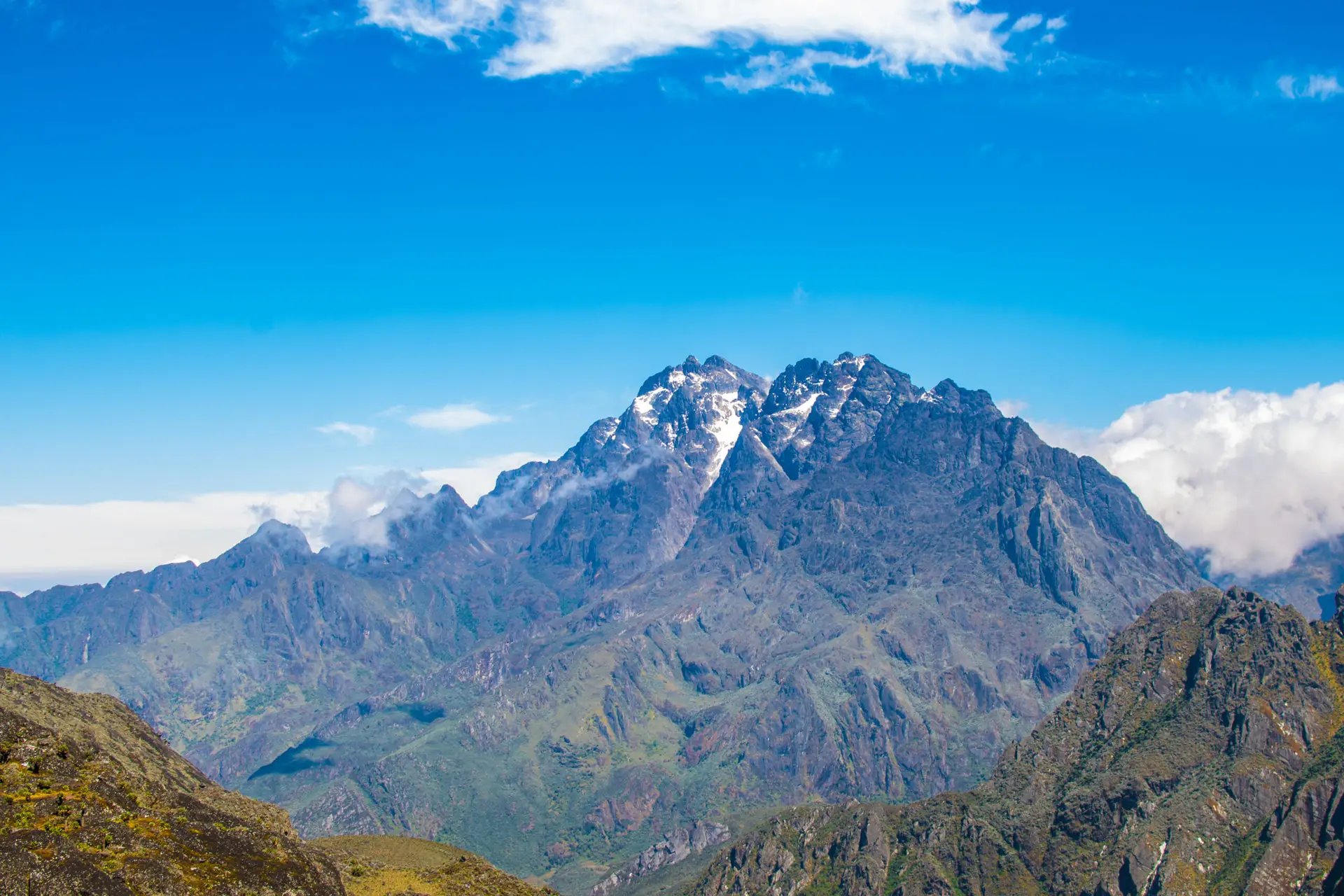
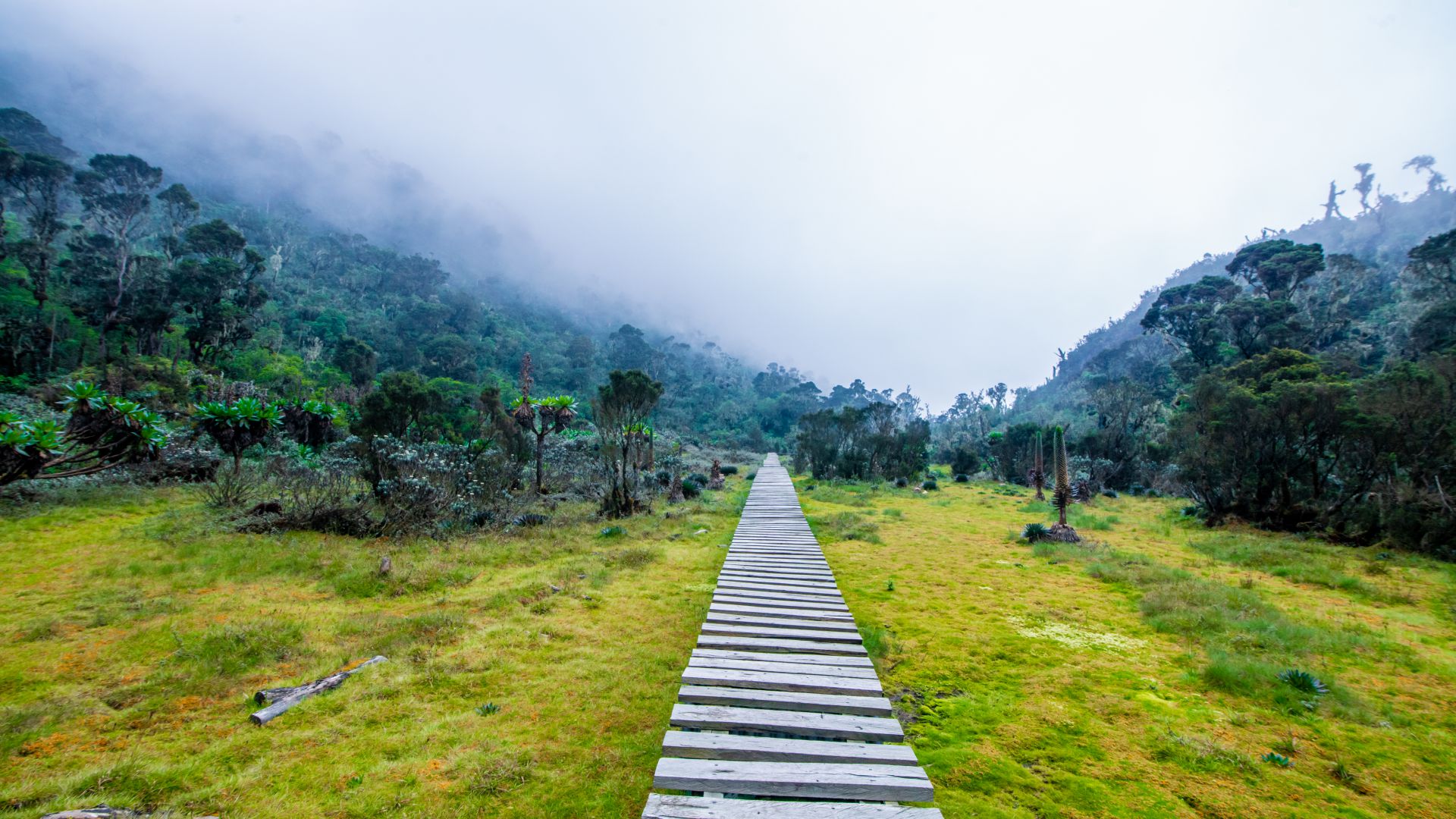
A 3-day hike along the Mahoma Loop, part of the Rwenzori Mountains’ central circuit, offers an excellent introduction to the area’s flora and fauna. Hiking the Rwenzori Mountains for 3 days allows you to thoroughly enjoy the breathtaking environment without committing to a longer excursion to the glacier peaks. The Mahoma loop traverses through various environments, including lush montane forests and scenic alpine meadows.
Are you interested in trekking in the Rwenzori Mountains National Park but have a strict budget? Explore the Rwenzori Mountains’ diverse flora and fauna by hiking the Rwenzori Mahoma Trail for 3 days with the assistance of the experienced rangers at Rwenzori Trekking Safaris
The 3-Day Mahoma Loop Hike is the finest short trek in the entire Rwenzori Mountains National Park. In three unhurried days, it carries you from the humid tropical forest at the trailhead into the moss-draped montane highlands, delivers you to the shores of Lake Mahoma, a pristine glacial lake set in a crater bowl at 2,990 metres and returns you to the valley via a different trail, completing a genuine loop through one of Africa’s most biodiverse mountain environments. No glacier crossing, no extreme altitude, and no previous trekking experience required. What you will find is extraordinary natural beauty, world-class birdwatching, and the deep, enveloping silence of a mountain forest that almost nobody visits.
The Mahoma Loop sits in a category of its own among short Rwenzori treks. Unlike the 1-Day Nyabitaba Trek, which turns back on the same path, or the 2-Day Lake Mahoma Hike, which reaches the lake but returns directly, the 3-Day Mahoma Loop creates a complete circular route through the lower mountain. You enter from one direction and exit from another, seeing more terrain, encountering more wildlife habitats, and gaining a genuine sense of the mountain’s scale without any of the altitude-related demands of the summit routes.
This is the trek we recommend to first-time Rwenzori visitors, to families with older children, to birdwatchers who want concentrated time in the forest, and to anyone who wants to test the mountain before committing to a longer expedition. If you have a long Uganda itinerary and only three days for the mountains, this loop gives you the most complete authentic Rwenzori experience possible in this duration. Many trekkers who complete the Mahoma Loop leave immediately, planning their return for the summit.
3-Day Mahoma Loop Hike: At-a-Glance
| Duration | 3 Days / 2 Nights on the mountain |
| Total Distance | Approximately 35 km (22 miles) loop |
| Maximum Elevation | 2,990 m Lake Mahoma |
| Minimum Elevation | 1,646m Nyakalengija Trailhead |
| Total Elevation Gain | Approx. 1,344m cumulative ascent |
| Difficulty | Moderate, suitable for fit beginners |
| Trek Route | Central Circuit Trail (loop variant via Mahoma Forest Trail) |
| Start & End Point | Nyakalengija Gate, near Ibanda, Kasese District |
| Glacier Crossing | None forest and montane zones only |
| Best Season | Year-round; December–March and June–August are the driest. |
| Group Size | 1 to 12 trekkers (private and shared departures) |
| Accommodation | Mountain huts at Nyabitaba and Lake Mahoma camps |
| Rubber Boots | Strongly recommended muddy forest sections throughout |
| Porter Policy | Recommended: 1 porter per trekker |
| Price Indicator | From USD $700 per person (group of 2) |
Why the 3-Day Mahoma Loop Hike? What Makes It Special.
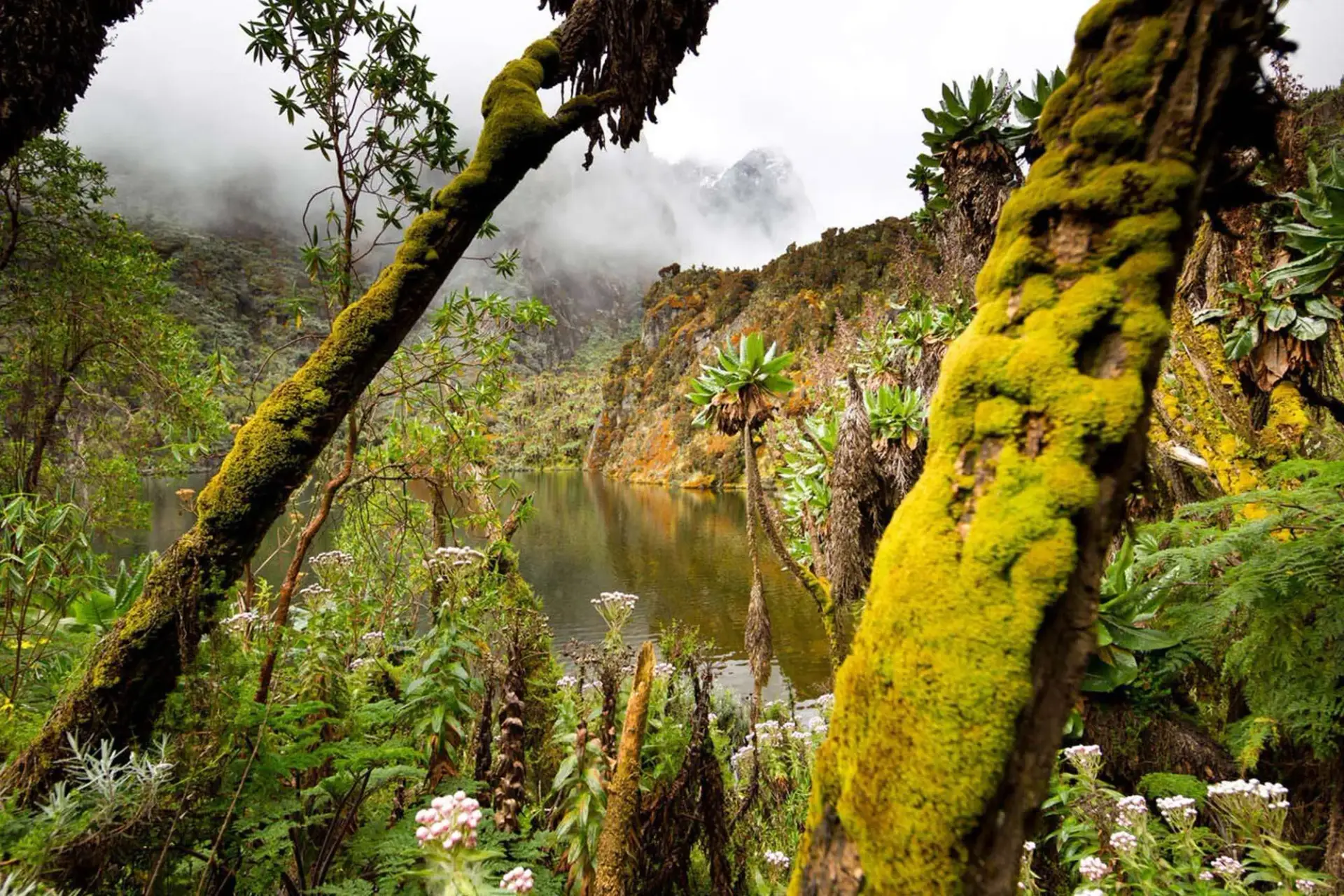
Lake Mahoma is one of the Rwenzori’s hidden secrets. Most trekking guides to Uganda focus entirely on Margherita Peak and the summit glaciers, which means the extraordinary lower and mid-mountain environment, the montane forest, the bamboo belt, and the ancient moss-covered heather trees are consistently overlooked in the travel press. The Mahoma Loop is the itinerary that truly represents this lower world. The lake itself is a perfectly formed glacial tarn set in a steep-sided crater basin at 2,990 metres. Its water is cold, dark, and mirror-still on calm mornings. The surrounding forest comes right to the shore. There are no other tourists, no tents visible, and no sound except water, wind, and birds.
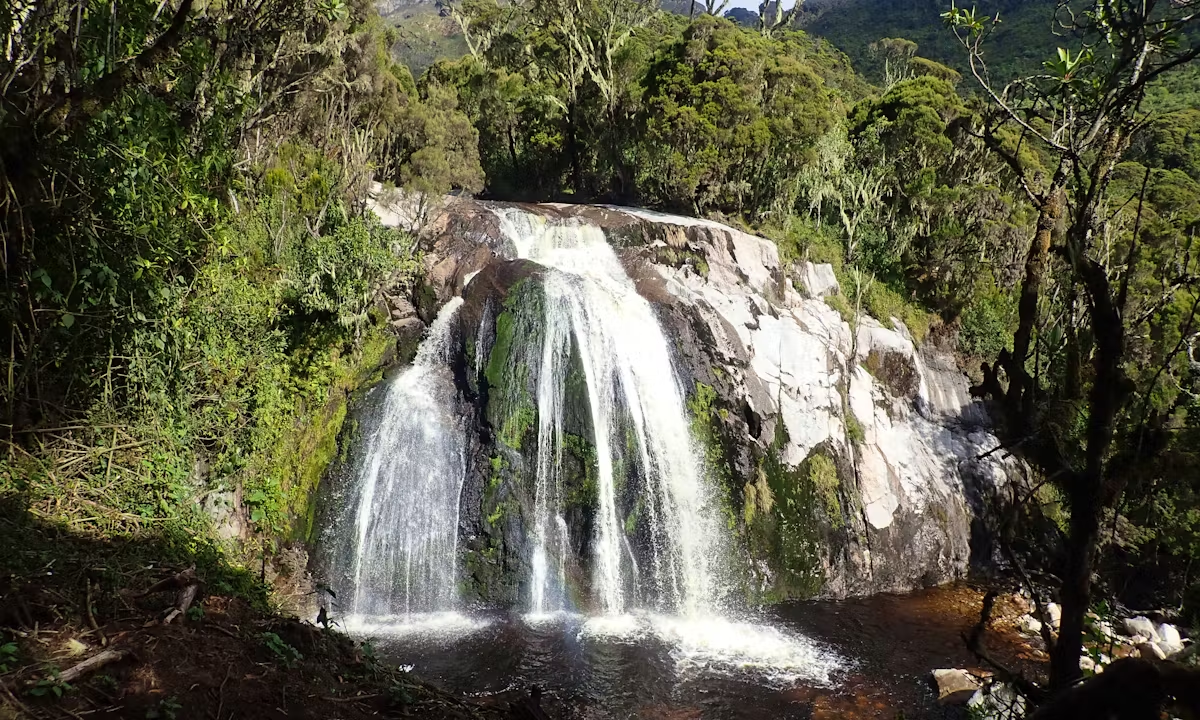
The Rwenzori Mountains National Park is a UNESCO World Heritage Site and one of Africa’s most important centers of biodiversity. The lower forest zone traversed by the Mahoma Loop harbors more than 200 bird species, including 19 species endemic to the Albertine Rift. Serious birders list it among the continent’s premier avian destinations. Even casual visitors will be astonished by the richness of the forest, the towering Podocarpus trees, the cascading waterfalls audible from the trail, the colobus monkeys overhead, and the constant, layered sound of a living ecosystem undisturbed by human settlement.
At a maximum elevation of 2,990 metres, the 3-Day Mahoma Loop Hike never crosses into the altitude zone where acclimatization becomes a concern for most trekkers. There is no requirement for altitude medication, no glacier equipment, and no crampon training. This makes it genuinely accessible to a much wider range of visitors than any of the summit routes, including older trekkers, those new to multi-day hiking, and those visiting Uganda primarily for wildlife rather than mountaineering. Our guide to trekking the Rwenzori as a beginner positions the Mahoma Loop as the ideal entry point to the mountain.
For experienced trekkers considering a longer expedition, the Mahoma Loop also functions as an excellent shakedown route. Three days on the mountain in genuine Rwenzori conditions rain, mud, steep forest terrain, and basic hut accommodation gives you an accurate picture of what to expect before committing to the 7-Day Margherita Peak Climb or any of the summit itineraries. Many repeat visitors have done exactly the same: tested the Mahoma Loop first and returned for the summit within twelve months.
Full Day-by-Day Itinerary: 3-Day Mahoma Loop Hike
Day 1: Nyakalengija Gate to Nyabitaba Camp
Nyabitaba Camp (2,652 m) | Entry into the Rwenzori Forest World
Elevation: 1,646 m to 2,652 m (+1,006 m) | Distance: ~8 km | Hiking Time: 4–5 hours
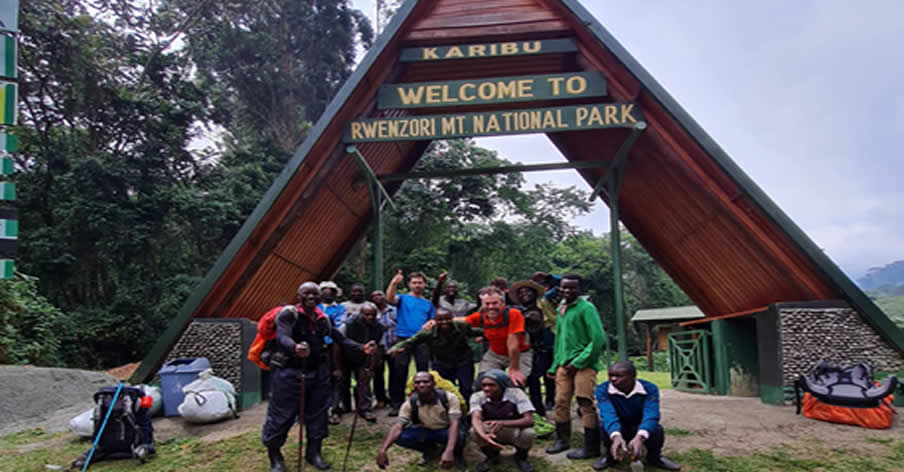
Your Mahoma Loop begins at Nyakalengija Gate (1,646 m), the main Uganda Wildlife Authority entry point for the Rwenzori Central Circuit, located approximately 22 kilometers northeast of Kasese town. After registering at the ranger post, meeting your guide and porter team, and dividing loads, you enter the forest shortly after 8:00am. The trail ahead is immediately different from any other mountain approach in East Africa: dense, humid, intimate, and alive with sound.
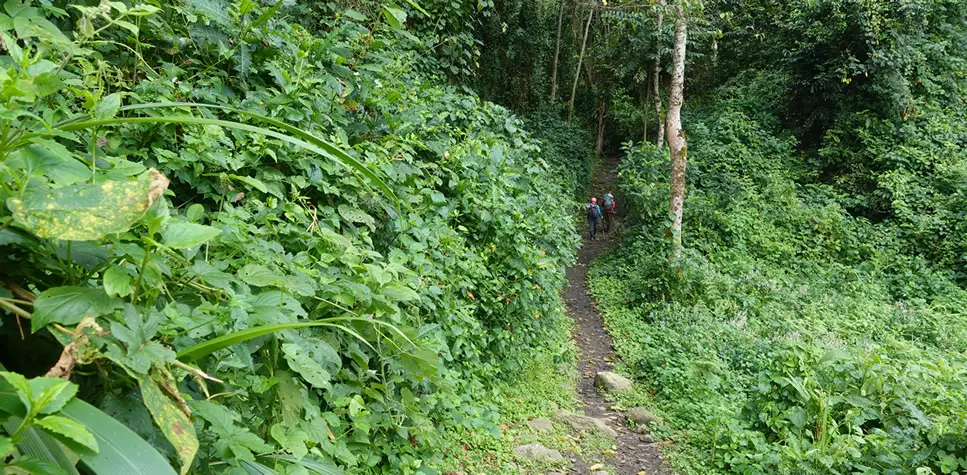
The first section of the trail climbs gently through lowland tropical forest on a well-maintained earth path. The canopy above is layered and rich; Symphonia globulifera, Podocarpus latifolius, and Newtonia trees provide the upper storey, while the understory is dense with ferns, wild balsams, and an extraordinary diversity of epiphytic plants clinging to every surface. In the morning hours, light filters through the canopy in slanted beams, and the forest floor steams gently in the humidity.
Roughly 90 minutes from the gate, you cross the first of several log bridges over the Mubuku River. The sound of the river, turbulent, white, and cold, accompanies you for much of the morning. The trail steepens progressively after the river crossing, climbing through increasingly tall forest with a richer understory as altitude increases. Watch the canopy here: this area is prime habitat for the Rwenzori turaco (Ruwenzorornis johnstoni), a spectacular bird with crimson wing feathers exclusive to this mountain range. In the upper canopy sections, you frequently encounter black-and-white colobus monkeys moving through the trees in unhurried family groups.
The final 45-minute push to Nyabitaba Camp climbs a prominent forest ridge through the densest section of the lower trail. You emerge from the forest onto a saddle at 2,652 metres where the camp’s metal-frame hut is visible through the trees. The views from the camp ridge, when the afternoon cloud lifts, extend down the Mubuku Valley to the plains below and, on clear evenings, to the distant Queen Elizabeth National Park and Lake George. Your cook team will have a hot lunch waiting on arrival. The afternoon is for rest, birdwatching on the camp ridge, and adjusting to the cooler mountain air before the next day’s push to the lake.
Guide Insight: Nyabitaba RidgeThe birdwatching on the Nyabitaba ridge at dusk is genuinely exceptional. Sit quietly at the camp edge in the final hour of daylight and watch the forest canopy below. Rwenzori turacos return to roost in the large Podocarpus trees at the valley’s edge. You will often also hear and sometimes see the Rwenzori nightjar as dusk falls. If birdwatching is a priority, ask your guide to spend 30 extra minutes on the ridge before dinner. |
Day 2: Nyabitaba Camp to Lake Mahoma Camp
Lake Mahoma, 2,990 m | The Crater Lake at the Heart of the Forest
Elevation: 2,652m to 2,990m (+338m) | Distance: ~11 km | Hiking Time: 5–6 hours
Day 2 is the heart of the Mahoma Loop and the day that most trekkers will remember longest. The trail from Nyabitaba to Lake Mahoma moves through a botanical world of increasing strangeness and beauty, leaving the lower forest and entering the ancient tree heather zone that defines the Rwenzori’s visual character. Depart after breakfast at around 7:30am. The trail initially descends from the Nyabitaba ridge back toward the Mubuku River valley before branching northeast onto the Mahoma Forest Trail.
The first hour of the day follows a traverse through mid-altitude forest at roughly 2,500-2,600 metres. The flora shifts perceptibly from the lower forest species to the characteristic Rwenzori heather-dominated vegetation. Erica arborea trees, draped entirely in pale green hanging lichen and deep-pile moss, line the trail like something from a prehistoric landscape. The moss covering on the Rwenzori is extraordinary in its depth and consistency; individual boulders, tree roots, and fallen logs are buried under 20-30 centimeters of living moss. Walking through this zone feels genuinely otherworldly.
The trail climbs steadily through the bamboo zone where stands of giant mountain bamboo (Sinarundinaria alpina) create a bamboo cathedral effect as the culms arch overhead before breaking out into more open heather moorland in the upper section of the day’s walk. From here, the descent to the lake crater begins. The path drops steeply for approximately 200 metres into the crater basin, and the first sight of the lake’s dark surface through the trees at the bottom is one of the best moments along the entire route.
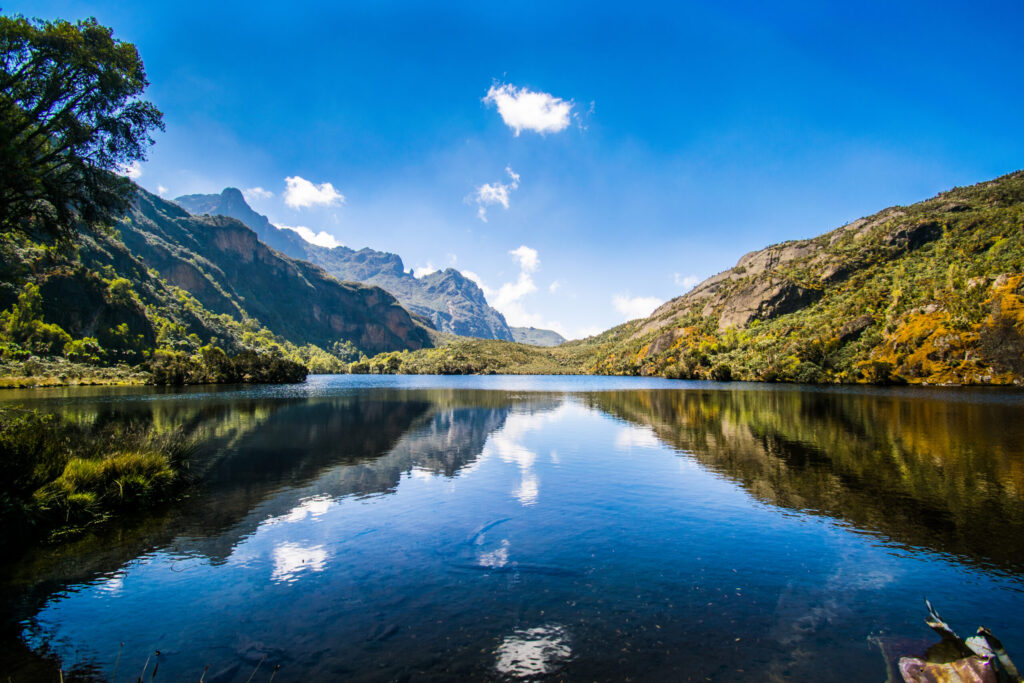
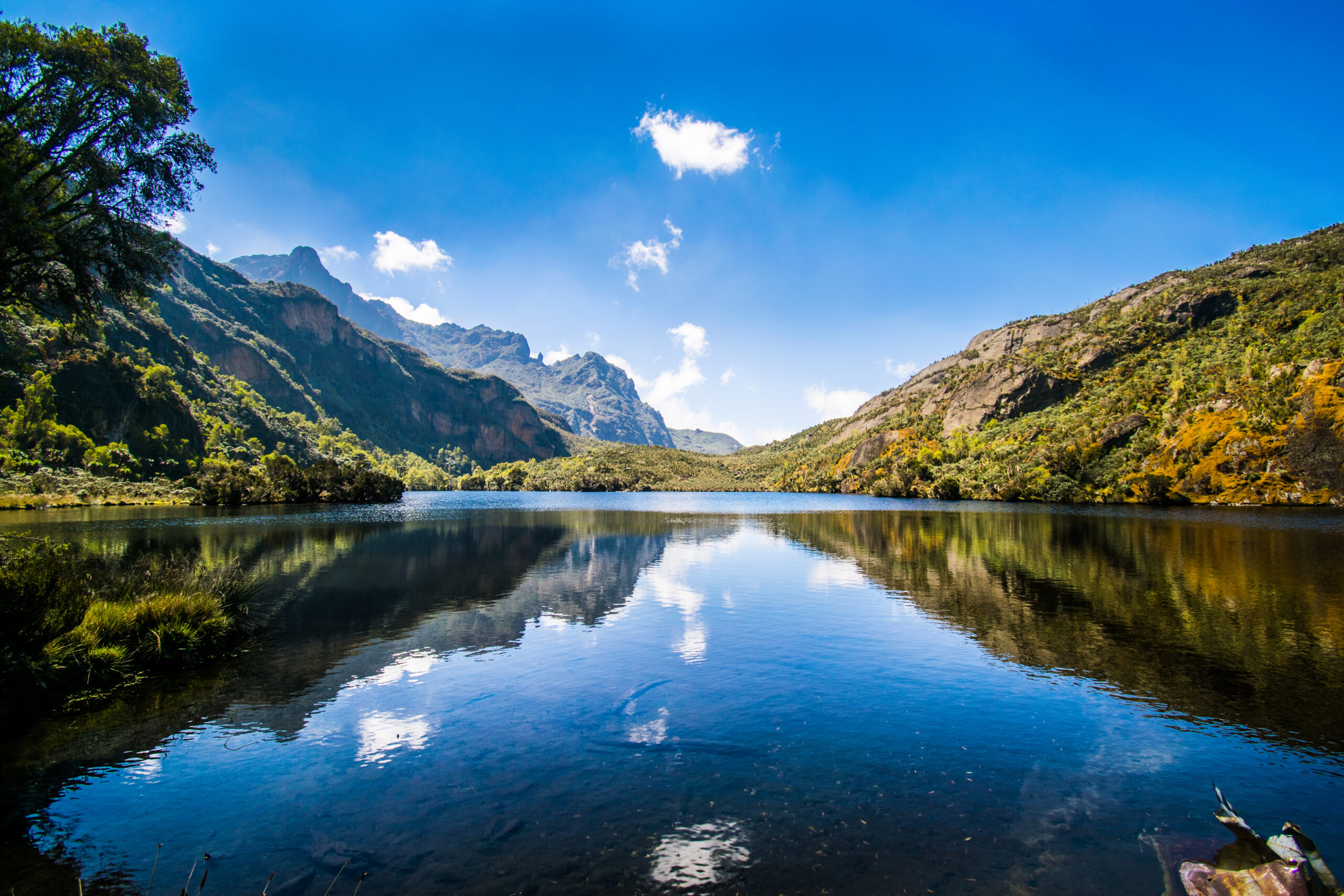
Lake Mahoma sits in a perfectly circular glacial crater at 2,990 metres, its shoreline ringed by ancient heather forest that comes right to the water’s edge. The lake is approximately 300 metres in diameter and 30 metres deep. Its water has the dark tea color typical of high-altitude lakes with tannic drainage from heather roots. On still mornings, it reflects the surrounding forest and sky in perfect mirror detail. On windy afternoons, small waves run across its surface. The lake is home to a small population of high-altitude fish and numerous aquatic bird species, including mountain ducks and various waders.
The camp at Lake Mahoma is situated on a small, flat area at the lake’s edge, one of the most atmospheric overnight positions on any Rwenzori trek. The hut looks directly over the water. Dinner is served as the light fades, and if the evening cloud clears, the stars reflected in the lake surface create a scene of remarkable beauty. Temperatures at the lake are noticeably cooler than Nyabitaba; expect 8–12 degrees Celsius overnight. A warm sleeping bag and a dry set of camp clothes are essential.
Highlight: Dawn at Lake MahomaThe single best experience of the entire Mahoma Loop is waking before sunrise on Day 3 and sitting at the lake edge in the first light. On still mornings, the lake surface lies absolutely flat, and the surrounding forest reflects in perfect detail. Bird calls echo from the crater walls in a multi-layered acoustic experience unlike anything you will encounter elsewhere on the mountain. Set an alarm for 5:30am, put on your warm layers, and sit by the water for 30 minutes before breakfast. |
Day 3: Lake Mahoma Camp to Nyakalengija Gate (Loop Descent)
Nyakalengija Gate 1,646m | Completing the Loop
Elevation: 2,990m to 1,646m (-1,344m) | Distance: ~16 km | Hiking Time: 5–7 hours
The final day of the Mahoma Loop is the longest in terms of distance but the most consistently downhill in character, which makes it feel psychologically easier than days 1 or 2. After the early morning lake session and a hot breakfast, the team departs by 7:30am on the loop trail that descends from the lake crater via a different ridge from the one used on the ascent. This is the defining feature of the loop design: you see an entirely fresh section of the Rwenzori forest on Day 3 that you did not traverse on the way up.
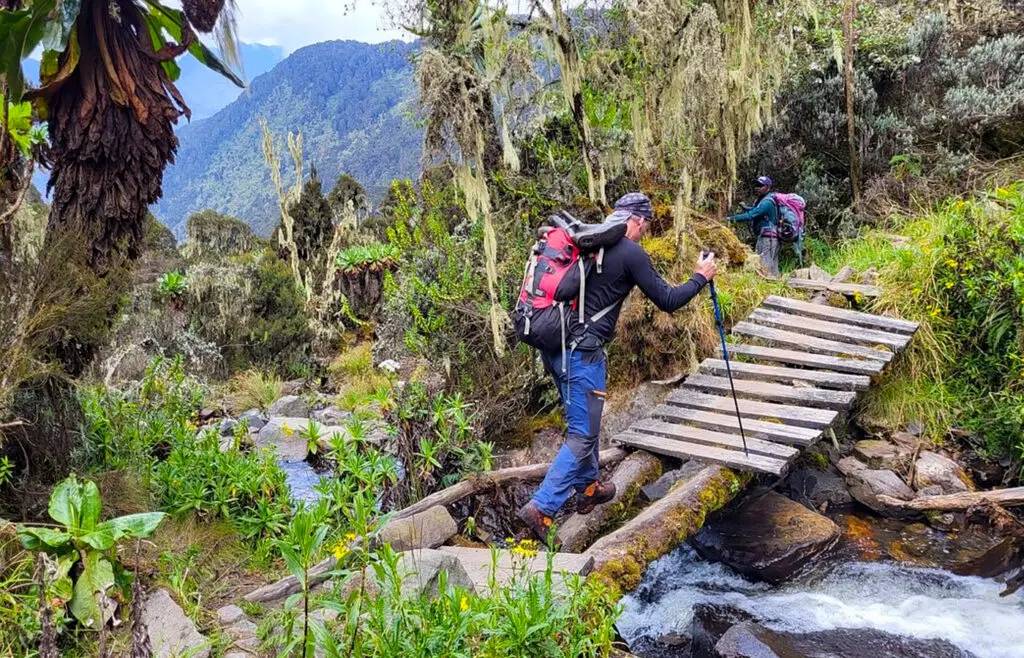
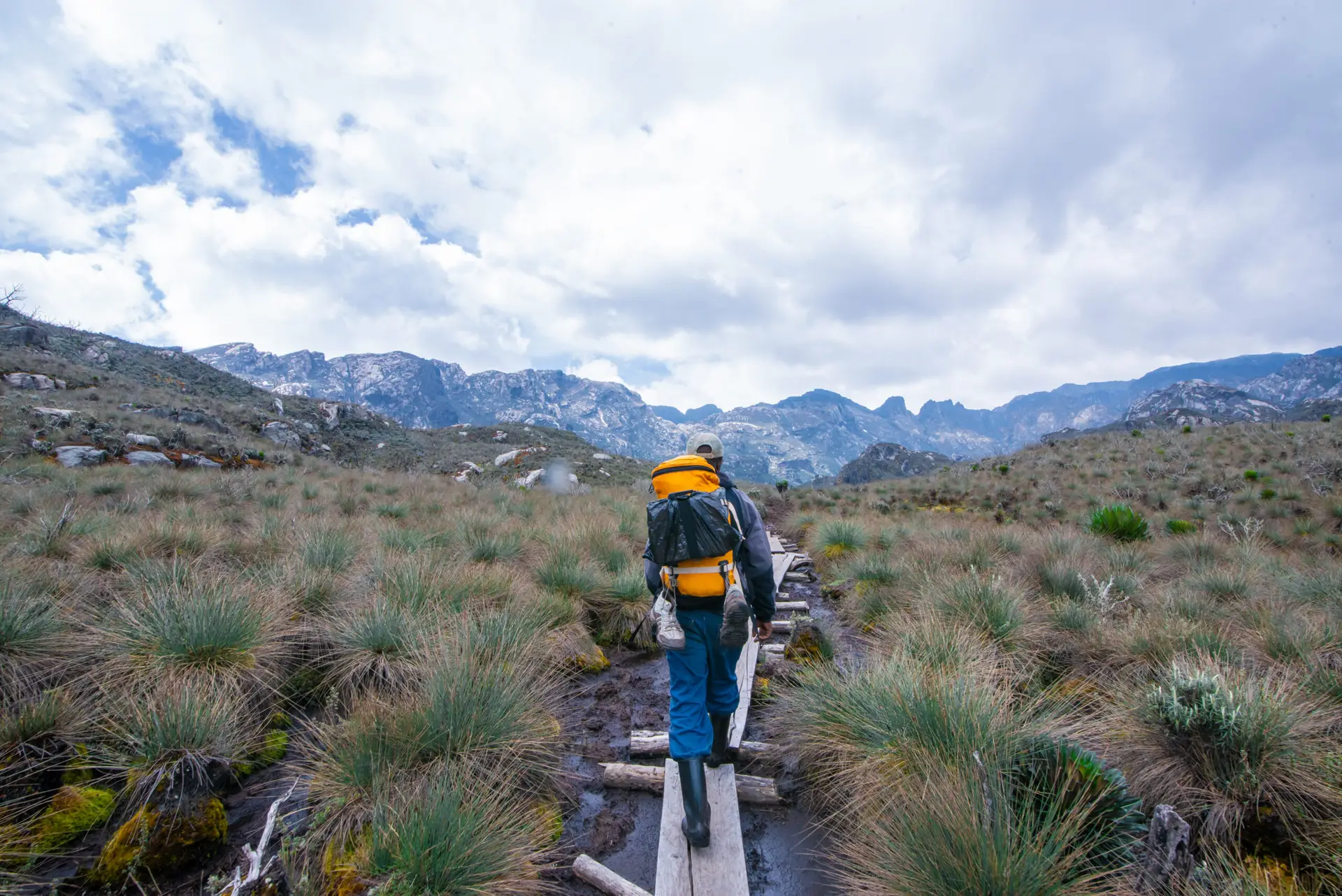
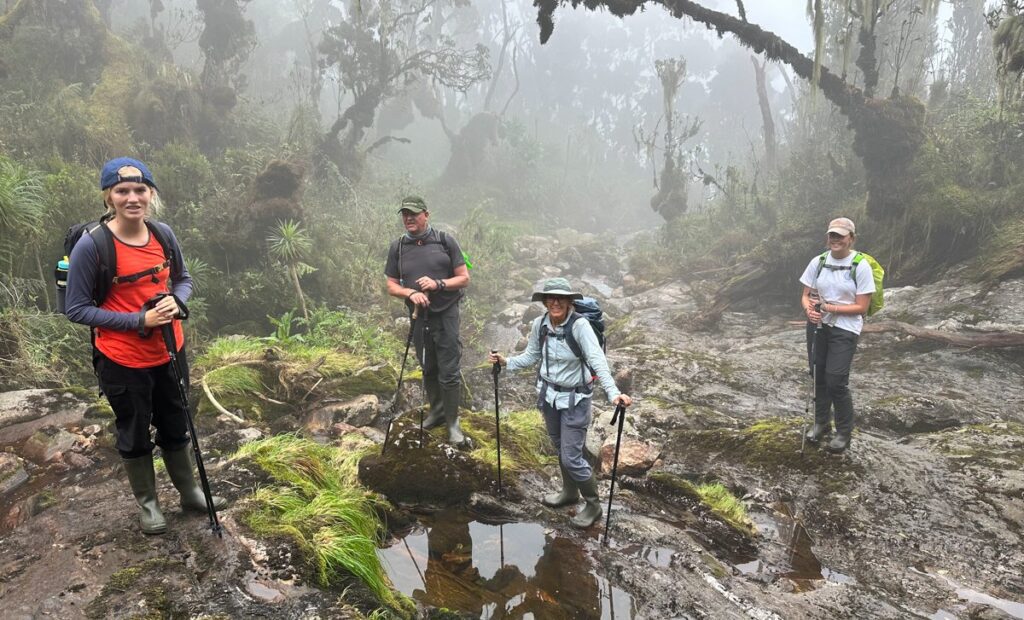
The descent trail from Lake Mahoma initially climbs briefly out of the crater on the southern side before commencing a long, sustained descent through dense montane forest. This section passes through terrain that is less frequently traveled than the main Nyabitaba trail, which means the forest is notably wilder and the wildlife encounters are often more frequent. The trail here is narrow, root-covered, and significantly muddier than the main path. Rubber boots earn their keep on this descent.
In the midsection of the day’s walk, the trail passes through a particularly rich section of lower heather and bamboo forest with multiple stream crossings on log bridges. This is the best section of the entire loop for smaller forest birds; the Rwenzori batis, the handsome francolin, the double-collared sunbird, and the African hill mynah are all frequently encountered here. Listen also for olive sunbirds and the distinctive call of the Rwenzori white-tailed flycatcher in the bamboo margins.
The lower section of the trail re-enters the tall-canopy tropical forest of the Mubuku Valley and follows the river downstream to rejoin the main Central Circuit trail approximately 3 kilometers from the gate. The final stretch along the valley floor provides a satisfying sense of completion: the familiar river sounds, the change in light and humidity as the forest canopy opens, and the first sight of the Nyakalengija Gate buildings through the trees. UWA rangers issue summit certificates for all participants who complete the full loop. Your transfer vehicle back to Kasese or your onward destination departs from the gate.
Guide Insight: Day 3 PaceThe loop descent trail on Day 3 is longer than most trekkers expect when they look at it on a map. The terrain is technically more demanding than the map distance suggests — tree roots, stream crossings, and muddy sections all add time. A 7:30am departure is important. Take the mid-morning section steadily and reach the lower valley trail before noon to ensure a comfortable arrival at the gate in early-to-mid afternoon. |
Elevation Profile: 3-Day Mahoma Loop Hike
| Day / Section | Elevation Range | Net Change |
| Day 1: Nyakalengija to Nyabitaba | 1,646 m to 2,652 m | +1,006 m gain |
| Day 2: Nyabitaba to Lake Mahoma | 2,652 m to 2,990 m | +338 m gain |
| Day 3: Lake Mahoma to Nyakalengija | 2,990 m to 1,646 m | -1,344 m descent |
| TOTALS | Peak elevation: 2,990 m | +1,344 m up / -1,344m down |
The 3-Day Mahoma Loop Hike has a forgiving elevation arc by Rwenzori standards. The total cumulative ascent of 1,344 metres is distributed over two climbing days, with the most significant gain concentrated on Day 1 (1,006 m). Day 2 is gentle in elevation terms, adding only 338m while covering ground through the most scenically varied section of the route. Day 3 is an entirely downhill return that loses all accumulated height over a longer distance. At no point does the route exceed 2,990 metres well below the altitude threshold where acclimatization becomes a significant concern for the vast majority of trekkers.
Camps & Accommodation on the Mahoma Loop
Both overnight camps on the 3-day Mahoma Loop are managed by the Uganda Wildlife Authority as part of the Central Circuit trail system. A dedicated guide covers the full inventory of mountain huts and campsite facilities across all Rwenzori trails. Here is what you need to know specifically about the two camps used on this itinerary.
Nyabitaba Camp (2,652 m)
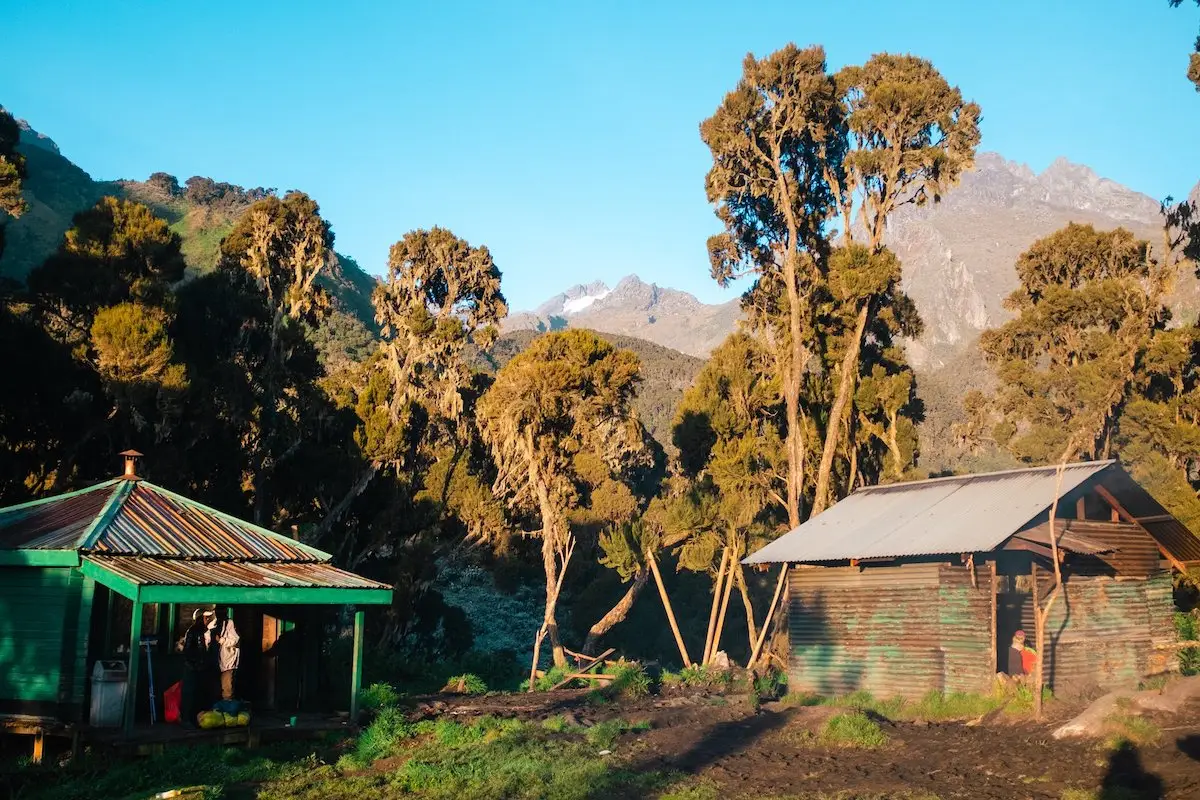
Nyabitaba is the most established camp on the entire Rwenzori trail network and the standard first-night stop for all Central Circuit expeditions, including the Mahoma Loop. The camp sits on a forest ridge above the Mubuku Valley with views across the lower mountain on clear evenings. The main hut provides sleeping platforms with foam mattresses in two rooms. Guide and cook teams use a separate shelter. The ridge location means the camp gets direct early-morning sun when skies are clear and dries out faster than lower forest camps after rain. A basic long-drop toilet facility is located a short walk from the hut. Stream water is available 100 metres below the camp, and all drinking water is boiled or filtered by your cook team before use.
Lake Mahoma Camp (2,990 m)
The camp at Lake Mahoma is the most memorable overnight position on any of the Rwenzori short trek itineraries. The single hut is situated at the lake’s edge, just far enough from the waterline to stay dry in heavy rain. Sleeping platforms and foam mattresses are provided. The location is exposed to wind when weather comes in from the west, which drops the overnight feel-it temperature significantly below the air temperature. On still, clear nights, the camp is one of the most beautiful in Uganda; the lake reflects the stars and, when the moon is up, is bright enough to read by. There is no mobile signal at Lake Mahoma. Water is drawn directly from the lake and boiled for camp use.
Flora & Wildlife: What to Expect on the Mahoma Loop
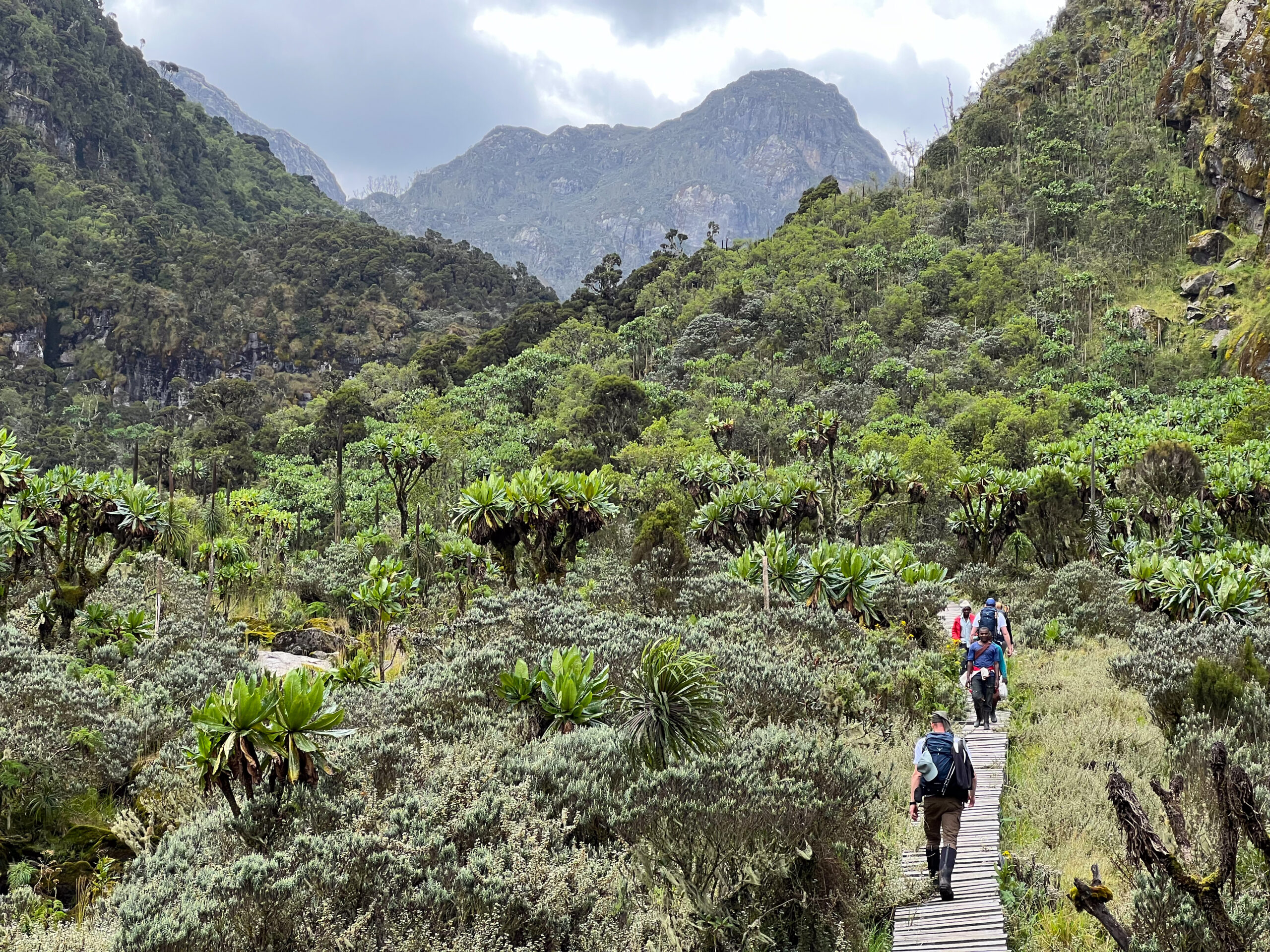
The 3-Day Mahoma Loop Hike traverses two of the Rwenzori’s five vegetation zones: the lower montane forest zone (1,600–2,500m) and the lower Afroalpine heather zone (2,500–3,200m). This covers the richest sections of the mountain for both bird diversity and general wildlife encounters. It does not reach the giant lobelia and groundsel zones above 3,500 m, which require the summit itineraries, but the two zones it does traverse are arguably more botanically diverse and certainly more wildlife-rich than the high-altitude zones.
Birds
The Mahoma Loop is one of the finest birdwatching routes in Uganda and among the best in the entire Albertine Rift. The lower forest zone alone holds more than 180 species. Key target birds on this route include the Rwenzori turaco (Ruwenzorornis johnstoni endemic to the Rwenzori), the handsome francolin, the Rwenzori batis, the Rwenzori nightjar, the Doherty’s bushshrike, the white-tailed crested flycatcher, the Rwenzori apalis, and the Archer’s ground robin. The Albertine Rift endemic bird list for this section of the Rwenzori is extensive and makes this route a must-do for visiting birders. Bring a copy of the Birds of the Albertine Rift field guide and ask your guide to help identify calls as you walk.
Mammals
Researchers regularly encounter black-and-white colobus monkeys throughout the upper forest section between Nyabitaba and Lake Mahoma. Olive baboons are common on the lower slopes near Nyakalengija. Blue monkeys (Cercopithecus mitis) are resident in the mid-altitude forest and are often heard before they are seen. Hyrax are present on rock outcrops near the Lake Mahoma camp and are often audible in the pre-dawn hours with their remarkably loud, complex call sequence. Forest elephants use the lower mountain slopes but are rarely encountered on the main trail. Tracks, dung, and broken vegetation are frequently visible.
Flora
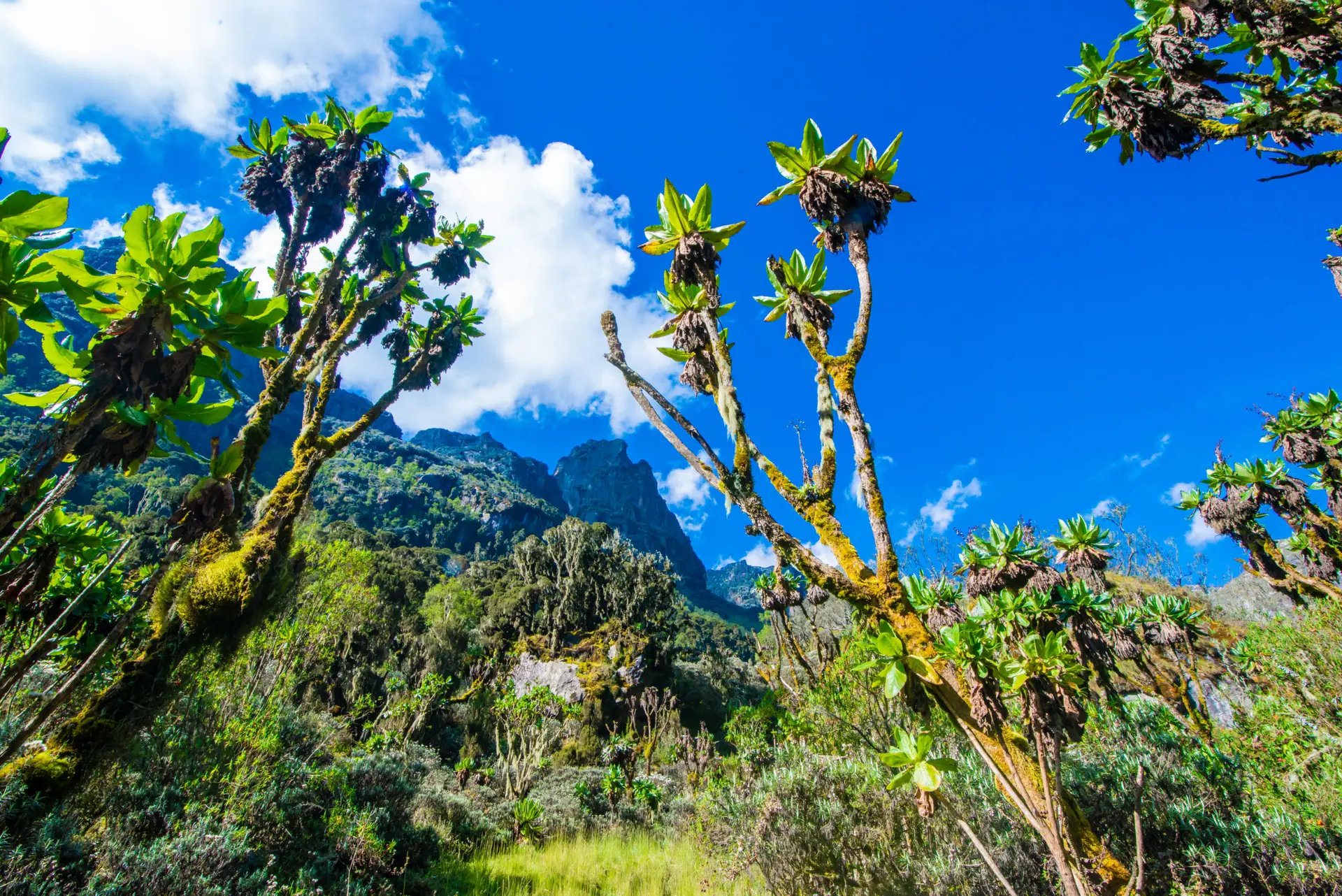
The botanical highlight of the Mahoma Loop is the transition from tall lowland forest species to the ancient heather woodland of the mid-mountain. Erica arborea and Philippia benguelensis trees dominate above 2,500 metres, growing to 10 metres or more and are so completely covered in hanging lichen and cushion moss that the trunks are invisible. The moss alone on the Rwenzori heather trees is extraordinary; mature specimens support tens of kilograms of accumulated bryophytes and are the most visually distinctive feature of the mountain. At the lake edge, a line of tall sedges and rushes borders the water, with Senecio species and the first scattered giant lobelias starting to grow toward the full-height specimens visible on the longer summit routes.
Physical Difficulty & Fitness Requirements
The 3-Day Mahoma Loop Hike is rated Moderate, a meaningful description rather than a marketing qualification. The moderate rating means it is accessible to fit beginners with some walking or hiking experience, but it is not a casual stroll. The Day 1 climb to Nyabitaba gains 1,006 metres over 8 kilometers on a forest trail that is genuinely steep in its upper sections. The Day 3 descent requires 16 kilometers of sustained downhill walking on uneven terrain. The trail throughout is muddy, root-covered, and physically demanding in the way that real forest trekking always is.
To trek the Mahoma Loop comfortably, you should be able to walk continuously for 5-6 hours at a moderate pace, handle some steep sections using your hands on tree roots for support, and feel comfortable in wet, muddy conditions. You do not need to be a runner, a gym regular, or an experienced mountaineer. What helps enormously is being acclimatized to walking on uneven ground. Urban fitness (running on roads, cycling, and gym machines) does not translate directly to forest trekking. If you can, include some weekend hillwalking in your preparation.
Altitude is not a significant concern on this itinerary. The maximum elevation of 2,990 metres is below the threshold at which altitude sickness typically becomes an issue for most healthy adults. Some trekkers experience mild headaches at Nyabitaba Camp on the first night; drinking 3-4 liters of water throughout Day 1 is the most effective preventive measure. If you have a known sensitivity to altitude or a relevant medical condition, consult the complete medical guide and speak to your doctor before travel.
Trekkers over 50 will find the Mahoma Loop very well-suited to their pace and physical demands. We regularly guide trekkers in their 60s and 70s on this route successfully. The guide for older trekkers on the Rwenzori provides tailored advice on preparation, pacing, and what to expect. The key variable for older trekkers is the Day 1 ascent; take it slowly, stop whenever needed, and resist the temptation to keep pace with younger members of the group.
Best Time to Do the 3-Day Mahoma Loop Hike

The Rwenzori Mountains receive rainfall in every month of the year, which means there is no genuinely dry season in the way other East African mountains experience. However, two periods of reduced rainfall make the Mahoma Loop significantly more pleasant: December through early March and June through August. Our complete guide to the best time to visit the Rwenzori covers the full seasonal picture in detail.
| Month | Conditions for the Mahoma Loop |
| December – February | Driest period. Best forest visibility. Recommended. |
| March | Transitional. Light showers. Still good conditions. |
| April – May | Heavy rains. The trails are very muddy. Not ideal for first-timers. |
| June – August | Second dry season. Excellent. Most popular months. |
| September – October | Transitional. Variable. Expect wet afternoons. |
| November | Short rains building. Muddy but manageable. |
Unlike the summit routes, where weather windows directly affect glacier safety, the Mahoma Loop can be completed in almost any weather conditions. Rain makes the forest more atmospheric, the streams more dramatic, and the birds more active. The main practical consideration in the wet season is underfoot conditions; the Day 3 loop descent trail becomes genuinely slippery in heavy rain. Rubber boots are essential in all seasons but are non-negotiable in April-May and November.
What’s Included & What’s Not Included
What Is Included
- Uganda Wildlife Authority park entry fees for all 3 days
- Licensed lead mountain guide (UWA-certified, English-speaking)
- Dedicated cook with full cooking equipment
- Porter team (1 porter per trekker for personal luggage up to 15 kg)
- Mountain hut accommodation at Nyabitaba (Night 1) and Lake Mahoma (Night 2)
- All meals on the mountain: breakfast, lunch, dinner, and tea/snacks daily
- Drinking water (boiled/filtered by cook team)
- Trek completion certificate issued by Uganda Wildlife Authority
- Private vehicle transfers from Kasese town to Nyakalengija Gate and return
What Is Not Included
- International flights and Uganda visa fees
- Travel insurance (strongly recommended, see below)
- Personal trekking gear (sleeping bag, rain jacket, boots, poles)
- Tips and gratuities for guide, cook, and porter team
- Personal medication and first-aid items
- Pre- and post-trek accommodation in Kasese or Kampala
- Any costs arising from extended stays due to weather or personal decision
Packing & Gear List: 3-Day Mahoma Loop Hike
No glacier equipment is needed for the Mahoma Loop, but the forest conditions demand specific gear choices that are different from most trekkers’ default hiking setup. The full Rwenzori packing list covers every item in complete detail. Below are the essential items specific to the Mahoma Loop conditions.
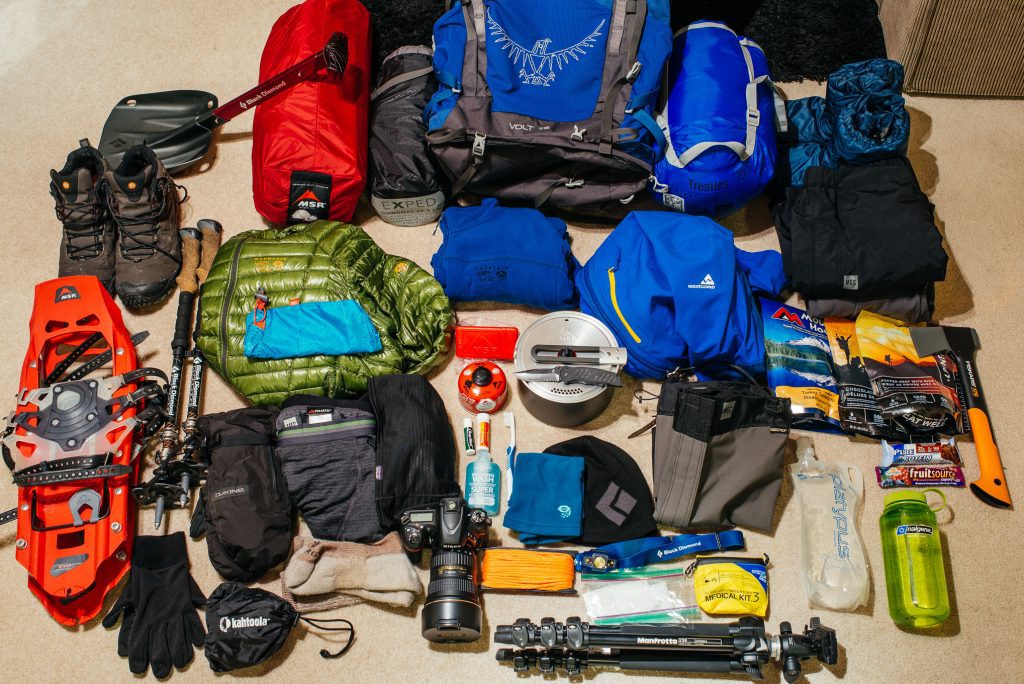
Footwear: Critical.
Rubber boots (also called gumboots or wellies) are strongly recommended for the Mahoma Loop, not optional. The forest trail between Nyabitaba and Lake Mahoma, and particularly the Day 3 loop descent, crosses multiple bog sections and stream banks where the mud is deep enough to submerge conventional trekking boots. Our rubber boot and footwear guide explains which models work best and how to hire boots locally in Kasese if you cannot bring your own. Bring a pair of dry shoes or camp trainers for use inside the huts.
Clothing
- Moisture-wicking base layer top and bottom (2 sets)
- Mid-layer fleece or softshell jacket
- Waterproof hard-shell jacket and trousers fully seam-taped
- Warm hat, lightweight gloves
- Thick wool or synthetic hiking socks (3–4 pairs minimum)
- Gaiters for rubber boot interface and lower leg protection
Sleep & Camp
- Sleeping bag rated to +5 to 0 degrees Celsius (the Mahoma camps do not require a summit-weight bag but do get cold)
- Lightweight sleeping bag liner for extra warmth
- 25–35 litre daypack with waterproof rain cover
- Dry bags or heavy-duty bin liners for electronics and spare clothes
Essentials
- Headtorch with spare batteries
- Trekking poles (highly recommended for Day 1 climb and Day 3 descent)
- Personal water bottle or hydration bladder (2L minimum)
- High-factor sunscreen and insect repellent (lower forest)
- Small personal first-aid kit: blister pads, ibuprofen, antihistamine
- Binoculars essential for birdwatching and well worth the weight
Rwenzori Permits, Park Fees & Costs
All trekking in Rwenzori Mountains National Park requires prepaid Uganda Wildlife Authority permits. Our full cost breakdown for the Rwenzori in 2026 covers all fee categories. Below is the specific fee structure for the 3-Day Mahoma Loop Hike.
| Fee Category | 2026 Rate (USD) |
| Park Entry (per person, per day) x 3 | $45 x 3 = $135 |
| Hut Accommodation (per night) x 2 | $20 x 2 = $40 |
| Lead Guide Fee (per day) x 3 | $30 x 3 = $90 |
| Cook Fee (per day) x 3 | $20 x 3 = $60 |
| Porter Fee per porter (per day) x 3 | $15 x 3 = $45 per porter |
| Rescue Fund (mandatory UWA levy) | $35 per person |
All-inclusive package prices for the 3-Day Mahoma Loop Hike start at approximately USD $650 per person for a group of two, inclusive of park fees, guide, cook, porter, hut accommodation, and all meals. Group rates reduce the per-person cost significantly. Contact us for a personalized quote based on your group size and dates. For guidance on tipping, read our porter services and tipping guide.
Getting to Nyakalengija: Transport & Logistics
Nyakalengija Gate is located approximately 22 kilometers northeast of Kasese town in western Uganda. Our complete transport guide covers all options in detail.
From Kampala
Kampala to Kasese is approximately 380 kilometers by road on the Kampala–Fort Portal–Kasese highway, typically taking 5–6 hours by private vehicle. We provide private 4WD transfers for all our trekkers from Kampala, Fort Portal, or Entebbe Airport. Coach services also depart Kampala’s Kisenyi Bus Terminal for Kasese on daily schedules. From Kasese, a dedicated vehicle or boda-boda taxi covers the final 30-minute transfer to Nyakalengija Gate.
From Entebbe Airport
Entebbe to Kasese is approximately 430 kilometers, taking 6–7 hours. Trekkers arriving on international flights should allow an overnight rest in Kasese before beginning the trek. We recommend reading the Kasese town guide for accommodation recommendations, where to eat, and what to do in Kasese the evening before your trek begins.
Book Your Slot
Respond within Minutes
From
$700
per person
- Duration 3 Days / 2 Nights
- Group Size 1–12 people
- Start Point Nyakalengija
- Departures Year-round
- No Summits Lake Mahoma
No booking fee. Free cancellation up to 30 days before departure. We respond within Minutes.
Our Popular Rwenzori Treks
Magheritah Peak (8 Days Kilembe Trail)
$1705 Per Person
Mutinda LookOut (4 Days)
$645 Per Person
Short Magherita Hike (5 Days Central Circuit)
$1200 Per Person
Rwenzori Hike (7 Days Central Circuit)
$1400 Per Person
Frequently Asked Questions: 3-Day Mahoma Loop Hike
How difficult is the 3-Day Mahoma Loop Hike in the Rwenzori Mountains?
The 3-Day Mahoma Loop Hike is rated Moderate; it is accessible to fit, reasonably active adults without prior trekking experience, but it is not an effortless walk. The most demanding section is the Day 1 climb from Nyakalengija Gate to Nyabitaba Camp, which gains 1,006 metres over 8 kilometers of steep forest trail. Day 2 is the gentlest day, gaining only 338 metres while traversing some of the most beautiful terrain on the route. Day 3 is a sustained 16-kilometer descent that tests the knees and requires confident footing on a muddy, root-covered trail. Trekking poles are strongly recommended, particularly for Day 3. If you can comfortably walk for 5–6 hours at a moderate pace, you can complete this trek.
Is the 3-Day Mahoma Loop suitable for complete beginners?
Yes, the Mahoma Loop is the trek we most commonly recommend to first-time Rwenzori visitors and beginners to multi-day trekking. At a maximum elevation of 2,990 metres, it does not reach the altitude zone where acclimatization becomes a significant challenge. The terrain is demanding but never technically difficult in a mountaineering sense. The overnight camps are well-established huts with mattresses and a cook team preparing all meals. Beginners should focus their preparation on cardiovascular fitness and breaking in their rubber boots thoroughly before the trek. Our guide for first-time Rwenzori climbers provides detailed preparation advice.
What is Lake Mahoma like, and why is it special?
Lake Mahoma is a glacial lake set in a steep-sided crater basin at 2,990 metres on the lower slopes of the Rwenzori. It is approximately 300 metres in diameter and roughly 30 metres deep. The lake’s water has a characteristic dark tea color from tannic drainage through the heather root system that surrounds it. It is a pristine, completely undeveloped high-altitude lake, with no jetties, no boats, and no buildings visible on the shore. Ancient tree heather forest comes directly to the waterline on all sides. The lake’s most remarkable quality is its silence and stillness on calm mornings, when the surrounding forest and sky are reflected in the surface with perfect clarity. It is one of the most beautiful natural features in western Uganda.
Do I need rubber boots for the 3-Day Mahoma Loop Hike?
Rubber boots (gumboots) are strongly recommended for the Mahoma Loop and are considered essential in our preparation briefings. The trail between Nyabitaba Camp and Lake Mahoma, and particularly the loop descent trail on Day 3, crosses multiple bog sections and muddy stream crossings where deep mud makes conventional waterproof trekking boots inadequate; they will fill with water or be pulled off your feet entirely in the deeper sections. You can hire rubber boots in Kasese town before the trek if you cannot bring your own from home. Our rubber boot and footwear guide explains sizing, recommended brands, and local hire options.
What birds will I see on the 3-Day Mahoma Loop Hike?
The Mahoma Loop is one of the premier birdwatching routes in Uganda, traversing the two most bird-rich zones of the Rwenzori. The target list for serious birders includes 19 Albertine Rift endemic species, led by the spectacularly colorful Rwenzori turaco (Ruwenzorornis johnstoni), which is exclusive to this mountain range. Other regularly encountered species include the Rwenzori batis, handsome francolin, Rwenzori nightjar, Doherty’s bushshrike, African hill mynah, white-tailed crested flycatcher, Rwenzori apalis, and Archer’s ground robin. The best birdwatching hours are the first two hours after dawn and the last hour before dusk at the camps. If birdwatching is your primary motivation for the trek, inform us at booking so we can assign a guide with specialist birding knowledge.
Can children do the 3-Day Mahoma Loop Hike?
Children aged 10 and above can complete the Mahoma Loop with appropriate preparation and adult supervision. The main consideration for younger children is the length of Day 1 (8 km, 1,006 m gain) and Day 3 (16 km descent). Children should have recent experience walking for 4-5 consecutive hours and be comfortable in wet, outdoor conditions. We do not recommend the Mahoma Loop for children under 8 years old. Teenagers typically manage the route easily and often enjoy it more than adults, particularly the lake camp and the wildlife encounters. Contact us to discuss your group composition, and we will advise on pace adjustments for younger participants.
What is the difference between the 2-Day and 3-Day Mahoma Hike?
The key difference between the 2-Day Lake Mahoma Hike and the 3-Day Mahoma Loop Hike is the return route. The 2-day version ascends to the lake and returns on the same path, retracing your steps to Nyakalengija on Day 2. The 3-day loop version spends a night at Lake Mahoma and descends via an entirely different trail on Day 3, completing a genuine circular route. The 3-day loop is the better trek; it gives you a morning at the lake (the most beautiful time there), shows you an entirely different section of forest on the return, and provides a more complete experience of the lower Rwenzori. If you have the time, always choose the 3-day loop over the 2-day out-and-back.
What sleeping bag do I need for the Mahoma Loop?
A sleeping bag rated for +5 to 0 degrees Celsius is adequate for the Mahoma Loop. You do not need a heavyweight summit sleeping bag. Nyabitaba Camp typically reaches 10–12 degrees Celsius at night; Lake Mahoma is slightly colder at 8–10 degrees. In the dry season months (December–March and June–August), overnight temperatures are warmer, and a 3-season sleeping bag is perfectly comfortable. In the shoulder seasons, a liner adds meaningful warmth. Do not use a bag rated only to +10 degrees. The lake camp, in particular, is significantly colder than the forest camp, and nights here with inadequate bedding are genuinely uncomfortable.
Is there mobile phone signal on the Mahoma Loop?
Mobile signal (MTN Uganda and Airtel Uganda) is intermittently available on the Nyabitaba Ridge (Camp 1) when skies are clear and you move to the ridge edge. At Lake Mahoma (Camp 2), the signal is typically absent. The route descending on Day 3 regains partial signal in the lower valley. Plan your communications accordingly; inform family or colleagues of your schedule before departure, and do not rely on being reachable from the mountain.
Our drones and connectivity guide covers signal availability across all Rwenzori camps. Your lead guide carries an emergency communication device for safety purposes.
How does the 3-Day Mahoma Loop compare to other Rwenzori short treks?
The Mahoma Loop sits in the sweet spot of the Rwenzori short trek portfolio. It is longer and more complete than the 1-Day Nyabitaba Trek (which reaches only Nyabitaba and returns), more diverse in terrain than the 2-Day Lake Mahoma out-and-back, and more accessible than any of the summit routes. Among the Kilembe Trail options, the 4-day Waterfalls Hike offers a different character (more waterfall drama, less lake scenery) at a longer duration. For trekkers who want the complete Rwenzori experience without a summit commitment, the Mahoma Loop is the strongest single option at this duration.
Do I need travel insurance for the 3-Day Mahoma Loop Hike?
While travel insurance is not technically mandatory for the Mahoma Loop in the way it is for our summit treks, we strongly recommend it. The trek operates in a remote mountain environment where medical evacuation, if needed, is logistically complex. Standard health insurance from your home country typically does not cover emergency evacuation or mountain rescue in Uganda. A basic travel insurance policy with adventure activities coverage and medical evacuation of a minimum of USD $100,000 is appropriate for the Mahoma Loop. Our guide to travel insurance for the Rwenzori region recommends specific providers and policy requirements.
Book the 3-Day Mahoma Loop Hike: Start Your Rwenzori Journey
Ready to Trek the Mahoma Loop?The 3-Day Mahoma Loop Hike is the finest introduction to the Rwenzori Mountains and one of the most beautiful short treks in all of East Africa. Our expert local guides have walked every meter of this route in every season and under every condition. We handle every detail, from your transfer from Kasese to your certificate at the gate on Day 3. |
- WhatsApp: +256 773 256 104 (instant response from our mountain guides)
- Email: rwenzoritrekkingsafaris@gmail.com
- Online Enquiry: Contact Form & Custom Quote
Interested in other short Rwenzori options? Explore the 2-Day Lake Mahoma Hike for a faster version of the lake experience, or the 4-Day Rwenzori Waterfalls Hike on the Kilembe Trail for a different forest character with dramatic waterfall scenery. If the Mahoma Loop inspires you to go further on a future visit, the 7-Day Margherita Peak Climb is the natural next step on the mountain.