Rwenzori Porters and Guides: The Complete Guide to the People Who Make Your Rwenzori Expedition Possible
Everything about Rwenzori porters and guides includes their identities, roles, certification, required numbers, wages, welfare, and a complete tipping guide with amounts.
On every Rwenzori trek, usually around Day 3 in the heather zone, there is a moment when the cold is serious, the pack feels heavy, and the next camp is further than you calculated. You look up and see your porter already there, three hundred metres ahead, sitting on a rock with your duffle bag balanced on their back, grinning at you. They have been on this trail since childhood. They know exactly how far the camp is, and they know you are fine. That grin is one of the most reassuring things the mountain offers, and it comes free of charge with the expedition.
The People Behind Every Successful Rwenzori Expedition
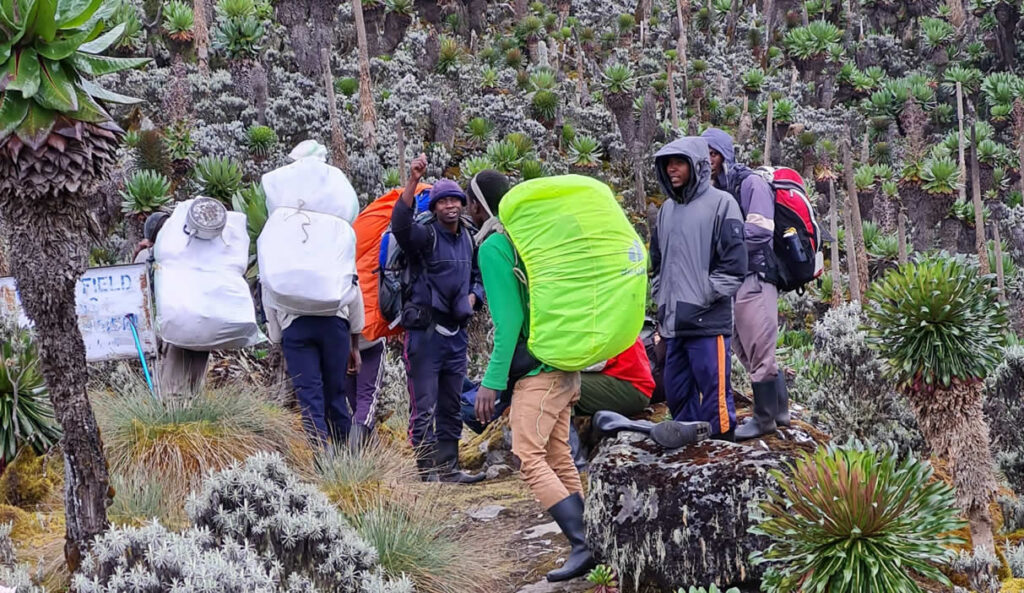
When international trekkers research the Rwenzori Mountains, they naturally focus on the summit of Margherita Peak at 5,109 meters, on the glacier, on the five vegetation zones and the giant lobelias, and on the conditions at altitude. All of that planning is correct and necessary. However, the most frequently underestimated logistical element of any Rwenzori expedition is the people who make it possible. The guides navigate every kilometer of a complex and demanding mountain route. The porters carry the weight that would otherwise be borne by your body over seven or eight consecutive days. The cooks produce hot, nutritious meals at 4,000 meters in a small mountain hut kitchen. Without this team, there is no summit. With them, there is the best possible chance of success.
The porters and guides of the Rwenzori are not service workers in the generic sense. They are members of the Bakonzo community, the indigenous people whose homeland is the mountain, whose families have maintained a professional relationship with the Rwenzori across generations, passing knowledge of its trails, weather, and ecology from parent to child in a tradition that predates every formal certification program and every guided trekking route. When Rwenzori Trekking Safaris sends a guide team to accompany an expedition on the Kilembe Trail or the Central Circuit Trail, it is deploying inherited knowledge that is measured in decades, not years. Understanding who these people are and how to support them appropriately is both an ethical responsibility for international trekkers and a practical prerequisite for the best possible mountain experience.
This guide covers everything you need to know about Rwenzori porters and guides: who they are and where they come from; what each team role involves; the certification and training standards that govern their professional practice; how many team members you need for different group sizes and itineraries; the welfare commitments that responsible operators make on their behalf; and critically, the complete tipping guide with specific amounts, the ceremony at which tips are traditionally presented, and the practical steps for managing the tip distribution on your final mountain morning. By the end of this article, you’ll know how to treat the team that will carry your expedition across the Mountains of the Moon.
The Bakonzo People: The Mountain Is Their Inheritance
The porters and guides of the Rwenzori are overwhelmingly drawn from the Bakonzo community, the Bantu-speaking indigenous people whose homeland encompasses the mountain’s foothills and middle slopes in western Uganda’s Kasese District. The Bakonzo have inhabited the Rwenzori foothills for centuries, farming the fertile lower slopes, drawing water from the mountain’s rivers, and maintaining a relationship with the range that is simultaneously practical, spiritual, and cultural. The mountain is not simply a workplace for a Bakonzo guide. It is home.
The Bakonzo name for the mountain, “Rwenzururu,” means approximately “rainmaker” or “cloud king” and reflects the community’s profound understanding of the mountain’s ecological function, from which the range’s modern name derives. The rivers rising in the Rwenzori’s glaciers and snowfields feed the agricultural communities of the foothills, and the mountain’s weather system determines whether the seasons are productive or difficult. For the Bakonzo, the Rwenzori is not a recreational resource or a tourist attraction. It is the physical expression of their collective identity and the basis of their economic life
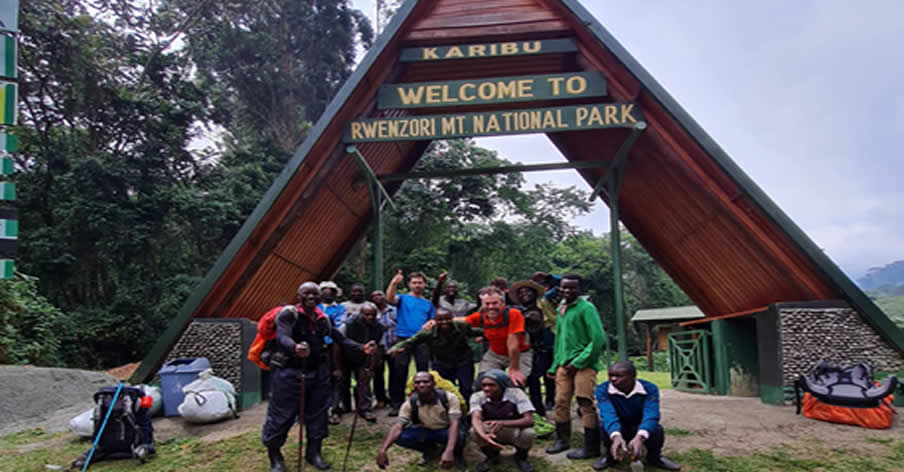
This cultural depth manifests in the guides’ relationship with the mountain in ways that a trekker who pays close attention will notice over the course of an expedition. A Bakonzo guide does not follow a route map; they remember the mountain the way you remember the streets of your neighborhood. They know which section of trail becomes dangerous in heavy rain, which stream crossing runs highest in the afternoon, which camp catchments the weather is building from, and what that means for tomorrow’s conditions. This knowledge is not acquired in a training program. It is accumulated across a lifetime of engagement with a specific landscape, supplemented by the accumulated lifetimes of parents, grandparents, and community elders who walked the same paths before them.
The trekking economy, the income generated by guided expeditions on both the Kilembe Trail and the Central Circuit, is now one of the most significant sources of livelihood for Bakonzo families in the Kilembe and Nyakalengija areas. A well-functioning, fairly paid trekking operation is not just beneficial business practice for an operator: it is a direct contribution to the economic stability of a community that has been the mountain’s human custodian for generations. Rwenzori Trekking Safaris gives ten percent of all money made from safaris to help local Bakonzo community projects, schools, support for orphans, and assistance for families in the Kilembe area as a way to show their
The Rwenzori Team Structure: Who Does What.
A Rwenzori expedition is not simply a guide and a client. It is a logistical operation involving multiple specialized roles, each of which contributes something essential to the expedition’s safety, comfort, and success. Understanding the team structure and the difference between each role helps trekkers appreciate what they are paying for and how to acknowledge each team member appropriately.
| Team Role |
Function |
Certification Required |
Typical Number per Group |
| Lead Guide (Head Guide) |
Route navigation, safety management, client briefings, altitude monitoring, summit decisions |
Uganda Wildlife Authority certified; RMS or RTS trained; first aid qualified |
1 per group (mandatory) |
| Assistant Guide |
Secondary navigation, rear-of-group supervision, porter team liaison, emergency backup |
UWA certified, RMS or RTS trained, and first aid qualified |
1 per group (mandatory for groups of 4+) |
| Cook / Mountain Chef |
Meal preparation at all camps, hot drinks, dietary management, camp hygiene |
RMS/RTS food safety trained |
1 per group (mandatory) |
| Personal Porter |
Carries client daypack or personal equipment (max ~20kg load) |
Park registered; RMS/RTS member |
1 porter per 1–2 clients (client option) |
| Equipment Porter |
Carries shared group equipment: tents, cooking gear, food, technical equipment |
Park registered; RMS/RTS member |
Calculated by total group load; typically 4–8 |
| Ranger (UWA) |
Park boundary security, wildlife monitoring, emergency coordination |
Uganda Wildlife Authority ranger |
1 per group (assigned by UWA at gate) |
The Lead Guide: The Most Important Person on the Mountain
The lead guide is the single most important member of any Rwenzori expedition team, and recognizing their significance before the trek begins will transform how you engage with them throughout the mountain. The lead guide carries total responsibility for the group’s safety, route navigation, acclimatization management, weather assessment, summit decision-making, and communication with park rangers and emergency services if required. They are the person who will tell you, on summit day, whether the conditions are right to continue or whether the 10:00 AM turnaround rule applies regardless of your position on the glacier. They are the person who monitors every member of the group for altitude sickness symptoms, manages pacing to prevent both hypoxia and exhaustion, and makes the call to evacuate if a client’s condition deteriorates.
Lead guides on both the Kilembe Trail (run by Rwenzori Trekking Services) and the Central Circuit (run by Rwenzori Mountaineering Services) are certified by the Uganda Wildlife Authority, have completed first aid training for high-altitude areas, and are skilled in glacier travel and rescue techniques. The most experienced lead guides have accumulated years of service on the mountain, have led dozens of summit expeditions, and have knowledge of the Rwenzori’s specific micro-weather, terrain hazards, and route variants that no amount of map study can replicate. When your lead guide says something about the mountain, listen. They are almost always right, and the one time they are not, you would rather have listened than not.
The Assistant Guide: The Backbone of Group Management
The assistant guide is the lead guide’s operational partner and the person who keeps the group coherent on the trail. While the lead guide typically walks at the front, setting pace and making route decisions, the assistant guide typically walks at the rear, ensuring that no client falls behind, that the group stays together on difficult sections, that slower members receive encouragement and practical support, and that any developing issues at the back of the group are immediately communicated forward. For groups of four or more trekkers, an assistant guide is not optional; it is a safety requirement that reflects the practical reality of managing multiple clients at altitude in complex terrain.

A competent assistant guide also serves as the primary liaison between the guide team and the porter team: monitoring porter welfare, managing load distribution if a porter becomes unwell, and coordinating the logistics of meals and camp setup that happen simultaneously with the walking day. They are the person who most directly manages the relationship between the clients and the broader expedition team, and their interpersonal skill, their ability to read the group’s mood, energy, and needs, is as important as their technical mountain knowledge.
The Cook: The Most Underappreciated Role on the Mountain
Every experienced Rwenzori guide will tell you the same thing: nutritious food saves summits. The mountain cook, sometimes called the mountain chef, is responsible for producing three hot meals per day and a constant supply of hot drinks throughout the expedition, from a small mountain hut kitchen at altitudes ranging from 2,596 metres at Sine Camp to 4,485 metres at Margherita Camp. First-time trekkers consistently underestimate the physical and logistical challenge of this role. The cook leaves camp first in the morning, often before the clients wake, to begin breakfast preparation. They arrive at the next camp before the group to begin preparing the evening meal. And they do this routine every day, for the full duration of the expedition, with whatever ingredients the porter team has carried from the previous resupply point.
High-altitude cooking is not simply cooking at a higher elevation. Water boils at lower temperatures as altitude increases, changing the timing and technique required for everything from rice to eggs. Cold temperatures mean that food left uncovered for minutes begins to cool to an unpalatable temperature. Fuel must be carefully rationed across the expedition. The mountain cook’s menu decisions directly impact summit success rates, as trekkers need calorie-dense food for sustained high-altitude physical effort. A group that arrives at Margherita Camp well-nourished after a six-day approach with consistently nutritious food is in a fundamentally different physical state from one that has been eating inadequately. The cook is not a support player. They are central to the expedition’s outcome.
Porters: The Foundation of Everything
The porters are the logistical foundation of the entire operation, and they are the team members whose physical contribution is most visible on a daily basis. Every piece of equipment that is not in your daypack your sleeping bag, your extra clothing, the shared cooking equipment; the food for all seven or eight days, the technical summit gear (crampons, ice axes, ropes, helmets, and harnesses), the first aid kit and supplemental oxygen, and the personal duffel bag you left at base is on someone’s back on this mountain. That backpack belongs to a Bakonzo porter who has been climbing this trail since adolescence and will be in camp, with the tent already pitched and water on for tea, when you arrive exhausted from the day’s walking.

The standard maximum load for a Rwenzori porter is approximately 20 to 25 kilograms, a figure set by the trail management organizations to protect porter welfare and prevent the overloading that has been documented on other African mountain trekking operations. Rwenzori Trekking Safaris, a responsible operator, strictly adheres to these limits and ensures that the trailhead weighs the loads before the expedition departs. Porters carry their loads in traditional baskets or commercial pack frames, depending on the load’s nature. Carrying heavy loads on steep and uneven mountain paths at high altitudes requires amazing balance and strength, which porters develop through years of daily work in the mountains, something most trekkers, no matter how fit they are, would find impossible to do even for just one day.
How Many Guides and Porters Do You Need?
The size of your expedition team depends on the size of your trekking group, the itinerary selected, and the weight of the shared equipment being carried. As a general operational guideline, a solo trekker or pair on the standard 8-day Kilembe Trail summit expedition will typically have a team of one lead guide, one assistant guide, one cook, and four to six porters. A group of four to six trekkers will have one lead guide, one assistant guide, one cook, and six to ten porters. Larger groups are scaled proportionally.
The personal porter option, where a client pays for a dedicated porter to carry their personal daypack in addition to the standard equipment porters, is available on both the Kilembe Trail and the Central Circuit and is recommended for clients who are concerned about their cardiovascular reserves, who are dealing with a recovering injury, or who simply want to reduce the daily physical load and focus their energy on the experience rather than the weight management. A personal porter carries your daypack (water, rain gear, snacks, camera, small essentials) and walks close to you throughout the day. For trekkers who have not done significant multi-day pack hiking, this option is strongly worth considering.
A note on team size: larger expedition teams create more employment and more community income. At Rwenzori Trekking Safaris, we never cut team sizes to reduce costs at the expense of porter and guide employment. Every member of the team has a role, and every role matters to the expedition’s success.
Certification, Training, and Professional Standards
Uganda Wildlife Authority Certification
All guides operating on the Kilembe Trail (under Rwenzori Trekking Services) and the Central Circuit (under Rwenzori Mountaineering Services) hold certification from the Uganda Wildlife Authority, the government body responsible for managing Rwenzori Mountains National Park. UWA certification requires demonstrated competency in route knowledge, client management, first aid, altitude sickness recognition and management, and emergency evacuation procedures. The certification process includes both theoretical examination and practical assessment on the mountain, and it must be periodically renewed.
The UWA certification framework was developed in part to address the unregulated guiding that characterized early Rwenzori trekking operations and to ensure that clients on the mountain are always in the hands of someone with a verified minimum standard of training. In practice, the most experienced Rwenzori guides hold UWA certification and supplement it with continuous informal education, new techniques for glacier travel, updated first aid protocols, and improved understanding of altitude medicine acquired through ongoing engagement with the mountain and with professional development opportunities offered through the trail management organizations.
Glacier and Technical Competency
For trips to the top of Margherita Peak on Mount Stanley, the main guide needs to be skilled in glacier travel, using crampons and ice axes; managing a team with ropes; rescuing from crevasses; and following the specific rules for getting to the Stanley Plateau Glacier. This technical competency is assessed separately from the general mountain guide certification and represents a higher level of training that not all Rwenzori guides hold. When Rwenzori Trekking Safaris assigns a guide team to a summit expedition, the lead guide assigned to that group has been specifically assessed for their glacier competency. This is not optional; it is a safety requirement for any expedition that includes the summit.
The glacier’s recession over recent decades has resulted in the loss of approximately 80% of the 1906 surface area, changing the technical character of the summit section in ways that require ongoing adaptation from the guide team. Ice that was once broad and gently angled is now steeper and more crevassed as the glacier has thinned. The Uganda Wildlife Authority’s installation of a fixed glacier bridge and climbing lines has helped manage the most technically demanding sections, but the overall technical demands of the summit approach have increased as the glacier has retreated. The guide teams working the Rwenzori summit are constantly updating their technical approach in response to a mountain that is changing in real time.
First Aid and Altitude Management
All certified Rwenzori guides are trained in basic first aid for outdoor situations and know how to identify and handle altitude-related illnesses: acute mountain sickness (AMS), high-altitude pulmonary edema (HAPE), and high-altitude cerebral edema (H They carry pulse oximeters to monitor clients’ oxygen saturation throughout the expedition and are trained to interpret the readings in the context of the specific altitude and the individual client’s response. The lead guide makes the decision to descend, the only definitive treatment for severe altitude illness, and a good guide will do so without hesitation when the clinical picture warrants it, regardless of the client’s preferences about continuing.
Every Rwenzori Trekking Safaris expedition carries supplemental oxygen and a portable altitude chamber (Gamow bag) as part of the standard equipment kit. The guide team manages these emergency resources, ensuring their immediate deployment in case a client’s condition deteriorates at altitude. The supplemental oxygen capacity is not a substitute for descending when descent is indicated; it is a stabilization tool that can buy time for safe management and evacuation. The guide team knows the difference and is trained to use these tools appropriately.
Porter and Guide Welfare: What Responsible Operators Provide
Equipment and Clothing
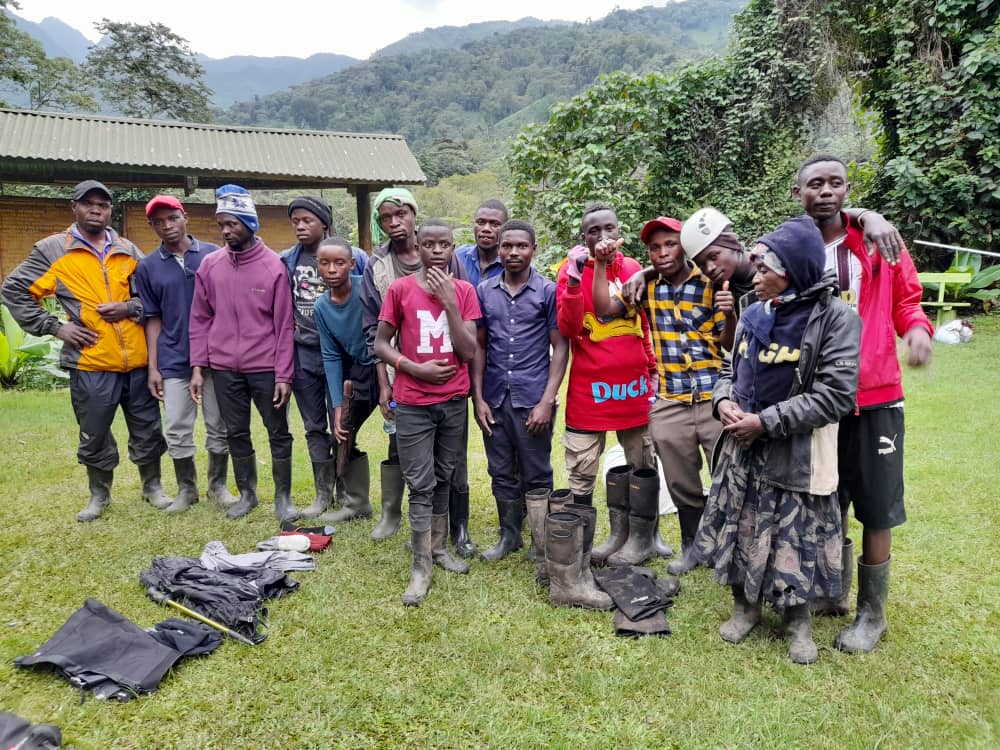
A core welfare standard for Rwenzori porters and guides is the provision of adequate personal protective equipment for the conditions they will encounter. The Rwenzori is extraordinarily wet and cold at altitude, and the mountain has no mercy for inadequately equipped team members any more than it has for inadequately equipped clients. At minimum, every porter and guide working above 3,000 metres should have waterproof outerwear, appropriate footwear (rubber boots are standard issue on the Kilembe Trail), adequate sleeping gear for the camp temperatures, and a headlamp. The trail management organizations Rwenzori Trekking Services on the Kilembe Trail and Rwenzori Mountaineering Services on the Central Circuit maintain equipment standards for their registered staff, and responsible operators like Rwenzori Trekking Safaris supplement these requirements with direct provision where gaps exist.
One of the most important porter welfare provisions is rubber boots, the distinctive yellow Wellington boots that are as much a symbol of the Rwenzori as the giant lobelias. The Kilembe Trail is extraordinarily wet throughout its length, and the rubber boot provides waterproof foot protection that standard leather hiking boots do not match for sustained wet conditions. Clients are issued rubber boots at the trailhead on the Kilembe Trail; porters and guides also use them, and ensuring that every member of the team has adequate footwear is a basic welfare standard that responsible operators enforce.
Load Limits and Working Conditions
The maximum load limit for Rwenzori porters, approximately 20 to 25 kilograms, is enforced by the trail management organizations as a welfare standard, not as an operational preference. Overloading porters is ethically wrong and causes physical harm, increases fall risks on steep terrain, and jeopardizes the health of a workforce vital to the trekking economy’s sustainability. Responsible operators weigh loads at the trailhead before departure and refuse to proceed with overloaded porters. If you observe a Rwenzori porter carrying what appears to be an unsafe or excessive load, raise it with the lead guide immediately.
The working day for the porter team mirrors the trekking day, with the additional burden that the cook and some porters leave camp earlier than the clients to ensure that the next camp is functional on arrival. In most cases, the total walking time for the porter team equals or exceeds the total walking time for the client group, at a higher physical intensity due to the load being carried. Responsible camp management includes ensuring that the porter team has adequate rest, is sheltered from the weather, and has access to food and hot drinks at each camp.
Fair Wages and Timely Payment
The daily wages paid to Rwenzori porters and guides by responsible operators reflect the established minimum standards set by trail management organizations, which have been calibrated to provide a meaningful livelihood for Bakonzo families while maintaining the commercial viability of guided trekking operations. These wages are, by global standards, modest. By the standards of the local economy in Kasese District, these wages are significant, and a full-season porter on the Rwenzori earns an income that meaningfully supports a family household when wages, tips, and equipment provisions are combined.
Wage payment timing matters. Porters and guides who are paid promptly on the day the expedition concludes do not spend the days after the trek chasing their employer for wages they have already earned. Responsible operators pay the entire team on departure, including any tip pool distributed by the lead guide according to the clients’ wishes. Delayed or withheld wages are a welfare issue that Rwenzori Trekking Safaris does not tolerate in its operations.
The Complete Tipping Guide for Rwenzori Porters and Guides
Tipping on the Rwenzori is not optional; it is a cultural expectation and an economic reality that forms a significant component of the total income for porters, guides, and cooks. Unlike in some service economies where tipping is a bonus for exceptional service, tipping on East African mountain expeditions is a standard component of the compensation structure, and the amounts in the table below reflect this reality. They are guidelines, not ceilings; exceptional service, extreme conditions cheerfully navigated, and personal effort above and beyond the standard warrant upward adjustment.
| Team Member |
Recommended Tip (Per Day) |
For a 7-Day Trek |
For an 8-Day Trek |
Notes |
| Lead Guide |
$20 per day |
$140 |
$160 |
Senior role; highest tip; adjust upward for exceptional leadership |
| Assistant Guide |
$20 per day |
$140 |
$160 |
Same seniority bracket as lead guide; both equally essential |
| Cook / Mountain Chef |
$12 per day |
$84 |
$96 |
Often the unsung hero, good food at altitude keeps summits achievable |
| Personal Porter (per porter) |
$10 per day |
$70 |
$80 |
If you had a dedicated personal porter, adjust for exceptional effort |
| Equipment Porter (per porter) |
$10 per day |
$70 |
$80 |
Collectively pool and divide; guide distributes appropriately |
| UWA Ranger |
$5–$10 per day |
$35–$70 |
$40–$80 |
Optional but strongly encouraged: UWA rangers are not highly paid |
Total Tip Budget: Practical Planning
For a two-person group on the standard 8-day Kilembe Trail summit expedition with a team of one lead guide, one assistant guide, one cook, and five porters, the total recommended tip pool at the rates in the table above would be approximately $780 to $960 total for both clients combined, or $390 to $480 per person. This is a significant amount, and it should be budgeted for explicitly before departure, not discovered as an additional cost at the trailhead. The tip is not part of the package price; it is a separate cash payment made directly to the team on the final day.
Tips should be brought in USD cash, in bills of small- to medium-sized denomination. Ugandan shillings are also acceptable, but USD is preferred by most Rwenzori team members because it is more easily stored and exchanged without loss. Large-denomination bills ($100 notes) can be difficult to break in Kasese and should be supplemented with smaller bills for the tip pool. An ATM visit in Kasese or Kampala before the trek is the most reliable way to source the correct amount in appropriate denominations.
The Tip Ceremony: A Mountain Tradition
The tipping ceremony on the Rwenzori is a genuine tradition rather than a transaction, and understanding its form and significance will help you participate in it in a way that honors the team appropriately. On the final evening on the mountain, typically the night before the last walking day, at the final camp the lead guide will present the group with a tip envelope and invite them to decide on the total amount and complete the envelope before the following morning’s breakfast.
The next morning, after the final mountain breakfast, the entire team assembles: guides, cooks, and all porters together. The lead guide gathers the group’s attention. In the tradition of both Rwenzori Trekking Services and Rwenzori Mountaineering Services, the team sings a farewell song, a moment that, without exception, surprises and moves first-time Rwenzori trekkers. The song is a genuine expression of the relationship that has developed over the preceding week, and it is delivered with the kind of wholehearted, unironic joy that the Bakonzo bring to moments of collective celebration. After the song, a group spokesperson, typically someone from the client group who has been most engaged with the team, says a few words of thanks. The lead guide translates into the local language for team members who may not speak English. The tip envelope is then presented to the lead guide, who will distribute it to the team according to the role-based division that the clients have specified.
This ceremony is not a performance for tourists. It is the mountain’s way of marking an ending, of acknowledging that for the past seven or eight days, a group of people who came from very different worlds shared something genuinely extraordinary and that the shared experience creates a bond that is, even for a brief moment before everyone returns to their separate lives, real and worth marking. Trekkers say it’s one of the most emotional moments of the trip.
Tips for Exceptional Performance
The rates in the table above are recommendations for standard, competent performance. They are the floor, not the ceiling. A lead guide who stayed calm and decisive during a client’s altitude emergency, who pushed through the summit window at 3:00 AM in deteriorating conditions to give the group their best possible chance, and who translated the mountain’s character into an experience that the client will carry for the rest of their life this person has done something that the standard rate does not fully acknowledge. When the performance has been exceptional, the tip should reflect it. There is no upper limit on gratitude, and Bakonzo guides have long memories for the clients who recognized something genuinely extraordinary in what they did.
Equipment Donations: A Thoughtful Alternative to Cash
Many experienced Rwenzori trekkers, on their return from the mountain, are moved to leave equipment for the porters and guides who looked after them: rain gear, clothing, sleeping bags, headlamps, and similar items. This is a generous impulse and a meaningful supplement to the tip, but it should be approached thoughtfully to ensure the donation is genuinely useful rather than a way of offloading items that have reached the end of their useful life.
Waterproof rain jackets, fleece mid-layers, warm sleeping bags, headlamps, and quality socks are all genuinely useful and welcome donations. Worn-out, damaged, or extremely dirty items like boots past their waterproofing, jackets with broken zippers, and bags with split seams should not be donated. They create a waste management problem in a community without the infrastructure to dispose of them, and a worn-out jacket is not a gift: it is an imposition. If you want to donate equipment, bring it clean, functional, and in the condition you would want to receive it yourself. Discuss with your lead guide whether a specific item would be useful before handing it over.
Trekkers should also be cautious about donating food, medications, or other consumables unless they have had a specific conversation with the guide team about what is needed. Medications in particular should never be donated without explicit discussion. The guide team has a medical kit and protocols; an unsolicited supply of unknown pills creates complexity rather than assistance.
The Human Story Behind the Mountain Team
Generations on the Mountain
The most important thing to understand about the Bakonzo porters and guides of the Rwenzori is something that cannot be captured in a certification matrix or a tipping table: the depth of their relationship with the mountain is measured in generations, not years. A twenty-five-year-old porter who has worked the Kilembe Trail for five seasons has also absorbed knowledge of the mountain through his father’s stories since he was old enough to listen, and through his grandfather’s before that. The Bakonzo families of the Kilembe and Nyakalengija areas have been sending their sons and daughters to work the Rwenzori since the first guided expeditions were established in the 1950s, and the professional tradition is now deep enough that some families have three generations of active mountain workers.
This generational depth produces guides of a kind that formal training alone cannot. When your lead guide says that the morning’s weather pattern suggests a clear summit window tomorrow, they are reading an atmospheric signal that they have seen a hundred times in the same location, in the same season, with the same outcomes. When a porter finds the path without hesitation through a heather zone section where the trail is invisible under two feet of old man’s beard lichen, they are navigating by spatial memory built over hundreds of crossings. The mountain has been their classroom, their inheritance, and their livelihood simultaneously, and the quality of knowledge it produces is genuinely irreplaceable.
The Rwenzori as Economic Lifeline
For Bakonzo families in the Kilembe and Nyakalengija areas, the trekking economy is not an economic supplement for many; it is the primary source of household income during the trekking season. A porter completing a full-season schedule of expeditions, six or seven treks between June and August, for example, earns wages that support school fees, healthcare costs, and household maintenance in ways that the agricultural income from the foothills alone cannot reliably provide. The tipping income on top of wages makes a meaningful additional difference, and the consistency of that income across a season determines whether a family can plan investments, a new roof, or a child’s secondary school fees or must simply manage month to month.
The aggregate impact of the trekking economy on the Bakonzo communities of western Uganda is significant. Rwenzori Mountaineering Services and Rwenzori Trekking Services collectively employ hundreds of guides, porters, and cooks across their operations, and the wages, tips, and equipment provisions flowing to those workers represent a substantial input into the local economy. When a trekker tips generously and thoughtfully, they are not simply acknowledging a service well rendered; they are contributing to the financial stability of a community whose welfare is directly tied to the health of the mountain they have just walked through.
The Pride of the Certification
For a Bakonzo young person working toward UWA certification as a mountain guide, the process represents something that carries cultural weight beyond its economic value. The certification is a formal acknowledgment by the Ugandan state that their knowledge of the mountain, knowledge passed down through generations, developed through years of practical work, meets a professional standard that places them in a defined category of expert. For communities that have sometimes been peripheral to formal economic and educational structures, the mountain guide certification is a credential with genuine meaning.
The most senior Rwenzori guides, those who have led hundreds of expeditions over decades, who have participated in emergency evacuations, who have trained younger guides, and who have accumulated the respect of their community through consistent professional excellence, are figures of significant social standing in the Bakonzo community. They are the only ones who have been on the mountain in every season and condition and can speak about it with unmatched authority. Their knowledge is the mountain’s most valuable accessible resource, and it arrives with your expedition team on Day 1.
The Song at the End
Return to the morning of the final mountain camp. The team has assembled. The team sings somewhere between the last cup of tea and the beginning of the day’s descent, before the tip envelope is presented and before they break apart to continue their separate journeys. The song is not a rehearsed performance or a tourist-facing product. It is a Bakonzo tradition of marking endings by acknowledging that something real happened in this place, over these days, between these specific people. The guides sing it with the porters. The cook joins in from near the kitchen. The voices carry through the cold morning air of the camp, across the heather and the moss, up toward the high peaks above.
Trekkers who have been through eight days on the Rwenzori, who have shared camps and meals and difficult weather and the extraordinary private satisfaction of a summit with people whose names they have learned and whose company they have grown to value, consistently describe this moment as the one they did not expect and the one they remember longest. It is the mountain’s farewell, delivered by the people who know it best, to the people they have carried to its highest point. No photograph does it justice, and no amount of preparation prepares you for it. It simply happens, and it is one of the most genuinely human moments that any mountain in the world regularly produces.
How to Be a Good Expedition Client: What the Team Needs From You
The relationship between a trekker and the Rwenzori expedition team is not a one-way service transaction. It is a functional partnership in which the client’s behavior materially affects the team’s ability to do their job and, ultimately, the expedition’s outcome. There are things that experienced guides wish every client understood before the trek begins.
Listen to the guide’s assessment of your condition, even when it conflicts with your own. The most dangerous trekkers on the Rwenzori are not the unfit ones; they self-select out early. The most dangerous trekkers are the very fit, experienced, and determined ones who ignore their guide’s correct assessment of their serious symptoms because they trust their own. It is not. The guide has seen altitude sickness in a hundred trekkers. They know what the early signs look like, they know what they predict, and they know that the best decision is almost always to descend now rather than gamble on improvement.
Be honest with the guide about how you are feeling. The Rwenzori is not a place for bravado. A client who downplays a headache or dismisses nausea because they don’t want to be the one who turned back creates a situation where the guide’s expertise can’t work. The guides are there to help you climb the mountain and return safely, not to judge you. Help them do their job.
Learn the team members’ names and use them. This gesture is a small thing that makes a real difference to the quality of the human relationship on the mountain. Your lead guide has a name. Your cook has a name. The porter who has carried your duffle bag for seven days while you carried a daypack has a name. Learning about them, using them, and spending a few minutes over dinner asking about their family, community, or experience of the mountain creates a quality of human connection that enriches the expedition for everyone. The most engaged, energized team members who are willing to go above and beyond for a client are those whose names they know and whose well-being they have asked about.
Frequently Asked Questions: Rwenzori Porters and Guides
Who are the porters on the Rwenzori Mountains?
Rwenzori Mountain porters are members of the Bakonzo community, the Bantu-speaking indigenous people whose homeland encompasses the mountain’s foothills in Kasese District, western Uganda. The Bakonjo have maintained a professional relationship with the Rwenzori across generations, with many families sending multiple generations of mountain workers to the trails. Porters carry loads of approximately 20–25 kilograms (the maximum enforced by the trail management organizations for welfare reasons), including shared cooking equipment, food, technical summit gear, tents, and clients’ personal duffle bags. They are registered with either Rwenzori Trekking Services (Kilembe Trail) or Rwenzori Mountaineering Services (Central Circuit) and work under the operational oversight of those organizations and the Uganda Wildlife Authority.
How many porters do I need for a Rwenzori trek?
The number of porters required for a Rwenzori trek depends on the group size and the total weight of equipment being carried. As a general guideline: a solo trekker or pair on the standard 8-day Kilembe Trail summit expedition typically needs four to six porters in addition to the guide team. A group of four trekkers typically needs six to eight porters. Beyond the equipment porters, clients can also hire a dedicated personal porter to carry their daypack throughout the trek, which is recommended for those with cardiovascular concerns, recovering from injuries, or who want to conserve energy for the summit. Rwenzori Trekking Safaris calculates the exact porter team size for each expedition based on the specific group size, itinerary, and equipment load.
What is the difference between a guide and a porter on the Rwenzori?
On the Rwenzori, guides and porters have distinct roles and different qualification requirements. Guides and assistant guides hold Uganda Wildlife Authority certification, have completed first aid training, are responsible for route navigation and client safety, make altitude management and summit decisions, and are accountable for the expedition’s safety outcomes. They do not typically carry heavy loads beyond personal gear and safety equipment. Porters carry the expedition’s physical weight: personal duffle bags, cooking equipment, food, technical gear, and shared supplies, and while they have profound knowledge of the mountain from extensive experience, they do not hold the formal certification or the decision-making responsibility of the certified guide roles. The cook is a distinct specialized role within the porter tier, responsible for all meal preparation and camp food management.
How much should I tip Rwenzori guides and porters?
The standard recommended tipping rates for Rwenzori Mountain guides, porters, and cooks are based on a per-day structure: Lead Guide $20 per day; Assistant Guide $20 per day; Cook $12 per day; Personal Porter $10 per day per porter; Equipment Porter $10 per day per porter; UWA Ranger $5–$10 per day (optional but strongly encouraged). For a standard 8-day Kilembe Trail summit expedition, clients should plan to give a total recommended tip of approximately $460–$480 to their team, which includes a lead guide, an assistant guide, a cook, and five porters. Tips should be brought in USD cash in small to medium denominations and are presented to the lead guide in an envelope during the traditional tip ceremony on the final mountain morning, after which the lead guide distributes according to the client’s specifications.
Are Rwenzori guides certified?
Yes. Yes. All guides on the Kilembe Trail (with Rwenzori Trekking Services) and the Central Circuit (with Rwenzori Mountaineering Services) are certified by the Uganda Wildlife Authority (UWA). This certification indicates that they have proven skills in navigating routes, managing clients, providing first aid, and recognizing altitude sickness. For trips to Margherita Peak, lead guides also need to show they are skilled in traveling on glaciers, using crampons and ice axes, managing teams with ropes, and rescuing from crevasses, which is a more advanced skill set evaluated separately All expedition teams also carry supplemental oxygen and a portable altitude chamber (Gamow bag) for emergency management. Certification must be periodically renewed to remain valid.
Is it safe to trek the Rwenzori with local guides?
Yes. Rwenzori expedition guides are among the most experienced mountain guides in East Africa, with knowledge of their specific mountain that is built across generations of professional work and supplemented by formal certification from the Uganda Wildlife Authority. The Bakonjo guides of the Rwenzori have an excellent safety record on both the Kilembe Trail and the Central Circuit, and their skills in managing high altitudes, understanding weather, and navigating the terrain are tailored to the Rwenzori’s special conditions in ways that guides from other mountains cannot match. Trekkers should ensure they book through a reputable operator such as Rwenzori Trekking Safaris that works with certified guide teams from Rwenzori Trekking Services or Rwenzori Mountaineering Services and that the expedition package explicitly includes a certified lead guide, assistant guide, cook, and appropriate porter team.
What do Rwenzori porters carry?
Rwenzori porters carry the expedition’s shared and personal equipment within the maximum load limit of approximately 20–25 kilograms per porter. This typically includes clients’ personal duffle bags containing non-daypack items (sleeping bags, extra clothing, camera equipment, and personal items); shared cooking equipment (pots, pans, fuel, and burners); expedition food supplies for the full duration of the trek; technical summit equipment (crampons, ice axes, helmets, harnesses, and ropes) on summit expeditions; first aid equipment, including supplemental oxygen; tent and sleeping platform materials where required; and hut accommodation supplies. On the Kilembe Trail, rubber boots are standard issue for both porters and clients, and the boots for the client group are carried by the porter team from the trailhead. Guides carry their own personal equipment and safety gear but do not typically carry heavy equipment loads.
What is the tip ceremony for the Rwenzori?
The tip ceremony is a traditional Rwenzori Mountain custom that takes place on the final mountain morning, before the last day’s descent back to the trailhead. The entire expedition team, guides, cook, and all porters assemble together after breakfast. The team performs a farewell song, a Bakonjo tradition that marks the end of the shared mountain experience and is one of the most emotionally resonant moments of any Rwenzori trek. After the song, a spokesperson from the client group says a few words of thanks, which the lead guide translates for team members who speak primarily Kinyakonjo. The tip envelope is then presented to the lead guide, who distributes the contents to team members according to the role-based division specified by the clients. The ceremony typically takes fifteen to twenty minutes and should be allowed for in the morning’s schedule rather than treated as an interruption to the descent day.
Book Your Rwenzori Expedition and Meet the Team That Will Take You to the Summit
The mountain is extraordinary. But the people who know every meter of it, who have carried its weight on their backs, navigated its weather, read its glaciers, and sung farewell songs at every camp on its descent, are what make the Rwenzori experience genuinely irreplaceable. When you book a Rwenzori expedition with Rwenzori Trekking Safaris, you are not just booking a route. You are booking the expertise, the heritage, and the human depth of the Bakonzo guide and porter community that has made this mountain accessible to the world without ever losing their own intimate relationship with it.
Contact us to start planning your Rwenzori expedition. Tell us your travel dates, your trekking background, and your summit ambitions, and we will match you with a guide team and an itinerary that gives both you and the mountain the best possible version of each other.