Can you trek the Rwenzori Mountains without going to the summit? Yes. Explore 6+ non-summit treks for 2–5 days, with expert guides, wildlife & stunning scenery.
At the Rwenzori trailhead, the most common question I hear is a simple one: “Can I still experience the Rwenzori if I don’t climb Margherita?” This question is often asked quietly by someone who has done all the research but is still unsure whether they belong here. The answer is an unqualified yes. And once you’ve spent a day inside these mountains in the forest, in the fog, in that silence, you will understand that the summit was never the only reason to come.
You can trek the Rwenzori Mountains without going to the summit, and for a significant proportion of the trekkers who visit the range every year, a non-summit itinerary is precisely the right choice. The Rwenzori Mountains, Uganda’s UNESCO World Heritage Site, the Mountains of the Moon, are not simply a backdrop to a summit. They are a complete world in themselves, with five distinct ecological zones, an unmatched botanical landscape, extraordinary wildlife, glacial lakes, cascading waterfalls, and a remote, unhurried quality of wilderness that no other mountain range in East Africa quite replicates.

Margherita Peak, at 5,109 meters, is the crown of the range and the third-highest summit in Africa, and reaching it is one of the outstanding achievements of East African mountaineering. But the Rwenzori’s greatness does not begin and end at that summit. It begins at the trailhead, in the first cool breath of montane forest air, and it deepens with every hour you spend inside the mountain. Non-summit trekkers who have walked the Mahoma Loop, climbed to Mutinda Lookout, or explored the Bujuku valley below the high glaciers frequently describe their experience in terms that have nothing to do with altitude records and everything to do with an encounter with a landscape, an ecology, and a stillness that is genuinely unlike anywhere else.
This guide covers everything you need to know about non-summit trekking in the Rwenzori: which itineraries are available, what each one offers, how demanding they are, and how to decide which one belongs on your travel calendar. Whether you have two days or five, whether you are a first-time trekker building towards a future summit attempt or an experienced walker who simply wants the forest and the views without the glacier, the Rwenzori has a non-summit option designed for you.
Why Non-Summit Trekking in the Rwenzori Is a Complete Experience in Itself
Before diving into the specific itineraries, it is worth understanding something about the Rwenzori that makes it fundamentally different from other African peaks like Kilimanjaro or Mount Kenya: the journey through the mountain’s lower and middle elevations is not merely the approach to the summit. It is, in its own right, one of the most remarkable mountain experiences available to a trekker anywhere in Africa.
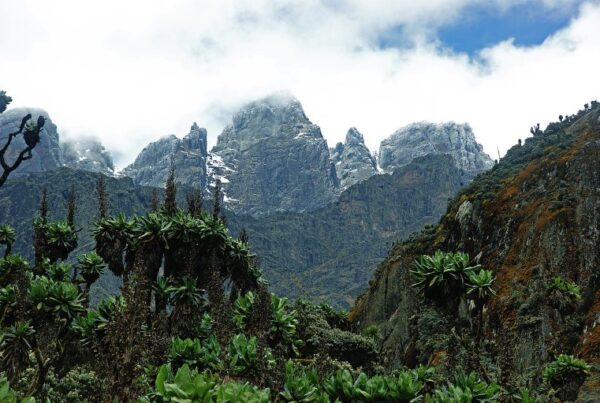
The Rwenzori Mountains are a UNESCO World Heritage Site not because of their summit glacier, though that is extraordinary, but because of their unparalleled biodiversity and the intact vertical sequence of ecosystems that the range contains. From the warm, humid Afro-Montane rainforest at 1,450 metres to the moss-draped giant heather forest at 3,000 metres and the Afroalpine zone of giant lobelias and groundsels above 3,500 metres, these are ecosystems found nowhere else on Earth in quite this combination or this quality of preservation. A non-summit trekker who reaches 3,500 metres has walked through three of the five vegetation zones and spent multiple days in terrain that the vast majority of the world’s trekkers will never see.
The wildlife in the lower and middle Rwenzori is equally compelling. The Rwenzori turaco, one of Uganda’s most prized bird sightings, inhabits the forest canopy of the lower trail. L’Hoest’s monkey, a culturally significant primate for the Bakonjo people, moves through the understory. Blue monkeys, black-and-white Colobus monkeys, three-horned chameleons, forest elephants, and the elusive Rwenzori red duiker are all present in the mid-mountain zones that non-summit itineraries traverse. The glaciers are compelling, but so is finding a three-horned chameleon on a moss-covered root at 2,600 metres at first light.
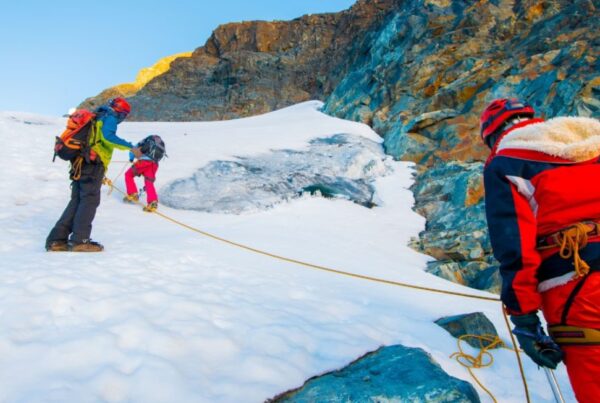
There is also a practical case. The Rwenzori’s summit requires glacier travel using crampons, ice axes, and roped teams, and it demands a level of physical fitness and altitude tolerance that takes time to develop. For first-time high-altitude trekkers, for those with limited time in Uganda, for those recovering from injury, or for those who simply want to experience the mountain at a measured pace without the demands of summit day, non-summit itineraries are not a compromise. They are the right itinerary, deliberately designed, properly guided, and delivering an experience that is whole and complete on its own terms.
Non-Summit Rwenzori Treks at a Glance
The table below summarises the non-summit trekking options currently offered by Rwenzori Trekking Safaris, which span both the Kilembe Trail and the Central Circuit. All are fully guided, all-inclusive expeditions managed by certified guide teams from Rwenzori Trekking Services and Rwenzori Mountaineering Services, respectively.
| Trek | Trail | Duration | Max Altitude | Difficulty | From |
| 2-Day Sine Camp Trek | Kilembe Trail | 2 days | 2,596 m | Easy–Moderate | $250 |
| 2-Day Lake Mahoma Hike | Central Circuit (Mahoma Loop) | 2 days | 3,515 m | Moderate | $280 |
| 3-Day Mahoma Loop | Central Circuit (Mahoma Loop) | 3 days | 3,515 m | Moderate | $700 |
| 4-Day Waterfalls Hike | Kilembe Trail | 4 days | ~3,400m | Moderate | $615 |
| 4-Day Mutinda Lookout | Kilembe Trail | 4 days | 3,975 m | Moderate–Challenging | $645 |
| 5-Day Bujuku Hike | Central Circuit | 5 days | 3,960 m | Challenging | $1,000 |
| Bukulungu Trail | Bukulungu Wilderness | Multi-day | ~4,000 m+ | Challenging | POA |
The Non-Summit Treks in Detail
The 2-Day Sine Camp Trek (Kilembe Trail): Starting at $250.
The 2-day Sine Camp trek is the most accessible introduction to the Rwenzori Mountains currently available, and it is a genuine introduction, not a token walk to a viewpoint. Starting at the Kilembe trailhead at 1,450 metres, the trail covers 9.5 kilometres each way through the Afro-Montane Forest Zone to Sine Camp at 2,596 metres. Over two days, you ascend 1,146 metres through one of the finest examples of tropical montane forest in East Africa, spending a night at Sine Hut before returning to the trailhead the following morning.

The forest on this section of the Kilembe Trail is extraordinary from the very first step. Towering Podocarpus and Prunus africana trees form the upper canopy, their trunks wound with climbing plants and their crowns alive with birdsong. Just 200 metres below Sine Hut, Enock’s Falls cascades down a mossy cliff face, one of the first of many waterfalls that define the Kilembe Trail’s character and one of the most photographed features of the lower trail. On this section, one can regularly spot blue monkeys and three-horned chameleons, while the occasional call of chimpanzees rises from the lower valley. At Sine Hut, the evening view across the foothills toward Kasese and the distant plain is one of the gentlest rewards in the entire range.
The 2-day Sine Camp trek is the right choice for trekkers with limited time in Uganda, for those who want a taster experience before committing to a longer expedition, for families with older children who want genuine mountain exposure without extreme altitude, and for anyone visiting the Rwenzori region who cannot justify a week or more on the mountain but deserves more than a drive-by from the valley floor. It is guided by certified Rwenzori Trekking Services staff and is all-inclusive from the trailhead.
The 2-Day Lake Mahoma Hike (Mahoma Loop): From $280
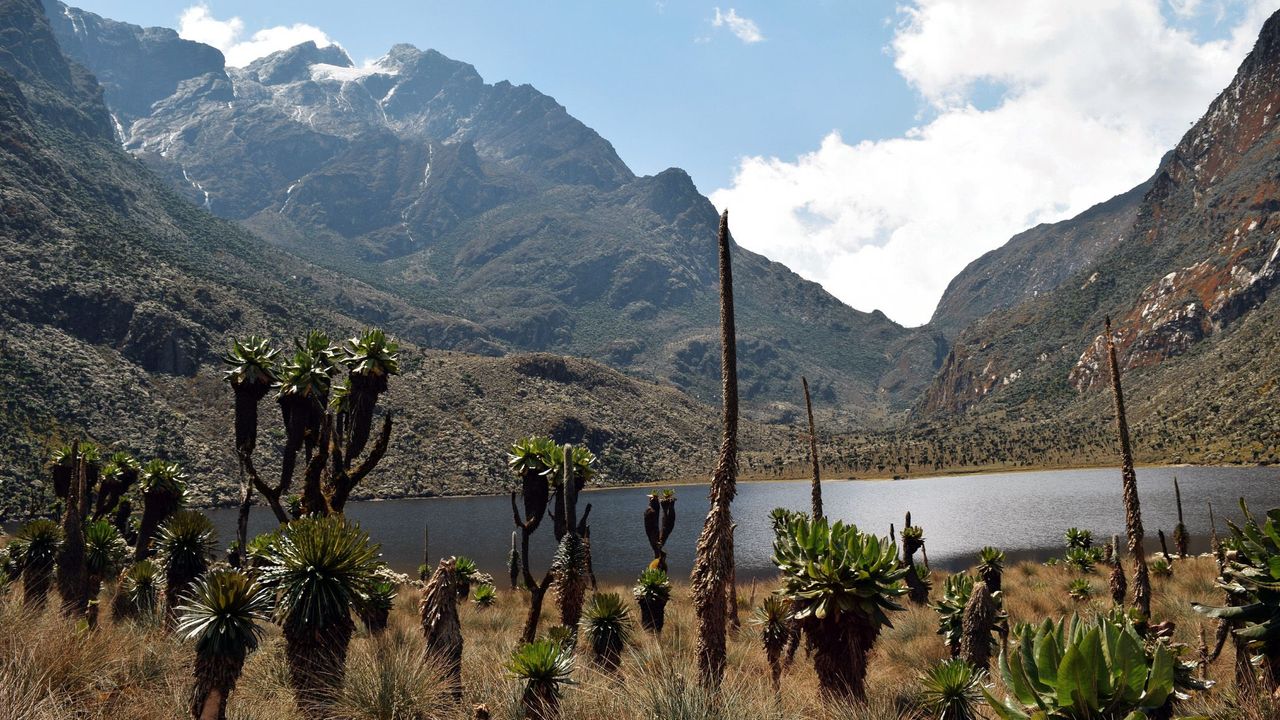
Lake Mahoma is one of the Rwenzori’s most beautiful and least-visited high-altitude lakes, sitting in a mossy crater at around 3,515 metres on the western side of the range, accessible via the Mahoma Loop trail from Nyakalengija. The 2-day Mahoma hike takes you from the Central Circuit trailhead at Nyakalengija, through Kyambogho Ridge and the virgin Mubuku Valley rainforest, to the lakeshore and back. On clear days, the lake reflects Mount Baker, Mount Stanley, and the Portal Peaks in its dark surface, one of the most remarkable views from any non-summit position in the entire Rwenzori National Park.
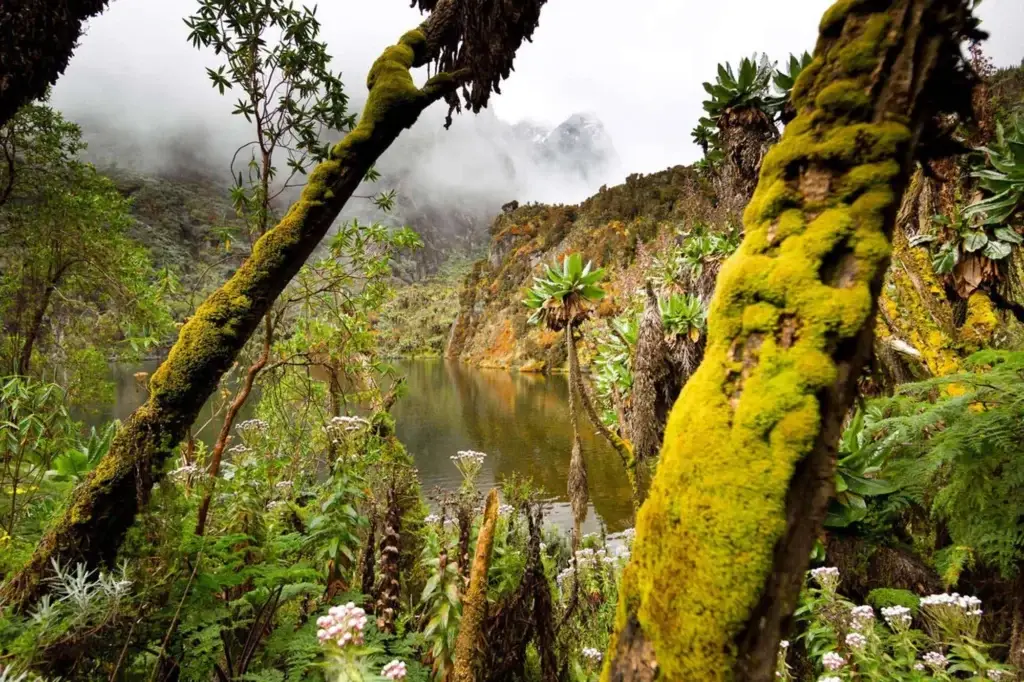
The trail to Mahoma passes through pristine montane forest and bamboo zones on the ascent, following routes used by mountain elephants to reach the hot spring below the lake. The Rukenga Valley section reveals large lobelia and everlasting flowers. This is a genuinely wild environment; you are deep inside the Rwenzori Mountains National Park, in a forest that has seen very few human footprints. The two-day format gives you time to sit at the lakeshore, absorb the stillness, and walk back the following morning with the early light on the trees. It is priced at $280 per person and guided by the Central Circuit management structure from Nyakalengija.
The 3-Day Mahoma Loop: Starting at $700.
The 3-day Mahoma Loop trek extends the Mahoma experience into a full loop, beginning at Nyakalengija, climbing through the Mubuku Valley and Kyambogho Ridge to Omukakiizi Camp at around 2,500 metres on Day 1, ascending to Lake Mahoma at 3,515 metres on Day 2, and returning via the Nyabitaba Ranger Post and Mpanga Ridge to Nyakalengija on Day 3. The loop format means you cover entirely different terrain on the descent than on the ascent, giving three complete days of varied and immersive mountain experience.
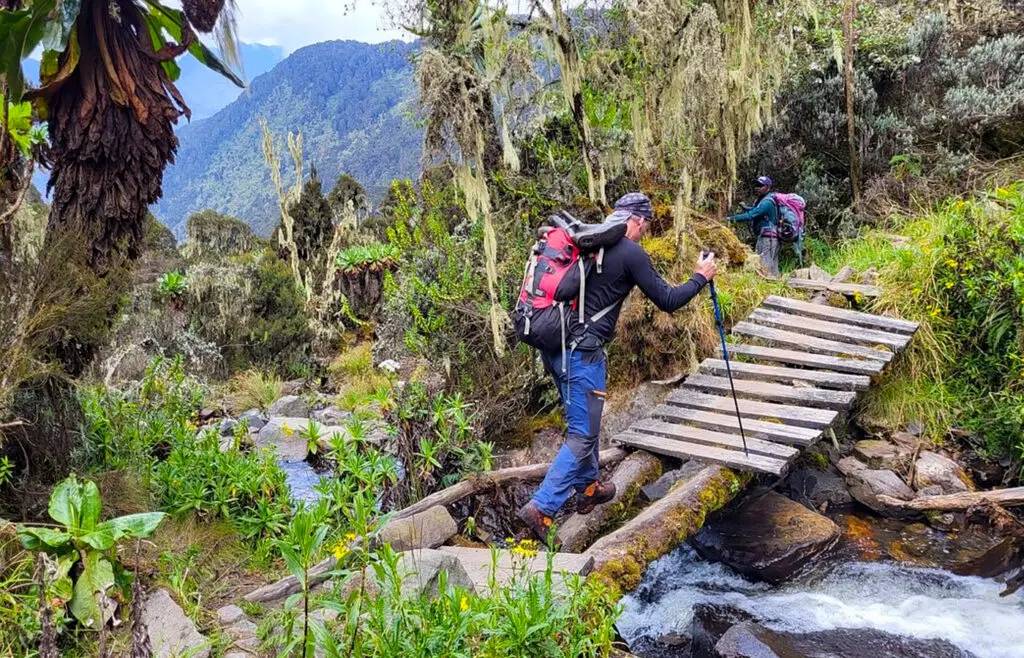
Omukakiizi Camp on Day 1 sits at 2,977 metres with views of the Rwenzori foothills and Kasese below, a perspective on the mountain’s scale that no road or viewpoint can replicate. The bamboo and heather forest on the ascent to Mahoma on Day 2 is among the finest in the range, threaded with waterfalls and inhabited by primates, including the iconic L’Hoest’s monkey. The descent on Day 3 passes through the three-horned chameleon habitat of the lower Mubuku Valley, wrapping the loop with a final passage through the lower forest before arriving back at Nyakalengija.
This trek is ideal for trekkers who want three days of genuine mountain immersion without glacier demands, for birdwatchers, botanists, and wildlife enthusiasts, and for those visiting Uganda who want to experience the Rwenzori’s forest and lower alpine zones comprehensively without the physical commitment of a full summit expedition.
The 4-Day Rwenzori Waterfalls Hike (Kilembe Trail): Starting at $615.
The 4-day Rwenzori Waterfalls Hike is one of the most distinctive non-summit itineraries in the range, following the lower and mid sections of the Kilembe Trail through a series of waterfalls, cascades, and river crossings that make it feel less like a mountain trek and more like a passage through a vertical water garden. The trail visits more than six significant waterfalls, including Enock’s Falls near Sine Camp and the spectacular cascades of the Nyamwamba Valley, connecting a sequence of forest campsites through terrain that showcases the Rwenzori at its most lush and dramatic.
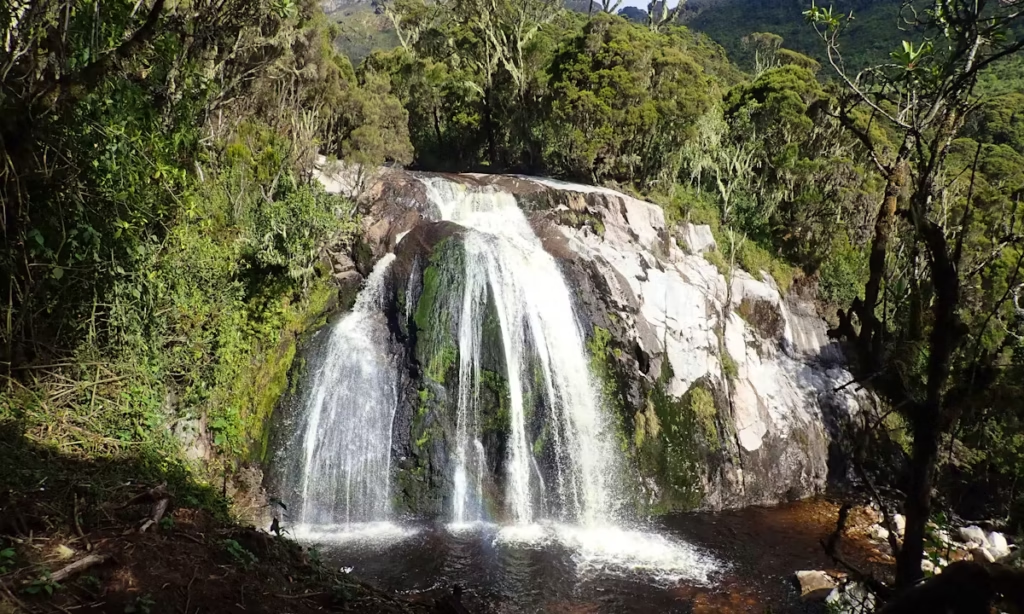
The waterfalls of the Kilembe Trail are not incidental features of the landscape; they are defining characteristics of it. The Rwenzori’s exceptional annual rainfall feeds dozens of permanent streams and cascades that plunge off moss-covered cliffs, thread between root systems the size of buildings, and fill the valley air with a constant, layered sound that becomes its kind of music after a few days. This trek stays below the alpine zone, making it accessible to a broader range of trekkers while still delivering a mountain experience of real quality and immersion. It begins and ends at Kilembe and is managed by Rwenzori Trekking Services.
The 4-Day Mutinda Lookout Trek (Kilembe Trail), starts at $645.
If there is a single non-summit Rwenzori trek that most comprehensively represents what the Kilembe Trail can offer without a glacier, it is the 4-day Mutinda Lookout trek. Over four days, starting and ending at Kilembe, this trek goes up through Sine Camp (2,596 m), the bamboo area and giant heather forest, Kalalama Camp (3,147 m), and Mutinda Camp (3,688 m) before reaching Mutinda Lookout at 3,975 meters, a rocky peak covered in moss that offers a stunning 360-degree view of the Rwenzori mountains, Kasese town, and
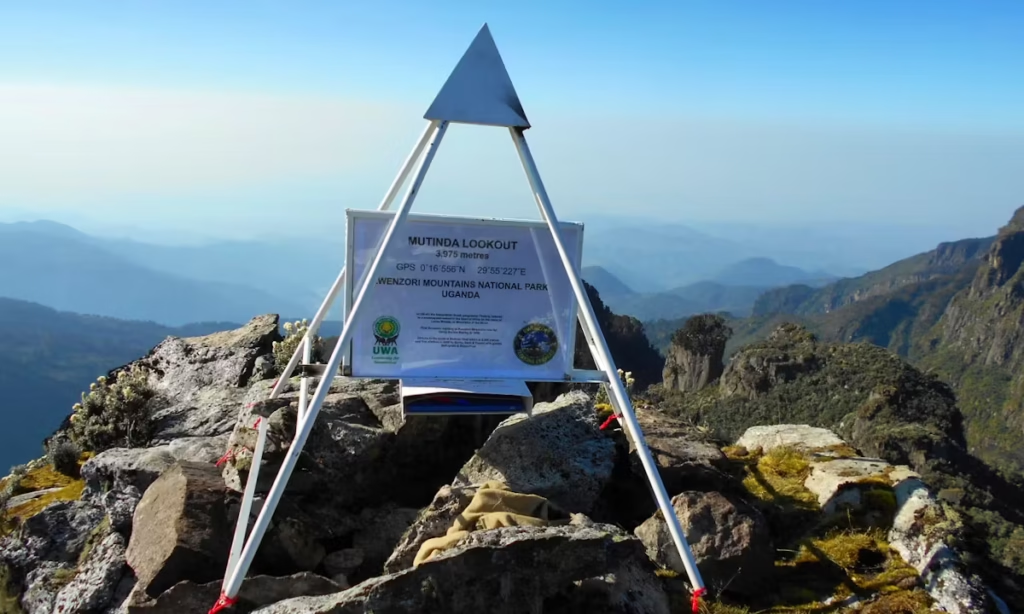
The Mutinda Lookout sits just under 4,000 meters already inside the Afroalpine Zone, among giant lobelias and everlasting flowers, above the line where tree heather gives way to open moorland. You have crossed four of the five vegetation zones without setting foot on a glacier. The optional afternoon hike to the Lookout from Mutinda Camp, usually offered on Day 2, allows trekkers to practice the principle of “climb high, sleep low” by ascending nearly 4,000 meters before returning to camp at 3,688 meters for the night, which is excellent preparation for any future summit attempt.
The descent on Days 3 and 4 follows the Nyamwamba Valley via Kiharo Camp (3,420 m), passing Kiharo Falls, a spectacular cascade just 200 metres from the campsite, and descending through the Nyamwamba river gorge with its moss-covered boulders and dense forest canopy. This is among the most scenic descent routes of any Rwenzori itinerary, summit or non-summit, and the valley floor on the final day rivals the ascent in beauty.
The Mutinda Lookout trek is described on the Rwenzori Trekking Services website as ideal for beginners or as a warm-up for longer summit hikes. That assessment is accurate, and it explains why this trek has become increasingly popular both as a standalone experience and as the first stage of a multi-trip Rwenzori programme. If you are planning a future Margherita summit attempt but want to experience the mountain at a lower altitude first, building fitness, assessing your comfort at altitude, and feeling the Rwenzori properly before committing to an eight-day expedition, this is the definitive preparation trek.
The 5-Day Bujuku Valley Hike (Central Circuit): Starting at $1,000.
For trekkers who want a more extended and physically demanding non-summit experience on the Central Circuit, the 5-day Bujuku hike takes you deep into the heart of northern Rwenzori, reaching Bujuku Hut at 3,960 metres in the upper Bujuku valley before returning via the same trail. This itinerary uses the first three days of the standard Central Circuit sequence, Nyakalengija to Nyabitaba, Nyabitaba to John Matte, and John Matte to Bujuku, giving you the full experience of the Bigo Bogs, the Kurt Shafer Bridge, the bamboo and heather forests, and the upper valley landscape below Mount Stanley and Mount Speke, without proceeding to Elena Hut and the glacier.
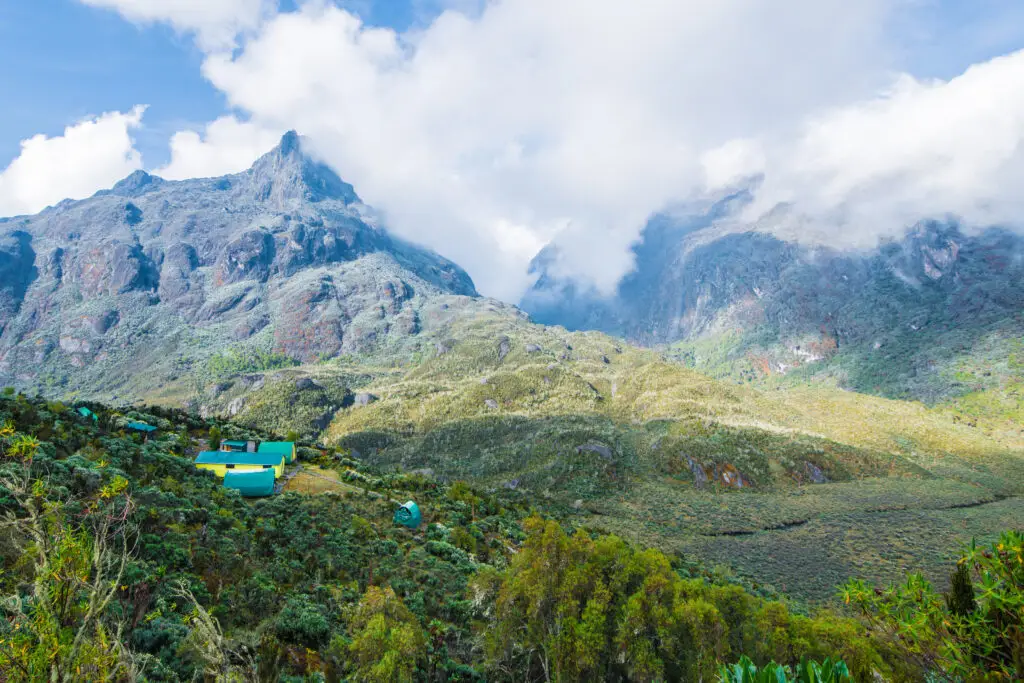
Bujuku Hut, at 3,960 meters, is one of the greatest mountain viewpoints in Rwenzori. On a clear day, the combined ridgelines of Mount Stanley, Mount Baker, and Mount Speke are visible simultaneously from the hut’s position above Lake Bujuku, with the Margherita Glacier visible in the cleft between Alexandra and Margherita peaks, close enough to see the crevasse lines but far enough away to remain entirely safe and accessible to non-technical trekkers. The Bigo Bogs section of the trail, with its boardwalk traversing across saturated peat and the giant lobelias rising from the marsh margins, is one of the most memorable sections of any Rwenzori route and is fully accessible on this itinerary. This trek costs from $1,000 per person and is all-inclusive from Nyakalengija.
The Bukulungu Wilderness Camping Trail: The Wild Alternative.
For experienced trekkers and wilderness camping enthusiasts who want to experience the Rwenzori in its most untouched, primitive state, the Bukulungu Wilderness Camping Trail offers something that neither the Central Circuit nor the Kilembe Trail can match: a route established specifically for those who love raw, unmanicured wilderness, initiated in 2018 through a partnership between the Uganda Wildlife Authority and WWF. Unlike the other two main routes, the Bukulungu Trail is an open-air camping route; there are no wooden mountain huts with bunk platforms. You camp under the Rwenzori sky in secure, park-designated campsites.
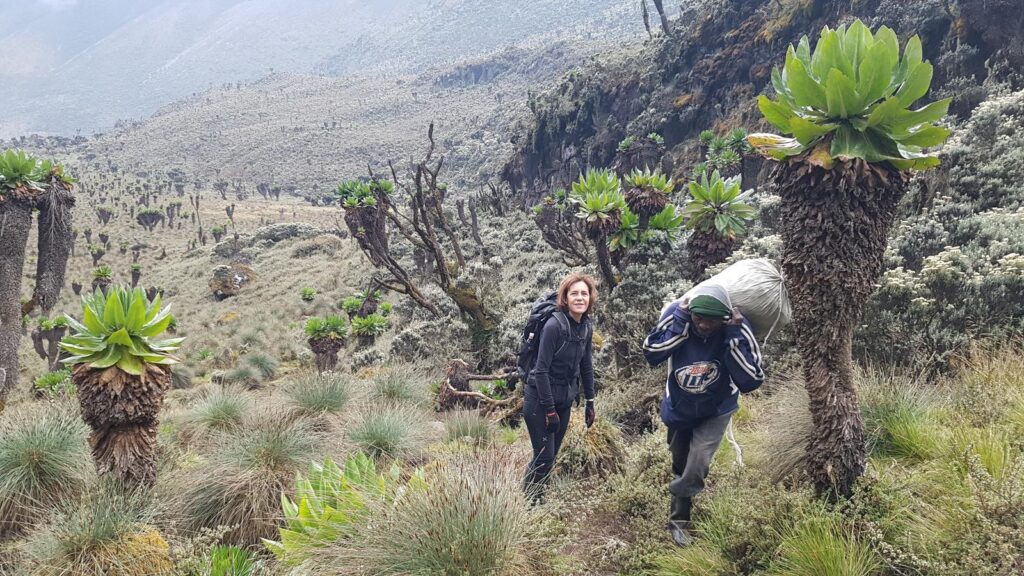
The trail runs from Omukorukumi’s Kasanzi Park entrance, passing between the Portal Peaks and Mount Gessi, traversing four magnificent alpine lakes: Irene, Mughuli, Bukulungu, and Bujuku, before intersecting with the Central Circuit Trail at the Bigo swamp. The route passes through genuinely wild terrain that sees a fraction of the footfall of the main routes, with river crossings, cascades, and an unspoiled environment that delivers the Rwenzori experience in its most raw and immersive form. The Bukulungu Trail can be used as a non-summit experience in its own right or as an approach to higher objectives for those who want to combine wilderness camping with a summit attempt in a later section.
What can you expect from a Non-Summit Rwenzori Trek?
The Forest Zones: Where Most of the Wildlife Lives
One of the most important things for prospective trekkers to understand is that the Rwenzori’s wildlife is overwhelmingly concentrated in the lower forest zones, precisely the zones that non-summit treks explore most thoroughly. The forest, between 1,450 and 2,600 meters, is a living, layered ecosystem of extraordinary density and diversity. Birdlife includes the Rwenzori turaco with its vivid crimson wing patches, the handsome francolin, the Rwenzori batis, the cinnamon-chested bee-eater, and dozens of forest species found only in this range. Mammal sightings include the three-horned chameleon, blue monkey, L’Hoest’s monkey, and black-and-white colobus. Long before dawn, trumpet calls in the valley often announce the presence of forest elephants moving through the lower trails.

Summit trekkers pass through this forest in two days and move on. Non-summit trekkers spend their entire expedition here, and the time spent in it; unhurried, observational, and genuinely immersive, is qualitatively different. A professional ornithologist or botanist would choose a non-summit itinerary without hesitation.
The Botanical World: Giant Lobelias, Groundsels, and Old Man’s Beard
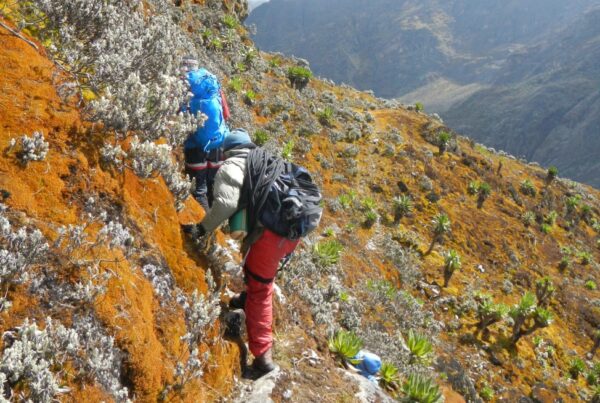
The Rwenzori is a UNESCO World Heritage Site in significant part because of its botanical communities, and the most famous of these, the giant lobelia and giant groundsel of the Afroalpine zone, are accessible on non-summit itineraries that reach 3,500 to 4,000 metres. The Mutinda Lookout trek, for instance, carries you into a landscape of giant lobelias (Lobelia wollastonii) up to five metres tall and giant senecios (Senecio adnivalis) whose rosette-topped forms have no counterpart elsewhere on Earth. These plants evolved in complete isolation over millions of years on the equatorial high mountains of Africa. Standing among them at 3,800 metres in the morning mist is an experience that requires no summit to justify.
Below the alpine zone, the giant heather forest of the Heather-Rapanea Zone, accessible on every itinerary from Day 2 upward, is equally remarkable. Tree heathers, fifteen meters tall and draped under many kilograms of old men’s beard lichen (Usnea), create a surreal canopy that confers this zone its reputation as the most visually extraordinary section of any Rwenzori trail. The bamboo zone below it, dense and clicking in the wind, completes the sequence of environments that makes the Rwenzori unlike any other mountain range on the continent.
The Waterfalls and Lakes

The Rwenzori Mountains are the source of some of the longest rivers in Uganda, fed by the range’s exceptional annual rainfall and the slow melt of its glaciers. This hydrology produces a landscape threaded with waterfalls, rapids, glacial lakes, and mossy streams that are present throughout every non-summit itinerary. Enock’s Falls near Sine Camp, the cascades of the Nyamwamba Valley on the Mutinda Loop descent, Kiharo Falls by Kiharo Camp, and the waterfalls of the Kilembe Trail’s 4-day waterfall itinerary are all accessible without a summit. Lake Mahoma, Lake Bujuku, and the four lakes on the Bukulungu Trail; Irene, Mughuli, Bukulungu, and Bujuku, each have a distinctive character shaped by their altitude and surrounding geology. These are not incidental scenic features; they are central to what the Rwenzori is and why it holds its UNESCO designation.
How Hard Are the Non-Summit Rwenzori Treks?
The physical demands of non-summit Rwenzori treks vary significantly depending on the itinerary chosen, and it is worth being honest about what each one requires. The Rwenzori’s terrain is universally steep, wet, and sometimes muddy regardless of how high you go. The mountain’s exceptional rainfall means that even the lower forest trails can be slippery and demanding after rain, and they often are. “Non-summit” does not mean easy; it means the technical glacier demands and extreme altitude are removed, but the physical challenge of sustained uphill walking on wet, rooted, uneven terrain remains.
The 2-day Sine Camp trek is the gentlest option, appropriate for active adults of average fitness with basic hiking experience. The trail is steep in sections, but the daily distances are moderate, and the altitude gain, to 2,596 metres, is within the comfortable range for most healthy adults who walk regularly. The 3-day Mahoma Loop and the 4-day Waterfalls Hike sit in a similar difficulty bracket: moderate, demanding a reasonable base fitness and comfortable footwear, but accessible to non-specialist trekkers.

The 4-day Mutinda Lookout trek and the 5-day Bujuku hike are more demanding, requiring cardiovascular fitness, comfort on steep and uneven ground, and the ability to sustain physical effort across multiple consecutive days. Both involve altitudes above 3,500 metres and the associated cold and weather variability. The 5-day Bujuku hike in particular involves four of the seven days of the standard Central Circuit sequence and is physically comparable to all but the glacier section of a full summit expedition.
For all non-summit itineraries, the gear requirements remain consistent: waterproof boots that have been properly broken in, a quality waterproof shell jacket, layered clothing, and a sleeping bag rated to at least 10°C below zero for the higher camps. Your guide team provides all technical equipment, cooking, and food. Proper footwear is the most critical single item; the Rwenzori’s wet trail surfaces punish inadequate boots at any altitude.
Using a Non-Summit Trek to Prepare for a Future Margherita Summit
Many of the trekkers who return to the Rwenzori for a Margherita summit attempt came first on a non-summit itinerary. This is not coincidence; it is a well-trodden path, and one that our guides actively recommend. The 4-day Mutinda Lookout trek, in particular, is designed to function as an acclimatisation and preparation tool for the full 8-day Kilembe Trail summit expedition. The “climb high, sleep low” principle incorporated into Mutinda Lookout Day allows your body to experience nearly 4,000 meters of elevation and assess its response before you commit to a multi-week expedition.
A first Rwenzori visit on a shorter, lower-altitude itinerary gives you specific, useful intelligence: how your body responds to altitude, which kit worked and which needs replacing, how you feel about sustained steep terrain over multiple days, and whether the Rwenzori’s particular brand of wet, cold, forest-and-glacier mountain is the kind of environment you want to spend eight days in at full intensity. It is far better to discover at 3,975 metres on a four-day trek that you need better rain gear or a warmer sleeping bag than to discover the same thing at 4,485 metres on Day 5 of a full summit expedition.
For trekkers who complete a non-summit itinerary and decide they want to return for the full summit experience, the progression from the 4-day Mutinda Lookout trek to the 8-day Margherita summit expedition is a natural and well-supported pathway. We design second-expedition itineraries with awareness of what the trekker already knows and has already experienced. There is no need to repeat what was covered on the first trip, and the familiarity with the mountain’s lower character makes the higher sections feel earned and contextually rich rather than disorienting.
Who Should Consider a Non-Summit Rwenzori Trek?
The honest answer is: more people than currently do. The Rwenzori’s identity as an extreme mountain, the wettest range in Africa, with glaciers and technical climbing on the summit, means that many potential visitors self-select out of the experience entirely, assuming that if they cannot do the summit, they cannot do the mountain. This is a significant misunderstanding that costs those trekkers a genuinely extraordinary experience.
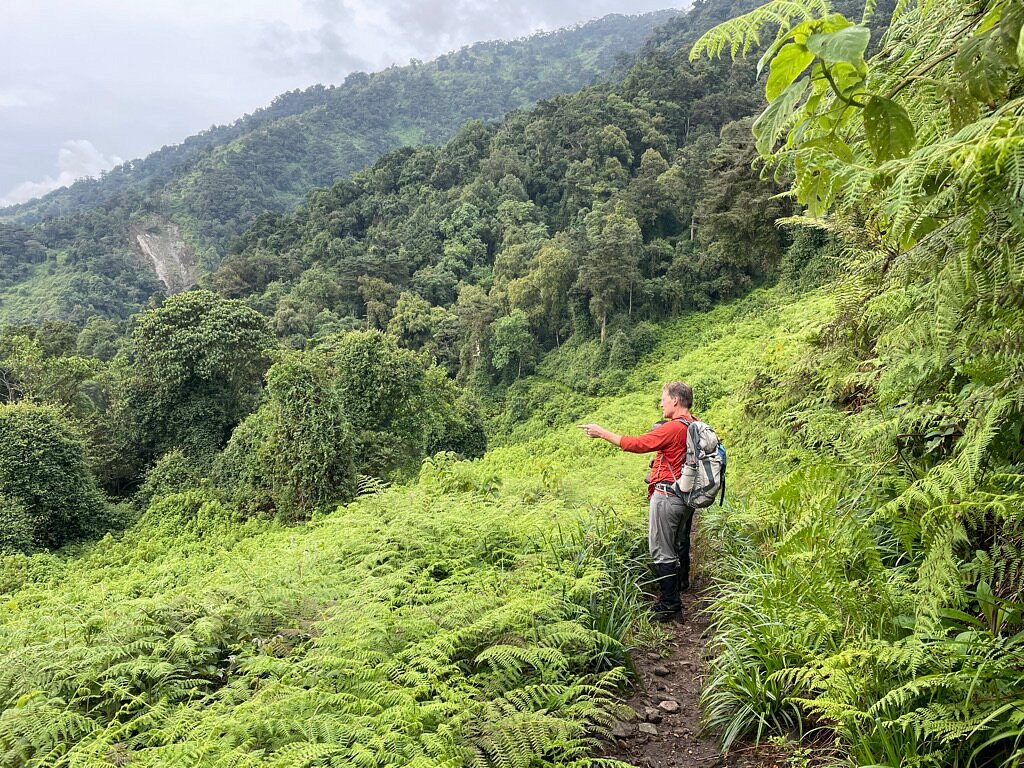
Non-summit Rwenzori trekking is the right choice for a trekker who has solid recreational fitness but has never trekked at high altitude before and wants to build experience before attempting a major summit. It is the right choice for anyone with limited time (two to five days) who is visiting Uganda primarily for wildlife or gorilla trekking but wants to include a mountain experience. Older trekkers with mountain experience who have consciously shifted away from technical high-altitude objectives find it appropriate. It suits families with teenagers who want an authentic mountain experience without glacier risk. It is the right choice for photographers and naturalists whose primary interest is the Rwenzori’s ecology and wildlife rather than its altitude. And it is right for anyone who looked at the full summit itinerary and felt that eight days was more commitment than they could currently manage.
In each of these cases, the non-summit Rwenzori is not a consolation prize; it is the appropriate, well-matched itinerary for that specific trekker, and it delivers a mountain experience that is complete, memorable, and absolutely worth making the journey to western Uganda.
When to Go: Seasons for Non-Summit Rwenzori Treks
The seasonal advice for non-summit Rwenzori trekking broadly mirrors that for summit expeditions, with one important nuance: because non-summit itineraries stay below the glacier, their viability in wetter conditions is somewhat higher. The summit’s success rate is highly weather-dependent, and the dry seasons of July-August and December-February represent clear priority windows for Margherita attempts. For non-summit treks, the wet months of April, May, and November are more tolerable, though they will make the lower forest trails significantly muddier and river crossings more variable.

The primary dry season from late June through August is the best window for all Rwenzori trekking, summit or otherwise. Trails are firmer, skies are clearer, the forest is vivid from the previous wet season’s growth, and the waterfalls are still running strongly from the rains while the paths themselves are passable. The December – February window is the second-best option, combining good mountain conditions with the opportunity to combine a Rwenzori trek with Uganda’s exceptional wildlife experiences elsewhere in the country.
Year-round trekking is available on all non-summit itineraries. For those who can only travel outside the ideal windows, we provide honest briefings on what to expect from trail and weather conditions in the planned travel period, and we adjust kit recommendations accordingly. A Rwenzori trek in the rains is a more demanding but intensely beautiful experience; the moss is luminescent, the waterfalls are at full volume, and the forest is at its most lush and atmospheric.
Combining a Non-Summit Rwenzori Trek with the Rest of Uganda
One of the practical strengths of the shorter non-summit itineraries is how naturally they slot into a broader Uganda itinerary. Kasese, the gateway town for both the Kilembe Trail and the Central Circuit, sits within striking distance of some of the finest wildlife experiences in East Africa. Queen Elizabeth National Park, famous for its tree-climbing lions, hippo channels, and crater lakes, is approximately one hour’s drive from Kasese. Bwindi Impenetrable Forest, home to roughly half of the world’s remaining mountain gorillas and the site of gorilla trekking permits that are among the most sought-after experiences in Africa, is four to five hours from Kasese through the Rwenzori foothills.
A 2-day Sine Camp trek followed by two days in Queen Elizabeth National Park and two or three days of gorilla trekking at Bwindi represents one of the finest ten-day Uganda itineraries available, deeply immersive, ecologically extraordinary from start to finish, and compact enough to manage within two weeks of annual leave. For trekkers from the US, UK, Europe, Asia, and Australia who are considering Uganda for the first time, this combination of Rwenzori, savannah, and primate is increasingly the itinerary that anchors the entire trip. Our team designs and manages these combined programmes with the same rigour we apply to full summit expeditions.
Frequently Asked Questions About Non-Summit Rwenzori Trekking
Can I trek the Rwenzori Mountains without going to the summit?
Yes, absolutely. There are multiple non-summit trekking itineraries available in the Rwenzori Mountains National Park that allow you to experience the range’s extraordinary forests, waterfalls, lakes, wildlife, and alpine vegetation without attempting Margherita Peak (5,109 m) or using crampons and an ice axe on the Stanley Glacier. Options range from the 2-day Sine Camp trek on the Kilembe Trail (reaching 2,596 m) and the 2-day Lake Mahoma Hike (reaching 3,515 m) to the 4-day Mutinda Lookout trek (reaching 3,975 m) and the 5-day Bujuku Valley hike (reaching 3,960 m). All are fully guided, all-inclusive expeditions that deliver genuine and deeply rewarding mountain experiences without the technical demands of a glacier ascent.
What is the best non-summit trek in the Rwenzori Mountains?
The best non-summit Rwenzori trek depends on your time, fitness, and objectives. For the most comprehensive non-summit experience on the Kilembe Trail, the 4-day Mutinda Lookout trek is the strongest option; it reaches 3,975 metres in the Afroalpine zone, passes through all four lower vegetation zones, descends via the Nyamwamba Valley with its spectacular waterfalls, and gives a thorough experience of everything that makes the Kilembe Trail exceptional without the glacier. For those with less time, the 2-day Sine Camp trek or the 2-day Lake Mahoma Hike are outstanding introductions. The 5-day Bujuku Valley hike offers the most immersive Central Circuit experience below the summit, providing a near-complete journey that stops just short of Elena Hut and the glacier. For genuine wilderness camping without huts, the Bukulungu Trail is in a category of its own.
Do I need experience to trek the Rwenzori without the summit?
The level of experience required varies by itinerary. The 2-day Sine Camp trek and the 2-day Lake Mahoma hike are accessible to active adults with basic hiking fitness and no specialist mountain experience. The 3-day Mahoma Loop and the 4-day Waterfalls Hike require a moderate level of cardiovascular fitness and comfort on steep, uneven terrain in wet conditions. The 4-day Mutinda Lookout trek and the 5-day Bujuku hike are more demanding and suit experienced trekkers who are comfortable with sustained multi-day efforts at altitudes above 3,500 meters. None of the non-summit itineraries require technical mountaineering experience, crampons, or ice axes. The most critical equipment requirement across all options is proper, broken-in waterproof footwear.
What altitude do non-summit Rwenzori treks reach?
Non-summit Rwenzori treks reach altitudes ranging from 2,596 metres (Sine Camp, 2-day trek) to 3,975 metres (Mutinda Lookout, 4-day trek) and 3,960 metres (Bujuku Hut, 5-day Central Circuit hike). Lake Mahoma, on the 2- and 3-day Mahoma itineraries, sits at approximately 3,515 meters. For context, the summit Margherita Peak is at 5,109 metres; Elena Hut (the summit staging camp on the Central Circuit) is at 4,541 metres; and Margherita Camp (the summit staging camp on the Kilembe Trail) is at 4,485 metres. Non-summit trekkers are therefore operating comfortably below the altitude at which glacier travel and extreme cold have become factors, while still reaching elevations that put them above the majority of African mountains.
Can a non-summit Rwenzori trek be used as preparation for a future summit attempt?
Yes, and this is actively recommended. The 4-day Mutinda Lookout trek on the Kilembe Trail is specifically designed to function as preparation for the full 8-day Margherita summit expedition. The “climb high, sleep low” acclimatisation day provides your body with controlled exposure to near-4,000-metre altitude by ascending to 3,975 metres and then sleeping at Mutinda Camp at 3,688 metres, which directly benefits a future summit attempt. A non-summit first visit also gives you practical intelligence about your own physical response to the mountain’s terrain and climate, identifies any kit gaps, and builds the familiarity with the Rwenzori’s character that makes a subsequent summit expedition significantly more confident and rewarding.
How much does a non-summit Rwenzori trek cost?
Non-summit Rwenzori trekking options start from $250 per person for the 2-day Sine Camp trek on the Kilembe Trail. The 2-day Lake Mahoma Hike is from $280. The 3-day Mahoma Loop starts at $700. The 4-day Kilembe Trail Waterfalls Hike is from $615, and the 4-day Mutinda Lookout trek is from $645. The five-day Bujuku Valley hike on the Central Circuit starts at $1,000 per person. All prices are for fully guided, all-inclusive expeditions covering park permits, accommodation in mountain huts, all meals, guide and porter fees, and relevant technical equipment. International flights, travel insurance, and pre/post-trek accommodation in Kasese are not included.
What wildlife can I see on a non-summit Rwenzori trek?
Non-summit Rwenzori treks traverse the mountain’s most biodiverse zones and offer some of the best wildlife encounters available in the range. In the lower forest, regular sightings include blue monkeys, black-and-white Colobus monkeys, L’Hoest’s monkey, three-horned chameleons, and a rich variety of birds, including the Rwenzori turaco, handsome francolin, Rwenzori batis, cinnamon-chested bee-eater, and strange weaver. Forest elephants move through the lower valleys; their calls are heard at night in camps at 2,000 to 2,500 meters. Duikers are sighted in forest clearings, particularly on the Nyamwamba Valley descent on the Kilembe Trail. In the heather and Afroalpine zones, the Malachite Sunbird is found around the giant lobelia stands, and raptors are seen from ridge positions above Mutinda and the Bujuku valley. Non-summit itineraries most thoroughly traverse the zones where the Rwenzori’s wildlife concentrates, making these treks excellent choices for birders and naturalists.
Is the Mahoma Loop a non-summit trail?
Yes. The Mahoma Loop is entirely a non-summit trail, operating through the lower forest and mid-altitude zones of the Central Circuit’s western side without approaching the high glacier camps at Elena Hut or the Bujuku valley upper section. The 2-day version reaches Lake Mahoma at approximately 3,515 metres, and the 3-day full loop extends the trail into a complete circuit via Omukakiizi Camp and the Nyabitaba Ranger Post. The Mahoma Loop is managed under the Central Circuit infrastructure from Nyakalengija and is guided by Rwenzori Mountaineering Services staff. It is a wonderful choice for trekkers who want a pristine, forest-and-lake mountain experience with excellent wildlife potential, genuine wilderness immersion, and no technical demands above moderate hiking fitness.
The Mountain Does Not Require the Summit. Let’s Plan Your Trek.
The Rwenzori Mountains will give you something extraordinary regardless of how high you go. The forest has been growing undisturbed for thousands of years. The giant lobelias have been reaching for the sky since long before the first trekker set foot on the trail. The waterfalls have been running since the glaciers above them began to melt. None of that requires a summit certificate to witness. All it takes is your arrival, a guide who knows the way, and the mountain’s due time and attention.
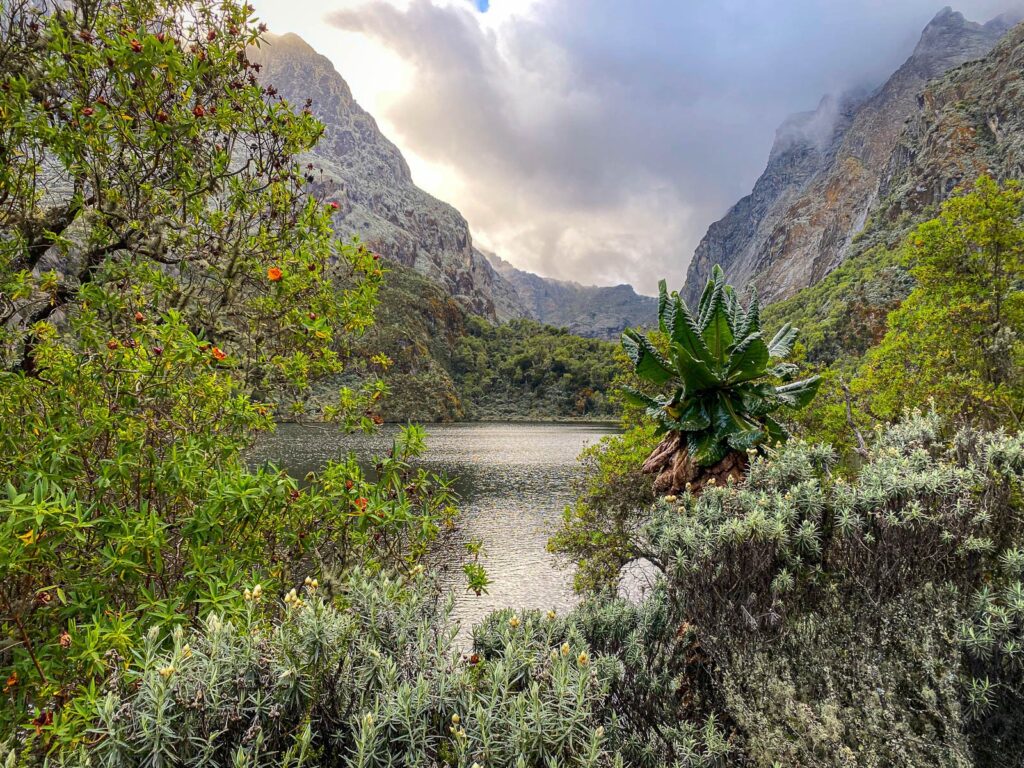
At Rwenzori Trekking Safaris, we design and guide non-summit itineraries with the same expertise and seriousness we bring to full summit expeditions. Our guides know when to push, when to rest, and when the forest is doing something so remarkable that the itinerary can wait. Our team handles every logistical detail from park permits to mountain meals so that your only responsibility is to walk, to watch, and to be present in one of the most unusual and beautiful mountain environments on Earth.
Contact us to start planning your Rwenzori trek. Tell us your travel dates, your fitness level, and how many days you have available. Whether you want two days in the forest or five days deep in the heather and lobelia, we will build you the right itinerary for the Mountains of the Moon.