
Climb Margherita Peak (5,109 m), track chimpanzees in Kibale, go on a game drive in Queen Elizabeth NP, and trek to see mountain gorillas in Bwindi: 16 extraordinary days in Uganda.
16-Day Uganda Safari: Gorilla Trek & Rwenzori Climb
16-Day Uganda Safari: Margherita Peak Summit, Chimpanzee & Gorilla Trekking Safari.
Climb Africa’s Mountains of the Moon. * Track chimpanzees in Kibale * Game drive Queen Elizabeth NP * Trek to Mountain Gorillas in Bwindi
An epic 16-day Uganda adventure combining the Margherita Peak summit in the Rwenzori Mountains, chimpanzee trekking in Kibale Forest, wildlife safaris in Queen Elizabeth, and gorilla trekking in Bwindi Impenetrable Forest.
This 16-day Uganda adventure is designed for travelers who want it all: a technical summit of Margherita Peak (5,109 m) in the Rwenzori Mountains, immersive chimpanzee trekking in Kibale Forest, classic wildlife safaris in Queen Elizabeth National Park, and unforgettable gorilla trekking in Bwindi Impenetrable Forest.
Uganda’s most complete adventure in a single itinerary: summit Africa’s third-highest peak, track our closest primate relatives through ancient rainforest, and come face to face with mountain gorillas in Bwindi Impenetrable Forest.
It is not a rushed itinerary. It is intentionally paced to allow proper acclimatization, recovery, and profound engagement with Uganda’s most iconic landscapes and primates. This journey blends high-altitude mountaineering, primate encounters, and savannah wildlife into one of the most comprehensive adventure safaris in East Africa.
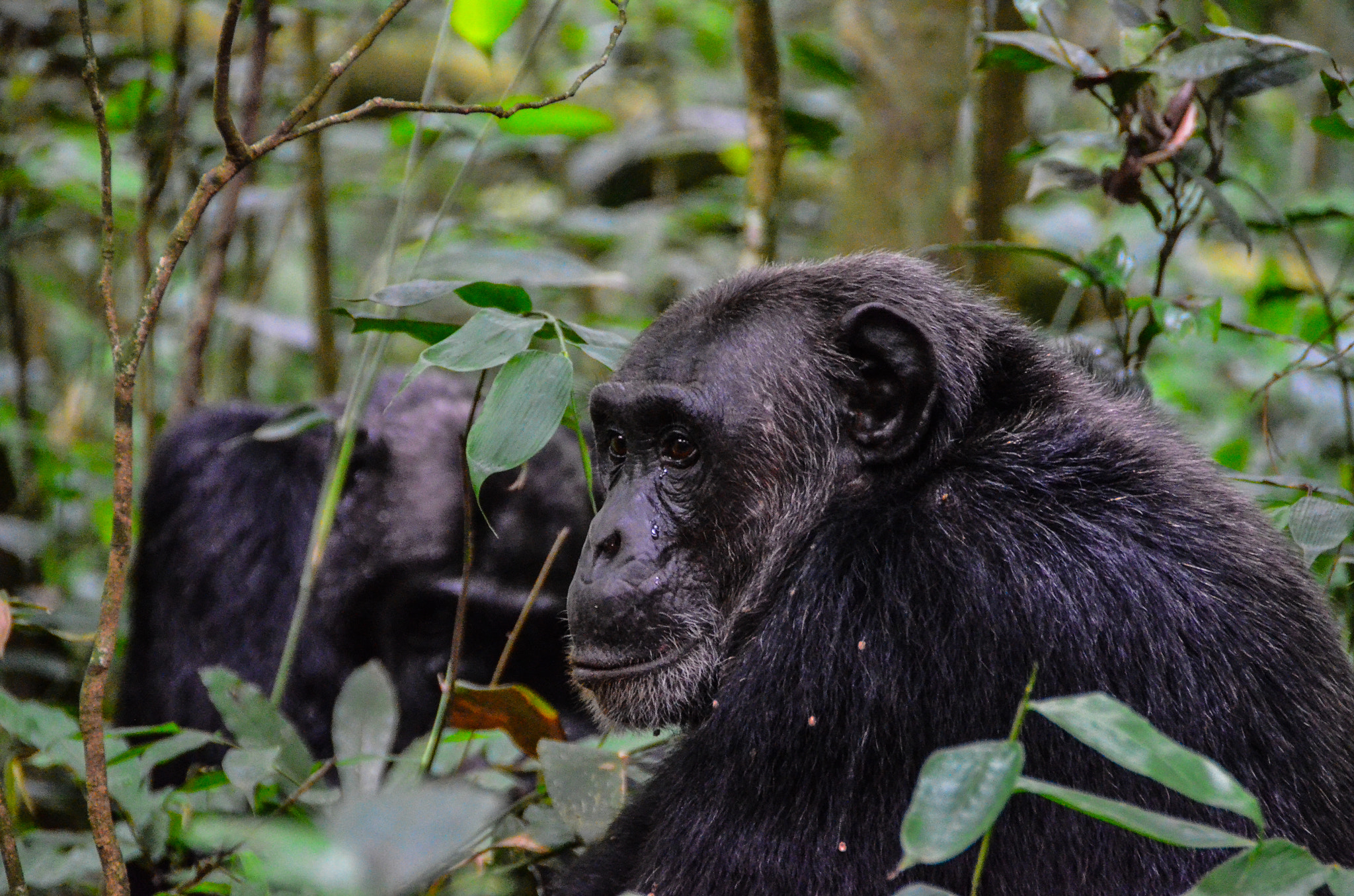
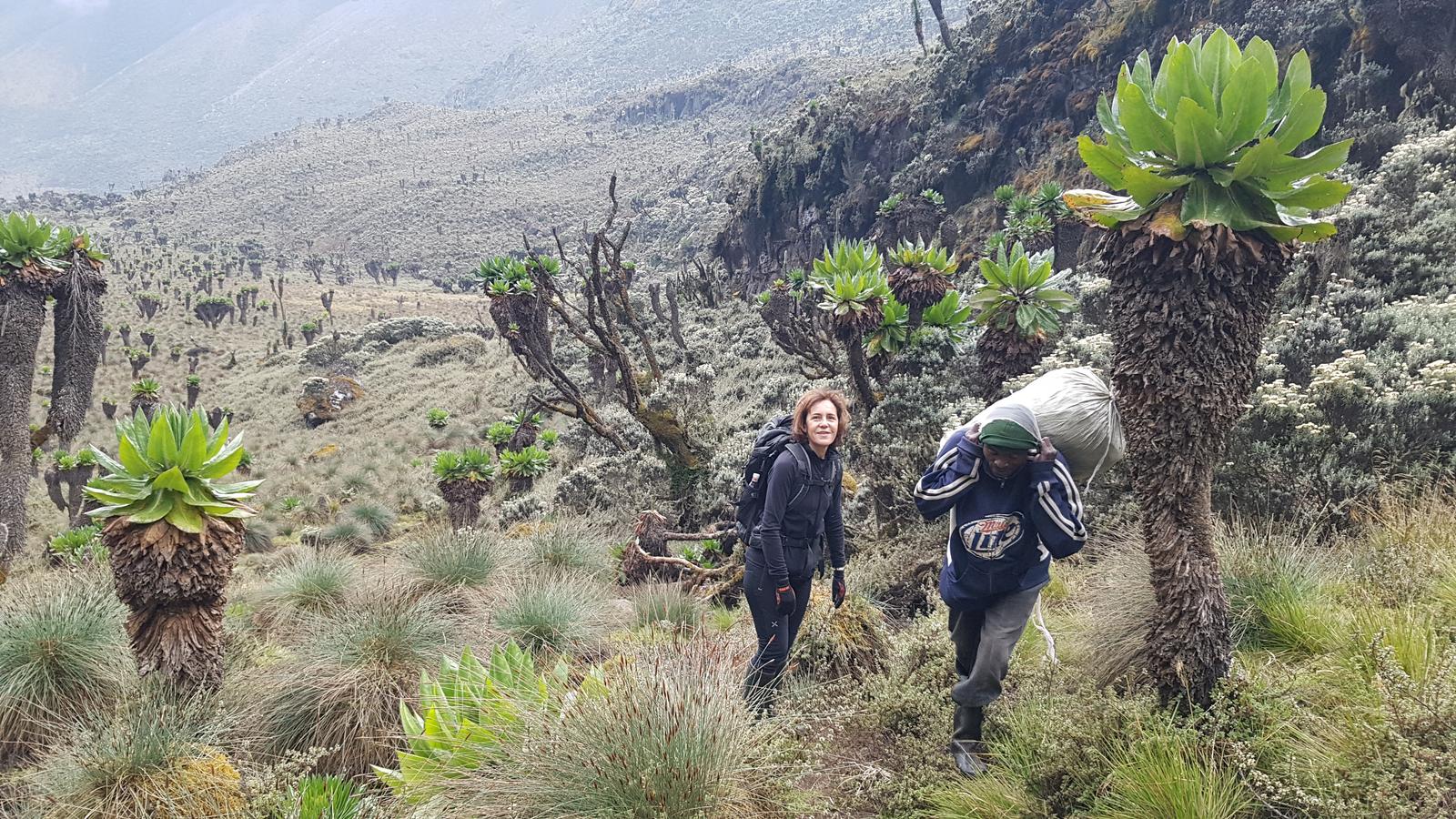
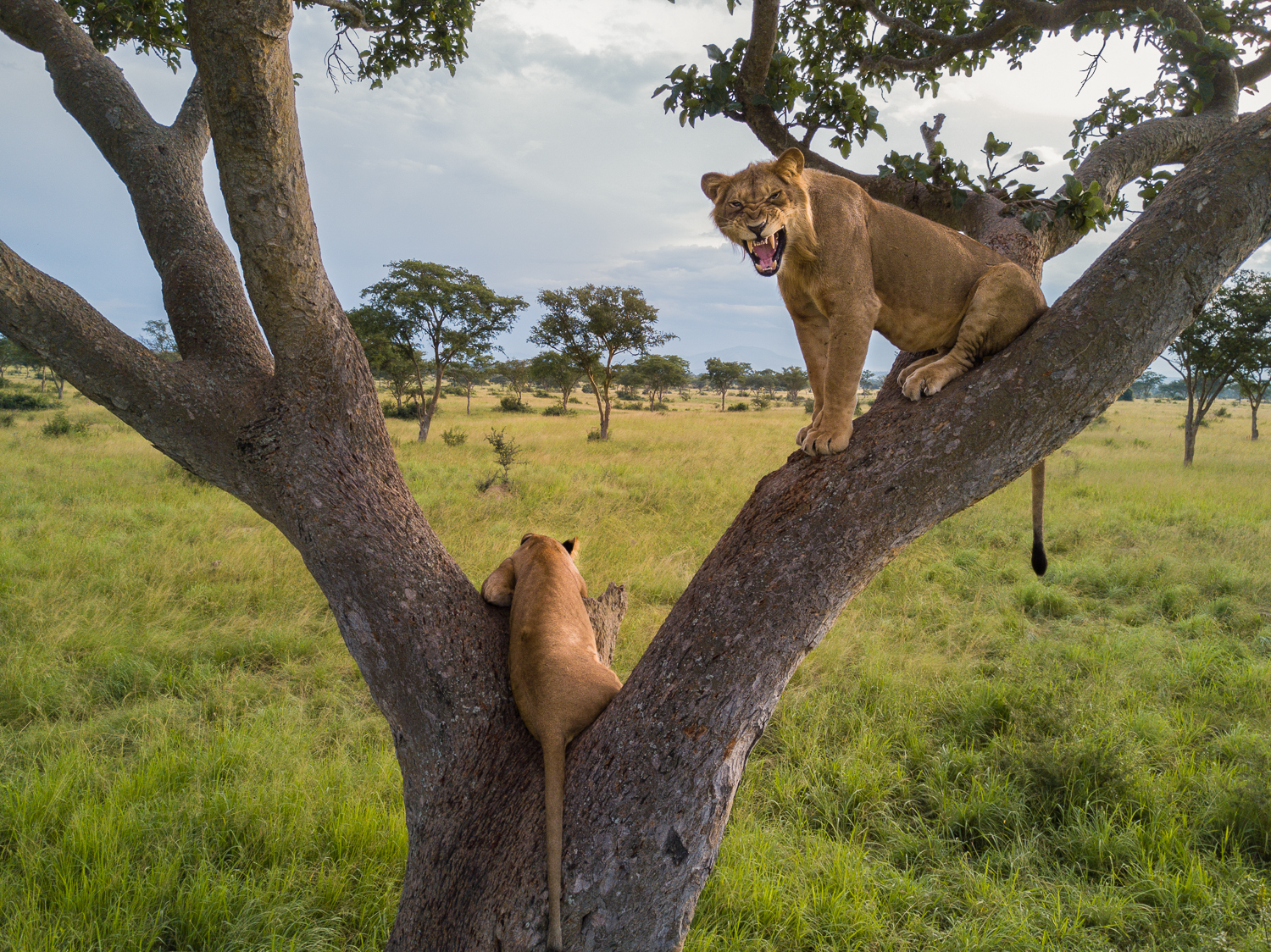
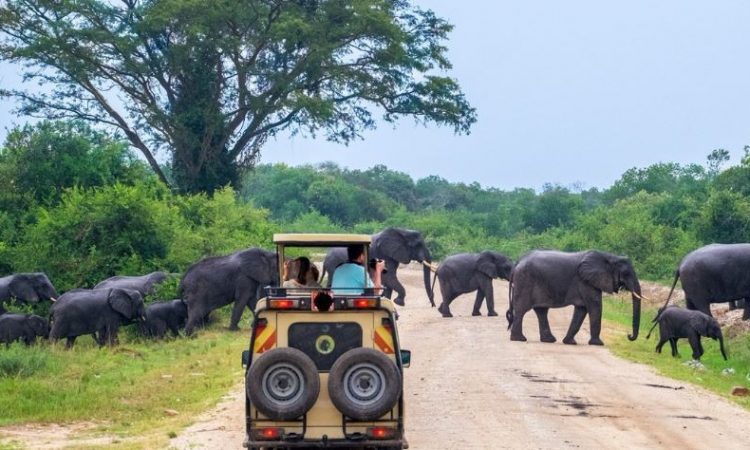
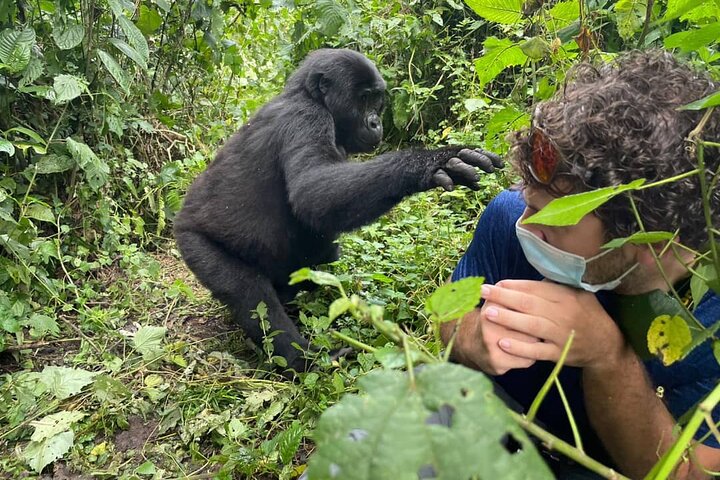
You can go chimpanzee trekking in Uganda’s Kibale National Park and get close to families of chimpanzees. Visitors usually spend an hour with the chimpanzees after being briefed by their chimp guide, but they can stay longer if they want a more in-depth chimpanzee habituation experience. Due to high demand, non-resident visitors must obtain permits costing between $200 and $250 USD. It is also important to book ahead of time, as treks leave at 8 am and 2 pm. You may look forward to a guided walk through a lush rainforest where you might see other primates and birds. But please stay at least 8 meters away from the chimps, and don’t use flash photos.
Gorilla treks through Uganda’s dense rainforest reveal habituated mountain gorillas in the Bwindi Impenetrable Forest. The trek can last anywhere from an hour to a full day, and there is a strict one-hour gorilla viewing limit once you find them. To go gorilla trekking, you’ll need a gorilla trekking permit, which can be around $800 for non-residents. You’ll also need to be physically fit for the steep terrain, and you’ll have to follow strict rules like wearing a mask and keeping your distance. This wildlife experience is truly profound and should be experienced by travelers who are passionate about tourism and conservation.
Margherita Peak Summit, Chimpanzee & Gorilla Trekking Safari: At-a-Glance Trek Snapshot.
| Duration | 16 days / 15 nights |
| Trek Distance | ~70 km (mountain section) + road transfers |
| Maximum Elevation | 5,109 m, Margherita Peak, Mount Stanley, Rwenzori |
| Difficulty | Very Challenging (technical glacier ascent + long descent); see Difficulty section |
| Start Point | Entebbe International Airport (EBB), Uganda |
| End Point | Entebbe International Airport (EBB) |
| Mountain Route | Central Circuit Trail, Rwenzori Mountains NP |
| Primate Parks | Kibale Forest NP (chimps) * Bwindi Impenetrable Forest (gorillas) |
| Wildlife Park | Queen Elizabeth National Park (Kasenyi + Ishasha sectors) |
| Best Season | Dec-Mar & Jun-Aug (drier months; mountains possible year-round) |
| Group Size | 2 – 12 trekkers (private departures on request) |
| Accommodation | Mountain huts (Rwenzori) * Safari lodges * Forest camps |
| Starting Price | From $5,980 per person (group of 2; singles on request) |
| Gorilla Permit | $800 USD per person (included in package) |
| Chimp Permit | $200 – $250 USD per person (included in package) |
Why This Safari? The Case for 16 Days
There is no other itinerary in East Africa quite like this one. In sixteen days, you will stand on Margherita Peak at 5,109 metres, the third highest point on the African continent and the glacier-capped crown of the Rwenzori Mountains, and then descend to the equatorial rainforest floor to sit within touching distance of mountain gorillas in Bwindi Impenetrable Forest. The vertical and emotional range of this journey is extraordinary.
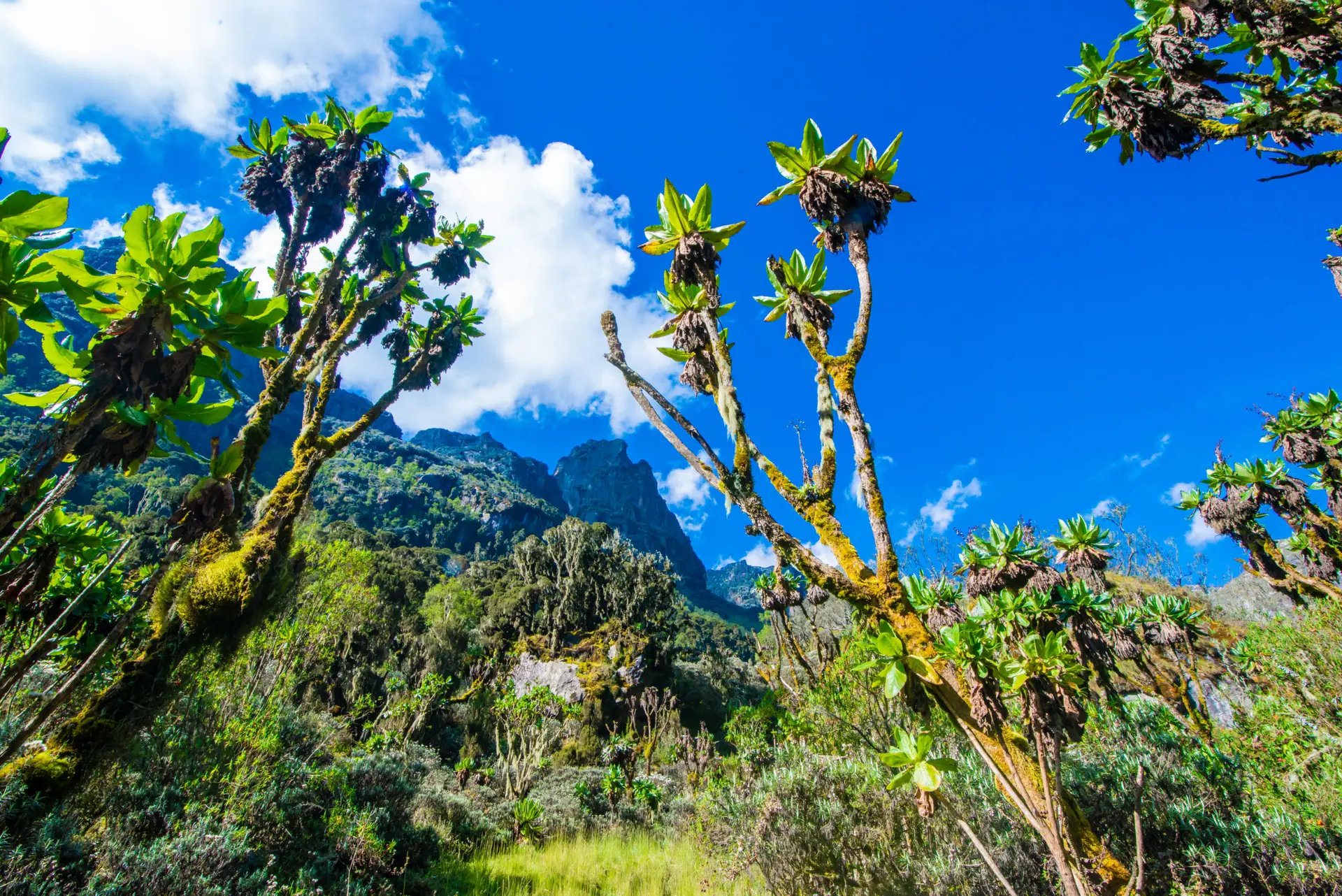
The Rwenzori Mountains, a UNESCO World Heritage Site known since antiquity as the Mountains of the Moon, are one of the most botanically surreal places on earth. Giant groundsels tower six metres overhead. Ancient heather trees drip with moss. The trail winds through the Bigo Bog, past Lake Bujuku mirrored between Mount Baker and Mount Stanley, and up to Elena Hut at 4,541 m, the final staging camp before the glacier. This mountain is not a peak you bag on a day trip. You earn Margherita.
The genius of this itinerary is in the sequencing. You begin with a gentle orientation in Entebbe, then warm your legs on chimpanzee tracking in Kibale Forest, the richest chimpanzee habitat in Africa and home to over 1,500 individuals. This physical warm-up and primate immersion sets the perfect psychological stage for the mountain. After seven demanding days on the Central Circuit, you emerge from the forest lean, conditioned, and euphoric, then transition immediately to the savannah wildlife of Queen Elizabeth National Park, where tree-climbing lions rest in fig trees and hippos crowd the Kazinga Channel. You close the journey in Bwindi, with two full days with mountain gorillas, a privilege fewer than 10,000 people experience each year.
This safari is intentionally paced. A contingency day on the mountain is built in as a true buffer against weather, not a marketing placeholder. Every transfer is timed so that you arrive rested, not exhausted. And every component permit, guide, equipment, and accommodation is handled by a single specialist operator with over a decade of guiding in the Rwenzori range.
Full Day-by-Day Itinerary: 16-Day Margherita Peak, Chimps & Gorillas
Day 1: Arrival in Entebbe, Rest & Expedition Briefing
| Elevation
1,135m (Entebbe) |
Activity
Light |
Meals
Bed & Breakfast |
Overnight
Entebbe |
Your guide meets you at Entebbe International Airport and transfers you to a comfortable hotel on the shores of Lake Victoria. This day is intentionally unscheduled. International travel is tiring, and this expedition is demanding. Rest is now part of the strategy.
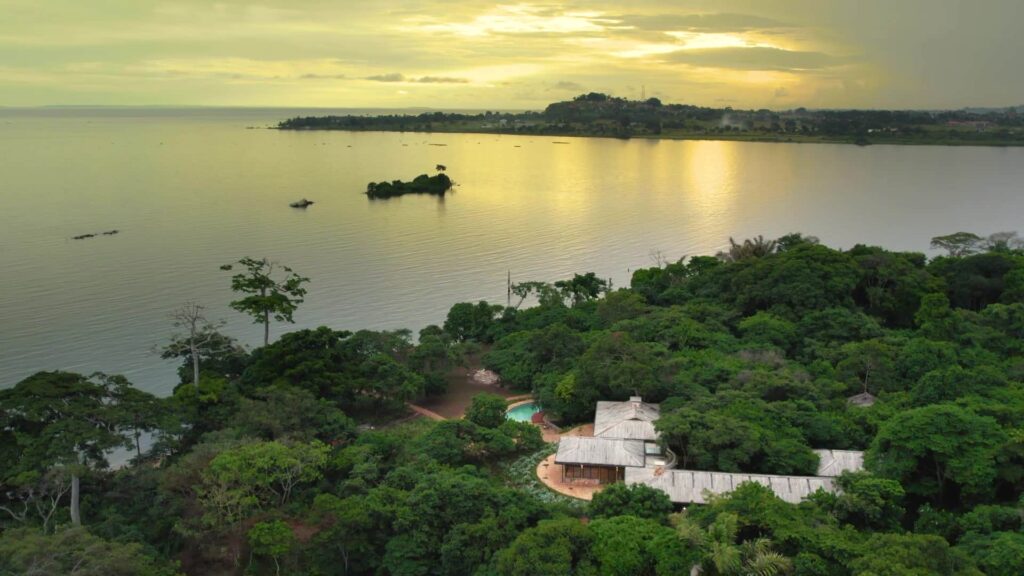
In the evening, your lead guide joins you for a briefing covering the full 16-day itinerary, gear checks, permit logistics, and an honest conversation about what the Rwenzori demands. If you have any equipment concerns, tonight is the time to address them. Sleep well; tomorrow the adventure begins.
Overnight: Hotel or similar, Entebbe (Lake Victoria views)
Day 2: Entebbe to Kibale Forest NP, Primate Capital of Africa.
| Drive
~320 km |
Duration
5 – 6 hours |
Meals
B+L+D |
Overnight
Kibale |
After breakfast, your safari vehicle heads west on the main road toward Fort Portal, the gateway town to the crater lake region and the Rwenzori foothills. The drive itself is a gentle immersion into Uganda, passing banana plantations, tea estates tumbling down volcanic hillsides, and the first distant views of the Rwenzori massif rising on the horizon.
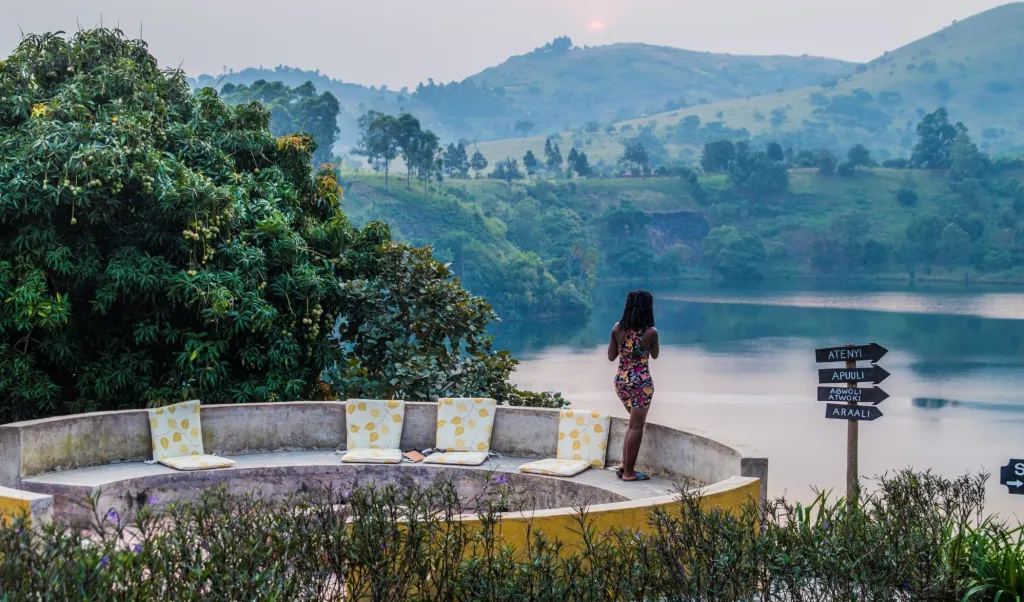
Lunch is taken in Fort Portal, a pleasant town with a calm atmosphere and excellent local food. After lunch, continue south to your lodge on the edge of Kibale Forest National Park. The forest canopy pushes right up to the lodge perimeter, and you may already hear red-tailed monkeys and black-and-white colobus crashing through the canopy before dinner. An early night is advised; chimpanzee tracking begins at 8:00 am.
Overnight: Lodge in Kibale or similar, forest-edge accommodation
Day 3: Chimpanzee Trekking in Kibale Forest + Transfer to Rwenzori
| Trek Duration
1 – 4 hours (chimp-dependent) |
Permit
$200 – $250 pp (included) |
Meals
B+L+D |
Overnight
Rwenzori foothills |
Up at 6:30 am, a short drive reaches the Kanyanchu Visitor Centre by 7:45 am for the mandatory pre-trek briefing. Rangers explain chimp behavior, forest rules, the 8-meter approach distance, and the no-flash photography policy. Groups are capped at eight trekkers per chimp community.
Kibale Forest is home to approximately 1,450 chimpanzees, the highest density of any protected area in Africa. Once trackers locate a community, you follow guides through dense undergrowth to observe them. The experience is visceral: the alarm calls, the arboreal acrobatics, the politics of dominance displayed between adult males. You spend a full hour in their presence. Red-tailed monkeys, L’Hoest’s monkeys, and over 370 bird species share this forest.
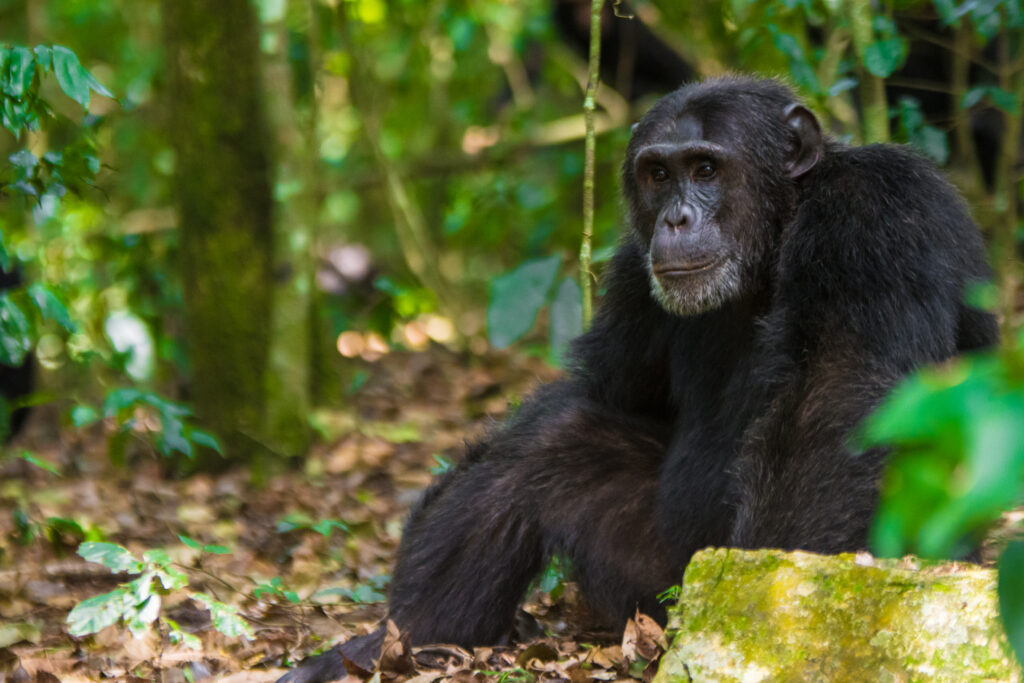
After the trek, return to the lodge for lunch, then drive east toward the Rwenzori Mountains. Arrival at Snow Heights Lodge near Nyakalengija in the late afternoon marks the psychological transition: the primate warm-up is complete. Tomorrow, the mountain begins.
Overnight: Snow Heights Lodge or similar, Rwenzori foothills (views of the mountain massif)
Acclimatisation NoteNyakalengija sits at approximately 1,646 m. Even this modest elevation shift combined with afternoon walks around the lodge grounds begins your body’s acclimatization. Drink 3 – 4 liters of water today and avoid alcohol. |
Day 4: Nyakalengija, Nyabitaba Hut | Central Circuit Day 1
| Start Elevation
1,646 m |
Camp Elevation
2,651 m |
Gain
+1,005 m |
Difficulty
Moderate – Hard |
Today the expedition becomes real. After breakfast at the lodge, drive the short distance to the Rwenzori Mountains National Park gate at Nyakalengija for the Uganda Wildlife Authority briefing, guide introduction, and final load distribution with your porters. Porters carry up to 25 kg each; your personal daypack typically carries 5-8 kg.
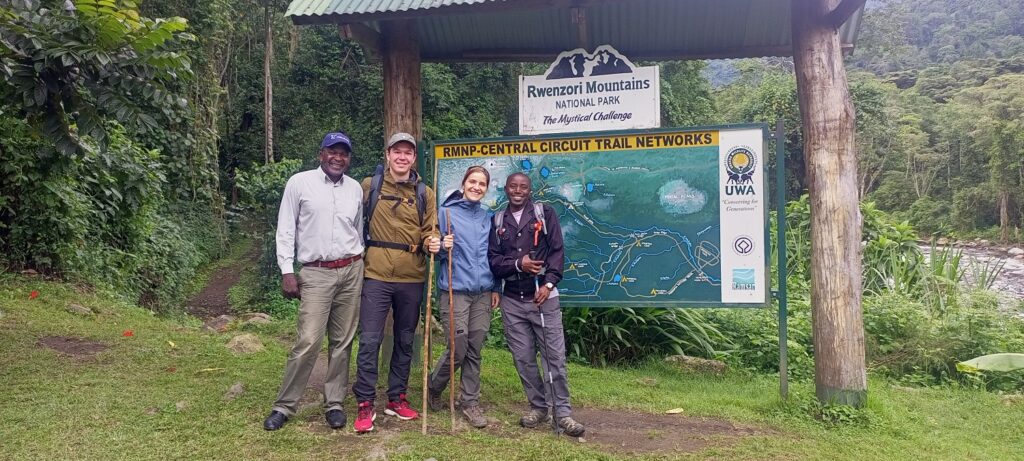
The trail enters the montane forest almost immediately, following the Mubuku River upstream through dense vegetation. The path is wide and well-maintained near the start but progressively narrows as altitude increases. Expect your first encounters with the Rwenzori’s legendary mud, wooden bridges, slippery rock surfaces, and root networks that make every footfall deliberate. The forest is alive with bird calls, and the river provides a constant soundtrack below.
Nyabitaba Hut sits on a commanding ridge at 2,651 m with views southwest over the Mubuku Valley. The huts are solid stone structures with dormitory sleeping, foam mattresses, and a kitchen where your cook will prepare hot soup, rice, beans, and tea. The evening temperature drops noticeably; your sleeping bag earns its place tonight.
Photo Spot: The ridge at Nyabitaba at sunset, with mist filling the valley below and the first views of the upper peaks.
Overnight: Nyabitaba Hut (2,651m) * Meals: full board on mountain
Day 5: Nyabitaba - John Matte Hut | Through the Bamboo & Heath
| Start
2,651 m |
Camp
3,380 m |
Gain
+729 m |
Difficulty
Challenging |
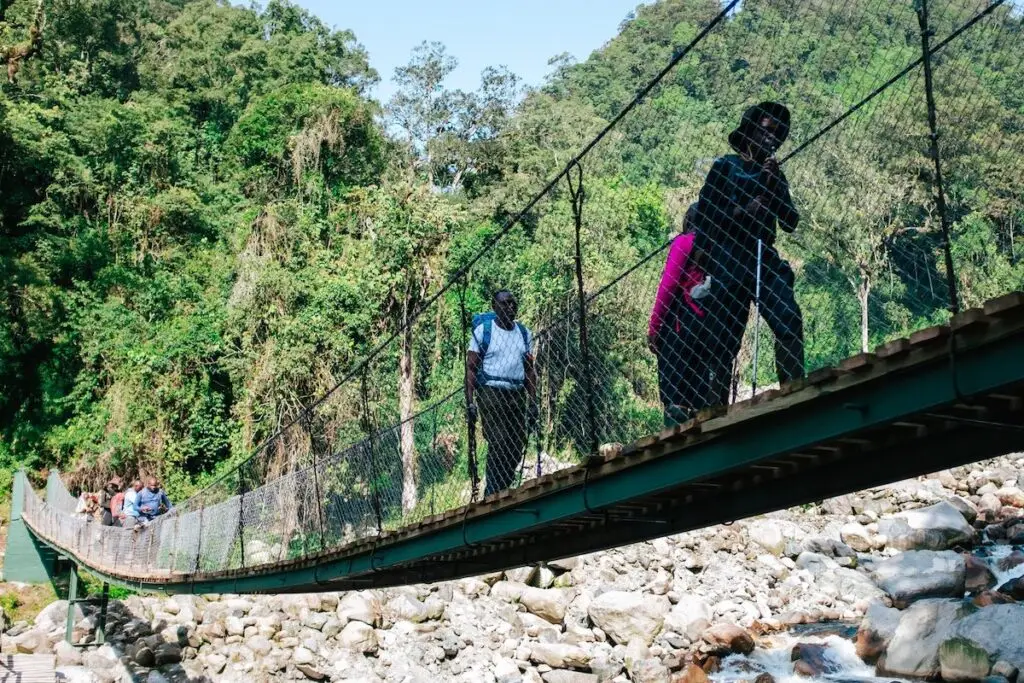
The day begins with a descent from the Nyabitaba ridge to the Kurt Shafer Bridge, a narrow suspension crossing at the confluence of the Mubuku and Bujuku rivers, one of the most photographed spots on the entire trail. The bridge sways gently as you cross; below, the green water rushes over boulders between steep walls of forest.
Beyond the bridge, the trail steepens through a bamboo zone before transitioning into giant heather and the first patches of Afroalpine moss. This is where the Rwenzori’s alien character begins to assert itself: tree heathers draped in Spanish moss, lichen-covered rock slabs, and streams running orange-brown with natural tannins. The trail surface becomes a mosaic of mud, exposed roots, and rock.
On a clear afternoon, your first proper view of Mount Stanley reveals itself above the heather canopy, a distant white wedge that suddenly makes Margherita Peak feel tangible. John Matte Hut sits in a sheltered clearing with a stream and a cook shelter. Altitude begins to be felt by most trekkers here: slow down, breathe deliberately, and hydrate relentlessly.
Key Landmark: The Kurt Shafer Bridge, which an Austrian mountaineer and conservationist named after himself, played an instrumental role in developing Rwenzori infrastructure.
Overnight: John Matte Hut (3,380 m)
Day 6: John Matte - Bujuku Hut | The Bigo Bog & Lake Bujuku
| Start
3,380 m |
Camp
3,962 m |
Gain
+582 m |
Difficulty
Moderate (key acclimatisation) |
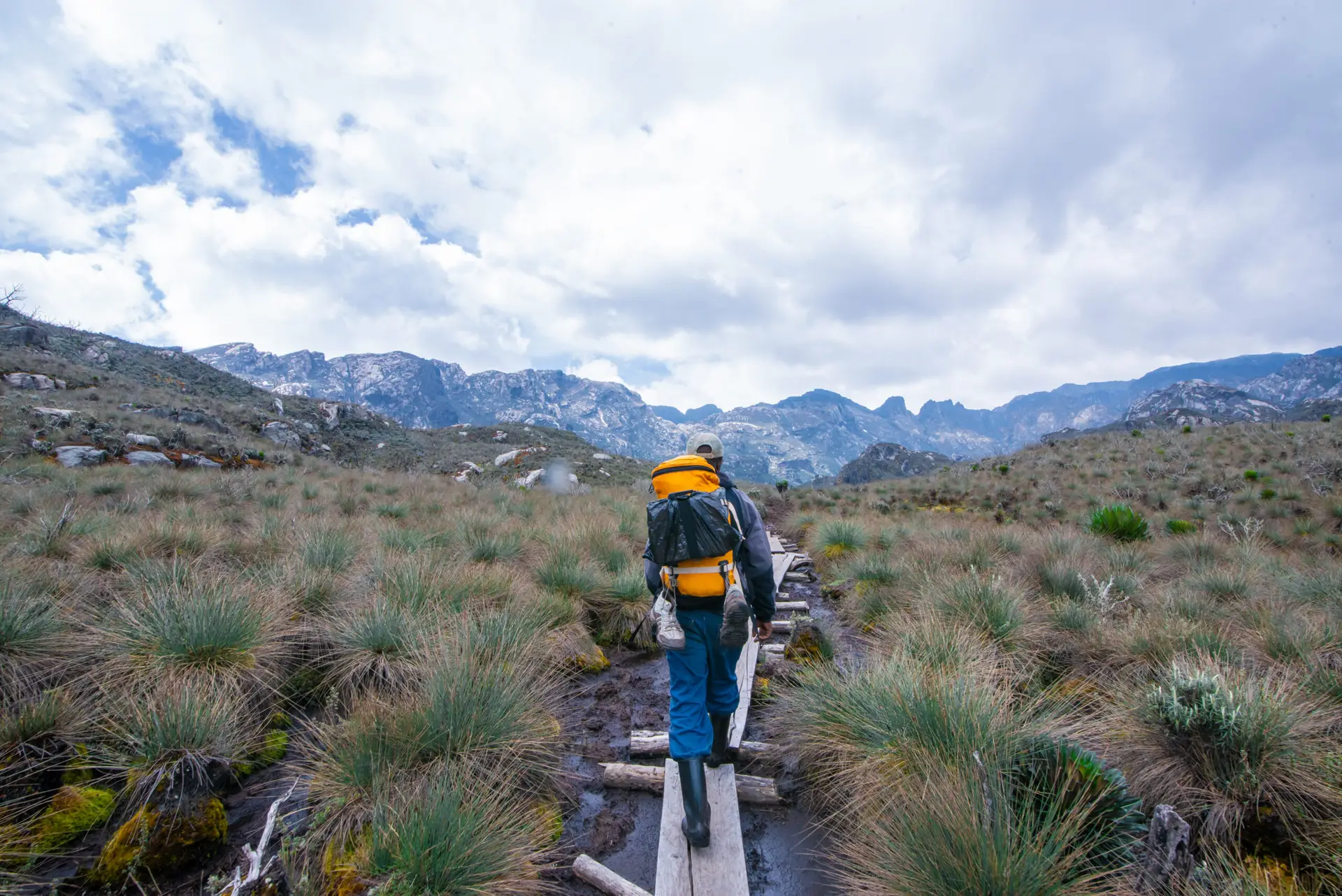
Today’s shorter distance is deceptive. The Bigo Bog, arguably the most famous section of the Central Circuit, is an extended traverse of waterlogged Afro-alpine moorland where a network of wooden boardwalks threads between giant lobelia stalks rising two to four metres from the bog surface. In mist (which is frequent), this landscape has a prehistoric quality that defies description. Giant lobelias do not exist anywhere else on earth at this density.
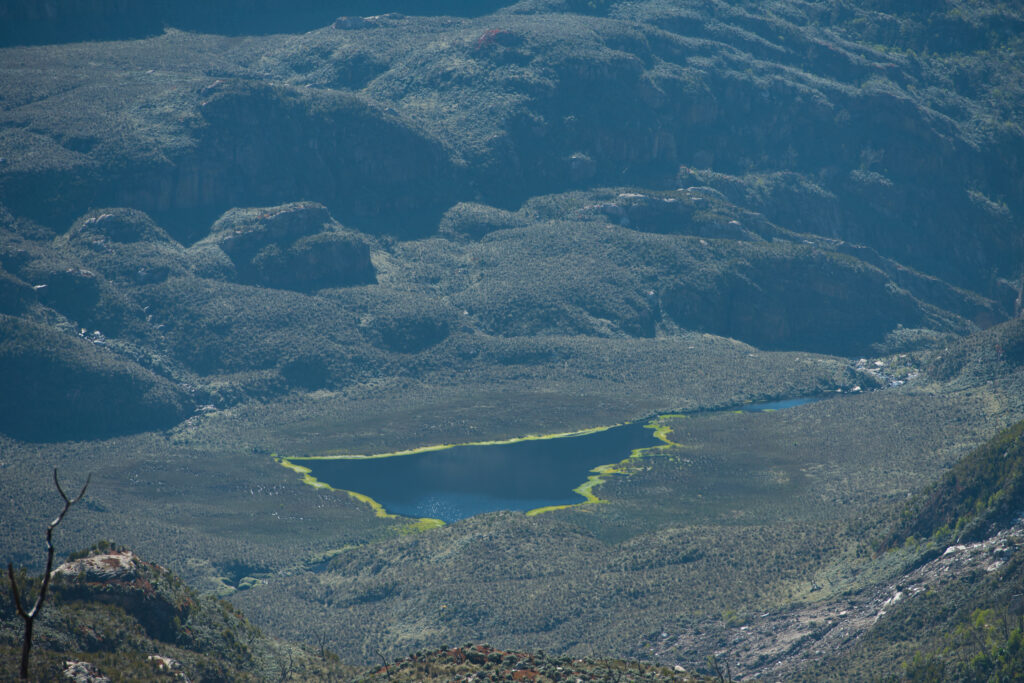
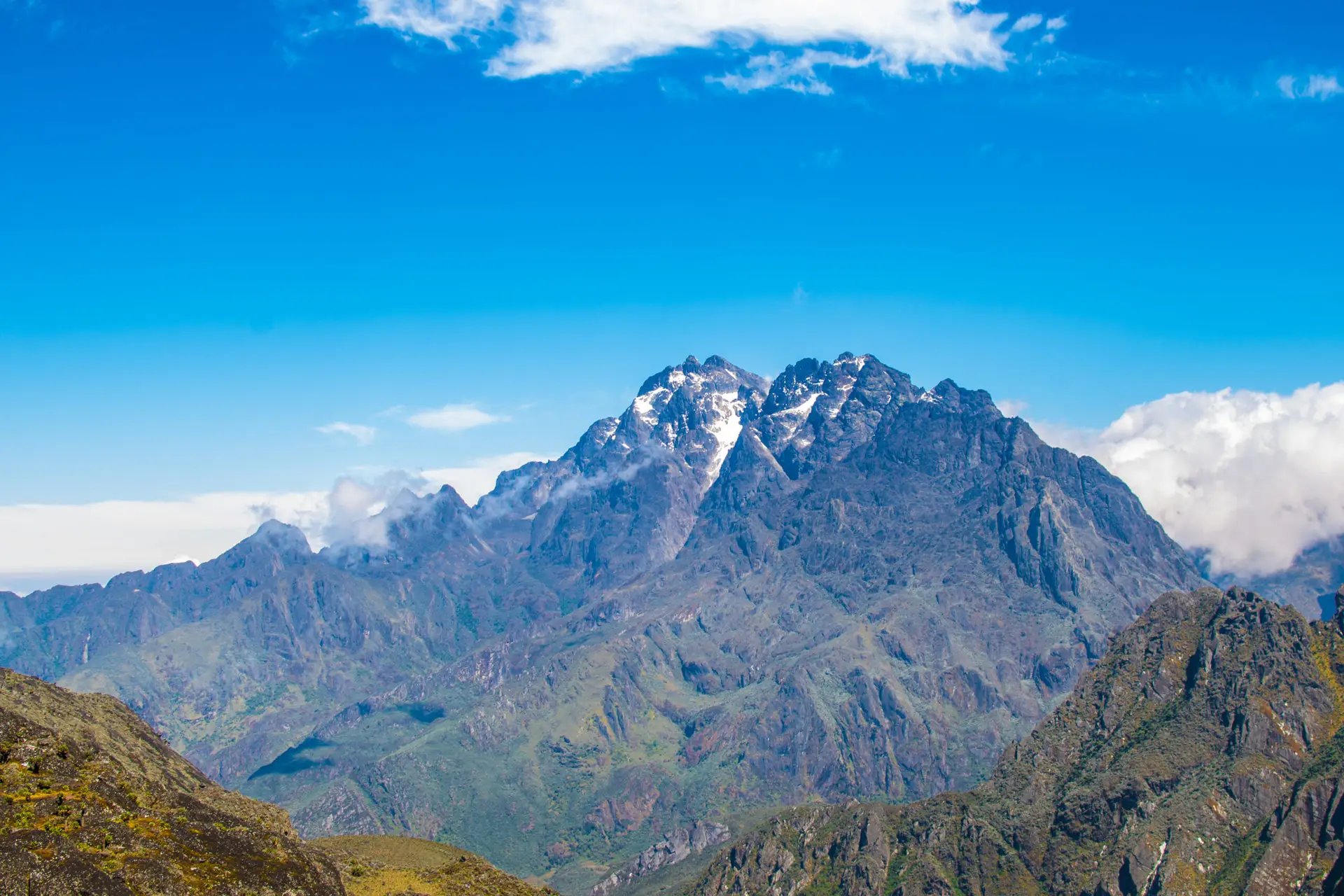
After the Lower Bigo Bog, the trail climbs through the Upper Bigo Bog before the dramatic arrival at Lake Bujuku, a dark glacial lake cradled between the flanks of Mount Baker (4,843 m) to the south and Mount Stanley (5,109 m) to the north. The lake perfectly mirrors the peaks on calm evenings. Bujuku Hut sits on the northern shore.
The short distance is intentional: this hike is your primary acclimatization day. Spend the afternoon resting, hydrating, and exploring the lakeshore. Your body is now above 3,900 m for the first time. Headache and mild breathlessness are normal. Report any nausea or loss of coordination to your guide immediately.
Wildlife Highlight: Visitors commonly see the Rwenzori turaco, scarlet-tufted malachite sunbird, and three-horned chameleon near the bog and lake shores.
Overnight: Bujuku Hut (3,962 m), the closest hut to Lake Bujuku
Day 7: Bujuku - Elena Hut | Scott Elliot Pass & the Glacial Zone
| Start
3,962 m |
Camp
4,541 m |
Gain
+579 m |
Difficulty
Very Challenging |
This trek is one of the two hardest days on the mountain, and your body knows it. The trail from Bujuku climbs steeply through giant groundsels, otherworldly columnar plants with silvery leaves, toward Scott Elliot Pass at 4,372 m. The pass is a narrow saddle between Mount Baker and Mount Stanley with panoramic views over the Bujuku Valley, Lake Bujuku far below, and the glaciated north face of Margherita looming immediately ahead.
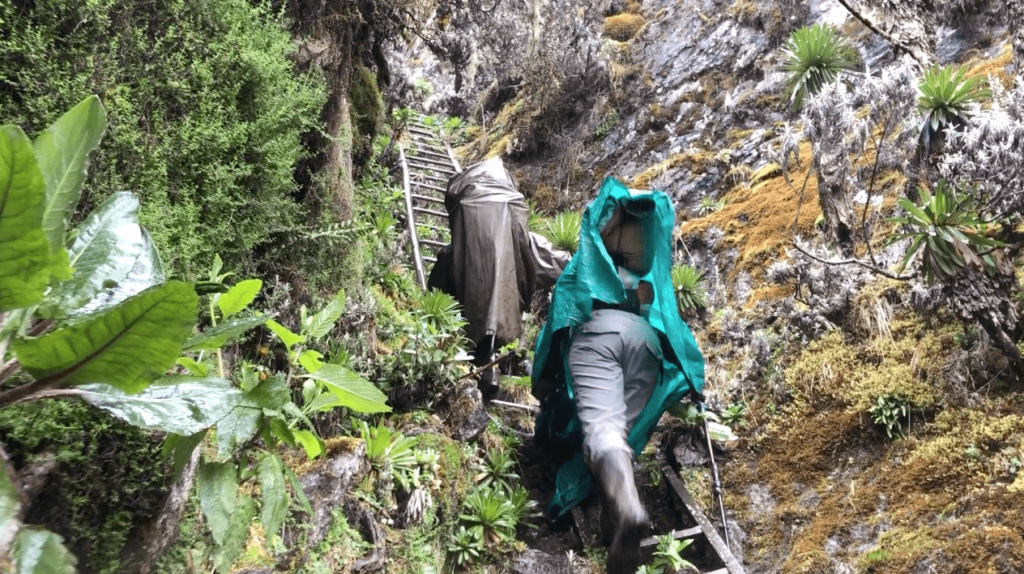
A metal ladder assists with the final steep section of the pass. From the top, the route to Elena Hut diverges right, ascending directly over large granite boulders and ice-dusted rock toward the rocky shoulder of Mount Stanley. This is where trekking becomes mountaineering; the terrain demands hands as well as feet, and the altitude makes every move deliberate.
Elena Hut, at 4,541 m, sits in a dramatically exposed position on the rocky flank of Mount Stanley, with a direct view toward the Stanley Glacier and the Margherita summit ridge. The hut is cold, genuinely cold, and the wind is constant. Your mountain cook serves your sleeping bag, insulation layers, and hot drinks, which are essential equipment tonight. Rest as much as possible. Tomorrow you leave for the summit before 3:00 am.
Gear Check Tonight: Crampons, harness, helmet, ice axe, gloves, balaclava, summit jacket. Your guide performs a mandatory gear check at dinner.
Overnight: Elena Hut (4,541 m), the final staging point before Margherita
Day 8: SUMMIT DAY, Margherita Peak (5,109 m) then Kitandara Hut
| Summit
5,109 m Africa’s 3rd Highest |
Start Time
2:00 – 4:00 am |
Technical
Glacier, crampons, rope |
Overnight
Kitandara: 4,027 m |
Summit Day: Technical Mountaineering RequiredThe ascent to Margherita Peak involves glacier travel with crampons, rope management on exposed ridges, and potential ice axe use. All technical equipment is provided. Your guide is a certified UWA mountaineer with Margherita summit experience. This section is NOT achievable without a guide; conditions change without warning. |
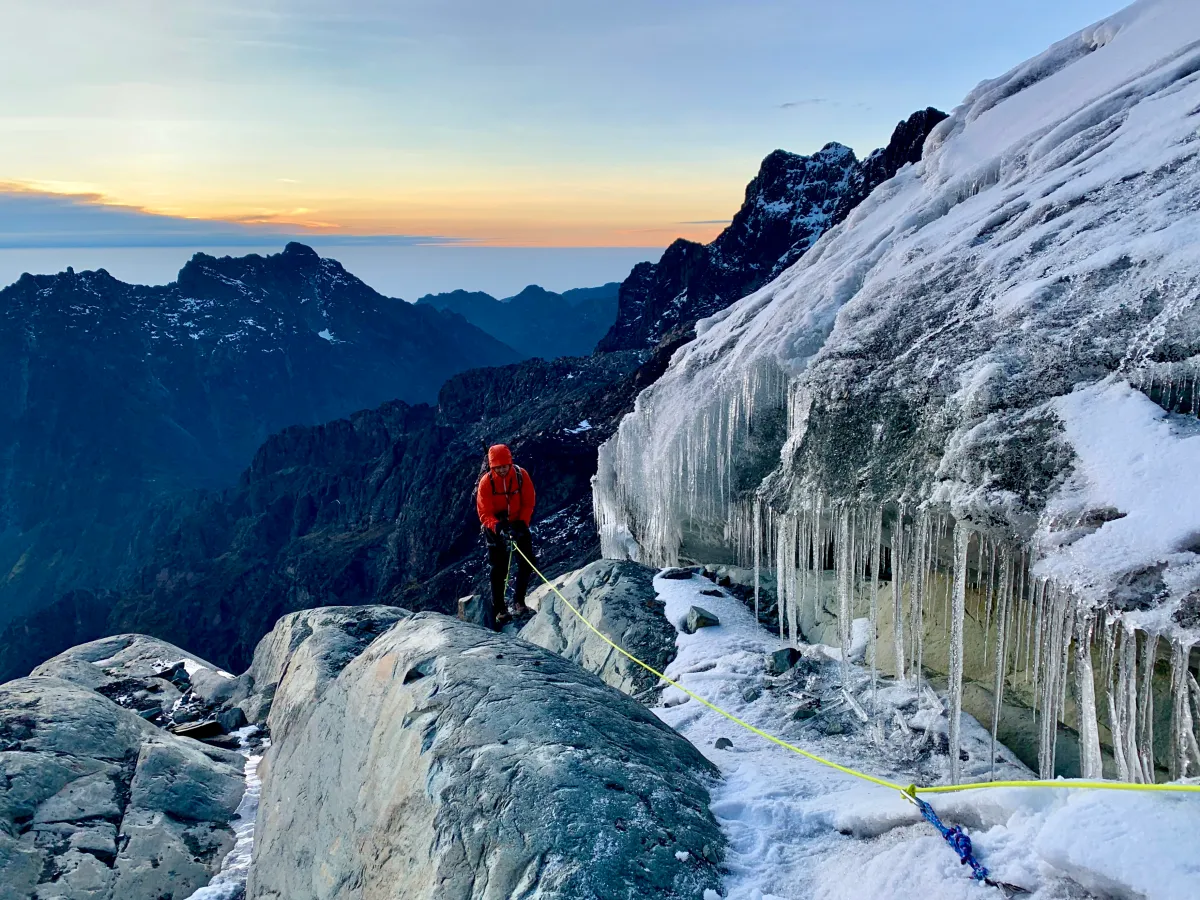
Your cook wakes you at 1:30–2:00 a.m. After a light hot meal, your guide fits your crampons, checks your harness and helmet, and confirms rope assignments. In the dark, the Stanley Glacier is approached on foot from Elena Hut, the beam of your headlamp illuminating ice and bare rock in equal measure.
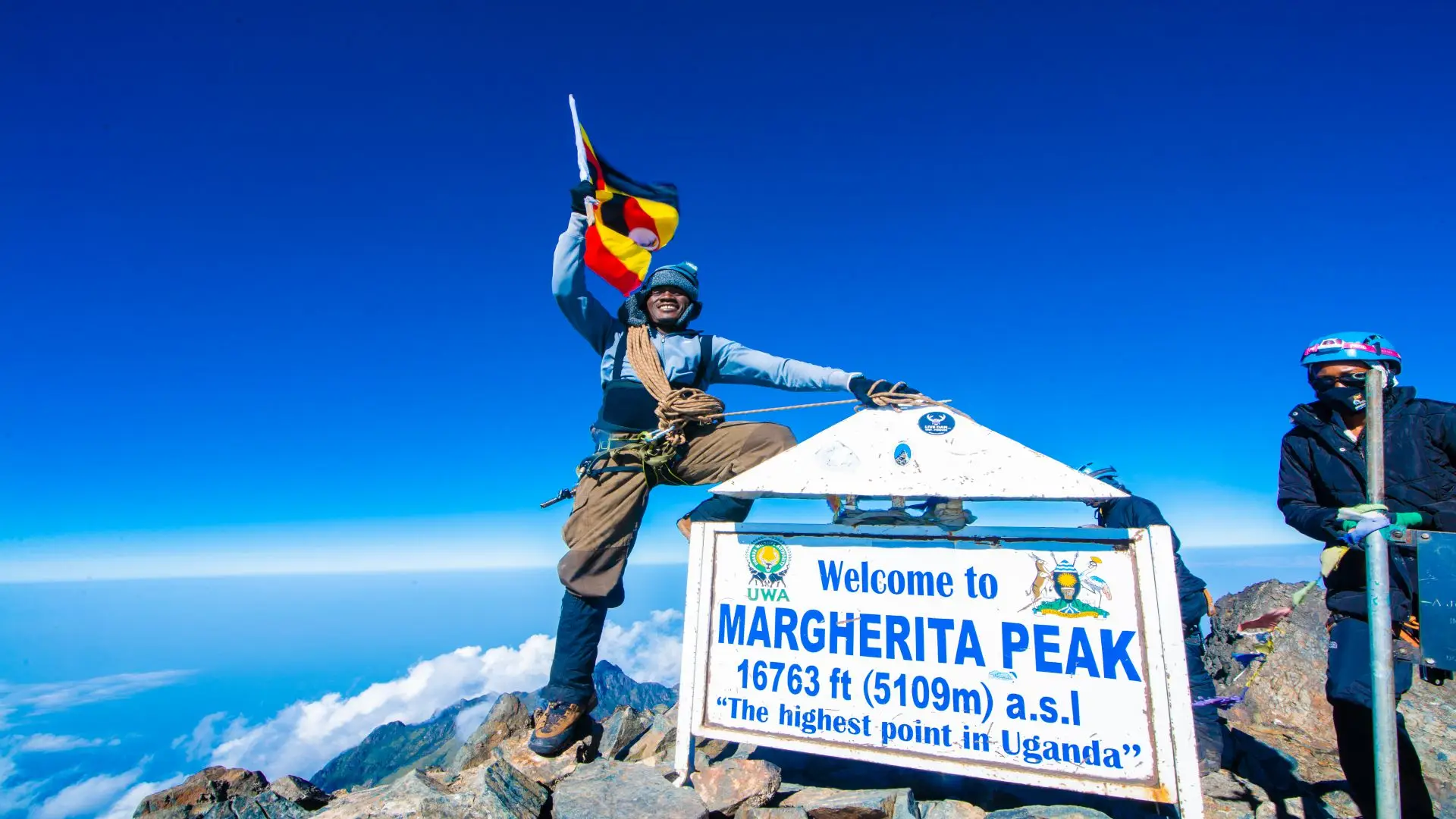
The ascent crosses the Stanley Glacier, and guides navigate the crevasses. The gradient steepens toward the summit ridge, where wind-scoured ice demands careful crampon placement. At Margherita Peak, 5,109 metres, the roof of Uganda and the third-highest point in Africa, you stand on a narrow summit with the full Rwenzori range spread below you and, on clear mornings, the vast expanse of the Congo Basin visible to the west.

Time on the summit is brief due to cold and exposure. The descent retraces the glacier route back to Elena, then continues south through Scott Elliot Pass and down to the exquisite twin Kitandara Lakes at 4,027 m. The lakes are turquoise in afternoon light, framed by Mount Baker’s east face. After the brutality of summit day, Kitandara feels almost peaceful.
Summit Achievement: Margherita Peak is the highpoint of the Rwenzori Mountains and the highest point in Uganda and the DRC. First summited in 1906 by the Duke of Abruzzi’s expedition, its glaciers are retreating rapidly; this summit will become significantly harder or impossible within decades.
Overnight: Kitandara Hut (4,027 m) twin alpine lakes setting
Day 9: Kitandara - Guy Yeoman Hut | Freshfield Pass & Historic Bujangolo
| Start
4,027 m |
Freshfield Pass
4,282 m |
Camp
3,450 m (Guy Yeoman) |
Difficulty
Challenging |
After summit day, every trekker describes a curious mixture of exhaustion and invincibility. Today you carry both as you climb from Kitandara toward Freshfield Pass at 4,282 m, the high point of the southern traverse and a crossing between the Kitandara Basin and the Bujuku drainage on the south side of Mount Baker.
The descent from Freshfield Pass is steep and prolonged, dropping through heath and bog terrain into the Bujangolo rock shelter, the historic campsite used by the Duke of Abruzzi during his groundbreaking 1906 expedition that first reached Margherita Peak. A modest plaque marks the spot. It is a humbling place to eat lunch.
Guy Yeoman Hut sits on the banks of the Mubuku River at approximately 3,450 m, lower than you have slept since Day 5. The knees feel the descent, but the body responds positively to the thickening air. This is your last night high on the mountain.
Historical Note: Luigi Amedeo di Savoia, Duke of Abruzzi, led the definitive first ascent of Margherita Peak on June 18, 1906. His expedition also first climbed Alexandra Peak, Albert Peak, Vittorio Emanuele Peak (Mount Speke), and Edward Peak (Mount Baker). Read the full story on our site.
Overnight: Guy Yeoman Hut (3,450m) * Last night high on the Central Circuit
Day 10: Contingency / Recovery Day on Mountain
| Purpose
Weather buffer / recovery |
Activity
Light or rest |
Meals
Full board |
Overnight
Guy Yeoman or on trail |
The Rwenzori Mountains receive rainfall for approximately 300 days each year. This day is built into the itinerary as a genuine safety and success buffer, not a placeholder. If weather delayed the summit, today provides the makeup opportunity. If summit day was successful, today is pure recovery: light walks along the river, birding in the heather zone, and preparing mentally for the world that exists below the treeline.
The Rwenzori’s unpredictability is part of its character. Guides who promise perfect conditions are not being honest with you. Our guides are honest. If you need this day for a second summit attempt, your guide will make the call with your safety, not your pride, as the primary consideration.
Overnight: Guy Yeoman Hut or advancing on trail, dependent on conditions
Day 11: Guy Yeoman - Nyakalengija Descent + Transfer to Queen Elizabeth NP
| Descent Start
3,450 m (Guy Yeoman) |
Trail End
1,646 m (Nyakalengija) |
Transfer
~120 km to QENP |
Overnight
Queen Elizabeth NP |
The final descent from Guy Yeoman retraces the trail back through bamboo forest to Nyabitaba and then down to Nyakalengija. After seven days above the treeline, the montane forest feels almost tropical in its warmth and density. Take your time; your knees will benefit from trekking poles and slow, deliberate steps on steep descents.
At Nyakalengija, your porters and guides are thanked, porter tips are distributed, and your safari vehicle waits for the transition to the next chapter. The drive east to Queen Elizabeth National Park takes approximately two hours, and the landscape shift is immediate and dramatic. Within minutes of leaving the Rwenzori foothills, the equatorial forest gives way to acacia savannah, yellow grasses, and the wide Kazinga Channel glinting in the afternoon light.
Arriving at your lodge in QENP in the late afternoon, the contrast is almost disorienting. You have just come off a glacier. Tonight you sleep at 914 m in the savannah heat, surrounded by the sounds of hippos and bush babies. Have a long hot shower. You have earned it.
Overnight: Lodge or similar, Queen Elizabeth National Park (savannah setting)
Day 12: Queen Elizabeth NP, Game Drive & Kazinga Channel Boat Cruise.
| Morning
Kasenyi Plains Game Drive |
Afternoon
Kazinga Channel Boat Cruise |
Meals
B+L+D |
Overnight
QENP Lodge |
Queen Elizabeth National Park is Uganda’s most visited wildlife area, and today you understand why. The morning game drive through the Kasenyi Plains targets the park’s famous tree-climbing lions (more common in the Ishasha sector but occasionally present here), herds of African buffalo, Uganda kob in their thousands, and large elephant bulls grazing the edges of the acacia woodland. The park holds approximately 95 mammal species.
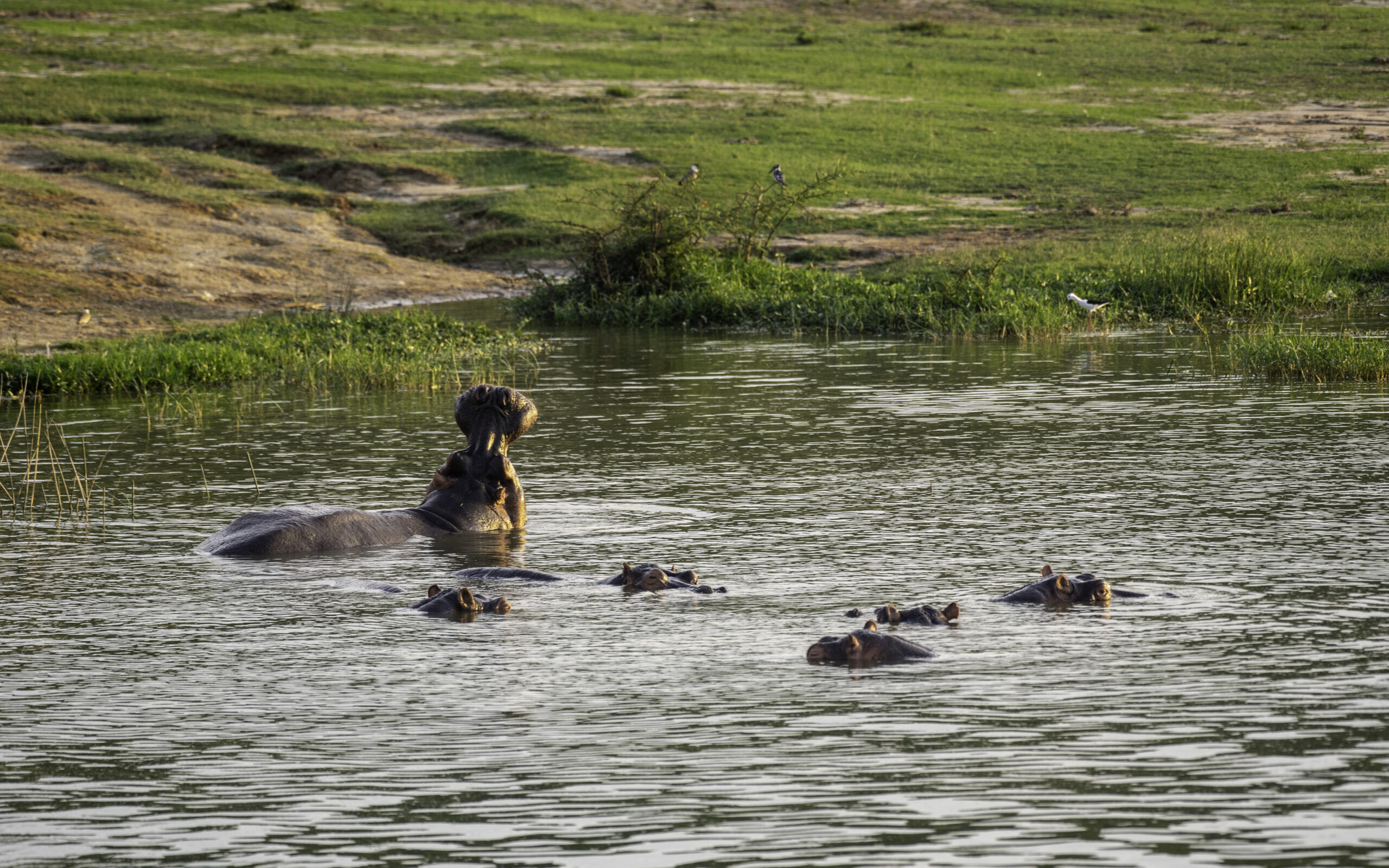
The afternoon Kazinga Channel boat cruise is arguably the finest boat safari in East Africa. The channel connects Lake George and Lake Edward, and its 30-km length is lined with one of the highest concentrations of hippos on the continent, several thousand individuals. Nile crocodiles bask on every sandbank. Elephants wade to drink in groups. African fish eagles hunt from dead trees along the bank. The park has recorded over 600 bird species, and the channel provides prime birding territory.
Wildlife Highlight: Water buffalo herds of 500+ individuals are common on the Kasenyi Plains. Birdwatchers occasionally spot the shoebill stork, one of Africa’s most sought-after birds, on the Kazinga Channel floodplains.
Overnight: Lodge or similar, Queen Elizabeth NP
Day 13: Ishasha Sector (Tree-Climbing Lions) + Transfer to Bwindi
| Morning
Ishasha tree-climbing lions |
Drive
~3 hours to Bwindi |
Meals
B+L+D |
Overnight
Bwindi Forest |
The Ishasha sector in the far south of Queen Elizabeth National Park is famous for one phenomenon: lions that habitually rest in the branches of giant fig trees. This behavior is extremely rare globally; similar populations exist only in Tanzania’s Lake Manyara region, and no one has definitively explained why Ishasha’s lions do it. The morning game drive here is a search as much as a safari; finding them requires patience and a sharp eye.
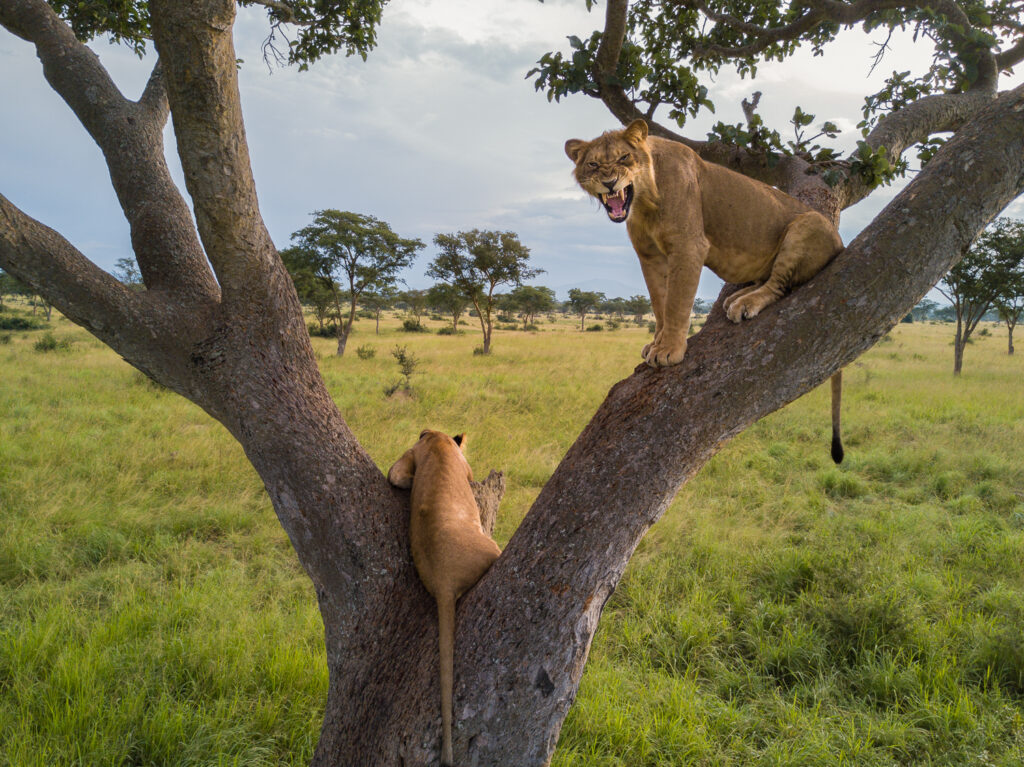
After lunch in Ishasha, the drive south toward Bwindi Impenetrable Forest passes through the Kigezi Highlands, some of Uganda’s most dramatic scenery, a landscape of terraced hillsides, tea gardens, and misty valleys that locals call the “Switzerland of Africa.” Bwindi sits at 1,160 – 2,607 m on a Rift Valley escarpment and is one of Africa’s oldest and most biodiverse rainforests, having persisted through the last ice age as a glacial refuge.
Overnight: Lodge or similar, Bwindi Impenetrable Forest NP (Buhoma sector)
Day 14: Gorilla Trekking in Bwindi Impenetrable Forest
| Permit
$800 pp (included) |
Viewing
1 hour with gorillas (strict) |
Group Max
8 people per gorilla family |
Overnight
Bwindi Forest Camp |
The pre-trek briefing at Bwindi Impenetrable National Park headquarters begins at 7:30 am. UWA rangers assign groups to specific habituated gorilla families and explain the strict protocols: a 7-meter minimum approach distance, face masks required (gorillas are susceptible to human respiratory diseases), no flash photography, and a maximum one-hour encounter once the family is found.
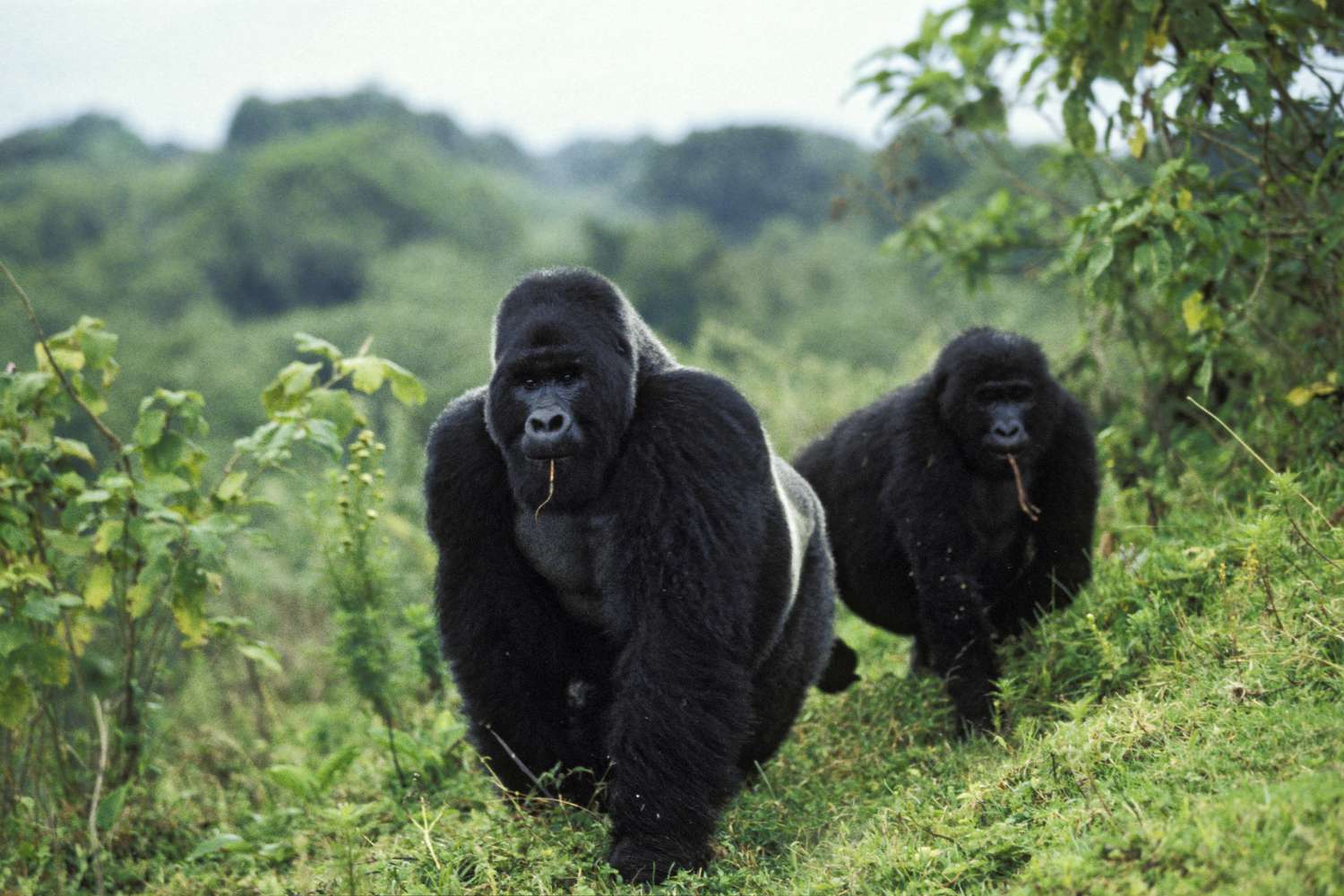
Bwindi is home to approximately half the world’s mountain gorilla population, around 459 individuals in the Uganda sector alone across multiple habituated families. The trek into the forest follows narrow ranger trails that plunge almost immediately into dense vegetation. Guides use radio communication to locate the gorilla tracker teams who have been following the family since dawn.
When you find them, a silverback resting against a tree trunk, a mother nursing an infant, or juveniles chasing each other through the undergrowth, the experience is profound in a way that defies travel writing. These are not zoo animals. They are wild, sovereign, and completely accustomed to your presence. The hour passes in minutes. Almost everyone is moved to silence.
Conservation Note: Gorilla permit revenue directly funds Bwindi conservation, anti-poaching patrols, and community support programs. Your $800 permit is one of the most impactful conservation purchases in wildlife tourism.
Day 15: Rest Day or Second Gorilla Trek; Different Family, Optional.
Optional: The second gorilla trek is not a repeat. Each habituated family in Bwindi has a distinct home range, a different dominant silverback, a different family composition, and different behaviors. Trekkers consistently report that the second day delivers an entirely new emotional experience, sometimes more intense than the first, because you know what is coming and the anticipation is calibrated.
The Buhoma sector contains some of Bwindi’s most accessible gorilla families, but access still requires genuine physical effort through steep, slippery forest terrain. Trekking poles are recommended. After the morning trek, the afternoon is free. Bwindi offers community walks, waterfall visits, and birding guided by expert local rangers who can identify the park’s remarkable 350+ bird species, including the rare African green broadbill found only in the Albertine Rift.
Optional: A village walk to the Buhoma community supports local projects; a portion of the proceeds goes directly to schools and medical clinics near the park boundary.
Day 16: Bwindi to Entebbe, End of an Extraordinary Safari
| Drive
~490 km |
Stops
Equator Monument * Igongo Museum |
Meals
B+L |
End
Entebbe Airport |
The final drive from Bwindi to Entebbe is long but rewarding. The route passes through the Kigezi Highlands before dropping to the rift valley floor. Two notable stops punctuate the journey: the Uganda Equator monument at Kayabwe on the Kampala-Masaka road, where visitors famously demonstrate the Coriolis effect with basins of water, and the Igongo Cultural Museum near Mbarara, which offers exceptional context on the Ankole kingdom and Western Uganda’s pastoral heritage.
Arrival at Entebbe in the early evening allows time for dinner before international departures. Your guide ensures you reach the airport with time to spare. If your flight is the following morning, an overnight extension at an Entebbe hotel can be arranged on request.
End of Safari. Thank you for climbing with Rwenzori Trekking Safaris.
Elevation Profile: The Full Journey Arc
| Day | Camp / Location | Elevation | Movement |
| 1 | Entebbe | 1,135 m | Arrival sea level equivalent |
| 2 | Fort Portal / Kibale | 1,590 m | Drive west gentle altitude gain |
| 3 | Nyakalengija (Rwenzori foothills) | 1,646 m | Forest trek transition |
| 4 | Nyabitaba Hut | 2,651 m | ^ +1,005 m first mountain camp |
| 5 | John Matte Hut | 3,380 m | ^ +729 m entering heath zone |
| 6 | Bujuku Hut | 3,962 m | ^ +582 m acclimatisation camp |
| 7 | Elena Hut | 4,541 m | ^ +579 m pre-summit staging |
| 8 | Margherita Peak (summit) | 5,109 m | ^ SUMMIT then v to Kitandara (4,027m) |
| 9 | Guy Yeoman Hut | 3,450 m | v Freshfield Pass descent |
| 10 | Guy Yeoman (contingency) | 3,450 m | Rest / buffer day |
| 11 | Queen Elizabeth NP Lodge | ~914 m | v Full descent + transfer |
| 12 | Queen Elizabeth NP Lodge | ~914m | Savannah game drives |
| 13 | Bwindi Forest Camp | 1,160 m | Transfer to gorilla forest |
| 14 | Bwindi Forest Camp | 1,160 m | Gorilla trek Day 1 |
| 15 | Bwindi Forest Camp | 1,160 m | Gorilla trek Day 2 |
| 16 | Entebbe Airport | 1,135 m | Final drive end of safari |
Camps & Accommodation: Where You Sleep Each Night
Rwenzori Mountain Huts (Nights 4 – 10)
All mountain accommodation on the Central Circuit uses the Uganda Wildlife Authority hut system: solid stone structures with dormitory or private-room sleeping, foam mattresses, a pillow, and a blanket. Your group uses huts exclusively (not tents), which provides significantly better shelter in the Rwenzori’s wet conditions. Each hut has an adjacent cook shelter where your mountain chef prepares three meals per day.

The huts are Nyabitaba (2,651 m) with valley views and a covered veranda; John Matte (3,380 m) in a sheltered clearing with stream access; Bujuku (3,962m) on the lake shore, the most atmospheric of all; Elena (4,541 m) on the exposed rocky flank of Mount Stanley, cold and wind-battered but dramatic; Kitandara (4,027 m) above twin lakes, the most beautiful overnight of the trek; and Guy Yeoman (3,450 m) on the Mubuku River, the last camp before civilization.
Safari & Forest Lodges (Nights 1 – 3 & 11 – 15)
Outside the mountain, accommodation is in well-appointed lodges selected for location, comfort, and alignment with each stage of the journey. The Entebbe hotel sits on Lake Victoria. Kibale accommodation is located at the forest edge, with nature walks right from your door. Queen Elizabeth NP lodges offer savanna views and open-air dining. Bwindi camps are intimate forest-edge properties where you fall asleep to the sounds of the forest.
Flora & Wildlife: What You Will Encounter
Rwenzori Vegetation Zones (Days 4 – 11)

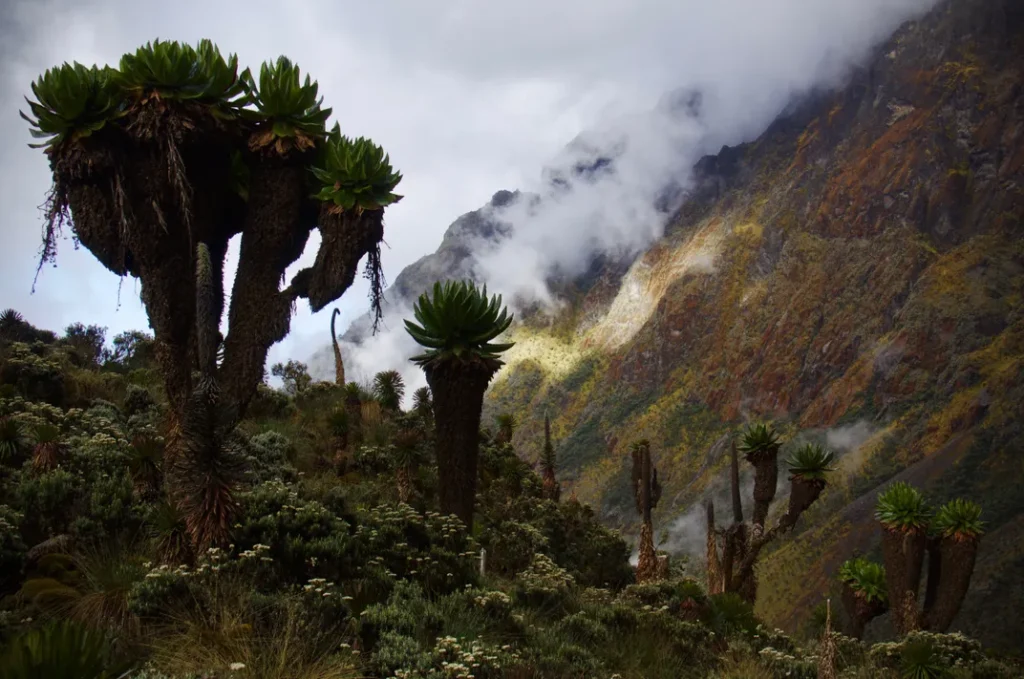
The Central Circuit traverses five distinct vegetation zones. The montane forest zone (1,600 – 2,500 m) contains African mahogany, fig trees, and a dense understory that hosts colobus monkeys and red-tailed monkeys. The bamboo zone (2,500 – 3,000 m) is a transitional belt of giant bamboo where olive baboons forage. The heath zone (3,000 – 4,000 m) is dominated by giant heather and St. John’s Wort shrubs draped in beard lichen. The Afro-alpine moorland (4,000 – 4,500 m) hosts the Rwenzori’s most iconic plants: giant lobelias (Lobelia wollastonii, up to 4 metres), giant groundsels (Senecio adnivalis, up to 6 metres), and everlasting flowers (Helichrysum sp.). Above 4,500 m, the nival zone is bare rock and ice.
Wildlife on the Mountain
The Rwenzori is not primarily a big-game park, but wildlife encounters on the trail are frequent and often memorable. Birdwatchers see the Rwenzori turaco (with its crimson underwing) almost daily between the forest and heath zones. The scarlet-tufted malachite sunbird hovers around lobelia flowers at altitude. Three-horned chameleons are common on the lower trails. Visitors occasionally encounter duiker and bushbuck in the montane forest. Leopards are present in the range but are rarely seen.
Kibale Forest (Day 3)
Kibale National Park holds 13 primate species, including approximately 1,450 chimpanzees, red colobus, red-tailed monkeys, grey-cheeked mangabeys, and L’Hoest’s monkeys. The park’s 1,450+ chimpanzees represent one of the highest densities of the species anywhere in Africa. Over 370 bird species have been recorded, including the African pitta, papyrus gonolek, and 6 of Uganda’s 7 Albertine Rift endemics.
Queen Elizabeth NP (Days 12 – 13)
Queen Elizabeth NP’s Kasenyi Plains host approximately 4,000 elephants, several large lion prides, spotted hyenas, warthogs, and Uganda kob antelope. The Kazinga Channel boat safari provides unrivalled proximity to hippopotami (the channel holds one of Africa’s highest hippo densities), Nile crocodiles, and water-associated birds, including goliath herons, African skimmers, and pied kingfishers. The Ishasha sector’s fig trees host the famous tree-climbing lion population, a behavior documented here since at least the 1920s.
Bwindi Impenetrable Forest (Days 14 – 15)
Bwindi is a UNESCO World Heritage Site harboring approximately 459 mountain gorillas, over half the world’s population. The forest is also home to forest elephants, chimpanzees, giant forest hogs, African golden cats, and over 350 bird species, including 23 Albertine Rift endemics. The African green broadbill, Grauer’s rush warbler, and Shelley’s crimsonwing are major birding targets.
Physical Difficulty & Fitness Requirements
This is a serious expedition requiring genuine physical and mental preparation. It should not be undertaken by anyone without prior multi-day trekking experience.
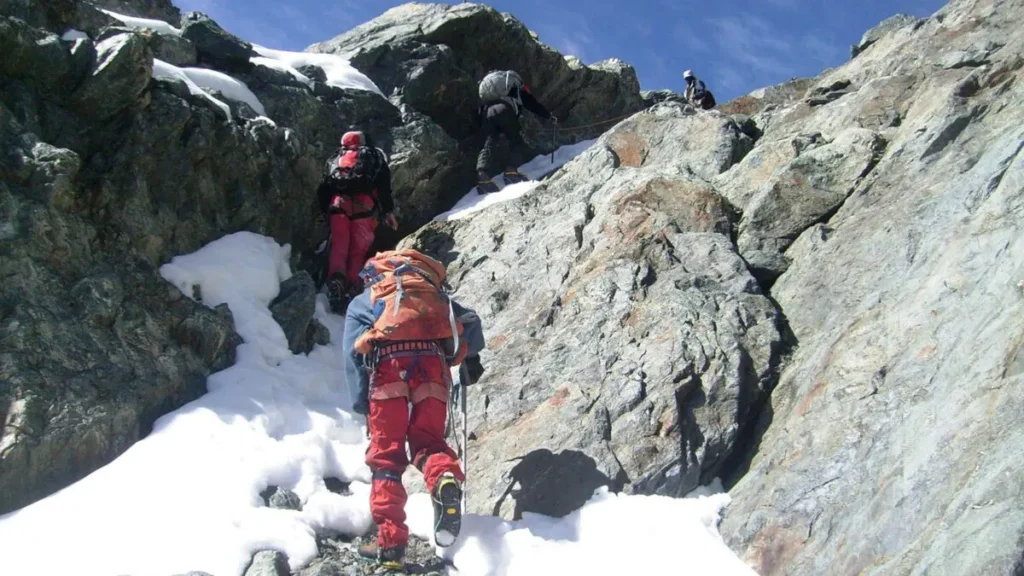
The Rwenzori Mountain Section (Days 4 – 11)
The Central Circuit to Margherita Peak is rated Very Challenging. Daily hiking hours range from 4 to 8+ hours, on terrain that is consistently wet, muddy, root-covered, and occasionally icy above 4,000m. The summit day is technically demanding, involving glacier travel with crampons, rope-assisted sections on exposed ridges, and up to 16 hours of movement. No prior mountaineering experience is required; your guides provide all technical instruction, but strong cardiovascular fitness, experience with multi-day trekking in poor weather, and genuine determination are essential.
Altitude is the primary limiting factor. Most trekkers experience mild altitude-related symptoms (headache, reduced appetite, disturbed sleep) between 3,500m and 4,500m. The itinerary is designed with proper acclimatization, notably the full day at Bujuku Hut (3,962 m) and a gradual daily ascent profile. Acute Mountain Sickness (AMS) is rare but possible; your guides are trained to recognize and manage it, including emergency descent if required.
Primate Trekking Sections (Days 3, 14, 15)
Chimpanzee tracking in Kibale requires moderate fitness. The trails are forest paths that can be slippery after rain, but the elevation gain is minimal. Gorilla trekking in Bwindi can range from 1 to 8 hours one-way in steep, dense forest terrain with no guaranteed trail. The minimum fitness level for Bwindi is similar to that of a moderate-difficulty hill walk lasting 3 to 5 hours.
Minimum Fitness Recommendation
Three months of progressive training before departure is strongly recommended. This should include: 4 – 5 days per week of cardiovascular exercise (running, cycling, or swimming); at least 2 – 3 weekend day hikes with a loaded pack (8 – 10 kg) lasting 4 – 6 hours; and stair or hill climbing sessions to condition the knees and ankles for descent. Our detailed fitness training guide is available.
Best Time to Visit: When to Book This Safari
Uganda’s major wildlife parks and the Rwenzori Mountains operate year-round, but there are clear optimal windows for each element of this itinerary.

December to March (Primary Dry Season)
The driest and most stable months occur in the mountain region. January and February offer the highest summit success rates, with clearer morning weather windows more frequent than at other times of the year. Gorilla trekking is excellent year-round, but this period is also prime for Bwindi. Wildlife viewing in Queen Elizabeth is superb, as animals concentrate around water. This timeframe is the most popular booking window, and we recommend reserving at least 4 – 6 months in advance.
June to August (Secondary Dry Season)
A shorter but reliable dry window. The mountain conditions are generally favourable and June-August is the peak safari season in Uganda’s national parks, with excellent visibility on game drives. Gorilla permit availability can be tighter during this period; booking 6+ months ahead is essential for July and August departures.
March to May & September to November (Wet Seasons)
The Rwenzori receives rain on approximately 300 days per year regardless of season, so wet seasons are a relative concept on the mountain. The lower-altitude wildlife sections of Queen Elizabeth and Bwindi thrive in the wet season, with Bwindi’s dense canopy providing natural shelter. Some trekkers prefer the wet season for its lush vegetation, fewer crowds, and lower accommodation rates. With the right gear (waterproof layers and rubber boots, both provided), the mountain is passable year-round. Gorilla permits are typically more available in the low season.
What’s Included in Your Package
Included
| ? | All accommodation: pre-mountain hotel, mountain huts, safari lodges, forest camps (15 nights) |
| ? | All meals specified (full board on mountain; B+L+D at safari lodges) |
| ? | Rwenzori Mountains National Park entry fees and hiking permits |
| ? | Mountain guide fees (UWA-certified, English-speaking, Margherita-experienced) |
| ? | Porter services on the mountain (baggage porterage up to 18 kg) |
| ? | All technical summit equipment: crampons, harness, helmet, rope, ice axe |
| ? | Rubber boot hire (mandatory for Rwenzori; your own boots will not survive the bog) |
| ? | Gorilla trekking permit Bwindi Impenetrable Forest ($800 pp value, per trek day) |
| ? | Second gorilla trekking permit Day 15 ($800 pp value) |
| ? | Chimpanzee trekking permit, Kibale Forest NP ($200 – $250 pp value) |
| ? | Queen Elizabeth NP entrance fees and game drive vehicle |
| ? | Kazinga Channel boat cruise |
| ? | All ground transport in a private 4WD safari vehicle with pop-up roof |
| ? | Professional safari guide (non-mountain sections) |
| ? | Airport transfers: Entebbe arrival & departure |
| ? | 10% of safari proceeds to Bakonzo community programmes (orphan support, schools) |
Not Included
| ? | International flights to/from Entebbe (EBB) |
| ? | Uganda tourist visa (apply at eVisa.go.ug; currently $50 USD for most nationalities) |
| ? | Travel and medical evacuation insurance mandatory and arranged independently |
| ? | Tips and gratuities for mountain guides, porters, safari guides, and lodge staff |
| ? | Personal expenses: souvenirs, extra beverages, laundry, telephone calls |
| ? | Any expenses arising from itinerary changes due to medical emergency, weather, or force majeure |
| ? | Optional Gorilla Habituation Experience upgrade (if requested, costs more than standard permit) |
| ? | Pre/post-safari accommodation extensions beyond the 15 nights included |
Full Packing & Gear List
This list is calibrated specifically for the Rwenzori mountain environment (extremely wet and cold above 4,000 m) combined with Ugandan wildlife safari conditions. Read it carefully: underpacking for the Rwenzori is one of the most common and consequential mistakes that trekkers make.
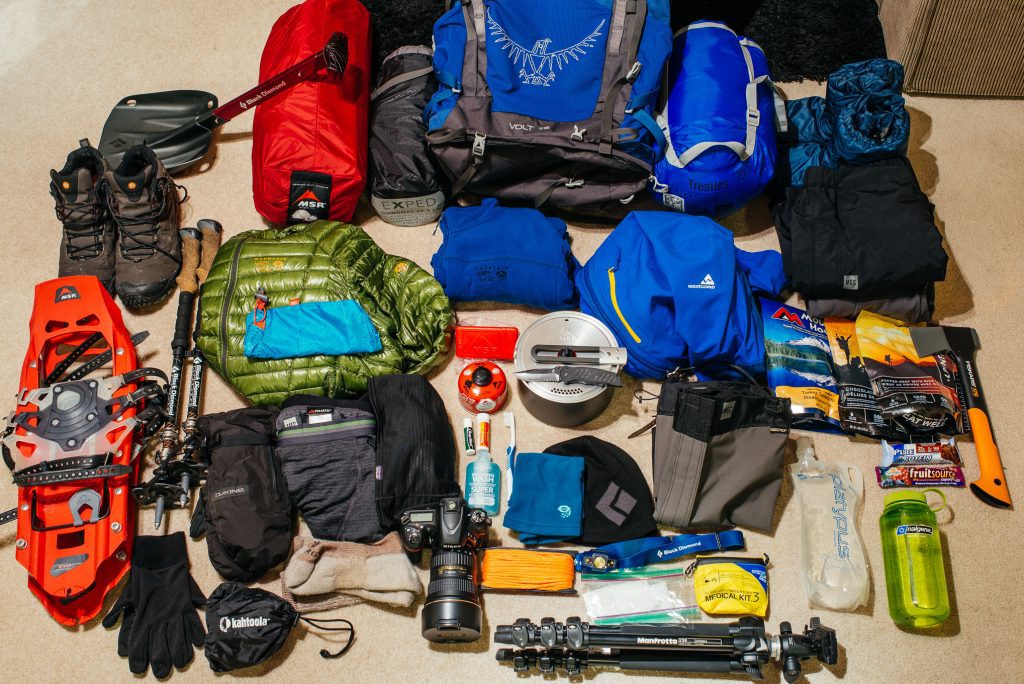
Mountain & Summit Layers (Provided by Operator)
- Crampons (strap-on style) provided for the summit attempt
- Climbing harness and safety helmet provided; fitted at Elena Hut on Day 7 evening
- Ice axe provided; guide instruction given at Elena Hut
- Fixed ropes on glaciers are guide-managed; you clip in as directed
- Rubber hiking boots are MANDATORY and provided free of charge. Your boots will be destroyed by Rwenzori mud. Do not argue with this requirement. Read our Boot Guide for context.
Technical Gear You Must Bring
- Trekking poles telescoping aluminium or carbon, are essential for ascent and especially descent
- Headlamp + spare batteries summit departure is 2 – 4 am; a 300+ lumen lamp is recommended
- Waterproof gaiters to keep mud off your lower legs inside the rubber boots
- Dry bags (2 – 3 x 10L) to keep sleeping gear and electronics completely waterproof
- Summit gloves (waterproof outer + fleece liner): temperatures on the glacier can reach -10°C
- Balaclava / neck gaiter critical above 4,500m
Sleeping & Camp Comfort
- Sleeping bag (rated 0°C to -5°C)? C) synthetic fill preferred for wet conditions; down acceptable with dry bag protection
- Sleeping bag liner adds 3 – 5 degrees Celsius of warmth and keeps your bag clean
- Camp pillow, compact inflatable style
Clothing Layers
- Base layer (thermal top + bottom) synthetic or merino wool 2 sets
- Mid layer (fleece or down jacket): primary insulation layer for evenings
- Hard shell waterproof jacket 20,000 mm+ hydrostatic head recommended
- Waterproof trousers for the mountain; lighter zip-offs acceptable on safari
- Quick-dry hiking shirts: 3 – 4; sun protection collar recommended
- Warm hat and sun hat both essential cold nights and equatorial sun
- Hiking socks: 5 – 6 pairs; merino wool or synthetic, NO cotton
Safari & General Travel
- Neutral-coloured clothing for game drives: khaki, olive, brown not white or bright colours
- Light rain jacket for safari and Bwindi
- Comfortable walking shoes or light trail runners for lodge days, transfers, and Bwindi approach
- Binoculars 8×42 or 10×42 strongly recommended for QENP and birding
- Insect repellent (DEET 50%+) for evening use at lodges and Bwindi
- Sunscreen (SPF 50): equatorial UV at altitude is intense
Health & Hygiene
- Personal first aid kit: blister pads, ibuprofen, rehydration salts, anti-diarrhoeal
- Altitude medication (Diamox / acetazolamide) discuss with your GP before travel; our medical guide at rwenzoritrekkingsafaris.com/medical-guide-to-trekking-the-rwenzori-mountains/ covers dosing
- Malaria prophylaxis: consult your GP the mountain itself is malaria-free above 2,500m but Entebbe and forest lodges are in risk zones
- Water purification tablets or filter emergency backup; water on mountain is treated by cook
- Trowel and biodegradable soap Leave No Trace hygiene above designated toilet facilities
Electronics & Documents
- Power bank (20,000+ mAh): no charging on mountain; 3 – 4 days of device charging required
- Universal travel adapter Uganda uses Type G (UK-style) sockets
- Camera with zoom lens 100 – 400mm for wildlife; a compact mirrorless is ideal for the mountain
- Satellite communicator (SPOT/Garmin InReach): optional but recommended; drone regulations covered in our Drones & Connectivity Guide
- Passport + insurance documents + gorilla permit confirmation originals required on park entry
Permits, Park Fees & Costs
| Item | Cost (USD) | Included in Package? |
| Rwenzori Mountains NP entry (per day, non-resident) | $40/day | YES |
| Rwenzori mountain guide fee (full trek) | ~$300 | YES |
| Porter fees (per porter, full trek) | ~$120 per porter | YES |
| Technical summit equipment hire | ~$80 | YES |
| Rubber boot hire (all sizes, full trek) | Complimentary | YES |
| Gorilla trekking permit, Bwindi (Day 14) | $800 | YES |
| Gorilla trekking permit Bwindi (Day 15) | $800 | YES |
| Chimpanzee trekking permit, Kibale | $200 – $250 | YES |
| Queen Elizabeth NP entry fees | ~$45/day | YES |
| Game drive vehicle & safari guide | Included | YES |
| Kazinga Channel boat cruise | ~$30 | YES |
| All 15 nights’ accommodation | Included | YES |
| All meals as specified | Included | YES |
| Uganda tourist visa | $50 (most nationalities) | NOT INCLUDED |
| Travel & evacuation insurance | Variable ($150 – $500) | NOT INCLUDED |
| International flights | Variable | NOT INCLUDED |
| Tipping & gratuities | $100 – $200 recommended | NOT INCLUDED |
Full package starting from $5,980 per person (for a group of two). Solo travelers and larger groups: contact us for a custom quote.
Getting There: Reaching the Trailhead
International Flights
The entry point for this safari is Entebbe International Airport (IATA: EBB), located 40 km south of Kampala on the shores of Lake Victoria. Direct flights serve Entebbe from London Heathrow (British Airways, ~9 hrs), Amsterdam (KLM, ~8.5 hrs), Dubai (Emirates, ~7.5 hrs), Nairobi (multiple carriers, ~1 hr), and Addis Ababa (Ethiopian Airlines, ~2.5 hrs). Most travelers from North America connect via Addis Ababa (Ethiopian), Dubai (Emirates), or Amsterdam (KLM).
Airport to Entebbe Hotel (Day 1)
Your guide provides a private transfer from Entebbe International Airport to your hotel. Transfer time is 10–20 minutes, depending on traffic. Our guide will be at Arrivals with a sign bearing your name.
Entebbe to Kibale Forest NP (Day 2)
The distance is approximately 320 km by road, and the journey takes 5 to 6 hours via the Kampala ring road heading west on the Fort Portal highway. The route passes through Mubende and Kamwenge districts, arriving in the Fort Portal area for lunch before continuing to Kibale Forest. All transport is provided in a private 4WD safari vehicle.
Kibale to Rwenzori Trailhead: Nyakalengija (Day 3)
From Kibale Forest, the drive to Nyakalengija on the northern slopes of the Rwenzori takes approximately 1.5 hours, passing through the town of Kasese. Nyakalengija (1,646 m) is the start and finish point of the Central Circuit. Our Kasese Gateway Guide provides complete town logistics for those arriving independently.
Book Your Safari
Respond within Minutes
From
$5,980
per person
- Duration 16 Days / 15 Nights
- Group Size 2–12 people
- Start Point Entebbe
- Departures Year-round
- Activities Rwenzori & Primate Treks/ Wildlife Safari
No booking fee. Free cancellation up to 30 days before departure. We respond within Minutes.
Our Popular Rwenzori Treks
Magheritah Peak (8 Days Kilembe Trail)
$1705 Per Person
Mutinda LookOut (4 Days)
$645 Per Person
Short Magherita Hike (5 Days Central Circuit)
$1200 Per Person
Rwenzori Hike (7 Days Central Circuit)
$1400 Per Person
Frequently Asked Questions: 16-Day Uganda Safari: Margherita Peak, Chimps & Gorillas.
Is the 16-day Uganda gorilla trek and Rwenzori climbing itinerary suitable for a first-time mountaineer?
Yes, with caveats. No prior technical climbing experience is required; your guides provide complete instruction on glacier travel, crampon use, and rope technique at Elena Hut before summit day. However, this trek is not a beginner’s hiking trip. You need strong cardiovascular fitness, experience with multi-day trekking in poor weather, and the mental resilience to push through challenging conditions on summit day. If you have completed multi-day hikes such as the Kilimanjaro climb, Scottish Munros in winter, or similar extended mountain treks, you have the right foundation. Our fitness guide gives a precise 16-week training program.
How difficult is the Margherita Peak summit day on this itinerary?
Margherita Peak summit day is the hardest day of the entire 16-day safari. You leave Elena Hut (4,541 m) between 2:00 and 4:00 am, cross the Stanley Glacier with crampons, navigate rope-fixed sections on exposed ridges, and reach the 5,109m summit before descending to Kitandara Hut (4,027 m). Total movement time is 10–16 hours. The altitude, cold (temperatures can reach -10°C on the glacier), and physical demand combine to make the climb a genuinely demanding objective. That said, Margherita Peak has a significantly higher success rate than Kilimanjaro’s Uhuru Peak among our clients because of the superior acclimatization profile built into this itinerary.
What is the success rate for reaching the Margherita Peak summit on the 7-day Central Circuit within this itinerary?
Rwenzori Trekking Safaris reports an approximately 85% summit success rate for clients who complete the full acclimatization itinerary (as structured in this 16-day package). The primary reasons for non-summit outcomes are adverse weather conditions on summit morning (the Rwenzori is notoriously cloudy) and individual altitude-related illness. The contingency day built into this itinerary provides a buffer for weather delays. The 10-day mountain section (Days 4–11, including Day 10 contingency) is specifically designed to optimize your acclimatization.
How should I book the gorilla trekking permits for this safari, and when do they need to be secured?
Gorilla trekking permits for Bwindi Impenetrable Forest are issued by the Uganda Wildlife Authority at $800 USD per person per day. These permits are among the most limited and in-demand wildlife experiences in Africa, with a maximum of eight trekkers per habituated gorilla family each day. When you book this 16-day safari with Rwenzori Trekking Safaris, we secure both gorilla permits (for Days 14 and 15) on your behalf as part of the package. We strongly recommend booking 4-6 months in advance for December-March departures and at least 6 months in advance for June-August departures. Last-minute availability does occasionally arise but cannot be guaranteed.
Can I do this safari if I am over 50 years old?
Yes. Several of our most committed clients on this itinerary have been in their 50s and 60s. Age is less relevant than fitness and preparation. We recommend that trekkers over 50 consult their GP before booking, obtain a basic cardiopulmonary health clearance, and ideally complete the 16-week training program outlined in our dedicated guide for older trekkers. The mountain section can be paced generously, and the contingency day provides flex for anyone needing additional recovery. Gorilla and chimpanzee trekking are moderate rather than extreme activities, well within reach for fit older travelers.
What is the difference between the chimpanzee trekking in Kibale and the gorilla trekking in Bwindi?
Chimpanzee trekking in Kibale Forest National Park and gorilla trekking in Bwindi Impenetrable Forest are both profound but very different experiences. In Kibale, you are tracking our closest living relatives, the chimpanzees, which share 98.7% of human DNA, in a relatively open forest where visibility is good and the energy is high and vocal. Permit costs are $200 – $250. In Bwindi, mountain gorillas are larger, slower, and far more imposing. The forest is dense, and the trek to find them can take several hours. The one-hour encounter at $800 per permit is one of the most expensive but also most transformative wildlife experiences in Africa. By sequencing both in this itinerary, you experience the full spectrum of Uganda’s remarkable ape encounters in a single journey.
What happens if the weather prevents us from summiting Margherita Peak?
The contingency day on Day 10 is specifically designed for this situation. If summit day (Day 8) is forced back by weather, the contingency day allows a rescheduled attempt. If summit day proceeds but conditions on the glacier are unsafe, your guide will make the call to turn back. Our guides are UWA-certified mountaineers whose primary responsibility is your safety, not your summit. In the event of a second failed attempt due to weather beyond the team’s control, Rwenzori Trekking Safaris does not refund summit permits, but we offer a return booking discount for clients who wish to try again.
Is travel insurance mandatory for this safari, and what cover do I need?
Travel and medical evacuation insurance is mandatory for this itinerary. Standard travel insurance is not sufficient; you need specific mountaineering cover for altitude (5,200m minimum) plus emergency helicopter evacuation coverage. Medical evacuation from the Rwenzori Mountains to the nearest capable hospital involves a helicopter from the Uganda Wildlife Authority and Civil Aviation Authority and can cost $10,000 – $50,000 without insurance. We recommend specialist policies from World Nomads, Battleface, or Campbell Irvine that explicitly cover trekking above 4,000m and mountaineering with guides.
How much should I budget for tips and gratuities on this safari?
Tipping is not included in the package price but is an important part of the income for mountain guides, porters, and safari staff. As a general guideline, budget $120 – $200 USD per person total across all 16 days. For the mountain section specifically, the recommended daily rates are lead mountain guide $20/day, assistant guides $15/day (if applicable), and porters $5 – $10/day each depending on workload. For safari guides, $10 – $15 per day is standard. Gorilla tracking rangers receive tips at the end of the trek, typically $10 – $20 per person. Our dedicated porter and tipping guide has a full breakdown of fair rates.
Can I combine this 16-day safari with white-water rafting on the Nile or a visit to Murchison Falls?
Absolutely, this itinerary is the core of a longer Uganda adventure and extends naturally in both directions. If you arrive in Uganda a day or two early, Nile River rafting in Jinja (Grade 5 rapids, approximately 3 hours from Entebbe) is a spectacular pre-expedition warm-up. Post-safari, a 2-3 day extension to Murchison Falls National Park, Uganda’s largest park and home to the world’s most powerful waterfall, adds big-game viewing, shoebill stork spotting on the Nile, and the famous boat cruise to the base of the falls.
How many people climb the Rwenzori Mountains each year, and how does the Central Circuit compare in terms of crowds?
The Rwenzori Mountains receive approximately 2,000 – 3,000 trekkers per year across all routes and experience levels compared to Kilimanjaro’s 50,000+ annual climbers. On the Central Circuit specifically, most departures will encounter other groups at the shared mountain huts, but the trail never feels crowded. The maximum number of trekkers permitted to start per day ensures that the mountain’s wilderness character is preserved. This is a major part of the Rwenzori’s appeal; you are genuinely in a remote, little-visited landscape.