Planning a Rwenzori trek from Australia? Get expert routes, flight timing, visa steps, and full AUD costs from a guide who treks the mountain year-round.
I have observed for years and decades and for most of that time the trekkers arriving at Nyakalengija or Kilembe were overwhelmingly British, German, Swiss or American. That has been changing. In the last few seasons I have watched a steady trickle of Australians turn into a genuine current, hikers who have already ticked off Kilimanjaro or the Larapinta Trail and are now searching specifically for something the rest of the world hasn’t discovered yet. The Rwenzori, the Mountains of the Moon straddling the Uganda-DRC border, is that mountain. It is a UNESCO World Heritage Site, it holds Africa’s third-highest summit, and it still sees only a fraction of the annual visitor numbers that Kilimanjaro absorbs in a single busy week.
What almost nobody has written properly is the practical side of getting here from the other side of the planet. Everything published online about reaching the Rwenzori assumes a European or North American starting point, and the logistics genuinely are different when your nearest major airport is fourteen time zones and thirty flying hours away. This guide exists to close that gap: routes, realistic timing, visa mechanics for an Australian passport, and an honest, itemised account of what the whole trip costs in Australian dollars, door to door, glacier summit included.
Why Australians Are Discovering the Rwenzori
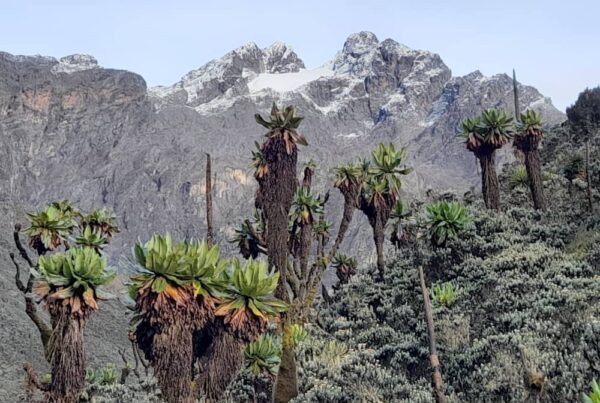
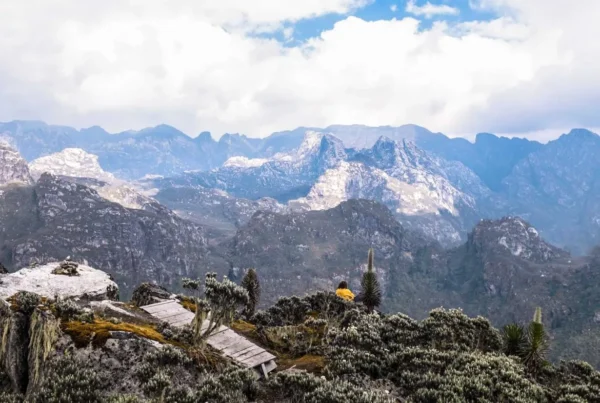
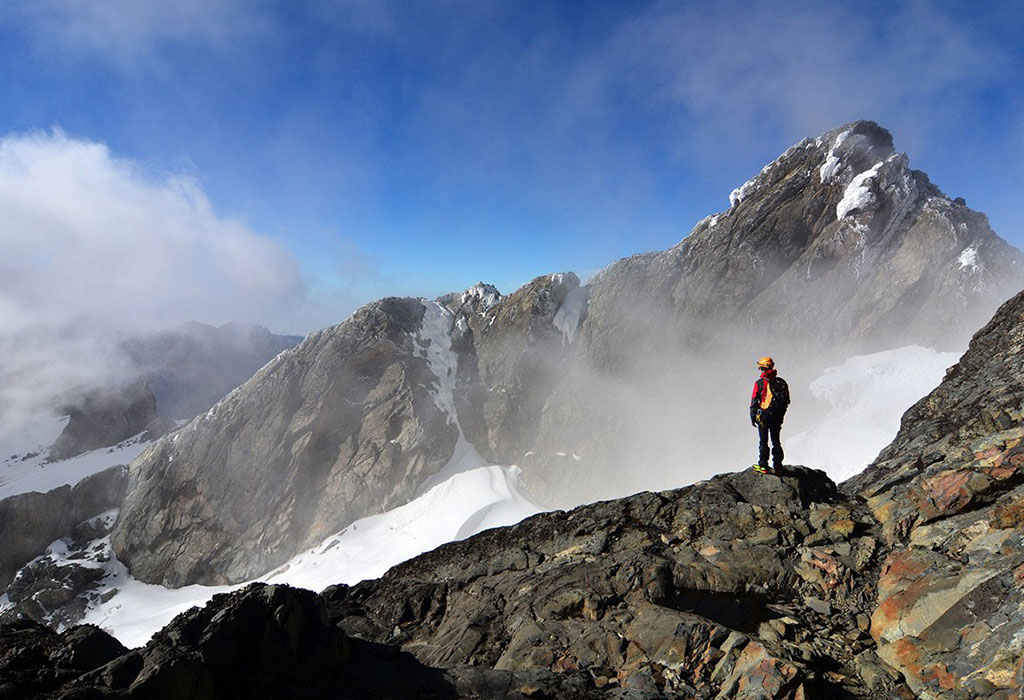
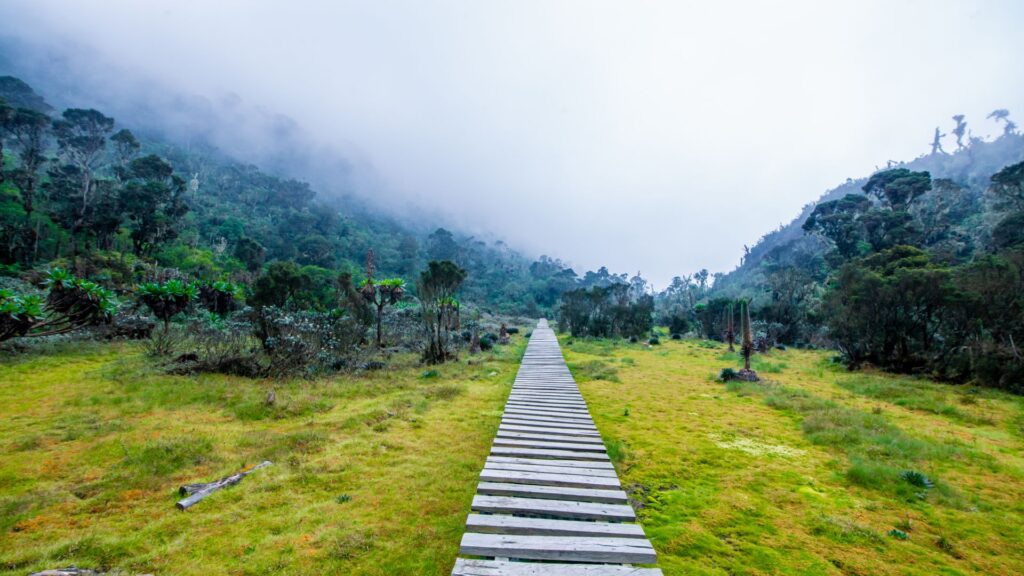
Australians travel a long way for their mountains almost by default, so the extra distance to Uganda rarely deters anyone once they understand what’s on offer. The appeal isn’t subtle once you’ve seen it explained properly: this is one of only three places in Africa where a trekking itinerary ends on an actual glacier, and unlike Kilimanjaro’s now-retreating summit ice, Rwenzori’s Stanley Plateau glaciers still require use off technical equipment to cross. Margherita Peak, at 5,109 metres, is the third-highest point on the continent, and reaching it means moving through five distinct vegetation zones in under a week, from tropical rainforest through bamboo and heather moorland into Afro-alpine giant-plant country and finally onto bare rock and ice.
The other draw, and the one that resonates most with trekkers who already have Kilimanjaro on their CV, is scale. Rwenzori Mountains National Park receives a few thousand visitors a year against Kilimanjaro’s tens of thousands, and on many days on the Central Circuit Trail you will not see another trekking group at all. I’ve written before about why I consider this the best mountain hike in Africa and about how the technical demands genuinely compare to Kilimanjaro’s much gentler walk-up profile; if you’re weighing the two, those two articles are worth reading before you commit to either. For a broader sense of what makes this range genuinely singular on a continent full of famous peaks, our collection of Rwenzori facts is a good starting point.
The Journey: Getting from Australia to the Rwenzori Mountains
Choosing Your Departure City and Routing
There is no direct flight from anywhere in Australia to Entebbe, and there won’t be one anytime soon; the route simply doesn’t have the passenger volume to support it. Every itinerary from Australia to Uganda involves at least one stop, and realistically most Australians will connect twice. Perth has the geographic advantage, sitting closest to East Africa of any Australian gateway, with total flying time (excluding ground time at the connection) running to roughly a day. Sydney, Melbourne, and Brisbane add several hours on top of that purely because of the extra distance to the first hub.
In practice, three routings account for most bookings I see from Australian clients. Qatar Airways via Doha is usually the most frequently scheduled option, departing from Perth, Sydney, Melbourne, and Brisbane with a single connection onward to Entebbe. Emirates and Etihad, routed through Dubai or Abu Dhabi, are a close second and often the most comfortable for the long first sector out of eastern Australia. Turkish Airlines via Istanbul tends to be competitive on price outside peak season, though it usually means a longer total journey than the Gulf carriers. A fourth option worth knowing about is Kenya Airways, connecting through Nairobi; it’s rarely the fastest routing from Australia, but if you’re combining your Rwenzori trek with time in Kenya it can work well in the itinerary. Whichever carrier you choose, book your checked baggage allowance carefully. Trekking kit, particularly if you’re bringing your own boots, crampons, and layering system rather than using our gear rental service, adds up fast, and the Gulf carriers’ economy allowances are generally more generous than the cheapest fares on other routings.
Timing Your Arrival Around Jet Lag
Uganda sits in East Africa Time, UTC+3, year-round with no daylight saving. Perth, on Australian Western Standard Time, is only five hours ahead, which makes it the easiest Australian time zone to recover from. Sydney, Melbourne, and Brisbane run seven hours ahead on standard time and eight during the Australian daylight saving months, which is a meaningfully harder adjustment, especially layered on top of twenty-plus hours in the air. I say this every season to trekkers arriving from Europe, and it applies even more to Australians: do not fly overnight into Entebbe and attempt to continue straight to Kasese and the trailhead the same day. Build in at least one night in the Entebbe or Kampala area to sleep properly before the onward leg.
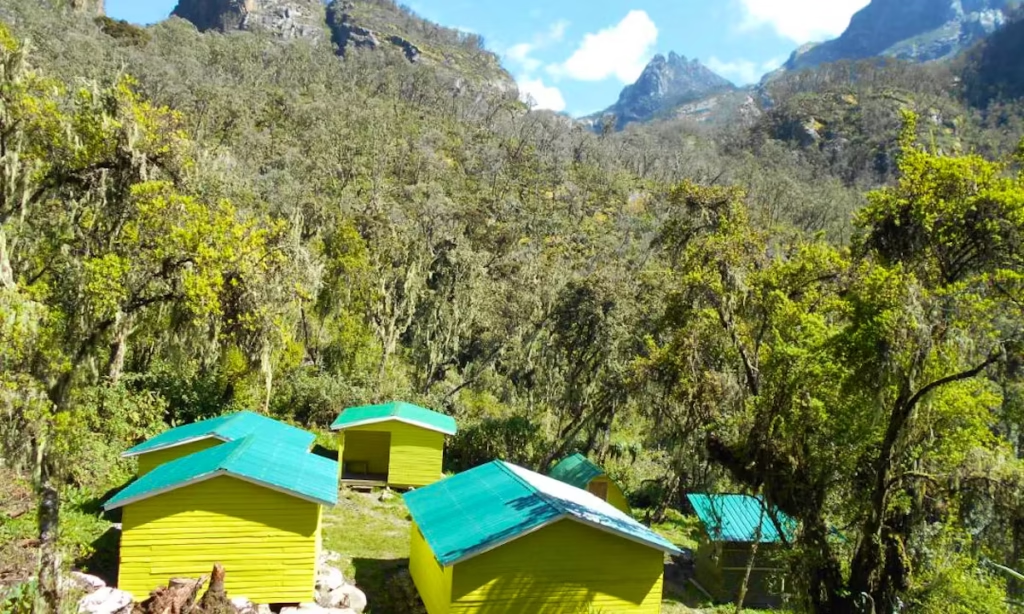
Our accommodation guide for before and after your trek covers where to stay on both ends of the itinerary, and it is not a step worth skipping purely to save a day, because arriving at altitude already sleep-deprived compounds the acclimatisation challenge you’ll face higher on the mountain.
From Entebbe to Kasese: The Final Leg
Kasese, the gateway town for both main trailheads, sits roughly 380 kilometres west of Entebbe. You have two realistic options for this leg, and after a long-haul flight from Australia I generally steer clients toward the faster of the two. Aerolink Uganda operates scheduled flights from Entebbe to Kasese’s small airstrip, cutting the transfer down to about an hour in the air rather than six to eight hours by road. The road transfer via Mbarara or Fort Portal is the budget option and it’s a genuinely scenic drive through Uganda’s western highlands, but for a trekker already carrying the fatigue of thirty-plus hours of international travel, the time and energy saved by flying is usually worth the extra cost. Our full guide to getting to the Rwenzori Mountains breaks down both options in detail, and the Kasese travel guide for trekkers covers what to expect once you land, including where to spend your pre-trek night.
Australian passport holders need an approved e-Visa before departure; there is no visa-on-arrival option for Australians, and airlines will not board you for Entebbe without it. Apply through Uganda’s official portal at least two weeks ahead of travel, upload a clear passport photo and passport scan, and budget around USD 50 for the standard single-entry tourist e-Visa. Our dedicated Uganda visa guide for trekkers walks through the application step by step. If your Uganda trip is going to include gorilla trekking or a wider East Africa safari, look into the East Africa Tourist Visa, which covers Uganda, Kenya, and Rwanda on a single multiple-entry visa and can genuinely simplify a longer itinerary; our page on combining a Rwenzori trek with gorilla trekking and safari explains how that combination works in practice.
A yellow fever vaccination certificate is required for entry to Uganda and, depending on your routing, you may also be asked for it when transiting certain hub airports, so get the vaccine and carry the physical certificate rather than relying on a phone photo. Malaria prophylaxis is strongly advised for the lower-altitude portions of the trip, and travel insurance that explicitly covers high-altitude trekking and medical evacuation is not optional; standard travel policies frequently exclude activity above a certain elevation, so read the policy wording before you buy. Our Rwenzori travel insurance guide sets out exactly what to look for.
One more thing worth stating plainly, because it’s the kind of question I now get from every second Australian enquiry: Uganda’s 2026 Ebola outbreak, caused by the Bundibugyo strain, was declared officially over within Uganda by the Ministry of Health at the end of July 2026, with the last patient discharged and no new domestic cases for well over a month by that point. The wider outbreak in neighbouring DRC has taken longer to bring under control. Travel advisories are living documents that get updated as situations evolve, so before you book, check the current position on Smartraveller, the Australian Government’s own travel advice service, rather than relying on anything you read here or anywhere else that isn’t dated to the week you’re booking.
Choosing Your Route: Matching the Trek to a Long Way from Home
When the flight alone costs you two full days each way, the calculus around route selection shifts. Trekkers flying in from London or Berlin can reasonably justify a short 3 or 4 day taste of the mountain; for an Australian who has just committed thirty hours of travel time, the arithmetic usually favours a longer, more complete route that makes the journey unambiguously worth it.
The Central Circuit Trail remains the benchmark for good reason. It’s a roughly 58-kilometre loop out of the Nyakalengija trailhead that crosses all five of the mountain’s vegetation zones and gives direct access to summit attempts on Mount Stanley, Mount Speke, and Mount Baker from the same high camps. For most Australian trekkers coming this far, it is the route that makes the most sense of the investment, and our detailed comparison of Central Circuit versus Kilembe sets out exactly why. The Kilembe Trail, approaching from the southern Nyamwamba Valley, is the quieter alternative with its own chain of camps and, in places, better solar charging infrastructure than the older Central Circuit huts; the full breakdown of how the two systems actually differ is worth reading before you decide.
For trekkers who have made this trip specifically to get away from crowds, the Bukurungu Trail is worth serious consideration. It’s a wilderness camping route strung between four of the range’s alpine lakes, entering from the Kasanzi gate on the mountain’s northwestern flank, and it sees so few trekkers that some seasons you may not encounter another party on the trail at all; our Rwenzori Mountains map shows exactly how it threads through the range relative to the two main trails. If your Uganda itinerary has less time to spare, or you’re travelling with family and want a genuine mountain experience without a multi-day summit commitment, the 2-day Mahoma Loop to Lake Mahoma and the shorter Rwenzori day hike both deliver a real taste of the range’s forest zones in a fraction of the time.
Because so many Australian trekkers are effectively making a once-in-a-few-years trip to this side of the world, multi-peak expeditions come up constantly in planning conversations. Beyond Margherita Peak on Mount Stanley, the range holds five further named summits: Mount Speke, Mount Baker, Mount Emin, Mount Gessi, and Mount Luigi di Savoia, each with its own character and access point, all detailed on our peaks overview page. If you’ve already committed to the long-haul flight, extending a standard Margherita summit itinerary, such as our 6-day Central Circuit Margherita Peak trek, by a few days to bag a second or third summit is one of the most common upgrades our Australian clients make once they understand the extra time commitment is measured in days, not another intercontinental flight.
When to Trek: Matching Rwenzori’s Dry Seasons to the Australian Calendar
The Rwenzori has two genuine dry windows: mid-December through mid-February, and June through August. Neither is truly rain-free, this is one of the wettest mountain ranges on the continent regardless of season, but trail conditions, visibility, and glacier crossing safety are all meaningfully better within these windows than outside them. For an Australian trekker, the June to August window lines up neatly with the Australian winter, making it an obvious choice if you’d rather trade a grey Melbourne or Hobart winter for equatorial high-altitude adventure. The December to February window overlaps with the Australian summer holiday period, which suits trekkers working around school terms or simply wanting to use annual leave around the New Year.
Our month-by-month trekking guide and dedicated best time to visit article both go into the seasonal detail properly, including the shoulder months that experienced trekkers sometimes prefer for lighter crowds and better wildlife activity. One point worth flagging for anyone picturing an Australian June-to-August “winter escape”: the Rwenzori doesn’t have a seasonal winter in the way temperate mountains do. Above about 4,500 metres, conditions are cold and glacial essentially year-round, and our article on Rwenzori in winter explains that permanent alpine reality in full, so you pack for genuine cold regardless of which dry window you choose.
How Many Days to Budget for the Whole Trip
Because the flights alone consume the better part of four days round trip, it’s worth mapping the entire journey rather than just the trekking days when you request leave from work. A typical Australian itinerary built around our 6-day Margherita Peak Central Circuit trek runs to roughly fourteen to sixteen days door to door: two travel days each way including the Entebbe buffer night, a day either side for the Kasese transfer and final trek briefing, the six trekking days themselves, and a spare day or two built in as a genuine weather and fatigue buffer rather than a luxury. Trekkers combining the climb with gorilla trekking or a wider safari, covered further below, should add another four to seven days on top of that base figure. Our booking guide covering exactly what’s included in a standard package is the right next stop once you’ve settled on a rough shape for the trip.
Fitness and Acclimatisation Preparation Before You Fly
Nothing about the Rwenzori is technically extreme in the way that, say, an Alpine ice route is, but the combination of persistent mud, root-tangled trail, sustained daily elevation gain, and a genuine glacier crossing at the summit means fitness preparation matters more here than on a straightforward walk-up peak. Given that Australian trekkers are committing an unusually large travel investment to get here, arriving under-prepared and having to turn back short of camp or summit is a genuinely painful outcome to avoid. Our complete fitness guide for the Rwenzori lays out training timelines matched to route length, and the companion piece on whether you need to be very fit answers the question honestly rather than either scaring off capable trekkers or underselling the demand. Read our field-tested trekking tips and our guide on whether and how to acclimatise before you arrive well before departure, since there’s genuinely nothing to be done about the altitude side of preparation once you’re already thirty hours into your journey.
What a Rwenzori Trek from Australia Really Costs
Australians researching this trip almost always underestimate the flight component and overestimate the trekking package itself relative to what Kilimanjaro or Everest Base Camp cost. Here is a realistic, itemised breakdown in Australian dollars for a standard six-day Margherita Peak itinerary via the Central Circuit, based on mid-range choices at each stage; treat it as a planning baseline rather than a quote, since airfares in particular shift with season and booking window.
| Item | Typical Range (AUD) | Notes |
| Return international flights | $1,900 – $3,200 | Perth cheapest and shortest; Sydney/Melbourne/Brisbane usually higher; varies sharply by season and how far ahead you book |
| Uganda e-Visa | $75 – $85 | Apply online at least two weeks ahead |
| Yellow fever vaccination | $80 – $160 | One-off; certificate valid for life |
| Travel insurance with high-altitude and evacuation cover | $150 – $450 | Depends on trip length and provider; don’t skip evacuation cover |
| Domestic flight, Entebbe–Kasese (each way) | $180 – $260 | Or budget for a road transfer instead, roughly a third of the flight cost but far slower |
| Pre/post-trek accommodation (2–3 nights) | $150 – $500 | Entebbe/Kampala buffer night plus Kasese nights either side of the trek |
| 6-day trekking package (permits, huts, guide, porters, cook, meals on trail) | $2,700 – $3,700 | Full breakdown on our cost and permits pages linked below |
| Gear rental (if not bringing your own) | $120 – $350 | Crampons, ice axe, and cold-weather kit for the summit push |
| Guide, porter, and cook tips | $250 – $400 | Budget this separately from the package price; it is not usually included |
That puts an all-in Australian departure, flights included, somewhere in the region of AUD 5,600 to 9,000 for the standard six-day summit trek, with the flight itself frequently the single largest line item once you’re travelling from Australia rather than Europe. For the full detail behind the trekking package figure, see our dedicated pages on what it costs to climb the Rwenzori, park entrance fees and permits, and exactly what’s included when you book. If the total is stretching your budget, our guide to reducing Rwenzori trekking costs covers where genuine savings exist without compromising safety, and our tipping guide sets fair, realistic figures for the guide, porter, and cook team who will make the six days actually work; you can read more about that team in our porters and guides guide.
Packing for Two Climates in One Suitcase
One of the more disorienting aspects of this trek for first-timers, Australian or otherwise, is that you’ll move from tropical, humid rainforest to genuinely sub-zero glacial conditions in the space of about four days, then back down again. Given the checked baggage limits on most Australia-Africa routings, most of our clients are better off flying in with a solid core layering system and boots, then renting the specialised summit-day gear, crampons, ice axe, harness, once they arrive, rather than trying to fit everything into one bag for a 30-hour journey. Our guide on whether you need to bring your own climbing gear walks through that decision, and the gear rental page lists exactly what’s available on-site and what it costs. If you want a concrete sense of just how cold the upper mountain gets regardless of the month you’re travelling in, our Rwenzori in winter article gives zone-by-zone temperature figures that are far more useful for packing decisions than generic “equatorial Africa” assumptions.
Extending the Trip: Gorillas and Safari
Given the distance and cost of getting to this part of the world, very few Australian trekkers fly in purely for the Rwenzori and nothing else. The most common extension by a wide margin is gorilla trekking in Bwindi Impenetrable National Park, a few hours from Kasese, combined with a few days on safari in Queen Elizabeth National Park. Our page on combining a Rwenzori trek with gorilla trekking and a broader safari sets out how to sequence the two properly so you’re not backtracking across the country, and our general Uganda safaris page is a good starting point if this is your first visit to the country and you want the fuller picture of what else is within reach. Whatever you add, keep your Entebbe and Kasese accommodation sorted for both ends of the extension too, since arriving back from a multi-day trek straight into a dawn gorilla permit with no rest day in between is not a combination I’d recommend to anyone.
A Sample Itinerary: Sydney to Margherita Peak and Home Again
To make this concrete, here is roughly how a fifteen-day itinerary looks for a Sydney-based trekker doing the 6-day Central Circuit Margherita Peak climb. Day 1 is the outbound flight, typically an evening departure connecting through Doha or Dubai. Day 2 involves the onward sector into Entebbe, arriving late in the day, followed by a full night’s sleep near the airport rather than pushing straight on. Day 3 is the short flight or road transfer to Kasese, gear check, and final briefing, with an early night ahead of the trek start. Days 4 through 9 are the trek itself, climbing from the Nyakalengija trailhead through Nyabitaba, John Matte, and Bujuku Huts, across Scott Elliot Pass to the Elena and Kitandara high camps, the Margherita Peak summit push, and the descent back to the trailhead. Day 10 is a rest and recovery day in Kasese, genuinely worth keeping rather than rushing straight back to the airport. Days 11 and 12 cover the return transfer to Entebbe and the long flight home, arriving back in Sydney on around day 13 or 14 depending on connection timing, with a spare day either side of the whole trip as a buffer against delayed flights or an extra rest day if the trek itself runs a day long. Trekkers adding gorilla trekking or safari time should expect the full trip to stretch closer to three weeks.
Frequently Asked Questions
Is there a direct flight from Australia to Uganda for a Rwenzori trek?
No. There are currently no direct flights between any Australian city and Entebbe, and every itinerary requires at least one, usually two, connections. Qatar Airways via Doha and Emirates or Etihad via Dubai and Abu Dhabi are the most commonly booked routings, with total travel time ranging from roughly a day from Perth to well over a day and a half from the eastern seaboard cities, before you even add the domestic leg from Entebbe to Kasese.
How many days should I take off work for a Rwenzori trek from Australia?
For the standard 6-day Margherita Peak climb via the Central Circuit, plan on fourteen to sixteen days total once flights, a buffer night in Entebbe, and the Kasese transfers on both ends are accounted for. Trekkers combining the climb with gorilla trekking or a wider Uganda safari should budget closer to three weeks to do the whole trip justice without rushing between components.
Do Australians need a visa to trek the Rwenzori Mountains?
Yes. Australian passport holders must obtain Uganda’s e-Visa online before departure; there is no visa-on-arrival option. Apply at least two weeks ahead of travel, expect to pay around USD 50, and make sure your yellow fever vaccination certificate is also in order, since it’s required for entry and sometimes checked during transit at connecting hub airports.
What’s the best time of year for an Australian to trek the Rwenzori Mountains?
The Rwenzori has two dry windows, mid-December to mid-February and June to August. The June to August window doubles as an escape from the Australian winter, while the December to February window fits neatly around the Australian summer holiday period. Neither window is rain-free, this remains one of the wettest ranges on the continent, but trail and glacier conditions are meaningfully more favourable within them than outside.
How much does a Rwenzori trek cost in Australian dollars, all in?
For a standard six-day Margherita Peak summit trek, expect a total of roughly AUD 5,600 to 9,000 once return international flights, e-Visa, yellow fever vaccination, travel insurance with evacuation cover, domestic transfers, the trekking package itself, gear rental, and tips for the guide and porter team are all included. International flights are usually the single largest line item for Australian trekkers, often exceeding the cost of the trek itself.
Is the Rwenzori Mountains trek harder than Kilimanjaro, which many Australians have already done?
In most respects, yes. Kilimanjaro is a non-technical walk-up on well-established trails with no glacier travel required on any standard route. The Rwenzori’s standard itinerary to Margherita Peak requires a genuine roped glacier crossing near the summit, and the trail conditions lower down, persistent mud, root systems, and river crossings, add a physical and technical dimension that Kilimanjaro simply doesn’t have. It’s a different, more demanding kind of mountain, which is exactly why many trekkers who’ve already done Kilimanjaro come here next.
Can I combine a Rwenzori trek with gorilla trekking or a safari on the same Uganda trip?
Yes, and given how far Australian trekkers are travelling to reach Uganda, most do exactly this. Bwindi Impenetrable National Park, home to Uganda’s mountain gorillas, is a few hours’ drive from Kasese, and Queen Elizabeth National Park is within easy reach for a short safari extension. Sequencing matters, so it’s worth planning the combination properly rather than improvising it once you’ve landed.
Ready to Plan Your Rwenzori Trek from Australia?
If you’re an Australian trekker ready to turn this research into an actual booking, get in touch with our team directly through our contact page. Tell us your departure city, roughly when you’re free to travel, and whether you’re picturing a straightforward Margherita Peak summit or something longer with a second peak or a gorilla trekking extension attached, and we’ll build a realistic itinerary and quote around your actual dates, not a generic package. We guide this mountain year-round and we’d genuinely like to be the ones who get you to the top of it.