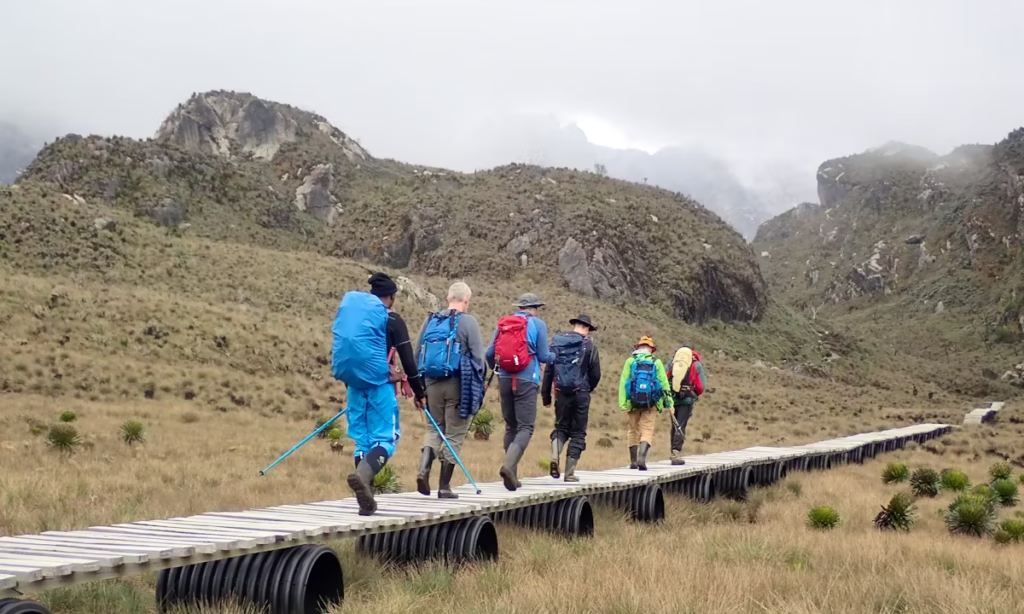
Rwenzori Park Entrance Fees & Permits: The Complete 2026/2027 Guide for Serious Trekkers
Everything you need to know about Rwenzori Mountains National Park entrance fees & permits: $35/day UWA fees, peak charges, trail costs, & how to book.
There is a particular kind of silence that greets you at the Nyakalengija trailhead, damp, ancient, and charged with the scent of montane forest, and it tells you immediately that you are not about to embark on an ordinary mountain. The Rwenzori Mountains, the legendary Mountains of the Moon, have been drawing adventurers since Ptolemy speculated about snow-capped equatorial peaks feeding the headwaters of the Nile. The Rwenzori Mountains, rising abruptly from the western Rift Valley of Uganda in a mass of cloud and glacier, demand respect, preparation, and above all, knowledge from everyone who crosses their threshold.
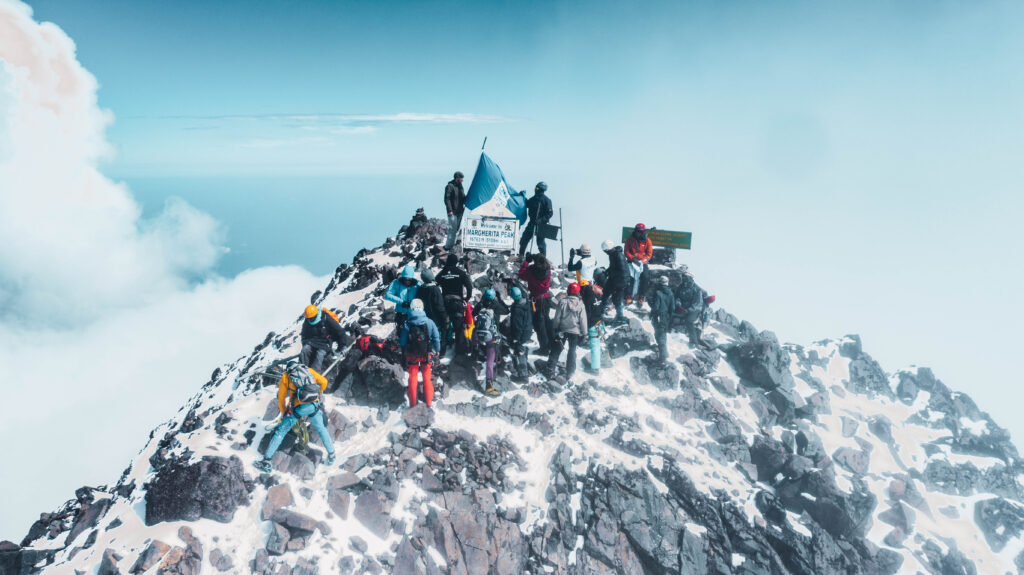
That knowledge begins long before you lace your boots. It begins in the planning, in the understanding of exactly what access to this UNESCO World Heritage Site requires, what it costs, and why every dollar you pay at that park gate is part of something far larger than your adventure. This guide exists to answer every question you have and several you haven’t thought to ask yet about Rwenzori Park entrance fees and permits. Whether you are planning the full Central Circuit Trail to Margherita Peak, exploring the wild and less-travelled Kilembe Trail, or considering a serious multi-peak expedition across Mount Stanley, Mount Speke, and Mount Baker, understanding this fee structure is the essential first step.
This is, without question, the first thing most international trekkers ask, and the answer is one of the things that makes the Rwenzori genuinely different from many other major African mountain destinations. Unlike gorilla trekking in Bwindi Impenetrable Forest or chimpanzee tracking in Kibale, which require advance permits that are both limited in number and frequently sold out months in advance, trekking the Rwenzori Mountains does not require a separate, bookable hiking permit in the traditional sense. You won’t encounter a permit lottery, an annual quota system, or the risk of arriving in Uganda to discover that someone has already claimed your mountain slot.
What the Rwenzori operates on instead is a daily fee for park entrance, administered by the Uganda Wildlife Authority (UWA), the body mandated with conservation and sustainable management of Uganda’s national parks and wildlife. Every trekker who enters Rwenzori Mountains National Park pays a fee for each day they spend inside the park boundary. This fee is the primary mechanism through which UWA manages visitor access, collects revenue for conservation, and contributes to the welfare of the local Bakonzo communities whose ancestral relationship with these mountains stretches back through centuries of history and cosmology.
The practical implication for you as a trekker is significant: you do not need to book months in advance simply to secure a permit slot. You do, however, need to have your finances organized before you arrive at the gate, and your entire expedition cost will include park entry fees calculated day by day for the full duration of your trek. On a seven-day summit expedition, those daily fees accumulate into a meaningful part of your total budget, and they must be factored in carefully from the outset.
Rwenzori Park Entrance Fees: The Current Rate Structure.
Uganda Wildlife Authority applies a tiered fee structure that distinguishes between three categories of visitor: foreign non-residents, foreign residents, and East African citizens. This is standard practice across Uganda’s national parks, and the Rwenzori was notably not subject to the broader UWA tariff increases that affected many other Ugandan parks in recent years, making it one of the more accessible major mountain destinations on the continent in terms of entry cost relative to experience.
Foreign Non-Residents
For the vast majority of international trekkers coming from the United States, the United Kingdom, Europe, Australia, Asia, and elsewhere, the applicable rate is USD $35 per person per day. This is the fee you will pay for every calendar day you spend inside the park, from the day you cross the entry gate to the day you exit. On a standard nine-day summit expedition via the Kilembe Trail, the park entrance fees alone amount to USD $315, in addition to the base trekking cost quoted by your operator. On the seven-day Central Circuit, you are looking at USD $245 in park fees. These figures are not incidental; they are a significant and budgetable line item, and any reputable operator will present them transparently in their pricing structure, as we do in all our Rwenzori trek packages.
Foreign Residents
Expatriates and foreign nationals who are legally resident in Uganda pay a reduced rate of USD $25 per person per day. This category requires proof of residency and is verified at the park gate. If you are based in Kampala or elsewhere in Uganda on a long-term visa or work permit, this fee is the rate that applies to you, and it represents a meaningful saving on longer expeditions.
East African Citizens
Citizens of Uganda and other East African Community member states pay in local currency at a rate of UGX 150,000 per person per day. East African trekkers have increasingly been discovering the Rwenzori as a serious mountaineering destination in their backyard, and this tiered rate reflects UWA’s broader commitment to making Uganda’s extraordinary natural heritage accessible to both regional and international visitors.
Children
Children are charged at a significantly reduced rate of USD $5 per person regardless of the non-resident or resident category. The Rwenzori is not a mountain for very young children given the physical demands of even the lower-elevation trails, but for families with older, physically capable teenagers, this rate makes family trekking at the lower reaches of the park, including the magnificent Mahoma Loop, genuinely accessible.
How and Where Park Fees Are Paid
UWA has modernized its payment infrastructure significantly recently following the enactment of the National Payment System Act, which mandated a transition to a cashless system across Uganda’s national parks. Park entrance fees for the Rwenzori are now payable via mobile money or credit card at the point of entry, and trekkers should not arrive expecting to pay exclusively in cash. This is particularly important for international visitors who may be carrying US dollars in notes: while US dollars remain the functional currency for all fee transactions and trekking quotes in the Rwenzori, the cashless payment directive means the actual transaction at the gate is processed electronically.
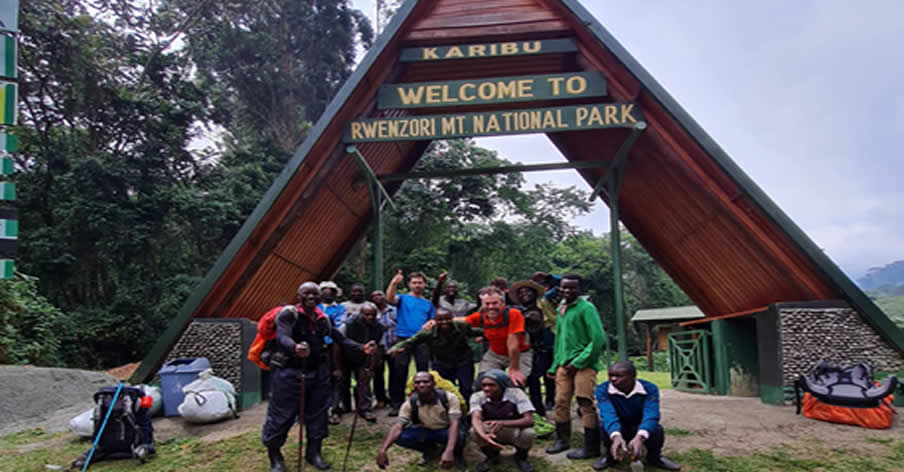
Typically, registered operators like us handle the mechanics of fee payment within the expedition logistics for trekkers. On the Central Circuit Trail, fees are processed at the Nyakalengija park gate, the traditional entry point at the northern end of the Rwenzori range. On the Kilembe Trail, the UWA rangers’ post sits approximately 2.2 kilometers from the Trekkers’ Hostel at Kyanjuki in Kilembe, at an elevation of 1,727 meters, and trekkers are briefed on park rules there before ascending further. Your guide will handle the gate formalities, but you must understand what you are paying and why, as that understanding connects you to the conservation mission you are participating in simply by being there.
One important clarification: fees are remitted directly to UWA and not to the trekking operator. The operator’s package fee covers their services, guides, porters, chefs, equipment, hut accommodation, and operational expenses. The UWA park entrance fee is a separate government charge, payable at the gate, and it flows directly into Uganda’s national conservation fund. Some operators quote these fees as inclusive in their package price for simplicity; others list them separately. Always confirm with your operator which model applies, so there are no surprises at the gate on day one.
Additional Fees: Peak Climbing and Extended Stays
The baseline entrance fee of $35 per day covers your presence in the park, but the Rwenzori’s extraordinary multi-peak landscape creates additional fee categories that serious mountaineers need to understand clearly.
Additional Peak Fees
Each of the Rwenzori’s six high mountains Mount Stanley, Mount Speke, Mount Baker, Mount Emin, Mount Gessi, and Mount Luigi di Savoia represents a distinct summit objective with its own approach, character, and challenge. Once you have committed to a primary peak on your expedition, any additional peak you wish to attempt incurs a supplementary charge of USD $100 per additional peak. This fee is separate from the daily park entrance fee and reflects the extended use of park resources, guide expertise, and infrastructure involved in multi-peak traverses.
For trekkers planning a serious trip that includes several mountains, like connecting Margherita on Mount Stanley with Vittorio Emanuele on Mount Speke and Edward Peak on Mount Baker in one long journey, the extra peak fees can add up and should be included in the total budget from the start of planning. We invite you to discuss the structure of our multi-peak expedition itineraries, designed to ensure maximum transparency and predictability in costs.
Additional Day Fees
If your expedition is extended beyond its originally planned duration, whether due to weather, acclimatization needs, or the not-uncommon desire to simply slow down and inhabit these extraordinary high-altitude landscapes a little longer, each additional day in the park beyond the original plan incurs a fee of USD $150 per additional day. This rate is higher than the standard daily entrance fee and reflects the unplanned nature of the extension. The practical lesson here is straightforward: build contingency days into your expedition planning from the start. The Rwenzori has one of the highest average annual rainfall figures of any mountain range on earth, over three metres per year, and the weather can enforce rest days on even the most athletic and experienced trekkers. A scheduled contingency day is always cheaper than an unplanned extension.
It is worth pausing here to understand what your park entrance fee directly funds, because this is not an abstract conservation levy. It is a payment that directly sustains the mountain you are visiting. Rwenzori Mountains National Park covers approximately 386 square miles of some of the most biologically complex and ecologically fragile terrain in Africa. The park’s infrastructure, its maintained trail network, its system of staffed huts and camps, its ranger presence, its anti-poaching efforts, and its management of the sacred Bakonzo cultural sites all of these elements are sustained in part by the revenue that flows through that park gate.
The Rwenzori’s glaciers are retreating. This assertion is not hyperbole but documented scientific fact: the ice fields that gave the Mountains of the Moon their mythological resonance have diminished dramatically over the past century, and the pace of loss is accelerating. UWA is responsible for tracking and recording environmental changes, caring for the park’s unique plants and animals, including species found only in the Albertine Rift, its 217 types of birds, and its giant lobelias, groundsels, and heathers that are not found anywhere else in the world at this size, while also ensuring the mountain remains safe for future generations. Your entrance fee is, in the most direct sense, an investment in that work.
The 18 sacred Konzo sites on the mountain, identified, mapped, and protected as worship areas within the park boundary, are also managed and respected under the UWA framework. The Bakonzo people do not view their relationship with the Rwenzori, where the peaks are home to their principal deity, Kitasamba, whose name may not even be spoken on the mountain, as a tourism product. It is a living cultural reality, and the park management framework seeks to honor it. When you pay your entrance fee, you are, in some small but meaningful way, participating in that honoring.
Understanding the Total Cost of a Rwenzori Trek.
The park entrance fee is one component of a multi-part cost structure, and serious trekkers benefit enormously from understanding each component clearly before they commit to a departure date. A reputable operator like Rwenzori Trekking Safaris charges the total cost of the Rwenzori expedition across several distinct categories.
The Operator Trek Fee
The Operator Trek Fee: This is the main fee you pay to the trekking company, which includes everything you need for the trip: experienced mountain guides; enough porters (usually one for each hiker, but you can get more if needed); a chef to prepare your meals; all your meals during the trek; places to stay in the park’s huts or camps; all necessary climbing gear like crampons, ice axes, rubber boots, and harnesses for climbing glaciers; as well as costs for running a licensed operation in the national park. The UWA Park Entrance Fee
The UWA Park Entrance Fee
The UWA Park Entrance Fee is the daily USD $35 fee described throughout this article, paid separately to Uganda Wildlife Authority at the park gate. On a seven-day Central Circuit trek, this totals USD $245. On a ten-day expedition with multi-peak ambitions, it approaches or exceeds USD $350, with additional peak fees layered on top.
Equipment Hire
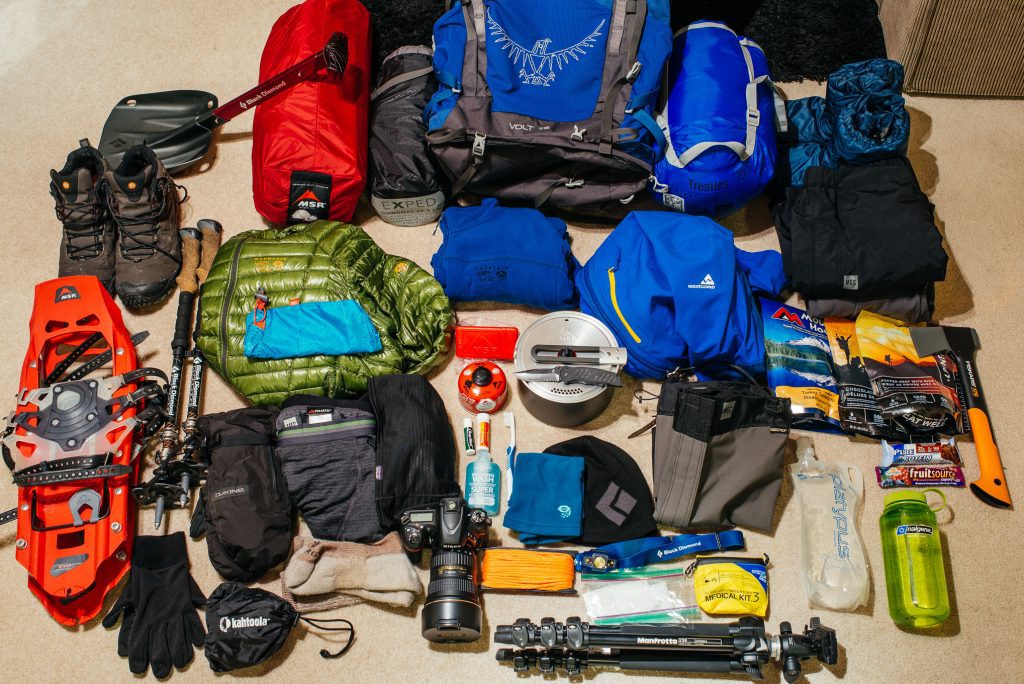
For trekkers who do not bring their own specialist gear, particularly technical summit equipment like crampons, ice axes, and appropriate high-altitude boots, equipment hire is available at the operator’s base office. The cost is additional to the trek fee but manageable, and it removes the logistical complexity of transporting technical mountain equipment across international flights. Our gear and equipment guide provides a detailed list of what you need to bring and what you can hire locally.
Porter and Guide Tipping
This is not a formal fee, but it is an ethical obligation that serious trekkers factor into their budget. The porters and guides of the Rwenzori are the mountain’s unsung infrastructure. They carry heavy loads on terrain that would challenge most trekkers at altitude; they know every shift in the weather, every shortcut when the route demands it, and every camp where the stove flame will struggle in thin air. Their knowledge is encyclopaedic, their patience extraordinary. The customary tipping ranges recommended by operators are a meaningful supplement to the wages they receive, and they circulate directly into the local Bakonzo economy. Budget for it and donate generously.
The Trail-by-Trail Fee Context
The fee structure applies across all three main trail systems on the Rwenzori, but it is useful to see how fees interact with each trail’s specific duration and character.
The Central Circuit Trail
The Central Circuit is the mountain’s classic route, departing from Nyakalengija and making a full circuit of the high Rwenzori with access to all six principal peaks. It can be completed in as few as seven days to reach Margherita Peak, though eight or nine days allows for a richer experience and better acclimatization. At $35 per day, the park entrance fee contribution on a standard seven-day circuit is USD $245. The Central Circuit is the path that shows all the different environments of the Rwenzori, starting from the thick rainforest at the bottom, moving through bamboo and heather areas, and reaching the unique high-altitude plateau and icy peaks above 4,500 meters.
The Kilembe Trail
The Kilembe Trail, ascending from the copper-mining valley town of Kilembe on the southern approach, has been developed as a distinct and in many ways more dramatic approach to the high Rwenzori. It passes through a landscape of extraordinary ecological diversity, traversing nine lakes in a high valley that has no equivalent anywhere in Africa. An eight-day Kilembe Trail expedition to Margherita Peak incurs seven nights of park entrance fees totaling USD $245, in addition to the operator’s trek fee. A ten-day expedition reaching multiple peaks, including Mount Speke and Mount Baker, will incur fees of USD $315 in park entry plus the appropriate additional peak charges. The Kilembe Trail’s combination of biological richness, dramatic scenery, and relative solitude compared to the Central Circuit makes it one of the most rewarding mountain treks on the continent for those willing to invest the time.
The Bukulungu Trail
The Bukulungu Trail, primarily used for expeditions targeting Mount Gessi and the western peaks, ascends from Kitumba via a remote, seldom-used approach. It is the least traveled of the three main routes and carries a particular wilderness character that appeals to trekkers seeking maximum solitude and challenge. Fees apply identically on a per-day basis, and the trail’s typically longer approach duration means the total park fee contribution tends to be on the higher end of the standard range. For those who have already trekked the Central Circuit and Kilembe Trail and want to discover a side of the Rwenzori that few outsiders have seen, the Bukulungu is an extraordinary undertaking.
The Mahoma Loop
The Mahoma Loop is the Rwenzori’s most accessible trail, a circular route that can be completed in two or three days without reaching the high alpine zones, passing through montane forest and offering excellent birding and a powerful introduction to the mountain’s lower-elevation ecology. At $35 per day for non-residents, a two-day Mahoma Loop incurs just USD $70 in park entry fees, making it one of the most cost-effective ways to experience a UNESCO World Heritage Site of this caliber. It is also, for trekkers considering a longer expedition, an excellent reconnaissance opportunity to assess the mountain’s character and your fitness before committing to a full summit attempt.
Booking Your Trek and Paying Fees: The Practical Process
Understanding the fee structure is one thing; navigating the actual booking process is another, and this phase is where working with a specialist operator makes an enormous practical difference. At Rwenzori Trekking Safaris, the process works as follows.
You begin by contacting us with your intended dates, your chosen trail, your summit objectives, and your group size. We provide a full, itemized cost breakdown that distinguishes clearly between our operator package fee and the UWA park entrance fees applicable to your specific itinerary. Once you confirm and pay your deposit, we handle all pre-expedition logistics, including the liaison with UWA, the assignment of your guide team, the preparation of your equipment, and the organization of your trailhead transfers.
On the day of departure, you arrive at the park gate, Nyakalengija, for the Central Circuit, the Kilembe rangers’ post for the Kilembe Trail, where your guides manage the gate formalities with UWA rangers. The entrance fee transaction occurs here, and you are briefed on park regulations before the trek begins. Park fees can be settled at this point either through the UWA cashless payment system (credit card or mobile money) or, in some cases, handled as part of a pre-arranged operator payment. Please confirm the specific mechanics with us when you book.
It is also worth noting that all trekking costs, both the operator fee and park entrance fees, are non-refundable once the expedition has commenced. Weather-related delays or extended stays incur the additional day fees described above. Comprehensive travel insurance that covers trip interruption, medical evacuation, and high-altitude rescue is not optional on the Rwenzori; it is an absolute requirement of responsible expedition planning, and we will discuss these matters with you as part of our pre-departure consultation.
Why the Rwenzori Represents Exceptional Value
Stand for a moment at Elena Hut at 4,541 meters on a clear morning, watch the sunrise dissolve the mist over the Stanley Plateau to reveal Margherita Peak floating above you in a pale sky, and ask yourself what this moment is worth. The Rwenzori, measured purely in terms of park entrance fees against experiential return, is one of the most undervalued major mountain destinations in the world.
Consider the comparison. Kilimanjaro, which is technically simpler, ecologically less diverse, and vastly more crowded, charges permit fees that dwarf the Rwenzori’s. A standard Kilimanjaro summit permit alone costs hundreds of dollars before any guide or crew fees are added. The Rwenzori charges $35 per day for park fees, which include a complete guide and porter service. It also provides summit experiences that are just as high but offer much more variety and beauty, all at a price that truly reflects the value of an expedition.
The Mountains of the Moon are not a well-worn tourist circuit. They are a genuine wilderness, a place where the trail can disappear into a thigh-deep bog, where the heather trees grow to five meters and wear moss like overcoats, where the giant groundsel forests of the Bigo Bog plateau look like something from a fever dream, and where the summit glacier, what remains of it, glows with a cold, ancient light that has nothing to do with the equatorial sun blazing above. The experience is worth far more than the entry fee. The entry fee is merely the cost of admission.
Frequently Asked Questions about the Rwenzori Park Entrance Fees & Permits
Do I need a special permit to trek in Rwenzori Mountains National Park?
No, there is no separate trekking permit for the Rwenzori Mountains, unlike the gorilla trekking permits required in Bwindi Impenetrable Forest. You do not need to book a specific permit slot months in advance or worry about limited daily quotas for the mountain itself. Access to Rwenzori Mountains National Park is governed by a daily park entrance fee system administered by the Uganda Wildlife Authority. Every trekker pays USD $35 per day (for foreign non-residents) for each day spent inside the park, and the fee is paid at the park gate on the first day of the trek. There is no need for advance permit booking, though booking your full expedition through a licensed operator well in advance is strongly recommended to secure guide availability, particularly during peak trekking seasons.
How much is the park entrance fee for Rwenzori Mountains National Park?
The current Uganda Wildlife Authority entrance fee for Rwenzori Mountains National Park is USD $35 per person per day for foreign non-residents, the category that applies to the vast majority of international visitors from the US, UK, Europe, Australia, and Asia. Foreign residents of Uganda pay USD $25 per person per day, and East African citizens pay UGX 150,000 per person per day. Children are charged at a reduced rate of USD $5 per person. These fees are paid at the park gate and are in addition to any fees for trek packages offered by operators.
How are the park fees paid, and can I pay in cash?
Uganda Wildlife Authority has implemented a cashless payment system across its national parks following the National Payment System Act. Park entrance fees are payable via credit card or mobile money at the park gate. Trekkers should not rely solely on cash US dollars for gate transactions, though the fee amounts are quoted and calculated in US dollars. Your trekking operator will advise you on the specific payment mechanics applicable to your entry point. Nyakalengija for the Central Circuit and the Kilembe rangers’ post for the Kilembe Trail and, in many cases, will coordinate the gate payment as part of the expedition logistics.
What is included in the park entrance fee?
The daily park entrance fee covers your authorized presence within Rwenzori Mountains National Park for that calendar day; access to the trail system and park facilities, including staffed huts; the services of UWA park rangers at key points on the route; and a contribution to the conservation fund that sustains the park’s ecosystem management, anti-poaching operations, trail maintenance, and protection of the mountain’s 18 sacred Bakonzo cultural sites. It does not cover the services of your private mountain guide, porters, chef, food, equipment, or accommodation in the mountain huts, all of which are covered separately through your operator’s package fee.
How much will I pay in park fees for a full Rwenzori trek to Margherita Peak?
The total park entrance fee depends on the specific trail and duration of your expedition. On a seven-day Central Circuit trek, a foreign non-resident pays USD $245 in park fees (7 days × $35). On an eight-day Kilembe Trail expedition to Margherita Peak, the park fee portion is USD $280 (8 days × $35). On a ten-day multi-peak expedition, the park fees total USD $350, plus an additional USD $100 for each supplementary peak beyond the primary objective. These fees are separate from the operator’s base trek fee and should be budgeted as a distinct line item. Our expedition pricing page presents all costs in full transparency.
Is there a fee for summiting individual peaks on the Rwenzori?
Beyond the standard daily park entrance fee, there is a supplementary charge of USD $100 per additional peak for any peak climbed beyond the primary summit objective of your expedition. For trekkers planning multi-peak expeditions, for example, linking Margherita on Mount Stanley with summits on Mount Speke and Mount Baker during an extended traverse, these additional peak fees accumulate and should be incorporated into the total expedition budget from the planning stage. There is also an additional day fee of USD $150 per day for any unplanned extension of your time in the park beyond the original agreed duration.
Do I need travel insurance for a Rwenzori trek?
Comprehensive travel insurance is not simply advisable for a Rwenzori expedition; it is an essential condition of responsible planning. The mountain is high enough that you could get sick from the altitude, the weather can be very tough and might make your trek longer than expected, and the path to the top involves icy areas that need special gear and come with the usual dangers of climbing at high altitudes. Your insurance must specifically cover high-altitude trekking and mountaineering, emergency medical evacuation, and trip interruption. Confirm with your insurer that the maximum elevation of your planned expedition, up to 5,109 meters on Margherita Peak, is within the policy’s covered altitude range.
What is the best time of year to trek the Rwenzori, and does it affect fees?
Park entrance fees remain constant year-round and do not vary by season. The Rwenzori, however, has two primary seasons that matter significantly to trekking conditions: the drier months of December through February and June through August tend to offer the clearest skies and best summit conditions, though the Rwenzori’s exceptional rainfall means no month is ever reliably dry. The wet seasons, March through May and September through November, bring heavier precipitation that makes the trails more challenging and increases the probability of requiring additional contingency days, which carry the USD $150 additional day fee. Booking your expedition during the drier windows reduces that risk, though the mountain’s unique character, the moss, the mist, and the strange botanical extravagance are in some ways most vivid precisely in the wet.
How far in advance should I book a Rwenzori trek?
While there is no permit quota system that requires months of advance booking in the way gorilla trekking does, booking your Rwenzori expedition at least three to six months in advance is strongly recommended, particularly if you are targeting a summit during the drier high seasons. This allows time for your operator to confirm guide availability, organize your full logistical package, advise on pre-trek fitness preparation and gear acquisition, and ensure your travel insurance, flights, and in-country logistics are all aligned. Last-minute bookings are sometimes possible but limit your options and increase the risk of disruption. Contact us early, and we will plan an expedition that meets your timeline, fitness, and goals with the care the Mountains of the Moon deserve.
Begin Your Rwenzori Expedition
The Mountains of the Moon do not announce themselves. They hide in cloud, they drip with equatorial rain, they emerge without warning in a corridor of blue sky between storms, and then they vanish again as if testing whether you were paying attention. To walk among them is to enter a world that feels genuinely pre-human in its scale and strangeness, a world of ancient ice and alien flora and a silence so complete that the only sound is your breath, laboring slightly at altitude, alive.
The fee is $35 a day. The mountain is priceless.
If you are serious about a Rwenzori trek, whether your goal is the summit of Margherita Peak at 5,109 metres, a traverse of the Central Circuit, a traverse of the Kilembe Valley’s nine lakes, or simply a deep immersion in one of Africa’s most extraordinary and least-visited wilderness areas, we are here to help you plan every detail. Our team has spent years on these trails, in all weather and across all seasons, and we bring that firsthand knowledge to every expedition we design.
Get in touch with Rwenzori Trekking Safaris today to start planning your expedition. Tell us your dates, your ambitions, your experience level, and your group size, and we will come back to you with a fully tailored, transparently priced proposal that covers every cost from the park gate to the summit glacier and back down again.
The Mountains of the Moon are waiting. They have been waiting a very long time, and they are extraordinarily patient.
ANY QUESTIONS?
If you need any clarification about a Rwenzori trek, contact one of our trekking experts to start planning your journey today.
A 10% percentage of your safari proceeds goes to supporting the local Bakonjo Communities (orphans, schools & homes)
Simply incredible
I have been very fortunate to go trekking and climbing in many incredible places around the world over the years, the Rwenzori mountains are one of the most incredible places I have ever visited. Rwenzori Trekking Safaris organized my trip to do the central circuit and summit Margherita peak. The guides, Josephat and Joackim, and porters were all friendly and helpful. The food was plentiful, but I suggest bringing some of your own day snacks you might like as well as rubber knee high boots, I suggest LaCrosse Burly Aero. I was able to complete the loop and peak in 4 days, but most people take 7-8 days I believe which is definitely recommended for acclimatization. There are new huts being built at Elena camp and Nyabitaba that cost a small amount extra, so ask about that too. Its a real adventure and in my experience way more rugged, beautiful, and less traveled than Kilimanjaro. The landscapes and unique plant life are like out of Jurassic Park.
Posted on Tripadvisor
Simon B
Verified
A wonderful experience in the Rwenzoris
We did the seven-day Central Circuit and had a wonderful experience. The landscapes were spectacular and really diverse. Also, the guides, porters and cooks were super friendly and helpful. Thank you very much!
Posted on Tripadvisor
Explorer43375006028
Verified
Magical mountain forest
We did the two day hike to Mahoma Lake, and it was beautiful. The guide was superfriendly, the coock made a great stew and the porters were really nice.
Posted on Tripadvisor
Dominic N
Verified
Forget Kilimanjaro, do this instead!
A beautiful and surreal 4 day hike in the Rwenzori mountains to Mutinda Lookout, made by the staff. Good food, good basic camp accommodation, excellent knowledge of the guides and lots of laughs. I did this trip solo and joined a welcoming group of 6. Pack for all weather, it gets particularly cold at night at Mutinda camp. Total cost was $635/2.2m UGX
Verified by Trustindex
Trustindex verified badge is the Universal Symbol of Trust. Only the greatest companies can get the verified badge who has a review score above 4.5, based on customer reviews over the past 12 months. Read more
Hi there, welcome. Need help planning a trek, safari, or adventure? Chat directly with a real expert and mountain guide for honest advice, clear answers, and practical recommendations. No guesswork, no pressure.