Rwenzori Mountains on a Budget (How to Reduce Costs Without Sacrificing Safety)
Honest guide to reducing Rwenzori trekking costs without sacrificing safety. Group treks, route choices, gear tips & real price breakdowns.
The Honest Conversation Every Budget Trekker Needs to Have: The question arrives in almost every enquiry we receive: “Is there any way to do the Rwenzori cheaper? “ It is a fair question, and it deserves a fair answer, not a sales pitch, not a wall of disclaimers, but the kind of honest advice a guide with a decade of experience on these mountains would give a friend over coffee before they book their flight.
The short answer is yes. There are genuine, meaningful ways to reduce what you spend on a Rwenzori Mountains trek without turning your expedition into a safety compromise. You can make intelligent choices about route, timing, group structure, transport, and accommodation that will move the needle in your budget without touching the elements that actually keep you alive and moving above 4,000 meters in one of Africa’s most unpredictable high-altitude environments.
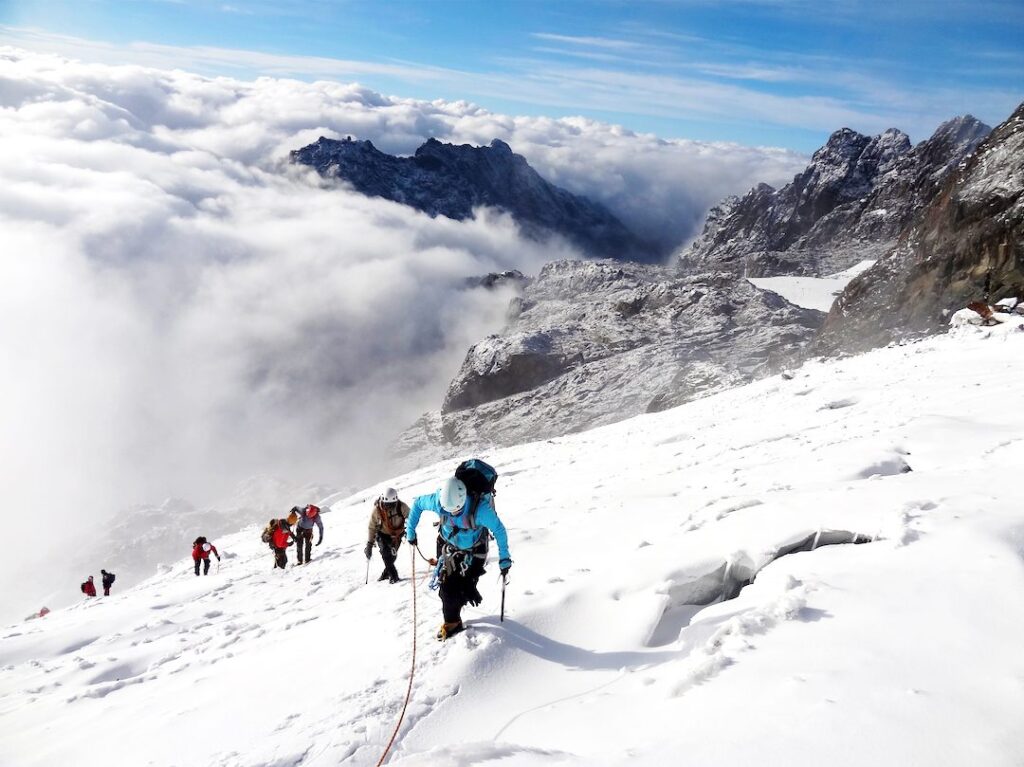
But the longer answer carries a serious caveat. The Rwenzori Mountains, the Mountains of the Moon, are not Kilimanjaro. They are not a straightforward walk up a well-lit tourist highway. They are a UNESCO World Heritage Site of extraordinary complexity: perpetually wet, deeply remote, geologically ancient, and relentlessly demanding in ways that only reveal themselves once you are inside the forest and the clouds close behind you. Every so often, a trekker books with a suspiciously cheap operator, boards the mountain without proper equipment or adequate guiding, and discovers mid-route at John Matte, Bugata Camp, or the foot of the Elena Glacier exactly why those costs existed. Evacuation from the Rwenzoris is not quick, and on some routes it is not straightforward.
The purpose of this guide is to clearly distinguish between the costs you can reduce and those you cannot, and to provide you with the specific, concrete strategies that experienced Rwenzori trekkers use to intelligently stretch their budget. We will walk through the honest breakdown of every major cost category, identify the real opportunities to save, and explain exactly why certain expenses are fixed regardless of what any operator tells you.
📌 Key Principle Before You Read FurtherThe Rwenzori Mountains operate under Uganda Wildlife Authority (UWA) regulations that set minimum requirements for guiding, permitting, and safety equipment. These are legal requirements, not operator choices. Any trek priced significantly below market norms is cutting costs somewhere in the chain, and in a mountain environment, you want to know exactly where before you commit. |
What Actually Drives the Cost of a Rwenzori Trek
Before identifying where to save, you need a clear picture of where your money goes. The cost of climbing the Rwenzori Mountains is not arbitrary. It is the result of a tightly regulated, labour-intensive, and logistically complex operation in one of East Africa’s most remote national parks. Understanding this structure is the first step to finding legitimate savings.
Uganda Wildlife Authority Park Fees
Every single trekker entering Rwenzori Mountains National Park pays Uganda Wildlife Authority (UWA) fees. These include a daily park entry fee (which scales with the number of days you spend inside the park), fees for accommodation in mountain huts on the Central Circuit and Kilembe trails, a mandatory rescue fund contribution, and in some cases a glacier access fee for the summit section. These fees are collected at the park headquarters in Nyakalengija or at the Kilembe trailhead, and receipts are checked at huts and ranger stations along the route. There is no legal mechanism to avoid or reduce them. No operator, regardless of how creative their pricing, can legitimately reduce what UWA charges, and any operator claiming otherwise should prompt serious questions about the legality of their operation.
Mandatory Licensed Guides
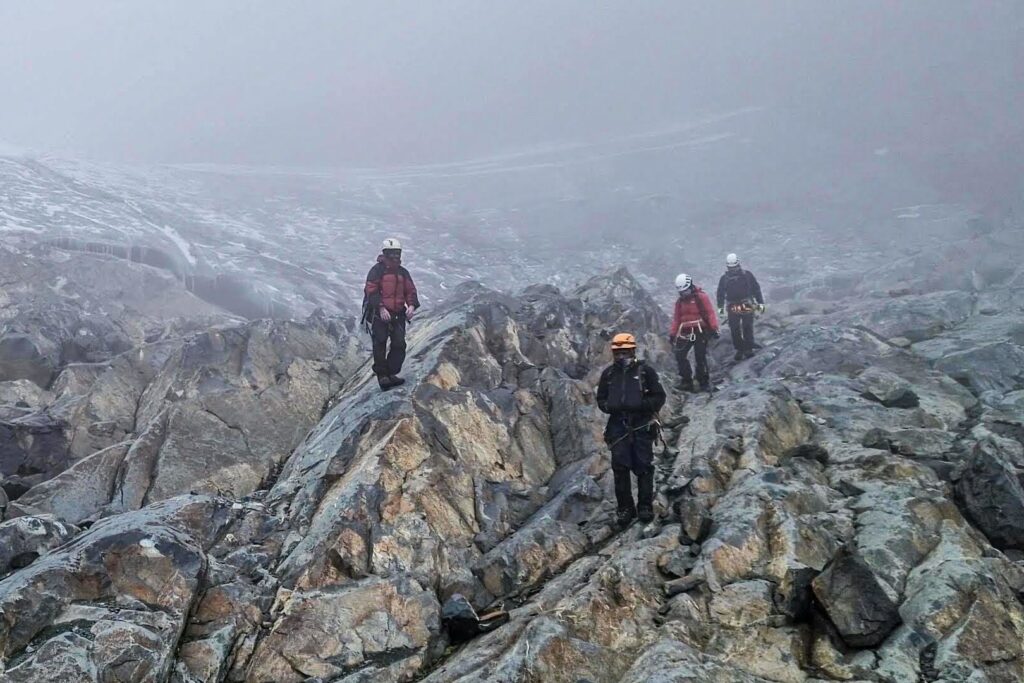
Solo trekking is explicitly prohibited in Rwenzori Mountains National Park. Every group must be accompanied by a registered park guide, and for the glacier sections of any summit route, certified technical mountain guides are required. This is not bureaucratic caution; it reflects hard-won experience about what happens to people who attempt the Elena Glacier without proper guidance and equipment. Guides are responsible for route-finding in fog and cloud (which in the Rwenzori is most of the time), river crossing judgement, emergency medical monitoring, weather hazard assessment, and coordinating evacuation if necessary. Their wages and certification costs are built into every legitimate trekking package, and they cannot be removed from the equation.
Porter Support
The Rwenzori is one of the wettest mountain ranges on Earth. At altitudes above 3,000 metres, a full kit of waterproof gear, insulated clothing, sleeping equipment, and food weighs far more than most trekkers anticipate. Porters are technically optional on some itineraries, but on any multi-day expedition and particularly on routes longer than five days, they are a practical necessity rather than a luxury. Experienced guides on the mountain recommend no more than 12 kilograms of personal carrying weight above 3,500 metres; on the Kilembe Trail, where the terrain is significantly steeper, that recommendation drops to 10 kilograms. Porter wages, as set by UWA guidelines, are non-negotiable for responsible operators.
Technical Summit Equipment
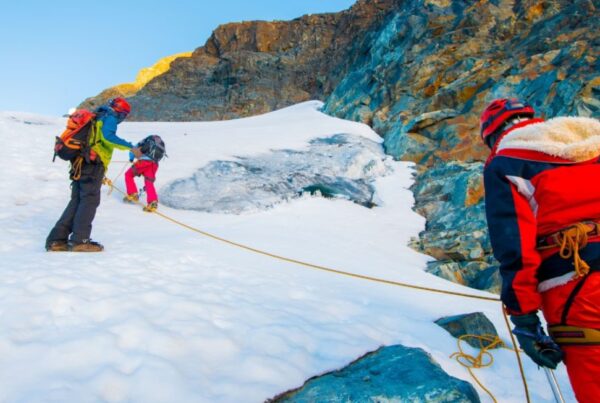
The summit section of any route targeting Margherita Peak at 5,109 metres requires glacier-crossing equipment, including crampons, ice axes, ropes, helmets, and harnesses. This is not optional gear for confident hikers; it is mandatory technical equipment for a glaciated alpine ascent. The Elena Glacier, while not a technical alpine route in the extreme mountaineering sense, is a real glacier with real crevasse risk, and how cold it gets on Margherita Peak, regularly reaching -15°C with wind chill, means thermal protection is equally non-negotiable. Equipment can be loaned from reputable operators, which is itself a meaningful budget lever, but the equipment itself must be present and functional.
Food and Mountain Accommodation
Both the Central Circuit Trail and the Kilembe Trail use fixed mountain huts, wooden structures managed by UWA and concession partners at each camp. UWA sets hut fees and charges them per person per night. Meals on the mountain must be cooked and carried in by your support team, meaning food costs scale with the number of days and the number of people in your group. The Bukurungu Trail, the newest and most wilderness-orientated of the main routes, uses tented camps, which increases porter loads and logistical complexity and therefore cost.
At-a-Glance: Realistic Price Ranges by Trek Type (USD per person)
| Trek Type | Duration | Typical Range (USD) | What’s Included |
| Mahoma Loop | 3 days | $580 – $700 | Park fees, guide, porter, hut, meals |
| Mutinda Loop (Kilembe) | 4 days | $700 – $900 | Park fees, guide, porter, hut, meals |
| Weismann Peak (Central Circuit) | 6 days | $950 – $1,200 | Park fees, guide, porter, hut, meals, equipment |
| 7-Day Central Circuit to Margherita | 7 days | $1,300 – $1,600 | All above + glacier equipment |
| 8-Day Kilembe Trail to Margherita | 8 days | $1,500 – $1,900 | All above + transfers |
| 13-Day Six Peaks Expedition | 13 days | $2,800 – $3,500 | Full multi-peak, all-inclusive |
Where You Cannot and Should Not Cut Costs
Let us be direct about this issue, because the internet is full of vague budget-trekking guides that gloss over the inconvenient parts. The following cost categories are not negotiable on a safe, legal Rwenzori expedition. Operators who price significantly below these baselines are cutting somewhere in this list, and you should know that before you hand over your deposit.
UWA Park Fees: The Immovable Floor
As noted above, Uganda Wildlife Authority fees are collected directly by the government and cannot be reduced, waived, or avoided. They scale with days in the park, so shorter treks pay fewer daily fees, which is a legitimate saving strategy, but the per-day rate itself is fixed. Any operator quoting a total package price that excludes park fees or lists fees significantly below UWA rates is likely misrepresenting costs or operating informally, exposing you to legal risks.
Qualified, Registered Guides: Not a Variable
The Kilembe Trail is managed exclusively by Rwenzori Trekking Services (RTS) under UWA concession. All guides on this trail must be RTS-certified, and there is no mechanism for bypassing this requirement. On the Central Circuit and Bukulungu routes, guides must be registered with UWA. The cost of a certified lead guide and assistant guide, particularly for summit expeditions, reflects their training, certification, equipment responsibility, and the very real liability they assume for your safety. Experienced guides on the Rwenzori earn this investment daily. Cutting guide quality to save money on a route where cloud, rain, river crossings, and glacier conditions can all deteriorate within hours is the single most dangerous economy you can make on this mountain.
Travel Insurance Covering High-Altitude Trekking
This insurance is non-negotiable and often underestimated in cost calculations. Standard travel insurance does not cover helicopter rescues above 4,000 meters or emergency evacuations from remote mountain terrain. You need a policy that explicitly covers trekking above 5,000 meters and, ideally, glacier travel. If you need to be evacuated from the Rwenzoris and, while rare, it does happen without adequate coverage, the costs will vastly exceed anything you saved on the trek itself. Several reputable international providers offer high-altitude trekking coverage; the premiums are modest relative to the protection they provide.
Proper Waterproof and Thermal Gear
The Rwenzori receives several metres of rainfall per year, distributed across virtually every month, and there is no such thing as a guaranteed dry-season climb. As our complete waterproof gear guide explains, a budget rain jacket from a general outdoor retailer will not survive sustained Rwenzori conditions. Seam-sealed, properly rated waterproof jackets, trousers, gaiters, and gloves are essential, not aspirational. Hypothermia risks on the upper mountain, particularly on the approach to Margherita above 4,500 meters, are genuine. You can borrow summit-specific equipment (crampons, ice axes, and ropes) from a good operator, which reduces your personal gear outlay significantly, but your base waterproof and thermal layering must be personal, properly fitted, and properly rated.
⚠️ Warning: The Hidden Cost of Ultra-Budget OperatorsOperators quoting prices 30–40% below the market rate are almost always cutting staffing ratios, food quality, equipment standards, or porter welfare, often all four simultaneously. In an environment where rescue can take days, these are not cosmetic compromises. They directly affect your probability of reaching the summit, your safety margin in an emergency, and the livelihoods of the mountain communities who depend on fair employment. The genuine savings this guide outlines are structural and strategic, not cuts to the safety infrastructure. |
Where You Can and Should Save Money
With the non-negotiables clearly established, the good news is that there is genuine flexibility in a Rwenzori budget if you make your choices strategically. Experienced international trekkers use the savings below every season, and they are real and meaningful.
1. Join a Group Departure Instead of Going Private
The single most impactful way to reduce the cost of a Rwenzori trek is to join one of our scheduled group departures rather than booking a private expedition. The group shares the costs of guide fees, permit management, transport, and pre-trek logistics, making the economics straightforward. On a private two-person trek to Margherita Peak via the Central Circuit, each person bears the full weight of a minimum guide and porter team. In a group of six, that overhead is distributed, and the per-person cost can decline by USD 200 to USD 400 without any reduction in guiding quality, safety equipment, or mountain accommodation standards.
Group departures also have practical mountain advantages beyond cost: larger groups move with stronger collective resources, have better medical monitoring coverage across more people, and create a more energising dynamic on summit days, when individual motivation can genuinely waver at altitude. For the 7-Day Central Circuit and 8-Day Kilembe Trail itineraries, group departures are available at fixed dates. Contact our team to verify current availability and get on the roster for the best departure windows across the year.
2. Choose a Shorter Route or Lower-Summit Objective
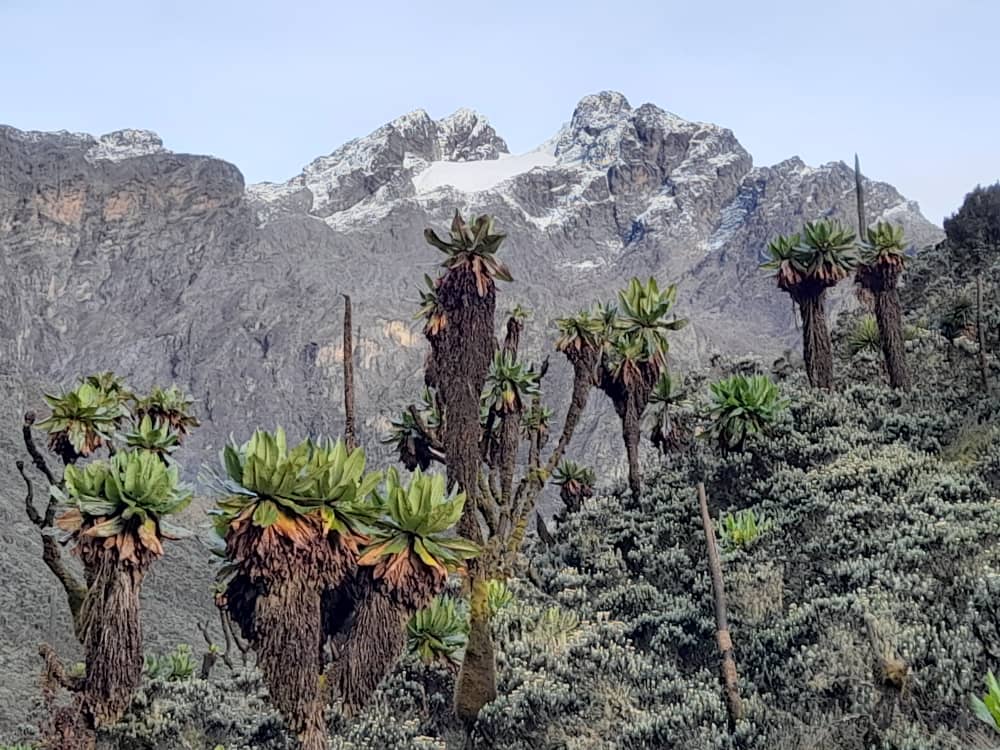
Not every Rwenzori trek needs to target Margherita Peak. This is worth saying clearly, because many trekkers assume that a Rwenzori expedition is synonymous with a summit bid on the highest peak in the range. In reality, the mountain has many amazing experiences at lower heights that are much cheaper, take fewer days in the park, and still show off the unique forest landscapes, glacial lakes, and afro-alpine plants that make the Rwenzoris special compared to other mountains in Africa.

The 3-Day Mahoma Loop is the most accessible entry point into the Rwenzori ecosystem. Starting from Mihunga Gate, it winds through heather woodlands and bamboo forests to Lake Mahoma, a beautiful glacial lake measuring approximately 2,500 meters. At three days, park fees are at their minimum, and the trek sits comfortably in the USD 580–700 range for a small group. It does not summit anything, but it is a genuinely spectacular wilderness experience that introduces you to the full character of the lower Rwenzori.
The 4-Day Mutinda Loop via the Kilembe Trail carries you to the Mutinda Lookout at around 4,000 metres high enough to see into the glacier zones and experience genuine alpine terrain, with its otherworldly giant lobelias and groundsels, without the full summit costs or duration of a Margherita bid. At four days, you are paying four days of park fees rather than seven or eight, which alone represents a meaningful saving.
For trekkers who want altitude and peak-bagging achievement without the cost of Margherita, the 6-day Weismann Peak Hike on Mount Luigi di Savoia, at 4,620 metres, sits in a genuinely compelling middle ground. Weismann is a real summit; you stand on a proper peak with panoramic views across the range, but it does not require the glacier-crossing equipment or the additional specialist guide time that Margherita demands, which lowers equipment costs and slightly reduces guide fees.
Similarly, the 7-day Mount Baker and Weismann Peak hike via the Kilembe Trail offers the achievement of two real peaks, Mount Baker at 4,842 metres and Weismann at 4,620 metres at a price point significantly below the full Margherita summit packages. For trekkers who want the wildness and challenge of the Kilembe Trail without committing to the full eight-day summit itinerary, this option represents exceptional value.
3. Travel Overland from Kampala Rather Than Flying to Kasese
The journey from Kampala or Entebbe to Kasese, the gateway town for both the Central Circuit and Kilembe Trail, can be made by domestic flight (approximately one hour) or by road (approximately five to six hours). The AeroLink domestic flight is convenient and eliminates a day of travel, but it costs significantly more than the overland alternative. A scheduled coach from Kampala’s bus terminal to Kasese is the most economical and comfortable option for the journey, and it gives you the additional benefit of passing through some of western Uganda’s most scenic countryside. For budget-conscious trekkers, saving USD 100–200 per person on transport in each direction is a real and straightforward reduction.
If you are travelling from Kigali, Rwanda, it is also worth noting that the border crossing at Katuna/Gatuna and the road from Kabale to Kasese can, in some itinerary configurations, be more convenient and cost-effective than flying into Entebbe and doubling back westward. This depends on your overall Uganda itinerary, but it is worth factoring into your planning conversations with our team.
4. Book Pre- and Post-Trek Accommodation at Mid-Range Kasese Hotels
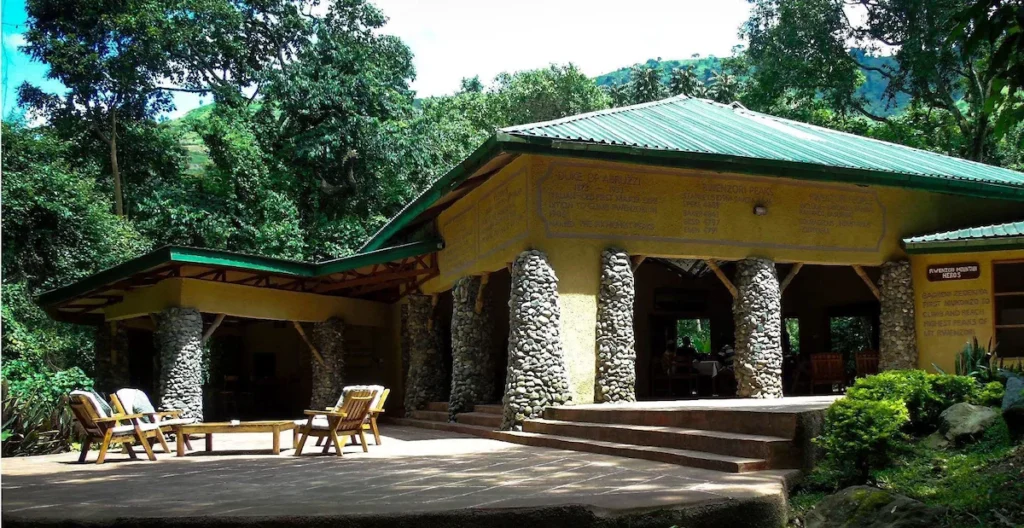
Kasese town has a full range of accommodation options, from basic guesthouses to mid-range hotels with reliable power, hot water, and solid meal options. The night before you enter the park and the night after you exit are logistically significant; you want to be rested, well-fed, and not spending unnecessary money. Our guide to accommodation before and after the Rwenzori trek outlines the best options at each price point. Opting for a solid mid-range hotel in Kasese rather than upgrading to a more expensive lodge outside town can save USD 50–100 per night per person without any meaningful sacrifice in rest quality before the trek.
5. Bring Your Own Base Gear and Rent Summit Equipment
Trekkers who already own quality waterproof clothing, insulated layers, trekking boots, poles, and a sleeping bag suitable for cold conditions should absolutely bring their gear rather than renting. Rental equipment, while available from reputable operators, carries a daily cost that accumulates over seven or eight days. If you are investing in a long-term trekking life or have already done high-altitude treks elsewhere in Africa or the Himalayas, your personal kit will perform better, fit better, and cost less than rental over the duration of the expedition.
The items worth renting, even for well-equipped trekkers, are the technical summit tools: crampons, ice axes, helmets, harnesses, and ropes. These are pieces of specialised mountaineering equipment that most trekkers do not own; they are heavy and awkward to travel with, and they are maintained and inspected between expeditions by responsible operators. Renting summit hardware and owning your base layers and waterproofs is the optimal cost split for most international trekkers approaching the Rwenzori mountaineering experience.
6. Travel in the Shoulder Season for Better Availability and Group Rates
The Rwenzori Mountains can be trekked virtually year-round; our rainfall guide explains the honest picture of what wet-season trekking actually involves, but the driest and most reliable windows are December to March and June to September. Within these windows, the highest demand period tends to cluster around July–August (the European and North American summer holidays) and the Christmas–New Year period. Trekking in October–November or April–May, while requiring more commitment to managing wet conditions, can open access to group departure slots with smaller groups and greater flexibility on dates. Shoulder-season expeditions can represent genuine savings for trekkers who are comfortable with rain and have proper waterproof gear, which is essential regardless.
7. Book Directly With a Specialist Rwenzori Operator
Booking through general East African safari aggregators, international adventure travel platforms, or non-specialist operators inevitably adds commission layers to the pricing. Some of these middlemen add 15–25% to the base cost of a Rwenzori trek without adding anything to the mountain experience itself. Booking directly with a specialist operator, one who operates exclusively on the Rwenzori and whose guides have first-hand, current knowledge of the mountain, removes this margin from your cost while simultaneously improving the quality of advice and support you receive during planning.
This approach is particularly important on the Kilembe Trail, where the operational relationship between operators and Rwenzori Trekking Services is direct and established. Operators who book through intermediaries may not have the most current information on trail conditions, hut availability, or schedule changes, and on a remote mountain, that information gap has real consequences.
💡 Budget Tip: The Group Departure + Mahoma CombinationFor trekkers on a genuine tight budget who still want a meaningful Rwenzori experience, consider a 3-day Mahoma Loop on a group departure as a first trip, with a longer summit expedition planned for a return visit. The Mahoma Loop introduces you to the mountain’s lower ecosystem at minimal cost, gives you a realistic sense of Rwenzori conditions and your own physical response, and sets you up for a much better-prepared and more confident summit attempt in a future season. |
The ‘Budget Meets Ambition’ Sweet Spot: Best Value Rwenzori Itineraries
After working through the cost framework, a clear set of itineraries emerges as the best balance of price, achievement, and safety margin for budget-conscious international trekkers. These are not compromised experiences; they are smart choices.
Best Value Summit Trek: 7-Day Central Circuit to Margherita Peak

The 7-Day Central Circuit is the most cost-efficient route to the summit of Margherita Peak, at 5,109 metres. It is one day shorter than the standard 8-Day Kilembe Trail itinerary, uses the same fixed mountain huts (which means no additional tented camp costs), and covers the full Central Circuit loop from Nyakalengija through Nyabitaba, John Matte, Bujuku, Elena, and Kitandara before exiting at Guy Yeoman. It passes through all five vegetation zones, reaches the twin Kitandara Lakes, one of the most beautiful spots in the entire park, and completes the full Margherita summit via the Elena Glacier. On a group departure, this trek is the most accessible full-summit experience in the Rwenzori range.
Best Value Non-Summit Trek: 4-Day Mutinda Loop
The 4-Day Mutinda Loop via the Kilembe Trail delivers four days of genuine Rwenzori mountain experience, including forest, bamboo, heather, and Afro-alpine zones, culminating in stunning views from Mutinda Lookout at ~4,000 meters. It is designed with an “acclimatise high, sleep lower” approach that makes it genuinely comfortable for hikers coming from sea level, and after four days, it minimises park fee costs while maximising altitude gain and scenic rewards. For trekkers who want their first taste of the Rwenzoris before committing to a full summit expedition, this trek is the ideal entry point.
Best Value Multi-Summit Trek: Mount Baker and Weismann Peak (7 Days)
The 7-Day Mount Baker and Weismann Peak Trek hits two genuine Rwenzori summits, Mount Baker at 4,842 metres and Weismann Peak at 4,620 metres without the full equipment and guide costs of the Margherita Glacier section. You climb real peaks, you stand on proper summits, you experience the full Kilembe Trail atmosphere, and you save meaningfully compared to the full Margherita summit packages. For peak baggers who want multiple summits at a realistic budget, this trek is an exceptional choice.
Budget Combination: Rwenzori + Uganda Safari
For trekkers open to combining their Rwenzori expedition with other Ugandan experiences, the Rwenzori Trek, Gorilla Trekking, and Safari combo can represent surprising value when the logistical overhead of travelling to western Uganda is spread across multiple activities. Transport from Kampala to Kasese is a fixed cost whether you spend four days or twelve days in the west. Combining the Rwenzori trek with a day at Queen Elizabeth National Park just a short drive from Kasese means you pay the transit cost once and experience two of Uganda’s finest wilderness destinations. For international trekkers flying in specifically for the Rwenzori, this combination approach often produces better cost-per-experience than a pure trekking trip.
Full Cost Comparison: What You Can Control vs. What You Cannot
Budget Levers at a Glance
| Cost Element | Fixed or Variable? | Budget Strategy |
| UWA Park Entry Fees (daily) | FIXED | Shorter routes mean fewer days and lower total fees |
| UWA Hut Accommodation Fees | FIXED per night | Cannot be reduced; choose fewer nights |
| Licensed Guides (lead + assistant) | FIXED (required) | No reduction possible on safe, legal treks |
| Porter team | Partly variable | Group departures spread porter costs per person |
| Technical summit equipment | Variable | Rent from operator; own your base gear |
| Meals on mountain | Fixed (included) | Included in all-inclusive packages |
| Pre/post-trek accommodation | Variable | Mid-range Kasese hotels vs. lodges |
| Transport to trailhead | Variable | Overland bus vs. domestic flight |
| Travel insurance | Variable (mandatory) | Shop providers; standard high-altitude policies |
| Personal gear | Variable | Own vs. rent: invest once, use repeatedly |
Total Budget Scenarios: What a Well-Planned Rwenzori Trek Actually Costs
To make this concrete, here are three realistic budget scenarios for an international trekker arriving in Uganda for a Rwenzori expedition using all available smart savings on the variable costs while keeping every safety-critical element fully funded.
Scenario A: Tight Budget; Group Departure, Mahoma Loop, Overland Travel (3 Days)
| Cost Item | Approximate USD |
| Mahoma Loop group departure (park fees, guide, porter, hut, meals) | $600 – $700 |
| Transport Kampala–Kasese–Kampala (bus) | $30 – $50 |
| Pre/post-trek accommodation Kasese (2 nights, mid-range) | $60 – $90 |
| Travel insurance (3-day high-altitude policy) | $40 – $60 |
| Personal expenses, tips, contingency | $50 – $100 |
| TOTAL (excluding international flights) | $780 – $1,000 |
Scenario B: Mid-Range; Group Departure, 7-Day Central Circuit to Margherita, Overland Travel
| Cost Item | Approximate USD |
| 7-Day Central Circuit group departure (all-inclusive) | $1,300 – $1,500 |
| Summit equipment loan (included in most packages) | $0 (included) |
| Transport Kampala–Kasese–Kampala (bus) | $30 – $50 |
| Pre/post-trek accommodation Kasese (2 nights) | $60 – $100 |
| Travel insurance (8-day high-altitude + glacier policy) | $80 – $120 |
| Personal gear (assuming owned waterproofs) | $50 – $150 |
| Tips, contingency | $100 – $150 |
| TOTAL (excluding international flights) | $1,620 – $2,070 |
Scenario C: Full Ambition on Budget: 13-Day Six Peaks Expedition, Group Departure
| Cost Item | Approximate USD |
| 13-Day Six Peaks Expedition group departure | $2,800 – $3,350 |
| Transport (bus, overland) | $50 – $80 |
| Pre/post-trek accommodation (3 nights) | $90 – $150 |
| Travel insurance (14-day multi-peak policy) | $120 – $180 |
| Personal gear and contingency | $100 – $200 |
| TOTAL (excluding international flights) | $3,160 – $3,960 |
Seven Practical Budget Strategies: Quick-Reference Summary
📋 Your Budget Strategy Checklist1. Joining a scheduled group departure saves USD 200–400 per person vs. a private trek. 2. Choose your peak objective strategically. Mahoma, Mutinda, or Weismann all deliver extraordinary Rwenzori experiences at lower costs than Margherita. 3. Travel overland by bus from Kampala to Kasese saves USD 100–200 per person vs. domestic flight. 4. Staying at mid-range accommodation in Kasese before and after saves USD 50–100 per night. 5. Own your base waterproof and thermal gear; rent technical summit equipment (crampons and ice axes) from your operator. 6. Consider shoulder-season travel (October–November, April–May) for access to smaller group departures. 7. Book directly with a specialist Rwenzori operator to remove middleman commission layers. |
Frequently Asked Questions: Rwenzori Mountains on a Budget
What is the minimum budget for trekking the Rwenzori Mountains?
The realistic minimum budget for a short but genuine Rwenzori experience, the 3-day Mahoma Loop, on a group departure with overland transport and mid-range accommodation in Kasese is approximately USD 780 to USD 1,000 per person, excluding international flights. This covers park fees, a guide, porter, mountain accommodation, meals on the mountain, local transport, two nights in Kasese, and travel insurance. It does not include international flights, visas, or personal equipment purchases. For a full summit expedition to Margherita Peak on the 7-Day Central Circuit with a group departure, the realistic minimum is approximately USD 1,620 per person under the same conditions. Careful questions about exclusions should arise if the price falls significantly below these figures.
Can I reduce costs by trekking solo in the Rwenzori Mountains?
Solo trekking is explicitly prohibited in Rwenzori Mountains National Park under Uganda Wildlife Authority regulations. Every trekking party must be accompanied by a registered, licensed guide at all times inside the park. This is not a guideline or a recommendation; it is a legal requirement, and rangers enforce it at park entry points and hut checkpoints. Additionally, no solo trekker can legally complete the Kilembe Trail, which is managed exclusively by Rwenzori Trekking Services under a UWA concession. Attempting to enter informally creates legal exposure and removes all safety infrastructure from your expedition on a mountain where conditions can deteriorate very rapidly. If you are concerned about the cost of private guiding, the most effective strategy is to join a group departure rather than attempt independent trekking.
Are there cheaper routes than the Central Circuit for reaching Margherita Peak?
The two established summit routes to Margherita Peak are the Central Circuit Trail and the Kilembe Trail. The 7-Day Central Circuit is generally the more cost-effective of the two for a summit bid, primarily because it is one day shorter than the standard 8-Day Kilembe Trail itinerary, which translates to one fewer day of park fees. The Kilembe Trail offers a different and arguably more wilderness-orientated experience, and its all-inclusive packages are highly competitive, but the Central Circuit’s shorter duration gives it the cost edge for budget-focused trekkers whose primary objective is reaching Margherita. A third option for budget-conscious peak baggers is the 6-Day Weismann Peak itinerary on Mount Luigi di Savoia at 4,620 metres, which reaches a genuine summit without the full glacier equipment and technical guide costs of a Margherita ascent.
Do UWA park fees change for different nationalities?
Yes. Uganda Wildlife Authority fees are structured by nationality category, as is standard across Uganda’s national parks. International non-East African Community citizens pay the highest daily park entry rate. Citizens of East African Community member states (Kenya, Tanzania, Rwanda, Burundi, South Sudan, and the DRC) pay a reduced rate, and Ugandan citizens pay the lowest rate. Hut accommodation fees are generally consistent across nationality categories, as are the rescue fund contributions. All fees must be paid in advance at the park headquarters and are non-refundable once the trek has commenced. For the exact current fee schedule, contact our team directly. UWA fees are reviewed periodically, and up-to-date figures are always confirmed at the time of booking.
Is it worth combining a Rwenzori trek with gorilla trekking for budget reasons?
The combination of Rwenzori trekking with gorilla trekking and a Uganda safari is not primarily a budget strategy; gorilla permits in Uganda cost USD 800 per person and are a significant addition to any itinerary. However, the combination can represent genuine value from a cost-per-experience perspective, because the logistical overhead of travelling to western Uganda (flights, accommodation, and time) is the same whether you spend four days or twelve in the region. Spreading that overhead across multiple experiences (Rwenzori, Queen Elizabeth National Park wildlife, Bwindi gorillas) means the total cost per day and per experience is lower than three separate trips would be. For international travellers making a once-in-a-decade journey to Uganda, it is often a smarter approach, even though the total trip cost is higher than Rwenzori alone.
What is the cheapest time of year to trek the Rwenzori Mountains?
The Rwenzori Mountains do not have a peak-season price premium in the way that Kilimanjaro or many Himalayan routes do; park fees and guide rates are consistent year-round. However, group departure availability and group sizes can vary seasonally. The shoulder months of October–November and April–May tend to have smaller groups and more scheduling flexibility, which can create opportunities for better group pricing and fewer minimum-number constraints on some itineraries. These months are also within periods of higher rainfall, which is why our complete rainfall and weather guide is essential reading before choosing dates. The mountain is trekkable and genuinely rewarding even in wetter conditions, provided your gear is adequate, and making that gear investment rather than looking for the driest conditions is the more reliable strategy.
What are the tipping expectations for Rwenzori guides and porters?
Tipping is a real and important part of the Rwenzori trekking economy, and it is worth budgeting for honestly. Guides and porters on the Rwenzori earn their fixed wages, but tips represent a meaningful supplement to their income and are an important convention for all reputable operators. As a general guideline, a lead guide might receive USD 10–15 per day from the trekking group total, an assistant guide USD 7–10 per day, and each porter USD 5–8 per day. These are group totals, not per-person amounts. On a 7-day trek with a group of four, the tip budget for the full team (lead guide, assistant guide, and three porters) would be in the range of USD 350–500 total, split across the group. Factoring tips into your budget from the outset is both respectful and practical; it should appear as a line item in your planning, not as a surprise at the end.
Can I rent all my gear from the operator to save on costs?
Reputable Rwenzori operators offer summit-specific technical equipment, crampons, ice axes, helmets, ropes, and harnesses for loan, which you should factor into your planning. This is a genuine saving for trekkers who do not own mountaineering hardware. However, personal clothing items, waterproof jackets, waterproof trousers, base layers, and gaiters should always be your own, properly fitted equipment. As our complete waterproof gear guide explains, rental clothing items from general operators are rarely adequate for sustained Rwenzori conditions and will not fit you as well as your gear. Hypothermia risks in wet, cold conditions above 4,000 meters are serious. Renting summit hardware, yes. Renting your personal waterproof and thermal layers? No.
🏔️ Ready to Plan Your Rwenzori Trek?Our team at Rwenzori Trekking Safaris has been guiding trekkers on the Mountains of the Moon for over a decade. We know every route, every camp and every seasonal nuance, and we know how to help you build an expedition that matches your ambitions and your budget honestly. Whether you are considering your first Rwenzori experience on the Mahoma Loop, targeting Margherita Peak on a group Central Circuit departure, or planning the full six-peak expedition, get in touch, and we will give you transparent, expert advice with no pressure and no inflated pricing. 📧 Email: rwenzoritrekkingsafaris@gmail.com 💬 WhatsApp: +256 773 256 104 🌐 Contact our team online |
Browse our full range of Rwenzori trekking expeditions, explore our routes and available dates, or read more of our expert Rwenzori trekking guides on the blog before you reach out. The mountain is waiting. Let us make sure you arrive ready.