Rwenzori Mountains vs. Virunga Volcanoes compared: difficulty, gorillas, ecosystems, cost & timing. Expert guide to choosing your East African mountain adventure.
The corner of East and Central Africa where Uganda, Rwanda, and the Democratic Republic of Congo converge is one of the most geographically dramatic, ecologically extraordinary, and experientially rich regions available to adventure travelers anywhere on Earth. Within a roughly 200-kilometer radius, you can stand on the rim of one of the world’s most active lava lakes; track mountain gorillas through bamboo forests; climb Africa’s third-highest peak across glaciers that are among the last equatorial ice in the world; and walk through a biological community so unusual that it has no parallel on any other mountain range. The problem, if it can be called a problem, is that we must choose.
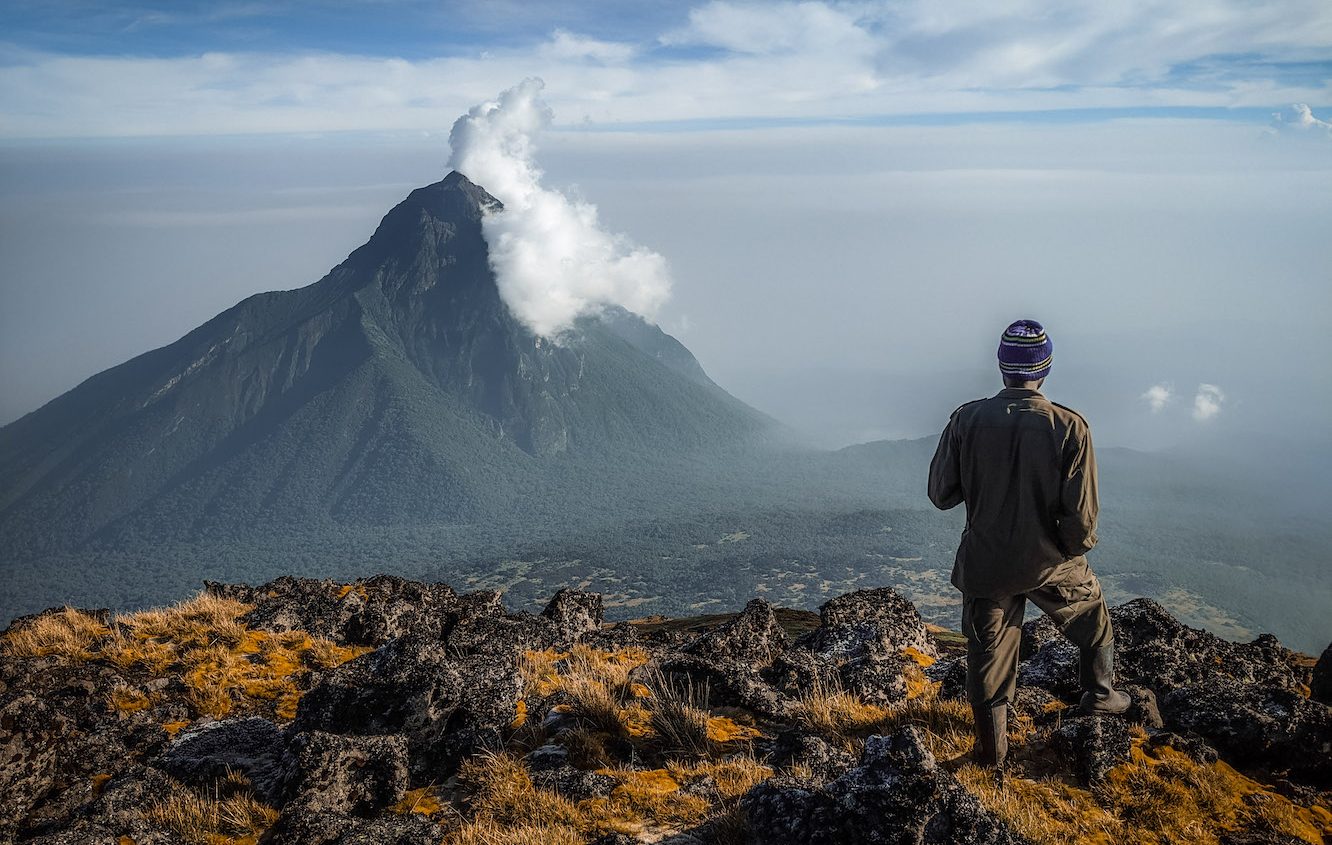
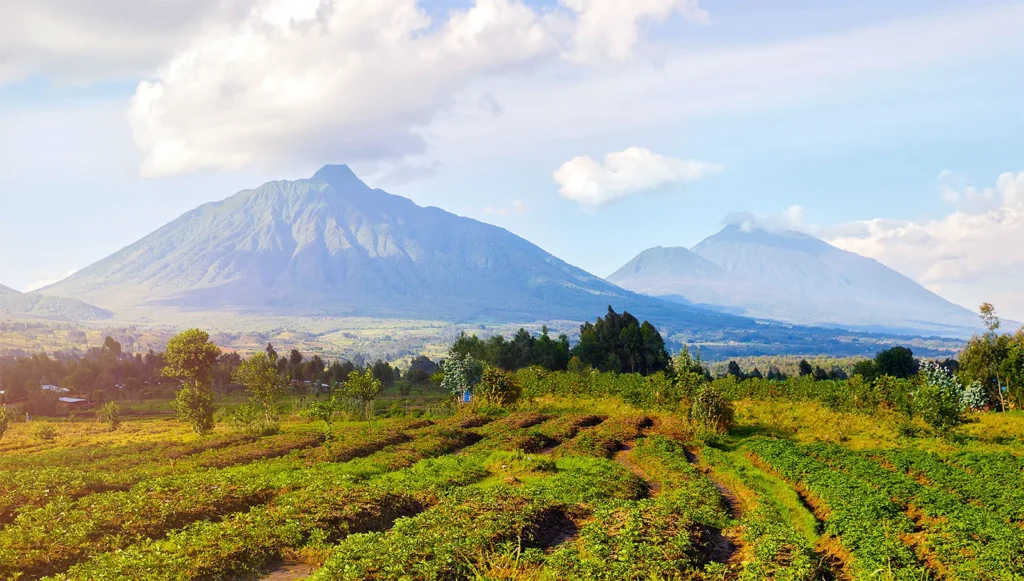
The two remarkable mountain adventure options of this region are, on one side, the Rwenzori Mountains of western Uganda, the UNESCO World Heritage range also known as the Mountains of the Moon, and on the other, the Virunga Volcanoes straddling the Uganda-Rwanda-DRC border, whose volcanic peaks include Karisimbi (4,507 m), Muhabura (4,127 m), Bisoke (3,711 m), and the active Nyiragongo (3,470 m), famous for its permanently active lava lake. Both are spectacular. Both are life-changing in different ways. Both attract a specific type of traveler, and the mountain experience will either perfectly match or gently disappoint their priorities and personality.
I am a specialist Rwenzori guide, so I will be transparent at the outset: my knowledge of the Rwenzori is firsthand and deep, accumulated over years of guiding expeditions from the 3-day Mahoma Loop to the 18-day all-peaks traverse. My knowledge of the Virungas is that of a well-travelled guide who has worked extensively in the region and has direct experience of the Virunga landscape, logistics, and character. I want to help you make the right choice, which may be the Rwenzori or not, depending on who you are. This guide exists to make that decision clear.
What Are the Virunga Volcanoes? The Other Side of the Equation
The Virunga Mountains, not to be confused with Virunga National Park in the DRC, though the two share the name and are geographically connected, are a chain of eight volcanoes straddling the borders of Uganda, Rwanda, and the Democratic Republic of Congo in the western branch of the East African Rift System, south of the Rwenzori. Their formation is associated with the volcanic activity of the southern Albertine Rift, the same tectonic system that produced the Rwenzori range to the north, though through volcanic rather than tectonic uplift mechanisms, making the Virunga one of the clearest illustrations of the dramatic diversity within a single rift system.
The eight Virunga volcanoes are divided between the three countries: Uganda holds Muhavura (4,127 m) and Mgahinga (3,474 m) in Mgahinga Gorilla National Park, the smallest national park in Uganda; Rwanda holds Karisimbi (4,507 m, the highest), Bisoke (3,711 m), Sabyinyo (3,634 m), Gahinga (3,474 m), and Muhabura (4,127 m) in Volcanoes National Park; and the DRC holds Nyiragongo (3,470 m) and Nyamuragira (3,058m) both active volcanoes, in Virunga National Park. The Virungas are among the most biologically significant mountain ranges in Africa: they provide critical habitat for approximately half of the world’s remaining mountain gorilla population, a population that has grown from approximately 620 in 2008 to over 1,000 today, one of conservation’s most celebrated success stories.
The Mountain Gorilla Factor: The Virunga’s Greatest Asset
The mountain gorilla is the single most important differentiator between the Virunga adventure and the Rwenzori adventure. The Virunga and adjacent Bwindi Impenetrable Forest, although geographically separate from the Virungas, are part of the same conservation landscape and share the mountain gorilla population. Together, they hold the world’s entire remaining population of mountain gorillas (Gorilla beringei beringei), and gorilla trekking in the Virungas and at Bwindi is one of the most sought-after wildlife experiences on Earth.
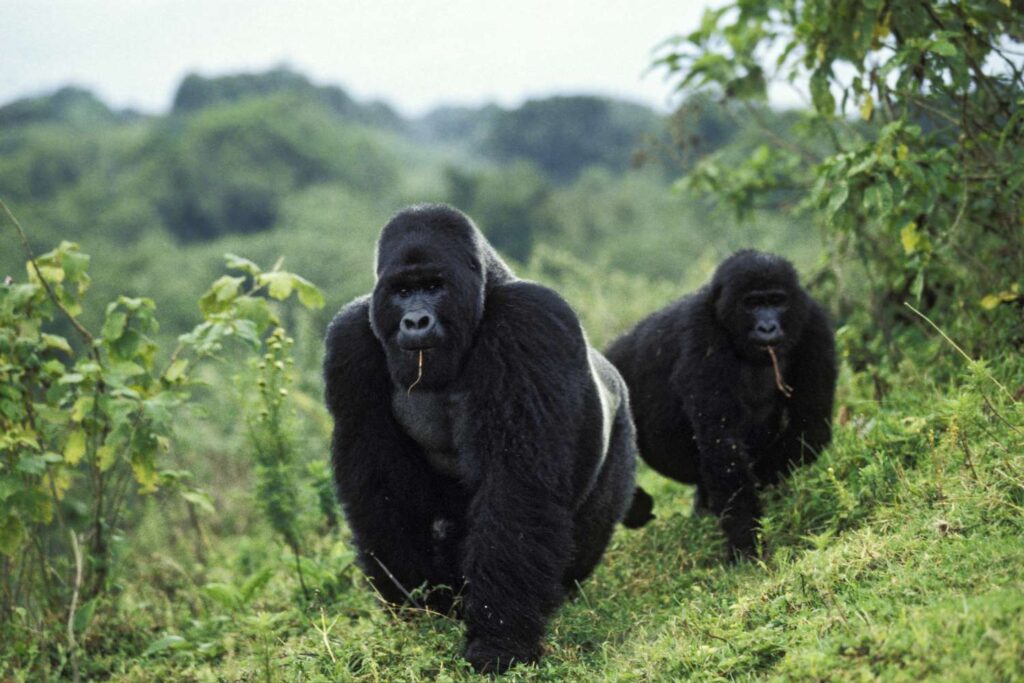
Gorilla trekking in Volcanoes National Park (Rwanda) or Mgahinga (Uganda) involves a maximum of one hour with a habituated gorilla family, following Uganda Wildlife Authority or Rwanda Development Board (RDB) trackers through the montane forest and bamboo zones to locate the family’s current position. The permits are expensive: USD 1,500 per person per trek in Rwanda and USD 700 per person in Uganda, and availability is limited. The experience is extraordinary. I have watched it produce the kind of silent, transformative encounter with another species that most people experience only once in a lifetime.
The Rwenzori Mountains do not have mountain gorillas. There are no habituated gorilla families on the Rwenzori trails. The Rwenzori’s wildlife community is rich and includes L’Hoest’s monkeys, colobus monkeys, Rwenzori turacos, three-horned chameleons, and a wide range of endemic species but not gorillas. Trekkers who choose the Rwenzori for gorilla trekking will be disappointed. Trekkers who want gorilla trekking as part of a broader Uganda or Rwanda adventure can combine the Rwenzori with a Bwindi or Mgahinga gorilla trek in the 12-day Rwenzori and gorilla trekking combination or the 16-day Rwenzori and gorillas itinerary, combining both experiences into a single East African expedition.
Nyiragongo: The World’s Most Accessible Active Lava Lake
The other remarkable Virunga-specific experience is Nyiragongo, the active stratovolcano on the Congolese side of the Virunga Chain whose summit crater contains one of the world’s only permanent lava lakes, a churning, glowing pool of molten rock that is visible from the crater rim on clear nights in a spectacle of primal geological power. The Nyiragongo trek is a 1-2 day ascent from Goma, climbing through montane forest to the crater rim at 3,470 metres, where trekkers spend the night in simple crater-rim huts watching the lava lake glow below.
Nyiragongo is extraordinary. It is also, as of the most recent assessments, located in a security environment of considerable complexity; the eastern DRC has experienced ongoing armed conflict and instability that has periodically closed the volcano to tourism and created genuine safety concerns for visitors. Rwanda-side Virunga trekking, Volcanoes National Park, Karisimbi, and Bisoke operate in a much more stable and well-regulated environment and are highly recommended for visitors to the region. The DRC side requires a careful, current security assessment and should never undertake it without the most current local guidance and registered operator support.
The Fundamental Differences: What Each Adventure Actually Is
Duration and Commitment
The most immediately practical difference between the Rwenzori and Virunga adventures is the time commitment they require. A Virunga volcano trek, whether to the summit of Karisimbi (2 days), Bisoke (1 day), or Muhavura (1-2 days), is a short, intense experience: a full day of ascent, an overnight at altitude, and descent the following morning. Gorilla trekking permits cover a single trekking day. The total time investment for a comprehensive Virunga experience, including gorilla trekking, one volcano hike, and Nyiragongo if security permits, is four to seven days.
The Rwenzori is a fundamentally different type of commitment. Even the shortest multi-day trek, the 3-day Mahoma Loop hike, requires three full days. The classic summit expedition, the 7-day Central Circuit Margherita Peak trek, demands seven consecutive days on the mountain. The 13-day, six-peaks expedition and 18-day all-peaks traverse require nearly three weeks of sustained mountain effort. The Rwenzori is not a day trip or a weekend adventure. It is an expedition.
This difference in temporal commitment is not merely logistical; it is experiential and psychological. A Virunga volcano day trek produces a concentrated, intense encounter with a spectacular landscape. A Rwenzori expedition produces something more cumulative and more deeply immersive: the gradual development of familiarity with a mountain environment, the physical and psychological adaptation to altitude and effort over multiple days, the relationship with guides and porters that deepens across shared hours on the trail, and the specific quality of beauty that only sustained exposure to an extraordinary place can generate. These are different kinds of experience, and neither is superior; they suit different people at different points in their adventure travel history.
Physical Demands
The Virunga volcano hikes range from moderately demanding (Bisoke and Muhabura are steep but short, achievable by fit recreational hikers) to challenging (Karisimbi, the highest Virunga peak at 4,507 m, is a two-day trek with cold overnight conditions that requires good physical preparation). The gorilla trekking is variable; it can involve a 20-minute walk to a gorilla family located near the forest edge or a 7-hour bushwhack through steep terrain to find a family that has moved to an inaccessible position. You won’t know what kind of day you’ll have until the trackers update the guides in the morning.
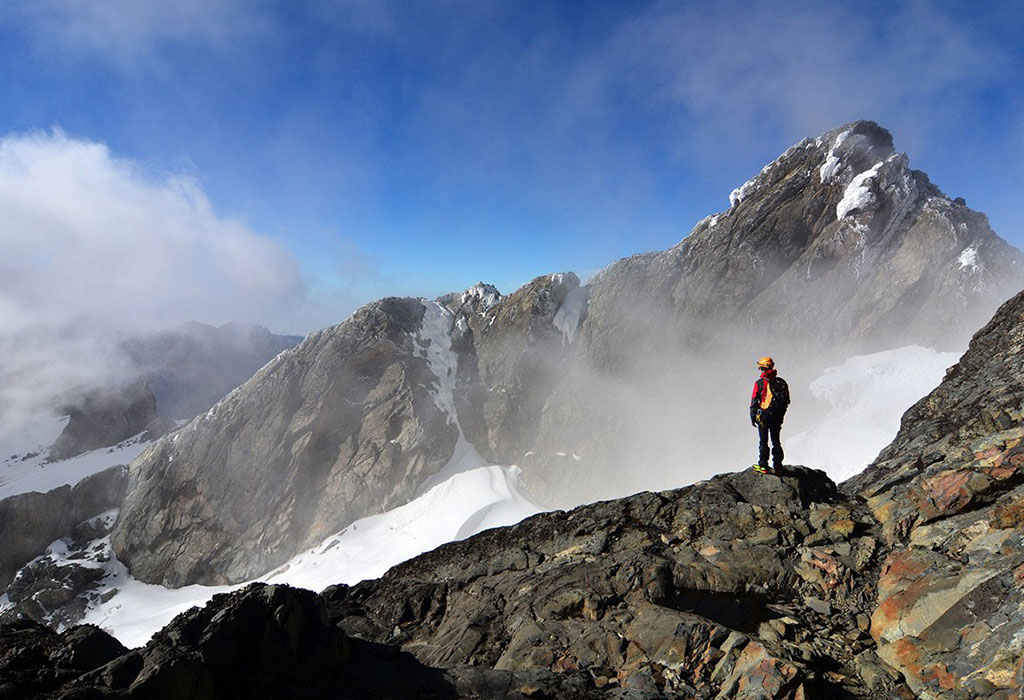
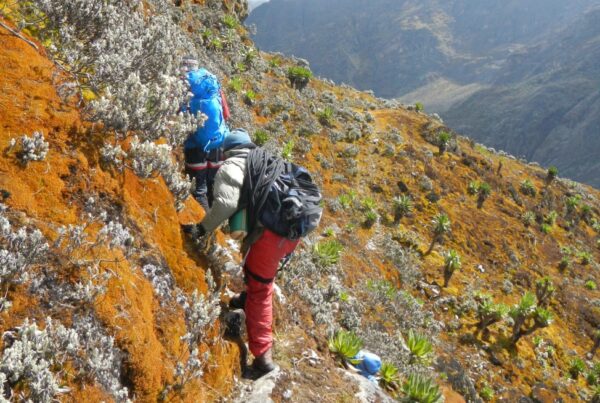
The Rwenzori is categorically more physically demanding than any Virunga experience, and I say this with the intention of being helpful rather than discouraging. The 7-day Central Circuit trek involves seven consecutive days of mountain walking, ascending through altitude from 1,646 metres at Nyakalengija to 5,109 metres at Margherita Peak, crossing glacier terrain with crampons and ice axes on the summit approach. The terrain is persistently wet and technically demanding; the Bujuku Valley bog crossings require sustained careful footwork, and the high camps above 4,000 metres operate in genuinely cold conditions. Our 16-week training plan for Rwenzori trekkers exists for good reason: the mountain rewards preparation, and under-prepared trekkers pay for the gap between their fitness and the mountain’s demands with physical suffering that diminishes the experience.
This statement is not to say the Rwenzori is only for elite athletes. Our guide on whether beginners can climb the Rwenzori and our assessment of whether older hikers can trek the mountain both address the fitness question honestly. The Rwenzori is achievable for a wide range of trekkers who have prepared properly. It is simply a more sustained physical challenge than any Virunga experience, and that distinction matters when making the choice.
Ecology and Landscape
The Rwenzori and the Virunga are both ecologically extraordinary and are both part of the Albertine Rift biodiversity hotspot, the region with the highest density of endemic vertebrate species in mainland Africa. But they are ecologically distinct in ways that shape the landscape experience significantly.
The Virunga volcanoes are covered from their base in dense montane forest, which transitions through bamboo and Hagenia-Hypericum woodland zones to open alpine moorland at the higher elevations. The volcanic substrate produces a distinctive soil chemistry and drainage pattern that supports a lush, green, heavily vegetated mountain environment, the same dense forest that provides habitat for the mountain gorillas. The upper Virunga summits above 4,000 metres are rocky, often frost-rimed, and have a high alpine character broadly comparable to other East African volcanic peaks of similar altitude.
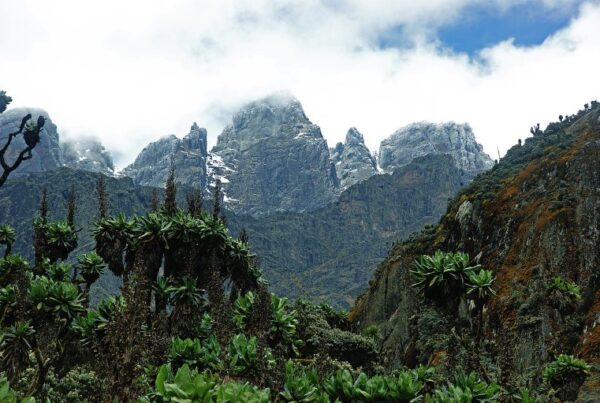
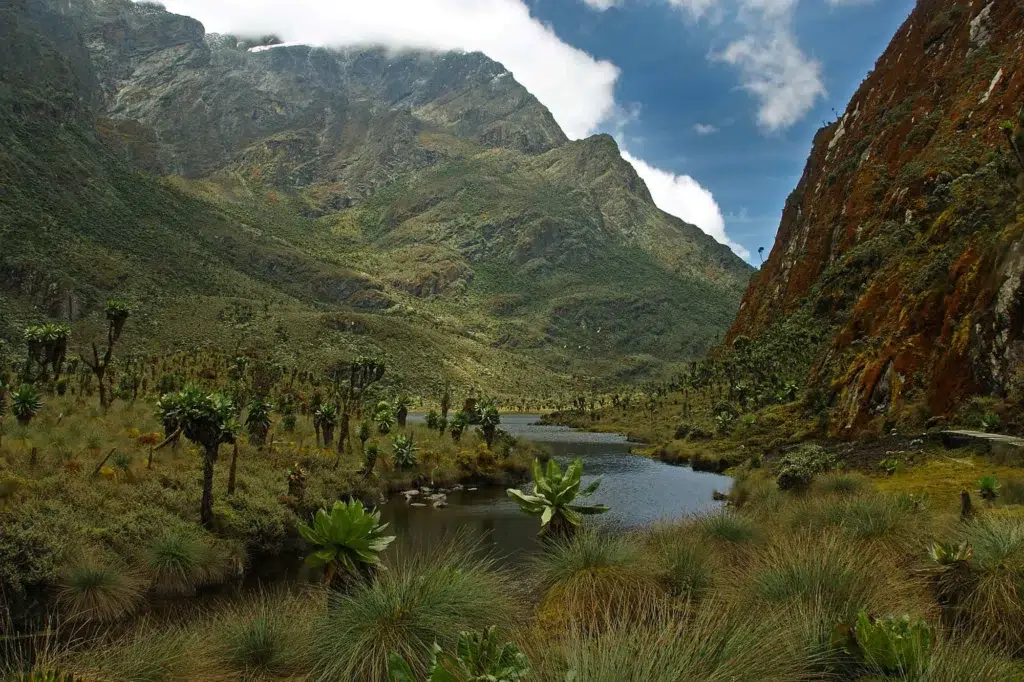
The Rwenzori occupies an entirely different ecological register. The five vegetation zones of the Rwenzori range from montane rainforest through bamboo and giant heather to the extraordinary Afro-alpine giant plant communities of the upper mountain: the six-meter groundsels, four-meter lobelias, and cathedral heather forests that have no parallel anywhere in the world. The Bujuku Valley and Kitandara Lakes in the alpine zone create landscapes that experienced Virunga and Kilimanjaro trekkers consistently describe as unlike anything they have previously encountered. The Rwenzori’s ecology is, in a phrase, more unusual, more specific to this mountain, more impossible to replicate elsewhere, and more the product of evolutionary processes that operated in isolation for millions of years.
The Solitude Factor
This is perhaps the most underappreciated difference between the two experiences. The Virunga volcanoes, particularly the Rwandan side in Volcanoes National Park, receive tens of thousands of visitors annually. Gorilla permits sell out months in advance. The approach trails to popular peaks like Bisoke are well-trodden, and the infrastructure (lodges, ranger stations, well-maintained paths) supports a substantial visitor population. None of this diminishes the experience; it is managed thoughtfully and the infrastructure supports a high-quality visit, but it is not a wilderness experience in the deepest sense of that word.
The Rwenzori receives fewer than 2,000 trekkers per year on multi-day expeditions. In a given week on the Central Circuit Trail or the Kilembe Trail, you may encounter one or two other expedition groups at shared campsites and nothing on the trail itself. The Bukurungu Trail can go weeks without another trekking group. For adventurers who see real wilderness solitude as a key part of the mountain experience and who want to feel that the mountain has not been packaged and processed for their consumption, the Rwenzori provides this experience in a way that the more visited Virunga cannot.
Head-to-Head: Rwenzori Mountains vs. Virunga Volcanoes.
| Category | Rwenzori Mountains | Virunga Volcanoes |
| Type of mountain | Non-volcanic horst (Precambrian basement rock) | Active and dormant volcanoes |
| Highest point | Margherita Peak, 5,109m Africa’s 3rd highest | Karisimbi, 4,507m (Rwanda/DRC); Nyiragongo, 3,470m (DRC) |
| Countries | Uganda (primary), DRC | DRC, Rwanda, Uganda |
| Trek type | Multi-day wilderness expedition (3–18 days) | 1–3 day hikes typically; Karisimbi is 2 days |
| Technical difficulty | Moderate to high; glacier travel for summits | Low to moderate; no glacier travel required |
| Ecosystem | Afro-alpine with giant groundsels and lobelias; montane forest | Montane forest, bamboo, alpine moorland |
| Primary wildlife | Rwenzori endemics; no gorillas on the mountain | Mountain gorillas (Bwindi nearby), golden monkeys, |
| Active volcanics | None completely non-volcanic | Nyiragongo is one of the world’s most active volcanoes |
| Annual visitors | Fewer than 2,000 trekkers per year | Tens of thousands (combined Virunga parks) |
| Permit/fee complexity | UWA park fees: all-inclusive operator packages | ORTPN (Rwanda), ICCN (DRC); varies by park |
| Safety and stability | Stable: western Uganda is safe for tourism | Eastern DRC volatile; the Rwandan side is very safe |
| Best for | Mountaineers, botanists, solitude-seekers, endurance trekkers | Wildlife enthusiasts, gorilla trackers, volcano lovers |
The Rwenzori in Depth: What You Get That the Virunga Can’t Offer.
Africa’s Third Highest Summit
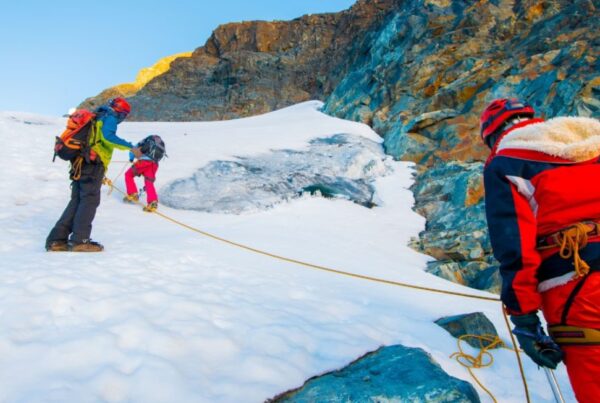
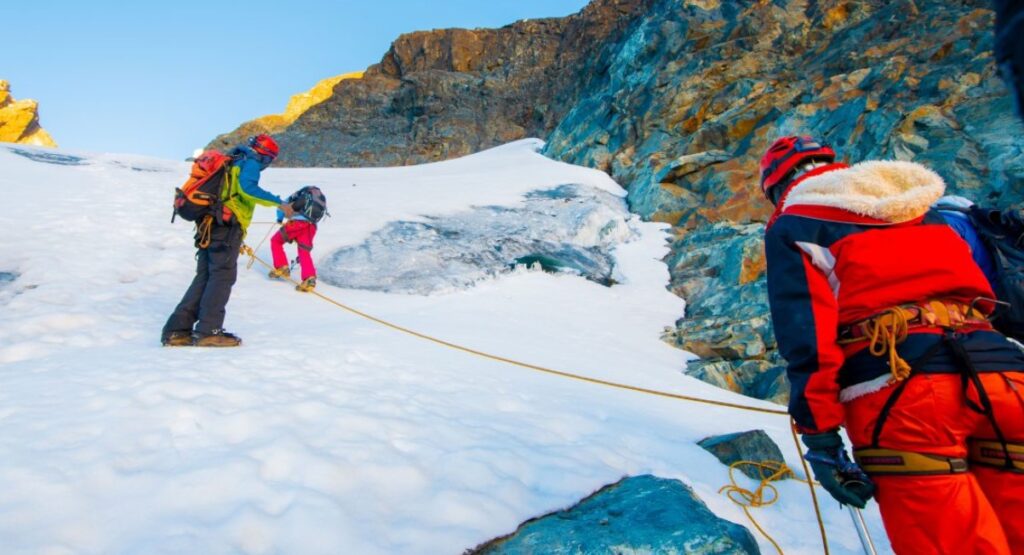
The Rwenzori’s Margherita Peak, at 5,109 metres is Africa’s third highest summit, behind Kilimanjaro (5,895m) and Mount Kenya (5,199m) but ahead of every Virunga volcano by more than 600 metres. Karisimbi, the highest Virunga peak, reaches 4,507m a significant altitude but below the threshold at which permanent glaciers can be maintained at the equator. The Rwenzori’s glaciers, the largest concentration of equatorial ice in Africa, though rapidly retreating, are unique to this range and make the Margherita Peak summit a genuinely glaciated mountaineering objective rather than a high-altitude hike. No Virunga summit requires crampons. No Virunga summit requires ice axes. No Virunga summit puts you on an equatorial glacier in a landscape that the world’s last 120 years of warming have made urgently and irreversibly temporary. The Rwenzori does all three.
The Unmatched Botanical Experience
I have described the Rwenzori’s giant plant communities elsewhere in our content, and I will not repeat the full details here. The relevant comparison point is this: nothing in the Virunga landscape produces the visual and experiential impact of the Bujuku Valley’s giant groundsel groves, the giant lobelia bogs, or the Kitandara Lakes’ high-alpine cirque setting. The Virungas have beautiful montane forests. They do not have anything that looks like what you would discover above 3,500 metres in the Rwenzori range. The Rwenzori belongs to a different category for trekkers who are motivated by ecological and botanical distinctiveness, as they seek an experience focused on the landscape itself rather than primarily on wildlife.
Historical and Cultural Depth
The Rwenzori’s history as Ptolemy’s “Mountains of the Moon” and the 2,000-year geographical mystery resolved by Henry Morton Stanley’s 1888 sighting give the mountain a historical depth that the relatively recently “discovered” Virunga does not share. The Bakonzo cultural relationship with the mountain, including the Kithasamba spiritual tradition, the Rwenzururu independence movement, and the Obusinga Kingdom, adds a human and cultural dimension to the trek that is as rich as any in East African adventure travel. And the geological story of the Albertine Rift, a non-volcanic horst formed by the same tectonic forces that built the volcanic Virunga a few hundred kilometers to the south, places the mountain in a scientific narrative of extraordinary depth and consequence.
The ‘Right Now’ Urgency
The Rwenzori’s glaciers are disappearing at a pace that makes the current decade the last in which they can be reliably experienced in their present form. The glaciological projections suggest that the range’s permanent ice could disappear within two to three decades, possibly by the mid-2030s to 2040s. Your children may not have the summit experience of crossing the Coronation Glacier and standing on the Stanley Plateau snowfields. The Virunga volcanoes will still be there, volcanically active or dormant, for the foreseeable geological future. The Rwenzori’s glaciated character is a closing window, and that urgency is real for trekkers who understand what they are looking at.
The Virunga Depth: What You Get That the Rwenzori Doesn’t Offer
Mountain Gorillas: The Singular Wildlife Encounter
Nothing in the Rwenzori’s wildlife community, extraordinary as it is, replicates the experience of sitting with a habituated mountain gorilla family in the Virunga forest. The mountain gorilla encounter is one of those rare wildlife experiences that genuinely changes how people understand their relationship with the natural world. The close physical proximity (the legally required minimum distance is seven metres, which is often not maintained by the gorillas themselves), the visible intelligence and social complexity, and the awareness of looking at one of the closest living relatives of our species in its natural habitat all contribute to an encounter that most trekkers describe as the most affecting wildlife experience of their lives.
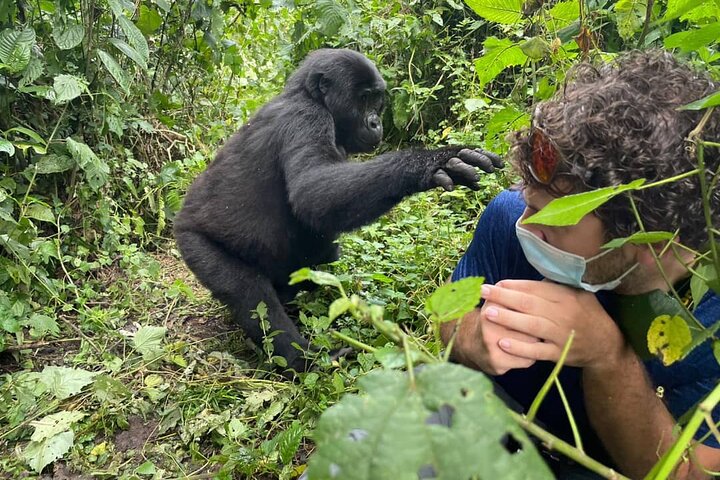
If gorilla trekking is on your East African list, and it should be, the Virunga on the Rwandan side (Volcanoes National Park) offers the best-organized and most reliably accessible gorilla trekking experience in the region. Rwanda’s conservation infrastructure is exceptional, the ranger teams are highly professional, and the overall visitor experience is managed with a quality consciousness that is genuinely world-class. This choice is not a better or worse value judgment against the Rwenzori; it is simply recognizing that these are different experiences that serve different parts of a traveler’s East African ambition.
For trekkers who want both, and many do, our combination itineraries pairing the Rwenzori with gorilla trekking provide the full spectrum. The 12-day Rwenzori and gorilla trekking combination and the 16-day Rwenzori, gorillas, and climbing expedition are among our most popular itineraries precisely because they recognize that the two experiences are not competing but complementary; each is the other’s ideal companion.
Active Volcanism: A Primal Geological Spectacle
Nyiragongo’s lava lake is genuinely without peer in the world of mountain adventure. After a day’s climb from Goma, reaching the crater rim and seeing a pool of molten rock glowing orange-red in the darkness below, sometimes erupting into fountains of lava that light the crater walls in flickering red, is a primal geological spectacle that no trekking experience in the Rwenzori or anywhere else in the region replicates. It is the Earth’s interior made visible, and it produces a specific kind of awe not the contemplative, slow-burning awe of the Rwenzori’s glaciers and giant plants, but an immediate, visceral response to raw planetary power.
Security note: As of 2025, the Nyiragongo trek on the DRC side remains subject to security volatility due to ongoing armed conflict in eastern Congo. Virunga National Park periodically opens and closes to tourism based on security conditions. Always check the most current security situation through your government’s foreign travel advisory and through a registered, up-to-date DRC operator before booking Nyiragongo. The Rwandan-side Virunga parks (Volcanoes National Park) operate in an entirely different and very stable security environment.
Shorter Time Investment, Lower Cost
For travelers on tight itineraries or limited budgets, the Virunga offers a compelling mountain adventure in one to three days at a per-day cost that is higher for gorilla permits but lower overall than a full Rwenzori expedition. A two-day Karisimbi trek permit in Rwanda costs a fraction of the total cost of a 7-day Rwenzori expedition, and the experience, while less sustained and less ecologically complex, is genuinely rewarding. For first-time East Africa visitors who want to experience mountain trekking alongside wildlife and safari components in a two-week itinerary, the Virungas offer a more conveniently sized mountain adventure than the Rwenzori’s week-plus commitment.
The Best Answer for Many Trekkers: Do Both
For many adventurous travelers comparing the Rwenzori and Virunga, the best answer is not either/or but both, in a single East Africa expedition that combines the long mountain wilderness experience of the Rwenzori with the wildlife immediacy of gorilla trekking in Bwindi or the Virunga forest. This combination is not only possible but also remarkably straightforward in terms of logistics: Kasese, the Rwenzori gateway town, is approximately four hours by road from Bwindi Impenetrable National Park, the premier gorilla trekking location in Uganda, and approximately six hours from Mgahinga Gorilla National Park on the Uganda side of the Virunga.
We specifically design the combination itineraries in our portfolio for this dual-experience approach. The 12-day Rwenzori and gorilla trekking combination, our most popular itinerary, pairs a 7-day Central Circuit Margherita Peak summit expedition with gorilla trekking in Bwindi, with transport between the two areas included. The 16-day Rwenzori, gorillas, and climbing package; the 19-day ultimate Uganda adventure spanning the Rwenzori, gorillas, and savanna wildlife; and the 18-day Rwenzori, safari, and gorillas each offer a different version of the full East African highland adventure.
Logistics tip: When combining the Rwenzori with gorilla trekking, we recommend doing the Rwenzori first and gorilla trekking second. After 7 or more days on the mountain, the day-long pace of gorilla trekking, moving slowly through the forest and waiting for tracker guidance, feels like a comfortable reward rather than an anticlimactic step-down in intensity. Starting with gorilla trekking and then embarking on a 7-day mountain expedition can feel challenging in the psychological transition from a gentle forest wildlife encounter to sustained high-altitude physical effort.
The Decision Framework: Who Should Choose Which Adventure
| Choose the Rwenzori if you… | Choose the Virunga if you… |
| Want the most challenging and rewarding multi-day mountain trek in East Africa | Want to see mountain gorillas in their habitat |
| Are seeking genuine solitude: fewer than 2,000 trekkers per year | Prefer shorter hikes of 1–3 days rather than multi-week expeditions |
| Want to summit Africa’s third-highest peak with glacier travel | Want to stand on the rim of an active volcano (Nyiragongo, DRC) |
| Are drawn by extraordinary botanical and ecological diversity | Want mountain gorilla tracking combined with African wildlife safari |
| Want a UNESCO World Heritage mountain largely unknown to mass tourism | Prefer Rwanda as a safe, well-organised entry point into the region |
| Are prepared physically and mentally for 6–18 days on a remote mountain | Are on a shorter itinerary with limited mountain-trekking time |
Practical Considerations: Getting There, Costs, and Timing.
Getting to the Rwenzori
The Rwenzori Mountains are accessed from Kasese in western Uganda, approximately 370 kilometers west of Kampala by road (6–8 hours) or approximately one hour by domestic flight via AeroLink or similar carriers. Entebbe International Airport serves as the primary international gateway. Getting to the Rwenzori Mountains is a dedicated guide to every transportation option. Our Uganda visa guide for trekkers covers Uganda’s visa requirements, including the USD 50 e-Visa that you must apply for online before travel.
Getting to the Virunga
For the Rwanda-side Virunga (Volcanoes National Park), the gateway city is Musanze (Ruhengeri), approximately two to three hours from Kigali International Airport. Rwanda’s visa process is straightforward, and many nationalities receive a visa on arrival or can use the East Africa Tourist Visa. For the Uganda-side Virunga (Mgahinga), the gateway is Kisoro, approximately six hours from Kampala and three hours from Kasese, making it conveniently linkable to a Rwenzori expedition. For the DRC-side Nyiragongo, the gateway is Goma, accessible by air from Kigali or by road from Rwanda.
Cost Comparison
A 7-day Rwenzori expedition on the Central Circuit covering guides, porters, a cook, park fees, mountain accommodation, and all meals on the mountain typically ranges from approximately USD 1,400 to USD 2,000 per person depending on group size and operator. International flights to Uganda, pre- and post-trek accommodation in Kasese, and internal transport add to this total. The full cost breakdown for Rwenzori trekking and our budget trekking guide provides detailed cost information.
A Virunga mountain trek to Karisimbi, a two-day trek in Rwanda, costs approximately USD 400 for the trekking permit, with additional costs for guide fees, accommodation, and transport. Gorilla trekking permits in Rwanda are USD 1,500 per person, while in Uganda they are USD 700 per person (at Bwindi or Mgahinga). A combined Rwanda Virunga-plus-gorilla experience, therefore, has a high permit cost but a shorter total trip duration. The comparison is genuinely complex and depends heavily on whether gorilla trekking is a priority. If it is, the cost of the gorilla permit dominates the budget, regardless of which mountain option you choose.
Best Time to Visit

Both the Rwenzori and the Virunga are year-round destinations, but the best conditions for mountain trekking in both areas align closely: the primary dry seasons of June to September and December to February offer the most reliable conditions in both. The Rwenzori is wetter than the Virunga; even in its dry season, its extraordinary precipitation is year-round, just less intense in drier months, while the Virunga experiences more distinct seasonal variation with clearer, drier conditions in the June-September and December-February windows. Gorilla trekking is possible year-round, and the gorillas do not follow the seasonal patterns that affect mountain conditions.
Frequently Asked Questions: Rwenzori vs Virunga
What is the difference between the Rwenzori Mountains and the Virunga Volcanoes?
The Rwenzori Mountains and the Virunga Volcanoes are two distinct mountain ranges in the same region of east-central Africa, separated by approximately 200 kilometers. The Rwenzori is a non-volcanic horst, a block of 2-billion-year-old Precambrian rock uplifted by tectonic forces in western Uganda, rising to 5,109 metres and hosting Africa’s largest equatorial glaciers and extraordinary Afro-alpine vegetation, including giant groundsels and giant lobelias. The Virunga are a chain of eight volcanic peaks straddling Uganda, Rwanda, and the DRC, reaching 4,507 metres at Karisimbi and providing critical habitat for approximately half of the world’s remaining mountain gorillas. The Rwenzori offers a multi-day wilderness mountain expedition experience; the Virunga offers shorter volcano treks combined with gorilla trekking. Both are part of the Albertine Rift biodiversity hotspot.
Can I see gorillas in the Rwenzori Mountains?
No. There are no mountain gorillas in the Rwenzori Mountains. Mountain gorillas (Gorilla beringei beringei) inhabit the montane forests of the Virunga volcanic chain and the Bwindi Impenetrable Forest in southwestern Uganda, a completely separate mountain system from the Rwenzori range. The Rwenzori has its own rich and distinctive wildlife community, including L’Hoest’s monkeys, black-and-white colobus, Rwenzori turacos, three-horned chameleons, and a wide range of endemic species, but mountain gorillas are not among them. Trekkers who want to see mountain gorillas in Uganda should plan a visit to Bwindi Impenetrable National Park or Mgahinga Gorilla National Park, both of which can be combined with a Rwenzori expedition in a single Uganda itinerary.
Is the Rwenzori or the Virunga harder to trek?
The Rwenzori is significantly more demanding than any Virunga trekking experience. A 7-day Rwenzori Central Circuit trek to Margherita Peak (5,109m) involves seven consecutive days of mountain walking through challenging terrain, deep peat bog crossings, steep rocky ascents, sustained altitude above 3,000 metres for most of the trek, and a technical glacier crossing with crampons and ice axes on the summit approach. It requires excellent physical preparation and is recommended for trekkers with some prior multi-day trekking experience. The Virunga volcano hikes, ranging from the 1-day Bisoke to the 2-day Karisimbi, are shorter, less technically demanding, and achievable by fit recreational hikers without specialist mountaineering equipment. Gorilla trekking in the Virungas is highly variable in physical demand but generally less challenging than a sustained mountain trek.
Which is pricier, the Rwenzori or the Virunga?
The comparison is complex because the Virunga experience includes costs for gorilla trekking permits (USD 1,500 per person in Rwanda and USD 700 in Uganda), which are very high per day but cover only a single trekking day. A complete Rwanda Virunga experience, a gorilla trek plus a two-day Karisimbi volcano trek, might cost USD 2,000 to USD 2,500 in permits and guide fees alone over 3 days. A 7-day Rwenzori expedition costs approximately USD 1,400 to USD 2,000 in total package cost (guides, porters, accommodation, meals, and park fees) over 7 days. The Rwenzori, therefore, offers more mountain days per dollar of expedition cost but lacks the gorilla trekking option unless a separate Bwindi or Mgahinga permit is purchased. Combination itineraries pairing the Rwenzori with gorilla trekking are the most cost-effective way to access both experiences in a single Uganda trip.
Is it safe to trek the Virunga Volcanoes?
Safety varies significantly between the different sections of the Virunga volcanic chain. The Rwandan side, Volcanoes National Park, covering Karisimbi, Bisoke, Sabyinyo, Gahinga, and Muhabura, operates in a very safe, stable, and well-regulated environment. Rwanda has exceptional tourism infrastructure and political stability, and the park ranger teams in Volcanoes National Park are highly professional. The Ugandan side, Mgahinga Gorilla National Park, is also safe and well-managed. The DRC side, Virunga National Park, covering Nyiragongo and Nyamuragira, is located in eastern DRC, where ongoing armed conflict and instability have persisted. Nyiragongo trekking on the DRC side has been suspended periodically due to security concerns and requires careful current assessment through government foreign travel advisories before planning. Always use registered operators and check current conditions.
Can I do both the Rwenzori and the Virunga in one trip?
Yes. Combining the Rwenzori Mountains with gorilla trekking at Bwindi (which is close to the Ugandan Virunga) in a single Uganda itinerary is one of the most popular East African adventure combinations. Rwenzori Trekking Safaris offers several combination itineraries, including the 12-day Rwenzori and gorilla trekking combination, the 16-day Rwenzori and gorillas package, and the 19-day ultimate Uganda adventure covering the Rwenzori, gorillas, and savanna wildlife. The gateway town of Kasese (for the Rwenzori) is approximately 4 hours from Bwindi Impenetrable National Park and approximately 6 hours from Mgahinga, making the transition between the two experiences logistically straightforward. Adding the Rwanda-side Virunga (Volcanoes National Park) to the itinerary would require crossing into Rwanda, which is possible but adds travel days.
Which has better wildlife: the Rwenzori or Virunga?
The answer depends entirely on what kind of wildlife experience you are seeking. If mountain gorillas are the priority, the Virunga wins unconditionally; the Rwenzori does not have gorillas, and the gorilla encounter in the Virunga is one of the most profound wildlife experiences available anywhere in the world. If biodiversity, endemic species, and ecological uniqueness are the measure, the Rwenzori is arguably Africa’s most remarkable mountain wildlife environment: it hosts more than 200 bird species (including 19 Albertine Rift endemics), more than 70 mammal species, and exceptional endemic flora found nowhere else on Earth. The Rwenzori turaco, three-horned chameleon, Rwenzori double-collared sunbird, and L’Hoest’s monkey are among the species that draw wildlife-oriented visitors to the mountain. Both ranges are world-class wildlife destinations; they simply offer radically different wildlife experiences.
Is the Rwenzori harder than Kilimanjaro, and how does it compare to the Virunga?
Our dedicated article on whether the Rwenzori is harder than Kilimanjaro addresses that comparison in full detail. In brief: the Rwenzori is generally considered harder than Kilimanjaro because of the sustained challenging terrain (the bogs, the wet conditions, and the technical glacier crossing), the persistently difficult weather, and the multi-day technical character of the summit approach even though Kilimanjaro is higher at 5,895m versus 5,109m. Compared to the Virunga, the Rwenzori is substantially more demanding than any single Virunga summit and incomparably more demanding than gorilla trekking. The Rwenzori is a genuine expedition mountain. The Virunga volcanoes are challenging one- or two-day hikes. These are different categories of mountain adventure, and the comparison is more useful for helping travelers choose appropriately than for establishing a hierarchy of difficulty.
Ready to Choose? Let’s Plan Your East African Mountain Adventure
The Rwenzori, the Virunga, or ideally both await you in one of Africa’s most extraordinary corners. The decision is personal, shaped by how much time you have; what kind of physical commitment you are ready for; whether gorillas or glaciers are the experience you cannot leave East Africa without; and whether you are drawn to the concentrated intensity of a single wildlife encounter or the sustained immersion of a week-plus mountain expedition.
At Rwenzori Trekking Safaris, we are specialists in one of the two options, the Rwenzori Mountains, and we are honest enough to acknowledge when the Virunga might be the better first choice for a specific traveler’s priorities. We are also able to help you combine both in a single Uganda itinerary that delivers the full spectrum of what this extraordinary region offers. Browse our complete Rwenzori trekking itinerary range, review our combination gorilla and Rwenzori packages, and read our month-by-month guide to when to visit the Rwenzori. When you are ready to discuss your choices based on your specific travel dates, budget, and ambitions, contact our team directly; we will help you create the perfect East African adventure for you.