Can kids or seniors hike the Rwenzori? This expert age guide covers the minimum age for trekking, the best routes for older trekkers, options for children, and provides honest fitness advice. A Complete Age-by-Age Guide to Who Can Trek, Which Routes Are Realistic, and What Honest Preparation Looks Like.
It is one of the most common questions that lands in our inbox, and it deserves a far more thoughtful answer than it usually gets. Can my teenager come to the Rwenzori? Is the trek realistic for someone in their sixties? What can a child actually do on these mountains without being in over their head or under yours? These are excellent questions, asked by people who care enough to research properly rather than just booking and hoping. This article is for them.
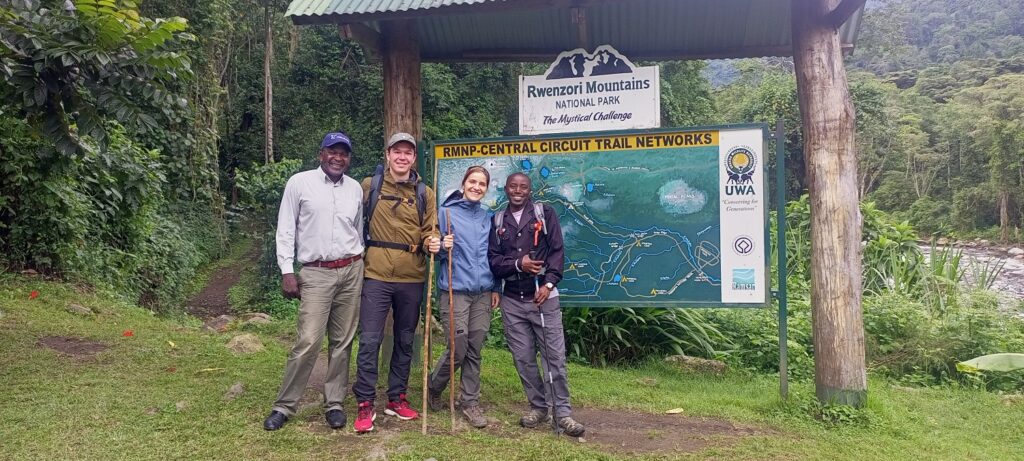
The Rwenzori Mountains are not mountains to approach casually at any age. They are Africa’s third-highest range, perpetually wet, often cold, and genuinely demanding in ways that even experienced trekkers underestimate on first encounter. But they are also a mountain with a spectrum of experiences, from gentle forest walks at 1,600 metres that any healthy child over twelve could manage comfortably, to multi-week high-altitude expeditions to glaciated summits at 5,109 metres that would test the very best athletes in their prime. The question is not simply, ‘can children or seniors hike the Rwenzori?’ It is, ‘which Rwenzori, for which person, at which level of preparation?’
This article gives honest, direct, experience-based answers to every variation of that question. It covers minimum age recommendations, the specific routes best suited to older trekkers, the physical and medical considerations that apply to both ends of the age spectrum, what children can realistically achieve and genuinely enjoy on the mountain, and how to structure a trip that is ambitious enough to be memorable but realistic enough to be safe. It is written from the perspective of a professional mountain guide who has led people of many ages up these trails and who has, when necessary, had the candid conversations that protect both clients and the mountain.
🧭 Guide’s Note on HonestyThis article does not aim to sell you a trek that is unsuitable for your family or age. It exists to help you make a good decision. If the honest answer to your situation is ‘this trek is not the right mountain for you right now,’ I will tell you and point you towards what might be. The Rwenzori will still be here when you’re ready. |
Understanding the Rwenzori Before You Ask About Age
Before we can talk sensibly about who can hike the Rwenzori Mountains, we need to agree on what ‘hiking the Rwenzori’ actually means, as the phrase covers an enormous range of experiences. The Rwenzori is not a single trail with a single summit that you either do or you don’t. It is a complex mountain range with routes ranging from half-day forest walks to 18-day full-range traverses, and the physical demands of these experiences are as different from one another as a gentle country stroll is from a marathon.
The lower slopes of the mountain, roughly up to 2,700 meters, encompass the lush montane forest zone that is accessible via short treks, like the 3-Day Mahoma Loop and the 2-Day Lake Mahoma hike. These treks involve steep but not technical terrain, equatorial forest atmosphere, and genuinely spectacular natural beauty without any of the altitude, cold, or glacier hazards of the high mountains. They represent the most accessible entry point to the Rwenzori experience and the most appropriate starting point for both younger children and older or less fit seniors.
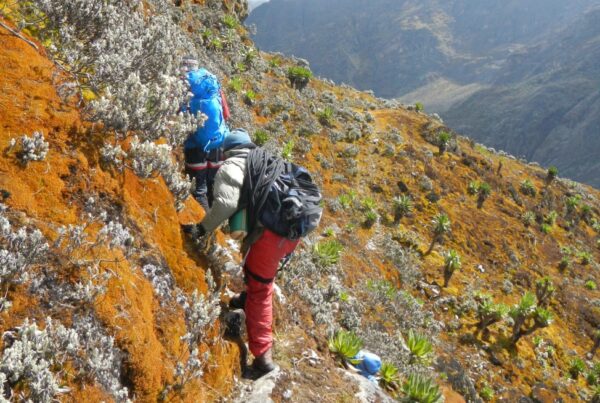
The middle zones between 2,700 and 4,200 meters cover the bamboo, heather, and lower afro-alpine areas and are traversed on treks like the 4-Day Mutinda Loop. At these altitudes, altitude awareness begins to matter, trails become more technical (particularly in wet conditions), and the cold at night camps becomes a genuine planning consideration. These treks are achievable for fit teenagers and reasonably fit seniors, but they require proper preparation and honest assessment.
The Rwenzori that most people imagine when searching for this mountain is the high mountain above 4,200 meters, where the glaciers begin and the major summits are located. Routes like the 7-Day Central Circuit and the 8-Day Kilembe Trail to Margherita Peak enter this zone and require genuine altitude management, cold-weather competence, and in some cases basic glacier skills. This is the most demanding zone, and it carries the most specific age and fitness constraints.
Seniors on the Rwenzori: What Is Realistic at 50, 60, and Beyond?
Let me be clear: some of the finest trekkers I have guided on the Rwenzori were in their sixties. Age alone is not the determining factor for success or safety on this mountain. Physical fitness, cardiovascular health, recent trekking experience, and genuine mental preparation matter far more than the number on a passport. I have guided supremely fit people in their mid-60s to the summit of Margherita Peak, and I have turned back 35-year-olds who came to the mountain dangerously underprepared.
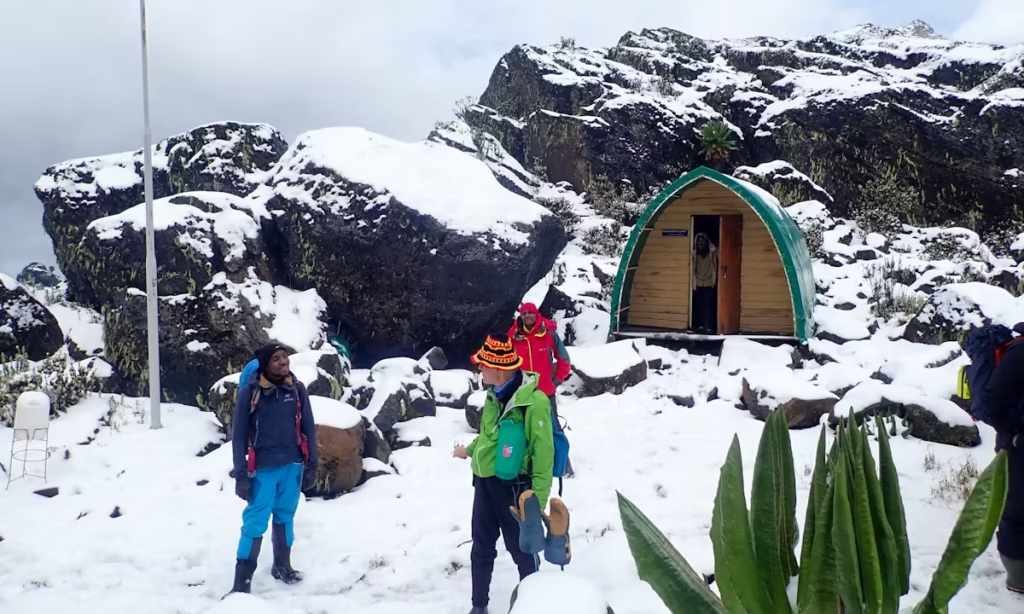
That said, age brings real physiological changes that we cannot ignore, and the Rwenzori amplifies all of them. Our existing guide to whether older hikers in their 50s and 60s can do the Rwenzori covers the 50+ and 60+ experience in granular detail. This article builds on that foundation with specific route recommendations and age-band guidance that goes deeper into the practical decisions families and older trekkers need to make.
Trekking in Your 50s: An Excellent Age for the Rwenzori
The 50s are, in many ways, an ideal decade for the Rwenzori. You are likely to have the disposable income, the holiday time, and the life experience to appreciate what the mountain is offering in a way that a 25-year-old simply cannot. You are also young enough, if reasonably fit, to tackle the full range of routes, including the summit treks to Margherita Peak.
The key qualifier at this age is current fitness level rather than age per se. If you are regularly hiking long days with elevation gain, running or cycling several times a week, and have recent experience above 3,000 metres on other mountains, the 7-Day Central Circuit and the 8-Day Kilembe Trail are both realistic objectives. The 50s trekker who arrives having followed a structured training program (our 16-week training plan for the Rwenzori is a practical starting point) and who has had a recent medical check-up focused on cardiovascular health can expect to have a very high chance of summit success.
In the 50s, you need to take extra care with recovery time between hard days. The mountain does not offer rest days by default; the itinerary moves forward regardless. Building in slower itineraries that give the body more time at each camp elevation is the single most important planning adjustment for the 50+ trekkers who are not in elite athletic condition. Choosing a 9 or 10-day version of a summit route rather than a 7-day version can make the difference between a successful summit and a reluctant turnaround.
Trekking in Your 60s: Specific Routes, Specific Preparation
The ’60s require more honest conversation. The physiological changes of this decade are real: maximum oxygen uptake (VO₂ max) decreases by roughly one percent per year after 30, and by the 60s this decline means the body genuinely works harder at altitude than it did in younger years. Cold tolerance typically decreases. Recovery from strenuous physical effort takes longer. The risk profile for cardiovascular events and altitude sickness requires more careful pre-trip medical screening.
None of these factors means the 60s trekker is excluded from the Rwenzori. It means they need to be more selective about which Rwenzori they attempt. For trekkers in their early-to-mid 60s who are in genuinely good cardiovascular health and regularly active, the 6-Day Weismann Peak expedition via the Kilembe Trail represents an excellent high-ambition objective that reaches 4,659 metres without requiring the glacier crossing above 4,500 metres that Margherita demands. This is a meaningful summit on a mountain that relatively few people in the world have climbed, and it can be achieved with proper preparation by fit trekkers in their 60s.
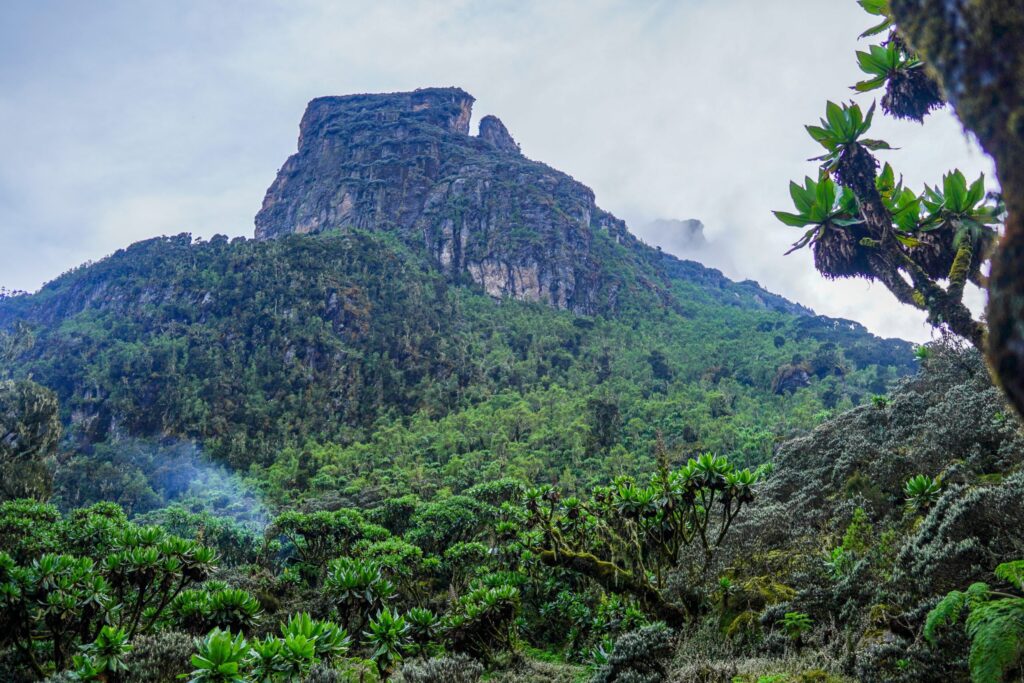
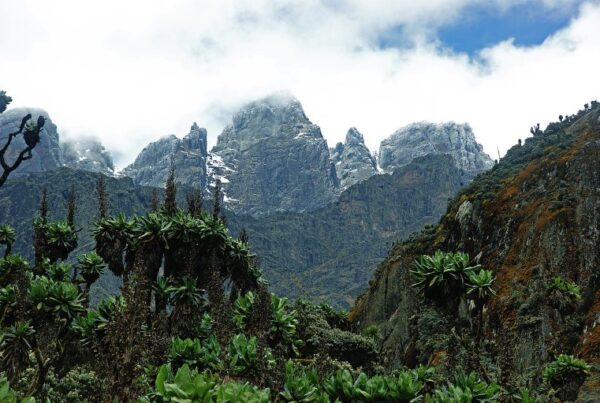
The 4-Day Mutinda Lookout trek is another outstanding option for 60s trekkers who want genuine altitude without committing to a full summit expedition. Mutinda Lookout, at approximately 4,000 meters, provides dramatic views across the range, passes through some of the most extraordinary afro-alpine vegetation on the mountain, and does so on an itinerary that is physically challenging but not punishing.
For 60s trekkers with lower fitness levels, cardiac concerns, or little recent high-altitude experience, the lower forest treks, the Mahoma Loop, and the Lake Mahoma hike are not consolation prizes. They are genuinely spectacular mountain experiences in their own right, with extraordinary biodiversity, stunning scenery, and the authentic Rwenzori atmosphere. There is no shame in choosing an experience that is right for your body. There is considerable shame in choosing one that is wrong.
⚠️ Medical Note for 60+ TrekkersBefore any trek above 3,000 meters, trekkers in their 60s should obtain medical clearance from their physician, with specific attention to cardiovascular function, blood pressure under exertion, and any history of respiratory conditions. Discuss the possibility of altitude sickness prophylaxis (acetazolamide / Diamox) with your doctor. Our complete medical guide to trekking the Rwenzori covers the health risks in detail; read it before your appointment. |
Trekking in Your 70s: The Honest Assessment
This section is where we need to be most direct. Trekking above 4,000 metres in your 70s is a serious undertaking that requires exceptional baseline health, recent medical screening, and a realistic self-assessment. It is not impossible; there are documented cases of septuagenarians summiting high-altitude peaks worldwide, but the combination of the Rwenzori’s sustained altitude, cold, wetness, and technical terrain demands a higher bar of physical readiness than most 70-year-olds will honestly meet.
For trekkers in their 70s, my strong recommendation is to focus the Rwenzori experience on the forest zone routes: the Mahoma Loop, Lake Mahoma, and the lower sections of the Kilembe Trail up to approximately 2,500 metres. These offer a complete and authentic Rwenzori experience: extraordinary biodiversity, equatorial forest atmosphere, and the sounds and smells of a mountain that relatively few people in the world will ever encounter without the physiological risks of high-altitude exposure.
If a 70s trekker arrives with documented evidence of strong cardiovascular health, recent high-altitude experience (3,000+ metres in the previous two years), and full medical clearance with specific altitude risk assessment, then a conservative approach to the mid-altitude zone (up to 3,500 meters) might be considered on an itinerary specifically designed with additional rest days and strict turnaround criteria. Such a trek would be a highly customized expedition, not a standard itinerary, and would require detailed pre-trip consultation.
🧭 Guide’s Perspective: Age Is Never the Whole StoryI have guided a 68-year-old retired cardiologist from the Netherlands to Weismann Peak four crampons-not-required metres below the glacier line and watched her laugh with the pure joy of standing above the clouds on a mountain most of her contemporaries did not know existed. I have also turned back a 42-year-old who arrived grossly underprepared for the cold and altitude and would have been in serious danger in the high camps. Age is a factor. Preparation is the factor. |
Children on the Rwenzori: What Can They Actually Do?
The question of children on the Rwenzori is really several different questions folded into one: Can a child physically manage the terrain? Can they tolerate the cold and wet conditions? Is it safe to take them to altitude? And perhaps most importantly, will they actually enjoy it, or will the experience become an ordeal that puts them off wilderness adventure for years?
The honest answers to these questions depend on the child’s age, physical condition, temperament, and which part of the mountain you are taking them to. The Rwenzori’s lower forest zone is genuinely family-friendly for resilient, outdoors-oriented children. The high mountain is not appropriate for children under any circumstances that a responsible guide would endorse.
Children Under 12: The Forest Zone Only
For children under 12, the Rwenzori offers a single appropriate category of experience: the lower forest treks up to approximately 2,500 metres. The 2-Day Lake Mahoma trek is the most practical option for this age group, a gentle but immersive forest walk through extraordinary biodiversity, culminating at a beautiful crater lake. The terrain is manageable for healthy, active children; the altitude is low enough that altitude considerations are minimal; and the experience of primates in the canopy, exotic birds, and a landscape unlike anything in the developed world is genuinely memorable for a child with any interest in the natural world.
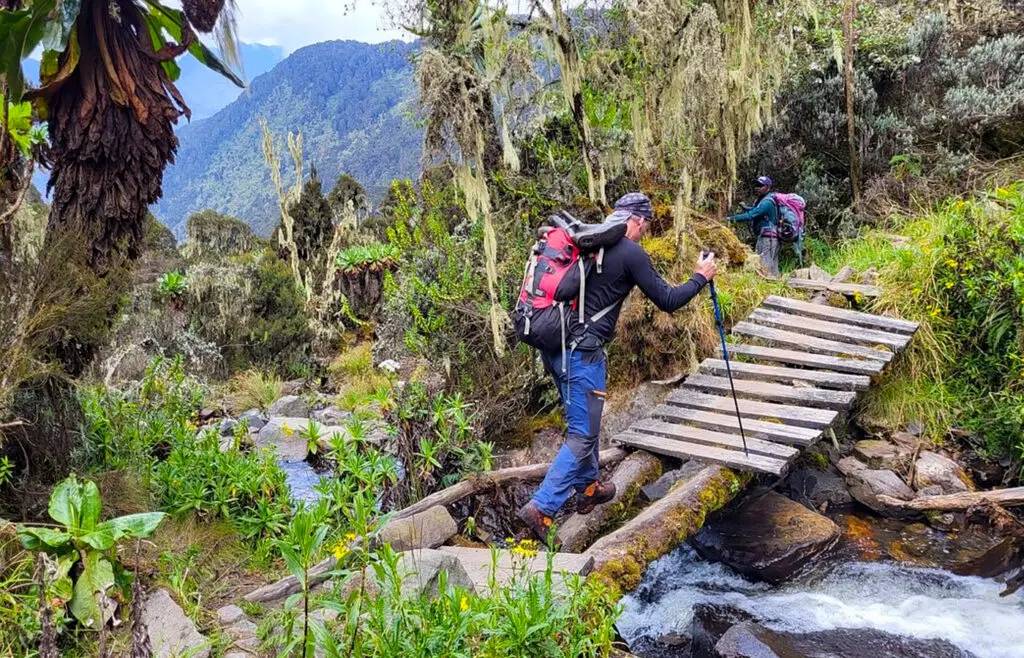
The Mahoma Loop (3 days) is achievable for fit, motivated children in the upper part of this age range, say, 10 to 12, but the daily walking distances and elevation gain require the child to have a track record of successful multi-hour hill walking. This is not the trip to find out whether your child likes hiking. They should already know they like hiking before you bring them here.
Temperature management is a key consideration for younger children in the Rwenzori forest. Even at 2,000 meters, evening and early-morning temperatures can feel cold to a child accustomed to tropical lowlands, and the near-constant moisture means clothing can become damp even without direct rain. Proper layering, synthetic or wool base layers, and a reliable waterproof shell are non-negotiable for any child on this mountain, at any altitude.
Children Aged 12 to 15: Extending the Experience
The 12-to-15 age group presents more compelling possibilities. A fit, motivated 13-year-old with genuine outdoor experience can manage the Mahoma Loop and the lower sections of the Kilembe Trail with relative ease. The 4-Day Mutinda Loop, which reaches approximately 4,000 meters, is potentially achievable for teenagers at the upper end of this range who have a strong fitness base and previous experience at moderate altitude.
However, I would not recommend taking anyone under 14 above 3,500 metres on the Rwenzori, regardless of their fitness level. The combination of sustained high altitude, cold and wet conditions, and the physical demands of multi-day trekking creates a risk environment that requires a level of physiological maturity and personal resilience that most children under 14 simply do not have. The consequences of altitude sickness in a child are potentially more serious than in an adult, partly because children may not be able to accurately communicate their symptoms and partly because their smaller body mass makes cold exposure more dangerous.
For the 12-to-15 trekker who wants a genuine challenge, the 3-Day Sine Camp hike on the lower Kilembe Trail is an outstanding option, reaching 3,000 meters, passing the spectacular Samalira Waterfalls, and providing a genuine introduction to the upper forest and bamboo zones without the altitude risks of the higher mountain.
🚫 Important Safety Note for Children at AltitudeChildren can develop acute mountain sickness (AMS) just as quickly as adults, but they may be less able to describe their symptoms clearly. Key warning signs include persistent headache, loss of appetite, unusual fatigue, vomiting, or behavioral changes such as unusual irritability or lethargy. If any of these signs appear in a child above 2,500 meters, an immediate descent is the correct response. Never ignore these signs in a child, and never ‘push through’ altitude sickness, as it can escalate rapidly into more serious conditions. |
Teenagers Aged 16 and Above: Approaching Adult Capability
By 16, a fit, well-prepared teenager is physiologically close to adult capacity and can be assessed for Rwenzori treks on broadly similar criteria to a young adult. A 16- or 17-year-old who is genuinely physically fit, has previous multi-day trekking experience, and has demonstrated the mental resilience to manage discomfort and uncertainty can be considered for the mid-altitude treks and, in some cases, the Weismann Peak expedition.
What distinguishes the teenage trekker from the adult is not primarily physical; it is experiential. The key question is whether they have the judgment and self-awareness to communicate honestly about how they are feeling and the resilience to manage the sustained discomfort that is simply part of any serious Rwenzori trek. The mountain does not care how old you are. It will be cold, wet, and exhausting regardless. A 17-year-old who has done multi-day hiking in genuinely difficult conditions, think Scottish Highlands in winter, Alpine trekking, or serious hill walking in their home country, will cope far better than a teenager whose most recent outdoor experience was a school sports day. For context, our honest assessment of how hard the Rwenzori really is is worth reading alongside this article.
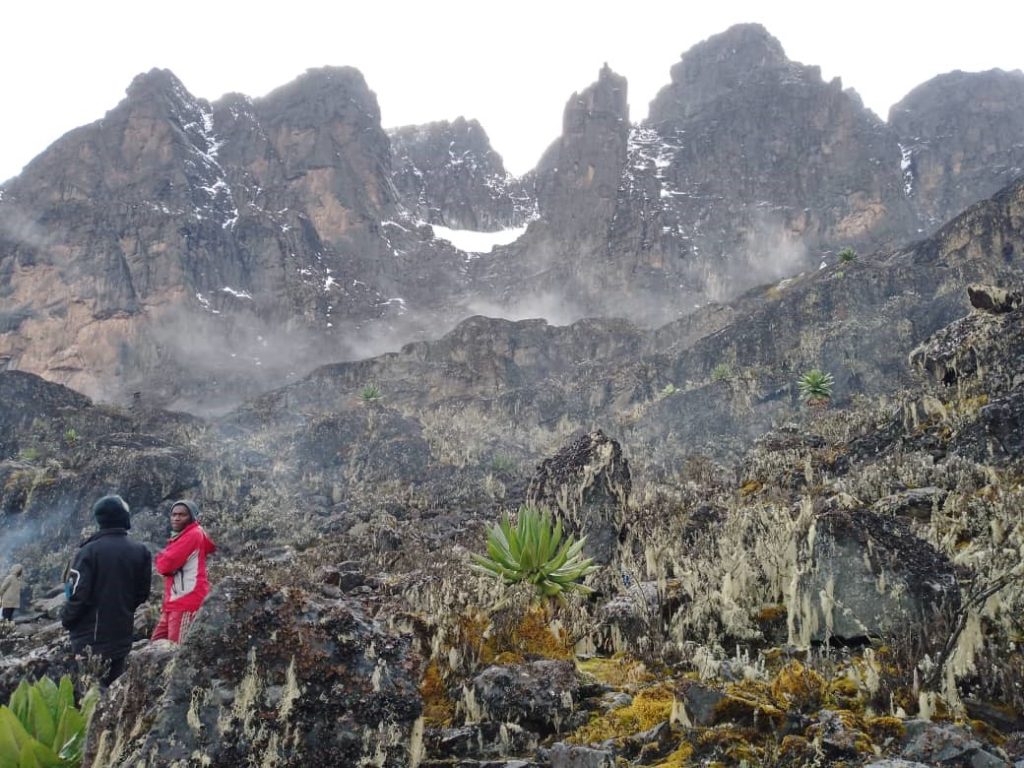
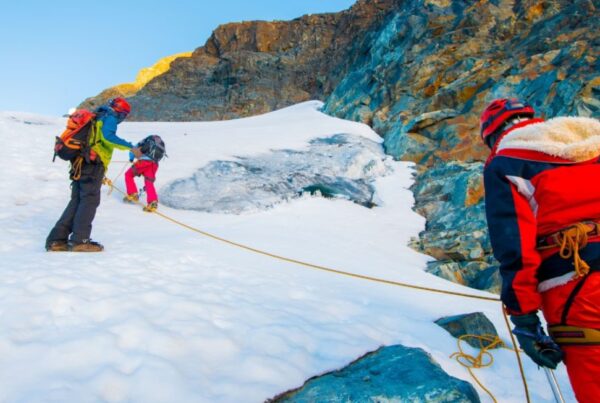
For the summit routes to Margherita Peak, I apply an informal minimum age of 18 in all but the most exceptional cases. The glacier section above 4,500 metres requires ice axe and crampon competence, decision-making ability under fatigue, and the physical and psychological resilience to manage a demanding summit day followed by a technical descent, all in conditions that can change rapidly. These demands are adult demands, and applying them to a teenager requires a degree of certainty about their capabilities that very few parents can honestly vouch for.
Age & Route Suitability at a Glance
The following table summarizes the key routes available on the Rwenzori, with honest guidance on minimum ages and senior suitability. These recommendations draw on years of guiding experience on the mountain and should be read as practical starting points for conversation, not absolute rules. Every individual is different, and pre-trip consultation with our guides will always produce the most tailored advice.
| Route | Max Altitude | Difficulty | Min Age | Senior Suitability | Key Notes |
| 3-Day Mahoma Loop | 1,600–2,700 m | Low | 12+ | Any fit senior | Excellent intro forest & lake views, no technical terrain |
| 2-Day Lake Mahoma | 1,600–2,700 m | Low | 12+ | Any fit senior | Short overnight; superb for families wanting a taster |
| 4-Day Mutinda Loop | 1,600–4,000 m | Moderate | 14+ | 60s with fitness | Kilembe Trail lower section: dramatic viewpoints, no glacier |
| 6-Day Weismann Peak | 1,600–4,659 m | Moderate+ | 16+ | Fit 60s/early 70s | Summit without glacier crossing: achievable for motivated seniors |
| 7-Day Central Circuit | 1,600–5,109 m | Hard | 18+ | Fit under-65s | Full circuit via Margherita; glacier travel required above 4,500 m |
| 8-Day Kilembe Trail | 1,200–5,109 m | Hard | 18+ | Fit under-65s | Margherita via southern approach: long days, glacier required |
| 13-Day 6 Peaks | 1,600–5,109 m | Very Hard | 18+ | Under 60 recommended | Multi-peak expedition; extended exposure to altitude |
| 18-Day All 8 Peaks | 1,600–5,109 m | Extreme | 18+ | Under 55 recommended | Full traverse; very high cumulative demands |
ℹ️ Note on Minimum AgesThe minimum age recommendations in this table are practical guides based on physiological and experiential factors, not arbitrary park rules. The Uganda Wildlife Authority does not currently set a formal minimum age for trekking in Rwenzori Mountains National Park, but our operational guidelines reflect best practices in mountain safety for these altitude bands. All under-18 trekkers must be accompanied by a parent or legal guardian. |
What fitness level is actually required for this trek?
Fitness requirements in the Rwenzori are often described in vague terms that do not help people make sound decisions. ‘Good fitness’ or ‘reasonable fitness’ means nothing unless they are anchored to specific benchmarks. Our dedicated Rwenzori fitness guide goes into full detail, but for the purposes of this age-focused discussion, here is a practical framework.
For Lower Forest Treks (Mahoma, Lake Mahoma, Sine Camp)
The baseline fitness requirement for the lower forest treks is the ability to walk continuously for four to six hours on steep, uneven terrain. This is not elite athletics; it is brisk, sustained hill-walking. If you can manage a full day on hilly terrain (400–600 metres of elevation gain) without significant fatigue or knee pain, you have the fitness baseline for the Mahoma Loop. This applies equally to seniors and to children in the appropriate age range. Good footwear is essential: proper waterproof hiking boots with ankle support, not trail runners.
For Mid-Altitude Treks (Mutinda Loop, Weismann Peak)
The mid-altitude treks require a step change in preparation. The 4-Day Mutinda Loop involves reaching 4,000 meters, where the air is significantly thinner and the body has to work harder for every step. The fitness requirement here is multi-day mountain experience: the ability to manage six to eight hours of hiking per day with significant elevation gain across consecutive days. Anyone targeting these routes should have completed at least two or three successful multi-day mountain treks in the year before their Rwenzori trip, with at least one of them including a day above 3,000 metres.
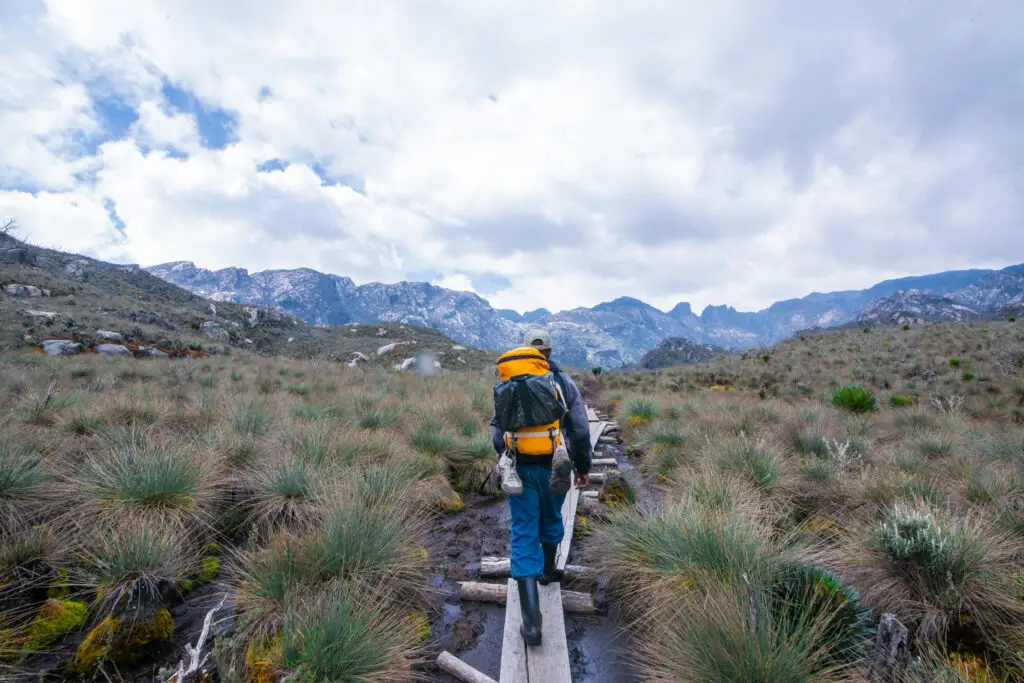
For Summit Routes (Central Circuit, Kilembe Trail to Margherita)
Summit routes require genuine athletic preparation. Our 16-week training plan is specifically designed for the summit routes and involves progressive cardiovascular training, strength work for the legs and core, and multi-day loaded hiking practice. For seniors targeting these routes, I recommend adding two to four weeks to whatever training program you adopt. At 55 or 60, the body benefits from more preparation time, not less, and arriving over-prepared is far better than arriving under-prepared on this mountain.
Best Rwenzori Routes for Older Trekkers: A Detailed Guide
The Mahoma Loop: The Best Starting Point for Seniors
If I were designing a first Rwenzori experience for a trekker in their late 60s or 70s who has excellent general health and enjoys walking, I would start with the 3-Day Mahoma Loop. This route begins at the Mihunga Gate and winds through heather woodlands, bamboo stands, and lush montane forest to the extraordinary Lake Mahoma, a crater lake located at approximately 2,600 metres and surrounded by Rwenzori forest. The altitude is manageable, the terrain is steep but not technical, and the experience is completely authentic. You are on the Rwenzori. You are in one of Africa’s most biodiverse mountain environments. And you are doing so at an altitude and duration that is appropriate for a broad range of older trekkers.
The Mutinda Loop: The Sweet Spot for Fit Seniors
For fit seniors in their late 50s and early-to-mid 60s who want to push further into the mountain without the full commitment of a summit expedition, the 4-Day Mutinda Loop via the Kilembe Trail is the outstanding middle-ground option. Mutinda Lookout, at about 4,000 meters, offers spectacular views across the massifs, is located in the giant lobelia and groundsel zone, and can be reached on an itinerary with enough nights at intermediate camps for proper acclimatization. The trek is a serious mountain experience: cold at night and demanding trails, but it does not require glacier skills, and it is achievable for a well-prepared senior who has done their fitness work.
Weismann Peak: The Senior Summit
For fit, well-prepared seniors in their late 50s or early 60s who want to claim a genuine high-altitude summit on the Rwenzori, Weismann Peak at 4,659 metres via the Kilembe Trail is the natural objective. At 4,659 meters, Weismann is high enough to deliver the full high-altitude mountain experience: the extraordinary afro-alpine vegetation, the vast views, the cold and the effort, and the particular quality of light at altitude without requiring the glacier crossing and crampon work that Margherita Peak demands above 4,500 metres. The peak is a meaningful summit on a mountain that fewer than 2,000 people visit per year. Standing on Weismann Peak is not a consolation for not reaching Margherita. It is a genuine achievement.
Practical Considerations for Families and Mixed-Age Groups.
Managing Different Fitness Levels in the Same Group
Mixed-age groups, say, parents in their 50s with teenage children or a multi-generational family with grandparents in their 60s, often face the practical challenge of choosing a route that is appropriate for the least fit or lowest-altitude-capable member. My strong advice is always to anchor the route choice to the most conservative member of the group. A route that is too easy for the fittest person can still be deeply rewarding. A route that is too difficult for the least fit person is a problem for everyone.
On the Rwenzori, it is sometimes possible to structure an itinerary where different members of a group take different paths on certain days with guides accompanying each subgroup, but such an arrangement requires careful pre-trip planning and additional guiding resources. It is not a standard offering but something that can be arranged with advance notice through our team.
Gear for Children and Seniors
The Rwenzori’s gear requirements are the same regardless of age, but the consequences of getting them wrong are greater for children and older trekkers. Proper waterproof hiking boots, synthetic or wool base layers, a reliable mid-layer (fleece or down), a waterproof shell jacket and trousers, and dry sleeping bag storage are non-negotiable for everyone on this mountain. For children, ensure that all gear is properly sized and tested before the trip. A child in adult-sized boots will develop blisters on day one. Our guide to the best boots for the Rwenzori covers footwear in detail. For seniors, particular attention to thermal insulation at night is important; the body’s thermoregulation becomes less efficient with age, and being cold and wet at a high camp is far more uncomfortable and potentially dangerous at 65 than it is at 30.
Porters, Pacing, and the Importance of Not Rushing
One of the most important practical advantages of any Rwenzori trek is the availability of experienced Bakonzo porters, who carry the main pack weight and allow trekkers to move at a pace that is appropriate for their fitness level. For seniors and for children on longer treks, this option is not just a convenience; it is a safety feature. Trekking with a light day pack rather than a full load significantly changes the physical demand profile and allows more energy to be directed toward forward movement and altitude management. Our guide to tipping Rwenzori porters and guides explains how the porter system works in practice and what to expect from the team on the mountain.
Pacing is the most important single variable in any trekker’s success on this mountain, at any age. The Swahili phrase ‘pole pole,’ which means ‘slowly, slowly,’ is the guiding principle for high-altitude trekking across East Africa and applies with even greater significance in the Rwenzori. Moving slowly and steadily, taking genuine rest stops, eating and hydrating consistently, and sleeping at lower altitudes than the day’s highest point wherever the itinerary allows are habits that apply to every trekker, but their importance increases with age.
Frequently Asked Questions: Children and Seniors on the Rwenzori
What is the minimum age to hike the Rwenzori Mountains?
There is no single minimum age for all Rwenzori treks, because the mountain offers a wide range of experiences at different altitudes and difficulty levels. The lower forest treks, including the Mahoma Loop and Lake Mahoma hike, are suitable for outdoors-experienced children aged approximately 10 to 12 years, as long as they can participate comfortably at altitudes below 2,700 metres. For mid-altitude treks reaching 3,000 to 4,000 meters, we recommend a minimum age of 12 to 14 years, along with a strong baseline of previous multi-day hiking experience. For the summit routes to Margherita Peak (5,109 m) and other high-altitude glacier peaks, the recommended minimum age is 18 years. This is not an arbitrary rule but reflects the physiological maturity and personal resilience that the high mountain demands. The Uganda Wildlife Authority does not currently impose a formal minimum age for the national park, but our operational guidelines reflect established best practices in high-altitude mountain safety.
Can a 70-year-old hike the Rwenzori Mountains?
A 70-year-old in exceptionally good cardiovascular health, with recent multi-day mountain experience and full medical clearance, could potentially participate in the lower forest treks on the Rwenzori, the Mahoma Loop, and the Lake Mahoma routes, all below 2,700 metres. These routes do not present significant altitude risk and are manageable for fit seniors with proper gear and a measured pace. High-altitude treks above 3,500 metres are not recommended for trekkers in their 70s, except in very exceptional circumstances, with specific medical clearance and a customized, highly conservative itinerary. Anyone in this age group planning a Rwenzori trek should consult their physician specifically about altitude risk, cardiac function under exertion, and cold exposure and should be entirely honest with their guide about their current fitness level and medical history.
Which Rwenzori routes are best suited to older or senior trekkers?
For seniors in their 60s and early 70s, the best Rwenzori routes, in order of increasing ambition, are the 2-Day Lake Mahoma trek (gentle, low altitude, excellent for all-round fit seniors); the 3-Day Mahoma Loop (the best general forest experience, manageable for most active 60s and 70s trekkers); the 4-Day Mutinda Loop via the Kilembe Trail (reaches 4,000 meters, suitable for fit and well-prepared 60s trekkers); and the 6-Day Weismann Peak expedition via the Kilembe Trail (reaches 4,659 meters, the recommended senior summit objective for fit trekkers in their late 50s and early 60s). The full summit routes to Margherita Peak are achievable for fit trekkers in their 50s and for some in their early 60s who meet specific fitness and health criteria but require detailed pre-trip consultation and careful medical screening.
Can children hike to Margherita Peak on Mount Stanley?
No, Margherita Peak on Mount Stanley (5,109 m) is not appropriate for children, and we do not accept trekkers under 18 on summit routes that require glacier travel. Extreme altitude (5,109 m), cold conditions, glacier terrain requiring crampons and an ice axe, and the demands of multi-day trekking create a risk environment unsuitable for anyone under 18. Children with a genuine passion for mountains should develop their experience on the lower and mid-altitude routes of the Rwenzori first, building the physical base and altitude experience that will one day, when they are 18 or older, support a full summit attempt.
Does altitude sickness affect children differently than adults?
Altitude sickness (Acute Mountain Sickness, or AMS) can affect children just as quickly and just as seriously as adults, and in some ways the risk is higher because children may be less able to accurately describe their symptoms. The key warning signs in children include persistent headache that does not resolve with rest; loss of appetite; nausea or vomiting; unusual fatigue or reluctance to continue; and behavioral changes, including unusual irritability or lethargy. Any of these signs in a child above 2,500 metres should trigger an immediate descent without delay. Children should never be encouraged to ‘push through’ altitude-related discomfort. The treatment for all forms of AMS at any age is descent, and it should always begin before symptoms progress to more serious conditions such as High Altitude Pulmonary Oedema (HAPE) or High Altitude Cerebral Oedema (HACE).
How long does it take for a senior to be ready for a Rwenzori summit trek?
For a senior trekker in their late 50s or 60s targeting a summit route on the Rwenzori, whether the Weismann Peak expedition or a full Margherita summit, a minimum of four to six months of structured physical preparation is recommended, and six to eight months is better. The preparation should focus on cardiovascular fitness (sustained aerobic exercise such as hiking, cycling, or running at increasing duration and intensity), leg and core strength training (squats, lunges, step-ups, and balance work), and specific multi-day loaded hiking practice in hilly terrain. We strongly recommend at least one multi-day mountain trek at 2,500 metres or above in the year before your Rwenzori trip. Our 16-week training plan serves as a practical starting point, but trekkers in their 60s and beyond should extend it.
Is the Rwenzori a suitable destination for a family holiday?
The Rwenzori can be an extraordinary family experience if you correctly calibrate the route and expectations for the youngest or least-experienced member of the group. For families with children aged 12 and above who are genuinely outdoors-active and experienced in hill-walking, the 3-Day Mahoma Loop and the 2-Day Lake Mahoma trek are excellent family options that provide an authentic Rwenzori experience at appropriate altitude and difficulty levels. For families with teenage children aged 14 to 16, the lower sections of the Kilembe Trail and the 3-Day Sine Camp trek extend the experience into the lower bamboo zone. The key to a successful family Rwenzori experience is an honest assessment of the least-experienced member, proper gear for all ages, and clear communication with your guiding team about fitness levels, concerns, and turnaround criteria before departure.
Not Sure Which Trek Is Right for Your Age or Group?
Every person who contacts us about a Rwenzori trek gets an honest, personalized conversation, not a generic brochure. Tell us your age, your current fitness level, your previous mountain experience, and your ambitions for the mountain. We will tell you which route is realistic, what preparation it requires, and what to expect on the ground.
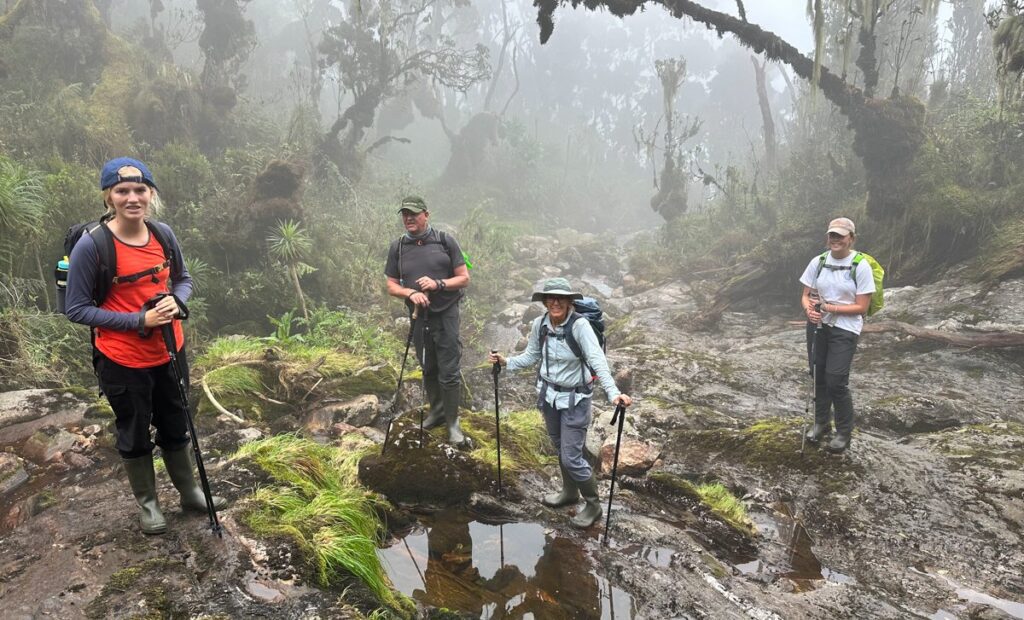
If we think a different mountain or a different approach would serve you better, we will say so. If you are ready for the Rwenzori and we think you can reach the top, we will tell you that too and do everything we can to help you get there.