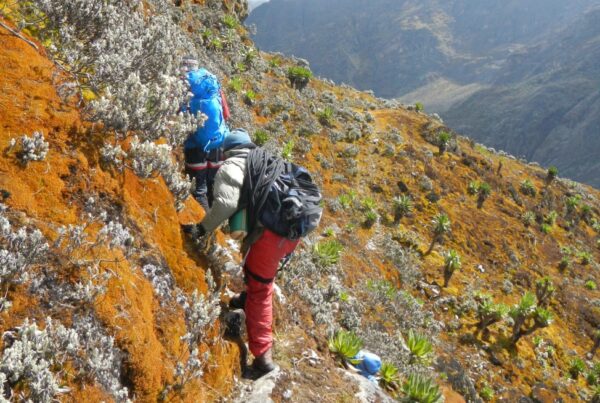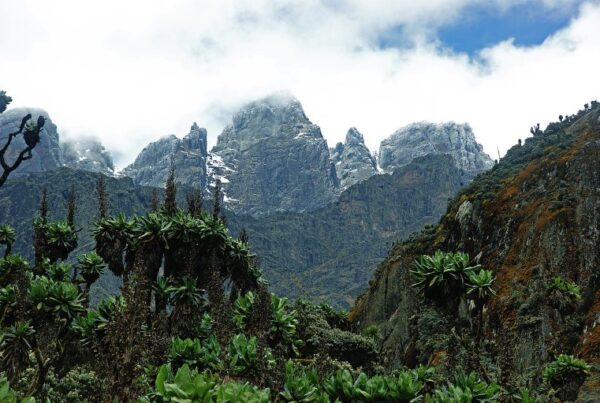

Ask any guide who has stood on Margherita Peak more than a handful of times, and they will tell you the same thing: summit day on the Rwenzori is not really a day at all. It is a narrow window of four or five predawn hours during which the mountain either lets you through or it does not, and everything that happens inside that window happens in the dark, in the cold, and largely in silence. I have led enough summit pushes on Mount Stanley to know the rhythm of those hours the way you know the rhythm of a piece of music you have played hundreds of times, and in this guide I want to walk you through it minute by minute, from the moment your alarm goes off in the cold dark of Elena Hut to the moment you are back in your sleeping bag having stood on the third-highest point in Africa.
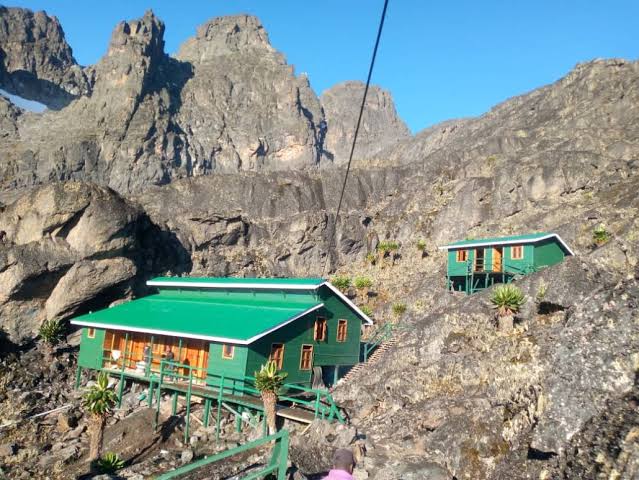
This is not a marketing account. It is the same briefing I give my clients the night before, and it is written so that when you are lying awake at 4,541 metres the night before your own summit attempt, you already know exactly what the next several hours are going to ask of you.
What “The Final Push” Actually Means on the Rwenzori
On most mountains, the phrase summit push describes a long day of steady walking. On the Rwenzori it describes something more specific and more technical: the roughly four-to-eight-hour window in which trekkers leave the highest sleeping camp on the mountain, cross a genuine equatorial glacier, and climb the final rock and snow to Margherita Peak at 5,109 metres, all before the tropical sun has fully risen and destabilised the ice above. Our detailed breakdown of how technical the climb to Margherita Peak actually is explains why this window cannot be moved later in the day without meaningfully increasing risk, and everything in the account below follows directly from that constraint. Depending on which route brought you to the high camp, your final push begins from one of two points. Trekkers on the Central Circuit Trail launch from Elena Hut at 4,541 metres, the highest permanent sleeping structure on the standard route. Trekkers on the Kilembe Trail launch from the slightly different vantage of Margherita Camp, reached via Hunwick’s and the upper Nyamwamba approach.
The terrain each route covers on the way to the glacier differs in its details, but the physiological and technical demands of the final hours are the same mountain wearing two different approach shoes.
The Night Before: What Happens at the High Camp
The final push genuinely begins the evening before, not at the moment you step outside. By the time you arrive at Elena Hut in the mid-afternoon of your summit-eve day, having climbed up from Bujuku Hut across the Scott Elliot Pass, your guide has already begun a sequence that most trekkers do not fully register until they are living through their own. Gear is laid out and checked piece by piece: crampons matched to boots, harnesses adjusted, headlamps tested with spare batteries confirmed. Dinner is served early and deliberately heavy on easily digestible carbohydrates, because your body will be burning fuel through the coldest hours of the night with almost no opportunity to replace it until well after sunrise. Our guide to what life in the Rwenzori huts is actually like covers the practical realities of this evening in detail, including why a sleeping bag rated to at least minus five degrees Celsius stops being a recommendation and becomes a genuine safety requirement at this altitude. Most trekkers do not sleep well at Elena Hut, and this is normal rather than alarming; the combination of altitude, cold, and anticipation makes deep sleep rare on summit eve, and experienced guides plan the schedule with this in mind rather than expecting a fully rested team.
9:00 PM to 11:00 PM — The Last Hours of Rest
By nine in the evening, headlamps are off and the hut is quiet, though rarely fully asleep. This is the window in which your guide expects you to at least lie still and let your body recover from the day’s climb to Elena, even if genuine sleep does not come. Anyone showing altitude symptoms is checked one final time before lights out; our complete guide to altitude sickness on the Rwenzori explains the specific criteria guides use at this point to decide whether a trekker proceeds to the glacier the following morning or waits at camp. A trekker with a clean Lake Louise assessment and stable vitals sleeps, or tries to, with the knowledge that the wake-up call is coming in the deep middle of the night, not the early morning most people imagine when they hear the word summit day.
Minute by Minute: The Push to the Summit
11:30 PM to 12:30 AM — Wake-Up and Layering
The wake-up call at Elena Hut typically arrives between 11:30 PM and midnight, hours before most people’s understanding of morning. Your guide moves through the hut with a headlamp and a flask of hot tea, waking each trekker individually rather than announcing a group start, because at this altitude everyone surfaces from sleep at a different pace.
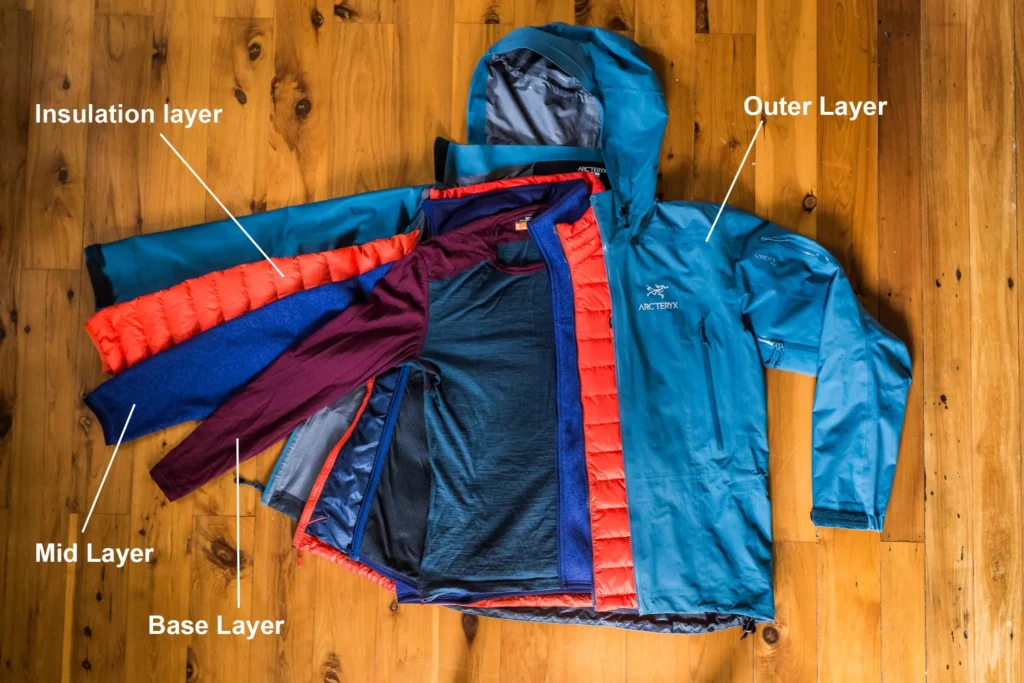
The next hour is entirely about layering, and it is done inside the hut, in whatever warmth the shared body heat of the group and a small stove can provide, because layering outside in the open cold wastes both time and core temperature. Base layer, insulated mid-layer, and a windproof, genuinely waterproof outer shell go on in that order, followed by liner gloves, an insulated summit jacket kept accessible rather than worn immediately, a warm hat, and a headlamp with a spare battery already loaded rather than merely carried. A small but critical ritual happens here that first-time summit trekkers rarely anticipate: a hot drink and a light, easily digestible snack, because you will not want to eat much again for the next six hours, and the body needs fuel in the tank before it starts spending it on a 25 to 35 degree glacier slope.
12:30 AM to 1:00 AM — Final Gear Check and Departure
Immediately outside the hut, your guide runs a final systematic equipment check on every member of the team: crampons correctly fitted and tightened, harness buckled and doubled back, headlamp confirmed working, and ice axe in hand rather than strapped to the pack. This is also the moment, standing in the absolute dark below the contour of the Elena Glacier, when the scale of what you are about to do becomes physically real in a way that no itinerary page can fully convey beforehand. Departure from Elena Hut happens between roughly 12:30 and 1:00 AM, timed backward from the goal of reaching the summit around first light and being back down off the glacier before the tropical sun has softened the snow.
1:00 AM to 2:00 AM — The Rock Approach Below the Glacier
The first hour of movement is on rock, not ice, a steep and sometimes fixed-rope-assisted scramble that climbs directly above Elena Hut toward the lower margin of the Elena Glacier. In full darkness, this section demands total concentration; headlamp beams narrow the world down to the next few metres of rock and the rope ahead of you, and conversation, if there is any, is quiet and functional. Guides move the team at a deliberately conservative pace here, not because the terrain is the technical crux of the day but because starting too fast in the cold and thin air of 4,500-plus metres is one of the most common and avoidable causes of the exhaustion that ends summit bids on the Rwenzori before the real climbing even begins.
2:00 AM to 2:30 AM — Crampons On, Rope Team Assembled
At the point where rock gives way to permanent ice, the team stops for the second full equipment transition of the night. Crampons that were fitted and tested at Elena Hut are put on again here, this time in the open cold with the added complexity of doing precise gear adjustments at altitude and in the dark. Your guide assembles the rope team, checks every knot personally, and delivers a short, practical briefing on rope discipline: maintain consistent spacing, never step over the rope, and follow the lead guide’s exact footprints across sections where snow bridges may conceal crevasses beneath the surface. This is a genuine safety procedure rather than a formality, and experienced guides will hold the team here rather than proceed if conditions, visibility, or any team member’s physical state raise concern.
2:30 AM to 4:00 AM — Crossing the Stanley Plateau
This is the section every Rwenzori summit trekker remembers most vividly afterward, and for good reason: it is one of the only places on the African continent where you cross permanent glacial ice while standing almost exactly on the equator.
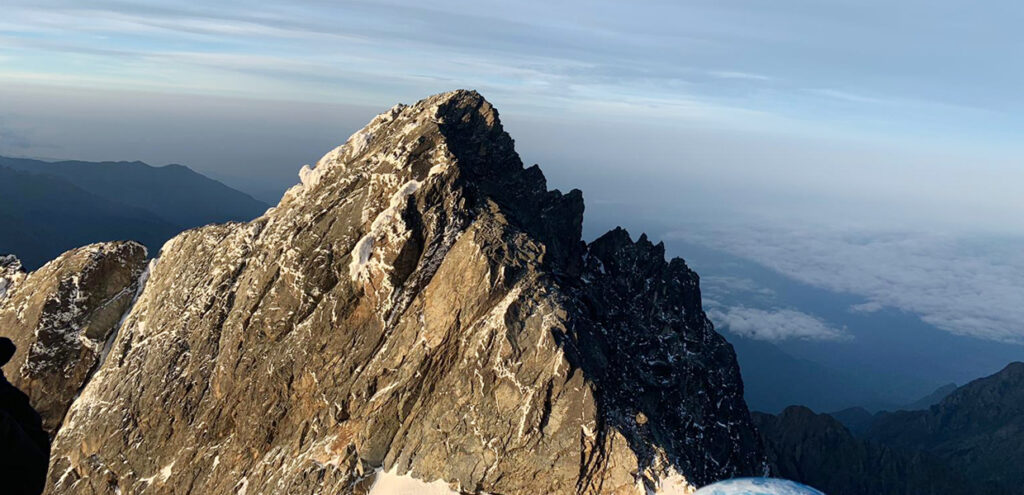
The Stanley Plateau is a genuine high-altitude ice sheet, and moving across it before dawn, roped together, headlamps casting small circles of light on blue-white ice, is an experience that our glacier crossing guide describes in full, including why the pre-dawn timing specifically exploits the fact that overnight refreezing hardens the ice surface for reliable crampon purchase, a stability that afternoon sun steadily erodes. The gradient across this section runs at approximately 25 to 35 degrees, with occasional steeper pitches, and the rhythm here becomes almost meditative: kick, step, breathe, kick, step, breathe, the rope drawing gently taut and slack between each climber as the guide ahead reads the ice and picks the line. Cold at this hour is severe, typically several degrees below freezing with windchill, and this is precisely why the insulated summit jacket, kept accessible rather than worn during the earlier rock section, comes fully into use here.
4:00 AM to 4:45 AM — The Steep Snow Slope to the Ridge
As the plateau narrows and steepens toward its upper margin, the terrain transitions into a sustained, steeper snow slope that forms the technical crux of the final push. This is where fitness built over months of preparation, the kind our 16-week training plan for the Rwenzori is specifically designed around, separates a comfortable final hour from a genuinely gruelling one. Breathing becomes deliberately rhythmic and audible; at this elevation, oxygen saturation in even well-acclimatised trekkers has dropped meaningfully, and every step above 4,900 metres costs noticeably more than the equivalent step at Elena Hut did the previous afternoon. Guides watch their teams closely through this section for the specific signs of altitude compromise, confused speech, stumbling unrelated to terrain, or a sudden refusal to continue that goes beyond ordinary fatigue, because this is the point on the mountain where those symptoms, if present, become most dangerous to ignore.
4:45 AM to 5:30 AM — First Light and the Final Approach
Somewhere in this window, almost always before the summit itself is reached, the sky to the east begins to grey, then pink, over the vast unbroken green of the Congo Basin far below. This is one of the most quietly overwhelming moments of the entire Rwenzori expedition, arriving not at the summit but in the final approach to it, the mountain’s other glaciated massifs, Speke and Baker among them, beginning to emerge from darkness as pale grey shapes against a lightening sky. The final approach ridge is narrow and exposed in places, and your guide’s pace here is unhurried and precise, prioritising secure footing over speed, because this close to the top is exactly where fatigue-driven mistakes cause the most serious incidents on any glaciated peak.
5:30 AM to 6:15 AM — The Summit
The summit of Margherita Peak arrives, for most teams, somewhere between 5:30 and 6:15 in the morning, timed to land close to actual sunrise wherever conditions allow.
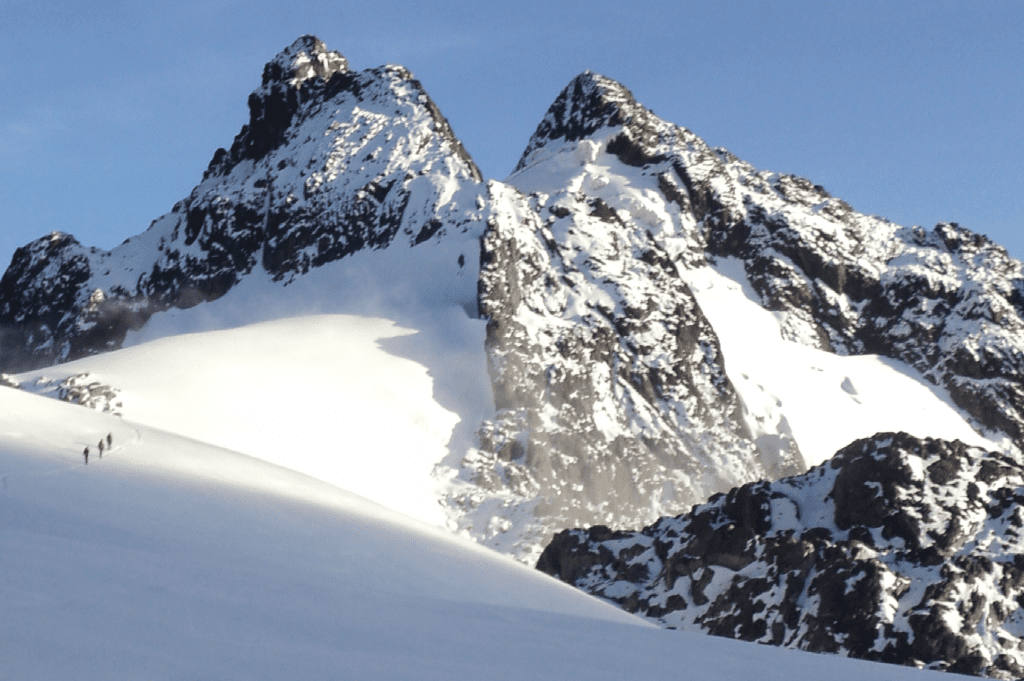
The summit itself is a small, exposed rock and ice outcrop at 5,109 metres, marked by a simple cairn, with views on a genuinely clear morning extending west across the entire Congo Basin and east over the plains of Uganda toward Lake George and the Rift Valley escarpment.
Time on the summit is deliberately brief, typically fifteen to twenty-five minutes, enough for photographs, a shared moment of genuine achievement, and a short rest, but not so long that the body begins to cool dangerously or that the descending sun begins working against the team on the way back down. Our Rwenzori Mountains photography guide covers exactly how to capture this specific quarter-hour without slowing the team’s essential descent timing, since battery performance and finger dexterity both degrade rapidly in summit-morning cold.
The Descent Is Not an Afterthought
Every experienced Rwenzori guide will tell you the same uncomfortable truth: more incidents happen on the way down from a glaciated summit than on the way up, and the final push does not end at the cairn. The descent across the Stanley Plateau, now visible in full daylight rather than headlamp beam, is technically easier to navigate but physically harder to execute well, because fatigue has accumulated through six or more hours of sustained exertion at extreme altitude, and rising temperatures begin softening the glacier surface exactly as the guides anticipated when they set the original departure time. Rope discipline remains as strict on the way down as on the way up, and the team typically reaches the rock below the glacier by mid-morning, crampons come off, and the final descent to Elena Hut is usually complete by late morning, somewhere between roughly 9:00 and 11:00 AM, closing a summit day that runs eight to twelve hours round-trip from departure to return.
What Can Go Wrong in Those Minutes
Understanding the final push honestly means understanding what can interrupt it. Weather is the most common disruptor; if visibility collapses into whiteout, wind on the exposed upper ridge exceeds safe thresholds, or new snow has loaded the glacier in a way that raises avalanche or crevasse risk, our guides postpone or abandon the attempt for that day rather than push through, a decision protocol laid out in full in our technical climbing guide to Margherita Peak. Altitude illness is the second major factor, and it is precisely why our Rwenzori medical emergency and evacuation guide exists in such specific detail: a trekker developing symptoms of HACE or HAPE during the final push requires an immediate descent decision, not a wait-and-see approach, and every guide team on the mountain carries supplemental oxygen and the appropriate medications for exactly this scenario. This is also why travel insurance that explicitly covers high-altitude evacuation from above 5,000 metres, addressed fully in our Rwenzori travel insurance guide, is treated as a genuine prerequisite for the climb rather than a bureaucratic formality.
Why the Timing Is Never Negotiable
Trekkers occasionally ask whether the midnight departure could be moved later, particularly after a difficult day reaching Elena Hut. The honest answer is almost always no. The entire structure of the final push is reverse-engineered from the physics of an equatorial glacier: overnight refreezing gives the ice its safest structural integrity in the hours immediately before dawn, and by mid-morning, direct equatorial sun softens that same ice into a meaningfully less stable surface, increasing both crevasse risk and the likelihood of slips on steepening terrain. This is the same logic that governs the acclimatisation strategy built into the days leading up to summit night, detailed in our guide to whether and how you should acclimatise before the Rwenzori, and it is why a well-prepared trekker arrives at Elena Hut having already banked the physiological adaptation that makes the midnight departure survivable rather than merely endurable.
Preparing Your Body and Mind for This Specific Hour
Everything else in a Rwenzori expedition, the training, the gear, the acclimatisation strategy built into the itinerary, exists in service of these four or five hours.
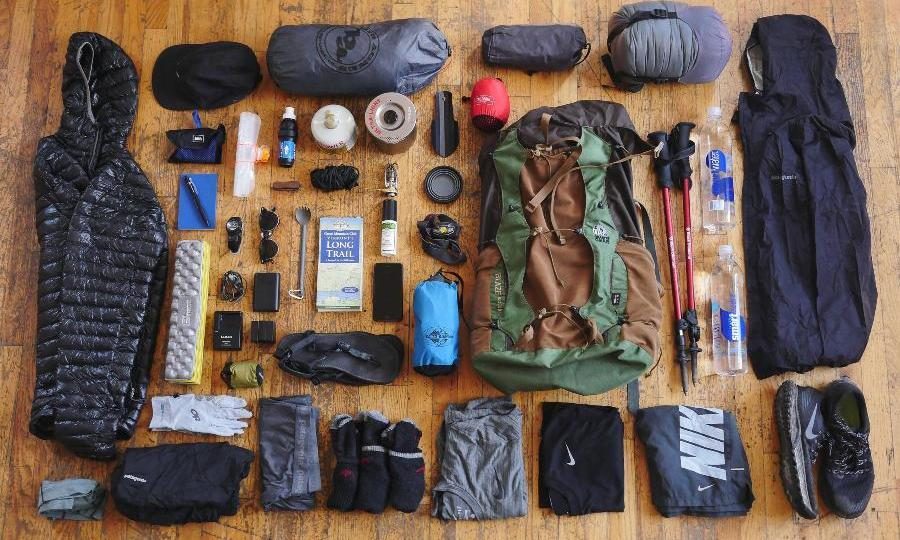
Our 16-week training plan is built specifically around the cardiovascular demand of sustained movement above 4,800 metres in cold, and the guide to climbing gear for a Rwenzori trek exists precisely because the summit jacket, the glove system, and the headlamp you choose are not abstract packing-list items; they are the equipment that will be tested directly during the specific hours described above. Mentally, the most useful preparation we can offer any client is exactly what this article has tried to do: remove the element of surprise. Trekkers who know, before they ever reach Elena Hut, that the wake-up call comes at midnight, that the first hour is rock rather than ice, that the cold on the plateau will be the most severe of the entire trip, and that the summit itself will be brief by design, consistently report a calmer, more present experience of the climb than those encountering each stage of the final push for the first time in the dark.
Frequently Asked Questions About the Final Push to Margherita Peak
What time does the final summit push to Margherita Peak actually start?
The final push begins with a wake-up call at Elena Hut between roughly 11:30 PM and midnight, with the team departing the hut between 12:30 and 1:00 AM. This midnight departure is deliberate rather than dramatic: it positions the team to cross the Stanley Plateau glacier while the overnight refreeze still gives the ice its safest, most stable surface, and to reach the summit around first light before the equatorial sun begins softening the snow and increasing crevasse risk.
How long does the summit push take from Elena Hut to Margherita Peak and back?
A full round trip from Elena Hut to the summit of Margherita Peak and back typically takes between eight and twelve hours, depending on group fitness, snow and weather conditions, and pace. The ascent portion generally takes five to six hours, with roughly fifteen to twenty-five minutes spent at the actual summit, and the descent back to Elena Hut usually taking a further three to four hours.
Is the final push to Margherita Peak technically difficult?
Yes, in the specific sense that it involves roped glacier travel with crampons and an ice axe across the Stanley Plateau, at gradients of approximately 25 to 35 degrees, along with a steep final snow slope near the summit ridge. It does not require prior technical mountaineering experience, since certified guides lead every rope team and provide full equipment fitting and briefing, but it is meaningfully more technical than a standard high-altitude trekking day and should not be underestimated by trekkers expecting a simple walk to a high point.
Why does the summit push happen in the middle of the night instead of during the day?
The timing is dictated by the behaviour of an equatorial glacier rather than tradition. Overnight cold refreezes the surface of the Stanley Plateau, giving crampons reliable purchase and keeping the snowpack structurally stable. As the equatorial sun rises and strikes the ice directly, that stability degrades quickly, softening the surface and increasing the risk of both slips and hidden crevasses. Departing at midnight and summiting around dawn is the only way to cross this specific terrain during its safest window.
What happens if weather or altitude sickness interrupts the final push?
Guides on the Rwenzori are trained to prioritise safety over summit success at every stage of the final push. If visibility collapses, wind exceeds safe thresholds, new snow has destabilised the glacier, or a team member shows signs of altitude illness such as HACE or HAPE, the guide will postpone the attempt, turn the team back, or begin an immediate descent, depending on severity. Every guide team carries supplemental oxygen and appropriate altitude medication, and descent is always treated as the correct first response to serious symptoms rather than something to delay in hope of improvement.
How cold is it during the final summit push on the Rwenzori?
Temperatures during the predawn glacier crossing regularly sit several degrees below freezing, and windchill on the exposed plateau and summit ridge can make the effective temperature considerably colder still. This is the coldest sustained period of the entire Rwenzori expedition, which is why a warm, genuinely windproof insulated summit jacket, a full glove system, and a warm hat are treated as non-negotiable equipment rather than optional extras for this specific stage of the climb.
📩 Ready to Plan Your Return Trek? If you want to experience this exact sequence of minutes for yourself, standing on the equator’s last African glacier as the sun comes up over the Congo Basin, get in touch with our team to start planning your Margherita Peak expedition. Tell us your fitness level, your preferred route, and your travel dates, and we will build the itinerary, training guidance, and gear plan that gets you to Elena Hut properly prepared for the hours that matter most.