Where to camp in the Rwenzori Mountains: why the Central Circuit & Kilembe use huts, and the Bukurungu Trail’s for lake campsites. Plan your trek
There is a particular kind of quiet that settles over a mountain camp in the Rwenzori after the last light has drained out of the sky above Lake Mughuli or Lake Irene, when the mist has closed in around the tent and the only sounds left are the drip of condensation off giant heather leaves and the distant call of a Rwenzori turaco settling for the night. If you have come to this page because you are picturing that scene, and asking yourself whether camping in the Rwenzori Mountains is actually possible, and if so, where, you are asking exactly the right question, and you have landed in the right place for an honest answer.
I have guided trekkers across all three of the Rwenzori’s main corridors for over a decade, and one of the most persistent points of confusion I encounter, especially among trekkers who have researched Kilimanjaro or the Virunga volcanoes first, is the assumption that a Rwenzori trek automatically means nights under canvas. It does not, not on every route. The reality is more specific and, once you understand it, far more useful for planning: two of the Rwenzori’s three primary trekking routes, the Central Circuit Trail and the Kilembe Trail, do not support wild camping at all, because both are built around a sequence of constructed mountain huts and fixed camps. True ground camping, the kind where your tent is your only shelter and the mountain’s weather is your immediate neighbor, is the defining character of a single route: the Bukurungu Trail, the Rwenzori’s dedicated wilderness camping corridor.
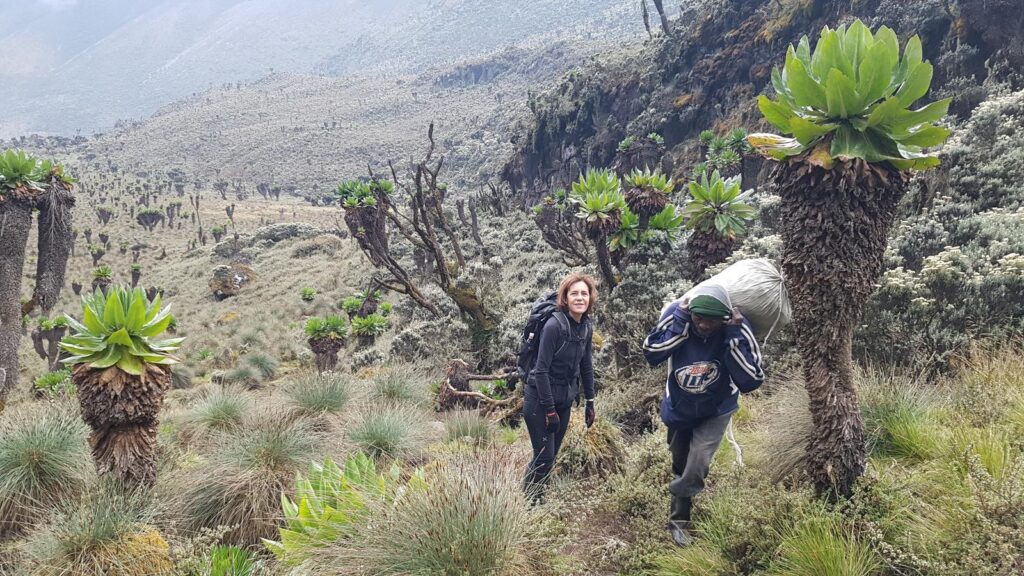
This guide exists to explain that distinction properly, and then to go deep into what camping on the Bukurungu Trail actually involves: the specific camping sites you will sleep at, the four alpine lakes that anchor the route, the equipment and preparation that genuine ground camping at altitude demands, and how the experience compares to the hut-based nights on the Central Circuit and Kilembe. By the end, you will know exactly where you would be sleeping on any Rwenzori itinerary you are considering and whether the wilderness camping experience of the Bukurungu Trail is the kind of Rwenzori trek you are looking for.
Why the Central Circuit and Kilembe Trail Don’t Support Wild Camping
To understand camping in the Rwenzori, you first have to understand why most of the mountain does not require it. The Central Circuit Trail is the oldest and most established route through Rwenzori Mountains National Park, and its infrastructure reflects decades of continuous use. Positioned at intervals that correspond almost exactly to a day’s walk, a sequence of solid, purpose-built mountain huts carries trekkers from the Nyakalengija trailhead all the way to the glacier approach below Margherita Peak. Nyabitaba, at 2,650 meters, is the first of these; John Matte, at 3,414 meters, and Bujuku, at 3,977 meters, follow as the trail climbs through the heather zone and onto the shores of the Rwenzori’s most iconic alpine lake; Elena, at 4,541 meters, is the final high camp before the summit push; and Kitandara and Guy Yeoman serve trekkers on the descent loop. Every one of these is a wooden or metal structure with bunk-bed sleeping arrangements, a communal cooking area, and basic sanitation, a full accounting of which you’ll find in our dedicated guide to mountain huts and campsites across every trail.
The Kilembe Trail tells a similar story from the mountain’s southern flank. Developed from 2011 onward by Rwenzori Trekking Services in partnership with the Uganda Wildlife Authority, it approaches the high peaks through the Nyamwamba Valley via its own chain of fixed camps: Sine at 2,540 metres, then Kalalama, Bugata, Mutinda at 3,700 metres, Hunwicks, and finally Margherita Camp at 4,540 metres, directly below the glacier crossing. Several of these, Mutinda in particular, are even equipped with solar panels for lighting and device charging, a level of infrastructure the older Central Circuit huts do not yet have. Neither trail was designed with tent camping in mind, and neither permits it as a practical alternative: the entire logistical rhythm of both routes, from porter loads to itinerary pacing to park management, is built around trekkers sleeping in these fixed structures every single night on the mountain.
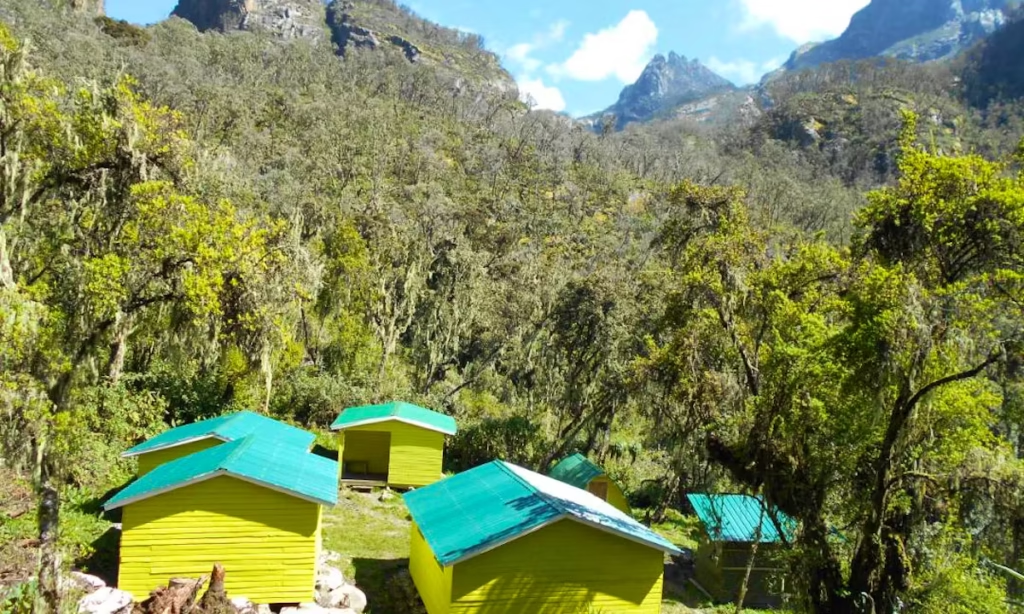
This is genuinely good news for the overwhelming majority of Rwenzori trekkers, and it is worth saying plainly rather than treating hut accommodation as a consolation prize. The Rwenzori is, by reputation and by measurement, one of the wettest mountain ranges in Africa, and a solid roof over your head at 3,977 metres, with rain hammering down outside and the temperature dropping toward freezing, is not a minor comfort. It is often the difference between a trekker who arrives at the glacier rested and warm and one who arrives depleted. If your priority is reaching Margherita Peak with the strongest possible support system around you, the Central Circuit or Kilembe is the correct choice, and camping gear simply does not enter the equation.
Camping in the Rwenzori: The Bukurungu Trail Is Where It Happens
If what you actually want is the experience of pitching a tent in the Rwenzori high country, waking to condensation on the fly sheet and mist rolling across an alpine lake at your doorstep, that experience exists, and it exists on one route: the Bukurungu Trail. Opened in 2018 through a partnership between the Uganda Wildlife Authority and the World Wildlife Fund, Bukurungu was deliberately designed as the opposite of the Central Circuit and Kilembe model. There are no huts on this route. No bunk rooms, no solar panels, no communal kitchens built into the landscape. What exists instead is a series of well-positioned, clearly designated ground camping spots, cleared and managed by the national park specifically for tent pitching, spaced to allow safe and gradual altitude gain through terrain that sees only a fraction of the foot traffic found on the mountain’s two more famous corridors.
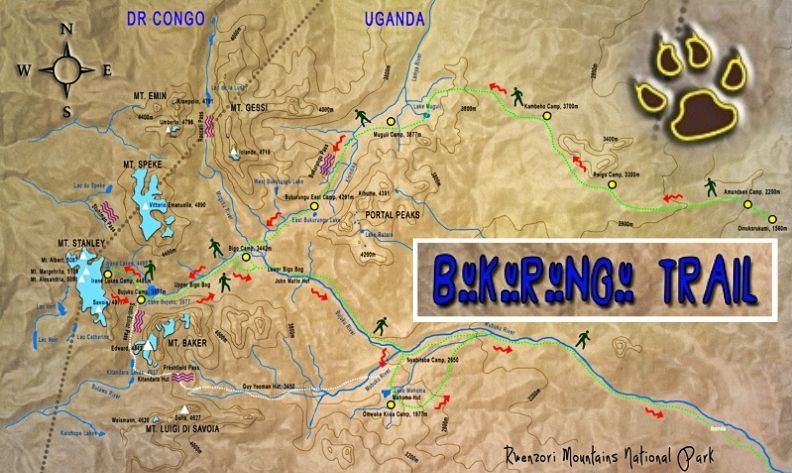
This is not an accident of underdevelopment; it is the trail’s stated purpose. Bukurungu was built to open a third corridor into the high Rwenzori while deliberately preserving the raw, undeveloped character of one of Uganda’s most biodiverse landscapes, and the ground-camping model is central to that philosophy. Trekkers who choose this route are choosing it precisely because they want an unmediated night in the wilderness, rather than a bunk in a hut, and the trail delivers exactly that, night after night, from the Kasanzi park entrance in the Omukorukumi area through to the Mihunga gate.
The Camping Sites Along the Bukurungu Trail
Where you actually pitch your tent on the Bukurungu Trail is organised around the route’s four defining alpine lakes, Irene, Mughuli, Bukurungu, and Bujuku, each of which anchors a designated camping area along the way. Understanding the sequence of these camps is useful both for picturing the trek and for planning how many days you will realistically need on the mountain.
Lake Irene Camp
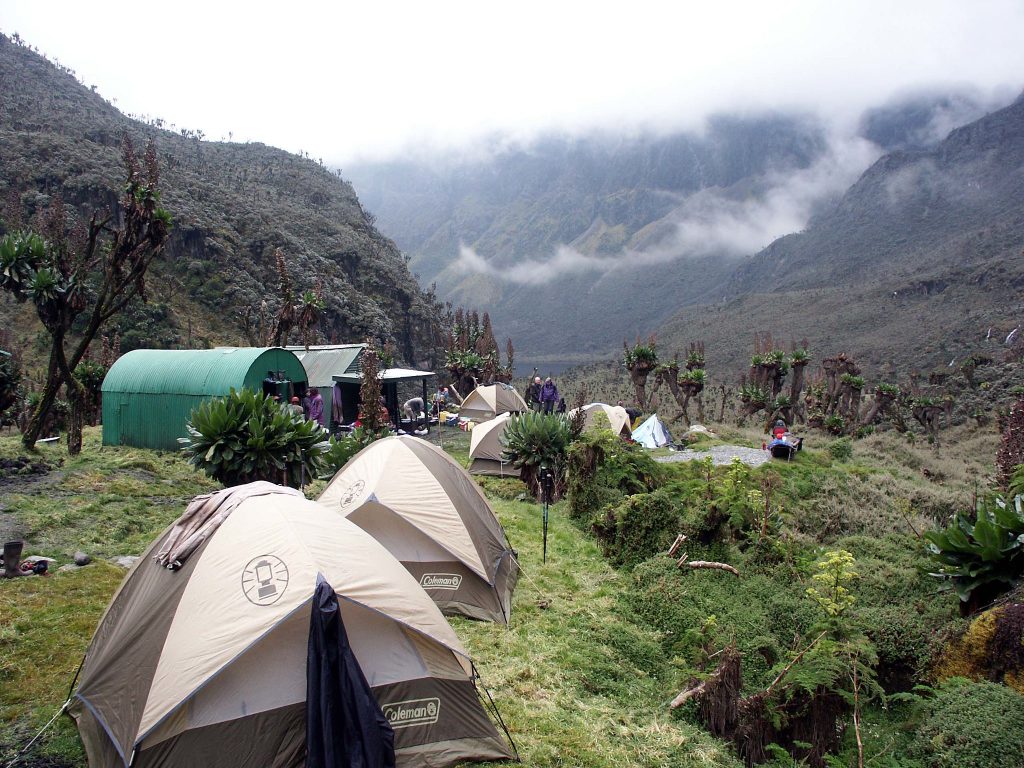
The camping ground near Lake Irene is typically the first of the high-altitude sites trekkers reach on the Bukurungu Trail, and it sits in a glacially carved hollow surrounded by giant heathers and lobelias, the botanical signature of the Rwenzori’s afro-alpine zone. Pitching a tent here in the late afternoon, with the lake surface holding that particular mirror-flat stillness that only high alpine water seems to achieve, gives most trekkers their first real sense of what makes this trail different from a hut-based itinerary: nothing separates you from the immediate sound and weather of the mountain except canvas.
Lake Mughuli Camp
Lake Mughuli occupies a more sheltered position within the high valley system, and it is often the location of one of the trail’s most memorable overnight camps. Mornings here regularly bring mist rolling across the water in slow waves as the light builds through the near-permanent cloud cover, a sequence that unfolds directly outside your tent door rather than through a hut window. Camping at Mughuli is, in the experience of most of our guides, one of the clearest illustrations of why the Rwenzori earned the name Mountains of the Moon.
Lake Bukurungu Camp
The camp that gives the trail its name sits beneath some of the most dramatic rocky terrain on the entire route. The approach involves a sustained climb through increasingly sparse vegetation, and arriving to make camp beside the lake, framed by high ridgelines on every side, feels like reaching a destination in its own right rather than simply another overnight stop. Many trekkers linger here longer than scheduled, simply to sit with the silence.
Lake Bujuku Camp
Lake Bujuku marks the point where the Bukurungu Trail’s wilderness camping meets the Central Circuit at the Bigo Swamp, and the camp here is arguably the most spectacular on the route. Encircled by Mount Stanley, Mount Speke, and Mount Baker, with the Elena Glacier visible overhead on clear days, this is the largest of the four lakes and the effective hub of the entire Rwenzori high country. Trekkers who approach it via the Bukurungu wilderness route, rather than the conventional Central Circuit direction, arrive with an earned sense of solitude and achievement that the more travelled approach simply cannot replicate.
From here, it is entirely possible to continue onto the Central Circuit and push for Margherita Peak itself, threading a wilderness camping approach directly into a high-altitude glacier summit.
What Camping Equipment You Actually Need on the Bukurungu Trail
Because the Bukurungu Trail is a pure ground-camping route, the equipment question matters more here than on any other Rwenzori itinerary. Rwenzori Trekking Safaris provides all core camping equipment as standard on every Bukurungu package: high-quality mountain tents rated for sustained wet-weather use, insulated sleeping mats, and full kitchen equipment for our cook and porter team, so trekkers do not need to source or carry their own shelter. What we ask trekkers to bring themselves is a sleeping bag rated to at least minus five degrees Celsius, since night temperatures at the higher camps drop well below freezing even though the days can be humid and warm; full details on bag ratings and layering strategy are covered in our guide to staying warm at altitude on the Rwenzori.
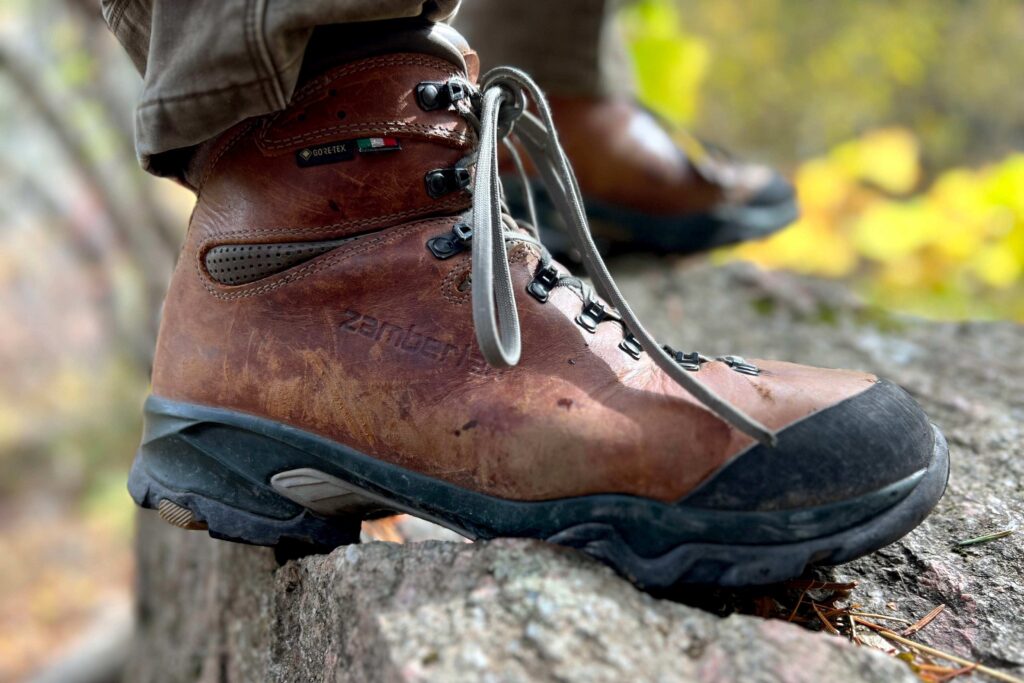
Beyond the sleeping system, the single most consequential gear decision on this trail, as on every Rwenzori route, is footwear. The mountain’s saturated bogsand near-constant moisture mean that conventional waterproof hiking bootssimply do not hold up, and our full boot and gear guide explains why rubberWellington-style boots over neoprene socks are the only footwear that genuinely works here. Because the Bukurungu Trail fully embraces the legendary wetness of these mountains, with no hut to dry out in at the end of the day, we also recommend a dedicated dry-bag system for electronics, documents, and your sleeping bag, on top of everything listed in our general Rwenzori packing list.
What Camping in the Rwenzori Actually Feels Like
It is worth being honest about the texture of a night spent camping on the Bukurungu Trail, because it differs meaningfully from a night in a Central Circuit hut. There is no communal room, no shared warmth of a wood-fired kitchen, no other trekking party’s chatter drifting through a partition wall. There is the sound of rain, or of wind moving through the heather, or of complete and total silence, all experienced with only a layer of canvas between you and the mountain. For trekkers who have camped at altitude before, in the Alps, the Andes, or on Kilimanjaro’s less-travelled routes, this will feel familiar and welcome. For those whose only experience of mountain sleep is a hut bunk, it is worth arriving with realistic expectations: mornings are colder, packing down a wet tent is a genuine task, and the whole rhythm of the day moves at the pace of a self-contained wilderness expedition rather than a hut-to-hut walking holiday.
What you gain in exchange is significant. You gain campsites beside four of the most beautiful alpine lakes in Africa, positioned in a corridor that sees a fraction of the trekkers found on the Central Circuit or Kilembe. You gain the particular clarity of falling asleep and waking up with the mountain’s immediate sounds as your only company. And you gain the sense, difficult to manufacture on a hut-based itinerary, of having genuinely camped inside one of the last great wilderness mountain systems on the continent, in the same manner as the earliest explorers who mapped these peaks over a century ago.
Who Should Choose the Camping Route Over the Huts
I want to be direct about this, because an honest recommendation serves you better than a generic sales pitch. Wild camping on the Bukurungu Trail is not the right starting point for a first-time Rwenzori trekker or for anyone who has never slept in a mountain tent through sustained wet weather. For that profile of trekker, the hut-based comfort of the Central Circuit Trail is the better and safer introduction to the range, and there is no shame whatsoever in choosing it; the majority of successful Margherita Peak summits happen via exactly that route.
The Bukurungu camping route is the right choice for capable, experienced hikers who have trekked and slept at altitude before, who are comfortable with the physical and logistical demands of multi-day wilderness camping, and who are drawn specifically to solitude and an unmediated mountain experience over convenience. It is also an outstanding second Rwenzori trip for trekkers who have already completed the Central Circuit or Kilembe and want to see the range from an entirely different angle, potentially combining the Bukurungu approach with a summit push on Margherita Peak via the Bigo Swamp junction.
Planning a Bukurungu Camping Expedition: Duration, Fitness, and Timing
As a standalone route from the Kasanzi entrance to the Mihunga gate, the Bukurungu Trail typically takes seven to ten days, and trekkers combining it with a Margherita Peak summit via the Central Circuit should plan for ten to fourteen days depending on acclimatisation pace and conditions. We do not recommend compressing this itinerary; the wilderness character of the route and the importance of proper altitude gain management make conservative day stages essential for safety as much as enjoyment, a principle covered more broadly in our acclimatisation strategy guide.
Fitness expectations are also meaningfully higher than for a standard hut-based trek. We recommend arriving with a genuine cardiovascular base, prior experience carrying a loaded pack over multiple consecutive days, and, ideally, previous experience camping at altitude. The trail involves sustained elevation gain, river crossings, and terrain that is in places more technically demanding than the Central Circuit, so preparation genuinely matters here; our general fitness and training guide is a useful baseline, though Bukurungu trekkers should treat its recommendations as a floor rather than a ceiling.
The most reliable camping conditions fall within the Rwenzori’s two dry-season windows, December through March and June through September, when trail conditions are more stable, river crossings are safer, and views from the lakeside camps are at their clearest, a pattern explored in more depth in our guide to the best time to visit the Rwenzori. Even within these windows, some rain should always be expected; full waterproofing of clothing, gear, and camp equipment is a non-negotiable part of preparing for this trail. As with every Rwenzori itinerary, a valid national park permit and comprehensive travel insurance with high-altitude rescue cover are required, both of which our team arranges as part of a complete Bukurungu package alongside guide and porter services detailed in our porters and guides guide.
Frequently Asked Questions About Camping in the Rwenzori Mountains
Can you camp on the Central Circuit or Kilembe Trail in the Rwenzori?
No, not in the ordinary sense of pitching a tent for the night. Both the Central Circuit Trail and the Kilembe Trail are built around constructed mountain huts and fixed camps, spaced roughly a day’s walk apart, and the entire logistics of both routes, including porter loads and park management, assumes trekkers sleep in these structures rather than in tents. Wild ground camping simply is not the accommodation model on either of these two routes.
Which Rwenzori trail is actually used for camping?
The Bukurungu Trail is the Rwenzori’s dedicated wilderness camping route. Opened in 2018 by the Uganda Wildlife Authority and WWF, it has no huts of any kind, only a series of designated ground camping spots managed by the national park. If your goal is a genuine tent-camping experience in the Rwenzori high country, the Bukurungu Trail is the route that provides it.
What are the main camping sites along the Bukurungu Trail?
The Bukurungu Trail’s camping sites are organised around its four defining alpine lakes: Lake Irene, Lake Mughuli, Lake Bukurungu, and Lake Bujuku. Each has a designated camping area, with Lake Bujuku serving as the final camp where the trail intersects the Central Circuit at the Bigo Swamp, allowing trekkers to continue onward toward a Margherita Peak summit if they choose.
Do I need to bring my own tent for the Bukurungu Trail?
No. Rwenzori Trekking Safaris provides all core camping equipment for Bukurungu expeditions, including high-quality mountain tents, insulated sleeping mats, and full kitchen equipment for the guide and porter team. Trekkers should bring their own sleeping bag rated to at least minus five degrees Celsius, along with full waterproof layers, since the trail’s high camps regularly drop below freezing overnight.
Is camping on the Bukurungu Trail safe and suitable for beginners?
The Bukurungu Trail is a genuinely challenging wilderness route and is not recommended for complete beginners or for trekkers who have never camped at altitude in sustained wet conditions. It is best suited to capable, experienced hikers who are comfortable with multi-day mountain camping. First-time Rwenzori trekkers, or those who prefer a guaranteed roof overhead, are generally better served by the hut-based Central Circuit Trail.
How many days does a Bukurungu camping trek take?
As a standalone route between the Kasanzi entrance and the Mihunga gate, the Bukurungu Trail typically takes seven to ten days. Trekkers combining the camping route with a Margherita Peak summit via the Central Circuit should plan for ten to fourteen days, allowing for proper acclimatisation rather than a compressed itinerary.
Can you combine Bukurungu camping with summiting Margherita Peak?
Yes. Because the Bukurungu Trail intersects the Central Circuit Trail at the Bigo Swamp near Lake Bujuku, it is entirely possible to use the wilderness camping route as your ascent and then continue via the Central Circuit’s hut system to summit Margherita Peak at 5,109 metres before descending through the Mihunga gate, combining both accommodation styles in a single expedition.
Ready to Plan Your Rwenzori Camping Expedition?
The Bukurungu Trail is not the right trek for everyone, but if reading this has made you picture yourself waking up beside Lake Mughuli with the mist rolling off the water, it may well be the right trek for you. Whether you want a standalone wilderness camping expedition or a combined Bukurungu-to-Margherita traverse, our team has guided this route since it opened and will build your itinerary around your fitness, timeline, and ambitions rather than a generic template. Get in touch with our Rwenzori Trekking Safaris team today, message us directly on WhatsApp for an honest conversation with a guide who knows this trail personally, or browse our full range of Rwenzori trekking itineraries to see how a camping expedition fits into your wider plans. The Mountains of the Moon, and the lake you have been picturing, are waiting.