I have watched hundreds of people research the Rwenzori trek, and I can tell you with complete certainty which questions keep them up at night. It is not the altitude, glaciers, or difficulty of the Kilembe Trail. It is not known whether they are fit enough or whether the weather will cooperate. The question that creates the most hesitation, the one that stops otherwise committed adventurers from booking, is a simpler and more human one: What is it actually like to sleep, eat, and live inside those mountain huts for a week?
The uncertainty is understandable. Most international trekkers have encountered two versions of mountain accommodation: the Himalayan tea house, warm and relatively civilized, or the East African camping tent, basic and exposed. The Rwenzori huts are neither of these things, and their reality, which is more comfortable than many first-timers expect in some respects and more honest than some marketing materials suggest in others, deserves a thorough, candid description. This guide provides exactly that. If you have been holding back from booking a Rwenzori trek because you are not sure what you are getting into when the sun goes down, keep reading.
The Rwenzori Mountain Hut System: What It Is and Who Manages It
The Rwenzori Mountains National Park operates two distinct hut systems across its two primary trekking routes, and understanding the difference between them is the first step to understanding what your experience will actually be like.
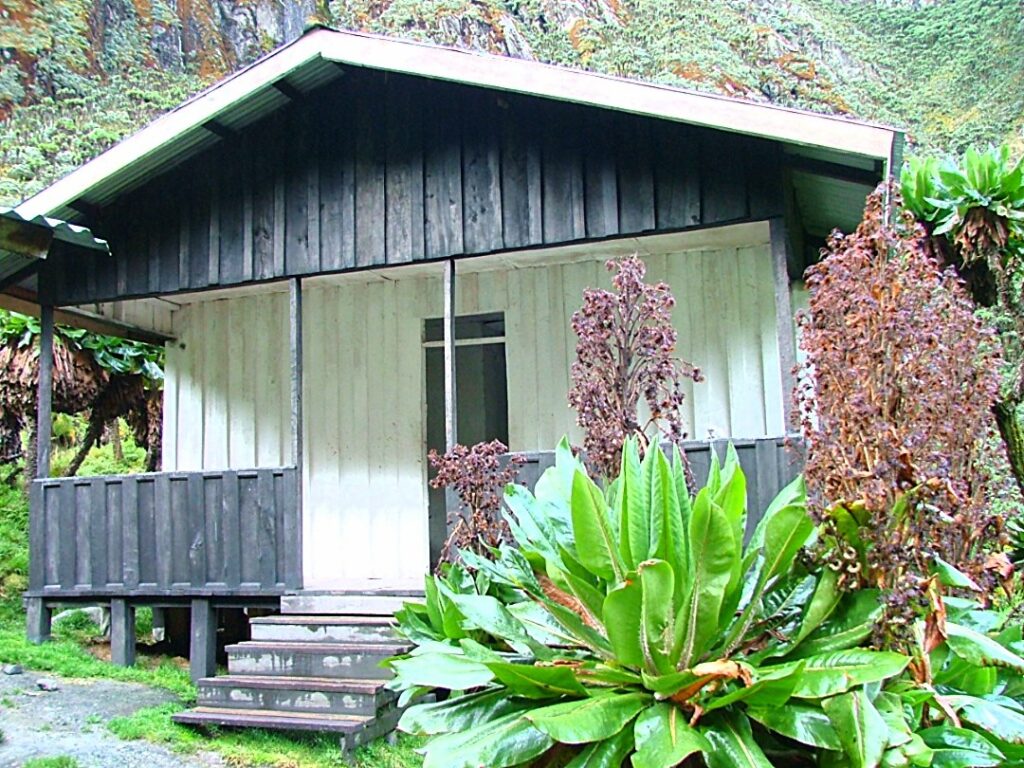
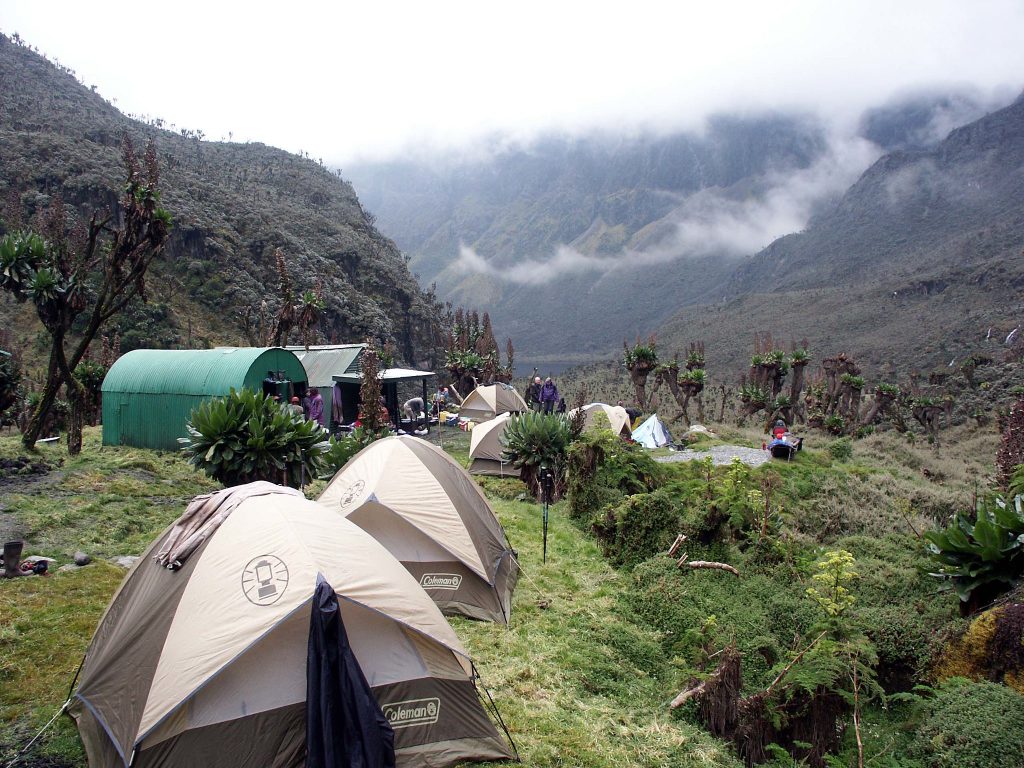
The huts on the Central Circuit Trail at Nyabitaba, John Matte, Bujuku, Elena, Kitandara, and Guy Yeoman are the older of the two systems, managed by the park authority and representative of the mountain hut infrastructure that was in place when the Central Circuit became the established route. They are functional and solid, designed for the specific conditions of the Rwenzori’s perpetual moisture, but they carry the wear of decades of high-altitude use and the particular damp that the wettest mountain range in Africa deposits on every surface over time.
The huts on the Kilembe Trail at Sine Camp, Kalalama, Mutinda, Bugata, Hunwick’s, Margherita Camp, and Kiharo form a newer system, developed after Rwenzori Trekking Services officially launched the trail in 2011. These huts were designed with the experience of the Central Circuit huts as a reference and represent a meaningful step forward in terms of structural quality, cleanliness standards, and practical functionality. Solar panels appear at some camps. Mattress standards are generally higher. The infrastructure, as mountain hut infrastructure goes, is among the better in East Africa.
Both systems share a fundamental character: they are wooden mountain huts in a damp, very cold alpine environment, built to protect trekkers from the elements rather than to replicate lowland comforts. The honest expectation is to be dry, warm enough, functional, and atmospheric in a way that no hotel room can replicate. The dishonest expectation that some trekkers arrive with, having imagined something more is a luxury. The Rwenzori huts are not luxurious. They are the right shelter in the right place, and after a long day on the mountain, they feel like exactly that.
🌿 Guide InsightThe quality of a mountain hut is not measured by the number of stars it would receive in a travel catalogue. It is measured by whether it is dry inside when it is raining outside, whether the bed is warm enough to sleep, and whether the food that comes out of the kitchen is hot and nourishing. By those measures, the Rwenzori huts, particularly on the Kilembe Trail, consistently deliver. |
The Beds: What You Actually Sleep On
The sleeping setup in Rwenzori mountain huts is the same across all camps on both major trails: wooden bunk beds with foam mattresses. The bunks are built into the hut walls in most camps, sometimes in a single row, sometimes in double-decker arrangements when space is limited. The mattresses are foam, not thin camping-pad foam but proper foam mattress foam, typically four to six centimeters thick. In the newer Kilembe Trail huts, they are covered in waterproof or wipeable material that resists the moisture deposited by the Rwenzori’s climate on everything it touches.
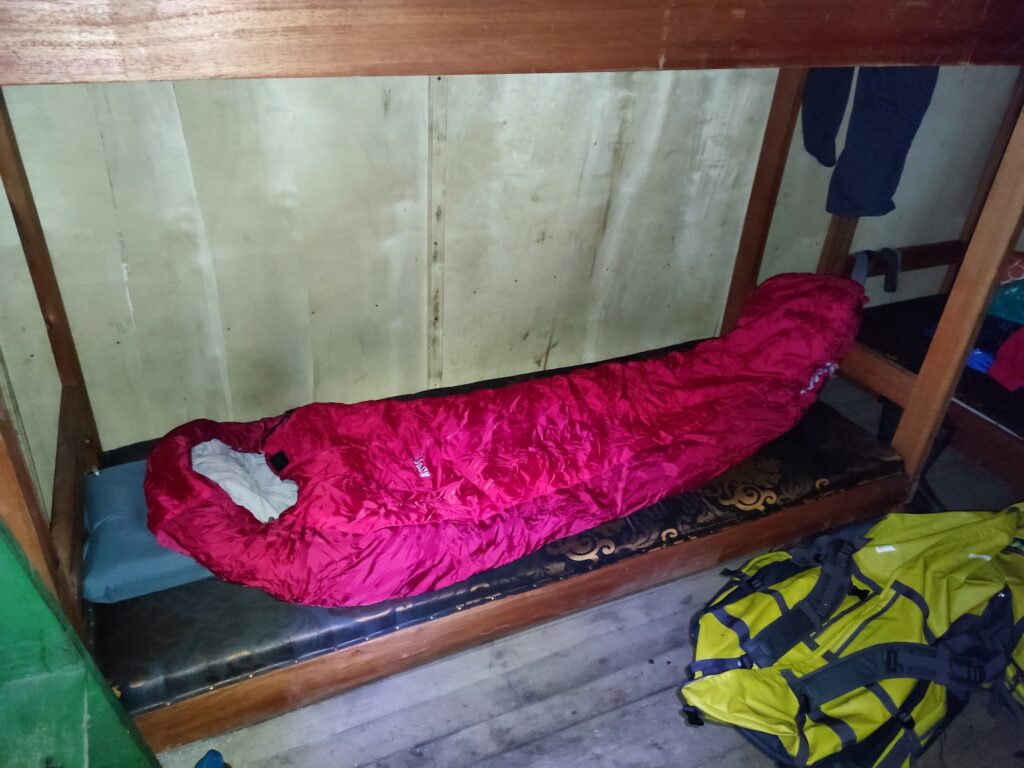
What you need to bring, without any question, is a sleeping bag rated for temperatures of at least zero to minus five degrees Celsius. This requirement is not optional, and it is not conservative advice; it is the difference between sleeping and lying awake cold for eight hours. The huts are not heated. There is no underfloor warming system, no central heating, and no electric blanket. The warmth inside a Rwenzori hut at night comes entirely from the sleeping bags of the people in it, and the heat loss through timber walls and a tin or wooden roof at 4,000 metres on a wet mountain is significant. A quality sleeping bag, ideally down-filled and rated to at least zero degrees, converts an otherwise cold and miserable night into a deeply restful one.
Sleep Quality and What Disrupts It
This is the part that the marketing materials omit. Sleep in the Rwenzori huts is genuinely restorative in the lower elevation camps, Nyabitaba, Sine Camp, and John Matte, where the altitude is below 3,000 metres and the body is not yet significantly affected by oxygen reduction. As you gain altitude, sleep quality typically degrades. At Mutinda Camp (3,688m) on the Kilembe Trail or Bujuku Hut (3,977m) on the Central Circuit, most trekkers experience some disruption: waking during the night, difficulty falling back to sleep, and a slight mental cloudiness in the early morning that clears after an hour of movement. At the high camps Bugata (4,062 m), Hunwick’s (3,974 m), and Margherita Camp (4,485 m), periodic breathing is common. This is a well-documented physiological response to altitude in which the brain’s respiratory control system oscillates between breath-holding and rapid breathing during sleep. It is not dangerous, but it wakes you up, sometimes repeatedly.
The other disruption factor is noise. The Rwenzori huts are shared spaces; depending on the season and the trail, you may be sharing a hut with two people or with a dozen. Snoring is part of the soundtrack of mountain life at any altitude and on any mountain range on Earth. Earplugs belong in your kit as firmly as a headlamp does. They weigh nothing and they make a difference between a night of genuine sleep and one spent listening to a stranger’s breathing.
Rain on the hut roof is a third factor, and it deserves mention because the Rwenzori is the wettest mountain range in Africa. Rain sounds different at each camp depending on the roofing material: a metallic drumroll at huts with tin roofs and a softer patter at those with wooden ones. Many trekkers, once the initial shock of the volume passes, find the sound deeply conducive to sleep. Others do not. Know which camp you are in before you arrive.
💡 Trekker TipBring a lightweight silk or cotton sleep liner inside your sleeping bag. It adds approximately three to five degrees of warmth, keeps the sleeping bag clean over multiple nights, and dries faster than the bag itself if condensation or moisture gets inside. It also provides a psychological layer of comfort. Having something between yourself and a mattress that many other trekkers have used is, for some people, a meaningful consideration. |
The Food: What You Eat on the Mountain, Camp by Camp
The food served in Rwenzori mountain huts is one of the most consistently underrated aspects of the whole experience. The expectation, particularly among trekkers coming from other African mountain ranges, is minimal, functional, and forgettable. The reality is considerably better than that, and the reason is simple: the cooks who work in Rwenzori hut kitchens are specialists who have spent years learning to produce substantial, hot, varied, and well-seasoned meals at altitude in cold, cramped conditions with limited supplies. Their skill is not incidental. It is the product of real professional training and accumulated experience.
Breakfast
Mornings in the Rwenzori huts begin with hot drinks, tea, coffee, and sometimes hot chocolate brought to trekkers before they have fully assembled themselves. This is not a trivial detail. At 4,000 meters in the cold of a mountain morning, a hot drink before anything else is a physiological and psychological reset that sets the entire day’s energy level. Breakfast proper typically includes porridge or oatmeal, eggs cooked in whatever form the kitchen can manage that morning, toast or chapati, and sometimes sliced fruit. On the lower elevation camps where supplies are fresher, the variety is wider. At high camps, the food is simplified but never sparse. The guides and cooks understand that caloric intake at altitude directly affects the team’s performance on the trail, and they take that responsibility seriously.
Lunch on the Trail
Lunch is a packed meal eaten on the trail or at a designated rest point. It typically consists of sandwiches, hard-boiled eggs, fruit, biscuits, energy bars, and occasionally a small sweet snack. The guides manage the pace to include a proper lunch stop, seated and unhurried, with time to eat everything and rehydrate. Eating enough at this stop matters more than most trekkers realize: the afternoon hours of a long trekking day are powered almost entirely by what was consumed at midday, and those who eat inadequately at lunch consistently struggle more in the final hours of the walking day.
Dinner: The Centrepiece of Camp Life
Dinner is where the Rwenzori kitchen reveals its full capability. Each camp’s cook produces a multi-course meal from a kitchen that is, in most cases, a small room with basic gas or kerosene burners, limited storage, and no running water beyond what has been collected from streams and treated. The results consistently surprise first-time trekkers. A typical dinner begins with a hot soup, vegetable, tomato, or occasionally a chicken broth, followed by a main course that might be rice with a vegetable and bean stew, pasta with a meat sauce, ugali with braised greens and a protein, or chapati with a thick legume curry. Dessert is rare but not unknown in the lower camps; at the high camps, the focus shifts entirely to maximizing caloric content and ease of digestion.
The seasoning is real. This dish is not hospital food. The cooks have their repertoire of spice combinations that give the mountain meals a warmth and depth that the standard trekking-food imagination does not anticipate. Portions are substantial. Seconds are available. The guides watch the trekkers eat with the specific attention of professionals, knowing that a trekker who has not eaten enough tonight will underperform tomorrow.
Vegetarian and vegan trekkers are fully accommodated on all Rwenzori Trekking Safari expeditions, with specific meal planning that goes well beyond the ‘remove the meat and add more rice’ approach common on less attentive expeditions. The plant-based mountain diet on the Rwenzori is varied and nutritionally solid when pre-arranged. This topic is something to discuss when booking, not something to raise at Sine Camp.
Hot Drinks Through the Day
New trekkers rarely anticipate one of the most welcome features of Rwenzori hut life: the permanence of hot drinks. Tea, coffee, and hot chocolate are available not just at breakfast and dinner but at every rest stop and at every camp arrival. The guides carry a small thermal flask on longer trail days. Hot sweet tea at the end of a challenging uphill section is not a luxury; it is an altitude management tool, a morale device, and a social glue all at once. At 4,000 meters in a cold wind, it is also one of the most genuinely satisfying sensory experiences available.
⚠️ Food RealityAltitude suppresses appetite. This phenomenon is well documented, and it affects most hikers from around 3,500 meters upward. By Days 3 and 4, you may find that you have little desire to eat and need to consume food out of discipline rather than hunger. Do it anyway. The guides will remind you. A well-nourished body at altitude performs significantly better and acclimatizes more effectively than a depleted one. This is not optional nutritional advice; it is one of the most important practical facts of high-altitude trekking. |
Camp-by-Camp: A Hut-by-Hut Reality Check
Each camp on the Rwenzori’s main routes has its own specific character. The table below summarizes the key practical facts about each camp on both the Kilembe Trail and the Central Circuit, followed by a more detailed description of the camps most trekkers ask about most frequently.
| Camp | Elevation | Beds | Toilets | Power | Water |
| Sine Camp | 2,596 m | Bunks, foam mattresses | Long-drop pit latrine | Solar LED lights | Stream, treated |
| Kalalama Camp | 3,134 m | Bunks, basic foam | Pit latrine | None | Stream, treated |
| Mutinda Camp | 3,688 m | Bunks, good mattresses | Improved pit latrine | Solar panels | Stream, treated |
| Bugata Camp | 4,062 m | Bunks, foam mattresses | Pit latrine | None | Stream, treated |
| Hunwick’s Camp | 3,974 m | Bunks, foam mattresses | Pit latrine / WFP | None | Stream, treated |
| Margherita Camp | 4,485 m | Tight bunks, foam | Basic pit latrine | None | Collected/treated |
| Kiharo Camp | 3,460 m | Bunks, foam mattresses | Pit latrine | None | Stream, treated |
| Nyabitaba Hut | 2,651 m | Bunks, foam mattresses | Pit latrine | None | Stream, treated |
| John Matte Hut | 3,414 m | Bunks, foam mattresses | Pit latrine | None | Stream, treated |
| Bujuku Hut | 3,977 m | Bunks, older foam | Pit latrine | None | Stream, treated |
| Elena Hut | 4,541 m | Tight bunks, basic | Basic pit latrine | None | Collected/treated |
| Kitandara Hut | 3,990 m | Bunks, foam mattresses | Pit latrine | None | Lake/treated |
| Guy Yeoman Hut | 3,261 m | Bunks, foam mattresses | Pit latrine | None | Stream, treated |
Sine Camp (2,596 m): Your First Night on the Mountain
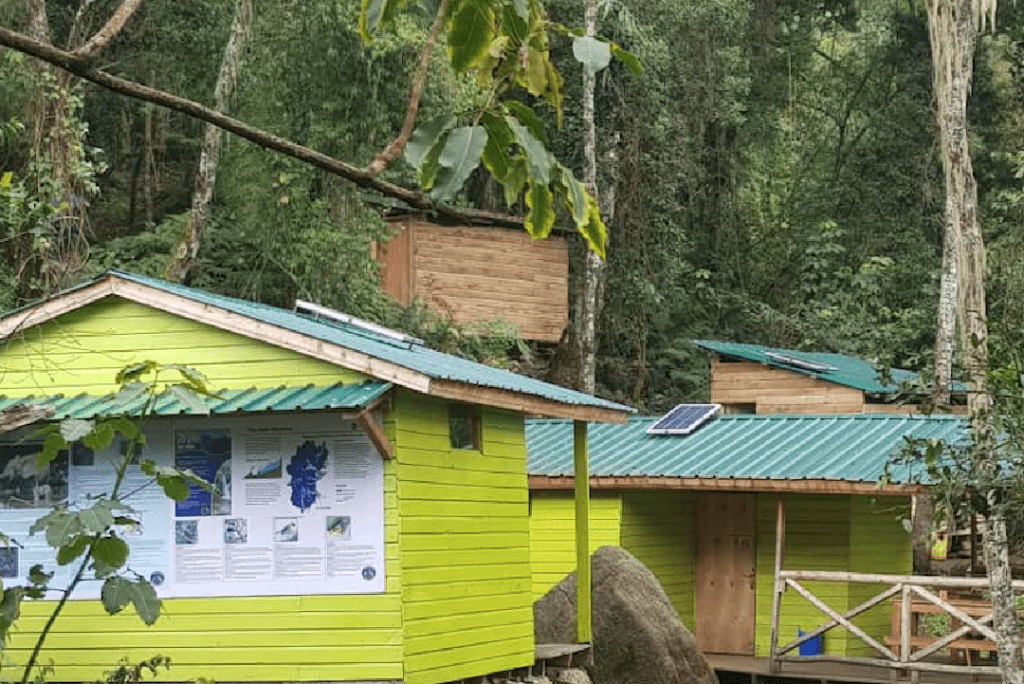
Sine Camp is the first mountain hut most trekkers on the Kilembe Trail sleep in, and it sets the tone for everything that follows. The hut here is compact and well-maintained, with a small communal eating area and separate sleeping bays. The interior smells of timber and mild dampness, the characteristic scent that all Rwenzori huts carry, a product of wood absorbing years of mountain moisture. The mattresses at Sine are decent, and the bunks are solid. The toilet is a long-drop pit latrine in a separate structure a short walk from the hut, clean and functional. The solar LED lights that run from a panel on the roof provide enough illumination for the evening meal and for reading before sleep, though not for much else. The stream water is collected and treated. There is no showering facility here, but the guides can provide a basin of warm water for washing if requested. On the first night, the volume feels like more than enough.
Mutinda Camp (3,688 m): The First High-Altitude Hut
Mutinda Camp is where the hut experiences upgrades, notably on the Kilembe Trail. The hut here is larger than Sine and features genuinely useful solar-powered lighting, better-maintained mattresses, and a kitchen setup that allows for more ambitious cooking. The communal eating area has a long wooden table and benches where trekking parties gather for dinner, and this communal dinner table is one of the defining social institutions of the Rwenzori trail. People who have walked in parallel all day, barely exchanging words, often find themselves deep in conversation over the evening meal. The shared experience of overcoming a challenging task together and the anticipation of doing it again tomorrow creates a sense of community that develops rapidly.
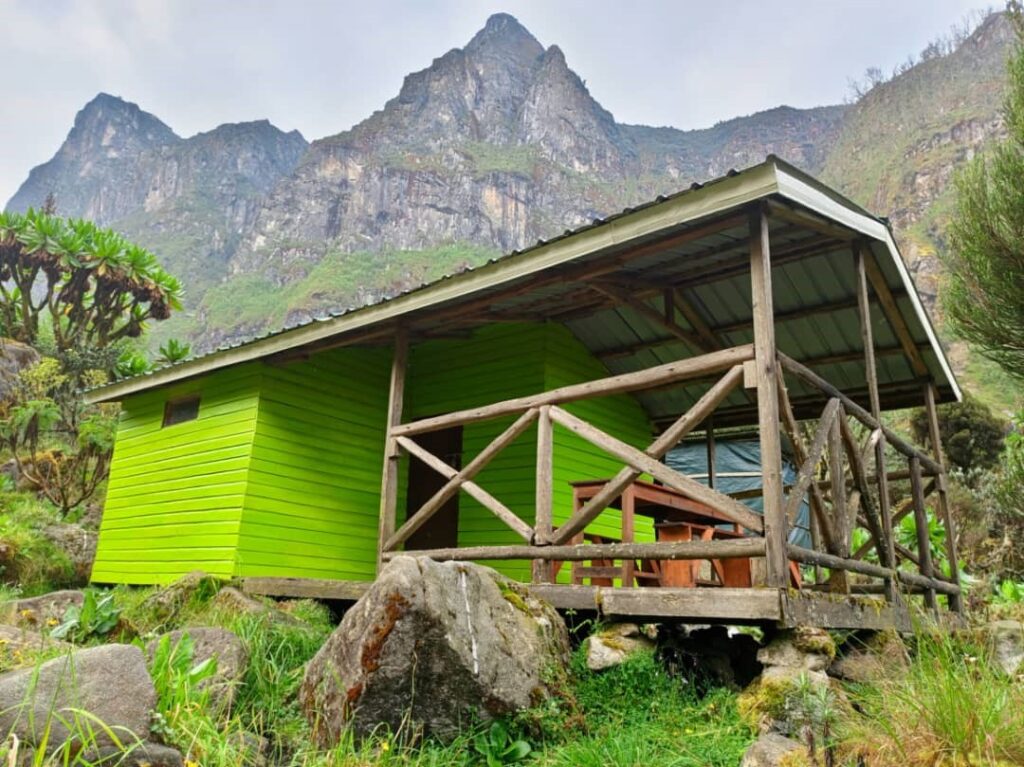
At this elevation, the temperature drops significantly after dark, and the hut walls are the primary windbreak between you and a cold Rwenzori night. The sleeping bags earn their place tonight. The toilets at Mutinda are an improved pit latrine system, cleaner and more structurally sound than a basic pit latrine, with a proper seat and reasonable ventilation.
Bugata Camp (4,062m): Where Altitude Makes Itself Known
Bugata Camp is the first night where a significant number of trekkers experience altitude effects during sleep. The hut is solidly built and positioned on the edge of the Nyamwamba Valley with views that on clear evenings are genuinely dramatic. The sleeping setup is standard Rwenzori: foam mattresses on wooden bunks and a sleeping bag mandatory. What changes at this elevation is the quality of rest; the periodic breathing described earlier is common here, and the vivid, slightly strange dreams that altitude sometimes produces are a frequent topic of breakfast conversation.

Bugata Camp has a basic pit latrine toilet, and at this altitude, the experience of a nighttime toilet visit with a headlamp on, cold air, the silence of 4,000 meters, and stars if the sky has cleared is one of those incidentally extraordinary things that mountain life produces without announcement. Some trekkers dread the night-time toilet visit. Others consider it one of the most memorable moments of the whole trek. The difference is almost entirely attitude.
Hunwick’s Camp (3,974m): The View That Justifies Everything
Hunwick’s Camp has the finest panoramic position of any hut on the Kilembe Trail. The camp sits on the edge of a wide valley, with Mount Stanley, Mount Baker, and Weismann Peak all visible from the hut door on a clear evening. This is the camp where trekkers most commonly describe standing outside in the cold after dinner, unable to go inside, because what is happening in the sky and on the ridgelines around them is too extraordinary to turn away from.

The hut itself is functional and well-maintained. The mattresses are serviceable, the eating area small but adequate. The toilet here is a combination of a basic pit latrine and, in recent seasons, an improved facility funded by an environmental organization working in the park that is cleaner and better ventilated than the standard pit latrine. Nights at Hunwick’s are cold enough that most trekkers sleep in at least a base layer inside their sleeping bag.
Margherita Camp (4,485m); The Summit Eve
Margherita Camp is the camp that the summit push makes famous, and it is the camp whose conditions trekkers most frequently ask about in advance. The hut here is intentionally minimal; it exists to shelter a summit party for one night before a pre-dawn departure, not to provide comfortable extended accommodation. The sleeping space is tight, with bunk beds arranged for maximum occupancy in a minimal floor area. The mattresses are foam, functional but thin. The eating area is tiny. The toilet is a basic pit latrine immediately behind the hut, the most utilitarian of all the camp toilet facilities on the trail.
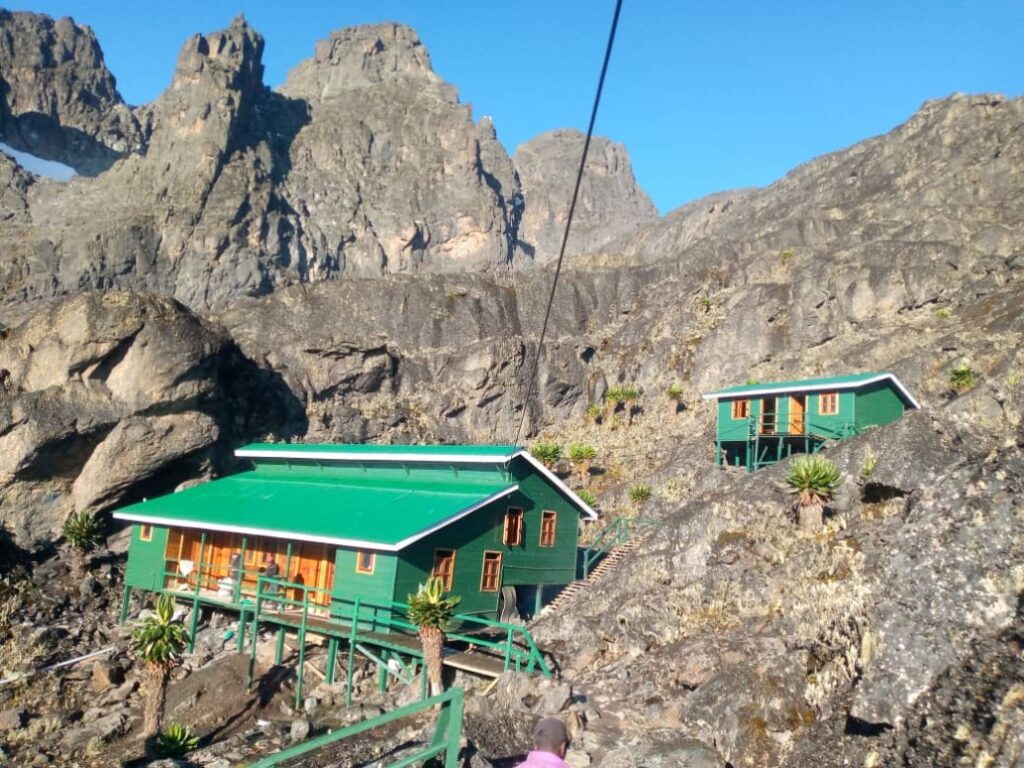
What Margherita Camp does, however, is provide the most extraordinary view any mountain shelter in East Africa can offer. From the hut’s position between large boulders (at 4,485 meters), the upper slopes of Mount Stanley rise directly above you. On clear evenings, the glacier is visible as a white mass catching the last light. The valley falls away below into the darkness of the moorland. The air is cold, clean, and almost painful in its clarity. No five-star hotel lobby produces this feeling. Margherita Camp does.
🌿 Guide InsightOn summit eve at Margherita Camp, almost no one sleeps well, and that is fine. The guides plan for it. The meals are timed to maximize rest opportunity, the gear check is done calmly and thoroughly, and the wake-up call at 1:30 a.m. does not ask anyone to have slept eight hours. It asks trekkers to have rested, to have eaten, and to be ready. Those three things are usually achievable even for people who lie awake for most of the night. |
The Toilets: The Honest Reality That Everyone Wants to Know
Let us address this directly, because it is the question that generates more private anxiety among prospective trekkers than any other aspect of mountain life, and indirect answers do not serve anyone well.
Every camp on the Kilembe Trail and Central Circuit Trail has toilet facilities. There is no camp where you are expected to manage without any structure at all. The standard facility across both trails is the long-drop pit latrine: a simple timber structure over a pit, with a seat or squat platform, and a door that closes. They are cleaned by the camp staff regularly, and the quality of cleanliness varies with the frequency of expeditions passing through. Busier camps are cleaned more regularly because the demand is more visible. The Kilembe Trail huts, being newer, generally have better-maintained latrine structures than some of the older Central Circuit huts.
The honest assessment of the smell: yes, there is one. It is a pit latrine at altitude. The cold temperatures reduce odour significantly compared to what a lowland pit latrine produces in tropical heat, and the higher-elevation camps Bugata, Hunwick’s, and Margherita are cold enough that the smell is minimal. The lower camps on warmer nights can be more pronounced. Hand sanitizer in the pocket before and after each visit is a standard practice that requires no further explanation.
Toilet Paper and Waste Management
Trekkers should bring their own toilet paper and carry a small ziplock bag for waste management. The Rwenzori Mountains National Park operates under Leave No Trace principles, and solid waste should be disposed of in the pit latrine rather than buried or scattered on the trail. The guides brief the trekkers at the start of the expedition. Following it is not a bureaucratic requirement; it is the difference between an ecosystem that remains clean for the next expedition and one that deteriorates under the cumulative weight of poor practices.
Night-Time Toilet Visits
At altitude, frequent urination at night is common; the body produces more urine as part of its acclimatization process, and the cold air increases the urgency. Nighttime toilet visits at the high camps Bugata, Hunwick’s, and Margherita require getting out of your sleeping bag, putting on warm layers, fitting boots, and navigating to the latrine with a headlamp. This task sounds arduous written out, but in practice it takes about four minutes each way, and the headlamp makes it manageable in any conditions. Some experienced high-altitude trekkers carry a wide-mouthed water bottle for use as a night vessel inside the hut, a longstanding mountain practice that the guides will neither recommend nor criticize.
Showering and Personal Hygiene
There are no showers in the Rwenzori mountain huts. This is a fact that needs no euphemism. Over seven or eight days on the mountain, personal hygiene consists of washing from a basin of warm water that the cook can prepare on request, using wet wipes for daily freshen-ups, and accepting that by Day 4, you and everyone else on the expedition smell like the mountains. This isn’t as bad as it seems, since everyone is in the same boat and the cold, clean mountain air quickly normalizes the situation. Baby wipes, a small microfiber towel, and a tube of biodegradable soap are the most important personal hygiene items to pack. Dry shampoo is useful if you are particular about your hair. Most people stop caring about their hair somewhere around Day 2.
⚠️ Hygiene RealityHand hygiene is genuinely important at altitude, not for aesthetics but for health. The combination of close quarters in mountain huts, limited water, and altitude-suppressed immune function means that gastrointestinal illness, while not common on well-managed Rwenzori expeditions, can move through a group quickly if hand hygiene is neglected. A small bottle of hand sanitizer used consistently before every meal and after every toilet visit is the single most effective disease prevention measure available on the mountain. |
Warmth: How Cold Is It, and How Do the Huts Handle It?
The temperature range across the Rwenzori mountain huts spans roughly from eight degrees Celsius on a warm night at Sine Camp to minus five or below on a cold night at Margherita Camp. The variance is significant, and the overnight temperatures are the coldest that most equatorial African trekkers will have encountered outside of South Africa’s Drakensberg. Understanding the thermal environment at each elevation level is important for both gear selection and expectation management.
At the lower camps Nyabitaba, Sine, John Matte, and Kalalama, temperatures at night typically drop to between five and ten degrees Celsius. A sleeping bag rated to zero degrees is comfortable at these elevations, and the huts retain some ambient warmth from the day’s slightly warmer air and from the body heat of their occupants. There is a domestic quality to evenings at the lower camps that the high camps do not replicate: the temperature is cold but not harsh, the sleeping bag makes the bunk genuinely comfortable, and there is something almost cozy about the sound of rain on the roof when you are warm inside it.
At the mid-elevation camps Mutinda, Bujuku, and Kitandara, overnight temperatures range from zero to five degrees. This stage is the level at which a sleeping bag rated to zero degrees is fully engaged rather than comfortably excessive, and trekkers who have brought an inadequate bag begin to notice. Wearing a thermal base layer inside the sleeping bag is standard practice at these elevations. The huts here are functional thermal environments; they keep the wind and rain out, and with a proper kit, the nights are manageable and often genuinely restful.
At the high camps Bugata, Hunwick’s, Elena, and Margherita, overnight temperatures routinely reach minus three to minus eight degrees, and on particularly cold, clear nights at Margherita, they can drop further. A sleeping bag rated to minus five is the bare minimum; one rated to minus ten is better. The huts at these elevations are built for structural resilience against the conditions rather than thermal comfort, and there is no escaping the cold entirely; you feel it whenever you emerge from your sleeping bag, and the morning’s first movements involve a specific re-warming process that trekkers quickly learn to build time for.
Layering Inside the Hut
The standard evening hut-life layering system adopted by experienced Rwenzori trekkers is a base thermal layer worn all evening, a fleece midlayer added for dinner, a warm hat on after dinner, a full sleeping bag used as intended, and the base layer kept on inside the bag. Changing into dry thermal layers before entering the sleeping bag is important. Wet base layers from the day’s trekking conduct heat away from the body, and sleeping in damp clothing is one of the most reliable ways to have a cold, miserable night. Guides usually provide a quiet reminder to change at camp arrival. Listen to it.
💡 Gear Reality CheckA sleeping bag is the single most important piece of gear you bring to the Rwenzori. More important than your boots, more important than your rain jacket. A trekker with worn boots and an excellent sleeping bag will sleep well and face the next day with energy. At every camp, there will be a hiker with outstanding boots but a subpar sleeping bag who is terrified of the night. Rated at 0°C, it is the absolute minimum for the lower trail. A rating of -5°C or below is correct for summit expeditions. For a complete breakdown of what boots work best on the Rwenzori bogs and how to choose footwear for the full trail, the detailed gear guide has you covered. |
Social Life in the Huts: Other Trekkers, Your Team, and the Evening Hours
One of the most consistently surprising aspects of Rwenzori hut life is how socially rich the evenings are. The Rwenzori receives roughly 1,000 to 1,500 trekkers per year compared to 50,000 or more on Kilimanjaro, which means the huts are never crowded in the way that East Africa’s most popular mountain can be, and the people you encounter there are almost universally the kind of self-selecting adventurers who have done their research, thought carefully about what they were getting into, and shown up prepared and committed. The low trekker numbers on the Rwenzori are one of the mountain’s most underappreciated qualities, and they shape the social character of hut life in a fundamental way.
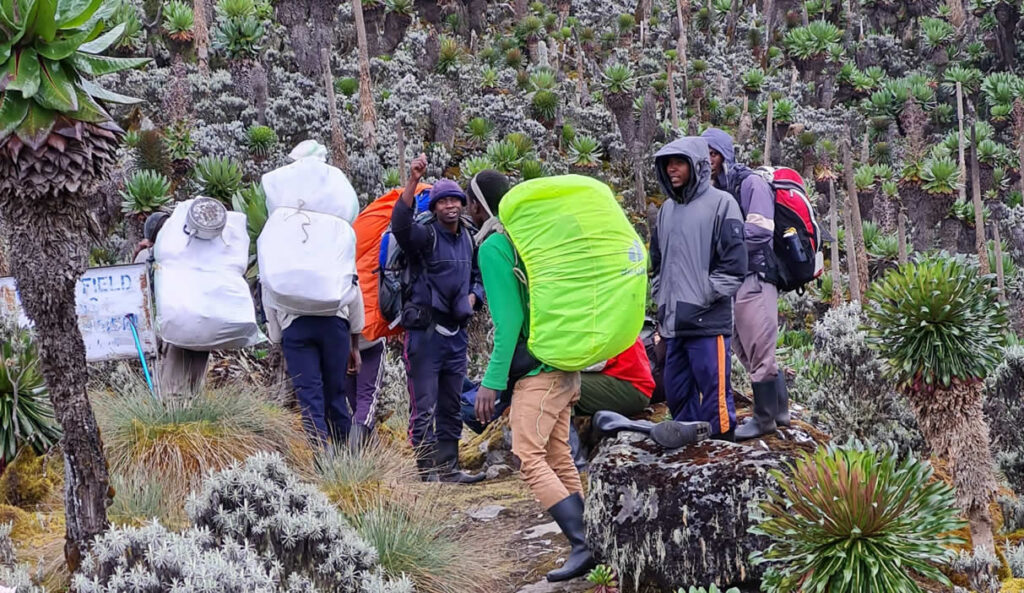
Evenings in the huts follow a reliable rhythm. Arrival at camp triggers the first hot drinks, followed by the sound of wet boots being left at the door, dry layers being found, and the gradual assembly of the expedition around the camp’s eating table. Years of experience in reading the energy levels of trekking parties inform the timing of the guides’ dinner service. Food arrives when it is most needed, which is usually within an hour of camp arrival. At Rwenzori Hut dinner tables, conversations follow food and cover geography, logistics, previous mountains, careers, the question of why any sensible person would choose to do this kind of thing voluntarily, and occasionally the more private questions that long days at altitude tend to bring to the surface.
The guides themselves are an important part of the evening social dynamic. Rwenzori Trekking Safaris guides are Bakonzo people from the communities that have lived alongside these mountains for generations, and the dinner table is often where trekkers learn something of the mountain’s human history, the Bakonzo relationship with the Rwenzori, the names they have given the peaks and valleys, and the traditional knowledge that the guides carry alongside their professional mountain expertise. These are conversations that do not happen on the trail. They happen in the huts, in the evenings, over tea.
Electronic Life at Altitude
Phone batteries die faster in the cold. Power banks become the most-borrowed item in any Rwenzori hut. A power bank with at least 20,000 mAh capacity enough to charge a phone four or five times is a reasonable provision for an eight-day expedition. At the Kilembe Trail camps that have solar panels (primarily Mutinda), limited charging is possible for phones and cameras, but the solar generation at altitude and in persistently cloudy conditions is modest, and the competition for available charge points is real. Manage your device use conservatively on the mountain, and you will arrive at the trailhead with enough battery remaining to call home with excellent news.
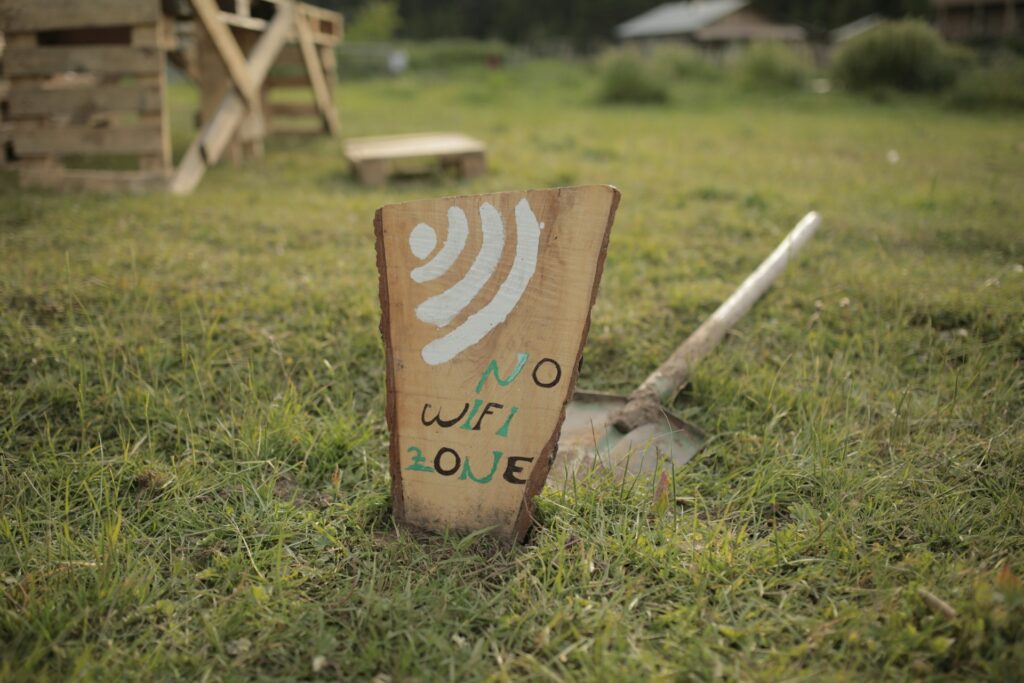
Wi-Fi does not exist in the Rwenzori huts. Mobile signal is available on some lower camps and at the Mutinda viewpoint, but it is inconsistent and should not be relied upon for anything time-sensitive. Part of the experience of the Rwenzori is what makes it so different from the connected, documented, cataloged reality of ordinary life: the genuine disconnection that the mountain enforces. Most trekkers, after the initial slight discomfort of the first connectivity gap, find this deeply welcome.
Drinking Water: How It Is Sourced and How Safe It Is
Drinking water in the Rwenzori huts is sourced from mountain streams and treated at each camp. The treatment method varies by camp and guide team preference: boiling is the universal backup, with water purification tablets or filters used by some teams as a first-line treatment. The water that arrives at your cup or water bottle from the camp kitchen is safe to drink. Drinking directly from trail streams without treatment is not recommended, regardless of how clear and cold the water appears. The Rwenzori’s streams are clean, but Giardia and bacterial contamination are possible at all elevations where animals and previous trekkers have been present.
Carrying two liters of drinking capacity on the trail each day is the standard recommendation. Hydration is one of the most effective acclimatization tools available, and the guides consistently remind trekkers to drink before they feel thirsty. At altitude, thirst is a lagging indicator; by the time you feel it, you are already somewhat dehydrated. Starting each day fully hydrated and maintaining intake through the walking day is the simplest thing you can do for your altitude performance.
What to Pack Specifically for Rwenzori Hut Life
The full 16-week training plan for Rwenzori trekking covers physical preparation in detail, and the cost breakdown for a Rwenzori expedition covers what is included in the package. For hut life specifically, the domestic layer of the expedition that the itinerary pages do not detail here is what makes the most significant difference to daily quality of life on the mountain.
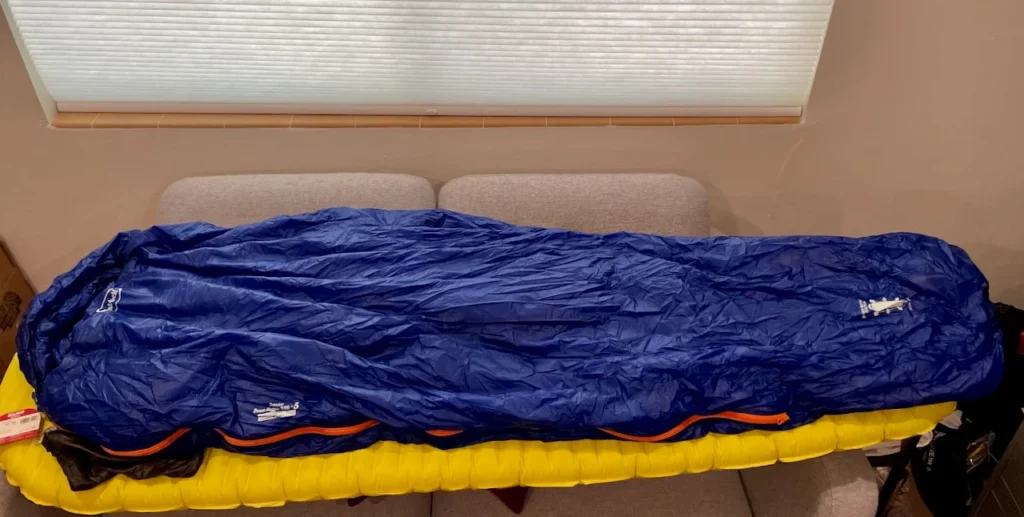
A sleeping bag rated to at least minus five degrees Celsius for summit expeditions is the non-negotiable starting point. A silk or cotton sleep liner adds warmth and cleanliness. A set of dry thermal base layers kept exclusively for sleeping and camp use, never worn on the trail, ensures warmth and hygiene throughout the week. Baby wipes (biodegradable, ideally) replace daily showers without complaint. A headlamp with fresh batteries and a spare set handles all lighting needs inside and around the huts. A power bank of 20,000 mAh handles device charging for a full eight-day expedition. Earplugs for the nights when the hut is fuller and snoring is enthusiastic. Hand sanitizer, always accessible and used consistently.
If you are 50 or older and wondering whether hut life is manageable at your age and fitness level, the honest guide to older hikers on the Rwenzori addresses that question directly. The short answer is that hut life makes no age-based demands; the beds, the food, and the toilets are equally accessible to a 30-year-old and a 65-year-old. The physical demands of the walking days vary based on fitness rather than age.
🌿 Final Guide PerspectiveTrekkers who have never stayed in a mountain hut before sometimes arrive at Sine Camp with the private worry that they will be uncomfortable for a week in a way they cannot manage. Those same trekkers leave Kiharo Camp on Day 7 saying they wish it had been two weeks. Mountain hut life does something specific to people: it strips away the noise and complexity of ordinary existence and replaces it with basic, obvious daily requirements: walk, eat, sleep, drink water, and keep moving. That simplicity, experienced in one of Africa’s most extraordinary landscapes, is one of the rarest luxuries available to anyone with a passport and eight days. |
Frequently Asked Questions: Rwenzori Hut Life
What are the beds like in the Rwenzori mountain huts?
The beds in Rwenzori mountain huts are wooden bunk beds with foam mattresses, present at every camp on both the Kilembe Trail and the Central Circuit Trail. The mattresses are typically four to six centimeters of foam, covered in waterproof or wipeable material on the newer Kilembe Trail huts and standard foam on the older Central Circuit huts. The bunks are solidly built and functional. What makes the difference between a good night’s sleep and a cold, miserable one is the sleeping bag you bring: a bag rated to at least zero degrees Celsius is essential for the lower camps, and a bag rated to minus five degrees or colder is necessary for the high camps, including Margherita Camp at 4,485 metres. Pillows are not typically provided; a compression stuff sack filled with a fleece layer makes an adequate substitute and takes no additional pack space.
What food is served in the Rwenzori mountain huts?
Food in the Rwenzori mountain huts is considerably better than most first-time trekkers expect. All meals are prepared by dedicated cooks who travel and work with the trekking team throughout the expedition. Breakfasts include hot drinks, porridge or eggs, toast or chapati, and sometimes fruit. Lunches are packed trail meals consisting of sandwiches, hard-boiled eggs, biscuits, fruit, and energy bars. Dinners are full hot meals, typically a soup course followed by a substantial main course of rice, pasta, or ugali with vegetable stew, bean curry, or a meat sauce. The food is well-seasoned and calorie-rich by design. Vegetarian and vegan diets are fully accommodated with advance notice. Hot tea, coffee, and hot chocolate are available throughout the day and evening at all camps.
What are the toilets like in the Rwenzori mountain huts?
Every camp on the Rwenzori’s main trekking routes has toilet facilities in the form of long-drop pit latrines. Camp staff regularly clean these enclosed timber structures, which feature seats or squat platforms and closing doors. The standard of cleanliness varies with trail traffic; busier camps are cleaned more frequently. The cold temperatures at altitude, especially in the higher camps above 4,000 metres, significantly reduce the smell. Trekkers should bring their toilet paper and hand sanitizer. There are no flush toilets, no running water in the latrine structures, and no chemical treatment facilities of the type found in some African national park campsites. The facilities are functional, clean enough for daily use without significant discomfort, and wholly consistent with what the alpine environment makes possible.
Is there Wi-Fi or a mobile signal in the Rwenzori huts?
There is no Wi-Fi in any Rwenzori mountain hut on either the Kilembe Trail or the Central Circuit. Mobile signal is available at some lower elevation camps; Sine Camp and Nyabitaba occasionally have usable signal and at elevated viewpoints such as the Mutinda Lookout. Above 3,500 metres, the signal becomes unreliable and should not be depended upon for communication. Trekkers should inform their contacts at home that they will be unreachable for the mountain portion of the expedition and provide expected return dates. A power bank of at least 20,000 mAh is recommended for device charging across eight days, as electrical charging is only available at camps with solar panels, primarily Mutinda Camp on the Kilembe Trail.
Can you shower or wash in the Rwenzori huts?
There are no shower facilities in any Rwenzori mountain hut. Personal hygiene across the trek consists of washing from a basin of warm water that the camp cook can prepare on request, supplemented by biodegradable wet wipes for daily freshen-ups. Trekkers should pack a small microfiber towel, biodegradable soap, wet wipes, and hand sanitizer as their core hygiene kit. Laundry is not practical on the mountain. Pack enough base layers and socks to manage without washing, or accept that socks worn on the mountain will smell like the mountain by the end. Most trekkers find that after Day 2, personal hygiene concerns recede in direct proportion to the altitude gained and the views encountered.
How cold are the Rwenzori huts at night?
Night temperatures in the Rwenzori huts range from approximately eight degrees Celsius at the lowest elevation camps to minus five or below at Margherita Camp on summit eve. The huts themselves provide shelter from wind and rain but are not heated; the interior temperature on a cold night at Hunwick’s Camp or Margherita Camp is functionally the same as the exterior. A sleeping bag rated to minus five degrees Celsius is appropriate for summit expeditions. For treks that reach only as high as Mutinda or Bugata, a bag rated to zero degrees Celsius is adequate. Wearing a dry, thermal base layer inside the sleeping bag is standard practice at all elevations above 3,500 meters. The cold is manageable with proper equipment and is, for many trekkers, one of the more bracing and clarifying aspects of the whole experience.
Will I have the hut to myself or share with other trekkers?
All trekking parties passing through on the same day share the Rwenzori mountain huts. Whether you share a hut with other parties depends on the timing of your expedition. During the busy dry-season months of June to September and December to March, it is common to share hut space with one or two other small groups. Outside peak season, many trekkers have huts largely to themselves. The low overall visitor numbers in the Rwenzori, roughly 1,000 to 1,500 per year in total, mean that overcrowded huts are genuinely rare. The social dynamic created by sharing a hut with fellow trekkers is generally one of the more valued aspects of the experience: the people you meet in Rwenzori mountain huts are, by definition, committed and intriguing, and the evenings spent sharing dinner tables and stories are a distinct and memorable part of what the mountain offers.
What should I pack specifically for sleeping in the Rwenzori huts?
The most important item is a sleeping bag rated to at least minus five degrees Celsius for summit expeditions or zero degrees Celsius for treks that reach only the Mutinda or Bujuku level. Additionally useful: a silk or cotton sleep liner (adds warmth and hygiene), a set of dry thermal base layers kept solely for sleeping, a beanie or warm hat to sleep in at high camps, a headlamp with spare batteries for nighttime toilet visits, earplugs, and a small personal first aid kit including any prescription medication. A power bank handles device charging. Baby wipes and hand sanitizer are daily-use essentials. All technical mountaineering equipment, crampons, ice axe, and harness are provided as part of the expedition package and do not need to be brought from home.
Stop Hesitating. Start Planning.
The Rwenzori mountain huts are not luxury. They are better than that; they are the right shelter in the right place, managed by guides and cooks who have spent years making mountain life as comfortable and nourishing as the environment permits. The food is excellent. The beds are warm enough. The toilets work. The evenings around the camp table are among the best hours the whole expedition has to offer. And the mountain outside the hut door, in every direction, is extraordinary beyond any description this article can provide.

Rwenzori Trekking Safaris operates fully guided expeditions on the Kilembe Trail, the Central Circuit Trail, and a range of shorter hut-to-hut options, including the 4-Day Mutinda Loop for those wanting a first taste of mountain hut life before committing to a summit expedition. If you are ready to stop researching and start moving, we are ready to plan your adventure with you.
The Mountain Is Waiting.
Get in touch and we will build your expedition from the ground up.