Discover why the Rwenzori Mountains are one of Africa’s last great mountain challenges glaciers, terrain, and wilderness unlike any other peak.
There is a mountain in western Uganda that most of the world has never heard of. It does not appear on the standard bucket lists that circulate among recreational hikers, nor does it carry the global brand recognition of Kilimanjaro or the Himalayas. It has no airport on its slopes, no cable cars inching toward its glaciers, and no Instagram-saturated trail dusted by tens of thousands of boots every season. What it does have, rising above the great rift valley on the equator, is something far rarer: an uncompromising, extraordinary, genuinely wild mountain challenge that belongs entirely in a category of its own.
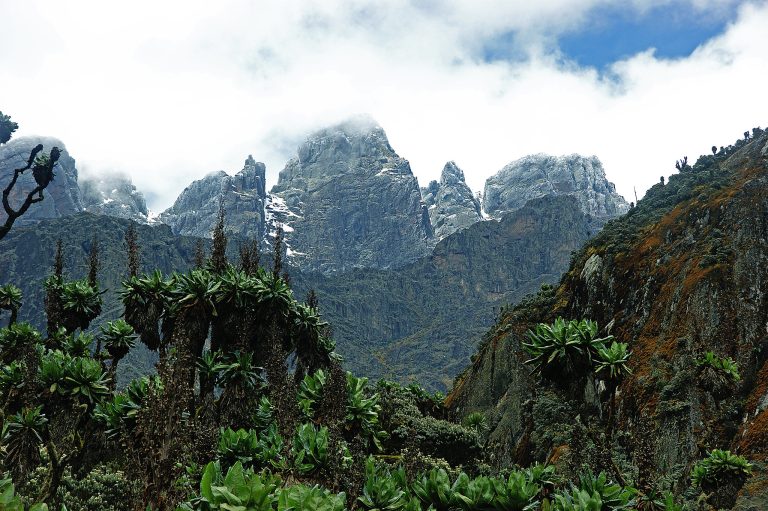
The Rwenzori Mountains also known as the Mountains of the Moon are the highest non-volcanic range in Africa and one of the last truly remote alpine environments on the continent. They straddle the Uganda-DRC border at the heart of the Albertine Rift, their summits cloaked in equatorial glaciers that have persisted through millennia of African sunshine and are now, in one of the saddest ironies of our age, melting away under the pressure of a changing climate. To trek the Rwenzori today is to stand inside a mountain world that is both ancient and urgently, irreversibly finite. It is, in every meaningful sense, one of the last great mountain challenges Africa has to offer.
This article makes the case for that claim in full examining what separates the Rwenzori from every other mountain on the continent, why it belongs on the shortlist of any serious mountaineer or adventure trekker, and what it actually takes to meet the challenge it presents.
Africa’s Great Mountain Challenges: Setting the Stage
To understand what makes the Rwenzori special, it helps to first understand what Africa offers in the way of major mountain challenges. The continent is home to a small but remarkable collection of high-altitude environments, each with its own distinct character, difficulty, and draw.
Kilimanjaro: The Giant of East Africa
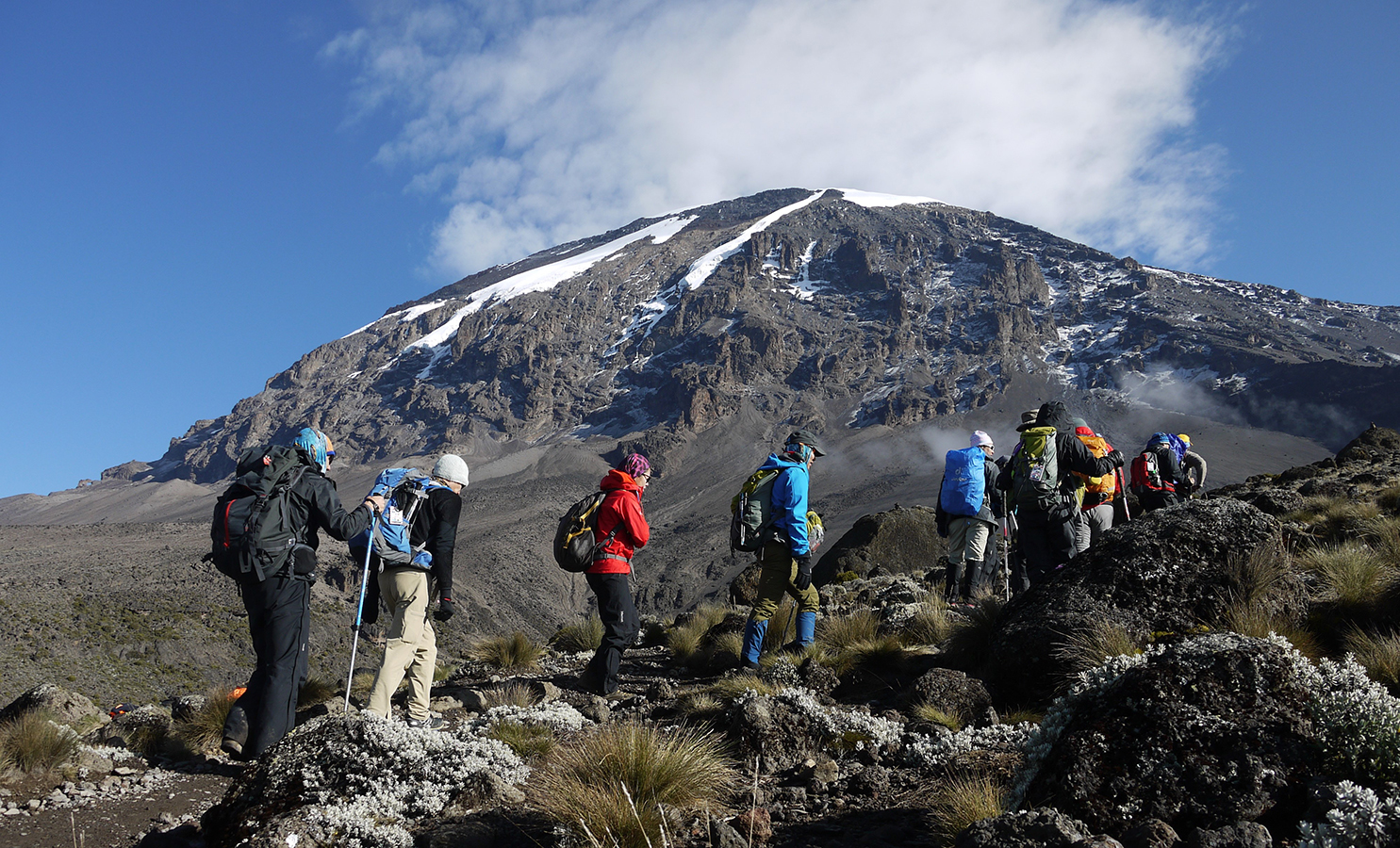
At 5,895 metres above sea level, Mount Kilimanjaro in Tanzania is Africa’s highest peak and the world’s tallest free-standing mountain. It is also, for many travellers, the gateway drug to serious altitude trekking. Its Lemosho and Machame routes offer genuine grandeur wide afro-alpine moorlands, a dramatic crater rim, and the psychological weight of approaching 6,000 metres and the summit is a serious altitude challenge for any non-acclimatised trekker. But Kilimanjaro’s trails are broad, well-maintained paths on a volcanic cone, and the mountain now receives upwards of 50,000 visitors a year. It is a magnificent experience but, in terms of terrain complexity and genuine wilderness, a fundamentally accessible one.
Mount Kenya: Technical and Spectacular

Mount Kenya, at 5,199 metres, is Africa’s second-highest peak and significantly more technical than Kilimanjaro. The twin summits of Batian and Nelion require serious rock-climbing skill and experienced mountain guides. Point Lenana at 4,985 metres, the trekking summit, is achievable without technical climbing but demands proper fitness and acclimatisation. Kenya’s mountain scenery its glaciated rock towers, the extraordinary biodiversity of its moorland zones, and its relative remoteness make it one of Africa’s finest mountain experiences. It is harder than Kilimanjaro, more technical, and less visited. But its infrastructure remains relatively accessible and its summit objectives well-catalogued.
The Ethiopian Highlands and the Simien Mountains
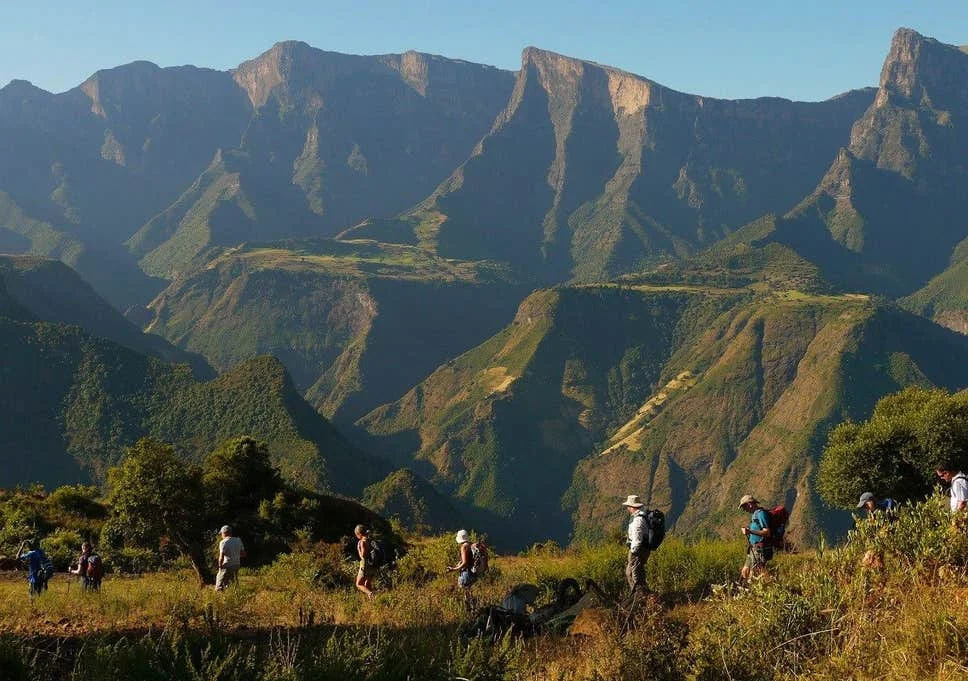
The Simien Mountains in northern Ethiopia contain Ras Dejen, Africa’s fourth-highest peak at 4,550 metres. The Simien plateau trekking circuit is one of Africa’s most spectacular walks a high escarpment route above vertiginous drops, populated by gelada baboons and Ethiopian wolves, crossing landscapes that feel entirely unlike anywhere else on earth. But its maximum altitude and technical difficulty both fall well below those of the main East African summits.
Virunga Volcanoes: Nyiragongo and Karisimbi
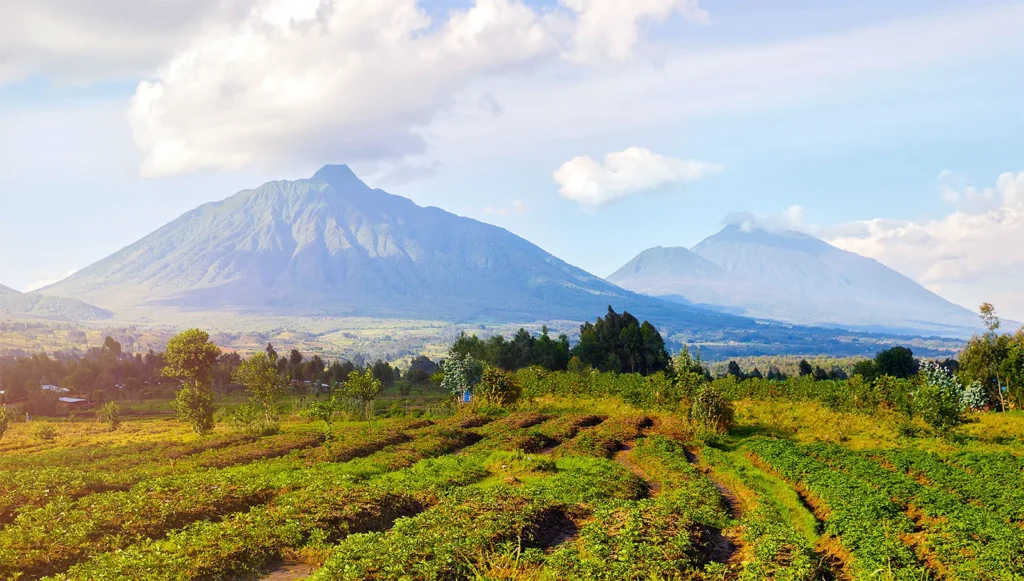
The Virunga chain straddles Rwanda, Uganda, and DRC and includes several significant peaks, most notably Nyiragongo (3,470 m), whose lava lake makes it one of the most extraordinary geological spectacles in Africa, and Karisimbi (4,507 m), the highest of the Virunga volcanoes. Karisimbi is a full-day alpine climb requiring technical camping and genuine physical commitment. But its altitude and terrain complexity remain in a different tier from the Rwenzori.
Mount Stanley and the Rwenzori: A Different Category
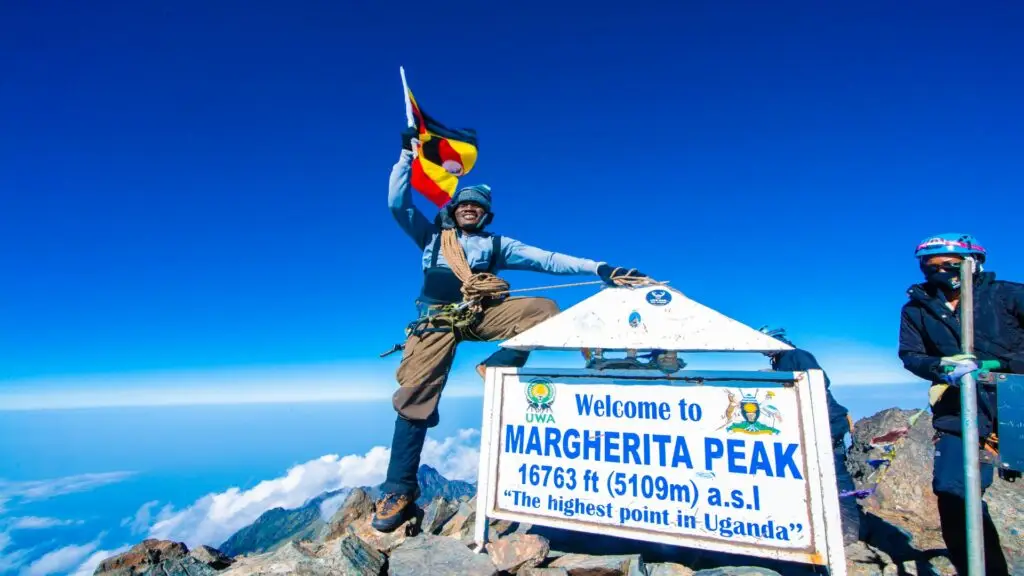
And then there is the Rwenzori. At 5,109 metres, Margherita Peak on Mount Stanley sits at Africa’s third-highest point above Mount Kenya’s trekking summit, below Kilimanjaro’s crater rim, but separated from both by a quality of challenge that altitude statistics alone do not capture. What the Rwenzori offers that no other African mountain provides is a convergence of factors terrain complexity, ecological strangeness, climate unpredictability, genuine technical demand, and extraordinary remoteness that collectively create a mountain challenge of a completely different order.
| A Guide’s Perspective
I have stood on the summits of most of Africa’s great mountains. What differentiates the Rwenzori is not any single factor but the cumulative weight of the experience: the terrain that fights you every day, the weather that can change four times in an afternoon, the glacier crossing on the equator, and the deep, surreal wilderness that surrounds you throughout. There is nothing else in Africa quite like it. |
What Makes the Rwenzori One of Africa’s Last Great Mountain Challenges
The claim that the Rwenzori represents one of the last great mountain challenges in Africa is not hyperbole. It is supported by a specific and measurable set of characteristics that distinguish these mountains from every other highland environment on the continent.
Terrain That Demands Everything You Have
The first and most immediate thing that strikes any experienced mountain trekker on the Rwenzori is the terrain. Unlike the relatively straightforward paths of Kilimanjaro or the well-managed moorland circuits of Mount Kenya, the Rwenzori trail system presents terrain that is technically demanding from the first day to the last.
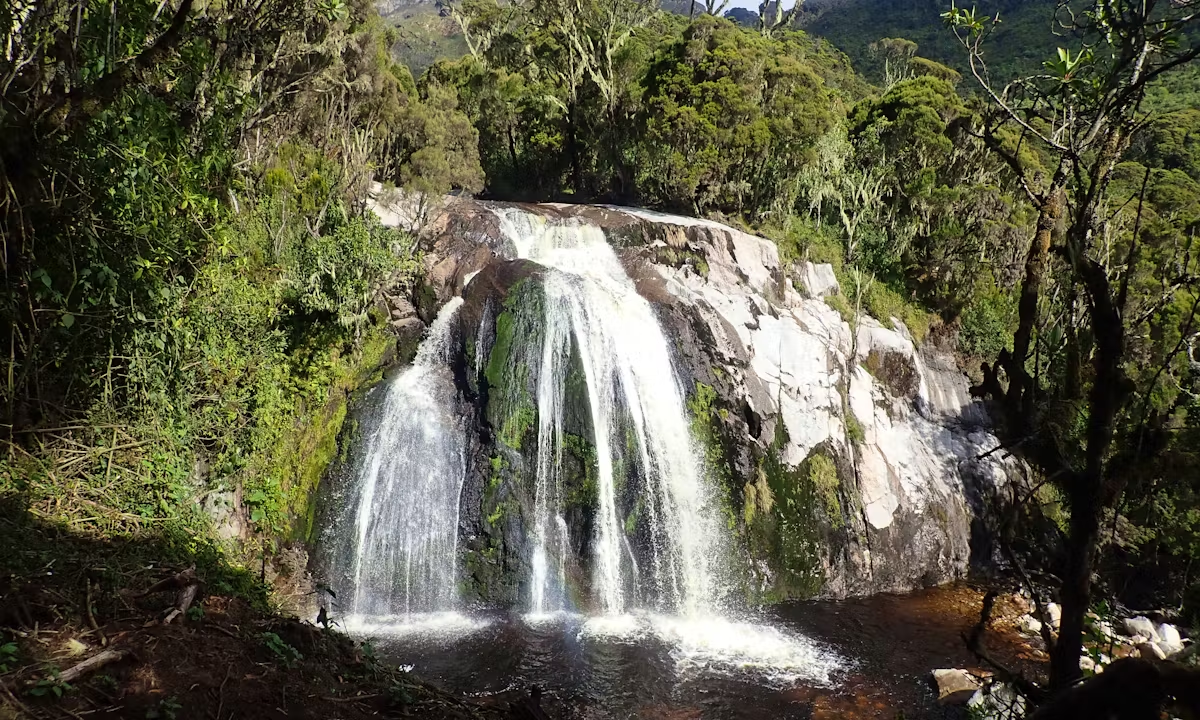
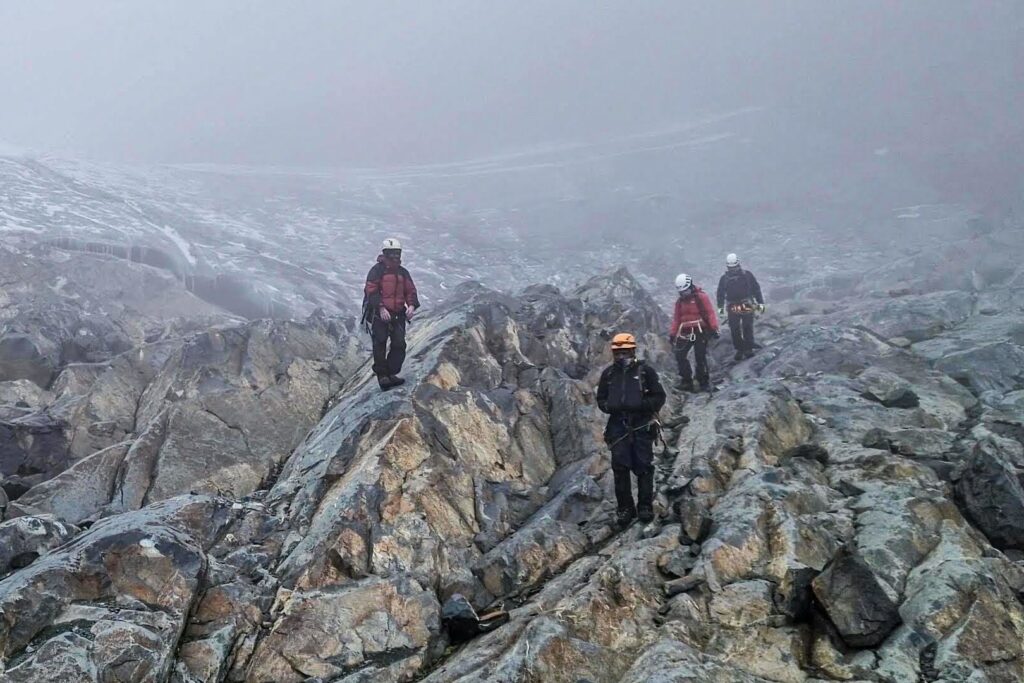
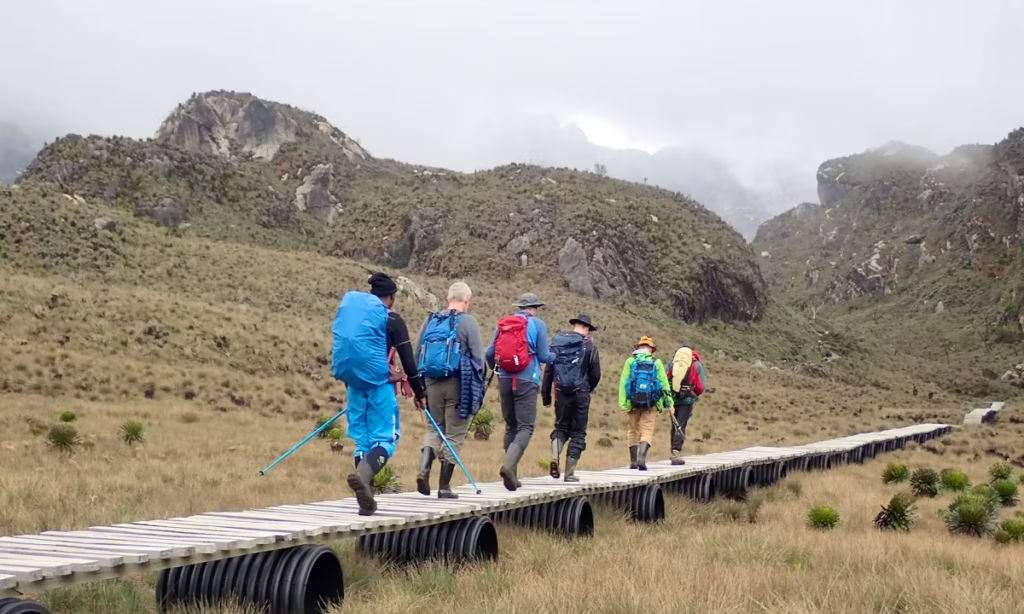
The lower trails pass through dense montane rainforest where the path is a river of deep mud, roots, and saturated organic matter that has been accumulating for centuries. Progress is measured not in kilometres per hour but in careful, deliberate steps each one assessed before weight is transferred. The middle sections transition through heathland and Afro-alpine moorland where the ground is bog: ankle-deep, sometimes knee-deep, always unpredictable. The upper mountain, above 4,000 metres, combines loose rock, steep fixed-rope sections, and the glacier crossing above Elena Hut that requires crampons and ice axes. As our comprehensive difficulty assessment makes clear, this mountain is harder than Kilimanjaro not because of altitude but because the terrain itself is an active participant in the challenge.
Footwear That Conventional Mountain Wisdom Gets Wrong
One of the clearest indicators of the Rwenzori’s unique character is what it demands in terms of footwear. Conventional waterproof hiking boots the standard kit for virtually every other mountain on earth fail consistently on this mountain. The deep bogs of the lower and middle trail sections simply overwhelm even the most technically advanced Gore-Tex boot. Our Rwenzori boot and gear guide is unambiguous on this point: rubber Wellington-style boots with neoprene liners are the only footwear that genuinely functions here. A mountain that demands you rethink your most fundamental gear assumptions from the outset is a mountain operating by its own rules.
The Weather: A Living, Shifting Force
The Rwenzori receives precipitation in every month of the year. This is not simply a matter of occasional rain; it is the defining environmental condition of the range and the reason these mountains have supported equatorial glaciers for millennia. The best time to visit is a meaningful question on the Rwenzori in a way it is not on Kilimanjaro, where dry season conditions are reliably more favourable. On the Rwenzori, even in the drier months of December to February and June to August, multi-hour rain events are frequent, clouds can descend to 3,000 metres without warning, and wind conditions on the upper mountain change with extraordinary speed. Managing this weather with the right layering system, the right shelter strategy, and the right expectation-setting is a core part of the Rwenzori trekking challenge.
The Glacier Crossing: Equatorial Ice at 5,000 Metres
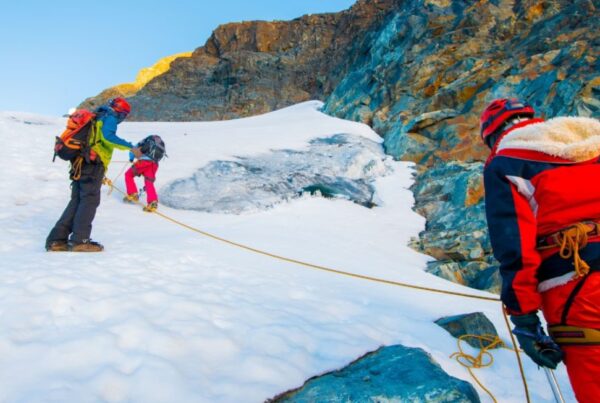
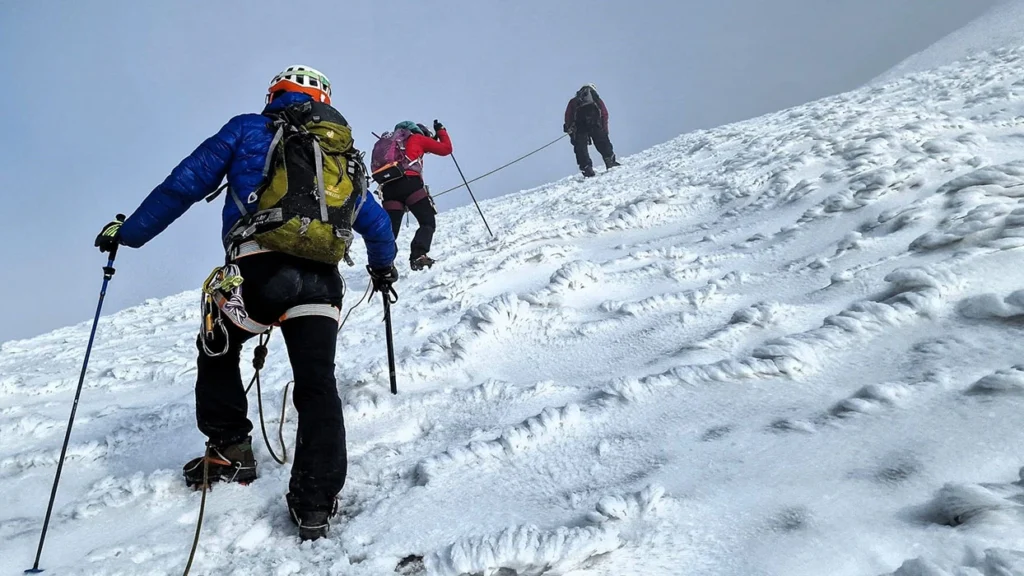
Perhaps the single most distinctive element of a Rwenzori summit attempt is what happens above Elena Hut. At 4,541 metres, the day before summit day, trekkers arrive at this small metal refuge clinging to the rocks below the Elena Glacier. The next morning, in the hours before dawn, they move out across that glacier with crampons fitted and ice axes in hand crossing permanent glacial ice at the equator, one of the most geologically extraordinary situations available anywhere in mountain travel.
The Stanley Plateau above is a high-altitude ice sheet sitting precisely on the equatorial line. The summit of Margherita Peak at 5,109 metres is reached by a final steep snow slope above the plateau. The views on a clear day extend west across the Congo Basin and east over the Ugandan savanna plains. On no other mountain in Africa does a summit day involve a genuine glacier crossing as an intrinsic technical element of the ascent.
The Glaciers Are Disappearing: Now or Never
This element of the Rwenzori challenge carries a weight that makes it unlike anything else in African mountaineering: it is running out of time. The glaciers of the Rwenzori have retreated by over 80% since 1906, when the Duke of Abruzzi made the first systematic survey of the range. Scientific projections suggest total disappearance within the coming decades if current climate trends continue. The generation of trekkers alive today is quite possibly the last that will be able to cross glacial ice on the equator. This is both a conservation tragedy and a compelling reason perhaps the most powerful reason of all to climb the Rwenzori now.
Six Peaks, Multiple Summits, Weeks of Expedition
The Rwenzori is not a single mountain with a single summit. It is a range of six major massifs, each with multiple named peaks, creating an expedition objective of potentially enormous scope. Mount Stanley (5,109 m) sits at the apex, but below it come Mount Speke (4,890 m), Mount Baker (4,843 m), Mount Emin (4,798 m), Mount Gessi (4,715 m), and Mount Luigi di Savoia (4,627 m). Our 13-day, 6-peak grand expedition and 18-day all-peaks program make the full scope of this ambition clear: this is a mountain range that can occupy the most serious mountaineer for weeks on end, delivering fresh challenges and fresh summits with each successive day.
Biodiversity Beyond Anything Else in Africa
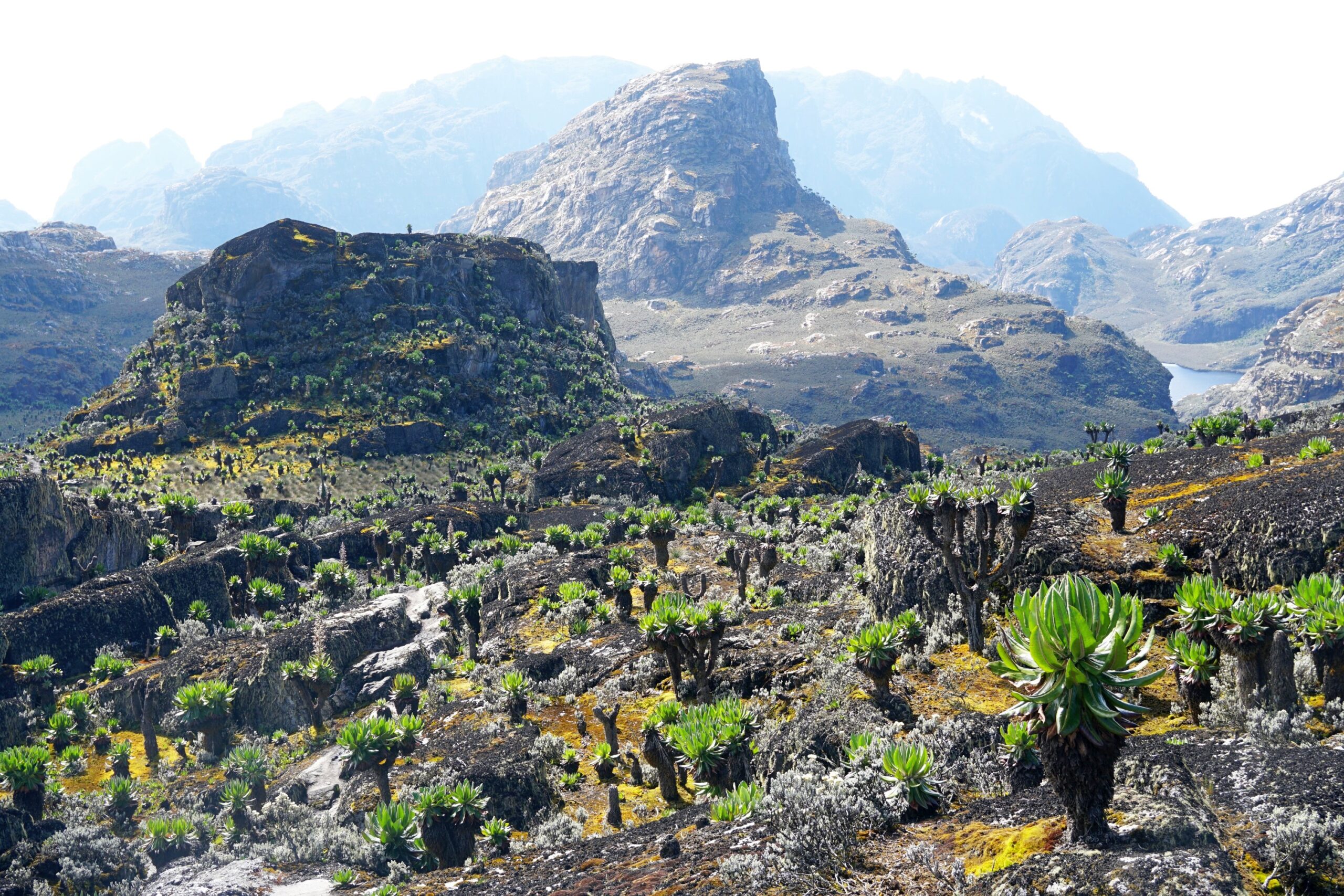
The Rwenzori range sits at the intersection of the Congo Basin and the East African Rift, two of the most biologically rich regions on earth, and the result is a mountain ecosystem of extraordinary diversity. The five distinct vegetation zones montane forest, bamboo forest, heathland, Afro-alpine moorland, and the nival zone each host unique assemblages of plants and animals. The Afro-alpine zone in particular, with its three-metre giant lobelias and five-metre giant groundsels draped in moss and mist, produces a landscape so botanically alien that experienced trekkers consistently describe it as the most surreal environment they have ever walked through. The Rwenzori’s wildlife includes chimpanzees, L’Hoest’s monkeys, olive sunbirds, the endemic Rwenzori turaco, three-horned chameleons, and a full complement of Albertine Rift endemic species found nowhere else on earth.
True Remoteness and Genuine Wilderness
The Rwenzori receive approximately 1,000 trekkers per year across all routes. Kilimanjaro receives more than 50,000. The contrast is stark, and for serious mountain travellers who value genuine wilderness over curated experience, it is one of the Rwenzori’s most compelling qualities. As our detailed visitor statistics analysis shows, these mountains offer something that is becoming genuinely rare in twenty-first-century adventure travel: an environment that has not been processed, packaged, or domesticated for mass consumption. On a Rwenzori expedition, days can pass without seeing another trekking party. The wilderness is not simulated; it is actual.
The Rwenzori as a Bucket-List Mountain: Who This Challenge Is For
The Rwenzori is not, in the most honest reading of its character, a mountain for everyone. It is a mountain for a specific kind of adventurer: someone who has moved past the idea of altitude ticking and is looking for a mountain that asks genuine questions of them physically, mentally, and experientially.
For Trekkers Who Have Outgrown Kilimanjaro
The single most common profile among our clients is someone who has climbed Kilimanjaro sometimes multiple times and is searching for a mountain that goes further. Not just higher, but deeper: more demanding in terrain, richer in landscape, more genuinely remote, and more comprehensively challenging. The comparison between the Rwenzori and Kilimanjaro is one we address in detail elsewhere, but the headline is straightforward: if Kilimanjaro felt manageable and you want a mountain that does not, the Rwenzori is where you go next.
For Mountaineers Seeking Multi-Peak Expeditions
The Rwenzori’s six-massif structure makes it uniquely suited to ambitious mountaineers who want to collect a range of summits rather than a single high point. The logical progression from a 7-day Margherita Peak climb through a 10-day four-peaks expedition to the full 13-day, six-peak grand circuit allows trekkers to choose their level of ambition and return for more. There are people who have done multiple Rwenzori expeditions, each time going deeper into the range and targeting peaks they have not yet stood on. This mountain sustains that kind of long-term relationship with exceptional generosity.
For Those Who Want the Experience While It Still Exists
There is also a category of trekker that is growing in number and importance: those who recognise that the opportunity to cross equatorial glaciers is finite and who want to do so before it is gone. The Rwenzori’s glaciers are retreating at an accelerating rate. The scientific consensus is that they will not survive the century. For those who care about bearing witness to natural wonders that are disappearing and who are moved by the urgency of that disappearance to act rather than simply grieve the Rwenzori offers an experience that is both beautiful and irreplaceable.
For First-Timers Who Are Willing to Prepare
The Rwenzori is not exclusively for veterans. Our guide for first-time Rwenzori trekkers makes the case clearly: with the right training, the right gear, and an appropriately long itinerary we recommend a minimum of seven days, and eight is strongly preferred well-prepared first-timers can and do reach Margherita Peak. The key word is ‘prepared.’ This is not a mountain that forgives shortcuts in fitness, gear, or acclimatisation planning. But for those willing to do the preparation, the reward is an experience that first-time trekkers consistently describe as the most significant physical and wilderness achievement of their lives.
For Older Trekkers Who Have Earned Their Mountain Credentials
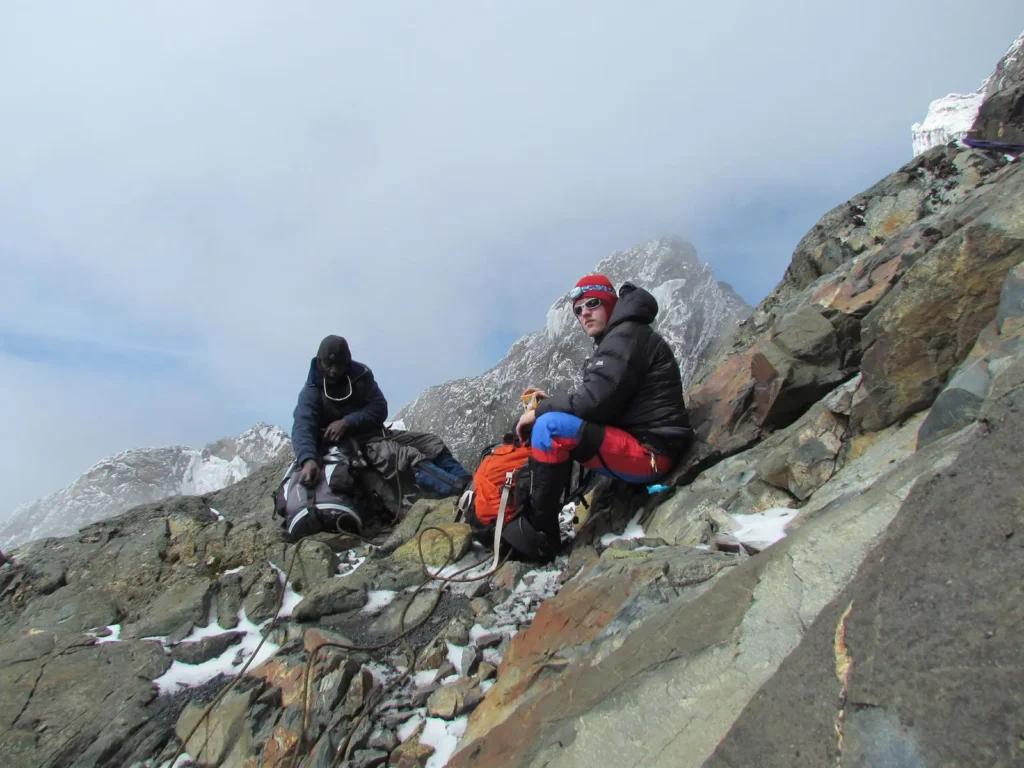
Mountaineering is not exclusively a young person’s domain, and the Rwenzori is not exclusively for the young. Our honest guide for trekkers over 50 and 60 draws on direct experience guiding clients in their sixties and seventies to Margherita Peak. The critical factors are fitness, prior mountain experience, the right training in the months before the trek, and an itinerary that builds in sufficient acclimatisation time. Age alone is not the determining variable on this mountain. Preparation is.
Frequently Asked Questions
Why is the Rwenzori considered one of the last great mountain challenges in Africa?
The Rwenzori earns this description through a convergence of factors that no other African mountain presents simultaneously: extremely demanding terrain ranging from saturated bogs and root climbs to technical glacier crossings; unpredictable and intense weather conditions throughout the year; genuine navigational complexity in a deeply remote wilderness with fewer than 1,000 annual visitors; six major massifs with multiple summit objectives allowing expedition ambitions of 7 to 18 days; and the presence of the last equatorial glaciers in Africa, which are retreating rapidly and add both a technical dimension to summit day and an urgent, irreplaceable quality to the experience. It is harder than Kilimanjaro in terrain terms, more remote than Mount Kenya, and more comprehensively challenging than any other destination in African mountaineering.
How does the Rwenzori compare to Kilimanjaro in difficulty?
Kilimanjaro’s summit at 5,895 metres is 786 metres higher than Margherita Peak, making it the more serious altitude challenge in pure elevation terms. However, Kilimanjaro’s trekking terrain is significantly more straightforward wide, well-maintained paths on a volcanic cone with predictable gradients. The Rwenzori, by contrast, presents saturated bogs, deep mud, root-climbing sections, technical fixed-rope sections above Elena Hut, and a full glacier crossing as intrinsic elements of a summit attempt. Most experienced guides who have climbed both consistently describe the Rwenzori as the harder overall experience. Kilimanjaro tests altitude tolerance; the Rwenzori tests altitude tolerance, technical capability, terrain handling, and mental resilience across consecutive demanding days.
Is the Rwenzori a bucket-list mountain for serious trekkers?
Unequivocally yes and for multiple independent reasons. Its summit, Margherita Peak at 5,109 metres, is Africa’s third-highest point and involves a genuine glacier crossing on the equator, a combination found nowhere else on the continent. Its biodiversity is extraordinary, passing through five distinct vegetation zones including the surreal Afro-alpine moorland with its giant lobelias. Its remoteness is unmatched among major African peaks. And its glaciers are disappearing creating an urgency that turns a Rwenzori summit into not just a personal achievement but a form of witness to a natural environment that future generations may not be able to experience. For any mountaineer or serious trekker compiling a career list of defining mountain experiences, the Rwenzori belongs near the top.
What makes the Rwenzori’s glaciers so significant?
The Rwenzori contains the only remaining glaciers in Africa that sit precisely on the equatorial line a geological and climatological anomaly that has persisted for thousands of years. Since systematic surveys began in 1906 with the Duke of Abruzzi’s expedition, these glaciers have retreated by more than 80%. Scientific projections indicate that they will disappear entirely within the coming decades. This makes the Rwenzori one of the very few places on earth where a trekker can cross permanent glacial ice at the equator, and the window for doing so is closing rapidly. The glacier crossing above Elena Hut, on the Stanley Plateau at 4,800 metres, is both a technical challenge and a profound environmental encounter that adds a layer of meaning to the Rwenzori experience found on no other African mountain.
How long does it take to climb the Rwenzori to Margherita peak?
The minimum recommended duration for a Margherita Peak summit attempt is 7 days, but 8 days is strongly preferred and consistently delivers better acclimatisation and higher summit success rates. Shorter 4 and 5-day summit itineraries exist but carry a meaningfully elevated risk of altitude sickness and summit failure, particularly for trekkers coming from sea level. The Central Circuit Trail 7-day itinerary and the Kilembe Trail 8-day itinerary are the most popular summit programs respectively. For those targeting multiple peaks, itineraries extend from 9 days for a 3-peak traverse to 13 days for the full 6-peak grand expedition and 18 days for all eight named summits.
What are the main mountain challenges within the Rwenzori that serious trekkers should prepare for?
There are five principal challenges that distinguish a Rwenzori expedition from other African mountain experiences. First, terrain complexity: the trails combine saturated bogs, deep mud, steep root-climbing, loose rock, and fixed-rope technical sections in a sequence that is relentlessly demanding over consecutive days. Second, weather variability: the Rwenzori receives rainfall year-round and conditions can shift from clear to near-whiteout within an hour at altitude. Third, the glacier crossing on summit day: approaching Margherita Peak requires crampons and ice axes on the Elena Glacier and Stanley Plateau, making this a genuinely technical alpine ascent. Fourth, altitude: at 5,109 metres, AMS is a real risk requiring a structured acclimatisation plan and experienced guide monitoring. Fifth, gear specificity: conventional hiking boots fail in the deep bogs of the lower and middle trail, requiring rubber Wellington-style boots, a counter-intuitive preparation that catches underprepared trekkers by surprise.
Is the Rwenzori safe for trekkers?
The Rwenzori has an excellent safety record when expeditions are professionally guided by UWA-certified guides. The Uganda Wildlife Authority’s mandatory guide requirement is itself a significant safety mechanism. The mountain’s principal risks, altitude sickness, hypothermia, and falls on technical terrain, are all effectively managed through proper preparation, experienced guiding, appropriate gear, and the right itinerary length. The Rwenzori has never had the mass-casualty incidents associated with overcrowded high-altitude peaks elsewhere. Travel insurance covering helicopter evacuation and high-altitude rescue is mandatory and must be arranged before departure.
Can beginners climb the Rwenzori Mountains?
The Rwenzori is not suitable for complete beginners with no prior mountain experience, but it is achievable for well-prepared first-time mountain trekkers who follow a structured training program and choose an appropriately long itinerary of at least 7, preferably 8 days. The critical requirements are genuine cardiovascular fitness built through loaded hiking on uneven terrain over several months; strong legs and ankles capable of handling sustained steep descents; the correct footwear, rubber boots with neoprene liners, not conventional hiking boots; and a realistic understanding of what the terrain will demand. With these elements in place, first-time mountain trekkers who commit to the preparation regularly reach Margherita Peak and describe it as the defining physical experience of their lives.
What is the best time of year to trek the Rwenzori?
The two preferred trekking windows are December through February and June through August, when rainfall is at its lowest and summit visibility is most reliable. June, July, and August are peak season months. The Rwenzori receives some rain in every month of the year, so there is no entirely dry period. The wet season months, March through May and October through November , bring heavier rainfall and lower summit visibility but also significantly fewer other trekkers, lower prices on combination packages, and an intensified wilderness atmosphere. With properly waterproof gear, an experienced guide, and appropriate expectations, the wet season is a legitimate and often deeply rewarding time to be on the mountain.
How does the Rwenzori contribute to the Nile River system?
The Rwenzori Mountains are one of the primary water towers of central and eastern Africa. The glaciers and year-round rainfall of the range feed multiple river systems that flow both east into Uganda and west into the Congo Basin. The Nile’s White Nile tributaries receive a significant portion of their water volume from the Rwenzori drainage system, and the range’s role in sustaining downstream water flows has been recognised by its listing as a Ramsar Wetland of International Importance. The retreat of the Rwenzori glaciers is therefore not merely an environmental loss of aesthetic significance — it has material consequences for water availability across a vast region of Africa.
Start Planning Your Rwenzori Expedition
The Rwenzori is not a mountain that will wait indefinitely. Its glaciers are retreating, its visitor numbers are growing, and the window for experiencing one of Africa’s last truly wild mountain environments in its current form is finite. If this article has convinced you that the Rwenzori belongs on your list — or confirmed what you already suspected — the next step is a conversation with a guide who has stood on Margherita Peak more than 200 times and knows every aspect of this mountain in the way that only direct, sustained experience produces.
Our team at Rwenzori Trekking Safaris is exclusively focused on these mountains. We do not operate Kilimanjaro, Mount Kenya, or any other peak. Every guide, every itinerary, every piece of logistical advice we provide is specific to the Rwenzori. We can help you choose the right route, build the right training plan, source the correct gear, select the best dates, and design an itinerary that matches your objectives and experience level whether you are targeting Margherita Peak on your first visit or planning to work through all six massifs across a series of expeditions.
| Ready to Plan Your Rwenzori Trek? Speak directly with a mountain guide who knows every inch of this range. |