Climb Kilimanjaro, Mount Kenya and the Rwenzori in one expedition. Expert guidance on sequencing, training and gear from Rwenzori specialists.
There is a particular kind of trekker who arrives in our inbox already halfway convinced. They have read about Kilimanjaro, they have read about Mount Kenya, and somewhere in their research they have stumbled onto the Rwenzori, and a single question has started to form: why choose one when East Africa offers all three of the continent’s great glaciated giants within a single flight radius of each other? It is a fair question, and after years of guiding trekkers through the Mountains of the Moon and coordinating the logistics that connect this range to its two more famous neighbours, we can tell you plainly that the three-peaks challenge is not a marketing gimmick. It is a real, achievable, and genuinely life-altering expedition, provided it is planned by people who understand all three mountains well enough to sequence them correctly, and not just sell them as a package.
We specialise in exactly one of these three mountains, and we say that not as a limitation but as the reason our advice on this subject is worth trusting. Everything we know about the Rwenzori Mountains comes from guiding on its trails every season of the year, not from a brochure. That specialisation is precisely what makes us the right operator to design your three-peaks expedition, because the Rwenzori leg is the one most operators get wrong, either by underestimating its technical demands or by scheduling it at the wrong point in your itinerary. Kilimanjaro and Mount Kenya are comparatively forgiving of a poorly sequenced trip. The Rwenzori is not, and getting the order right is the single most important decision you will make in this entire expedition.
Africa’s Only True Triple Crown
Kilimanjaro, Mount Kenya, and the Rwenzori are the only three mountain systems on the continent that carry permanent glacial ice, sitting almost on the equator yet cold enough at their summits to hold snow and ice year-round. Our own comparison piece on what makes the Rwenzori mountains special goes into the geology of why that trio, and no others, earns this distinction, and it is worth reading before you commit to a triple expedition, because it explains why these three summits belong together in a way that, say, Kilimanjaro and the Virunga volcanoes do not.

Kilimanjaro, at 5,895 metres, is Africa’s roof and the world’s tallest freestanding mountain, a dormant stratovolcano administered by the Tanzania National Parks Authority whose broad, engineered trails make it the most accessible of the three by a wide margin. Mount Kenya, at 5,199 metres, is the continent’s second-highest point and, on its true summits of Batian and Nelion, its most technically serious rock climb; the Kenya Wildlife Service, which manages the mountain, is candid about the fact that those twin summits demand real climbing skill, while the lower trekking summit of Point Lenana, at 4,985 metres, is within reach of any fit hiker. The Rwenzori range, straddling the Uganda-Congo border, tops out at 5,109 metres on Margherita Peak, Africa’s third-highest point, and is the only one of the three that is not volcanic at all, a jumbled, fault-block mass of six separate glaciated massifs rather than a single cone. As we lay out in our detailed answer to is the Rwenzori worth climbing, the range asks something categorically different of a trekker than either of its neighbours, and that difference is the whole reason the sequencing question below matters as much as it does.
The Order Question: Which Mountain First, and Which Last
Every serious three-peaks itinerary eventually runs into this question, and there is no single correct answer to it. There are two defensible schools of thought, both of which we have guided clients through successfully, and the right one for you depends less on ambition and more on honest self-assessment of your technical comfort and your tolerance for uncertainty on unfamiliar ground.
The Acclimatisation-First School: Rwenzori, Then Kenya, Then Kilimanjaro
One client of ours built his expedition in exactly this order, beginning on the Rwenzori, moving on to Mount Kenya, and finishing on Kilimanjaro, using the argument that the body should meet its hardest physical and technical test while it is freshest, and save the more straightforward high-altitude walk for last, once weeks of cumulative time above 3,000 metres have done their quiet work on his blood chemistry. There is real physiological logic in this. Repeated exposure to altitude over consecutive weeks produces genuine acclimatisation gains that carry forward, so a trekker who has already spent seven or eight days moving through the Rwenzori’s bogs and passes arrives at Mount Kenya, and later at Kilimanjaro, with a body that has already begun adapting to thin air. The tradeoff is that you take on the expedition’s most physically brutal and technically demanding leg while your body is least prepared for it, before any of that cumulative altitude conditioning exists yet.
The Technical-Last School: Kilimanjaro and Kenya First, Rwenzori to Finish
The more common approach among our clients reverses that order, tackling Kilimanjaro’s long high-altitude walk first, moving on to Mount Kenya’s moorland ascent and, for those attempting it, the technical rock of Batian and Nelion, and finishing on the Rwenzori. The reasoning here is equally sound: the Rwenzori is the only one of the three mountains that requires sustained use of technical glacier-travel equipment, crampons, an ice axe, fixed ropes, and the skills to move safely on steep mixed ice and rock, as we detail in how technical is the climb to Margherita Peak and in our dedicated Rwenzori glacier crossing guide. Trekkers following this sequence prefer to arrive at that technical crux having already built weeks of expedition fitness and mental toughness on two other big mountains, rather than opening their trip cold on the most demanding terrain of the three. Bogs that swallow a boot to the knee, a summit-night glacier crossing, and the sheer unrelenting variability of the Rwenzori’s weather are, frankly, a harder introduction to high-altitude trekking than most people expect, a point we make at length in why the Rwenzori is Africa’s last great mountain challenge.
There Is No Universally Correct Sequence
In practice, we tell every client the same thing: this is a preference decision, not a fitness test with one right answer. Trekkers with prior mountaineering or ice-climbing background, even if it was gained years ago, often prefer to open on the Rwenzori and get the technical work out of the way while their crampon technique is freshest in their minds from training. Trekkers whose experience is purely high-altitude trekking without technical climbing tend to feel more confident building up to the Rwenzori gradually, arriving with two successful summits already behind them. Our own Rwenzori versus Mount Kenya comparison and our broader Kilimanjaro versus Mount Kenya versus Rwenzori breakdown are both worth reading in full before you decide, since they go deeper into the terrain, altitude-sickness patterns, and summit-day character of each mountain than we have room for here. What matters is that whichever order you choose, it should be chosen deliberately, in a conversation with people who have actually stood on all three summits and can speak to what each one asks of a tired body arriving from a different mountain days earlier.
What Each Mountain Actually Demands of You
Kilimanjaro: The Altitude Test
Kilimanjaro’s danger is almost entirely physiological rather than technical. Its trails, whether Lemosho, Machame, Rongai, or any of the other established routes, are broad and well-graded, and no climbing skill is required anywhere on the standard ascent. What Kilimanjaro demands instead is respect for the speed of its altitude gain: a huge number of trekkers who attempt it on a compressed five- or six-day itinerary experience acute mountain sickness precisely because the mountain’s structure allows fast ascent profiles that outpace the body’s ability to adapt. The mountains you climb before or after it in a three-peaks expedition change this calculation meaningfully, since prior time spent above 3,000 metres on the Rwenzori or Mount Kenya builds physiological reserve that measurably reduces Kilimanjaro’s altitude-sickness risk.
Mount Kenya: The Technical Threshold
Mount Kenya asks a different question of you, and it is worth being precise about which Mount Kenya you mean. The trekking summit, Point Lenana at 4,985 metres, reached via routes such as Sirimon or Chogoria, is a non-technical high-altitude walk broadly comparable in difficulty to Kilimanjaro’s standard routes, and is what most three-peaks itineraries include. The true summits, Batian and Nelion, sit 200 to 300 metres higher and require genuine rock-climbing competence, ropework, and, frequently, an overnight bivouac on the mountain itself. Almost every trekker combining all three East African giants in a single expedition climbs to Point Lenana rather than attempting the technical summits, reserving their appetite for technical climbing for the Rwenzori’s glacier work instead, which is more consistent with the skills required on Margherita Peak.
The Rwenzori: Endurance and Technical Skill Combined
The Rwenzori is the only mountain of the three that genuinely combines both categories of difficulty into a single objective. Below the glacier line, the terrain itself is the obstacle: saturated moss and bog on the Central Circuit Trail or the Kilembe Trail, steep root-and-rock scrambling through montane forest, and afro-alpine moorland where the ground gives way underfoot without warning. Above roughly 4,800 metres, the ascent to Margherita Peak becomes genuinely technical, involving a glacier crossing above Elena Hut on ice pitches that our guides, in their minute-by-minute account of the final push, describe candidly as demanding real competence with crampons, an ice axe, and fixed ropes, not merely a willingness to be roped up and led across. We explain exactly what gear this requires, and what we supply versus what you should bring yourself, in do I need crampons and ropes for the Rwenzori.
No comparable technical demand exists anywhere on the standard routes of Kilimanjaro or Point Lenana, which is precisely why so many three-peaks trekkers treat the Rwenzori as the expedition’s true centrepiece, whichever end of the itinerary they place it on.
Training and Physical Preparation for Three Summits in One Trip
Preparing for one high mountain is demanding enough; preparing for three within a compressed travel window, often five to seven weeks door to door once flights, transfers, and rest days between mountains are accounted for, requires a longer and more deliberate training runway than most trekkers initially budget for. We generally advise starting serious preparation at least sixteen weeks out, and our own sixteen-week Rwenzori training plan is built specifically around the demands of technical, bog-heavy terrain rather than the more generic hill-walking fitness that suffices for Kilimanjaro alone. Cardiovascular endurance matters on all three mountains, but the Rwenzori additionally rewards functional leg strength, ankle stability, and core control, since the terrain punishes trekkers who cannot recover balance quickly on shifting ground. Our guidance on how to stay fit to hike the Rwenzori mountains goes into the specific conditioning work worth prioritising, and if you are researching this expedition later in life, our honest answer to whether older hikers can trek the Rwenzori mountains is worth reading candidly rather than assuming the answer either way.
Technical Skills and Gear Across Three Different Climates
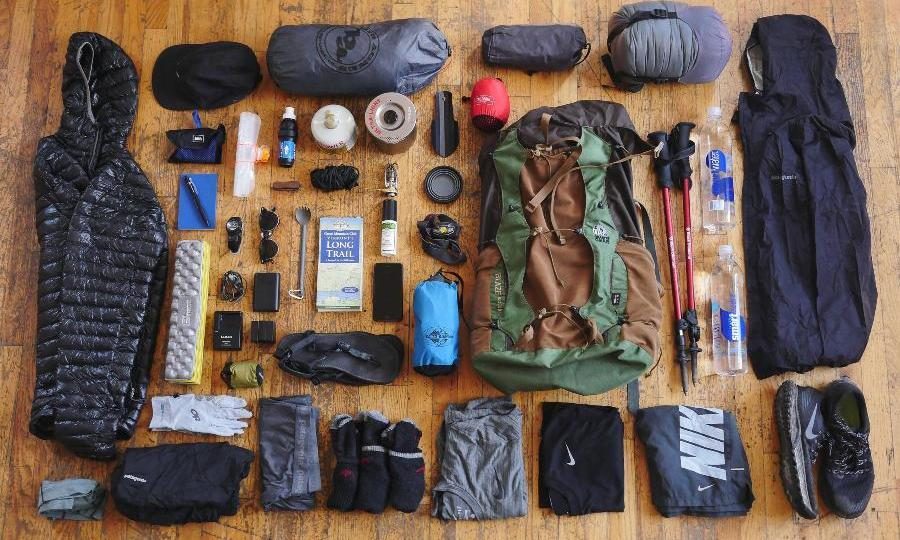
A three-peaks expedition asks you to pack for three genuinely different environments in a single duffel bag, and getting this wrong is one of the more common and avoidable sources of misery on these trips. Kilimanjaro and Point Lenana require solid layering systems for cold, dry, high-altitude conditions, but neither demands technical hardware. The Rwenzori is different on both counts: it is wet almost everywhere below the glacier line, which changes your boot, gaiter, and rain-shell choices substantially, and it is the only leg of the three that requires actual ice-climbing equipment. Our overview of what gear you actually need for Rwenzori trekking is the right starting point, and it links through to the specific questions that matter most: whether you need to bring your own climbing gear, which boots actually survive the Rwenzori’s bogs, how serious your waterproofing needs to be, what clothing layers the range genuinely demands, and what sleeping bag rating you need for nights near Margherita Camp. Rather than buying or hauling a full technical kit across three countries, most of our multi-peak clients use our gear rental service for the Rwenzori-specific hardware, crampons, ice axe, harness, and helmet, arriving with only their personal clothing layers and boots and picking up the rest in Kasese.
Health, Altitude, and Risk Management Across Three Mountains
Managing altitude risk across three separate high mountains in close succession is a genuinely different exercise from managing it on one. Our altitude sickness on the Rwenzori mountains guide explains the mountain-specific patterns worth watching for, and a frank conversation with your doctor or a travel medicine clinic about prophylactic medication, individual risk factors, and how repeated high-altitude exposure across a compressed schedule affects your particular physiology should happen well before departure, not on the mountain. Health preparation for a trip of this length also has to cover more mundane ground: our guide to vaccines and health precautions for a Rwenzori trek and our explanation of whether the Rwenzori mountains are malaria free are both relevant here, since the malaria risk profile of Kasese and the Rwenzori foothills differs meaningfully from what you will encounter around Moshi or Nanyuki, and a single blanket assumption about risk across three countries can leave real gaps in your preparation. Comprehensive travel insurance that explicitly covers high-altitude trekking and emergency evacuation on all three mountains, not just one, is non-negotiable for an expedition of this scope; our page on travel insurance for the Rwenzori explains what to check for before you buy a policy.
How Rwenzori Trekking Safaris Tailors Your Three-Peak Expedition
This is where our specialisation actually becomes useful to you. We do not pretend to be a generalist East African tour operator running all three mountains as an in-house product; we are Rwenzori specialists who have built working relationships with trusted, vetted ground operators on Kilimanjaro and Mount Kenya specifically so that we can coordinate a seamless triple-peak itinerary without asking you to stitch three separate bookings together yourself. In practice, that means you tell us your available window, your technical comfort level, and your preferred sequencing logic, and we build the itinerary around the Rwenzori component first, since it is the leg with the least scheduling flexibility, and then slot the Kilimanjaro and Mount Kenya segments in around it.
The Rwenzori Component: Choosing Your Route
For the Rwenzori leg itself, we tailor the route to fit both your itinerary and your ambition. Trekkers who want the range’s classic single-summit objective typically take the seven-day Central Circuit Trail to Margherita Peak, or the eight-day Kilembe Trail, which adds an extra acclimatisation day and, in our experience, produces better summit-day outcomes; our comparison of the difference between the Central Circuit and Kilembe walks through exactly how to choose between them. For clients who have already built strong technical comfort by the time they reach us, or who simply want to make the most of being in the range, we regularly build the nine-day three-peaks itinerary that adds Mount Speke and Mount Baker onto the Margherita summit bid, and for those with more time still, the longer multi-peak expeditions extending to Mount Emin, Mount Gessi, and Mount Luigi di Savoia are available as well. Full pricing and inclusions for every Rwenzori configuration are laid out in how to book a Rwenzori trek and what’s included.
The Mount Kenya Segment: Four to Five Days
The Mount Kenya component of a typical three-peaks itinerary runs four to five days, sufficient time to walk up through the mountain’s forest and moorland zones on the Sirimon or Chogoria route, spend a night or two at altitude for acclimatisation, and summit Point Lenana before descending.
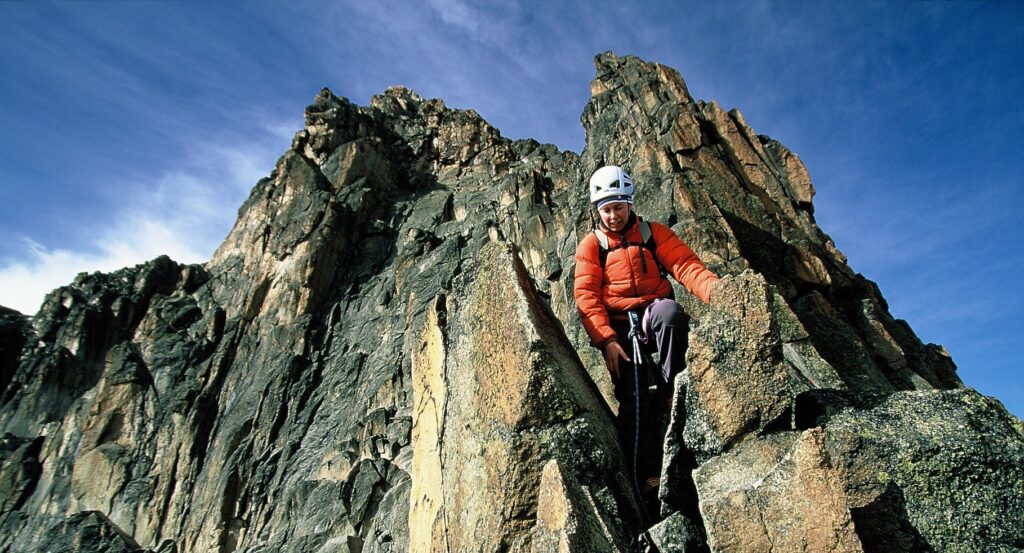
We coordinate this segment through Kenyan ground partners with direct experience running exactly this kind of connecting itinerary, so your transfers, park entry, and guiding on Mount Kenya are arranged to dovetail with your arrival dates rather than treated as a separate, disconnected booking.
The Kilimanjaro Segment: Any Established Route
For Kilimanjaro, we work with whichever established route best fits your remaining schedule and preference, whether that is the scenic, higher-success-rate Lemosho route, the popular Machame route, or a shorter itinerary on Marangu or Rongai for trekkers whose overall trip length is tighter. Because Kilimanjaro is typically the most time-flexible of the three mountains in terms of route length, it is often the segment we adjust first if your overall expedition needs to be compressed or extended to fit your available weeks.
Sequencing, Transfers, and Moving Between Three Countries
A genuine triple-peak expedition crosses three national jurisdictions, Uganda, Kenya, and Tanzania, and the logistics of moving between them deserve as much attention as the climbing itself. We build in realistic rest and travel days between each mountain rather than the tight back-to-back scheduling that some generic packages advertise, because arriving at your next mountain already fatigued from a poorly timed transfer is how avoidable summit failures happen. On the Uganda side, our guides to getting to the Rwenzori mountains, where to land for a Rwenzori trek, and the Uganda visa process for Rwenzori trekking cover the entry requirements you will need alongside whatever Kenyan and Tanzanian visa arrangements your other two legs require. Our Kasese travel guide for trekkers is worth reading for pre- and post-Rwenzori logistics, and we also handle the practicalities that surround the mountain itself, from confirming that your Uganda Wildlife Authority permit is booked correctly and understanding the current park entrance fees and permit structure, to arranging accommodation before and after your Rwenzori trek in Kasese so you are not scrambling for a bed the night before your flight onward to Nairobi or Moshi. Seasonal timing also matters across three mountains with different weather patterns; our climate of the Rwenzori mountains guide and month-by-month Rwenzori trekking guide will help you find a window that works for the range, which we then reconcile against the drier seasons on Kilimanjaro and Mount Kenya when we build your combined calendar. As with every Rwenzori trek we run, a certified guide accompanies you throughout, a requirement we explain fully in are guides mandatory for Rwenzori trekking, and our page on how many porters you need explains how that team scales for multi-peak itineraries specifically.
Cost and Time: What the Full Expedition Requires
A realistic three-peaks expedition, door to door, typically runs between thirty and forty days once you account for the Rwenzori leg, the Kilimanjaro leg, the Mount Kenya leg, international and regional flights, and the rest days between each. The table below gives an honest, order-of-magnitude sense of what each component involves; treat it as a planning starting point rather than a fixed quote, since your exact route choices on all three mountains will move these numbers.
| Mountain | Typical duration on the mountain | What most trekkers summit |
| Rwenzori (Central Circuit or Kilembe) | 7–9 days | Margherita Peak, often combined with Speke and Baker |
| Mount Kenya | 4–5 days | Point Lenana (4,985m) |
| Kilimanjaro | 6–8 days | Uhuru Point (5,895m) |
| Full expedition, all transfers and rest days | 26–36 days total | All three summits |
Full Rwenzori pricing, from the single-summit seven-day trek through the extended multi-peak expeditions, is detailed in how to book a Rwenzori trek and what’s included, and our breakdown of the cost to climb the Rwenzori mountains explains exactly what that figure covers. Trekkers working with a tighter budget across the full three-peaks expedition should also read our guide to reducing Rwenzori trekking costs, and our comparison of group versus private Rwenzori treks is worth reviewing if you are travelling with companions who will be joining you for some or all of the three-peaks journey, since group rates change the economics of the Rwenzori leg meaningfully.
Extending the Journey: Gorillas and Beyond
Trekkers who have already committed to a multi-week, three-country mountain expedition frequently ask whether it makes sense to extend further while they are already in the region, and for many it does.
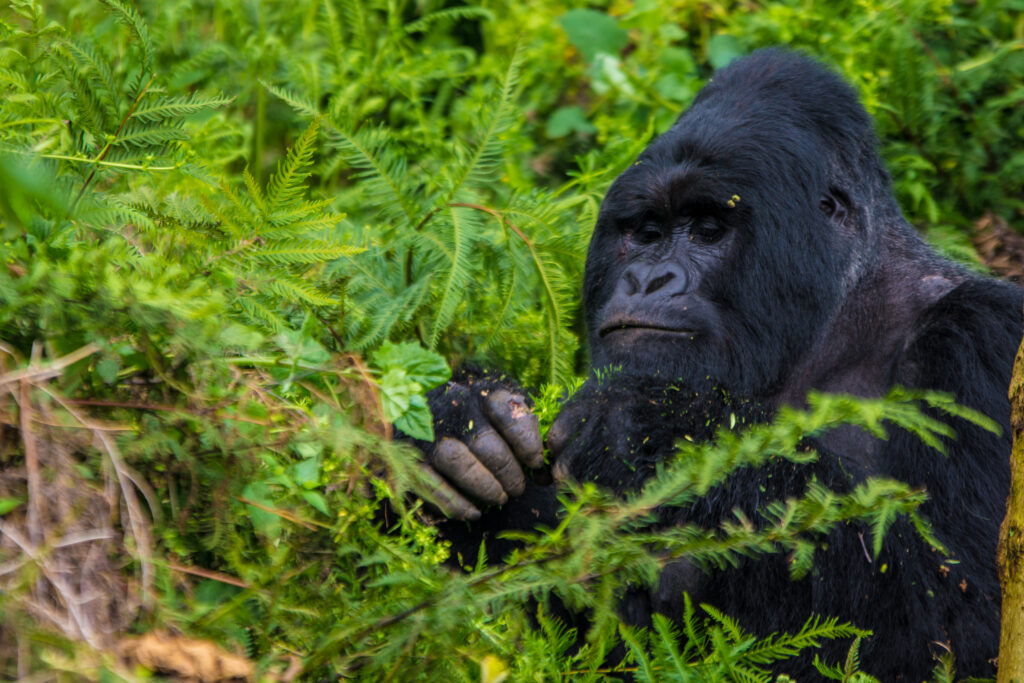
Our Rwenzori trek and gorilla trekking safari combination is a natural add-on for anyone finishing their Rwenzori leg in western Uganda, since Uganda’s gorilla trekking parks are a manageable drive away and offer an entirely different, equally unforgettable kind of wildlife encounter to close out the trip. Our broader Uganda safaris page outlines the other wildlife and cultural experiences worth considering if you have even a few spare days built into your itinerary.
What It Actually Takes
Strip away the romance of the idea, and conquering Kilimanjaro, Mount Kenya, and the Rwenzori in a single expedition takes four things in roughly equal measure: a training programme that begins months in advance and is honest about the specific demands of technical, bog-heavy terrain rather than generic hill fitness; a travel budget that accounts for twenty-plus days on the ground across three countries, not just three separate mountain fees; a willingness to learn or refresh basic glacier-travel skills, crampon technique, ice axe use, and moving safely on a rope, before you ever set foot on the Rwenzori’s upper slopes; and, most importantly, an operator on the ground who understands all three mountains well enough to sequence them intelligently rather than simply selling you three bookings and wishing you luck. We can speak with total authority about the third mountain on that list, because it is the one we have spent our careers on, and we coordinate the other two through partners we trust precisely so that the seams between your three summits are as smooth as the climbing itself.
Frequently Asked Questions
Is it actually possible to climb Kilimanjaro, Mount Kenya, and the Rwenzori Mountains in a single trip?
Yes, and it is done regularly, though it requires realistic time planning. A full expedition covering all three peaks typically takes thirty to forty days door to door once you include the climbing time on each mountain, the travel between Uganda, Kenya, and Tanzania, and essential rest days between summits. Trekkers who compress this timeline too aggressively increase their risk of altitude sickness and injury, so the honest answer is that it is achievable, but only with a properly sequenced itinerary rather than three mountains booked back-to-back with no recovery time. Our guide to how to book a Rwenzori trek explains how we build the Rwenzori portion of that timeline specifically.
Which mountain should I climb first: Kilimanjaro, Mount Kenya, or the Rwenzori?
There is no universally correct order, only two defensible strategies. Some trekkers climb the Rwenzori first to take on its technical glacier crossing and difficult terrain while their bodies are freshest, then move to Mount Kenya and finish on Kilimanjaro, using the cumulative altitude exposure to arrive well-adapted for the final, more straightforward summit. Others prefer to build fitness and altitude tolerance on Kilimanjaro and Mount Kenya first and finish on the Rwenzori, since it is the only one of the three mountains that requires sustained technical climbing skill with crampons and an ice axe, as explained in how technical is the climb to Margherita Peak. The right choice depends on your prior technical experience and how you personally prefer to manage risk across a long expedition.
Do I need technical climbing experience to complete all three mountains?
Not necessarily beforehand, but you do need to acquire and practise basic glacier-travel skills before you attempt the Rwenzori leg. Kilimanjaro’s standard routes and Mount Kenya’s Point Lenana route require no technical climbing at all, just sustained fitness and altitude tolerance. The Rwenzori’s ascent to Margherita Peak, however, involves a genuine glacier crossing above Elena Hut, and our guides, detailed in do I need crampons and ropes for the Rwenzori, teach these skills on the mountain itself to trekkers arriving with little or no prior ice-climbing background, provided you come prepared to learn seriously rather than expecting to be passively led across.
What is the difference between Point Lenana and the true summits of Mount Kenya?
Point Lenana, at 4,985 metres, is Mount Kenya’s non-technical trekking summit, reachable by any reasonably fit hiker via routes such as Sirimon or Chogoria, and it is what nearly every three-peaks itinerary includes. Batian and Nelion, Mount Kenya’s true summits, sit roughly 200 to 300 metres higher and require genuine rock-climbing ability, technical ropework, and often an overnight bivouac, placing them in a different category of difficulty entirely from anything on Kilimanjaro or the standard Rwenzori route. Most trekkers combining all three East African giants climb to Point Lenana and save their technical climbing appetite for the Rwenzori’s Margherita Peak instead.
How much does it cost to climb all three East African peaks in one expedition?
Costs vary considerably depending on route choices, group size, and season, but as a starting point, expect the Rwenzori leg alone to range from around USD 1,400 for a single-summit trek to several thousand dollars for extended multi-peak itineraries, as broken down in how to book a Rwenzori trek and what’s included, with Kilimanjaro and Mount Kenya typically priced separately through their respective ground operators. Because pricing depends heavily on your exact route selections on all three mountains, we recommend contacting us directly with your preferred dates and ambitions so we can put together an accurate combined quote rather than relying on generic published figures.
Can I combine the three-peaks expedition with gorilla trekking in Uganda?
Yes, and it is one of the more popular extensions we arrange. Trekkers finishing their Rwenzori leg in western Uganda are well positioned to add a gorilla trekking excursion before continuing on to Kenya or Tanzania, as outlined in our Rwenzori trek and gorilla trekking safari combination. It adds a genuinely different kind of wildlife experience to what is otherwise a purely mountaineering-focused itinerary.
How long should I train before attempting all three mountains?
We recommend starting serious, structured training at least sixteen weeks before departure, longer if you are newer to high-altitude trekking or have no prior experience with technical terrain. Our own sixteen-week Rwenzori training plan is built around the specific demands of bog-heavy, technical terrain and is a more useful benchmark for this expedition than generic hiking-fitness advice, since the Rwenzori leg is almost always the limiting factor in how prepared you need to be across all three mountains.
Start Planning Your Three-Peaks Expedition
Very few operators anywhere in the world can speak with genuine, firsthand authority about all three of Africa’s glaciated giants, and we have never claimed to be one of them. What we can offer is exactly the expertise this expedition actually needs: a Rwenzori specialist who has guided the mountain most operators underestimate, and who has built the relationships in Kenya and Tanzania to coordinate the other two legs properly around it. If conquering Kilimanjaro, Mount Kenya, and the Rwenzori Mountains in a single expedition is genuinely on your list, contact us to start designing your itinerary, including your preferred Rwenzori route, your Mount Kenya and Kilimanjaro sequencing, and the pacing that will get you to all three summits in one piece. Full answers to the questions we field most often are also collected on our FAQ page, but nothing replaces a direct conversation with a team that has actually stood on the summit you are training for.