Are the Rwenzori Mountains malaria free? Yes, above ~2,500m. Learn exactly where risk exists, prophylaxis advice & expert prevention tips.
I have been asked this question at the trailhead in Nyakalengija more times than almost any other, usually by a trekker double-checking their packing list the night before departure, prophylaxis tablets in hand, wondering whether they even need to keep taking them once they start climbing. The short answer is one I can give with real confidence, built on years of guiding people from the humid lowland gate of the park to the glaciated summit of Margherita Peak: the high-altitude trekking zone of the Rwenzori Mountains is, for all practical purposes, malaria free, but the mountain does not exist in isolation from the malaria-endemic country that surrounds it, and the honest picture is more layered than a simple yes or no. Understanding exactly where the risk lives, where it disappears, and why, will let you plan a Rwenzori trek with genuine confidence rather than vague anxiety, and that is what this guide sets out to do in full detail.
The Short Answer: Yes, Above the Forest Zone
Once you climb above roughly 2,500 metres on any of our routes, whether that is the Central Circuit Trail rising out of Nyakalengija or the Kilembe Trail approaching from the southern flank near Kasese, you leave the malaria risk behind almost entirely.
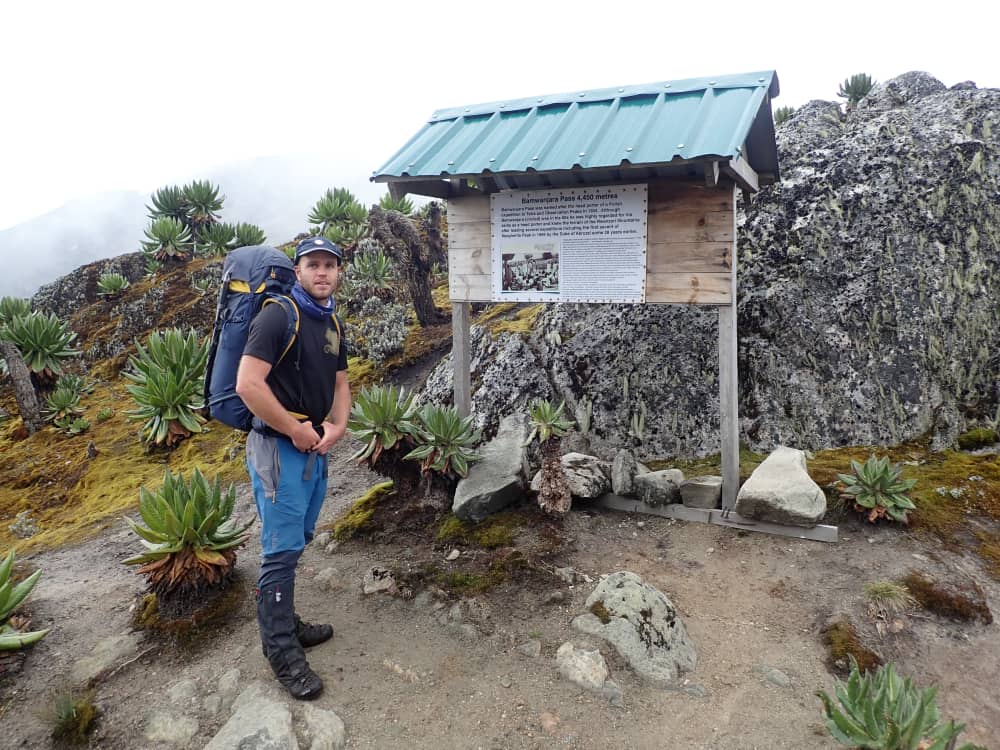
Above that line, the air is simply too cold, too consistently, for the mosquito that carries the parasite to complete its life cycle. Trekkers who spend the bulk of their trip in the moorland, the Afro-alpine zone, and on the glaciers of Mount Stanley are not living with malaria risk in any meaningful sense during those days. The risk that does exist on a Rwenzori trip is concentrated almost entirely in the approach: the town of Kasese, the drive to the trailhead, and the lower montane forest through which every route begins its climb. That distinction, between the mountain proper and its lowland gateway, is the single most important thing to understand, and it is worth walking through carefully rather than taking on faith.
Why Altitude Shuts the Door on Malaria
Malaria is transmitted exclusively by the female Anopheles mosquito, and that insect is a creature of the tropical lowlands in a very specific, biologically constrained way. Anopheles mosquitoes need consistent warmth, generally above about 16 to 20 degrees Celsius, to allow the malaria parasite, Plasmodium, to complete its development inside the mosquito’s gut before it can be transmitted through a bite. Drop the ambient temperature below that threshold for sustained periods, and the parasite simply cannot mature quickly enough to be infectious before the mosquito itself dies of old age. The Rwenzori, despite sitting almost exactly on the equator, is not a warm mountain once you gain elevation. Daytime temperatures in the upper heather zone and Afro-alpine zone regularly sit in the single digits Celsius, and nights routinely drop below freezing above 4,000 metres, a phenomenon I cover in detail in our guide to the climate of the Rwenzori Mountains. Mosquitoes, Anopheles included, are essentially absent from this environment, not because of any deliberate control measure, but because the physics of their own biology exclude them from surviving there.
This is a genuinely useful feature of mountain trekking in equatorial Africa that is easy to overlook when you are staring at a generic Uganda malaria risk map before booking your trip. Those national-level risk maps are built for lowland travel, savannah safaris, and city stays, and they do not, and cannot, account for the dramatic vertical drop in mosquito density that happens as you climb through the Rwenzori’s five ecological zones. A trekker heading into Rwenzori Mountains National Park is, in a very real sense, climbing out of malaria country over the course of two to three days, which is a meaningfully different risk profile from a week spent at a lodge in Uganda’s lowland game parks.
Where the Risk Actually Sits: Zone by Zone
It helps to walk the mountain from the bottom up, because the malaria picture is not a single fact but a gradient, and knowing exactly where you are on that gradient at any point in your itinerary lets you make sensible, proportionate decisions rather than either dismissing the risk entirely or over-worrying about a threat that has already receded.
Kasese Town and the Drive to the Trailhead
This is where almost all of the meaningful malaria exposure on a Rwenzori trip actually occurs, and it is the part of the trip trekkers most often underestimate because their attention is fixed on the mountain itself. Kasese sits at roughly 950 metres above sea level in the warm, humid Albertine Rift Valley floor, and it is unambiguously within Uganda’s malaria transmission zone, as is the drive out to Nyakalengija for the Central Circuit or to the Kilembe trailhead. If you are following our practical arrival advice in where to land for a Rwenzori trek or our broader Kasese travel guide for trekkers, the nights you spend in town before and after your climb, and any rest days built into a combination itinerary, are the nights that matter most for mosquito precautions. This is not a reason for alarm; it is simply the specific window in your trip where standard, sensible Uganda travel-health practice applies in full.
The Lower Montane Forest, Roughly 1,600 to 2,500 Metres
The first day or two of climbing on every route, whether you are moving through the dense montane forest above Nyakalengija on the Central Circuit or through the equivalent forest belt on the Kilembe side, passes through a transitional zone. Anopheles mosquito density here is already sharply lower than in Kasese itself, because the forest canopy is cooler and the temperature is dropping steadily with every hour of ascent, but it has not yet reached zero. I treat this zone, in practical terms, the same way I treat Kasese: repellent applied to exposed skin, sleeves down in the late afternoon and evening when mosquitoes are most active, and continued adherence to whatever antimalarial regimen a trekker’s doctor has prescribed. By the time most groups reach their first overnight hut, well above 2,500 metres, this consideration has already become largely irrelevant.
The Bamboo, Heather-Rapanea and Afro-Alpine Zones, Above Roughly 2,500 to 3,000 Metres
From here upward, through the bamboo belt into the heather and giant lobelia zone that makes the Rwenzori so visually strange and unforgettable, malaria transmission risk drops to practically nothing.
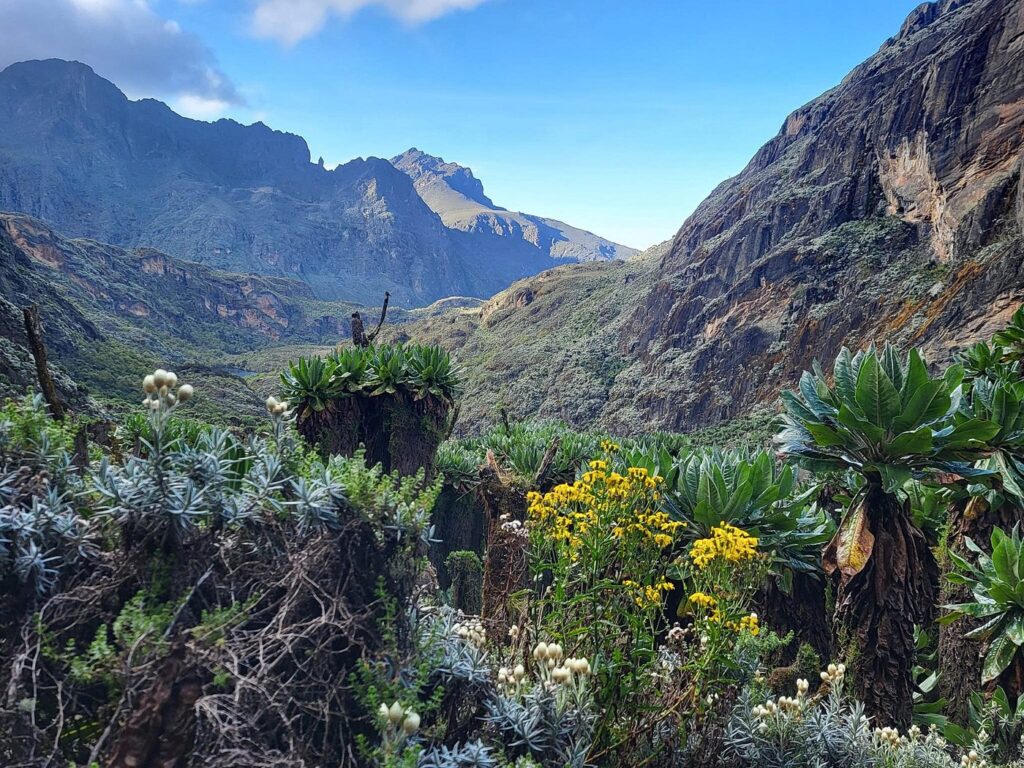
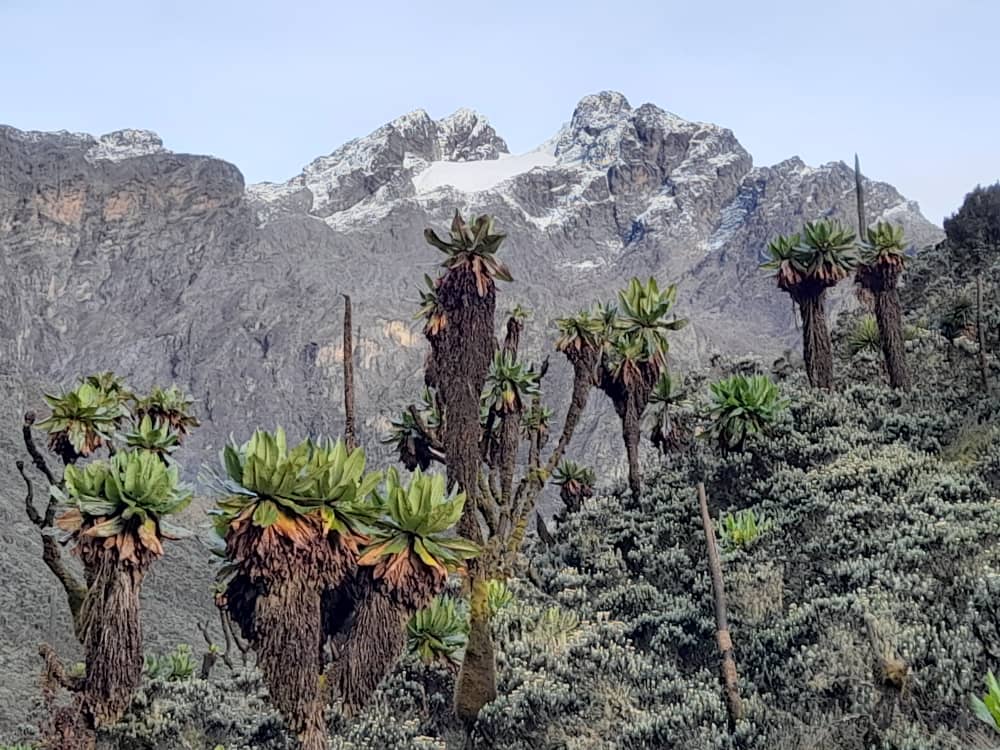
This is the world of the giant groundsels and lobelias that define the Afro-alpine landscape, and it is simply too cold, too consistently, for Anopheles to establish itself. Trekkers overnighting at huts such as those on the Central Circuit or the Kilembe route are not exposed to meaningful mosquito activity, malaria-carrying or otherwise, at these elevations.
The Nival and Glacial Zone, Above 4,000 Metres
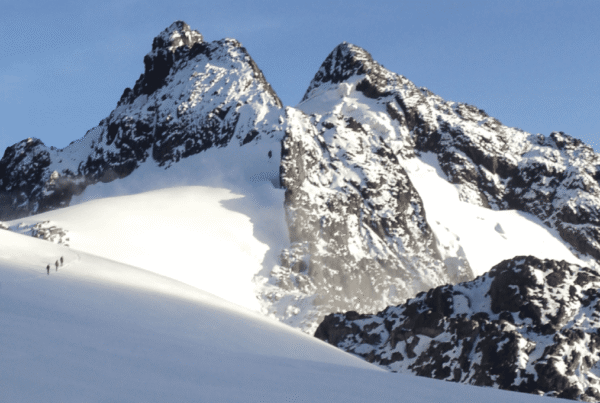
On the approach to Margherita Peak on Mount Stanley, or across the ridgelines toward Mount Speke and Mount Baker, you are in a genuinely cold, high-altitude glacial environment where the relevant health concerns shift entirely away from insect-borne disease and toward altitude itself, a subject covered thoroughly in our altitude sickness guide for the Rwenzori Mountains. Malaria simply does not feature as a consideration once you are operating in this zone; frostbite, acute mountain sickness, and the physical demands of glacier travel are the risks that deserve your attention here instead.
So Should You Take Antimalarial Medication for a Rwenzori Trek?
Yes, and I say this having guided expeditions for people from every part of the malaria-risk-averse travel world. Because your itinerary begins and ends in a malaria-endemic zone, whatever the mountain itself does to that risk once you start climbing, standard travel-health guidance for Uganda applies to your trip as a whole, not just to the summit days. This is precisely the advice we give trekkers in our detailed vaccines and health precautions guide for the Rwenzori trek and in our companion medical guide to trekking the Rwenzori Mountains, both of which go well beyond malaria into the full picture of pre-trip preparation. The most commonly prescribed options for Uganda travel are atovaquone-proguanil, doxycycline, and mefloquine, and the right choice for you depends on your medical history, the length of your trip, and your tolerance for each drug’s particular side-effect profile, which is exactly why this decision belongs with a travel medicine clinic or your own physician six to eight weeks before departure, not with a generic online recommendation. What we can tell you with confidence, from the guiding side rather than the medical side, is that continuing your prescribed course through the mountain days causes no meaningful inconvenience, and stopping early because you assume you are past the risk zone is not something we would advise, since a short course adjustment is far simpler to plan for at home than to improvise from a hut at 3,500 metres.
Nationality-specific detail on exactly this point is built into our regional planning guides, because the CDC, UK NHS, Australian and South African travel-health authorities each phrase their Uganda malaria guidance slightly differently. If you are travelling from the United States, our guide to Rwenzori trekking for American travelers sets out the current CDC position in full; travellers from the UK will find the equivalent detail in planning a Rwenzori trek from the UK, and we cover the same ground for South African travelers and for those trekking from Australia as well.
The Insect You Should Actually Worry About on the Mountain
Here is a detail that genuinely surprises most first-time Rwenzori trekkers: the insect nuisance you are most likely to encounter on the lower slopes is not the mosquito at all, but biting flies, which are common in the forest zone, particularly during the wetter months, and can be persistent and irritating even though they carry none of the disease risk associated with Anopheles. I cover this distinction, along with the mountain’s full picture of wildlife encounters, in our guide to dangerous animals in the Rwenzori Mountains. The practical response is the same regardless of which insect is bothering you: lightweight, long-sleeved clothing for the forest days, and a repellent containing DEET or picaridin applied to exposed skin, particularly around dawn and dusk when both mosquitoes and biting flies are most active. Get this right for the first day or two of any route, and insect nuisance essentially stops being a topic worth thinking about for the rest of your trek.
How This Compares to the Rest of a Uganda Itinerary
Many of our trekkers are not visiting the Rwenzori in isolation. A significant number combine their climb with gorilla trekking, and our guide to a Rwenzori trek and gorilla trekking safari combination is one of the questions we field constantly from people building a broader itinerary through our wider Uganda safaris offerings.
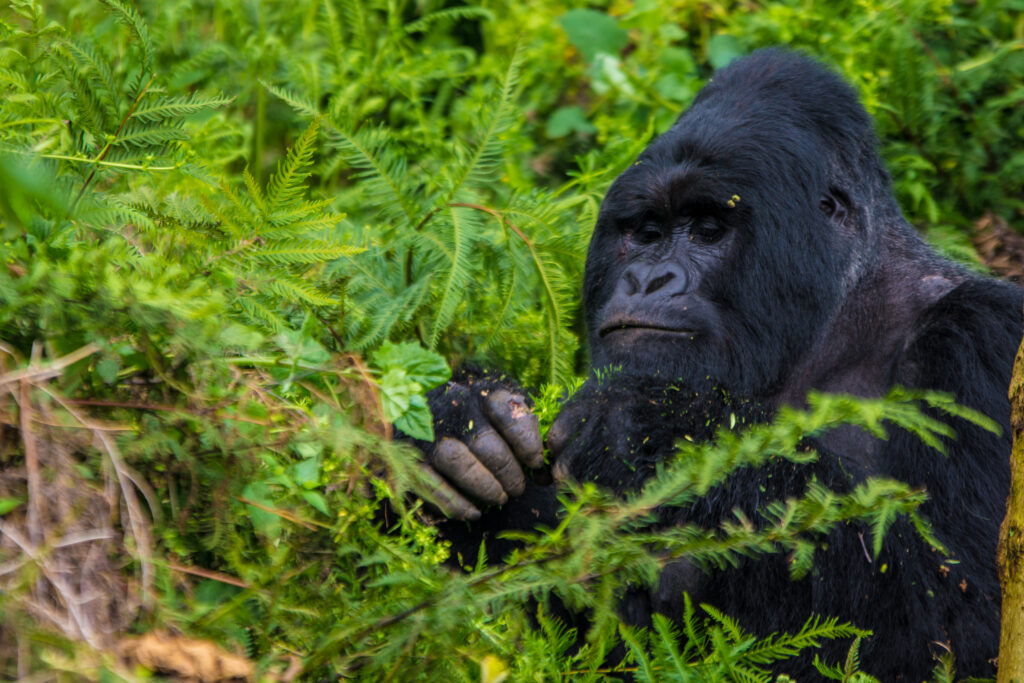
It is worth being direct about the contrast here: Bwindi Impenetrable National Park, where gorilla trekking happens, sits at a lower and warmer elevation than the Rwenzori’s high routes, and malaria risk there is present in a way it simply is not on your summit days on Mount Stanley. If your trip combines the two, the antimalarial course you take should be planned around your entire itinerary, gorilla trekking days included, rather than treated as a mountain-specific concern that starts and stops with the Rwenzori. The same logic applies to any savannah game park extension, such as Queen Elizabeth National Park, which lies in the Rift Valley floor and carries lowland Uganda’s standard malaria risk profile throughout.
Seasonal Variation and Why It Barely Moves the Needle
Uganda’s malaria risk does fluctuate somewhat with the rains, since standing water after heavy rainfall gives Anopheles more breeding habitat in the lowlands, and the Rwenzori’s wet seasons, covered in depth in our guide to Rwenzori Mountains in winter and our broader climate guide, do bring more rainfall to the lower forest zone. In practice, this seasonal shift affects the Kasese and lower-forest window of your trip at the margins, making a slightly more diligent approach to repellent and evening coverage sensible during the wetter months of March through May and September through November, but it does not meaningfully change the picture at altitude. The cold, not the calendar, is what keeps the upper mountain malaria free, and that cold is a year-round feature of elevation above roughly 2,500 metres, not a seasonal one.
What This Means for Route Planning
From a pure malaria-risk standpoint, all of our main routes behave the same way, because the geography that matters is elevation, not which side of the range you climb. Whether you choose the Central Circuit Trail, the Kilembe Trail, or the gentler introductory routes such as the Mahoma Loop, you pass through the same low-to-high elevation gradient and leave meaningful mosquito exposure behind within the first one to two days of walking. If you are still deciding between routes, our detailed comparison of the difference between the Central Circuit and Kilembe trails covers the factors that should actually drive that choice, terrain, crowding, hut standards, and access, none of which is malaria risk, since that variable is effectively identical across routes once you are above the forest.
A Guide’s Perspective From the Trail
I remember a trekker, a physician herself, who arrived in Kasese having read three contradictory blog posts about malaria in the Rwenzori the night before her flight, one claiming the entire park was malaria free, another claiming it was high risk throughout, and a third saying nothing useful at all. She asked me, first thing at the briefing table in Nyakalengija, to just tell her plainly where the line was. I told her what I am telling you here: the line sits at roughly 2,500 metres, it is drawn by temperature rather than by any park boundary or map shading, and it means that by the second night of her Central Circuit trek, sleeping at Kalonge or above, she genuinely did not need to think about mosquitoes at all. She finished her prophylaxis course as prescribed regardless, because that is simply sound practice for any Uganda itinerary, but the anxiety she had arrived with had a very specific, physical explanation, and once she understood it, it stopped being an open question that shadowed the rest of her trip. That is the standard I try to hold every article on this site to, and it is the standard this one is built around.
Frequently Asked Questions
Is Margherita Peak, the summit of Mount Stanley, at risk of malaria?
No. Margherita Peak sits at 5,109 metres in a permanently cold, glaciated environment where Anopheles mosquitoes cannot survive, let alone breed. The entire summit push on Mount Stanley, along with the surrounding high camps, is well above the elevation at which malaria transmission is biologically possible. The relevant health risks at this altitude are cold injury and altitude sickness, not insect-borne disease.
Do I need to keep taking malaria tablets while I am actually on the mountain?
Yes, you should continue whatever course your doctor has prescribed for the full duration recommended, even though your risk of exposure drops sharply once you climb above the forest zone. Antimalarial regimens are built around consistent dosing before, during, and after any potential exposure window, and your trip as a whole, including the nights in Kasese before and after your climb, still falls within Uganda’s malaria zone. Stopping early because you feel you have climbed out of risk is not something we recommend; a proper pre-trip consultation, as outlined in our vaccines and health precautions guide, is the right place to settle this before you travel, not partway through a trek.
At what elevation does malaria risk actually disappear in the Rwenzori Mountains?
Meaningful malaria transmission risk falls away by roughly 2,500 metres, the point at which sustained cold temperatures prevent the Anopheles mosquito from completing its breeding cycle. There is a transitional zone between about 1,600 and 2,500 metres, generally the first one to two days of walking on any route, where some residual mosquito activity can still be present, and standard precautions such as repellent and covered skin in the evenings remain sensible. Above that band, in the heather, Afro-alpine, and glacial zones, malaria is not a practical concern.
Is Kasese town, where I will stay before and after my trek, a malaria risk area?
Yes. Kasese sits at roughly 950 metres in the warm floor of the Albertine Rift Valley and is within Uganda’s malaria transmission zone, as is the drive out to the trailhead. This is where the genuine malaria exposure on a Rwenzori trip is concentrated, not on the mountain itself, and it is why we recommend continuing repellent use and prophylaxis through your Kasese nights, covered further in our Kasese travel guide for trekkers.
Are mosquito nets provided in the mountain huts?
Mosquito nets are not a standard feature of the high-altitude huts on the Central Circuit or Kilembe routes, and they are not needed there, since mosquito presence at those elevations is negligible to non-existent. Accommodation in Kasese before and after your trek, by contrast, should have proper netting or screened rooms, and this is something we verify as part of arranging pre- and post-trek stays for our clients.
Does the wet season increase malaria risk on a Rwenzori trek?
It can increase mosquito activity slightly in the lower forest zone and in Kasese, since standing water after rainfall provides more breeding habitat for Anopheles at lower elevations. This effect is confined to the warm lowland stages of your trip, however, and does not extend meaningfully into the upper mountain, where cold temperatures, not seasonal rainfall, are the deciding factor. Trekkers travelling during the wetter months, roughly March to May and September to November, should simply be a little more diligent with repellent and evening cover during the approach days.
If I am combining a Rwenzori trek with gorilla trekking or a safari, does that change my malaria precautions?
Yes, meaningfully. Gorilla trekking in Bwindi and most Ugandan savannah parks such as Queen Elizabeth National Park take place at lower, warmer elevations that carry standard Uganda malaria risk throughout your stay, unlike the high Rwenzori routes. If you are building a combination gorilla trekking and Rwenzori itinerary, plan your antimalarial course around your full trip, not just the mountain days, since those other stages carry real, sustained exposure.
Ready to Plan Your Rwenzori Trek?
Malaria is one small piece of a much larger picture of preparing properly for the Mountains of the Moon, and it is a piece you can now set aside with real confidence rather than lingering worry. If you are ready to start turning research into an actual itinerary, get in touch through our contact page and our team will help you choose the right route, whether that is the full Margherita Peak expedition on the Central Circuit, the Kilembe Trail, or one of our shorter introductory treks, and build a trip around your fitness, timeline, and travel origin. You can also browse answers to more of the questions trekkers ask us most often on our FAQ page. We have guided people from every part of the risk-averse and risk-informed travel world safely through this range, and we would be glad to guide you next.