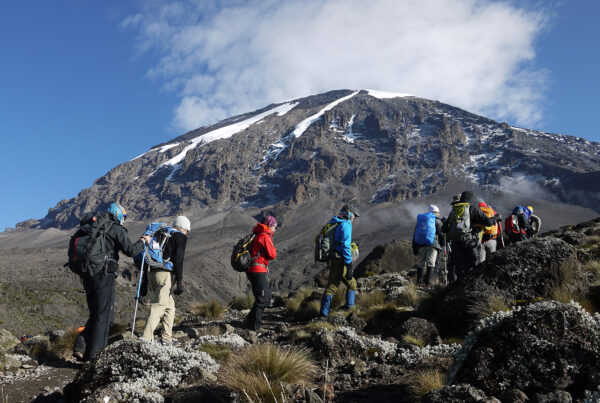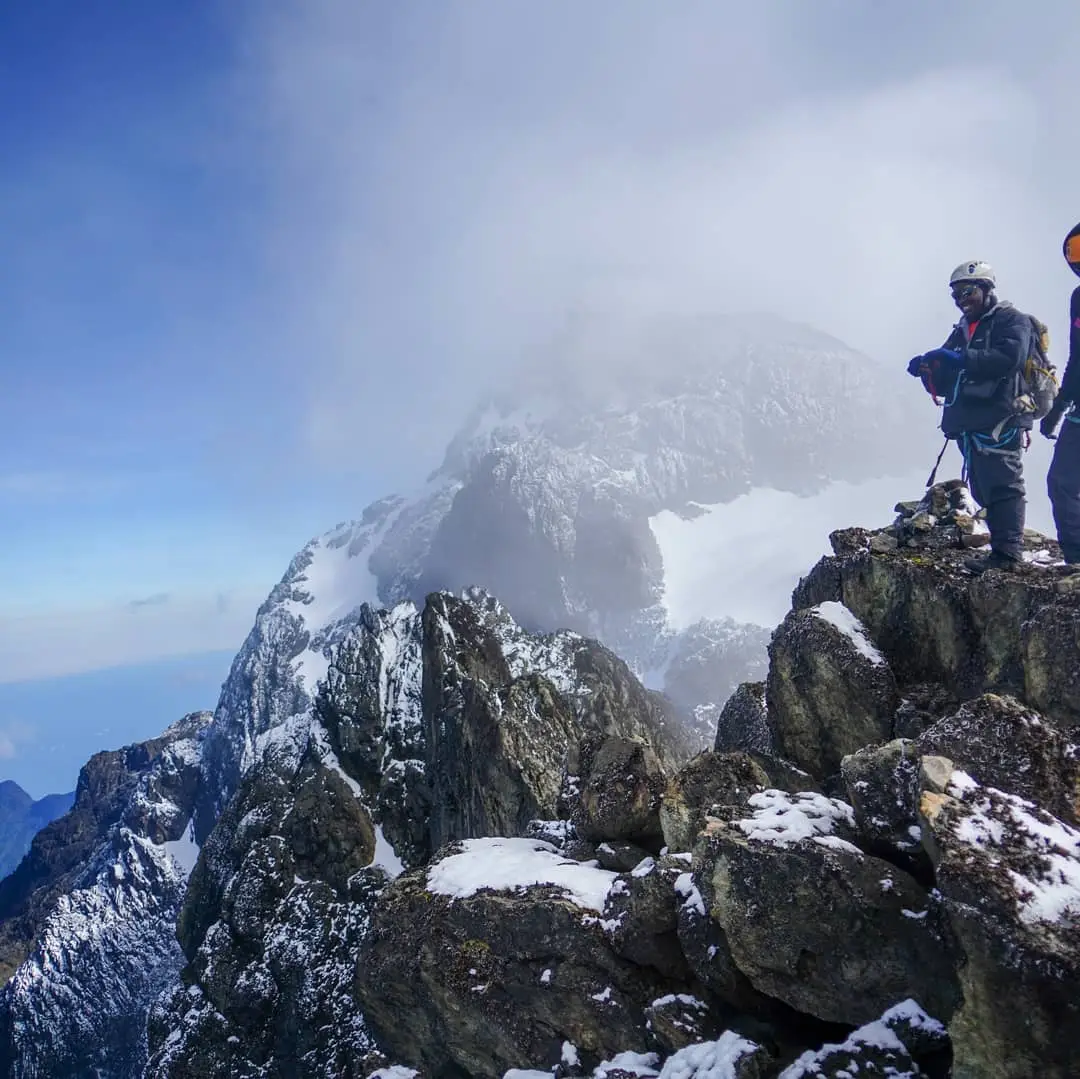
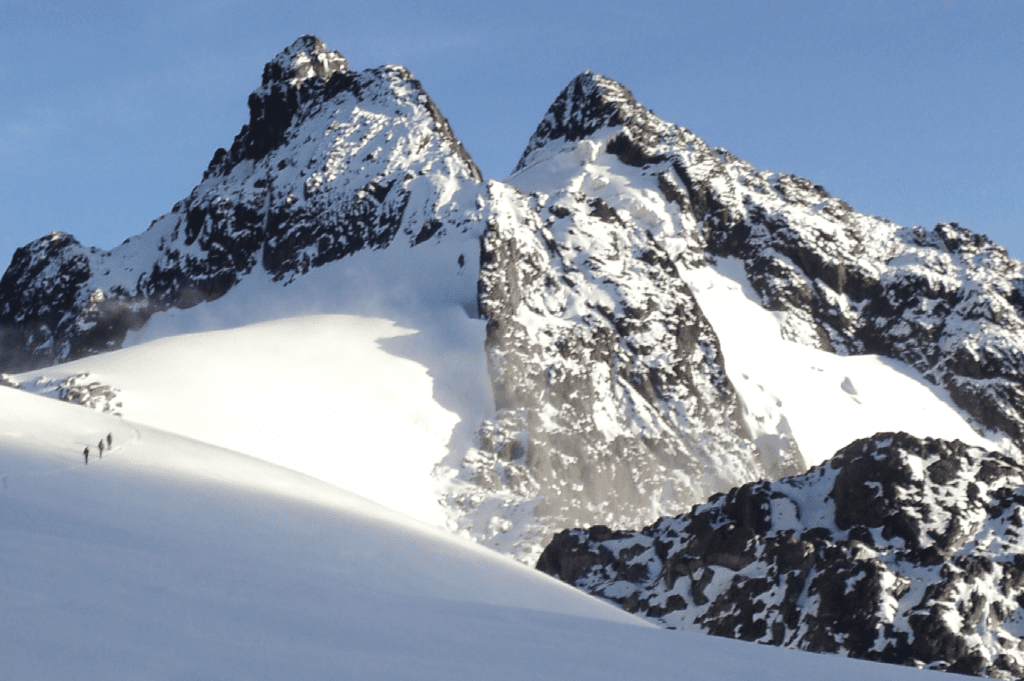
Is Margherita Peak at risk of malaria? No. At 5,109 m it is far too cold for mosquitoes. See where risk exists on your route and how to prepare.
The short answer is no, and the reason is written into the air itself. At 5,109 metres, Margherita Peak is one of the coldest, thinnest and most thoroughly frozen places you can stand in tropical Africa, and the mosquito that carries malaria cannot survive anywhere near it. If something on summit morning is going to trouble you, it will be the cold, the wind and the altitude, not an insect.
But the question trekkers really need answered is a little broader than the one they type into a search box. They want to know whether malaria is a factor anywhere on the road to the summit, whether they should take tablets for a trip that spends most of its days in an icy wilderness, and what to do about a fever or headache that turns up at a high camp. Those questions have clear, practical answers, and once you understand the simple physics behind them, the whole subject stops being a source of worry. This guide follows the journey from the lowland trailhead to the top of Mount Stanley, shows exactly where malaria risk begins and ends, and explains what a careful trekker should actually do about it. It is deliberately focused on the summit itself; if you want the wider picture for the range as a whole, our companion guide asks whether the Rwenzori Mountains are malaria free.
The Direct Answer: Why Margherita Peak Carries No Malaria Risk
Malaria is transmitted only by female Anopheles mosquitoes, and those insects are creatures of warmth. Even more importantly, the malaria parasite that lives inside them cannot finish its development unless the surrounding temperature stays above a threshold in the region of 16 to 18 degrees Celsius for long enough. Below that, the parasite matures too slowly to become infectious before the mosquito dies. Mosquito eggs and larvae need warm standing water, and adult mosquitoes need warmth to feed and fly. Remove the warmth and the entire chain of transmission breaks.
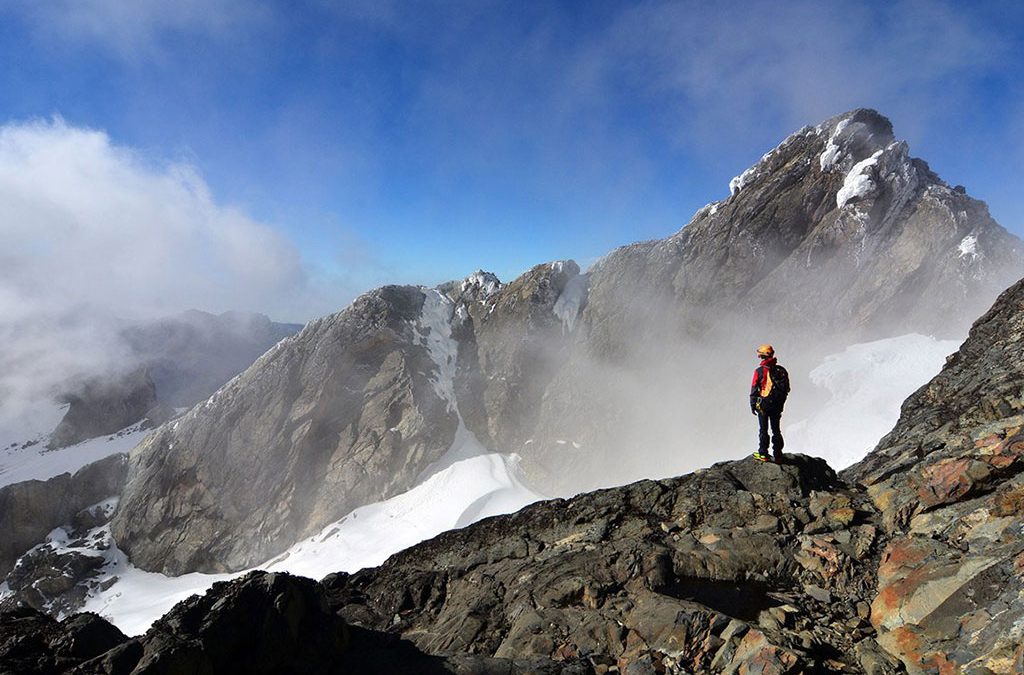
The Rwenzori sit almost exactly on the equator, but that latitude counts for little once you climb. Air cools by roughly six degrees Celsius for every thousand metres of altitude. The floor of the Albertine Rift near Kasese, at around 950 metres, is hot and humid, which is why malaria is a real concern there. By the time you reach the upper heather zone the days are cool and damp, and above 4,000 metres nights fall below freezing as a matter of routine. On the Stanley Plateau and the glaciers around Margherita Peak, the world is ice, rock, cloud and wind. There is no warm standing water, no shelter for a mosquito, and no temperature at which a parasite could develop. The climate of the Rwenzori Mountains makes the upper mountain, quite simply, a place where malaria cannot exist.
That is worth stating firmly, because generic Uganda malaria maps can be alarming. Those maps are drawn for national-level travel planning and shade almost the entire country, mountains included, because they cannot show the sharp drop in transmission that happens with height. A person looking at such a map before booking a Margherita Peak climb could easily come away thinking the summit itself is in the danger zone. It is not. Anyone who reaches the top of Mount Stanley is standing well above the altitude where transmission is biologically possible.
Where Malaria Risk Begins and Ends on the Way to the Summit
Because you cannot reach the summit without starting near the bottom, the honest way to think about malaria on a Margherita Peak trip is as a gradient. The risk is real at the start, fades quickly during the first day or two of walking, and is gone well before you reach the glaciers. The exact elevation at which transmission dies out is not a razor-sharp line, and it varies a little with season and local conditions. Malaria transmission in the East African highlands is limited above about 2,000 metres and is essentially absent above about 2,500 metres, which is why we speak of a transition zone rather than a single cut-off.
The Central Circuit Route to Margherita Peak
On the Central Circuit Trail, the journey begins in Kasese, which lies in the warm Rift Valley floor and is squarely within Uganda’s transmission zone. The drive to the Nyakalengija trailhead, at roughly 1,600 metres, stays within lower, warmer country where mosquito activity is still possible. The first section of trail climbs through dense montane forest toward Nyabitaba Camp at around 2,650 metres. On this first day you rise through the very band where the risk fades from moderate to negligible. By the time you reach John Matte Camp at about 3,400 metres, Bujuku at roughly 3,980 metres, or the Elena high camp at around 4,540 metres, you are far above any realistic malaria exposure. The summit push from Elena to 5,109 metres is separated from the malaria zone by a vertical distance of more than four kilometres.
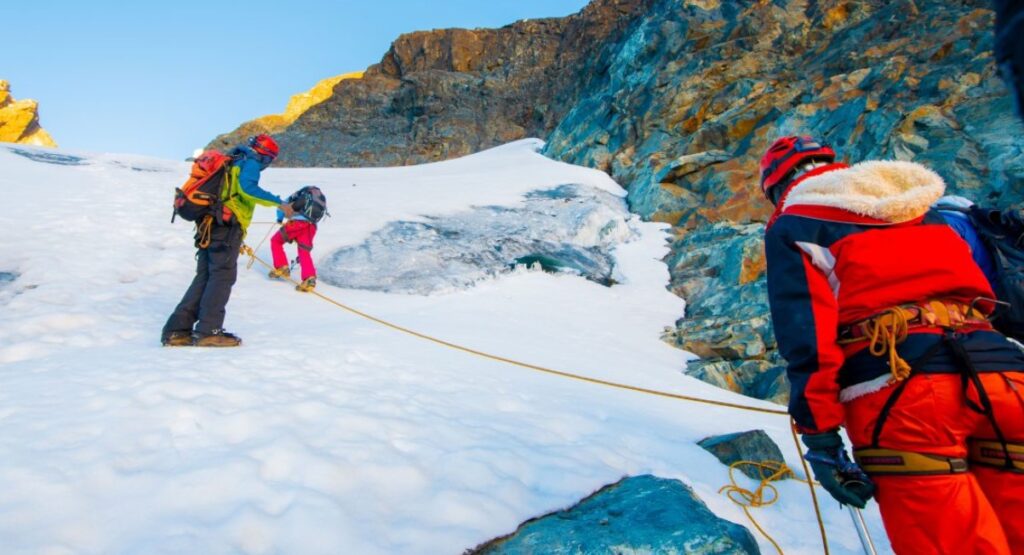
In practical terms, this means that on a 7-day Margherita Peak climb via the Central Circuit, the nights that matter for mosquito protection are the ones before you start and after you return, plus the first hours of walking. The same applies to the shorter 4-day, 5-day and 6-day summit itineraries, all of which start and end in the same lowland setting.
The Kilembe Trail Route to Margherita Peak
The Kilembe Trail approaches from the southern side, starting at the village of Kilembe a short drive from Kasese, at a little under 1,500 metres. The story is the same as on the Central Circuit: a warm lower start, a forested first day in which you climb out of the transition zone, and then an environment that becomes colder with every camp. The 8-day Kilembe Trail expedition to Margherita Peak spends most of its length above 3,000 metres, where mosquitoes are not a concern at all. If you are deciding between the two approaches, malaria should play no part in the choice, since both leave the risk behind at nearly the same pace; our comparison of the Central Circuit and Kilembe Trail covers the factors that genuinely matter.
Short Forest Treks Stay in the Lower Zone
One nuance is often missed. Trekkers who do a shorter forest walk rather than a summit climb, such as the one-day Nyabitaba trek, the 2-day Sine Camp trek or the Mahoma Loop, spend the whole trip in the forest belt, which is exactly the transitional band where a little mosquito activity is still possible. That is no reason for alarm, but it does mean that repellent and covered skin in the evenings are worth taking seriously on those routes, in a way they are not for the summit days of a Margherita Peak expedition.
Where the Real Malaria Exposure Sits on a Margherita Peak Trip
If the mountain is safe, the exposure lives in the parts of the journey that surround it. The most significant is the time you spend in Kasese before and after the trek, along with the roads to and from the trailheads. Kasese sits in the warm floor of the Rift Valley, and the nights before and after a climb are when mosquitoes are most likely to find you. Our Kasese guide for trekkers and the guide to where to land for a Rwenzori trek explain the logistics of arriving, and the accommodation guide for before and after your trek helps you choose rooms with proper screens or nets.
The second source of exposure is anything you add to the trip. Many climbers pair the summit with gorilla trekking, chimpanzee trekking or a safari, and those destinations are at lower, warmer elevations where transmission is a genuine, sustained risk. Queen Elizabeth National Park lies on the Rift Valley floor, while Bwindi and the forests around chimpanzee trekking in Kibale are also within Uganda’s malaria zone. If your plans resemble our Rwenzori and gorilla trekking combination or the 12-day Rwenzori and gorilla trek, your prevention plan should be built around the whole itinerary, not the mountain days alone.
Should You Take Antimalarial Tablets for a Margherita Peak Climb?
Almost certainly yes, and the reason has nothing to do with the summit. Prophylaxis works by protecting you across an entire period of potential exposure, and that period includes the lowland days before and after the climb. Skipping it because you will spend a few days high up would leave you unprotected during exactly the hours when mosquitoes are actually around. The Centers for Disease Control and Prevention and the World Health Organization both treat Uganda as a country where prevention is advised for travellers, and our own vaccines and health precautions guide sets out the wider preparation.
The right drug is a medical decision, and it should be made with a travel-health clinic or your own doctor several weeks before departure, because your history, other medications and the length of your trip all matter. What we can offer from the mountain side is a practical understanding of how the options fit around a climb. The common regimens for Uganda are atovaquone-proguanil, doxycycline and mefloquine; chloroquine is not suitable because of resistance. Atovaquone-proguanil is taken daily, started a day or two before entering the malaria zone and continued for seven days after you leave it, which suits short trips well. Doxycycline is also daily and started a day or two before, but must be continued for four weeks after your return. Mefloquine is taken weekly, started at least two weeks before travel, and also continued for four weeks afterward. Those timings mean the course you choose stretches well beyond the summit day, which is precisely why it is sensible to settle it long before you arrive.
Where Altitude Changes the Conversation
A few interactions between these drugs and high-altitude trekking deserve a conversation with your doctor. Doxycycline can make skin more sensitive to sunlight, and the ultraviolet exposure on the glaciers of the Stanley Plateau is intense, so a trekker taking it needs particular discipline with sunscreen, sunglasses and covering up. Mefloquine can cause dizziness, sleep disturbance or, in some people, more serious neuropsychiatric effects, and those symptoms can be hard to separate from the effects of altitude. Acetazolamide, commonly known as Diamox, is used by some trekkers to help with acclimatisation and has its own side effects, so it is worth discussing the two together. None of this is a reason to avoid prophylaxis; it is a reason to choose deliberately and to try any new drug well before the trip, not for the first time on a hut floor at 4,000 metres. Our medical guide to trekking the Rwenzori and the article on altitude sickness in the Rwenzori Mountains cover the other side of the equation.
Fever, Headache and Nausea on the Mountain: Malaria or Altitude?
One reason people worry about malaria on a high-altitude climb is that the early symptoms of malaria and of acute mountain sickness overlap. Both can involve headache, fatigue, nausea and loss of appetite. That is understandable, but a few things make the two easier to tell apart in practice.
The first is timing. Malaria has an incubation period after an infected mosquito bite, usually between one and four weeks, and rarely shorter than about a week. A trekker bitten in Kasese on the first night of a trip is very unlikely to show malaria symptoms by the time they reach the high camps a few days later. Symptoms that appear at 4,000 metres on day four or five are far more likely to be altitude, cold, exhaustion or a routine infection. The second is the pattern. Malaria characteristically brings fever, shaking chills and sweats, often coming in waves, while altitude sickness follows your ascent profile and tends to ease when you descend. Our acclimatisation guide explains that profile in detail.
On the mountain, this is not something you have to work out alone. Guides monitor every trekker daily for altitude symptoms, and descent is the response if signs worsen, exactly as described in our guide to whether it is safe to trek the Rwenzori Mountains. The more important instruction concerns the weeks after you return home. Malaria can appear well after you leave Uganda, sometimes weeks and occasionally months later. A fever, chills or flu-like illness after your trip should be treated as an urgent reason to see a doctor, and you should say clearly that you have recently travelled in Uganda. Do not assume it is a cold or a lingering summit-day chest infection.
Practical Bite Prevention Around Your Summit Trip
Good prevention is simple and works best when several small habits are combined. In the lowlands and the lower forest, wear lightweight long sleeves and trousers around dawn and dusk when mosquitoes are most active, and use a repellent containing DEET or picaridin on exposed skin. Choose accommodation with screened windows or proper bed nets for your nights in Kasese; you will not need a net in the high huts, because mosquitoes are effectively absent there. Treating clothing with permethrin before you travel adds another layer of protection. Most of these items already appear on the Rwenzori packing list, so they cost you very little extra space.
A related point that surprises trekkers is that the insects most likely to bother you in the forest are biting flies rather than mosquitoes, a subject we cover in the guide to dangerous animals in the Rwenzori Mountains. They carry no malaria, but the same long sleeves and repellent keep them at bay. Seasonal patterns matter only at the margins: extra rain in the lowlands can mean more standing water and a few more mosquitoes around Kasese, so it is sensible to be a little more careful about repellent during the wetter months described in our best time to visit the Rwenzoris and Rwenzori in winter guides.
The Risks That Actually Matter on Summit Day
Having set malaria aside, it is worth spending your worry where it belongs. The genuine hazards on the route to Margherita Peak are altitude, cold and wet, and the demands of the terrain. The high camps above 4,000 metres are cold, and Elena Hut, at around 4,540 metres, sees temperatures well below freezing at night. The summit push begins in the early hours, crosses rock and ice with crampons and an ice axe, and asks a great deal of anyone who is underprepared. Our guides to how hard the Rwenzori trek is, how technical the Margherita Peak climb is and the Rwenzori glacier crossing describe them honestly, and the final push to the summit, minute by minute walks through summit morning as it unfolds.
The variables that decide success are almost entirely under your control: choosing an itinerary long enough to acclimatise, arriving fit, and having the right clothing. The summit success rate for Margherita Peak depends far more on those factors than on anything to do with insects, and guidance on staying warm at altitude is in our guide to keeping warm on the summit. Travel insurance that explicitly covers high-altitude trekking and evacuation is essential, and our Rwenzori travel insurance guide explains what to look for. If you want to understand the mountain’s environment more fully, the five vegetation zones of the Rwenzori show how quickly the landscape changes as you leave the warm lowlands behind.
For trekkers who have read this far and are still weighing whether to go, the good news is that malaria should not tip the balance either way. The summit is safe from it, the lower slopes and lowland towns call for standard, well-understood precautions, and your doctor can tailor the details. If you are ready to move from research to planning, our guides can help you compare every Rwenzori trek and expedition, including the 8-day three-peaks trek and the 13-day six-peaks expedition, and if you are travelling from the United States, the United Kingdom, South Africa or Australia, we have written planning guides for American travellers, travellers from the UK, South African travellers and trekkers from Australia.
Frequently Asked Questions About Malaria and Margherita Peak
Is Margherita Peak at risk of malaria?
No. Margherita Peak, on Mount Stanley at 5,109 metres, is permanently cold and glaciated, far too cold for Anopheles mosquitoes to live or for the malaria parasite to develop. The relevant health risks on the summit are altitude sickness, hypothermia and cold injury, not insect-borne disease.
At what altitude does malaria stop being a risk in the Rwenzori?
Malaria transmission in the East African highlands is limited above about 2,000 metres and essentially absent above about 2,500 metres. On the Rwenzori routes, that means the risk fades during the first one or two days of walking through the montane forest and is gone well before the high camps. Nyabitaba Camp and everything above it lies at or near the point where risk has effectively ended.
Do I need to take malaria tablets if I am only climbing Margherita Peak?
Yes, you should still plan to take them. Your trip begins and ends in Uganda’s lowlands, including nights in Kasese and the drive to the trailhead, where transmission is real. Prophylaxis protects you across the whole period of possible exposure, and some regimens must continue for a week or four weeks after you leave. Your doctor or a travel clinic will choose the right drug for you.
Can I stop my malaria tablets once I am above the forest?
No. Stopping midway leaves you unprotected for the lowland days at the end of your trip and undermines the course. Continue exactly as prescribed, including the after-travel period, which for some drugs runs up to four weeks. It is far easier to plan this at home than to adjust it from a mountain hut.
Are mosquito nets needed in the huts on the way to Margherita Peak?
No. At the high huts on the Central Circuit and Kilembe routes, temperatures are too low for mosquitoes, so nets are not needed there. Bring your attention to accommodation in Kasese and any lowland stops before and after the trek, where screened rooms or bed nets are worth having.
Could my headache or nausea at a high camp be malaria?
It is very unlikely. Malaria usually takes one to four weeks to cause symptoms after a mosquito bite, so a headache or nausea a few days into a climb is far more likely to be altitude sickness, cold or fatigue. Tell your guide immediately, because they monitor for altitude symptoms daily and will advise on descent if needed. Fever with shaking chills after you return home, however, should prompt urgent medical attention.
Does altitude affect which malaria medication I should choose?
It can. Doxycycline increases sun sensitivity, which matters on high, bright glaciers. Mefloquine can cause dizziness and mood or sleep effects that may be confused with altitude symptoms. Atovaquone-proguanil is often considered a convenient short-trip option. These are general points only, so discuss your choice, and any Diamox use, with a travel-health professional several weeks before you leave.
Does the risk change with the season?
Only slightly, and only in the lowlands. Heavy rain can create more standing water and slightly more mosquito activity around Kasese and the lower forest, so be a little more careful with repellent during wetter months. It makes no difference to the summit, which is cold in every season.
Does combining Margherita Peak with gorilla trekking change my malaria precautions?
Yes. Bwindi, Kibale, Queen Elizabeth National Park and most other Ugandan safari destinations are at lower, warmer elevations with sustained malaria risk. If you combine them with the mountain, plan your prevention for the whole itinerary. Our 12-day Rwenzori and gorilla trek is built around that combination.
Ready to Stand on Margherita Peak?
Malaria is one small piece of preparing for the Mountains of the Moon, and it is a piece you can now understand clearly. The summit itself is entirely safe from it, the lowland gateway needs sensible, standard precautions, and the real challenge is the mountain itself: the cold, the ice and the thin air. Our guides have led trekkers to the summit of Mount Stanley many times and can help you plan every detail, from choosing the right route and itinerary length to arranging your nights in Kasese.
Request a custom quote with your dates and travel plans, or message a mountain guide directly on WhatsApp for honest advice with no sales pressure. If you would like to keep reading first, our FAQ section answers more than a hundred questions about the Rwenzori. Margherita Peak is waiting, and it is safe from malaria.