How many people are in a Rwenzori group trek? Most departures have 4-8 trekkers plus guides and porters. See group sizes, crew and costs.
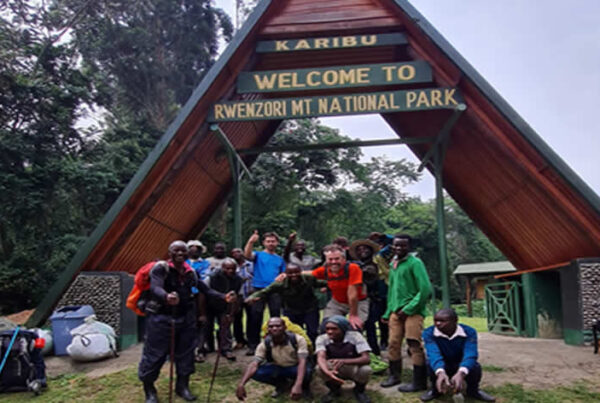
Stand at the Nyakalengija trailhead at seven o’clock on the first morning of a Rwenzori trek and count the people. You will see the trekkers in their rubber boots, faces bright with nerves and anticipation, checking straps and gaiters for the third time. But if you keep counting, you will notice something that surprises almost every first-time visitor: the trekkers are only part of the crowd. Around them are a lead guide, an assistant guide, a cook, and a line of porters whose packs are being weighed at the trailhead before anyone takes a step into the forest. The party that disappears into the trees is considerably larger than the number on the booking form.
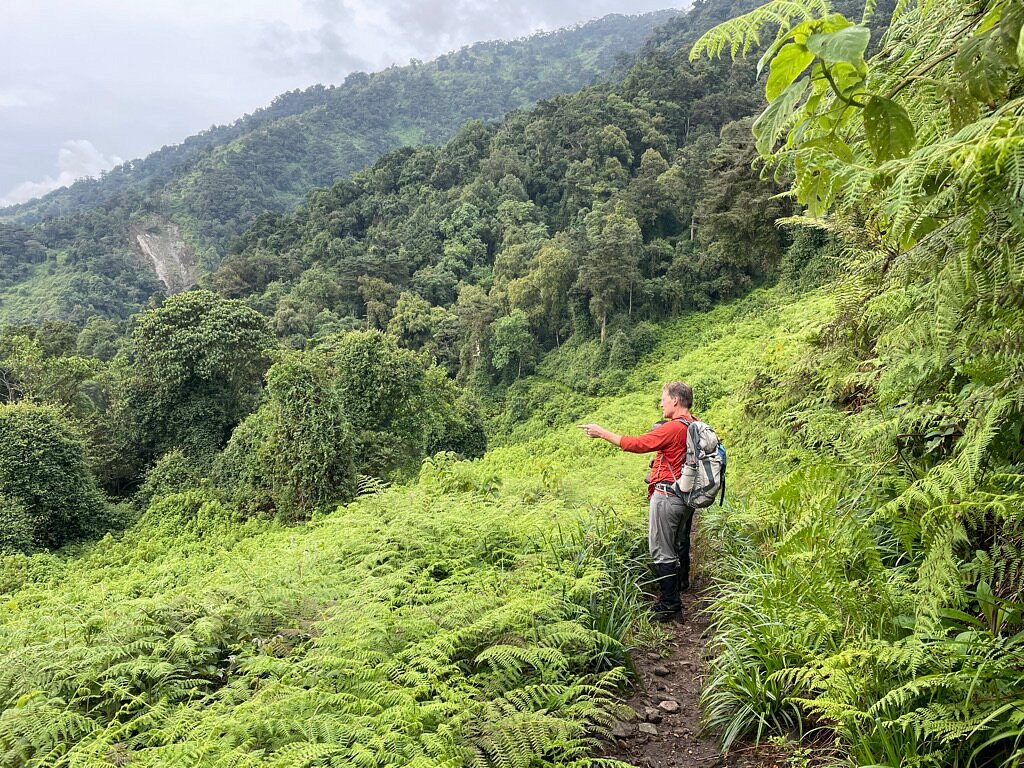
That gap between the number of trekkers and the number of people on the mountain is the heart of the question this guide answers, because “how many people are in a Rwenzori group trek?” has two honest answers and both matter when you are planning. The first is the size of the trekking party you will share the mountain with, which on a scheduled departure is typically between four and eight people. The second is the size of the whole expedition, trekkers plus the Bakonzo guides, cook and porters who make the trek possible, which is larger than most people expect and is one of the reasons the Rwenzori feels so different from busier African peaks.
I have guided groups of every size on these trails, from couples on the Central Circuit to company teams on the Kilembe Trail, and the size of a party shapes almost everything about a trek: how fast you move, how much attention you receive on the glacier, who you share a hut with at 4,000 metres, and what the whole expedition costs. This article sets out the numbers as they really work on the mountain, explains why they are what they are, and helps you decide what size of party is right for you.
| THE SHORT ANSWER
A typical scheduled Rwenzori group trek has about four to eight trekkers. Private treks are usually one or two people, and small custom parties of two to four are, in our experience, the ideal format on this mountain. Corporate and school groups can run from about six people up to around forty, split across several guide teams. Every party is accompanied by a lead guide, multi-day treks carry a cook, an assistant guide is added for groups of more than four or on technical routes, and porters carry the kit, so the whole expedition on the trail is always considerably larger than the trekking party itself. |
The Direct Answer: Four to Eight Trekkers on a Scheduled Departure
On a scheduled group departure, where trekkers who booked independently share a guide team, a porter team, the huts and the daily itinerary, groups commonly range from around four to eight trekkers, though this varies by season and route. That range is a description of what usually happens rather than a fixed rule, and it moves with demand. In my experience, departures in the drier months, when more people want to trek, tend to fill toward the upper end of the range, while a group in the wetter months may be smaller. Our guide to the best time to visit the Rwenzoris and the month-by-month trekking guide explain how the seasons shape the mountain and the number of people on it.
You do not need a group to trek at all. A private trek can be booked for one or two people, in which case the guide and porter team belongs to your party alone, and group pricing formally applies to parties of three or more. What we call a “group trek” on the Rwenzori is best understood as a spectrum: private parties of one or two at one end, small custom parties of three or four in the middle, scheduled departures of about four to eight, and large corporate or school groups at the far end. The rest of this guide walks along that spectrum, and if you would like the full comparison of formats and costs, our companion piece on group versus private Rwenzori treks takes that angle in depth.
Two Numbers, Not One: The Trekking Party and the Whole Expedition
The number people ask about is the number of trekkers, but the number that governs how the mountain feels is the size of the full expedition. The Rwenzori is not a mountain where you carry your own gear from hut to hut. It is a wet, steep, technical range with no roads inside the park and no huts you can reach by vehicle, so every expedition is a small mobile village, and understanding who is in that village explains why the numbers look the way they do.
Who walks with you
Every trek is led by a registered lead guide, who is responsible for navigation, hazard assessment, river crossings, glacier safety and the daily health checks that catch altitude illness early. For groups of more than four trekkers, or on technical routes, an assistant guide is included as well, which keeps the ratio of guide attention to trekkers sensible when the group is larger or the terrain is more demanding. Every multi-day expedition also carries a cook, a specialist role distinct from the guides and porters, who produces hot meals in hut kitchens and on open moorland, and our article on what you actually eat on a Rwenzori trek shows how much the cook shapes the daily rhythm of the mountain. On full summit bids, the team also includes a designated rescue porter, briefed and equipped to support a rapid descent if a trekker becomes seriously unwell in the upper mountain.
How many porters go with a group
Porters make up the bulk of the team. For the standard summit itineraries, the seven-day Central Circuit and the eight-day Kilembe Trail among them, the allocation is roughly one porter per trekker in a private or small party, plus the guide and cook. Our guide to how many porters you need on the Rwenzori sets out the numbers route by route. On a scheduled group departure the per-person porter requirement is lower, because the group shares cooking equipment, hut infrastructure and food supplies, which is one reason group departures cost less per head without any drop in safety standards. Porter loads are weight-limited and weighed at the trailhead before departure, so the team size is calculated from what the expedition actually has to carry, not guessed.
What that adds up to on the trail
A standard seven-day expedition typically employs a team of seven to ten Bakonzo professionals, and for a party of four trekkers the support team usually numbers six to eight, including the lead guide, an assistant guide, the cook and four porters. A solo trekker on a summit route walks with a team of four or five. For a party of two on the thirteen-day six-peaks expedition, a crew of eight to ten is common. Put those figures next to a group of four to eight trekkers and you can see why an ordinary group departure on the Rwenzori puts a dozen or more people on the trail, even though only a handful of them are the ones who booked the trip. If you want to know who these people are, our guides to Rwenzori porters and guides, the Bakonzo people who have worked these slopes for generations and a day in the life of a Rwenzori porter are worth reading before you go, and the booking guide covering what is included confirms what the team is built into the package price.
Group Size by Format: From Private Parties to Company Retreats
Different formats produce different sizes, and each has its own logic. The table below summarizes the range, and the sections that follow explain what each format feels like on the mountain.
| Format | Typical trekkers | Guide team | What it feels like |
| Private trek | One or two people | Lead guide and cook, plus porters dedicated to your party | Full control of pace; highest guide attention per person |
| Small custom party | Two to four people, with group pricing from three | Lead guide and cook; assistant guide on technical routes | Flexible pace, comfortable huts, close attention; often the ideal format |
| Scheduled group departure | About four to eight people, varying by season and route | Lead guide, assistant guide for groups of more than four, cook and porters | Social and economical; pace set around the group |
| Corporate, school or club group | From about six to around forty people, split across multiple guide teams | Several guide teams, arranged per group | Shared challenge; pricing and logistics arranged directly |
Private treks: one or two people
A private Rwenzori trek does not mean trekking without a guide, since Uganda Wildlife Authority rules require every party to be accompanied by a registered guide, as our guide to whether guides are mandatory explains. It means the guide and porter team belongs to you and whoever you are travelling with, usually a partner, a friend or a parent and child. Private parties of one or two people give you complete control over pace, rest stops and the shape of the day, and the highest ratio of guide attention per trekker, which is particularly valuable on the technical section above Elena Hut.
Small custom parties: two to four people
If I were designing the perfect Rwenzori party from scratch, it would be somewhere between two and four people, and that is not a sales line; it is what I have seen work best on the mountain. A group of that size is large enough to provide mutual support and shared experience, and small enough to move at a flexible pace, occupy the mountain huts comfortably and receive individual attention from the guides. Large-group dynamics on technical terrain at altitude can create pressure to move at the pace of the fastest or most confident member, which is a genuine safety risk, and small parties avoid that pressure almost by design. Group discounts formally apply from three people upward, so a party of three or four friends or family members often gets much of the cost benefit of a group while keeping the intimacy of a private trek.
Scheduled group departures: about four to eight people
A scheduled departure is the most economical way to trek the Rwenzori. You join other trekkers who booked independently, and you share the guide team, the porters, the hut accommodation and the itinerary. It is also the format most travellers picture when they think of a “group trek”. The trade-offs are honest ones: you work around a fixed start date, and the pace settles around the collective group rather than any one person, which for many first-time high-altitude trekkers is a reassurance rather than a restriction. Solo travellers and pairs can ask us to place them onto an upcoming departure, which is how a traveller who arrives alone can end up walking with a welcoming party of strangers by the second day.
Corporate, school and club groups: six to around forty
Larger parties are a different kind of expedition. Corporate and large-group requests range from a six-person leadership team to a forty-person company-wide retreat, and at that scale the party is divided across several guide teams rather than walking as a single column, so each sub-group keeps a sensible ratio of guides to trekkers. Because group sizes and structures vary so widely, large-group pricing is arranged directly rather than from a fixed price list, and every participant needs their own travel insurance covering high-altitude trekking and evacuation. Our detailed guide to corporate and team-building treks in the Rwenzori covers the planning in full, including the shorter formats that suit tight corporate calendars.
How Route and Itinerary Change the Number of People
The same group size does not mean the same thing on every route. What the terrain demands, how much equipment must be carried and how technical the summit day is all influence how many people the mountain can comfortably absorb.
Short forest treks and loops
On the lower-altitude routes the support requirements are lighter, because the trails avoid the technical upper mountain, food logistics are simpler, and altitude exposure is limited. The two-day Lake Mahoma hike, the two-day trek to Sine Camp, the three-day Mahoma Loop and the four-day Mutinda Lookout trek need smaller crews, and because they involve no glacier gear they suit mixed-ability groups, families and colleagues well. A trekker who reviewed the Mutinda Lookout trek describes arriving on their own and joining a welcoming group of six, which is a good picture of how a small scheduled party forms on the shorter routes.
Classic summit treks
The seven-day Central Circuit and the eight-day Kilembe Trail are where the group sizes described above apply most directly. Both can be booked privately or as part of a group, and the eight-day format is popular partly because the extra day supports acclimatization, which matters more as the party grows and the pace has to accommodate everyone. Our guide to the difference between the Central Circuit and the Kilembe Trail will help you choose the route, and the summit success rate guide shows how itinerary length affects your chances on the mountain.
Multi-peak expeditions and the wilderness trail
Multi-peak expeditions are typically run with small parties. The team compositions we plan for the thirteen-day six-peaks expedition, for instance, are built around parties of two to four, with a rescue porter and extra crew for the added equipment and days. In my experience the longer itineraries, such as the ten-day four-peaks trek, the eight-day three-peaks trek and the eighteen-day traverse of all eight major peaks, also suit small parties, since every extra day and summit adds crew and equipment. Together they take in Mount Stanley, Mount Speke, Mount Baker, Mount Emin, Mount Gessi and Mount Luigi di Savoia. The Bukulungu Trail, the wilderness route with tented camps that sees only a few dozen visitors a year, is quieter still, and is best suited to a small, self-reliant party.
Why Group Size Matters Above Elena Hut
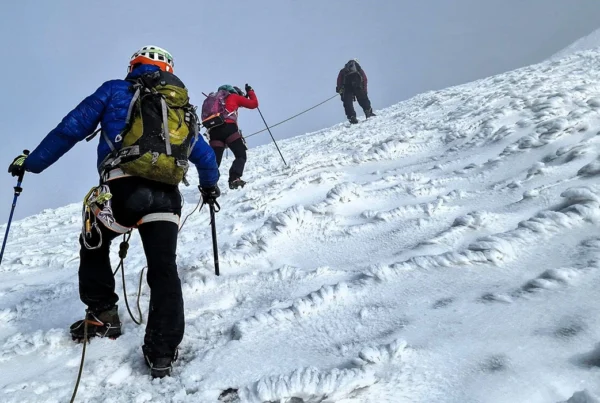
On the lower trails a group of eight and a group of three have much the same day. The difference shows on summit day, when the party leaves Elena Hut at 4,541 metres in the dark, ropes up, fits crampons and crosses the glacier toward Margherita. That section is graded as mildly technical, with fixed ropes on steep icy rock, and our guides fit and check the equipment, manage the rope teams and control the pace. Our breakdowns of how technical the climb to Margherita Peak really is and the Rwenzori glacier crossing guide explain what those hours involve, and it is on that terrain that party size stops being a matter of preference and starts being a matter of safety.
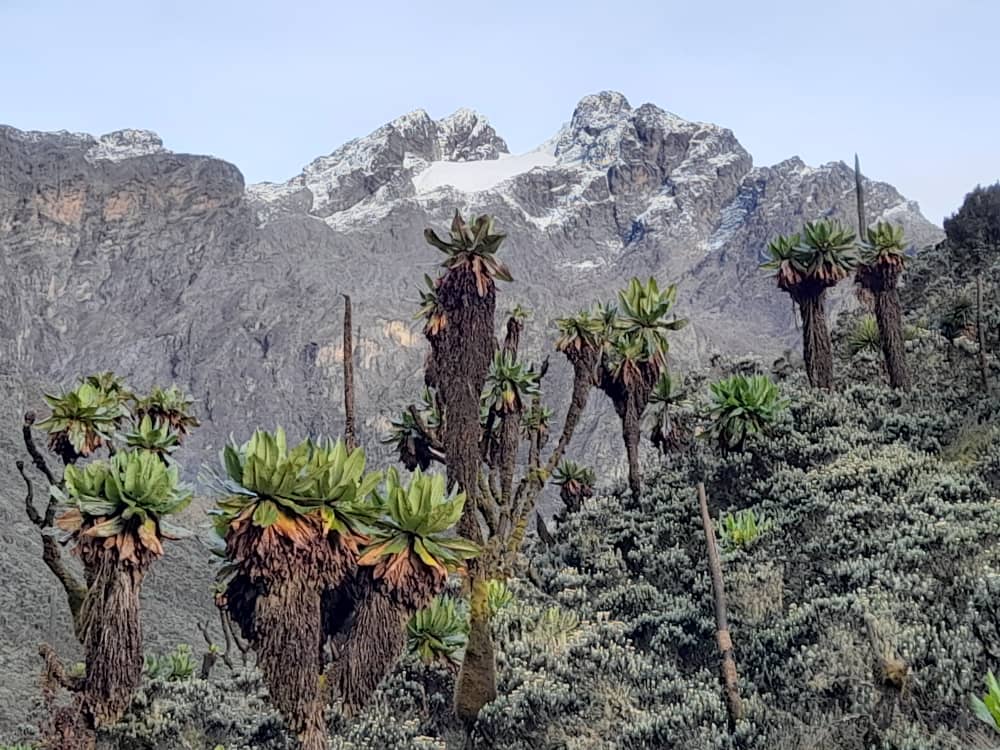
Smaller parties get more individual instruction on crampon technique and roped movement, a more flexible pace, and a guide who can spot the early signs of altitude sickness in each person. Larger parties settle around the pace of the slowest member, which is a sound safety principle, but which also means a strong trekker may feel held back and a struggling trekker may feel watched. There is also a genuine case for the other side. On the hardest day, in the pre-dawn cold at close to 5,000 metres, individual motivation can waver, and having other trekkers pushing through the same fatigue beside you is, for many people, a real psychological asset. The honest answer is that a party of three to six people captures most of both benefits, which is why I steer trekkers who are unsure toward that range. Our acclimatization guide and the complete medical guide to trekking the Rwenzori explain the physiology that makes pacing so important.
How a Group Departure Actually Comes Together
Trekkers often imagine that a group departure is an organised tour with a coach party of friends. It is nothing like that. A scheduled departure is simply a published start date onto which independent trekkers, couples and small parties book, and the group forms from whoever has chosen that date. You may find yourself alongside a couple from another continent, two friends on a long-awaited trip and a solo traveller, all of whom chose the Rwenzori for the same reasons you did. By the second or third day most parties describe themselves as a team, which is the mountain’s doing more than ours.
The practical consequences are worth knowing. The start date is fixed, so if your dates are tightly constrained a private booking or a small custom party is the safer route. The pace is set around the collective group, by design and for safety. Your guides, porters and cook are the same certified professionals whatever the party size, and park fees are charged per person, so joining a group does not change what the mountain requires of you, only how the shared costs are divided. If you want to shape your own group, bring one or two friends or colleagues, book together, and you will have a small custom party with group pricing from the third person. If you are travelling alone, tell us when you enquire and we will either place you onto a suitable departure or arrange a private team for you.
How Many Other Trekkers Will You Meet on the Mountain?
The number of people in your own party is one question; the number of other trekkers you will meet is another, and the answer is the Rwenzori’s great gift. The range receives roughly one to one and a half thousand trekkers a year across all routes, a small fraction of the numbers on Kilimanjaro, as our analysis of how many people hike the Rwenzori each year shows in detail. Even in the busiest months, June to August, “busy” means encountering a handful of other parties, not queues or crowded camps, and on many days you may not see another group at all between one camp and the next.
Mountain huts are shared spaces by design, so even a private party will sometimes overlap with other groups at the larger camps, and our guides to the huts and camps on every trail and to accommodation inside and outside the park explain what each one is like. The difference between a large party and a small one is less about total solitude than about who forms your trekking unit through the day, who your guide and porters answer to, and how much of the hut you and your companions occupy. This low density is also a central part of why the Rwenzori is worth climbing, and why many trekkers describe it as one of the last true wilderness experiences in Africa.
What Group Size Does to Cost, Comfort and Safety
Cost
A Rwenzori expedition carries fixed costs, your lead guide’s wage, transport to the trailhead, communal cooking equipment and a share of the porter team, that exist whether two people or eight are on the trek. Group size therefore changes the price per person, and moving from a private two-person trek to a shared group of six can lower the per-person cost by roughly USD 200 to 400. Our published guide prices illustrate the pattern: the six-day Weismann Peak expedition starts from about USD 1,200 per person privately, comes down to roughly USD 1,050 to 1,100 for a group of four, and to about USD 900 to 1,000 for a group of six or more, while the thirteen-day six-peaks expedition falls from about USD 3,350 to around USD 3,200, and the eighteen-day all-peaks traverse from about USD 4,050 to roughly USD 3,850. Treat those as guides rather than quotes, since prices adjust with season, route and group composition. Uganda Wildlife Authority fees are charged per person and do not fall with group size, which is why the savings come from shared logistics rather than from the park fee. Our full cost breakdown, the article on what climbing the Rwenzori actually costs and the budget trekking guide go into the arithmetic, and our advice on tipping Rwenzori porters and guides explains how a group’s tips are pooled and distributed across the whole team.
Comfort
Comfort scales with party size in ways that are easy to overlook. A small party moves faster through camp routines, gets hot food and hot drinks sooner, and finds a bunk near the stove more easily; a large one spends more time waiting for its turn at the cook fire and the toilet. Our guides to the Rwenzori huts and camps and to packing for the mountain will help you prepare for shared-hut living whatever size your party turns out to be, and the sleeping bag rating guide is one of the most important gear decisions for the cold nights at Elena.
Safety
Safety standards do not change with group size. Guides are certified to the same standard, the same medical kits and communication equipment travel with every party, and the same rescue provision applies on summit bids, as our overview of whether the Rwenzori is safe to trek and the guide to what happens if you get injured or sick on the Rwenzori describe. What changes is the guide’s attention per person, which is why an assistant guide is added for parties of more than four, and why larger groups are divided across guide teams rather than pushed into a single column. Travel insurance covering high-altitude trekking and evacuation, with cover to at least 5,200 metres, is essential for every member of every party, as our travel insurance guide explains.
Choosing the Right Group Size for Your Trek
The right size depends on who you are and what you want from the mountain. Trekkers who value control, who are combining the climb with a tightly dated itinerary, or who have particular fitness or pacing needs are usually happiest in a private party of one or two. Couples and small groups of friends who want intimacy without paying the full private premium do very well as a custom party of three or four. Solo travellers and pairs who want company, shared summit-night motivation and a lower price per person are well suited to a scheduled departure, and if you are unsure of your own pace, a group departure removes the pressure of managing your own acclimatization decisions on unfamiliar terrain.
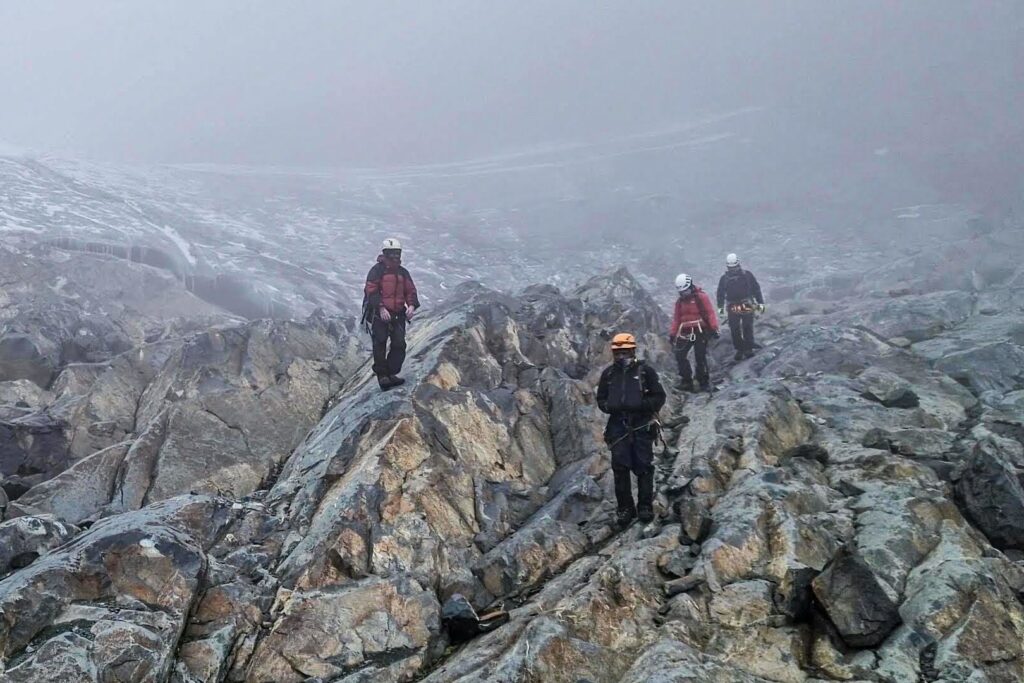
Some situations deserve particular thought. Families should think about the slowest and youngest member and choose a route that respects them, and our guide to whether beginners can climb the Rwenzori helps first-timers judge. Older trekkers often prefer small parties with room to set their own pace, and the honest advice in our guide for older hikers supports that. Photographers usually prefer private or very small parties, since good light does not wait for a group to assemble. Whatever size you choose, preparation matters more than group size: the fitness guide, the 16-week training plan and the article on how hard the Rwenzori trek really is will do more for your summit chances than any decision about party size.
Joining or Forming a Rwenzori Group: How the Booking Works
Booking is simple. You contact us with your preferred dates, the size of your party and the route or peaks you are considering, and we recommend a format: a place on an upcoming scheduled departure, a private trek, or a custom party priced for your numbers. There is no permit lottery or fixed daily quota on the Rwenzori, so you do not have to book many months ahead purely to secure a place, but departures follow a published schedule and the drier months fill first, so early contact gives you the widest choice of dates. Our guide to Uganda Wildlife Authority permit booking explains why the process runs through a licensed operator, and the park entrance fees guide explains what you pay and why. Kilembe Trail treks run under a concession held by Rwenzori Trekking Services, and the Uganda Wildlife Authority administers the park, so both are worth knowing about as you plan.
Before the trek you will need to sort out insurance, your visa and gear, and our guides to getting to the Rwenzori Mountains, Kasese as a gateway town and accommodation before and after your trek cover the logistics. On the first morning you meet your whole team at Nyakalengija for the briefing, load weighing and registration described in our guide to what happens at the trailhead, and from that moment the size of your group becomes a lived experience rather than a number.
Frequently Asked Questions About Rwenzori Group Trek Sizes
How many people are typically in a Rwenzori group trek?
A typical scheduled Rwenzori group trek has about four to eight trekkers, though the number varies by season and route. On top of the trekkers, every party has a lead guide and, on multi-day treks, a cook, an assistant guide for groups of more than four or on technical routes, and porters who carry the kit, so a group of four to eight trekkers usually walks with a support crew of several more people. Private treks are typically one or two people, and small custom parties of two to four are, in our experience, the ideal size for the mountain.
What is the maximum group size on a Rwenzori trek?
Scheduled group departures commonly top out at around eight trekkers. Larger parties, such as company retreats, school expeditions and clubs, are arranged directly and can run to about forty people, but at that scale the party is split across several guide teams rather than moving as one column. If you are planning a large group, contact us with your numbers and dates so the guide teams, porters and logistics can be designed around you.
What is the minimum group size for a Rwenzori trek?
There is no minimum. A single trekker can book a private guided trek, and a private party is usually one or two people. Group discounts formally apply to parties of three or more, so the price per person falls as the party grows, but you never need to assemble a group to be allowed on the mountain. Solo travellers can also ask to be placed on an upcoming scheduled departure and share the costs with other trekkers.
How many guides and porters go with a Rwenzori group?
Every party has a registered lead guide, and multi-day treks carry a cook (on the shortest routes the cook and a porter may share duties). An assistant guide is included for groups of more than four or on technical routes. Porters are allocated at roughly one per trekker on standard summit itineraries, with a lower per-person requirement on group departures, because the group shares communal equipment. A standard seven-day expedition typically employs seven to ten team members, and a party of four usually has a support team of six to eight. Summit bids also include a designated rescue porter.
What is the ideal group size for the Rwenzori?
In our experience the ideal size is two to four trekkers. A party of that size is large enough for mutual support and shared experience, and small enough to move at a flexible pace, share huts comfortably and receive individual guide attention, especially on the glacier crossing toward Margherita Peak. Groups of four to eight on a scheduled departure are also perfectly safe and more economical, and many trekkers find the shared energy helpful on summit day.
Will I be trekking with strangers on a group trek?
Usually, yes. A scheduled departure is a published start date onto which independent trekkers, couples and small parties book, so the group forms from whoever has chosen that date. Solo travellers and pairs can ask us to place them onto an upcoming departure. If you would rather trek only with people you know, book a private trek or bring friends or family and form your own custom party with group pricing from three people.
How many other trekkers will I meet on the mountain?
Very few. The Rwenzori receives roughly one to one and a half thousand trekkers a year across all routes, a fraction of the traffic on Kilimanjaro, and even in the busiest months, June to August, you may meet only a handful of other parties. Huts are shared spaces, so you may overlap with other groups at the larger camps, but crowding on the trails and at the camps is rare.
Does a larger group make the Rwenzori cheaper?
Yes. Fixed costs such as the lead guide, transport, cooking equipment and part of the porter team are divided among everyone, so moving from a private two-person trek to a group of six can reduce the per-person price by roughly USD 200 to 400. Park fees are charged per person and do not fall with group size, and safety standards, guide quality and hut accommodation stay the same in every format.
Is a bigger group safer on the Rwenzori?
Not necessarily. Safety standards are the same for every party, and the number that matters most is the guide’s attention per trekker, which is why an assistant guide is added for parties of more than four and why large groups are split across guide teams. A bigger group can bring encouragement on the hardest days, but small parties give more individual instruction on the glacier and more flexibility in pace, and they avoid the pressure to keep up with the fastest member.
Who sets the pace on a group trek?
The pace settles around the collective group, and in practice around its slowest or least experienced member, for safety and so that nobody attempts a summit push on legs that have not had proper rest. Your lead guide manages this throughout, checks every trekker daily for signs of altitude illness, and can enforce a slower pace or a descent when needed. If you want to set your own pace, a private trek gives you that control.
How far ahead should I book to join a group departure?
There is no permit lottery or fixed daily quota on the Rwenzori, so you do not need to book many months ahead to secure a permit. Departures follow a published schedule, and the drier months of December to February and June to August are the most popular, so contacting us early gives you the widest choice of dates. If you are combining the trek with gorilla trekking, gorilla permits are limited and should be arranged three to six months in advance.
| Ready to Plan Your Rwenzori Group Trek?
Tell us who is coming, when you hope to go and what you want from the mountain, and we will recommend the size and format that fits: a place on an upcoming group departure, a private trek for two, a small custom party, or a full expedition for a company or club. Our guides have stood on Margherita Peak more than two hundred times between them, and they would be glad to talk it through with you honestly and without sales pressure. Message a guide on WhatsApp at +256 773 256 104, request a personalised quote, or email rwenzoritrekkingsafaris@gmail.com. Browse our full range of Rwenzori treks and expeditions, read the FAQ for quick answers, or learn more about our team. Ten percent of your trip proceeds also supports the Bakonzo communities who make these mountains possible, as explained in where your 10% goes. |