See where your 10% goes: how Rwenzori Trekking Safaris’ Bakonjo community fund supports schools, homes & orphan care in Kasese.
Every trekking company operating in Uganda will tell you, in some form, that booking with them supports the local community. It has become one of the most repeated sentences in African adventure tourism, and repetition has worn most of the meaning out of it. So let me answer the question properly, the way I would answer it if you were sitting across from me at our office in Kasese with a map of the range between us: ten percent of the proceeds from every trek we run at Rwenzori Trekking Safaris goes directly back into the Bakonzo communities of the Kasese foothills, funding schools, households, and orphan-support programmes in the villages our porters and guides call home. This article exists because a percentage on its own is not an answer. Where does that money actually land? Who decides how it is used? How does it relate to the wages your crew earns and the tips you leave at the trailhead? After years of guiding on this mountain and watching this commitment operate season after season, I want to walk you through exactly how it works, so that when you book a Rwenzori expedition you understand precisely what your money is doing, not just on the mountain, but in the villages below it.
The Number Behind the Promise: What “10%” Actually Means
Ten percent is calculated on trek proceeds, the revenue generated from the package price of your expedition, not on some narrower definition of net profit that could quietly shrink the figure to nothing once overheads are deducted. Whether you are booking the shorter Bukurungu Trail as an introduction to the range or committing to one of our longer multi-peak expeditions, the same ten percent principle applies, scaled to the value of the trip you book. It is worth understanding what this figure sits alongside, because a Rwenzori package price already covers a great deal: your full trek cost, from park fees to hut accommodation, meals, and guide and porter wages, is set with these community obligations built into the business model from the outset, not treated as a marketing afterthought layered on top of a price built without them in mind. That distinction matters more than it might first appear. A company that treats community investment as core business economics behaves differently, season after season, than one that treats it as a discretionary donation dependent on how profitable the year happened to be.
This is also why the commitment shows up consistently across everything we publish, from our route pages to our deeper cultural writing, rather than living on a single isolated page designed mainly for search engines. It is a structural feature of how the company is run, and structural features tend to be the ones that survive a quiet year.
Why Kilembe and the Kasese Foothills, Specifically
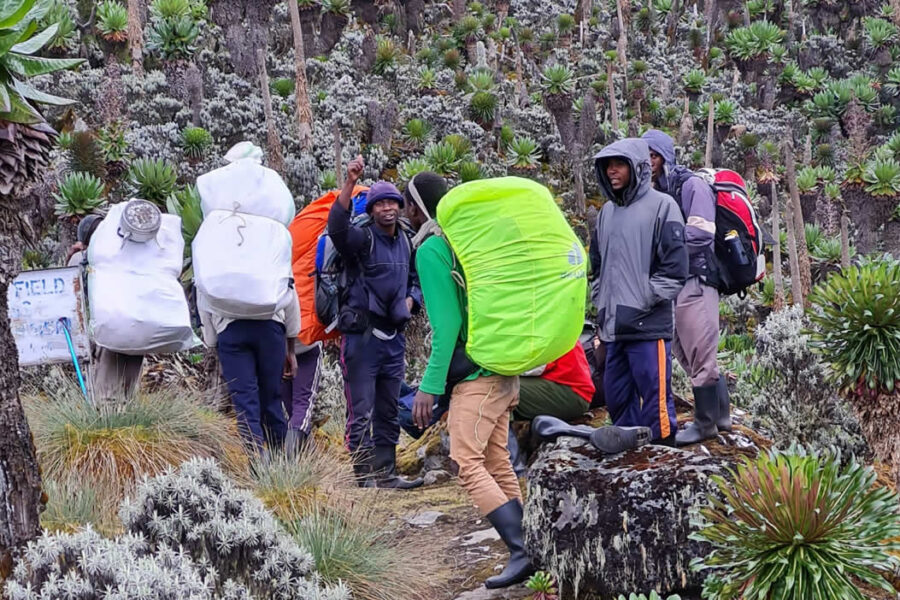
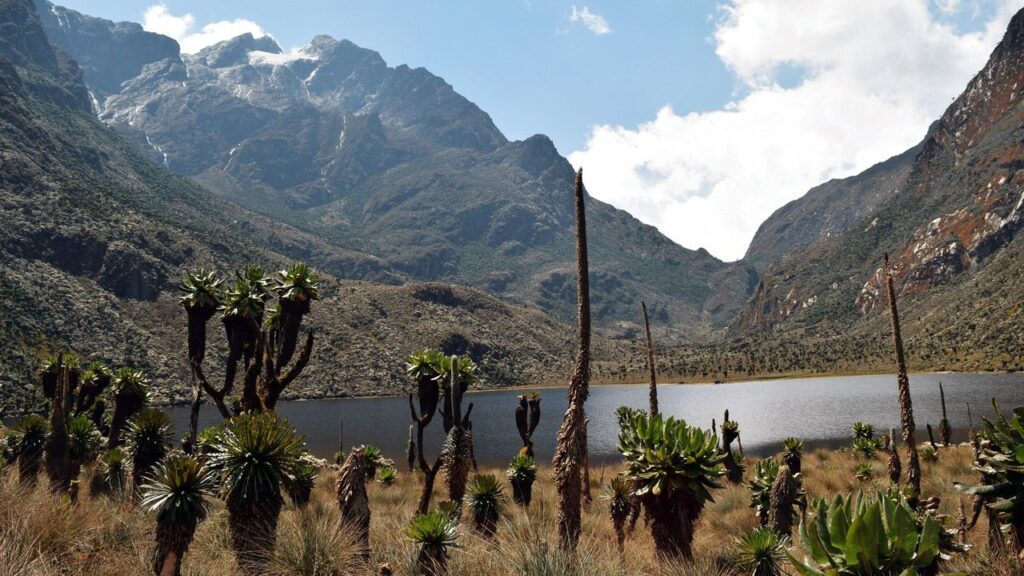
The Rwenzori range straddles the Uganda-DRC border, but the trailheads, the guide teams, and the porter communities that make trekking here possible are overwhelmingly rooted in Kasese District on the Ugandan side, in villages ringing the base of the mountain along both the Central Circuit approach from Nyakalengija and the Kilembe Trail approach from the old copper-mining town of Kilembe itself. Our community support is directed into these specific foothill communities, particularly households in the Kilembe area, because these are the villages our guide and porter teams actually come from. This is not abstract regional philanthropy scattered across western Uganda for the sake of a broad-sounding claim. It is targeted investment in the same families whose fathers, sons, and increasingly daughters carry your bags, cook your meals, and lead you safely to Elena Hut and beyond.
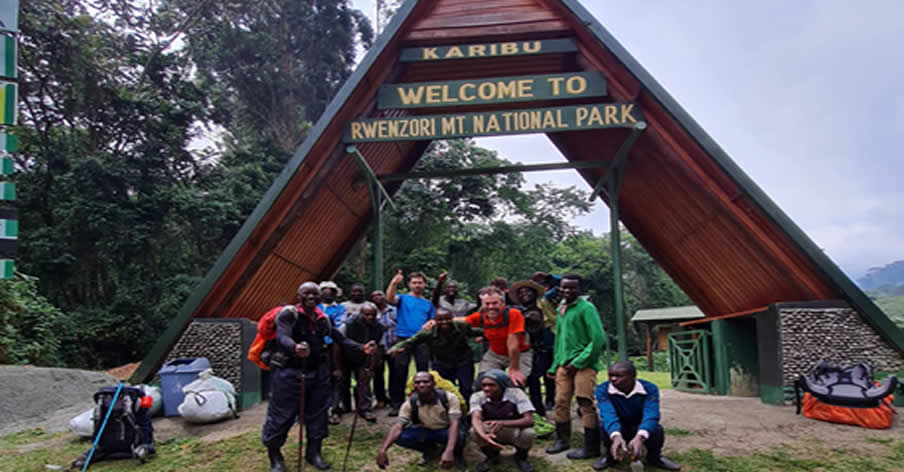
Understanding who those families are matters as much as understanding where the money goes. Our full profile of the Bakonzo people, the indigenous community whose ancestral homeland surrounds the range, goes deep into their history, language, and relationship with these mountains, and I recommend reading it alongside this article. Every guide and porter we employ is Bakonzo, and the community our ten percent supports is, quite literally, the same community responsible for your safety on the trail.
Schools: Investing in the Next Generation of the Mountain
A meaningful share of the ten percent goes toward supporting schooling for children in Bakonzo households around Kilembe: school fees, scholastic materials, and the kind of basic educational infrastructure that determines whether a child in a mountain village finishes their education or drops out when a household hits a difficult season. This is not incidental generosity. It is connected directly to how the mountain workforce itself is built. Porters on the Rwenzori do not appear from nowhere; they grow up in these villages, and the guides who eventually lead international expeditions to Margherita Peak very often began as porters a decade or more earlier, building experience season by season before training toward assistant guide and then head guide certification. Our account of a single shift in a porter’s working day traces that career ladder in detail, and it is a useful companion piece here: education in these villages and the long-term health of the mountain guiding profession are not two separate causes. They are the same cause, viewed from two different points in a person’s life.
Homes and Household Support
Alongside education, the fund supports households directly, the kind of practical, unglamorous assistance, home repairs, basic materials, help during a hard season, that rarely makes it into a company’s marketing copy but genuinely changes a family’s stability. Mountain work is seasonal and physically demanding, and a household that depends on porter or guide income can be exposed when trekking numbers dip in the wetter months or when illness or injury interrupts a season’s earnings. Directing part of the ten percent into household support is a recognition that community investment on the Rwenzori has to be resilient in exactly the months when tourism itself is quietest, not just generous in the peak season when the company’s own revenue is strongest.
Orphan Support
The third strand of the commitment supports orphans within these same Bakonzo communities, children who have lost one or both parents and who, without structured support, are among the most vulnerable members of any rural Ugandan household network. In communities where extended family absorbs this responsibility as a matter of course, targeted outside support for school costs, basic needs, and welfare check-ins makes a genuine difference to how sustainably that informal safety net can hold. This is, in a very direct sense, the most human end of what a ten-percent line on a trek invoice actually means once it reaches the ground.
Beyond the 10%: How This Fits Into the Full Economic Picture
It is worth being precise about something trekkers sometimes conflate: the ten percent community fund, guide and porter wages, and the tips you leave at the end of your trek are three separate layers of the same economic system, not one blurred into another. Base wages for guides, porters, and cooks are set at minimum standards established by the trail management organisations, either Rwenzori Mountaineering Services on the Central Circuit or Rwenzori Trekking Services on the Kilembe side, operating under Uganda Wildlife Authority oversight, and our complete guide to Rwenzori porters and guides sets out exactly how those roles, certifications, and pay structures work. Tips are a separate and genuinely significant supplement to that base wage, not an optional extra; our dedicated breakdown of how much to tip your Rwenzori crew, together with our guide to how many porters your trek actually needs, will help you budget for this properly before you arrive, and our currency guide explains practically how to bring the right cash and denominations for tipping day.
The ten percent community fund sits on top of both of these, entirely separate from wages and entirely separate from tips. It is not a substitute for fair pay, and it is not a substitute for generous tipping; it is a third, structural layer aimed specifically at the parts of community welfare, education, housing, orphan care, that individual wages and individual tips were never designed to reach. A trekker who pays a fair package price, tips generously at the end of the trail, and books with an operator that reinvests ten percent into the surrounding villages is participating in all three layers of a functioning local economy, not just one of them.
Who You’re Actually Supporting: The Bakonzo Behind Every Trek
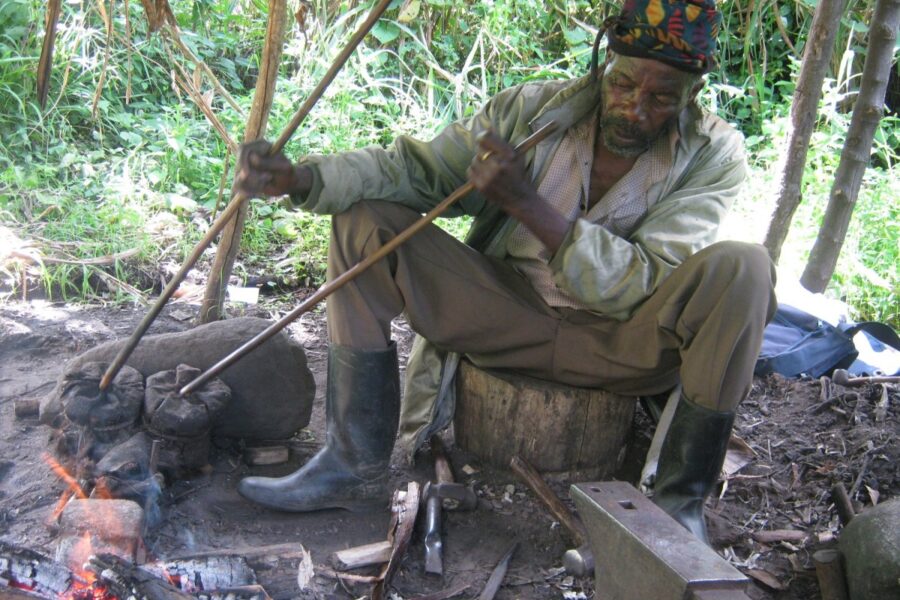
It helps to put a human frame around the statistics. The people this fund supports are the same people described throughout our writing on the mountain life of the Rwenzori: Bakonzo guides who read weather systems building behind Mount Stanley before a client has noticed a cloud, cooks who prepare three-course dinners at 3,500 metres with no refrigeration, and porters who have carried loads across these bogs and moraines since childhood because their fathers and grandfathers did the same before them. This is generational knowledge, and it exists because Bakonzo families have stayed rooted in these foothill villages across multiple generations rather than migrating elsewhere for work. Every dollar of community investment that helps a Bakonzo family remain economically stable in Kilembe or the villages around Nyakalengija is, indirectly, an investment in keeping that generational mountain knowledge alive on the trail for the next cohort of trekkers.
If you want the fuller picture of why this range and its people are so distinctive, our articles on what makes the Rwenzori Mountains special and our broader collection of facts about the range both return repeatedly to this same point: the ecology and geology of the Rwenzori are extraordinary on their own terms, but the human story of the Bakonzo is not a footnote to that natural history. It is inseparable from it.
Why This Matters More Here Than on a Busier Mountain
The Rwenzori receives a fraction of the annual visitor numbers that flow through Kilimanjaro each year, and that difference in scale changes what a single booking means economically. On a mountain processing hundreds of groups a week, one trekker’s community contribution is a rounding error diluted across a huge tourism economy. On the Rwenzori, where guide and porter families depend far more directly on each individual trekking party, a ten percent commitment attached to your specific booking has a proportionally larger and more traceable effect on the villages it reaches. This is also why budgeting properly for a Rwenzori trek, understanding what the full package price covers, what fair tipping looks like, and what a ten percent giveback actually funds, is not just a financial planning exercise. It is part of understanding the mountain itself, and part of trekking here responsibly rather than simply passing through it.
Choosing an Operator: What Responsible Tourism Actually Looks Like Here
I would encourage any trekker planning a Rwenzori expedition, with us or with anyone else, to ask direct questions before booking. Ask what percentage, if any, goes back into local communities, and ask whether that figure is calculated on trek proceeds or on some narrower, harder-to-verify definition of profit. Ask how guide and porter wages compare to the minimum standards set by the trail management organisations, and ask whether wages are ever delayed or withheld, a welfare issue we do not tolerate in our own operations. A transparent operator should be able to answer these questions specifically, not in the vague, reassuring language that so much adventure tourism marketing defaults to. The Rwenzori is still a comparatively young trekking destination by global standards, which means the standards operators set now, on wages, on tipping culture, and on structural community reinvestment, will shape what mountain tourism looks like here for the Bakonzo communities that depend on it for decades to come.
If this is the kind of operator you want carrying your pack and planning your route, I would genuinely like to hear from you. Contact our team with your travel dates, your trekking background, and your summit ambitions, and we will help you design a Rwenzori expedition, whether that is the Central Circuit, the Kilembe Trail, or a full multi-peak itinerary to Margherita, Speke, Baker, Emin, Gessi, or Luigi di Savoia, that gives you the trek of a lifetime while genuinely supporting the Bakonzo families who make it possible.
Frequently Asked Questions
What exactly does the 10% Bakonjo community fund pay for?
The fund supports three connected areas within Bakonzo communities in the Kasese foothills, particularly around Kilembe: education, including school fees and scholastic materials for children in mountain-worker households; household support for the families of guides, porters, and cooks; and dedicated support for orphans within these same communities. It is calculated on trek proceeds and built into the company’s operating model rather than treated as a discretionary donation.
Is the 10% included in my trek price, or is it an extra cost to me?
It is fully included. You do not pay anything additional for the community fund; it is calculated internally from the package price you already pay for your expedition and reinvested by the company. Your only separate, discretionary costs on top of the package price are tips for your guide, cook, and porter team, covered in detail in our tipping guide.
Which communities actually benefit from this support?
Support is directed to Bakonzo communities in the Kasese District foothills of the Rwenzori, with a particular focus on households in the Kilembe area, home to many of the guides, porters, and cooks who work on our expeditions. This is deliberately targeted rather than distributed broadly across unrelated regions, because these are the same families whose members carry your equipment and lead your trek.
How is the 10% community fund different from tipping my guides and porters?
They are separate layers of the same economic system. Tips are discretionary cash you give directly to your specific guide, cook, and porter team at the end of your trek, supplementing their base wages. The 10% community fund is a structural commitment calculated on trek proceeds and reinvested into broader community needs, schools, homes, and orphan support, that individual tips are not designed to address. Both matter, and one does not replace the other.
Does this community support apply to every route, including shorter treks like the Mahoma Loop or Bukurungu Trail?
Yes. The ten percent principle applies across every itinerary we operate, from shorter introductory treks through to the longest multi-peak expeditions. The absolute amount scales with the value of the trip, but the commitment itself is not limited to any single route or trek length.
Why does this level of community investment matter when I’m choosing a Rwenzori operator?
Because the Rwenzori receives far fewer visitors than better-known mountains like Kilimanjaro, each individual booking has a proportionally larger effect on the guide and porter families who depend on mountain tourism for their livelihoods. Choosing an operator with a transparent, structural community commitment, rather than vague marketing language, has a genuinely traceable impact on the Bakonzo villages surrounding the range, and it also tends to correlate with fairer wages and better-run expeditions generally.