Group or private Rwenzori trek? Compare real costs, pace, guide attention & experience to choose the right format for your climb.
An expert breakdown of what actually changes, in your budget, your pace, your guide’s attention, and your days on the mountain, when you choose a shared departure over a private expedition on the Rwenzori.
Almost every trekker who calls us with a firm route already picked still has one question left unanswered: should I join a group, or book this privately? It is, in my experience, the single most consequential decision left on the table after the route itself, because it shapes your daily rhythm on the mountain, who you share a hut with at 4,300 metres, how much your guide’s attention is divided, and, very directly, what the trip costs. Having guided both formats extensively across the Central Circuit, the Kilembe Trail, and multi-peak expeditions toward Margherita Peak, I want to give you the real answer rather than the version that simply upsells whichever option happens to fill our calendar that month.
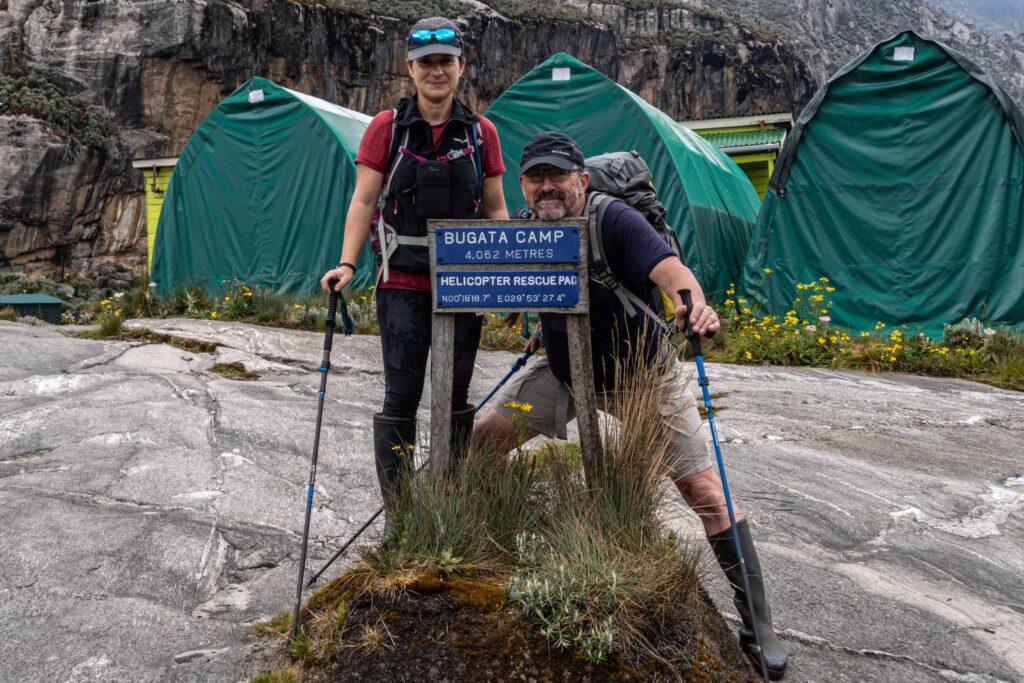 There is no universally correct choice here. There is only the choice that fits your budget, your travel dates, your tolerance for sharing a summit push with strangers, and how much you value setting your own pace on a mountain that punishes people who move faster than their body is ready for. This guide breaks down both formats in full, cost, structure, safety, and the texture of the actual experience, so you can book the version of this trek that you will still be glad you chose when you are standing on Margherita Peak’s summit ridge.
What “Group” and “Private” Actually Mean on the Rwenzori
Before comparing the two, it is worth clearing up a common misunderstanding, because the terminology on this particular mountain does not work the way it does on, say, a European hut-to-hut trail. A private Rwenzori trek does not mean trekking alone. Solo trekking is explicitly prohibited inside Rwenzori Mountains National Park under Uganda Wildlife Authority regulation; every trekking party, private or group, must be accompanied by a registered, licensed guide at all times, and no trekker can legally set foot on the Kilembe Trail without going through the concession operator managing that route. What “private” actually means here is that the guide and porter team on the mountain belongs exclusively to you and whoever you are travelling with, typically a partner, a family, or a small circle of friends, rather than being shared with trekkers you have never met.
A group departure, by contrast, means you are joining a scheduled trek alongside other trekkers who booked independently, sharing the same guide, the same porter team, the same hut accommodation, and the same daily itinerary. Both formats run under identical safety standards and the same certified guides; the difference is entirely in who you are sharing the mountain with and how the fixed costs of that expedition get divided. Our full booking guide covering what’s included sets out exactly what both formats include as standard, and is worth reading alongside this comparison before you commit to either.
The Cost Difference, in Real Numbers
The core economic fact behind this decision is straightforward: a Rwenzori expedition carries a set of fixed costs, your lead guide’s wage, park permits, transport to the trailhead, communal cooking equipment, and a portion of the porter team, that exist regardless of whether one person or eight people are on the trek. On a private trek, one or two people absorb that entire fixed cost. On a group departure, it gets divided across everyone booked onto that date, and the per-person price falls accordingly.
How much a larger group actually saves you
Our detailed guide to reducing Rwenzori trekking costs puts a real figure on this: moving from a private two-person trek to a shared group of six can lower the per-person cost by roughly USD 200 to 400, with no reduction whatsoever in guiding quality, safety equipment, or mountain hut standards. The table below gives you a sense of how this plays out across our core itineraries, drawing on our published 2026 price guide; group discounts formally apply to parties of three or more, and larger custom groups should always contact us directly for an exact quote, since pricing adjusts with group size, season, and route combination.
| Itinerary | Private (1–2 people) | Small group (4) | Group of 6+ |
| 7-Day Central Circuit (Margherita Peak) | from $1,450 pp | approx. $1,400 | approx. $1 380 |
| 8-Day Kilembe Trail (Margherita Peak) | from $1,750 pp | approx. $1,700 | approx. $1,700 |
| 6-Day Weismann Peak expedition | from $1,200 pp | approx. $1,050–$1,100 pp | approx. $900–$1,000 pp |
| 13-Day 6-Peaks expedition | from $3,350 pp | approx. $3,250 pp | approx.3200 pp |
| 18-Day All 8 Peaks traverse | from $4,050 pp | approx. $3,900 pp | approx. $3,850 pp |
At the other end of the spectrum, fully private or highly customized expeditions, particularly those adding extra rest days, a personal second guide, or bespoke pacing around a client’s specific fitness profile, can run from USD 2,400 up to USD 4,500 or more per person, a figure our complete cost-to-climb breakdown covers in full alongside every other line item that makes up a Rwenzori trekking budget. Our companion piece on what climbing the Rwenzori actually costs walks through the same numbers from a slightly different angle, useful if you want a second breakdown of exactly where your money goes.
What stays exactly the same, regardless of group size
It is worth being explicit about what group size does not change, because this is where trekkers sometimes worry, wrongly, that a cheaper group price means a compromise on safety. Uganda Wildlife Authority park fees are charged per person and do not fall with group size. Guide certification standards are identical across private and group departures; you are never assigned a less qualified guide because you are travelling with five other people rather than alone. Porter load limits, capped at 25 kilograms per porter and enforced at the trailhead regardless of format, are unaffected by group size, and our guide to how many porters you actually need explains how the porter team scales with group size specifically because shared group departures pool communal cooking equipment and hut infrastructure, which is precisely why the per-person porter requirement, and cost, comes down without any reduction in the safety margin built into the expedition.
The Experience Difference: What Actually Changes on the Mountain
Cost is only half of this decision. The texture of the days themselves, your pace, who you eat dinner with at Bujuku or Elena Hut, how much of your guide’s attention is yours alone, differs meaningfully between the two formats, and this is the part trekkers underweight when they are booking from a spreadsheet rather than picturing the actual mountain.
Pace, rest stops, and daily rhythm
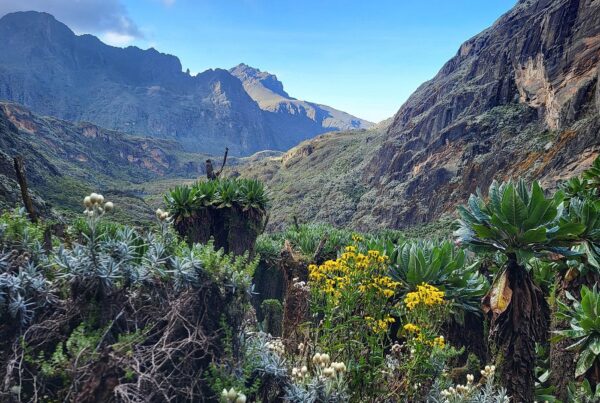
On a private trek, your daily pace is set entirely around your party. If you want to stop for twenty extra minutes photographing the giant lobelias in the Bigo Bog, or you are moving slower than planned on the Kilembe Trail’s ridge sections and need an unscheduled break before the final push to camp, that decision is yours alone to make with your guide. On a group departure, the itinerary runs to a fixed daily schedule, and the group’s overall pace settles, sensibly and by design, around its least experienced or slowest member, both for safety and so nobody is left managing a summit attempt on legs that never got a proper rest. Neither approach is wrong; a private trek suits trekkers who know their own fitness precisely and want full control over it, while a group format works well for trekkers who would rather not have to self-regulate their own pacing decisions on unfamiliar, technical terrain.
Guide attention and the summit-night dynamic
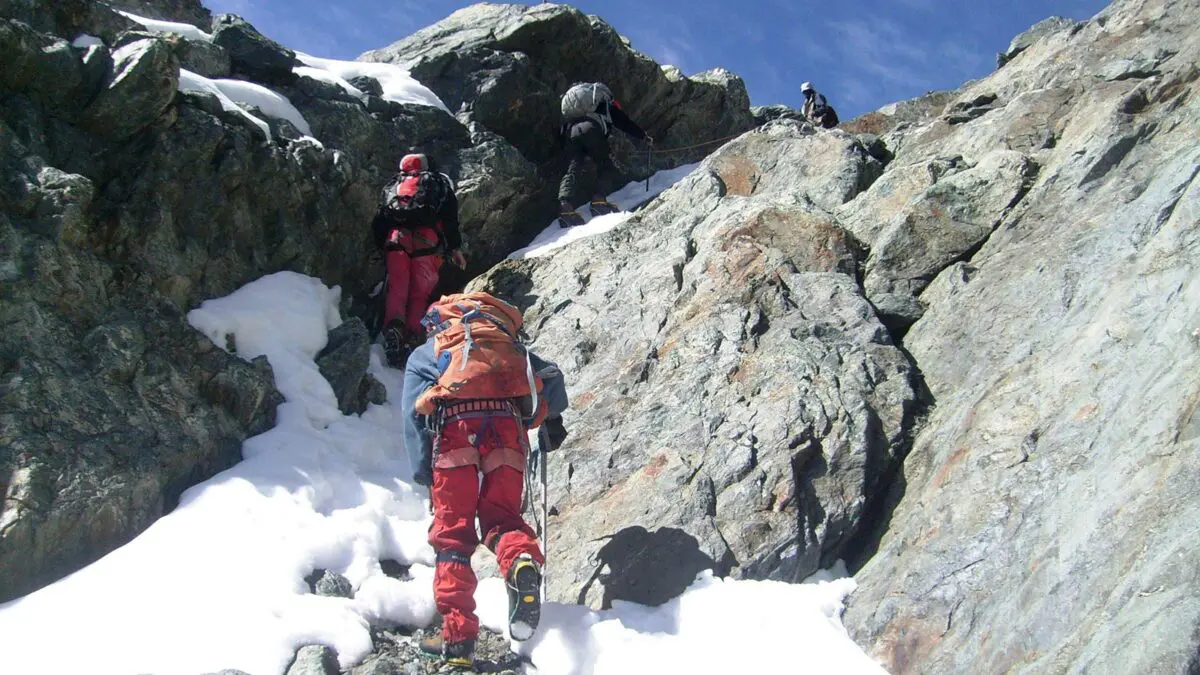
A private trek generally means a higher ratio of guide attention per person, useful on the more technical glacier sections approaching Margherita Peak, where close, individualized instruction on cramponing and roped movement genuinely matters.
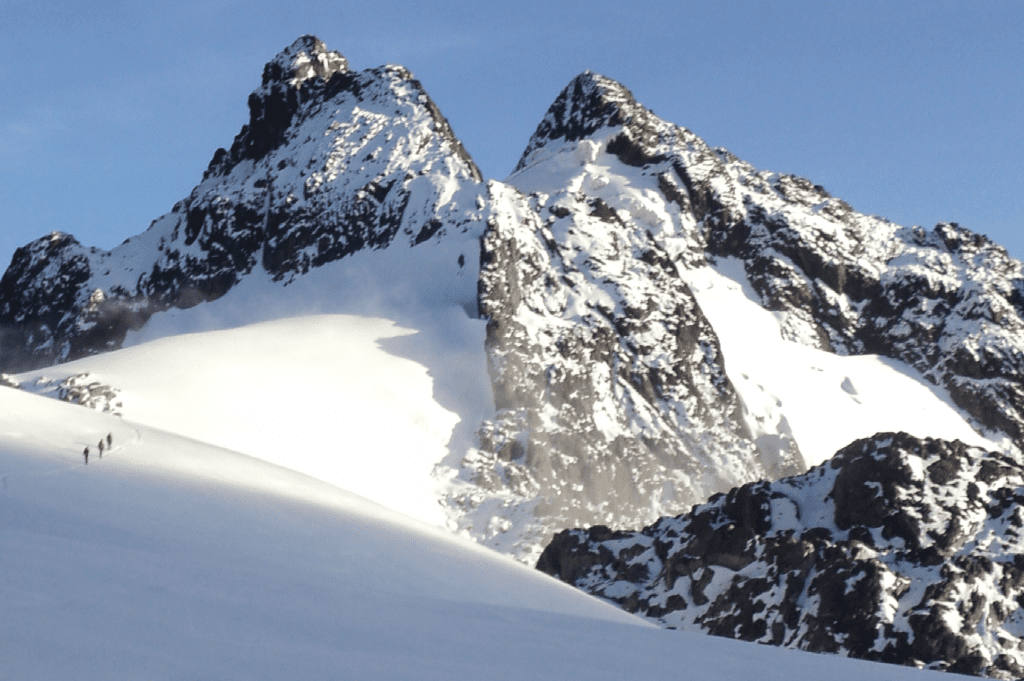
Group departures, on the other hand, bring a different kind of advantage on the hardest days: our own guide to reducing costs notes that larger groups create a more energising dynamic specifically on summit day, when individual motivation can genuinely waver at 5,000 metres in the pre-dawn cold, and having other trekkers pushing through the same fatigue beside you is, for many people, a real psychological asset rather than a distraction. What to expect on the mountain generally, including how your guide and porter team becomes a trusted presence over the course of the trek, is covered in full in our guide to what to expect hiking the Rwenzori Mountains.
Hut life, privacy, and the social atmosphere
Mountain huts on both the Central Circuit and the Kilembe Trail are shared spaces by design, so even a private trekking party will typically overlap with other parties at the larger camps; the distinction is less about total isolation and more about who forms your actual trekking unit through the day and who your guide and porters answer to. A private trek gives you and your travel companions a quieter, more self-contained unit, well suited to a honeymoon, a father-and-daughter expedition, or trekkers who simply prefer solitude on a demanding physical and mental undertaking. A group departure builds camaraderie deliberately, shared meals, shared jokes about the Bigo Bog’s mud, a collective sense of relief crossing the Stanley Plateau together, and many of our repeat clients tell us the friendships formed on a group summit push are, unexpectedly, one of the things they remember most vividly afterward.
Scheduling flexibility versus fixed departure dates
A private trek can generally be scheduled around your own travel dates, subject to guide and porter availability and park permit lead times, which makes it the more practical choice if you are combining the climb with a tightly dated broader itinerary, a gorilla trekking add-on, for instance, or a narrow window of annual leave. Group departures run on a published schedule, and joining one means working your own travel dates around the group’s fixed start date rather than the reverse. If your dates are flexible, this is rarely a real constraint; if they are not, it is worth confirming current departure dates with us directly before building the rest of your trip around a specific window.
Who Should Book a Private Trek
A private expedition tends to suit trekkers prioritizing control, over pace, over rest days, over exactly how much personal instruction they receive on technical sections, above minimizing cost. It is the right call for a family or couple who want the mountain to themselves, for trekkers managing a health condition or fitness limitation that benefits from a flexible, unhurried schedule, for anyone combining the climb with a precisely dated multi-destination trip, and for experienced mountaineers who want a highly customized itinerary, perhaps an extra acclimatization day, or a specific multi-peak combination, built entirely around their own goals rather than a standard published route.
Who Should Join a Group Departure
A group departure suits budget-conscious trekkers first and foremost, since the savings on a party of four to six are real and meaningful without any compromise on safety standards. It also suits solo travelers and pairs who actively want the social dimension of the trek, the shared summit-night motivation, the built-in camaraderie of a hut full of people attempting the same difficult thing at the same time, and trekkers whose travel dates are genuinely flexible enough to build a trip around a published departure date rather than the other way around. If you are new to high-altitude trekking generally and would value the reassurance of a larger collective group moving through the mountain’s more exposed sections together, a group departure offers that naturally.
Can You Combine the Two?
Yes, and this is worth knowing before you assume it is strictly one or the other. Trekkers who want company but not a full public group departure sometimes book a semi-private arrangement, a party of three or four friends or family members booked as their own private group, which captures much of the cost benefit of shared fixed costs while keeping the trekking unit to people you already know. On the other side, solo travelers or pairs who would prefer not to trek entirely alone with just a guide and porter team can ask us to place them onto an upcoming scheduled group departure rather than booking privately. Either way, the honest move is to tell us your priorities, budget, dates, group size, and how much you value pace control versus camaraderie, and let us match you to the right format rather than guessing from a website price list alone.
Frequently Asked Questions
Is it cheaper to trek the Rwenzori in a group or privately?
A group trek is almost always cheaper per person. Fixed costs, the lead guide’s wage, park permits, transport, and a share of the porter team, get divided across everyone on the departure, and moving from a private two-person trek to a group of six can lower the per-person cost by roughly USD 200 to 400 with no reduction in safety standards or guide quality. Private and highly customized expeditions run from around USD 2,400 up to USD 4,500 or more per person depending on the level of customization.
Can I trek the Rwenzori Mountains alone?
No. Solo trekking is prohibited inside Rwenzori Mountains National Park under Uganda Wildlife Authority regulation, and every trekking party, whether booked as a private expedition or a shared group departure, must be accompanied by a registered, licensed guide at all times. A “private” trek means a guide and porter team dedicated to your party alone, not trekking without a guide.
Does a private Rwenzori trek get a more experienced guide than a group trek?
No. Guide certification standards are identical across both formats; you are never assigned a less qualified guide because you are part of a larger group. What differs is the ratio of guide attention per trekker, which is naturally higher on a private trek with only one or two people, and the overall pacing dynamic, which on a group departure is set around the collective group rather than a single party.
How many people are typically in a Rwenzori group trek?
Group departures commonly range from around four to eight trekkers, though this varies by season and route. Group discounts formally apply to parties of three or more, and larger custom groups, school expeditions, or corporate groups should contact us directly for exact pricing, since the fixed-cost savings scale further with group size.
Can I book a private trek for just two people?
Yes. A private trek for two, a couple, friends, or family members, is one of the most common bookings we handle, and it gives you a dedicated guide and porter team, full control over daily pacing, and flexible scheduling around your own travel dates, at a higher per-person price than a larger group departure but with none of the fixed-schedule constraints.
Which option is better for a first-time high-altitude trekker, group or private?
Both are equally safe, since guiding standards and safety protocols do not change with group size, but many first-time high-altitude trekkers find a group departure reassuring, with more people around during the physically and mentally demanding summit push, and a fixed, expert-designed pacing schedule that removes the pressure of self-managing your own acclimatization decisions on unfamiliar terrain.
Ready to Choose the Right Format for Your Rwenzori Trek?
Whether you are drawn to the camaraderie and value of a scheduled group departure or the flexibility and personal attention of a private expedition, the right choice comes down to your budget, your travel dates, and how you personally want to experience this mountain. Get in touch with our team and tell us your dates, your group size, and what matters most to you, pace, cost, or company, and we will recommend the format that actually fits your trip, then build the itinerary and pricing around it. Let’s get you planning the specifics of your own Rwenzori expedition.