What to expect hiking the Rwenzori Mountains: weather, terrain, altitude, huts, wildlife & summit day. Expert guide from Uganda’s Rwenzori specialists.
Somewhere on the second morning of every Rwenzori expedition, usually around the point where the bamboo zone gives way to giant heather, a trekker stops walking, looks around, and says some version of the same sentence: nobody told me it would be like this. They mean it two ways at once. They mean the mud, the mist, the cold that arrives without warning, the sheer physical seriousness of a mountain most people outside East Africa have never heard of. And they mean the giant lobelias standing like sentinels in the fog, the impossible green of the heather forest, the sense of walking through a landscape that has not been tidied up for visitors. I have guided trekkers up this mountain for years, through every trail, every season, every kind of weather the equator can produce at altitude, and the honest truth is that no itinerary PDF and no gear checklist fully prepares a first-timer for what the Rwenzori Mountains actually feel like underfoot. This guide is my attempt to close that gap: a complete, unvarnished account of what you can expect on a Rwenzori hike, from the weather that shapes every single day on the trail to the terrain, the team around you, the physical and emotional demands, and the rewards that make trekkers come back for a second and third time.
This is not a marketing pitch dressed up as an expectation guide. The Rwenzori, also called the Mountains of the Moon, is a UNESCO World Heritage Site precisely because of the qualities that also make it demanding: extraordinary rainfall, dramatic altitude range, and a landscape that shifts character every few hundred metres of elevation. Understanding what is coming, in detail, before you commit your flights and your fitness preparation to this mountain, is the single most useful thing you can do to make sure your trek is a success rather than a surprise.
What You Are Actually Signing Up For
If you want the entire expectation-setting exercise compressed into a single idea, it is this: the Rwenzori is a wet, cold, physically serious equatorial mountain range that rewards preparation and humility in equal measure, and punishes neither fitness alone nor gear alone, but the absence of both together with respect for the terrain.
It is not Kilimanjaro with a different name. As we lay out in detail in is the Rwenzori harder than Kilimanjaro, the comparison is not really about altitude at all, since Margherita Peak at 5,109 metres sits nearly 800 metres below Uganda’s other famous summit. It is about terrain complexity, sustained moisture, and a trail system that demands attentive footwork from the first hour to the last. Every other expectation in this article branches out from that single fact.
The Climate You Will Actually Trek Through
Nothing shapes a Rwenzori trek more completely than the weather, and nothing surprises unprepared trekkers more. The Rwenzori sits at the point where warm, moisture-laden air from the Congo Basin collides with the range’s steep western escarpment, is forced upward, cools, and falls back down as rain, mist, drizzle, and, at altitude, snow and ice. Our detailed breakdown of this phenomenon in does it rain a lot in the Rwenzori Mountains puts real numbers behind what guides already know instinctively: annual precipitation on the lower slopes runs somewhere between 2,500 and 3,000 millimetres, and above 3,500 metres in the afro-alpine zone that figure can exceed 4,000 millimetres in a single year. For context, that is roughly six to seven times what London receives annually. This is not a mountain that occasionally gets wet. It manufactures its own weather, continuously, and you should plan your entire trek, from clothing to daily pacing, around the assumption that rain, mist, or at minimum heavy cloud will be part of most days, regardless of which month you choose.
Rainfall, season by season
There genuinely are better and worse windows to trek, even if none of them are dry in the way a desert mountain might be dry. As our month-by-month trekking guide explains, the driest periods generally fall between December and February and again from June to August, when precipitation is comparatively lower and glacier and high-camp access is more reliable. The wetter windows, mid-September through November and March through May, bring heavier and more persistent rain, deeper bog conditions, and reduced summit success rates on any given attempt, though many trekkers deliberately choose these periods for the intensified green of the vegetation and the dramatic, cloud-wreathed atmosphere they produce. Whichever window you choose, expect rain to be possible on any given day; the difference between seasons on the Rwenzori is one of degree, not of kind.
Temperature: a vertical journey through several climates
Because the trail gains so much elevation, a single Rwenzori day can move you through what feels like several different climates. At the Nyakalengija trailhead, roughly 1,650 metres above sea level, daytime temperatures sit in a warm, humid range, typically 20 to 28 degrees Celsius, and you will find yourself sweating through the lower forest in light layers. By the time you reach the high camps above 4,000 metres, overnight temperatures regularly drop below freezing, and summit-morning wind chill on the approach to Margherita Peak can push effective temperatures down to minus 15 degrees Celsius or colder.
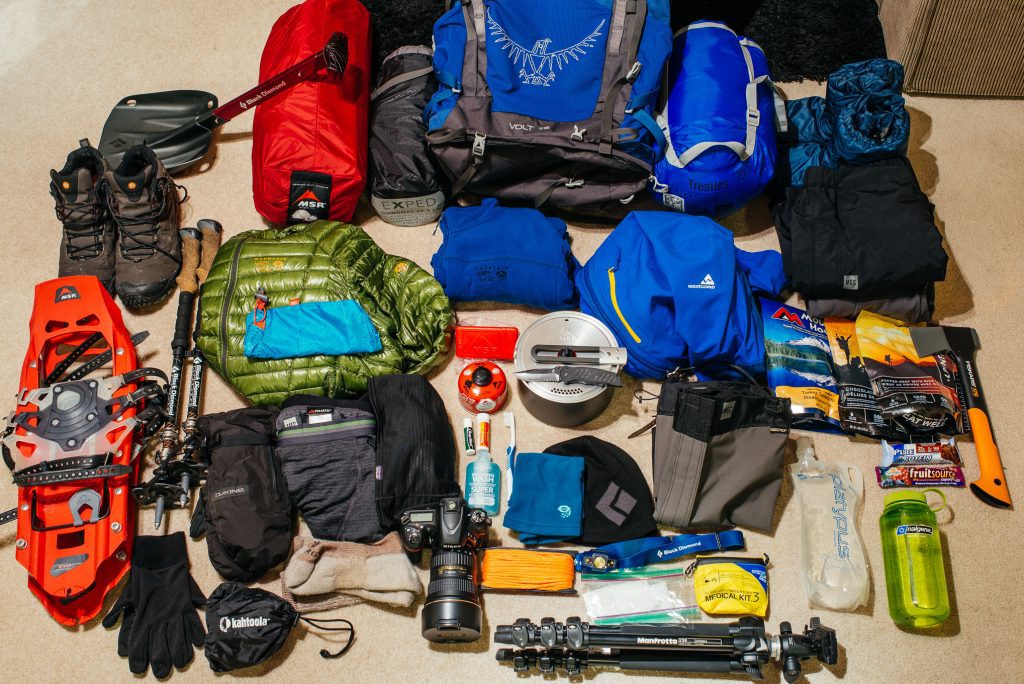
This range, tropical warmth at the bottom, sub-zero cold at the top, inside a single multi-day trek, is one of the defining physical realities of the mountain, and it is precisely why our guide on what clothing you need for the Rwenzori treats waterproofing and layering as inseparable concerns rather than separate packing categories. On the Rwenzori, the question is never whether your gear will get wet; it is how it performs once it does.
The Terrain Underfoot, Five Vegetation Zones, Six Different Mountains in One
Perhaps the single most distinctive thing about a Rwenzori hike is how dramatically the ground itself changes character as you climb. Our full breakdown of the vegetation zones of the Rwenzori Mountains covers this in ecological depth, but from a trekking perspective, what matters is that each zone demands a different kind of walking, and being ready for that shift, physically and mentally, changes how the days feel.
The Afromontane rainforest floor
The trek begins in dense montane rainforest, where the trail is often a river of deep mud, exposed roots, and centuries of saturated organic matter. Progress here is measured in careful, deliberate steps rather than kilometres per hour, and this is also where the mountain’s wildlife makes its first appearance: Rwenzori turacos moving through the canopy, black-and-white colobus monkeys watching from the high branches, and the occasional three-horned chameleon gripping the undergrowth in no particular hurry to be seen.
The bamboo zone
As the forest thins with altitude, dense stands of mountain bamboo take over, an important watershed zone that traps and stores rainfall and still occasionally hosts blue monkeys and chimpanzee calls echoing from somewhere unseen.
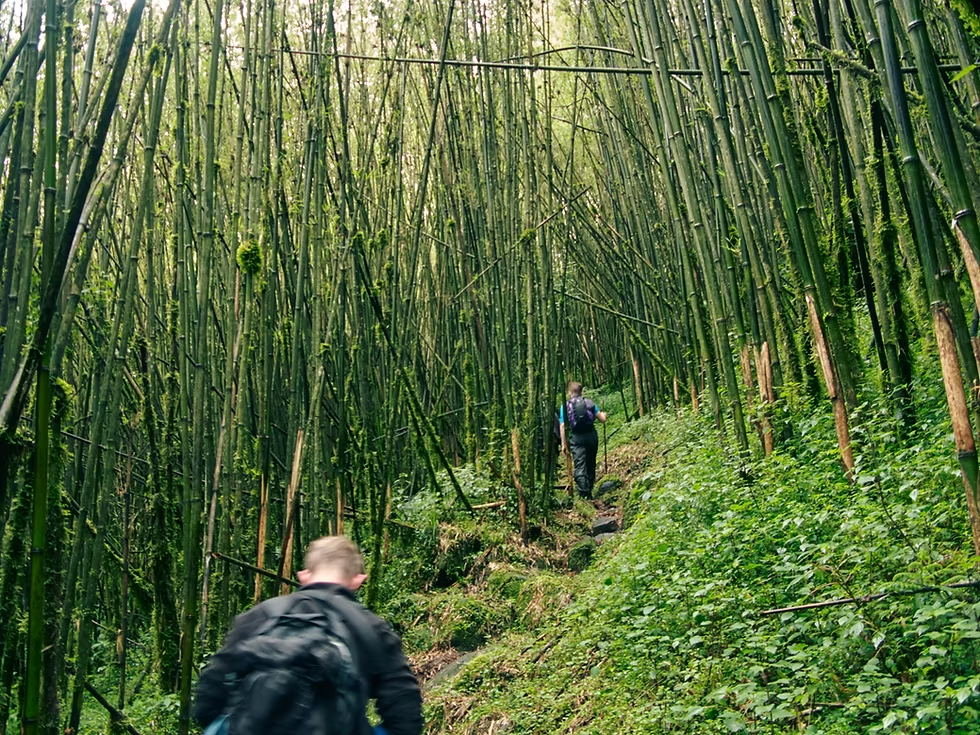
The light here filters differently, muffled and almost underwater in quality, and many trekkers describe this transition as the moment the trek starts to feel genuinely remote.
Giant heather forest
Above the bamboo, giant heather trees, Erica arborea, some six metres tall or more and draped in curtains of old-man’s-beard lichen, create one of the most atmospheric sections of the entire route. The trail here requires scrambling over and between heather trunks that cross the path at unpredictable heights, and it is also where hyrax and duiker become more common sightings.
The great bog crossings of the Afro-alpine moorland
This is the zone that gives the Rwenzori its reputation. Tussocked grass, unstable ground, and hidden water channels combine into terrain that demands constant vigilance. The most iconic single stretch of this landscape is described in detail in our Bujuku Valley guide: a one-to-two-kilometre continuous bog crossing on bog bridges and stepping stones between the lower groundsel zone and Lake Bujuku.
It is slow, it demands continuous attention, and it is genuinely difficult to keep entirely dry once conditions have been wet, which on this mountain is most of the time. Gaiters stop being optional here; they become the difference between dry boots for the rest of the day and a long, cold, uncomfortable afternoon.
The glaciated summit zone
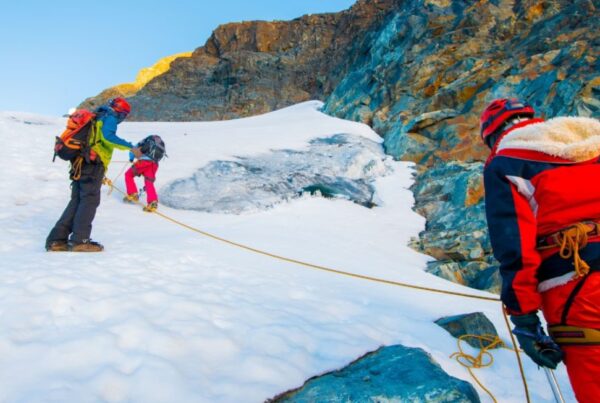
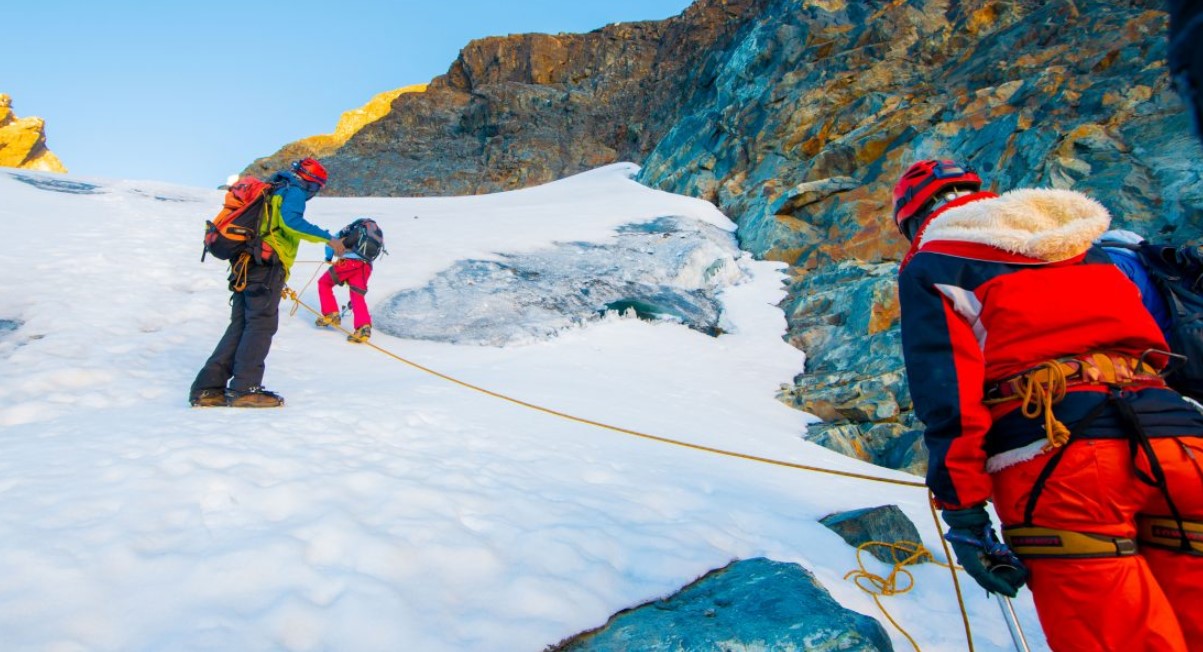
Above roughly 4,500 metres, the terrain changes again: loose rock, steep fixed-rope sections, and finally the Elena Glacier and Stanley Plateau, which require crampons and an ice axe for the final approach to Margherita Peak. It is worth being honest here that the Rwenzori’s glaciers have lost an estimated 80 to 90 percent of their area since they were first photographed in 1906, and the remaining ice is retreating rapidly, which means the summit day you experience today offers a view of something genuinely disappearing.
The Physical and Mental Challenge, Told Honestly
Every serious trekker deserves an honest answer to the difficulty question before they commit, and the honest answer is that the Rwenzori is harder than most people expect, including experienced hikers who have summited other African mountains. Our detailed comparison in how hard is trekking the Rwenzori Mountains lays out why: it is not one single obstacle but five compounding factors working together, as we explore further in why the Rwenzori is Africa’s last great mountain challenge. Terrain complexity is the first and most persistent: mud, roots, bog, and loose rock in a sequence that does not let up over consecutive days. Weather variability is the second, since conditions can shift from clear to near-whiteout within an hour at altitude. The glacier crossing on summit day is a genuinely technical alpine undertaking requiring crampons and ice axes. Altitude itself, while lower than Kilimanjaro’s summit, still carries a real risk of acute mountain sickness that requires a structured acclimatisation plan. And finally, gear specificity catches many first-timers by surprise: conventional hiking boots fail in the Rwenzori’s deep bogs, which is why rubber Wellington-style boots are standard mountain footwear here, a detail that has nothing to do with a mountain you may have trekked before.
Altitude and acclimatisation
Most trekkers first notice altitude effects somewhere between 2,500 and 3,500 metres, typically from the second day onward on both the Central Circuit and the Kilembe Trail. Our dedicated altitude sickness guide walks through the specific camps where symptoms most commonly appear and how our guides monitor and manage them, while our acclimatisation strategy guide explains one point worth internalising before you arrive: cardiovascular fitness determines how efficiently you move at altitude, but it does not determine your susceptibility to altitude sickness. A structured, gradual itinerary matters more than raw fitness, which is precisely why our standard multi-day routes are built with acclimatisation days already engineered into the schedule rather than left to chance. If you are flying in from sea level and starting your trek within a day or two of arrival, it is worth reading our note on whether you should acclimatise before the Rwenzori, since Kampala and the trailhead itself sit too low to provide meaningful pre-exposure.
Your trekking team: the people who make the summit possible
One of the most consistently underestimated elements of a Rwenzori trek, by trekkers researching the mountain from abroad, is the team that surrounds them on the trail.
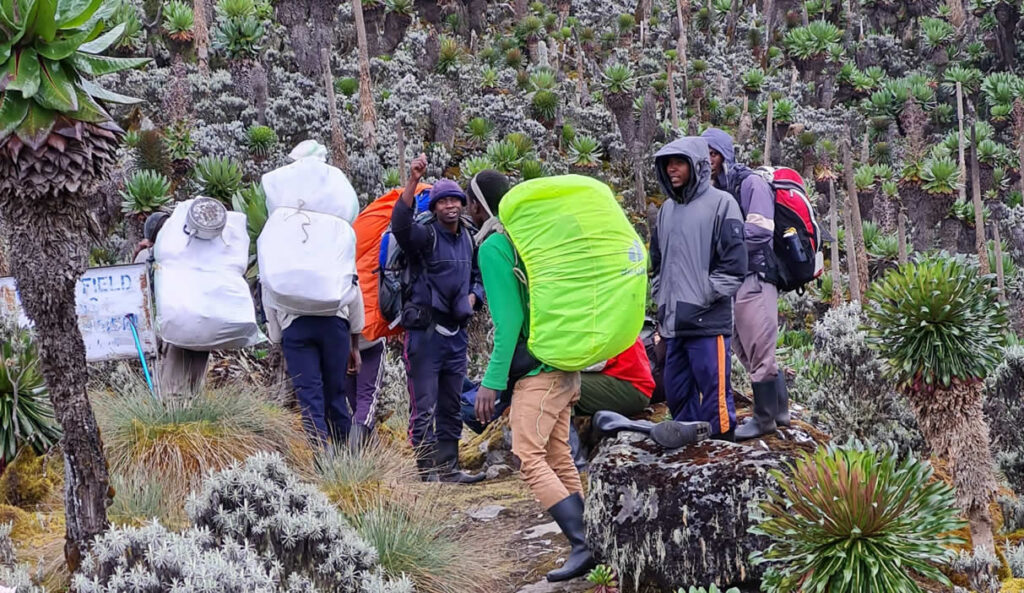
As we describe in Rwenzori porters and guides: the complete guide, every expedition includes, at minimum, a registered lead guide, a cook, and porters carrying the collective weight that would otherwise fall on your own body over seven or eight consecutive days. Longer summit and multi-peak itineraries add an assistant guide for technical sections and a dedicated rescue porter for glacier-zone bids, a team structure detailed in how many porters you need for the Rwenzori. Your morning at the Nyakalengija trailhead, described fully in our guide to what happens at Rwenzori trek registration, will introduce you to this team as they load equipment and prepare for departure, many of them from the local Bakonzo community, whose families have worked this mountain for generations. Expect this team to become, by the second or third day, less like hired staff and more like the people whose competence you trust with your safety on some of the most demanding terrain in Africa. At the end of the trek, our guide on how much to tip Rwenzori porters and guides will help you close that relationship appropriately, and our currency and cash guide covers the practical planning behind it.
Where You Will Sleep, and What You Will Eat
Expect purpose-built wooden huts rather than luxury lodges, and expect them to be exactly right for what they are. On the Central Circuit, six permanent hut camps, Nyabitaba, John Matte, Bujuku, Elena, Kitandara, and Guy Yeoman, provide wooden sleeping platforms, foam mattresses, and blankets, along with a separate cooking area where your camp cook produces hot meals at the end of a long day. The Kilembe Trail uses a comparable system of fixed camps at Sine, Kalalama, Bugata, Mutinda, Hunwick’s, and Margherita Camp, several of which, Mutinda in particular, even have solar panels for lighting and device charging.
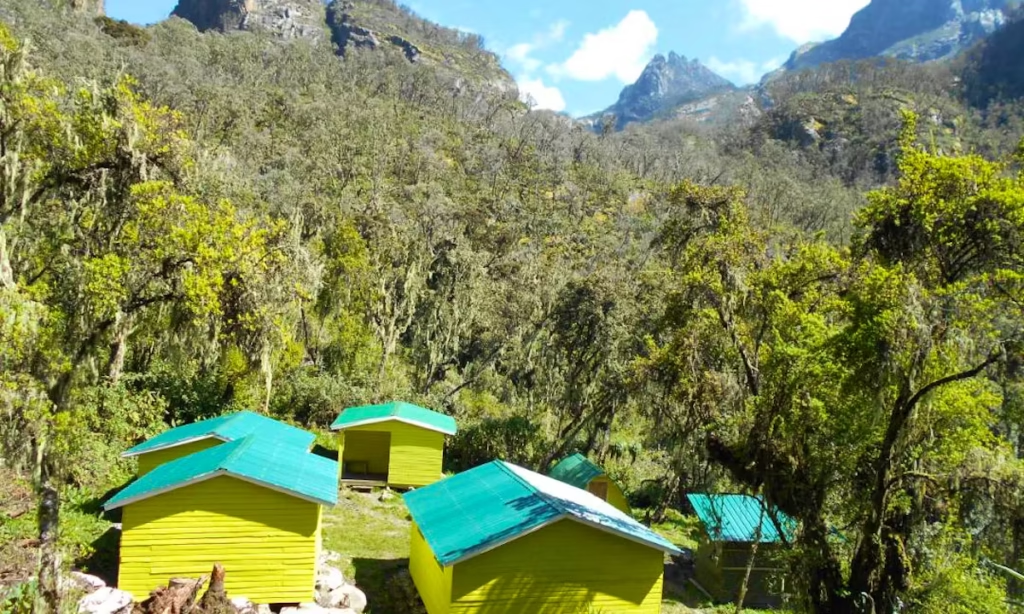
Our full Rwenzori huts and camps guide covers every single camp in detail, including altitude, distance from the previous stop, and what the sleeping experience is actually like, while our broader accommodation guide inside and outside the Rwenzori extends the picture to Kasese town lodging before and after your trek. If you are drawn specifically to a wilderness camping experience rather than fixed huts, the Bukurungu Trail is the Rwenzori’s dedicated tent-camping route, covered in depth in our camping in the Rwenzori Mountains guide.
Do not expect private rooms, hot showers, or bar service. Do expect dry sleeping accommodation, a genuinely welcome permanence of hot drinks, tea, coffee, and hot chocolate available at nearly every rest stop and camp arrival, and full hot dinners of rice, pasta, or posho with stew, protein, and vegetables. Our candid account in Rwenzori huts: food, toilets, sleep and reality covers this in unfiltered detail, including what to expect at Margherita Camp itself, the minimal, functional hut that shelters summit parties for one night before the pre-dawn departure. Vegetarian, vegan, and gluten-free trekkers are fully accommodated with advance planning; this is worth arranging when you book rather than raising for the first time at Sine Camp. Full details of what is included in your trek package, including meals, huts, and personal gear responsibilities, are laid out in how to book a Rwenzori trek and what’s included.
The Wildlife and Scenery Along the Way
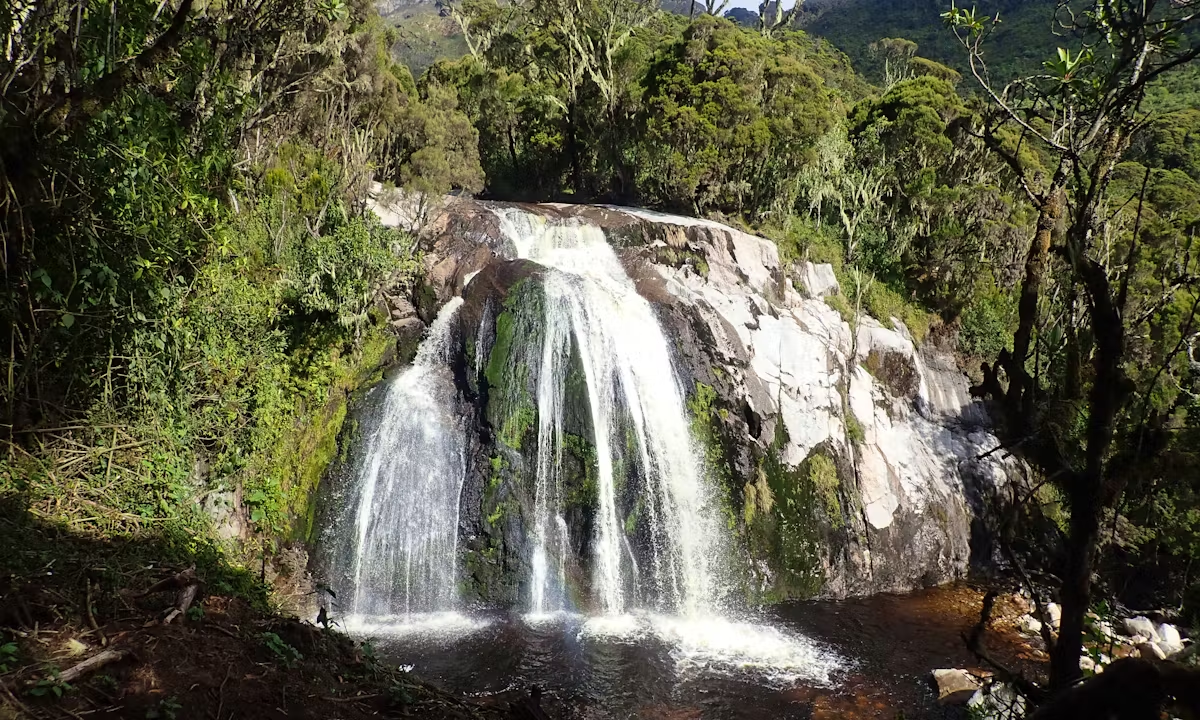
Expect the Rwenzori’s wildlife to reveal itself gradually and, in places, quite generously. The lower forest zone is the richest for encounters: black-and-white colobus monkeys, the secretive L’Hoest’s monkey, blue monkeys, the vivid green-and-red Rwenzori turaco, and eastern chimpanzees more often heard than seen. Our full Rwenzori wildlife guide documents species across every elevation zone, while the twin glacial tarns covered in our Kitandara Lakes guide are one of the most reliable places on the entire route to see the scarlet-tufted malachite sunbird, an iridescent, emerald-green bird that works the giant lobelia flower spikes in full view of the trail. It is worth being direct about one common misconception: the Rwenzori has no mountain gorillas. If that is part of your Uganda itinerary, our sister operation covering gorilla trekking in Rwanda or nearby Bwindi and Mgahinga can be combined with a Rwenzori expedition without difficulty. What the Rwenzori does offer, in genuine abundance, is a landscape that looks unlike anywhere else on the continent, captured in detail in our guide to what the Rwenzori Mountains actually look like, and for anyone bringing a camera, our Rwenzori photography guide is essential reading before you pack, since the mist, drizzle, and constant moisture are not interruptions to photography here; they are the medium through which it happens.
Summit Day: What the Push to Margherita Peak Actually Involves
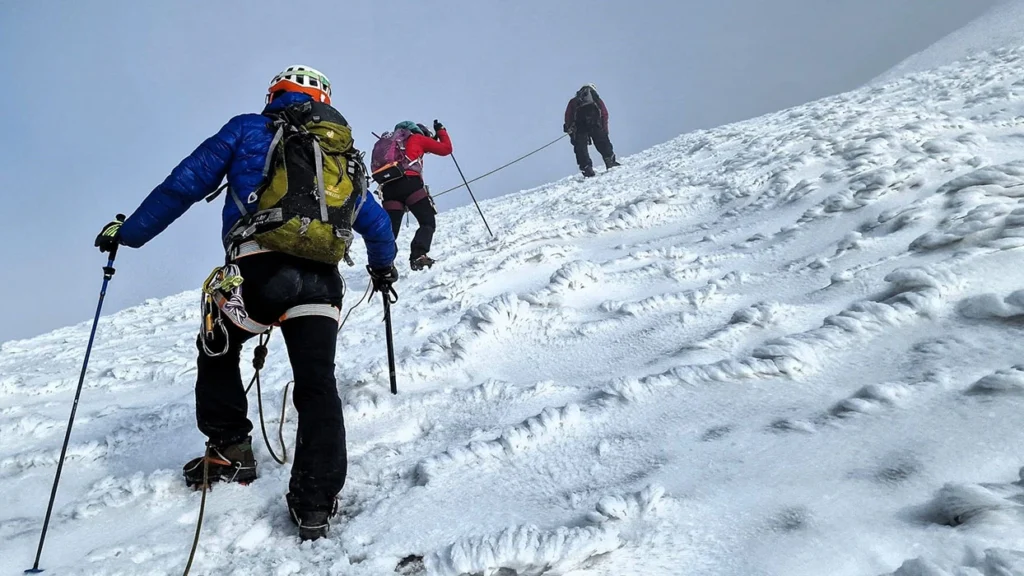
For trekkers targeting the summit, expect a pre-dawn departure from Margherita Camp, a headlamp-lit approach across loose rock, and the moment where the trail gives way to the Elena Glacier and Stanley Plateau, where your guide fits you with crampons and leads a roped approach across the ice. This is the point at which the Rwenzori stops being a difficult hike and becomes a genuine, if modest, technical alpine ascent, and it is not a section to attempt without a qualified guide team. The full peaks guide covers Margherita, Mount Speke, Mount Baker, Mount Emin, Mount Gessi, and Mount Luigi di Savoia individually, for trekkers considering a multi-peak expedition beyond the primary summit.
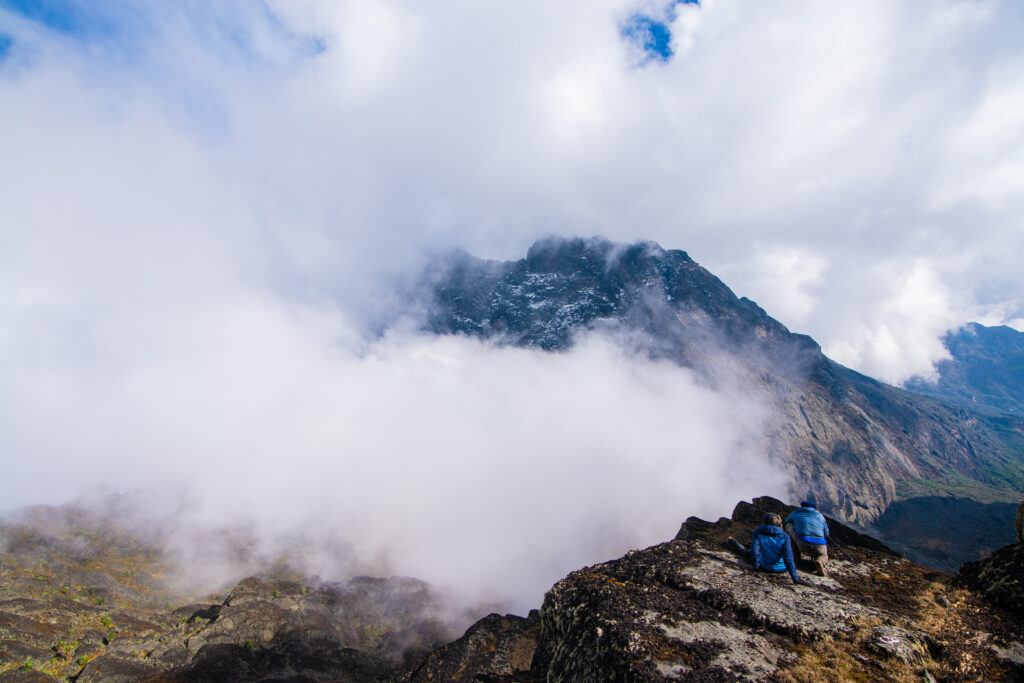
Expect the summit itself, at 5,109 metres on Mount Stanley, to be a small, exposed platform with room for photographs and very little else, and expect the emotional weight of standing on Africa’s third-highest peak, above one of the world’s last equatorial glaciers, to outlast the physical fatigue of getting there by a considerable margin.
The Rewards: Why Trekkers Keep Coming Back
It would be incomplete to describe only the difficulty. Our piece on is the Rwenzori worth climbing makes the case in full, but the short version is that this mountain offers something genuinely unrepeated elsewhere in Africa: a block-mountain massif rather than a volcanic cone, meaning a complex, multi-summit landscape entirely unlike Kilimanjaro or Mount Kenya; some of the last equatorial glaciers on earth, visible and physically accessible for what may be a closing window of years; and a density of ecological transitions, five vegetation zones inside a single trek, that few mountains on the planet can match. It is also, quite simply, a far less crowded experience than its famous neighbours. You will not share the trail with hundreds of other trekkers. You will share it with your own team, the mountain’s wildlife, and a landscape that feels, at almost every turn, undiscovered. It is little surprise that so many of our clients return for a second attempt, an experience we cover from the returning trekker’s perspective in why trek the Rwenzori a second time.
Choosing the Route That Matches Your Expectations
Not every Rwenzori trekker is aiming for Margherita Peak, and the mountain has routes calibrated to different ambitions. The Central Circuit Trail is the classic, most complete route, looping past Nyabitaba, John Matte, Bujuku, and the Kitandara Lakes beneath Stanley, Speke, and Baker, and it remains the recommended starting point for most first-time trekkers because of its well-established hut infrastructure. The Kilembe Trail approaches from the south near Kilembe village, is widely regarded as the steeper and more technical of the two main routes, and offers spectacular waterfall scenery along the Nyamwamba River; our direct comparison in Central Circuit versus Kilembe Trail will help you choose between them. For trekkers drawn to genuine wilderness, the Bukurungu Trail, developed with the Uganda Wildlife Authority and WWF in 2018, passes four of the range’s most beautiful glacial lakes through terrain that sees only a handful of visitors each year. And for those with limited time or travelling with family, the three-day Mahoma Loop offers an outstanding, lower-altitude introduction to the Rwenzori’s ecology without the altitude or technical demands of a summit bid. Whichever route you choose, our full Rwenzori Mountains National Park guide is the single best starting point for understanding how the peaks, trails, permits, and seasons all fit together, and this UNESCO-recognised landscape, inscribed for its outstanding natural beauty as a World Heritage Site, rewards whichever level of commitment you bring to it.
Frequently Asked Questions About Hiking the Rwenzori Mountains
What should I realistically expect on my first day hiking the Rwenzori?
Expect a morning briefing and team introduction at the Nyakalengija trailhead, followed by five to seven hours of walking through dense montane rainforest to your first camp. The trail will likely be muddy regardless of season, the air warm and humid at the start, and you will see your first wildlife, turacos, colobus monkeys, and forest birds, within the first hour or two. Most trekkers find the first day physically manageable but are surprised by how much concentration the muddy, root-tangled terrain demands even before the altitude becomes a factor.
Will it rain every day on my Rwenzori trek?
Rain or at least significant cloud and mist is likely on most days regardless of when you go, since the Rwenzori is one of the wettest mountain ranges in Africa. The driest windows, December to February and June to August, reduce the frequency and intensity of rainfall but do not eliminate it. The right expectation to carry onto the mountain is that you will be wet at some point on most days, and that your gear, not the weather forecast, is what determines whether that is a minor inconvenience or a genuine problem.
How cold does it get at the higher camps and on summit day?
Overnight temperatures at camps above 4,000 metres regularly drop below freezing, and wind chill during the pre-dawn summit push to Margherita Peak can push the effective temperature to around minus 15 degrees Celsius. This is a significant contrast to the warm, humid conditions at the 1,650-metre trailhead, and it means your packing list needs to cover a genuine tropical-to-sub-zero temperature range within a single trip.
Is the Rwenzori trek harder than Kilimanjaro?
Most experienced guides, including our own team, consider it harder, though not because of altitude. Margherita Peak at 5,109 metres is nearly 800 metres lower than Kilimanjaro’s summit. The added difficulty comes from sustained technical terrain, mud, bog, root systems, and loose rock, across nearly every day of the trek, combined with a genuine glacier crossing on summit day that Kilimanjaro’s standard routes do not require.
Do I need previous mountaineering experience to hike the Rwenzori?
No prior technical mountaineering experience is required for our standard summit itineraries, since our guides handle all technical aspects of the glacier crossing, including fitting crampons and managing the roped approach. What matters more than prior experience is good general fitness, mental resilience for sustained multi-day physical effort in wet conditions, and a willingness to follow your guide’s pacing and acclimatisation decisions without argument.
What is the biggest thing people underestimate before hiking the Rwenzori?
The terrain, consistently. Trekkers researching the mountain tend to focus heavily on altitude and glacier conditions, both legitimate concerns, but the factor that most frequently surprises first-timers is the sheer physical demand of the mud, bog, and root systems on the lower and middle trail sections, which can be as exhausting as the altitude itself and which standard “hiking boot” gear advice from other mountains does not adequately prepare you for.
Ready to Plan Your Rwenzori Trek?
If you have read this far, you already understand more about what a Rwenzori trek genuinely involves than most people who book one. The next step is a conversation, not a brochure. Get in touch with our team through our contact page, and we will help you match a route, a season, and an itinerary length to your fitness, your timeline, and your ambitions on this mountain, whether that means the summit of Margherita Peak or a shorter introduction along the Mahoma Loop. The Mountains of the Moon are waiting, and we would be glad to be the ones who guide you through them.