Expert guide to shooting stars, the Milky Way, and glacier landscapes from the Rwenzori’s Stanley Plateau, timing, gear, and vantage points.
There is a particular kind of silence that settles over the Stanley Plateau after the last headlamp beam has disappeared into a tent and the wind has, for once, dropped to nothing. It is in that silence, somewhere above 4,800 metres, that the Rwenzori sky reveals itself properly: not as a scattering of stars but as a structure, a dome of light so dense and so close that it seems to press down on the glacier rather than sit above it. I have stood on that ice more nights than I can count, waiting for cloud to clear or for a client’s shutter finger to stop shaking from the cold, and I have never once been disappointed by what appeared once the sky opened. This is a guide to photographing that sky properly, written from the plateau itself rather than from a desk, covering everything from the astronomical peculiarities of standing on the equator at altitude to the exact settings, timing, and vantage points that separate a forgettable snapshot from an image worth the climb.
A Sky Found Nowhere Else on Earth
Standing at the Equator Under Two Hemispheres of Stars
The Rwenzori Mountains sit almost exactly on the equator, and that single fact changes everything about what you can photograph from up there. Most of the world’s classic astrophotography locations, the Atacama, the Canary Islands, the high deserts of Namibia, sit well north or south of the equator and only ever offer half the sky.
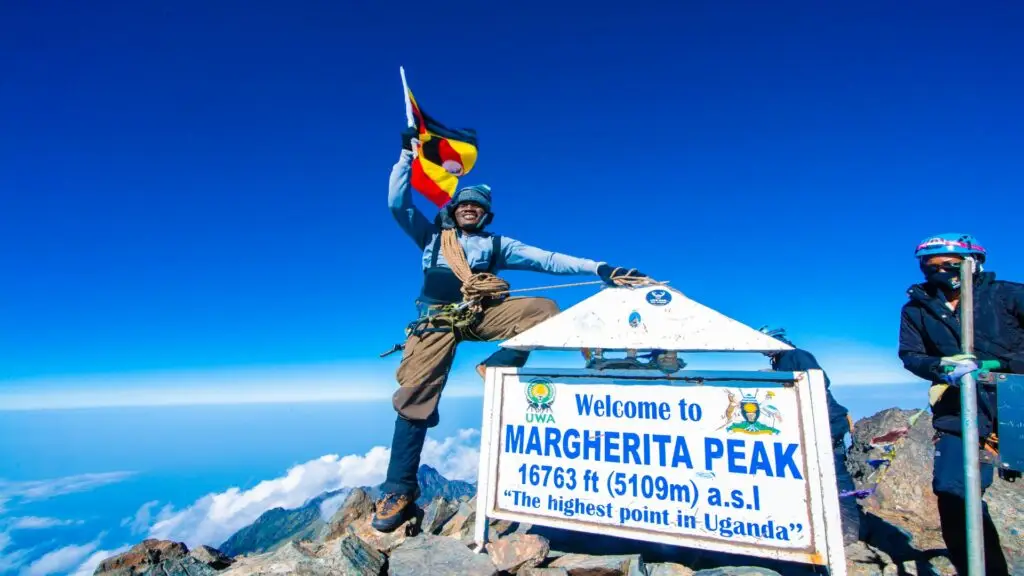
From the Stanley Plateau you get both. Orion’s Belt and the winter constellations of the northern sky wheel overhead on one side of the night while the Southern Cross and the dense star fields of Carina and Centaurus rise on the other, and because you are standing almost precisely at latitude zero, both hemispheres appear close to their fullest extent rather than skimming low along a horizon. The core of the Milky Way, when the galactic centre is above the horizon between roughly February and October, arcs directly overhead rather than to one side, giving you a composition option that is genuinely rare: a galactic core shot with foreground glacier and peaks on both flanks of the frame, not just one.
Altitude, Isolation, and the Absence of Light Pollution
The second reason the sky above Mount Stanley photographs the way it does is simpler: there is almost nothing between your lens and the stars. Kasese, the nearest town of any size, sits more than thirty kilometres away and several thousand vertical metres below, its sodium glow swallowed by the bulk of the range long before it reaches the upper camps. Above roughly 4,000 metres you are also above most of the equatorial cloud and haze layer that softens the sky lower down, and the air itself is thinner and drier, scattering less light and holding less moisture to blur fine star detail. On a clear night at Elena Hut or on the plateau itself, the naked-eye limiting magnitude is easily deep enough to see the Milky Way cast a faint shadow, and the zodiacal light, a phenomenon most travelling photographers never encounter, is often visible as a soft cone of light rising from the horizon well after sunset. Few mountain ranges anywhere combine this degree of darkness with genuine high-altitude relief and a permanent glacier in the foreground; it is a large part of why serious night photographers now specifically request itineraries built around a night at altitude rather than treating the summit push as the only objective.
When to Go: Timing a Trek Around the Moon and the Stars
Reading the Moon Phase Before You Book
The single biggest variable you control before you ever leave home is the moon. A full or near-full moon above the plateau is beautiful in its own right, it will light the glacier silver and let you shoot handheld landscape frames with almost no noise, but it will wash out all but the brightest stars and make a proper Milky Way shot impossible. If your priority is the galactic core, you want to be on the mountain during the five or six nights bracketing the new moon, when the sky is at its darkest and the core, when in season, will show real structure and colour rather than a faint smudge. If you would rather photograph moonlit glacier landscapes with sharp foreground detail, a first-quarter or waning gibbous moon that sets or rises partway through the night actually gives you the best of both, moonlight early for landscape work and a dark sky later for stars. We ask every client planning a dedicated astrophotography trek to tell us their priority before we fix dates, because the itinerary that gets you to the plateau on the correct night of the lunar cycle looks different from a standard summit-focused schedule.
Weighing Astrophotography Against Summit-Night Logistics
Anyone who has done the minute-by-minute account of a Margherita summit push will know that summit night on the Rwenzori is already a late, cold, technically demanding affair, and stacking a long astrophotography session onto the same night as a 5,109-metre glacier ascent is not something we generally recommend for anyone attempting both. The climbers who get the best results treat photography and summiting as related but separate objectives: they shoot from Elena Hut or the plateau on an acclimatization night before the push, when there is no 2am wake-up call hanging over them and no need to conserve every ounce of energy for the ropes and ladders described in our guide to how technical the climb to Margherita Peak actually is. If you do want images from the summit ridge itself, plan for a short pre-dawn window rather than a full session, your guide’s schedule for the ropes, the glacier crossing, and the return will not bend for a tripod.
The Best Trekking Season for Clear Night Skies
Cloud, not darkness, is what actually kills most astrophotography attempts on this range, and the Rwenzori generates a great deal of its own weather regardless of season.

The two dry windows, roughly December to February and June to August, give you the highest probability of a clear night, and our month-by-month trekking guide and broader breakdown of when to visit the Rwenzoris go into the seasonal patterns in more depth. Even within a dry-season trek, the pattern up here tends to be reliable: afternoon cloud builds and often produces rain or sleet, then clears through the evening as temperatures drop, leaving a genuine chance of a clean window between roughly 8pm and 3am. Anyone photographing outside the dry months, including the increasingly common attempts during the shoulder seasons or the harder conditions we cover in our piece on trekking the Rwenzoris in winter, should build at least two nights at altitude into the itinerary rather than one, simply to buy a second chance if the first night clouds over.
Where to Point Your Camera: The Best Vantage Points on the Mountain
Elena Hut and the Approach to Stanley Plateau
Elena Hut, perched at the base of the final glacier approach, is where most Margherita-bound trekkers spend their last night before the summit attempt, and it happens to be one of the finest astrophotography platforms on the entire route. The hut sits with an open, largely unobstructed view east across the upper basin, and the surrounding rock and ice give you strong, dramatic foregrounds without needing to move far from camp. Because most people are here anyway as part of the standard Central Circuit itinerary, it is also the easiest place to combine photography with acclimatization: you are already scheduled to sleep here, so a two- or three-hour session before your summit-night rest costs you little beyond some sleep you would want to bank carefully regardless.
Margherita Camp and the Stanley Plateau Itself
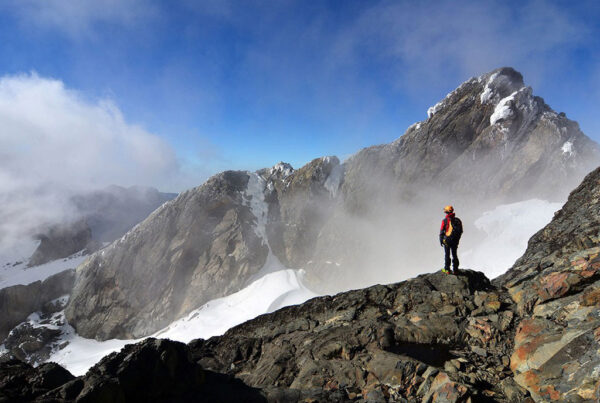
The plateau proper, the flat glacial saddle you cross en route to the final ridge, is the most spectacular and least accessible of the vantage points, and it is where the truly striking images, glacier ice in the foreground, the galactic core or a wheeling star trail overhead, tend to come from.
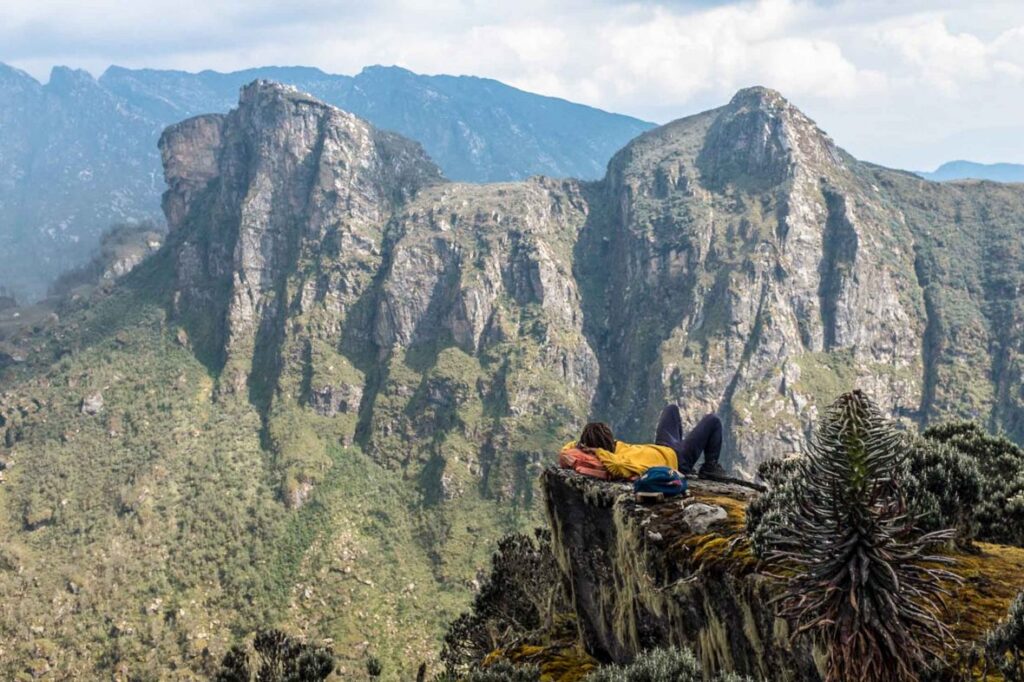
Reaching it for photography rather than for the summit push itself requires either timing your session for the pre-dawn hours of summit night itself or, better, arranging a dedicated acclimatization excursion onto the lower plateau on a non-summit day, something we can build into a custom itinerary on request. The exposure and cold here are serious even by Rwenzori standards, and this is not a location we send anyone to without a guide experienced specifically in glacier travel after dark.
Kitandara Lakes: Reflections Under the Southern Sky
For a genuinely different composition, the Kitandara Lakes, sitting in a steep-walled cirque lower on the Central Circuit, offer something the plateau cannot: still water. On a calm night the twin lakes give a mirror-flat reflection of the star field and the surrounding peaks, and because the site sits at a lower, more forgiving altitude than Elena Hut or the plateau, it is a far more comfortable place to spend two or three hours standing beside a tripod. It is also one of the most photogenic spots on the mountain by day, so a serious photographer built an extra night here into the schedule to shoot it at both ends of the light.
Mutinda Camp and Wide-Angle Alternatives for Shorter Treks
Not every client wants, or has the fitness and time for, a full glacier expedition, and the good news is that you do not need to reach Stanley Plateau to get a genuinely excellent Rwenzori night sky image. Mutinda Camp, reached on several of our shorter, non-technical itineraries, sits high enough to clear most of the cloud and light interference while remaining accessible to trekkers who are not attempting a technical summit. The jagged Mutinda peaks make for a strong silhouette against the Milky Way, and because the camp does not carry the altitude or glacier-travel risk of the upper mountain, it is where we send clients who want a serious astrophotography experience without the technical commitment of Margherita Peak.
Gear, Settings, and Surviving the Cold: A Field Guide
What to Actually Carry Up
Every gram you add to your pack above Nyabitaba has a cost, so the gear list for a Rwenzori astrophotography trek should be deliberately minimal. A single full-frame or APS-C mirrorless body with a fast wide-angle prime, something in the 14 to 24mm range at f/2.8 or faster, will cover the great majority of what you actually want to shoot, and a second, longer lens is worth the weight only if you specifically want tighter compositions of the peaks against the sky. A sturdy but lightweight carbon tripod is not optional; the wind on the plateau and at Elena Hut is frequently strong enough to blur a long exposure on anything flimsier. Bring a headlamp with a genuine red-light mode to protect your night vision and that of anyone climbing with you, and, because our porters carry the bulk of your kit up but your camera bag generally stays with you, think carefully with your guide about what is essential; we cover the broader question of what gear you need versus what you can rent locally in our guide to Rwenzori gear rental.
Camera Settings for the Thin, Dark Rwenzori Air
The physics of a dark, high-altitude sky reward a fairly standard wide-field approach, but a few Rwenzori-specific quirks are worth knowing before you are standing there with cold fingers trying to remember them. Start with your aperture wide open, f/2.8 or faster where your lens allows, and set focus manually on a bright star or distant light using live view zoomed to maximum, since autofocus will hunt uselessly in the dark and infinity marks on lens barrels are rarely accurate enough at this altitude and temperature. For exposure, the classic “500 rule” divided by your full-frame-equivalent focal length gives a starting shutter speed before star trailing becomes visible, so a 20mm lens gives roughly 25 seconds; because the Rwenzori sky is genuinely darker than most locations photographers are used to, you can often push ISO to 3200 or even 6400 on a modern sensor and still pull a clean, richly detailed frame, particularly if you are stacking multiple exposures in post-processing. Shoot in RAW without exception, bracket your exposures if you have the battery to spare, and take a set of foreground-only frames at dusk while there is still enough ambient light to expose the glacier and peaks properly, blending them with your night sky frames later is usually a cleaner result than trying to light the foreground artificially in the field.
Batteries, Condensation, and Keeping Your Gear Alive
Cold is the real enemy of a Rwenzori night shoot, not darkness. Lithium-ion batteries lose a significant fraction of their usable charge below freezing, and overnight temperatures at Elena Hut and on the plateau regularly drop several degrees below zero, so carry at least two spare batteries and keep them in an inside jacket pocket against your body rather than in your camera bag; swap a cold battery out and let it rewarm inside your jacket rather than assuming it is dead. The bigger practical hazard is condensation: bringing a freezing camera body straight into a warm sleeping bag or hut interior will fog the internals, so let it acclimatise gradually inside a sealed bag before bringing it fully indoors. For charging between camps, our guide on keeping phones and cameras charged in the Rwenzori huts covers the realistic power situation on the mountain, which is more limited than most trekkers expect and worth planning around if you are shooting for several consecutive nights.
Photographing a Vanishing Glacier
There is a dimension to astrophotography on the Stanley Plateau that goes beyond composition and technique, and it is one every serious photographer who comes here should understand before they climb. The glacier you are standing on to take these images is disappearing, and disappearing quickly. Research groups tracking the range, including the long-running documentation project led by photographer Klaus Thymann, have recorded the Stanley Plateau glacier losing roughly thirty percent of its mass since 2020 alone, and glaciologists studying the wider range have projected that Rwenzori ice could vanish entirely within the coming decades.
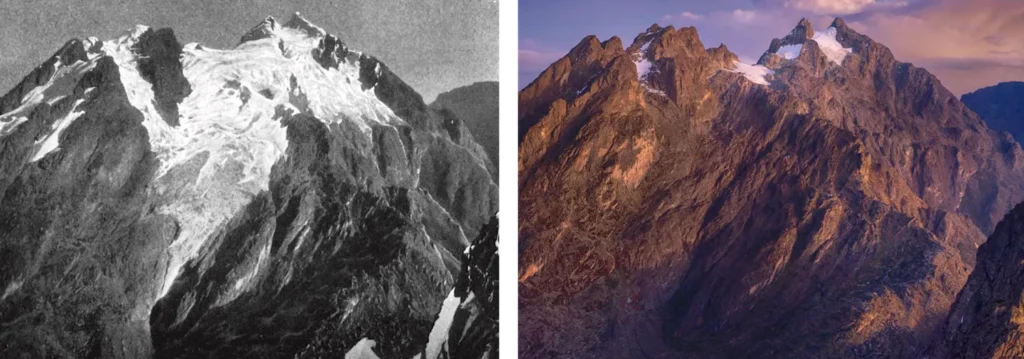
We go into the science and the human consequences of that retreat in detail in our article on why the Rwenzori glaciers are disappearing, and the environmental reporting from groups like Mongabay’s coverage of Project Pressure’s glacier surveys is worth reading before you go, both to understand what you are photographing and to appreciate the urgency of it. A night image of the Milky Way over Stanley’s ice is not simply a landscape shot anymore; it is a document of something that will very likely not exist in its current form within your lifetime, in the same tradition as the glacier photographs taken by early Rwenzori mountaineers over a century ago, whose expeditions we cover in our piece on the history of the Rwenzori Mountains and in the story of the Duke of Abruzzi’s first ascent of Margherita Peak in 1906. Photographers who understand this tend to shoot differently up here, more deliberately, with wider compositions that show the full extent of the remaining ice rather than tight abstract details, precisely because those wider frames are the ones that will matter most as a record in years to come.
Preparing Your Body and Your Trek for Night Photography
None of this works if you are not fit enough to function competently at altitude after dark, and standing still with a tripod for two or three hours in sub-zero temperatures is, if anything, harder on the body than the steady movement of daytime trekking. We strongly recommend booking a full-length itinerary rather than one of the compressed fast-ascent options if photography is a priority; the standard route to Margherita Peak, whether via the longer editions of the Central Circuit Trail or the steeper, less-travelled Kilembe Trail, covered in our comparison of the difference between the Central Circuit and Kilembe routes, gives you the extra acclimatization nights that a rushed itinerary does not, and those extra nights are exactly what give you a second or third chance at a clear sky if the first attempt clouds over. We also generally recommend the itineraries that reach Margherita in six days or longer over the compressed four-day options for anyone planning a serious photography session, since fatigue and altitude both work directly against the fine motor control and patience that night photography demands; our broader guide to how many days you actually need to reach Margherita Peak explains the acclimatization reasoning in more detail. Your guide and porters, drawn from the same Bakonjo mountain communities who have worked this range for generations, are also an underused resource here: many have spent hundreds of nights at these camps and know exactly which nights and which precise vantage points, sheltered from wind or angled away from the last traces of cloud, tend to deliver the clearest skies, so talk to them early and often rather than treating the photography purely as a solo pursuit.
Frequently Asked Questions
What is the best time of year for astrophotography on the Rwenzori Mountains?
The two dry seasons, roughly December through February and June through August, give the highest probability of clear night skies on the Rwenzori, since cloud cover rather than moonlight is usually the deciding factor in whether a given night’s shoot succeeds. Within either dry season, pair your dates with the lunar calendar: choose nights around the new moon for the darkest skies and the best Milky Way visibility, or a partial moon if you want moonlit glacier landscapes as well as star images.
Can you see the Milky Way from Margherita Peak or the Stanley Plateau?
Yes, and the view is exceptional. The Stanley Plateau sits above nearly all light pollution and most of the equatorial haze layer, and because the Rwenzori Mountains lie almost exactly on the equator, the galactic core arcs high overhead rather than skimming the horizon during the months it is visible, roughly February through October. On a clear, dark-moon night the core is visible to the naked eye with clear internal structure, not just as a faint band.
Do I need special permission or a specialist guide to photograph at night on the glacier?
You do not need separate permits beyond your standard park entry and climbing permit, but you absolutely need a guide experienced in glacier travel after dark if you plan to shoot from the plateau or summit ridge itself rather than from a hut. Night conditions on the ice, including reduced visibility of crevasses and rapidly dropping temperatures, are genuinely more hazardous than daytime glacier travel, and our guiding teams plan photography sessions around routes and timing they know to be safe.
What camera gear do I actually need for Rwenzori astrophotography, and can any of it be rented locally?
A mirrorless or DSLR body capable of manual exposure control, a fast wide-angle lens (14 to 24mm at f/2.8 or faster is ideal), and a sturdy travel tripod are the essentials; a manual intervalometer is useful if you want star-trail sequences. Specialist astrophotography equipment is not available to rent in Kasese or on the mountain, so bring your own camera gear, though general trekking and cold-weather equipment can be arranged through our gear rental service.
How cold does it get at night on the Rwenzori, and will the cold damage my camera?
Overnight temperatures at Elena Hut and on the Stanley Plateau regularly fall to several degrees below freezing, colder in the dry season under clear skies, which is precisely when you want to be shooting. Modern camera bodies tolerate these temperatures well provided you manage batteries carefully, keep spares warm against your body, and let equipment acclimatise gradually before bringing it into a heated space to avoid internal condensation.
Is it better to photograph from Elena Hut or push all the way to the summit ridge for images?
For most trekkers, Elena Hut offers the best balance of accessibility, safety, and image quality, since it sits close to the plateau with an open sky view but does not require night glacier travel to reach. The summit ridge and plateau proper deliver more dramatic foreground ice but should only be attempted for photography with an experienced guide, ideally on a dedicated acclimatization excursion rather than layered onto the physical demands of summit night itself.
Ready to Plan Your Rwenzori Night Sky Trek?
The Rwenzori sky rewards exactly the kind of patience and preparation this mountain has always demanded, and after years of guiding photographers up to Elena Hut and the Stanley Plateau, I can tell you plainly that no photograph fully prepares you for standing under it in person. If you are planning a Rwenzori trek built around serious night photography, or simply want a summit itinerary with enough acclimatization days to give you a real shot at a clear sky, get in touch with our team and we will build a route, camp schedule, and moon-phase timing around exactly what you want to capture. You can also browse answers to more common Rwenzori trekking questions while you plan, but the fastest way to get a schedule built specifically around a new moon window and your fitness level is to talk to us directly.