Expert guide to Rwenzori trekking gear: what’s essential, what’s technical, and what you can rent. Route-by-route advice from Uganda’s mountain specialists.
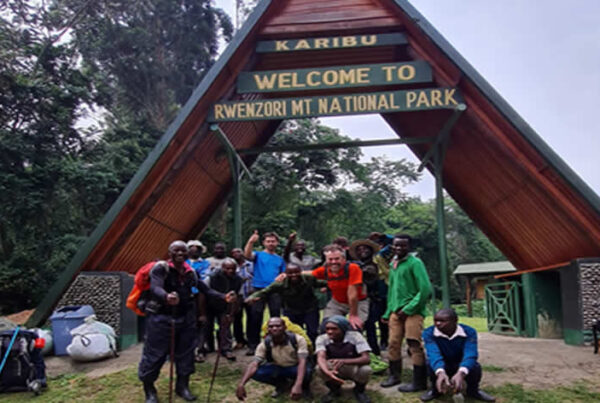
I have stood at the Nyakalengija trailhead more mornings than I can count, watching two very different kinds of trekkers step off the vehicle. One arrives with a single duffel, a pair of well-worn boots, and the calm of someone who has done their homework. The other arrives with a brand-new four-season mountaineering pack bought for the occasion, still smelling of the shop, stuffed with gear bought from a generic “African trekking checklist” that was written for a completely different kind of mountain. Both of them are about to find out, usually within the first ninety minutes on the trail, whether their gear actually matches the mountain in front of them. So let me answer the question you came here with directly, and then earn that answer with the detail it deserves. Yes, Rwenzori trekking requires gear that is genuinely, meaningfully different from what serves you well on most other mountains, including some far more famous ones. But the word “special” hides an important nuance, because what counts as special depends entirely on which of our routes you are walking, how high you are going, and whether your itinerary crosses a glacier. This guide exists to remove the guesswork, route by route and zone by zone, so that you arrive at the Nyakalengija trailhead with exactly what you need, nothing you do not, and full confidence in every item in your pack.
Why the Rwenzori Asks More of Your Gear Than Almost Any Other Mountain
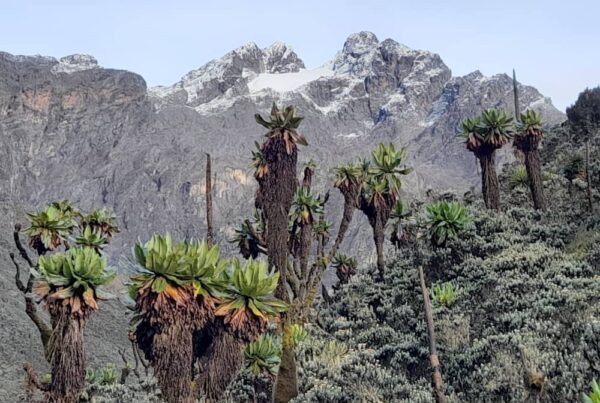
Most trekkers arrive at the gear question with a mental model built from Kilimanjaro, the Alps, or a dry-season trek somewhere in the Rockies, and that model fails them here in specific, predictable ways. The Rwenzori is not one environment; it is five, stacked on top of each other within a single expedition. You begin in humid, tropical montane forest, climb through bamboo and heather zones into an afro-alpine world of giant lobelias and groundsels that looks more like another planet than anywhere in Africa, and finish, on the higher routes, on permanently glaciated rock and ice above 4,800 metres. That transition happens in days, not weeks, and your gear has to work in all of it simultaneously, sometimes within the same afternoon. Add to that the range’s defining characteristic, rainfall in every month of the year, and you have a mountain that punishes gear chosen for a single climate. This is also, not incidentally, why the Rwenzori Mountains National Park carries UNESCO World Heritage status: the same ecological stratification that makes packing complicated is what makes the range one of the most biologically remarkable protected landscapes on the continent. Understanding this layered environment is the real foundation of any Rwenzori gear decision, and it is worth reading in full in our guide to what Rwenzori trekking actually involves and where it takes place before you make a single purchase.
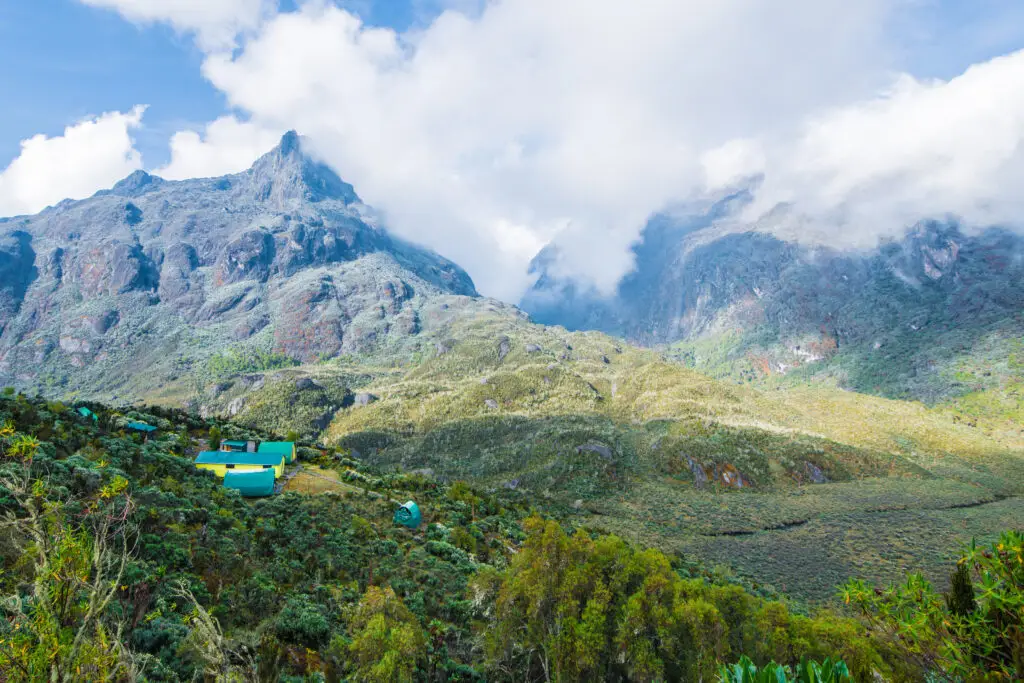
The other factor that separates this range from almost every other trekking destination on earth is the terrain itself, specifically the bogs. Between roughly 3,200 and 4,000 metres, particularly through the Bujuku Valley, the trail crosses ancient peat bog on wooden bridges and stepping stones, and no conventional hiking boot, however expensive or however many waterproofing awards it has won, will keep your feet dry through it. This single fact reshapes the entire footwear conversation, and it is the clearest example of why generic mountain packing advice simply does not transfer to this range.
The Short Answer, and the Two Tiers Behind It
Every piece of Rwenzori gear falls into one of two tiers, and understanding this split is the single most useful mental shortcut you can carry into your planning. The first tier is baseline gear, the equipment every trekker on every route needs regardless of summit ambitions, because it responds to the environment itself rather than to any specific technical challenge. The second tier is technical gear, equipment that only becomes relevant if your itinerary crosses glaciated terrain, most notably the approach to Margherita Peak on Mount Stanley. A trekker on the three-day Mahoma Loop needs the first tier and nothing from the second. A trekker attempting the full 13-Day 6 Peaks Grand Expedition needs both, in full. Nearly every gear question I field from prospective clients resolves itself once we work out which tier, or combination of tiers, actually applies to their specific booking.
The Baseline Kit Every Rwenzori Trekker Needs
Footwear Is Not Negotiable
If there is one gear decision that determines whether your Rwenzori experience is a triumph or a slog, it is footwear, and it is the decision generic packing lists get wrong most consistently.
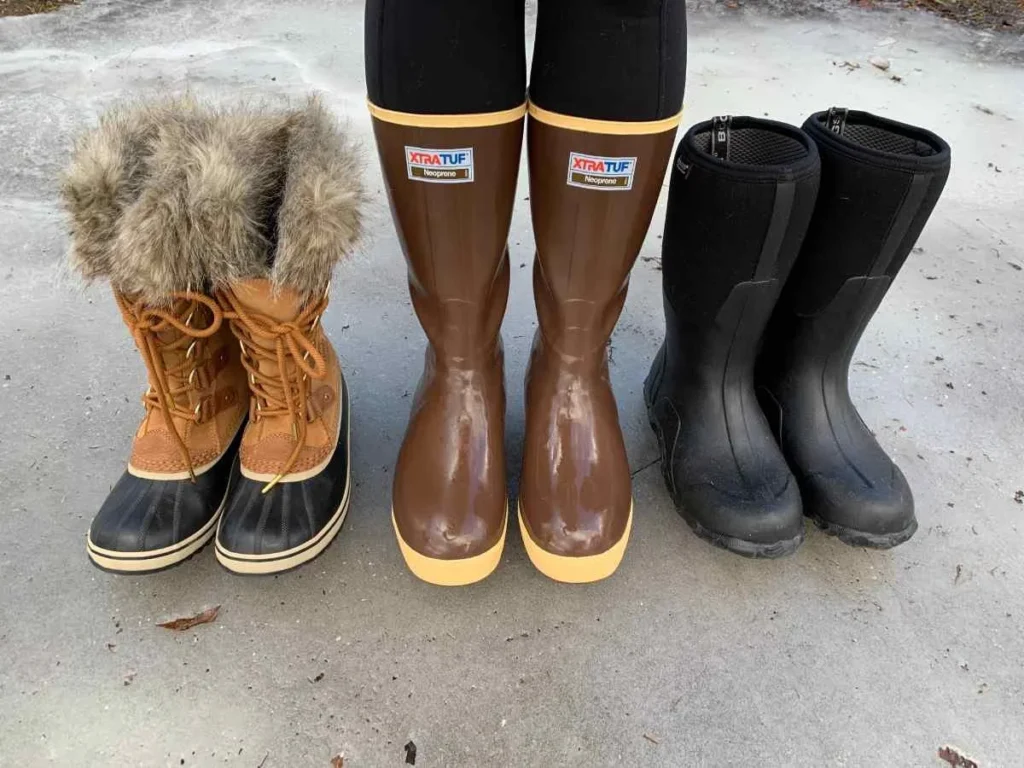
Conventional waterproof hiking boots, the kind that perform admirably on the West Highland Way or the approach to Everest Base Camp, are simply not built for terrain that swallows a boot to the shin without warning. What actually works are rubber, Wellington-style mountain boots worn over warm liners, and our dedicated guide to the best boots for the Rwenzori bogs walks through exactly which specifications matter and why. The encouraging news is that these boots are provided as part of your package on our guided routes, so this is one item you are not required to source or fly with yourself, though experienced mountaineers with strong personal preferences are always welcome to bring their own.
Waterproofing That Actually Holds
Waterproofing on the Rwenzori is not a single jacket decision, it is a system, and it has to be a genuine one rather than a merely water-resistant one. A shell that shrugs off a Scottish drizzle will be overwhelmed by a full trekking day of sustained equatorial rain. You need a properly seam-sealed jacket and trousers, full-length gaiters that seal over your boots rather than stopping at the ankle, and waterproof gloves, and our complete breakdown of what genuinely waterproof gear looks like for this specific mountain covers every one of these categories in the depth the topic deserves, including where trekkers most commonly get it wrong.
A Real Layering System, Not a Single Heavy Coat
Because you move between tropical warmth and sub-zero cold within the same expedition, the layering logic matters as much as any individual item. A moisture-wicking base layer, an insulating mid-layer, and a waterproof shell, built to be added and removed constantly through the day rather than worn as one fixed outfit, is the system that actually works here. Our detailed guide on exactly what clothing to bring for the Rwenzori goes zone by zone through this logic, and it is worth reading closely rather than defaulting to whatever combination has served you on a drier range.
Sleeping Warm Above the Cloud Line
Camp temperatures at the higher huts drop well below freezing, and a sleeping bag rated for a temperate three-season trek will leave you shivering through the night at exactly the point in your trip when you most need real rest before a demanding day. This is a more contested question than most gear guides admit, since down and synthetic fills both have legitimate advocates for these specific conditions, and our full analysis of sleeping bag ratings for the Rwenzori and Margherita Peak sets out the honest case for each rather than the diplomatic non-answer most equipment articles offer.
The Smaller Items That Are Easy to Underrate
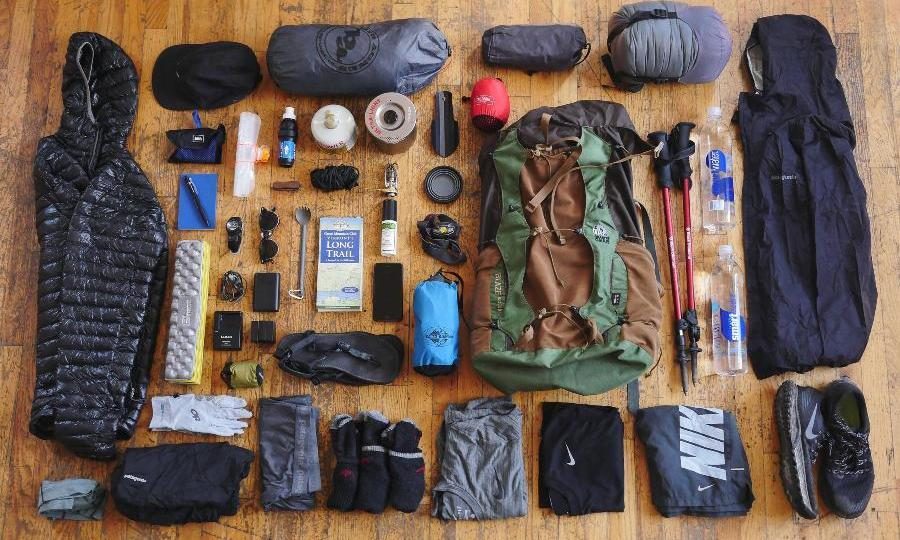
A handful of smaller items round out the baseline kit and are worth naming directly, since they cause disproportionate trouble when forgotten: a reliable headlamp with spare batteries for pre-dawn summit starts and dark camp evenings, sturdy trekking poles that double as depth probes across uncertain bog footing, a dry bag or two for electronics and documents, and high-SPF sunscreen, since UV exposure above 4,000 metres near the equator is considerably stronger than the cool air temperature suggests. None of these items are exotic or expensive, but a trek is rarely undone by the absence of one major piece of kit; it is far more often undone by the accumulation of two or three small oversights.
Where “Special” Becomes Technical: Glacier and Climbing Equipment
This is the tier that genuinely separates the Rwenzori from a standard trekking holiday, and it applies only if your route crosses the glaciated terrain on the approach to a major summit, most commonly Margherita Peak on Mount Stanley via either the Central Circuit Trail or the Kilembe Trail. Above Elena or Kitandara camp, the route to the summit crosses genuine glacier and mixed rock terrain, and that terrain demands technical equipment: 12-point crampons compatible with mountaineering boots, an ice axe typically 60 to 70 centimetres in length, a sit harness, and a lightweight climbing helmet. Our dedicated guide on crampons and ropes for the Rwenzori explains precisely what each item does on this terrain and why substitutions rarely work, while our broader guide addressing whether you need to bring your own climbing gear walks through the full personal-versus-provided breakdown for every technical item. The reassuring answer, for trekkers without a personal mountaineering kit, is that you do not have to own any of this outright; rental provision for crampons, ice axes, harnesses, and helmets exists specifically for this purpose, a point worth understanding fully before you assume a technical summit is out of reach simply because your gear closet is empty.
Matching Your Kit to Your Specific Itinerary
Short, Non-Technical Routes: Mahoma Loop and Sine Camp
If your itinerary is one of our shorter introductory treks, the 2 to 3-Day Lake Mahoma or Sine Camp routes, your gear list stops entirely at the baseline tier described above. You will still want genuine waterproofing, proper rubber boots, and a warm sleeping bag, because the lower forest and bamboo zones remain wet and the camp nights remain cool, but there is no glacier crossing on these routes and therefore no need for crampons, an ice axe, a harness, or a helmet. This is one of the more common gear misconceptions we address in enquiries: trekkers researching the range broadly sometimes assume every Rwenzori itinerary is a technical mountaineering expedition, when in reality several of our most popular short treks are entirely non-technical hikes through genuinely spectacular terrain.
The Central Circuit and Kilembe Trail to Margherita Peak
Both of our principal multi-day routes to the summit of Mount Stanley require the full combined kit, baseline plus technical, because both cross the glacier on the final approach to Margherita Peak. The Central Circuit and Kilembe Trail differ from each other in scenery, gradient profile, and hut quality rather than in their technical gear requirements; whichever you choose, plan for the full equipment list, and build in time before departure to fit and test any rented technical items rather than meeting them for the first time on summit morning.
Multi-Peak and Expedition-Length Itineraries
Trekkers planning to summit beyond Mount Stanley, whether that means Mount Speke, Mount Baker, Mount Emin, Mount Gessi, or Mount Luigi di Savoia, individually or as part of a full multi-peak expedition, should treat gear planning as a route-specific conversation rather than a single fixed list. Each of these peaks presents a different combination of scrambling, rock, and residual glacial terrain, and the technical demands shift accordingly. This is precisely the kind of itinerary where we sit down with a client well before departure and calibrate the equipment list to the exact combination of summits on their booking, rather than sending a generic checklist that either underprepares them for one peak or has them carrying unnecessary weight for another.
What You Genuinely Do Not Need to Bring
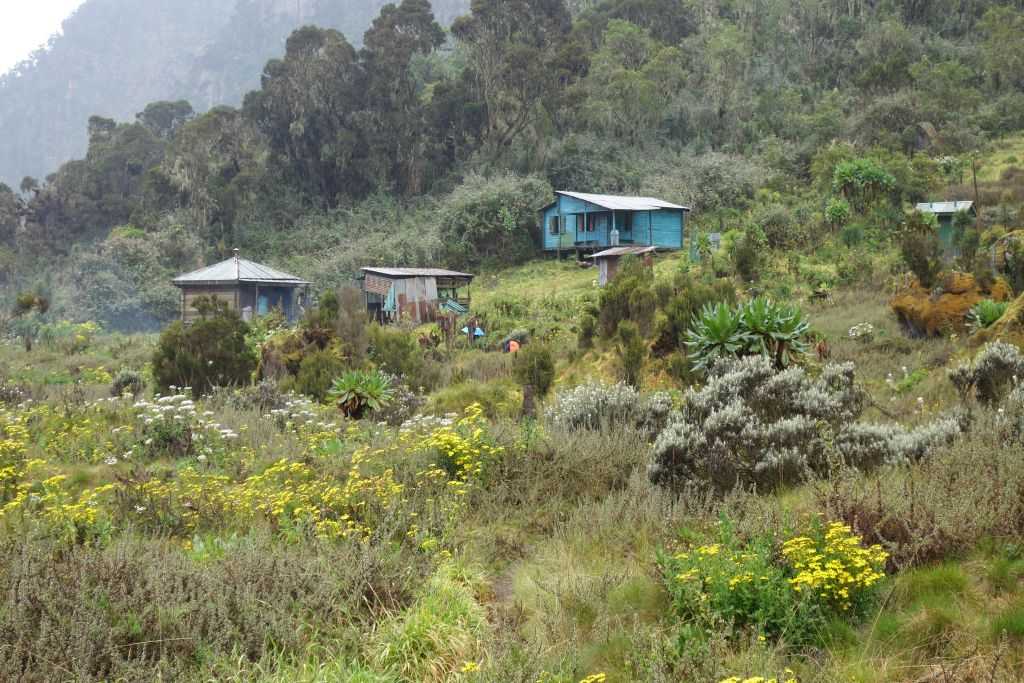
Overpacking is at least as common a mistake as underpacking, and it carries its own cost given how much of your kit porters carry on your behalf. You do not need to bring a tent, a stove, cooking equipment, or food; every one of our guided routes is fully catered and uses the established network of mountain huts and campsites, which our complete guide to Rwenzori huts and camps on every trail documents in detail, and everything included in your package, guides, porters, park fees, and meals, is itemised in full in our guide to how to book a Rwenzori trek and what is included.
You also do not need navigation equipment such as a personal GPS unit or topographic maps in the way you might on an unguided wilderness trek; a licensed guide accompanies every group at every point on the mountain, and independent, unguided trekking is not permitted within the national park in any case. Nor do you need an expedition-grade four-season mountaineering pack for your main luggage; a porter carries your main kit, and a daypack sized for water, snacks, a camera, and the layers you might need to add or remove during the day’s walking is all you personally need to carry.
Bring It or Rent It? Making the Right Call for Your Trip
Once you know which tier of gear your route requires, the next decision is whether to travel with it or arrange it locally, and the honest answer differs by category. Personal items that depend on individual fit, your boots if you choose to bring your own rather than use the provided pair, your thermal base layers, and your sleeping bag, are worth bringing from home if you already own well-fitted, well-tested versions, because rental equivalents are rarely as comfortable or as reliable across a demanding multi-day itinerary.
Technical hardware, crampons, an ice axe, a harness, and a helmet, is a more genuinely open decision, and our gear rental guide covering what is available in Kasese, its cost, and its quality gives you the specifics needed to decide with confidence rather than guesswork. If your primary concern is managing overall trip cost rather than logistics, our guide to reducing Rwenzori trekking costs without compromising safety sets out exactly which rental substitutions represent genuine savings and which personal items are worth the investment regardless of budget.
Building Your Kit Around Your Route, Not a Generic Checklist
The theme running through every section of this guide is the same one that should guide your actual packing: the Rwenzori does not have a single gear list, it has a family of gear lists, and the right one for you depends on your specific route, your trekking experience, and your summit objective. This is also, not coincidentally, why we do not hand every client the same printed checklist and send them shopping. When you book with us, your pre-departure preparation includes a genuine conversation about your itinerary, your prior mountain experience, and any specific gear concerns you already have, so that the advice you receive is calibrated to your actual trek rather than to a hypothetical average trekker. Pairing your gear preparation with honest physical readiness matters just as much; our guide to staying fit for a Rwenzori trek and our broader look at how difficult Rwenzori trekking really is are worth reading alongside this gear guide rather than in isolation, since the two are more connected than most trekkers expect: the right boots and layering system genuinely change how your body copes with six to eight hours of demanding terrain each day.
Frequently Asked Questions About Rwenzori Trekking Gear
Do I need to buy crampons and an ice axe before I arrive in Uganda?
Not necessarily. Crampons, an ice axe, a harness, and a helmet are only required if your itinerary crosses the glaciated terrain on the approach to a major summit such as Margherita Peak, and we maintain a rental pool of this technical equipment specifically for trekkers who do not own it or would rather not travel internationally with heavy hardware. If you do own equipment you trust from previous alpine experience, bringing it is entirely reasonable, but it is genuinely optional rather than mandatory, and booking your rental in advance is the only real requirement.
Can I use regular waterproof hiking boots instead of rubber boots?
For the bog sections of the trail, no, not reliably. Conventional hiking boots, however well reviewed or expensive, cannot keep your feet dry through the deep, saturated peat bogs found between roughly 3,200 and 4,000 metres, particularly through the Bujuku Valley corridor. Rubber, Wellington-style boots worn over warm liners are the standard that actually works on this specific terrain, and they are provided as part of our guided packages so you are not required to source or transport them yourself.
Is a four-season sleeping bag necessary for every Rwenzori route?
It depends on which camps your itinerary reaches. The higher camps on the Central Circuit and Kilembe routes to Margherita Peak, including Elena and Kitandara, regularly drop below freezing overnight, which calls for a bag rated to at least minus five to minus ten degrees Celsius. Shorter, lower-altitude itineraries such as the Mahoma Loop still require a genuinely warm bag for cool camp nights, but the temperature rating needed is less extreme than on the higher summit routes.
What is the single most common gear mistake first-time Rwenzori trekkers make?
Underestimating the bogs and overestimating the value of conventional “waterproof” hiking boots. Trekkers who arrive with excellent gear for a dry mountain range are frequently surprised within the first few hours by terrain that no amount of Gore-Tex membrane technology can fully counter. The second most common mistake is the reverse problem, packing a full independent camping and cooking kit that the guided, catered nature of the trek makes entirely unnecessary.
Do I need special gear for every peak in the range, or only for Margherita Peak?
Technical glacier equipment is specifically tied to routes that cross glaciated terrain, which most commonly means the approach to Margherita Peak on Mount Stanley. Other peaks in the range, including Speke, Baker, Emin, Gessi, and Luigi di Savoia, present their own distinct mix of scrambling, rock, and residual glacial sections, and the gear requirements for each should be confirmed for your specific itinerary rather than assumed from the Margherita Peak standard.
Should I rent my gear in Kasese or bring everything from home?
A hybrid approach works best for most trekkers. Personal items that depend on fit and prior familiarity, boots if you have your own trusted pair, thermal base layers, and your sleeping bag, are generally worth bringing from home. Technical hardware such as crampons, an ice axe, a harness, and a helmet is reasonable to rent locally if you do not already own mountaineering equipment, provided you arrange it well in advance and test the fit before departure day.
Start Planning Your Rwenzori Gear List Today
Every question in this guide has one real answer underneath it: your gear list should be built around your specific route, not copied from a generic mountain packing guide written for somewhere else entirely. That is exactly the conversation we have with every trekker who books with us, working through your itinerary, your experience, and your objectives until your kit is calibrated precisely to the mountain you are about to climb. If you are ready to start planning your Rwenzori trek, or you simply want route-specific gear advice before you commit to dates, get in touch with our team and let us help you arrive at Nyakalengija exactly as prepared as this mountain deserves.