Best time of year for astrophotography on the Rwenzori Mountains: dry-season months, new moon dates, Milky Way core timing and the best camps.
The best time of year for astrophotography on the Rwenzori Mountains is the dry season from June to August, and within it the week around each new moon. That is the short answer, and it is the one I give when a photographer writes to us and asks for a single window. It combines the two things you cannot control, the weather and the moon, with the one thing you can plan around, the position of the Milky Way. In June, July and August the bright heart of our galaxy climbs high above the Stanley Plateau after dark, the skies are at their most reliable, and a new moon leaves the night truly black. Get all three lined up, and the Rwenzori delivers some of the finest night skies in Africa.
But there is a more useful answer for anyone seriously planning a trip, and it is worth the extra reading. The Rwenzori are wet, cloud-wrapped mountains, and they sit almost exactly on the equator, which changes the rules that photographers learn elsewhere. Some months give you the galactic core and unreliable cloud, others give clear skies but no core at all, and the moon can either ruin a night or make it extraordinary depending on how you use it. This guide works through each factor in turn, sets out a month-by-month picture, gives the new moon dates for the coming seasons, and explains how to fit all of it around a real trek, including which nights on the mountain are worth your energy. If you want the gear and technique side, our guide to astrophotography from the Stanley Plateau covers it in depth; this article is about when to go.
Why the Rwenzori Sky Is Unlike Almost Anywhere Else
Most of the world’s famous stargazing destinations, from the Atacama to the Canary Islands, lie well north or south of the equator and show you only part of the sky. The Rwenzori Mountains sit at latitude zero, so over the course of a year you see both celestial hemispheres. Orion and the northern winter constellations share the night with the Southern Cross and the dense star fields of the southern Milky Way. Because you are standing on the equator, the sky rotates around you rather than tilting to one side, and the galactic core stands high in the southern sky, at its best roughly 60 degrees above the horizon, instead of skimming the treeline as it does for observers in Europe or North America.
Altitude adds to the effect. The upper camps sit above most of the moisture and haze that soften the air below, and the nearby towns are small and far away, with the glow of Kasese hidden behind the ridges. Nights on the equator are also almost the same length all year, giving you about nine hours of true astronomical darkness whatever the month. From the shore of the Kitandara Lakes at around 4,023 metres, on a clear night, the Milky Way looks like a dense, textured band of light, and the still water can double it into a reflection. That is the prize. The question is how to be there when the sky is open.
The Three Things That Decide the Best Time
Three variables control your chances of a great astrophotography night on the Rwenzori: how likely the sky is to be clear, where the moon is, and whether the Milky Way’s core is above the horizon during the dark hours. The mistake many photographers make is to plan around only one of them. A trip timed for the dry season but not the moon can leave you with a bright sky, while one timed for the Milky Way but not the weather can leave you in cloud for six nights.
Weather and Cloud: The Dry Seasons Give You the Best Odds
The Rwenzori receive rain in every month of the year, which makes them very different from a desert observatory. What changes with the seasons is how much and how often. The two drier windows are December to February and June to August, the same periods we recommend in our guide to the best time to visit the Rwenzoris, when cloud breaks more often and summit weather windows are more frequent. March to May and October to November are the wetter months, with heavier cloud, more sustained rain and lower visibility, though not every night is lost. The general character of the mountain’s weather is explained in our guide to the climate of the Rwenzori Mountains.
Within any one day there is a pattern worth knowing. Cloud tends to build around the mountain through the afternoon and often thins in the evening or during the small hours, so the clearest sky is frequently found late at night and just before dawn rather than at dusk. That is a rule of thumb, not a promise, because equatorial mountain weather has a mind of its own, but it is the reason an astrophotographer here learns to be patient and to check the sky more than once between dinner and dawn. Even the wet season occasionally gives a spectacular gap, as our piece on the Kitandara basin notes, but you should treat those nights as a bonus rather than a plan. If you are curious about the cold end of the calendar, our guide to the Rwenzori in winter is a useful companion.
The Moon: Plan Around the New Moon Week
For Milky Way photography, the moon matters as much as the cloud. A bright moon washes out the faint dust lanes and colour of the galactic core, and even a half moon is enough to flatten it. The best conditions come during the roughly one-week window centred on the new moon, when the moon is either absent or a thin crescent that sets soon after dusk or rises just before dawn. You can check the phase and the moonrise and moonset times for any date on timeanddate.com, and the free planetarium at Stellarium Web will show you where the galactic core stands at any hour on your chosen night.
The new moon dates for the coming seasons, given in universal time and therefore potentially a day different locally, are 9 December 2026, 7 January 2027, 6 February, 8 March, 6 April, 6 May, 4 June, 4 July, 2 August, 31 August and 30 September 2027. The most rewarding combinations fall on 4 June, 4 July and 2 August 2027, when the new moon coincides with the dry season and the galactic core is high and visible for much of the night. The 6 February 2027 new moon offers a drier-season alternative for photographers happy to shoot the core in the early hours.
The full moon is not something to avoid altogether. A bright moon lights the glaciers and peaks with a pale, silvery glow that no long exposure can imitate, and some of the most memorable Rwenzori images are moonlit landscapes rather than Milky Way portraits. If your dates are fixed and land on a full moon, it becomes a landscape trip, and the mountains repay it handsomely.
The Galactic Core Season: February to October
The Milky Way is present all year, but its brightest and most photogenic part, the galactic core in Sagittarius, is above the horizon during the dark hours only for part of the calendar. From the equator the core is visible from roughly February to October, and the best of it falls between May and August. In February it rises only in the small hours before dawn. Through March and April it appears earlier and earlier, and by May it is high in the sky for much of the night. In June it stands in the south from dusk to dawn, reaching its highest point about midnight. In July and August it climbs early in the evening and sets later at night, still giving many hours of good shooting. By September it is confined to the evening hours, and by October it has almost gone. From November to January the core is not visible during darkness, though the sky still offers Orion, the winter constellations and the southern star fields.
Because the Rwenzori stand almost on the equator, the view is also symmetrical in a way photographers rarely get. You can compose the arch of the Milky Way rising over the jagged peaks of the Stanley Plateau or the ridges above Bujuku, with foreground glacier ice or the dark outlines of giant lobelias, all under a sky that is genuinely rare in the world.
Month by Month: When the Rwenzori Sky Is at Its Best
The table below combines the seasonal weather pattern with the position of the galactic core. The core times are approximate local solar time; on a watch set to East Africa Time, add about an hour. Treat the weather column as a tendency rather than a forecast.
| Month | Typical weather | Galactic core (approx. solar time) | Verdict |
| January | Drier | Barely visible, only very low before dawn | Reliable skies; winter constellations and star trails |
| February | Drier | Rises about 2 am; visible until dawn | Very good for early risers |
| March | Wetter | Rises about midnight; visible to dawn | Possible, with cloud risk |
| April | Wet | Rises about 10 pm; high before dawn | A gamble; superb if clear |
| May | Wet, easing | Rises about 8 pm; up all night | A gamble; superb if clear |
| June | Dry | Up from dusk to dawn; highest near midnight | Excellent |
| July | Dry | Up from dusk; sets about 4 am | Excellent; among the best |
| August | Dry, fading | Up from dusk; sets about 2 am | Excellent |
| September | Transitional | Evening only; sets near midnight | Fair |
| October | Wet | Only early evening, sets about 10 pm | Poor for the core |
| November | Wet | Not visible in darkness | Poor |
| December | Drier | Not visible in darkness | Reliable skies; no core |
Read together, the table points to a clear conclusion. June, July and August are the best all-round months because they combine the drier weather with a well-placed galactic core. February is a strong second choice for photographers who are content to shoot in the small hours. December and January give the most reliable skies but no core, which makes them excellent for star trails, the winter constellations and moonlit landscapes. March to May and September to November are the gamble months, capable of magnificent nights and also of long stretches in cloud.
Which Nights of Your Trek to Save for the Stars
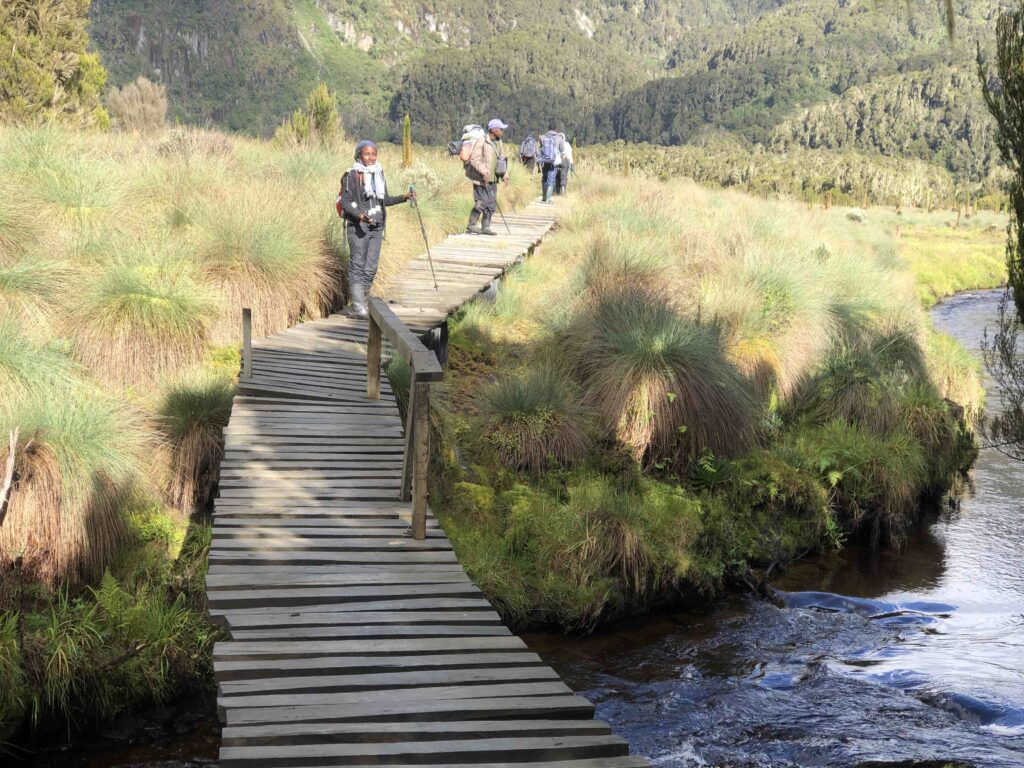
Timing the season is only half the job; you also need to put yourself in the right place on the right night. On a typical seven-day trek, the middle nights are the ones that matter. On the Central Circuit Trail, the Bujuku Valley and the Kitandara basin are the natural stargazing camps, at roughly 3,980 and 4,020 metres, both above most haze and both offering open horizons framed by the peaks. On our 7-day Margherita Peak climb and the 8-day Kilembe Trail expedition, these camps fall on the third to fifth nights, so the best move is to time your departure so that they land in the new moon week. If the new moon is on 4 June, for example, starting a couple of days beforehand puts your high camps close to the darkest nights.
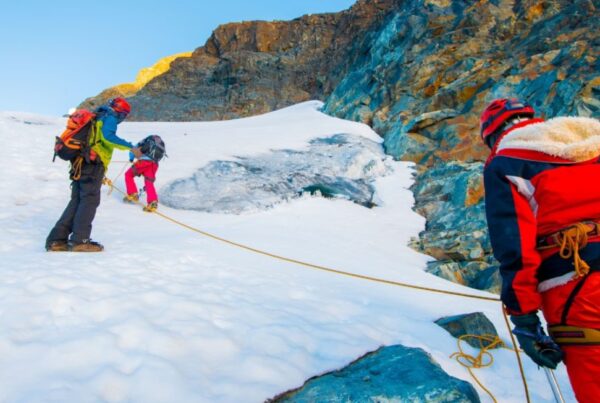
One piece of advice comes from experience rather than photography. Do not sacrifice your sleep the night before summit day. The push to Margherita Peak begins in the early hours from Elena Hut at around 4,540 metres, and it demands you be rested, warm and acclimatised, as described in our guides to the final push and the glacier crossing. Take the long, cold, sleep-costing star sessions at Bujuku or Kitandara, where you can go to bed soon afterwards, and keep the night before the summit short. Your guide can advise on the timetable, and any movement around camp in the dark should be with your guide, since the terrain is boggy and slippery. Sensible acclimatisation is what makes any of this achievable.
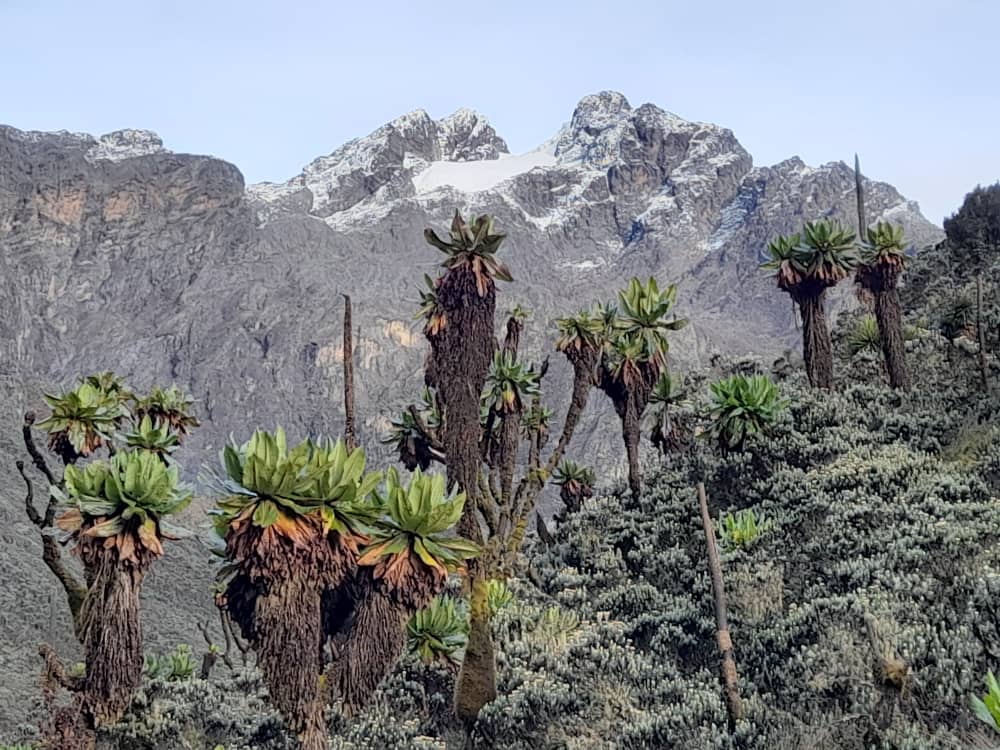
You do not need to attempt the summit to photograph the night sky. The 4-day Mutinda Lookout trek reaches roughly 4,000 metres on the Kilembe Trail with sweeping views and dark skies, and it makes an outstanding astrophotography objective for people who do not want the technical commitment of a glacier climb, as does the wild camping on the Bukurungu Trail, where the high lakes sit under some of the darkest skies in the range. Lower forest camps, by contrast, are shaded by canopy and cloud and are far less rewarding for the night sky. For the wider routes, compare our Central Circuit and Kilembe Trail guide, and use the Rwenzori Mountains map to picture where the camps sit relative to the peaks.
Practical Notes for Shooting at Altitude
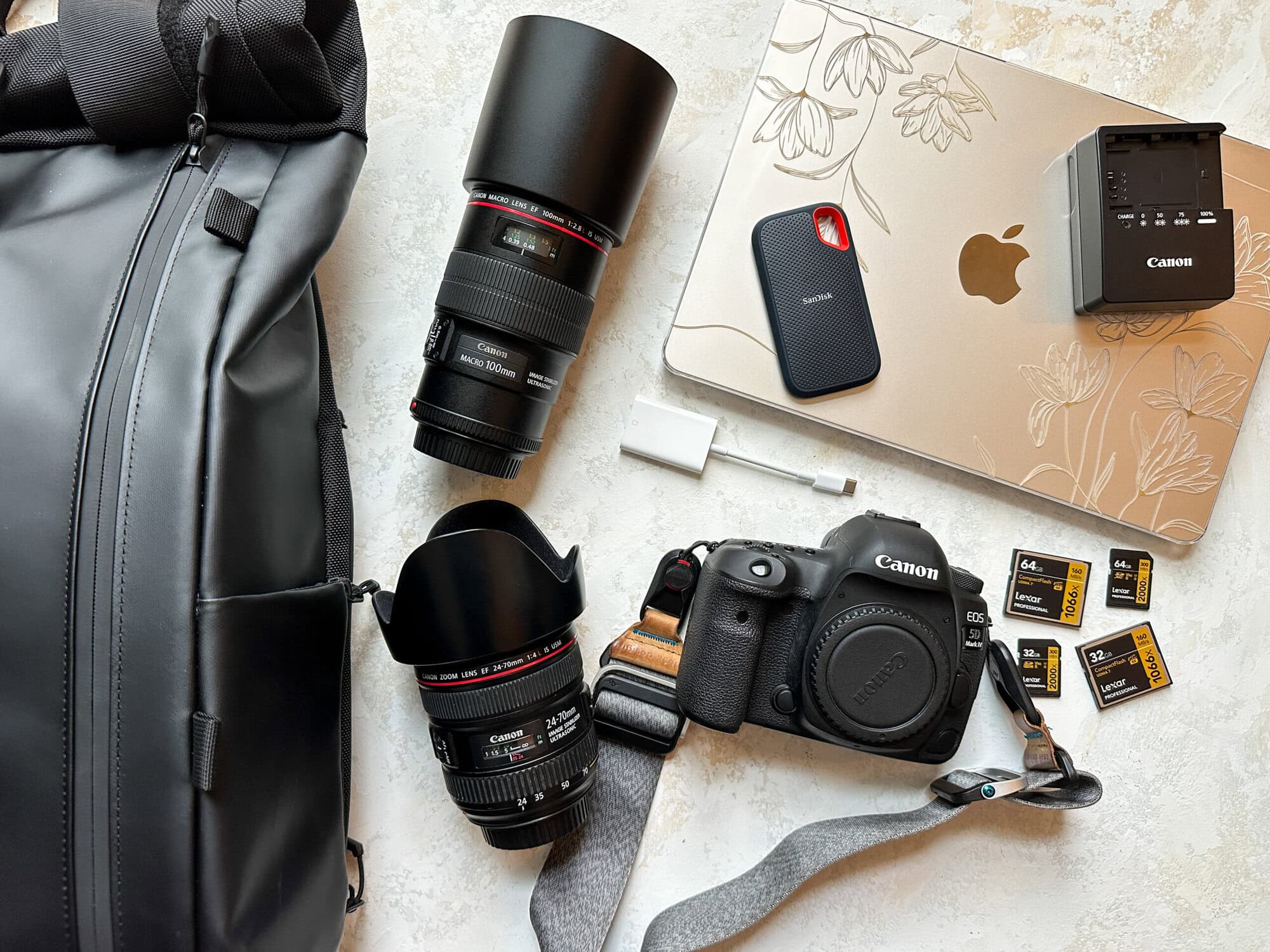
A few conditions shape any Rwenzori night shoot. Temperatures above 4,000 metres regularly fall below freezing, which drains camera batteries quickly, so keep spares warm in an inside pocket. Condensation is a constant threat in such humid air; a lens hood, a warm bag and, if you have one, a lens heater help, and it is worth letting the camera adjust slowly to temperature changes rather than moving between a warm hut and the freezing air. A sturdy tripod is essential on soft ground and in wind, and a fast wide-angle lens in the 14 to 24 millimetre range is the standard tool, which is discussed in our guide to the best camera gear for a Rwenzori trek and in the broader Rwenzori photography guide.
Your personal warmth matters as much as your camera’s. Standing still for long exposures at altitude is cold work, so pack accordingly using our Rwenzori packing list, and read the advice on how to stay warm at altitude. Use a red headlamp setting so you do not ruin your own or other trekkers’ night vision, keep hut lights off during exposures where possible, and carry a rain cover for the camera even when the sky looks clear. The cost of a trek that puts you in the right camps on the right nights is covered in our cost to climb the Rwenzori Mountains guide.
Common Questions About Timing and Planning
Photographers often ask whether it is worth going in the wet season. It can be, if you are flexible. The wetter months bring fewer trekkers and an atmospheric mountain, and clear nights do happen, but you should build in spare nights and accept that some sessions will be lost. If your priority is the Milky Way and you have limited days, the dry months from June to August give the best odds. Others ask whether a short trek is enough. It can be, provided it reaches an open, elevated camp, which is why the Mutinda route works well. If you are interested in how the mountain looks by day as well, the Rwenzori glaciers and the five vegetation zones reward your camera just as much once the sun comes up, and our comparison of what makes the Rwenzori different from other African trekking destinations explains why the setting is so unusual.
Frequently Asked Questions About Astrophotography on the Rwenzori
What is the best time of year for astrophotography on the Rwenzori Mountains?
The best time is June to August, during the dry season, when the galactic core of the Milky Way is high in the sky for much of the night. Within those months, plan your nights for the week around the new moon, when the sky is darkest. December to February also offers reliable skies, though without the galactic core.
Which month is best for photographing the Milky Way in the Rwenzori?
June and July are the strongest months, because the galactic core is well above the horizon during the dark hours and the weather is in its drier season. August is nearly as good. The core is also visible from February to May and in September, but with either less time above the horizon or a higher risk of cloud.
Can you see the Milky Way from the Rwenzori all year?
You can see the Milky Way band in any month, but its bright galactic core is visible during the dark hours only from roughly February to October. From November to January the core is below the horizon at night, although the winter constellations, star trails and the southern star fields remain excellent subjects.
What moon phase is best for astrophotography on the Rwenzori?
The new moon, and the few nights either side of it, is best for the Milky Way, because there is no moonlight to wash out the faint detail. A full moon is not wasted, however; it lights the glaciers and peaks beautifully and suits moonlit landscape photography. Check dates on a moon-phase calendar when you plan your trek.
Is the Rwenzori too cloudy for astrophotography?
Not always, but cloud is the main risk. The Rwenzori get rain in every month, so you should expect some cloudy nights. The dry seasons from December to February and June to August give better odds, and the sky often clears late at night or before dawn. Building a few spare nights into your itinerary improves your chances.
How many hours of darkness are there on the Rwenzori?
Because the mountains sit on the equator, night length hardly changes through the year, and you get roughly nine hours of full astronomical darkness in every season. That means the choice of month is about weather, the moon and the position of the Milky Way, not the length of the night.
Which camp is best for astrophotography on the Rwenzori?
The Bujuku and Kitandara camps, at around 4,000 metres on the Central Circuit, offer open horizons and dark skies, and the Kitandara Lakes can give star reflections on still nights. Elena Hut is closest to the Stanley Plateau but is best kept for rest before summit day. Mutinda Camp on the Kilembe Trail is an excellent option for non-summit trekkers.
Do I need to climb Margherita Peak to photograph the stars?
No. You can take excellent night-sky images from camps such as Mutinda, Bujuku and Kitandara without attempting the summit. If you also want the summit, choose an itinerary long enough to acclimatise properly and save your sleep for the night before the climb.
Is light pollution a problem on the Rwenzori?
Very little. The upper camps are remote and high, and the glow of nearby towns such as Kasese is hidden behind the ridges. The main obstacles to a dark sky are cloud and moonlight, not artificial light, so keep your own headlamp on a red setting and avoid hut lights during exposures.
How cold does it get at night for astrophotography?
Above roughly 4,000 metres, night temperatures regularly fall below freezing. Batteries drain faster and condensation forms easily, so keep spares warm, protect your lens, and dress for standing still. Our packing and warmth guides explain what to bring.
Ready to Photograph the Mountains of the Moon Under Their Own Stars?
The Rwenzori sit under one of the finest skies on the continent, and the right timing turns a good trek into a portfolio-defining one. Tell us the month you have in mind and whether you want the summit or a lower objective, and our guides will match your dates to the new moon, choose the camps that suit your plan and design an itinerary with time for the sky.
Request a custom quote with your preferred dates, browse our Rwenzori treks and expeditions, or message a mountain guide directly on WhatsApp for honest, no-pressure advice. For anything else you want to check first, our FAQ page answers more than a hundred questions about the range. The stars above the Mountains of the Moon are waiting.