Can you see the Milky Way from Margherita Peak or the Stanley Plateau? Yes. Learn which months, moon phases and camps give the best view.
Yes, you can, and when the cloud parts it is one of the most astonishing skies you will ever stand under. From the Stanley Plateau and the summit of Margherita Peak, at 5,109 metres, the Milky Way is a dense, textured river of light that runs from one horizon to the other, with the Southern Cross, Orion or the galactic core hanging above a glacier that glows faintly under starlight. It sits on the equator, above half the atmosphere, in some of the darkest air on the continent. Nothing about the physics stands in your way.
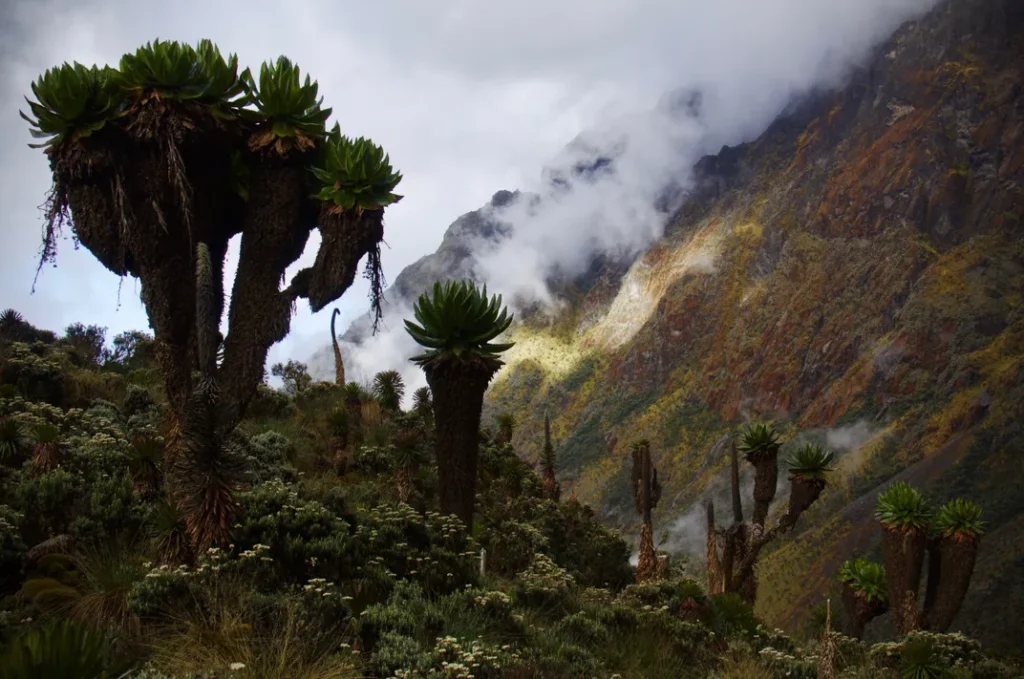
What does stand in your way is timing, and this is the part that most articles on the subject skip. Nobody camps on the plateau, and nobody photographs the sky from Margherita’s summit at midnight. You reach both in the small hours of summit day, cold, roped, wearing crampons, with a headlamp lighting a few metres of ice. Whether the Milky Way is above you during that window depends entirely on the month of your climb, and whether you can see it at all depends on the cloud. This guide explains exactly what you will see, which months put the galactic core above the Stanley Plateau on summit night, what to expect from the sky at altitude, and how to plan a climb so that the stars are part of the story. For the wider question of when to go for astrophotography in general, our guide to the best time of year for astrophotography on the Rwenzori Mountains covers the whole calendar; this article focuses on the summit and the plateau.
The Short Answer: Yes, on a Clear Night, and the Month Matters
You can see the Milky Way from both the Stanley Plateau and Margherita Peak whenever the sky is clear and the moon is not bright. On summit night you are walking in darkness for the first several hours, so the stars are simply there, overhead, for as long as the cloud allows. The galactic core, the bright, dusty centre of our galaxy that photographers chase, is high above the plateau before dawn in roughly March to June, sinking toward the horizon in July, and absent from the pre-dawn sky from August to January. In those other months the sky is different but still magnificent, with the Southern Cross, Orion and the fainter arms of the Milky Way. The main enemy is cloud rather than season, because the Rwenzori are among the wettest mountains in Africa.
What the Milky Way Looks Like From the Top of the Rwenzori
Three features make the view exceptional. The first is altitude. At 5,109 metres you stand above roughly half of the atmosphere, and above nearly all of the moisture and haze that dim the sky at lower levels. Stars are sharper and the faint structure of the Milky Way, the dark dust lanes that split its bright band, is easier to pick out by eye. The second is darkness. The Rwenzori are remote, with no large town within sight, and the glow of Kasese is hidden behind the ridges, so there is almost no artificial light on the plateau. The third is latitude. The mountains sit almost exactly on the equator, so the whole sky passes overhead across the year, and the galactic core reaches roughly 60 degrees above the horizon at its highest instead of skimming the treeline as it does for viewers in Europe or North America.
On the right night you will see the Milky Way not as a smudge but as a structure. The bright band runs in a great arc, split down its length by the dark rift of interstellar dust. When the core is up, the Sagittarius and Scorpius region glows warmly and unevenly, with dust lanes that seem to hang in front of it. The Southern Cross and its neighbours, Centaurus and Carina, are high in the south, a sight many trekkers from the northern hemisphere have never had. On some nights a faint green airglow sits low near the horizon, and in certain seasons the zodiacal light, a soft cone of sunlight scattered by dust, rises from the east before dawn. Below you, the ice of the Stanley Glacier reflects a pale gleam, and the dark shoulders of the surrounding peaks are stark against the stars. Combined with the cold, the silence and the effort of being there, it is an extraordinary experience.
The Timing Catch: When You Are Actually on the Plateau in the Dark
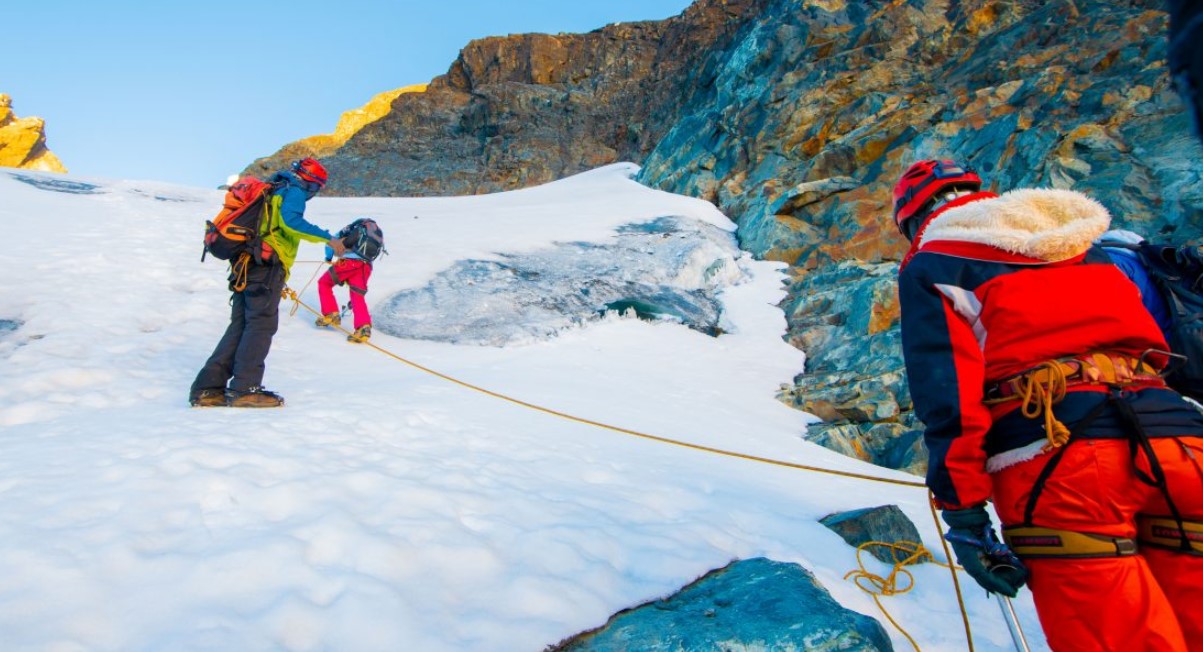
The reason this question deserves a careful answer is the shape of summit day. On the classic route, the push to Margherita Peak begins in the early hours, typically at two or three in the morning, from Elena Hut at around 4,541 metres. You dress in the cold hut kitchen, your guide checks your equipment, and you move out under headtorches. The ground below the Elena Glacier is crossed in darkness, the glacier itself is climbed on fixed ropes with crampons and an ice axe, and you emerge onto the plateau while the sky is still dark, with first light greying the east. Our guides to the final push to Margherita Peak, the glacier crossing and how technical the climb is describe the sequence in detail. In practice, you are under a full night sky for the first hours of the climb, and you are on the Stanley Plateau itself as the stars begin to fade, so the sky you see depends on what is above the horizon between roughly two and five in the morning.
That is different from the evening sky most stargazing guides describe, and it changes which months are best. The galactic core rises earlier each month through the year. In February it is only beginning to rise before dawn. Through March, April and May it climbs higher in the pre-dawn hours, reaching its best in April, when it stands close to due south and roughly 60 degrees up around four in the morning. In June it is high in the first half of the summit push and sinking toward the west by first light. By July it is low in the west and setting before dawn, and from August to January it is absent from the pre-dawn sky altogether. The table below summarises what is overhead during a typical summit push. The times are approximate local solar time, and on a watch set to East Africa Time you should add about an hour.
| Month | Sky overhead on summit night (about 3 to 5 am) | Verdict |
| December to January | Southern Cross, Centaurus and Carina high in the south; core barely rising at first light | Superb southern sky, no core |
| February | Core rising in the south-east and climbing toward dawn | Good, in the drier season |
| March | Core high in the south-east to south, roughly 40 to 50 degrees | Excellent sky, wetter weather |
| April | Core near its highest, close to due south and about 60 degrees up | Best core, wet weather |
| May | Core high in the south to south-west | Excellent sky, wet weather |
| June | Core high early in the push, sinking west by first light | Best balance of sky and dry weather |
| July | Core low in the west early on, setting by about 4 am | Fair; drier weather |
| August to September | Core gone; Orion and the Pleiades rising in the east | Good clear-sky odds, no core |
| October to November | Orion, Sirius and Gemini high; zodiacal light in the east before dawn | Different sky, wetter weather |
Read plainly, the numbers say something a little counterintuitive. The months with the best pre-dawn galactic core, March to May, are also the wetter months, when cloud is more likely. June offers the best balance for a summit-night Milky Way, because the core is still high in the first half of the push and the weather is in its drier season. February is another good compromise, with a rising core and drier skies. If the core matters less to you than reliability, the drier months of December, January and July to August give the best chance of a clear sky, and that sky will be full of stars even without the core. For the seasonal weather picture, see our guide to the best time to visit the Rwenzoris and our piece on the climate of the Rwenzori Mountains.
The Moon: The Other Half of the Equation
A bright moon washes out the Milky Way, so the new moon week is the best time for a summit-night sky. The new moon falls on 6 April, 6 May, 4 June and 4 July 2027, in universal time, so a local date can differ by a day. The 4 June 2027 new moon is a particularly attractive target, since it coincides with the drier season and a core that is high for the first part of the summit push. The 6 May 2027 new moon falls close to the peak of the Eta Aquariid meteor shower, which is best seen from tropical latitudes in the hours before dawn, though May weather is a gamble; the American Meteor Society calendar lists exact shower dates each year. You can check moonrise and moonset for any date at timeanddate.com, and use Stellarium Web to preview exactly what will be overhead on your summit morning.
A full moon is not a wasted night. Moonlight turns the Stanley Glacier silver and lets you climb with far less reliance on your headlamp, and some of the most striking mountain images are taken by moonlight. It simply gives you a different sky, a landscape rather than a Milky Way one.
Can You Photograph the Milky Way From the Summit or the Plateau?
You can, but you should be realistic about it, and safety comes first. On summit night you are on a glacier, roped to your guide, in crampons, in temperatures well below freezing and with cold fingers and limited oxygen. Stopping to set up a tripod and take long exposures on the ice is not always appropriate, and it is never something to do without your guide’s agreement. The conditions that make the sky wonderful also make the climb demanding, and the priority is a safe ascent and descent, as our guide to how hard the Rwenzori trek is makes clear.
In practice, the best results are usually one of three. The first is a handheld or braced short exposure at a planned rest stop, with a fast wide-angle lens, capturing the star field over the ridge line. The second is a shot at the plateau as the sky lightens, when the stars, the last of the Milky Way and the first colour of dawn share the frame, which is often the finest image of the trip. The third, and often the most productive, is to save the long, tripod-based Milky Way sessions for a camp such as Bujuku or the Kitandara Lakes, where you can set up in comfort and go to bed soon afterward. Our guide to astrophotography from the Stanley Plateau covers technique and settings, and the best camera gear for a Rwenzori trek explains what to carry, including spare batteries kept warm in an inside pocket.
What Can Stop You From Seeing It
Cloud is the main risk, and it deserves respect. The Rwenzori catch moist air from the Congo basin and the Albertine Rift, and cloud is a normal feature of the range in every month. A clear morning on the plateau is never guaranteed, which is why the range earned its ancient reputation for being wrapped in mist. The odds improve in the drier seasons, and it is often clearer late at night and before dawn than in the evening, but a whole trek can pass without a perfectly clear sky. Building a few high-altitude nights into an itinerary, rather than relying on a single summit push, is the best way to improve your chances.
Altitude affects you as well as the sky. Night vision is one of the first senses to weaken in thin air, so at very high altitude your eyes may not pick up the faintest detail quite as well as they would at sea level, and a headlamp switched on even briefly resets your dark adaptation. The trick is to switch to a red light where you can, look away from bright sources, and give your eyes a few minutes to adjust. Cold, tiredness and the effort of the climb will also take attention from the sky, so if the stars matter to you, keep some energy in reserve for looking up, and be sure your acclimatisation is sound; our acclimatisation guide and the article on altitude sickness in the Rwenzori Mountains explain how to prepare.
How to Plan a Climb So the Stars Are Part of It
If a Milky Way summit is your goal, plan the month and the moon first, then choose an itinerary with enough time on the high mountain. Give yourself the best chance by picking a new moon week in June for the best balance of dry weather and a high core, or in March to May if you are willing to risk more cloud for a better core. Choose a longer itinerary so that a single cloudy night does not end your chances. The 7-day Margherita Peak climb via the Central Circuit and the 8-day Kilembe Trail expedition each give several nights above 3,900 metres, and the 8-day three-peaks trek and 13-day six-peaks expedition give more. Each additional night at altitude is another chance for the sky to open, and the extra days also raise your summit success rate. The faster 4-day and 5-day summit itineraries leave less margin.
Whichever route you choose, dress for it. Standing on the plateau in the hour before dawn is a cold experience, and our guides to staying warm on the summit and the packing list for a Rwenzori hike cover the layers, gloves and spare batteries you will want. Comprehensive travel insurance for the Rwenzori is essential, and the cost of a Rwenzori trek is set out in full on our site.
Seeing the Milky Way Without the Summit
The summit is not the only route to a spectacular sky, and for many photographers it is not the best. The high camps on the Central Circuit Trail, especially Bujuku in the Bujuku Valley and the Kitandara Lakes at about 4,023 metres, offer open horizons, still water for reflections and the chance to shoot in the early evening and go to bed at a sensible hour. The 4-day Mutinda Lookout trek on the Kilembe Trail reaches around 4,000 metres with dark skies and no glacier travel, and the wild camps of the Bukurungu Trail sit beside high alpine lakes under some of the darkest skies in the range. Together they mean that a clear night at altitude, rather than a summit, is what you actually need to see the Milky Way.
If you want to compare the mountain’s sky and scenery with other African trekking destinations, our article on what makes the Rwenzori different explains why it stands apart, and the Rwenzori Mountains map shows how the camps and peaks fit together
Frequently Asked Questions About the Milky Way From Margherita Peak and the Stanley Plateau
Can you see the Milky Way from Margherita Peak?
Yes. On a clear night, the Milky Way is spectacular from Margherita Peak at 5,109 metres, thanks to the altitude, the dry thin air and the lack of light pollution. In practice, you are on the summit ridge around dawn, so what you see depends on the time and month of your climb, and on cloud.
Can you see the Milky Way from the Stanley Plateau?
Yes. The Stanley Plateau is a high, open, glaciated area with a wide horizon and very dark skies, so on a clear night the Milky Way is excellent. You normally cross the plateau in the hours before sunrise on summit day, when the night sky is still overhead.
What is the best month to see the Milky Way core from the Stanley Plateau?
For a summit-night sky, March to May put the galactic core highest in the pre-dawn hours, with April the peak. June offers the best balance because the core is still high early in the summit push and the weather is in its drier season. From August to January the core is not up before dawn, though other parts of the Milky Way are.
Is the Milky Way visible from Rwenzori all year?
Some part of the Milky Way is visible on any clear, moonless night in every month, but the bright galactic core is visible during the dark hours only from roughly February to October. In other months, you see the Southern Cross, Orion and the fainter northern arms of the galaxy instead.
What time of night should I look for the Milky Way on summit day?
The summit push usually starts around two or three in the morning, and true darkness lasts until about five, local solar time. That is the window in which the Milky Way is visible on the plateau. Astronomical twilight begins roughly an hour before sunrise, when the stars begin to fade.
Can I take photos of the Milky Way on summit night?
You can, but safety and the demands of glacier travel come first. Short handheld or braced exposures at planned stops are realistic, and dawn images of the last stars are often the best. For long-exposure sessions with a tripod, use a calmer camp such as Bujuku or the Kitandara Lakes, and always take advice from your guide.
Is the sky clear enough on the Rwenzori to see the Milky Way?
Sometimes. The Rwenzori are among the cloudiest mountains in Africa, and clear skies are never guaranteed. The dry seasons from December to February and June to August give better odds, and the sky often clears late at night or before dawn. Longer itineraries with more nights at altitude increase your chances.
What moon phase is best for seeing the Milky Way on the Rwenzori?
The new moon and the few nights either side of it are best, since moonlight washes out the faint structure of the Milky Way. Under a full moon you will see fewer stars but the glaciers and peaks glow beautifully, which is good for landscape photography.
Does altitude make the Milky Way look better?
Yes, generally. Above 4,000 metres there is less atmosphere, moisture and haze between you and the stars, so the sky looks darker and sharper and the Milky Way’s dust lanes are easier to see. Very high altitude can slightly reduce your own night vision, so give your eyes time to adjust and use a red headlamp.
Do I need to reach the summit to see the Milky Way?
No. Camps such as Bujuku, Kitandara, Mutinda and the Bukurungu lakes offer superb skies on a clear night, and you can enjoy them without a technical glacier climb or an early-morning push.
Ready to Stand Under the Milky Way on Mount Stanley?
Few places on earth combine a glacier, the equator, thin dry air and a truly dark sky, and the Rwenzori are one of them. Tell us the month you are considering and whether the summit or a high camp is your goal, and our guides will match your dates to the moon, choose the itinerary that gives you the most nights under the stars and prepare you for the cold.
Request a custom quote with your preferred dates, browse the full range of Rwenzori treks and expeditions, or message a mountain guide directly on WhatsApp for honest advice with no sales pressure. If you would like to read more first, our FAQ page answers over a hundred questions about the Rwenzori. The Milky Way above Mount Stanley is waiting.