South African trekker planning a Rwenzori climb? Direct JNB-Entebbe flights, no jet lag, e-Visa steps, and full ZAR costs from an expert guide.
I’ve guided trekkers from six continents into the Rwenzori’s glaciated interior over the past decade, and there’s a pattern I notice every time a South African client’s enquiry lands in my inbox: they’ve usually already worked out, correctly, that this is one of the easiest serious mountain expeditions in the world for them to reach. No other significant international market has it this good. There’s a direct, non-stop flight from Johannesburg to Entebbe, no meaningful time difference to adjust to, and an entry process that’s genuinely straightforward compared with what trekkers from Europe, North America, or Australia have to navigate. And yet, remarkably, South Africans remain underrepresented on this mountain relative to how well the logistics suit them.
This guide exists to close that gap properly. It’s written specifically for the South African trekker: the actual flight routing and timing from Johannesburg, Cape Town, and Durban, what the e-Visa process looks like with a South African passport, how to budget the whole trip in rand, and how to choose between the Rwenzori’s routes and multi-peak options once you understand just how accessible this UNESCO World Heritage Site really is from home.
Why the Rwenzori Makes Unusual Sense for South African Trekkers
Most of the world’s classic mountain trekking destinations, the Himalaya, Patagonia, the European Alps, involve a long-haul flight and a painful time-zone adjustment for a South African traveller. The Rwenzori is the exception, and it’s worth stating plainly why. Uganda sits almost directly north of South Africa on the same longitudinal band, so the flight is a straightforward continental hop rather than an intercontinental slog, and the time difference between Johannesburg and Entebbe is a single hour. There is no jet lag to plan around here, which is a genuine rarity for a trek that ends on a glacier at 5,109 metres.
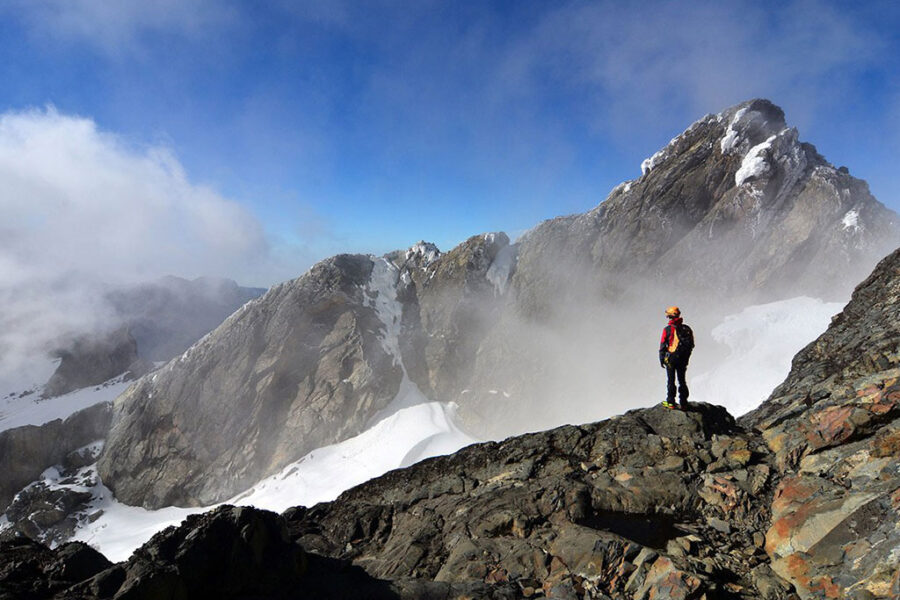
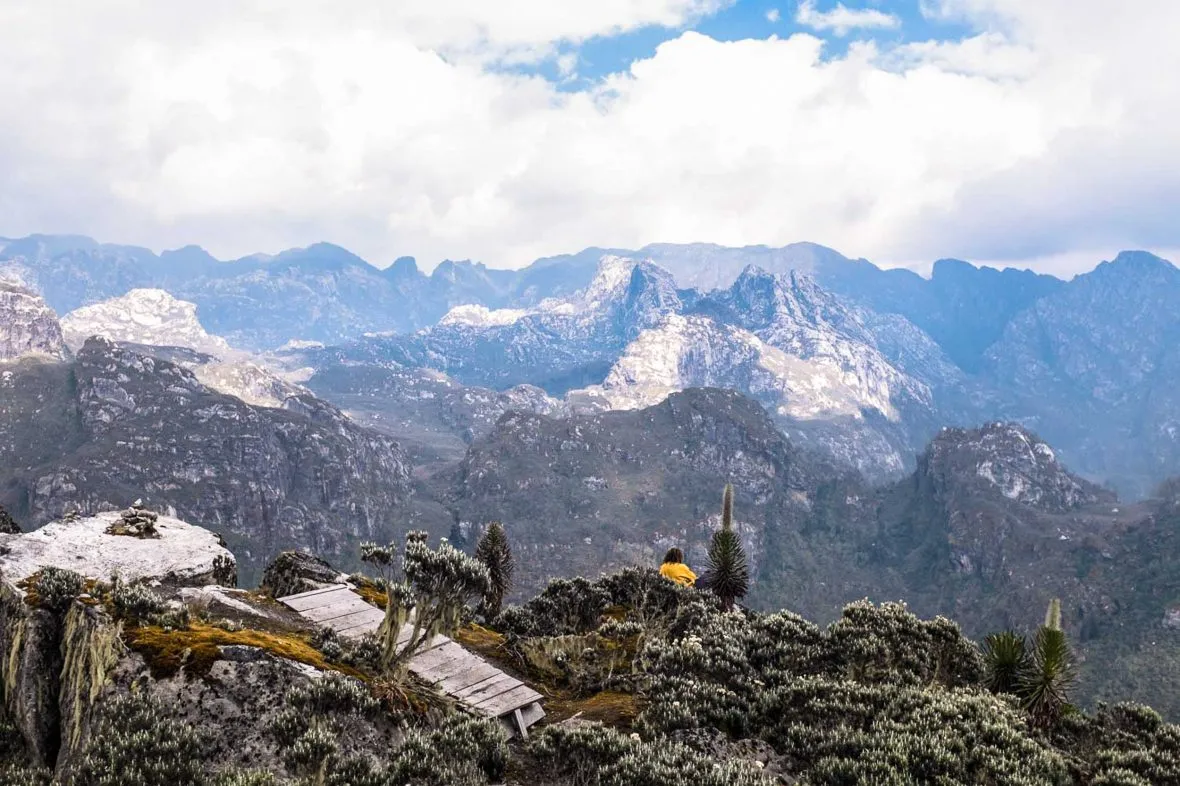
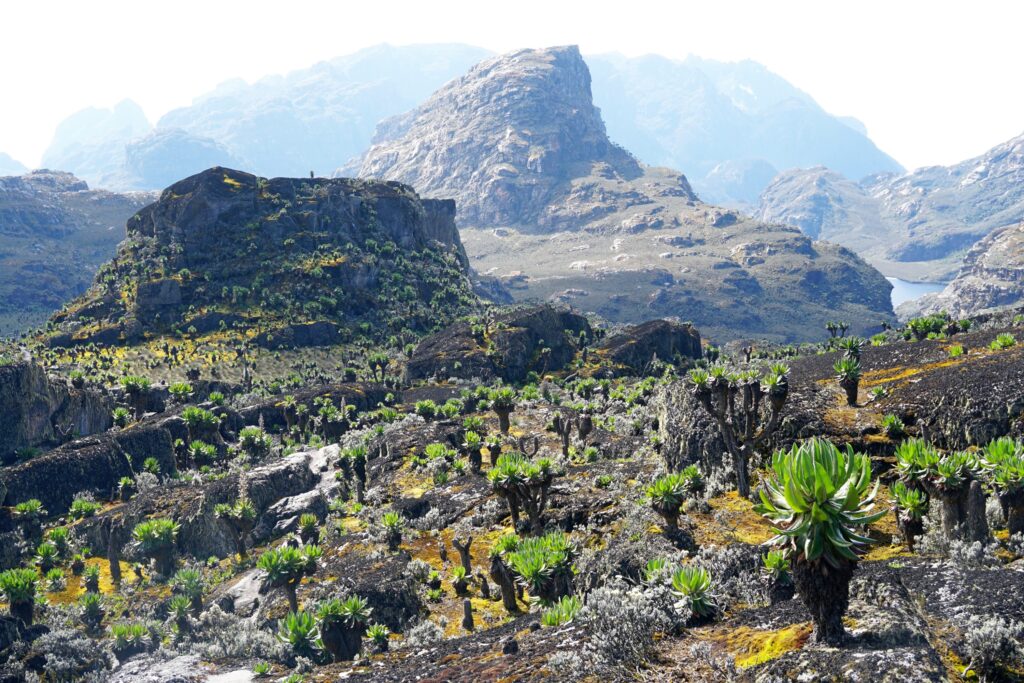
Beyond the logistics, the mountain itself offers something South African hikers who know the Drakensberg or Cederberg well will find genuinely different: a UNESCO World Heritage Site nicknamed the Mountains of the Moon, with five distinct vegetation zones stacked on top of each other from tropical rainforest to permanent glacier, and a summit, Margherita Peak on Mount Stanley, that is Africa’s third-highest point and requires actual roped glacier travel to reach. It’s a mountain that receives a few thousand visitors a year against Kilimanjaro’s tens of thousands, and on the Central Circuit Trail it’s entirely normal to go a full day without seeing another trekking group. I’ve written in more detail about why I consider this the best mountain hike in Africa, and for South Africans weighing it against Kilimanjaro, our comparison of whether the Rwenzori is actually harder than Kilimanjaro is essential reading before you commit. Our full collection of Rwenzori facts rounds out the picture of what makes this range genuinely singular on the continent.
Getting There: Flights from South Africa to the Rwenzori
The Johannesburg Advantage: A Direct, Non-Stop Flight
This is the single biggest logistical advantage South African trekkers have over almost every other international market booking this trip. Uganda Airlines operates daily non-stop flights between O.R. Tambo International Airport in Johannesburg and Entebbe International Airport, with a flight time of around four hours and fifteen minutes. There is no connection to manage, no overnight layover in a Gulf hub, and no second full day lost to travel. Kenya Airways, Ethiopian Airlines, RwandAir, and South African Airways also serve the route with a single connection through Nairobi, Addis Ababa, or Kigali if the non-stop schedule doesn’t line up with your dates, and these connecting options are frequently competitive on price, sometimes even cheaper than the direct service depending on when you book.
For Cape Town and Durban-based trekkers, the practical routing is a short domestic hop to Johannesburg to connect onto the Entebbe flight, which still keeps the total door-to-door travel time well under a working day. Compare that to a European trekker’s eight-plus-hour flight or an Australian trekker’s thirty-hour, multi-stop haul, and it becomes clear why a South African passport holder is, logistically, better positioned to reach this mountain than almost anyone else in the world.
No Jet Lag, No Wasted Acclimatisation Day
Uganda runs on East Africa Time, one hour ahead of South African Standard Time year-round, since neither country observes daylight saving. That means a South African trekker can land in Entebbe in the late afternoon and be functionally on local time before dinner, none of the multi-day recovery that trekkers arriving from other continents have to build into their schedule. It’s a genuine planning advantage: every day of your trip can go toward the mountain rather than toward recovering from the flight to get there.
From Entebbe to Kasese: Reaching the Trailhead
Kasese, the gateway town for both the Central Circuit and Kilembe trailheads, sits roughly 380 kilometres west of Entebbe. Aerolink Uganda flies this leg in about an hour, which is what I recommend to almost every client regardless of where they’re flying in from, since it turns a potential travel day into a short morning connection. The overland alternative via Mbarara or Fort Portal takes six to eight hours by road and is the more budget-conscious option if you’d rather see the Ugandan countryside than fly over it. Our full guide to getting to the Rwenzori Mountains covers both routes in detail, and the Kasese travel guide for trekkers tells you what to expect once you land, including where to stay the night before your trek begins.
Visa, Entry, and Health Requirements for South African Passport Holders
South African citizens require an approved Uganda e-Visa before travel; there is no visa-on-arrival exemption, so this has to be sorted well ahead of your departure date. Apply through Uganda’s official electronic visa portal, upload a clear passport scan and a recent passport-style photograph, and budget on the application taking several working days to process, so don’t leave it to the week before you fly. The standard single-entry tourist e-Visa costs around USD 50, and if your trip is going to extend into gorilla trekking in Bwindi or a wider Uganda-Kenya-Rwanda itinerary, the East Africa Tourist Visa, priced at USD 100, covers all three countries on one multiple-entry document. Our dedicated Uganda visa guide for trekkers walks through the full application step by step, and if you’re combining the climb with time in Bwindi or Queen Elizabeth National Park, our page on combining a Rwenzori trek with gorilla trekking and safari explains how to sequence it properly.
A yellow fever vaccination certificate is a strict, non-negotiable entry requirement for South African travellers to Uganda, so get vaccinated well ahead of your trip and carry the physical certificate, a phone photo won’t satisfy an immigration or airline check. Malaria prophylaxis is strongly recommended for the lower-altitude stages of the trip, and comprehensive travel insurance that explicitly covers high-altitude trekking and medical evacuation is essential; South African medical aid schemes generally do not cover overseas evacuation, so this needs to be a separate policy rather than an assumption. Our Rwenzori travel insurance guide sets out exactly what cover to look for.
It’s also worth being straightforward about the wider regional picture, since I get asked about it constantly by South African clients who follow the news from the region closely. Uganda’s own 2026 Ebola outbreak, caused by the Bundibugyo strain, was declared officially over by the Ministry of Health at the end of July 2026, with no new domestic cases for well over a month before that declaration. The larger outbreak across the border in the DRC has taken longer to bring under control, and international advisories for the wider region have shifted more than once through the year as a result. Travel advisories are updated regularly as situations evolve, so before you book, check the current guidance through the South African High Commission in Kampala rather than relying on anything you read here or elsewhere that isn’t dated to the week you’re travelling.
Choosing Your Route: What Suits a South African Trekker’s Schedule
Because the flight itself costs you so little time, South African trekkers have a genuine advantage in route flexibility that trekkers from further afield simply don’t have. A long weekend extended by a couple of annual leave days is enough to make a short introductory trek genuinely worthwhile, while trekkers with a full week or two free can go after the complete Central Circuit experience or a multi-peak expedition without the trip feeling disproportionately weighted toward travel time.
The Central Circuit Trail is the benchmark route for good reason: a roughly 58-kilometre loop out of Nyakalengija that crosses all five of the mountain’s vegetation zones and gives direct access to Mount Stanley, Mount Speke, and Mount Baker from the same set of high camps. Our detailed comparison of the Central Circuit against the Kilembe Trail is worth reading before you commit either way. The Kilembe Trail, approaching from the southern Nyamwamba Valley, is the quieter alternative with its own camp system, and our page on exactly how the two routes differ sets out the practical distinctions in full.
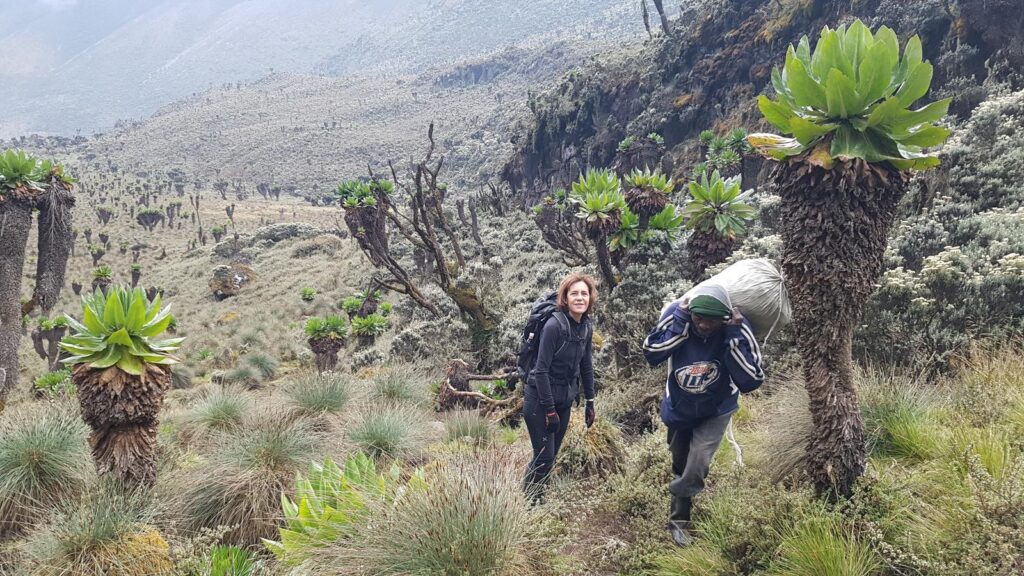
If your priority is genuine wilderness and you’ve got the days to spare, the Bukurungu Trail threads between four of the range’s alpine lakes on the mountain’s northwestern flank and sees so few trekkers that entire days can pass without encountering another party; our Rwenzori Mountains map shows exactly how it sits relative to the two main trails. For South Africans working with a shorter window, perhaps a long weekend tacked onto a Kampala work trip or a family visit, the 2-day Mahoma Loop to Lake Mahoma and the shorter Rwenzori day hike both deliver a genuine taste of the mountain’s forest zones without demanding a full week away.
For trekkers who want to make the most of the easy flight access, and once you’ve experienced how straightforward getting here actually is, many South African clients start planning a return trip almost immediately, the range’s five further named summits beyond Margherita are all realistic multi-peak additions: Mount Speke, Mount Baker, Mount Emin, Mount Gessi, and Mount Luigi di Savoia, all detailed on our peaks overview page. Extending our standard 6-day Central Circuit Margherita Peak trek by a few extra days to bag a second summit is one of the most common upgrades I discuss with South African clients once the short flight time is factored into the maths.
When to Trek: Uganda’s Dry Seasons and the South African Calendar
The Rwenzori has two genuine dry windows: mid-December through mid-February, and June through August. Trail conditions, visibility on the passes, and safety on the glacier crossing are all meaningfully better within these windows, though this remains one of the wettest mountain ranges on the continent regardless of season, so proper wet-weather gear is never optional.

For South African trekkers, the June to August window overlaps neatly with the school winter holidays and a cooler stretch at home, making it a natural pairing for family logistics, while the December to January window sits right at the South African summer holiday period, when many people already have extended leave booked. Our month-by-month trekking guide and dedicated best time to visit article both go into this in full seasonal detail, and if you’re pattern-matching to the kind of cold you’d expect from a Drakensberg winter, our article on Rwenzori in winter explains why the upper mountain runs genuinely glacial year-round rather than following a seasonal winter pattern at all.
How Many Days to Set Aside for the Whole Trip
Because the travel component is so light, the total trip length for South African trekkers is driven almost entirely by the trek itself rather than by flight recovery. A standard 6-day Margherita Peak Central Circuit climb realistically needs about nine or ten days door to door from Johannesburg: a travel day each way, a day either side for the Kasese transfer and trek briefing, the six days on the mountain, and a genuine spare day built in as a weather and fatigue buffer rather than treated as a luxury. That’s a trip that fits inside a normal block of annual leave far more comfortably than the equivalent journey does for a European, American, or Australian trekker. Our booking guide covering exactly what’s included in a standard package is the right next step once you’ve settled on your dates.
Fitness and Preparation Before You Fly
None of the Rwenzori’s standard routes are technically extreme in the way an Alpine ice route is, but the combination of persistent mud, root-tangled trail, sustained daily elevation gain, and a genuine glacier crossing near the summit means fitness preparation matters more here than it does on a straightforward walk-up peak. South African trekkers with Drakensberg or Cederberg hiking experience already have a solid baseline, but the sustained multi-day load-bearing and the altitude component both need specific preparation. Our complete fitness guide for the Rwenzori lays out training timelines matched to route length, and the companion piece on whether you need to be very fit answers the question honestly. Read our field-tested trekking tips and our guide on whether and how to acclimatise before you arrive properly before departure.
What a Rwenzori Trek Costs a South African Trekker
South African trekkers researching this trip are often pleasantly surprised once they see the numbers laid out, since the flight cost, usually the dominant expense for trekkers from other continents, is comparatively modest here. Below is a realistic, itemised breakdown in South African rand for a standard six-day Margherita Peak itinerary via the Central Circuit, based on mid-range choices at each stage. Treat it as a planning baseline rather than a quote, since airfares in particular shift with season and booking window.
| Item | Typical Range (ZAR) | Notes |
| Return flights, Johannesburg–Entebbe | R 6,800 – R 12,000 | Non-stop with Uganda Airlines, or one-stop via Nairobi, Addis Ababa, or Kigali; add domestic legs from Cape Town or Durban |
| Uganda e-Visa | R 950 – R 1,100 | Apply online well ahead of departure; East Africa Tourist Visa costs roughly double if combining with Kenya or Rwanda |
| Yellow fever vaccination | R 500 – R 1,100 | Mandatory, non-negotiable entry requirement; certificate is valid for life once issued |
| Travel insurance with high-altitude and evacuation cover | R 1,800 – R 5,500 | South African medical aid typically excludes overseas evacuation, so buy this as a standalone policy |
| Domestic flight, Entebbe–Kasese (each way) | R 2,200 – R 3,200 | Or budget a road transfer instead, roughly a third of the flight cost but far slower |
| Pre/post-trek accommodation (2–3 nights) | R 1,800 – R 6,000 | Entebbe buffer night plus Kasese nights either side of the trek |
| 6-day trekking package (permits, huts, guide, porters, cook, meals on trail) | R 33,000 – R 45,000 | Full breakdown on our cost and permits pages linked below |
| Gear rental (if not bringing your own) | R 1,500 – R 4,200 | Crampons, ice axe, and cold-weather kit for the summit push |
| Guide, porter, and cook tips | R 3,000 – R 4,800 | Budget this separately from the package price; it is not usually included |
That puts an all-in trip from Johannesburg, flights included, at roughly ZAR 51,000 to 82,000 for the standard six-day summit trek, meaningfully lower than the flight-inflated totals trekkers from Europe, North America, or Australia typically face for the identical mountain experience. For the full detail behind the trekking package figure, see our dedicated pages on what it costs to climb the Rwenzori, park entrance fees and permits, and exactly what’s included when you book. If you’re working to a tighter budget, our guide to reducing Rwenzori trekking costs covers where genuine savings exist without compromising safety, and our tipping guide sets fair, realistic figures for the team who will carry you through the six days; you can read more about that team in our porters and guides guide.
Packing, Gear, and Staying Connected
You’ll move from tropical, humid rainforest to genuinely sub-zero glacial conditions and back again in the space of about four days, which surprises even trekkers who’ve prepared for it.
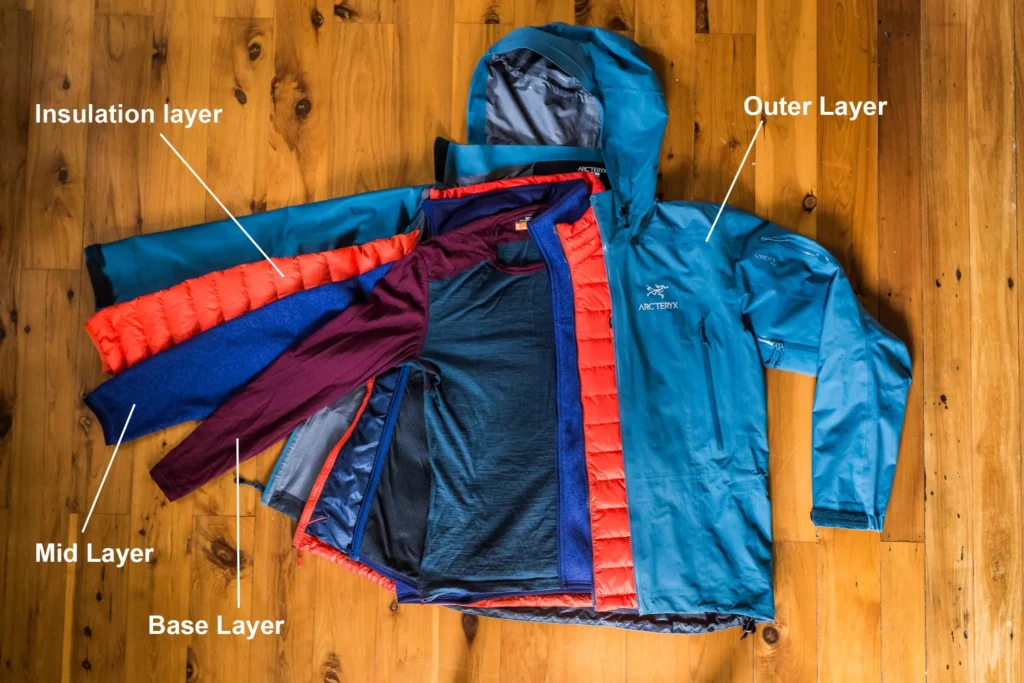
Most South African clients travel with a solid core layering system and their own boots, then rent the specialised summit-day gear, crampons, ice axe, harness, once they arrive rather than trying to carry everything from home. Our guide on whether you need to bring your own climbing gear walks through that decision, and the gear rental page lists exactly what’s available on-site and what it costs. For an honest sense of just how cold the upper mountain gets regardless of month, our Rwenzori in winter article gives zone-by-zone temperature figures. On connectivity, South Africans travelling with an MTN or Vodacom line will find both networks have a presence in Uganda through local partners, though a Ugandan SIM picked up in Entebbe or Kasese is generally the cheaper and more reliable option once you’re away from the main towns; signal disappears entirely once you’re above the lower camps regardless of provider.
Extending the Trip: Gorillas and Safari
Given how quick and affordable it is to reach Uganda from South Africa, a huge proportion of our South African clients extend beyond the trek itself. The most popular addition by far is gorilla trekking in Bwindi Impenetrable National Park, a few hours from Kasese, paired with a few days of safari in Queen Elizabeth National Park. Our page on combining a Rwenzori trek with gorilla trekking and a broader safari sets out how to sequence the two properly, and our general Uganda safaris page is worth reading if this is your first visit to the country and you want the fuller picture of what’s within reach. Whatever you add on, keep your Entebbe and Kasese accommodation properly planned for both ends of the extension, arriving back from a multi-day summit push straight into a dawn gorilla permit with no rest day in between is not a combination I’d recommend to anyone, however fit.
A Sample Itinerary: Johannesburg to Margherita Peak and Home Again
To make this concrete, here’s roughly how a ten-day itinerary looks for a Johannesburg-based trekker doing the 6-day Central Circuit Margherita Peak climb. Day 1 is a morning non-stop flight to Entebbe, arriving mid-afternoon local time with no meaningful jet lag to shake off, followed by a night near the airport. Day 2 is the short flight or road transfer to Kasese, gear check, and final trek briefing. Days 3 through 8 are the trek itself, climbing from the Nyakalengija trailhead through Nyabitaba, John Matte, and Bujuku Huts, across Scott Elliot Pass to the Elena and Kitandara high camps, the Margherita Peak summit push, and the descent back to the trailhead. Day 9 is a rest day in Kasese, genuinely worth keeping rather than rushing straight to the airport. Day 10 is the transfer back to Entebbe and the flight home, landing in Johannesburg the same evening. Trekkers adding a gorilla trekking or safari extension should expect the total trip to stretch to two weeks, still a fraction of what the equivalent itinerary costs a trekker flying in from another continent.
Frequently Asked Questions
Is there a direct flight from South Africa to Uganda for the Rwenzori trek?
Yes. Uganda Airlines operates a daily non-stop flight between O.R. Tambo International Airport in Johannesburg and Entebbe International Airport, taking roughly four hours and fifteen minutes. This makes South Africa one of the most conveniently connected international markets for reaching the Rwenzori Mountains, with no overnight layover required. Kenya Airways, Ethiopian Airlines, RwandAir, and South African Airways all offer connecting alternatives through Nairobi, Addis Ababa, or Kigali if the direct schedule doesn’t suit your dates.
How many days should a South African trekker set aside for the Rwenzori?
For the standard 7-day Margherita Peak climb via the Central Circuit, plan on nine to ten days total from Johannesburg once flights, the Kasese transfer on both ends, and a genuine rest day are accounted for. Because the flight is short and the time zone is nearly identical, South African trekkers can complete this trip inside a normal block of annual leave far more easily than trekkers flying in from Europe, North America, or Australia.
Do South Africans need a visa to trek the Rwenzori Mountains?
Yes. South African passport holders must obtain Uganda’s e-Visa online before departure; there is no visa-on-arrival option. Apply well ahead of your trip, since processing can take several working days, and budget around USD 50 for the standard single-entry tourist e-Visa. A valid yellow fever vaccination certificate is also a mandatory entry requirement and will be checked on arrival.
Is there a big time difference between South Africa and Uganda?
No. Uganda is only one hour ahead of South African Standard Time, and neither country observes daylight saving, so the gap is constant year-round. This means South African trekkers arrive essentially on local time with no jet lag adjustment needed, a genuine advantage over trekkers arriving from other continents who typically need a buffer day to recover before starting the trek.
What’s the best time of year for a South African to trek the Rwenzori Mountains?
The Rwenzori has two dry windows, mid-December to mid-February and June to August. The June to August window aligns with the South African school winter holidays, while December to January sits within the South African summer holiday period when many trekkers already have leave booked. Neither window is rain-free, this remains one of the wettest ranges on the continent, but trail and glacier conditions are meaningfully better within them.
How much does a Rwenzori trek cost for a South African trekker, all in?
For a standard six-day Margherita Peak summit trek, expect a total of roughly ZAR 51,000 to 82,000 once return flights, the e-Visa, yellow fever vaccination, travel insurance with evacuation cover, domestic transfers, the trekking package itself, gear rental, and tips for the guide and porter team are included. Because the flight from Johannesburg is short and comparatively affordable, South African trekkers typically pay meaningfully less all-in than trekkers flying from Europe, North America, or Australia for the identical mountain experience.
Can I combine a Rwenzori trek with gorilla trekking or a safari on the same Uganda trip?
Yes, and it’s an extremely popular combination given how easy Uganda is to reach from South Africa. Bwindi Impenetrable National Park, home to Uganda’s mountain gorillas, is a few hours’ drive from Kasese, and Queen Elizabeth National Park is within easy reach for a short safari extension. Sequencing matters, so it’s worth planning the combination properly rather than improvising it after you’ve landed.
Ready to Plan Your Rwenzori Trek from South Africa?
If you’re a South African trekker ready to turn this research into an actual booking, get in touch with our team directly through our contact page. Tell us whether you’re flying from Johannesburg, Cape Town, or Durban, roughly when you’re free to travel, and whether you’re picturing a straightforward Margherita Peak summit or something longer with a second peak or a gorilla trekking extension attached, and we’ll build a realistic itinerary and quote around your actual dates. Given how accessible this mountain is from home, there’s genuinely no reason for it to stay on your someday list. We guide this mountain year-round and we’d like to be the ones who get you to the top of it.