What is daily life really like on a Rwenzori trek? Guides, porters, huts, food & Bakonzo culture from an expert guide’s honest, firsthand account.
There is a version of mountain life that exists only in brochures: dramatic peaks, triumphant summit photographs, a neatly packaged week of adventure. And then there is the version I have actually lived, guiding trekkers across the Rwenzori for years, the version built from wet boots steaming beside a hut fire, the particular sound of rain on a tin roof at Bujuku, the smell of woodsmoke and simmering stew drifting up from a cook’s makeshift kitchen at four in the afternoon, and the moment, without fail, on the final morning of every single expedition, when a team of porters and guides breaks into a farewell song that leaves grown adults in tears. Mountain life on the Rwenzori is not a backdrop to the trekking. It is the trek, in the fullest sense, a self-contained society of guides, porters, cooks, and trekkers that assembles at Nyakalengija or Kilembe, functions with remarkable order for a week or two inside one of the wettest and most demanding environments on the African continent, and then dissolves again at the trailhead, changed. This guide is my attempt to give you that full picture, not just what the trail looks like, but what it actually feels like to live on this mountain, day by day, camp by camp, and to understand the people whose entire working lives are built around making that possible for you.
What “Mountain Life” Actually Means on the Rwenzori
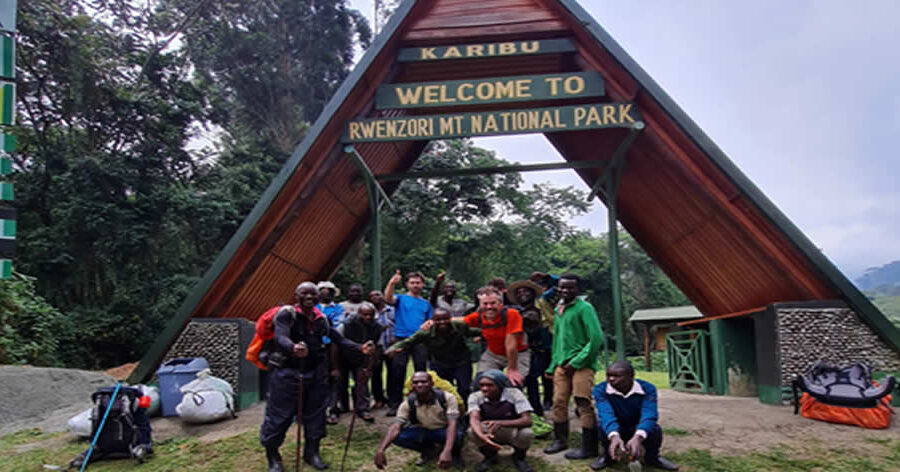
When trekkers ask me about mountain life on the Rwenzori, they are usually picturing something closer to camping. The reality is closer to a small, mobile village. On a standard Central Circuit or Kilembe expedition, a single group of two or three trekkers travels with a support team of a lead guide, an assistant guide on longer or larger itineraries, a cook, and anywhere from four to a dozen porters, depending on group size, trek length, and whether the itinerary includes a technical summit push requiring specialist glacier equipment.
That team eats together, in effect, and works together every single day, moving as a coordinated unit through terrain that would be genuinely dangerous to navigate without local expertise. Mountain life, in the way I use the phrase, describes everything that happens inside that unit: the labor, the meals, the jokes exchanged in Lhukonzo that get translated for the trekkers’ benefit, the shared discomfort of a cold, wet morning, and the shared satisfaction of a hot dinner after a brutal day in the Bigo Bogs. Our broader guide to what to expect when you hike the Rwenzori Mountains covers the physical and logistical side of a trek in detail; this article exists to cover the human side, which is, in my honest opinion after years of doing this work, the part that stays with people longest.
The Human Engine of the Mountain: Guides, Porters, and Cooks
The Bakonzo: A People Who Have Always Lived With This Mountain
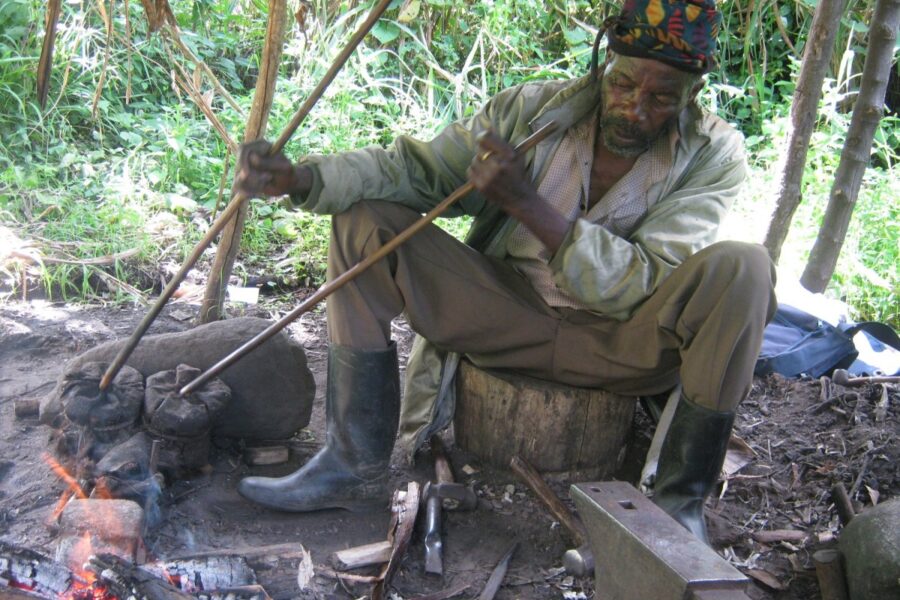
Nearly every guide, porter, and cook working on the Rwenzori today is Bakonzo, the indigenous Bantu-speaking community whose ancestral homeland surrounds the range’s foothills in Kasese District. This is not incidental staffing; it is the foundation of everything that makes Rwenzori mountain life what it is. The Bakonzo have lived in relationship with these mountains for generations, farming the lower slopes, herding, and, since the earliest European expeditions in the late nineteenth and early twentieth centuries, working as the porters and guides without whom the mountain would have remained functionally inaccessible to outsiders. Our dedicated article on the Bakonzo people goes into far greater depth on their history, language, and culture than I can properly cover here, and I recommend it to any trekker who wants to understand the human context of the ground they will be walking on. What matters for this discussion is that the mountain life you experience on a Rwenzori trek is, at its core, an invitation into Bakonzo working life, carried out with a warmth and professionalism built from real, inherited expertise rather than a training manual.
A Typical Expedition Team and How It Operates
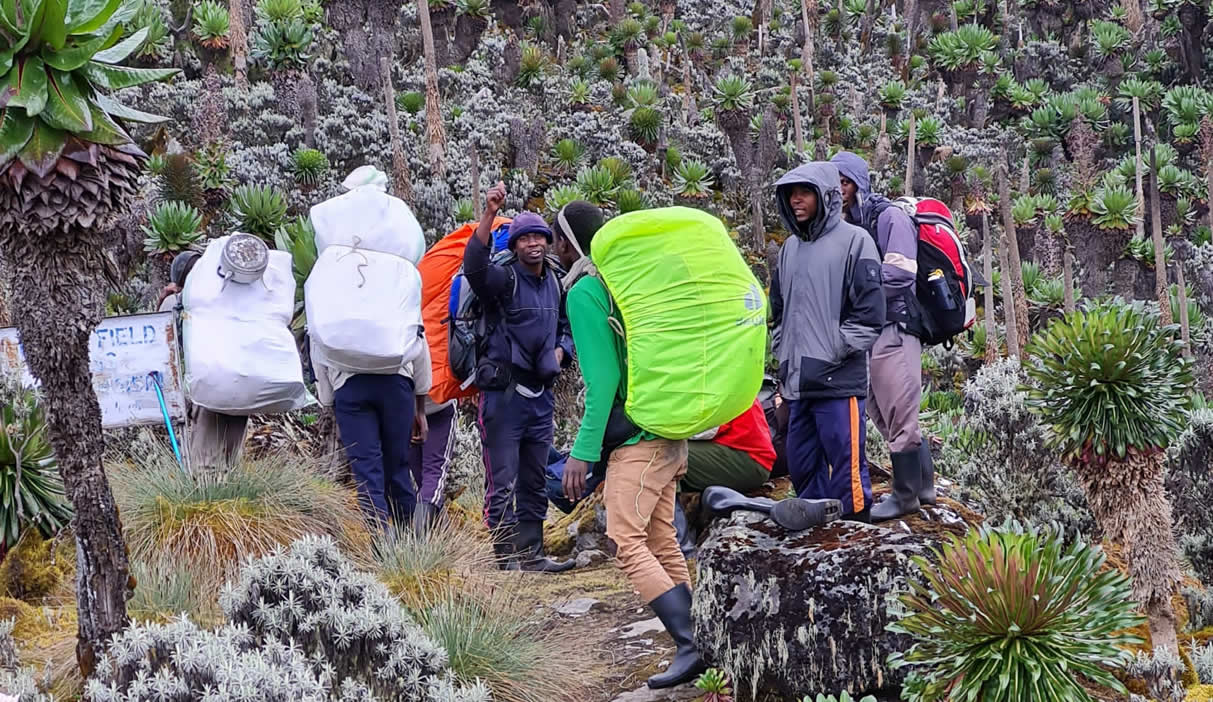
Our full breakdown of Rwenzori porters and guides explains the mechanics in detail, but the essential structure is this: your lead guide, certified through either Rwenzori Mountaineering Services on the Central Circuit or Rwenzori Trekking Services on the Kilembe Trail, carries ultimate responsibility for your safety, your pace, and the daily decision-making around weather and route conditions. Porters, carrying loads capped at around twenty to twenty-five kilograms for welfare reasons, move the expedition’s tents, food, cooking equipment, and your personal duffle ahead of or alongside the trekking group, often arriving at camp before you do so that a hut or tent is already being prepared. The cook, frequently the unsung hero of the entire operation, works from a hut kitchen or a ground-level gas setup in conditions that include near-freezing temperatures and constant dampness, producing three full hot meals a day that genuinely shape morale on a long expedition. Watching this team operate, coordinating loads, timing the day’s departure against the weather, reading the trail conditions from the previous night’s rainfall, is one of the quiet pleasures of Rwenzori mountain life that first-time trekkers rarely anticipate but almost always mention afterward.
The Daily Rhythm of Life on the Trail
Morning at Camp
Mountain mornings on the Rwenzori begin early and begin with tea. A porter or the cook is typically moving before the trekkers, and the sound of a kettle, or hot water being poured for washing, filters into the hut or tent as the first sign that the day’s mountain life is underway. Breakfast is substantial, porridge, eggs, toast or chapati, and hot drinks, deliberately designed for the caloric demands of a full walking day in cold, wet conditions. There is a particular unhurried quality to a Rwenzori morning that surprises trekkers used to tightly scheduled group tours; the team works to the mountain’s rhythm, not the clock’s, departing once packs are loaded, boots are laced, and the guide has read the morning’s cloud and rain signals.
The Walking Day
Once moving, mountain life becomes almost entirely physical and sensory. Conversation with your guide, in the early sections particularly, tends to range widely: local wildlife, the botanical oddities of the heather and Afro-alpine zones, family life in the villages below, and, often, the guide’s own history on this specific mountain, since many have been walking these same trails since childhood, first as sons and daughters of porters, later as porters themselves, and eventually as certified guides. Porters typically move ahead at their own pace, carrying the bulk of the expedition’s weight, a rhythm that means you will often arrive at camp to find your tent already pitched or your hut bed already claimed and organized. This division of labor, uncomfortable to some first-time trekkers who feel they should be doing more themselves, is in fact the entire economic and structural basis of how Rwenzori mountain life functions, and it is worth understanding rather than resisting.
Arrival and the Golden Hour Before Dark
Arriving at camp is, without exaggeration, one of the defining emotional beats of any Rwenzori expedition. After hours in mud, mist, or driving rain, the sight of a solid wooden hut, and increasingly, the smell of the evening meal already underway, produces a specific, uncomplicated relief that repeats itself, undiminished, on every single day of a multi-day trek. Our detailed account of the Central Circuit Trail day by day and our companion piece on the Kilembe Trail day by day both capture this rhythm from a first-person perspective, camp by camp, and I recommend either as essential reading depending on which route you choose.
Evenings in the Huts: Food, Warmth, and Company
What’s Actually for Dinner
Evening mountain life on the Rwenzori centers, unapologetically, on food. Dinner is typically a three-course affair, soup to start, a substantial main of rice, pasta, or posho with protein and vegetables, and something sweet to close, prepared by a cook working with remarkable skill given the conditions. Portions are generous by design, since under-eating at altitude is a real contributor to poor performance and, in some cases, altitude illness. Vegetarian and vegan trekkers are fully accommodated with advance notice, and our dedicated guide to vegetarian and vegan food on the Rwenzori trek explains exactly how that process works and what to expect on the plate. The quality of the food, consistently, is the single most common thing trekkers tell us they underestimated before arriving.
Sleep, Sound, and Shared Space
Huts on the Rwenzori are shared spaces, wooden platforms with foam mattresses rather than private rooms, and our unusually candid account of what Rwenzori huts are really like, covering food, toilets, sleep, and the full reality of the experience, is worth reading before you pack.
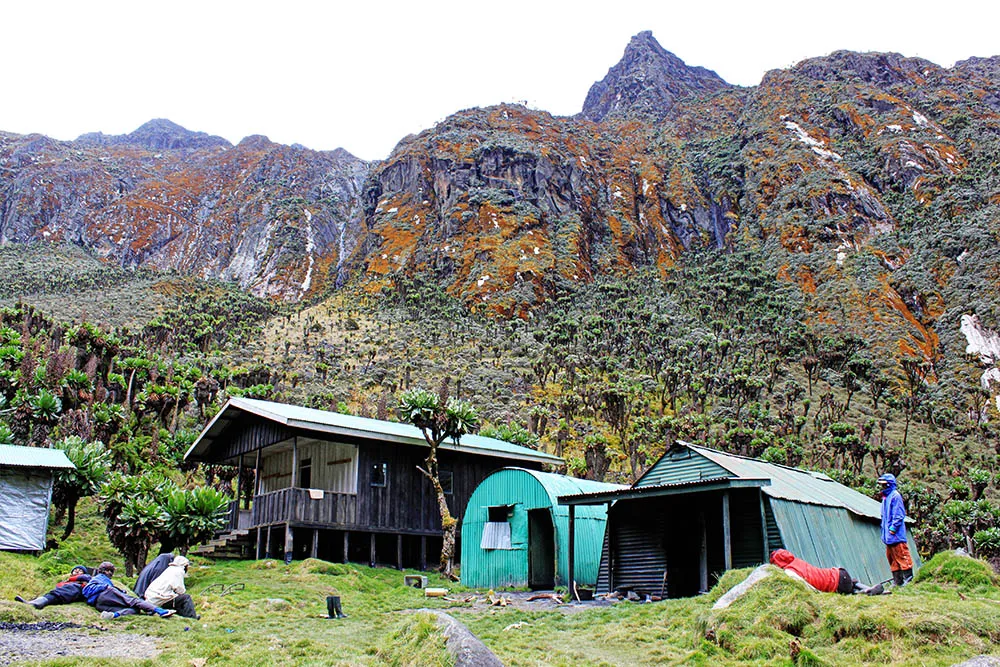
Rain on a hut roof is a nightly companion on most of the mountain, a metallic drumroll on tin-roofed camps and a softer patter on wooden ones, and most trekkers, once the initial surprise passes, find it strangely conducive to deep sleep after a demanding day. Our full guide to every hut and campsite on every trail lays out exactly what facilities, sleeping arrangements, and charging options to expect at each specific camp, from Nyabitaba to Elena Hut.
The Weather as a Daily Character in Mountain Life
No honest account of mountain life on the Rwenzori can avoid discussing weather, because weather is, in a very real sense, a constant character in the daily story. This is among the wettest mountain ranges on the African continent, and rain, mist, or at minimum heavy cloud is a near-daily feature at almost every altitude and season. Guides plan the pacing of each day’s walk around it, reading morning sky conditions with an intuition built from decades of collective experience, and much of what looks like improvisation to a first-time trekker is, in fact, a highly practiced response to a mountain that genuinely manufactures its own weather. Learning to read the mountain’s moods alongside your guide, watching for the specific quality of light that precedes an afternoon downpour or the particular stillness that sometimes precedes a clear summit morning, becomes, by the second or third day, part of the mountain life experience itself rather than a mere inconvenience to be endured.
Life at the Top: Summit Night and the Glacial World
For trekkers pushing beyond the standard circuit toward Margherita Peak, Mount Speke, or Mount Baker, mountain life takes on an entirely different character in its final phase. Elena Hut or Margherita Camp, the last staging points before a summit attempt, are spare, functional, and cold, and the pre-dawn departure for the glacier crossing represents the most physically demanding hours of the entire mountain life experience. Here the human dimension of the trek becomes most visible: your guide roping the team together, checking crampon fit by headlamp, reading ice conditions that shift by the week as the glaciers continue their well-documented retreat. Reaching the summit of Margherita Peak, at 5,109 metres, standing on genuine glacial ice on the equator, is the physical climax of the expedition, but for most trekkers I have guided, it is the quieter human moments around it, a guide’s hand steadying you on an exposed section, a shared exhausted laugh at Elena Hut the night before, that define what mountain life at altitude actually feels like.
The Descent and the Farewell Song: Where Mountain Life and Bakonzo Culture Meet
If there is a single moment that crystallizes everything mountain life on the Rwenzori represents, it happens on the final morning, after the last mountain breakfast, when the entire team, guides, cooks, and every porter, assembles together before the descent to the trailhead. In a tradition observed by both Rwenzori Mountaineering Services and Rwenzori Trekking Services, the team sings a farewell song, an unrehearsed, wholehearted expression of Bakonzo joy and communal celebration that catches almost every first-time trekker completely off guard. It is, without exception, the moment I see the most genuine emotion from clients across an entire expedition. Afterward, a tip envelope is presented to the lead guide for distribution, and our detailed guide to how much to tip Rwenzori porters and guides sets out the accepted amounts and etiquette in full, information worth reviewing well before your final morning arrives, so the moment can be about gratitude rather than arithmetic.
Supporting the People Who Sustain Mountain Life
Understanding mountain life on the Rwenzori honestly means understanding the economics underneath it. Guiding and portering are demanding, often physically punishing jobs, and the income they generate supports entire Bakonzo households and communities in the Kasese region. Rwenzori Trekking Safaris directs ten percent of trek proceeds back into local Bakonzo community support, including schools and households in the Kilembe area, a commitment that reflects our belief that the mountain’s future and the wellbeing of the people who sustain it are inseparable. Choosing a guided operator whose porter welfare standards and community reinvestment you trust is, in a very real sense, a choice about what kind of mountain life you want your trekking dollars to support.
Experiencing Mountain Life Before You Even Start Trekking
For trekkers arriving in Kasese a day or two ahead of their expedition, mountain life and Bakonzo culture can be experienced even before the first trailhead step. Ruboni Community Camp, on the park boundary, offers guided forest walks, birding for Rwenzori turaco and other Albertine Rift endemics, and traditional Bakonzo cultural performances, an excellent, low-effort introduction to the human context of the mountain you are about to climb. Our complete Kasese travel guide for trekkers covers this and other pre-trek and post-trek options for the town in full detail.
Frequently Asked Questions: Rwenzori Mountains in Winter
What is daily life like on a Rwenzori trekking expedition?
A typical day begins early with tea and a hot breakfast, followed by several hours of walking through changing vegetation zones alongside your guide, while porters move ahead carrying the expedition’s equipment. Trekkers arrive at camp in the afternoon to a hut or tent already being prepared, followed by an evening of hot drinks, a substantial three-course dinner cooked fresh at camp, and an early night given the physical demands of the day and the cold at altitude. This rhythm repeats, with variations for terrain and weather, across the full length of the trek.
Who are the guides and porters on a Rwenzori trek?
The vast majority of Rwenzori guides, porters, and cooks are members of the Bakonzo community, the indigenous people whose ancestral homeland surrounds the mountain’s foothills in Kasese District. Many come from families with multiple generations of mountain workers, and they are registered and certified through either Rwenzori Mountaineering Services, which operates on the Central Circuit, or Rwenzori Trekking Services, which operates on the Kilembe Trail, both working under the oversight of the Uganda Wildlife Authority.
What do you eat during a Rwenzori trek?
Meals are prepared fresh at each camp by a dedicated expedition cook and typically include a hot, substantial breakfast such as porridge, eggs, and chapati, a packed lunch eaten on the trail, and a three-course dinner of soup, a main dish of rice, pasta, or potatoes with protein and vegetables, and a dessert. Hot drinks, including tea, coffee, and cocoa, are available at nearly every camp. Vegetarian, vegan, and other dietary requirements can be fully accommodated with advance notice.
Where do you sleep on the Rwenzori Mountains?
Most Rwenzori trekkers sleep in permanent wooden huts with foam-mattressed sleeping platforms located at the established camps along the Central Circuit and Kilembe Trail routes, though tented camping is used on some sections and on newer routes such as the Bukurungu Trail. Huts are shared, functional spaces rather than private accommodation, and sleeping bags rated appropriately for the camp’s altitude are essential, since temperatures can drop well below freezing at the higher huts.
What is the farewell song tradition on the Rwenzori?
On the final morning of a Rwenzori expedition, after the last mountain breakfast, the entire guide, cook, and porter team assembles and sings a farewell song as a genuine expression of the relationship built over the course of the trek. The tradition is observed on both the Central Circuit and Kilembe Trail routes and is one of the most emotionally memorable moments most trekkers experience on the mountain, typically followed by words of thanks from the group and the presentation of the team’s tip envelope.
How much should I tip my Rwenzori guide and porter team?
Tipping follows role-based guidelines that are customary across both major trail operators, with guides receiving the highest daily rate, followed by cooks, and then porters, regardless of the size of your trekking group. Tips are traditionally collected into a single envelope and presented to the lead guide on the final morning for distribution among the team. Exact recommended amounts are set out in full in our dedicated tipping guide, which is worth reviewing before your trek so you can budget accordingly.
Start Planning Your Rwenzori Expedition
Mountain life on the Rwenzori is not something you observe from the sidelines; it is something you join, briefly but completely, for the duration of your expedition. If reading this has given you a real sense of what those days and nights on the mountain actually feel like, guided by people whose families have called these slopes home for generations, get in touch with our team to start planning your own Rwenzori trek. Tell us your dates, your experience level, and your summit ambitions, and we will match you with the route, the team, and the itinerary that gives you the fullest possible experience of everything this mountain, and the people who sustain it, have to offer.