
You have done your research, chosen your route, and booked your flights, and you are now staring at a packing checklist that includes everything from crampons to camp socks. And then the question surfaces, usually late, usually when you are already overwhelmed: What currency do I need, and how much cash should I actually carry? It is one of the most practical questions a Rwenzori trekker can ask, and it is one that deserves a clear, honest, experience-based answer. Not a vague gesture toward ‘bringing local currency’ or a dismissive ‘There are ATMs in Kampala. Your financial prep should match the seriousness of your trip to one of Africa’s most remote mountain ranges.
I have guided expeditions across the full breadth of the Rwenzori Mountains, from short forest walks along the Mahoma Loop to extended multi-peak traverses across all six major summits. Over that time I have watched well-prepared trekkers arrive without local currency and spend their first day in Kasese hunting for a functioning ATM. I have seen porters go without appropriate tips because a trekker had nothing but a credit card and a traveler’s check that no one in western Uganda could process. Getting this right matters not just for your comfort and logistics, but out of respect for the mountain community that makes every expedition possible.
This guide covers everything: which currency to use, how much to bring, where to get it, what you’ll spend it on, when to tip, how much to tip, and what financial risks to prepare for as you leave Kasese and head into the high Rwenzoris. By the end, you will have a clear, practical budget for every cash expense you are likely to encounter and a few you might not have thought of.
The Ugandan Shilling: Your Primary Currency on the Rwenzori
Uganda’s national currency is the Ugandan Shilling, abbreviated as UGX. It is the currency of daily life in Kasese, the gateway town for all Rwenzori expeditions, and for every transaction you will make outside of formally priced tourist services. Understanding the shilling is not optional background knowledge; it is a practical necessity.
As of the time of writing, the approximate exchange rate is around 3,700 Ugandan shillings to one US dollar. That figure shifts with global currency movements, so always check a live rate before departure. Google’s currency converter or XE.com offers reliable real-time rates. The key thing to understand is the denomination structure. Ugandan banknotes come in denominations of 1,000 UGX, 2,000 UGX, 5,000 UGX, 10,000 UGX, 20,000 UGX, and 50,000 UGX. The 1,000 and 2,000 UGX notes are what you will be handing over for cold drinks, boda-boda rides, and small market purchases. The 10,000 and 20,000 UGX notes are your everyday workhorses in Kasese, useful for restaurant meals, tips to individual crew members, and local shopping.
When you arrive in Uganda, if you have flown through Entebbe International Airport, the arrivals hall contains several foreign exchange bureaus that operate reliably during flight arrival hours. The rates here are generally acceptable, though rarely the very best available. If you are changing a significant sum, say, USD 500 or more, it is worth comparing rates at two or three bureaus before committing. For detailed guidance on getting to Kasese from Entebbe, including transport options and what to expect on arrival, our travel guide covers the full journey in detail.
Why the Ugandan Shilling Should Be Your Default, Not an Afterthought
Some international trekkers arrive in Uganda hoping to operate entirely on US dollars, under the impression that the dollar is universally accepted as a parallel currency. In Kampala, in high-end lodges, and in some established tourist businesses, this approach can work. Ugandan law permits pricing in foreign currencies for tourist services. But once you move beyond Kampala, and certainly once you arrive in Kasese or step onto the mountain, the assumption breaks down rapidly.
The boda-boda driver who takes you from your Kasese guesthouse to the Kilembe trailhead does not deal in dollars. The woman selling roasted groundnuts and ripe mango at the Kasese market does not change a fifty-dollar bill. The porter who has carried your bag faithfully through three days of equatorial mud, dense forest, and cold alpine wind does not have a foreign exchange bureau in his pocket. These people need shillings, and they deserve to be paid promptly, correctly, and without the friction of a currency they cannot use.
Convert a substantial portion of your budget to Ugandan Shillings before you reach Kasese. You will use them constantly, and you will be grateful you did.
US Dollars: When They Are Useful and When They Are Not
The US dollar is Uganda’s most widely accepted foreign currency outside of the national shilling, and it has genuine utility at certain points in your Rwenzori trip. Your trek package, the cost of your expedition with Rwenzori Trekking Safaris, will typically be quoted and paid in US dollars. International flights are priced in dollars. Upscale accommodation, visa fees at Entebbe, and some tourist park fees can be settled in USD. For these large, pre-structured payments, crisp, undamaged US dollar bills are the appropriate instrument.
There is a critical note about currency exchange in Uganda that catches many visitors off guard: Ugandan money changers and some banks refuse to accept US dollar notes printed before 2006 or notes that are torn, marked, or overly worn. This is not an informal policy; it is a firm, widespread standard. Bring only clean, undamaged bills from 2006 onwards. The newer the better. A single pen mark, a small tear in a corner, or a heavy crease can result in a note being flatly refused at the bureau de change counter.
Carry USD in a mixture of denominations, some 100-dollar bills for efficient exchange into large sums of shillings, and a selection of 20s and 10s for situations where you need to pay a small dollar amount directly. Avoid relying on 1-dollar and 5-dollar bills for tipping; while the dollar amounts are clear to international visitors, converting those small amounts to shillings at the point of tipping introduces unnecessary confusion and is less respectful to the recipient than handing over crisp shilling notes of the appropriate value.
Euro and British Pound
If you are traveling from Europe, you may wonder whether Euros or British Pounds are acceptable in Uganda. The short answer is yes, but with caveats. Euros are exchanged at the main bureaus in Entebbe and Kampala and with decreasing reliability as you move toward Kasese. British Pounds are even less commonly accepted outside Kampala. My recommendation is to convert Euros or Pounds to US Dollars before departure or at Entebbe Airport on arrival, rather than attempting to exchange them in Kasese, where the rates will be less favorable and the availability inconsistent. The US dollar is the universal pivot currency in Uganda; work through it rather than around it.
ATM Access in Kasese: What You Can Realistically Expect
Kasese is the primary gateway town for the Rwenzori Mountains and serves as the logistical hub for all expedition departures. It is a genuine Ugandan provincial town, lively, functional, and authentically Ugandan, and it does have ATMs. But don’t let ‘does have’ make you complacent; ATM reliability in Kasese is not like in London, New York, Sydney, or Amsterdam.
The main banks operating ATMs in Kasese include Stanbic Bank, Centenary Bank, and Bank of Africa. Stanbic’s ATM on the main Kasese road is the most consistently reliable and is the one most commonly used by international visitors. It accepts Visa, Mastercard, and Maestro cards from international banks. When it is working, it dispenses UGX in the 200,000–400,000 UGX range per transaction, which at current rates is roughly USD 55–110 per withdrawal.
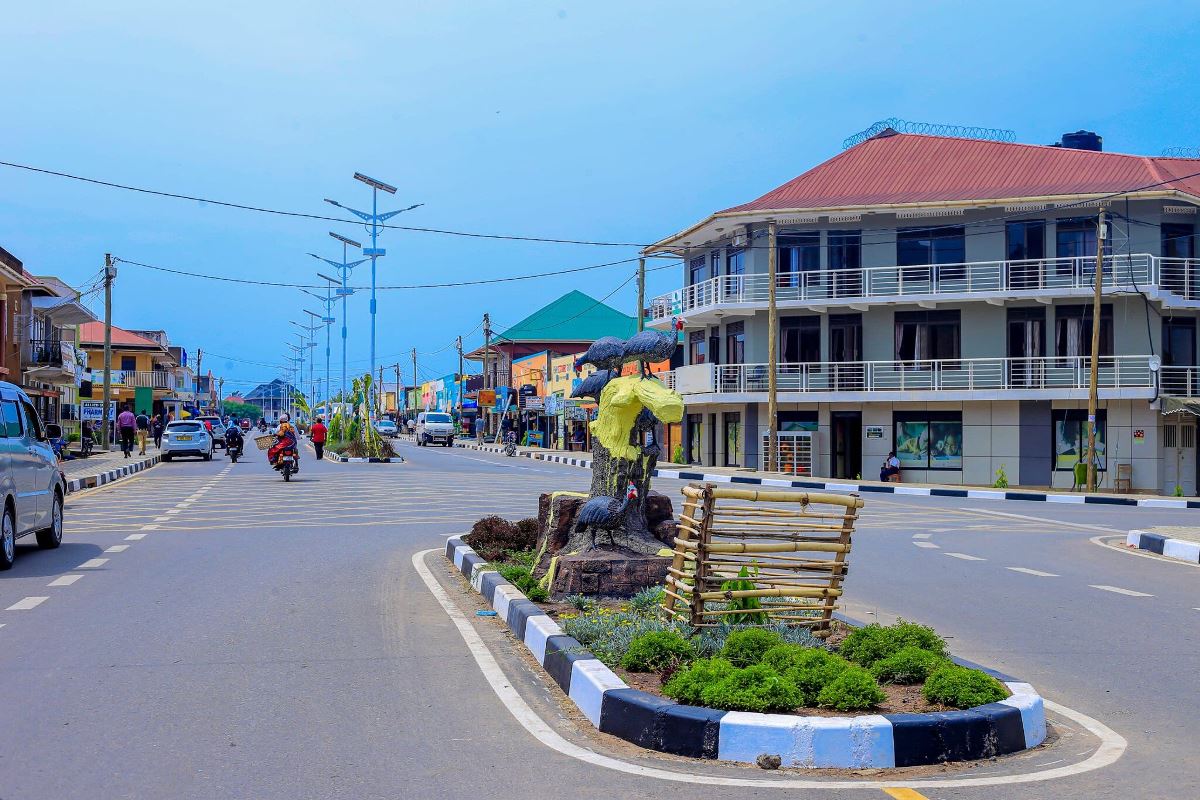
The problem is that Kasese ATMs experience outages with a frequency that would be unacceptable in most developed countries. Network connectivity failures, machine cash shortages, and power interruptions can take an ATM offline for hours or, in the worst cases, days. I have arrived in Kasese with clients on multiple occasions to observe the primary Stanbic ATM out of service and the backup machines at other banks equally unavailable. This is a common occurrence. It is a routine risk that you must plan around, not for.
The cardinal rule of cash management for the Rwenzori: Do not arrive in Kasese planning to withdraw most of your trekking cash from a local ATM. Bring the majority of your cash needs from Kampala or, better yet, from home, in the form of US dollars that you convert to UGX at a bureau de change in Entebbe or Kampala. The ATMs in Kasese are a supplement, not a primary source.
Using ATMs in Kampala as Your Primary Withdrawal Point
If you are flying into Entebbe and spending any time in Kampala before heading west to Kasese, use that time to make your ATM withdrawals. Kampala has a well-developed banking infrastructure with multiple international ATM networks, including Visa, Mastercard, Cirrus, and Plus. Stanbic, Barclays (ABSA), Standard Chartered, and dfcu Bank all operate reliable ATMs in the central business district and in the Kololo and Nakasero areas. The withdrawal limits are higher, the network reliability is better, and you have multiple backup options if one machine fails.
Withdraw your estimated total cash budget for the expedition: porter tips, guide tips, personal spending, souvenirs, drinks, and a contingency reserve in Kampala, ideally split between a combination of UGX for immediate use and USD for larger transactions. Our guide to getting to the Rwenzori Mountains covers the logistics of the Kampala-to-Kasese leg in full, and we strongly recommend using any Kampala layover time productively to handle your cash needs.
Notify Your Bank Before Travel
This step is obvious in retrospect and forgotten with alarming frequency. Ugandan ATM transactions frequently trigger fraud prevention blocks on international debit and credit cards because of Uganda’s classification as a high-risk transaction geography by many northern European and North American banks. The result: your card is declined, the ATM swallows your transaction, and you are left without access to your funds in a provincial Ugandan town with limited communication options.
Call your bank or log in to your banking app and notify them of your travel dates, your destination countries (Uganda and any transit countries), and the approximate amount you expect to withdraw. This takes ten minutes and can save you from a very stressful situation on the morning of your trek departure. It is the kind of practical detail that separates a well-planned expedition from a chaotic one, and proper planning is at the heart of what makes a Rwenzori trek successful.
What will you realistically spend cash on? A Realistic Breakdown
Before we discuss how much to bring, it helps to be precise about what you are bringing it for. On a Rwenzori expedition booked through a reputable operator, your trek package covers the major fixed costs: park fees, guide and porter wages as set by the Uganda Wildlife Authority (UWA), all mountain accommodation, and meals on the trail. What falls outside the package and what requires your personal cash falls into a predictable set of categories.
Tips for Porters, Guides, and Cooks
The tip is the single most important cash expenditure of your entire trip, and it is the one most likely to be underprepared if you have not been briefed specifically on Rwenzori trekking culture. Tipping is not a customary extra in Uganda, unlike rounding up a restaurant bill in Europe. It is a meaningful and expected part of the porter economy on the Rwenzori, and the amounts involved, while modest by international standards, are significant to the recipients.
Our dedicated article on how much to tip your Rwenzori porters and guides goes into full detail on tipping culture, conventions, and amounts. For the purposes of this cash planning guide, the headline figures are as follows. For a porter, the standard tip is approximately USD 3–5 per day, payable in Ugandan Shillings at the end of the trek. For a lead guide, USD 5–10 per day is the appropriate range, reflecting the greater responsibility and expertise they bring to your expedition. For a cook, USD 3–5 per day is standard.
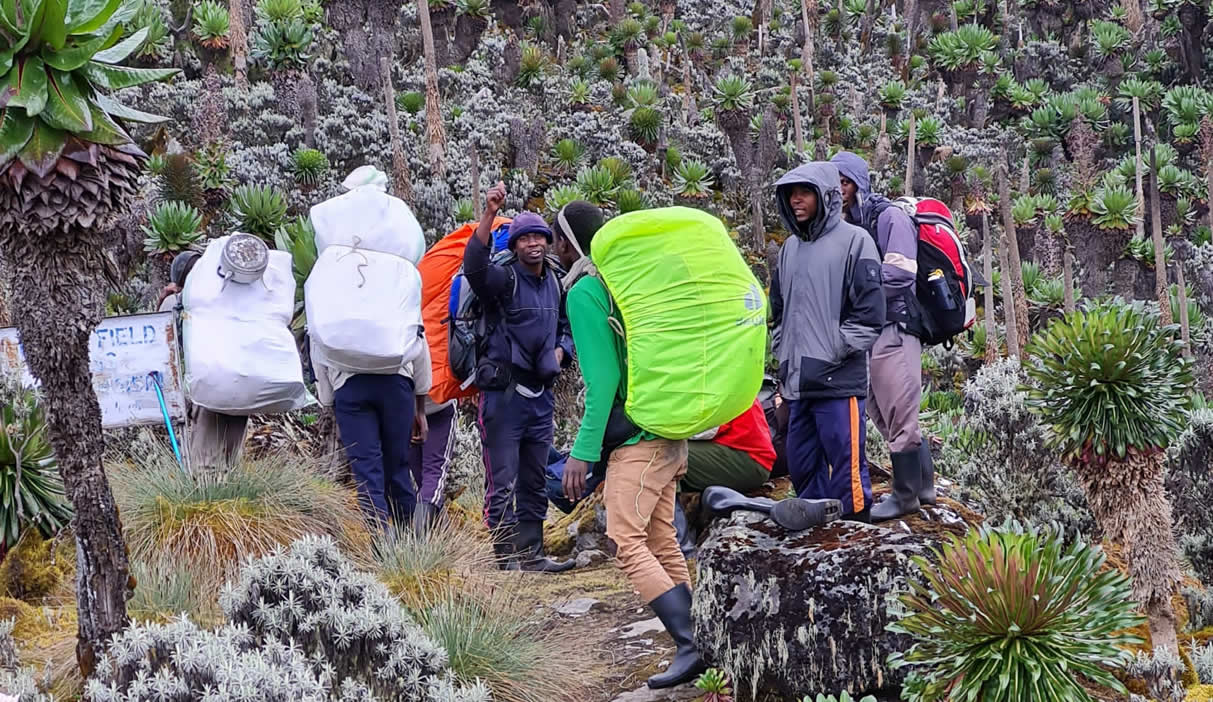
Consider the arithmetic on a representative itinerary. On our popular 7-day Central Circuit trek, a typical group of two trekkers might have a team comprising one lead guide, two assistant guides, and four to six porters. At USD 5 per porter per day over seven days and USD 8 per guide per day, the tip total for that group reaches USD 210–350, a figure that should be budgeted specifically and carried in shillings, distributed at the trek’s conclusion. The 13-day six-peaks expedition requires a larger crew and, correspondingly, a larger tip budget. Plan for USD 400–600 in tips for a typical two-person team.
Tips should always be paid in Ugandan shillings rather than US dollars. While porters and guides universally understand the dollar’s value, they live and shop in the local economy and must pay to convert foreign currency, often at unfavorable rates. Paying in UGX is a simple gesture of respect that costs you nothing in conversion effort if you have planned ahead.
Drinks and Snacks at the Trailhead and Base Area
At Nyakalengija, the starting point for the Central Circuit Trail, and at the Kilembe trailhead for the Kilembe Trail, you will find small local shops selling cold soft drinks, snacks, and basic supplies. A soda (Pepsi, Mirinda, or the excellent Ugandan-brewed Stoney Tangawizi ginger beer) costs around 1,000–3,500 UGX, less than a dollar. A bottle of water is similarly priced. On your first night back from the mountain, when you walk into the Kasese sun with worn legs and a story to tell, that cold Nile Special beer or Club Pilsner from a local bar will cost you around 4,000–6,000 UGX (about USD 1–1.50).

Beyond the trailhead, once you are on the mountain, there are no shops, no cafes, and no vending machines. Your on-trail food and water are provided as part of the expedition package. The cash you carry onto the mountain is primarily for post-trek celebrations and any personal items purchased before departure. Budget USD 10–20 in small shilling notes for trailhead drinks and incidentals on the day you depart and the day you return.
Souvenirs and Crafts in Kasese
Kasese has a lively local market where craftspeople sell handmade goods, including carved wooden animals, handwoven baskets, traditional Bakonzo crafts, batik fabric, and assorted Ugandan artisanal products. These are genuine craft markets, not tourist traps, and prices are negotiable in the manner of all East African markets: quoted high, happily negotiated, and ultimately settled at something both parties find reasonable.
A quality handwoven basket might start at 20,000 UGX and settle at 12,000–15,000 UGX after friendly negotiation. A carved wooden Rwenzori-themed piece might range from 8,000 UGX for a small item to 50,000 UGX or more for a detailed carving. Budget USD 20–50 in shopping money if you enjoy local crafts, and remember to carry small-denomination shilling notes; market vendors rarely have change for a 50,000 UGX note on a 12,000 UGX purchase.
Our Kasese travel guide includes guidance on the town’s main market, where to find the best local crafts, and what to expect when shopping in the area around the Rwenzori gateway.
Accommodation in Kasese and at the Mountain Base
For most trekkers, accommodation in Kasese for the nights before and after the expedition is either included in their overall trek package or arranged independently. If you are paying for accommodation independently, for example, staying an extra night before departure to recover from a long journey, expect to pay between USD 15 and USD 35 per night at a clean, functional guesthouse, or USD 60–120 per night at one of Kasese’s mid-range hotels catering to visitors. Our article on where to stay before and after the Rwenzori trek covers the available options in full detail.
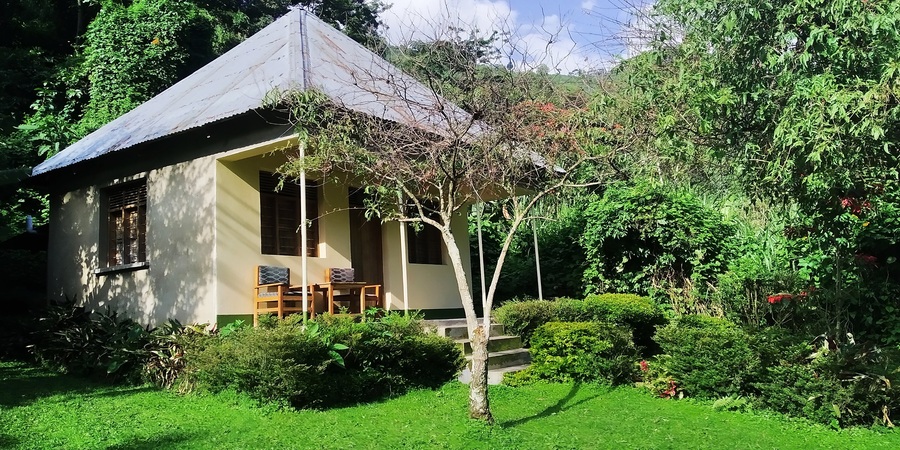
Payment at most Kasese guesthouses and hotels is accepted in Ugandan shillings, and some establishments accept US dollars for the room rate. Ask at check-in, and if they quote you a dollar rate, compare it with the current exchange rate to ensure it is fair. Some establishments apply unfavorable internal exchange rates when billing in foreign currency.
Local Transport: Boda-Bodas, Taxis, and Private Transfers
Getting around Kasese and between Kasese and the mountain trailheads involves a combination of transport options that all require cash. The boda-boda, the ubiquitous motorcycle taxi that serves as the short-distance transport network throughout Uganda, costs between 1,000 and 5,000 UGX for a local Kasese ride depending on distance and negotiation. Shared minibus taxis (matatus) are cheaper still for inter-town routes. Private transfers, a saloon car, or 4WD for a group cost between USD 80–150 for the Kasese-to-Kampala journey, depending on vehicle type and arrangement.
If you are combining your Rwenzori expedition with a gorilla trekking extension to Bwindi or a broader Uganda safari combination, the transport between parks will likely be included in your broader safari package. But always confirm which transfers are covered and which you need to arrange independently, and ensure your cash reserves account for any uncovered legs.
Meals in Kasese
Eating in Kasese on your pre- and post-trek days is an opportunity to enjoy excellent, inexpensive Ugandan food: matoke (steamed green banana), groundnut stew, rolex (Uganda’s beloved egg-and-vegetable chapati roll), grilled tilapia from Lake George, and a range of local bean, rice, and vegetable dishes. At a good local restaurant, a generous plate costs between 5,000 and 12,000 UGX (roughly USD 1.50–3.50). At a restaurant catering to a mixed local-and-visitor clientele, expect 15,000–30,000 UGX for a main course with a drink. Budget USD 10–20 per day for meals in Kasese on days not covered by your trek package.
For trekkers with specific dietary requirements (vegetarian, vegan, or gluten-free), our guide to vegetarian and vegan food on the Rwenzori trek addresses what you can expect both in Kasese’s restaurants and on the mountain itself.
Quick Reference: Cash Budget for the Rwenzori
The table below provides approximate figures for planning purposes. All UGX amounts are based on an approximate rate of 3,700 UGX per 1 USD.
| Expense Item | Amount (USD) | Amount (UGX approx.) |
| Porter tips (per day) | $3–$5 / porter | 11,000–18,500 UGX |
| Guide tips (per day) | $5–$10 / guide | 18,500–37,000 UGX |
| Cook tips (per day) | $3–$5 | 11,000–18,500 UGX |
| Soft drinks / snacks (base) | $1–$3 each | 3,700–11,000 UGX |
| Beer / local drinks (Kasese) | $1–$2 | 3,700–7,400 UGX |
| Souvenir crafts (Kasese market) | $5–$30 | 18,500–111,000 UGX |
| Budget guesthouse (Kasese) | $15–$35 / night | 55,500–129,500 UGX |
| Mid-range lodge (Kasese) | $60–$120 / night | 222,000–444,000 UGX |
| Boda-boda (motorcycle taxi) | $0.50–$2 | 1,850–7,400 UGX |
| Private transfer Kasese–Kampala | $80–$150 | 296,000–555,000 UGX |
How Much Cash Should You Bring in Total? A Trek-by-Trek Guide
The right amount of cash to carry varies significantly depending on the length of your expedition, the size of your crew, and your personal spending habits. Here is a realistic framework for the most common Rwenzori itineraries. The figures below represent personal cash beyond the cost of the trek package itself, which you settle separately.
Short Treks (1–4 Days)
For a short expedition, the 3-day Mahoma Loop, the 4-day Mutinda Lookout trek, or a similar short-format hike, your personal cash needs are modest. A small crew means a lower tip total: budget USD 30–60 for porter and guide tips on a 3-day trek with a crew of four. Add USD 15–25 for drinks and snacks, USD 10–20 for meals on Kasese days, and USD 20–40 for any souvenir shopping. Total personal cash for a short Rwenzori trek: approximately USD 100–150 in Ugandan Shillings, plus a small USD reserve.
Classic Summit Treks (5–8 Days)
For the classic summit expeditions, the 7-day Central Circuit to Margherita Peak, the 8-day Kilembe Trail expedition, or the 5-day fast Margherita summit, this is where the majority of visitors fall and where the tip calculation becomes most consequential. On a 7-day trek, a party of two can expect tip totals alone to reach USD 200–300, depending on the performance of one guide, two assistant guides, and four porters. Add accommodations, meals in Kasese (pre- and post-trek), souvenirs, and drinks. Total personal cash recommendation for a 7–8 day summit trek: USD 300–500 per person.

Multi-Peak and Extended Expeditions (10+ Days)
For the longer expeditions, the 10-day four-peaks trek, the 13-day six-peaks expedition, or the remarkable 18-day all-peaks traverse, crew sizes are larger and trek durations are longer. Tip totals for extended expeditions can reach USD 400–700 per trekking group depending on crew size and duration. Budget accordingly, and ensure you carry the full amount in Ugandan shillings before you leave Kampala. On an 18-day expedition, there is absolutely no plan B if you arrive at the post-trek tip ceremony short of local currency. Total personal cash recommendation for extended expeditions: USD 500–900 per person, depending on group size and personal spending.
For Combination Itineraries Including Gorilla Trekking or Safaris
If your Rwenzori expedition is part of a longer Uganda adventure such as the 16-day gorillas and Rwenzori combination or the 19-day ultimate Uganda adventure, you will need additional cash for activities and services outside the Rwenzori itself. Gorilla trekking guides and trackers have their own tip culture (USD 10–20 per guide is standard), and safari activities involve additional spending on drinks, accommodation extras, and curio shops at park gates. Budget the Rwenzori cash requirements as outlined above, then add a separate allocation for each additional activity component of your trip.
How to Carry and Protect Your Cash on the Mountain
Cash security in Uganda requires the same common-sense measures you would apply anywhere in the world, adapted to the specific conditions of trekking in a remote mountain range. Kasese is a safe, functional Ugandan town, and petty crime directed at tourists is not rampant. But complacency is never a wise policy when traveling with significant cash reserves.
Divide your cash into two or three separate caches before you leave for the mountain. The bulk of your tip fund, already calculated and separated into labeled envelopes for each crew member or crew category, should be stored in a waterproof dry bag inside your main pack. A working daily reserve of 20,000–30,000 UGX for incidentals should be in a small wallet or chest pocket. Leave any cash you do not need on the mountain in a secure, locked location at your Kasese guesthouse or with a trusted staff member at your accommodation.
The Rwenzori is wet. Exceptionally wet. The rainfall and vegetation zones of the Rwenzori mean that moisture penetrates everything, including packs that are not waterproofed. Ugandan Shilling banknotes do not survive prolonged immersion in mountain rain without deterioration. A small waterproof dry bag or a zip-lock bag inside your pack is not optional; it is part of your gear as much as your gaiters are.
Mobile payment services like M-Pesa and Airtel Money, as well as similar mobile money platforms, are widely used in Uganda and have genuinely transformed commerce in rural areas. However, as an international visitor without a Ugandan mobile number and registered account, these services are inaccessible to you unless you have arranged a local SIM card and registration in advance. For most international trekkers, cash remains the only viable payment mechanism below the summit, and planning accordingly is non-negotiable.
Would it be possible to Trek the Rwenzori on a Tighter Budget?
This is a question we address honestly in our guide to trekking the Rwenzori Mountains on a budget. The short answer is that the major fixed costs, park fees, guide wages, and mountain accommodation are set by the Uganda Wildlife Authority and are non-negotiable regardless of operator. What varies is the surrounding costs: accommodation choices in Kasese, transport arrangements, personal spending, and tip amounts.
While tipping is discretionary in the strict sense, reducing porter tips below the recognized standard is an ethical decision with real consequences for mountain workers who earn modest fixed wages. I would gently but firmly encourage every trekker to treat the standard tip amounts as a floor, not a ceiling. The people who carry your gear through genuinely challenging terrain five days of mud, cold, altitude, and rain on a 7-day Central Circuit or nine days on the 8-day Kilembe Trail make your summit possible. Their appropriate compensation should be considered part of the core cost of the expedition, not an optional extra to be trimmed when the budget is tight.
Frequently Asked Questions: Currency and Cash for the Rwenzori
What currency should I use for the Rwenzori Mountains?
The Ugandan Shilling (UGX) is the primary currency you need for the Rwenzori Mountains. It is the only currency accepted by porters, boda-boda drivers, local market vendors, and small food shops in Kasese and around the trailheads. The US dollar is useful for your trek package payment and for converting it into shillings, but once on the ground in Kasese and on the mountain, Ugandan shillings are what you need. Convert a significant portion of your budget to UGX before leaving Kampala, as ATM reliability in Kasese is inconsistent.
Are there ATMs in Kasese near the Rwenzori Mountains?
Yes, Kasese has ATMs primarily at Stanbic Bank, Centenary Bank, and Bank of Africa, but they are not reliably operational. Power outages, network failures, and cash shortages can take Kasese ATMs offline for hours or days at a time. International trekkers should not plan to withdraw the majority of their cash needs from Kasese ATMs. Instead, make your primary ATM withdrawals in Kampala, where banking infrastructure is considerably more reliable, and carry your pre-calculated cash requirements to Kasese in a combination of US dollars and Ugandan shillings.
Do I need to tip porters on the Rwenzori in cash?
Yes, porter tips on the Rwenzori must be paid in cash, specifically in Ugandan shillings. Porters, assistant guides, and cooks do not have credit card terminals or mobile money accounts accessible to international visitors, and paying in foreign currency creates inconvenient conversion problems for recipients who live and shop in the local Ugandan economy. The standard tip rate is approximately USD 3–5 per porter per day and USD 5–10 per guide per day, payable at the trek’s conclusion in UGX at the prevailing exchange rate. Pre-calculate your tip fund, separate it into labeled envelopes for each crew member or group, and carry it in waterproof storage throughout the expedition.
How much cash should I bring for a 7-day Rwenzori trek?
For a 7-day Central Circuit trek to Margherita Peak, the recommended personal cash budget is approximately USD 300–500 per person, carried primarily in Ugandan Shillings. This covers porter and guide tips for the entire crew (approximately USD 200–280 for a party of two with a standard crew size), pre- and post-trek meals and drinks in Kasese (approximately USD 40–80 over three to four Kasese days), souvenir shopping (USD 20–50 if desired), local transport, and a contingency reserve. Adjust upward if your group is trekking solo with a full crew, and ensure the entire amount is in shillings before departing Kampala.
Can I use US dollars to pay for things in Kasese?
US dollars are accepted at some Kasese hotels for room charges and at a small number of establishments catering specifically to international visitors. However, the majority of transactions in Kasese food at local restaurants, market shopping, boda-boda rides, small shop purchases, and porter tips require Ugandan shillings. Do not assume that dollars will be accepted widely; they will not be. The US dollar’s primary utility in Uganda is as an exchange currency; convert it to shillings at a bureau de change and use the shillings for daily transactions.
Where is the best place to exchange money for the Rwenzori trek?
The best places to exchange currency for a Rwenzori expedition are at the foreign exchange bureaus at Entebbe International Airport on arrival or at the bureau de change offices in Kampala’s central business district and major shopping areas. Exchange rates in Kampala are generally better than those in Kasese, and the availability of bureaus is far greater. If you need to exchange money after arriving in Kasese, the main bank branches can assist, but rates may be less competitive. Avoid exchanging money with informal street traders regardless of the rates offered, as counterfeit currency does circulate and there is no recourse if you receive fake notes.
Should I bring crisp new US dollar bills to Uganda?
Yes, absolutely. Ugandan money changers and many banks flatly refuse to accept US dollar notes that are torn, heavily marked, written on, excessively creased, or printed before 2006. This is a firm, widespread policy, not a matter of preference. Bring only clean, undamaged banknotes from 2006 or later. The newer the notes, the better, as some changers express preference for notes printed from 2013 onward. A single visible tear or pen mark on a note can lead to its complete refusal. Verify all your dollar bills carefully before departure and replace any that are questionable.
Do Rwenzori expedition costs include tips for porters and guides?
No, tips for porters and guides are not included in the prices of Rwenzori trek packages. The trek package covers guide and porter wages as set by the Uganda Wildlife Authority, all mountain accommodation, meals on the trail, park fees, and guided expedition services. Tips are separate, discretionary payments made by trekkers directly to their crew at the trek’s conclusion. They are an expected and culturally established part of Rwenzori trekking, and the amounts USD 3–5 per porter per day and USD 5–10 per guide per day should be budgeted and prepared in Ugandan shillings before the expedition begins.
Is it safe to carry large amounts of cash in Kasese?
Kasese is a safe provincial Ugandan town, and serious crime against tourists is rare. That said, standard travel security precautions apply: do not carry more cash than you need for the day in easily accessible pockets, divide your total cash into multiple secure caches (so that losing one wallet does not mean losing everything), and store surplus cash in a secure location at your guesthouse when not needed. On the mountain, your trek cash should be stored in a waterproof dry bag inside your main pack; the Rwenzori’s persistent rain and humidity can damage banknotes if they are not protected from moisture.
Ready to Plan Your Rwenzori Expedition?
Cash planning is one of those details that quietly sits in the background of expedition preparation until it becomes important. Get it right, and your arrival in Kasese flows smoothly: you have local currency in hand, your tip fund is prepared, your crew is appreciated, and your attention is fully on the extraordinary adventure ahead. Get it wrong, and you are spending your pre-departure morning in a queue at an unreliable ATM, anxious and distracted before you have even set foot on the trail.
Whether you are exploring the short-form Mahoma Loop hike for the first time or committing to the full 13-day six-peaks expedition, the team at Rwenzori Trekking Safaris is ready to help you plan every dimension of your journey, including the practical financial questions that make or break a smooth expedition departure. We brief all our clients on local cash logistics, recommended currency exchange points, tip norms, and what to expect in Kasese and on the mountain.
Explore our full range of Rwenzori trekking itineraries, review the cost of climbing the Rwenzori, or browse our frequently asked questions for answers to the full range of pre-expedition queries. Better still, contact our expert team directly; we will help you choose the right expedition, prepare completely, and arrive in the Rwenzori ready for one of the most extraordinary mountain experiences on the planet.