
Planning a Rwenzori trek from the UK? Full guide to flights, Uganda visa & real costs in GBP for British trekkers. Start planning today.
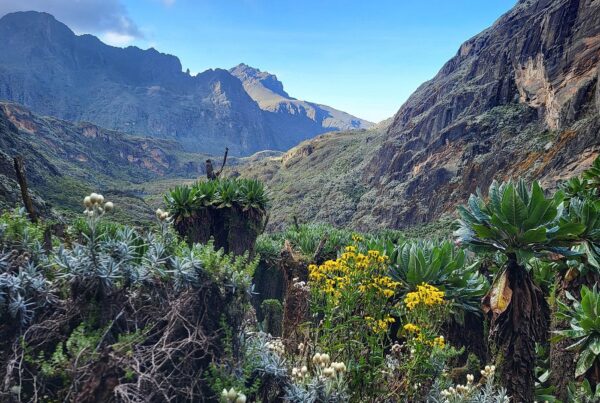
There is a particular kind of trekker who finds this page, and after years of guiding on this mountain, I can usually describe them before they’ve told me a thing about themselves. They have read about Kilimanjaro and decided it is too crowded. They have looked at Everest Base Camp and found it a long walk to a view rather than a summit. And somewhere in their research, usually late at night, scrolling past the familiar East African circuit, they have stumbled onto photographs of glaciers sitting directly above equatorial rainforest, of giant lobelias standing three metres tall in permanent mist, and they have thought: that is the mountain I actually want to climb. If that is you, and you are sitting in the UK working out how on earth you get from your kitchen table to the summit ridge of Margherita Peak, this guide is built specifically for you.
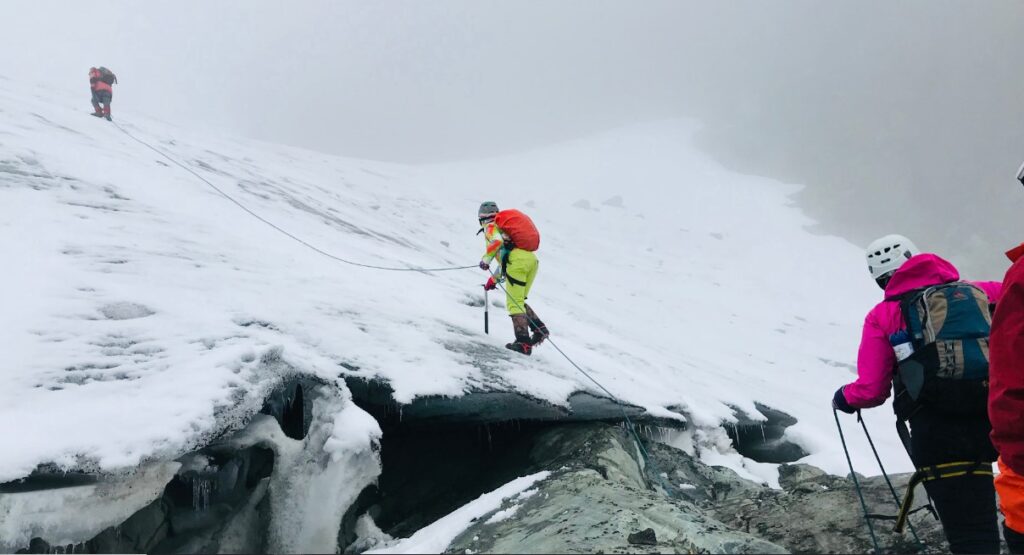
I have planned Rwenzori expeditions for trekkers flying out of Heathrow, Gatwick, Manchester and Edinburgh, and the honest truth is that the logistics from Britain are entirely manageable once you understand the sequence: an international flight to Entebbe, a Uganda e-Visa sorted well before departure, a short domestic hop or road transfer to Kasese, and then the trek itself. What follows is the complete picture , real flight routings and prices, the exact visa process for a UK passport, and a full cost breakdown in both pounds and dollars so you can budget accurately rather than guess.
Why British Trekkers Are Choosing the Rwenzori
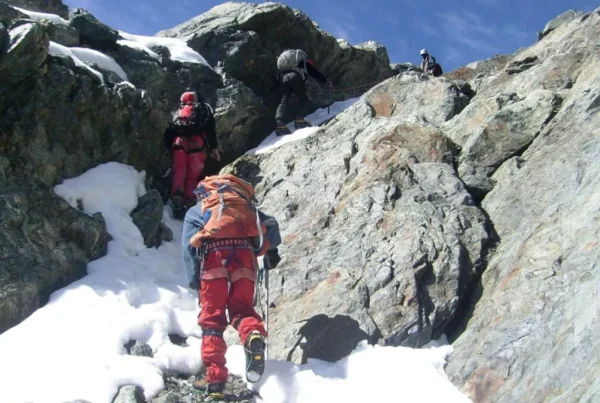
Before the logistics, it is worth being clear about what you are actually signing up for, because it shapes every planning decision that follows. The Rwenzori is a UNESCO World Heritage Site straddling the Uganda–DR Congo border, and unlike Kilimanjaro, which around 50,000 people summit each year, fewer than 1,000 trekkers a year attempt the Rwenzori’s peaks. You will not queue for a summit photo here. You will, however, need to cross an actual glacier to stand on Margherita Peak (5,109m), the third-highest summit in Africa and the true summit of Mount Stanley, which is a meaningfully different proposition to a straightforward walk-up. Our complete mountaineering guide to the Rwenzori Mountains lays out the full picture of routes, peaks and what the range actually demands of a trekker, and it is worth reading alongside this article if you have not already decided which itinerary suits you. For a direct sense of how the experience compares with Africa’s more famous mountain, our guide on whether the Rwenzori is harder than Kilimanjaro is the honest answer, not the marketing one.
Flights from the UK to the Rwenzori Mountains
Every Rwenzori trek from Britain begins the same way: you need to land at Entebbe International Airport, on the shores of Lake Victoria, before anything else can happen. There is no direct flight from anywhere in Uganda straight to the mountain, so think of your journey as two distinct flights bookended by a short stay in the capital region, not one seamless hop from your local airport to the trailhead.
Getting from the UK to Entebbe
Uganda Airlines operates the only non-stop service between the UK and Entebbe, flying three times a week from London Gatwick with a flight time of roughly seven hours forty minutes, which is genuinely the most convenient option if the schedule lines up with your dates. Beyond that single direct route, you are choosing a one-stop connection, and there are more of these than most first-time trekkers expect. Qatar Airways routes through Doha, Turkish Airlines through Istanbul, Ethiopian Airlines through Addis Ababa, KLM through Amsterdam, and Brussels Airlines through Brussels all serve Entebbe with a single, well-organised connection, and all depart from one of London’s main airports. Kenya Airways, routing via Nairobi, and RwandAir, routing via Kigali, are worth a specific mention because both allow you to build a stopover into your itinerary at little extra cost, which matters if you are also combining the climb with a Uganda safari or a side trip into neighbouring countries.
On price, a realistic economy return from London currently runs from around £700 at the very cheapest end (typically Turkish Airlines or Kenya Airways with favourable dates) up to £950–£1500 for the more comfortable Emirates or Qatar Airways options with shorter layovers and better seat pitch. Uganda Airlines’ direct service tends to sit in the £700–£900 range and is worth prioritising if it works for your schedule simply for the shorter total travel time, which matters more than it sounds on a trip where you also need to be fresh enough to handle a domestic flight and a multi-day trek shortly after landing. Fares move seasonally, so booking eight to twelve weeks ahead or months earlier of your intended trek dates, and avoiding the December and July–August peak windows if you have flexibility, will generally get you the better end of that range.
One detail that catches out UK trekkers more than any other: nearly every one-stop routing arrives at Entebbe in the evening, often quite late. Do not plan to fly onward to Kasese, or start driving, the moment you land. Build in a night in Entebbe or Kampala before continuing your journey; trying to compress the arrival day and the transfer day into one is the single most common scheduling mistake I see, and it leaves people arriving at the trailhead already fatigued before the trek has even begun.
From Entebbe to Kasese: the second flight
Once you have cleared immigration at Entebbe, you still have roughly 400 kilometres between you and the mountain. AeroLink operates a scheduled domestic service from Entebbe to Kasese Airport that takes about an hour and, because it flies only once or occasionally twice daily, needs to be booked well in advance rather than assumed as a same-day option. The alternative is an overland transfer of five to seven hours by road through Fort Portal, which is a genuinely scenic route through Uganda’s western highlands and includes the option of a stop at the Toro Kingdom’s royal palace, but it is a long day after a long-haul flight. Our detailed guide to getting to the Rwenzori Mountains sets out every option for this leg of the journey with timings and costs, and our complete guide to Rwenzori Mountains National Park covers exactly how each landing option connects to the Nyakalengija and Kilembe trailheads. If you are weighing the flight-versus-road decision specifically, it is worth reading through in full before booking either leg.
For UK trekkers who are combining the mountain with wider East African travel, routing through Kigali on RwandAir or Nairobi on Kenya Airways opens up the option of pairing your Rwenzori expedition with mountain gorilla trekking or a classic wildlife safari on the same trip. Our guide to combining a Rwenzori trek with gorilla trekking and our overview of Uganda safari options both explain how to sequence a multi-destination itinerary sensibly so that flights, park permits and recovery days all line up.
The Uganda Visa for UK Passport Holders
A British passport does not grant visa-free entry to Uganda, and since Uganda withdrew visa-on-arrival for almost all nationalities, applying online in advance is not optional; it is the only route in. The system is straightforward once you know the steps, but it needs to be done properly and early, because a rejected or incomplete application discovered at Entebbe immigration is not something you want to be dealing with after a nine-hour flight.
Which visa to apply for
Most UK trekkers doing a Uganda-only Rwenzori expedition should apply for the single-entry tourist e-Visa, currently priced at USD 50 (roughly £40 at typical exchange rates) and valid for a stay of up to 90 days. If your trip also includes Kenya or Rwanda, the East Africa Tourist Visa, at USD 100 (around £80), covers all three countries for 90 days on a single application but cannot be extended and must be used to cross into at least one other bloc country to justify the higher fee. If you are already planning the Rwenzori-gorilla trekking combination and staying entirely within Uganda for that pairing, the single-entry visa is normally sufficient and the cheaper choice; the East Africa visa only earns its higher price if you are physically crossing into Kenya or Rwanda.
Applying online: the practical steps
Applications go through the official Uganda e-Visa portal at visas.immigration.go.ug, the only legitimate channel; be wary of third-party sites that charge a hefty premium to submit the same form on your behalf. You will need a scanned passport bio-data page, a recent passport-style photograph, your Rwenzori trek itinerary or a letter from your operator, proof of your Kasese accommodation, and, critically, a valid yellow fever vaccination certificate, which is now checked as a standard part of the application and again on arrival. Processing typically takes two to five working days, but I recommend UK trekkers apply at least two to three weeks before departure to allow for any follow-up document requests, and never leave it to the week of travel. Our dedicated Uganda visa guide for Rwenzori trekkers walks through the entire form field by field and is worth having open alongside the portal itself when you sit down to apply. For the official UK government position on entry rules for British passport holders, the FCDO’s Uganda travel advice is the authoritative reference and is worth a final check close to your travel date, since entry rules can shift with little notice.
The yellow fever certificate and other health documents
Book your yellow fever vaccination at a UK travel clinic at least ten days before departure; the certificate is not considered valid until ten days after the jab, and immigration officers at Entebbe do check it, particularly given Uganda’s tightened document checks through 2025 and 2026. Speak to your GP practice or a private travel clinic six to eight weeks ahead of travel rather than the week before, both for the yellow fever timing and because your clinician will likely also discuss malaria prophylaxis for the lower-altitude, forested sections of the trek. Print a physical copy of your visa approval letter as well as your yellow fever certificate; relying on a phone screenshot at a Ugandan border post is a genuine risk if your battery dies or signal drops.
What a Rwenzori Trek from the UK Actually Costs
This is the section most UK trekkers come to this page for, and I want to give you real numbers rather than a vague range, because the total cost of a Rwenzori expedition from Britain is made up of several distinct components that rarely get added together honestly in one place.
The trek package itself
For a standard seven- to eight-day guided expedition to Margherita Peak, budget USD 1,800–2,500 (roughly £1,450–£2,000) per person, depending on group size, route, and season. This figure typically includes your professional lead guide, a certified Bakonzo porter team, all Uganda Wildlife Authority park fees, mountain hut accommodation for the duration of the trek, three meals a day on the mountain, and the technical equipment (rope, crampons, ice axes) required for the glacier sections. Our full cost-to-climb breakdown and companion piece on what climbing the Rwenzori actually costs go through every line item in detail, and our booking guide sets out precisely what is and is not included in a standard package price, which is worth reading closely before you compare quotes between operators. If your budget is tighter, our honest guide to reducing Rwenzori trekking costs explains where genuine savings exist, shorter itineraries, off-peak timing, group treks, and where cutting corners, particularly on guide certification or safety equipment, is a false economy.
What is not included, and what UK trekkers routinely forget to budget
International flights, the Uganda visa fee, personal travel insurance, and pre- and post-trek hotel accommodation in Kasese are never included in a trek package price, no matter which operator you book with, and these four items together often add £700–£900 to the headline trek cost. Travel insurance deserves particular attention here: standard UK travel insurance policies, including the annual multi-trip cover many British trekkers already hold, almost always exclude high-altitude trekking above around 4,000 metres and helicopter evacuation, both of which are realistic possibilities on a mountain where the standard itinerary crosses 5,000 metres on a glacier. Our Rwenzori travel insurance guide explains exactly what cover to look for and which policy features are non-negotiable; treat this as compulsory reading, not an optional add-on, since we will not begin a trek with a client who cannot demonstrate valid cover to the required altitude.
Kasese accommodation for the nights either side of your trek is inexpensive by UK standards, from around USD 20–50 (£16–£32) a night for a comfortable guesthouse up to USD 100 (£80) or more for a mid-range hotel, but it needs to be budgeted for two nights minimum: one before the trek to recover from your flights and one after to rest before your journey home. Our guide to accommodation before and after the Rwenzori trek and the broader lodging guide to accommodation inside and outside the Rwenzori both map out the best options at every price point, and we can arrange this as part of your package if you would rather not organise it independently.
For a wider sense of Kasese itself, from logistics to the last reliable WiFi you will see before the mountain, our Kasese travel guide for trekkers is worth a read the week before you fly.
Gear, tips, and the smaller costs that add up
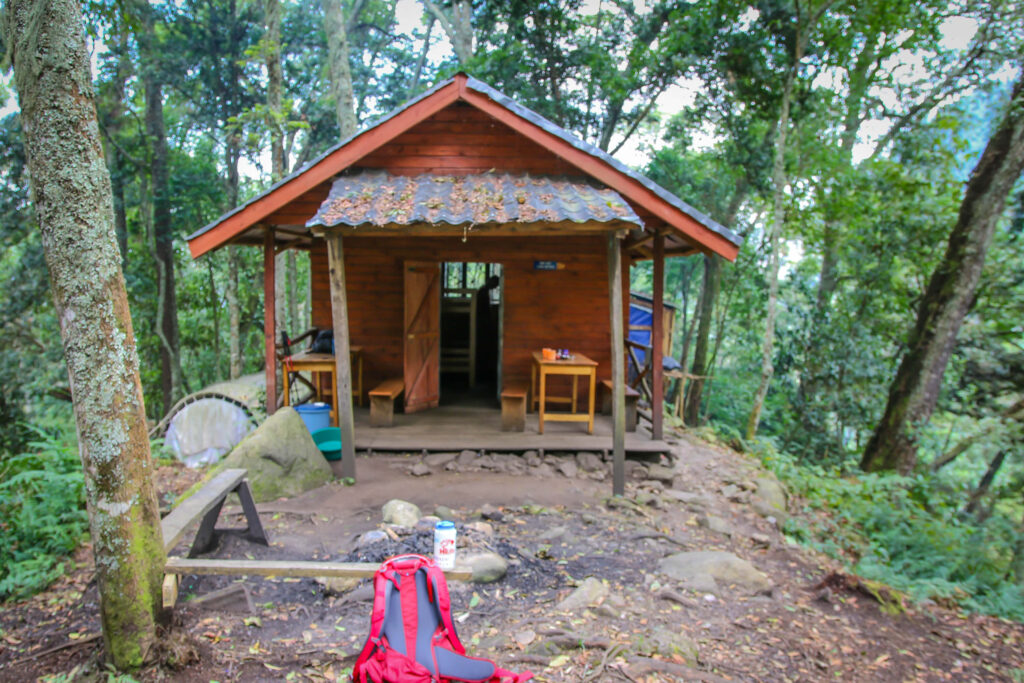
If you already own solid four-season hiking kit, your additional gear spend can be minimal; if not, our guide on whether you need to bring your own climbing gear explains what we provide as standard and what you should own personally, and our gear rental service covers items like proper rubber trekking boots, gaiters, and cold-weather sleeping bags for those who would rather not fly a full expedition kit from the UK. Tipping is customary and expected rather than optional on the Rwenzori; as a planning rule, add USD 20 per trekker per day to your budget for a solo or small-group trek, which our complete guide to tipping Rwenzori porters and guides breaks down by crew role and trek length.
Sample all-in budget for a UK trekker
Pulling every category together, here is a realistic all-in picture for a solo UK trekker on a standard seven-day Margherita Peak expedition, across three different comfort levels. Treat this as a planning baseline rather than a quote; your actual figure will depend on your chosen route, group size, and season.
| Cost category | Lean / value trekker | Mid-range comfort | Premium / bucket-list |
| Return flight, UK–Entebbe | £550–£600 | £600–£700 | £750–£950 (better routing, more legroom) |
| Uganda e-Visa | £40 (single-entry) | £40 (single-entry) | £80 (East Africa Tourist Visa) |
| Trek package (7–8 days, Margherita summit) | £1,450–£1,650 | £1,650–£1,950 | £2,000–£2,400 (private group, extra guide) |
| Domestic flight Entebbe–Kasese (return) | £500–£600 (or overland ~£12) | £120–£150 | £120–£150 (both legs, priority booking) |
| Kasese pre/post-trek accommodation (2 nights) | £30–£50 | £60–£120 | £150–£300 (boutique eco-lodge) |
| Travel insurance (high-altitude, evacuation) | £60–£90 | £90–£130 | £130–£180 (annual multi-trip, higher limits) |
| Gear rental (boots, gaiters, poles, sleeping bag) | £40–£70 | £20–£40 (own kit, top up) | £0 (full personal kit) |
| Guide & porter tips | £100–£140 (7 days @ £15–£20) | £140–£180 | £180–£240 |
| Approximate all-in total | £2,300–£2,700 | £2,700–£3,300 | £3,400–£4,300+ |
A useful sanity check: even at the premium end of this range, a Rwenzori expedition from the UK typically costs less than an equivalent Kilimanjaro summit trip booked through a comparable-quality operator, largely because Tanzania’s park fees and the competitive Kilimanjaro guide market push prices considerably higher for a broadly similar itinerary length.
Currency and money on the ground
Carry US dollars in cash for tips, incidentals, and any costs not pre-paid through your operator; Uganda’s tourism sector runs heavily on USD alongside the local Uganda Shilling, and UK debit and credit cards, while usable at hotels and some restaurants in Kampala and Kasese, are not reliable once you are away from the main towns. Notify your UK bank of your travel dates before you fly, since an unexpected transaction from Uganda is a common trigger for a fraud block on a British card, and having your card frozen mid-trip is an entirely avoidable inconvenience.
Building a UK-to-Summit Itinerary That Actually Works
With flights, visa, and cost all mapped out, the last piece is sequencing the trip so that nothing collides. A realistic skeleton for a first-time UK trekker looks like this: fly out of London on your chosen carrier and land at Entebbe the following evening; spend one night in Entebbe or Kampala to recover; fly or drive to Kasese the next day and spend a further night there to rest, confirm your gear with your guide, and sort any last logistics; begin your trek the following morning. On the way home, mirror the structure: allow a rest night in Kasese immediately after the trek, before your onward journey to Entebbe and your flight back to the UK, since flying internationally the same day you finish a multi-day summit trek is unwise and, frankly, unpleasant.
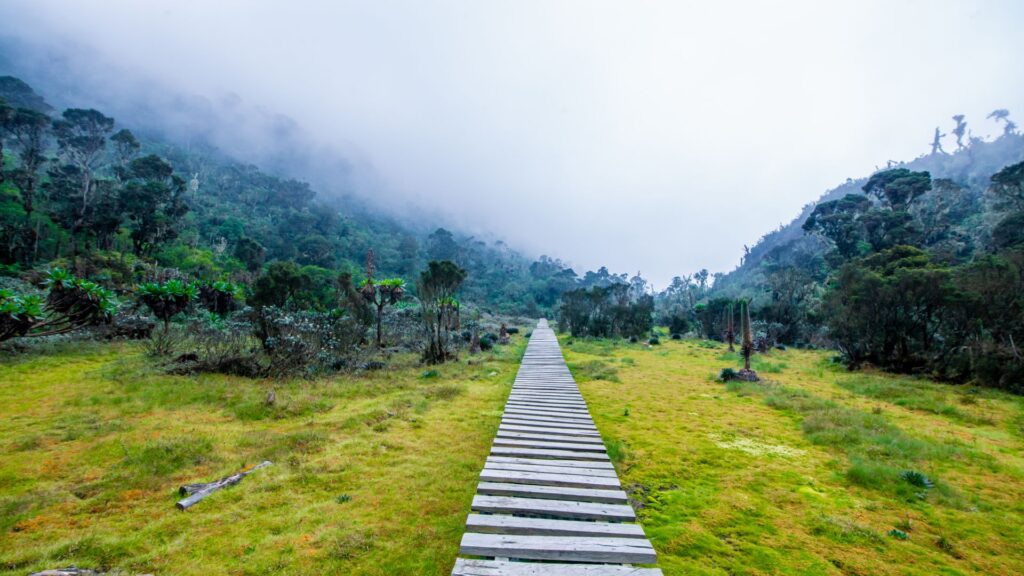
Choosing between the Central Circuit Trail and the Kilembe Trail shapes how many days you need to budget for, and both routes ultimately connect to the technical glacier approach on Margherita Peak, the summit that draws most UK trekkers to this mountain in the first place. If you would rather sample the range without committing to the full multi-peak expedition, our five-day Mount Speke trek is a genuine shorter alternative that still delivers a real Rwenzori summit. Timing your UK departure against Uganda’s seasons matters too; our month-by-month Rwenzori trekking guide sets out exactly what conditions and summit access look like across the year so you can match your UK leave dates to the best possible weather window.
Common Mistakes UK Trekkers Make When Planning This Trip
The single biggest error is treating the Entebbe-to-Kasese leg as an afterthought and trying to fly in, transfer, and start trekking within 24 hours; build in the buffer nights described above. The second is applying for the Uganda visa too late, particularly around UK travel clinic waiting times for the yellow fever vaccination, which has its own ten-day validity rule that catches out people who booked their jab the week before flying. The third is assuming standard annual travel insurance covers high-altitude trekking; it almost never does, and this is the single most common reason a UK trekker’s paperwork gets flagged as inadequate before we will confirm their place on the mountain. And the fourth, more a planning nuance than an outright mistake, is under-costing the trip by pricing only the headline trek package and forgetting that flights, visa, insurance, Kasese nights, and tips typically add £700 or more on top of that figure.
Frequently Asked Questions
Do I need a visa to trek the Rwenzori Mountains as a UK citizen?
Yes. British passport holders must obtain a Uganda visa before travel; visa-on-arrival is no longer available for almost all nationalities. Apply online through the official e-Visa portal, choosing either the USD 50 single-entry tourist visa for a Uganda-only trip or the USD 100 East Africa Tourist Visa if you are also visiting Kenya or Rwanda on the same trip.
Is there a direct flight from the UK to Uganda?
Yes, Uganda Airlines operates a non-stop service between London Gatwick and Entebbe three times a week, taking around seven hours forty minutes. Every other UK-to-Entebbe option involves one stop, typically via Doha, Istanbul, Addis Ababa, Amsterdam, Nairobi, or Kigali, depending on the airline.
How much does a Rwenzori trek cost in total from the UK, including flights?
For a standard seven-day Margherita Peak expedition, expect an all-in total of roughly £2,300–£2,700 for a lean but properly equipped trip, rising to £2,700–£4,300 or more depending on comfort level, flight class, and accommodation choices. This covers flights, visa, the trek package itself, insurance, Kasese accommodation, gear, and guide and porter tips.
Do I need a yellow fever vaccination to enter Uganda from the UK?
Yes. Uganda requires all travellers aged one year and above to carry a valid yellow fever vaccination certificate, and this is checked both during the e-Visa application and on arrival. The certificate only becomes valid ten days after vaccination, so book the jab at a UK travel clinic at least two to three weeks before you fly.
Will my UK travel insurance cover a Rwenzori trek?
Almost certainly not without an upgrade. Standard UK travel insurance, including most annual multi-trip policies, excludes high-altitude trekking above roughly 4,000 metres and helicopter evacuation, both of which a standard Rwenzori itinerary involves. You need a specialist policy that explicitly covers trekking to at least 5,200 metres, mountain rescue, and medical evacuation and repatriation; this is a mandatory, non-negotiable requirement for anyone joining one of our expeditions.
How long does it take to get from Entebbe to the Rwenzori Mountains?
Around one hour by domestic flight from Entebbe to Kasese Airport on AeroLink, or five to seven hours by road via Fort Portal. Either way, plan for at least one overnight stop in the Entebbe or Kampala area after your international flight before making this onward journey, since most UK connecting routes land at Entebbe in the evening.
Is the Rwenzori cheaper than climbing Kilimanjaro?
Generally, yes. A comparable seven- to eight-day guided summit expedition on Kilimanjaro through a reputable operator typically costs USD 2,500–4,000 or more per person, driven by Tanzania’s park fees and a highly competitive guide market, whereas an equivalent Rwenzori expedition runs USD 1,800–2,500, offering arguably a more technical, more exclusive, and more biodiverse mountain experience at a lower core price.
Ready to Start Planning Your Rwenzori Trek from the UK?
Every detail in this guide, flights, visa, cost, is something our team handles for British trekkers every season, and the fastest way to turn this research into a confirmed itinerary is to talk it through directly with people who guide this mountain year-round. Tell us your travel dates, your fitness level, and whether Margherita Peak or a shorter summit is calling you, and we will build a route, a timeline, and an honest cost estimate around your specific trip. Get in touch with our team to start planning your Rwenzori expedition, and let’s get you standing on a genuine equatorial glacier sooner than you think.