A full guide to every Rwenzori campsite: altitude, facilities, sleeping, water, charging, and conditions at Nyabitaba, Bujuku, Elena, Kitandara, and more.
Every evening in the Rwenzori Mountains ends the same way, and yet each one is entirely its own. Trekkers remember the quality of the ritual that involves arriving at camp after hours of moving through some of the most extraordinary mountain terrain on Earth. At each camp, you’ll learn about your sleeping arrangement, running water, toilet use, phone charging, views, temperature, and safety. These are questions that remain largely unanswered in most planning resources. And they are deeply practical questions that directly shape how you pack, what you expect, and how comfortably you rest on the nights that separate each day’s effort.

The Rwenzori Mountains National Park maintains two principal trekking infrastructures: the hut system of the Central Circuit Trail, which uses a network of wooden mountain huts established decades ago and progressively upgraded, and the camp system of the Kilembe Trail, which uses more recently developed facilities managed by Rwenzori Trekking Services. The Bukurungu Trail operates as a genuine wilderness camping route with no permanent hut structures, ground tents, or open-air camping in designated sites within the national park. Each system offers a different character of mountain accommodation, and understanding what distinguishes them helps you choose the right route and pack with precision.
What follows is the most detailed, ground-level account of every significant campsite in the Rwenzori trekking infrastructure available anywhere in print or online, written by someone who has slept in all of them, guided groups through all of them in every season, and knows the character of each camp the way a hotelier knows their rooms. By the end of this guide, you’ll know what to expect at every camp on your route.
Understanding the Rwenzori Mountain Hut System: What “Accommodation” Actually Means
Before we profile each individual camp, it is worth establishing what the word “accommodation” genuinely means in the context of the Rwenzori. This is not Kilimanjaro, where some high camps have dining tents, solar showers, and sleeping huts erected for you. Nor is it the Alps, where stone refuge huts offer hot meals, drying rooms, and mattresses with linen. The Rwenzori mountain huts are functional, robust, and genuinely comfortable in the mountain sense of that word; they keep you dry, give you a bunk to sleep on, and provide shelter from wind and cold. They are not hotels.
The Central Circuit huts are wooden structures on elevated stilts or stone foundations, designed to raise them above the ground moisture that saturates the Rwenzori’s lower and middle elevations. Each hut has a sleeping area fitted with wooden bunk frames and foam mattresses not the thin, degraded pads of popular imagination, but reasonably thick, serviceable foam sleeping surfaces. You sleep on these in your sleeping bag, which you must bring yourself. Pillowcases and blankets are not provided. The mattresses represent a significant comfort upgrade compared to sleeping on tent ground pads, particularly after long days on the trail.
Most of the Central Circuit huts have a separate cooking area where your expedition cook prepares meals using the supplies your porter team has carried up from Nyakalengija. A basic eating area, typically a wooden table and benches, occupies a communal section of the hut. Toilet facilities at Central Circuit camps consist of long-drop pit latrines in a separate outbuilding adjacent to the main hut. These are cleaned and maintained by park staff, and standards vary; some are acceptably clean, others are what you would expect from a heavily used mountain facility in a humid environment. Bring your own toilet paper and hand sanitizer for every camp without exception.
Sleeping bag requirement: A sleeping bag rated to at least -5°C is essential for the Rwenzori. Above Bujuku Hut (3,977m) and especially at Elena Hut (4,541m), night temperatures regularly drop to 0°C and below. A bag rated to -5°C provides genuine comfort rather than functional survival. A liner adds warmth and extends the useful temperature range of any bag you carry.
The Central Circuit Trail Campsites: Complete Profiles.
The Central Circuit Trail is the primary route through the Rwenzori range and the infrastructure backbone of most of our guided trek itineraries. It begins in Nyakalengija at 1,646 metres and ascends through five distinct vegetation zones to the glaciated summit terrain of Mount Stanley. The huts along the route are spaced to create natural daytime stages of four to seven hours of walking. Each has its own altitude, character, and set of conditions that define the overnight experience.
Nyabitaba Hut: First Night on the Mountain
| Altitude
2,651m / 8,697ft |
Trail
Central Circuit |
Accommodation
Wooden bunk huts |
Solar/Power
None / solar limited |
Nyabitaba Hut is the first campsite on the Central Circuit and the destination for day one of most standard itineraries, the 7-day Margherita Peak trek, the 6-day Weismann Peak hike, and all other Central Circuit departures. It sits at 2,651 metres, perched on a broad ridge above the upper montane forest, reached after approximately 10 kilometers and 1,000 metres of ascent from Nyakalengija. For most trekkers, the approach takes between four and six hours.
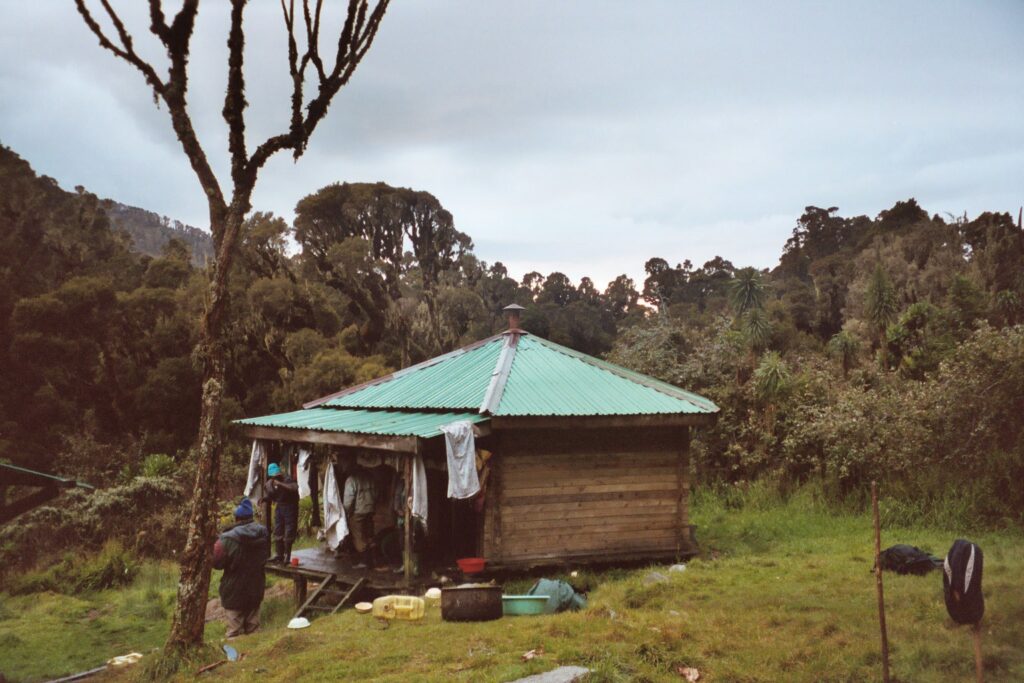
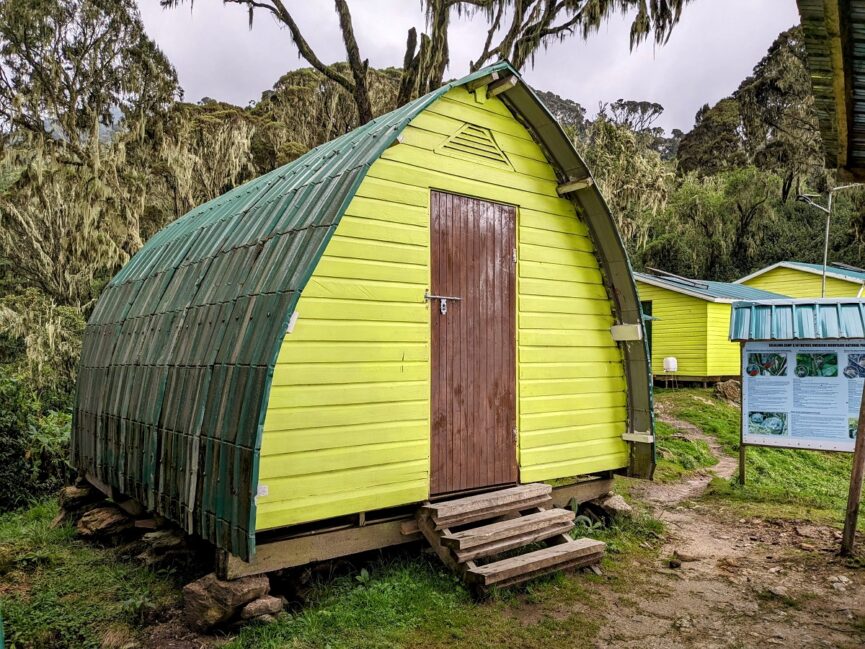
The hut at Nyabitaba is the most substantial structure on the Central Circuit, a two-story wooden building with separate sleeping quarters for trekkers and crew. The trekker sleeping area occupies the upper level, where bunk frames accommodate groups of up to roughly 20 people in a dormitory arrangement. The foam mattresses here are among the better-maintained on the route. Downstairs, a communal dining area with wooden benches and a table serves as the space where your cook prepares and serves meals. The cooking is done on gas or kerosene stoves; no open fires are permitted anywhere within the national park.
Water at Nyabitaba comes from a nearby stream, clear, cold, and reliable in all seasons, though always treated before drinking. Toilet facilities are in an outbuilding behind the main hut. There are no shower facilities. There is no reliable electricity supply at Nyabitaba, though the hut managers occasionally have solar panels that can charge devices slowly. Do not plan on using them. Bring a power bank for electronics throughout the mountain section.
The setting of Nyabitaba is its most compelling quality. The ridge on which it sits offers an open aspect to the south and east, and on clear mornings, which are most likely before the cloud builds in late morning, the views extend over the forested valleys leading back toward Kasese, with the upper Rwenzori peaks occasionally visible above the cloud line. The immediate environment is a transitional zone between dense montane forest below and the beginning of bamboo and heath communities above. At dusk, the forest edge near the hut is active with bird calls, and the night temperature at this altitude is cool but manageable, typically between 8°C and 14°C.
For trekkers on the 1-day Nyabitaba introductory hike, this camp is both destination and turnaround point, a taste of the mountain without the full commitment of a multi-day ascent. For those continuing upward, it is a well-earned, comfortable first night that sets the tone for what follows.
John Matte Hut: Into the Heath Zone.
| Altitude
3,414m / 11,201ft |
Trail
Central Circuit |
Accommodation
Wooden bunk huts |
Solar/Power
None |
John Matte Hut sits at 3,414 metres and represents a significant step further into the Rwenzori’s ecological interior. The journey from Nyabitaba covers approximately 9 kilometers, crossing the Mubuku River on a wooden bridge before ascending through a dramatic transition in vegetation. The dense montane forest gives way progressively to bamboo stands, then to the open, eerily beautiful heather moorland that characterizes the middle altitude zones of the Rwenzori. Walking time from Nyabitaba is typically four to six hours.
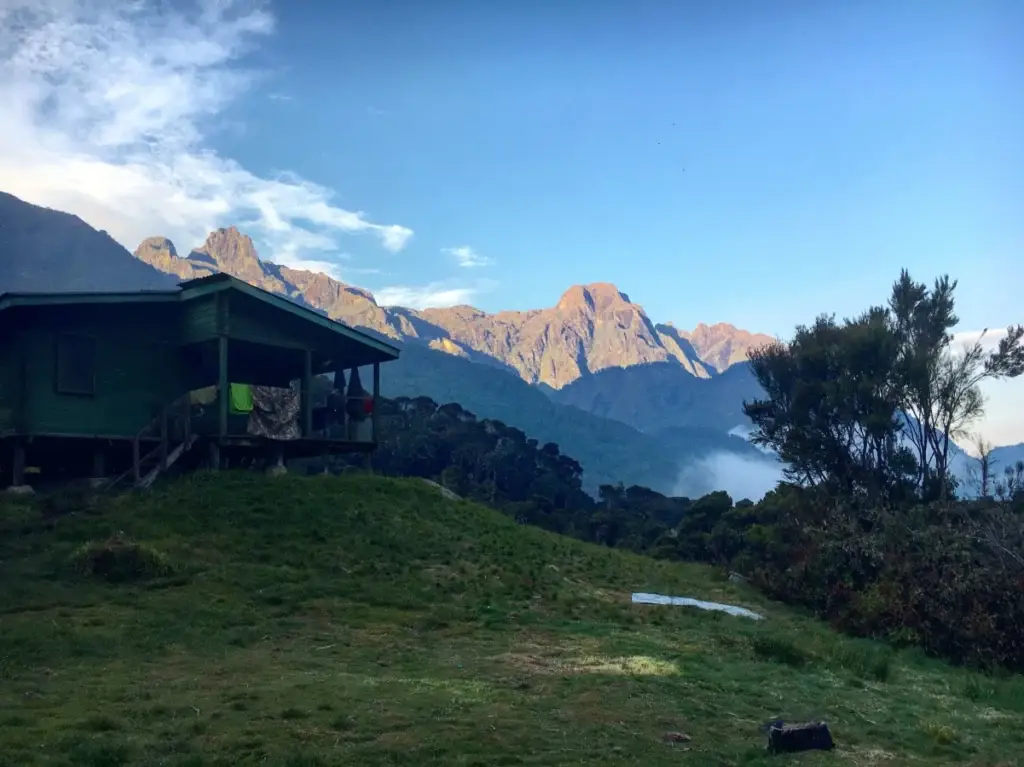
The hut at John Matte is a solid wooden structure in the same broad architectural tradition as Nyabitaba bunk frames with foam mattresses, a separate communal cooking and eating area, and outbuilding latrines. The sleeping capacity is broadly similar. The condition of John Matte is generally satisfactory, as it is situated in a slightly more protected position than some upper camps and benefits from relatively consistent maintenance by park authority staff.
What distinguishes John Matte from Nyabitaba is altitude and vegetation. At 3,414 metres, you are well into the Rwenzori’s distinctive alpine zone above the tree line in the conventional sense, though the Rwenzori’s definition of the tree line is complicated by the extraordinary presence of giant heathers (Erica arborea) that grow to sizes more characteristic of tropical woodland. The landscape around John Matte is one of dripping, moss-draped heather forest with open patches of bog and the first scattered giant groundsels (Senecio) beginning to appear. The color palette is extraordinarily green, every shade from pale lime to deep emerald, rendered luminous by the permanent moisture of the mountain air.
Night temperatures at John Matte typically range from 4°C to 10°C. The camp is frequently enveloped in mist and cloud by late afternoon, and overnight condensation is a heavy, reliable daily occurrence rather than a weather event to be noted. Sleeping bag warmth becomes genuinely important from this camp upward. Water is available from streams near the hut. There is no electricity supply. The altitude at John Matte is the point at which some trekkers begin to notice the physiological effects of reduced oxygen: mild headache, slightly elevated breathing rate, and reduced appetite. These are normal acclimatization responses and the reason why a measured, unhurried pace on the approach is so important.
Bujuku Hut: The Heart of the Mountain
| Altitude
3,977m / 13,048ft |
Trail
Central Circuit |
Accommodation
Wooden bunk huts |
Solar/Power
Solar (limited) |
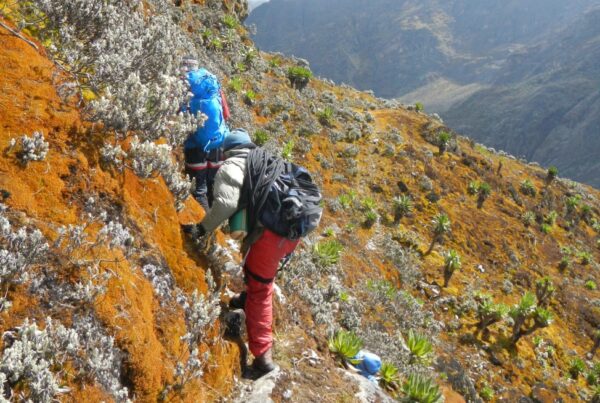
Bujuku Hut is the emotional and geographical center of the Central Circuit Trek. At 3,977 metres, it sits at the edge of the Bujuku Valley, the broad, otherworldly high-altitude basin that lies between Mount Stanley, Mount Speke, and Mount Baker. The path from John Matte goes through some of the most typical landscapes of Rwenzori: the well-known marshes of the upper valley, which you cross using hidden stepping stones and bog bridges, and the thick groups of giant lobelia (Lobelia wollastonii) that grow tall from the valley floor, standing two to four meters high above the marsh. The walking distance from John Matte is four to six hours.
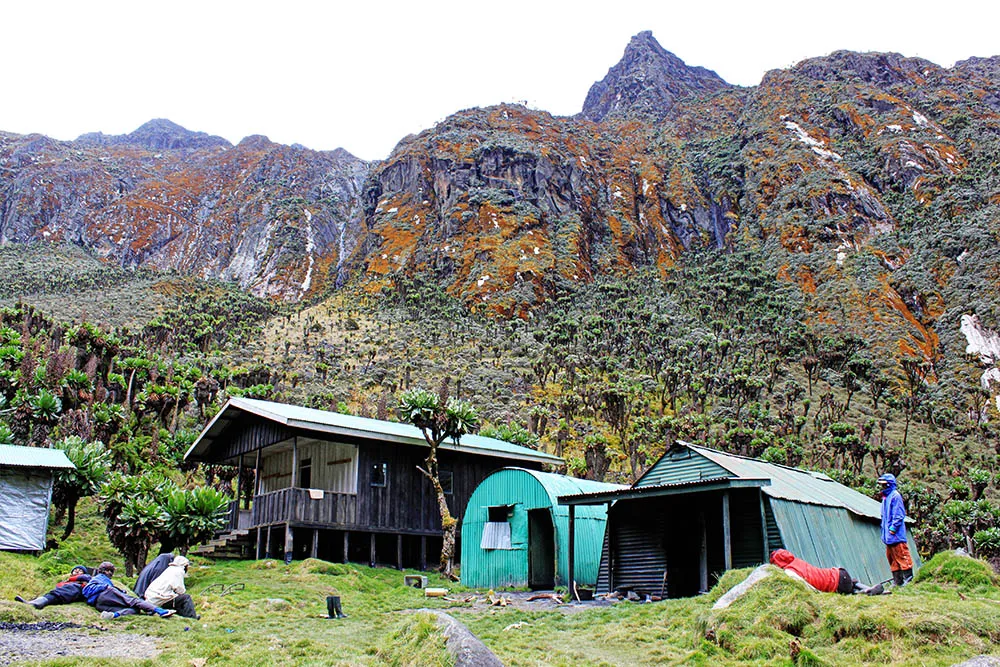
Bujuku Hut is the primary hub camp of the Central Circuit. It is where trekkers on extended itineraries, the 8-day three-peaks expedition, the 13-day six-peaks grand expedition, and the 18-day all-peaks traverse spend multiple nights, using the camp as a base from which to make summit attempts on the surrounding peaks before returning each afternoon. It is also the overnight stop on the standard route to Elena Hut and Margherita Peak for groups on the 7-day itinerary.
The hut infrastructure at Bujuku is the most developed on the upper Central Circuit. Limited electrical power from solar panels supplies basic lighting in the communal area and allows for slow device charging, although neither is guaranteed. There are improved latrine facilities compared to lower camps and a separate crew sleeping area. The main hut has the characteristic bunk frame and foam mattress arrangement, accommodating roughly 20 trekkers.
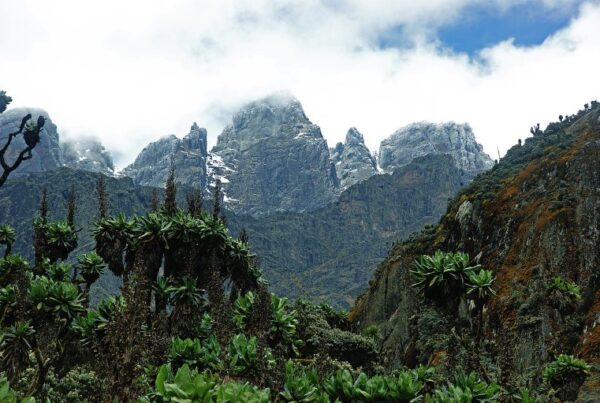
The setting is genuinely spectacular on clear days and atmospheric even in clouds. When visibility allows, most likely in the early morning before clouds build, the peaks surrounding the Bujuku Valley are visible: the mass of Mount Stanley’s glaciated ridgelines to the southwest, the dark rock faces of Mount Speke to the northeast, and Mount Baker’s profile to the southeast. The Bujuku Valley, a high-alpine landscape unparalleled in East Africa, is further enhanced by the proximity of the range’s giants, creating a breathtaking sense of scale, in addition to the altitude, which takes it in a more literal sense. Night temperatures at Bujuku range from 0°C to 6°C and occasionally dip below freezing in the dry season months of December through March.
The bogs surrounding the hut make waterproof boots and gaiters essential on the approach and on any acclimatization walk from camp. Water is abundant from the streams flowing through the valley. The altitude of nearly 4,000 metres means that altitude management becomes critical from Bujuku onward. Our guides actively monitor group members here, and the first-morning headache that some trekkers experience is a normal part of acclimatizing to what is a significant elevation for most non-mountaineers.
Elena Hut: The Last Refuge Before the Summit
| Altitude
4,541m / 14,898ft |
Trail
Central Circuit |
Accommodation
Stone mountain hut |
Solar/Power
None |
Elena Hut is the highest camp on the Central Circuit and the final shelter before the summit pushes to Margherita Peak, at 5,109 meters. At 4,541 meters, it sits on the upper slopes of Mount Stanley, above the permanent snowline, in terrain that has transitioned completely from the rich biological exuberance of the lower mountain to the stark, ice-sculpted world of the high alpine. The approach from Bujuku via Scott Elliot Pass (4,372 m) is the most technically demanding day of the Central Circuit, steep, rocky, and exposed and takes between four and seven hours depending on conditions.
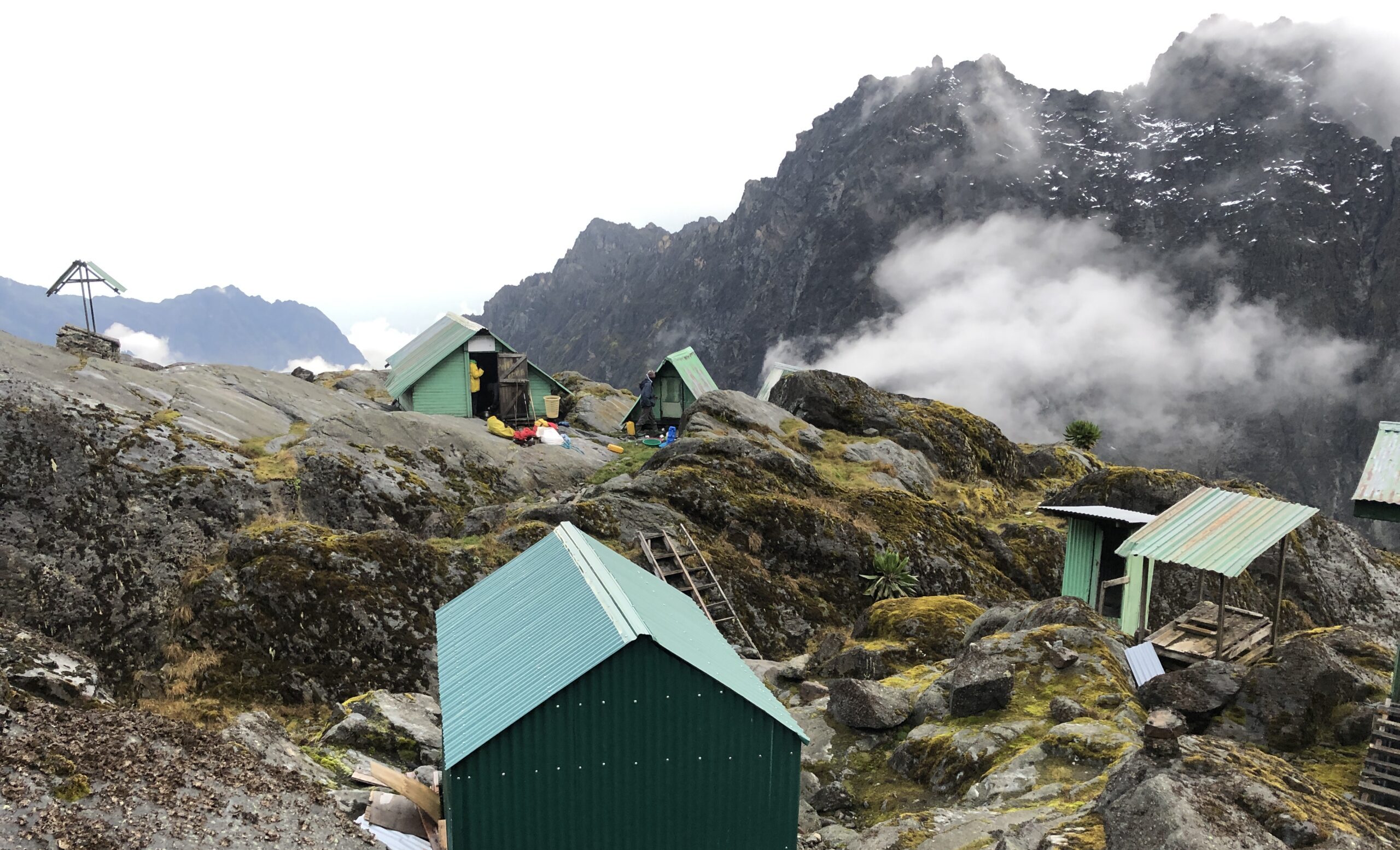
The hut at Elena is structurally different from the lower wooden huts. It is a stone building, compact and low, designed to minimize wind exposure at an altitude where storms can arrive with little warning and conditions can deteriorate rapidly. The sleeping area is smaller than Bujuku’s, and the hut accommodates fewer trekkers, with characteristic bunk frames and foam mattresses, but in a more compressed space. There is a basic cooking area and minimal communal space. The simplicity of the facility at Elena reflects both the difficulty of maintaining structures at this altitude and the practical reality that most trekkers arrive, sleep, summit, and leave within a 24-hour period.
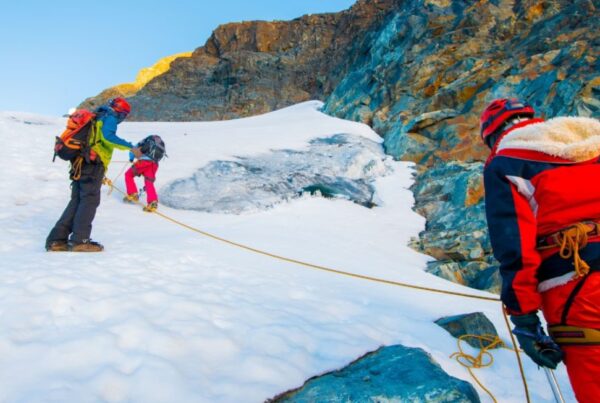
Summit departure protocol: From Elena Hut, summit parties for Margherita Peak typically depart between 5:00 and 6:00 am to ensure the glacier crossing occurs in the early morning hours when snow conditions are most stable. The full round trip to Margherita and back to Elena takes approximately five to eight hours depending on group fitness and conditions. Trekkers then descend to Bujuku or Kitandara the same afternoon.
There is no electricity at Elena Hut. There is no solar panel. At this altitude, and with this exposure, maintaining any power infrastructure is impractical. Power banks charged at Bujuku or lower are your only resource. Water comes from snowmelt and is available in streams near the hut in the melt season, though it should always be treated. On cold nights when temperatures drop well below zero, water sources near the hut may freeze by morning, so your guide ensures water is collected and stored in insulated vessels the night before summit day.
The setting of Elena Hut is raw and humbling in a way that no lower camp can match. The glaciers of Mount Stanley are visible from the hut’s immediate surroundings, retreating, as they have been for over a century, but still commanding in presence. The Rwenzori glaciers have lost more than 80% of their coverage in the past 100 years, and Elena Hut sits close enough to what remains to make that loss tangible and immediate. On a clear night at Elena, above most cloud cover, the star field is extraordinary and cold. A minimum sleeping bag rated to -10°C is advisable for Elena. At -5°C, you will be functional but not comfortable.
Elena Hut is also accessible on our 4-day fast Margherita Peak expedition and the 5-day Margherita summit trek, which compress the ascent timeline compared to the more gradual 7-day approach. The faster ascent increases altitude illness risk, and both the 4-day and 5-day itineraries are recommended only for experienced, well-acclimatized trekkers.
Kitandara Hut: The Descent’s Reward
| Altitude
4,023m / 13,199ft |
Trail
Central Circuit |
Accommodation
Wooden bunk huts |
Solar/Power
Solar (limited) |
Kitandara Hut offers one of the most beautiful camp settings on the entire mountain. Located at 4,023 meters on the way down from Elena via the Freshfield Pass (4,282 m), it is right by the twin Kitandara Lakes, which beautifully reflect the nearby mountains and sky when the weather is clear, and its shores are lined with large plants and mossy rocks, creating an incredibly stunning and dreamlike scene. The lakes are among the most photographed natural features of the Rwenzori Mountains, and arriving at this camp on the second major descent day, typically from Elena after a summit morning, carries a particular emotional charge: you have climbed Margherita, and now you are here, at this improbable lake, on an equatorial African mountain.
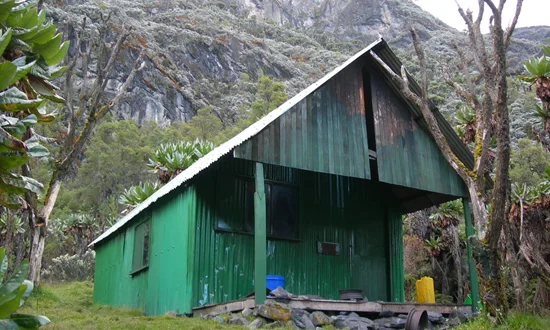
The hut at Kitandara is a well-maintained wooden structure in the standard Central Circuit format: bunks, foam mattresses, a cooking area, and outbuilding latrines. Like Bujuku, it benefits from limited solar power for lighting and slow device charging. The camp is sheltered by the surrounding ridgelines, which reduces wind exposure compared to the more open Elena. Temperatures at Kitandara are somewhat warmer than Elena’s summit altitude, typically 2°C to 8°C overnight, though rain and clouds are constant companions.
Kitandara is a significant camp for trekkers on the 10-day four-peaks expedition and those completing the full circuit, as it sits at the junction of several route options. The nearby Freshfield Pass connects the Stanley and Baker massifs, and the approach to Mount Baker’s Edward Peak is accessible from Kitandara for groups with the time and ambition. The 5-day Edward Peak trek uses Kitandara as a key overnight, and the views of Baker from this camp on a clear morning are among the finest in the range.
Water from the lakes and adjacent streams is plentiful. The reflective quality of the Kitandara Lakes makes them a particularly rewarding location for photography, best in the brief windows of morning clarity before the Rwenzori’s cloud machine reasserts itself. Most trekkers spend one or two nights at Kitandara depending on their itinerary structure. The pace slows here naturally, partly from post-summit fatigue and partially because the setting demands it.
Guy Yeoman Hut: The Final Descent Camp
| Altitude
3,261 m / 10,699ft |
Trail
Central Circuit |
Accommodation
Wooden bunk huts |
Solar/Power
None |
Guy Yeoman Hut, at 3,261 meters, is the final overnight camp on the Central Circuit before the descent back to Nyakalengija. Named after the British mountaineer Guy Yeoman, who was instrumental in developing access to the Rwenzori in the mid-twentieth century, the hut sits on the lower slopes of the descent route from Kitandara, in a vegetation zone that transitions back from the high-alpine groundsel landscape into the heather moorland of the middle mountain.
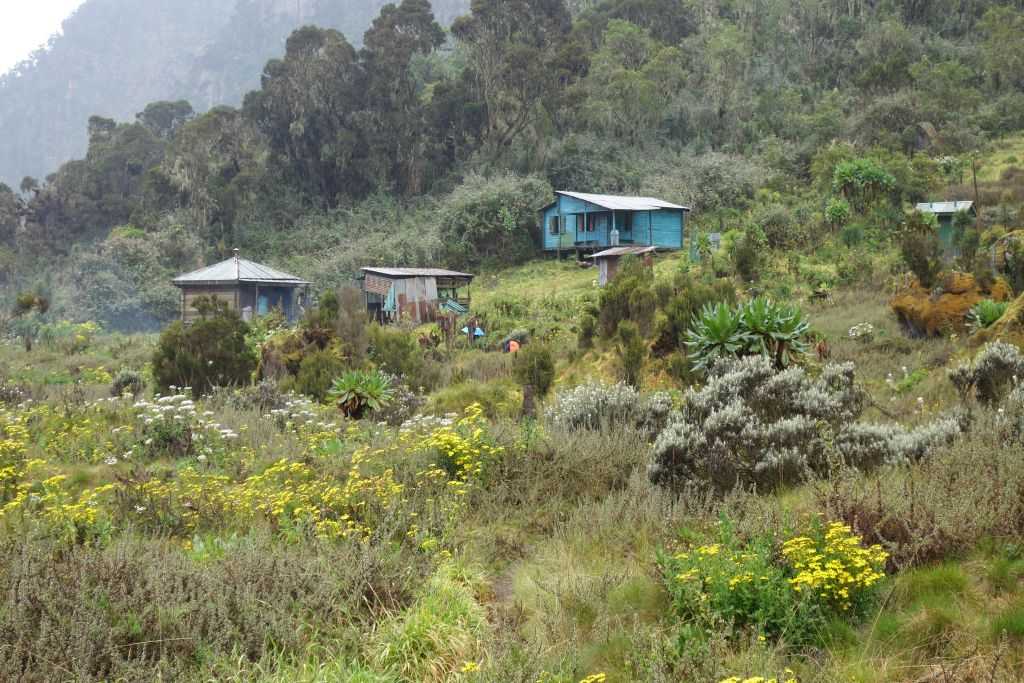
The structure at Guy Yeoman is similar to the other Central Circuit huts: wooden, elevated, with bunk frames and foam mattresses. It is smaller than Bujuku and Nyabitaba in sleeping capacity, reflecting the fact that it receives fewer multi-day stays and more pass-through overnight stops. The latrine facilities are in adequate condition. There is no electricity. Water comes from a stream adjacent to the camp.
The character of Guy Yeoman is that of a camp on the descent, comfortable, lower, warmer than the camps above, and carrying the particular quality of the last mountain night. Temperatures here are noticeably milder than Bujuku and Elena, typically between 8°C and 14°C, and the heather forest surrounding the camp creates a sense of enclosure and shelter after the exposed upper mountain. Many trekkers sleep particularly well at Guy Yeoman, partly due to warmer temperatures, partly due to reduced altitude, and partly due to the deep physical fatigue of several days of sustained mountain effort that has finally, on the descent, begun to ease.
For trekkers on the 7-day Central Circuit, Guy Yeoman is day six’s destination, with one sleep remaining before the return to Nyakalengija the following morning. The final day’s descent from Guy Yeoman back to the trailhead takes between three and five hours, mostly downhill through montane forest, and carries the particular bittersweet quality of all mountain descents: relief, accomplishment, and a quiet reluctance to leave.
The Kilembe Trail Campsites: A Different Architecture of Mountain Comfort
The Kilembe Trail approaches the Rwenzori from the south, beginning at the old copper mining community of Kilembe near Kasese and ascending through a different set of valleys and vegetation communities toward the high central massif. The Kilembe Trail infrastructure, officially opened in 2011 under the management of Rwenzori Trekking Services, was purpose-built to a more contemporary standard than the Central Circuit huts, and its quality is evident. The camps are newer, the solar infrastructure is better developed, and the overall standard of facilities, while still genuinely rustic by urban standards, is more consistent than the older Central Circuit network.
Sine Camp: The Kilembe Trail’s First Night
| Altitude
2,612m / 8,569ft |
Trail
Kilembe Trail |
Accommodation
Wooden bunk huts |
Solar/Power
Solar charging available |
Sine Camp, at 2,612 meters, is the first overnight destination on the Kilembe Trail, reached after approximately nine and a half kilometers of ascent through dense montane forest from the Kilembe trailhead. The camp sits on a forested ridge above the Nyamwamba River valley, surrounded by the bird-rich primary forest that makes the lower Kilembe Trail one of the most rewarding birding environments on the Rwenzori. The 2-day Sine Camp trek uses this camp as both destination and turnaround point, making it the entry point for trekkers testing the Kilembe Trail without committing to a full summit expedition.
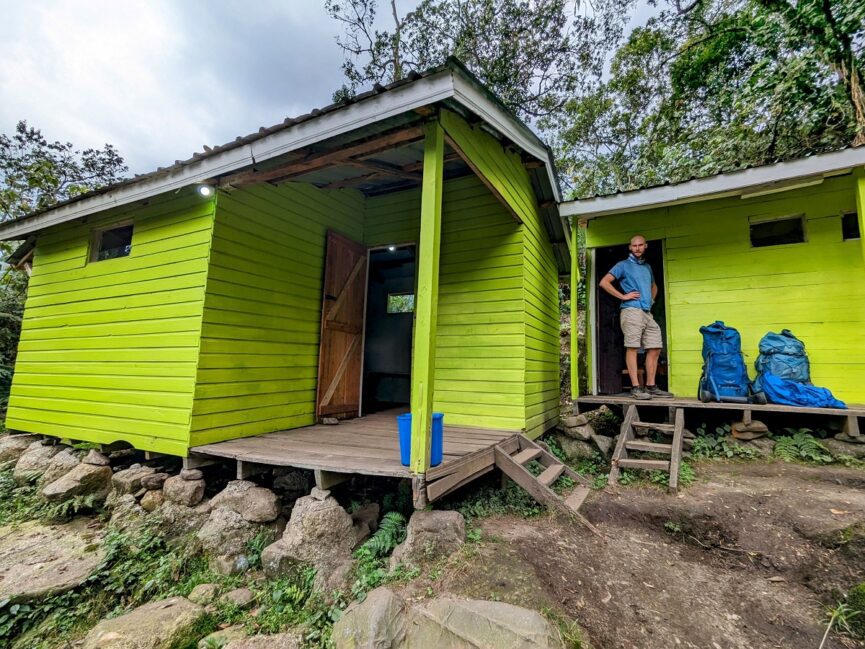
The hut at Sine Camp is one of the better-built on the Kilembe Trail, a solid wooden structure with bunk-frame sleeping, foam mattresses, a communal eating and cooking area, and functional latrine outbuildings. Crucially, Sine Camp has solar panels that provide lighting in the huts and allow for device charging. This feature is a genuine practical advantage for trekkers arriving with depleted phone batteries and power banks after a day on the trail. The charging rate is modest; a full phone charge overnight is typically achievable, and a power bank recharge will be partial, but it is a comfort that the Central Circuit’s Nyabitaba does not consistently offer.
Water is available from streams near the camp. Night temperatures at 2,612 meters are comparable to Nyabitaba’s cool rather than cold, typically 8°C to 14°C. The forest environment of Sine Camp creates an enclosed, sheltered feel that makes it a comfortable and atmospheric first night. For the many trekkers beginning on the Kilembe Trail primarily for its dramatic waterfall scenery and wildlife diversity, Sine Camp is the base from which the surrounding trails are most rewarding to explore.
Mutinda Camp: The Viewpoint Camp.
| Altitude
3,700m / 12,139ft |
Trail
Kilembe Trail |
Accommodation
Wooden bunk huts |
Solar/Power
Solar charging available |
Mutinda Camp, at 3,700 meters, is one of the most dramatically positioned camps on the entire Rwenzori trekking network. The camp sits on a broad shoulder above the treeline, where the dense forest and heather zone give way to the open Afro-alpine landscape of giant groundsels and open moorland. On clear mornings, and the mornings at Mutinda are among the most likely to be clear anywhere on the mountain, the views from the camp extend across the Kasese plain toward the distant horizon of western Uganda, with the mass of the Rwenzori rising behind.
The famous Mutinda Lookout point is a short walk from the camp, and the panoramic views from the lookout, often described by trekkers as one of the highlights of any Rwenzori experience, are best experienced in the brief clarity of early morning before the clouds roll in. The principle of “climb high, sleep low” is perfectly embodied at Mutinda: the lookout at around 4,000 metres provides high-altitude exposure while the camp at 3,700 metres offers slightly more comfortable sleeping conditions.
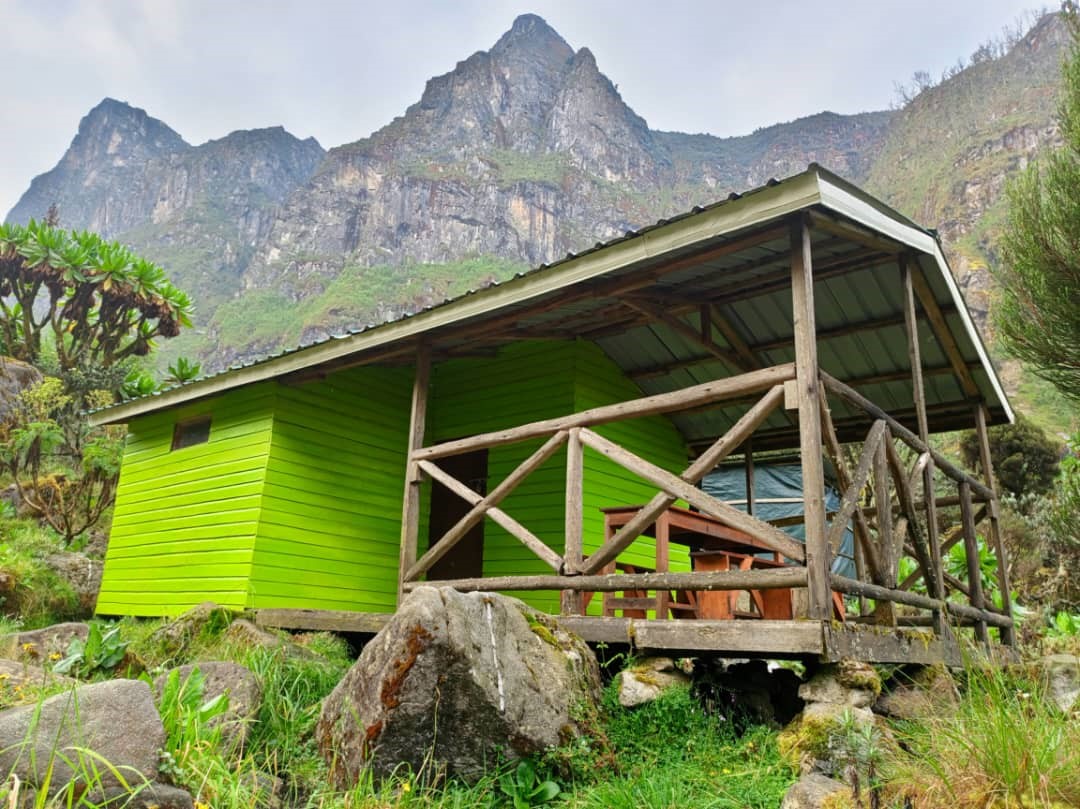
The hut facility at Mutinda is in excellent condition, with the standard bunk and mattress provision and functional solar panels for charging and lighting. Latrine facilities are maintained regularly. Water comes from streams and is treated before use. Night temperatures range from 2°C to 8°C. A sleeping bag rated to at least -5°C is necessary from this point upward on the Kilembe Trail.
Bugata Camp: Deep Alpine Territory.
| Altitude
4,062m / 13,327ft |
Trail
Kilembe Trail |
Accommodation
Wooden bunk huts |
Solar/Power
Solar (limited) |
Bugata Camp sits at 4,062 metres on the upper Kilembe Trail, firmly in the high-alpine zone, surrounded by the otherworldly vegetation of the Rwenzori’s highest biological communities. Giant lobelias are dense here, and the ground is a combination of bog and rocky moraine that makes progress slow and the landscape surreal in equal measure. The approach to Bugata from Mutinda crosses the upper Nyamwamba Valley and ascends through increasingly dramatic scenery.
The hut at Bugata follows the Kilembe Trail’s construction standard: a well-built wooden structure, bunk frames, foam mattresses, and working solar panels (though charging capacity becomes less reliable at high altitude due to cloud cover limiting solar input). The position of Bugata means it can be fully enclosed in cloud for extended periods, but the moments of clarity, particularly at dawn, offer views across the upper mountain toward the Stanley and Baker massifs that reward the altitude gain.
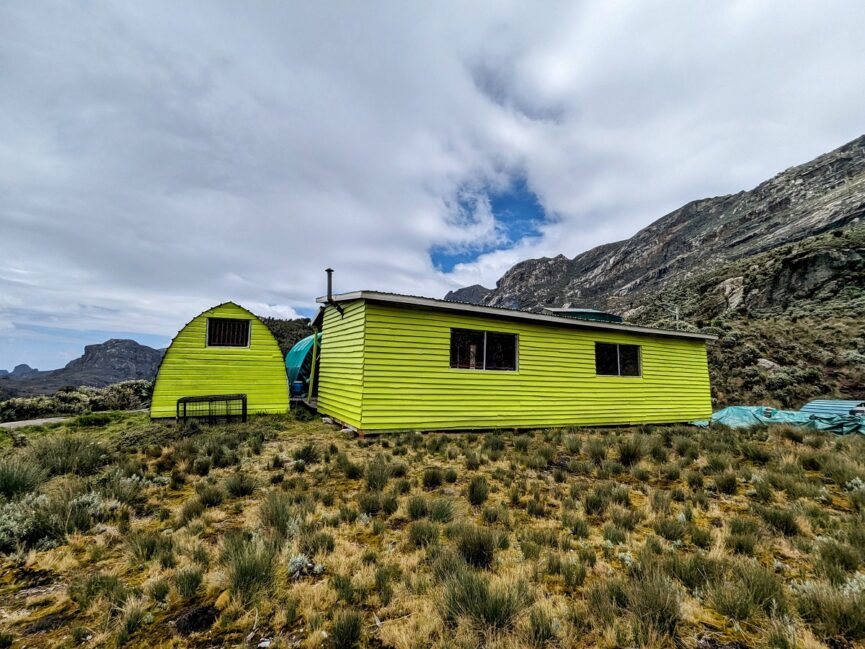
Bugata is the camp from which summit itineraries on the Kilembe Trail continue toward Hunwicks and then Margherita Camp. For trekkers on the 8-day Kilembe Trail expedition, Bugata is typically the third or fourth night, representing the deepest acclimatization camp before the final push to the high summit camp. Temperatures at Bugata overnight range from -1°C to 6°C.
Hunwicks Camp: The Pre-Summit Staging Point.
| Altitude
4,364m / 14,318ft |
Trail
Kilembe Trail |
Accommodation
Wooden bunk huts |
Solar/Power
None / minimal |
Hunwicks Camp, at 4,364 meters, is the Kilembe Trail’s equivalent of Elena Hut on the Central Circuit, the staging camp immediately below the final summit push. Named in honor of a conservation figure associated with Rwenzori development, the camp sits on the upper slopes of the Kilembe approach in exposed, rocky terrain where the permanent snow zone is now very close.
The hut at Hunwicks is smaller and more compact than the lower Kilembe camps, reflecting both the difficulty of construction at this altitude and the reduced requirement for extended stays; most groups spend one night here before summiting and descending. Bunk frames with foam mattresses are provided. There is minimal or no reliable solar power at this altitude and exposure. Temperatures regularly drop below 0°C at night, and wind chill can push the effective temperature significantly lower during periods of exposure. A sleeping bag rated to -10°C is strongly recommended for Hunwicks and the Margherita Camp above.
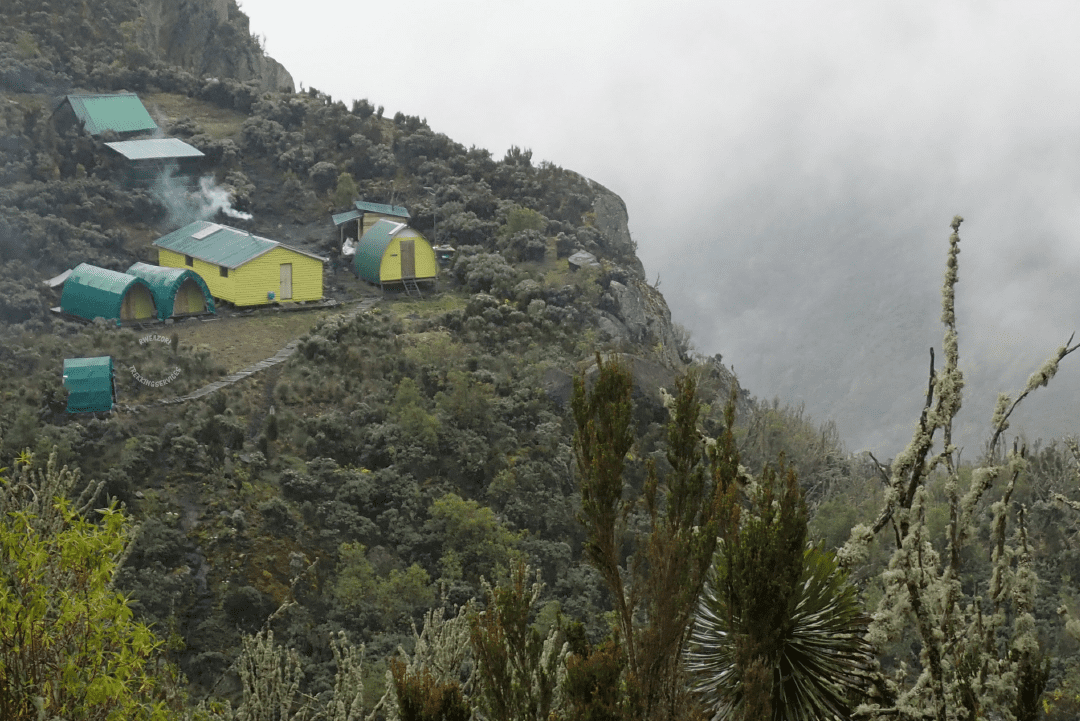
Hunwicks’ water comes from snowmelt streams, which are usually reliable but may freeze in the coldest weather. The terrain immediately around the camp is rocky and open, offering dramatic views on clear days of the upper ridgelines and the glaciated flanks of the Stanley massif.
Margherita Camp: Highest Camp on the Mountain
| Altitude
4,600–4,700m / 15,100–15,420ft |
Trail
Kilembe / Central Circuit |
Accommodation
Stone hut (Kilembe) |
Solar/Power
None |
Margherita Camp, the highest established camp on the Rwenzori, sitting at approximately 4,600 to 4,700 metres depending on the specific site reference, is the final camp before the glaciated summit of Margherita Peak at 5,109 metres. It is accessible on the upper Kilembe Trail itineraries and also represents the equivalent altitude of Elena Hut on the Central Circuit for groups completing the crossover between the two route systems. The camp exists in the zone where the ecological complexity of the lower mountain has been replaced by rock, ice, and the stark geometry of high-altitude terrain.
The hut at Margherita Camp is a stone shelter similar in construction philosophy to Elena on the Central Circuit, compact, low, and designed for survival conditions rather than comfort. Sleeping space is limited, and the atmosphere is severe. There is no electricity, no solar power, and no running water; all water must be collected from snowmelt and treated. Night temperatures routinely reach -5°C to -15°C at this altitude, and wind can make conditions feel significantly colder.
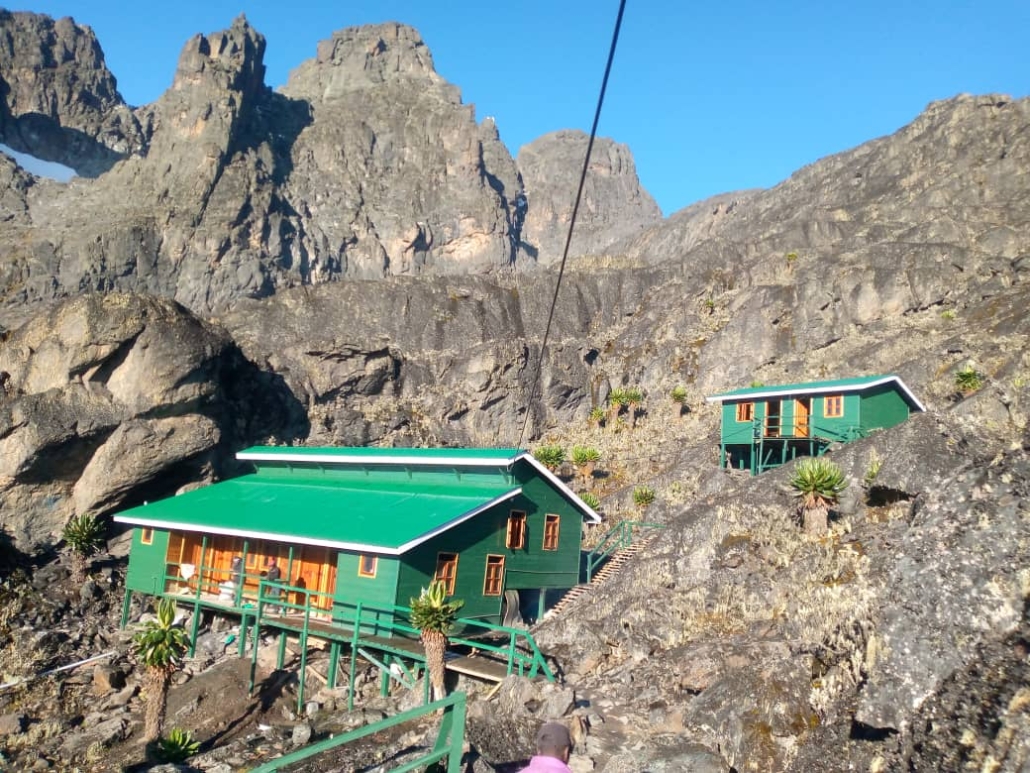
Arriving at Margherita Camp is a profound experience regardless of experience level. You are at nearly 4,700 metres above sea level, standing on the equator, beneath glaciers that are among the last remnants of equatorial Africa’s ice age legacy. The physical and psychological weight of what lies above the glacier crossing, the summit push, is immediately palpable. Summit groups typically depart Margherita Camp at 5:00 to 6:00 am. The round trip to Margherita Peak’s 5,109-meter summit and back to camp takes five to nine hours depending on fitness, conditions, and glacier state.
The Bukurungu Trail: Wilderness Camping in the Rwenzori’s Most Remote Corridor
The Bukurungu Trail is fundamentally different from both the Central Circuit and Kilembe Trail in its accommodation model. Initiated in 2018 through a partnership between the Uganda Wildlife Authority and the World Wildlife Fund for Nature, the Bukurungu Trail is a designated wilderness camping route, meaning there are no permanent hut structures. Overnight accommodation is in ground tents at designated camping sites maintained by the national park authority.
The Bukurungu Trail enters the Rwenzori from the west via the Kasanzi park entrance and traverses some of the range’s most remote and least-visited terrain, passing between the Portal Peaks and Mount Gessi before intersecting with the Central Circuit at the Bigo swamp. Along the route, four spectacular alpine lakes, Irene, Mughuli, Bukurungu, and Bujuku, provide both the trail’s defining landscapes and its primary water sources.
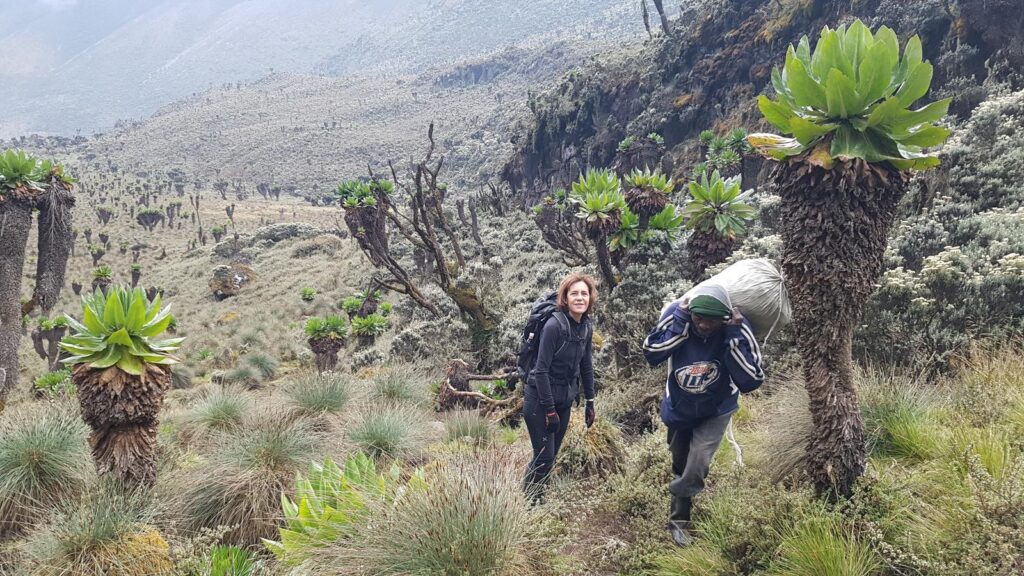
Camping on the Bukurungu Trail means sleeping in expedition-quality tents on designated flat ground at each approved campsite. The trek crew transports the tent structures as part of the porter loads, and they set up camp upon arrival each afternoon. The camping sites on the Bukurungu Trail are secure, flat, and positioned near reliable water sources. There are no communal huts, no solar panels, no charging facilities, and no latrine structures. Your guide team manages toilet hygiene in accordance with Leave No Trace principles practiced in the national park. A -10°C sleeping bag is recommended for all Bukurungu Trail camping, given the altitude and exposure of the upper campsites.
The Bukurungu Trail is suited for trekkers who value wilderness immersion over comfortable infrastructure, have some prior multi-day trekking experience, and appreciate the unique reward of camping in terrain that few people reach. For experienced trekkers, our longer trip plans mix the Bukurungu route with the Central Circuit descent to create a journey across the Rwenzori range that uses both paths together effectively.
Facilities Across All Rwenzori Campsites: What to Realistically Expect
To help trekkers prepare with precision, the following section summarizes the key facility categories across the Rwenzori campsite network. Before departure, understanding these realities eliminates the disappointment of arriving at a remote mountain camp with unrealistic expectations.
Sleeping Arrangements
All Central Circuit and Kilembe Trail huts use wooden bunk frames with foam mattresses. You sleep on the mattress in your sleeping bag. No linen, blankets, or pillowcases are provided. Bring a sleeping bag liner for hygiene and additional warmth. The bunk arrangement is dormitory-style; groups are not guaranteed private rooms, particularly during peak season (late June to September and December to early January) when multiple expedition groups may coincide at the same hut. On the Bukurungu Trail, you sleep in freestanding tents provided by the operator.
Water and Hydration
Water is available at every campsite on all three trails, sourced from mountain streams, snowmelt, or glacial lake outlets. It is clean in the sense of being minimally industrial-polluted; the area is a UNESCO World Heritage wilderness, but it must be treated before drinking. Every trek crew carries water treatment supplies, including iodine tablets or a filtration pump, and your cook uses treated or boiled water for all meal preparation. Bring a personal water bottle with a capacity of at least one liter, and carry a backup treatment method (iodine tablets) as a personal emergency supply. Your guide actively manages consistent hydration to prevent dehydration at altitude, which worsens altitude illness.
Electricity and Device Charging
The realistic electricity situation on the Rwenzori is as follows: Bujuku Hut and Kitandara Hut on the Central Circuit have limited solar panels that can provide basic lighting and slow device charging, but such power is not guaranteed, particularly in cloudy weather when solar input is reduced. All other Central Circuit huts have no reliable electricity supply. Sine Camp and Mutinda Camp on the Kilembe Trail have the most functional solar infrastructure on the mountain, with working charging points that allow modest device charging overnight. Bugata, Hunwicks, and Margherita Camp on the upper Kilembe Trail have no reliable electricity. Bukurungu Trail camping sites have none.
Critical gear item: A high-capacity power bank (20,000 mAh or more) is one of the most important pieces of electronics to bring on any Rwenzori expedition. Do not depend on mountain hut charging for your phone or camera. Charge everything fully in Kasese the night before departure and use your power bank strategically throughout the trek.
Toilet Facilities
Long-drop pit latrines are available at all Central Circuit and Kilembe Trail huts. They are maintained by park staff and crew, and standards are variable; some are adequately clean, others are in the condition you might expect from a heavily used facility in a very wet mountain environment. Always bring your own toilet paper and hand sanitizer. On the Bukurungu Trail wilderness camping, sanitation is managed by your guide team in accordance with Leave No Trace protocols. Your guide will brief you on this at the Nyakalengija or Kasanzi trailhead.
Meals and Cooking
Your expedition cook prepares all meals at each camp during guided Rwenzori expeditions. Breakfast is typically a hot, substantial meal, such as porridge, eggs, toast or chapati, and hot drinks designed to provide the caloric fuel for a full day of mountain walking. A packed lunch (sandwiches, fruit, and energy snacks) is prepared for consumption on the trail. Dinner at camp is the main meal, typically consisting of three courses: soup, a main course of rice, pasta, or potatoes with protein, and dessert. The quality of Rwenzori mountain cooking consistently exceeds the expectations of first-time trekkers.
Dietary requirements (vegetarian, vegan, gluten-free) can be accommodated with advance notice. Our guide to vegetarian and vegan food on the Rwenzori trek covers these topics in full detail.
What to Pack for Rwenzori Camp Life: The Essentials
Knowing the campsite facilities in detail directly informs what you need to bring. The following priorities emerge from the specific conditions of each camp across the three trails.
A sleeping bag is the most important personal item on any Rwenzori expedition. For treks stopping at or below Bujuku Hut (3,977m), a bag rated to -5°C provides adequate warmth. For expeditions reaching Elena Hut (4,541m), Hunwicks (4,364m), or Margherita Camp (4,600–4,700m), a bag rated to -10°C is strongly advisable. Our gear guide for the Rwenzori bogs and mountain conditions provides a comprehensive overview of how to choose the right sleeping bag.
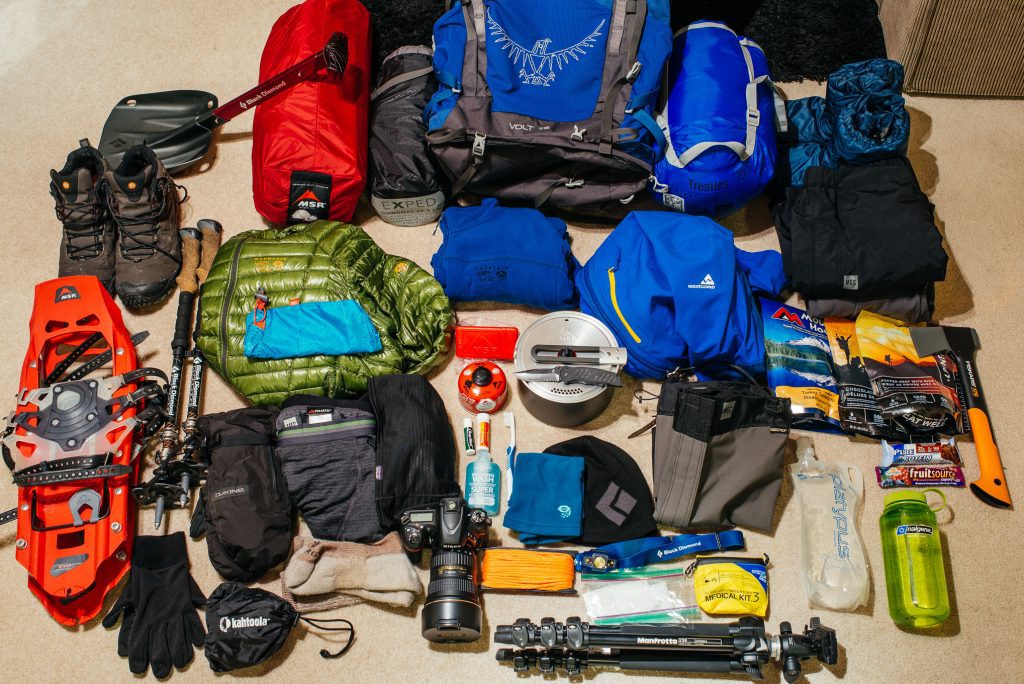
A power bank of at least 20,000 mAh capacity is essential for your budget for recharging your phone, camera, and headlamp across the full expedition duration without reliable access to mains power. Quality waterproof storage dry bags and zip-lock bags protect electronics, documents, and sleeping bags from the Rwenzori’s pervasive moisture. Earplugs are a genuinely useful addition for dormitory hut sleeping; you will share a hut with other groups, and individual sleeping rhythms vary widely. Personal toiletry items, including ample toilet paper and hand sanitizer, are non-negotiable at every camp.
For trekkers on physical training programs preparing for the altitude demands of the upper camps, our 16-week Rwenzori training plan provides a structured program that builds the endurance and strength required to reach Elena or Margherita Camp in excellent physical condition, which directly improves the quality of the overnight experience at altitude. A tired body in a cold camp at 4,500 metres is genuinely challenging, while a well-conditioned body in the same camp is manageable and even deeply satisfying.
Frequently Asked Questions: Rwenzori Campsites and Overnight Facilities
What are the sleeping arrangements like at the Rwenzori mountain huts?
All mountain huts on the Central Circuit Trail and Kilembe Trail provide wooden bunk frames fitted with foam mattresses. You sleep on the mattress in your sleeping bag; no linen, blankets, or pillowcases are supplied. The sleeping arrangement is dormitory-style, meaning multiple trekkers and groups share the same sleeping area. The foam mattresses are serviceable and reasonably comfortable for mountain accommodation. A sleeping bag rated to a minimum of -5°C is essential for the lower and middle camps, and a bag rated to -10°C is strongly recommended for the high camps, including Elena Hut (4,541 m), Hunwicks (4,364 m), and Margherita Camp (4,600–4,700 m). Bringing a sleeping bag liner adds warmth and hygiene.
Is there electricity or phone charging available at Rwenzori Mountain camps?
Electricity access on the Rwenzori is limited and unreliable. On the Central Circuit, Bujuku Hut and Kitandara Hut have limited solar panels that can provide basic lighting and slow device charging when solar input is sufficient, which is not guaranteed given the mountain’s frequent cloud cover. No other huts on the Central Circuit provide reliable electricity. On the Kilembe Trail, Sine Camp and Mutinda Camp have the most functional solar infrastructure, with charging points that allow overnight charging. Upper Kilembe camps Bugata, Hunwicks, and Margherita have no reliable power. The Bukurungu Trail has no electricity at any campsite. Every trekker should carry a high-capacity power bank (20,000 mAh or more) charged fully in Kasese before departure.
What are the toilet facilities like at Rwenzori Mountain campsites?
Toilet facilities at Rwenzori mountain huts consist of long-drop pit latrines in outbuildings adjacent to the main huts. These are maintained by park staff and expedition crew, and their condition varies; some are adequately clean, others reflect the demands of heavy use in a humid, high-altitude environment. All trekkers should bring their own toilet paper and hand sanitizer for every camp, as neither is provided at mountain facilities. On the Bukurungu Trail wilderness camping, there are no latrine structures; sanitation is managed in accordance with Leave No Trace protocols under the guidance of your expedition guide.
What is Nyabitaba Hut like, and what altitude is it at?
Nyabitaba Hut sits at 2,651 metres above sea level and is the first overnight camp on the Central Circuit Trail, reached after approximately 10 kilometers and 1,000 metres of ascent from the Nyakalengija trailhead. It is the most substantial hut structure on the Central Circuit, a two-story wooden building with a trekker sleeping area on the upper level (bunk frames and foam mattresses), a communal dining and cooking area, and outbuilding latrine facilities. There is no reliable electricity supply. Water comes from a nearby stream. The setting on a forested ridge offers open views to the south on clear mornings. Night temperatures are typically 8–14°C. For trekkers on the introductory 1-day Nyabitaba hike, this camp is both the destination and turnaround point.
What is Elena Hut like, and what do I need to bring for it?
Elena Hut is located at 4,541 m on the upper slopes of Mount Stanley, the highest camp on the Central Circuit Trail and the final shelter before the glaciated summit pushes to Margherita Peak (5,109 m). It is a stone building, compact and low-profile to minimize wind exposure, with bunk-frame sleeping, a basic cooking area, and minimal communal space. There is no electricity and no reliable solar power. Water comes from snowmelt streams adjacent to the hut. Night temperatures routinely drop to 0°C and below, occasionally reaching -5°C to -8°C in colder periods. A sleeping bag rated to -10°C is strongly recommended. Summit groups typically depart Elena at 5:00–6:00 am for the Margherita Peak climb.
What are the Kitandara Lakes, and what is the camp there like?
Kitandara Lakes are twin glacial tarns at 4,023 meters on the Central Circuit Trail, positioned between Mount Stanley, Mount Baker, and the Freshfield Pass. They are one of the Rwenzori’s most photographed natural features and offer one of the most beautiful camp settings on the mountain. The lakes reflect the surrounding peaks and sky in conditions of morning clarity, and the shoreline vegetation of giant groundsels creates an extraordinary landscape. Kitandara Hut is a well-maintained wooden structure with bunk frames, foam mattresses, limited solar lighting and charging, and functional latrine facilities. Night temperatures range from 2–8°C. The camp serves as an overnight stop during the descent from Elena and as a base for Mount Baker summit attempts on extended itineraries.
What is the highest campsite on the Rwenzori, and what are conditions like?
The highest established campsite in the Rwenzori Mountains is Margherita Camp, situated approximately 4,600 to 4,700 meters on the upper Kilembe Trail (and at a comparable altitude to Elena Hut on the Central Circuit). Margherita Camp is a stone shelter, compact, minimal, and designed for summit staging rather than extended comfort. There is no electricity, no solar power, and water must be collected from snowmelt and treated. Night temperatures routinely reach -5°C to -15°C, and wind chill can make conditions significantly colder. A sleeping bag rated to -10°C is the minimum; -15°C is recommended. Summit groups typically depart at 5:00–6:00 am. The camp exists in terrain that is fully above the biological zone of the mountain; rock, ice, and sky define the environment.
Do Rwenzori mountain huts have hot water or showers?
No. There are no showers and no hot running water at any campsite on the Rwenzori Mountains, not on the Central Circuit, the Kilembe Trail, or the Bukurungu Trail. Your expedition cook can provide hot water in a basin for a basic wash on request, and most experienced Rwenzori trekkers develop a routine of brief daily freshening up using a small microfiber towel and a basin of hot water. This is mountain life, body wipes, strategic hygiene, and a tolerance for the particular earned dirtiness of multi-day wilderness trekking. For trekkers who find the absence of showering facilities challenging, our guides are straightforward about what the mountain offers: a warm shower in Kasese on your return, and the complete absence of that concern during the days on the mountain.
Is there food provided at the Rwenzori Mountain camps?
Yes. All meals are prepared by your expedition cook at each camp as part of your guided trek package. Breakfast is a substantial hot meal, porridge, eggs, toast or chapati, and hot drinks designed to provide fuel for the day’s ascent. A packed lunch is prepared for eating on the trail. Dinner is the main meal, typically three courses: soup, a main course of rice, pasta, or potatoes with protein and vegetables, and dessert. The quality consistently surprises first-time trekkers. With advance notice to your operator, you can accommodate dietary requirements, including vegetarian and vegan menus.
Plan Your Rwenzori Expedition with Complete Confidence.
Every campsite on the Rwenzori is a chapter in one of the world’s most significant mountain stories. From the first night at Nyabitaba, waking to the sound of forest birds and the smell of montane forest after rain, to the pre-dawn silence of Elena or Margherita Camp with the glaciers ghostly in the darkness above, the overnight experience on the Rwenzori is as much a part of the journey as the summits themselves. Knowing what each camp offers, and arriving prepared for it, is the foundation of a confident, safe, and deeply rewarding expedition.
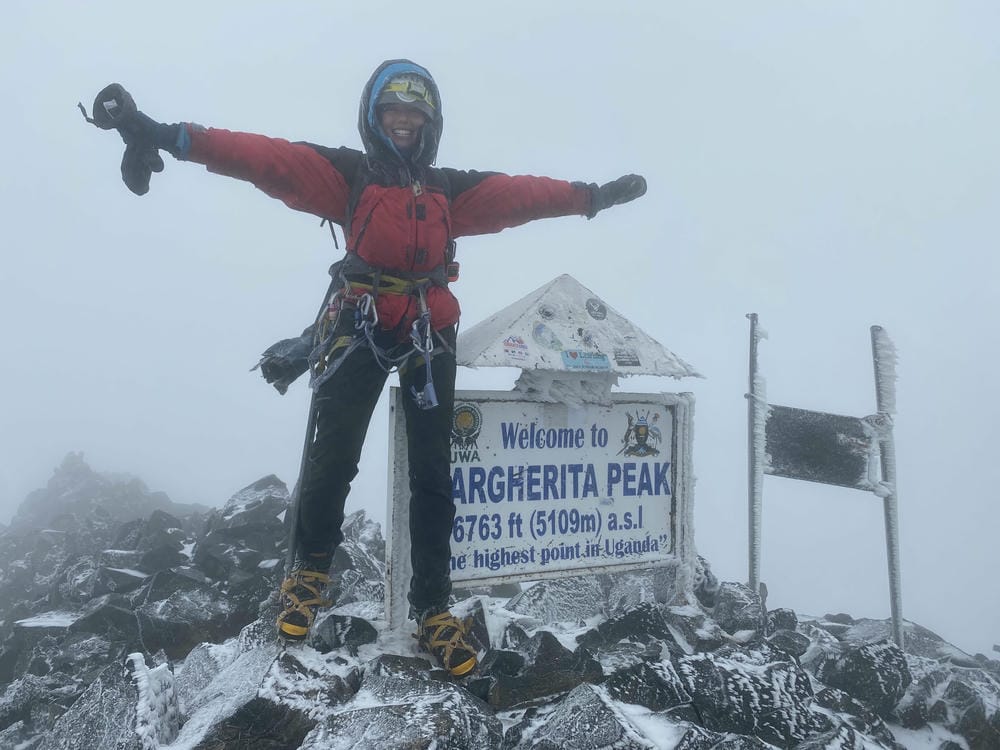
Whether you are planning to walk the 7-day Central Circuit trek for your first Rwenzori experience, committing to the full 13-day six-peaks grand expedition, exploring the Kilembe Trail’s distinct campsite character, or seeking the true wilderness of the Bukurungu Trail, the team at Rwenzori Trekking Safaris will brief you comprehensively on every overnight stop, the specific conditions of each camp on your chosen route, and exactly what to bring to sleep well, eat well, and arrive at each summit with the energy and confidence the mountain demands.
Explore the full range of Rwenzori trekking itineraries, browse our complete trekking routes overview, or read the answers to your remaining planning questions in our Rwenzori FAQ section. When you are ready to take the step from planning to booking, contact our expedition team directly. We will help you choose the right route, pack the right gear, and walk through that trailhead gate into one of the most extraordinary mountain experiences on Earth.