Should you acclimate before Rwenzori? Where to go, how long, and which routes build it in. Expert guide by Rwenzori Trekking Safaris.
Every week, we receive a question from trekkers who have done their research, know that the Rwenzori is a serious mountain, and are now staring at a blank page in their itinerary between their international flight and Day One on the trail. The question is deceptively simple: should I acclimatize before starting the Rwenzori, and if so, where and how?
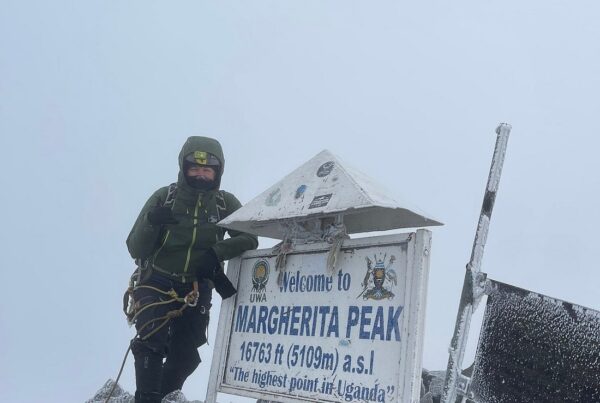
The honest answer is that it depends on which route you are taking, on how many days your itinerary builds in, on your personal altitude history, on where you are flying in from, and on how seriously you are taking your summit bid. But this is not a question that deserves a vague answer. The Rwenzori climbs faster than almost any other mountain in East Africa. In the context of Rwenzori Mountains National Park, that speed matters. The difference between a trekker who thought carefully about this question and one who did not can mean the difference between standing on Margherita Peak at 5,109 meters and turning back to Elena Camp with a splitting headache.
This guide covers everything you need to know: the physiology behind acclimatisation, the Rwenzori’s specific altitude profile, why it is more aggressive than it looks on paper, which routes build in enough altitude time to make pre-acclimatization optional, and the concrete practical options available to trekkers who want to arrive at the trailhead already adapted. By the end, you will have a clear framework for deciding your own trek, not a generic answer, but a personalised one.
Why the Rwenzori’s Altitude Profile Demands Respect.
The Rwenzori is often underestimated because it is equatorial and because its trailhead sits at a comparatively modest altitude. The Nyakalengija trailhead for the Central Circuit begins at approximately 1,646 metres. The Kilembe Mine trailhead for the Kilembe Trail sits even lower, at around 1,400 meters. These are not high-altitude starting points. The summit of Mount Stanley, however, sits at 5,109 metres. Between these two numbers lies one of the steepest continuous altitude gains of any standard trekking route in Africa, and the mountain delivers most of that gain across just three to four days of hiking.
On the standard 7-Day Central Circuit, trekkers sleep at Nyabitaba Hut (2,651 m) on Night 1, reach John Matte Hut (3,505 m) on Night 2, push to Bujuku Hut (3,962 m) on Night 3, and arrive at Elena Camp (4,541 m) on Night 4, an altitude that puts them firmly in the high-altitude zone where the body’s oxygen uptake begins to be meaningfully compromised. The ascent from the trailhead to Elena Camp covers nearly 2,900 metres of vertical gain in four days. That is not a casual ascent profile.
| Zone / Camp | Altitude | Route | Night Spent |
| Trailhead – Nyakalengija | 1,646 m | Central Circuit | No (day-use start) |
| Nyabitaba Hut | 2,651 m | Central Circuit | Night 1 |
| John Matte Hut | 3,505 m | Central Circuit | Night 2 |
| Bujuku Hut | 3,962 m | Central Circuit | Night 3 |
| Elena Hut | 4,541 m | Central Circuit | Night 4–5 |
| Margherita Peak (summit) | 5,109 m | Central Circuit | Summit day (no overnight) |
| Trailhead – Kilembe Mine | 1,400 m | Kilembe Trail | No (day-use start) |
| Sine Camp | 2,546 m | Kilembe Trail | Night 1 |
| Mutinda Camp | 3,597 m | Kilembe Trail | Night 2–3 |
| Margherita Camp | 4,540 m | Kilembe Trail | Night 6–7 |
Altitude profile: key camps and overnight elevations on both main Rwenzori routes.
Compare this with Kilimanjaro’s most popular route, the Marangu, which begins at 1,879 metres and takes five to six days to reach the summit at 5,895 metres but allows multiple nights at 3,720 metres and 4,700 metres before the final push. Or compare it with Mount Kenya’s standard trekking routes, which approach from a higher starting altitude but with more gradual day stages. The Rwenzori is not the highest mountain in East Africa, but its rate of ascent over consecutive days is among the most physiologically challenging on the continent. That is the core reason this question matters.
GUIDE INSIGHTI have guided hundreds of trekkers to Margherita Peak, and the pattern I see consistently is the same: the trekkers who struggled most at Elena Camp were almost never the unfit ones. They were the ones who flew in from sea level three days before the trek, barely adjusted their schedule, and arrived at Nyakalengija with their bodies still calibrated for lowland oxygen. Fitness does not protect you from altitude. Time does. |
What Acclimatization Actually Means
Acclimatization is the process by which the human body physiologically adjusts to decreased oxygen availability at altitude. As altitude increases, atmospheric pressure decreases, and with it, the partial pressure of oxygen, which means that even though the percentage of oxygen in the air remains the same at all altitudes (roughly 21%), each breath delivers progressively fewer oxygen molecules to your bloodstream. At 5,000 metres, the effective oxygen availability is approximately 50 to 53% of sea-level values. The air you breathe at Elena Camp (4,541 m) contains about 57% of the oxygen you would obtain at sea level.

The body’s response to this reduced oxygen supply involves several overlapping mechanisms. In the first hours and days, breathing rate and depth increase, heart rate rises, and kidney function adjusts to alter the blood’s acid-base balance. Over one to two weeks, the body begins producing more red blood cells and increasing hemoglobin concentration, which improves the blood’s oxygen-carrying capacity. It also increases capillary density in muscle tissue and enhances the efficiency of cellular respiration at the mitochondrial level. These adaptations take time, genuine physiological time that no amount of physical fitness can substitute for.
Acute Mountain Sickness (AMS) occurs when the ascent rate outpaces the body’s ability to adapt. The symptoms of headaches, nausea, fatigue, dizziness, and disturbed sleep are the body’s early warning system that the acclimatization process is being overwhelmed. If AMS is ignored and ascent continues, it can progress to the genuinely dangerous conditions of High Altitude Pulmonary Oedema (HAPE) or High Altitude Cerebral Oedema (HACE). These are medical emergencies that require immediate descent. As our complete medical guide to Rwenzori trekking details at length, the Rwenzori’s remoteness means that evacuation can take twelve hours or more, a reality that makes prevention far more valuable than management.
SCIENCE NOTEThe widely cited altitude medicine guideline ‘climb high, sleep low’ is not a poetic suggestion; it is grounded in the physiology of acclimatization. Daytime excursions to higher altitude stimulate physiological adaptation, while sleeping at a lower altitude allows the body to consolidate those adaptations without the metabolic strain of sustained oxygen deprivation at peak altitude. Every well-designed Rwenzori itinerary builds this principle into its schedule implicitly. |
The specific altitude thresholds that matter for planning are as follows: above 2,500 m, the risk of AMS becomes meaningful, particularly for rapid ascents; above 3,500 m, the body’s oxygen demands begin to significantly affect performance and recovery; and above 4,500 m, which is where Elena Camp and Margherita Camp sit, every trekker is operating in conditions where altitude sickness is a genuine rather than theoretical concern. These thresholds are the reason that older trekkers and those with specific medical histories should approach the pre-acclimatization question with particular seriousness.
When Pre-Acclimatization Is Optional: Route Design as the Solution
The most important thing to understand about pre-acclimatization for the Rwenzori is that route selection and itinerary length are themselves forms of acclimatization management. A well-chosen route with the right number of days accomplishes much of the physiological work that external pre-acclimatization aims to do. This is why our recommended itineraries are designed the way they are and why we take the question of day count seriously when advising trekkers on their options.
The 8-Day Kilembe Trail: The Best Built-In Acclimatization Profile
Of all the routes we operate, the 8-Day Kilembe Trail to Margherita Peak has the most naturally beneficial acclimatization profile. Starting from the Kilembe Mine at approximately 1,400 metres, it builds altitude across eight days with multiple nights at intermediate camps, Sine Camp (2,546 m) and then Mutinda Camp (3,597 m), before the upper mountain approach. The route allows two nights at mid-altitude before the push to the glaciated zone, which creates a physiological buffer that the standard Central Circuit lacks. For this reason, we routinely recommend the Kilembe Trail as the primary route for trekkers who are new to high altitude, who are over 50, or who have any uncertainty about their altitude tolerance. If you take this route, the need for separate pre-acclimatization is significantly lower.
The 7-Day Central Circuit: Workable, But Tighter
The 7-Day Central Circuit is the most popular Rwenzori route and a genuinely excellent experience, but its acclimatization profile is tighter than the Kilembe Trail. The standard schedule moves quickly through the lower mountains, reaching the high-altitude zone above 3,500 metres by Day 3. For trekkers arriving from sea level with no recent altitude exposure, this pace can be too rapid for optimal adaptation. In our experience, trekkers who have had any recent high-altitude experience, such as a trip above 3,000 metres in the months before the trek, a residence at moderate altitude, or a thoughtful extra night added at John Matte, do notably better on the upper mountain than those who come straight from sea level on the standard schedule.
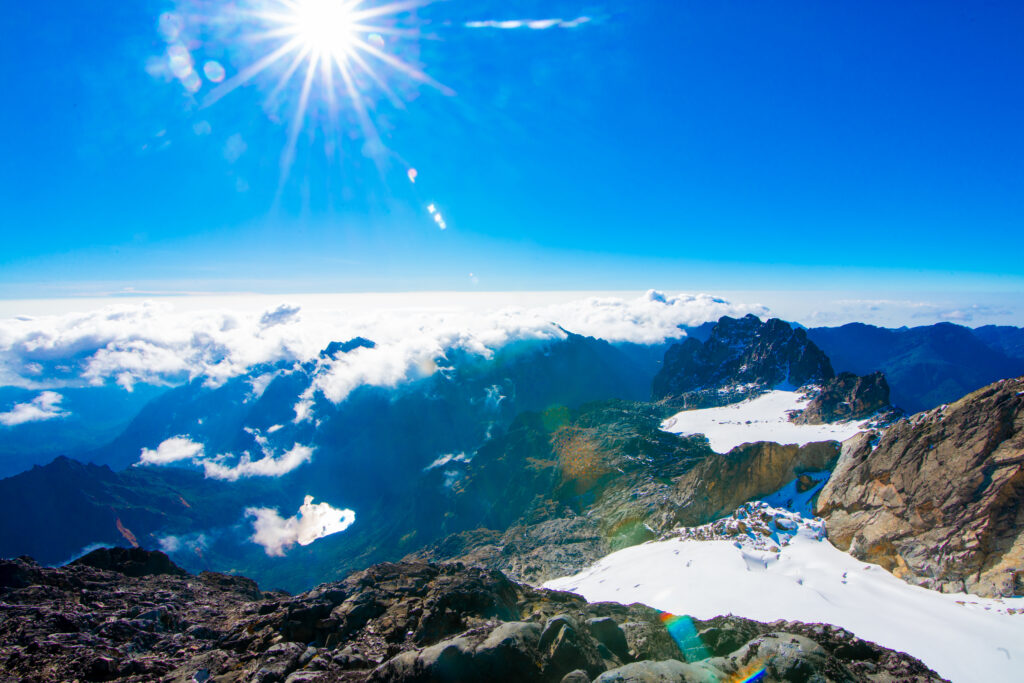
Adding a single extra acclimatization night at John Matte Hut (3,505 m) to the Central Circuit, making it an 8-day rather than a 7-day itinerary, can make a substantial physiological difference for susceptible individuals. This small adjustment is available on request when booking. If you are targeting Margherita Peak and you are coming from a country near sea level with no recent altitude experience, we consider this extension a sensible precaution, not a luxury.
The 13-Day Six-Peak Expedition and Extended Routes
For trekkers committed to the 13-Day Six-Peak Expedition, which climbs Mount Stanley, Mount Speke, Mount Baker, Mount Emin, Mount Gessi, and Mount Luigi di Savoia, the extended time on the mountain provides the most thorough natural acclimatization of any of our itineraries. By the time the expedition reaches its highest objectives, the body has had twelve to thirteen days of progressive altitude exposure. For these trekkers, meaningful pre-acclimatization is largely redundant, though arriving in good physical condition and without jet lag fatigue remains important.
Short Treks: A Special Case
For trekkers choosing shorter, lower-altitude itineraries, like the 3-Day Mahoma Loop, the 4-Day Mutinda Lookout, or the 1-Day Nyabitaba Hike, altitude sickness is a marginal concern because these itineraries do not reach the high-altitude thresholds where AMS risk becomes serious. The Mahoma Loop tops out in the heather zone below 3,000 metres; the Mutinda Lookout reaches approximately 4,000 metres but does not push into the glaciated summit zone. Pre-acclimatization for these shorter routes is unnecessary for the vast majority of healthy trekkers.
When Pre-Acclimatization Is Strongly Recommended
There is a clear set of circumstances under which we advise trekkers to invest in pre-acclimatization days before the trek begins, regardless of route choice.
The most common scenario involves a trekker flying from a country at or near sea level, such as most of Europe, North America, lowland Australia, or coastal Asia, and beginning the Central Circuit or another summit route within two to three days of arriving in Uganda. Uganda’s capital, Kampala, sits at approximately 1,200 metres, while the Rwenzori trailhead is at 1,400 to 1,646 metres; neither is high enough to provide meaningful altitude pre-exposure. A trekker who flies from London to Entebbe, drives to Kasese, and starts the Central Circuit the following morning has given their body essentially zero time to begin adapting.
Trekkers with a history of altitude sickness, even mild AMS, at moderate altitudes such as 2,500 to 3,500 metres should treat pre-acclimatization as a serious priority rather than an optional extra. Susceptibility to AMS has a significant genetic component that does not improve with fitness, and a prior episode is a meaningful predictor of future episodes. If this scenario describes you, our medical guide covers the evidence on prophylactic medication such as acetazolamide (Diamox), which you should discuss with your doctor before the trek.
Similarly, trekkers who are targeting the fastest available Rwenzori itineraries, such as the 4-Day or 5-Day summit routes, should approach pre-acclimatization as a near-mandatory preparation. These itineraries compress the ascent profile significantly. The 4-Day Margherita Peak route, for instance, is designed for experienced, well-acclimatized mountaineers. Attempting it without prior altitude exposure is both medically inadvisable and likely to result in a failed summit bid.
WARNINGFlying directly to Uganda from sea level and starting the Rwenzori within 48 hours is the single most common cause of altitude sickness on this mountain. The body needs time, not rest, but time at moderate altitude to begin the physiological adjustments that protect it above 3,500 metres. Adding two acclimatization days to your schedule is one of the best investments you can make in your summit’s success. |
Where to Acclimatize Before the Rwenzori: The Best Options
Uganda’s geography is generous in this regard. Several excellent pre-acclimatization locations sit within a comfortable drive of the Rwenzori trailheads, and a number of them double as some of Uganda’s most rewarding travel experiences, making the acclimatization period feel like an enriching part of the journey rather than dead time.
Fort Portal: The Gateway Town at 1,500 Metres
Fort Portal, the main town of the Tooro Kingdom in western Uganda, sits at approximately 1,520 meters and serves as a natural staging point for most Rwenzori expeditions. It is roughly a four-hour drive from Kampala and forty minutes from the Central Circuit trailhead at Nyakalengija. Spending one to two nights in Fort Portal before beginning the trek costs nothing in terms of physiological opportunity; you will sleep at the same altitude as the trailhead, allowing your body to begin the initial stages of adaptation.
Fort Portal is a genuinely pleasant town with excellent lodging options ranging from budget guesthouses to comfortable mid-range hotels. Several of these are used as pre- and post-trek accommodation by operators, and the town offers excellent food, local markets, and the beginning of the landscape transition toward the Rwenzori foothills. Simply spending two nights here after flying in, eating well, hydrating, and walking the town is the most accessible and cost-effective form of pre-acclimatization available. Our complete accommodation guide covers lodging options in Kasese and the wider region for all stages of the expedition.
The Crater Lakes Region: Acclimatization with Extraordinary Scenery
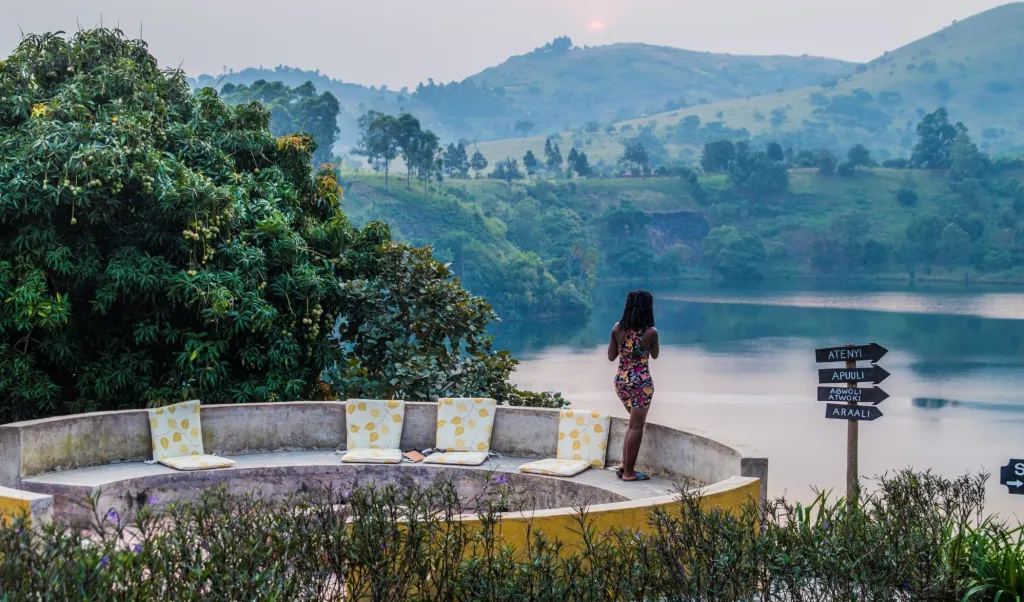
Approximately fifteen kilometers east of Fort Portal lies one of western Uganda’s most spectacular landscapes: the Crater Lakes region of the Tooro-Semuliki Wildlife Reserve. The area is dotted with more than fifty explosion craters, many filled with lakes of vividly different colors: green, turquoise, and blood-red, depending on their algal and mineral chemistry. The surrounding terrain rises gently to around 1,700 metres, with some of the highland viewpoints reaching 1,800 to 1,900 metres.
A half-day or full-day hike around the Crater Lakes is an excellent pre-acclimatization option that combines mild altitude exposure enough to stimulate early physiological adaptation without any overexertion with one of the most visually spectacular experiences in all of western Uganda. The walking itself is not strenuous: well-maintained paths link the crater rims, and a local community guide will walk with you through the tea plantations and crater-edge forests that define the landscape. This is the kind of acclimatization day that does not feel like preparation; it feels like a privilege.
Trekkers combining the Crater Lakes with a pre-trek night in Fort Portal have arguably the most pleasant possible introduction to the western Uganda highlands, and they arrive at the Rwenzori trailhead with one to two nights of moderate-altitude exposure already behind them.
Kasese Town and the Rwenzori Foothills
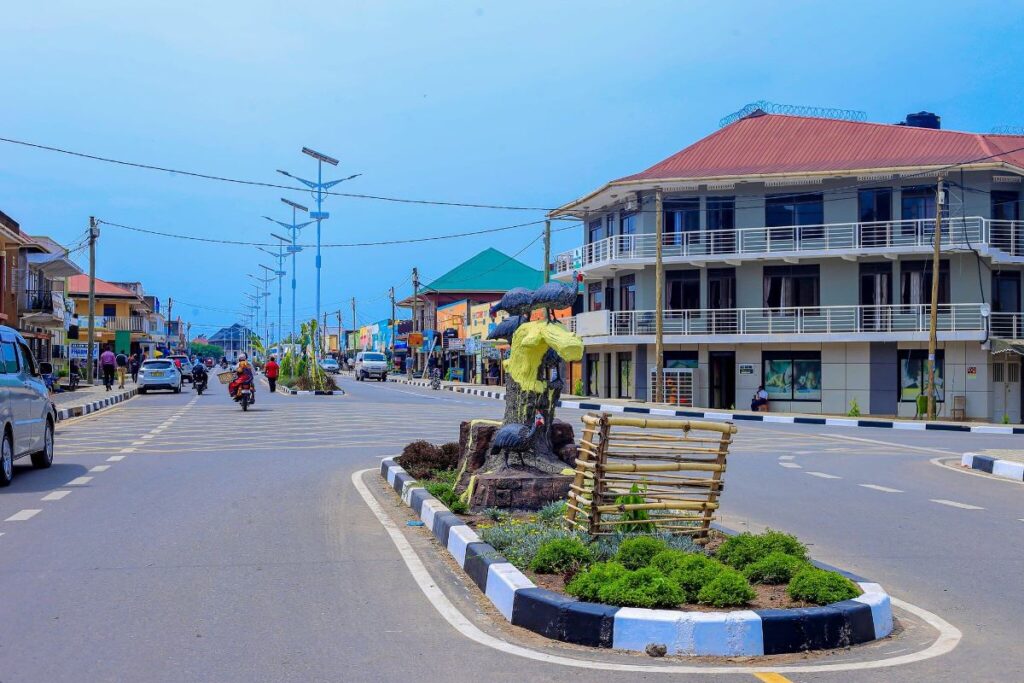
Kasese, the closest major town to both the Nyakalengija and Kilembe trailheads, sits at approximately 1,000 meters, which is lower than Fort Portal and therefore less useful as a pure acclimatization base. However, the area immediately above Kasese, the lower Rwenzori foothills, accessible on foot from the trailhead area, rises through tea estates and community farms to elevations above 1,800 metres. A full day of hiking in the foothills before the official trek starts, staying overnight at the lower end of the mountain ecosystem, is a perfectly viable acclimatization option for trekkers who want maximum time efficiency.
The one-day Nyabitaba hike, which ascends to Nyabitaba Hut at 2,651 metres and returns to the trailhead the same day, is one of the best acclimatization tools available. Doing this day’s hike before starting a multi-day summit trek applies the “climb high, sleep low” principle directly: you take the body to 2,651 metres, stimulate early adaptation, and return to sleep at a lower altitude before beginning the ascent in earnest the following day. Trekkers who incorporate this day into their schedule effectively add a high-altitude stimulus day without extending their overall time on the mountain.
Rwanda and Other Ugandan Highlands: For Trekkers with More Time
Trekkers arriving in Uganda via Kigali, Rwanda, which sits at approximately 1,567 metres and spending several days in Rwanda before crossing to Uganda are already ahead physiologically. Rwanda’s highlands, including the Volcanoes National Park area at elevations above 2,000 meters, provide meaningful altitude exposure for those on a combined gorilla trekking and Rwenzori mountaineering itinerary. Our combined Rwenzori and gorilla trekking expeditions are structured partly with this goal in mind: the gorilla-sector time in Bwindi or Mgahinga (1,600–2,000 metres) functions as a physiological lead-in to the mountain work that follows.
Similarly, trekkers who spend time at Kibale National Park near Fort Portal (1,500 metres), Queen Elizabeth National Park (approximately 900 metres less useful as altitude preparation), or Bwindi Impenetrable Forest (approximately 1,900 metres at the lodges) before the Rwenzori are building their altitude exposure naturally through their Uganda safari schedule. When planning a combined Uganda safari and Rwenzori expedition, the sequencing of these elements matters, and we factor acclimatization logic into every combined itinerary we design.
The Science of Climb High, Sleep Low on the Rwenzori Itself
Once the trek begins, ‘climb high, sleep low’ is not just an altitude medicine principle; it is built into the structure of both major Rwenzori routes in ways that deserve attention. On the Central Circuit, the standard day from Bujuku Hut to Elena Camp involves a significant ascent that reaches the Scott Elliot Pass at approximately 4,372 metres before descending slightly to Kitandara on the standard circuit or continuing to Elena for summit aspirants. This ascent-then-descent structure genuinely acclimatizes trekkers by allowing them to gain significant altitude during the day and sleep at a modest elevation relative to the highest point they reached.
On the Kilembe Trail, the camp at Mutinda (3,597 m) serves as an explicit “climb high” point for trekkers doing the Mutinda Loop, reaching a lookout at approximately 4,000 m during the day while sleeping below 3,600 m overnight. This is why the Kilembe Trail itineraries deliberately include two nights at Mutinda for summit-bound trekkers: the first night is an initial altitude stimulus, and the second allows consolidation of the adaptation begun.

Understanding this principle helps trekkers pace themselves correctly on the mountain. The temptation to push hard on acclimatization days is real; you feel well, the terrain is extraordinary, and the summit is ahead. But the purpose of a scheduled acclimatization night is the sleep, not just the altitude reached. The physiological adaptations that reduce AMS risk happen primarily during rest at altitude, not during the walk. Arriving at Bujuku Hut and spending the afternoon resting, hydrating, and eating a proper meal is more valuable than doing extra altitude laps after arrival. Our guides manage this process by actively watching for signs of over-exertion on acclimatization days and encouraging the kind of measured activity that supports rather than stresses the adaptation process.
Medication: Diamox and What the Evidence Actually Says
Acetazolamide, sold under the brand name Diamox, is the most widely used prophylactic medication for AMS prevention in high-altitude trekking. It works by stimulating deeper and more rapid breathing, which raises blood oxygen saturation and accelerates the acclimatization process. There is substantial clinical evidence that acetazolamide effectively reduces the chances of getting AMS; several studies have shown that taking it beforehand lowers both the number and severity of AMS symptoms.
For Rwenzori trekkers, Diamox is worth discussing with your doctor if any of the following apply: you have a history of altitude sickness even at moderate elevations; you are attempting one of the faster-ascent itineraries, such as the 5-day Margherita Peak summit; you are over 50 with no recent high-altitude experience; or you are arriving from sea level and starting the Central Circuit without pre-acclimatization days. The standard prophylactic dose is 125 mg twice daily, begun 24 hours before ascending above 2,500 meters. Side effects are common, including tingling in the extremities, increased urination, and an unpleasant taste for carbonated drinks, but they are generally tolerable. A sulfa allergy is a contraindication, and Diamox interacts with some other medications, which is why a medical consultation before use is non-negotiable.
GUIDE INSIGHTI always tell my trekkers the same thing about Diamox: it is a tool, not a substitute. It can reduce your chances of getting altitude sickness. It cannot eliminate them, and it cannot replace the value of giving your body time to adapt. Taking Diamox while also building pre-acclimatization days into your schedule is a sensible belt-and-braces approach. Relying on Diamox alone while ignoring the pace of ascent is not wise. |
It is also worth noting that ibuprofen has emerged in the altitude medicine literature as a potentially effective, better-tolerated alternative for AMS prevention, with some studies suggesting comparable efficacy to Diamox for mild-to-moderate altitude exposure. The evidence base is still developing, and again, this is a conversation to have with your physician rather than a self-prescription decision.
Practical Acclimatization Schedule: A Framework by Departure Point
Arriving from Europe, North America, or Australasia
Trekkers flying from the United Kingdom, continental Europe, or North America typically land at Entebbe International Airport, a nine-to-eleven-hour flight from most European hubs. From Entebbe (1,154 meters), the drive to Fort Portal takes four to five hours. The drive itself is at moderate altitude; western Uganda sits on an elevated plateau, and simply making this journey contributes modestly to early adaptation.
A workable schedule for European and North American trekkers targeting a Central Circuit summit: Day 0: arrive in Entebbe after an overnight flight; Day 1: drive to Fort Portal, overnight at 1,520 m; Day 2: Crater Lakes walk or rest day in Fort Portal, second night at 1,520 m; Day 3: drive to Nyakalengija and begin the trek. The itinerary gives the body two nights at Fort Portal’s altitude before the walk begins. For trekkers with altitude concerns, the most targeted single-day acclimatization option is to add a day hike to Nyabitaba Hut (2,651 m) on Day 2, ascending and returning the same day.
Arriving via Kigali or Nairobi
Trekkers connecting through Kigali, Rwanda (1,567 metres) or Nairobi, Kenya (1,795 metres) benefit from a meaningfully higher transit altitude. A layover night or two in either city, even without deliberate hiking, provides useful altitude exposure above 1,500 meters. By the time trekkers reach Uganda, they have already partially adapted after routing through Nairobi and spending a day in the city before flying to Entebbe. Those connecting through Kigali and crossing overland to Kasese via the Rwanda-Uganda border at Cyanika or Gatuna will spend the entire overland journey above 1,500 metres, arriving at the Rwenzori region already better adapted than trekkers who flew directly into Entebbe.
Trekkers Based in East Africa
Residents of Kampala (1,200 m), Nairobi (1,795 m), or Kigali (1,567 m) are already living at moderate altitude and require less deliberate pre-acclimatization than those arriving from sea level. For Kampala-based trekkers, one night in Fort Portal before the trek starts is a comfortable and practical preparation; for Nairobi or Kigali residents, even this stopover may be optional depending on the route chosen. The best time to plan your trek also plays a role; drier months typically mean better conditions on the upper mountain, but the altitude management logic applies regardless of season.
Hydration, Nutrition, and Sleep: The Supporting Architecture
Pre-acclimatization days are most effective when supported by three practical habits that many trekkers underestimate: adequate hydration, high-carbohydrate nutrition, and quality sleep. Dehydration accelerates AMS onset by reducing blood volume and thickening the blood, which impairs the oxygen-delivery efficiency that the body is trying to optimize. In western Uganda’s warm lowland climate, fluid loss can be significant even without exercise. Drinking two to three litres of water per day in the days before the trek begins is not an excess but a physiological minimum.
High-carbohydrate nutrition supports acclimatization by providing the most oxygen-efficient fuel source for energy metabolism. Carbohydrates yield more energy per unit of oxygen consumed than fat or protein at altitude, where oxygen delivery to tissues is compromised. In the pre-trek days, this approach means favoring carbohydrate-heavy meals (starches, fruits, grains) over high-fat or high-protein alternatives. The mountain cooks on all our expeditions are briefed to provide carbohydrate-forward menus for exactly this reason.
Sleep quality is frequently compromised at altitude because reduced oxygen can trigger periodic breathing, a pattern of interrupted respiratory cycles during sleep that disturbs rest quality even when the sleeper is not aware of it. In the pre-trek acclimatization days, prioritizing genuine rest rather than evening social commitments or alcohol is a straightforward investment in next-day physiological capacity. Alcohol widens blood vessels and makes breathing problems caused by high altitude worse; even small amounts consumed two to three days before and during a high-altitude trek significantly raise the risk of Acute Mountain Sickness (AMS). Our 16-week training plan covers the full preparation framework, including the weeks before departure, for trekkers who want to arrive at the Rwenzori in optimal physical and physiological condition.
Frequently Asked Questions: Should I Acclimatize Before the Rwenzori?
Do I need to acclimatize before the Rwenzori Mountains?
Whether pre-acclimatization is necessary depends on your route, your altitude history, and where you are traveling from. For trekkers taking the 8-Day Kilembe Trail or the 13-Day Six-Peak Expedition, the route’s built-in altitude profile provides adequate acclimatization time for most healthy trekkers arriving from moderate altitudes. For trekkers from sea level taking the 7-Day Central Circuit or any of the faster summit routes, one to two pre-acclimatization days at Fort Portal (1,520 m) or in the Crater Lakes area are strongly recommended. Trekkers with any history of altitude sickness should treat pre-acclimatization as a serious priority regardless of route.
Where is the best place to acclimatize before the Rwenzori?
The most practical and accessible pre-acclimatization option is Fort Portal, a comfortable town located at 1,520 meters, about 40 minutes from the Central Circuit trailhead. Spending two nights in Fort Portal after flying in from sea level allows the body to begin the initial adaptation process at meaningful altitude. An even better option is combining a Fort Portal overnight with a day hike around the Crater Lakes region to the east of town, which takes you to elevations of 1,700 to 1,900 metres during the day while sleeping lower at night, a direct application of the ‘climb high, sleep low’ principle. Trekkers who want a more targeted altitude stimulus can do a day hike to Nyabitaba Hut (2,651 m) on the Central Circuit trailhead before their trek begins, returning to sleep at a lower altitude the same evening.
How fast does the Rwenzori gain altitude?
The Rwenzori ascends faster than most trekkers expect. On the standard 7-day Central Circuit, trekkers cover approximately 2,900 metres of vertical gain in four days from the Nyakalengija trailhead at 1,646 metres to Elena Camp at 4,541 metres. Night 2 is spent at John Matte Hut (3,505 m), which is already well above the 2,500-meter threshold where altitude sickness risk becomes meaningful. This rapid ascent profile is the primary reason that pre-acclimatization matters for the Rwenzori, and why route selection, particularly choosing the Kilembe Trail with its more gradual altitude gain, is itself an acclimatization management strategy.
What is the ‘climb high, sleep low’ principle, and how does it apply to the Rwenzori?
‘Climb high, sleep low’ is the foundational principle of altitude acclimatization management. It refers to the practice of ascending to a higher altitude during the day, which stimulates the physiological adaptations needed for altitude tolerance, and then sleeping at a lower elevation, which allows the body to consolidate those adaptations without the continuous metabolic stress of peak altitude. The principle is applied both before the trek (through day hikes to moderate altitude, sleeping at lower elevation overnight) and during the trek itself, where many Rwenzori itineraries schedule acclimatization days that involve ascending above the sleeping camp before descending to rest. The Rwenzori’s camp structure with regular altitude differentials between daytime activity and overnight positions builds this principle into the route naturally.
Does Diamox help with altitude sickness on the Rwenzori?
Acetazolamide (Diamox) is a medication with reasonable clinical evidence for reducing the incidence and severity of acute mountain sickness when used prophylactically. It works by stimulating deeper breathing, which raises blood oxygen saturation and accelerates acclimatization. For Rwenzori trekkers with a history of altitude sickness, those attempting fast-ascent itineraries, or those arriving from sea level with limited pre-acclimatization time, discussing Diamox with a physician before the trek is worthwhile. It is not, however, a substitute for appropriate itinerary design and pre-acclimatization time. Side effects including tingling in the extremities and increased urination are common. Sulfa allergy is a contraindication. Our medical guide to Rwenzori trekking provides a comprehensive discussion on altitude medication.
How many days before the Rwenzori trek should I arrive in Uganda?
For trekkers coming from sea level who are targeting a summit route, arriving at least three days before the trek starts and ideally four gives the body meaningful pre-acclimatization time. This typically means one day of travel recovery after landing, one or two nights in Fort Portal at 1,520 meters (with a Crater Lakes day hike if time allows), and then a drive to the trailhead on the day before the trek begins. For trekkers on the 8-Day Kilembe Trail, two days’ pre-arrival time is sufficient. For those on the 4-day or 5-day fast-ascent routes, pre-acclimatization is particularly important, and we recommend dedicating the full three to four days before the trek starts to altitude preparation.
Can I use gorilla trekking or a Uganda safari as acclimatization before the Rwenzori?
Yes, thoughtfully sequenced. Gorilla trekking in Bwindi Impenetrable Forest (about 1,900 metres high) or Mgahinga Gorilla National Park (about 2,200 metres high) helps your body get used to higher altitudes Trekkers who spend two to three days in the Bwindi sector before driving to the Rwenzori trailhead arrive with their bodies already adapted to elevations ranging from 1,500 to 2,200 meters. Our combined gorilla and Rwenzori expedition itineraries are deliberately sequenced with the gorilla sector first and the mountain second, partly for acclimatization reasons and partly because most trekkers find the mountain experience more rewarding when they are not simultaneously managing jet lag and altitude adjustment.
Is the Rwenzori harder to acclimatize to than Kilimanjaro?
The Rwenzori summit is lower than Kilimanjaro (5,109 m versus 5,895 m), but the Rwenzori’s acclimatization challenge is in some ways more compressed. Kilimanjaro’s most popular routes, including the Marangu and Lemosho, have been extensively refined over decades specifically to optimize acclimatization time, and many now include mandatory rest days at intermediate altitudes. The Rwenzori’s standard Central Circuit itinerary moves faster through the lower mountain, reaching high-altitude sleeping elevations sooner relative to the number of days on the trek. The Rwenzori’s challenging terrain, mud, bogs, roots, and steep approaches also mean that trekkers are expending more physical energy per altitude gained than on Kilimanjaro’s more moderate paths, which adds physiological stress on top of the altitude challenge. The 8-Day Kilembe Trail is the closest Rwenzori equivalent to Kilimanjaro’s longer acclimatization-optimized routes.
Ready to Plan Your Rwenzori Expedition?
Acclimatization is not bureaucracy. It is the physiological bridge between the trekker you are when you leave home and the trekker who stands on Margherita Peak with clear lungs and steady legs. Every decision we help you make about itinerary design, pre-trek scheduling, and route selection is made with this bridge in mind. The Mountains of the Moon reward those who are prepared. Let us help you prepare properly.