Only ~1,500 trekkers hike the Rwenzori Mountains each year vs. 50,000+ on Kilimanjaro. Discover why this exclusivity makes it the ultimate African trek.
The Real Numbers Behind Africa’s Most Exclusive Alpine Wilderness
Every year, tens of thousands of people stream up the flanks of Mount Kilimanjaro, Africa’s highest peak. On busy days along the Marangu or Machame routes, trekkers are practically shoulder to shoulder queuing at hut doors, sharing cramped camp spaces, and staring at a conga line of headtorches on summit night. Now imagine a mountain range that is equally magnificent, more botanically and geologically complex, adorned with permanent glaciers and fog-shrouded peaks, rising above the equator in western Uganda, where on most days you might not encounter another trekking group from one camp to the next. That is the
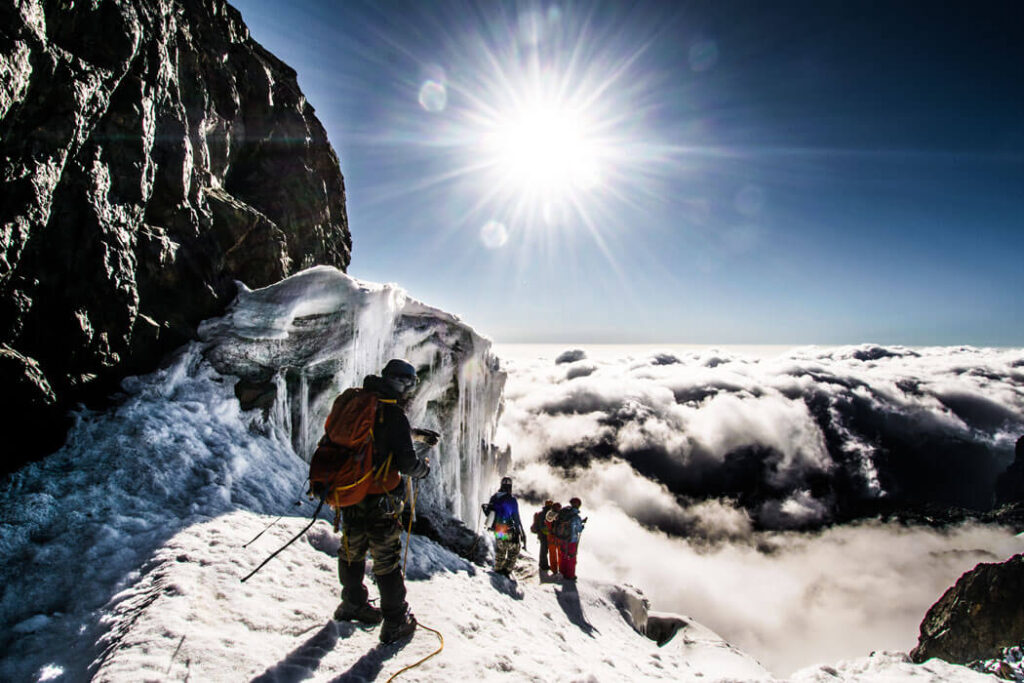
Rwenzori Mountains, the Mountains of the Moon, and the question of how many people actually hike them each year reveal one of the most extraordinary stories in African adventure travel.
The answers, in simple terms, are remarkably few. Approximately 1,000 to 1,500 trekkers pass through the Rwenzori Mountains National Park each year, making this UNESCO World Heritage Site one of the least-visited high-altitude wilderness areas on the entire continent. Compared to Kilimanjaro’s 50,000-plus annual trekkers, or the tens of thousands who tramp through Nepal’s Himalayan corridors, the Rwenzori is effectively uncharted territory by any modern standard of adventure tourism.
We will break down those numbers in full, examining why so few people come, what those who do experience, how visitor patterns have evolved, and what the extraordinary exclusivity of this mountain means for you as a serious trekker planning an expedition here.
The Numbers: How Many People Hike the Rwenzori Each Year?
The Uganda Wildlife Authority (UWA) manages official visitor statistics for the Rwenzori Mountains, which administers Rwenzori Mountains National Park. While precise year-by-year public data is not always widely published, estimates derived from park records, operator bookings, and field data consistently place annual trekker numbers in the range of 1,000 to 1,500. In peak years, with favourable global conditions and growing interest in off-the-beaten-path destinations, that figure may nudge towards 2,000, but it almost never exceeds it.
| Mountain | Estimated Annual Trekkers |
| Mount Kilimanjaro (Tanzania) | 50,000+ |
| Mount Kenya (Kenya) | 15,000–20,000 |
| Simien Mountains (Ethiopia) | 8,000–12,000 |
| Rwenzori Mountains (Uganda) | 1,000–1,500 |
| Virunga Mountains / Margherita (Congo-Uganda) | < 500 (Congolese side) |
To put the numbers in starker perspective: Kilimanjaro receives in a single week what the Rwenzori receives in an entire year. Mount Kenya, a technically demanding peak in its own right, still draws roughly fifteen times more visitors annually. Even the Simien Mountains in Ethiopia, remote and logistically challenging, attract five to eight times the number of trekkers that the Rwenzori does.

These numbers are not a reflection of what the Rwenzori has to offer anyone who has stood at Elena Hut watching the last light ignite the glaciers of Mount Stanley or picked their way through the cathedral-like giant heathers of the upper Bujuku Valley; anyone who has done so will tell you this mountain competes with anything Africa has to offer. The low visitor numbers reflect something else entirely: logistics, difficulty, weather, and an almost wilful obscurity that has kept this range in the shadows of more famous African peaks.
Why Does the Rwenzori Receive So Few Visitors?
Understanding the reasons behind the Rwenzori’s low visitor numbers is essential for any trekker doing serious research, because those same reasons shape the character and demands of the experience. The Rwenzori remains a challenging mountain. It is a mountain that has been left honest.
Logistical Complexity and Access
Getting to the Rwenzori requires genuine planning. Unlike Kilimanjaro, which sits within an hour of Kilimanjaro International Airport (a major regional hub), the Rwenzori lies in the far west of Uganda, accessed via Kasese, a town roughly five to six hours by road from Kampala, or reachable by domestic flight. This extra logistical layer immediately filters out casual trekkers who might spontaneously book a Kilimanjaro trip on a two-week Africa itinerary. The Rwenzori demands specific intent. You came here because you specifically chose to do so. Getting to the mountains involves coordinating transport, permits, guide services, accommodation, and equipment, all elements that require a dedicated operator with genuine local expertise.
Difficulty and Technical Demands
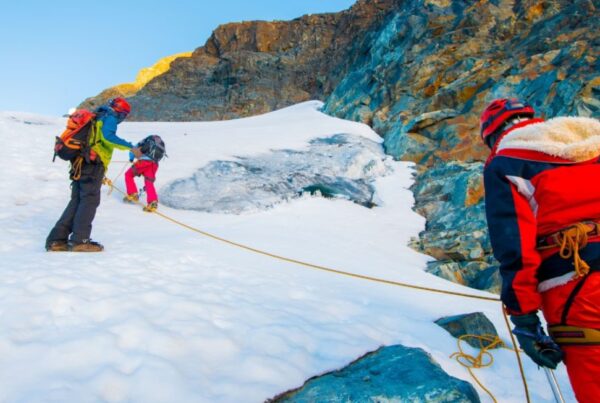
The Rwenzori is, objectively, a harder trek than Kilimanjaro by almost every technical and physical measure. The terrain is relentlessly steep, the paths are frequently waterlogged and boggy, route-finding demands experience in poor visibility, and the approach to Margherita Peak, Africa’s third-highest summit at 5,109 metres involves fixed-rope glacier travel, crampons, and genuine mountaineering competence. The Rwenzori is not a mountain you scramble up in trainers. Many trekkers who have done Kilimanjaro and found it manageable would need to reassess their fitness and skill levels before attempting the Rwenzori’s upper routes.
Our detailed comparison of whether the Rwenzori is harder than Kilimanjaro shows that while Kilimanjaro is higher in absolute terms (5,895m), the Rwenzori’s technical complexity, sustained wetness, and navigation demands make it the more demanding overall experience for most trekkers. The question is not whether you can handle altitude; it is whether you can handle altitude combined with wet rock, root ladders, bog crossings, and fog so thick you cannot see your guide ten metres ahead.
Weather: Perpetual Moisture and the Myth of Seasons
Ask any experienced Rwenzori guide about the weather and they will give you a knowing smile. The Rwenzori receives rainfall on roughly 300 days of the year. This is not hyperbole; it is hydrology. The mountains sit directly astride the equator, intercepting moisture-laden air from both the Congo Basin to the west and Lake Victoria to the east, and the result is a near-permanent envelope of cloud, mist, and precipitation that gives the range its eternal mystique and its reputation for difficulty. The rainy season trekking guide covers this topic in detail, but the short version is this: the Rwenzori does not really have a dry season in the conventional sense. It has a drier season from December to February and June to August, during which conditions are relatively more manageable, but even then, rain, mud, and clouds are entirely normal features of a day on the mountain.
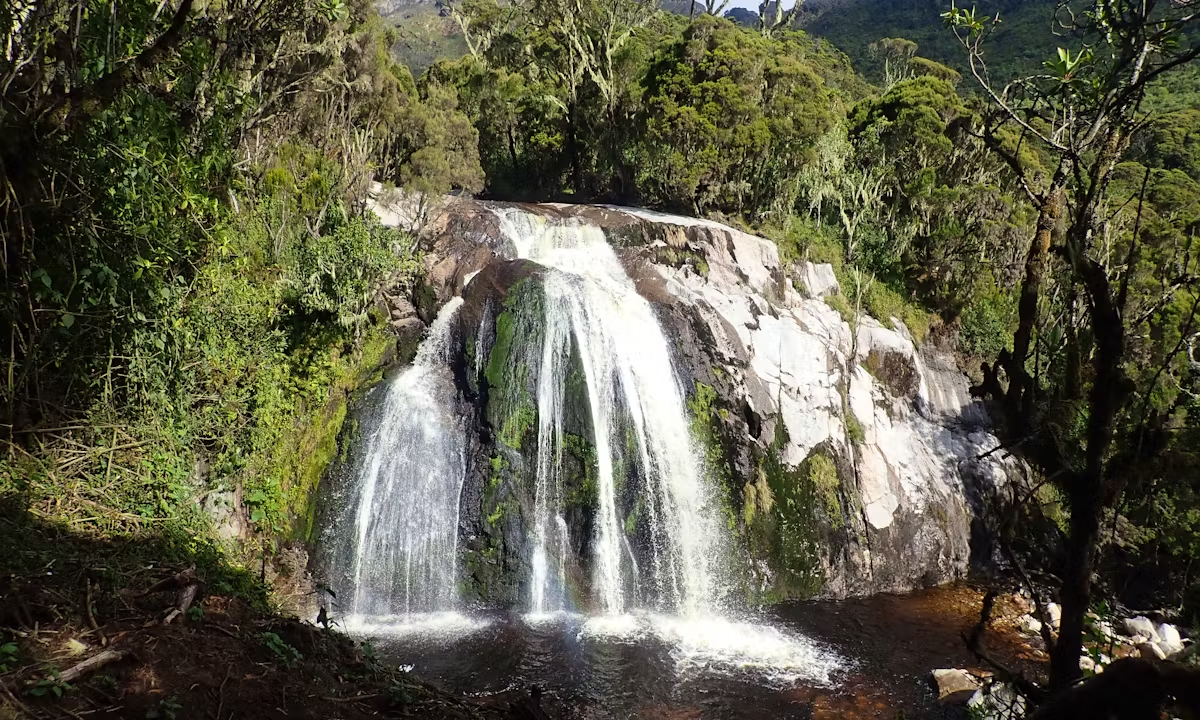
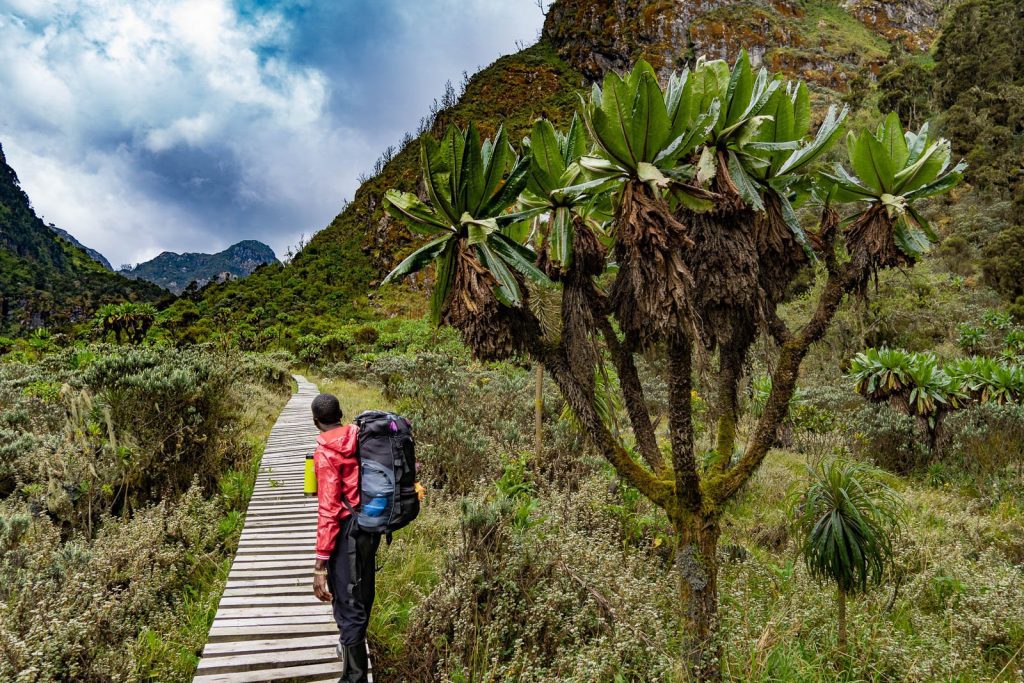
This perpetual moisture is precisely what creates the extraordinary ecosystem of the giant lobelias, the towering tree heathers festooned with moss, and the otherworldly senecio forests that make the Rwenzori look like a landscape conjured from a botanical fever dream. But it is also what discourages casual visitors. Trekkers who want guaranteed summit views and blue skies tend to go to Kilimanjaro. Those who seek a more untamed, unconventional, and vibrant experience often choose this destination.
Global Awareness: Africa’s Best-Kept Secret
Perhaps the single largest driver of low visitor numbers is simple: most people have never heard of the Rwenzori. While Kilimanjaro is prominently featured in coffee-table books, National Geographic films, and countless travel articles, the Rwenzori has historically remained largely unknown outside of specialist mountaineering circles. Even many experienced Africa travellers, who have trekked gorillas in Bwindi, gone on safaris in the Serengeti, and climbed the Simien Mountains, remain unaware that Uganda has a permanently glaciated range with peaks over 5,000 metres. This informational gap is the most powerful explanation for why the numbers remain so low and why those of us who know and love this mountain are watching its profile grow, slowly, with a mixture of pride and protective anxiety.
What Low Visitor Numbers Mean for You as a Trekker
If you are a serious trekker or mountaineer reading this and thinking about where to invest your next major expedition, the implications of those visitor numbers should feel like an invitation, not a warning.
On the Rwenzori, you will not share your boots with two hundred people ahead of you on summit day. The mountain is your hut, shared with forty strangers. You will not queue to use a composting toilet at dawn. You will not find a trail churned to mud, not by rain but by the bears, genuinely yours in a way that is increasingly rare in the era of widespread adventure tourism.
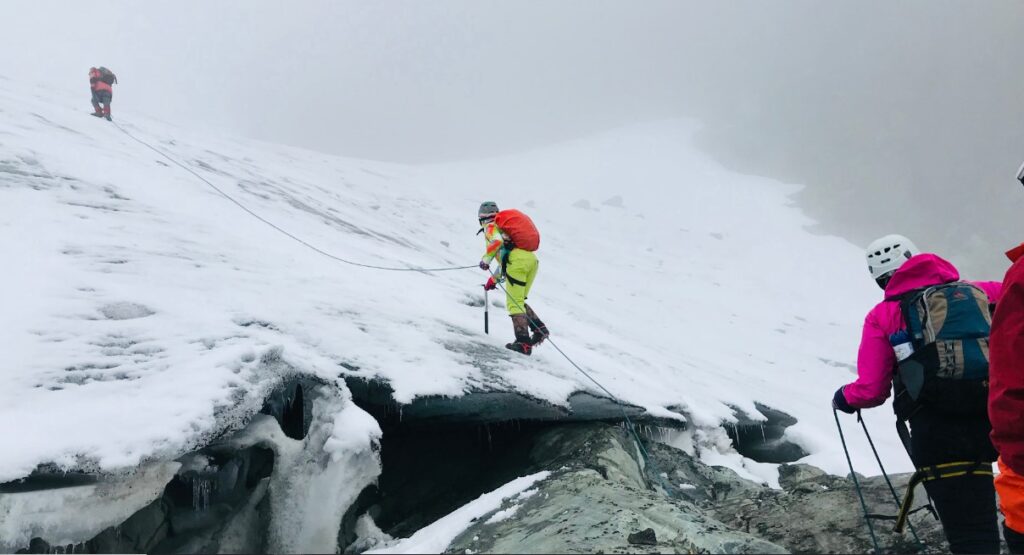
The ratio of professional guides to trekkers on the Rwenzori is exceptional. Because our expedition teams are small and our guide staffing is generous, you benefit from a level of personal attention, safety monitoring, and real-time route expertise that simply cannot be replicated on a mountain hosting fifty thousand people annually. On the upper sections of the Central Circuit Trail or the Kilembe Trail, your guide knows every nuance of the path, every section of exposed glacier, and every reliable camp for shelter. That localised expertise is worth more at altitude, in poor weather, than any amount of modern GPS gear.
The Exclusivity AdvantageRoughly 1,000–1,500 trekkers per year versus 50,000+ on Kilimanjaro. No queues at huts, no overcrowded campsites, no trail degradation from overuse. High guide-to-trekker ratios ensure exceptional safety and personalised support. Wildlife and vegetation zones remain largely undisturbed by tourist pressure. Your summit day on Margherita Peak is a genuine personal achievement, not a shared spectacle. |
The mountain’s wildlife is also more accessible and less disturbed precisely because visitor pressure is so low. Rwenzori colobus monkeys, three-horned chameleons, the elusive Rwenzori otter shrew, and the endemic Rwenzori turaco can be observed without the commotion that accompanies larger trekking groups. The botanical zones from the lower montane forest through the bamboo belt to the Afro-alpine moorland are pristine because the volume of boots passing through them is a tiny fraction of what more popular mountains endure.
Visitor Trends: Is the Rwenzori Getting More Popular?
The honest answer is ‘very gradually, yes’. Rwenzori has been slowly emerging from obscurity over the last decade, driven by a combination of factors: the global rise of adventure travel, the growing appeal of off-the-beaten-path destinations, the expansion of content about the mountain on social media and specialised travel platforms, and the increasing saturation and commercialisation of more famous peaks. Trekkers who have done Kilimanjaro or the Everest Base Camp trail and are looking for their next major challenge are increasingly discovering the Rwenzori as the logical next step.
The development of the Kilembe Trail, a newer, well-maintained route that approaches the high peaks from the south via the former mining town of Kilembe, has also opened up the mountain to a slightly different profile of visitor: those who want a physically demanding but well-structured high-altitude experience with excellent hut infrastructure. The Kilembe route’s camps, including Kalalama, Mutinda, and Margherita, are among the best-maintained mountain huts in East Africa, and they have helped shift Rwenzori’s reputation from “brutally remote” to “genuinely achievable for fit, well-prepared trekkers”.
The COVID-19 pandemic had a significant impact on visitor numbers between 2020 and 2022, as it did on adventure travel globally. The recovery has been gradual but consistent, and the current trajectory suggests that the Rwenzori is beginning to attract the attention it deserves, though it remains, by any standard, an extraordinarily quiet mountain.
Trend WatchPre-pandemic visitor numbers were trending upward from a base of around 600–800 per year in the early 2010s. Post-pandemic recovery has seen numbers returning toward the 1,000–1,500 range. Growing interest from European, North American, and East Asian adventure travel markets. Social media content from Rwenzori expeditions is driving organic awareness slowly but measurably. The window for experiencing the Rwenzori at near-pristine visitor volumes may not remain open forever. |
Which Routes Attract the Most Trekkers?
Not all of the Rwenzori’s trails receive equal traffic, even within the mountain’s modest total visitor numbers. The Central Circuit Trail, which departs from the Nyakalengija trailhead and loops through the heart of the massif via Nyabitaba, John Matte, Bujuku, Elena, Kitandara, and Guy Yeoman huts, has historically been the dominant route, carrying perhaps sixty to seventy percent of all trekkers. The standard seven-day Central Circuit itinerary remains the most popular format for those attempting to climb Margherita Peak. There is a reasonable balance between acclimatisation time, total distance, and logistical efficiency.
The Kilembe Trail has been capturing a growing share of visitors, particularly those who are combining their trek with a visit to western Uganda or who are drawn by the trail’s more structured camp infrastructure. This route offers versatility across skill levels and time constraints with itineraries ranging from the 4-day Mutinda Loop to the full 8-day Margherita summit via Kilembe.
Shorter routes, including the 3-day Mahoma Loop, the 1-day Nyabitaba introduction hike, and the various shorter Kilembe approaches, serve a different visitor profile: trekkers who want an authentic Rwenzori experience without committing to a full multi-day summit expedition. These shorter routes are increasingly popular among visitors who are primarily in Uganda for gorilla trekking or wildlife safaris and want to add a mountain day or two to their itinerary. All are worthwhile, even if they barely register in the headline visitor statistics.

At the far end of the spectrum, the outstanding multi-peak expeditions, such as the 13-day six-peak traverse encompassing Mount Stanley, Mount Speke, Mount Baker, Mount Emin, Mount Gessi, and Mount Luigi di Savoia, or the ambitious 18-day all-eight-peaks expedition, serve the most committed mountaineers. These are genuine expeditions, measured in weeks rather than days, and they account for a tiny fraction of total annual visitor numbers. But they represent Rwenzori at its most complete and extraordinary.
Who Actually Hikes the Rwenzori?
The trekker who chooses the Rwenzori over more famous alternatives tends to be a specific kind of person: experienced in multi-day mountain trekking, motivated by challenge and authenticity over convenience, and genuinely excited by the idea of going somewhere most people have never heard of. The average Rwenzori trekker has usually done Kilimanjaro or similar peaks and is explicitly looking for something harder, wilder, and more intimate.
Geographically, visitors come predominantly from Europe, particularly the United Kingdom, Germany, the Netherlands, and Scandinavia, as well as North America and, increasingly, East Asian markets where interest in African adventure travel is growing. A significant proportion of Ugandan residents, both expatriate and local, also trek the lower sections of the mountain, contributing to a small but growing domestic visitor base.
In terms of experience level, the upper routes, particularly anything that reaches Elena Hut and continues to the glacier, demand real mountaineering competence. Our guide to whether beginners can climb the Rwenzori gives an honest assessment: for the lower and mid-mountain sections, well-prepared beginners with excellent fitness can absolutely participate and have a transformative experience. But the summit push to Margherita is not a beginner objective, and attempting it without proper preparation is where most summit failures and the occasional safety incident originate.
The Rwenzori also draws a distinctive subset of trekkers: those motivated specifically by the opportunity to experience a glaciated equatorial mountain before the glaciers disappear entirely. The Rwenzori’s glaciers are retreating rapidly under the pressure of climate change, having lost more than eighty percent of their ice coverage since the early twentieth century. For many visitors, the knowledge that they may be among the last generations to walk beside these ancient ice fields gives their trek an added weight and urgency that transforms it from an adventure into something closer to a pilgrimage.
The Contrast With Kilimanjaro: Africa’s Two Extremes
No discussion of Rwenzori visitor numbers is complete without an honest look at Kilimanjaro, because the two mountains represent the opposite ends of the African high-altitude trekking spectrum.
Kilimanjaro is a logistically easier mountain with wider paths, shorter technical demands and a faster acclimatisation window, and it has been aggressively marketed to the global adventure travel market for decades. The result is a mountain that, by any measurement, is heavily commercialised. Summit night queues of hundreds of trekkers, overcrowded huts, trail erosion from heavy foot traffic, and an experience that, while still magnificent in its own right, has inevitably been shaped by its popularity.
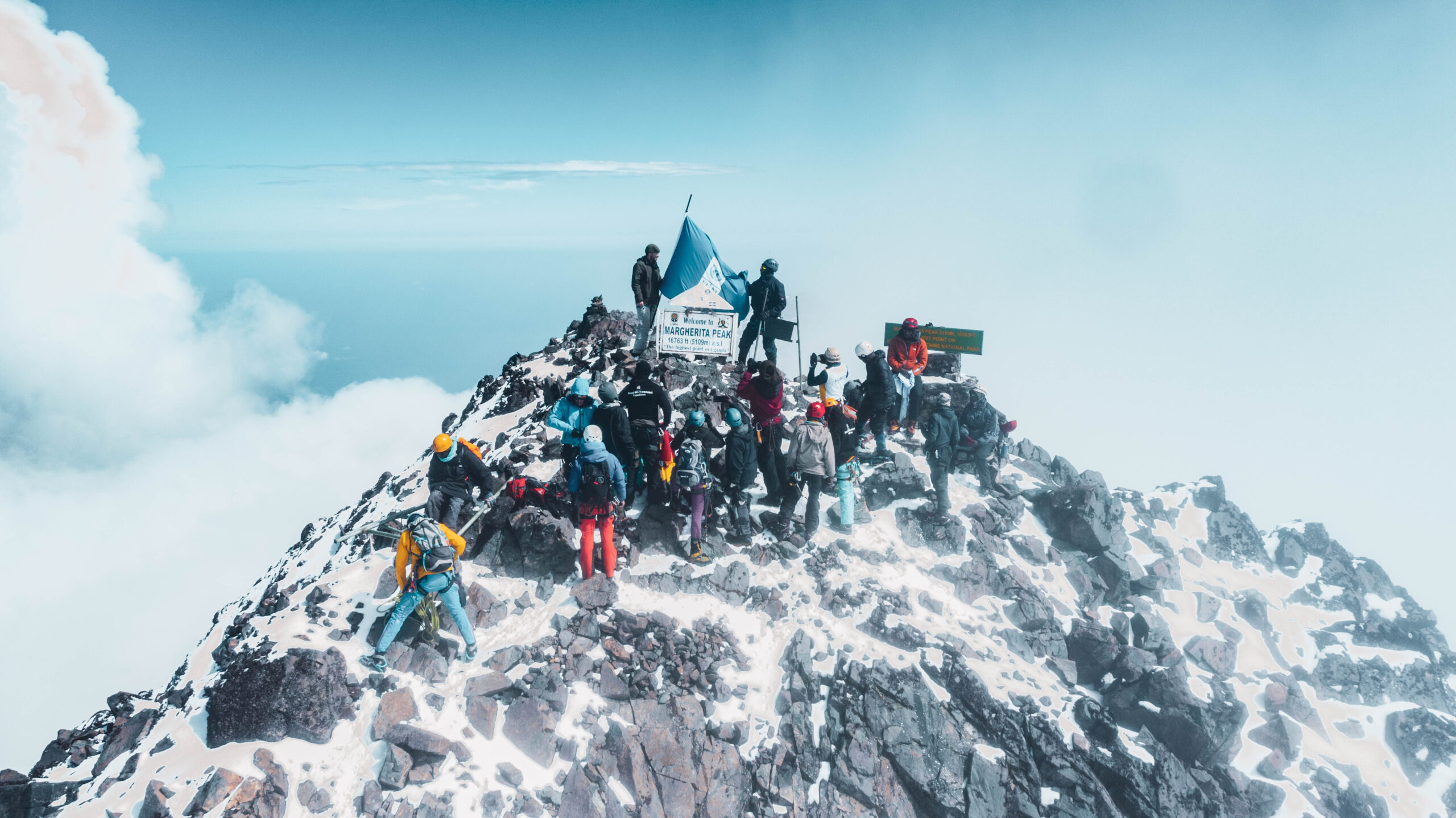
The Rwenzori offers something fundamentally different, and as our detailed comparison of Kilimanjaro, Mount Kenya, and the Rwenzori Mountains makes clear, the comparison is less about which is better and more about which is right for you. Kilimanjaro gives you Africa’s highest point, relatively accessible, with a well-documented success profile. The Rwenzori gives you Africa’s most botanically extraordinary range, one of its least visited, with a summit experience standing on Margherita Peak at 5,109 metres, watching the glacier drop away beneath you and Lake Edward glimmering on the horizon that fewer than a thousand people a year have earned.
Planning Your Trek in the Context of These Numbers
The practical implications of the Rwenzori’s low visitor numbers are worth thinking through carefully as you plan your expedition.
The mountain’s infrastructure accommodates small groups rather than mass throughput due to low trekker volumes. Hut capacities on both major routes are generous relative to the number of people using them, meaning you are unlikely to face the sardine-tin sleeping conditions common on popular Kilimanjaro routes. Permit availability is rarely a constraint, though booking well in advance remains advisable, especially for the summer dry-season window when the limited high-season slots fill first. A full breakdown of what you can expect to spend is available in the Rwenzori cost guide, which covers park fees, guide and porter costs, equipment, and pre-trek accommodation.
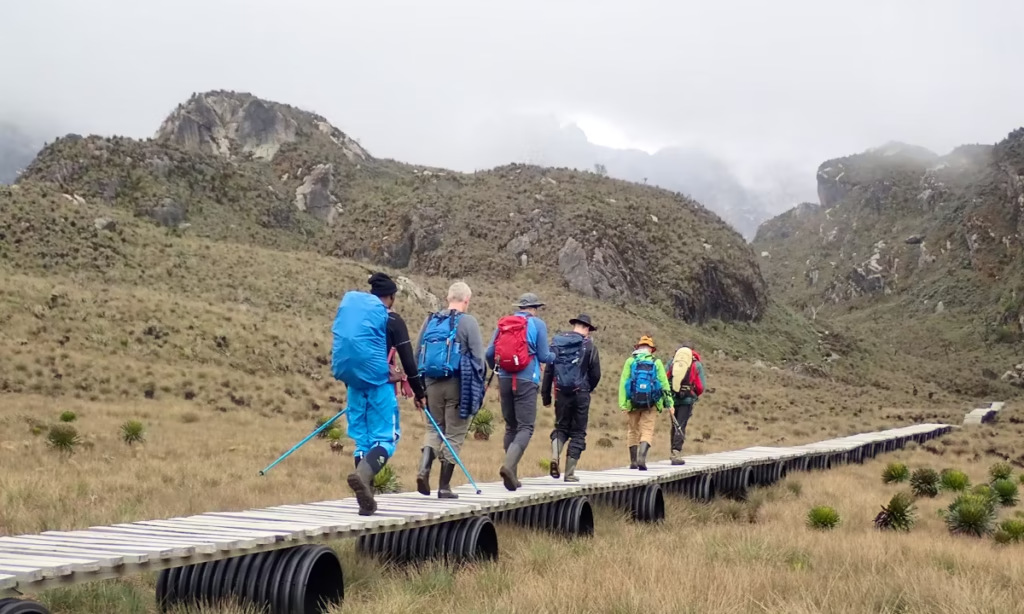
Low visitor numbers also shape the safety picture on the Rwenzori. Because groups are small and guides are experienced specialists rather than generalists managing large commercial convoys, the quality of safety oversight is high. Our comprehensive medical guide to trekking the Rwenzori covers the specific health risks of this environment in detail: altitude sickness, hypothermia, trench foot, and equatorial sun exposure, but the overarching safety context is positive for those who prepare properly and trek with an experienced operator.
One consideration that is sometimes overlooked: the Rwenzori’s low visitor numbers mean that there is less real-time, publicly available information about current conditions than on mountains with larger visitor flows. Operators with an active, year-round presence on the mountain provide the best access to trail condition updates, camp status reports, and weather patterns. This is one of the practical reasons why choosing a specialist operator rather than attempting to piece together a self-guided trip makes such a difference on the Rwenzori. Solo trekking the Rwenzori without a guide is not permitted within the national park, and the regulation exists for good reasons in terrain that is technically demanding and weather-dependent.
Frequently Asked Questions: How Many People Hike the Rwenzori Mountains Each Year?
Exactly how many people hike the Rwenzori Mountains each year?
The Rwenzori Mountains receive approximately 1,000 to 1,500 trekkers annually, based on Uganda Wildlife Authority park records and operator data. In some years with particularly favourable global travel conditions, this figure has approached 2,000, but the mountain remains one of Africa’s least-visited high-altitude wilderness areas by a considerable margin. For comparison, Mount Kilimanjaro receives upwards of 50,000 trekkers per year, meaning the Rwenzori hosts roughly one-thirtieth of Kilimanjaro’s annual visitors.
Why do so few people hike the Rwenzori compared to Kilimanjaro?
Three factors primarily explain the gap. First, logistics: the Rwenzori requires deliberate travel to western Uganda, with no major international airport nearby, making it a less convenient add-on to standard Africa itineraries. Second, difficulty: the Rwenzori is significantly more technical than Kilimanjaro, with wet, steep, and, in places, glacier-covered terrain that demands genuine mountaineering competence on the upper routes. Third, awareness: unlike Kilimanjaro, which has been prominently marketed globally for decades, the Rwenzori remains relatively unknown outside specialist adventure travel circles, meaning the pool of potential visitors who are even aware of the mountain is much smaller.
Is the Rwenzori harder than Kilimanjaro?
Yes, by most objective measures. While Kilimanjaro is the higher peak at 5,895 metres versus the Rwenzori’s Margherita Peak at 5,109 metres, the Rwenzori’s sustained technical difficulty, permanently wet terrain, navigation challenges in poor visibility, and glacier approach make it the more demanding overall experience. Most fit trekkers can reach Kilimanjaro’s summit without technical equipment. Margherita Peak requires crampons, fixed ropes, and glacier travel on the final section. The Rwenzori also lacks Kilimanjaro’s broad, well-maintained paths; the mountain’s routes are narrow, root-laced, frequently boggy, and demand sustained physical effort across every day of the trek.
What percentage of Rwenzori trekkers actually reach Margherita Peak?
Summit success rates on Margherita Peak are lower than on Kilimanjaro, reflecting the technical complexity of the final glacier section and the unpredictability of weather in the high Rwenzori. With a professional guiding team and ample preparation time built into the itinerary, experienced trekkers have a good probability of reaching the summit in favourable weather windows. The key variables are fitness level, acclimatisation quality, and willingness to exercise patience. Turning back in truly dangerous weather is always the right call, and experienced Rwenzori guides are skilled at reading summit-day conditions.
What is the best time of year to hike the Rwenzori?
The Rwenzori does not have a conventional dry season, but the drier windows, roughly December to February and June to August, offer the most manageable conditions for high-altitude trekking. During these periods, trail conditions are relatively better, cloud cover breaks more frequently, and the chances of clear views at elevation are higher. That said, rain, mud, and mist are normal features of the Rwenzori at any time of year, and trekkers should be prepared for wet conditions regardless of when they visit. The mountain is technically hiked year-round with the right gear and guide support.
Do I need climbing experience to hike the Rwenzori?
It depends entirely on your objective. Good physical fitness and comfortable multi-day trekking experience are required for the lower and mid-mountain sections, including the approach to Bujuku Valley, the John Matte area, and many of the shorter itineraries, but no technical climbing skills are needed. For routes that include the summit push to Margherita Peak, technical experience with glacier travel, crampons, and fixed ropes is necessary. Our guide team provides instruction and all necessary technical equipment, but trekkers targeting the summit should have a solid base of high-altitude experience and be physically well-prepared before departure.
How does the Rwenzori compare to Mount Kenya for serious trekkers?
Both mountains offer serious technical challenges, but they are quite different in character. Mount Kenya’s primary technical routes (Batian and Nelion) are genuine rock climbs requiring advanced skills, while Point Lenana, the accessible trekking summit, can be reached without technical equipment by fit hikers. The Rwenzori’s equivalent trekking summit (Margherita) requires glacier equipment, making it slightly more technically accessible to confident trekkers than Kenya’s true technical summits but more demanding than Point Lenana. In terms of landscape and ecology, the Rwenzori is arguably more extraordinary; its equatorial plant zones are unlike anything on Mount Kenya, and its visitor numbers are significantly lower, making it the more intimate experience by far.
Can I combine a Rwenzori trek with a Uganda gorilla trekking safari?
Absolutely, and this combination is one of the most compelling itineraries available in East Africa. The Rwenzori lies in western Uganda, within reasonable driving distance of Bwindi Impenetrable National Park and Queen Elizabeth National Park. A combined expedition summiting the Mountains of the Moon, then tracking mountain gorillas through the ancient forest, represents a genuinely rare adventure that is difficult to equal anywhere in the world. We offer several pre-designed combined itineraries that bring these experiences together within a single Uganda expedition.
Ready to Join the 1,500? Start Planning Your Rwenzori Trek
Every year, a small and select group of trekkers discovers what most of the world has never seen: the extraordinary, fog-wreathed, glacier-crowned peaks of the Rwenzori Mountains. They come back changed not just by the altitude or the physical challenge but by the sheer otherness of this place. The giant lobelias that dwarf a person standing beside them. The silence of an alpine valley where no other group has passed in days. The impossible satisfaction of standing on Margherita Peak, Africa’s third-highest summit, in one of the most exclusive clubs in adventure mountaineering.
You will not find this mountain on a billboard at Heathrow or on the first page of a packaged African adventure brochure. You find it through research in articles like this one, through word of mouth from people who have been there, and through the kind of serious intent that separates those who actually go from those who always mean to. If you are ready to go, get in touch with our team and let’s start building your Rwenzori expedition. We are a specialist operator focused exclusively on this mountain, with profound guiding experience, a comprehensive range of itineraries, and a genuine commitment to giving every trekker who comes here the best possible chance of a safe, successful, and transformative experience.
Browse our full range of Rwenzori trekking itineraries, explore our route comparison guide, or check our frequently asked questions for the answers you need before reaching out. The mountain is waiting. It always is.