Month-by-month Rwenzori trekking guide: what conditions, weather & summit access look like every month from January to December. Plan your perfect trek.
There is a question I am asked more than any other during the expedition planning phase, and it comes in many forms: “Is June the best time to go?” or “Can I trek the Rwenzori in March?” or “What is February like on the mountain?” Behind all of these questions lies the same genuine need: Trekkers want to know exactly what conditions they will encounter in the specific month they are planning to travel. Not a vague approximation. Not a general dry-season recommendation. A precise, honest, month-by-month account from someone who has been on the mountain in every season.
I have guided expeditions on the Rwenzori Mountains across every month of the calendar year. I have walked the Central Circuit Trail in the crystalline cold of January, crossed the Bujuku bog in the high-rainfall fury of April, photographed the giant lobelias dripping with condensation in the grey beauty of October, and watched the glaciers of Mount Stanley catch the first light of a February dawn from Elena Hut at 4,541 meters. Every month on the Rwenzori has a character, and every character has trekkers it suits and trekkers it challenges.

The fundamental truth about Rwenzori seasonality is this: unlike many mountains where “dry season good, wet season bad” is a sufficient summary, the Rwenzori is more nuanced. The mountain receives rainfall throughout the year; it is one of the wettest ranges in Africa, and the distinction between seasons is one of degree, not of kind. The best months offer somewhat more sun, somewhat less rain, and more reliable glacier and high-camp access. The most challenging months offer persistently heavy rain, saturated trails, and reduced summit success rates. But every month offers the mountain’s extraordinary vegetation zones, its remarkable wildlife, and the profoundly moving experience of being inside Africa’s last equatorial glaciers.
This guide covers all twelve months. For each month you will find the realistic weather and trail conditions, the summit access picture, which itineraries are most appropriate, what to bring that month specifically, and my honest assessment of who should plan their trek for that window. By the end, you will know exactly which month suits your schedule, your ambitions, and your relationship with mud.
Understanding Rwenzori Seasonality: What “Dry” and “Wet” Actually Mean Here
Before we go month by month, the framework of Rwenzori seasonality needs to be established clearly, because the words “dry season” and “wet season” carry misleading implications for a mountain that receives between 1,800 and 3,000 millimeters of annual rainfall depending on altitude and aspect. The Rwenzori does not have a dry season in the way that the East African savanna does. What it has is a drier season, a period when rainfall is less frequent, when mornings are more reliably clear, and when the trails between camps dry out sufficiently to make hiking less arduous and glacier conditions more stable.
The two primary drier windows are June to mid-September and December to mid-February. The two primary wetter windows are mid-September to November and March to May. These are not absolute boundaries; the Rwenzori’s weather has a chaotic energy that defies rigid scheduling, but they represent the broad seasonal rhythm that experienced guides and operators plan around.
The altitude factor is equally important. At the lower forest elevations, in the section from Nyakalengija to Nyabitaba Hut rainfall is heavy across all seasons. As you climb through the bamboo and heath zones to the upper alpine terrain near Bujuku Hut and beyond, the weather becomes more variable and more dramatically changeable. The glacial zone above 4,500 metres operates by its own rules entirely: cloud, snow, and mist are the permanent backdrop against which the mountain reveals its summit on terms entirely its own.
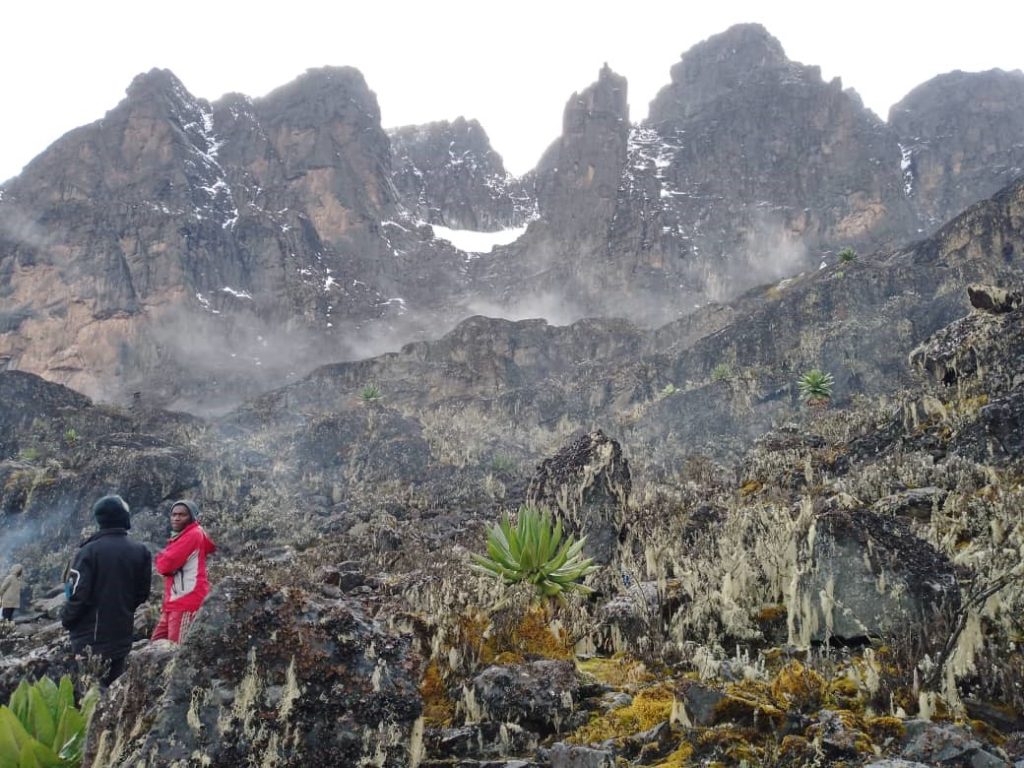
Rwenzori weather caveat: All month-by-month descriptions in this guide represent typical conditions based on long-term patterns. The Rwenzori’s weather is genuinely unpredictable on a day-to-day basis in every season. Every trekker in every month should carry full waterproofs, expect rain at any time, and plan for the mountain to produce its own conditions regardless of seasonal expectations. This is part of its character, and part of what makes it one of the most genuinely wild mountain experiences on Earth.
January on the Rwenzori Mountains
| Rainfall
Low–Moderate |
Temp Range (summit)
4°C to 20°C |
Best Trail
Central Circuit |
Summit Access
Full access glaciers and high camps in good condition |
Verdict
Excellent |
January sits in the heart of the Rwenzori’s best trekking window, and it delivers conditions that represent the mountain at something close to its finest. The short rains of November and December have passed, and the early months of the year bring the clearest skies and the most reliable summit access of any period in the calendar. If you have the flexibility to choose any month for your Rwenzori expedition, January belongs at the top of the shortlist.
Rainfall in January is the lowest of any month in the first half of the year. Mornings are frequently clear enough to reveal the full profile of the mountain from the lowlands a sight that remains extraordinary however many times you have seen it and the early trail hours offer walking conditions that are as good as the Rwenzori ever provides. The trails are drier than at any other time, though “drier” is relative: the Rwenzori’s bog sections and saturated heather zones retain moisture year-round, and proper waterproof boots and gaiters remain non-negotiable in January as in every other month.
For summit aspirations, January is outstanding. The Central Circuit Trail hut network operates efficiently, the upper camps including Elena Hut are accessible with well-maintained conditions, and the glacier approach to Margherita Peak at 5,109 metres is in some of its most stable condition of the year. Summit success rates in January are among the highest we record. The full range of itineraries is appropriate from the 4-day fast Margherita summit for experienced mountaineers to the 13-day six-peaks grand expedition for those seeking the complete Rwenzori experience. January is also a strong month for the Kilembe Trail, with Sine Camp and Mutinda’s panoramic views particularly rewarding in the clear morning air.
January temperatures at altitude are cold below 0°C overnight at Elena and Margherita Camp making it the month that most clearly requires a sleeping bag rated to -10°C for summit expeditions. The cold is the trade-off for the clarity, and for most trekkers it is an entirely acceptable one. The Rwenzori in January is the mountain in concentrated form: cold, clear, demanding, and profoundly beautiful.
February on the Rwenzori Mountains
| Rainfall
Low |
Temp Range (summit)
4°C to 21°C |
Best Trail
Central Circuit / Kilembe |
Summit Access
Full access glaciers and high camps in good condition |
Verdict
Excellent |
February carries the same excellent conditions as January and is, in many respects, the very best month to trek the Rwenzori. The drier season is in full effect, the trails retain the relative dryness of the January window, and the additional daylight compared to December makes the daily camp-to-camp stages more comfortable in terms of timing. February is also the month when the mountain’s flora is at a particular peak of beauty: the giant lobelias and Senecio groundsels that define the upper alpine landscape appear sharply against a clear sky, and the Bujuku Valley on clear days reveals the full dramatic relationship between the three great peaks, Stanley, Speke, and Baker, in a panorama that photographs do not fully capture.
Summit conditions in February are consistently strong. The Coronation Glacier and the approach to Margherita Peak are in reliable condition, and the longer days mean that dawn summit departures from Elena Hut arrive at the summit with better light than the very short days of December and January. February is an excellent month for the 7-day Central Circuit summit trek, the 8-day Kilembe Trail expedition, and all multi-peak itineraries including the 10-day four-peaks expedition. The Bukurungu Trail is also at its most accessible in February, with the wilderness camping campsites more forgiving than in the wetter months.
February can see the beginning of the transition toward the March-May wet season, particularly in the final week of the month, with some afternoon rain events beginning to appear with greater frequency. Trekkers on longer expeditions departing in the last week of February should pack with the awareness that the final days of their trek may encounter the leading edge of the March rains.
March on the Rwenzori Mountains
| Rainfall
Moderate–High |
Temp Range (summit)
5°C to 20°C |
Best Trail
Central Circuit |
Summit Access
Access possible with good guide conditions variable |
Verdict
Good with caveats |
March represents the beginning of the transition into the primary wet season, and the shift is noticeable on the mountain. Rainfall increases progressively through the month, afternoon precipitation becomes more frequent and heavier, and the trails begin to accumulate the moisture that will define them through April and May. The first two weeks of March are generally still manageable and offer reasonable trekking conditions the month begins closer to February’s character than to April’s. By the third and fourth weeks, conditions have typically deteriorated enough to make a measurable difference in the hiking experience.
March is not a month for first-time high-altitude trekkers or for those with limited tolerance for challenging conditions. It is, however, a month that experienced trekkers who have flexible schedules and who value solitude above comfort can find deeply rewarding. Visitor numbers on the mountain drop noticeably in March compared to the December-February peak, meaning that the mountain huts and camps are less crowded, the wildlife has less human disturbance, and the entire experience has a more genuinely wilderness quality.
Summit access in March is possible but increasingly weather-dependent. The glacier approach to Margherita Peak remains feasible with experienced guides, but the frequency of summit-day cloud and precipitation is higher than in the drier months, reducing the likelihood of the dramatic clear-sky summit experience that January and February reliably provide. For trekkers with summit as their primary objective, March is a reasonable choice in the first half and a more cautious choice in the second. Lower-altitude options the Mahoma Loop and the 2-day Sine Camp trek remain excellent in March, when the forest’s response to increased rainfall produces extraordinary greenness and birding activity.
April on the Rwenzori Mountains
| Rainfall
Very High |
Temp Range (summit)
6°C to 18°C |
Best Trail
Lower forest treks |
Summit Access
Challenging specialist guidance essential; low season |
Verdict
Challenging |
April is the Rwenzori in full wet-season mode, and I want to be honest with you about what that means. April rainfall on the mountain is among the heaviest of the year. The trails are deeply saturated, the bog sections of the upper Central Circuit are at maximum depth and extent, river crossings are swollen, and the daily experience on the trail involves extended periods of heavy rain that no waterproofing can entirely keep at bay when sustained over many hours. For trekkers who have prepared for this with the right waterproof gear, the right mindset, and the right guides April on the Rwenzori is an intense and authentically challenging mountain experience. For trekkers who have not, it can be a genuinely miserable one.
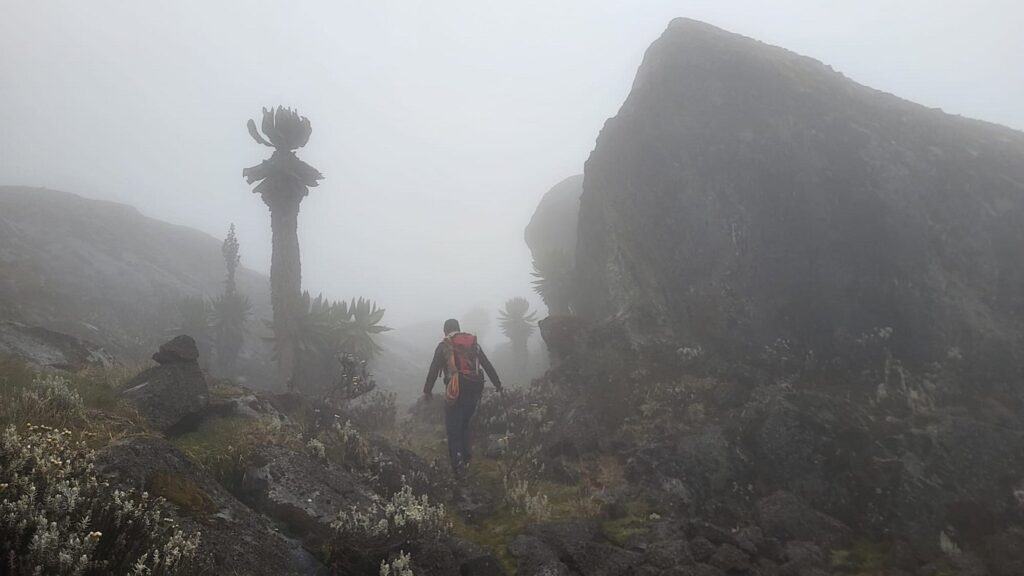
Summit access in April is significantly reduced. The glacier approaches are more icy and conditions at Elena Hut and above are at their most severe. Summit success rates are at their annual low in April, and only the most experienced mountaineers with specialist guides should attempt Margherita Peak in this month. We do not discourage April trekking; we contextualise it accurately. The 4-day Rwenzori Waterfalls Hike on the Kilembe Trail is genuinely spectacular in April the waterfalls are at their most powerful, the forest is impossibly lush, and the experience of the lower mountain in heavy rainfall has a raw, dramatic beauty that the dry season cannot replicate.
April is the month for the Rwenzori trekker who is comfortable being thoroughly wet, who does not require summit success as validation of the experience, and who is drawn by the mountain’s least visited and most primordially wild version of itself. The 3-day Sine Camp and Samalira Falls trek in April is breathtaking the Samalira Falls are thundering at full power, and the forest approach along the Kilembe Trail is at its most saturated green.
May on the Rwenzori Mountains
| Rainfall
High |
Temp Range (summit)
6°C to 18°C |
Best Trail
Lower forest treks / Kilembe Trail |
Summit Access
Challenging specialist guidance essential; low season |
Verdict
Challenging |
May continues the wet-season character of April through much of the month, with the heaviest rains typically concentrated in the first three weeks. The final week of May often shows the beginning of the transition toward the June-September drier period a gradual, day-by-day shift rather than an abrupt change meaning that late-May departures for longer multi-day expeditions may find improving conditions as they progress through their itinerary.
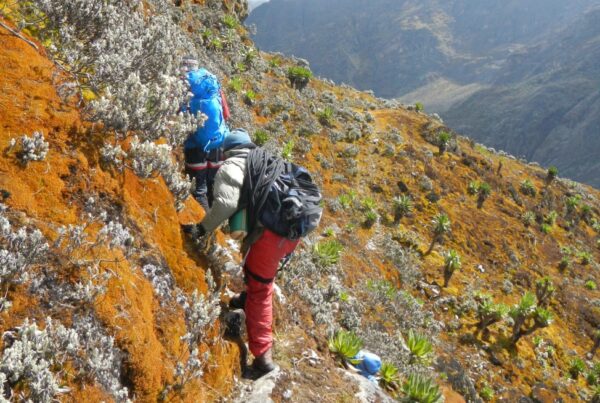
The practical experience on the mountain in May is very similar to April: deeply saturated trails, challenging bogs, reduced summit access probability, and extraordinary forest-level scenery that rewards trekkers who have calibrated their expectations appropriately. The upper mountain above John Matte Hut on the Central Circuit involves bog crossings that in May require careful navigation and full gaiters at minimum. The Kilembe Trail lower sections hold up better than the Central Circuit in wet conditions due to terrain differences, and the Mutinda Lookout in May on the days when cloud briefly lifts delivers views of extraordinary contrast, the peaks and valleys saturated with an intensity of green that the drier months cannot match.
May is also a month when the mountain’s wildlife activity is high the wet conditions that challenge trekkers create ideal habitat conditions for the three-horned chameleons, L’Hoest’s monkeys, and extraordinary birdlife of the lower forest. For trekkers who approach the Rwenzori as a wildlife and forest immersion rather than a summit conquest, May has a genuine, underrated appeal.
June on the Rwenzori Mountains
| Rainfall
Moderate and decreasing |
Temp Range (summit)
5°C to 21°C |
Best Trail
Central Circuit / Kilembe |
Summit Access
Access possible with good guide conditions variable |
Verdict
Good to Excellent |
June is a transitional month, and the direction of travel is firmly positive. As the wet season retreats through the month, conditions improve week by week in a way that makes June an increasingly rewarding choice as the month progresses. Early June the first two weeks still carries residual wet-season characteristics, with heavy rain possible and the trails retaining the deep saturation of April and May. By the third week of June, conditions are noticeably improving, and a trek departing in the final ten days of June will experience conditions approaching those of the drier season’s peak.
June is also the month when the mountain’s vegetation responds most dramatically to the transition from maximum moisture to improving conditions. The upper alpine zone of the Bujuku Valley where giant lobelias and Senecio groundsels create the Rwenzori’s most otherworldly landscape is at a particular intensity of green in June, still fully hydrated from the wet season but increasingly visible through clearing skies. Photography in June has a particular quality: the moisture in the air creates a luminosity that the clearer, drier months lack, and the combination of dramatic cloud formations and intermittent sunshine produces light conditions that experienced landscape photographers specifically seek.
Summit access in June improves progressively through the month. By late June, the 7-day Margherita Peak summit trek and the 8-day three-peaks trek are reliably manageable with appropriate guide support. Early June is more suitable for lower-altitude itineraries like the Mahoma Loop, the 4-day Kilembe Waterfalls Hike, or the 4-day Mutinda Lookout trek, where the improving conditions are experienced most immediately and summit pressure is not the primary consideration.
July on the Rwenzori Mountains
| Rainfall
Low–Moderate |
Temp Range (summit)
4°C to 22°C |
Best Trail
Central Circuit / Kilembe / Bukurungu |
Summit Access
Full access glaciers and high camps in good condition |
Verdict
Excellent |
July is the peak of the primary dry season and, along with August, represents the period that most consistently delivers the Rwenzori at its most accessible and reliably beautiful. Rainfall is at its annual low for the June-September window, morning visibility is frequently outstanding, and the summit approach conditions are as stable as the mountain ever offers. International trekker numbers begin to rise in July as the European and North American summer holiday season coincides with the Rwenzori’s best conditions, a combination that makes July both popular and excellent.
Every itinerary in the portfolio is at its best in July. The 13-day, six-peaks grand expedition most reliably achieves all six summits in July and August, requiring sustained good conditions across the full altitude range of the mountain. The 18-day all-peaks traverse is also at its most viable in July, when the sustained drier period gives long-expedition trekkers the highest probability of finding workable conditions across their full itinerary duration. The Bukurungu Trail wilderness camping route is at its most accessible in July, with the ground camping sites drier than at any other time and the route through the Portal Peaks most reliably navigable.
July temperatures at the upper camps are cold, below 0°C overnight above 4,000 meters, but the absence of rain makes the cold a manageable and expected condition rather than a compounded challenge. There is something about a cold, clear Rwenzori night in July looking out from the door of Elena Hut at a sky full of stars, with the faint blue-white of the glaciers visible in the darkness, that I find difficult to describe adequately. It is the mountain at peace with itself. Book your July Rwenzori trek early; availability fills quickly in the peak season months.
August on the Rwenzori Mountains
| Rainfall
Low |
Temp Range (summit)
4°C to 22°C |
Best Trail
All trails |
Summit Access
Full access glaciers and high camps in good condition |
Verdict
Excellent |
August is the other contender for the title of the Rwenzori’s very best month; depending on year-to-year variation, August may slightly edge July for summit access reliability, or July may edge August for trail conditions. The honest answer is that both months are exceptional, and the distinction between them is marginal. August maintains the low rainfall, clear mornings, and stable glacier access of July while adding the confidence of being firmly in the middle of the drier period rather than the beginning of it.

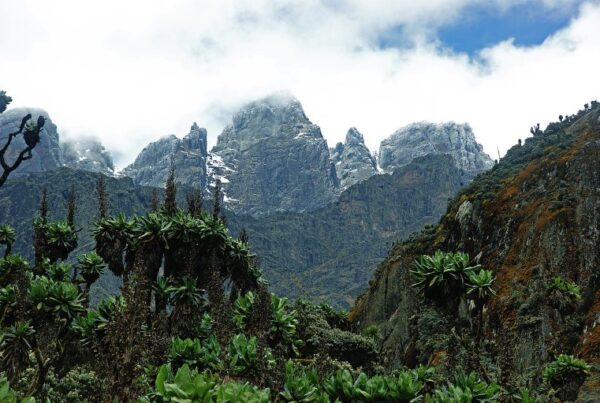
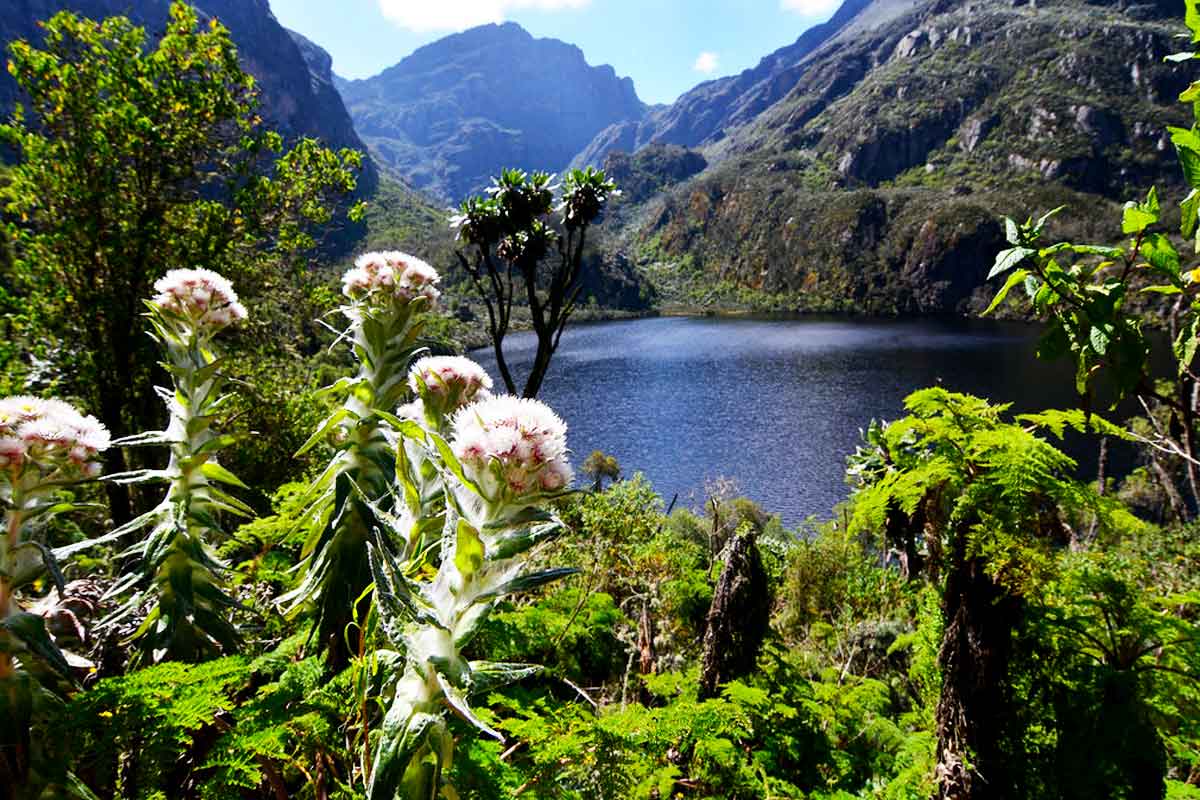
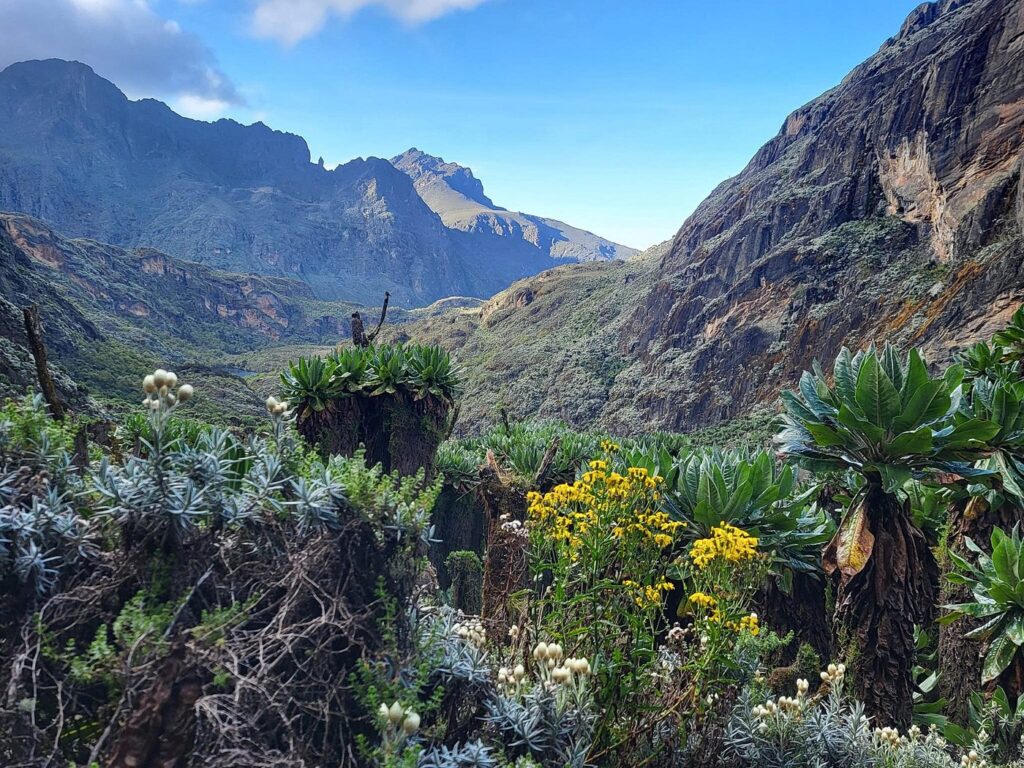
The vegetation zones of the Rwenzori in August are at a particular equilibrium, sufficiently hydrated from the earlier wet season to maintain their extraordinary richness but with enough sustained dry-season sun to produce clear, vivid color rather than the mist-softened palette of the wet season. The giant groundsels, Senecio adnivalis, are at their most photogenic in the upper alpine zone, their silver-grey trunks and rosette crowns rising from the bog like prehistoric trees. The Bujuku Lakes and the Kitandara Lakes reflect the peaks above them in conditions of morning clarity that make August one of the exceptional months for Rwenzori landscape photography.
August is also the best month for families and groups that include mixed fitness levels because the trail conditions are at their most forgiving and the daily stage demands are least compounded by weather. If you are wondering whether older or less experienced trekkers can manage the Rwenzori or whether beginners can attempt the mountain, August is the month that gives the widest margin for the challenges of fitness and experience relative to the challenges of conditions. Book well in advance; August on the Rwenzori is our most sought-after period.
September on the Rwenzori Mountains
| Rainfall
Low to Moderate (transitional) |
Temp Range (summit)
5°C to 21°C |
Best Trail
Central Circuit / Kilembe |
Summit Access
Full access: glaciers and high camps in good condition |
Verdict
Very Good to Good |
September has two distinct halves. The first half of September carries the excellent conditions of July and August forward into the early transition period, and trekkers departing in the first two weeks of September will experience conditions broadly comparable to August’s clear mornings, manageable rainfall, and good summit access. By the third week of September, the Rwenzori typically begins its transition toward the shorter wet season that runs from mid-September through November, and rainfall events become more frequent and heavier.
September as a whole is still an excellent month for the Rwenzori, and trekkers who can plan a departure in the first half of September will be rewarded with near-peak conditions. The 7-day Central Circuit summit trek and the 5-day Mount Speke trek are both excellent choices in early September. For trekkers who can only travel in mid-to-late September, the lower-altitude forest and waterfall itineraries are the more reliable choices, with summit expeditions carrying more weather-dependent risk.
Wildlife activity begins to increase in September as the approaching wet season triggers movement in the forest zones. The Rwenzori turaco, one of the mountain’s most sought-after endemic bird species, is particularly active in September, and birdwatchers who time the 2-day Lake Mahoma hike or the 1-day Nyabitaba introductory walk for September will find the forest in highly active, photogenic form.
October on the Rwenzori Mountains
| Rainfall
High |
Temp Range (summit)
6°C to 18°C |
Best Trail
Lower forest & Kilembe Trail |
Summit Access
Challenging specialist guidance essential in low season |
Verdict
Challenging |
October is firmly in the secondary wet season, and conditions are more challenging than the primary drier months. Rainfall frequently occurs and is often heavy, the upper mountain consistently remains cloud-covered, and the probability of summit access decreases. The character of October on the Rwenzori is similar to April, though typically with slightly less extreme rainfall. The secondary wet season of October-November is generally less severe than the primary wet season of April-May, though year-to-year variation means this is not always the case.
October is the month that I sometimes describe as the Rwenzori’s “honest” month; the mountain makes no effort to show you its best side, and what you experience is the raw, wet, atmospheric wilderness in its most primordial form. For trekkers who genuinely love this, who find something compelling in the combination of mist, rain, saturated forest, and the sense of real wildness that comes with difficult conditions, October has a distinct appeal. The solitude is exceptional: visitor numbers are at their lowest, and you can walk the Central Circuit for days without encountering another group.
For October, I recommend itineraries that keep the group in the lower and middle altitude zones where the forest experience is magnificent in wet conditions and where summit pressure does not compound the weather challenge. The 4-day Rwenzori Waterfalls Hike is genuinely outstanding in October; the Kilembe Trail waterfalls are at full power, and the forest is dripping with a beauty that photographs can barely capture. The Mahoma Loop and the 2-day Sine Camp trek are also well-suited to October, delivering the full forest and lake experience without the summit-altitude exposure.
November on the Rwenzori Mountains
| Rainfall
High, decreasing in second half |
Temp Range (summit)
6°C to 19°C |
Best Trail
Lower forest treks / late-month Central Circuit |
Summit Access
Access possible with good guide; conditions are variable |
Verdict
Moderate |
November mirrors March as a transitional month, this time moving in the positive direction, from the secondary wet season toward the December-February drier window. The first half of November tends to be wet and challenging, continuing October’s character. The second half of November shows the transition beginning, with rainfall events becoming less frequent and the mountain beginning to reveal itself more regularly between weather systems.
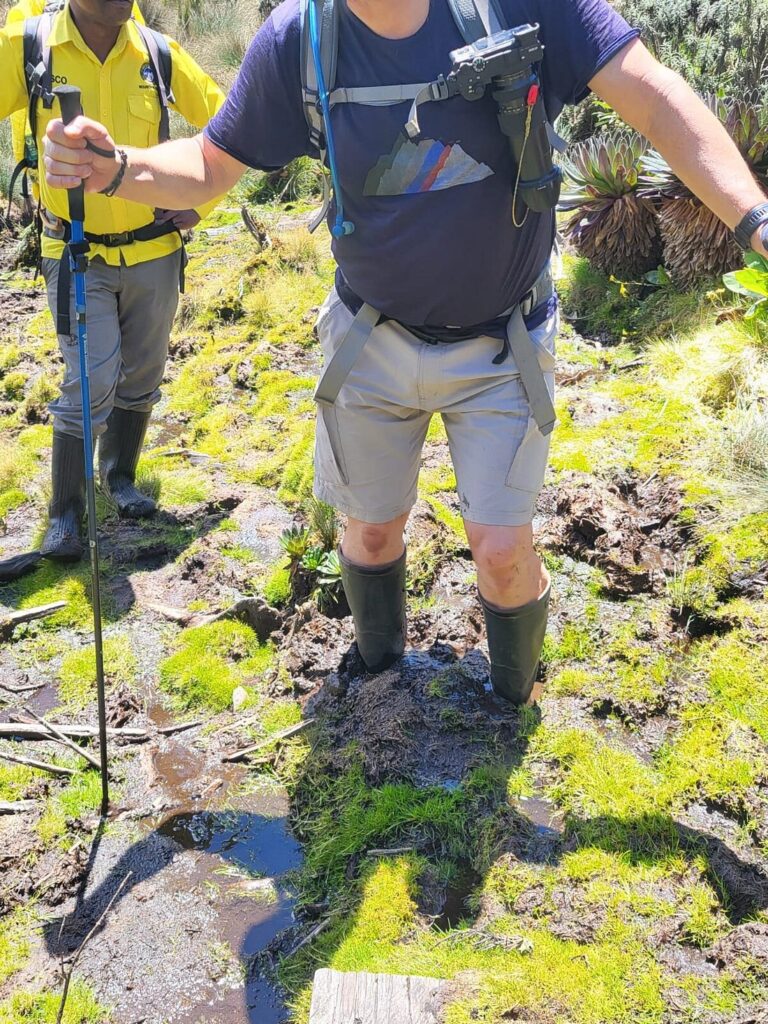
Late November, the final two weeks, is a genuinely underrated window for Rwenzori trekking. Visitor numbers remain low because many international trekkers have not yet identified November’s second half as a viable option, and the improving conditions mean that a trek departing on November 15th or later will encounter an increasingly rewarding experience as the days progress. The 7-day Central Circuit trek departing in the final week of November is a trip that begins in transitional weather and may well arrive at Elena Hut for summit day in conditions approaching December’s excellent standards.
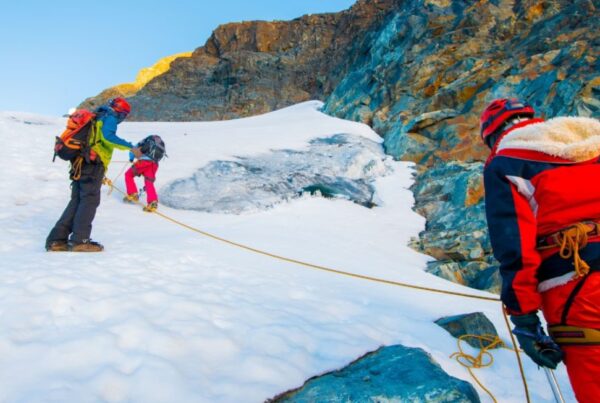
The Rwenzori’s glacier situation is particularly worth noting in November. The wet season replenishes snowfall on the upper mountain, meaning that November arrivals at the glaciated zone may find fresh snowfall on the approaches, beautiful to look at, requiring careful navigation with crampons, and producing summit photography of exceptional atmospheric quality on the days when the cloud briefly lifts. Experienced mountaineers with a taste for dramatic, atmospheric mountain conditions find November’s upper mountain deeply compelling.
December on the Rwenzori Mountains
| Rainfall
Low to Moderate |
Temp Range (summit)
4°C to 20°C |
Best Trail
Central Circuit / Kilembe |
Summit Access
Full access glaciers and high camps in good condition |
Verdict
Very Good to Excellent |
December opens the second excellent trekking window of the year and delivers conditions that improve week by week as the month progresses into the drier period. Early December, the first two weeks, can still carry residual wet-season moisture from November, with some rain events and partially saturated trails. By mid-December, conditions are typically transitioning firmly into the excellent range, and by Christmas week the Rwenzori is often at its most rewarding of any point in the year.
Christmas and New Year in the Rwenzori Mountains is an increasingly popular choice for adventurous travelers who want an experience radically different from a conventional holiday. There is something quietly extraordinary about standing on Margherita Peak on Christmas morning, Africa’s third highest summit, 5,109 meters above sea level, with the equatorial sun on the glaciers that no amount of description fully conveys. Our expeditions run through the full holiday period, and groups completing the 7-day Central Circuit summit trek in the Christmas week typically find summit-day conditions among the best of the entire year.
The combination of excellent trekking conditions and the holiday scheduling flexibility that many international travelers have in late December makes this a popular and rapidly booking period. Trekkers who want a December or Christmas-week Rwenzori expedition should contact us several months in advance; available spots in the final week of December fill earlier than any other period in the calendar. For those combining the Rwenzori with a broader Uganda experience, perhaps a 12-day Rwenzori and gorilla trekking combination or the 19-day Rwenzori and Uganda adventure safari, December provides excellent weather for the full itinerary across the Rwenzori, Bwindi, and the northern savanna national parks.
Season-by-Season Summary: Matching Your Month to Your Ambitions
For Summit Trekkers Targeting Margherita Peak
If reaching Margherita Peak at 5,109 meters is your primary objective, the months that give you the highest probability of summit success in optimal conditions are January, February, July, August, and late December. These are the months when glacier conditions are most stable, summit-day weather windows are most reliable, and our guide teams have the highest historical summit success rates. June and September are excellent secondary options for summit expeditions, with slightly elevated weather risk that experienced mountaineers and well-prepared trekkers can manage well.
For Forest and Wildlife Immersion Trekkers
Trekkers who are mainly attracted by the Rwenzori’s amazing ecological diversity, including the montane forest, bamboo zones, giant lobelia meadows, and the wildlife they support, will find October, November, April, and May surprisingly rewarding if they come ready for heavy rain and have adjusted their summit expectations accordingly. The wet seasons bring the forest to life in a way the drier months cannot replicate, and the solitude of the low-season mountain is genuine and profound.
For Combination Itinerary Travellers
Trekkers combining the Rwenzori with gorilla trekking in Bwindi, a Queen Elizabeth National Park safari, or the broader Uganda adventure packages should note that the drier months that are best for the Rwenzori, January-February and June-September, are also generally excellent for wildlife viewing in Uganda’s savanna parks. The dry season concentrates animals around water sources, making game viewing in Queen Elizabeth and other parks more predictable. A combination itinerary built around July or August therefore aligns well across all components.
For Budget-Conscious Trekkers
Trekkers on tighter budgets who are open to the wet-season experience and who have read this guide carefully and understand what they are choosing will find that April, May, and October offer the lowest demand for guide and accommodation availability, the most flexibility in booking lead times, and an experience that, despite the rain, is genuinely and deeply rewarding for those who are thoroughly prepared. Our Rwenzori budget trekking guide addresses cost management strategies across all seasons.
Packing Essentials That Change by Season
The core gear list for a Rwenzori expedition is constant across all months: waterproof boots, a quality sleeping bag, insulating layers, trekking poles, and a headlamp. But the emphasis within that list shifts meaningfully by season, and understanding those shifts helps you pack with precision.
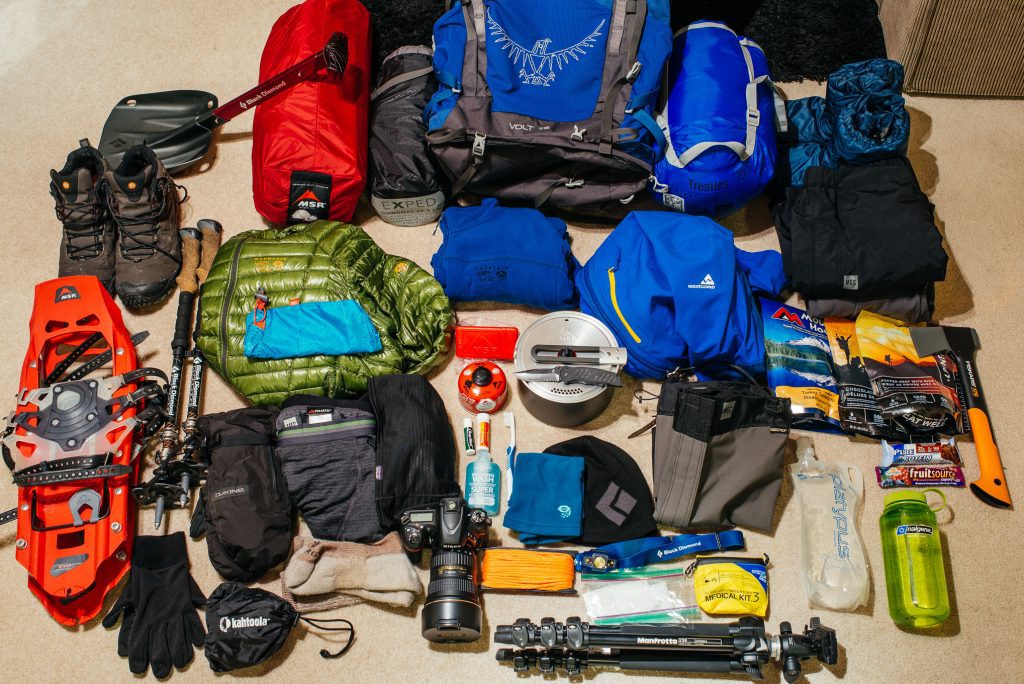
In the drier months of January, February, July, August, and late December, the priority is cold management above all else. The clearer skies and lower humidity mean that temperatures at the upper camps feel more severe than in the wet season, where cloud cover moderates the extremes. A sleeping bag rated to -10°C is more important than an additional rain layer in these months. At the high camps, UV levels significantly elevate, and ice reflection amplifies exposure, making glacier glasses and SPF 50+ sunscreen critical. Our dedicated gear guide covers boots and waterproofing in detail; during the dry season, the quality of your insulating layers becomes the most important variable.
In the wetter months of April, May, and October, the rain management system takes precedence. A pack rain cover is essential rather than optional. Gaiters are non-negotiable for the upper mountain bog sections. An additional pair of dry inner socks sealed in a waterproof bag for the mornings when you need to remember what dry feet feel like is a small comfort that pays extraordinary dividends by day four. The full campsite guide details what sleeping and shelter conditions look like at each camp in different seasons, and understanding those conditions helps you pack the right personal items for the time of year.
For all seasons, the power bank and electronics management strategy remains consistent: charge fully in Kasese before departure and do not depend on mountain camp solar infrastructure as a primary power source. The Rwenzori trek registration and departure process is the same in every month, and your guide team’s equipment check at Nyakalengija will be season-appropriate in its specific focus.
Frequently Asked Questions: Rwenzori Monthly Trekking Conditions
What is the best month to trek the Rwenzori Mountains?
The best months for Rwenzori trekking are January, February, July, and August, along with the Christmas week of late December. These months represent the two primary drier seasons of the Rwenzori annual calendar, offering the lowest rainfall, the most reliable morning visibility, the most stable glacier and summit conditions, and the highest probability of a successful summit attempt to Margherita Peak. Of these, July and August are particularly outstanding; they coincide with the main dry season at the mountain’s climatic peak, with January and February close behind in the shorter dry season. Trekkers who can plan specifically around these windows will have the best conditions the Rwenzori offers.
Can you trek the Rwenzori Mountains in the rainy season?
Yes, you can trek the Rwenzori Mountains in the rainy season, and many trekkers do, with genuinely rewarding experiences. The primary wet season runs from March to May and the secondary from mid-September to November. Conditions in these months are more challenging: trails are deeply saturated, the upper mountain bog sections are at maximum extent, and summit access probability is reduced. However, the wet-season Rwenzori has its own profound beauty; the forest is intensely green, waterfalls are at full power, wildlife is abundant and active, and visitor numbers are low, giving the mountain a solitude that the busy dry season cannot match. Trekkers choosing wet-season dates should select lower-altitude forest itineraries rather than summit expeditions, pack with rain management as the top priority, and arrive with expectations calibrated to the conditions rather than the dry-season photographs.
What is the Rwenzori Mountains weather like in July?
July is one of the best months to trek the Rwenzori Mountains, sitting in the heart of the primary dry season. Rainfall is at its lowest for the June-September window, mornings are frequently clear enough to reveal the mountain’s full profile, and summit access conditions for Margherita Peak and the other major peaks are as reliable as at any point in the year. Temperatures at altitude are cold, below 0°C overnight above 4,000 meters, but the absence of rain makes the cold manageable and expected. Trail conditions are at their most accessible. All itineraries from short forest hikes to the 13-day six-peaks grand expedition are at their best in July. Book early, as July is the most popular month for international visitors and availability fills up quickly.
Is the Rwenzori trek possible in December?
Yes, December is an excellent time to trek the Rwenzori Mountains, particularly in the second half of the month. The first two weeks of December can still carry residual wet-season moisture, but conditions improve progressively through the month, and by Christmas week the Rwenzori is typically in some of its best condition of the year. The coincidence of excellent trekking conditions and the Christmas-New Year holiday period makes late December one of our most sought-after booking windows. Trekkers completing the Central Circuit summit expedition in the Christmas week frequently experience summit-day conditions among the best of the annual calendar. Book several months in advance for December and Christmas-week availability.
What are Rwenzori conditions like in January?
January is one of the Rwenzori’s finest months for trekking. The short dry season that begins in December reaches its peak in January, delivering low rainfall, clear mornings, and highly reliable summit access conditions. The glacier approach to Margherita Peak is stable, summit success rates are high, and all itineraries from introductory forest walks to the full multi-peak expeditions are appropriate. Night temperatures at the upper camps, Elena Hut and Margherita Camp, regularly fall below 0°C, making a sleeping bag rated to -10°C essential for summit expeditions. The Rwenzori in January is cold, clear, and in many ways at its most pristine: the mountain rewards the additional cold-weather clothing you must bring with conditions of genuine exceptional quality.
What months should I avoid for the Rwenzori trek?
No month should be categorically avoided for the Rwenzori; every month is trekable with the right preparation and an appropriate itinerary selection. The months that are most challenging and require the most careful expectation management are April, May, and October, which sit in the primary and secondary wet seasons, respectively. In these months, trail conditions are at their most saturated, summit access probability is reduced, and the daily trekking experience involves significant rainfall. They are not months for first-time high-altitude trekkers with summit aspirations. They are genuinely rewarding months for experienced trekkers who embrace challenging conditions, value maximum solitude, and approach the lower-altitude forest and waterfall experience as a worthy expedition in its own right.
What is the Rwenzori Mountains weather like in June?
June is a transitional month that improves progressively as the weeks pass. Early June carries residual wet-season characteristics from April and May, with heavier rainfall and more saturated trails. By mid-June conditions are improving noticeably, and by late June the mountain has largely transitioned into the drier season’s character. Lower-altitude forest and waterfall itineraries best serve trekkers departing in the first half of June. Trekkers who depart in the final ten days of June will experience conditions that approach those of July and August. Summit access in late June is reliably manageable. June is an underrated month for forest-focused trekking; the vegetation is at maximum greenness from the wet season, and morning light quality is often outstanding.
Is the Rwenzori open for trekking year-round?
Yes, Rwenzori Mountains National Park is open for trekking throughout the year. There is no month in which the park authority closes the trails or suspends access. The decision about whether a particular month is appropriate for your specific itinerary and ambitions is a practical one based on weather, trail conditions, and summit access probability rather than an administrative one. Our guides operate on the mountain in every month of the year and have extensive experience managing all seasonal conditions. The question is not “Is the Rwenzori open?” but “which itinerary is best suited to the month I can travel?” This guide fully answers a question for every calendar month.
What Rwenzori itinerary is best for the wet season?
During the primary wet season months of April and May and the secondary wet season of October, the most appropriate Rwenzori itineraries are those that focus on the lower and middle altitude zones where the forest experience is magnificent in wet conditions and where summit pressure does not compound the weather challenge. The best wet-season choices include the 4-day Rwenzori Waterfalls Hike on the Kilembe Trail, which is genuinely spectacular when the waterfalls are at full power; the 3-day Mahoma Loop for forest and lake immersion; the 2-day Sine Camp trek for a manageable lower-forest introduction; and the 3-day Sine Camp and Samalira Falls hike. Multi-day summit expeditions are possible in the wet season but require experienced mountaineers, specialist guide support, and a flexible attitude toward summit probability.
Plan Your Rwenzori Trek for the Month That Is Right for You
Every month in the Rwenzori Mountains has something extraordinary to offer: the cold clarity of January, the photographic magnificence of a wet-season October, the peak-season perfection of August, and the quiet transitional beauty of November. What changes month by month is not whether the mountain is worth experiencing but how you should experience it: what itinerary to choose, what to pack with the highest priority, what to expect from the trail conditions, and what the summit probability realistically looks like.
At Rwenzori Trekking Safaris, we run expeditions in every month of the year. Our guides know the mountain in every condition it produces; we have guided summit expeditions in the depth of the secondary wet season and forest walks in the height of the dry season, and we brief every client specifically on the conditions they can expect during their specific dates and on their specific route. Whether you are targeting Margherita Peak on a 7-day Central Circuit summit trek in February, exploring the waterfalls of the Kilembe Trail in October, or completing the 13-day six-peaks grand expedition in July, we will prepare you fully for what your month of choice delivers.
Browse our full range of Rwenzori trekking itineraries and trail options, read our dedicated guide to the best times to visit the Rwenzori, or explore the full range of combination itineraries that pair the Rwenzori with Uganda’s other world-class wildlife experiences. And when you know your month and your mountain, contact our expedition team directly. We will help you choose the perfect itinerary for your calendar, brief you on everything your specific season requires, and put you on the mountain in the condition and preparation that the Rwenzori demands and deserves.