Discover who first climbed the Rwenzori Mountains from Stanley’s 1888 sighting to the Duke of Abruzzi’s historic 1906 first ascents. Full story here.
A Complete History of Exploration, from Ptolemy’s Ancient Myth to the Duke of Abruzzi’s Defining 1906 Ascent
In the long and extraordinary catalogue of African exploration, few questions have tantalized the human imagination for as long or resisted a definitive answer for as persistently as the identity of the mountains at the heart of the continent. For nearly two thousand years before the first European set eyes on the Rwenzori, these peaks existed as a geographical rumor, a snow-capped equatorial range described by ancient writers, dismissed by skeptics, and sought by generations of explorers who could not quite discover them. And when they were finally found, the story of who actually climbed them first proved to be a layered narrative of partial ascents, near-misses, and conflicting claims stretching across nearly two decades until one audacious Italian expedition in 1906 settled the question in spectacular fashion.
The question of who first climbed the Rwenzori Mountains is not, as it might first seem, a simple one. There is the question of who first saw them. There is the question of who first confirmed they were real and not a mirage. There is the question of who first set foot on their lower slopes. And there is the question, the one that matters most in mountaineering terms: who first reached the summits? Each of these milestones belongs to a different person, a different century, and a different kind of courage. This article traces the full arc of that story, from Ptolemy’s second-century conjecture to the boots of the Duke of Abruzzi on Margherita Peak in June 1906.
📜 A Mountain That Existed Only in Imagination“There are two great lakes of the Nile, and from the waters between them rises the Mountain of the Moon, whose snows feed the lakes that are the parents of the Nile.” Claudius Ptolemy, Geographia, ~150 AD. For 1,700 years, this single sentence kept the Rwenzori alive as an idea in the European geographical imagination long before any European confirmed that the mountains were real. |
The Ancient Dream: Ptolemy and the Mountains of the Moon
The story of who climbed the Rwenzori Mountains begins not with a climbing rope or an ice axe but with a quill and parchment in the Library of Alexandria in approximately 150 AD. Claudius Ptolemy, the Greek-Egyptian mathematician and geographer, compiled his Geographia based on accounts from merchants, soldiers, and travelers who had journeyed into the African interior. Among his most influential claims was the existence of a massive snow-capped mountain range near the equator, the Lunae Montes, the Mountains of the Moon, from whose glacial meltwater the headwaters of the Nile derived.
Ptolemy was almost certainly drawing on older oral traditions, possibly passed through Arab and Persian trading networks, that described the Rwenzori in terms consistent with what we now know: a permanent snowfield on the equator, generating water that flowed north and east. The Arabic geographical tradition referred to these heights as Jabal al-Qamar, literally the Mountain of the Moon, a name whose poetic resonance has endured for nearly two millennia. Our dedicated article on why the Rwenzori is called the Mountains of the Moon traces this naming history in much greater depth.
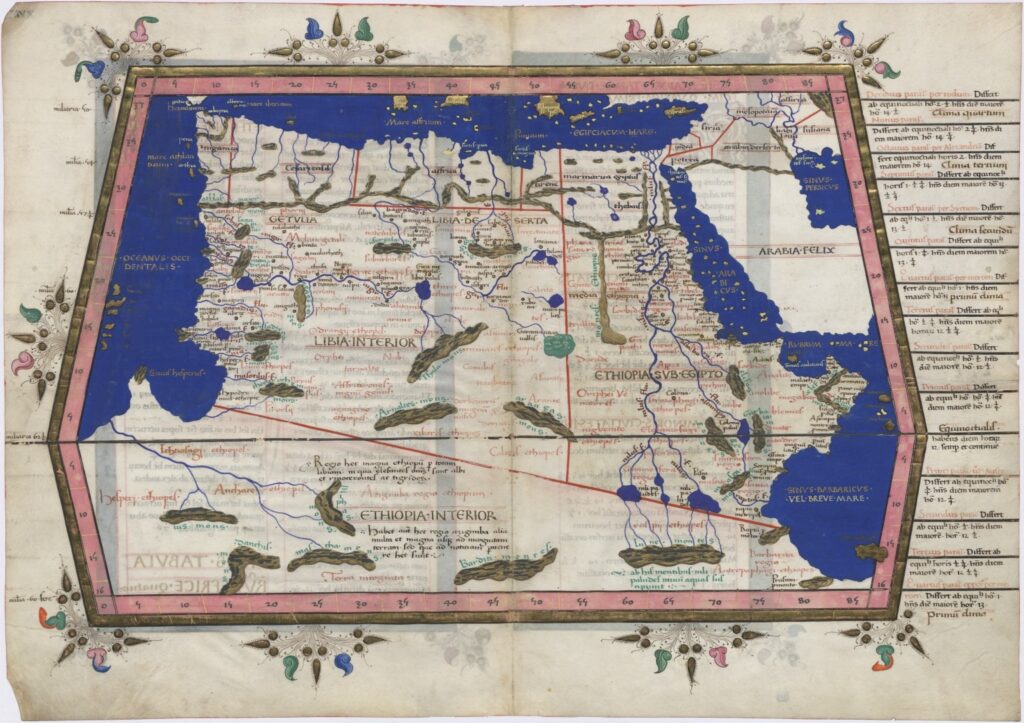
The Mountains of the Moon became, for European scholars of the medieval and Renaissance periods, simultaneously the greatest unsolved problem of African geography and the most seductive of geographical mysteries. Every expedition that sought the source of the Nile, and there were many, was in some sense also seeking Ptolemy’s mountains. The irony is that when Henry Morton Stanley finally located them in 1888, he did not immediately recognize what he had found.
Henry Morton Stanley: The First European to See Them (1888)
The Emin Pasha Relief Expedition and the Accidental Discovery
On the morning of 24 May 1888, Henry Morton Stanley was traveling through the Semliki Valley in what is now the far west of Uganda when the cloud cover over the mountains to his east momentarily lifted. What he saw stopped him in his tracks: a vast, snowy massif rising above the equatorial forest, unmistakable, enormous, and impossible. Stanley was an experienced African traveler who had crossed the continent twice. He had seen mountains before. But he had never seen mountains quite like these, and he did not at first trust his own eyes.
Stanley had not come to the Rwenzori looking for mountains. He had come to relieve Emin Pasha Eduard Schnitzer, the German-British governor of Equatoria who had been cut off from British Egypt by the Mahdist uprising, a mission that had itself turned into one of the most chaotic and controversial expeditions in the history of African exploration. The Rwenzori sighting was, from Stanley’s perspective, an extraordinary digression. He recorded it in his diary with characteristic thoroughness, noting the snow-capped peaks and estimating their height at well above 14,000 feet. He also noted that the local people, the Bakonzo, seemed entirely unimpressed by his excitement. They had always known the mountains were there.
|
📓 Stanley’s Diary, 24 May 1888 “While looking to the south-east and thinking about what we had seen, I observed a peculiarly shaped cloud of a most beautiful silver color, which assumed the proportions and appearance of a vast mountain covered with snow… I saw a far-stretching, gleaming white cone rising from behind the forest… it was impossible to regard it as anything apart from a mountain covered with everlasting snow.” H.M. Stanley, In Darkest Africa (1890) |
Stanley’s Return Sighting and Naming
Stanley returned to the region in December 1888 and obtained a clearer view of the range, finally satisfying himself that what he had seen in May was genuine. He named the massif Ruwenzori, an anglicization of the Bakonzo name for the range, thought to derive from words meaning ‘rain maker’ or ‘cloud king,’ and reported his finding to the Royal Geographical Society in London. The geographical world erupted. Here, finally, was Ptolemy’s Mountains of the Moon: real, documented, and precisely where the ancient geographer had said they would be. The full history of why the Rwenzori is called the Mountains of the Moon is one of the most remarkable continuities in the history of geographical thought.
But Stanley had seen them, not climbed them. He had not set foot on the mountain at all. The race to be the first to actually ascend the Rwenzori was now on, and it would take nearly two more decades to complete.
The Years Between: Early Explorations and Partial Ascents (1891–1905)
Emin Pasha’s Approach (1891)
Ironically, Stanley, who had gone to rescue Emin Pasha himself, was among the first Europeans to actually set foot on the lower slopes of the Rwenzori. After the conclusion of the relief expedition, Emin Pasha remained in East Africa as a German agent and explorer, and in 1891, he approached the base of the range from the west, reportedly reaching the lower forest zone. He explored the range up close, confirming its existence in a way Stanley’s valley floor sightings did not. Emin Pasha was killed by Arab slave traders in the Congo in October 1892, just a year after his Rwenzori approach, a death that added a further layer of tragedy to one of exploration’s most melancholy careers.
G.F. Scott Elliot and the First Botanical Survey (1895)
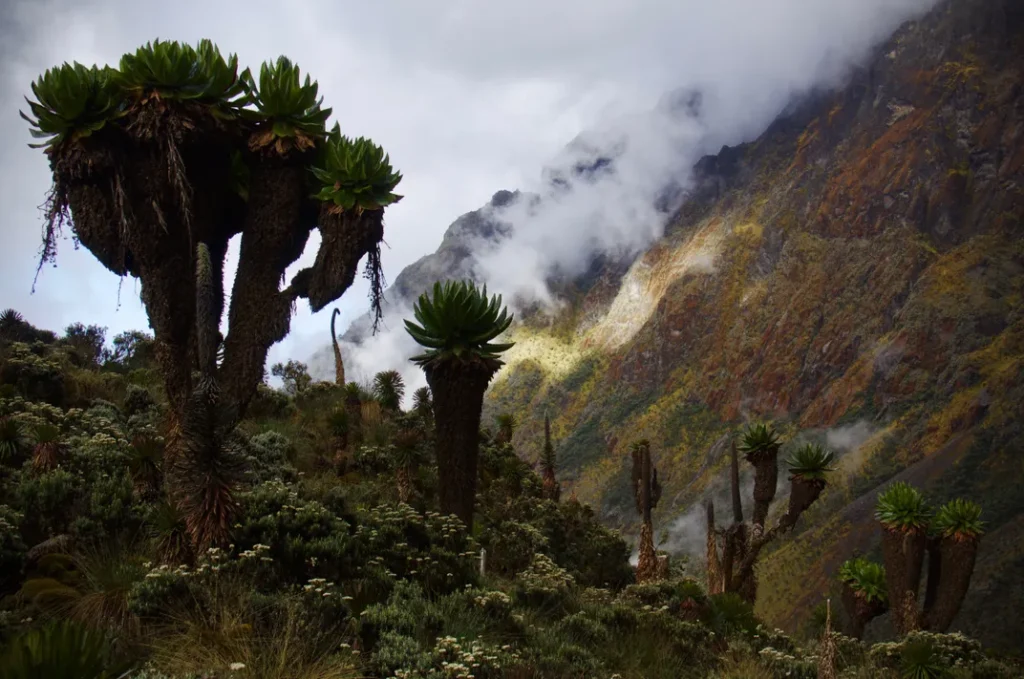
The Scottish botanist George Francis Scott Elliot reached the Rwenzori in 1895 and conducted what is believed to be the first serious scientific survey of the range’s vegetation zones. Scott Elliot pushed higher than any previous European visitor, reaching approximately 3,800 metres well into the heather zone and collecting an astonishing range of botanical specimens, many of them previously unknown to science. The Scott Elliot Pass, named after him, lies between Mount Speke and Mount Baker in the heart of the Central Circuit route, at around 4,372 meters. Trekkers traversing the high route of the Central Circuit cross this pass on their way between the Bujuku Valley and the Kitandara Lakes.
Sir Harry Johnston and the Altitude Record (1900)
In 1900, Sir Harry Johnston, the British administrator and naturalist who was instrumental in the establishment of the Uganda Protectorate, led an expedition that reached approximately 4,400 metres on the mountain, the highest confirmed European altitude on the Rwenzori to that point. Johnston did not reach any of the major summits, but he observed the glaciers at close range and collected the specimens that would later be used to describe the Rwenzori turaco (Musophaga johnstoni) named in his honor, as was the endemic Rwenzori three-horned chameleon (Chamaeleo johnstoni). Johnston’s accounts fired enormous scientific and mountaineering interest in Europe, stressing that the Rwenzori was a legitimate high-altitude climbing objective, not merely a botanical excursion.
Freshfield and the Failed Attempt (1905)
The distinguished British mountaineer and Alpine Club president Douglas Freshfield organized a serious reconnaissance of the Rwenzori in 1905. Freshfield was an experienced Himalayan and Alpine climber who understood exactly what he was looking at. His expedition reached significant altitude and came closer to the glaciated high peaks than any previous attempt but was defeated by the notorious Rwenzori weather, the persistent cloud, rain, and bog that still test the patience of every contemporary trekker. Freshfield returned to England having confirmed that the summits were accessible in principle but was emphatic that any successful ascent would require greater resources, better weather intelligence, and a determination that his expedition had not quite sustained.
🧭 Guide’s PerspectiveWhen I guide trekkers through the high camps of the Central Circuit, particularly crossing Scott Elliot Pass in the mist and cold, I sometimes ponder how it must have felt to push into this landscape in 1895 with no weather data, no synthetic insulation, no GPS, and no one to call for help. The Rwenzori demands respect from every person who sets foot on it. It demanded it just as absolutely from the Victorian explorers who came here first. |
The Duke of Abruzzi: The Man Who Finally Did It (1906)
Who Was Luigi Amedeo di Savoia?
Luigi Amedeo di Savoia, Duke of Abruzzi, was not the type of person who left significant issues unresolved. A prince of the Italian royal family, a naval officer of genuine distinction, and one of the most accomplished mountaineers of his era, the Duke had already led the first ascent of Mount Saint Elias in Alaska (1897) and a record-breaking Arctic expedition that reached 86°34’N latitude (1900) before he turned his attention to the Rwenzori Mountains. He arrived in Uganda in the early months of 1906 with a large, meticulously organized expedition, a team of elite Italian Alpine guides, a professional photographer, and an absolute determination to not go home without standing on every significant summit the range could offer.
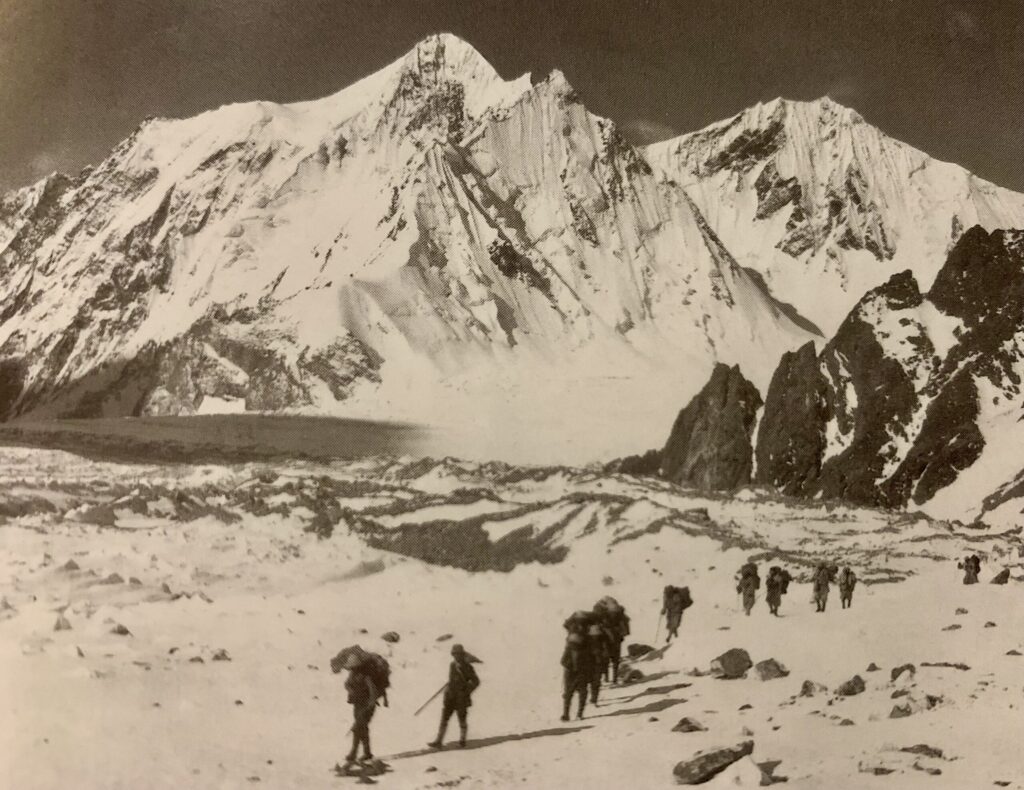
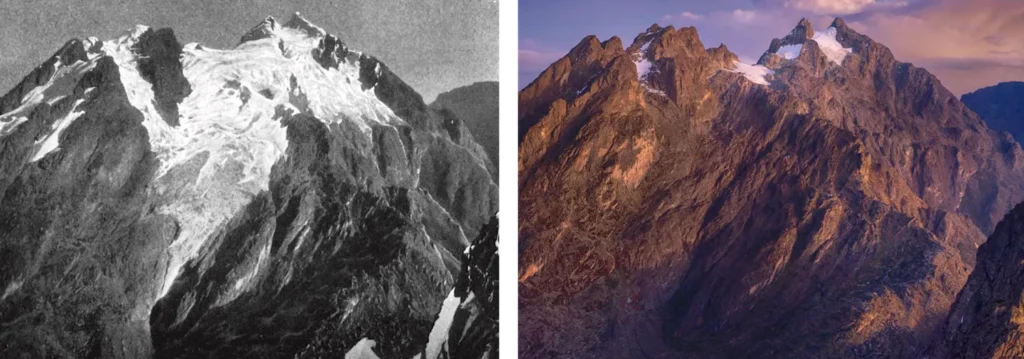
The expedition included the celebrated Vittorio Sella, one of the finest mountain photographers of the 19th and early 20th centuries, whose images of the Rwenzori remain among the most extraordinary archival records of the range in its pre-photographic-saturation era. Sella’s photographs documented both the extraordinary beauty of the mountain and the state of its glaciers in 1906, and these images are now used by climate scientists to quantify how dramatically the Rwenzori’s ice cover has retreated over the past century.
The Duke’s scientific team also included the geologist and botanist Filippo De Filippi, who would later write the definitive account of the expedition: Ruwenzori, An Account of the Expedition of H.R.H. Prince Luigi Amedeo of Savoia, Duke of the Abruzzi (1908). This book remains the most comprehensive scientific and narrative account of the Rwenzori range ever produced, and its maps produced by the expedition’s cartographers remained the primary reference for navigating the range for decades.
The Expedition: June 1906
The Duke’s expedition departed from the Semliki Valley and pushed into the range from the western Congolese side, an approach that provided them with access to the full sweep of the high massifs without having to traverse the difficult equatorial forest. By late May 1906, they had established high camps and were pushing onto the glaciers of the main summits. The conditions they encountered were precisely those that had defeated every previous expedition: unrelenting cloud, frequent precipitation, extreme cold, and terrain that alternated between treacherous bog and near-vertical ice.
📜 De Filippi on the High Mountain, 1906“The silence was absolute, the solitude complete. All around us lay the world of eternal snow and ice, untouched, undisturbed, as it had been since the beginning of time. Behind us, invisible through the cloud, the Congo Basin and the Valley of the Nile lay waiting. Above us, there was nowhere further to go.” Filippo De Filippi, Ruwenzori (1908) |
The First Ascent of Margherita Peak: 18 June 1906
On June 18, 1906, Luigi Amedeo di Savoia and his guides reached the summit of Margherita Peak on Mount Stanley at 5,109 meters (16,762 feet), the highest point in the Rwenzori range and Africa’s third-highest. It was the first time any European had stood on the top of the Rwenzori Mountains. The Duke named the peak after Queen Margherita of Italy, his cousin, in accordance with the royal naming conventions of the era. Two nearby summits were named Alexandra Peak and Albert Peak, after the British Queen and King, respectively, a diplomatic gesture from the Italian expedition towards their British hosts in the Uganda Protectorate.
The significance of this moment extended well beyond the personal achievement of the climbers. The first ascent of Margherita Peak completed a geographical project that had been underway, in one form or another, since Ptolemy first wrote about the Mountains of the Moon in 150 AD. The ancient mystery had been solved. The mountains were real, they were climbed, and their heights were measured. Ptolemy’s mountains were no longer a legend.
The Complete Conquest: All Six Massifs in One Season
What distinguishes the Duke of Abruzzi’s expedition from all previous attempts is not just the first ascent of Margherita; it is the systematic conquest of all six major massifs of the Rwenzori in a single expedition season. Over the course of approximately six weeks, the Duke’s team stood on the highest summits of Mount Stanley (Margherita, 5,109 m), Mount Speke (Vittorio Emanuele, 4,890 m), Mount Baker (Edward Peak, 4,843 m), Mount Emin (Umberto Peak, 4,798 m), Mount Gessi (Iolanda Peak, 4,715 m), and Mount Luigi di Savoia (Sella Peak, 4,627 m). It was one of the most comprehensively successful mountaineering expeditions in the history of African exploration, and it has never been equaled for the scale of first ascents achieved in a single season.
The Duke named all six massifs after the explorers and royalty of his era: Stanley (for Henry Morton Stanley), Speke (for John Hanning Speke), Baker (for Sir Samuel Baker), Emin (for Emin Pasha), Gessi (for Romolo Gessi), and Luigi di Savoia, this last named after himself, a convention that was entirely customary for the era and entirely deserved given the scale of his achievement. These names have endured unchanged for over a century.
A Timeline of Rwenzori Exploration: From Ptolemy to the Summit
The following timeline summarizes the key milestones in the history of Rwenzori exploration, from the first written reference to the definitive first ascents.
| Year | Explorer / Expedition | Achievement & Significance |
| 150 AD | Ptolemy (Greek) | Described ‘Lunae Montes’ (Mountains of the Moon) as the source of the Nile first written reference to the Rwenzori |
| 1861–1863 | John Hanning Speke & James Grant | Explored the Nile source region; did not sight the Rwenzori directly but passed close enough to fuel later searches |
| May 1888 | Henry Morton Stanley | First confirmed European sighting of the Rwenzori range, viewed from the Semliki Valley during the Emin Pasha Relief Expedition |
| 1891 | Emin Pasha | The first European to reportedly set foot on the lower slopes, he confirmed the range’s existence up close. |
| 1895 | G.F. Scott Elliot | Scottish botanist; conducted first serious botanical survey of the lower and middle zones; Scott Elliot Pass named after him |
| 1900 | Sir Frederick Johnstone | Reached approximately 4,400 m, the highest confirmed point at the time; discovered the endemic Rwenzori turaco bearing his name |
| 1906 | Duke of Abruzzi (Luigi Amedeo) | First ascent of all six major massifs, including Margherita Peak (5,109 m); produced the definitive map and scientific record of the range |
The Legacy of the Naming: Why the Peaks Still Bear Their Victorian Names
More than a century after the Duke of Abruzzi’s expedition, the names he assigned to the six major Rwenzori massifs remain in standard use by mountaineers, cartographers, and scientists worldwide. This is not mere inertia; it reflects the genuine historical significance of the 1906 expedition and the lasting authority of the scientific record it produced.
Each name carries a story. Mount Stanley honors the man who first reported the mountains to the Western world, a complicated, driven, and often ruthless explorer whose sighting in 1888 launched the serious European engagement with the range. Mount Speke commemorates the explorer who spent years seeking the source of the Nile, a source that, in Ptolemaic terms, these very mountains were supposed to provide. Mount Baker recalls Sir Samuel Baker, who reached Lake Albert in 1864 and continued the tradition of British exploration of the Upper Nile basin. Mount Emin is named for a man who never stood on it but whose life and rescue generated the expedition that produced the first sighting. And Mount Gessi commemorates Romolo Gessi, the Italian explorer who served Gordon Pasha in the Sudan and played a decisive role in suppressing the East-Central African slave trade, a cause that bound together several of the key figures in this story.
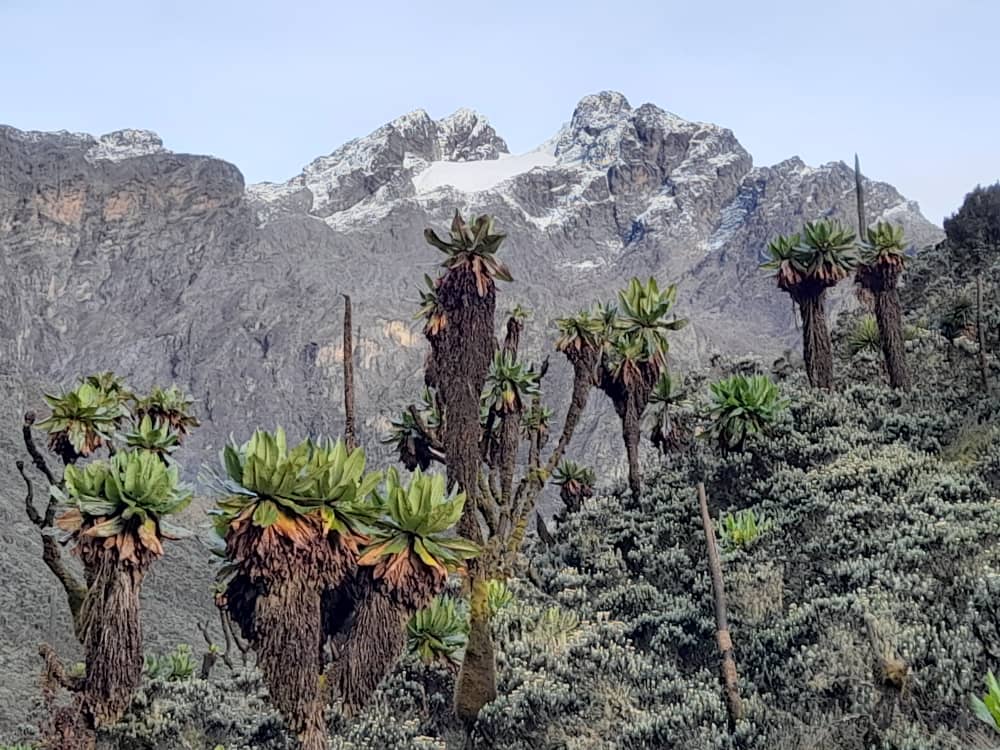
The only massif named directly after the expedition leader, Mount Luigi di Savoia, carries the name of the man who most deserved to put it there. And Margherita Peak, the highest point of all, carries the name of an Italian queen who never came within ten thousand kilometers of the mountain but whose name has been spoken by climbers reaching the top of Africa’s third-highest summit for over a century.
🧭 Guide’s PerspectiveEvery time I lead a group across the Bujuku Valley and the peaks of Stanley, Speke, and Baker come into view above the clouds, I feel the weight of what it cost those Victorian and Edwardian explorers to arrive here. My trekkers are covering the same ground with modern gear, accurate maps, and satellite phones. The Duke had none of those things. What he had was extraordinary determination and, on the clear morning of 18 June 1906, a rare window of Rwenzori weather. |
The First Ascent in the Context of Global Mountaineering History
The first ascent of Margherita Peak in 1906 sits in a fascinating position in the history of mountaineering. It came just fourteen years after the first ascent of Mount Kenya’s highest peak, Batian (1899), and forty-seven years before Hillary and Tenzing reached the top of Everest (1953). It predated the first serious assaults on the enormous Himalayan eight-thousanders and belongs to the era when the world’s major summits were still, with a few important exceptions, unclimbed.
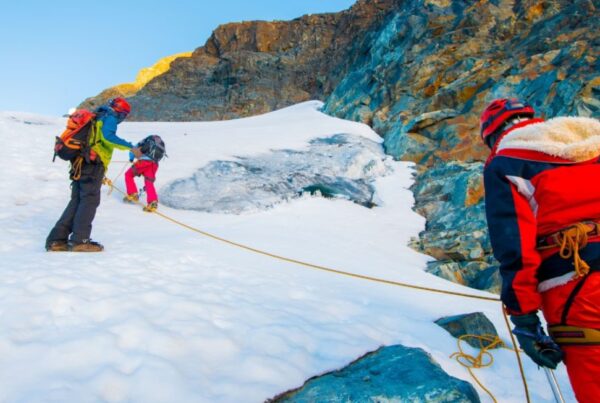
What makes the Rwenzori first ascent particularly remarkable is the nature of the terrain and climate. Unlike Kilimanjaro, which can be walked to the summit without technical climbing equipment on its normal routes, the upper Rwenzori requires genuine glacial mountaineering: ice axes, crampons, rope management, and the ability to navigate complex glacier terrain in conditions of frequent whiteout and storm. The 1906 expedition brought all of this technical capacity to the mountain, and the fact that they succeeded across all six massifs without a single fatality speaks to the quality of their preparation and the skill of the Rwenzori mountaineering team the Duke had assembled.
The comparison with Kilimanjaro is instructive. Kilimanjaro received its first confirmed summit in 1889, seventeen years before the Rwenzori, by Hans Meyer and Ludwig Purtscheller. Kilimanjaro’s summit is higher (5,895 m) but technically simpler. The Rwenzori, by contrast, demanded a level of technical mountaineering expertise that Kilimanjaro did not. In this sense, the Duke of Abruzzi’s 1906 expedition represents a more demanding achievement than the Kilimanjaro first ascent, though it has received substantially less attention in popular history.
Before the Europeans: The Bakonzo and Their Mountain
Any honest account of who climbed the Rwenzori Mountains first must confront a more profound question: first by whose reckoning? The Bakonzo people of western Uganda and the closely related Nande people of eastern DRC have lived in the shadow of the Rwenzori for centuries, possibly millennia. The mountain is woven into their cultural, spiritual, and practical existence in ways that no Victorian expedition could replicate or eclipse.
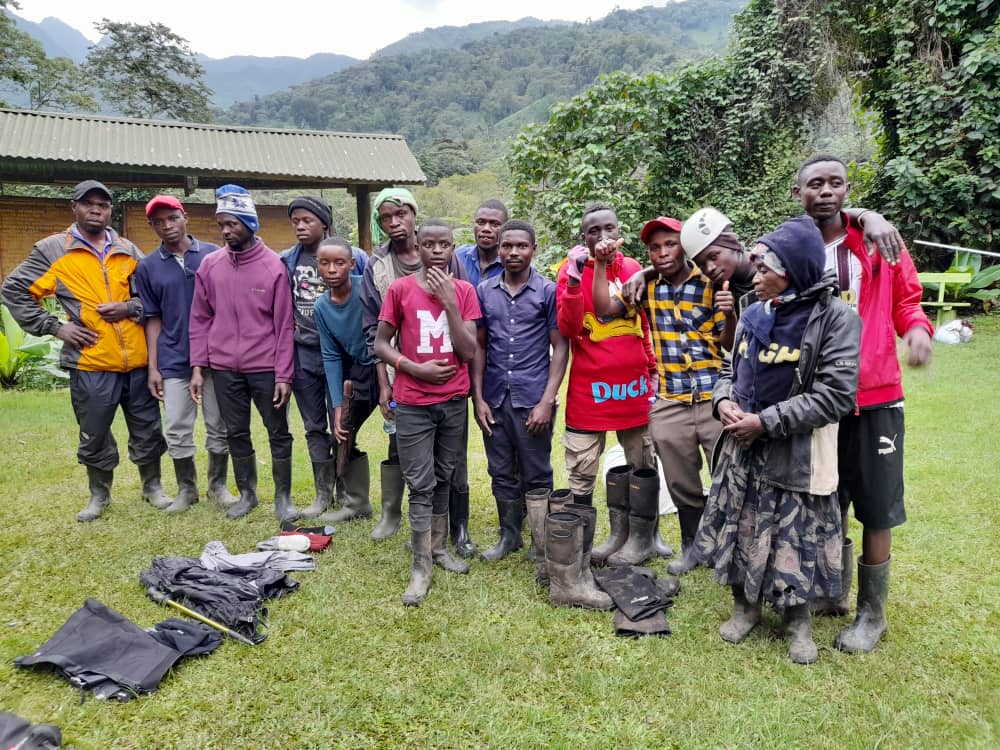
The Bakonzo know the mountain as Rwenjura or Rwenzururu variously translated as ‘rain-maker,’ ‘place of snow,’ or ‘cloud king.’ The peaks are not merely geographical features in Bakonzo tradition; they are the dwelling place of ancestors, the source of rain and fertility, and a spiritual landscape that shapes identity and ritual. Bakonzo hunters are known to have penetrated deep into the mountain, tracking game into the heather and bamboo zones. Some oral traditions suggest that Bakonzo reached considerable altitudes in pursuit of hunting, long before any European arrived in the region.
When Stanley first saw the Rwenzori in 1888, he recorded that his Bakonzo porters showed no surprise or particular interest in his excitement about the snow-capped peaks. Their lack of astonishment was itself a form of knowledge, the knowledge of people who had lived beside these mountains their entire lives and whose ancestors had done the same for generations. The Bakonzo were already familiar with the Rwenzori, just as Londoners are already familiar with the Thames. The mountain was simply, and always, theirs.
Today, the Rwenzori trekking economy employs hundreds of Bakonzo guides, porters, and camp staff, both men and women, whose intimate knowledge of the mountain terrain continues a tradition of engagement with the Rwenzori that predates any European arrival. When you trek with a Bakonzo guide, you are walking in the company of people who carry the mountain’s history not in books but in lived inheritance.
After 1906: Modern Mountaineering on the Rwenzori
From Expedition to Accessible Trekking Route
In the decades following the Duke of Abruzzi’s expedition, the Rwenzori remained one of the most challenging and least-visited high mountain destinations in Africa. The range’s notorious weather, remote location, and complex logistics meant that only the most determined and well-resourced expeditions could reliably reach the upper peaks. The installation of huts on the main routes beginning in the mid-20th century and significantly expanded in the 1990s gradually made the mountain accessible to a wider range of trekkers. The development of the Central Circuit Trail and the Kilembe Trail created defined itineraries that allowed reasonably experienced trekkers to reach the high peaks without the logistical infrastructure of a full mountaineering expedition.
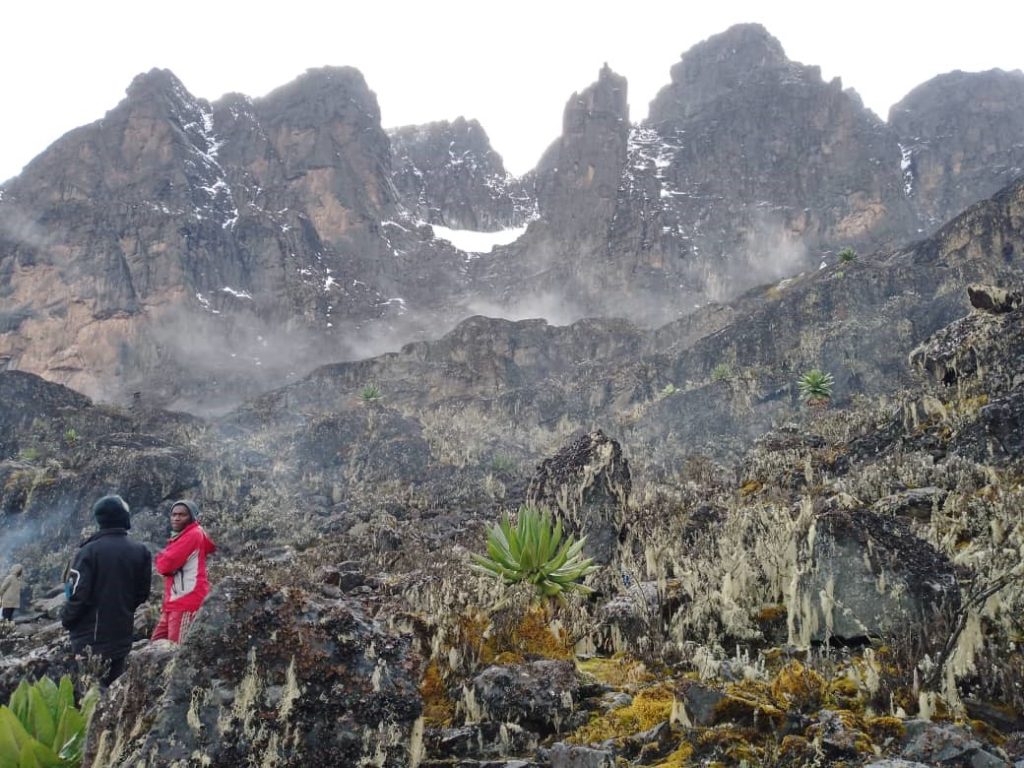
Today, the same summits that the Duke of Abruzzi first reached in 1906 are the objectives of trekkers on our 7-Day Central Circuit and 8-Day Kilembe Trail itineraries. The glaciers have shrunk, the huts have become more robust, and the gear has significantly improved, but the mountain remains the same mountain that halted the Duke’s team in 1906. The mud is identical. The cold is identical. The extraordinary alien beauty of the afro-alpine zone is unchanged.
The Summit Record in the Modern Era
The question of summit success rates on the Rwenzori today is a useful corrective to any complacency that history might inspire. Even with modern equipment, professional guides, and established trails, the success rate for summiting Margherita Peak is significantly lower than on Kilimanjaro. The mountain still defeats trekkers who arrive underprepared, and it does so in much the same way it defeated Freshfield in 1905: with weather, with cold, and with the sheer relentless difficulty of sustained high-altitude travel in one of the wettest environments on Earth.
The Rwenzori’s acclimatization demands are real and should not be underestimated. The Duke of Abruzzi had no formal understanding of altitude physiology; the science was in its infancy in 1906 and relied on physical conditioning, high-altitude experience, and fortunate genetics. Modern trekkers have the advantage of knowing exactly what acclimatization requires and of being guided by professionals who understand the signs and symptoms of altitude sickness in detail.
Multi-Peak Expeditions: Following the Duke’s Footsteps
The most direct way to follow in the Duke of Abruzzi’s footsteps is to attempt a multi-peak expedition that targets several of the six major massifs in a single extended trek. Our 13-day, 6-peak expedition takes trekkers across the summits of Gessi, Emin, Speke, Stanley, Luigi di Savoia, and Baker, every one of the massifs first climbed by the Duke in 1906. The 18-Day All 8 Peaks Expedition extends the experience to include every significant high peak in the range, catering to those with the time and ambition to go further. There is no other itinerary in Uganda and very few anywhere in Africa that offers this scale of mountaineering achievement.
🧭 Guide’s PerspectiveI have guided the 13-day six-peak circuit multiple times, and I can tell you: standing on each of those summits in succession, knowing that no human being stood on any of them before June 1906, gives the experience a dimension that a standard seven-day summit trek cannot match. You are not just climbing a mountain. You are retracing the most comprehensive first ascent expedition in the history of African mountaineering. |
The Glaciers That the Duke Photographed Are Disappearing
One of the most moving legacies of the 1906 expedition is photographic. Vittorio Sella’s images of the Rwenzori glaciers in their early-20th-century state, vast, blue-white, continuous fields of ice draping the upper flanks of Stanley and Speke, are now scientific documents as much as historical records. The glaciers that Sella photographed have lost approximately 80–90% of their area since 1906. Our detailed analysis of why the Rwenzori glaciers are disappearing covers the climate science and the projections for the remaining ice, which most researchers believe will be gone entirely within two to three decades.
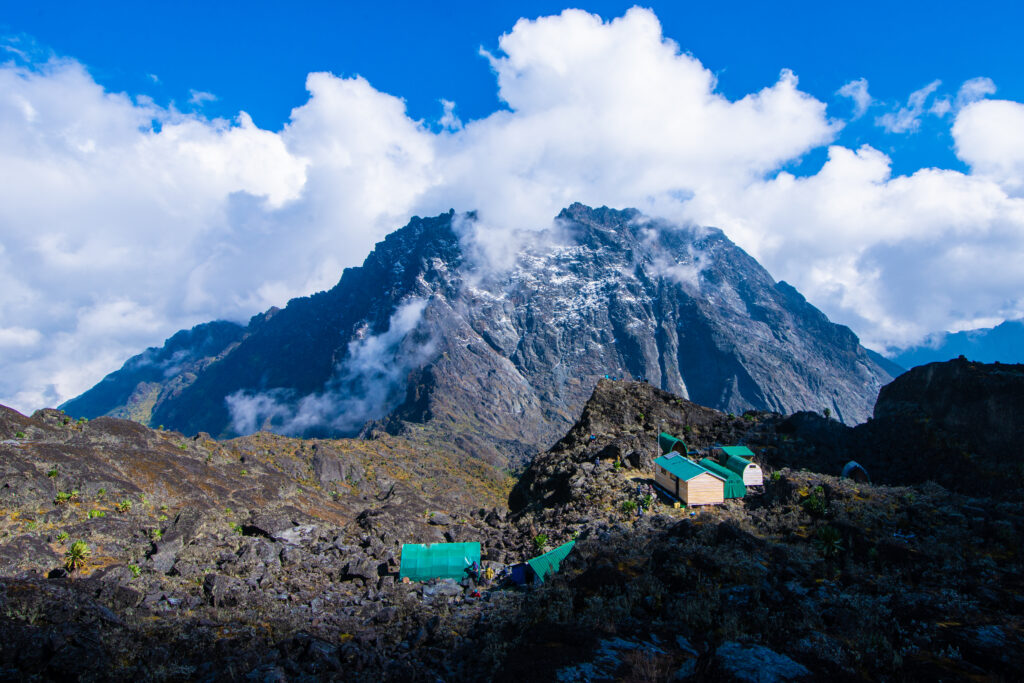
The urgency the situation creates for prospective trekkers is real. If you want to stand on the same glaciated terrain that the Duke of Abruzzi first crossed in 1906 to experience the Elena Glacier in the early morning light, to feel the crampons bite into the ice below Margherita Peak, or to stand on the equatorial snowfield that Ptolemy described two thousand years ago, the window for doing so is narrowing. The glacier that gave Ptolemy’s Mountains of the Moon their name is disappearing. What the Duke of Abruzzi documented in photographs will, within the lifetimes of many people reading this book, exist only in images.
Frequently Asked Questions: Who First Climbed the Rwenzori Mountains?
❓ Who was the first person to climb the Rwenzori Mountains?The first person to stand on the highest summit of the Rwenzori Mountains was Luigi Amedeo di Savoia, Duke of the Abruzzi, an Italian prince, naval officer, and experienced mountaineer. He reached Margherita Peak on Mount Stanley, the highest point in the Rwenzori, at 5,109 meters on June 18, 1906, accompanied by his Alpine guides. The same expedition, which took place over approximately six weeks between May and July 1906, also achieved first ascents of all other five major Rwenzori massifs: Mount Speke (Vittorio Emanuele Peak, 4,890 m), Mount Baker (Edward Peak, 4,843 m), Mount Emin (Umberto Peak, 4,798 m), Mount Gessi (Iolanda Peak, 4,715 m), and Mount Luigi di Savoia (Sella Peak, 4,627 m). No previous European expedition had reached any of the major summits. |
❓ Who was the first European to see the Rwenzori Mountains?The first European to provide a confirmed, documented sighting of the Rwenzori Mountains was Henry Morton Stanley, the Welsh-American explorer and journalist, on 24 May 1888. Stanley was passing through the Semliki Valley in western Uganda during the Emin Pasha Relief Expedition when the cloud cover briefly parted to reveal the snow-capped massif above the equatorial forest. Stanley returned to the area in December 1888 and confirmed the sighting, naming the range Ruwenzori and reporting it to the Royal Geographical Society in London. He did not climb the mountains himself. It is important to note that the local Bakonzo people had always known the mountains and had lived alongside them for centuries or millennia before any European arrived. |
❓ When was the Rwenzori Mountains first climbed?The first confirmed ascent of the highest summit of the Rwenzori Mountains took place on 18 June 1906, when the Duke of Abruzzi’s Italian expedition reached Margherita Peak (5,109 m) on Mount Stanley. This date marks the first time any human being had stood on the highest point of the Rwenzori range. The same expedition subsequently achieved first ascents of all five other major massifs over the following weeks, completing its work in July 1906. Emin Pasha (1891), G.F. Scott Elliot (1895), Sir Harry Johnston (1900), and Douglas Freshfield (1905) made earlier partial ascents to various points in the forest and heather zones, but none reached the glaciated summit zone. Scott Elliot (1895), Sir Harry Johnston (1900), and Douglas Freshfield (1905), but none had reached the glaciated summit zone. |
| ❓ Who was the Duke of Abruzzi, and why did he climb the Rwenzori?
Luigi Amedeo di Savoia, Duke of the Abruzzi (1873–1933), was an Italian prince of the royal Savoia family, a career naval officer, and one of the foremost mountaineers and polar explorers of his generation. Before the Rwenzori expedition, he had led the first ascent of Mount Saint Elias in Alaska (1897), organized a record-breaking Arctic expedition to 86°34’N (1900), and was regarded as one of the most ambitious expedition leaders in the world. He came to the Rwenzori in 1906 specifically to solve the outstanding problem of African high-altitude mountaineering, the six unclimbed massifs of the range, and brought a large, well-resourced expedition including Alpine guides, the photographer Vittorio Sella, and the scientist Filippo De Filippi. The expedition produced the first comprehensive scientific and cartographic survey of the range, and the maps and records it generated remained the primary reference for the Rwenzori for decades. |
❓ Did Ptolemy really predict the Rwenzori Mountains?Ptolemy’s Geographia (~150 AD) contains one of the most remarkable cases of ancient geographical accuracy in the historical record with its description of the ‘Mountains of the Moon’ (Lunae Montes). Ptolemy described snow-capped mountains near the equator as the source of the Nile, a description that corresponds closely to the geographic reality of the Rwenzori. He almost certainly derived this information from older oral and written sources, possibly Arabic or Persian in origin, passed through trading networks. When Stanley sighted the Rwenzori in 1888, the geographical establishment immediately recognized the correspondence with Ptolemy’s description. The Rwenzori, known in Arabic geographical tradition as ‘Jabal al-Qamar,’ confirmed the name ‘Mountains of the Moon’ as their popular English title, which they still bear today. |
❓ Can I climb to Margherita Peak today?Yes, Margherita Peak (5,109 m) on Mount Stanley is accessible to well-prepared trekkers and climbers via guided expeditions on the Central Circuit Trail or the Kilembe Trail. The standard approaches take between seven and twelve days from the main trailheads, depending on the route and level of acclimatization built into the itinerary. The summit requires basic glacier mountaineering skills, the use of crampons, an ice axe, and rope, and a good level of cardiovascular fitness. The mountain still presents the same fundamental challenges it presented to the Duke of Abruzzi in 1906: persistent cloud and rain, extreme cold near the summits, and complex glacier terrain. A professional guide with specific Rwenzori experience is essential, both for safety and for maximizing the chance of a successful summit. |
❓ How does the Rwenzori compare to Kilimanjaro in terms of first ascents?Kilimanjaro received its first confirmed summit in 1889 by Hans Meyer and Ludwig Purtscheller, seventeen years before the Rwenzori’s first ascent in 1906. Kilimanjaro is higher (5,895 m) but technically simpler on its main trekking routes, which do not require glacier mountaineering equipment. The Rwenzori, while lower in maximum elevation (5,109 m), presented significantly greater technical difficulty in 1906 and continues to be regarded as the more demanding objective today. Kilimanjaro currently receives over 50,000 trekkers per year; the Rwenzori receives approximately 1,000 to 1,500, making it one of the most genuinely remote and uncrowded high-altitude trekking destinations in Africa. In mountaineering terms, the Duke of Abruzzi’s first ascents across all six Rwenzori massifs in a single season represent a more technically comprehensive achievement than the Kilimanjaro first ascent. |
❓ What happened to the Duke of Abruzzi after the Rwenzori expedition?After the Rwenzori, the Duke of Abruzzi continued his extraordinary career as an explorer and mountaineer. In 1909, he led an expedition to Karakoram, Pakistan, reaching 7,498 meters on K2, a height record for the mountain that stood for twenty-five years. During World War I, he commanded the Italian fleet in the Adriatic. In later life he moved to Italian Somaliland (modern Somalia), where he established an agricultural development project in the Webi Jubba River Valley. He died in Mogadishu in 1933. His 1906 Rwenzori expedition remains the defining achievement of African mountaineering history, and the mountains he named still bear the names he gave them more than a century later. |
Follow in the Footsteps of the Duke of Abruzzi
The same summits that Luigi Amedeo di Savoia first reached in 1906 are waiting for you. The glaciers are smaller than they were in Vittorio Sella’s photographs, but they are still there, for now. The Bakonzo guides who will lead you to Margherita Peak carry the same knowledge of this mountain that their great-grandparents carried when they watched Stanley gaze up at the cloud-wrapped peaks and wonder.
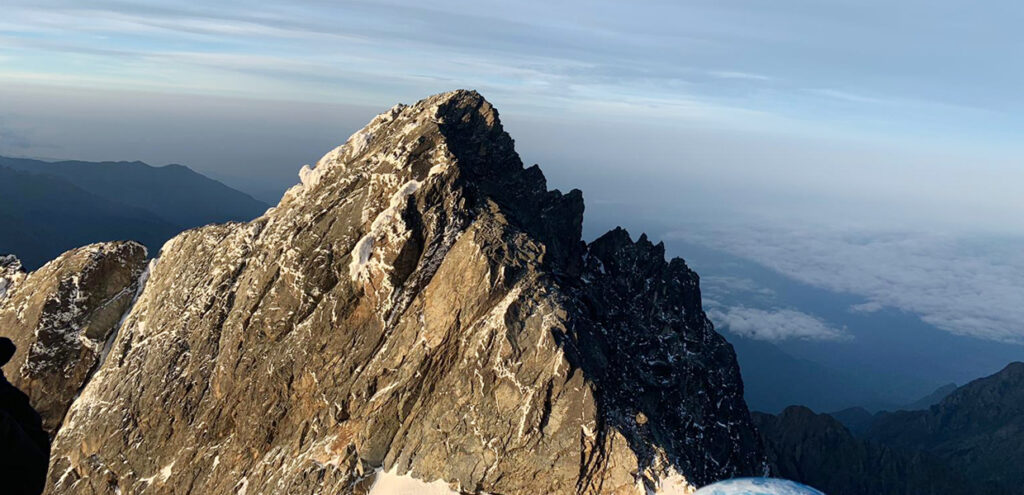
Whether you are planning a 7-day summit expedition, a 13-day traverse of all six peaks, or something tailored entirely to your ambitions, Rwenzori Trekking Safaris will put you on the mountain with the knowledge, the equipment, and the support to make it count. Get in touch today.