Exact sleeping bag ratings by camp for the Rwenzori Mountains: Elena Hut, Bujuku & Margherita. Down vs synthetic in wet conditions. Expert guide from Rwenzori Trekking Safaris.
The Night That Changes Your Answer: There is a specific night on the Rwenzori Mountains that every returning trekker knows. It is nighttime at Elena Hut, camped at 4,541 meters on the approach to Margherita Peak, when the temperature drops to zero degrees and keeps going. The cloud presses against the hut walls. The wind finds every gap in the structure. The pre-dawn hour when you need to rise, dress, and begin the glacier approach arrives with temperatures that have sometimes reached -8°C at that elevation and in cold-season conditions on the summit of Mount Stanley itself, as low as -13°C.
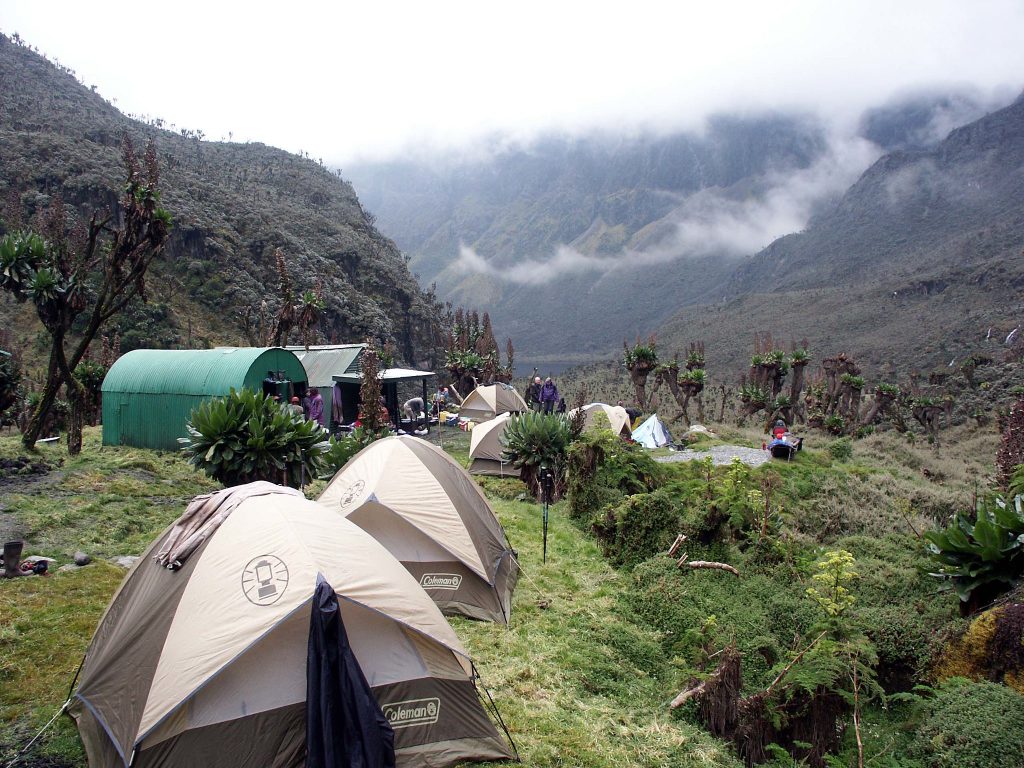
Trekkers who arrive at Elena with a sleeping bag rated to 0°C comfort, which is to say, a bag that most outdoor retailers would describe as “suitable for three-season mountain use”, discover something uncomfortable about the relationship between ratings and reality. They do not sleep well. They sleep cold. Their quality of sleep is compromised at the most altitude-stressed point of their expedition, on the eve of their most physically demanding day. And compromised sleep at altitude is not simply a matter of feeling groggy in the morning; it degrades cognitive function, increases the body’s cold-stress response, reduces motivation, and measurably impairs the physiological acclimatisation processes that are actively ongoing in the body every night on the mountain.
This guide answers the sleeping bag question for the Rwenzori completely. Not with vague guidance like “bring something warm enough” but with specific temperature data for each camp on each major route; a clear explanation of what the EN13537 rating system actually means and how to use it correctly; the definitive answer to the down versus synthetic debate in Rwenzori’s perpetually wet environment; and specific sleeping bag model recommendations that have been observed performing well across multiple seasons of expeditions on the mountain. Whether you are planning the 7-day Central Circuit to Margherita or the 13-day six-peaks expedition, by the time you finish reading this guide, you will know exactly what sleeping bag you need.
Why the Rwenzori Sleeping Bag Question Is Harder Than It Looks
If you search for sleeping bag advice for African mountain trekking, most of what you will find is written for Kilimanjaro or Mount Kenya, mountains with cleaner, more predictable thermal profiles where the ambient dryness of the air is a significant advantage. The Rwenzori presents a fundamentally different thermal environment, and understanding the reasons is important for interpreting any sleeping bag specification.
The Moisture Problem
The Rwenzori Mountains receive precipitation on the vast majority of days throughout the year. Cloud sits on the mountain for weeks at a time without lifting. Relative humidity in the upper huts regularly exceeds 95%. This pervasive moisture is the defining environmental challenge for sleeping bag selection because it attacks the insulation material’s ability to trap air, the mechanism by which all sleeping bags keep you warm. A sleeping bag rated to -15°C in a laboratory test performed in controlled dry air can perform dramatically worse than that rating in the moisture-saturated environment of Bujuku Hut at 3,977 metres, especially after a day when every external surface, including your clothing, your pack, and the hut walls, is damp. Understanding this moisture context is the single most important step in making a correct sleeping bag decision for the Rwenzori.
The Equatorial Altitude Paradox
The Rwenzori sits almost exactly on the equator, which creates a thermal paradox that confuses first-time visitors. At sea level in Uganda, the equatorial climate means daytime temperatures of 25–30°C. But altitude reduces temperature at approximately 6.5°C per 1,000 metres, and the Rwenzori’s permanently cloud-covered upper slopes eliminate the radiative warming that would otherwise moderate nighttime temperatures on clearer tropical mountains. The result is that Elena Hut at 4,541 metres experiences nighttime temperatures that are directly comparable to high-altitude camps in the Alps or the Himalayas, not to the broader East African highland environment that the mountain’s equatorial position might suggest. Our guide to how cold it gets on Margherita Peak documents the temperature data in full and is essential reading alongside this sleeping bag guide.
The Multi-Night Cumulative Damp Effect.
On a single overnight camp, a sleeping bag that begins the night slightly damp from ambient humidity or moisture transferred from clothing will usually recover adequately in a dry sleeping environment. On the Rwenzori, over five, seven, or ten consecutive nights at high altitude, a sleeping bag that is not actively managed for moisture accumulates progressive dampness in its insulation layer, particularly in the footbox and lower body sections that are most compressed between the sleeper and sleeping mat. This cumulative effect means that a bag rated to -10°C comfort on Day 1 may be performing at -5°C comfort by Day 7 if its insulation has absorbed significant moisture. This is why the moisture management strategies described later in this guide are not optional accessories to a satisfactory sleeping bag purchase; they are integral to the bag’s performance throughout the expedition.
Understanding the EN13537 / ISO 23537 Sleeping Bag Rating System
Before examining the specific temperature numbers for each Rwenzori camp, it is important to understand what sleeping bag rating numbers actually mean and, critically, what they do not mean. The EN13537 standard (updated to ISO 23537 but commonly still referred to as EN-rated) is the European testing standard that produces the four-temperature ratings printed on quality sleeping bags sold in Europe and increasingly worldwide. These ratings are Upper Limit (the maximum temperature at which a standard man can sleep without excessive sweating); Comfort (the temperature at which a standard woman can sleep comfortably in a relaxed position); Lower Limit (the temperature at which a standard man can sleep for eight hours in a curled position without waking); and Extreme (the minimum temperature at which a standard woman survives without risk of death from hypothermia, though sleep is essentially impossible).
Why the Comfort Rating Is the One That Matters
The critical insight from the EN13537 standard that most trekkers miss is this: the comfort rating, not the lower limit rating, is the temperature at which you will actually sleep with reasonable quality. The lower limit figure is the temperature at which a man can endure eight hours of sleep in a survival curl – not comfortably, not restoratively, but without waking. The lower limit temperature significantly impairs sleep quality. Sleep is cold and frequently disturbed when the temperature is 3–5°C below the lower limit.
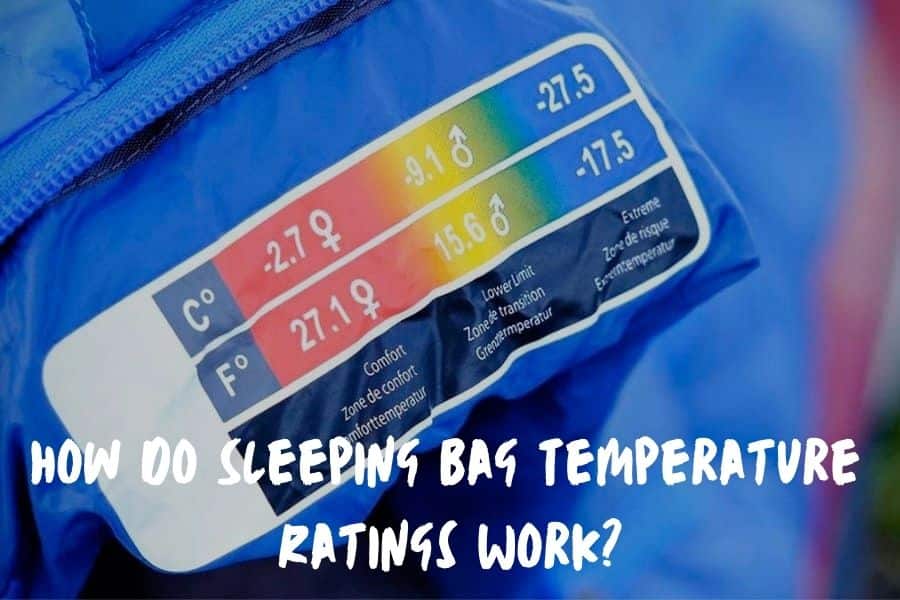
This distinction completely changes how to read a sleeping bag specification for the Rwenzori. A bag marked as “suitable to -10°C” in retailer advertising typically means it has a lower limit of -10°C, not a comfort rating of -10°C. Its comfort rating is more likely around -4°C or -5°C. In Elena Hut, where temperatures regularly range from -3°C to -8°C, that bag will leave you uncomfortably cold. The correct way to read a sleeping bag specification for the Rwenzori is to identify the EN13537 comfort rating and ensure that it is rated at least 5°C below the minimum nighttime temperature expected at the highest camp of your route. The 5°C extra allowance takes into account how moisture can affect warmth and how different people produce heat while sleeping, which can change based on altitude, tiredness, and how much food they’ve eaten.
The “Cold Sleeper” Variable
Individual thermal metabolism varies significantly between people. Someone who regularly sleeps warm at home, never wears socks to bed, and often pushes the duvet off at night will likely perform at the higher end of a bag’s rated range. Someone who regularly sleeps cold in multiple layers, socks, bed socks, and a fleece liner should treat their Rwenzori sleeping bag specification as a minimum rather than a target. On a mountain where the consequences of cold sleep extend beyond discomfort to impaired altitude acclimatisation and increased hypothermia risk, erring conservatively with your sleeping bag specifications is always the right thing to do. Our full discussion of cold weather management on the summit of Mount Rwenzori provides additional context on cold-weather physiology at altitude that applies directly to the sleeping scenario.
Camp-by-Camp Temperature Data and Sleeping Bag Requirements
The table below provides the most accurate available temperature data for each overnight camp on the main Rwenzori routes, along with the minimum sleeping bag specification appropriate for each location. The temperature data draws from field records accumulated across multiple trekking seasons and is calibrated specifically for the wet, cloud-covered conditions that characterise the Rwenzori rather than for theoretical dry-altitude calculations. Note that minimum recorded temperatures represent genuinely exceptional cold events at each site; the recommended bag ratings are set to handle these conditions safely, not merely the average night.
| Camp | Route | Elev. | Avg Night Temp | Min Recorded | Recommended Bag Rating |
| Nyabitaba Hut | Central Circuit | 2,651m | +8°C to +12°C | +4°C | Comfort 0°C / Limit -5°C adequate |
| John Matte Hut | Central Circuit | 3,414m | +3°C to +6°C | 0°C | Comfort -5°C / Limit -10°C recommended |
| Bujuku Hut | Central Circuit | 3,977m | 0°C to +3°C | -4°C | Comfort: -10°C / Limit: -15°C required |
| Elena Hut | Central Circuit | 4,541m | -3°C to 0°C | -8°C | Comfort: -15°C / Limit: -20°C required |
| Kitandara Hut | Central Circuit | 3,990m | 0°C to +3°C | -3°C | Comfort: -10°C / Limit: -15°C required |
| Guy Yeoman Hut | Central Circuit | 3,261m | +4°C to +7°C | 0°C | Comfort: -5°C / Limit: -10°C recommended |
| Margherita Peak | Summit | 5,109m | -5°C to -8°C | -13°C | Not a sleep camp shelter only |
| Sine Camp | Kilembe Trail | 2,620m | +8°C to +12°C | +3°C | Comfort 0°C / Limit -5°C adequate |
| Mutinda Camp | Kilembe Trail | 3,749m | +1°C to +4°C | -3°C | Comfort: -10°C / Limit: -15°C required |
| Bugata Camp | Kilembe Trail | 4,062m | -1°C to +2°C | -6°C | Comfort: -15°C / Limit: -20°C required |
| Margherita Camp | Kilembe Trail | 4,485m | -3°C to -1°C | -9°C | Comfort: -15°C / Limit: -20°C required |
| Lake Mahoma Camp | Mahoma Loop | 2,990m | +5°C to +8°C | +2°C | Comfort -5°C / Limit -10°C recommended |
The Critical Camps: Elena and Margherita Camp
Two camps define the upper end of the sleeping bag requirement for the Rwenzori. Elena Hut at 4,541 metres on the Central Circuit is the last overnight stop before the Margherita summit attempt, and it is unquestionably the coldest sleeping location on any standard Rwenzori itinerary. Average nighttime temperatures at Elena sit between -3°C and 0°C, but in cold-season conditions and when wind is present, the effective temperature inside the hut, which is not a thermally sealed structure, can approximate the external air temperature of -7°C or -8°C. For the EN13537 comfort rating rule described above, this scenario means a sleeping bag with a comfort rating of -12°C to -15°C at Elena. This is not a three-season bag. This is a dedicated cold-weather bag, and there is no substitute for the correct rating at this altitude.
On the Kilembe Trail approach to Margherita, Margherita Camp at 4,485 metres plays an equivalent role to Elena; it is the high camp from which the summit is attempted, and its thermal conditions are directly comparable. Bugata Camp at 4,062 metres on the Kilembe Trail also deserves attention: it sits slightly lower than Elena but is exposed to the same moisture regime and can experience temperatures below -5°C. Trekkers on the 8-day Kilembe Trail summit route should apply the same sleeping bag specification as those on the Central Circuit; the thermal demands are equivalent.
Lower Mountain Camps: John Matte, Bujuku, Kitandara
Between the base camps and Elena, the Central Circuit passes through three huts that represent progressively colder conditions. John Matte Hut at 3,414 metres is the first genuinely cold camp, with temperatures regularly reaching 0°C and occasionally dropping below it. A sleeping bag rated to -5°C Comfort is the minimum here, adequate in average conditions but marginal if temperatures drop below 0°C and the bag has already accumulated some moisture over the first two nights. Bujuku Hut, at 3,977 metres, set in the valley that also houses the most intense bog sections of the Central Circuit Trail, is consistently colder than John Matte and should be treated as requiring a -10°C comfort rating as a minimum. Kitandara Hut, at nearly the same elevation as Bujuku but on the southern aspect of the circuit, experiences similar temperatures with the added variable of wind exposure from the Freshfield Pass that can significantly increase the effective cold.
Lower-Route Camps: The Mahoma Loop, Nyabitaba, and Sine
Trekkers sleeping at significantly lower and warmer elevations can choose from shorter lower-mountain routes, such as the 3-day Mahoma Loop hike, the 2-day Sine Camp trek via the Kilembe Trail, or the 1-day Nyabitaba introductory hike. Nyabitaba Hut at 2,651 metres stays comfortably above 5°C on most nights, and a bag with a 0°C comfort rating is generally adequate. However, even at these lower camps, the Rwenzori’s humidity means that a budget summer sleeping bag is not appropriate; the insulation must be capable of handling sustained ambient moisture without losing significant loft. The lower camps do not require expedition-grade cold-weather ratings, but they do require genuine waterproofing-compatible fill construction.
Down vs Synthetic in Rwenzori Conditions: The Definitive Answer
This topic is the most genuinely contested gear question for Rwenzori trekking, and it deserves a direct, honest answer rather than the diplomatic hedging that most equipment guides offer. The short version is this: for the Rwenzori specifically, a down bag with hydrophobic-treated down and a waterproof outer shell, actively managed throughout the expedition, will outperform a synthetic bag of equivalent temperature rating in warmth-to-weight ratio and compressibility. However, a synthetic bag is significantly more forgiving of moisture mismanagement and provides more consistent performance in conditions where drying time is limited. Both have a legitimate place on the mountain depending on the trekker’s experience, the route, and the length of the expedition.
The Case for Down on the Rwenzori
Traditional down, or duck down in 700+ fill power, provides more warmth per gram than any synthetic insulation currently available, compresses to a smaller packed size, and recovers its loft more reliably after repeated use. For long-distance expeditions such as the 10-day four-peaks circuit or the 18-day all-peaks traverse, the weight and bulk savings of a high-quality down bag over a synthetic equivalent can represent 400–600 grams and several hundred cubic centimetres of pack volume as meaningful advantages over a 2-week expedition.
The critical innovation that changes the traditional calculus is hydrophobic-treated down fill that has been treated with a durable water-repellent (DWR) coating at the fibre level rather than just at the outer shell. Brands including Rab (with their hydrophobic down technology), Arc’teryx, and Montbell have developed fill treatments that allow down to maintain a significantly higher percentage of its dry loft when exposed to ambient moisture. In laboratory testing, hydrophobic-treated 800fp down retains approximately 60–70% of its dry loft after one hour in a humidity chamber, compared to 20–30% for untreated down and 70–80% for leading synthetic fills. In real-world Rwenzori conditions, a Rab sleeping bag filled with their treated hydrophobic down consistently outperforms untreated down bags of nominally equivalent ratings in the humidity-saturated upper huts.
The Case for Synthetic on the Rwenzori
The argument for synthetic insulation on the Rwenzori is not about performance per gram; it is about performance consistency under imperfect moisture management conditions. A synthetic fill (PrimaLoft Gold, Climashield Apex, or Rab Cirrus) retains between 70% and 85% of its dry insulation value when damp. More importantly, it recovers its loft more rapidly when dried than conventional down, and even during the drying process it continues to provide meaningful insulation rather than collapsing entirely. A synthetic bag offers a meaningful insurance margin for trekkers who lack experience with expedition moisture management, are on their first Rwenzori trip, or are following a route where full-day rain exposure makes it genuinely difficult to dry bags completely at huts. The trade-off is weight: a synthetic bag rated for -15°C comfort will weigh 300–600 grams more than an equivalent hydrophobic down bag and will pack to a significantly larger volume.
The Practical Recommendation
For a first-time Rwenzori summit trekker on a 7 or 8-day route: a hydrophobic-treated down bag rated to -15°C comfort, stored in a waterproof compression sack, with a vapour barrier liner as a moisture management tool (described below). For experienced trekkers on longer routes with disciplined gear management, a premium high-fill-power down bag with hydrophobic treatment is the optimal choice on weight and performance grounds. For trekkers who are genuinely cold sleepers or who are attempting the expedition during the wet-season window covered in our guide to trekking the Rwenzori in the rainy season, a synthetic bag or a down bag with a synthetic inner liner provides additional security that the weight penalty justifies.
CRITICAL GEAR WARNINGDo not bring a sleeping bag rated only to its lower limit on the coldest camps. A bag marketed as “good to -10°C” that has a comfort rating of only -3°C will leave you cold and sleep-deprived at Elena Hut and Bujuku at the exact point in the expedition when rest is most physiologically critical for your summit-day performance and acclimatisation. Always verify the EN13537 comfort rating, not the lower limit or the retailer’s marketing temperature. |
Specific Sleeping Bag Model Recommendations for the Rwenzori
The following recommendations are based on direct field observation of bag performance across multiple Rwenzori seasons. Every model included has been used on the mountain by guided trekkers or by the guiding team, and the assessments reflect real-world Rwenzori conditions rather than manufacturer claims alone.
| Model | Fill | Comfort | Limit | Wet Perf | Weight | Rwenzori Verdict |
| Western Mountaineering Alpinlite | Down 850 fp | -9°C | -16°C | ★★☆☆ | 595g | Excellent for dry summit routes; protect from moisture |
| Rab Neutrino 600 | Down 800 fp | -9°C | -15°C | ★★★☆ | 1,025g | Hydrophobic down; strong wet-weather resilience |
| Rab Ascent 900 | Down 750 fp | -14°C | -21°C | ★★★☆ | 1,340g | Best all-round Rwenzori bag; handles Elena conditions |
| Marmot Helium 15 | Down 800 fp | -9°C | -16°C | ★★☆☆ | 653g | Excellent warmth-to-weight; needs careful moisture management |
| Mountain Equipment Helium 600 | Down 700 fp | -5°C | -12°C | ★★☆☆ | 880g | Adequate to Bujuku; marginal at Elena upgrade for summit |
| Sea to Summit Spark SP IV | Down 850 fp | -9°C | -16°C | ★★☆☆ | 760g | Ultra-light; requires inner liner on Rwenzori |
| Mammut Nordic 3-Season | Synthetic PrimaLoft | -8°C | -15°C | ★★★★ | 1,650g | Heavy but outstanding wet-condition insurance |
| Rab Stratos 400 | Synthetic Cirrus | -5°C | -12°C | ★★★★☆ | 1,200g | Good synthetic mid-range; rated for lower-mountain camps |
| Montbell Down Hugger 900 #2 | Down 900 fp | -12°C | -17°C | ★★★☆ | 765g | Japanese construction quality; excellent for Elena/Margherita Camp |
Rab Ascent 900: The Strongest All-Round Recommendation
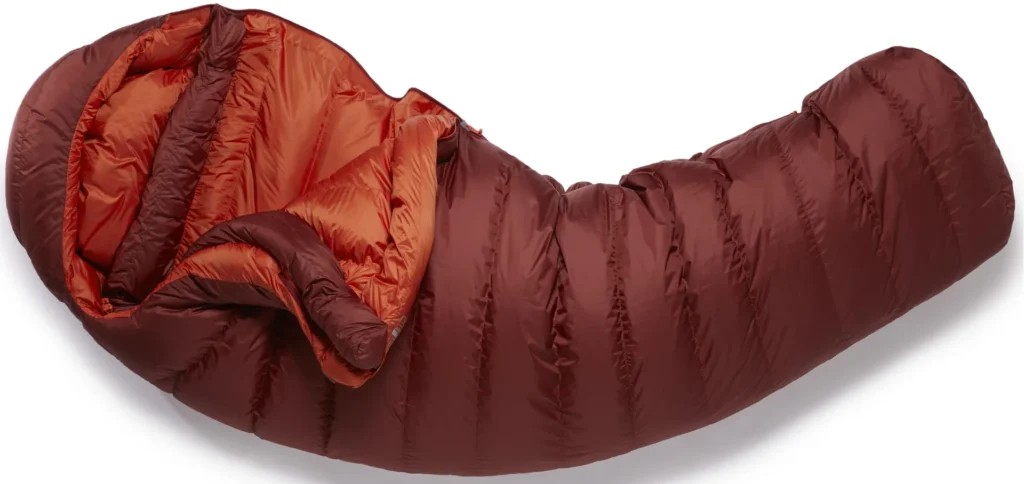
The Rab Ascent 900 is the sleeping bag that best addresses the specific demands of a full Rwenzori summit expedition. It uses Rab’s 750fp hydrophobic down fill, providing genuine loft retention in humid conditions, with a comfort rating of -14°C and a limit rating of -21°C, more than adequate for Elena Hut at -8°C using the 5°C safety buffer described earlier. Its outer shell is treated with DWR to resist moisture penetration from the hut sleeping environment, and its construction uses a differential cut that maintains loft at compressed sleeping angles rather than reducing it. At 1,340 grams, it is not the lightest option in this category, but the performance reliability in Rwenzori moisture conditions is worth the weight. The 900-fill-power version (Rab Ascent 900) represents the premium option; the 700-fill version (Rab Ascent 700) is lighter but rated to approximately -9°C comfort, which is marginal for Elena and requires careful moisture management.
Montbell Down Hugger 900 #2: Outstanding Warmth-to-Weight
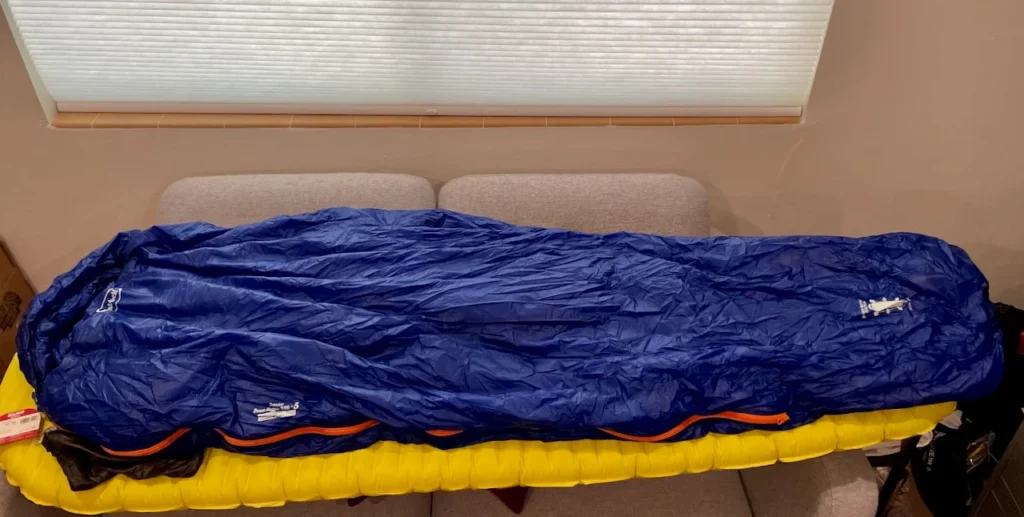
Montbell’s Japanese manufacturing quality is less well-known outside specialist mountaineering communities than the European premium brands, but the Down Hugger 900 series represents exceptional engineering. The 900 fp fill is among the highest densities available in a production sleeping bag, and the #2 model’s -12°C comfort rating places it solidly in the requirement zone for Elena Hut and Margherita Camp. At 765 grams, it achieves a warmth-to-weight ratio that is difficult to match. Montbell applies Dow Corning’s BIOMIMIC water-repellent treatment to their down fill, which works similarly to Rab’s hydrophobic down in resisting The main drawback of the Rwenzori is that Montbell’s water-repellent treatment doesn’t last as long as some other brands when it’s compressed for a long time in humid weather; this means you’ll need to fluff the bag more often each night on longer trips. This bag provides the necessary performance margin for trekkers on the 6-day Weismann Peak route via Kilembe or the 5-day Mount Speke trek, all while maintaining a weight that does not burden the pack.
Western Mountaineering Alpinlite: For Experienced Trekkers Who Run Warm
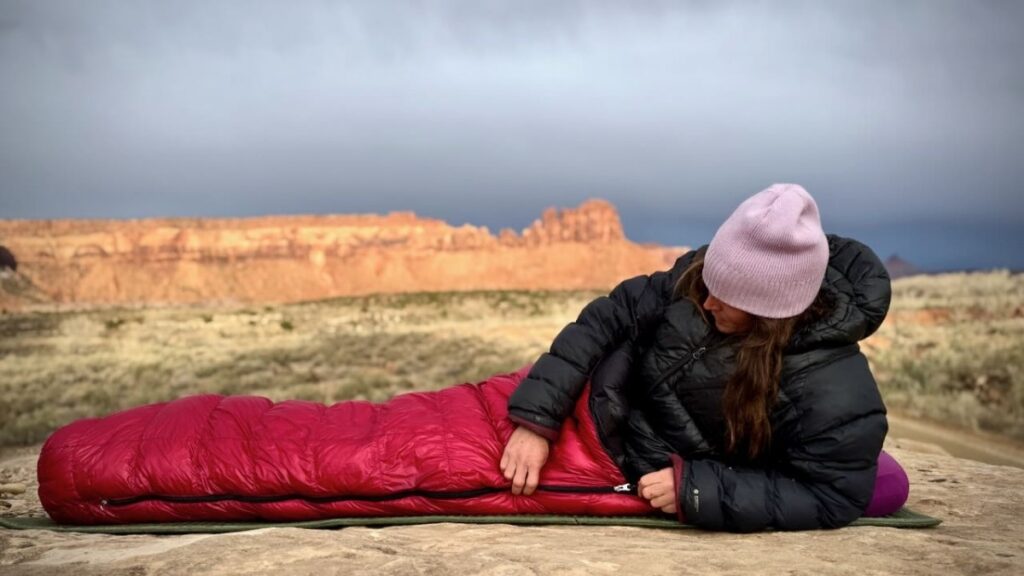
If you are an experienced mountaineer who sleeps warm and has disciplined gear management habits, the Western Mountaineering Alpinlite represents the pinnacle of warmth-to-weight engineering. At 595 grams with an 850fp ethically sourced down fill and a -9°C comfort rating, it is the lightest bag in this recommendation set that meets the Elena Hut requirement (with the 5°C buffer, it needs the Elena average night to stay above -4°C, which it mostly does). The limitation is that Western Mountaineering uses conventional down rather than a hydrophobic treatment; the bag’s performance degrades significantly if it gets wet, and recovery requires thorough drying that is not always possible on consecutive hut nights on the upper mountain. The Neutrino is a bag for experienced trekkers who will store it religiously in a waterproof liner and never let it contact damp tent fabric or wet clothing. For first-time Rwenzori visitors, the Rab Ascent or Montbell options provide more forgiving performance.
Rab Neutrino 600: The Mid-Tier Down Option with Moisture Resilience
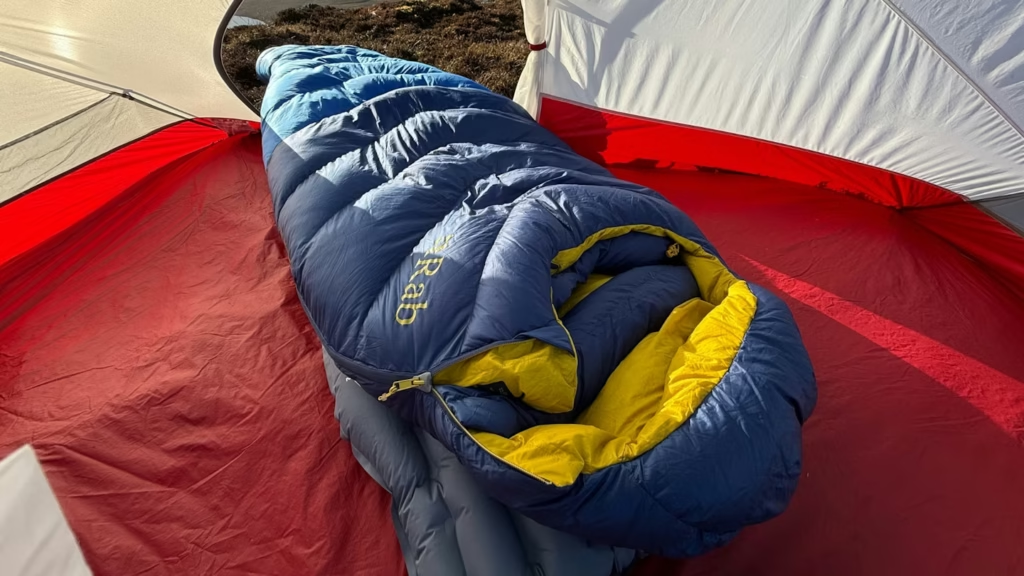
The Rab Neutrino 600 occupies a useful middle position: it uses 800fp hydrophobic down (Rab’s industry-leading treated fill), has a -9°C comfort rating, and at 1,025 grams sits in the accessible weight range for trekkers who want a premium down option without the ultra-light premium price. It is adequate for most camps on the 7-day Central Circuit, including Bujuku, but its comfort rating makes it marginal at Elena in cold conditions. Trekkers using the Neutrino 600 for the entire summit route should add a good merino wool or synthetic midlayer to wear in bed on the night at Elena, as the addition can provide about 3–4°C of extra warmth to their sleeping setup.
Mammut Nordic 3-Season Synthetic: The Insurance Option
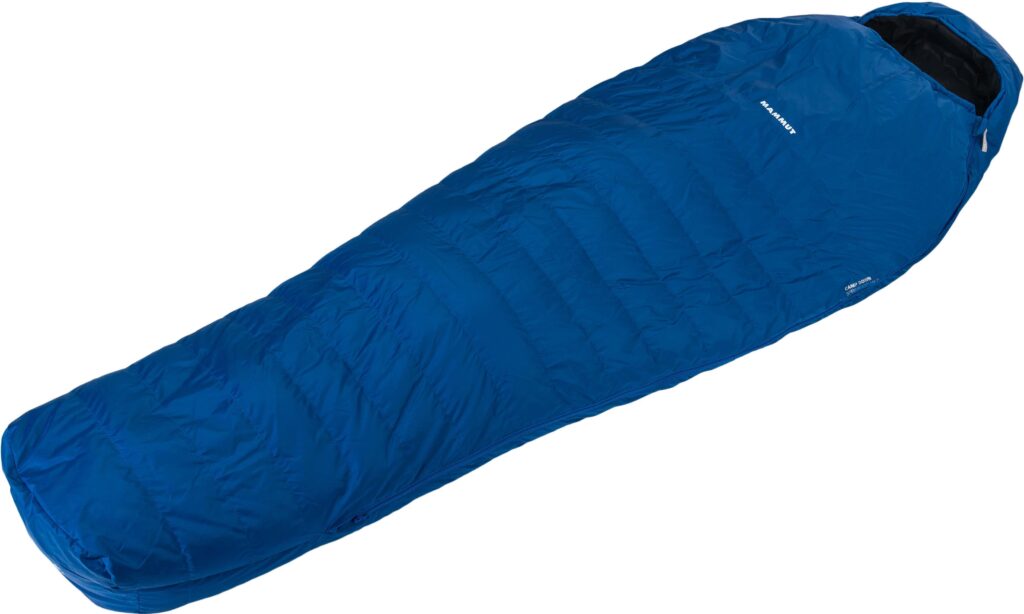
The Mammut Nordic 3-Season synthetic bag is the strongest recommendation in the synthetic category for trekkers who prioritise moisture insurance over weight performance. Its PrimaLoft fill maintains 85% of its dry insulation value when damp, it dries quickly during hut evenings, and its -8°C comfort rating handles Bujuku and Elena in average conditions reliably. At 1,650 grams, it is the heaviest bag on this list, and it packs to approximately twice the volume of the Rab Ascent. For trekkers whose pack weight ceiling is not tight, the Rab Ascent model is a very comfortable choice for the wet season or for first-time Rwenzori visitors who want the lowest-stress moisture management experience.
Building the Complete Rwenzori Sleeping System
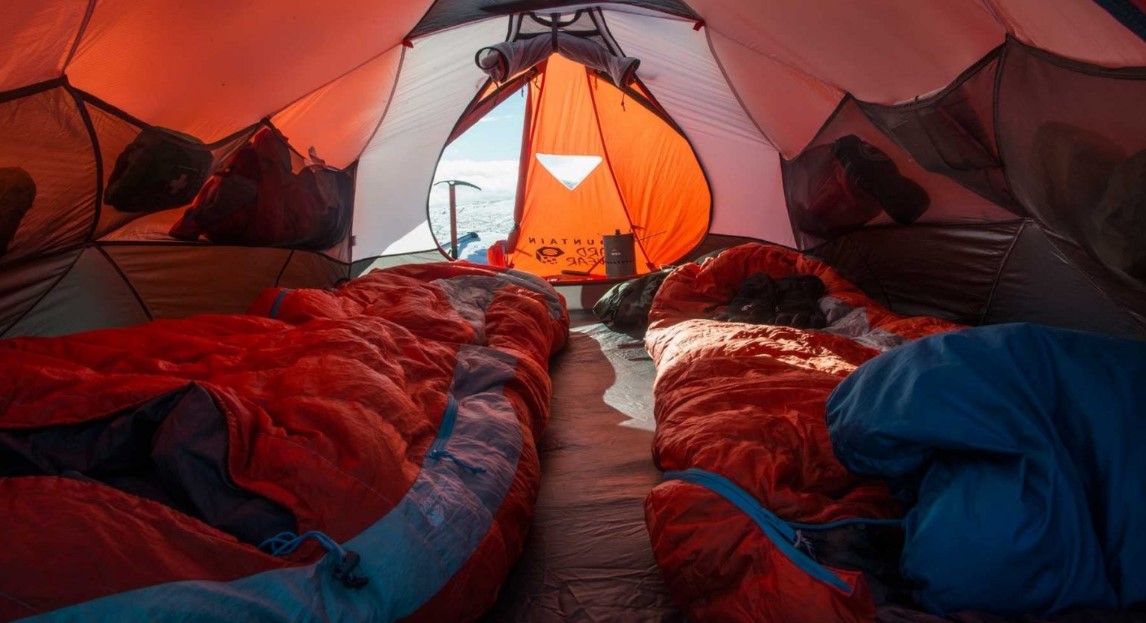
A sleeping bag is the core of the overnight thermal system on the Rwenzori, but it does not function in isolation. The combination of a bag, mat, liner, moisture management, and sleeping clothing determines the actual warmth your body experiences at 4,500 meters, and each of these elements can either reinforce or undermine the bag’s rated performance.
The Sleeping Mat: The Most Underrated Component
Heat loss through the floor conduction to the cold ground or hut surface is typically greater than heat loss through the bag’s upper surface because compression under body weight significantly reduces the bag’s insulation value in the areas that are in contact with the mat. A sleeping bag rated to -15°C comfort but used on a thin foam mat with an R-value of 1.5 will perform substantially worse than the same bag on a self-inflating mat with an R-value of 4 or higher. For the Rwenzori specifically, an insulated sleeping mat with a minimum R-value of 3.5 (equivalent to a Thermarest NeoAir XLite or similar) is strongly recommended for camps at Bujuku elevation and above. Hut-provided foam mats, where available, typically have R-values below 2 and should be supplemented. Our guide on whether you need to bring your own climbing gear addresses the gear-hire and bring-your-own questions across the full equipment list.
The Sleeping Bag Liner
A sleeping bag liner adds between 3°C and 8°C of effective warmth to any bag, depending on material. On the Rwenzori, the liner serves a dual function: thermal supplementation and moisture protection. Merino wool liners (the warmest option, adding 5–8°C, and the best moisture management of natural fibres) are the top recommendation for Elena and summit-approach camps. Silk liners add 3–4°C and are lighter, but silk’s moisture absorption capacity is limited. Synthetic fleece liners add 4–6°C and maintain their thermal contribution when slightly damp, a meaningful advantage in the Rwenzori hut environment.
A merino liner used every night from Bujuku upward effectively closes the safety margin for trekkers using a bag rated at the lower end of the Elena requirement. The liner also keeps the inside of the sleeping bag clean across a multi-day expedition, which extends the bag’s loft life and reduces the frequency of required washing.
Moisture Management: The Storage Protocol
The most important thing you can do for sleeping bag performance on the Rwenzori is keep it dry every day. This means storing it in a waterproof compression sack during trekking hours inside your main pack, rather than simply inside the pack itself. Packs can and do get wet on the Rwenzori bag rollers, even with pack rain covers. Both fail under sustained precipitation, and a sleeping bag that is damp before you even arrive at camp is a serious thermal liability. At camp, the second priority is airing the bag immediately inside the hut: unzip it fully, shake it to restore loft, and allow any accumulated body moisture from the previous night to evaporate before the temperature drops in the evening. On hut nights where a wood stove or gas heater is available, position the bag in the warm air stream for 30–60 minutes before getting in.
What to Wear in the Bag
What you wear when you sleep significantly affects the thermal performance of your bag. A complete base layer (merino wool or technical synthetic top and bottom), warm socks, and a merino or synthetic beanie add approximately 4–6°C of effective sleeping warmth and are standard practice in the upper huts of the Rwenzori. Do not sleep in your damp trail clothing; change into dry base layers. This will reduce moisture input to the bag and improve your personal thermogenesis overnight. On particularly cold Elena nights, sleeping in a lightweight down jacket is a legitimate supplementary strategy and effectively extends the bag’s comfort range by 3–5°C. Understanding the interaction between what you wear and your bag’s thermal performance is central to reading our discussion of how to stay warm on the summit of Mount Rwenzori, which covers the clothing system for the summit approach in full.
Sleeping Bag Requirements by Route and Trek Length.
For Short Lower-Mountain Treks (3 to 4 Days)
On routes that remain below 3,500 metres the 3-day Mahoma Loop, the 3-day Sine and Samalira Falls trek, and the 4-day Mutinda Lookout via Kilembe, a sleeping bag with a comfort rating of -5°C is the minimum requirement, and -10°C provides a comfortable safety margin for colder nights. The persistent Rwenzori humidity means that even at these lower elevations, a summer sleeping bag (rated to +10°C or +5°C comfort) is genuinely inadequate. A mid-range hydrophobic down bag or a good-quality synthetic bag weighing 500–800g is appropriate. Bring a liner for additional warmth insurance.
For Classic 6 to 8 Day Summit Routes
The 6-day Central Circuit to Margherita, the 7-day Central Circuit, the 8-day Kilembe Trail route, and the 8-day three-peaks expedition all require a sleeping bag with a Comfort rating of -12°C to -15°C. No adjustment downward is appropriate for these routes; they all include nights at Bujuku or equivalent elevation (requiring -10°C comfort minimum) and nights at Elena Hut or Margherita Camp (requiring -15°C Comfort). The Rab Ascent 900, Montbell Down Hugger 900 #2, or equivalent is the appropriate specification.
For Multi-Peak Expeditions of 10 to 18 Days
The 10-day four-peaks expedition, the 13-day six-peaks circuit, and the 18-day all-peaks expedition involve extended time in the upper mountain zone and multiple summit-altitude nights. For these expeditions, the sleeping bag specification is identical to the 6–8 day routes (comfort -12°C to -15°C), but the moisture management discipline is even more critical because the bag will be in continuous use for up to 18 nights in a humid environment. Consider carrying a spare liner and rotating it for washing if facilities allow. Trekkers on these longer routes who have used a bag for two or more previous high-altitude trips should have the bag inspected and re-lofted before departure if there is any indication that the fill has compressed or lost its loft.
Frequently Asked Questions: Sleeping Bags for the Rwenzori
What temperature rating sleeping bag do I need for the Rwenzori Mountains?
You need a sleeping bag with an EN13537 comfort rating of -12°C to -15°C for any route that includes overnight camps above 3,800 metres, such as the Central Circuit to Margherita, the Kilembe Trail summit approach, or any multi-peak expedition. The critical camp is Elena Hut at 4,541 metres, where temperatures can reach -8°C and the ambient humidity significantly degrades insulation performance. A bag rated to only -5°C comfort, however marketed, is insufficient for this camp and will leave you sleep-deprived at the most critical point of the expedition. For lower-mountain routes staying below 3,500 metres, a comfort rating of -5°C to -10°C is adequate. Always read the EN13537 comfort rating, not the lower limit or the retailer’s generic marketing temperature.
How cold does it get at Elena Hut on the Rwenzori?
Elena Hut sits at 4,541 metres on the Central Circuit approach to Margherita Peak and is the highest overnight camp on the standard Central Circuit route. Average nighttime temperatures at Elena range from -3°C to 0°C, but in cold conditions the temperature inside the hut can drop as low as -7°C to -8°C because Elena is not a thermally sealed structure. On summit morning, when trekkers rise before dawn to begin the glacier approach, temperatures are typically at their lowest of the night. A full description of the thermal conditions at Elena and across the summit route is available in our guide to how cold it gets on Margherita Peak. For sleeping bag specification purposes, plan for -8°C as your design minimum at Elena, requiring a bag with a comfort rating of at least -13°C.
Should I use a down or synthetic sleeping bag on the Rwenzori?
Both are viable, but with important qualifications. A down bag with hydrophobic-treated fill (such as Rab Hydrophobic Down or Montbell’s BIOMIMIC-treated fill) stored in a waterproof compression sack and managed carefully throughout the expedition will provide the best warmth-to-weight ratio and is the preferred choice for experienced trekkers with disciplined gear management. A synthetic bag is heavier and bulkier but provides more consistent insulation performance in humid conditions without requiring the same level of active moisture management. For first-time Rwenzori trekkers, or for anyone trekking during the rainy season when drying opportunities are limited, the additional weight of a quality synthetic bag is a reasonable trade for the reduced moisture risk. Avoid conventional untreated down; it loses its insulation value rapidly in the Rwenzori’s perpetually humid hut environment.
Can I rent a sleeping bag in Kasese or at the park entrance?
Basic sleeping bags are available for hire at some Kasese outfitters and at the park operator offices. However, the quality and temperature ratings of available hire bags are inconsistent, and the specific models available may not meet the comfort rating required for the upper camps, particularly Elena and Margherita camps on summit routes. Hire bags also have an unknown maintenance history. Filling compression in a hire bag that has been used intensively is a real concern at high-altitude camps. If you plan to hire a sleeping bag rather than bring your own, confirm the EN13537. Comfort rating of the specific bag being provided, and carry a merino liner as a thermal supplement in case the hired bag falls short on cold nights. Bringing your own correctly rated bag is strongly preferred, especially for summit routes.
Does sleeping bag loft affect performance at altitude on the Rwenzori?
Yes, meaningfully. Air pressure at 4,000 to 5,000 metres is approximately 60% of sea-level pressure. While sleeping bags are rated at sea-level conditions, the lower air density at altitude does affect the convective heat transfer around the bag. In practice, the effect is modest compared to the moisture degradation factor described throughout this guide. Altitude-related loft changes are in the order of 5–10% performance reduction, while moisture-related loft degradation in an untreated down bag can be 30–50%. The altitude factor does, however, reinforce the recommendation to choose a bag rated conservatively below the expected minimum camp temperature rather than exactly at it. If you use the EN Comfort rating with a 5°C safety buffer as described in this guide, the altitude factor is already effectively accounted for within that buffer.
How do I keep my sleeping bag dry on a Rwenzori trek?
Three practices are essential. First, store the sleeping bag inside a waterproof compression sack or dry bag inside your main pack every day, even if your pack has a rain cover. Rain covers fail under sustained Rwenzori precipitation. Second, at camp, unpack and fully unzip the bag as soon as you arrive to allow accumulated body moisture from the previous night to evaporate before you sleep in it again. Third, never put the sleeping bag in direct contact with wet clothing, wet tent fabric, or damp hut surfaces. If a wood stove or gas heater is available in the hut, use it to warm the bag for 30–60 minutes before getting in. On multi-day routes, the most important single action you can take each evening is shaking out the bag to restore loft before sleeping, as compressed fill warms significantly less than fully lofted fill, regardless of how dry it is.
What is the sleeping situation in the Rwenzori mountain huts?
The mountain huts on both the Central Circuit and the Kilembe Trail provide sleeping platforms or raised wooden bunks with basic foam mattresses. Bedding (sheets and pillows) is not provided. The huts are simple wooden structures designed for shelter and weather protection rather than thermal insulation, which means interior temperatures track closely with external air temperatures, particularly at higher camps like Elena and Bujuku. The Kilembe Trail huts (Sine, Mutinda, Bugata, and Margherita Camp) are generally newer and slightly better maintained than some of the older Central Circuit huts, with solar charging available at some sites. For complete accommodation information, including camp-by-camp descriptions and what to expect at each overnight stop, the pre-departure briefing from Rwenzori Trekking Safaris covers the full logistical detail.
Does the sleeping bag rating matter differently for solo vs group Rwenzori treks?
The sleeping bag specification is identical for solo and group trekkers; the thermal environment at each camp is the same regardless of group size. However, solo trekkers on the Rwenzori should be aware that sleeping alone in a hut or tent means there is no body heat contribution from other occupants sharing the sleeping space, which can modestly lower the ambient temperature inside the sleeping area. While this is not a major concern in the well-insulated huts, it does emphasise the importance of adhering to the sleeping bag specification for solo expeditions. Our guide to the experience of solo trekking on the Rwenzori Mountains covers the broader solo logistics and safety considerations
Sleep Well on the Mountain. Plan Right From the Start.
The Rwenzori rewards preparation. Getting the sleeping bag right is one of the decisions that determines whether your nights on the mountain are genuinely restful and critical for acclimatisation and summit performance or spent shivering through the dark hours until dawn. With the right bag, correctly managed, even the notorious cold of Elena Hut the night before the Margherita push becomes manageable. You wake rested, fed, and ready.
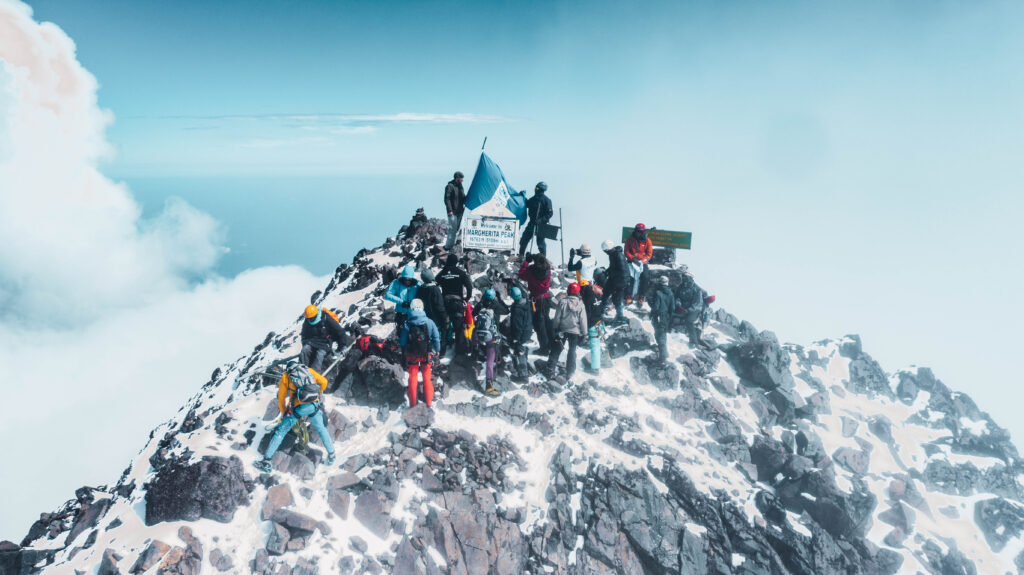
When you book your expedition with Rwenzori Trekking Safaris, your pre-departure briefing includes a personalised gear consultation. Send us your sleeping bag model and we will give you an honest assessment for your specific route. Browse our full range of itineraries from the 3-day introductory Mahoma Loop to the 18-day all-peaks expedition and get in touch to start planning the mountain experience you came to Africa for.
CONTACT THE EXPERT TEAMSend us your target route, preferred dates, and any gear questions. We provide honest, specific advice, not generic checklists. Email: rwenzoritrekkingsafaris@gmail.com | WhatsApp: +256 773 256 104 Plan your expedition: www.rwenzoritrekkingsafaris.com/ |