Nyakalengija: The Complete Guide to the Central Circuit Trailhead
Plan your Rwenzori trek from Nyakalengija: how to get there from Kasese, park gate registration, facilities, and where to stay the night before.
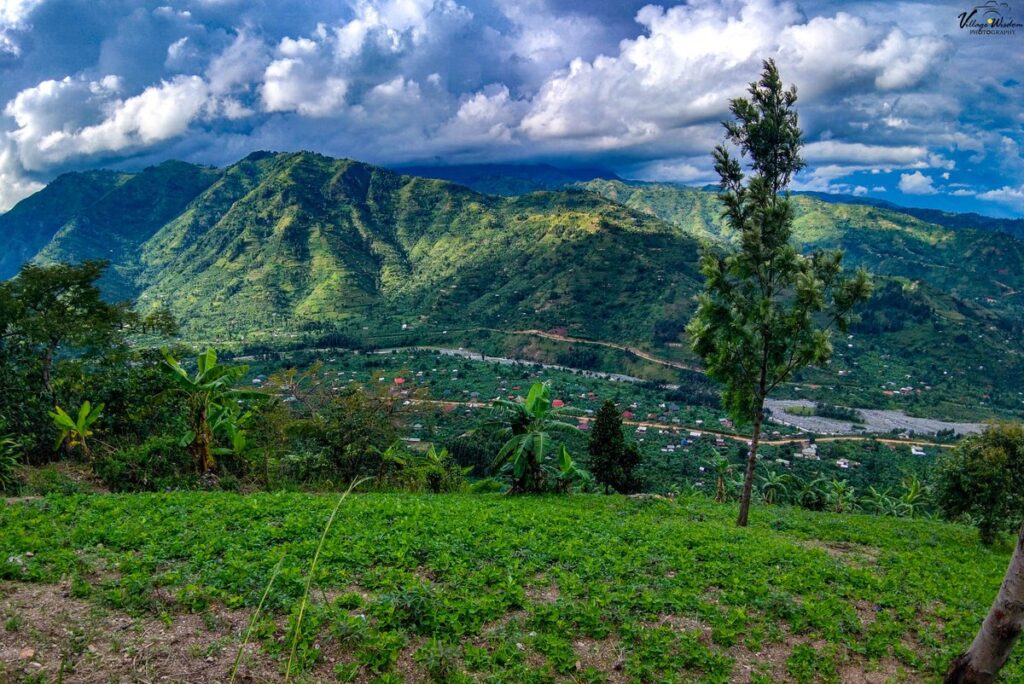
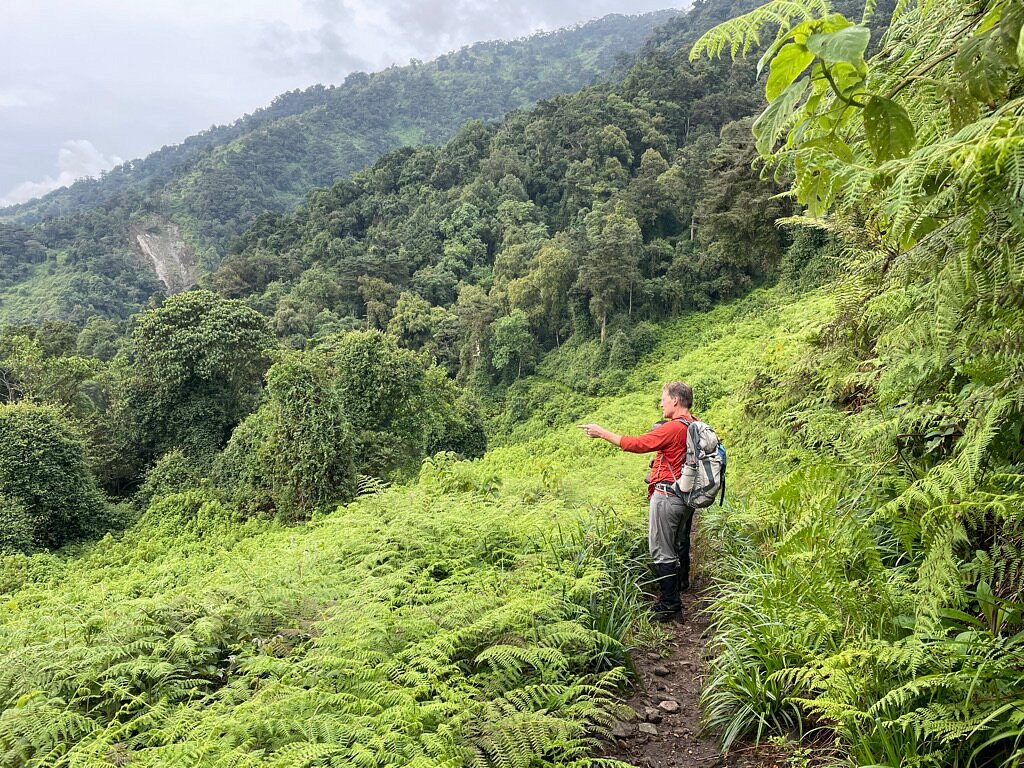
There is a moment, usually somewhere on the red-dirt road between Kasese and Nyakalengija, when the Rwenzori Mountains finally reveal themselves. For most of the journey, the range is hidden, folded behind foothills, veiled in equatorial haze, or simply too vast and close to read as a single thing. Then the road climbs a small ridge, the vegetation parts, and there they are: walls of green rising into clouds, impossibly steep and impossibly lush, the lower flanks already suggesting the extreme terrain that awaits above. If you have been traveling for a long time to get here from Europe, from North America, or from Australia, that first unobstructed view of the Mountains of the Moon tends to feel like an arrival in the deepest sense of the word.
Nyakalengija is where the road ends and the mountain begins. It is the starting point for the Central Circuit Trail, the Rwenzori’s flagship multi-day trekking route, and the location of the Uganda Wildlife Authority park gate that controls access to the Rwenzori Mountains National Park on its northern side. To have a successful Rwenzori expedition, you must understand Nyakalengija, how to get there, what to expect, how to register, where to sleep before your trek, and what facilities are available. This guide exists to give you that understanding in full, based on years of experience leading expeditions on this mountain.
Nyakalengija is a small rural community located in the Kasese District of western Uganda, positioned at approximately 1,646 metres above sea level on the northern slope of the Rwenzori range. It sits roughly 22 kilometers northeast of Kasese town by road, and it is the terminus of the only paved and reliably passable road that approaches the Rwenzori’s northern boundary from this side of the range. Beyond Nyakalengija, the mountains take over entirely.
The village’s significance in the context of Rwenzori trekking cannot be overstated. For the better part of a century, Nyakalengija has been the accepted starting point for expeditions approaching the heart of the range via the northern approach, the same general corridor used by the Duke of the Abruzzi’s pioneering 1906 expedition that produced the first detailed geographical survey of the Rwenzori and the first ascents of its major summits. Today, Nyakalengija is home to the Uganda Wildlife Authority Nyakalengija ranger station and park gate, the Rwenzori Mountaineering Services offices, and a small cluster of accommodation and support facilities oriented around the trekking industry.
The Central Circuit Trail, which circuits the central peaks of the range in approximately seven days, passing through all of the Rwenzori’s extraordinary ecological zones from montane forest to alpine heath and on to the glaciated summit zone, begins and ends here. It is from Nyakalengija that trekkers set off into the Bujuku valley, and it is to Nyakalengija that they return, typically days later and significantly muddier than when they left.
How to Get to Nyakalengija from Kasese
The Road from Kasese to Nyakalengija
Kasese is the starting point for all Rwenzori trekking operations on the northern side of the range. The town itself is well connected to Uganda’s transport network. It lies approximately 405 kilometers west of Kampala via the main highway through Fort Portal, and a reasonable road in consistently improving condition links the capital to Kasese in roughly six to seven hours by private vehicle or eight to ten hours by scheduled coach.
From Kasese, the road to Nyakalengija heads northeast, initially following the main Kasese-Fort Portal highway before branching off onto a narrower district road that climbs toward the mountain. The journey covers approximately 22 kilometers and takes between 45 minutes and one and a half hours depending on road conditions and the type of vehicle. The road passes through a series of small communities, Ibanda and Mubuku, and the landscape transitions noticeably as altitude increases, from the flat savanna and sugarcane fields around Kasese to the steeper, greener terrain of the lower mountain slopes. If you are traveling during or shortly after heavy rain, sections of the road can become deeply rutted. A vehicle with reasonable ground clearance is preferable, and your trekking operator will coordinate transport appropriate to conditions.
Transport Options
The most straightforward option for reaching Nyakalengija is through your trekking operator. Rwenzori Trekking Safaris coordinates transport from Kasese to the trailhead as part of the standard pre-trek logistics, and this option is strongly recommended over attempting to arrange independent transport. The reasons are practical: your operator knows the road conditions on any given day, can time the departure to optimize arrival at the park gate, and can ensure that all your gear, including porter loads, group camping equipment if applicable, and any rental items, is transported together and accounted for properly before you reach the gate.
Independent transport to Nyakalengija is possible via special-hire taxis from Kasese town; these are private vehicles hired specifically for the journey rather than scheduled shared transport. Boda bodas (motorcycle taxis) make the journey, though they are impractical for trekkers with significant luggage. There is no reliable scheduled matatu (shared minibus) service that goes all the way to Nyakalengija, though shared transport goes as far as Ibanda, from which point onward a special hire or boda boda would be needed. For international trekkers, the operator-coordinated vehicle is simply the most practical and stress-free solution.
Departure Timing from Kasese
If you are beginning your trek the same day you travel from Kasese to Nyakalengija, which is the standard approach, departure from Kasese should be timed to arrive at the park gate between 8:00am and 9:00am. This allows time for the full registration and briefing process at the gate without pressure, ensures that the group sets off on the trail by mid-morning, and gives the full walking day ahead before reaching the first camp. Arriving at the gate in the early afternoon is possible but compresses the first day unnecessarily.
If you are travelling from further afield, flying into Entebbe and making the same-day journey to Kasese before transferring to Nyakalengija the following morning, overnight accommodation in Kasese allows for a properly paced start. Details on where to stay the night before are covered later in this guide.
Arriving at the Nyakalengija Park Gate
First Impressions
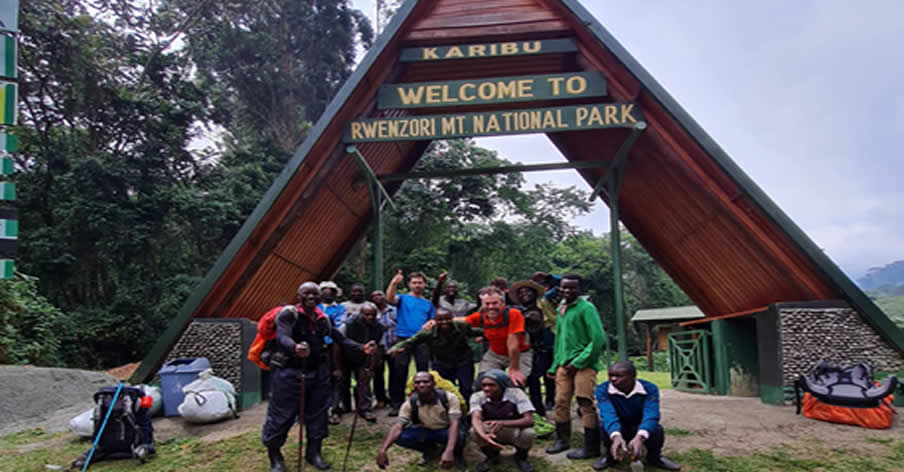
The park gate at Nyakalengija is not a grand entrance in the architectural sense; it is a functional ranger station that serves as the administrative threshold between the world below and the mountain above. The gate area includes the Uganda Wildlife Authority ranger station buildings, a briefing area, a noticeboard with current conditions and regulations, and the open ground where porters assemble, loads are weighed and distributed, and the controlled choreography of expedition departure takes place.
On a busy morning during peak trekking season, June through August or December through February, the gate area can feel genuinely animated. Multiple groups may be preparing to depart simultaneously; porters from Nyakalengija and surrounding villages call to each other across the compound, and the air carries the particular electric quality of a group of people collectively committing to something significant. If you arrive to find this scene, lean into it. It is one of the pleasures of a Rwenzori departure.
The Registration and Permit Process
Every trekker entering Rwenzori Mountains National Park through the Nyakalengija gate is required to hold a valid national park permit, and this is processed and verified at the gate before entry. If you are trekking with Rwenzori Trekking Safaris, your park entry permits, which cover the number of days you will spend inside the park boundary, are arranged as part of your trek booking and paid for in advance. Your guide will present the permit documentation at the gate on behalf of the group. You will need to present your passport for identity verification, and your details will be recorded in the gate register.
Trekkers must also register individually in the park entry record, providing their name, nationality, passport number, next of kin contact, emergency contact, and their planned route and expected exit date. This registration is a genuine safety mechanism; it means that if a group is overdue at their expected exit point, the UWA rangers know exactly who is on the mountain, where they were heading, and when they were last confirmed at a checkpoint. Take it seriously and ensure the information you provide is accurate.
Park fees for Rwenzori Mountains National Park are set by the Uganda Wildlife Authority and are subject to periodic review. Current fee structures should be confirmed at the time of booking; your operator will have the most up-to-date figures. Trekkers planning the Central Circuit Trail should note that fees are calculated per day inside the park, so the total permit cost scales with the length of your trek. Multi-day summit expeditions targeting Margherita Peak on Mount Stanley will carry higher total permit costs than shorter treks like the Mahoma Loop.
The Pre-Trek Briefing
Before any group enters the park, the Uganda Wildlife Authority conducts a pre-trek orientation briefing at the gate. This covers the national park regulations that apply to all visitors, the leave-no-trace principles that are particularly critical in the Rwenzori’s fragile high-altitude ecosystems, emergency procedures including how to summon ranger assistance from within the park, and any current conditions or route information that may be relevant to the group’s planned itinerary.
The briefing is conducted by a UWA ranger and typically takes between 20 and 40 minutes. Pay attention. Even experienced mountaineers who have trekked widely elsewhere will benefit from the local-specific information conveyed in this briefing, particularly regarding the current state of the mountain huts, any trail sections that have been affected by recent weather or vegetation changes, and the regulations around campfire use and waste management within the park.
Porter Weigh-In and Load Distribution
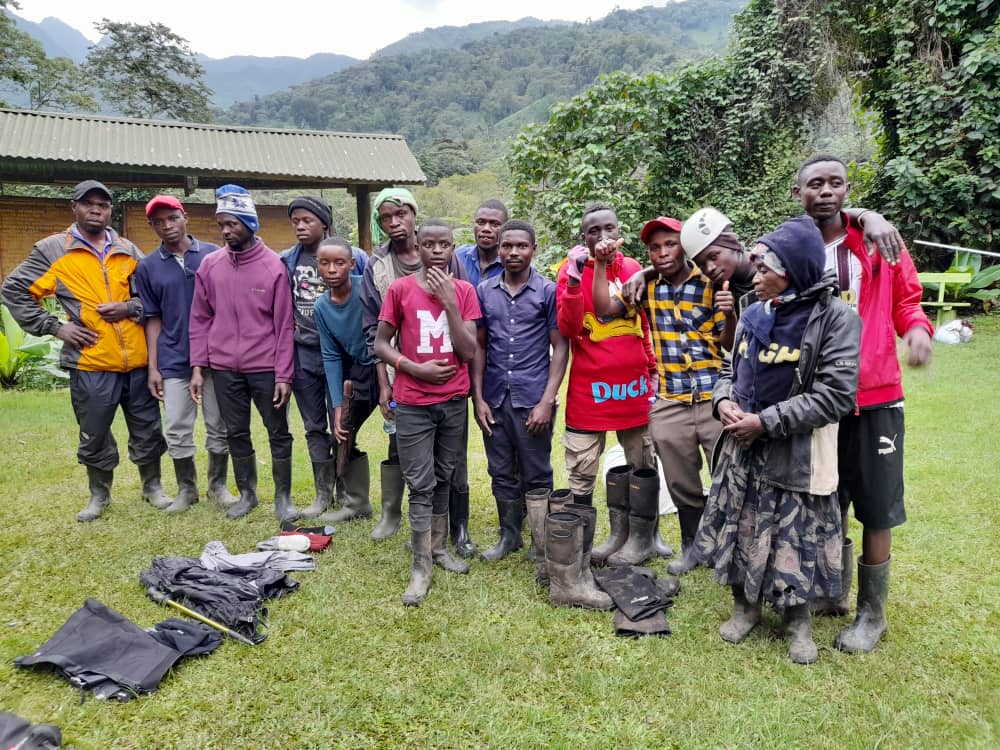
Simultaneously with or immediately following the briefing, the expedition’s porter loads are weighed and assigned. This is one of the most operationally important moments of the departure process, and it takes more time than first-time Rwenzori trekkers typically expect. Each porter’s load must be within the regulated maximum weight, which Rwenzori Trekking Safaris adheres to strictly as part of our commitment to fair porter employment standards. Your guide oversees the weighing process, redistributes loads where necessary, and ensures that each porter has a clearly assigned load before the group departs the gate.
This is also the moment to conduct a final gear check if you have not done so already. Confirm that your day pack contains everything you need for the walk to the first camp: water, snacks, and rain gear easily accessible at the top of the pack and that items you will not need until camp are correctly packed in your main porter load. Once the group is on the trail, reconfiguring loads is time-consuming and disruptive.
Nyakalengija is a small community, not a tourist town, and the facilities available there reflect that reality honestly. Trekkers arriving with expectations shaped by the infrastructure of more heavily visited mountain gateways elsewhere in Africa will need to calibrate accordingly. That said, the essential facilities for a properly organized trekking expedition are present and functional.
There is a toilet block at the UWA ranger station for use by trekkers preparing to depart. Running water may be available at the gate, though reliability varies. Carry sufficient water for the first stage of the trail from whatever source you have available at Kasese or en route. There is no café or restaurant at the gate itself, though basic food and drinks (sodas, water, and snacks) can sometimes be sourced from the small trading structures near the gate area. Don’t use the gate as your main food source: pack all your trek food before you get to Nyakalengija.
Mobile phone coverage at the gate is available on some networks, though it degrades rapidly once you enter the forest and disappears entirely above the montane zone. If you need to make final calls or send messages before entering the mountain, do so at the gate. Your guide will carry emergency communication equipment beyond this point.
No Gear Shops at the Trailhead
A point worth emphasizing clearly: there are no gear shops at the Nyakalengija gate. You cannot buy or rent significant equipment at the trailhead. All gear, whether your own or rented, must be sourced in Kasese before the journey to Nyakalengija. If you need to arrange items from our gear rental list, you can do so in Kasese. Arriving at the gate to discover you are missing a critical item means either returning to Kasese, a significant delay, or proceeding without it. Neither outcome is desirable.
Where to Stay the Night Before Your Rwenzori Trek
Staying in Kasese
For most international trekkers, the logical overnight stay before the Rwenzori trek that begins at Nyakalengija is in Kasese Town. Kasese has a range of accommodation options spanning budget guesthouses to mid-range hotels, and your operator can recommend specific options based on your preferences and the time of year. The town has restaurants, ATMs, shops where you can stock up on any last-minute supplies, and the logistical infrastructure of a small Ugandan regional center.
Staying in Kasese the night before allows a relaxed morning departure, time for final equipment checks and gear rental collection, and the option of a proper sit-down breakfast before the drive to Nyakalengija. It is the strongly recommended approach for first-time Rwenzori trekkers and for any trekker who has been traveling for more than a day to reach Uganda.
Accommodation at Nyakalengija
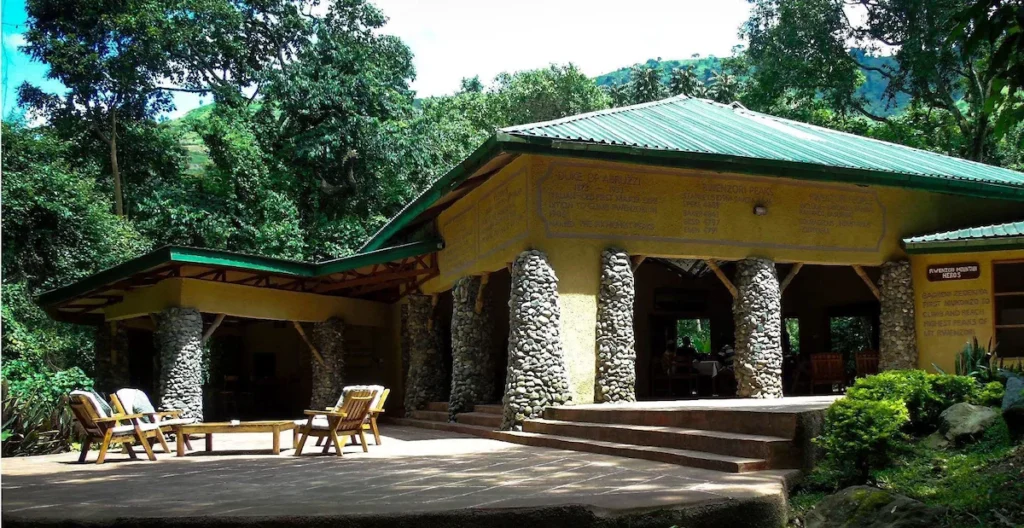
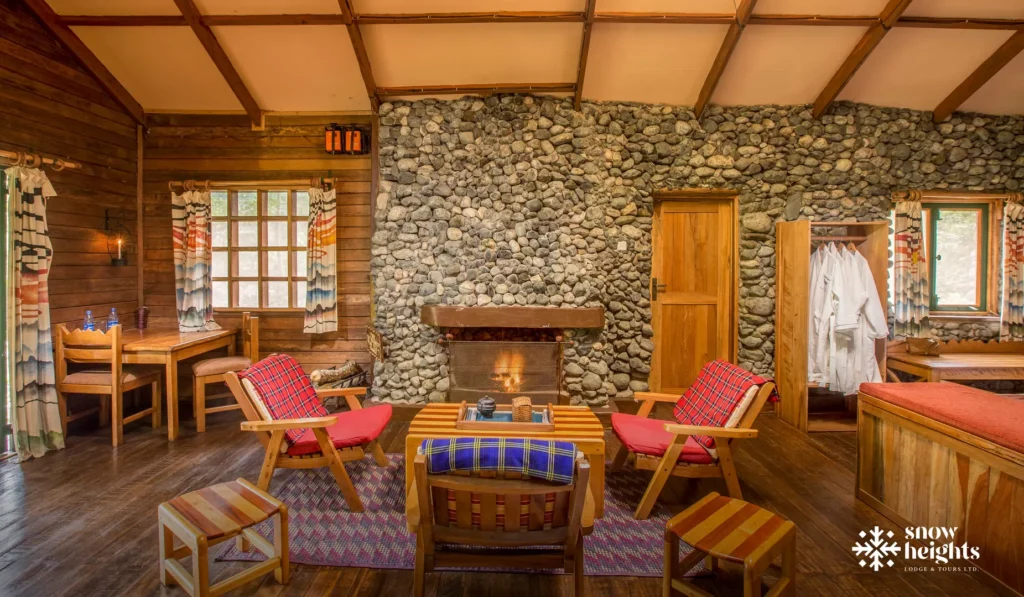
There is basic accommodation available in the Nyakalengija area itself, which suits trekkers who prefer to sleep as close to the trailhead as possible. The Rwenzori Trekking Centre, operated by Rwenzori Mountaineering Services near the park gate, has basic bandas (simple guest rooms) available for overnight stays. The accommodation is functional rather than comfortable in a hotel sense. Expect simple rooms, shared facilities, and the kind of sparse pragmatism that suits the atmosphere of a mountain base camp rather than a tourist lodge. For trekkers who find the proximity to the mountain and the trailhead atmosphere preferable to a night in town, it is a perfectly sound option.
Camping near the trailhead is also possible for groups that have their camping equipment and prefer to sleep under canvas. Your operator can advise on designated camping areas and the permissions required.
If You Are Arriving from Bwindi or Queen Elizabeth
Many international trekkers combine a Rwenzori trek with other Uganda wildlife experiences: mountain gorilla trekking in Bwindi Impenetrable Forest, chimp tracking in Kibale, or game drives in Queen Elizabeth National Park. All of these destinations are within a few hours’ drive of Kasese, making the Rwenzori a natural component of a broader Uganda itinerary. Trekkers arriving from Bwindi should allow a full travel day; the drive from Buhoma or Nkuringo to Kasese takes four to six hours on roads that are scenic but demanding. Arriving in Kasese by early evening leaves sufficient time for a good night’s sleep before the trailhead departure. Your trek booking can be coordinated around these connecting itinerary elements; it is something we help plan regularly.
The Ecology You’ll Encounter From the First Step
One of the extraordinary things about beginning a trek at Nyakalengija is how immediately the mountain announces its ecological uniqueness. Within minutes of passing through the park gate and entering the montane forest zone, the world outside ceases to exist in any meaningful way. The vegetation closes around the trail, the temperature drops noticeably, and the sounds of the forest replace the sounds of the road. It happens with remarkable speed.
The lower montane forest on the northern approach to the Central Circuit is dense, diverse, and genuinely wild. Giant fig trees, Podocarpus species, and a rich understory of ferns, mosses, and epiphytes create a forest that is architecturally complex in a way that few other trekking environments in Africa can match. The lower montane forest is a habitat for Rwenzori colobus monkeys, chimpanzees, L’Hoest’s monkeys, and an exceptional variety of forest birds, including the Rwenzori turaco, the handsome francolin, and multiple sunbird species. Trekkers on the Central Circuit Trail should keep cameras and binoculars accessible from the first step; the wildlife sightings on the forest approach are one of the unexpected pleasures of the Rwenzori that guides often find themselves emphasizing to trekkers who assumed the mountain was primarily about the high-altitude geology.
The trail from Nyakalengija to Nyabitaba Hut, the first camp on the Central Circuit, at approximately 2,651 meters, climbs through this forest for much of the day, crossing the Mahoma River, ascending a series of steep ridges, and offering occasional windows through the canopy with views back toward the Rwenzori foothills and the Kasese plain far below. It is a rich, immersive, and physically demanding day of walking that sets the tone for everything that follows on the mountain.
Nyakalengija as Your Exit Point: The Return Journey
The Central Circuit Trail returns to Nyakalengija at the end of the trek, completing the circuit and bringing hikers back to the same park gate through which they entered. This approach creates a pleasingly circular logic to the expedition: you set off through the gate with uncertainty about what lies ahead, and you return through the same gate with the mountain behind you and the particular, deep satisfaction of a completed Rwenzori traverse in your chest.
The return through the gate involves a de-registration process. Your group is checked out of the park register, and the UWA rangers officially record your safe return. This procedure is the administrative mirror of the arrival registration process and is equally important from a safety management perspective. It confirms that all members of the group have exited the mountain safely and releases the emergency contact information recorded at the start of the trek from active monitoring.
After de-registration, transport back to Kasese is arranged by your operator, typically the same vehicle or equivalent that brought you to the trailhead. The drive back to Kasese after a seven-day Central Circuit expedition has a particular quality: the mountain you have just spent a week inside recedes in the rear-view mirror, your legs ache in the specific way that only sustained mountain trekking produces, and the prospect of a shower, a hot meal, and a proper bed has never in your life seemed so appealing. Many trekkers spend a final night in Kasese before continuing their Uganda itinerary, whether that means driving to Kampala, flying via Entebbe, or heading to Queen Elizabeth or another destination. Your operator will coordinate the post-trek logistics as part of the full service.
Practical Notes for the Day Before Your Trek Departs
The day before your Rwenzori trek is one of the most practically important days of the entire expedition, and it deserves careful attention. Most of the logistical preparation that determines how smoothly your first two days on the mountain go happens in Kasese in the 24 hours before you reach Nyakalengija.
If you have gear to rent, collect it early, ideally the morning of the day before departure, so that you have time to try everything on, test adjustments, and raise any concerns with your operator before the day ends. Boot fit and crampon compatibility, in particular, should be confirmed with time to address any problems. Sleeping bag loft and zipper function should be checked. Trekking pole length should be set.
Organize all personal supplies, snacks, water purification tablets, sunscreen, blister plasters, and any prescription medications, and pack your daypack the night before. Know exactly where your rain gear is (accessible at the top, not buried at the bottom under three layers of base layers). Know where your passport is. Charge your camera, your headlamp batteries, and any electronic devices.
Eat a proper dinner the night before and a substantial breakfast on the morning of departure. The trail from Nyakalengija to Nyabitaba is physically demanding, and setting off well-fueled makes a meaningful difference to how you feel when you arrive at the first camp. Sleep as well as you can and start the day calm. The mountain has been there for millions of years. It will be patient with a measured, well-prepared approach.
Frequently Asked Questions About Nyakalengija and the Central Circuit Trailhead
Please provide the exact location of Nyakalengija and directions for reaching it from Kasese.
Nyakalengija is a small community in the Kasese District of western Uganda, located approximately 22 kilometers northeast of Kasese town at an elevation of around 1,646 metres. It sits on the northern flank of the Rwenzori Mountains and serves as the starting point for the Central Circuit Trail and the primary access gate for Rwenzori Mountains National Park on this side of the range. From Kasese, the journey takes between 45 minutes and one and a half hours by road, depending on conditions. Your trekking operator will arrange transport as part of the pre-trek logistics. Independent transport via special-hire taxi from Kasese is also possible. There is no reliable scheduled shared transport (matatu) service that goes all the way to Nyakalengija.
What happens at the Nyakalengija park gate before I can start my trek?
At the Nyakalengija Uganda Wildlife Authority gate, several processes take place before your group enters the park. First, park entry permits are checked; if you trek with an operator, they’ll be arranged ahead of time. You will need to present your passport for identity verification, and your details, including name, nationality, passport number, emergency contact, planned route, and expected exit date, will be recorded in the park register. A UWA ranger then conducts a pre-trek briefing covering park regulations, leave-no-trace principles, emergency procedures, and current trail conditions. Simultaneously or following the briefing, porter loads are weighed and assigned. The complete gate process typically takes one to two hours, so arriving by 8:00am to 9:00am ensures the group can set off on the trail by mid-morning.
Do I need to arrange permits before arriving at Nyakalengija, or can I buy them at the gate?
Park entry permits for Rwenzori Mountains National Park must be organized before you arrive at the Nyakalengija gate. If you trek with Rwenzori Trekking Safaris, your guide will present your permits at the gate. Attempting to purchase permits at the gate on the day of trekking is not a reliable approach, particularly during peak season when permits may be in limited supply or when administrative processing could significantly delay your departure. Permits are calculated per day inside the park, so the total cost varies depending on the length of your trek. Confirm the current permit fees with your operator at the time of booking.
Where should I stay the night before my Rwenzori trek if I’m starting at Nyakalengija?
Most international trekkers spend the night before their trek in Kasese town, which is approximately 22 kilometers from the Nyakalengija trailhead. Kasese has a range of accommodation from budget guesthouses to comfortable mid-range hotels, along with restaurants, ATMs, and shops for last-minute supplies. Staying in Kasese allows a relaxed morning, time for final gear checks, and a proper breakfast before the drive to the trailhead. Accommodation is also available closer to the park gate. The Rwenzori Trekking Centre near Nyakalengija has basic bandas (simple guest rooms) that suit trekkers who prefer to be as close to the mountain as possible the night before departure. Camping near the trailhead is also an option for appropriately equipped groups.
What facilities are available at the Nyakalengija trailhead?
The facilities at Nyakalengija are functional rather than extensive. The Uganda Wildlife Authority ranger station has toilet facilities available for departing trekkers. Basic drinks and snacks may be available from small trading stalls near the gate, though trekkers should not rely on this as a primary supply source; all food for the trek must be organized before arriving at Nyakalengija. There is no gear shop or equipment rental at the trailhead, so all gear, whether personal or rented, must be sourced in Kasese before the journey to Nyakalengija. Mobile phone coverage is available at the gate on some networks but degrades quickly once you enter the forest and disappears above the montane zone.
Can I start the Central Circuit Trek the same day I arrive in Kasese from Kampala?
Technically yes, but it is not recommended. The drive from Kampala to Kasese takes between six and nine hours depending on the route and conditions, and adding the Nyakalengija transfer and park gate registration on top of that creates a very long and tiring day before you even begin climbing. Trekkers who attempt a same-day Kampala-to-trailhead approach typically arrive at the first camp fatigued rather than rested, which affects their experience on the demanding days that follow. The strongly recommended approach is to break the journey with an overnight in Kasese, allowing the drive to Nyakalengija and gate registration to happen on a fresh morning. Your trekking operator will help plan this logistics sequence optimally.
What is the elevation at Nyakalengija, and how does it compare to the rest of the Central Circuit?
Nyakalengija sits approximately 1,646 meters above sea level. By the standards of the Central Circuit Trail, the elevation is relatively low; the trek climbs through the montane forest to Nyabitaba Hut at 2,651 metres on day one, continues through the heather zone and on through the spectacular afro-alpine terrain to camps at progressively higher elevations, and reaches its high point on summit attempts toward Margherita Peak at 5,109 metres on Mount Stanley. The elevation gain from Nyakalengija to Margherita is therefore approximately 3,463 meters, spread over a multi-day period that allows for gradual acclimatization. Most trekkers do not experience significant altitude symptoms in the early stages of the trek, though the upper mountain above 4,000 metres requires vigilance around acclimatization.
Is Nyakalengija also the exit point for the Kilembe Trail?
No. The Kilembe Trail begins and ends at the Kilembe trailhead near the Kilembe Mines on the southern side of the Rwenzori range, not at Nyakalengija. Nyakalengija is the trailhead and exit point specifically for the northern approach routes, principally the Central Circuit Trail and the Mahoma Loop. Some trekkers combine both northern and southern approaches by trekking a traverse route that enters from Nyakalengija and exits at Kilembe, or vice versa. This option is a logistically more complex arrangement that requires transportation coordination between the two trailheads and is typically organized through your operator as part of a custom expedition itinerary.
Ready to Start Your Rwenzori Expedition? Let’s Plan It Together.
Nyakalengija is not the destination; it is the threshold. After the park gate, the mountain takes over, and the success of the days that follow depends on how well the expedition was planned. We have been planning and leading treks from Nyakalengija into the heart of the Rwenzori for years, and we can answer and coordinate any logistics questions on your behalf, from permit arrangements to transport, gear rental, and accommodation in Kasese.
If you are seriously considering the Central Circuit Trail, a multi-peak expedition to the summits of Mount Stanley, Mount Speke, Mount Baker, or any of the other great Rwenzori peaks, or a shorter introductory experience on the Mahoma Loop, please get in touch with the Rwenzori Trekking Safaris team. Tell us your preferred dates, the size of your group, your experience level, and what you are hoping to achieve on the mountain. We will put together a complete itinerary proposal including trailhead logistics, accommodation recommendations, permit costs, and gear requirements so that by the time you arrive in Kasese, all you have to do is look up at those extraordinary green walls rising into clouds and feel ready.
The Mountains of the Moon are waiting. Nyakalengija is where it begins.
ANY QUESTIONS?
If you need any clarification about a Rwenzori trek, contact one of our trekking experts to start planning your journey today.
A 10% percentage of your safari proceeds goes to supporting the local Bakonjo Communities (orphans, schools & homes)
Hi there, welcome. Need help planning a trek, safari, or adventure? Chat directly with a real expert and mountain guide for honest advice, clear answers, and practical recommendations. No guesswork, no pressure.