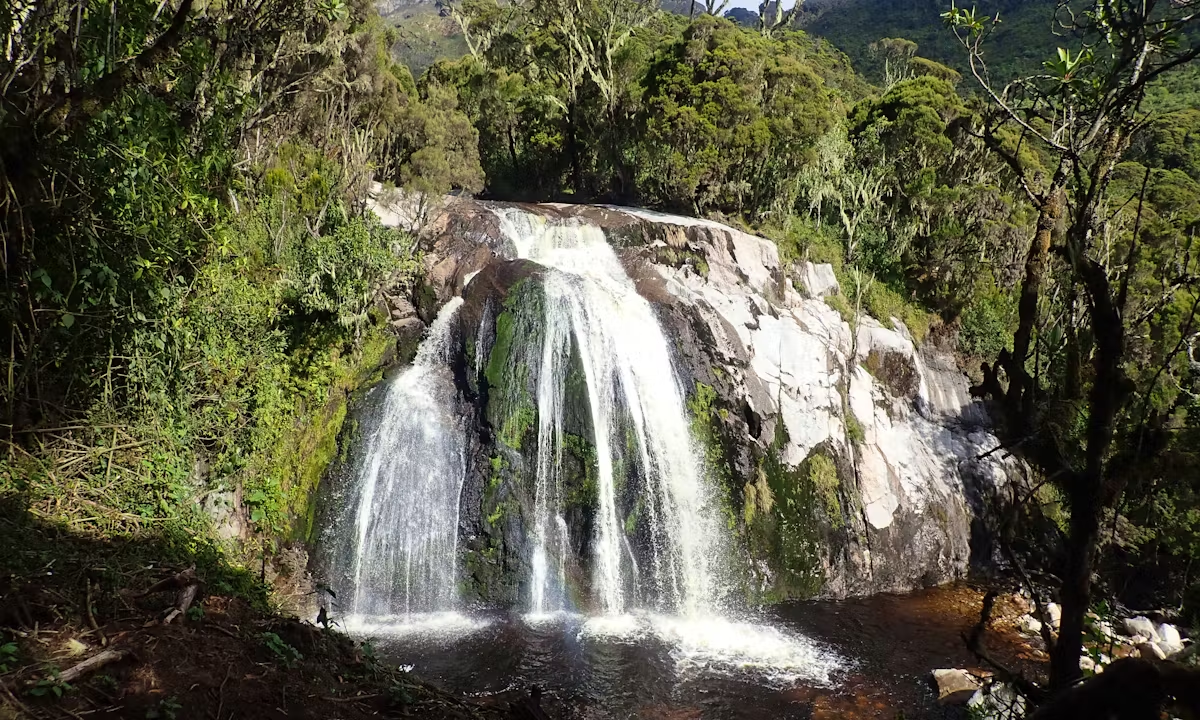

How many days does it take to reach Margherita Peak? This is a technical, evidence-based guide that covers routes, acclimatization, weather constraints, risks, and best-practice timelines for the Rwenzori Mountains.
Reaching Margherita Peak, the highest point of the Rwenzori Mountains at ~5,109 m, typically requires 6 to 9 trekking days, depending on the access route, acclimatization strategy, weather, team capability, and logistical margins.
-
Fastest credible ascent: 6 days (high-risk, limited margin).
-
Standard, best-practice ascent: 7–8 days (optimal balance of safety and success).
-
Conservative/research-oriented ascent: 9+ days (maximum acclimatization and contingency plans).
Unlike many high peaks, Margherita is not just a long walk uphill. It is a high-altitude alpine objective requiring glacier travel, ropework, and technical movement. Time-to-summit is governed less by fitness alone and more by terrain complexity, weather volatility, and acclimatization discipline.
For Margherita Peak, time equals safety. The mountain does not reward haste; it rewards patience, judgment, and margin. Any plan under seven days should be treated as an exception strategy, not a baseline. For most serious trekkers and planners who are seeking a high-probability, defensible ascent, 8 days in the Rwenzori is the ideal duration.
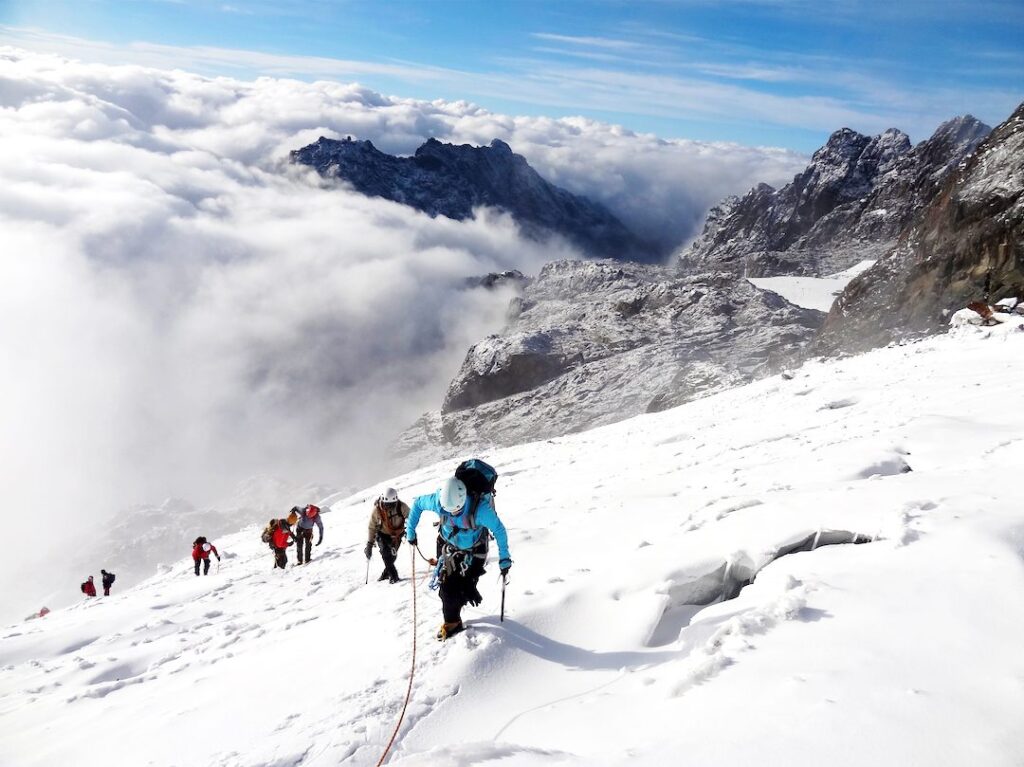
Mount Stanley Glacier.
Key Pointers to Know Before Hiking to Margheritah Peak.
-
Plan 7–8 days for most competent teams; fewer days increase failure risk.
-
Route choice matters more than fitness; terrain dictates pace.
-
Summit day involves glaciers, ladders, and exposed rock; technical skills are non-negotiable.
-
Weather and ice conditions routinely force schedule changes.
-
Extra days dramatically improve success rates and safety margins.
What “Reaching Margherita Peak” Actually Means.
Margherita Peak crowns Mount Stanley, straddling the Uganda–Democratic Republic of the Congo border. Unlike Kilimanjaro-style trekking summits, the final ascent requires:
-
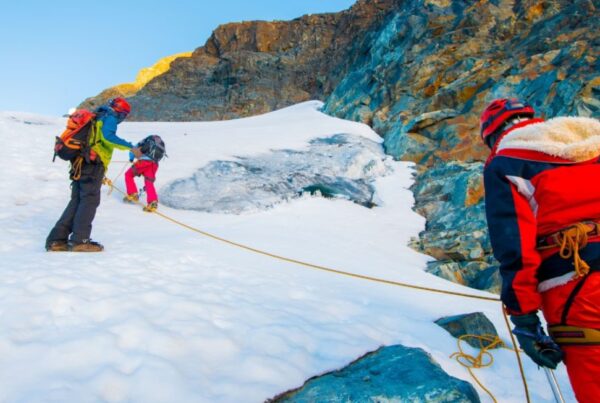
Glacier travel on the Stanley Plateau
-
Fixed ladders over crevasses
-
Steep rock and ice sections
-
Roped movement and alpine judgment
“Reaching” the Margheritah peak therefore implies successfully summiting and returning safely, not merely touching the summit ridge and failing.
Altitude Acclimatization
-
Rapid ascents elevate the risk of Acute Mountain Sickness (AMS).
-
Best practice follows a climb-high, sleep-low pattern where possible.
-
The Rwenzori’s terrain limits passive acclimatization, making extra days valuable.
Rwenzori Terrain Complexity
-
Boggy lower valleys slow approach days.
-
Upper sections require technical movement that cannot be rushed.
-
Congestion on ladders and glaciers can add hours.
Rwenzori Weather Volatility
-
The Rwenzori Mountains generate their weather.
-
Afternoon whiteouts and sleet are common year-round.
-
Summit windows may shrink to 2–4 hours.
Team Composition
-
Mixed-ability teams move at the pace of the slowest member.
-
Porters and guides are highly capable but must manage loads safely.
Logistics
-
Routes are regulated by the Uganda Wildlife Authority.
-
Hut spacing dictates daily distances.
-
Emergency egress options are limited.
Standard Rwenzori Routes to Margheritah and Their Time Requirements
Central Circuit (Most Common)
| Parameter | Typical Value |
|---|---|
| Total Days | 7–9 |
| Approach Style | Gradual, hut-based |
| Technical Demand | Moderate–High |
| Success Rate | High with 8+ days |
Why the Central Circuit works better: Balanced acclimatization, well-spaced huts, and a proven summit sequence via Elena Hut.

Typical day count:
-
Day 1–2: Forest & moorland approach
-
Day 3–4: Alpine zone & acclimatization
-
Day 5: High camp (Elena)
-
Day 6: Summit attempt
-
Day 7–9: Descent and contingency
Kilembe Trail (More Direct, More Demanding, & More Challenging).
| Parameter | Typical Value |
|---|---|
| Total Days | 6–8 |
| Approach Style | Steeper, wetter |
| Technical Demand | High |
| Success Rate | Variable |
Why the Kilembe Trail works better: Faster access but harsher terrain. This is not the best option for first-time high-altitude teams, unless they are willing to extend their days.
Longer/Research-Oriented Itineraries.
Glaciologists, photographers, and training teams utilize these itineraries.
| Parameter | Typical Value |
|---|---|
| Total Days | 9–12+ |
| Purpose | Acclimatization, redundancy |
| Outcome | Highest safety margin |
Day-by-Day Breakdown (8-Days to Margheritah Peak Best-Practice Model)
Day 1: Trailhead to Lower Hut
-
Altitude gain: modest
-
Primary risks: wet ground, heat management
-
Goal: establish rhythm, not speed
Day 2: Heath to Moorland Zone
-
Terrain shifts to giant lobelia and bogs
-
Pace slows naturally
Day 3: Alpine Zone Entry
-
First real altitude effects
-
Sleep quality often declines
Day 4: Acclimatization Day
-
Short climbs, skill refreshers
-
Rope handling practice recommended
Day 5: High Camp (Elena Hut)
-
Cold, exposed, early night
-
Hydration is critical
Day 6: Summit Day
-
Start: ~02:00–03:00
-
Summit window: morning
-
Descent before weather collapse
Day 7–8: Controlled Descent
-
Fatigue-related injuries common
-
Do not rush exits
Why Margherita Takes Longer Than It Looks
| Peak | Height | Typical Days | Technical |
|---|---|---|---|
| Kilimanjaro | 5,895 m | 5–7 | No |
| Mount Kenya (Batian) | 5,199 m | 5–6 | Yes |
| Margherita Peak | 5,109 m | 7–9 | Yes, plus glaciers. |
The Rwenzori’s terrain density, not altitude, drives the timeline.
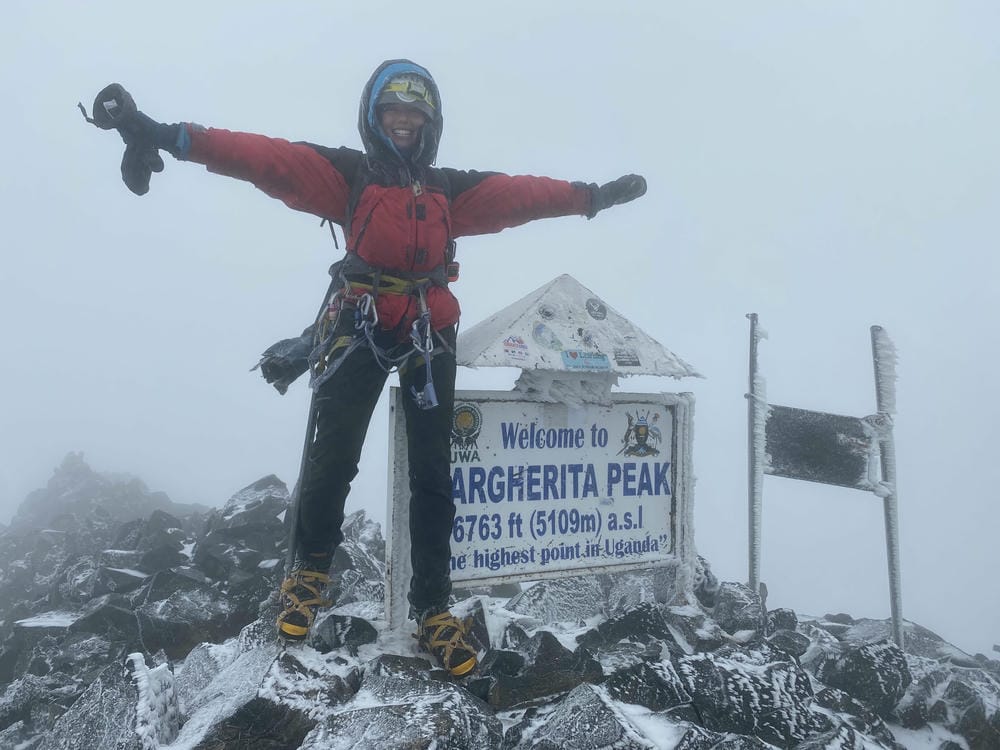
Best-Practice Recommendations
-
Plan at least one buffer day.
-
Choose routes based on terrain tolerance, not marketing promises.
-
Treat summit day as an alpine climb, not a hike.
-
Prioritize guides with recent glacier-condition experience.
-
Build schedules that allow turning back without penalty.
Checklist: Is Your Timeline Realistic?
☐ Team has prior glacier experience
☐ At least 7 days allocated
☐ Weather contingency built in
☐ Proper alpine equipment available
☐ Emergency descent plan understood
If any box is unchecked, add some days.