
Discover how hard trekking the Rwenzori Mountains really is. This comprehensive guide analyzes the terrain, altitude, fitness levels, weather, and routes and explains why the Rwenzori Mountains are Africa’s most challenging trek.
Short answer: the Rwenzori Mountains are one of the hardest multi-day treks in Africa.
Long answer: they are challenging in ways most people don’t expect and harder than Kilimanjaro, Mount Kenya, or most Himalayan “introductory” treks, not because of altitude alone, but because of terrain brutality, relentless moisture, and sustained physical demand.
The Rwenzori Mountains, straddling western Uganda and the Democratic Republic of the Congo, are not a “walk-up mountain.” The Rwenzori Mountains require a rigorous, technical, and gradual journey through mud, roots, ladders, boulder fields, glaciers, and uncooperative weather.
If you are looking for a scenic hike with comfort, this is the wrong mountain. This is one of the most fulfilling and physically uncompromising treks on the continent.
Trekking the Rwenzori Mountains is extremely challenging due to constant mud, steep terrain, high rainfall, and sustained physical effort rather than altitude alone. Unlike Kilimanjaro, the Rwenzori demand balance, endurance, and mental resilience. The difficulty varies by route but remains high across all treks, making it one of Africa’s toughest and most rewarding mountain adventures.

The Real Difficulty: It’s Not Just Altitude
Most people judge mountain difficulty by elevation. That’s a mistake here in the Rwenzori Mountains.
The Rwenzori’s highest point, Margherita Peak on Mount Stanley (5,109 m), is high, but altitude is only part of the suffering.
What makes the Rwenzori Mountains hard is compound difficulty:
-
Constantly wet ground
-
Deep, energy-draining mud and bogs on the Lower slopes
-
Steep ascents with no switchbacks
-
Slippery roots and moss-covered rock
-
Long days with little “easy walking”
-
Cold, humidity, and rain happening together
You mostly walk on uneven, wet trails. You are climbing, balancing, pulling, sinking, and slipping day after day.
Rwenzori’s Terrain: The Rwenzori Mountains are Physically Punishing.
The Rwenzori Mountains are infamous for their terrain, and the reputation is well deserved.
Lower Zones: Forest and Root Chaos
In the montane forest, trails are narrow, muddy, and tangled with roots. Rain turns paths into moving sludge. Every step demands attention. Ankles and knees endure significant strain.
Mid Zones: The Bogs
This is where dreams are tested.
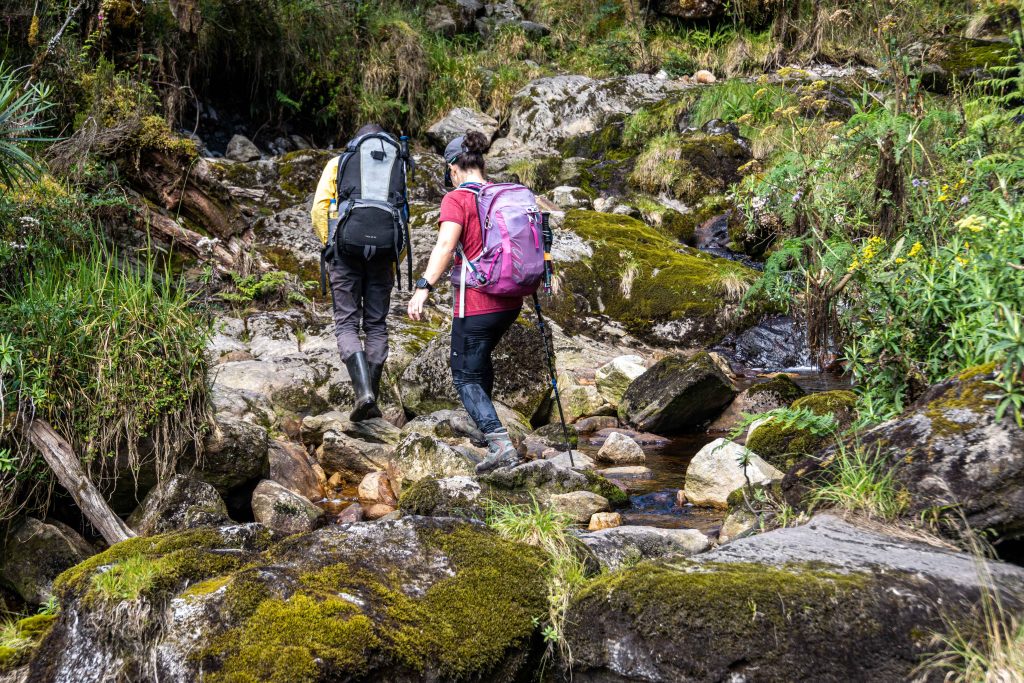
The Rwenzori bogs are deep, cold, and relentless. Even with wooden boardwalks, you will step off. You will sink. You will drag your leg out, only to sink once more. Each step costs energy in a way dry trails never do.
Upper Zones: Rock, Ice, and Exposure
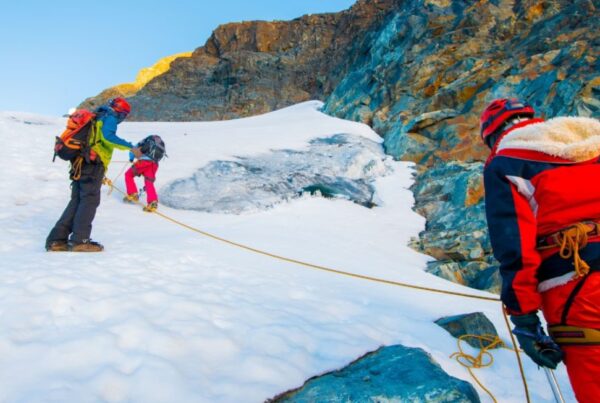
Above the alpine zone, routes involve scrambling, fixed ropes, ladders bolted to rock faces, and glacier travel on summit routes. Balance and confidence matter more than speed.
Such climbing is not technical mountaineering like in the Himalayan ranges, but it is far from hiking.
Rwenzori Weather: Relentless and Indifferent
The Rwenzori Mountains are located in an equatorial rain factory of East Africa. Rain is not seasonal here; it is habitual.
Expect:
-
Rain almost daily
-
Persistent cloud and mist
-
Wet boots from Day 1 onward
-
Cold nights even at lower camps
-
Snow and ice above 4,500 m
The psychological fatigue of being constantly damp is underestimated. Drying gear is difficult. Morale management becomes a real skill.
What “Fit Enough” Actually Means in the Rwenzori Mountains.
Being “gym fit” is not enough. To handle the Rwenzori, you need:
-
Strong legs for sustained, uneven terrain
-
Excellent balance and joint stability
-
Cardiovascular endurance for long days
-
Mental resilience to stay focused while uncomfortable
If you struggle with long hikes carrying a pack, slippery ground, or repetitive climbs, the Rwenzori will expose that weakness faster than anything you’ve ever tried.
This mountain does not reward shortcuts. It rewards preparation, and also sometimes it teaches some avid mountaineers that this isn’t Kilimanjaro.
Rwenzori Route Choice Matters a Lot.
Rwenzori treks vary in difficulty, but all of them are challenging to a certain degree.
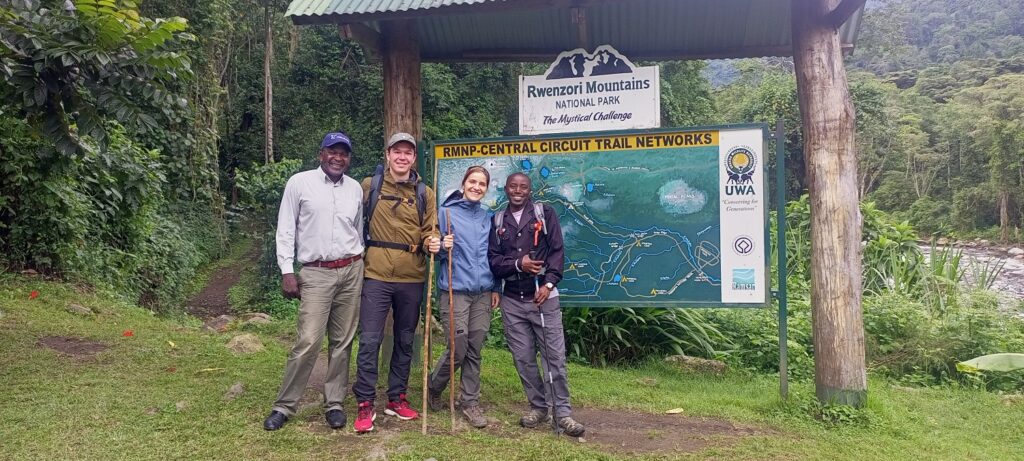
Central Circuit Trail
The classic route. The route is long, comprehensive, and physically demanding. The route encompasses numerous passes, bog sections, and optional summit climbs. Expect consistent difficulty.
Kilembe Trail
The Kilimbe Trail is more scenic and slightly less congested, but it can be steeper in some sections. Some days feel easier; others feel worse. This route offers challenging summit attempts.
Lower Altitude Treks (No Summit)
Still hard. You avoid glaciers, but not mud, rain, or long ascents. Many people are shocked by how tough “non-summit” Rwenzori treks still are.
The Rwenzori Altitude.
Altitude sickness is less common here than on Kilimanjaro due to slower ascents—but it still happens.
What altitude does here is compound fatigue:
-
Slower recovery overnight
-
Reduced appetite
-
Heavier legs
-
Mental fog on summit days
By the time you reach 4,000+ meters asl, you are already physically worn down. That’s what makes summit pushes feel severe.
How Hard Is Rwenzori Vs Other African Treks?
Let’s be honest.
-
Harder than Kilimanjaro (by a wide margin, physically)
-
Harder than Mount Kenya (more sustained and messy)
-
Comparable in effort to tough Himalayan treks, but with worse trail conditions
Kilimanjaro is an altitude test.
Rwenzori is an endurance and resilience test.
Who Should (and Shouldn’t) Trek the Rwenzori
You should attempt the Rwenzori if:
-
You enjoy challenging, raw wilderness
-
You accept discomfort as part of adventure
-
You want a trek that feels earned, not staged
You should reconsider if:
-
You dislike mud, rain, or cold
-
You want predictable conditions
-
You are undertrained or injury-prone
The mountain does not care about your motivation. It only responds to preparation.
Why People Still Call The Rwenzori Trek the Best Trek in Africa
Despite or because of the difficulty, many experienced trekkers rank the Rwenzori as Africa’s most rewarding mountain experience.
You cross multiple climate zones, walk through ecosystems found nowhere else on Earth, and earn views that feel private and untouched.
The hardship filters the crowd. What remains is authenticity.