Discover why the Rwenzori Mountains earned the legendary name “Mountains of the Moon.” Explore ancient geography, snow-capped equatorial peaks, Nile exploration history, and the science behind Africa’s most mysterious range.
The Rwenzori are called the Mountains of the Moon because ancient geographer Claudius Ptolemy described a snow-capped equatorial range believed to feed the Nile River. Modern exploration confirmed that these cloud-shrouded, glacier-covered peaks exist along the Uganda–DRC border. Their unusual combination of altitude, snow-capped peaks near the Equator, and mysterious appearance gave rise to the enduring lunar name.
The Origin of the Name “Mountains of the Moon”
The name “Mountains of the Moon” may seem poetic, yet it originates from a profound geographical enigma that perplexed the ancient world for more than a millennium.
The Rwenzori Mountains, located along the border of Uganda and the Democratic Republic of the Congo, were identified by ancient scholars as the most likely source of the Nile River, a river so important that civilizations literally depended on guessing where it began.
In the 2nd century CE, the Greco-Roman geographer Claudius Ptolemy wrote about a mysterious snow-covered range deep in Africa that fed great lakes, which in turn fed the Nile. He called this range Lunae Montes, Latin for “Mountains of the Moon.”
At the time, no Roman had actually seen them. This was ancient scientific deduction: part observation, part traveler reports, and part educated guess. Surprisingly, Ptolemy was not entirely wrong.
A Snowy Paradox at the Equator.
Here’s where things get deliciously weird.
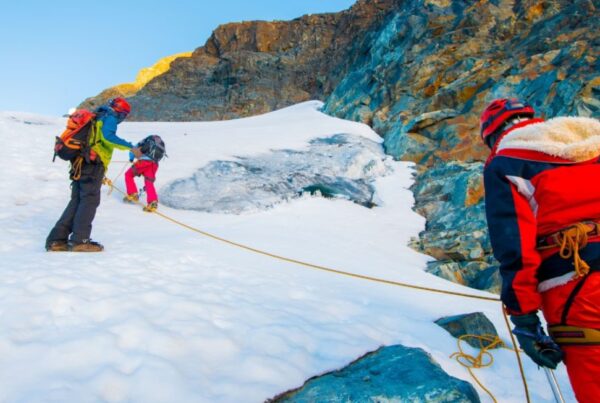
The Rwenzori sit almost exactly on the Equator. Logically, you expect heat, jungle, and maybe some very confident mosquitoes. Instead, explorers found glaciers, ice cliffs, and permanent snow.
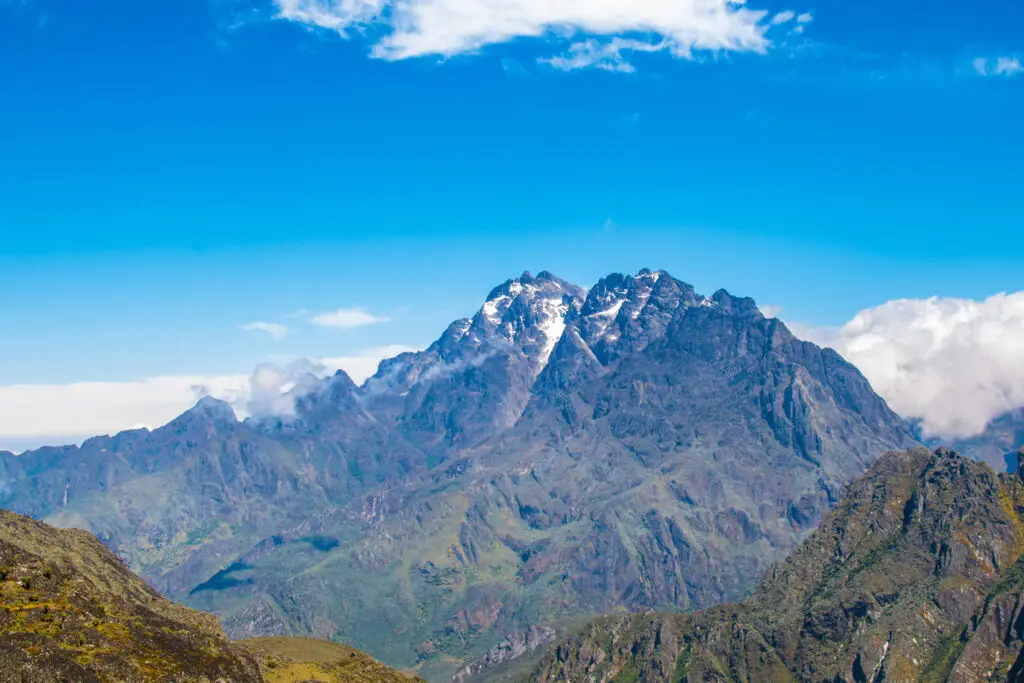
The highest peaks, including Mount Stanley and its summit Margherita Peak, rise above 5,000 meters (16,400 ft). At that altitude, temperature, not latitude, controls climate. Air cools by approximately 6.5°C for every 1,000 meters of elevation gained. Physics doesn’t care that you’re standing on the Equator; it just keeps subtracting heat.
To ancient observers hearing reports of “white mountains” in the heart of Africa, the only comparison they had was the pale glow of the Moon. Snow shining above the clouds became lunar by analogy.
So the name is not mystical. It’s observational poetry wrapped around real climatology.
The Mountains That Hid Themselves
Unlike Kilimanjaro or Mount Kenya, the Rwenzori Mountains do not announce themselves dramatically on the skyline. Constant equatorial moisture, rising along the Albertine Rift, frequently wraps them in dense cloud systems.
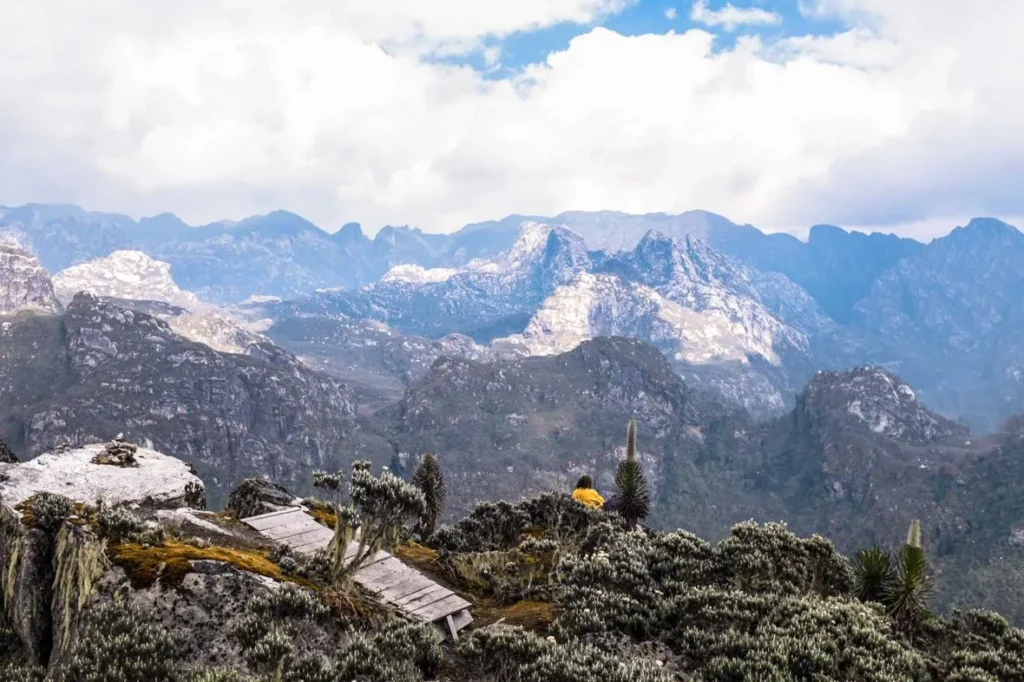
This condition means early explorers could be standing relatively close and still not see the mountains at all. Imagine trying to confirm the existence of the Alps if they were permanently inside a thunderstorm. That was the Rwenzori problem for centuries.
This perpetual mist reinforced their mythical status. Something half-seen is always more powerful in human imagination than something obvious.
When Exploration Finally Confirmed the Legend
In 1889, explorer Henry Morton Stanley (yes, that Stanley) finally documented the range for European geography, confirming that these were indeed the long-theorized Mountains of the Moon described by Ptolemy.
What he found was not a single massif but a complex block mountain system of uplifted crust rather than volcanic cones filled with hanging valleys, giant lobelias, and glaciers.
Geologically, the Rwenzori are not volcanic like most famous African peaks. They are a fault-block mountain range formed by tectonic uplift within the East African Rift. In simple terms, the Earth’s crust cracked, and one enormous slab got shoved upward.
Ancient myth met plate tectonics, and tectonics won.
Why the Name Still Fits Today
Even with satellite mapping, the name “Mountains of the Moon” remains astonishingly appropriate.
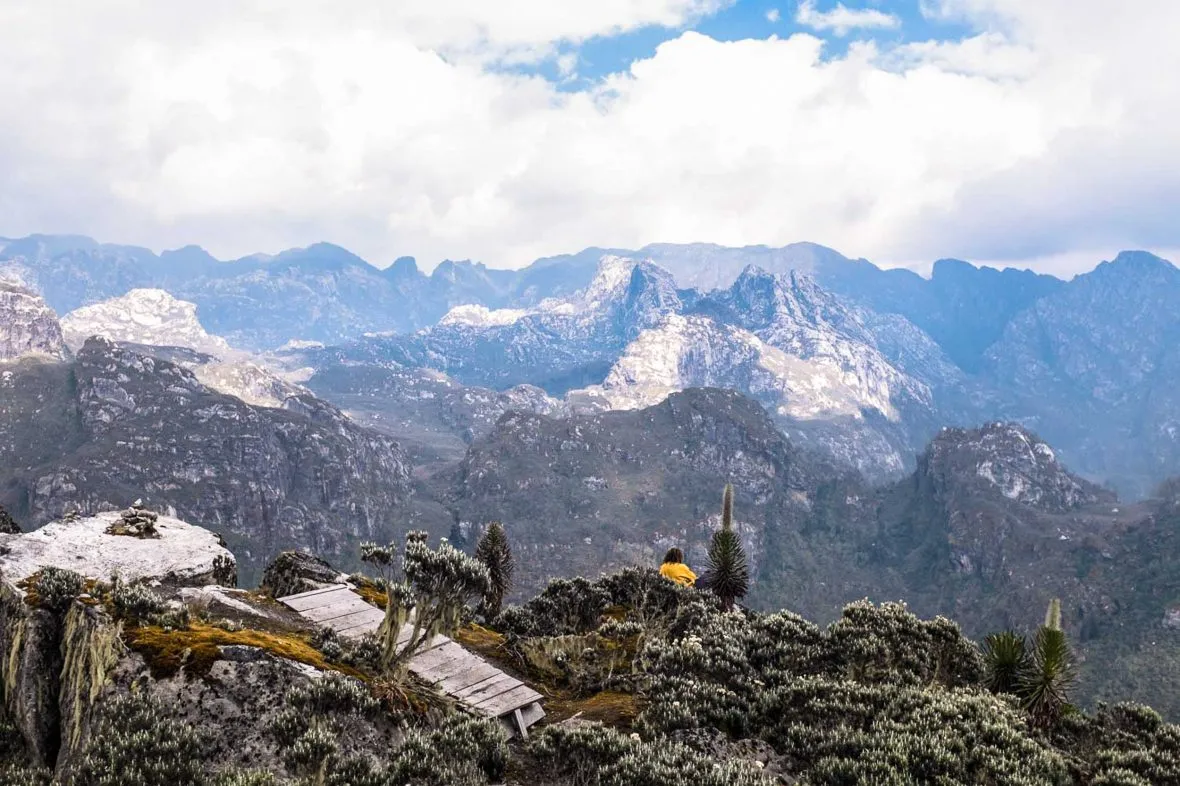
First, the lighting. The peaks often glow silver through mist, producing an almost extraterrestrial appearance.
Second, the isolation. The Rwenzori ecosystem is so distinct that scientists describe it as an “Afro-alpine island,” biologically separated from surrounding lowlands. Many plant species evolved here and nowhere else, giving the landscape an otherworldly quality.
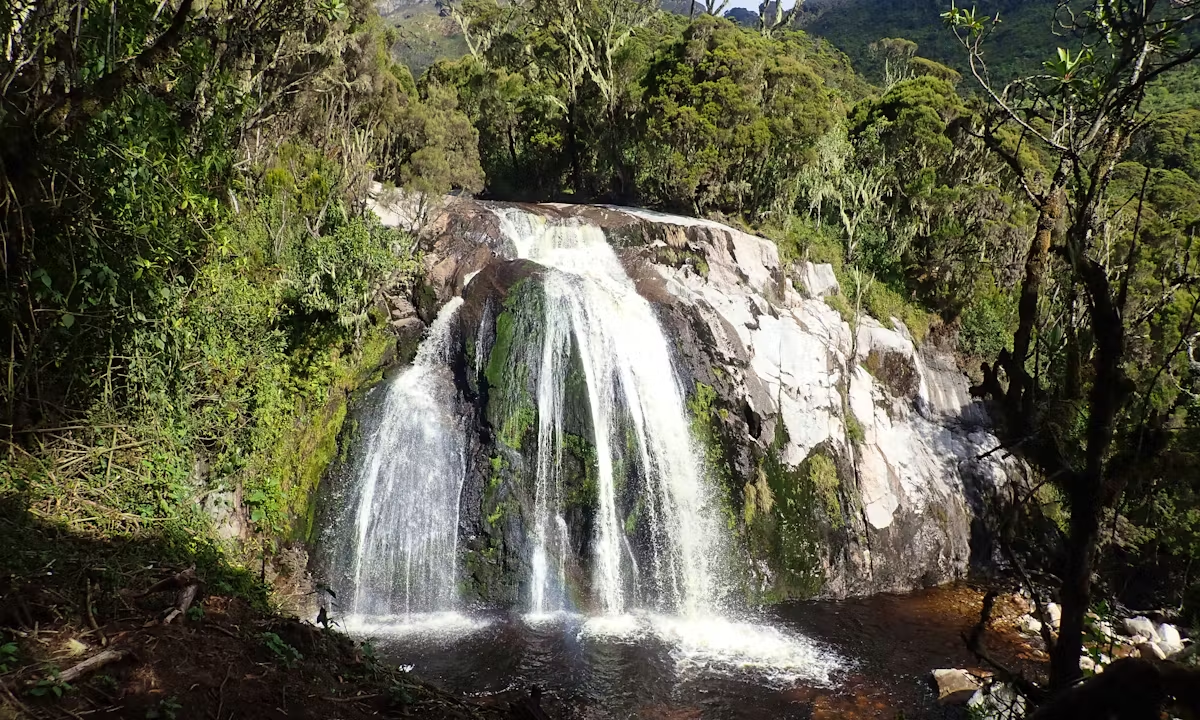
Third, the glaciers, though rapidly retreating due to climate change, still create stark contrasts between equatorial jungle and polar ice within a day’s climb. Few places on Earth compress different climate zones so dramatically.
You trek from banana farms to moss forests to alpine tundra to ice. It feels less like hiking and more like walking through latitudes without moving north or south.
The Rwenzori and the Search for the Nile
Ptolemy’s theory that these mountains fed the Nile was not entirely accurate, but it wasn’t fantasy either.
The Rwenzori act as a massive water catchment. Their glaciers, rainfall, and cloud forests generate rivers that drain into Lake Albert, which connects to the White Nile system.
In other words, they are not the source of the Nile, but they are undeniably part of the Nile’s hydrological engine.
Ancient geography oversimplified. Modern hydrology added nuance.
“Mountains of the Moon”: A Name Where Science and Myth Agree
Usually, scientific progress kills romantic names. Not here.
“Mountains of the Moon” survives because it captures three simultaneous truths:
Human curiosity is striving to map the unknown.
Snow at the Equator is a real climatic anomaly.
This strange landscape retains a mythical feel, even after explanation.
The Rwenzori are what happens when tectonics, altitude, and equatorial weather collaborate on a piece of geological performance art.
Why This Matters for Travelers and Historians
Understanding the name is not trivia. It reframes the Rwenzori as one of the last places where ancient geographic imagination overlaps almost perfectly with modern science.
You are not just trekking a mountain range. You are walking inside a 2,000-year-old hypothesis that turned out to be remarkably close to reality. Few destinations offer that blend of classical history, climatology, and raw wilderness.