Uganda visa guide for Rwenzori trekkers: e-Visa process, $50 fee, processing time, passport rules, visa-on-arrival & visa-free countries. Expert guide.
You have chosen the Rwenzori Mountains. You have found your route, perhaps the classic 7-day Central Circuit trek to Margherita Peak or the more demanding 13-day six-peaks grand expedition. Your gear list is taking shape. And then, somewhere between reading about the bogs of the Bujuku Valley and calculating sleeping bag temperature ratings, you realize you have not yet sorted out the visa. It sits in the administrative background of the planning process, not as glamorous as route selection or peak elevation charts, but every bit as non-negotiable. Without the right documentation, you do not board the plane. There wouldn’t be a mountain without getting on the plane.

Uganda’s visa system has evolved considerably recently. The country moved to a fully digital electronic visa (e-Visa or ETA, Electronic Travel Authorization) application system, which has streamlined the process for the overwhelming majority of international visitors. At the same time, the system carries nuances that are worth understanding before you sit down at the application portal: which passport holders qualify for which type of visa, what the current fee structure is, how long processing realistically takes, whether visa on arrival is still an option, and how the East Africa Tourist Visa, which covers Uganda, Kenya, and Rwanda in a single stamp, changes the calculus for trekkers combining multiple countries in one journey.
This guide covers all of it. It is written from the perspective of a Rwenzori mountain guide who has helped hundreds of international trekkers navigate their Uganda entry documents, has seen the outcomes of both correct and incorrect handling of the process, and has a clear, practical view of what you need to do, in what order, and by when. This guide will make your Uganda visa the least of your worries.
Important notice on currency of information: Visa regulations, fees, and application processes are subject to change by government decree, sometimes with limited advance notice. The information in this guide reflects the current Uganda visa framework as of 2026/2027. Always verify the most current requirements directly through the official Uganda e-Visa portal (visas.immigration.go.ug) or your country’s Ugandan embassy before completing your application.
Do You Need a Uganda Visa for the Rwenzori Trek? Start Here
Whether you need a visa to enter Uganda depends on your nationality. Uganda has different rules for entering the country based on where you are from: some countries don’t need a visa at all, others need to get a visa before arriving (or can get one when they arrive in certain situations), and a few countries have extra rules or can’t get the regular e-Visa.
The Rwenzori Mountains are located in western Uganda, and all international trekkers enter through one of Uganda’s official entry points, most commonly Entebbe International Airport (EBB), which serves as the hub for most international air routes into the country. The immigration checkpoint at Entebbe is where your visa is checked and stamped, whether you have obtained it in advance online or are applying on arrival.
Countries Exempt from Uganda Visa Requirements
Citizens of the following countries and territories may enter Uganda without a visa for stays up to 90 days. These exemptions apply to holders of ordinary (tourist/visitor) passports and are subject to confirmation of onward travel and sufficient funds for the visit.
African Union member states have broad visa-free access to Uganda under EAC and AU frameworks. Specifically exempt countries include all East African Community members Kenya, Tanzania, Rwanda, Burundi, South Sudan, and the Democratic Republic of the Congo, as well as a substantial portion of other African Union states. Commonwealth nations, including the United Kingdom, Australia, Canada, New Zealand, Singapore, and several Caribbean and Pacific island states, have historically enjoyed either visa-free entry or simplified access, though the UK in particular should verify current status as bilateral arrangements occasionally change.
If you hold a passport from any African country, an EU member state, or a Commonwealth nation, verify your specific exemption status directly through the official Uganda immigration portal before assuming you qualify. Visa-exempt status is granted to the passport holder, not the purpose of travel. There is no separate trekking visa or mountain climbing classification in Uganda’s immigration system. Entry is entry, and the same rules that apply to a business traveler apply to a mountaineer heading for Margherita Peak.
Countries That Must Obtain a Uganda Visa
Most nationalities outside the EAC and select Commonwealth/AU exemptions require a visa to enter Uganda. This includes the vast majority of trekkers who reach the Rwenzori Mountains from the United States, most of Continental Europe (including Germany, France, the Netherlands, Scandinavia, and others), Japan, South Korea, China, Brazil, Argentina, and most of Asia and South America. If you hold a passport from any of these regions and your nationality is not on Uganda’s published exemption list, you need either an e-visa obtained in advance or, in specific cases, a visa on arrival.
Uganda Visa Types for Trekkers: At-a-Glance Comparison
The table below summarizes the main visa pathways available to international trekkers visiting Uganda for a Rwenzori expedition.
| Visa Type | Cost (USD) | Processing | Max Stay | Entry Points |
| Single-Entry e-Visa (ETA) | $50 | 3–5 business days | 90 days | Air/Land/Sea |
| East Africa Tourist Visa | $100 | 3–7 business days | 90-day multi-country | Air/Land |
| Visa on Arrival (select nationalities) | $50 | On the day (slow) | 90 days | Entebbe Airport |
| Visa-Free Entry (exempt countries) | Free | N/A | 90 days | All official entry points |
The Uganda e-Visa (ETA): Your Primary Pathway Into the Country
For the overwhelming majority of international trekkers heading to the Rwenzori Mountains, the Uganda e-Visa, officially the Electronic Travel Authorization, is the correct and most reliable method of obtaining entry permission. The system was introduced to replace the previous paper-based visa-on-arrival process with a digital, pre-approved framework that reduces arrival queues, increases immigration processing reliability, and gives both the traveler and the immigration authorities a clear documentation trail before the plane lands.
The application is made through the official Uganda e-Visa portal at visas.immigration.go.ug, a government-operated platform managed by the Directorate of Citizenship and Immigration Control. There are numerous third-party websites that offer to process Uganda e-Visas on your behalf, typically charging service fees of USD 20–60 on top of the government visa fee. Some of these services are legit, but they’re unnecessary: the official portal is simple to use, cheaper, and more secure. Do not pay an agency for something you can do yourself in 20 minutes online.
The Complete e-Visa Application Process: Step by Step
| 1 |
Create an Account on the Official PortalNavigate to visas.immigration.go.ug and create a new applicant account using a valid email address. The email address you register with is where all correspondence, application confirmation, approval notification, and the visa document itself will be sent. Use an email address that you access reliably and that will remain active throughout your travel period. Avoid email addresses that you share with others or that are administered by a school or employer that might block immigration-related messages as spam. |
| 2 |
Select Your Visa TypeAfter logging in, select the appropriate visa category for your trip. For a Rwenzori trekking expedition, you will almost always apply for a tourist/visitor visa, the standard single-entry e-visa that permits a maximum stay of 90 days. If you are planning to visit Kenya or Rwanda as part of a broader East Africa itinerary (for example, combining the Rwenzori trek with gorilla trekking in Bwindi and then flying onward to Nairobi), the East Africa Tourist Visa, which provides multi-country access for USD 100, may be the more cost-effective and practical choice. The East Africa Tourist Visa section below provides a detailed explanation. |
| 3 |
Complete the Personal Details FormThe application form requests standard personal information: full legal name exactly as it appears in your passport, date of birth, nationality, passport number, passport issue date, passport expiry date, and your proposed entry and exit dates for Uganda. Every field must match your passport exactly; a discrepancy between your application and your travel document is grounds for delay or refusal. Pay particular attention to name spelling (including middle names if they appear in your passport) and date formats. The portal uses the DD/MM/YYYY format. |
| 4 |
Upload Supporting DocumentsThe e-Visa application requires the following supporting documents to be uploaded as clear, legible digital files: (1) A scan or photograph of your passport biographical data page, the page with your photo, passport number, and personal details. The scan must be clear enough to read all fields. (2) A recent passport-size photograph meeting standard specifications: plain white or light background, face clearly visible, no hats or glasses, taken within the last six months. (3) A copy of your travel itinerary or booking confirmation showing your intended entry and exit from Uganda. Your trek booking confirmation from Rwenzori Trekking Safaris serves this purpose. (4) Yellow fever vaccination certificate: Uganda requires proof of yellow fever vaccination for all travelers. Ensure your International Certificate of Vaccination (the yellow card) is valid. Upload all documents as high-quality JPEG or PDF files within the portal’s specified size limits. |
| 5 |
Pay the Visa FeeThe standard Uganda single-entry tourist e-Visa fee is USD 50, paid online through the portal using a debit or credit card (Visa, Mastercard, or occasionally Maestro). The payment is processed in US dollars regardless of your home currency. Ensure your card is enabled for international transactions before beginning the application; some banks automatically block cross-border online payments as a fraud prevention measure, and a failed payment does not immediately cancel your application. If payment fails, contact your bank before retrying. |
| 6 |
Submit and Await ProcessingThe Directorate of Citizenship and Immigration Control reviews your application after you submit your payment. You will receive an email confirmation of receipt with an application reference number. Keep this reference number safe; it allows you to log back into the portal and verify your application status. The processing period is typically three to five business days for straightforward applications, though volumes during peak travel periods can extend the timeframe to seven business days or occasionally longer. Do not book nonrefundable travel for Uganda until your e-visa has been approved, and always apply with at least two weeks of buffer before your intended departure date. |
| 7 |
Download, Print, and TravelOnce approved, we will email your e-Visa document and make it available for download through the portal. Print it in color on white paper; do not rely solely on a phone screen for presentation at the immigration desk. Uganda immigration officers will want to see a physical copy alongside your passport. The e-Visa document contains a QR code that officers scan at the entry checkpoint. Present your printed e-Visa, your original passport, and your yellow fever certificate at the immigration desk at Entebbe Airport (or whichever official entry point you are using). Processing through the immigration desk with a pre-approved e-Visa is significantly faster than the visa-on-arrival queue. |
Uganda Visa Fees, Validity, and What Your USD 50 Buys You
The standard Uganda single-entry tourist e-Visa costs USD 50, a fee that has remained stable since the introduction of the digital application system. This fee covers a visa valid for entry within 90 days of the issue date, permitting a maximum stay of 90 days in Uganda from the date of first entry. For the vast majority of Rwenzori trekking expeditions, which range from a 3-day Mahoma Loop hike to the comprehensive 19-day Rwenzori and Uganda safari adventure, a 90-day maximum stay is more than sufficient. You are not going to exceed 90 days on a single Rwenzori expedition.
The single-entry visa means exactly what it says: the visa permits one entry into Uganda. If you exit Uganda during your valid visa period, for example, crossing briefly into Rwanda to visit Volcanoes National Park as part of a combination itinerary, you will need a separate visa or to have applied for the East Africa Tourist Visa before departure. Do not assume you can re-enter Uganda on a used single-entry visa; you cannot.
Multiple Entry Visas for Uganda
Uganda does offer multiple-entry visas, which permit repeated entry and exit during the visa’s validity period. Multiple-entry visas are significantly pricier than the standard single-entry option and are primarily used by business travelers, regional professionals, and those with regular cross-border requirements. For a Rwenzori trekking expedition, a multiple-entry visa is unnecessary unless you have a specific, confirmed itinerary that involves entering and exiting Uganda more than once. If you are combining the Rwenzori trek with gorilla trekking in Bwindi and then continuing to Rwanda, the East Africa Tourist Visa is the more appropriate and cost-effective instrument, not a multiple-entry Uganda visa.
Is Visa on Arrival Still Available at Entebbe Airport?
This query is one of the most frequently asked questions about Uganda entry, and the answer requires nuance. Technically, Uganda has not eliminated visa-on-arrival processing. Practically, Uganda has implemented its e-Visa system with the clear intention of shifting the overwhelming majority of international visitors to the pre-arrival digital application process, and the on-arrival experience reflects this.
Visa on arrival at Entebbe International Airport remains available to nationalities that are eligible for the standard tourist visa but have not obtained one in advance. The fee is the same USD 50, payable in cash in US dollars (the airport visa desk does not accept cards reliably, and the ATMs at Entebbe can be unreliable for visitors who have not already notified their bank). Processing takes place at a separate, dedicated desk to the side of the main immigration hall. In peak arrival periods, particularly when multiple international flights arrive simultaneously in the evening or early morning, the visa-on-arrival queue can take one to three hours to process. For trekkers with connecting transport to Kasese arranged for a specific time, this delay is a serious logistical problem.
Do not plan to use a visa on arrival for your Rwenzori expedition. The e-Visa process is faster; more reliable; cheaper when you avoid third-party service fees; and eliminates arrival-hall queues. Applying on arrival leaves you at the mercy of queue times, cash payment requirements in US dollars at a specific denomination, and the stress of a delayed arrival when your transport, guide, and mountain schedule are waiting. Apply online. Get approved before you fly.
I am text block. Click edit button to change this text. Lorem ipsum dolor sit amet, consectetur adipiscing elit. Ut elit tellus, luctus nec ullamcorper mattis, pulvinar dapibus leo.
The East Africa Tourist Visa: Covering Uganda, Kenya, and Rwanda in One Application
The East Africa Tourist Visa is one of the most practical and underutilized instruments available to trekkers planning multi-country itineraries in East Africa. For USD 100, double the standard Uganda single-entry fee, it provides a single visa document valid for entry into Uganda, Kenya, and Rwanda, allowing multiple entries across all three countries during a single travel period of up to 90 days from first entry.
For a Rwenzori trekker whose adventure is part of a broader East African journey, flying into Nairobi, spending time on the Kenyan coast or in Masai Mara, and then crossing into Uganda for the Rwenzori before continuing to Rwanda for gorilla trekking in Volcanoes National Park, the East Africa Tourist Visa represents a clean, cost-effective solution that eliminates the administrative complexity of managing three separate national visas.
Several of our most popular combination itineraries cross multiple East African borders. The 16-day Rwenzori and gorilla trekking combination stays within Uganda and does not require the East Africa Tourist Visa. However, trekkers who arrive through Nairobi, spend time in Kenya before the Uganda section, or continue to Rwanda after Bwindi, significantly benefit from the East Africa Tourist Visa’s multi-country coverage.
Applying for the East Africa Tourist Visa
You can apply for the East Africa Tourist Visa through the Uganda e-Visa portal at visas.immigration.go.ug, which is also the portal for the standard Uganda e-Visa. During the visa type selection, choose “East Africa Tourist Visa” rather than “Uganda Single Entry.” The supporting documents required are broadly the same: passport biographical page, passport photograph, travel itinerary or booking confirmation, and yellow fever vaccination certificate. The fee is USD 100, paid online by card.
Processing time for the East Africa A tourist visa is typically three to seven business days, slightly longer than the standard Uganda e-visa due to the additional administrative coordination across three countries’ immigration authorities. Apply at least three weeks before departure when using the East Africa Tourist Visa to avoid pressure in case of processing delays.
One important operational note: when you enter the East Africa Tourist Visa zone, you enter through one of the three participating countries. If you fly into Nairobi first, you present the East Africa Tourist Visa at Kenyan immigration. When you cross from Kenya into Uganda overland or by domestic flight, you present it again. There are no additional fees for each crossing within the three-country zone during the validity period.
Processing Times and When to Apply: Planning Your Uganda Visa Around Your Trek
The standard Uganda e-Visa processing time is three to five business days for routine applications. Business days exclude weekends and Ugandan public holidays, of which there are several, including Easter, Independence Day in October, Christmas, and a number of national observances. An application submitted on a Wednesday afternoon that falls the day before a public holiday weekend may not be processed until the following Tuesday or Wednesday; that is an effective wait of five calendar days that spans nine or ten calendar days.
The planning benchmark I recommend to all clients heading to the Rwenzori Mountains is to apply for your Uganda e-visa a minimum of two weeks before your departure date and ideally three to four weeks ahead if your travel dates fall around Ugandan public holidays or your country’s peak travel booking periods (when airport check-in systems and immigration pre-clearance desks experience additional volume). Applying this early costs you nothing and eliminates one of the most significant logistical anxiety sources in the pre-expedition period.
If you are booking your trek significantly in advance, as many serious mountaineers do, particularly for longer expeditions like the 13-day six-peaks traverse or the 18-day all-peaks expedition, you will typically confirm your trek booking months before departure. You do not need to apply for the visa at the point of booking. The Uganda e-Visa is issued with a 90-day entry window and a maximum stay of 90 days from first entry. An e-Visa issued too early, more than 90 days before your intended arrival, will have expired by the time you travel. The correct application window is between two and eight weeks before your planned arrival date.
What to Do If Your Visa Application Is Delayed or Rejected
Visa processing delays beyond the standard five-business-day window are uncommon but not unheard of, particularly for applications submitted during peak periods or for applicants from countries whose citizens have less straightforward processing pathways. If your application has not been processed within seven business days, log into the portal and check the status under your account dashboard. The portal displays one of three statuses: Pending, Approved, or Rejected. If pending beyond seven days, use the portal’s contact form to inquire about the delay, referencing your application number.
Visa rejections are rare for straightforward tourist/trekking applications from the standard eligible nationalities. Rejections typically result from incomplete or inconsistent information, photographs not meeting specifications, or discrepancies between the form and passport scan. Rejections are accompanied by a reason code, and the great majority can be corrected and resubmitted. Should you receive a rejection for administrative reasons, please address the identified issue and resubmit promptly without delay. If rejection is for eligibility reasons related to your nationality, contact your country’s Ugandan embassy for guidance.
Passport Requirements for Uganda Entry: What Your Document Must Show
Ugandan immigration requires that your passport be valid for at least six months beyond your intended date of departure from the country. This is standard practice across East Africa and an absolute requirement. An immigration officer will not admit you if your passport expires within six months of your exit date, regardless of your visa status. If your passport is approaching expiry, renew it before applying for your Uganda e-Visa. Do not wait until after the visa is approved: a visa issued in a passport that then expires before travel becomes void when the passport is replaced.
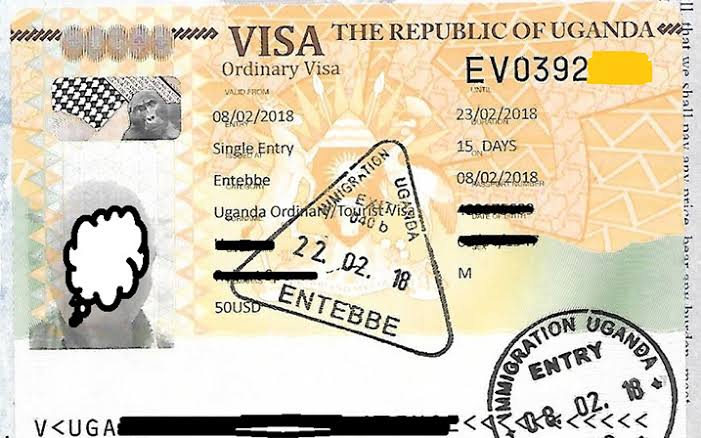
Your passport must have at least one blank page available for an entry stamp. Ugandan immigration officers apply a physical stamp in addition to the digital e-Visa scan. A passport that is completely full of stamps and has no blank pages will create a problem at the immigration desk that no amount of documentation can resolve. Check your passport for blank pages before departure. If you are running low, check whether your country’s passport authority offers an emergency additional pages service. Some continue to use the service, while others have discontinued it in favor of immediate renewal.
Emergency or travel documents, refugee travel documents, and laissez-passer credentials may require specific pre-clearance from Ugandan immigration authorities before travel. If you travel on any document apart from a standard national passport, contact the Ugandan embassy in your country of residence well in advance of your trek departure date for specific guidance.
Yellow Fever Vaccination: A Non-Negotiable Entry Requirement
Uganda requires a valid International Certificate of Vaccination against yellow fever (the “yellow card” or Carte Jaune) for all travelers. This is not a suggestion or a recommendation; it is a formal entry requirement. Immigration officers at Entebbe Airport regularly check yellow fever certificates, and travelers who cannot produce a valid certificate face quarantine, a compulsory vaccination at the airport (not a pleasant experience, particularly if you are about to embark on a multi-week mountain expedition), or refusal of entry.
Under the current WHO protocol, a single yellow fever vaccination provides lifelong immunity, and the certificate does not expire. If you were vaccinated against yellow fever more than ten years ago and received only a time-limited certificate under the old protocol, you may need to verify whether your certificate has been updated to reflect the lifetime validity now recognized under the 2016 WHO revision. Your GP or a travel medicine clinic can confirm your vaccination status and issue a current certificate if needed.
Schedule your yellow fever vaccination at least ten days before departure, as immunity requires approximately 10 days to become effective after inoculation. This is a great time to talk to a travel medicine doctor about other health issues for the Rwenzori trip, like getting ready for high altitudes, taking antimalarial medicine for the lower parts of the trek, and any other vaccines you might need for traveling to Uganda. Our guide to safety on the Rwenzori Mountains addresses the health and medical landscape of the trek in detail.
Arriving in Uganda: What Happens at Entebbe Immigration
Entebbe International Airport (IATA code: EBB) sits on the shores of Lake Victoria, approximately 40 kilometers southwest of Kampala. It is Uganda’s primary international gateway and the arrival point for the vast majority of international trekkers heading to the Rwenzori Mountains. The airport has undergone significant infrastructure investment recently, and the immigration hall, while not the most architecturally impressive in East Africa, operates with reasonable efficiency when properly resourced.
On arrival, follow the signs to the immigration hall. The process flows as follows: health screening (a yellow fever certificate check may occur at a dedicated health desk before reaching immigration counters), immigration queue, visa stamp and entry, baggage claim, and customs declaration. For trekkers with a pre-approved e-Visa, proceed to the main immigration counters rather than the visa-on-arrival desk. Present your printed e-Visa document, your passport, and your yellow fever certificate when called forward. The immigration officer will scan your e-Visa QR code, verify your documents, ask basic questions about your visit (purpose, intended accommodation, duration), and stamp your passport.
Typically, a trekker with a pre-approved e-Visa completes the full immigration process in 15 to 45 minutes, from joining the queue to passing through, during a period of normal flight arrivals. This compares to one to three hours in the visa-on-arrival queue during peak periods, which is the practical argument for getting your visa processed before you fly.
Travelling from Entebbe to Kasese and the Rwenzori Trailhead
Once through Entebbe immigration, your journey continues toward the Rwenzori Mountains gateway of Kasese, approximately 370 kilometers to the west. Most trekkers spend at least one night in Kampala or Entebbe on arrival before continuing to Kasese the following day, either by private transfer (6–8 hours by road), domestic flight (approximately 1 hour to Kasese via AeroLink or other domestic carriers), or public bus from Kampala’s main bus terminals. Our complete guide to getting to the Rwenzori Mountains covers every transport option, timing, and what to expect along the Kampala-to-Kasese leg in full detail.
Visa Requirements for Children and Family Groups
Children traveling with parents or guardians require their own Uganda e-Visa if their nationality is among those requiring a visa. A child’s visa is applied for through the same portal and process as an adult; the child is the named applicant, and the parent or guardian completes the application. The fee structure is the same regardless of age: USD 50 for the standard single-entry tourist visa.
Children traveling on a parent’s passport, a practice now uncommon but still seen in some older travel document arrangements, require clarification of their entry status with both the issuing country’s passport authority and the Uganda Immigration Directorate before travel. In virtually all current cases, children should hold their own individual passport and their own individual visa where one is required.
For family groups considering shorter Rwenzori treks, perhaps a 2-day Lake Mahoma forest hike or the 3-day Sine Camp and Samalira Falls trek, the visa process for each family member follows the same individual application process, with each person’s own passport and photograph uploaded separately. Our guide on whether older hikers can do the Rwenzori also touches on family group logistics and what to consider when planning for members of different ages and fitness levels.
The Most Common Ugandan Visa Mistakes and How to Avoid Every One
Applying Too Late
The most common error is the most avoidable: leaving the visa application until the week before departure and then discovering that processing has been delayed, a public holiday has created an administrative gap, or a correction to the application has reset the processing clock. Apply a minimum of two weeks before departure; three to four weeks is better. This guideline is a non-negotiable recommendation from the standpoint of expedition logistics: your trek dates, your flights, your transport to Kasese, and your guide team’s schedule are all fixed. The visa process is the one variable you control entirely through the timing of your own action.
Using a Third-Party Application Service Unnecessarily
A quick search for “Uganda e-Visa” returns numerous commercial services promising “faster processing,” “expert assistance,” and “guaranteed approval” for fees of USD 30–80 on top of the government visa fee. These services are unnecessary. They cannot accelerate Uganda’s immigration processing timelines. They have no preferential access to the immigration authority. The official portal is designed for individual applicants and is genuinely straightforward to use. Save USD 30–80 by applying directly, and spend the saving on a quality sleeping bag or a power bank for the mountain camps.
Entering Mismatched Information
Every field in the e-Visa application must match your passport exactly. Middle names present a particular problem; many trekkers are accustomed to omitting middle names in casual contexts and do so without thinking in the online form. If your passport reads “James Robert Smith,” your application must read “James Robert Smith,” not “James Smith.” A discrepancy between the application and the travel document can lead to processing delays, additional verification requests, or, in the worst case, a problem at the immigration desk that requires time-consuming resolution while other passengers move through.
Forgetting the Yellow Fever Certificate
Forgetting the Yellow Fever Certificate occurs every year to trekkers who have been meticulous about everything else in their preparation. The yellow fever certificate, known as the yellow card, is a physical document that must be presented as an original at the Entebbe immigration desk. A photograph of the card on your phone is not acceptable as a substitute. If you can’t find your vaccination certificate, contact your GP or the clinic that gave you the shot for a replacement. Do these tasks well before departure. Attempting to resolve a missing yellow fever certificate at 2:00 am in the Entebbe arrivals hall is an experience that should motivate anyone to keep their vaccination records organized.
Extending Your Uganda Visa: What If You Want More Time?
Uganda’s 90-day maximum stay under the standard tourist visa is generous. The longest expedition itinerary we offer lasts 18 days, and even the most extended combination itineraries, such as the 19-day Rwenzori and Uganda adventure safari, fit comfortably within the 90-day window. For the vast majority of Rwenzori trekkers, visa extension is not a relevant consideration.
If, for any reason, you need to extend your stay beyond 90 days, perhaps because you are recovering from an injury or illness, extending your Uganda experience beyond the initial itinerary, or dealing with flight disruptions that delay your departure, visa extensions are available through the Uganda Directorate of Citizenship and Immigration Control offices in Kampala. Extensions must be applied for before the original visa expires. Planning ahead can help you avoid fines and potential immigration complications that arise from overstaying a Uganda visa without an extension.
Frequently Asked Questions: Uganda Visa for Rwenzori Trekkers
Do I need a visa to trek the Rwenzori Mountains in Uganda?
Whether you need a visa to enter Uganda depends on your nationality. Citizens of East African Community member states Kenya, Tanzania, Rwanda, Burundi, South Sudan, and DRC have broad visa-free access. Many other African Union member states and several Commonwealth nationalities are also exempt. Citizens of the United States, most of continental Europe, Japan, China, South Korea, Brazil, and most of Asia and South America require a visa. The standard entry requirement for most international Rwenzori trekkers is the Uganda e-Visa (Electronic Travel Authorization), obtained online before departure at visas. Visit immigration.go.ug for a fee of USD 50. Verify your specific country’s requirements on the official Uganda immigration portal before making any travel bookings.
How much does a Uganda tourist visa cost?
The standard Uganda single-entry tourist e-Visa costs USD 50, paid online through the official e-Visa portal using a debit or credit card. This fee is set by the Uganda government and does not vary with the season, nationality (for eligible nationalities), or any other factor. If you use a third-party visa service to process your application, they will charge their own service fee on top of the USD 50 government fee. These services are not necessary, as the official portal is straightforward to use directly. The East Africa Tourist Visa, which covers Uganda, Kenya, and Rwanda in a single document, costs USD 100 and is applied for through the same portal.
How long does Uganda e-Visa processing take?
Standard Uganda e-Visa processing takes three to five business days for straightforward applications. Business days exclude weekends and Ugandan public holidays, so applications submitted before a long weekend or national holiday may take longer in calendar terms. During peak travel periods or high-volume application windows, processing can extend to seven business days. Apply a minimum of two weeks before your planned departure date; three to four weeks is recommended for travelers who are risk-averse about administrative timelines or whose travel dates fall around public holidays. Do not book non-refundable flights or expedition deposits that cannot be recovered if your visa is delayed until you have your approved e-Visa document in hand.
Can I get a Uganda visa on arrival at Entebbe Airport?
Visa on arrival at Entebbe International Airport technically remains available for eligible nationalities that have not obtained an e-visa in advance, at the same fee of USD 50 payable in cash in US dollars. However, it is strongly not recommended for Rwenzori trekkers. The visa-on-arrival desk operates separately from the main immigration counters and processes applicants sequentially. During peak arrival windows, when multiple international flights arrive simultaneously, the queue can take one to three hours. A three-hour immigration queue poses a serious logistical problem for trekkers who are transporting Kasese and a trek scheduled to begin the following morning. The e-Visa eliminates this risk entirely. Apply online, get approved before you fly, and walk through immigration in 15–45 minutes.
What is the East Africa Tourist Visa, and is it better for Rwenzori trekkers?
The East Africa Tourist Visa costs USD 100 and provides access to Uganda, Kenya, and Rwanda in a single document, with multiple entry privileges across all three countries for a maximum stay of 90 days from first entry. It is applied for through the same Uganda e-visa portal at visas.immigration.go.ug. For trekkers whose Rwenzori expedition is part of a broader East Africa trip, for example, flying into Nairobi, spending time in Kenya, then crossing into Uganda for the Rwenzori before continuing to Rwanda for gorilla trekking, the East Africa Tourist Visa is both more practical and more cost-effective than three separate national visas. If your entire trip is within Uganda only, the standard single-entry e-Visa at USD 50 is the correct choice.
How long can I stay in Uganda on a tourist visa?
The standard Uganda tourist e-Visa permits a maximum stay of 90 days from the date of first entry, within an entry window of 90 days from the visa issue date. For practical purposes, this means you can remain in Uganda for up to three months from the day you arrive. All Rwenzori trekking expeditions, from a 3-day Mahoma Loop hike to an 18-day all-peaks traverse, fall comfortably within this window. If you need to stay longer than 90 days, visa extensions are available through the Uganda Directorate of Citizenship and Immigration Control offices in Kampala and must be arranged before your original visa expires.
What passport validity do I need to enter Uganda?
Your passport must be valid for at least six months beyond your intended departure date from Uganda. For example, if you plan to leave Uganda on the 15th of March, your passport must be valid until at least the 15th of September of the same year. This is a strict requirement immigration officers at Entebbe Airport do check, and a passport that does not meet the six-month validity rule will result in entry refusal regardless of your visa status. Your passport must also contain at least one blank page for an entry stamp. Check both the expiry date and blank page availability before applying for your visa.
Is a yellow fever vaccination certificate required to enter Uganda?
Yes. Uganda requires a valid International Certificate of Vaccination against yellow fever (the yellow card or Carte Jaune) for all arriving travelers. This is a formal entry requirement, not a recommendation. Immigration officers at Entebbe Airport check yellow fever certificates, and travelers who cannot produce a valid original certificate risk quarantine, a compulsory airport vaccination, or refusal of entry. Under the 2016 WHO protocol revision, a single yellow fever vaccination confers lifetime immunity, and the certificate does not expire. If you received your vaccination more than ten years ago under the old time-limited certificate format, verify with your GP or travel medicine clinic whether your certificate has been updated to reflect lifetime validity. Upload a copy of your certificate during the e-Visa application and carry the original physical document for presentation at Entebbe.
Are there any nationalities that cannot get a Uganda e-Visa online?
A small number of nationalities face restrictions on the standard Uganda e-visa application process, either because of diplomatic limitations between Uganda and their country of origin or because their passport type does not fit the standard eligible category. Citizens of countries currently subject to international sanctions or diplomatic tensions with Uganda may not be eligible for the online e-Visa and may need to apply through their country’s Ugandan embassy directly. If you attempt to begin an application on the official portal and find that your nationality is not available in the dropdown list, contact the nearest Uganda embassy or high commission for the applicable entry procedure. This restriction affects a tiny proportion of international trekkers.
Start Planning Your Rwenzori Trek. We’ll Help with the Details
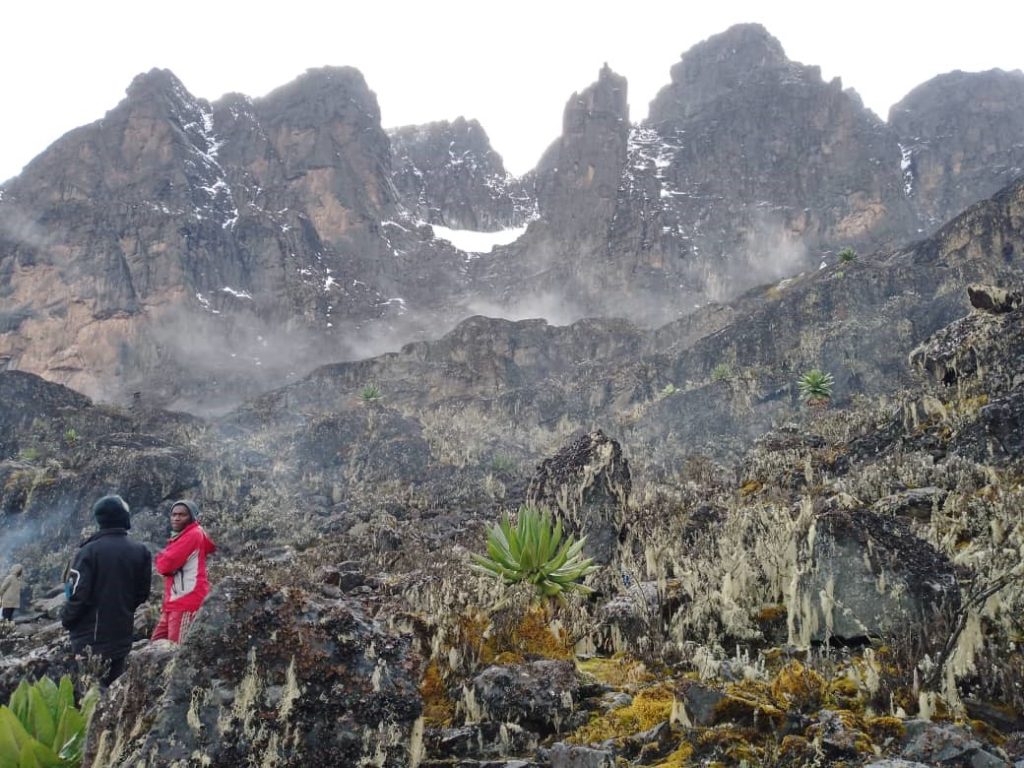
With the right timing and information, you can make the Uganda visa process manageable, affordable, and entirely stress-free. A single 20-minute online application, submitted two to four weeks before your departure date, secures your entry to one of the most extraordinary countries in Africa and opens the path to the Rwenzori Mountains: the UNESCO World Heritage wilderness where glaciers cling to the equator, giant lobelias crowd the high alpine bogs, and the air at 5,109 metres carries a clarity and silence that no other mountain on the continent can replicate.
Once your visa is sorted, the real planning begins. Whether you are drawn to the classic 7-day Margherita Peak summit trek, the off-the-beaten-track challenge of the Kilembe Trail, a shorter forest immersion on the Mahoma Loop, or the full commitment of the 13-day six-peaks grand expedition, the team at Rwenzori Trekking Safaris is ready to help you design, prepare, and execute an expedition that exceeds your expectations in every dimension.
Browse our complete range of Rwenzori trekking itineraries, explore the trekking routes and trail options, or read the answers to your remaining questions in our Rwenzori expedition FAQ. And when you are ready to move from planning into action, contact our expedition team directly; we will help you choose the right expedition, confirm your logistics, and make sure everything from your visa to your sleeping bag is precisely right for the mountain that awaits you.