Myths About the Rwenzori Mountains: Ancient Legends, Cultural Stories, and the Modern Misconceptions That Keep Good Trekkers Away.
Rwenzori Mountains myths debunked: ancient legends, Bakonjo stories & 10 modern misconceptions that stop trekkers from planning the world’s most extraordinary expedition.
Every mountain has its myths. But the Rwenzori has an unusual relationship with its mythology, because some of the oldest and most extravagant stories about this range of snow at the equator, a mysterious source of the Nile, and plants the size of trees turned out to be entirely true. And some of the most recent ones, like “It’s impossible for non-specialists,” “The glacier is gone,” and “The rain never stops,” are entirely false, and they cost serious trekkers an extraordinary experience every year.
The mythology of the Rwenzori Mountains exists in two distinct registers, and separating them is the first step toward understanding the mountain clearly. The first register is ancient and cultural: the myths, legends, and cosmological stories that the Bakonjo people, the indigenous community of the Rwenzori foothills, have transmitted across generations about a mountain they call the Rwenzururu, the rainmaker, the home of ancestral spirits, and the source of their rivers. These are not misconceptions to be corrected. They are part of the mountain’s living heritage, and understanding them deepens every experience of the range.
The second register is modern and largely Western in origin: the misconceptions, half-truths, and distorted impressions that circulate in online travel forums, outdated guidebooks, and the accounts of people who have heard something about the Rwenzori secondhand and passed it on without verification. These myths it never stops raining, only elite climbers can summit, the glacier is already gone, and the DRC border makes it dangerous are genuinely harmful in the specific sense that they deter qualified, well-prepared trekkers from attempting an experience that would change their relationship with African mountains permanently.
This article addresses both registers with the directness they deserve. The Rwenzori’s ancient and cultural myths are covered first, with the respect and depth they merit as part of an indigenous tradition that predates every European name on the mountain. The modern misconceptions are then addressed one by one clearly, specifically, and with enough factual detail to allow any serious trekker to assess them against reality. By the end, the mythology of the Rwenzori should be correctly sorted: the beautiful ancient stories in their proper place as part of the mountain’s human heritage, and the damaging modern falsehoods set aside where they belong.
Before going into depth on each myth, the table below provides a quick reference for the ten most common modern misconceptions about the Rwenzori Mountains and the reality that corrects each one.
The Myth
Category
The Truth in Brief
“The Rwenzori rains every single day; you’ll be soaked non-stop.”
Trekking misconception
The Rwenzori is humid, but the dry seasons (Jun–Aug, Dec–Feb) offer manageable conditions. Proper gear handles the rain.
“Only elite mountaineers can climb the Rwenzori.”
Difficulty misconception
Fit non-specialists complete the full summit on guided expeditions regularly. Technical glacier sections are managed with guide instruction.
“The Rwenzori is just like Kilimanjaro but harder.”
Route misconception
The Rwenzori is entirely unique in terms of its character, terrain type, ecology, geology, and experience. The similarities end at shared altitude.
“The giant plants are a myth/exaggerated.”
Botanical misconception
The giant lobelias (5m+) and giant groundsels (3m+) are real, documented, and encountered by every trekker in the Afroalpine zone.
“The Rwenzori is dangerous because of its proximity to the DRC.”
Safety misconception
Rwenzori Mountains NP (Uganda side) has an excellent safety record. All guided treks operate within well-managed Uganda national park territory.
“The glacier is gone; there’s nothing to see at the summit.”
Environmental misconception
The Stanley Glacier is receding but still present, still requires crampons and ice axes, and still produces an extraordinary summit experience.
“Ptolemy’s Mountains of the Moon is just a legend.”
Historical misconception
The Rwenzori is almost certainly Ptolemy’s Lunae Montes, confirmed when Stanley identified the range in 1888: 1,700 years of geographical accuracy.
“The Rwenzori is impossible to trek in the wet season.”
Seasonal misconception
Trekking operates year-round. Wet season treks are more demanding but perfectly possible with experienced guides and proper equipment.
“The Bakonjo don’t welcome outsiders on their mountain.”
Cultural misconception
The Bakonjo are the professional backbone of Rwenzori trekking. Their communities directly benefit from and actively support the trekking economy.
“The mountain remains shrouded in clouds, obscuring your view.”
Weather misconception
Clear conditions occur regularly, especially in the dry season. Summit day frequently offers extraordinary views of the Congo basin and the range.
Part One: The Ancient and Cultural Mythology of the Rwenzori
The Mountains of the Moon: When a Myth Was Also Geography
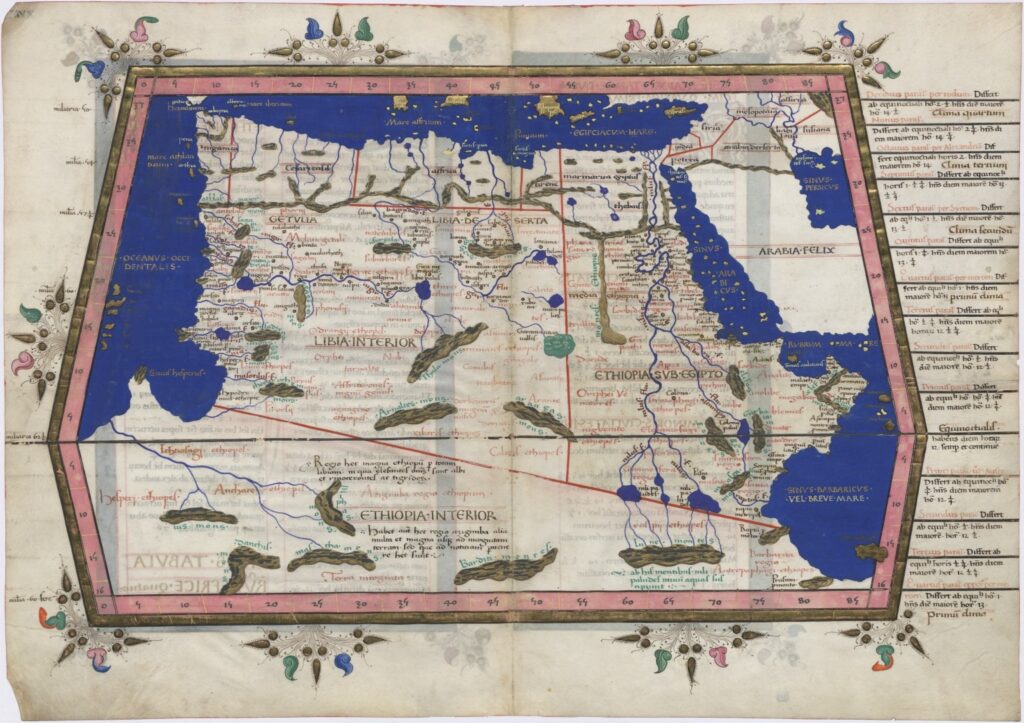
The most enduring myth associated with the Rwenzori Mountains is also, in an important sense, the most accurate long-range geographical description ever made of an East African mountain range. In approximately 150 AD, Claudius Ptolemy of Alexandria described equatorial snow mountains he called “Lunae Montes,” the Mountains of the Moon, as the source of the Nile in his Geographia. For seventeen centuries, this description was treated by many Western scholars as a myth: a fanciful elaboration of travelers’ tales, a projection of lunar symbolism onto a geographical question that lacked empirical resolution.
The myth was confirmed as geography in 1888, when Henry Morton Stanley’s Emin Pasha Relief Expedition brought him to the vicinity of modern western Uganda and, in a break in the persistent cloud cover, revealed the snow-capped Rwenzori for the first time to European observation. Stanley’s immediate identification of the range as the snow mountains that fed the Nile tributaries and therefore as the probable physical reality behind Ptolemy’s “Lunae Montes” resolved a geographical debate that had persisted across more than a millennium and a half of scholarship. What had been called a myth was a description of something real, made seventeen centuries before it was confirmed.
This is perhaps the Rwenzori’s defining mythological characteristic: the mountains have a way of turning out to be more real than the stories told about them and more extraordinary than the skeptics allowed. The snow at the equator, dismissed as impossible in some quarters of Victorian geography, exists. Early explorers described giant plants, including trees of heather twenty meters tall and lobelias the height of a house, but these were dismissed as exotic exaggerations until collectors brought specimens back to European herbaria. The source of the Nile has always been there, feeding the river from the mountain’s glaciers and snowfields, despite being theorized, disputed, and mapped without direct observation for millennia. The Rwenzori’s myths have a high rate of vindication.
Ptolemy’s “Lunae Montes” The Origin of the Name
The name “Mountains of the Moon” carries meanings that extend beyond simple geographical description. In ancient Greek cosmology, the moon was associated with moisture, with the cyclical rhythms of water and tide, and with the hidden or mysterious regions of the world that lay beyond direct observation. Naming equatorial African mountains after the moon was simultaneously a claim about their nature (snowy, water-producing, and mysterious) and an admission of their remoteness from direct European knowledge. The name encoded both information and awe.
The Arabic tradition, which preserved and elaborated on Ptolemy’s account through the medieval period, rendered the mountains as “Jabal al-Qamar” (Mountain of the Moon) in works like al-Idrisi’s 1154 world geography and added details drawn from Arab and Swahili traders who had penetrated the East African interior along the great trading routes of the Indian Ocean world. These details, specific descriptions of the rivers flowing from the mountains, the forests on their slopes, and the people living at their base, suggest that the “mountains of the moon” tradition was not purely mythological but carried genuine geographical intelligence transmitted through multiple layers of source and translation.
What the name “Mountains of the Moon” communicates to a trekker today is something that the altitude figures and the UNESCO designation alone cannot: a sense that this mountain belongs to a world of strangeness and wonder that ordinary geographical categories do not fully contain. The name is ancient, it is accurate in its essential claim (snow at the equator, a source of great rivers), and it carries a quality of mystery that the mountain itself repays in full. Every guide who has stood with a client at Bamwanjara Pass as the cloud breaks and Mount Stanley opens above them has seen the expression that confirms why the name has survived nineteen centuries of usage: the Mountains of the Moon look exactly as mysterious as their name suggests.
The Bakonjo and the Mountain Spirit: Rwenzururu and the Rainmaker
The Bakonjo people, the Bantu-speaking indigenous community whose homeland encompasses the Rwenzori’s foothills and lower slopes, have maintained a rich tradition of myths, stories, and cosmological beliefs about the mountain across generations. These are not written myths but oral traditions: transmitted through elders to younger generations, embedded in cultural practices and taboos, and lived as active frameworks for understanding the relationship between the human community and the mountain above them.
The Bakonjo name for the mountain, “Rwenzururu,” from which both the colonial “Ruwenzori” and the modern “Rwenzori” derive, means approximately “rainmaker” or “cloud king.” This naming reflects a profound ecological understanding: the mountain generates its own weather system, drawing moisture from the Congo basin and depositing it as rain, cloud, and ultimately the rivers that sustain agricultural communities on the foothills. The mountain is not simply a geographical feature in the Bakonjo cosmological framework. It is an active agent, a maker of rain, a giver of water, and a custodian of the ecological conditions that make human life in the foothills possible.
In Bakonjo tradition, ancestral spirits inhabit the upper zones of the mountain, and their goodwill is essential for safe passage and successful agricultural seasons. Offerings were historically made at specific points on the mountain before groups ascended into the high zones, and certain places, passes, lake shores, and summit areas carried specific spiritual significance that governed how people moved through and behaved within them. These practices are not uniformly maintained today; the combination of Christian missionary influence, formal education, and the commercialization of trekking has changed the cultural landscape, but their residue is present in the way that Bakonjo guides talk about the mountain: with a directness and intimacy that reflects a relationship older than any trekking permit.
The L’Hoest’s Monkey as Cultural Totem
The L’Hoest’s monkey (Cercopithecus lhoesti) occupies a unique position among the specific myths and cultural stories associated with the Rwenzori’s wildlife. This Albertine Rift endemic primate recognizable by its white bib, dark face, and relatively shy temperament in the understory of the lower montane forest is a cultural totem for many Bakonjo families. Traditional Bakonjo custom prohibited the hunting of L’Hoest’s monkey in ways that parallel and anticipate the formal conservation regulations of the national park, and the cultural prohibition carried a mythological dimension: the monkey was associated with the ancestors and occupied a protected status in the Bakonjo moral universe that was not primarily ecological in its articulation but spiritual.
This cultural protection is part of the reason the L’Hoest’s monkey population within the Rwenzori’s forest zones has been remarkably well preserved. When conservation biologists began formally studying the mountain’s wildlife in the twentieth century, they found primate communities of exceptional quality in an area where hunting pressure had significantly reduced populations in many comparable East African forests. Part of the credit belongs to the formal park protection established in 1991. Part belongs to the Bakonjo tradition that preceded it by centuries. The mountain’s mythology, in this case, did genuine conservation work long before science had a framework for valuing it.
The Waters of the Mountain: Myth, Meaning, and Hydrology
The Rwenzori’s water is the subject of some of the mountain’s most persistent myths and stories about glacial lakes, underground rivers, and the spiritual significance of specific water sources. Lake Mahoma, the glacial lake accessible via the Mahoma Loop trail, is the subject of local stories about its depth, its fish, and its connection to underground systems that extend beneath the mountain to emerge as springs in the valley far below. Lake Bujuku, visible from the Central Circuit’s upper camps, is associated in some Bakonjo traditions with spirits that require specific behavior from people who camp or travel near its shore.
These water myths are not arbitrary: they reflect the genuine hydrological significance of the mountain’s lakes and rivers. The Rwenzori is the source of rivers feeding both the Nile to the east and the Congo to the west, a dual watershed role that makes its water resources of continental significance. It is not surprising that a community living at the mountain’s base for centuries developed rich mythological frameworks for understanding and regulating the human relationship with these water sources. It is a form of environmental management encoded as cultural belief, and it reflects the Bakonjo’s deep practical understanding of their mountain’s ecological function.
Part Two: The Modern Myths That Keep Trekkers Away
The cultural mythology of the Rwenzori enriches the mountain’s meaning. The modern myths about the Rwenzori diminish trekkers’ willingness to engage with an experience that deserves the opposite. What follows addresses each major modern misconception about the Rwenzori in the direct, evidence-based terms that serious trekkers researching an expedition deserve.
Myth 1: “The Rwenzori Rains Non-Stop; You’ll Be Miserable the Entire Time”
This claim is the most damaging Rwenzori myth, and it has some truth. The Rwenzori is genuinely one of the wettest mountain ranges in Africa; annual rainfall at mid-altitude stations regularly exceeds 2,500 millimeters, the mountain generates its own persistent weather system, and the name “Rwenzori” itself derives from a Bakonjo word meaning “rainmaker.” The wetness is real. The myth lies in extrapolating from “very wet” to “constantly miserable and impossible to enjoy.”
The Rwenzori has two dry seasons each year: June through August (primary) and December through February (secondary). During these windows, rainfall frequency and intensity are substantially reduced, summit success rates are highest, trail conditions are most manageable, and the mountain offers stretches of clear weather, including the pre-dawn clear skies that summit day depends on that make the expedition not merely tolerable but genuinely beautiful. The dry season in Rwenzori, with its luminescent moss communities glistening from the last rain and the first clear morning light on the heather zone, is among the most visually extraordinary mountain environments in Africa.
Even in the wetter months, trekking on the Rwenzori is not the unbroken misery that the myth implies. Rain on the Rwenzori typically falls in patterns: heavy showers followed by clearing, morning clarity followed by afternoon cloud, and the lower forest zones, where rain is most frequent, are also the most protected from wind. Proper waterproof gear, including a quality rain jacket with taped seams, waterproof boots that have been properly broken in, and waterproof trouser covers, handles the rain on any itinerary, from the 2-day Sine Camp trek to the 8-day Kilembe Trail summit. The guides know the mountain’s weather patterns intimately and manage each day’s timing around them. The wet season in Rwenzori is more demanding than the dry season version, but it is also, in many respects, more spectacular, with waterfalls at maximum volume, mosses at their most saturated green, and a quality of atmospheric intensity that dry mountain environments cannot match.
MYTH: The Rwenzori is impossible to enjoy because it rains constantly.
REALITY: The Rwenzori has two dry seasons (Jun–Aug and Dec–Feb). Proper gear manages rain in any season. The mountain’s wetness is the engine of its greatest beauty.
Myth 2: “Only Elite Mountaineers Can Summit the Rwenzori”
This myth stems from the Rwenzori’s real difficulty and how it is sometimes conveyed by those who have never been on it or by those who have experienced it at its most challenging. The Rwenzori is Africa’s most demanding major trek in terms of terrain variety, sustained duration at altitude, and the technical glacier section on summit day. It is not a walk to a high viewpoint. It is a seven- or eight-day expedition with a genuine glacier climb at the end.
But “demanding” and “accessible only to elite mountaineers” are not the same thing. Fit non-specialist trekkers regularly complete the standard Kilembe Trail or Central Circuit summit expedition without any prior technical mountaineering experience. What is required is adequate cardiovascular fitness for sustained daily effort over seven to eight consecutive days, physical comfort with steep and varied terrain, and psychological resilience to maintain consistent output in cold, wet conditions at altitude. These are not elite mountaineering attributes; they are the attributes of a well-prepared, physically active adult who has trained specifically for the expedition.
The glacier section, the technical part that gives the myth its traction, is managed with guide instruction at the high camp before summit day. Certified guides from Rwenzori Mountaineering Services and Rwenzori Trekking Services provide full crampon and ice axe technique briefings at Elena Hut or Margherita Camp before departure, and the Uganda Wildlife Authority’s fixed glacier bridge and climbing lines have improved both the safety and accessibility of the most technically demanding sections. The summit does not require prior glacier experience; it requires a competent guide, appropriate equipment, and the fitness to sustain effort for ten to twelve hours of the summit day.
MYTH: Only elite mountaineers can summit the Rwenzori.
REALITY: Fit non-specialist trekkers summit the Rwenzori regularly on guided expeditions. Technical sections are managed with guide instruction. What is required is fitness and preparation, not prior mountaineering credentials.
Myth 3: “The Rwenzori Is Just a Harder Version of Kilimanjaro”
This is the comparison myth: the assumption that because both mountains are in East Africa and both involve a high-altitude summit, they are essentially the same kind of experience differentiated only by degree of difficulty. It leads trekkers to prepare for the Rwenzori as they did for Kilimanjaro, which is a significant miscalculation that our guides regularly have to address at the trailhead.
The Rwenzori and Kilimanjaro are different in kind, not merely in degree. Kilimanjaro is a dormant stratovolcano with a relatively simple geological structure, thin vegetation zones, and routes that are primarily continuous uphill walks on well-worn paths from base to summit and back. The Rwenzori is an ancient tectonic block mountain with five completely distinct vegetation zones, six major massifs, complex terrain requiring different physical and technical responses at each altitude band, and a summit section involving genuine glacier travel. Kilimanjaro’s altitude is higher; the Rwenzori’s experience is deeper.
The practical consequences of treating the Rwenzori as a Kilimanjaro variant include underestimating the gear required (waterproofing is optional on Kilimanjaro; it is mandatory on the Rwenzori), underestimating the terrain variety (the Rwenzori’s root-strewn forest, bamboo steps, heather zone mud, tussock fields, and glacier require completely unique responses from the straightforward uphill walking of Kilimanjaro’s main routes), and overestimating the degree to which Kilimanjaro experience transfers. The Rwenzori rewards specific preparation, and the assumption that any high-altitude trekking background is adequate preparation is one of the most common and consequential planning errors we see.
MYTH: The Rwenzori is just a harder version of Kilimanjaro.
REALITY: The Rwenzori is different in kind from Kilimanjaro, with different geology, terrain, vegetation, and technical demands. The Kilimanjaro experience helps with altitude tolerance; it does not prepare you for the Rwenzori’s specific conditions.
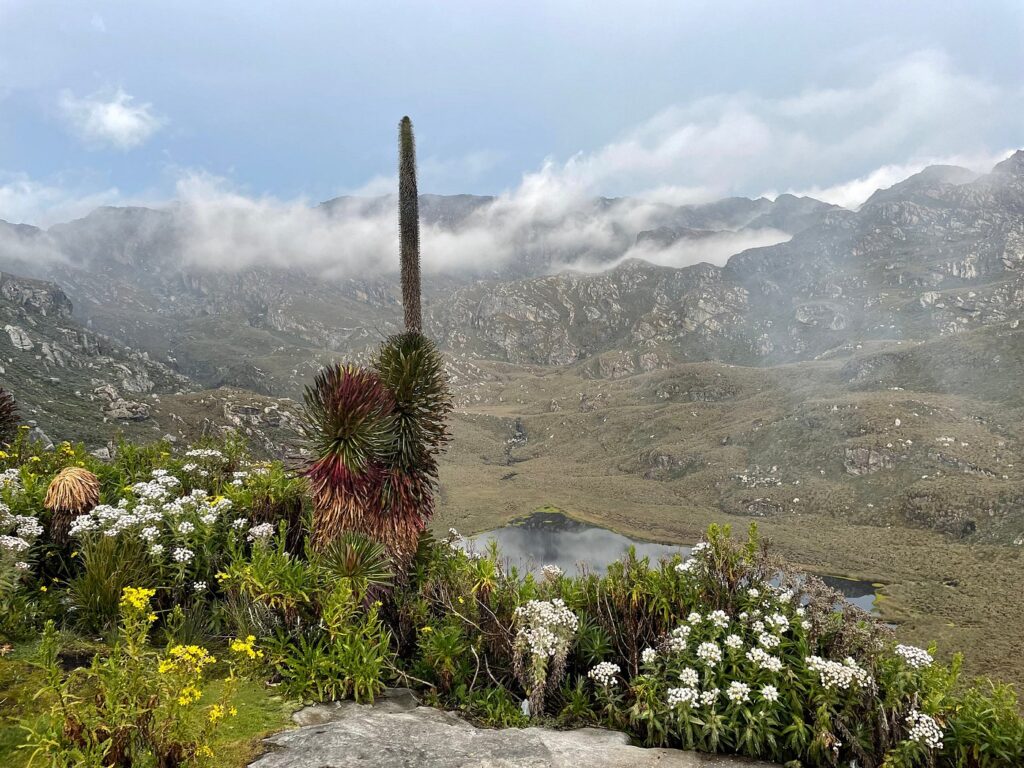
Myth 4: “The Giant Plants Are Exaggerated; They’re Not Really That Big”
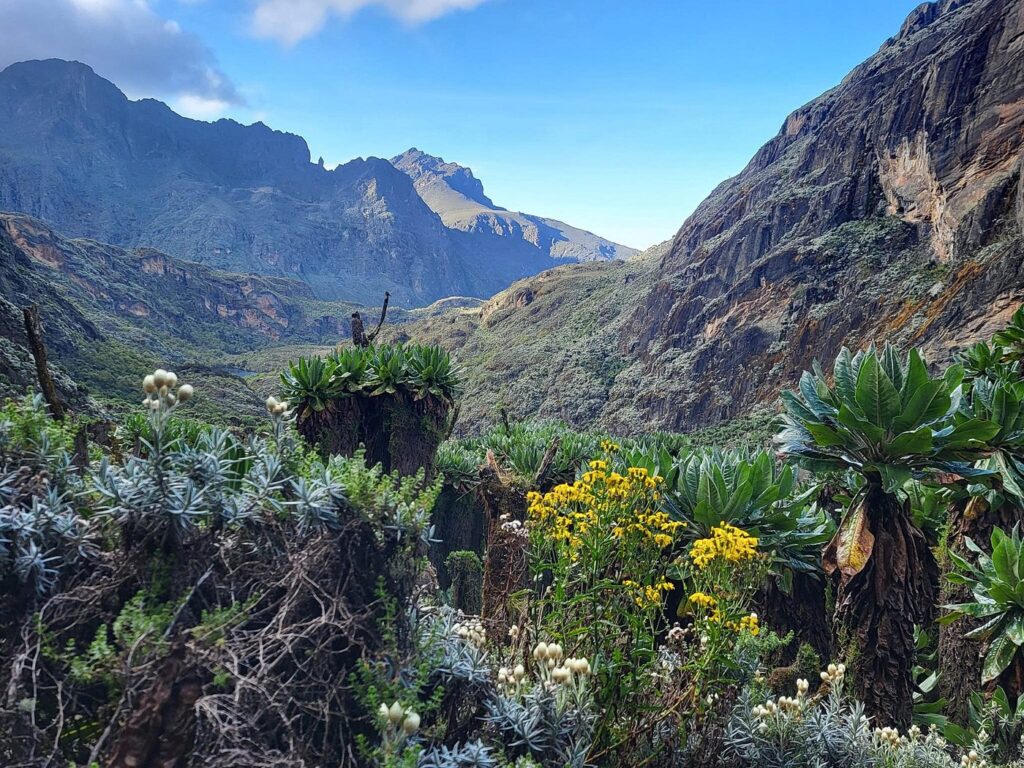
The plants of the Rwenzori’s Afroalpine zone are so dramatically unlike anything in the temperate-zone botanical experience of most international trekkers that photographs of them are routinely dismissed as exaggerated, composite, or manipulated. Five-meter giant lobelias. Three-meter giant groundsels. Twenty-meter tree heathers buried under kilograms of old man’s beard lichen. They look, in photographs, like the work of a particularly ambitious production designer for a science fiction film. They are not. They are exactly as big as they appear, and the consistent reaction of first-time Rwenzori trekkers when they encounter them not excitement exactly, but a kind of quiet incomprehension, a recalibration of what plants are allowed to be is one of the most reliable mountain experiences we produce.
The giant lobelia (Lobelia wollastonii) was formally described by botanists following collections made on the Duke of Abruzzi’s 1906 expedition, specifically by Alexander Frederick Wollaston, whose surname it carries. It is a monocarpic plant that spends years as a ground-level rosette before sending up a single flowering spike that towers above a standing adult’s head height, then dies. This is not a marginal botanical curiosity. It is a major element of the landscape between 3,500 and 4,500 meters elevation, appearing in dense stands that require navigation through rather than around them. The giant groundsel (Senecio adnivalis) is equally real, equally large, and equally impossible to process in a single encounter. If you do not believe the photographs, come and stand next to one.
MYTH: The giant plants are exaggerated and not really that impressive.
REALITY: The giant lobelias (5m+), giant groundsels (3m+), and giant tree heathers (15–20m) are real, scientifically documented, and exactly as extraordinary as described. Every trekker who reaches the Afroalpine zone at 3,500m+ encounters them. No exaggeration is required.
Myth 5: “The Rwenzori Is Dangerous Because of the DRC Border”
The proximity of the Rwenzori Mountains to the Democratic Republic of Congo’s North Kivu province, a region that has experienced significant security instability since the 1990s, generates a myth of proximity danger: the assumption that because something troubled is happening nearby, the mountain itself is unsafe. This is a confusion of geography that misleads trekkers into avoiding an experience that poses no meaningful security threat on the Ugandan side.
Rwenzori Mountains National Park, where all guided trekking operations take place, is entirely within Uganda under the jurisdiction of the Uganda Wildlife Authority. The park has operated continuously through multiple periods of regional instability without significant security incidents affecting trekkers, and the UWA maintains ranger patrols and management capacity throughout the park. The international boundary between Uganda and the DRC runs along the high ridgelines and passes of the mountain far above the trekking zones of the first few days and is only encountered at the summit itself, which is reached from the Ugandan side. The DRC’s troubled eastern provinces are geographically separated from the trekking experience by the mountain itself.
Uganda is, by the objective measures available (Foreign Ministry travel advisories, incident records, and trekker and traveler reports), one of East Africa’s safer countries for international visitors, and western Uganda in particular has an excellent safety record for tourism. The Kasese area, the Rwenzori National Park, and the trekking operations on both the Kilembe Trail and the Central Circuit have maintained this record consistently. Trekkers arriving from the US, UK, Europe, Asia, and Australia should assess the Rwenzori’s safety profile on its own terms, not by proximity association with a different country’s security situation.
MYTH: The Rwenzori is dangerous because of the DRC border.
REALITY: All guided trekking takes place entirely within Uganda’s national park territory, far from any DRC conflict areas. Uganda’s western region has an excellent safety record. The Rwenzori operates with consistent UWA ranger management and a strong trekker safety history.
Myth 6: “The Glacier Is Already Gone; There’s No Ice to Climb”
Climate change news coverage of the Rwenzori’s glaciers has, in some quarters, created a myth that runs in the opposite direction from the historical exaggeration myths: the assumption that because the glaciers are retreating, they are already gone, and that the summit of Margherita Peak is now a simple rock scramble without the technical glacier character that defines the expedition. This is incorrect, and acting on it as a planning assumption would leave a trekker inadequately prepared for what they will actually encounter.
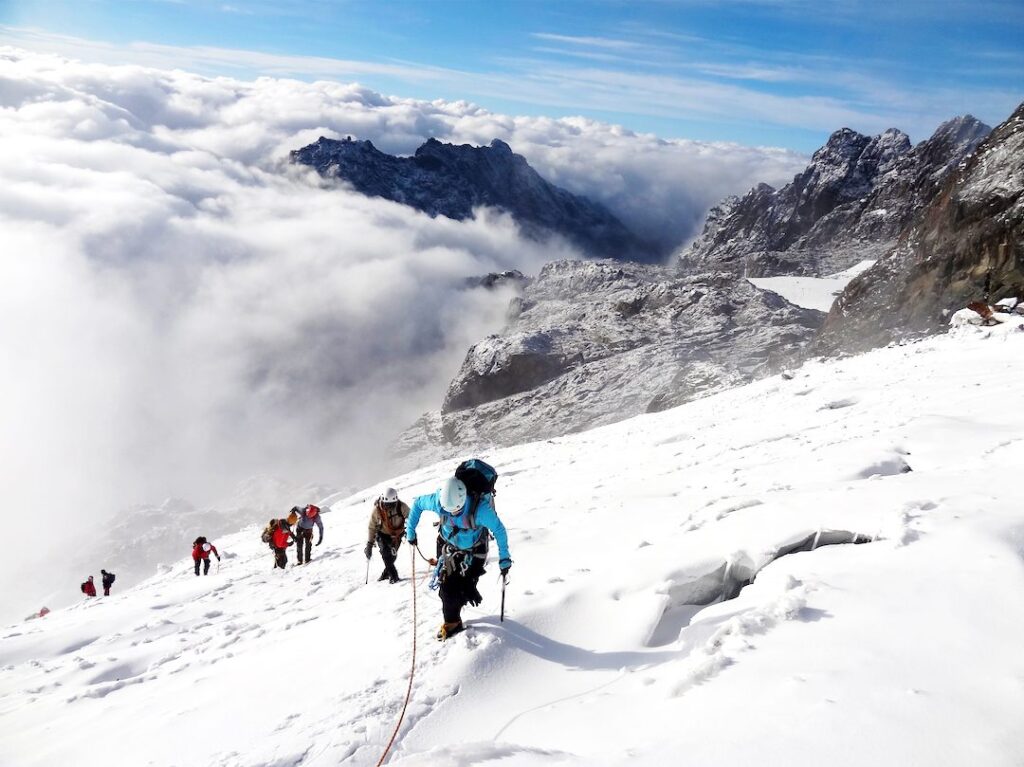
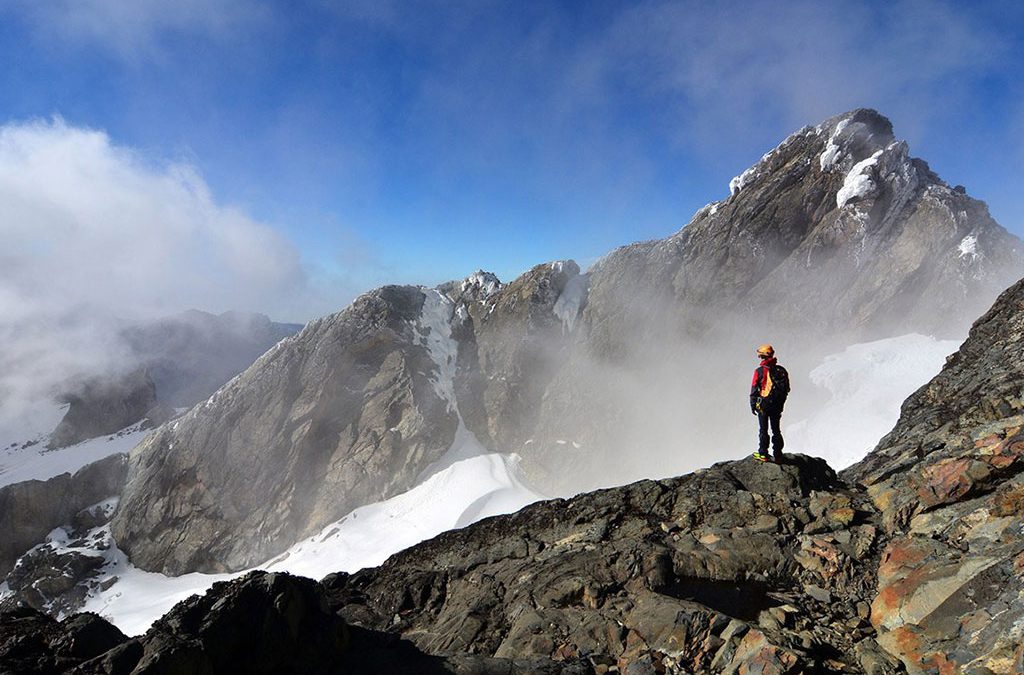
The Stanley Glacier on Mount Stanley has lost approximately 80% of its 1906 surface area. It is smaller than it has ever been in the documented historical record, and it is retreating on a measured, accelerating timeline that genuinely warrants the climate urgency language that this website and every responsible guide uses about it. But it is not gone. It is still present, still extending across the upper Stanley Plateau, still requiring crampons and ice axes for safe movement, and still producing the crevasse hazard that the Uganda Wildlife Authority’s fixed glacier bridge was installed to address. Summit day on the Rwenzori is still a glacier climb and arguably a more technically demanding one than it was in earlier decades, because the recession has steepened the remaining ice as the glacier has thinned.
The myth that the glacier is gone serves no one. It deprives trekkers of the urgency argument for coming now, which is real and important, and it creates dangerous under-preparation for the technical conditions that the summit still requires. Every trekker heading for Margherita Peak should understand that the glacier is there, it is receding, it demands respect and proper equipment, and the window in which glacier travel is part of the Rwenzori summit experience is narrowing. The correct response to the glacier recession is urgency, not dismissal.
MYTH: The Rwenzori glacier is already gone the summit is just a rock scramble now.
REALITY: The Stanley Glacier is receding but still present, still requires crampons and ice axes, and still produces technical glacier conditions on summit day. Trekkers must come prepared for glacier travel. The glacier’s retreat is a reason for urgency, not complacency.
Myth 7: “The Rain Makes the Rwenzori Impossible to Trek in the Wet Season”
Closely related to the general rain myth is the specific seasonal myth: that the Rwenzori is simply not viable as a trekking destination in the wet season months of April–May and October–November, and that anyone planning in those windows should abandon the idea. This exaggeration harms the mountain’s year-round nature and the guides who work in all conditions.
Wet season Rwenzori trekking is more demanding than dry season trekking in specific and manageable ways: the bamboo zone sections are more slippery and require more careful footwork; river crossings may require more care; the Afroalpine bog sections are wetter underfoot; and the probability of rain on any given day is higher. Experienced guides with appropriate equipment can manage all these factors, making the trek neither impossible nor unsafe. Rwenzori Trekking Safaris and Rwenzori Mountaineering Services operate year-round, and their guides have developed specific knowledge about which sections require the most care in wet conditions and how to manage time and pacing around daily weather patterns for wet season operations.
The wet season in Rwenzori also offers things the dry season cannot. The waterfalls are at maximum volume. The forest is at its most lush. The moss communities of the heather zone are saturated with moisture and produce a depth and intensity of green that the dry season’s comparatively desiccated moss cannot match. Summit day in the wet season is riskier; the weather window is shorter and more variable, and the turnaround rule is more strictly applied, but summit day is possible in the wet season for groups whose preparation and timing are appropriately managed. Many trekkers who can only travel in the wetter months have returned from the Rwenzori, describing it as the most atmospherically powerful mountain experience they have ever had.
MYTH: The wet season makes the Rwenzori impossible to trek.
REALITY: Rwenzori treks operate year-round with experienced guides. Wet season conditions are more demanding but manageable with proper gear. Wet season treks offer unique botanical and visual rewards that dry season treks do not match.
Myth 8: “The Rwenzori Is a Secret Nobody Has Heard of”
This myth works in a peculiar way: it is cited both by people who want to discourage Rwenzori plans (“it’s too obscure, the infrastructure won’t be there”) and by people who want to encourage them (“it’s the best-kept secret in East African trekking”). Both framings misrepresent the Rwenzori, but in different ways.
The Rwenzori is not a secret; it has been referenced in geographical literature since Ptolemy’s second century AD, has been a formal national park since 1991, has held UNESCO World Heritage status since 1994, and has operated guided trekking programs continuously since the 1950s. It receives thousands of visitors annually, has a well-developed hut infrastructure on both the Kilembe Trail and the Central Circuit, employs hundreds of local guides and porters through two dedicated mountain management organizations, and has trekking itineraries ranging from two-day introductory walks to eighteen-day full-peak expeditions. It is not obscure; it is simply less marketed than Kilimanjaro.
The “too obscure” framing misplaces the concern about infrastructure. The Kilembe Trail’s huts, launched and developed by Rwenzori Trekking Services since 2011, are the newest and best-maintained mountain shelters on the Rwenzori. For over seven decades, RMS has continuously managed and improved the Central Circuit’s infrastructure. Both organizations provide guide training, safety equipment, and logistical support to a standard that is fully appropriate for international expeditions. The Rwenzori’s relative unfamiliarity in the international trekking market is a commercial reality about marketing, not an operational reality about infrastructure quality.
MYTH: The Rwenzori is too obscure; the infrastructure isn’t there.
REALITY: The Rwenzori has operated guided trekking since the 1950s, holds UNESCO World Heritage status since 1994, and has two fully managed trail systems with year-round operations. The infrastructure is excellent. The mountain is simply less marketed than Kilimanjaro.
Myth 9: “The Bakonjo Don’t Welcome Outsiders on Their Mountain”
This myth reflects a genuine concern about the ethics of external trekking operations in indigenous community territory but translates it into a factual misunderstanding about the Bakonjo’s relationship with guided trekking on the Rwenzori. The reality is essentially the opposite of the myth. The Bakonjo community is not merely tolerant of guided trekking on the Rwenzori; it is the professional backbone of both major management organizations and the direct beneficiary of the trekking economy.
Rwenzori Mountaineering Services, the community-owned organization managing the Central Circuit, is a Bakonjo enterprise whose staff, guides, and porters are drawn from the local community and whose revenues are directed back into it. Rwenzori Trekking Services, managing the Kilembe Trail, employs Bakonjo guides and porters whose families have maintained a professional relationship with the mountain across generations, the direct successors of the porters who carried equipment for the Duke of Abruzzi’s 1906 expedition. Rwenzori Trekking Safaris directs ten percent of all safari proceeds to local Bakonjo community projects in the Kilembe area. The connection between the trekking business and the Bakonjo community is not about taking advantage of them; instead, it is the main way that the mountain’s unique environment provides real benefits to the people who have cared for it the longest.
The deeper truth is that the Bakonjo porters and guides bring to the mountains knowledge and intimacy that no amount of external training can replicate. Their understanding of the Rwenzori’s trails, weather patterns, water sources, and ecological communities is the foundation on which every successful guided expedition is built. When a Bakonjo guide identifies a L’Hoest’s monkey in the Day 1 forest’s understory, observes the atmospheric conditions indicating a clear summit window for the next morning, or skillfully navigates a bog section to save the group an hour of tussock-hopping, they impart knowledge that is inherent to both the community and the mountain. Rather than rejecting outsiders, the Bakonjo guides have made the Rwenzori accessible to the world while remaining its most authoritative interpreters.
MYTH: The Bakonjo don’t welcome outsiders on their mountain.
REALITY: The Bakonjo community is the professional core of Rwenzori trekking. Both RMS and RTS are Bakonjo community enterprises. The trekking economy is the primary mechanism through which the mountain benefits its indigenous custodians.
Myth 10: “You’ll Never See the Peaks; the Mountain Is Always Hidden in Cloud”
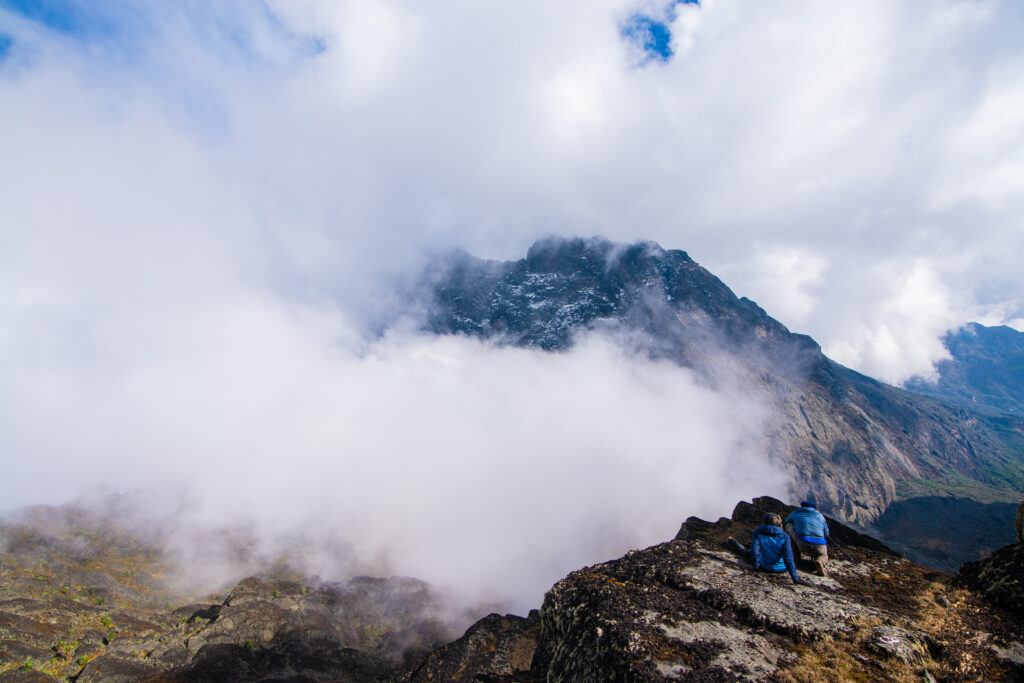
This myth, like the rain myth, contains enough truth to be plausible and enough exaggeration to be misleading. The Rwenzori is indeed cloud-covered for much of the year. The summit zone is cloudy most days. Clear views of Margherita Peak from the valley below are not routine. All of these statements are true. The myth lies in the extrapolation that you will experience the mountain in unbroken visual monotony, never seeing the high peaks and carrying home only impressions of grey fog and wet heather.
Summit day on the Rwenzori is typically clear in the pre-dawn and early morning hours. The meteorological pattern that drives the 2:30 AM departure is the same pattern that clears the summit zone before the daily cloud build arrives from the Congo basin. The hours between first light and approximately 10:00 AM on a typical summit day offer extraordinary views from 5,109 meters: the Congo basin to the west in its full green expanse, the entire Rwenzori range spread to the north and south, and the Ugandan plains below. These views are not guaranteed, but they occur with sufficient regularity, particularly in the dry season, that experienced guides do not brief groups to expect nothing.
The Rwenzori’s cloud is also part of its character, not merely a visual obstruction. The quality of light that penetrates cloud cover in the heather zone is diffuse and even, saturating every surface, and is not inferior to direct sun. It is different and, in many respects, more beautiful for photography because it eliminates harsh shadows and produces the conditions in which the moss communities glow with a green intensity that direct sunlight would bleach to yellow. Trekkers who arrive on the Rwenzori expecting clear blue sky are setting themselves up for disappointment. Trekkers who arrive prepared to engage with cloud, mist, and the particular visual quality that an enduringly wet mountain produces come home with photographs and memories that no amount of blue-sky trekking can replicate.
MYTH: The mountain is always hidden in cloud you’ll see nothing.
REALITY: Summit day typically offers clear views in pre-dawn and early morning. The cloud character of lower zones is part of the Rwenzori’s unique beauty, not an obstacle. Dry season treks maximise clear weather probability.
What Do the Myths Reveal About the Mountain Itself?
It is worth pausing to notice something about the full spectrum of Rwenzori mythology, ancient and modern, cultural and practical. The myths about this mountain tend to cluster around the things that make it most remarkable. They are myths of excess: too wet, too high, too difficult, too remote, and too strange in their plants, weather, and history. No one invents myths about ordinary mountains. The Rwenzori generates myths because it is genuinely extraordinary in both measurable and experiential ways, and extraordinary things attract both accurate legends and inaccurate fears in equal measure.
The ancient myths had a high confirmation rate: the snow at the equator, the source of the Nile, and the plants of impossible scale were all real, all vindicated. The modern myths have a high rejection rate: every experienced guide on the mountain, every serious trekker who has completed one of the standard routes, and every comparative assessment of the Rwenzori against other major African trekking destinations confirms that the fears are exaggerated while the rewards are not. Those who have been to the mountain describe it accurately, while those who haven’t mythologize it.
The Rwenzori’s mythology teaches that reality is better than the discouraging myths suggest and as extraordinary as the ancient stories promise. The giant plants are real. The glacier is real and still there. The Bakonjo guides are genuine experts whose knowledge of the mountain is irreplaceable. The summit is achievable by well-prepared, fit trekkers. The rain is manageable with proper gear. The cloud produces its own beauty. And the mountain, from the first morning in the Afro-Montane Forest at 1,450 meters to the last view from the Oliver’s Pass descent on the Kilembe Trail or the Kitandara Lakes crossing on the Central Circuit, delivers precisely what its most ancient name promises: the Mountains of the Moon, strange and luminous and unlike any other mountain on Earth.
Frequently Asked Questions: Myths About the Rwenzori Mountains
What are the most common myths about the Rwenzori Mountains?
The most common myths about the Rwenzori Mountains divide into two categories: ancient cultural legends and modern trekking misconceptions. The ancient myths include the identification of the Rwenzori with Ptolemy’s “Mountains of the Moon,” which turned out to be accurate, and Bakonjo cultural traditions about the mountain as a rainmaker, a home of ancestral spirits, and a sacred landscape. The most damaging modern myths are that it rains non-stop and the experience is miserable in any weather; that only elite mountaineers can summit Margherita Peak; that the glacier is already gone; that proximity to the DRC makes the mountain dangerous; that the giant plants are exaggerated; and that the mountain is always hidden in cloud. All of these modern myths are factually incorrect in significant ways that well-prepared trekkers should understand before planning an expedition.
Is it true that the Rwenzori rains non-stop?
No. The Rwenzori is genuinely one of the wettest mountain ranges in Africa; annual rainfall at mid-altitude stations exceeds 2,500 millimeters, but it does not rain non-stop. The mountain has two dry seasons each year: June through August (primary) and December through February (secondary), during which rainfall frequency and intensity are substantially reduced, summit success rates are highest, and the mountain offers stretches of clear weather. Even in the wetter months of April-May and October-November, rain falls in patterns rather than continuously, and guided treks operate year-round. The key practical response to the Rwenzori’s wetness is proper-quality gear: a rain jacket with taped seams, waterproof boots broken in before the expedition, and waterproof trousers rather than avoiding the mountain. With correct equipment, the rain is manageable on all itineraries in all seasons.
Is the Rwenzori only for expert mountaineers?
No. Fit non-specialist trekkers regularly complete the Rwenzori, which is challenging and requires genuine physical fitness and preparation. The summit section requires glacier travel with crampons and ice axes, which sounds technical but is taught by certified guides during the pre-summit briefing at the high camp. The Uganda Wildlife Authority has installed fixed glacier infrastructure (bridge and climbing lines) on the most demanding sections. What the Rwenzori requires above all is cardiovascular fitness for sustained daily effort over seven to eight consecutive days and mental resilience for wet, cold conditions. These are the attributes of a well-prepared active adult, not an elite mountaineer. Trekkers who have previously completed demanding multi-day treks, such as Kilimanjaro, the Inca Trail, and treks in the Nepal Himalayas, are generally in the right preparation bracket.
Is the Rwenzori glacier gone?
No. The Stanley Glacier on Mount Stanley has lost approximately 80% of its 1906 surface area and is retreating on a documented, accelerating timeline, but it is still present, still technically demanding, and still an integral part of the summit experience. Summit day on the Rwenzori still requires crampons, ice axes, and roped team movement under guide supervision. The glacier’s recession has actually steepened the remaining ice, making the technical demands of the summit section more serious than in earlier decades. The glacier is receding, not gone, and every current summit expedition is both a genuine glacier climb and an opportunity to witness one of the most important climate processes affecting equatorial Africa. The correct response to the glacier recession is an urgent visit while the ice is still there, not the dismissal that the “glacier is gone” myth encourages.
What do the Bakonjo people believe about the Rwenzori Mountains?
The Bakonjo people, the indigenous community whose homeland encompasses the Rwenzori’s foothills, maintain a rich tradition of cultural beliefs about the mountain that have been transmitted across generations. The mountain’s name in Bakonjo tradition, “Rwenzururu,” means approximately “rainmaker” or “cloud king,” reflecting a profound understanding of the mountain as the source of the water that sustains agricultural life in the surrounding valleys. The upper mountain zones are associated with ancestral spirits, and specific sites like shores, passes, and summit areas carried spiritual significance governing how people moved through them. The L’Hoest’s monkey is a cultural totem for many Bakonjo families, traditionally protected from hunting. These beliefs are not mere superstition but sophisticated frameworks for understanding and managing the human community’s relationship with a mountain on which it depends for water, agriculture, and cultural identity.
Why is the Rwenzori called the Mountains of the Moon?
The Rwenzori Mountains are called the Mountains of the Moon from the Greek “Lunae Montes” used by the geographer Ptolemy of Alexandria in approximately 150 AD, where he described equatorial snow mountains as the source of the Nile. The name passed through Arabic geographical tradition as “Jabal al-Qamar” (Mountain of the Moon) before entering European cartographic literature, where it persisted as both a geographical designation and a mythological reference for more than 1,700 years before Stanley confirmed the mountains in 1888. The name may reflect the appearance of the glaciated summit zone gleaming in moonlight, lunar symbolic associations in the indigenous Bakonjo tradition, or Ptolemy’s acknowledgment that the mountains occupied the mysterious equatorial zone associated in ancient cosmology with the moon. Regardless of its precise origin, the name has proved remarkably durable precisely because the mountain it describes is genuinely extraordinary: snow and ice at the equator, in the heart of tropical Africa, feeding some of the continent’s greatest rivers, exactly as the ancient texts suggested.
Is the Rwenzori Mountains National Park safe for trekkers given the DRC border?
Yes. Rwenzori Mountains National Park operates entirely within Uganda under the jurisdiction of the Uganda Wildlife Authority and has an excellent safety record for international trekkers. The park has maintained continuous guided trekking operations through multiple periods of regional instability in eastern DRC, and the international border, which runs along the high ridgelines of the range, is far removed from the daily trekking zones of the lower and mid-mountain. All guided Rwenzori expeditions take place on Ugandan national park territory, with UWA ranger management and the oversight of established operators. Uganda is widely regarded as one of East Africa’s safer countries for international visitors, and western Uganda in particular has a strong tourism safety record. Travel advisories from Western governments consistently rate Uganda as safe for tourist travel to national parks, including the Rwenzori. Trekkers should assess the mountain’s safety profile based on its record, not by geographical association with eastern DRC.
Can you see the Rwenzori peaks from the valley?
Views of the high Rwenzori peaks from the valley below are possible but not routine; the mountain generates its own persistent cloud cover, and the upper zones are obscured for much of the year. The clearest valley views of the summit zone typically occur early in the morning during the dry season (June–August, December–February), before the daily cloud build from the Congo basin covers the peaks. On the mountain itself, clear views from the high camps are more frequent and more prolonged than from the valley, and summit day typically offers extraordinary visibility in the pre-dawn and early morning hours before the daily cloud cycle arrives. The Rwenzori is not a mountain that displays itself readily from a distance; it rewards those who enter it. The view from Bamwanjara Pass on the Kilembe Trail showing Mount Stanley, Mount Baker, and Weismann’s Peak simultaneously on a clear day is one of the finest mountain panoramas in East Africa, and it is accessible only to those who have walked 4,450 meters to earn it.
ANY QUESTIONS?
If you need any clarification about a Rwenzori trek, contact one of our trekking experts to start planning your journey today.
A 10% percentage of your safari proceeds goes to supporting the local Bakonjo Communities (orphans, schools & homes)
Hi there, welcome. Need help planning a trek, safari, or adventure? Chat directly with a real expert and mountain guide for honest advice, clear answers, and practical recommendations. No guesswork, no pressure.