What Is the Highest Point in the DR Congo? Margherita Peak and the Rwenzori Mountains.
The highest point in the DR Congo is Margherita Peak (5,109 m) on the Rwenzori Mountains. This is a full guide to climbing it, including routes, history, and what to expect on summit day.
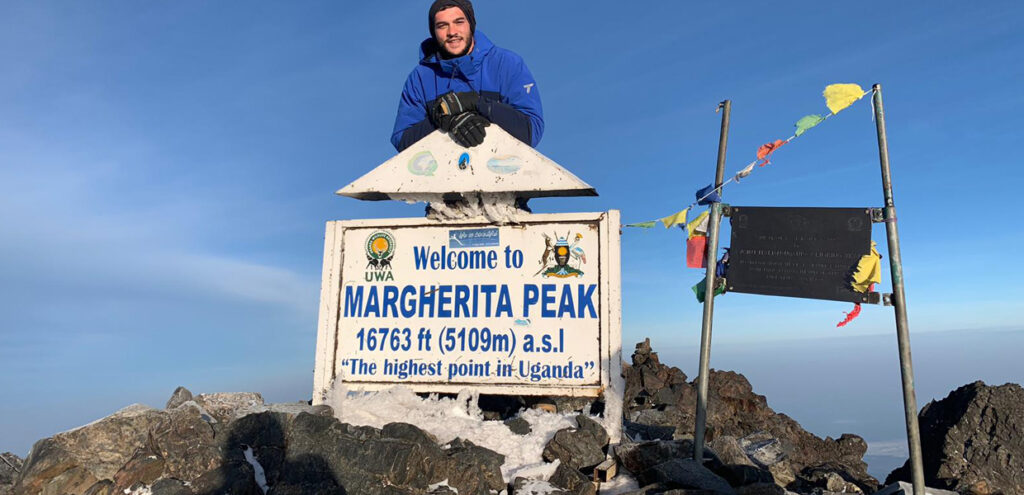
The highest point in the Democratic Republic of Congo is Margherita Peak on Mount Stanley, which reaches 5,109 meters above sea level. The summit sits on the international border between Uganda and the DRC, in the central section of the Rwenzori Mountains, the magnificent equatorial mountain range that straddles the two countries along the Western Rift Valley escarpment. Because the summit sits precisely on the border, Margherita Peak holds the distinction of being simultaneously the highest point in Uganda and the highest point in the DRC, two national altitude records shared by a single glaciated peak above the equatorial jungle.
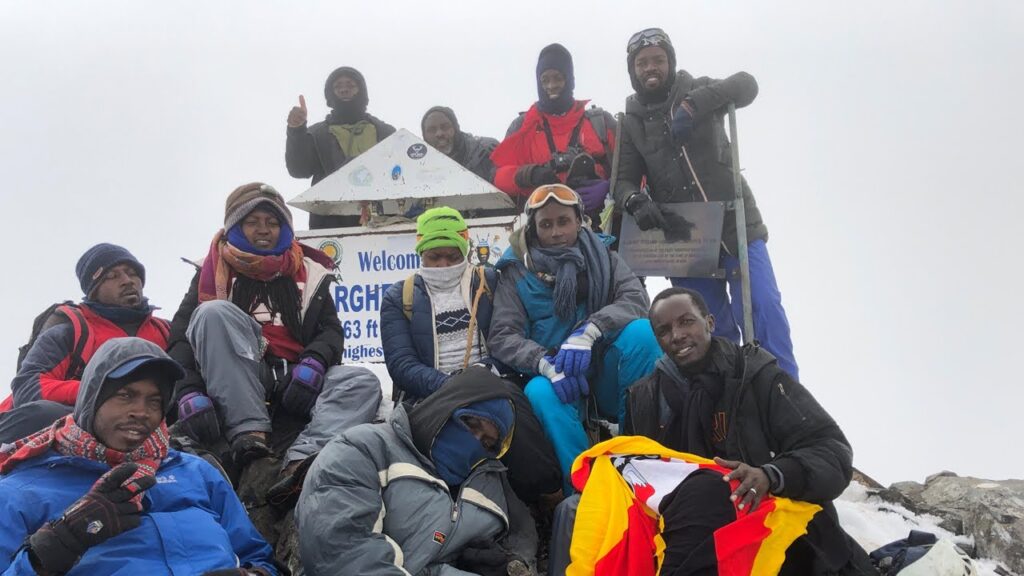
At 5,109 meters before dawn on Margherita Peak, you stand on the highest point of two nations, with the Congo basin spreading to the west like an unbroken green ocean below the clouds. To the east lies Uganda, whose highest point is Margherita Peak. To the west lies the Democratic Republic of Congo, whose highest point is Margherita Peak. The same summit, the same ice, and the same silence are claimed equally by two countries that share this mountain, the way you can share something genuinely extraordinary: each country owns part of it.
Margherita Peak, Mount Stanley, Rwenzori Mountains: 5,109 m. Highest point in both Uganda and the Democratic Republic of Congo. Third-highest peak in Africa. Located on the Uganda–DRC international border at approximately 0°22’N 29°52’E.
This dual national record is not a technicality. It reflects the genuine geographical reality of the Rwenzori range: a mountain system so vast, so high, and so physically commanding that its summit ridgelines trace the international boundary between two countries for much of their length. Understanding this shared geography and what it means for the trekker who wants to reach the DRC’s highest point is the starting point for understanding the Rwenzori itself.
Mount Stanley and the Rwenzori Mountains: The Geography of the DRC’s Highest Peak
Where the Rwenzori Mountains Are
The Rwenzori Mountains occupy a 120-kilometer stretch of the Uganda–DRC border, running roughly north to south along the Western Rift Valley escarpment approximately 33 kilometers north of the equator. The range is not a single mountain but a complex of six major massifs, each carrying multiple named peaks above 4,600 meters that together form the Rwenzori system. Mount Stanley is the largest and highest of these massifs, occupying the central section of the range and carrying the summit that is both Uganda’s and the DRC’s highest point.
The eastern flanks of the Rwenzori, including the two main trekking trailheads at Nyakalengija and Kilembe, fall within Uganda and are accessible from Kasese, the nearest major town. The western flanks fall within the DRC in the North Kivu province, administratively within Virunga National Park, the oldest national park in Africa. The international border runs along the summit ridgelines and high passes of the range, meaning that on a clear day from Margherita Peak, the eastern view is Uganda and the western view is the DRC, separated by the distance of a few meters of snow and ice.
The Massifs of Mount Stanley
Mount Stanley is not a single peak but a massif, a cluster of related peaks sharing the same geological basement and connected by high ridgelines. Its highest summit is Margherita Peak at 5,109 meters, named by the Duke of Abruzzi’s 1906 expedition in honor of Queen Margherita of Italy. The second summit, Alexandra Peak at 5,091 meters, was named for Queen Alexandra of the United Kingdom. Below these two highest points, the massif carries Savoia Peak (4,977 m), Elena Peak (4,968 m), Moebius Peak (4,906 m), and Philip Peak (4,742 m), a concentrated collection of high summits that together make Mount Stanley the most complex and altitude-dense mountain massif in equatorial Africa.
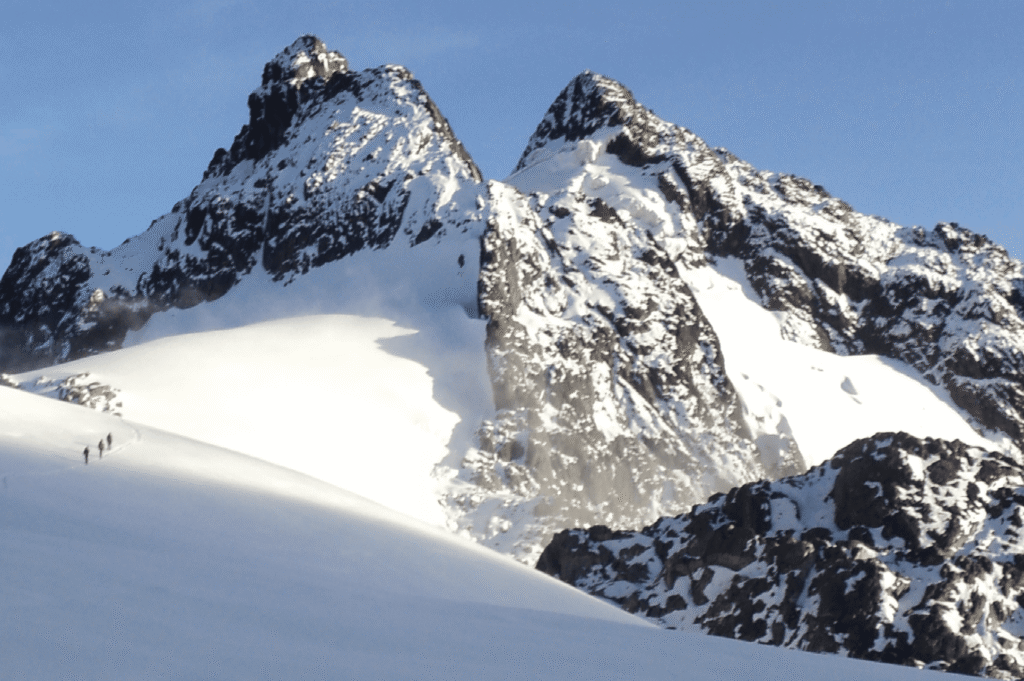
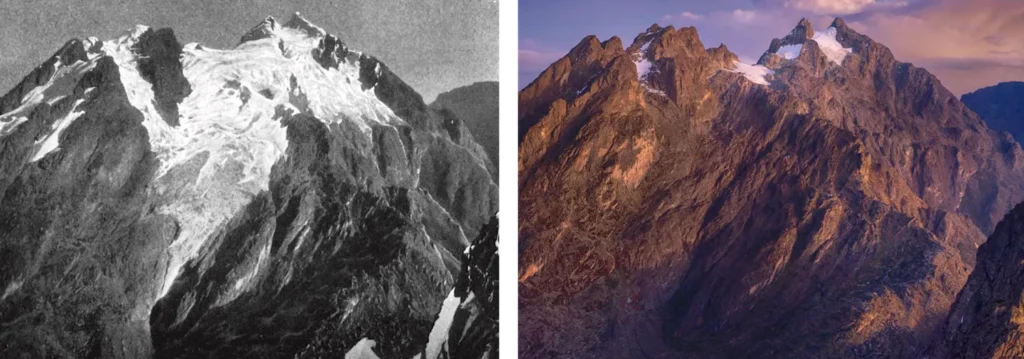
Guided trekking expeditions cross the broad upper glaciated plateau, known as the Stanley Plateau, on summit day. The Stanley Glacier that occupies this plateau has been retreating measurably since the Duke of Abruzzi’s first systematic photographic documentation in 1906, and current estimates place the total ice area loss at approximately 80% of the original extent. What remains is still extraordinary: a glaciated equatorial summit that produces the conditions for technical glacier travel within the tropics, but it is smaller, steeper, and more urgently finite than it was when the first climbers stood on Margherita more than a century ago.
How to Reach the Highest Point in the DRC: The Route Is Through Uganda
This is the practical reality that shapes every expedition to the DRC’s highest point: because the Rwenzori Mountains are most safely and accessibly approached from their eastern Uganda side, climbing Margherita Peak, the DRC’s summit, means approaching from Uganda and crossing the international boundary on the summit ridgeline itself. The DRC side of the mountain, in the western Rwenzori within Virunga National Park, has historically been inaccessible to most international trekkers due to the persistent security instability of eastern DRC. The conflict in North Kivu province has affected the region since the 1990s and, while ebbing and flowing in intensity, has made the western approach to the Rwenzori effectively off-limits for commercial guided trekking for most of the past three decades.
The eastern route from Uganda is fully operational, well-guided, and supported by two management groups: Rwenzori Mountaineering Services (RMS) on the northern Central Circuit Trail from Nyakalengija and Rwenzori Trekking Services (RTS) on the southern Kilembe Trail. Both groups have been running continuously under the supervision of the Uganda Wildlife Authority, taking care of the huts, training certified guides, and creating trekking programs that allow international trekkers to reach the highest peak in the DRC from the Ugandan side.
The practical implication for a trekker wanting to stand on the DRC’s highest point is therefore straightforward: come to Uganda, trek through the Rwenzori Mountains from the Ugandan side, and cross the international border at the summit. Standing on Margherita Peak places you in the DRC, specifically on the border between Uganda and the DRC, making it the highest point in both countries simultaneously.
Margherita Peak in Its Continental Context: The Highest Peaks in Africa
Understanding the DRC’s highest point requires placing Margherita Peak in its continental context. The peak that is simultaneously Uganda’s and the DRC’s summit is the third-highest point on the African continent, a position of significant mountaineering prestige that places the Rwenzori’s summit above everything in Africa except Kilimanjaro in Tanzania and Mount Kenya in Kenya. The table below shows the seven highest peaks in Africa, with the Rwenzori’s dominant role in the continental altitude rankings clearly visible.
Rank
Peak
Mountain/Range
Height
Country
1st
Uhuru Peak
Kilimanjaro
5,895 m
Tanzania
2nd
Batian Peak
Mount Kenya
5,199 m
Kenya
3rd
Margherita Peak
Mount Stanley, Rwenzori
5,109 m
Uganda/DRC (shared border)
4th
Alexandra Peak
Mount Stanley, Rwenzori
5,091 m
Uganda/DRC (shared border)
5th
Vittorio Emanuele
Mount Speke, Rwenzori
4,890 m
Uganda
6th
Edward Peak
Mount Baker, Rwenzori
4,843 m
Uganda
7th
Umberto Peak
Mount Emin, Rwenzori
4,798 m
Uganda/DRC
The continental context reveals something important about the Rwenzori’s significance: it is not merely an East African mountain of regional interest but a global-tier mountaineering destination whose summit ranks third on an entire continent. For the trekker who wants to stand on the DRC’s highest point, reaching the summit also means standing on Africa’s third-highest summit and the third-highest point between the Tropic of Cancer and the Tropic of Capricorn. The summit of Margherita Peak combines three national and continental records simultaneously.
The Rwenzori Peaks on the DRC–Uganda Border: A Complete Reference
The major Rwenzori summits occupy the international boundary between Uganda and the DRC, with the precise border running along the high ridgelines and passes of the range. The table below provides a complete reference for the principal Rwenzori peaks, their altitudes, their positions relative to the international boundary, and their first ascent details.
Peak / Massif
Height
Country/Border
Africa Rank
First Ascent
Margherita Peak (Mount Stanley)
5,109 m
Uganda–DRC border
3rd in Africa
18 June 1906, Duke of Abruzzi expedition
Alexandra Peak (Mount Stanley)
5,091 m
Uganda–DRC border
4th in Africa
1906, Duke of Abruzzi expedition
Savoia Peak (Mount Stanley)
4,977 m
Uganda–DRC border
Top 10 Africa
1906, Duke of Abruzzi expedition
Elena Peak (Mount Stanley)
4,968 m
Uganda–DRC border
Top 10 Africa
1906, Duke of Abruzzi expedition
Mount Speke – Vittorio Emanuele
4,890 m
Primarily Uganda
5th in Africa
1906, Duke of Abruzzi expedition
Mount Baker – Edward Peak
4,843 m
Uganda–DRC border area
6th in Africa
1906, Duke of Abruzzi expedition
Mount Emin – Umberto Peak
4,798 m
Uganda–DRC border area
7th in Africa
1906, Duke of Abruzzi expedition
Mount Gessi – Iolanda Peak
4,715 m
Uganda–DRC border area
Top 15 Africa
1906, Duke of Abruzzi expedition
Mount Luigi di Savoia – Sella Peak
4,627 m
Uganda–DRC border area
Top 20 Africa
1906, Duke of Abruzzi expedition
The distribution of the Rwenzori’s highest peaks along the Uganda–DRC border means that the DRC shares not just the single highest summit of Margherita Peak but a remarkable collection of high-altitude landmarks. The four summits of Mount Stanley above 4,900 meters, Margherita, Alexandra, Savoia, and Elena, are all on or immediately adjacent to the international boundary. The DRC’s second-highest point, after the Margherita/Alexandra complex, would be the various peaks of the other border-straddling massifs, with Mount Baker and Mount Emin both having significant portions of their massifs in DRC territory.
The First Ascent of the DRC’s Highest Point: The Duke of Abruzzi, 1906
The first human being to stand on the DRC’s highest point, Margherita Peak, at 5,109 meters, was Vittorio Sella, leading a rope team that included Joseph Petigax and César Ollier, on 18 June 1906. They were members of the expedition led by Luigi Amadeo di Savoia, Duke of Abruzzi, which mounted the first systematic mountaineering assault on the Rwenzori range between May and July of that year. The Duke himself, one of the most accomplished explorers and mountaineers of the early twentieth century, had already made the first ascent of Mount Saint Elias in Alaska in 1897 and held an Arctic latitude record from his 1900 polar expedition.
The 1906 expedition is notable not merely for its summit achievements but for its comprehensive scope. In approximately two months on and around the mountain, the Duke’s team made the first ascents of all six major Rwenzori massifs Stanley, Speke, Baker, Emin, Gessi, and Luigi di Savoia completing a mountaineering program that would not be matched in scope by any subsequent Rwenzori expedition. The expedition also produced the first systematic topographic survey of the range and Vittorio Sella’s extraordinary photographic record of the glaciers in their 1906 extent. Those photographs, when looked at alongside today’s satellite images, show that about 80% of the glacier area on the Stanley Plateau has disappeared since 1906, making them some of the strongest visual evidence of climate change on any mountain in Africa.
The naming of Margherita Peak itself reflects the expedition’s Italian national context and the political geography of 1906 Europe. Margherita of Savoy was the consort of King Umberto I of Italy, herself a member of the House of Savoy, the same royal house to which the Duke of Abruzzi belonged. The adjacent Alexandra Peak was named for Queen Alexandra of the United Kingdom, reflecting the Anglo-Italian diplomatic context of an expedition that was Italian in leadership but took place in British-administered East African territory. The mountain named after the Duke himself, Mount Luigi di Savoia, carries the full dignity of his title and his nationality in the range that his expedition defined for the modern world.
Why the DRC Dimension Matters for Understanding the Rwenzori
A Mountain That Belongs to Two Nations
Margherita Peak, as the highest point in both Uganda and the DRC, is more than a geographical curiosity; it is fundamental to understanding the Rwenzori’s character, its geopolitics, and the conditions that have shaped its trekking history. The mountain sits on one of the most complex international borders in East Africa: the Uganda–DRC frontier runs for hundreds of kilometers along the Western Rift, and the Rwenzori’s position on this border has meant that the mountain’s accessibility has always been contingent on the political stability of both countries.
For most of the period since Ugandan independence in 1962, the Uganda side of the Rwenzori has been the primary access point for international trekkers. The DRC’s eastern provinces, where the western Rwenzori access points would be located, have been affected by persistent conflict since the 1990s, effectively closing the western approach for most of the past three decades. This situation has led to all major Rwenzori trekking activities being focused on the Ugandan eastern side, where the facilities, safety, and management have improved significantly due to the ongoing interest from international visitors who can’t come from the west.
The Virunga National Park Connection
The western Rwenzori falls within Virunga National Park, the oldest national park in Africa, established in 1925 as Albert National Park under Belgian colonial administration and renamed Virunga after the DRC’s independence in 1960. Virunga National Park is itself a UNESCO World Heritage Site, designated in 1979, and encompasses a far larger area than just the western Rwenzori: it extends south along the Albertine Rift to include the Virunga Volcanoes (home to mountain gorillas) and north to the Rwindi Plains. The Rwenzori section of Virunga is known as the Virunga section of the park, occasionally referred to as the “Rwenzori section of Virunga NP” to distinguish it from the volcanic sections to the south.
In periods when the DRC side of the Rwenzori has been accessible, typically during interludes of relative stability in eastern DRC, most recently in the early 2000s, trekkers have been able to approach the high Rwenzori from the Mutwanga and Kyavirimu area on the DRC side, reaching the high camps and summit via routes that are geometrically more direct to the summit from the west. However, the infrastructure on the DRC side has never developed to the standard of the Ugandan eastern operations, and the persistent security concerns have made the DRC approach non-viable for the commercial guided trekking market for extended periods. The advice from all current operators and from the Uganda Wildlife Authority is to approach Margherita Peak and the DRC’s highest point via the established Ugandan trekking routes.
Climbing the DRC’s Highest Point: The Two Ugandan Routes
The Kilembe Trail: Eight Days from the Southern Approach
The Kilembe Trail is the recommended standard route to Margherita Peak for trekkers approaching from Uganda. Managed by Rwenzori Trekking Services (RTS) and accessible through Rwenzori Trekking Safaris, the trail begins at Kilembe town (1,450 m) on the southern edge of the national park, approximately 12 kilometers from Kasese. Over eight days, the trail ascends through all five vegetation zones of the Rwenzori Afro-Montane Forest, Bamboo-Mimulopsis, Giant Heather-Rapanea, Afroalpine Moorland, and the Nival Glacier Zone before arriving at Margherita Camp (4,485 m) for the pre-dawn summit departure.
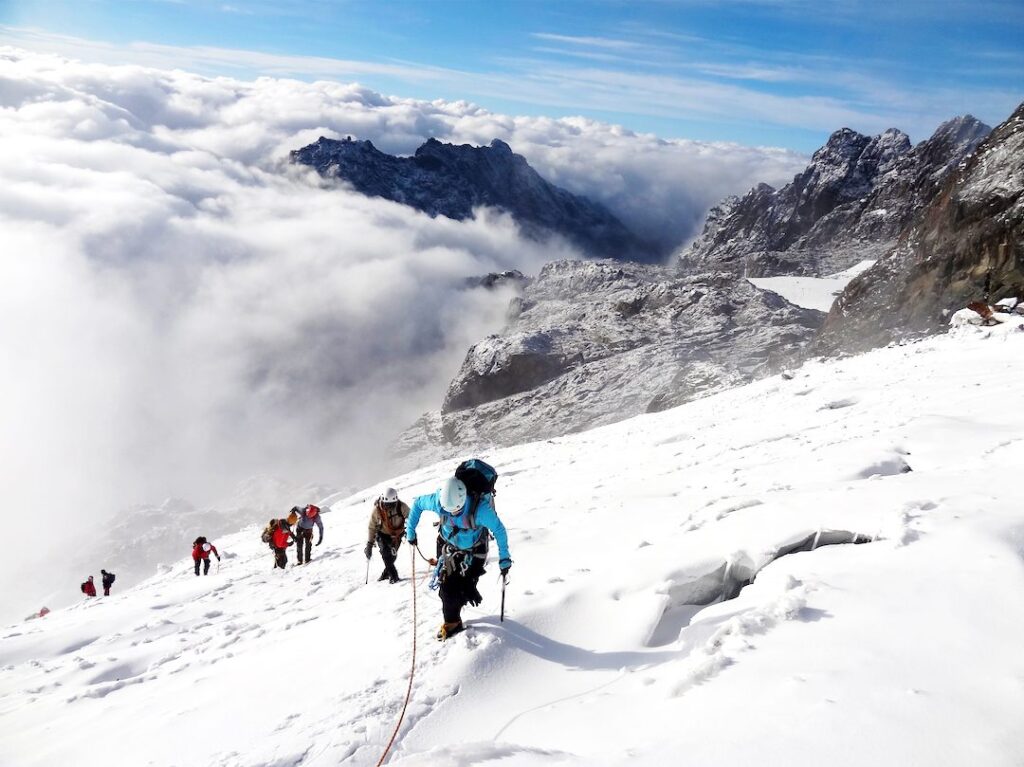
Summit day begins at 2:00 AM and departs at approximately 2:30 AM. The ascent crosses the Stanley Plateau Glacier, now equipped with the Uganda Wildlife Authority’s fixed glacier bridge and climbing lines over the critical crevasse section, requiring crampons, ice axes, and roped team movement under guide supervision. The summit is typically reached in the pre-dawn hours, with the Congo basin stretching away to the west in the dark below. The descent returns to Hunwick’s Camp (3,874 m), and subsequent days carry the route back to Kilembe via Oliver’s Pass (4,505 m) and the Nyamwamba Valley. The trail begins and ends at Kilembe, a full loop with no shuttle transfers required between different park management areas.
The Central Circuit Trail: Seven Days from the Northern Approach
The Central Circuit Trail provides the second route to Margherita Peak from the Ugandan side. Managed by the community-run Rwenzori Mountaineering Services (RMS) and starting at Nyakalengija (1,646 m) on the park’s northern side, the usual 7-day plan takes hikers through the main Central Circuit camps of Nyabitaba, John Matte, Bujuku, and Elena Hut before heading to the summit from Elena Hut (4,541 m). Elena Hut’s position on the northeastern shoulder of Mount Stanley provides a different approach to the Stanley Plateau than Margherita Camp on the Kilembe Trail; both routes converge on the glacier itself, where the summit section is broadly comparable in technical character from either side.
The Central Circuit descends via the Kitandara Lakes and Freshfield Pass after the summit, completing a loop back to Nyakalengija over the final two days. Like the Kilembe Trail, it is a complete circuit requiring no shuttle transfers and begins and ends at the same trailhead. The Central Circuit is the historically established route; its infrastructure has been in place since the 1950s, while the Kilembe Trail was formally launched in 2011, offering newer hut infrastructure and what many guides consider the more scenically dramatic approach to the summit.
What It Is Like to Stand on the Highest Point in the DRC
The summit of Margherita Peak at 5,109 meters is one of the defining mountain experiences available to a guided trekker anywhere in Africa, and understanding what it is like to be there as opposed to simply knowing the altitude number is part of what makes the journey worth planning in serious detail.
Summit day begins in complete darkness, typically at 2:30 AM from either Margherita Camp or Elena Hut, depending on which route is being used. The pre-dawn start is not a tradition but a meteorological necessity: the Rwenzori’s weather pattern brings cloud up from the Congo basin in the early afternoon, typically between 10:00 AM and 2:00 PM, and the window between first light and the arrival of cloud is the period in which summit conditions are clearest and descent routes are most visible. The 10:00 AM turnaround rule enforced by all competent Rwenzori guides exists because of this weather pattern, not in spite of it.
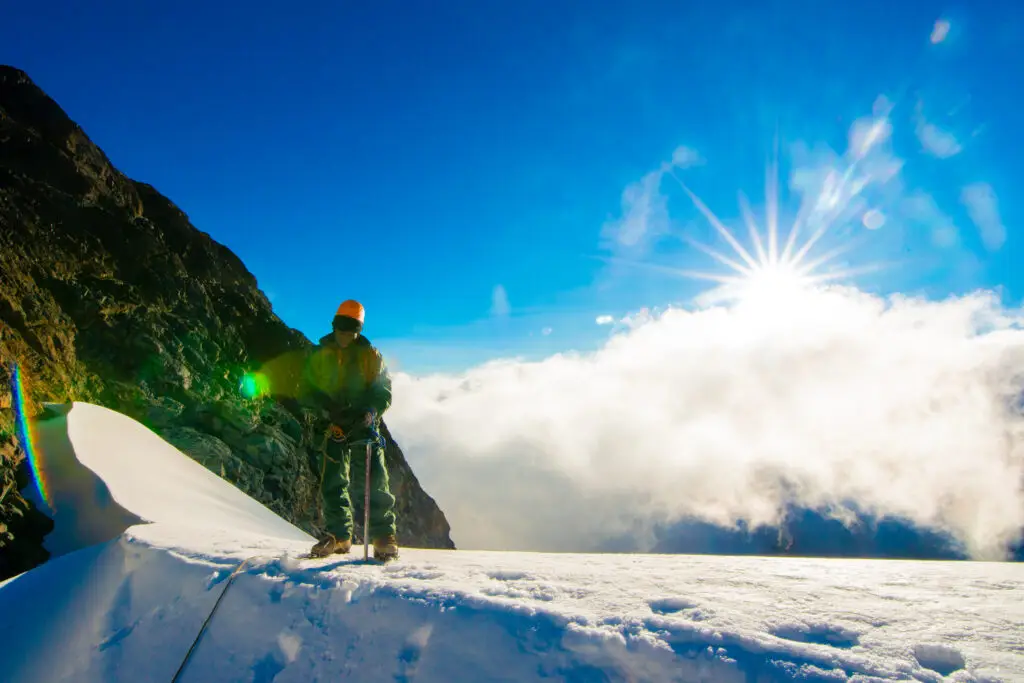
The glacier section from the camp to the summit takes approximately three to four hours at a measured pace. Crampons are fitted at the glacier margin, ropes are attached, and the guide leads the team across the Stanley Plateau Glacier through sections where crevasses require the fixed bridge or carefully navigated traverses. The ice is steeper than the early photographs suggest: the glacier’s recession has increased the angle of the remaining ice as the mass has thinned, and the technical demands of the summit section have changed since the Duke of Abruzzi’s era as a direct consequence of climate change. The fixed lines installed by the Uganda Wildlife Authority help navigate the most technically demanding sections, but the summit remains a genuine glacier climb throughout.
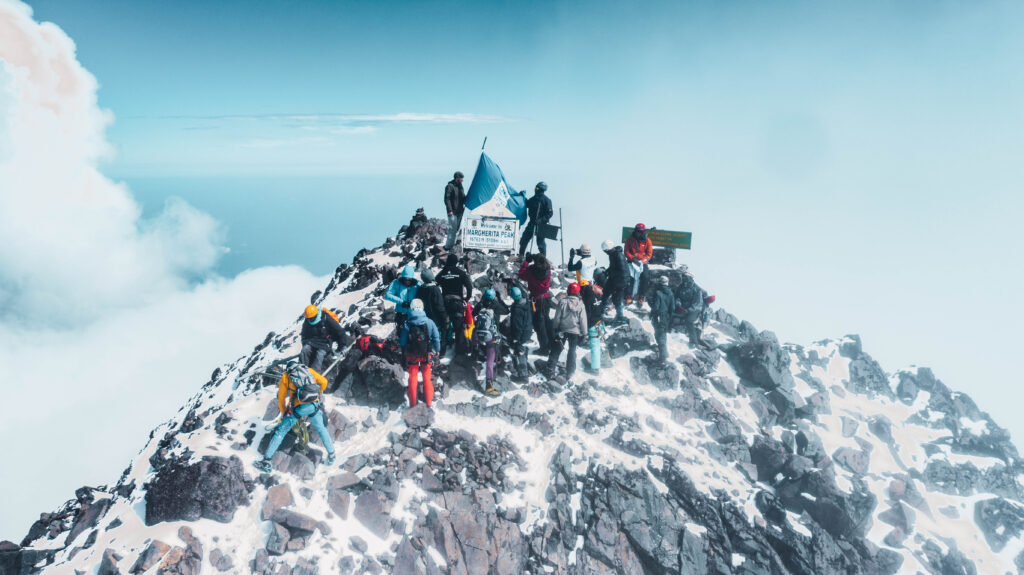
At the summit, 5,109 meters high, the ridge that marks the border between Uganda and the DRC offers one of the most remarkable views available from any mountain in equatorial Africa on a clear morning. To the east, the entire Rwenzori range spreads in both directions, with the Ugandan foothills and the distant plain of the Western Rift visible far below. To the west, the DRC’s Congo Basin, one of the largest rainforests on Earth, stretches away in an unbroken green canopy to the visible horizon and beyond, its scale incomprehensible from any vantage point below. Directly below on the southwestern side, the remaining sections of the Stanley Glacier catch the early light. The summit is cold, the wind can be fierce, and the duration of a clear view is unpredictable. Photographs are taken quickly, the moment is absorbed, and the descent begins.
A Summit Under Threat: Why the DRC’s Highest Point Demands Urgency
The highest point in the DR Congo is facing a slow-motion transformation that gives every current expedition a dimension of historical witness beyond the achievement of the summit. The Stanley Glacier, which defines the technical character of the DRC’s highest peak and requires crampons, ice axes, and the roped movement of an experienced guide team, is retreating on a documented and accelerating timeline. The approximately 80% reduction in glacier surface area since the Duke of Abruzzi’s 1906 photographs represents one of the most comprehensively documented examples of tropical glacier loss anywhere in the world, and the trajectory of that loss, when extrapolated on current measured rates, suggests that the remaining ice may be gone within the lifetime of today’s younger trekkers.
What this change means practically is that the summit experience available today a pre-dawn glacier climb at the equator, on ice that has sustained this mountain’s visual identity for millennia, in a landscape that connects equatorial rainforest to polar conditions within a few kilometers of vertical is not guaranteed to the next generation in the same form. The DRC’s highest point will still be at 5,109 meters. But it may be a rock summit, not a glacier one, and the change removes something irreplaceable from the experience. Every guide who has worked the Rwenzori for more than a decade has watched this change happen. The recommendation from all of them is the same: come while the ice is still there.
Planning Your Expedition to the DRC’s Highest Point.
Fitness and Preparation
Reaching the highest point in the DRC via the Ugandan Rwenzori routes requires genuine physical preparation. The standard eight-day Kilembe Trail expedition demands adequate cardiovascular fitness for six to nine hours of daily trekking on steep and varied terrain for seven to eight consecutive days at altitudes that reach the summit at 5,109 meters. The summit day specifically requires the physical reserves to sustain technical glacier movement for three to four hours after an early morning start, following the most altitude-intensive days of the approach. Trekkers should plan a structured training program of at least eight weeks before departure, incorporating sustained cardiovascular work, hill walking, running, and cycling alongside the psychological preparation of multi-day consecutive physical effort.
Technical mountaineering experience is helpful but not strictly required for the glacier section. The certified guides of both Rwenzori Mountaineering Services and Rwenzori Trekking Services provide full crampon and ice axe instruction at the high camp before summit day, and the fixed infrastructure installed by the Uganda Wildlife Authority has improved both the safety and accessibility of the most technically demanding sections. What cannot be taught at high camp is base fitness and altitude tolerance; both must be developed before the expedition departs.
Best Time to Visit
The dry seasons of June through August (primary) and December through February (secondary) are the optimal seasons for an expedition to the DRC’s highest point via the Ugandan Rwenzori routes. The dry season reduces but does not eliminate the likelihood of rain on any given day, provides firmer trail conditions on the lower mountain, and maximizes summit success rates by increasing the probability of clear conditions in the pre-dawn summit window. July and August are the most reliable months overall. The secondary December–February window offers excellent conditions with generally improved availability of gorilla trekking permits at Bwindi for trekkers combining their Rwenzori expedition with other Uganda experiences.
Logistics and What Is Included
A guided trip to Margherita Peak, the highest point in the DRC, includes everything you need: park permit fees, mountain hut stays, a certified lead and assistant guide, a full team of porters, three hot meals each day from Day 1 to Day 8, all the necessary climbing gear (like crampons, ice axes, helmets, harnesses, ropes, and rubber boots), first aid supplies including extra oxygen, and transportation between Kasese and the Kilembe trailhead. The standard 8-day Kilembe Trail expedition is priced at $1,705 per person and is the recommended summit program. International flights to Entebbe, travel insurance (mandatory for high-altitude glacier travel), and pre/post-trek accommodation in Kasese are arranged separately.
Frequently Asked Questions: The Highest Point in the DR Congo
What is the highest point in the Democratic Republic of Congo?
The highest point in the Democratic Republic of Congo is Margherita Peak on Mount Stanley in the Rwenzori Mountains, at 5,109 meters above sea level. The summit sits precisely on the international border between the DRC and Uganda, making it simultaneously the highest point of both countries. Margherita Peak is the third-highest summit in Africa, after Kilimanjaro (5,895 m) in Tanzania and Mount Kenya (5,199 m) in Kenya. It was first climbed on 18 June 1906 by members of the Duke of Abruzzi’s expedition, one of the most significant mountaineering achievements in African history. The summit can be reached on guided expeditions from the Ugandan side of the Rwenzori Mountains, accessed from the towns of Kasese and Kilembe in western Uganda.
Is Margherita Peak the highest point in both Uganda and the DRC?
Yes. Margherita Peak at 5,109 meters on Mount Stanley in the Rwenzori Mountains is the highest point in both Uganda and the Democratic Republic of Congo. The summit sits on the international border between the two countries, with Uganda to the east and the DRC to the west. The border runs along the summit ridgeline of Mount Stanley, placing Margherita Peak, the highest point of the ridge, simultaneously in both countries, or more precisely, on the line that divides them. This dual national record makes Margherita Peak unique in Africa: it is the only summit that holds the “highest point” distinction for two different countries at the same location. Both countries have equal claim to it, and the summit is typically reached via the safer and more accessible Ugandan eastern approach through Rwenzori Mountains National Park.
Where exactly is Margherita Peak located?
Margherita Peak is located on Mount Stanley in the Rwenzori Mountains, on the border between Uganda and the Democratic Republic of Congo, at approximate GPS coordinates 0°22’N 29°52’E. It sits approximately 33 kilometers north of the equator in western Uganda, near the town of Kasese in Kasese District. The summit is at an altitude of 5,109 meters above sea level. The Rwenzori Mountains as a range run roughly north to south along the Uganda–DRC border for approximately 120 kilometers, with Mount Stanley occupying the central section. The nearest access town is Kasese, approximately 12 kilometers from the Kilembe trailhead, which is the starting point for the standard 8-day guided summit expedition on the Kilembe Trail.
Can you climb the highest point of the DRC from its side?
In theory, yes, the DRC side of the Rwenzori Mountains includes the western flanks of Mount Stanley, and there are historical approach routes from Mutwanga and Kyavirimu in the North Kivu province of the DRC. However, in practice, the DRC approach has been effectively inaccessible to international trekkers for most of the past three decades due to persistent security instability in eastern DRC, specifically in North Kivu province, where the western Rwenzori access points are located. Virunga National Park, which encompasses the DRC side of the Rwenzori, has encountered significant operational challenges due to the regional conflict. All current guided expeditions to Margherita Peak, and therefore all practical approaches to the DRC’s highest point, are conducted from the Ugandan eastern side of the range, through Rwenzori Mountains National Park, from either the Nyakalengija (Central Circuit Trail) or Kilembe (Kilembe Trail) trailheads.
How long does it take to climb the highest point in the DRC?
Climbing Margherita Peak, the highest point in the DRC, via the standard guided route from Uganda takes eight days on the Kilembe Trail or seven days on the Central Circuit Trail. The Kilembe Trail is the recommended standard itinerary: Day 1 begins at Kilembe (1,450 m); the route ascends through five vegetation zones over six days, reaching Margherita Camp (4,485 m) on Day 5. Summit day (Day 6) begins at approximately 2:00 AM with glacier travel requiring crampons, ice axes, and roped movement, reaching the summit typically before dawn. The descent then takes two more days back to Kilembe via Oliver’s Pass. The minimum physical acclimatization time for the summit approach is built into these itineraries; attempting to compress the schedule significantly increases altitude sickness risk and reduces summit success rates.
What altitude is the highest point in the DRC?
The highest point in the Democratic Republic of Congo is Margherita Peak at 5,109 meters (16,762 feet) above sea level. This makes it Africa’s third-highest peak, after Uhuru Peak on Kilimanjaro (5,895 m) in Tanzania and Batian Peak on Mount Kenya (5,199 m) in Kenya. The same summit on the Uganda–DRC border is also Uganda’s highest point. The Rwenzori Mountains contain not only the DRC’s highest point but also several of the continent’s other highest peaks: Alexandra Peak on Mount Stanley at 5,091 m (fourth in Africa), Mount Speke at 4,890 m (fifth), Mount Baker at 4,843 m (sixth), and Mount Emin at 4,798 m (seventh). The Rwenzori range therefore holds four of Africa’s seven highest peaks within a relatively compact 120-kilometer range straddling the Uganda–DRC border.
Who first climbed the highest point in the DRC?
The highest point in the DRC, Margherita Peak (5,109 m) on Mount Stanley in the Rwenzori Mountains, was first climbed on 18 June 1906 by Vittorio Sella, Joseph Petigax, and César Ollier, members of the expedition led by Luigi Amadeo di Savoia, Duke of Abruzzi. The Duke was one of the most accomplished mountain explorers of the early twentieth century, previously credited with the first ascent of Mount Saint Elias in Alaska (1897) and an Arctic latitude record of 86°34’N (1900).
His 1906 Rwenzori expedition made the first ascents of all six major Rwenzori massifs within approximately two months, an extraordinary mountaineering achievement. The expedition also produced the first systematic topographic survey of the range and Vittorio Sella’s photographic documentation of the glaciers, which now serves as the primary historical baseline for measuring the 80% glacier area loss that has occurred since 1906.
What is the highest mountain in the DRC?
The highest mountain in the Democratic Republic of Congo is Mount Stanley in the Rwenzori Mountains, which straddles the DRC–Uganda border. Mount Stanley’s highest summit, Margherita Peak, reaches 5,109 meters, the third-highest point in Africa. Mount Stanley is not a single peak but a massif carrying multiple named summits: Margherita (5,109 m), Alexandra (5,091 m), Savoia (4,977 m), Elena (4,968 m), Moebius (4,906 m), and Philip (4,742 m) are all on or near the international border. The Rwenzori Mountains, of which Mount Stanley is the highest massif, contain multiple peaks that straddle the DRC’s eastern border with Uganda. The second and third highest points within DRC territory (after the Margherita/Alexandra complex on the shared border) include various summits of Mount Baker and Mount Emin, which also have portions of their massifs on the DRC side of the border. All are part of the same Rwenzori mountain system, and all are most practically accessed from the Ugandan eastern side.
ANY QUESTIONS?
If you need any clarification about a Rwenzori trek, contact one of our trekking experts to start planning your journey today.
A 10% percentage of your safari proceeds goes to supporting the local Bakonjo Communities (orphans, schools & homes)
Hi there, welcome. Need help planning a trek, safari, or adventure? Chat directly with a real expert and mountain guide for honest advice, clear answers, and practical recommendations. No guesswork, no pressure.