Fort Portal Uganda: The Complete Gateway City Guide for Rwenzori Visitors
Fort Portal, Uganda: A travel guide for Rwenzori trekkers hotels, crater lakes, Tooro Kingdom, Kibale chimps, transport to Kasese & how it connects to your mountain expedition
Fort Portal is the kind of city that surprises you. You arrive expecting a transit point and find yourself lingering. The altitude is cool enough to need a layer in the evening. The crater lakes are unexpectedly beautiful. The Tooro Kingdom Palace sits on a hill above the town with a quiet authority that most visitors did not anticipate. And the Rwenzori Mountains are visible from the right ridge at the right time of morning, their distant glaciated peaks confirming that you are in exactly the right part of Uganda to begin the most extraordinary mountain expedition on the continent.
Fort Portal: Where Uganda’s Mountains Begin
Fort Portal is the principal city of Uganda’s western highlands and the nearest significant urban center to the Rwenzori Mountains, the seat of the ancient Tooro Kingdom, and the gateway to three of Uganda’s most remarkable natural environments: the Rwenzori Mountains to the southwest, Kibale Forest National Park to the south, and the extraordinary volcanic crater lake district that spreads across the Kabarole highlands in every direction from the town. For international trekkers planning a Rwenzori expedition, Fort Portal is where many itineraries properly begin, a city large enough to have reliable infrastructure, intriguing enough to reward an extra day or two, and compact enough to navigate without effort.
Sitting at approximately 1,500 metres above sea level, notably higher and cooler than the Kasese Valley below Fort Portal, has a highland character that distinguishes it from most Ugandan cities. The air is fresher, the pace is gentler, and the landscape surrounding it is genuinely beautiful: green tea plantations on the slopes above the town, volcanic crater lakes visible from the ridges, and on clear mornings the distant white profile of the Rwenzori range to the south-west. Many trekkers arriving in Fort Portal to transit straight through to Kasese find themselves reconsidering their plans. The city rewards attention.
This guide covers everything a Rwenzori trekker needs to know about Fort Portal: its geography and highland character, how to reach it from Kampala and Entebbe, where to stay across all budget levels, where to eat well, the cultural and natural attractions that make it worth more than a transit stop, and how to use it as the logical hub for the broader western Uganda experience. Fort Portal is not a bonus destination. For many trekkers, it is where their Uganda journey finds its rhythm.
Western Uganda, Kabarole District eastern gateway to the Rwenzori Highlands
Altitude
~1,500m above sea level cooler and fresher than Kampala or Kasese Valley.
Distance from Kampala
~300 km; 4–5 hours by road via Mubende–Mityana
Distance from Entebbe
~345 km; 4.5–5.5 hours by road
Distance from Kasese
~70 km; 1–1.5 hours by road
Distance to Nyakalengija (Central Circuit)
~85 km; ~1.5 hours by road
Distance to Kilembe Trailhead
~82 km; ~1.5 hours via Kasese
Distance to Kibale Forest NP (Kanyanchu Gate)
~36 km; ~45 minutes
Distance to Bwindi (Buhoma sector)
~185 km; ~4 hours via Kasese and Kabale
Domestic Airport
Kasese Airstrip (70 km); no commercial airport in Fort Portal itself
Currency
Ugandan Shillings (UGX); USD accepted in tourist-facing businesses
ATMs
Stanbic, DFCU, Centenary, Equity Bank all on or near Main Street
Mobile Networks
MTN Uganda (best coverage), Airtel Uganda
Climate
Mild to cool year-round; 16–24°C daytime; cool evenings (12–16°C)
Best Time to Visit
June–September and December–February for clearest conditions
Languages
English (official), Rutoro (Tooro language), Luganda
Understanding Fort Portal: History, Character, and Highland Setting
The Tooro Kingdom and the City’s Cultural Weight
Fort Portal takes its name from Sir Gerald Herbert Portal, a British colonial administrator who visited the region in 1893 during the early period of British engagement with the western Uganda kingdoms. The town grew around a colonial administrative post that managed the western highlands, and its position as the seat of the Tooro Kingdom, one of Uganda’s four constitutionally recognized traditional kingdoms, gave it a cultural and political significance that extended beyond its administrative function.
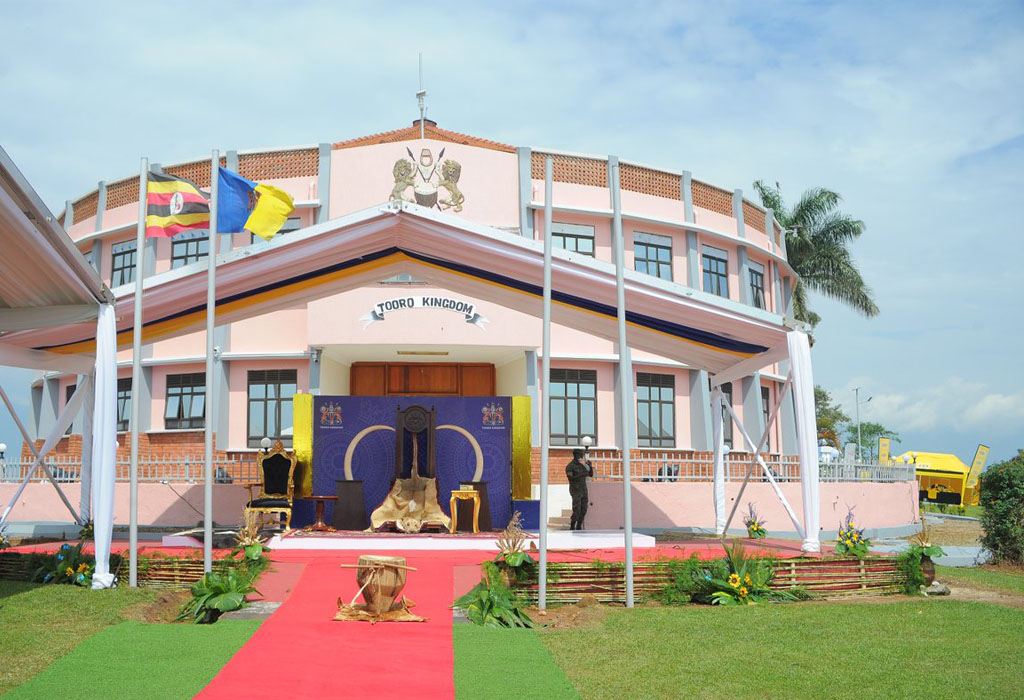
The Tooro Kingdom traces its roots to the fourteenth century, when it emerged as a breakaway from the Kingdom of Bunyoro. Its current traditional ruler, Omukama Oyo Nyimba Kabamba Iguru Rukidi IV, has reigned since 1995, ascending to the throne as a child and now one of Africa’s youngest monarchs. The Tooro Kingdom Palace visible on the hill above Fort Portal and the Karambi Royal Tombs, approximately 10 kilometers from the town, are among the most culturally significant sites in western Uganda. Understanding that you are in a kingdom capital, not merely a regional commercial center, changes how you read the city.
The Highland Climate and Why It Matters for Trekkers
Fort Portal’s elevation of approximately 1,500 metres gives it one of the most pleasant climates in Uganda. Daytime temperatures range from 16°C to 24°C, with cool mornings and evenings. This highland character is not just comfortable; it is relevant to acclimatization. A night or two in Fort Portal before descending to the Kasese valley and ascending through the Rwenzori’s vegetation zones provides a modest but real physiological adjustment to highland conditions. More practically, the cool, fresh air of Fort Portal is restorative after long-haul travel and sets a physical tone well-matched to the mountain expedition ahead.
Fort Portal vs. Kasese: Choosing Your Rwenzori Base
The honest answer for trekkers: use both. Kasese is the correct base for the pre-trek night and the post-trek recovery night; it is closest to both trailheads (12 km to Kilembe and 22 km to Nyakalengija), it is where the expedition logistics are centered, and its accommodation understands the rhythms of mountain groups. Fort Portal is the better base for a broader Western Uganda experience. It has more to offer culturally and naturally, a pleasanter highland environment, and superior accommodation and restaurant options across all price points. The one-hour drive between them makes using both entirely practical, and building an itinerary that spends two nights in Fort Portal before moving to Kasese for the pre-trek night is the structure most experienced western Uganda guides recommend.
Getting to Fort Portal: Transport Options from Kampala and Entebbe
Fort Portal is well connected by road to Kampala and Entebbe, and the journey of four to five hours on generally excellent tarmac is one of the most scenically rewarding drives in Uganda. The table below covers the main transport options.
Route
Option
Duration
Approximate Cost
Notes
Entebbe → Fort Portal
Private hire / transfer
4.5–5.5 hrs
$130–$220 (vehicle)
Most comfortable for expedition luggage via Mubende
Kampala → Fort Portal
Private hire / transfer
4–5 hrs
$110–$200 (vehicle)
Recommended for most trekkers; reliable road
Kampala → Fort Portal
Bus (Link Bus, Gateway)
4–5 hrs
UGX 20,000–30,000 (~$7)
Budget option; departs from the bus park in the mornings; book ahead
Kampala → Fort Portal
Shared matatu
4.5–6 hrs
UGX 15,000–25,000 (~$5)
Cheapest; less comfortable with gear; variable times
Fort Portal → Kasese
Private vehicle
1–1.5 hrs
$30–$60 (vehicle)
Quick tarmac arranged from any Fort Portal hotel
Fort Portal → Kasese
Shared matatu / taxi
1–1.5 hrs
UGX 5,000–8,000 (~$2)
Departs Fort Portal taxi park; budget option
Fort Portal → Kibale (Kanyanchu)
Private or boda-boda
45 min
$15–$30 (private)
Essential for chimp tracking; best arranged ahead
Fort Portal → Bwindi (Buhoma)
Private vehicle
~4 hrs
$80–$120 (vehicle)
Via Kasese–Kabale, tarmac most of the way
The Road Journey: Tea Plantations and the First Rwenzori Sightings
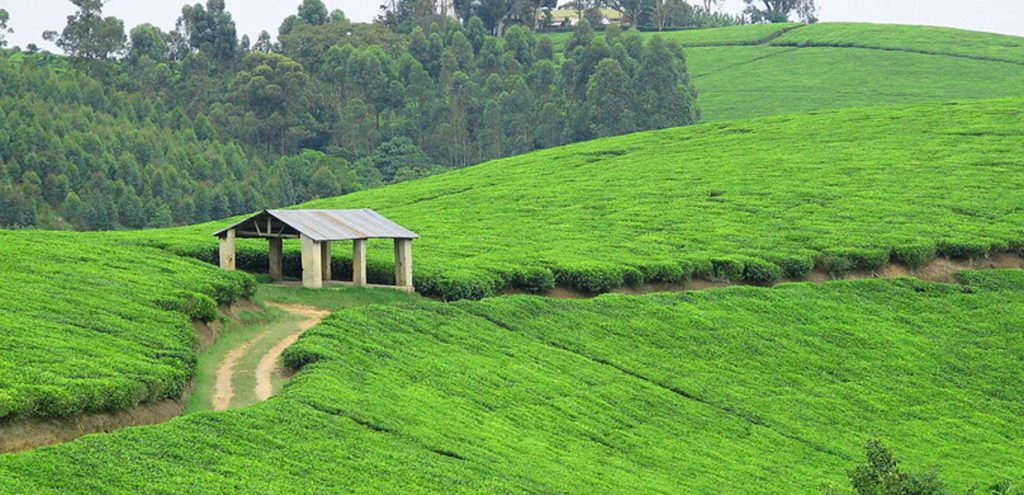
The standard road from Kampala to Fort Portal heads west through Mityana before climbing into the Mubende highlands and continuing through increasingly beautiful western Uganda countryside toward Fort Portal. The final approach passes through tea plantation country, precise rows of dark green tea bushes on red laterite hillsides, before the town appears in the valley ahead. The Rwenzori’s ridgeline begins to appear on the south-western horizon well before Fort Portal, and the mountains grow larger and more defined as you approach. Allow four to five hours from Kampala in a private vehicle; add an extra hour for traffic in Kampala and a fuel stop in Mityana or Mubende.
A second route via Masaka and Mbarara is sometimes faster in heavy Kampala traffic. This route adds distance but offers the scenic Ankole highlands and the equator crossing at Kayabwe, the standard photo stop before heading northwest toward Fort Portal via the western Rift country. Either route works; the choice depends on traffic conditions on the day of travel.
The Bus Option: Practical for Light Travellers
Link Bus Service and Gateway Bus operate daily services from Kampala’s bus parks to Fort Portal at approximately UGX 20,000–30,000 ($6–$8), departing in the morning and arriving four to five hours later. For trekkers traveling light with a single bag, the bus is a perfectly viable and very affordable option. The bus requires cargo management for trekkers carrying full expedition gear, large rucksacks, sleeping bags, and technical equipment, which adds stress to a day that should be as straightforward as possible. Most experienced operators recommend the private vehicle transfer for trekkers with significant luggage.
Where to Stay in Fort Portal: Accommodation for Every Trekker
Fort Portal’s accommodation landscape is more diverse and better quality than most trekkers expect. From a world-class crater lake lodge to a social backpacker hostel, the city has a genuine range across budget levels and several properties that would stand out in any East African highland city.
Mountains of the Moon Hotel: The Definitive Choice
The Mountains of the Moon Hotel is Fort Portal’s most historically resonant accommodation option, and its name, honoring the ancient designation of the Rwenzori range, creates an immediate sense of geographical rightness for any trekker arriving in the city en route to the mountains. The hotel offers clean rooms with reliable hot water, a swimming pool, manicured gardens, and a restaurant that consistently produces excellent Ugandan and international food. It is the city’s natural gathering point for expedition organizers, researchers, and mountain-bound travelers, and its communal spaces provide the informal information exchange that every pre-trek evening benefits from.
Kyaninga Lodge: The Exceptional Experience
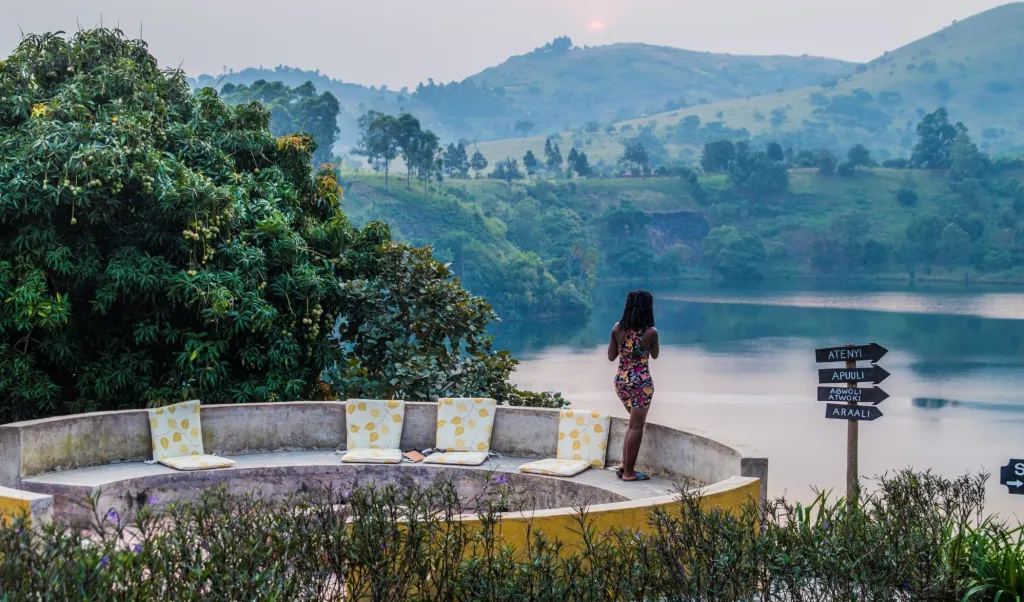
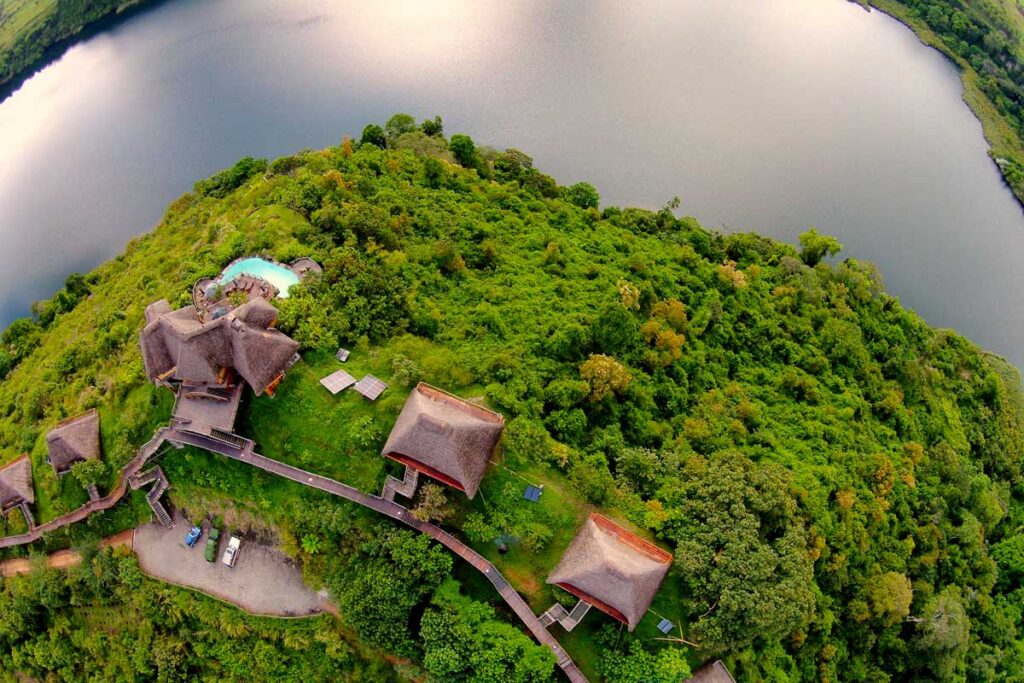
Kyaninga Lodge stands alone at the top of Fort Portal’s accommodation hierarchy for trekkers seeking to reward themselves with something genuinely remarkable, whether before a demanding expedition or as a post-summit celebration. Set on the rim of the Kyaninga volcanic crater lake approximately 12 kilometers from town, the lodge offers private thatched cottages with direct crater views and food that is among the finest produced at any Ugandan lodge. At $300 to $500+ per night, it is a special-occasion choice rather than a standard transit option. But the experience delivers a private cottage above a volcanic lake, with the Rwenzori’s ridgeline visible in the distance on a clear morning, making it one of the most beautiful in all of western Uganda.
Ruwenzori Backpackers: The Social Hub
Ruwenzori Backpackers is where discussions about budget accommodation in Fort Portal begin and end. The name is explicit, the target audience is clear, and the hostel delivers exactly what independent trekkers need: a clean, affordable base with dormitory and private room options, reliable WiFi, communal eating areas, and the kind of informal knowledge exchange that happens naturally when multiple nationalities are planning the same mountain. For solo trekkers who want to find expedition companions or simply compare notes before the mountain, this hostel is the right place to be.
Where to Eat in Fort Portal: Food Before and After the Mountain
The Best Restaurants
Fort Portal’s restaurant scene rewards exploration. The Mountains of the Moon Hotel restaurant is the most reliable single dinner option for trekkers wanting delicious food in a comfortable setting without searching. The Rwenzori Turaco View Hotel restaurant is consistently praised, particularly at breakfast, where locally sourced eggs, fruit, and excellent Ugandan highland coffee on a terrace with green crater lake views constitute one of the finer morning experiences available in western Uganda.
For something more local, the area around the Fort Portal town market offers the full spectrum of Ugandan street food: rolex (egg-and-chapati rolls, a Ugandan institution), grilled nyama choma, and fresh tropical fruit from the stalls. The market is busiest and best in the morning. Fort Portal also has a small Indian restaurant contingent, which some trekkers find welcome after a week of mountain cooking. A curry and naan dinner in a highland city is a deeply satisfying post-Rwenzori meal.
Coffee: A Highland Speciality
Fort Portal sits in Uganda’s arabica coffee-growing highlands, and the town has developed a small but genuine coffee culture around locally grown beans that produces noticeably better coffee than most Ugandan towns. Several cafes and hotels serve filter coffee from Highland Arabica, which is worth seeking. For trekkers who begin their day with serious coffee requirements, Fort Portal is the last reliable opportunity for quality coffee before a week of mountain hot drinks. The expedition cook provides tea and Milo reliably; specialty coffee is not part of the mountain menu. Enjoy it while you can.
The Crater Lakes of Fort Portal: One of Uganda’s Most Beautiful Landscapes
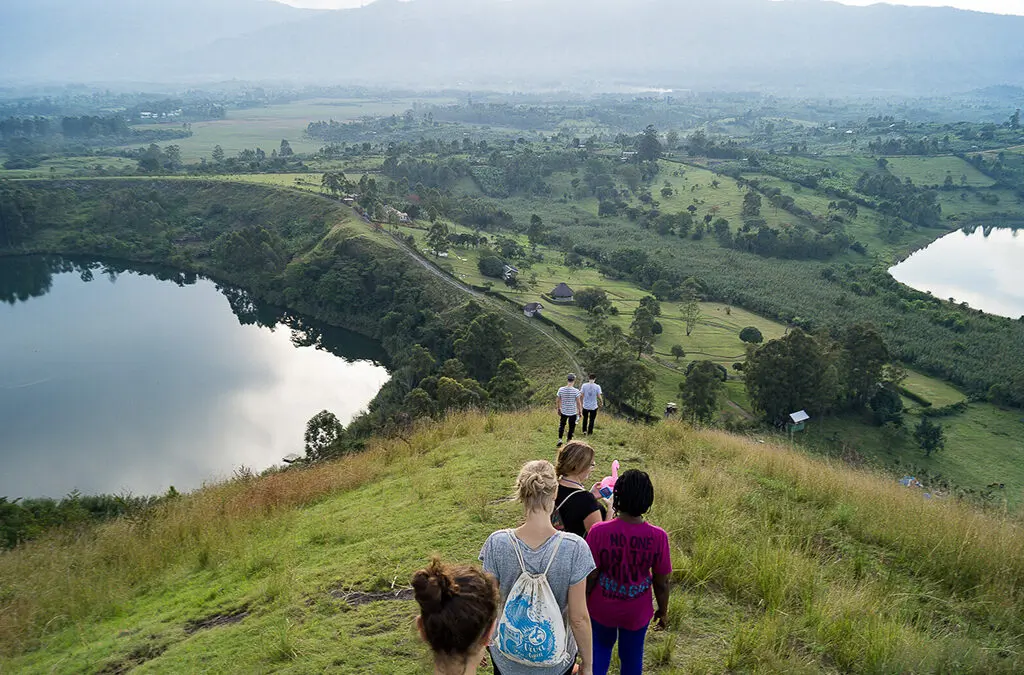
The area around Fort Portal is marked by about fifty volcanic crater lakes in the Kabarole highlands, which are round holes filled with water from old volcanoes, each having its own unique features, colors, and ecosystems. Their colors vary from deep blue-green freshwater to the rust-pink of alkaline craters colored by specific algae. Seen from elevation on a clear morning, the crater lake landscape is one of the most visually striking in East Africa, and it is completely accessible as a day excursion from Fort Portal.
Crater Lake
Distance
Character
Best Access
Lake Nkuruba
~15 km south
Deep forest-rimmed, excellent birding, community campsite, swimming
Private vehicle or boda-boda; community entry fee
Lake Kyaninga
~12 km
One of the largest craters; spectacular views, and Kyaninga Lodge above
Private vehicle; setting of the luxury lodge
Lake Lyantonde
~10 km
Twin crater system; local boats; community swimming
Vehicle or boda: community guides available
Lake Nyinambuga
~8 km
Alkaline “pink lake” algae colour the water rose-pink; photogenic
Short drive; striking colour contrast
Lake Kasenda
~20 km
Large crater; cattle herders on rim; broad highland views
The longer drive was worth it for the scale of the landscape.
Amabere Caves & Falls
~4 km from town
Not a crater lake but most culturally significant: stalactites, falls, legend
Most accessible; guided tours available daily
Lake Nkuruba: Swimming, Birding, and Community Tourism
Lake Nkuruba, approximately 15 kilometers south of Fort Portal, is among the most visited crater lakes in the region for good reason. The crater is deep, the water clear, and the forested rim is excellent territory for Albertine Rift endemic bird species, including some of the same species that inhabit the Rwenzori’s lower forest zones. The community-managed campsite on the crater rim offers accommodation, guided forest walks, and access to the lake for swimming. For trekkers looking for a half-day excursion that combines natural beauty, wildlife, and community tourism in a single location, Nkuruba delivers comprehensively.
The Amabere Caves: Culture Embedded in Geology
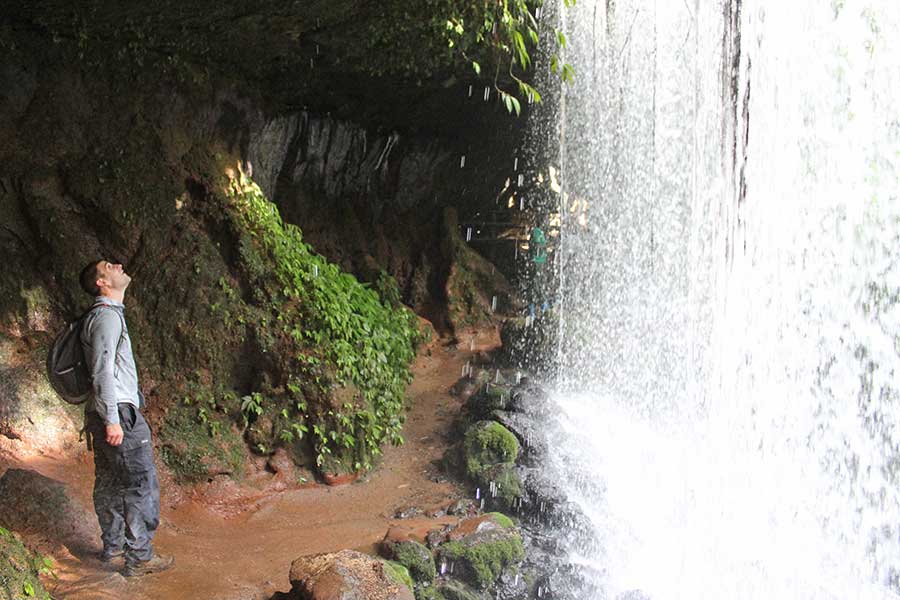
Located just 4 kilometers from Fort Portal town, the Amabere Caves are the most accessible of the major natural sites and the region’s most culturally layered attraction. Stalactite formations (the “amasebere g’abakama” breasts of the princesses who give the site its Rutoro name), small waterfalls, a crater lake at the base, and old forest paths combine with a Tooro Kingdom creation legend that connects the geological landscape to the kingdom’s historical mythology. Guided tours are available daily and last one to two hours. The site can be reached on foot or by a short boda-boda ride from the town center, making it the easiest pre- or post-trek cultural addition in the Fort Portal area.
The Tooro Kingdom: Cultural Heritage at the Heart of Western Uganda
The Palace and the Royal Tombs
The Tooro Kingdom Palace is visible on the hill above Fort Portal town, its prominent position reflecting the cultural and political significance of the kingdom whose seat it is. The palace is the court of Omukama Oyo Nyimba Kabamba Iguru Rukidi IV, reigning since 1995, one of Africa’s youngest traditional monarchs, and guided tours of the palace compound are available on specific days, though the interior is not open during active court periods. The elevated position gives the compound excellent views over the town and the surrounding highland country.
The most historically significant Tooro cultural site open to visitors is the Karambi Royal Tombs, located approximately 10 kilometers from Fort Portal on the road south toward the crater lakes. The burial site of previous Omukamas, maintained in traditional thatched architecture, provides a direct physical connection to the kingdom’s centuries-long history. Appropriate dress and respectful behavior are required; guided tours (strongly recommended) provide the context that makes the visit genuinely informative rather than simply observational.
Traditional Music and Crafts
The Tooro Kingdom maintains active traditions of music, dance, and craftwork. The embaire (xylophone) music tradition of western Uganda is particularly associated with the Tooro and Nyoro kingdoms. Cultural performances can be arranged through tourism contacts in Fort Portal, and the craft market areas near the town center sell traditional weaving, pottery, and beadwork from local producers. Distinguishing genuinely traditional craftwork from tourist-facing production is part of the pleasure of browsing; hotel staff and locally connected guides are the best filters for finding the real thing.
Kibale Forest National Park: Africa’s Finest Chimpanzee Habitat
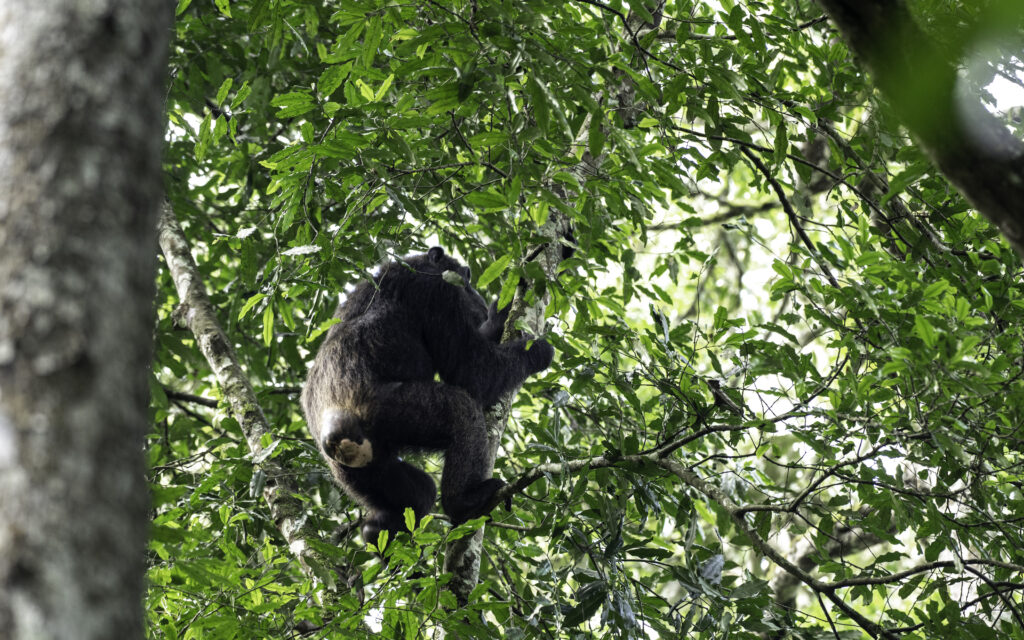
Of all Fort Portal’s proximity advantages for Rwenzori trekkers, none is more compelling than the 36-kilometer, 45-minute drive south to Kibale Forest National Park. Kibale is home to approximately 1,500 chimpanzees in multiple habituated communities, the largest population of habituated chimpanzees in Africa, and guided morning tracking permits through the Uganda Wildlife Authority put visitors within metres of chimpanzee groups that have been socialized to human presence over years of patient habituation
The experience is qualitatively different from gorilla trekking at Bwindi. Where gorilla families are typically calm and slow-moving in human company, chimpanzee communities are quick, vocal, and unpredictably energetic. They call, display, travel rapidly through the canopy, and occasionally descend to the forest floor for social interactions that are simultaneously familiar and deeply alien. The territorial vocalization of a chimpanzee group carrying through the forest at full volume is one of the most viscerally affecting wildlife sounds in Africa. Kibale tracking permits cost approximately $250 per person and must be booked in advance, particularly during the June-September peak season.
Kibale also contains thirteen other primate species; over 370 bird species, including multiple Albertine Rift endemics; and the Bigodi Wetland Sanctuary immediately adjacent to the park, an excellent community-managed birding site that pairs naturally with a morning tracking permit. For trekkers planning the Mahoma Loop or a shorter Kilembe Trail introduction with birding as a secondary objective, a day at Kibale before the mountain creates a primate and bird comparison context that enriches every subsequent forest encounter on the Rwenzori itself.
Book Kibale chimpanzee tracking permits well in advance particularly for July and August when availability can be limited. The standard morning tracking activity costs $250 per person. Add the Bigodi Wetland walk ($30–$75 community fee) for an excellent afternoon birding addition.
Fort Portal as Your Western Uganda Hub: Building the Ideal Itinerary
Three Days in Fort Portal Before the Rwenzori
For trekkers arriving two or three days before their Rwenzori expedition, Fort Portal is the ideal pre-mountain base. A three-day program might proceed as follows: Day 1 is arrival, hotel check-in, a walk through the town and market in the afternoon, and dinner at a lovely restaurant with early sleep. Day 2 is the most activity-intensive morning at Kibale Forest for chimpanzee tracking (depart by 7:30 AM), lunch at the park visitor center, and the afternoon at Lake Nkuruba for swimming and birding or the Amabere Caves for the cultural dimension. Day 3 is a morning at the Karambi Royal Tombs or a crater lake circuit, lunch in Fort Portal, and then the 70-kilometer drive to Kasese for the pre-trek night at your chosen base before Day 1 of the mountain.
Two Days in Fort Portal After the Summit
The post-trek Fort Portal stay is, for many returning trekkers, the most purely pleasurable time they spend in Uganda. You are coming from seven or eight days on the Rwenzori; your legs are depleted, your appetite is extraordinary, and your appreciation of simple things such as a flat bed, a hot shower, and a cold drink is at a level you did not know was achievable. The first afternoon in Fort Portal after the mountain is spent doing nothing more demanding than eating, drinking quietly, and sitting on a terrace. The second day is for gentle exploration of the crater lakes, the Amabere Caves, and a browse of the craft market before the drive back toward Entebbe.
Fort Portal and the Full Western Uganda Circuit
Fort Portal sits at the center of a circuit that, with the Rwenzori as its anchor, constitutes one of the finest two-week Africa itineraries available. Kibale Forest (36 km south) for chimpanzee tracking, Queen Elizabeth National Park (1.5 hours via Kasese) for Big Five game drives and Kazinga Channel boat cruises; Bwindi Impenetrable Forest (4 hours south) for mountain gorilla trekking; and the Rwenzori summit, all within a compact western Uganda geography. Our 12-day Rwenzori and gorilla trekking integrates this circuit into a single fully managed itinerary, and our 19-day grand Uganda adventure adds Murchison Falls and Nile rafting to the complete package. Fort Portal is the natural orientation point for all of it.
Practical Logistics: Money, Connectivity, and Health in Fort Portal
Banking and Cash
Fort Portal has ATMs from Stanbic Bank, DFCU Bank, Centenary Bank, and Equity Bank on or near the main street, accepting international Visa and Mastercard and dispensing Ugandan shillings reliably during business hours. Foreign exchange bureaus in the town center handle USD, EUR, and GBP at reasonable rates slightly less competitive than Kampala’s Forex Row but adequate for top-up needs. The practical advice is to source most of your trek budget from Kampala or Entebbe ATMs and use Fort Portal machines for top-ups only. Kampala, with its higher ATM capacity, is the best place to source mountain tips, a significant cash requirement at the end of the expedition.
Mobile Coverage and Internet
MTN Uganda provides the best network coverage in the Fort Portal area, with 4G service in the town center and reliable coverage on the main roads to Kibale and the crater lakes. A local Ugandan SIM card with MTN data is the most practical internet solution for any western Ugandan trip and is available from network shops in Fort Portal. WiFi at mid-range and luxury hotels is generally reliable. Above the Rwenzori trailhead, mobile data drops to zero; save offline maps, insurance details, and emergency contacts before leaving Fort Portal.
Medical Facilities
Fort Portal has Fort Portal Regional Referral Hospital (the largest public medical facility in western Uganda), Runyenzori Medical Services, and several private clinics and pharmacies near the town center. The private clinics effectively manage minor pre-trek health concerns, stomach issues, and last-minute medication queries. For anything requiring imaging or specialist consultation, the referral hospital is appropriate. For genuine emergencies, evacuation to Kampala’s International Hospital Uganda (IUHK) is standard. Travel insurance covering emergency medical evacuation is mandatory for any Rwenzori expedition.
Fort Portal to the Rwenzori: The 70-Kilometre Connection
The road from Fort Portal to Kasese descends from the highland plateau toward the Western Rift Valley, passing through tea plantation country before the landscape opens into more tropical vegetation as the altitude drops. The Rwenzori’s ridgeline, visible in silhouette from Fort Portal’s higher points, grows larger and more clearly defined with every kilometer of descent. By the time you reach Kasese, the mountain above is not a distant feature but an immediate presence close, high, and entirely serious.
From Kasese, the Kilembe Trail trailhead is 12 kilometers south, the starting point for the 8-day Margherita summit expedition, the 4-day Mutinda Lookout trek, and the shorter Kilembe introductions. The Nyakalengija gate for the Central Circuit is 22 kilometers north of Kasese. Rwenzori Trekking Safaris manages all transfers between Fort Portal, Kasese, and the trailheads as part of fully integrated expedition packages. You name your Fort Portal hotel, and we handle everything from there to the summit and back.
Frequently Asked Questions: Fort Portal, Uganda, for Rwenzori Visitors
How far is Fort Portal from the Rwenzori Mountains?
Fort Portal is approximately 70 kilometers from Kasese, the primary Rwenzori gateway town, a drive of one to one and a half hours on good tarmac. From Fort Portal, the Kilembe trailhead (start of the Kilembe Trail expeditions) is approximately 82 kilometers, about one and a half hours via Kasese. The Nyakalengija gate for the Central Circuit Trail is approximately 85 kilometers from Fort Portal, also around one and a half hours by road. The Rwenzori’s ridgeline is visible from elevated points around Fort Portal on clear days, and the mountains grow progressively larger and more defined during the 70-kilometer drive from the highland city down to the Kasese valley. Rwenzori Trekking Safaris manages all transfers between Fort Portal and the Rwenzori trailheads as part of expedition packages.
Should I base myself in Fort Portal or Kasese for a Rwenzori trek?
The most effective approach is to use both. Fort Portal is the better base for the broader western Uganda experience; it has more cultural and natural attractions, a cooler and more pleasant highland climate, and better accommodation and restaurant options. It is ideal for the two or three days before the expedition begins, particularly if you want to visit Kibale Forest for chimpanzee tracking or explore the crater lakes. Kasese is the better base for the pre-trek night itself; it is closer to both trailheads (12 km to Kilembe and 22 km to Nyakalengija), and the expedition logistics are centered there. The one-hour drive between Fort Portal and Kasese makes using both cities practical within a single itinerary. Spend two nights in Fort Portal for acclimatization and attractions, then move to Kasese the day before the trek begins.
What is Fort Portal, Uganda, known for?
Fort Portal is known as the seat of the Tooro Kingdom, one of Uganda’s four constitutionally recognized traditional kingdoms with a history dating to the fourteenth century, and as the gateway to three of western Uganda’s most celebrated natural areas: the Rwenzori Mountains to the southwest, Kibale Forest National Park (Africa’s finest chimpanzee habitat) to the south, and the volcanic crater lake district that fills the Kabarole highlands in every direction from the city. The city is also known for its cool highland climate at approximately 1,500 metres altitude, its tea plantations, and the availability of excellent locally grown arabica coffee. Fort Portal serves as the principal commercial and cultural hub for western Uganda’s highland region and a natural base for multi-day western Uganda itineraries combining mountains, primates, and cultural heritage.
How do I get from Kampala to Fort Portal?
The main route from Kampala to Fort Portal is by road, approximately 300 kilometers, taking four to five hours by private vehicle. A private hire transfer (arranged through your expedition operator) is the most comfortable option for trekkers with expedition luggage, costing $110–$200 for the whole vehicle. Budget travelers can use Link Bus Service or Gateway Bus from Kampala’s bus parks at approximately UGX 20,000–30,000 ($6–$8), departing in the morning and arriving four to five hours later. There is no direct domestic flight to Fort Portal; the nearest commercial airstrip is at Kasese, 70 kilometers south, served by Aerolink Uganda from Entebbe in approximately one hour. For most international trekkers arriving at Entebbe on overnight flights, the most practical approach is a private vehicle transfer either directly to Fort Portal (345 km, 4.5–5.5 hours) or to Kampala for a night before the Fort Portal transfer.
What crater lakes are near Fort Portal, and are they worth visiting?
The Fort Portal area contains approximately fifty volcanic crater lakes scattered across the Kabarole highlands, each with its own character. The most visited are Lake Nkuruba (15 km south; forest-rimmed; excellent birding; community campsite and swimming), Lake Kyaninga (12 km; one of the largest; setting of the luxury Kyaninga Lodge), Lake Lyantonde (10 km; community swimming; local boats), and Lake Nyinambuga (8 km; an alkaline “pink lake” whose algae color the water rose-pink). The Amabere Caves (4 km from town) combine stalactite geology with Tooro Kingdom legend and a small crater lake — the most culturally significant natural site near Fort Portal and the most accessible. All are worth visiting; a half-day crater lake circuit by private vehicle or boda-boda from Fort Portal covers three to four lakes comfortably and provides one of the most distinctive highland landscapes in Uganda.
Is Kibale Forest National Park worth visiting from Fort Portal before the Rwenzori trek?
Yes, absolutely. Kibale Forest National Park is 36 kilometers from Fort Portal (45 minutes by vehicle) and offers what is widely considered the finest chimpanzee tracking experience in Africa. Kibale is a genuinely exceptional wildlife destination, boasting approximately 1,500 chimpanzees in multiple habituated communities, thirteen primate species in total, and over 370 bird species, including Albertine Rift endemics that also inhabit the Rwenzori’s lower forest zones. Chimpanzee tracking permits cost approximately $250 per person and must be booked in advance through the Uganda Wildlife Authority. A morning at Kibale before the Rwenzori expedition serves both as a world-class wildlife experience in its own right and as a useful familiarization with the primate and bird communities you will encounter on the mountain’s lower trail sections.
Where should I stay in Fort Portal for a Rwenzori trek?
Fort Portal has accommodation across all budget levels. The Mountains of the Moon Hotel (the city’s flagship property, $120–$200 per night) is the most established trekker-friendly option with reliable food, hot water, and a pool. Rwenzori Turaco View (boutique, $90–$160) is highly praised for food quality and forest-edge setting. Kyaninga Lodge (luxury, $300–$500+), set on the rim of a volcanic crater lake 12 kilometers from town, is one of Uganda’s finest lodges and ideal for a special occasion before or after the summit. Ruwenzori Backpackers (budget, $15–$35) is the natural choice for solo trekkers and budget travelers wanting a social atmosphere. Crater Valley Cottages (boutique, $80–$150) offers crater lake views in self-contained cottages for a peaceful recovery setting. Rwenzori Trekking Safaris can recommend and book accommodation to match your budget and program.
What is the best time to visit Fort Portal, Uganda?
The best time to visit Fort Portal is during Uganda’s dry seasons: June through September (primary) and December through February (secondary). During these windows, the crater lake landscape is at its most photogenic with clear skies and mirror-calm water; Kibale Forest chimpanzee tracking has more reliable trail conditions; and the Rwenzori Mountains (visible from Fort Portal’s higher points) are most likely to show their glaciated peaks above the clouds. The dry season also coincides with the best conditions for the Rwenzori summit approach. Fort Portal is pleasant year-round; the highland climate moderates the rainfall impact significantly compared to lower-altitude Ugandan cities, but the dry season windows offer the clearest weather and the best experience across all the western Uganda attractions.
From Fort Portal to the Summit: Let Us Build Your Complete Itinerary
Fort Portal is where the western Uganda experience coheres, where the highland climate, the ancient Tooro Kingdom, the crater lake landscape, and the distant profile of the Rwenzori converge into a sense of place that no lowland Uganda experience replicates. It is the right place to arrive before a mountain expedition and the right place to return to after one. But in the end, it is the gateway. The mountain is what you came for.
At Rwenzori Trekking Safaris, we design and manage expeditions that use Fort Portal, Kasese, Kibale, Bwindi, and Queen Elizabeth National Park as the complementary chapters of a western Uganda story whose centerpiece is always the Rwenzori summit. We coordinate every transfer, accommodation, gorilla permit, chimpanzee permit, and mountain logistic from a single point of contact so your only job is to arrive, look around, and walk when the guide says it is time.
Contact us to start planning your Western Uganda expedition. Tell us your arrival date, how many days you have, what you want to see, and what you want to climb. We will build you a complete program from Fort Portal’s crater lakes to Margherita Peak and everything extraordinary in between.
ANY QUESTIONS?
If you need any clarification about a Rwenzori trek, contact one of our trekking experts to start planning your journey today.
A 10% percentage of your safari proceeds goes to supporting the local Bakonjo Communities (orphans, schools & homes)
Simply incredible I have been very fortunate to go trekking and climbing in many incredible places around the world over the years, the Rwenzori mountains are one of the most incredible places I have ever visited. Rwenzori Trekking Safaris organized my trip to do the central circuit and summit Margherita peak. The guides, Josephat and Joackim, and porters were all friendly and helpful. The food was plentiful, but I suggest bringing some of your own day snacks you might like as well as rubber knee high boots, I suggest LaCrosse Burly Aero. I was able to complete the loop and peak in 4 days, but most people take 7-8 days I believe which is definitely recommended for acclimatization. There are new huts being built at Elena camp and Nyabitaba that cost a small amount extra, so ask about that too. Its a real adventure and in my experience way more rugged, beautiful, and less traveled than Kilimanjaro. The landscapes and unique plant life are like out of Jurassic Park.
Posted on Tripadvisor
Simon B
Verified
A wonderful experience in the Rwenzoris We did the seven-day Central Circuit and had a wonderful experience. The landscapes were spectacular and really diverse. Also, the guides, porters and cooks were super friendly and helpful. Thank you very much!
Posted on Tripadvisor
Explorer43375006028
Verified
Magical mountain forest We did the two day hike to Mahoma Lake, and it was beautiful. The guide was superfriendly, the coock made a great stew and the porters were really nice.
Posted on Tripadvisor
Dominic N
Verified
Forget Kilimanjaro, do this instead! A beautiful and surreal 4 day hike in the Rwenzori mountains to Mutinda Lookout, made by the staff. Good food, good basic camp accommodation, excellent knowledge of the guides and lots of laughs. I did this trip solo and joined a welcoming group of 6. Pack for all weather, it gets particularly cold at night at Mutinda camp. Total cost was $635/2.2m UGX
Verified by Trustindex
Trustindex verified badge is the Universal Symbol of Trust. Only the greatest companies can get the verified badge who has a review score above 4.5, based on customer reviews over the past 12 months. Read more
Hi there, welcome. Need help planning a trek, safari, or adventure? Chat directly with a real expert and mountain guide for honest advice, clear answers, and practical recommendations. No guesswork, no pressure.