Trek for 7 days to Bottego Peak (4,715 m) on the Rwenzori’s hidden fifth summit. Wild camps at Skull Cave & Lac de Luna. Expert guides & technical gear included.
7-Day Mount Gessi Trek | Climb Bottego Peak (4,715 m)
7-Day Mount Gessi Trek | Climb Bottego Peak, Rwenzori Mountains, Uganda (4,715 m)
Embark on a 7-day Mount Gessi trek in Uganda’s Rwenzori Mountains. Hike through lush rainforests, bamboo forests, and alpine zones, and summit the rugged 4,798 m peak. Perfect for serious trekkers seeking off-the-beaten-path adventure in East Africa.
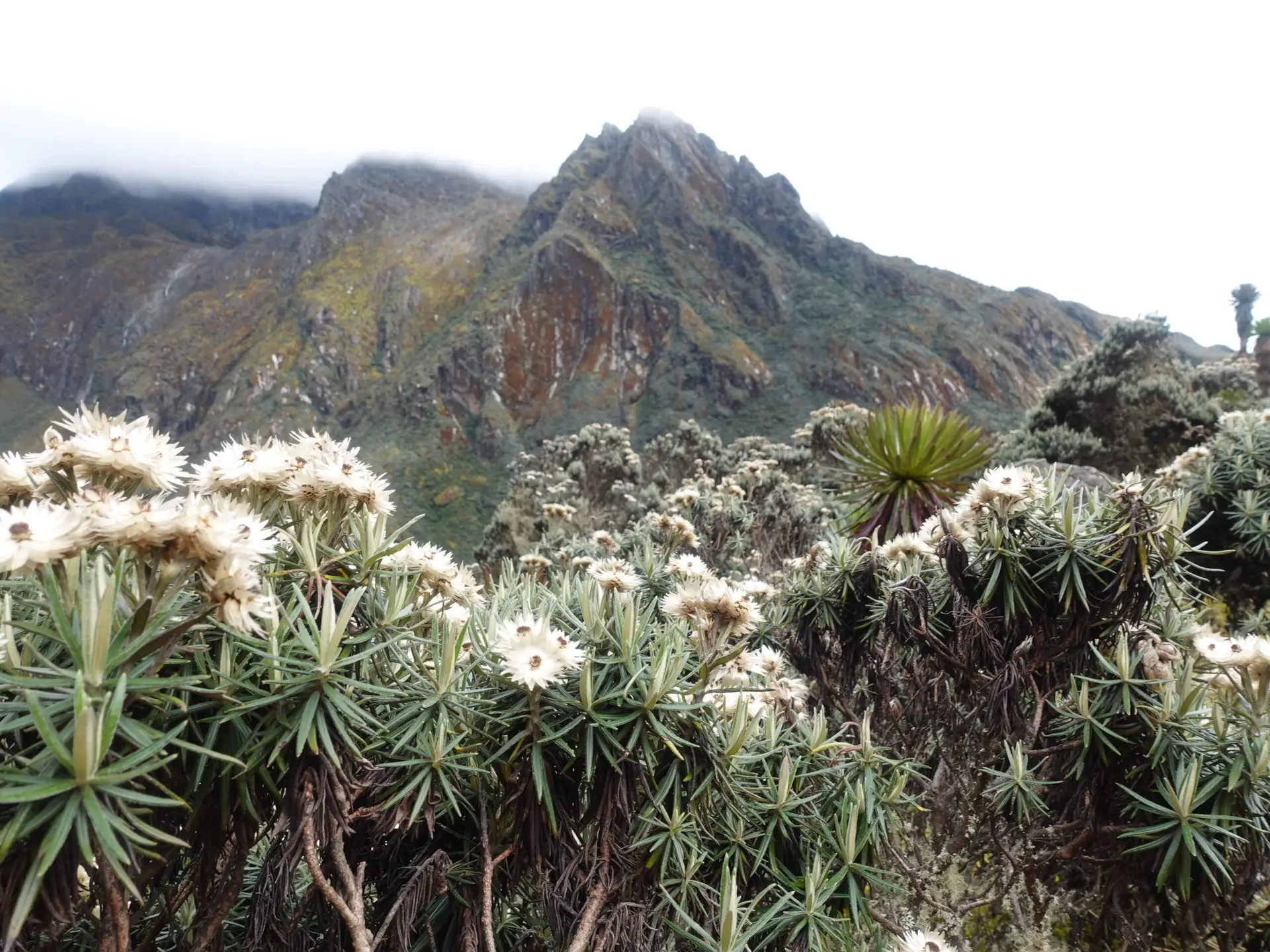
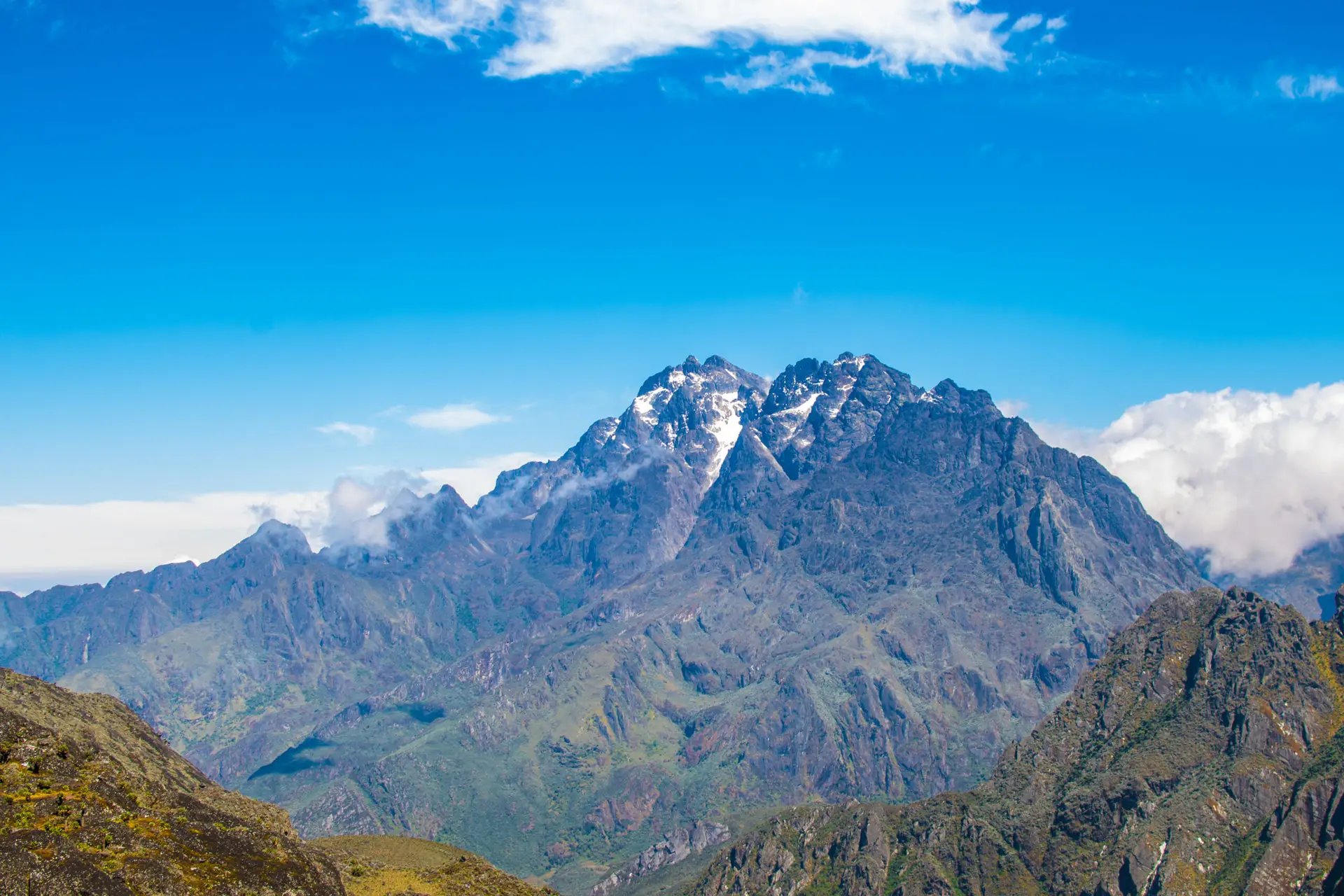
There is the Rwenzori that most trekkers know: Margherita Peak, the Central Circuit, is the route photographed and written about in every East African adventure guide. And then there is the Rwenzori that almost nobody knows: the remote western ranges, the wild camps above the clouds, and the peaks that have seen fewer human footprints in a decade than Kilimanjaro sees in a morning. Mount Gessi is in the Rwenzori. Its Bottego Peak, standing at 4,715 m above sea level, is the fifth-highest summit in the range and one of the least visited 4,000 m peaks on the entire African continent.
The 7-Day Mount Gessi Trek is a complete expedition: seven days of genuine wilderness travel through all five of the Rwenzori’s major vegetation zones, including two nights of wild camping at Skull Cave and the extraordinary Lac de Luna a glacially-carved alpine lake at ~4,200 m whose Swahili name translates simply as ‘Lake of the Moon.’ The summit approach to Bottego Peak involves fixed ropes, steep rocky terrain, and the kind of exposure that puts you unambiguously in the category of high-altitude mountaineering. The views from the top look westward into the Democratic Republic of Congo. The experience is unlike anything else available on the African continent.
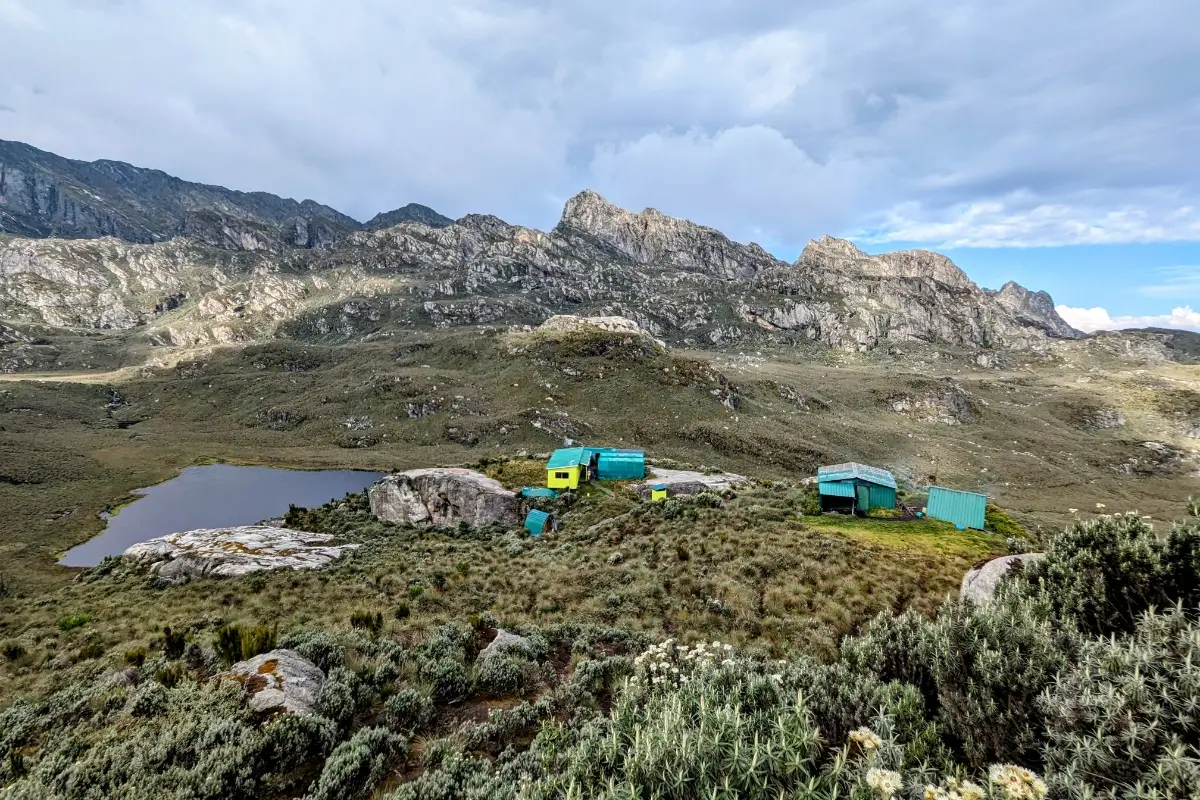
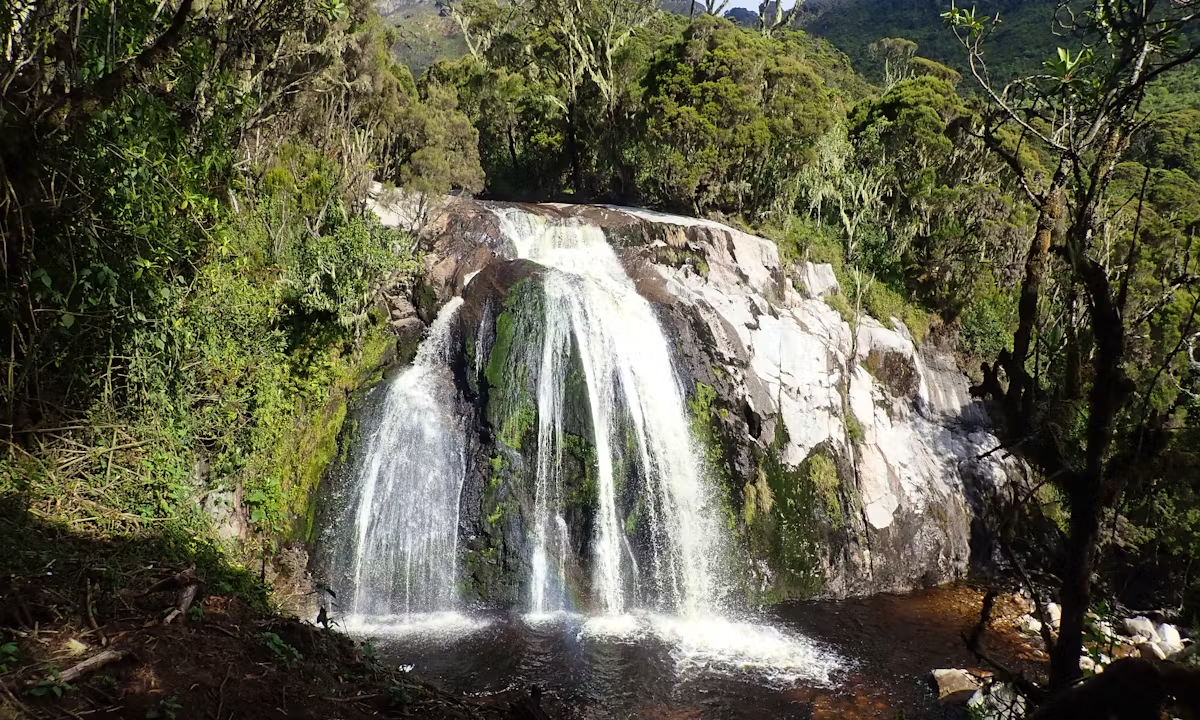
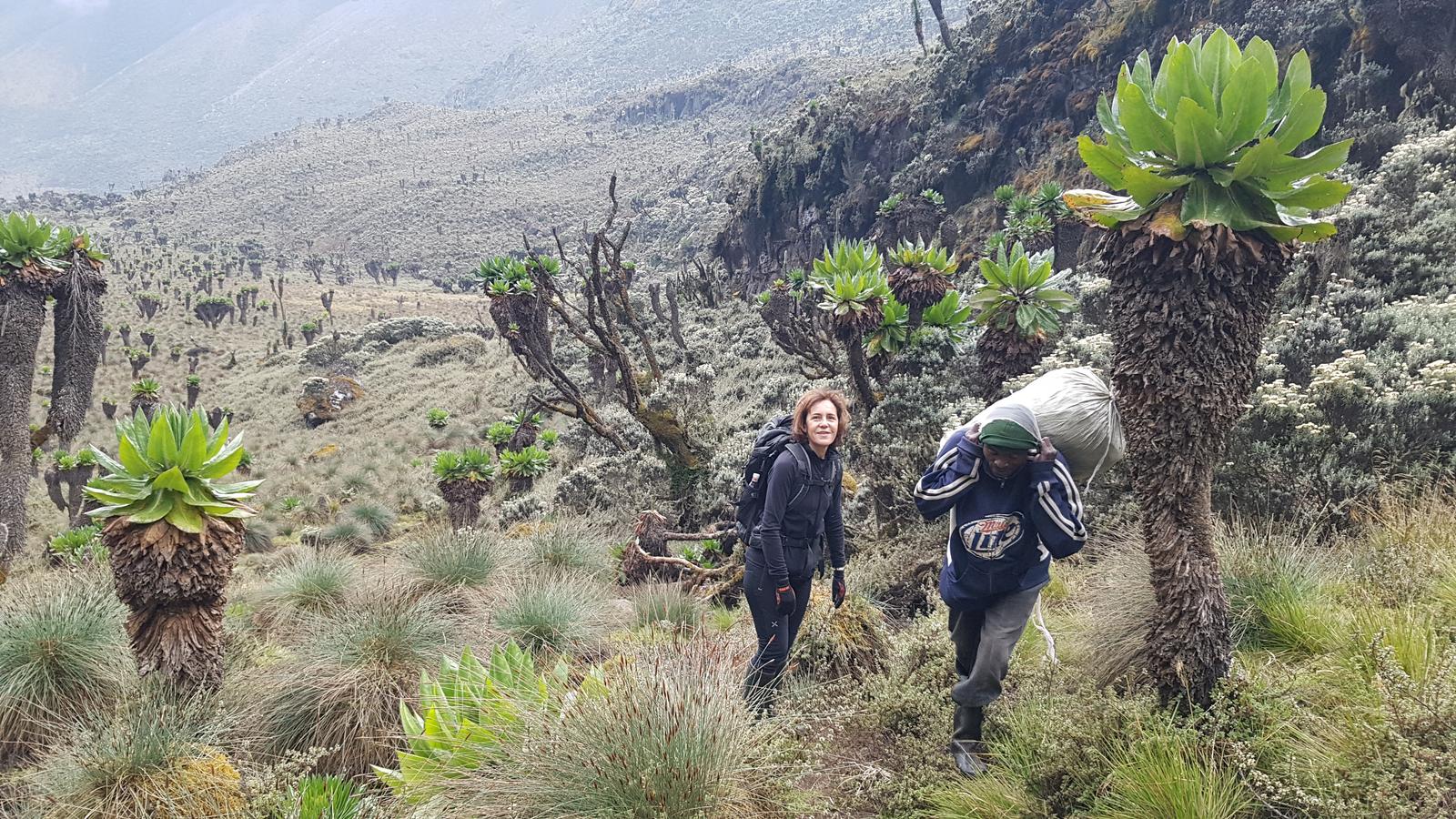
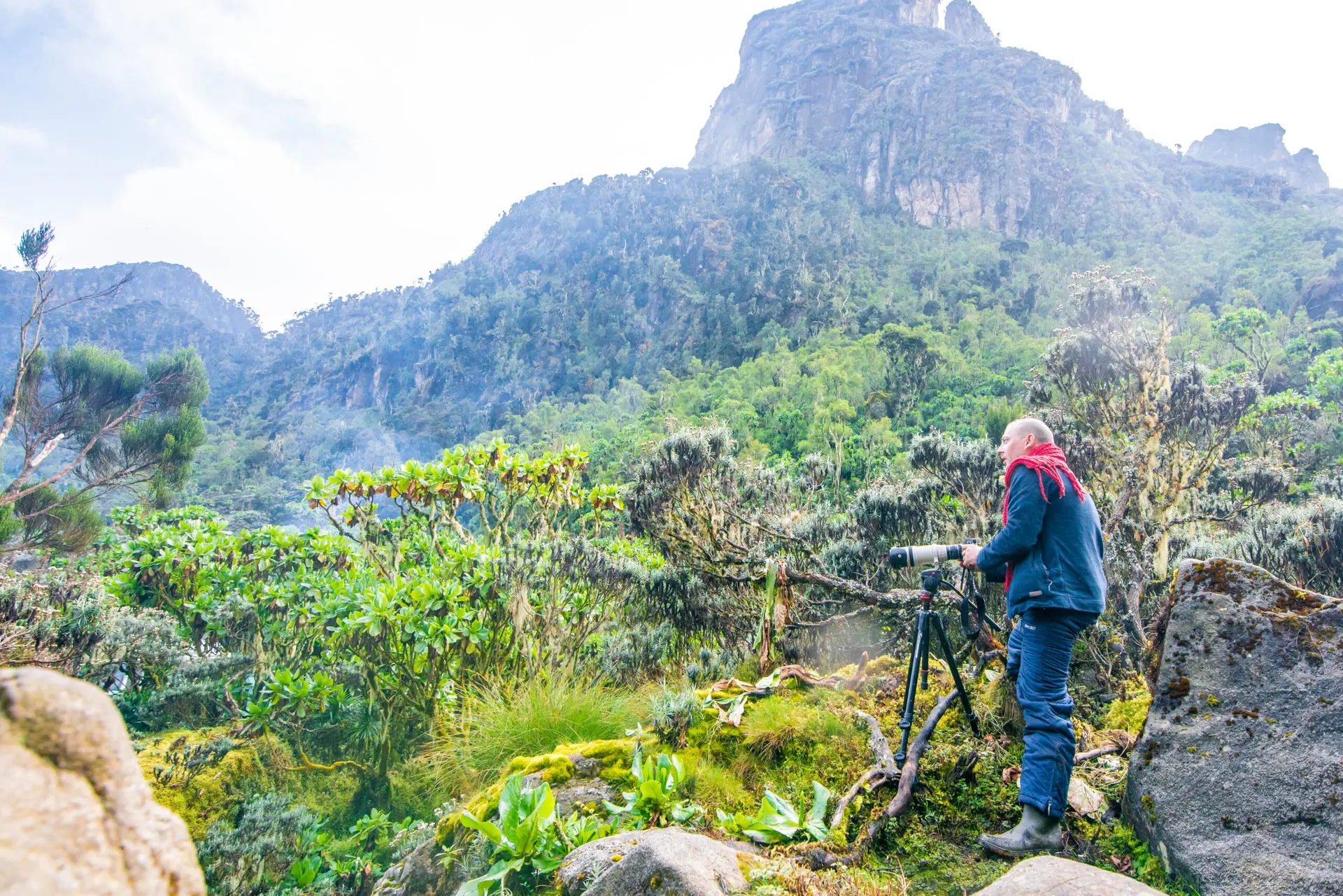
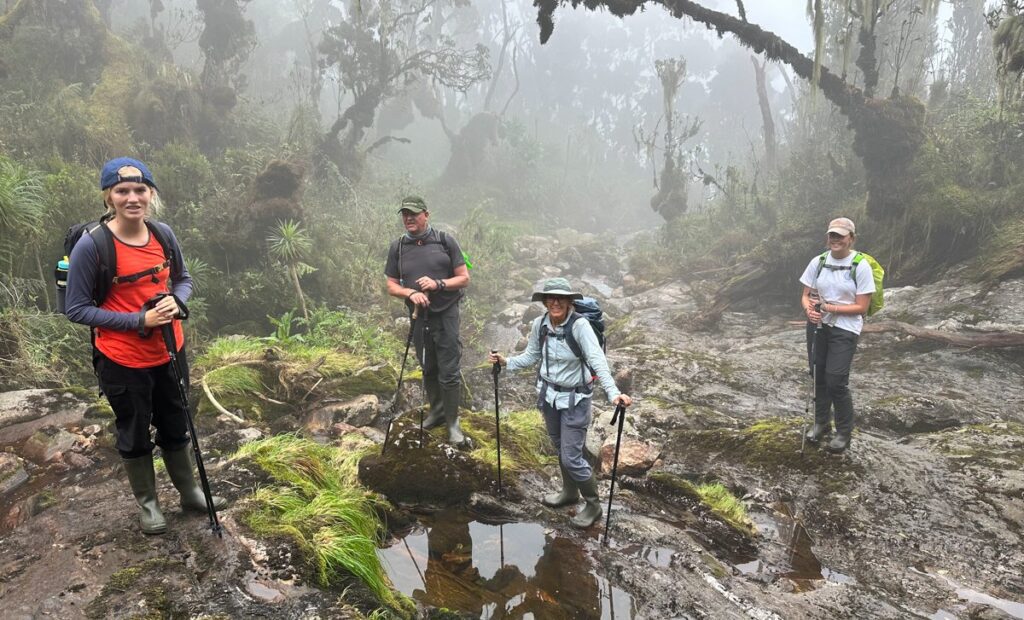
About Mount Gessi: The Rwenzori’s Hidden Fifth Peak.
Mount Gessi is the fifth-highest massif in Rwenzori Mountains National Park, a UNESCO World Heritage Site straddling the Uganda–DRC border. The first scientific ascent of the Rwenzori’s major peaks was made by the Duke of Abruzzi’s 1906 Italian expedition, which followed the Italian explorer Vittorio Bottego. Both summits carry Italian names from this historic expedition, which first mapped and named much of the range’s high geography.
| Summit | Elevation | Notes |
| Bottego Peak | 4,715 m / 15,469 ft | Highest summit of Mount Gessi is the objective of this trek |
| Iolanda Peak | 4,706 m / 15,440 ft | Second summit of Mount Gessi was named by Duke of Abruzzi |
Mount Gessi occupies the western margins of the Rwenzori’s main chain, a position that gives it a fundamentally different character from the more central peaks: it looks outward toward the Congo rather than inward toward the glaciated Stanley–Speke–Baker core. This western orientation means Gessi’s upper ridges offer a perspective on the range that no other summit provides, and it means the approach involves terrain that is genuinely remote, lightly maintained, and navigated almost exclusively by guide teams with direct local knowledge. The Rwenzori glaciers that once covered Gessi’s upper slopes have retreated significantly, but residual snowfields and ice patches remain on the summit ridges in some seasons.
Trek at a Glance: 7-Day Mount Gessi Expedition
| Duration | 7 Days / 6 Nights |
| Total Distance | ~62 km (Days 1–7, full approach and return) |
| Summit / Max Elevation | 4,715 m Bottego Peak, Mount Gessi (5th highest Rwenzori summit) |
| Trek Route / Trail | Central Circuit Trail extended western approach |
| Key Camps | Nyabitaba (2,650 m) · John Matte (3,505 m) · Skull Cave (wild camp) · Lac de Luna (wild camp) |
| Accommodation | Mountain huts (Nyabitaba, John Matte) + wild camping with tents (Skull Cave, Lac de Luna) |
| Difficulty | Strenuous remote, multi-terrain, high-altitude, wild camping |
| Best Season | December–February & June–August |
| Group Size | 1–8 trekkers (private departures available) |
| Technical Gear | Ropes, ice axes, helmets, harnesses provided for summit approach |
| Start / End Point | Nyakalengija village, ~22 km from Kasese town |
| Special Feature | Tents at Skull Cave & Lac de Luna · Congo DRC border views · Least-visited Rwenzori peak |
Why the 7-Day Mount Gessi Trek? What Makes This Expedition Unique.
In a world where ‘off the beaten track’ is often marketing language, the Mount Gessi trek genuinely earns this description. The Central Circuit Trail through Nyabitaba and John Matte is one of Africa’s great trekking routes, but beyond John Matte, where the Gessi route branches westward into the park’s interior, you enter terrain that receives only a tiny fraction of the visitors who walk the standard circuit. No queues at the hut. No other trekking groups are at camp. Just your guide team, the mountain, and a wilderness that feels genuinely unexplored.
The wild camping element is another defining distinction. Skull Cave and Lac de Luna are not huts; they are natural features of a remote mountain landscape that your guide team transforms into a functioning camp each evening using tents and equipment carried from lower elevations. The experience of eating a hot meal cooked by your porter team beside a glacially carved lake at 4,200 m, with the DRC border mountains silhouetted on the western horizon, is the kind of travel memory that does not fade. It also demands more of you: colder nights, less physical comfort, and the need for a -5°C sleeping bag and proper cold-weather layering are nonnegotiable.
The summit of Bottego Peak (4,715 m) offers a panorama that is completely unique among Rwenzori summits. Where Margherita Peak looks down on its own glacier and across to Mount Speke, Gessi’s Bottego Peak looks west into the Congolese villages visible in the foothills on clear days, with the DRC’s mountains and forests stretching to the horizon. It is a perspective that reminds you where you are: on the roof of central Africa, on a border that bisects one of the world’s great biodiversity hotspots.
For those who have already completed the 7-Day Margherita Peak climb or the 5-Day Mount Speke expedition, the Mount Gessi trek is the next logical objective, a completely different experience on the same mountain range, targeting a summit that comparatively few people ever reach. It is also an essential component of the ambitious 13-Day 6-Peaks Grand Expedition, which summits every major Rwenzori peak in a single continuous traverse.
Full Day-by-Day Itinerary: 7-Day Mount Gessi Trek
Day 1: Nyakalengija Trailhead (1,650 m) to Nyabitaba Camp (2,650 m)
Distance: ~10 km | Elevation Gain: ~1,000 m | Hiking Time: 5–6 hours | Terrain: Afro-Montane forest, Mubuku River valley, steep ridge
Your 7-Day Mount Gessi expedition begins at the Uganda Wildlife Authority ranger station in Nyakalengija, ~22 km from Kasese. Park entry is processed here; carry your passport and booking confirmation. After a full guide briefing covering the week’s route, camp logistics, wild camping protocol, and safety procedures, the team departs by 9:00 AM at the latest.
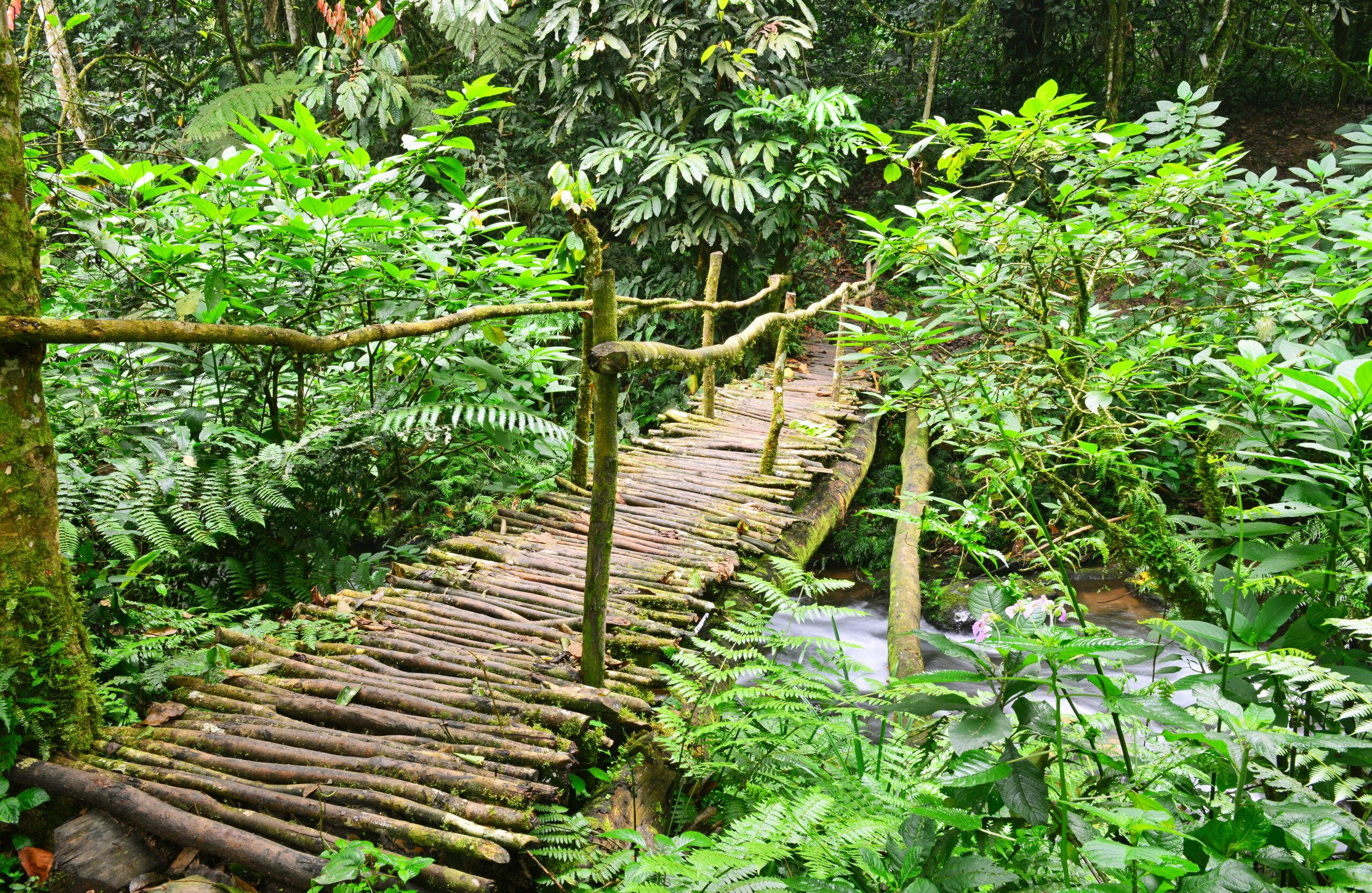
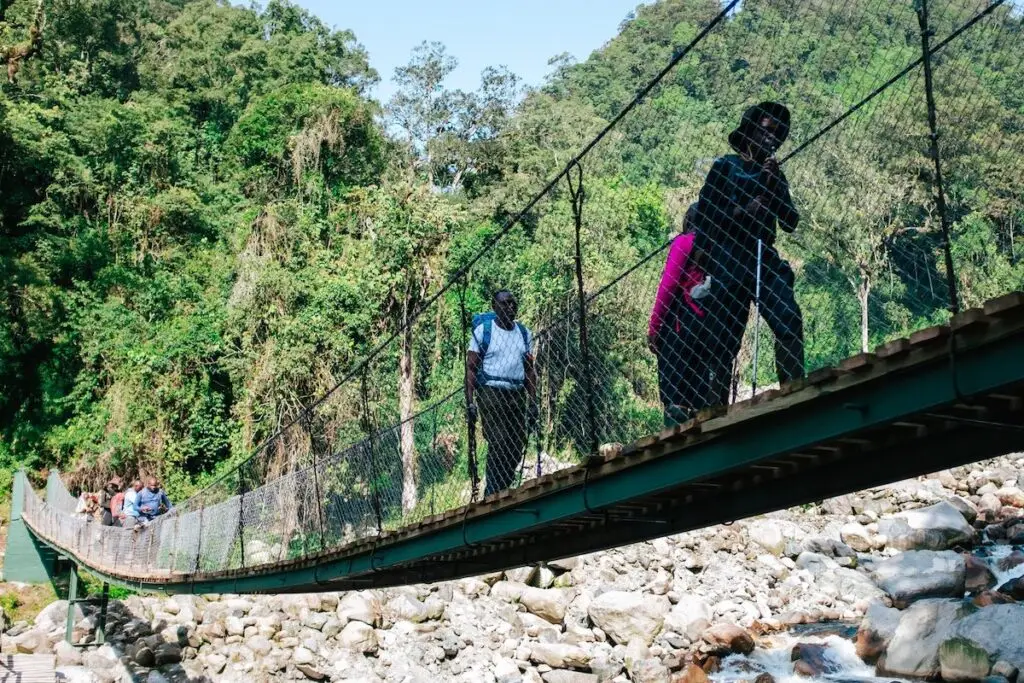
The first section follows the Mubuku River valley through increasingly dense Afro-Montane forest. Ladders assist with several steep sections, and a series of wooden bridges cross tributary streams. The forest canopy closes overhead almost immediately; the sense of entering a world apart from the lowlands is immediate and complete. Black-and-white colobus monkeys are regularly spotted in the upper canopy in this section; their explosive alarm calls announce your progress to the rest of the forest long before you see them.
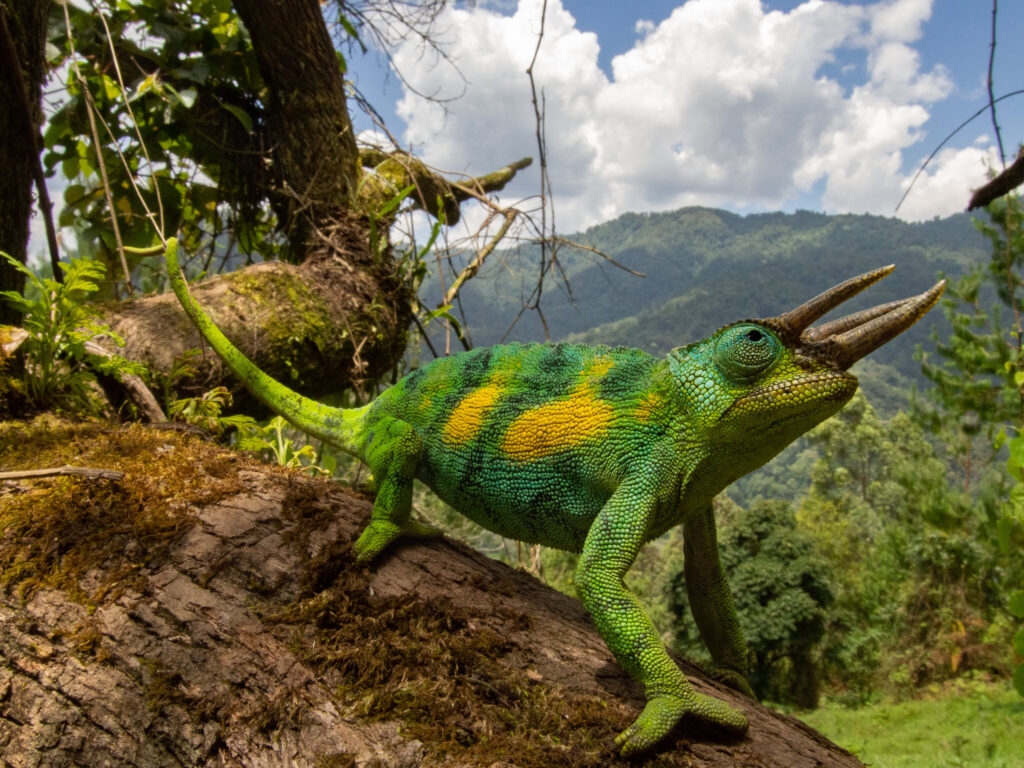
The trail steepens toward the Nyabitaba ridge, with the endemic three-horned Rwenzori chameleon (Trioceros johnstoni) making frequent appearances on low vegetation as the forest becomes denser and more mossy. The Rwenzori turaco’s vivid crimson flight feathers and distinctive call are constant companions in the mid-canopy. On clear days, the distant profile of Mount Stanley becomes visible from open ridge sections as the altitude rises.
Nyabitaba Camp (2,650 m) is a wooden mountain hut set on a forested ridge above the Mubuku Valley. The Porter’s Rest Bridge, a short walk below camp, offers a sweeping view over the valley and is a reliable photography spot. After dinner, your guide delivers the Day 2 briefing and ensures you understand the Kurt Shaffer Bridge crossing logistics for the following morning.
Key highlights: Afro-Montane forest immersion · Colobus and blue monkey sightings · Rwenzori turaco encounters · Three-horned chameleon sightings · Porter’s Rest Bridge viewpoint · First Mount Stanley views on clear days
Day 2: Nyabitaba Camp (2,650 m) to John Matte Camp (3,505 m)
Distance: ~7.5 km | Elevation Gain: ~855 m | Hiking Time: 6–7 hours | Terrain: Bamboo zone, heather zone, Kurt Shaffer Bridge, River Bujuku
Day 2 descends first to the Kurt Shaffer Bridge, one of the iconic landmarks of the Central Circuit, where the Mubuku and Bujuku rivers meet in a powerful confluence of dark water over black volcanic rock. This location is one of the best photography spots on the lower circuit, where the two rivers merge beneath a canopy of overhanging forest in a narrow, dramatic gorge. Cross the bridge and begin the long climb toward John Matté.
The bamboo zone begins at approximately 2,700 m, with giant mountain bamboo (Arundinaria alpina) rising 10–12 m in dense corridors that narrow the trail and create the distinctive muted, green-tinged light that characterizes this vegetation zone. Move through here steadily; the trail underfoot is muddy, and the bamboo roots can catch ankles. Rwenzori turacos are especially vocal in the bamboo transition zone, their calls carrying surprisingly far through the dense stems.
As the bamboo recedes, giant tree heather (Erica arborea and Erica trimera) takes over the beginning of the heather zone that will define the trek’s character from here to the summit. Walking the shores of the River Bujuku in the upper heather zone, with the river running clear and fast over mossy boulders beside a moss-smothered forest, is one of the Central Circuit’s quiet pleasures. The path is frequently waterlogged here; rubber galoshes or gaiters are valuable.
John Matte Camp (3,505 m) sits on a broad heather plateau with panoramic views toward Mount Stanley and the Margherita face to the north. At 3,505 m, the altitude is meaningful; some trekkers experience mild headaches or reduced appetite on the first evening here. Drink well, eat a full dinner, and prioritize an early night. Tomorrow’s route into the wild camp zone begins from here, and Day 3 is where this trek diverges from the standard circuit.
Key highlights: Kurt Shaffer Bridge confluence · Bamboo zone corridor · Heather zone transition · River Bujuku forest walk · Mount Stanley panorama from John Matte
Day 3: John Matte Camp (3,505 m) to Skull Cave (Wild Camp, ~3,900 m)
Distance: ~6 km | Elevation Gain: ~395 m | Hiking Time: 6–7 hours | Terrain: Boggy heather zone, rocky ridges, remote upper valley
Day 3 is the day the Mount Gessi trek reveals its true character. From John Matte, the route leaves the standard Central Circuit and turns westward as soon as the trail becomes less defined, the landscape more remote, and the vegetation more demanding. You are now in terrain that sees a fraction of the visitors the main circuit receives. Your guide leads the way; follow precisely and maintain a steady pace.
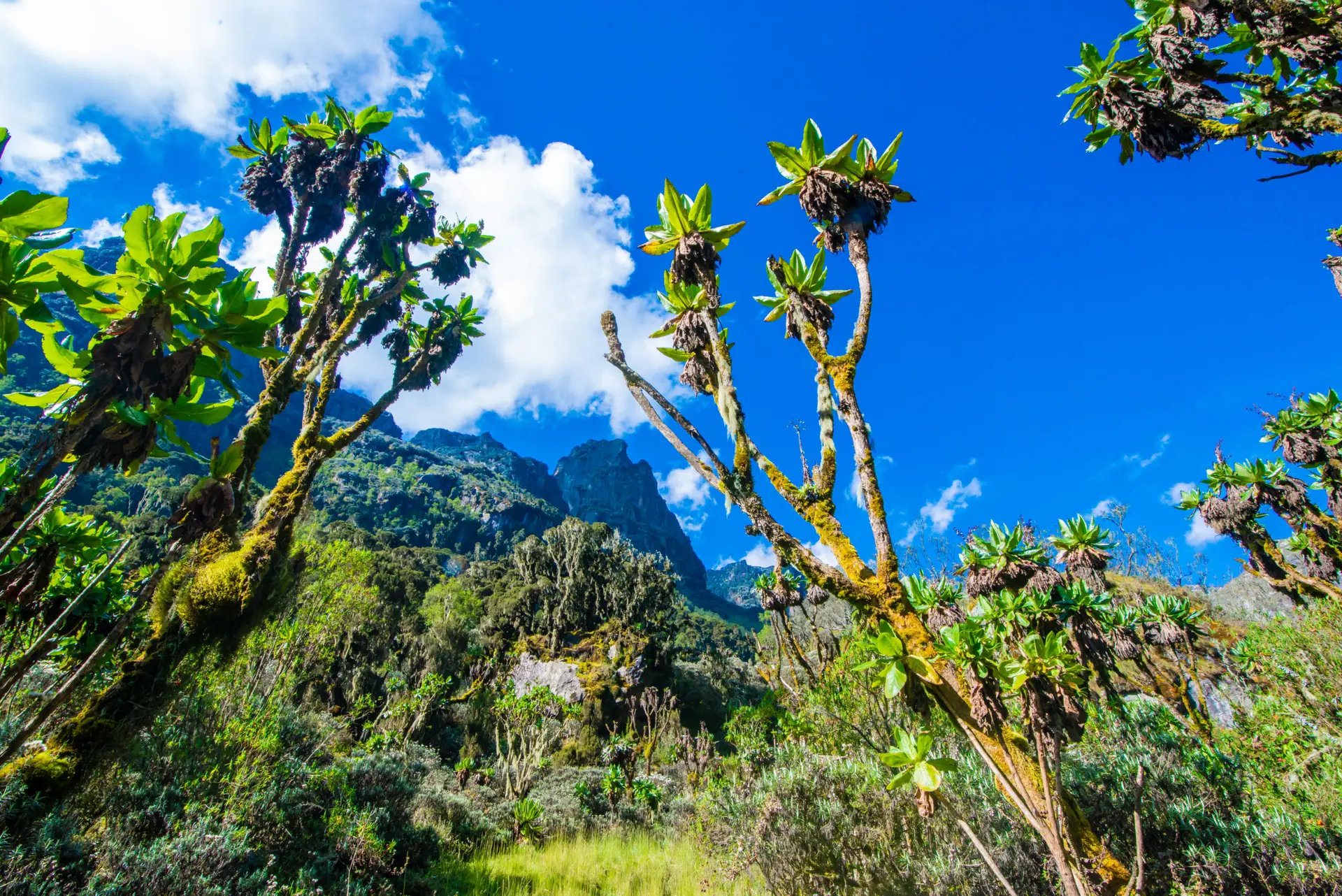
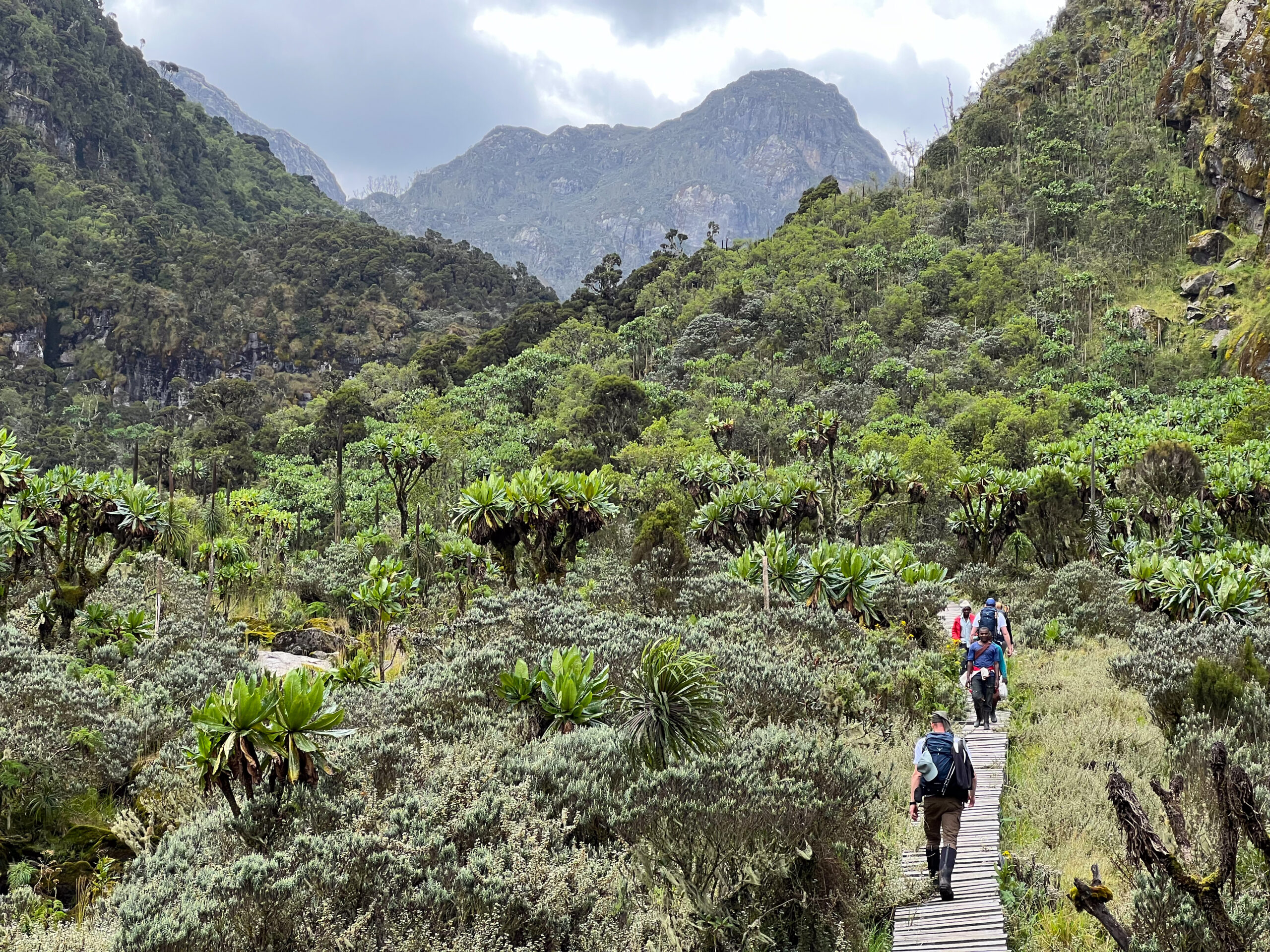
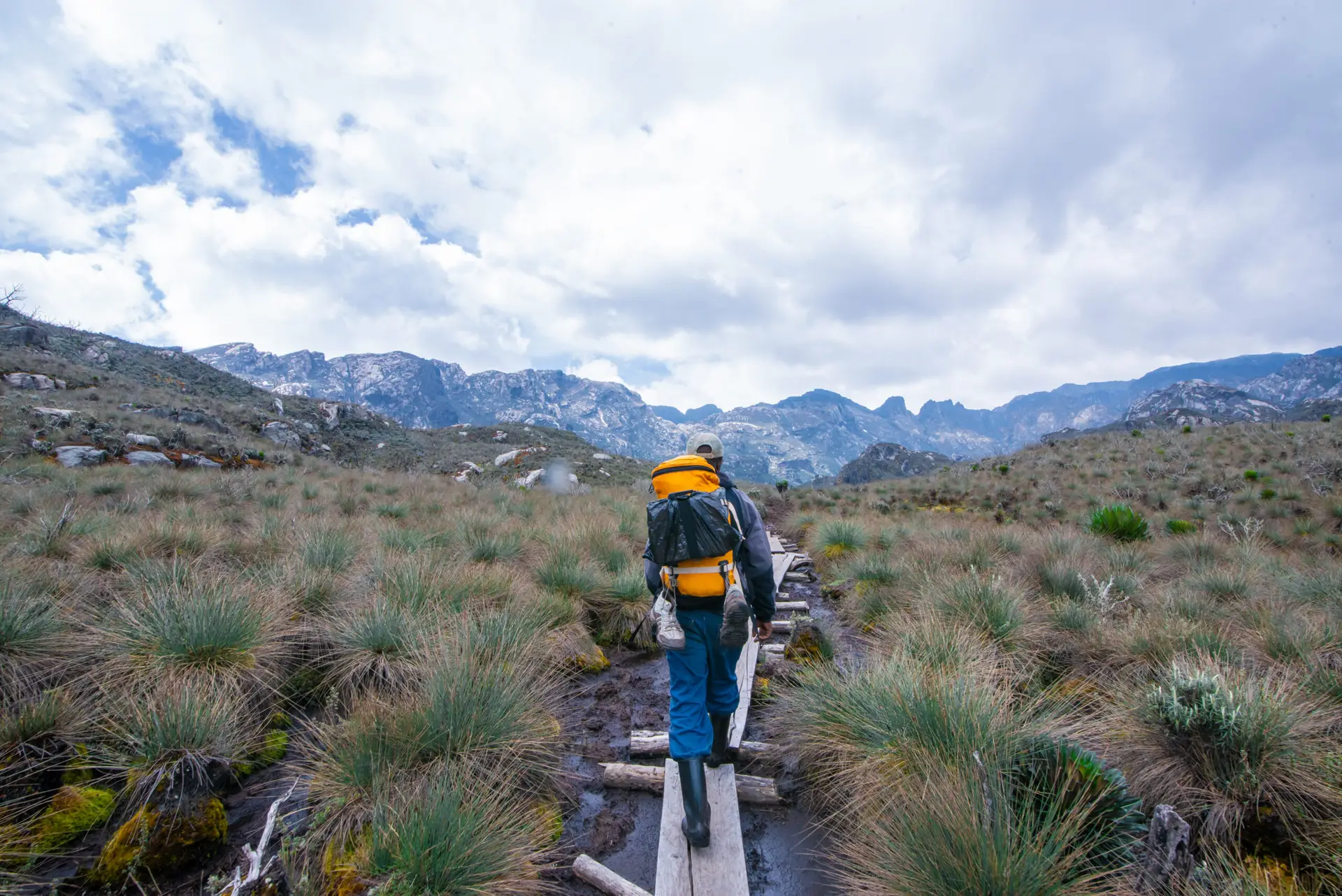
The trail enters a boggy heather zone section that can be genuinely challenging, with ankle-deep or knee-deep mud, standing water, and tussock grass that conceals uneven ground underfoot. Rubber gumboots or neoprene gaiters are mandatory here. Your porters navigate this terrain with practiced efficiency; trust their footstep choices when the path is unclear. Giant lobelias (Lobelia wollastonii) start to grow more densely across the bog, with their spike-like inflorescences rising 2–3 m above the valley floor.
The terrain becomes rockier and steeper as the trail climbs out of the bog onto the ridges above. Views open dramatically as the altitude rises to the main Rwenzori massif to the east, the valley below receding, and the western horizon beginning to reveal the first glimpses of the DRC border terrain. The Afro-alpine plant communities, lobelias, groundsels, and heather, take on a more dramatic character at this elevation, their scale and density increasing as you push deeper into the park’s western interior.
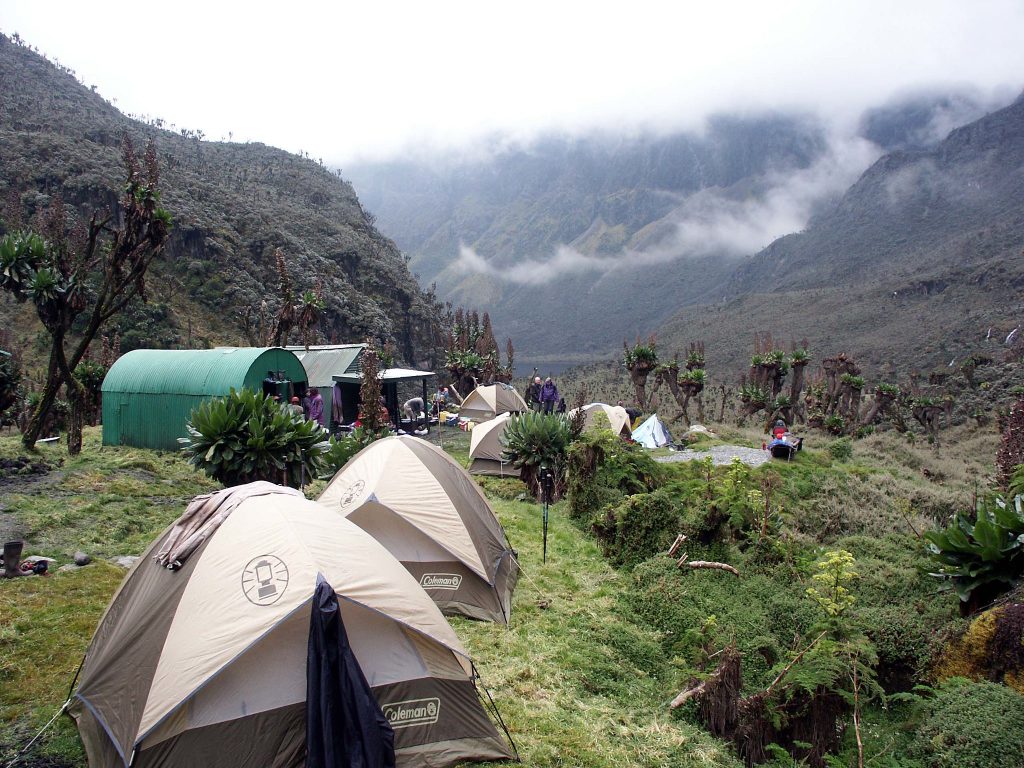
Skull Cave (~3,900 m) is a natural rock feature, a cave or deep overhang in the upper heather and rock zone used as the Day 3 camp reference point. Your porter team pitches tents on the sheltered ground near the cave, sets up the camp kitchen, and has dinner ready as you arrive. This is your first wild camp night: colder, quieter, and more remote than anything on the standard circuit. A -5°C sleeping bag is in active use starting tonight. The night sky here, when clouds permit, is extraordinary.
Key highlights: Departure from standard circuit into remote western terrain · Boggy heather zone navigation · Giant lobelias in increasing density · First DRC border views · First wild camp night at Skull Cave · Remote night sky
Day 4: Skull Cave (~3,900 m) to Lac de Luna Camp (~4,200 m)
Distance: ~5 km | Elevation Gain: ~300 m | Hiking Time: 7–8 hours | Terrain: Steep rocky ascent, upper alpine zone, DRC border views
Day 4 is the physically hardest day before the summit. Despite the relatively short distance, the terrain between Skull Cave and Lac de Luna is steep, rocky, and consistently demanding; every meter of elevation is earned by careful footwork on loose scree, exposed ridge sections, and rocky scrambles that test both strength and balance. The altitude above 4,000 m adds an additional cardiovascular tax, making this day feel longer than the distance suggests.
The western-facing aspect of the route to Lac de Luna reveals one of this trek’s defining views: the Democratic Republic of Congo stretching westward across the Albertine Rift, with Congolese homesteads and forested hills visible in the middle distance on clear days and the DRC’s interior mountains fading toward the horizon. This viewpoint is a perspective on central Africa’s geography that is available from nowhere else on a guided Rwenzori trekking itinerary, and it is one that contextualizes the extraordinary geopolitical and ecological position of the Rwenzori Mountains as a UNESCO-protected borderland.
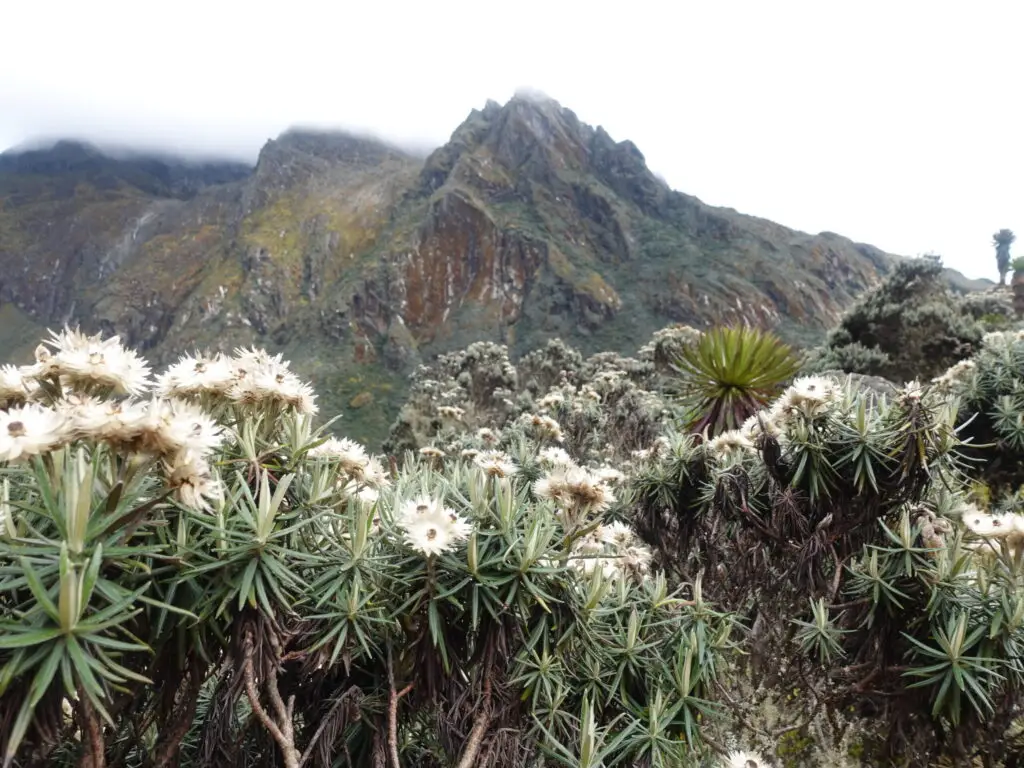
The vegetation above 4,000 m transitions to the sparsest Afro-alpine community on the trek: isolated giant groundsels (Senecio adnivalis) standing in rocky ground, patches of Carduus afromontanus thistles, and the occasional low-growing cushion plant adapted to freeze-thaw cycles at this altitude. The air is noticeably thinner. Move steadily. Drink regularly. Follow your guide without rushing the pace.
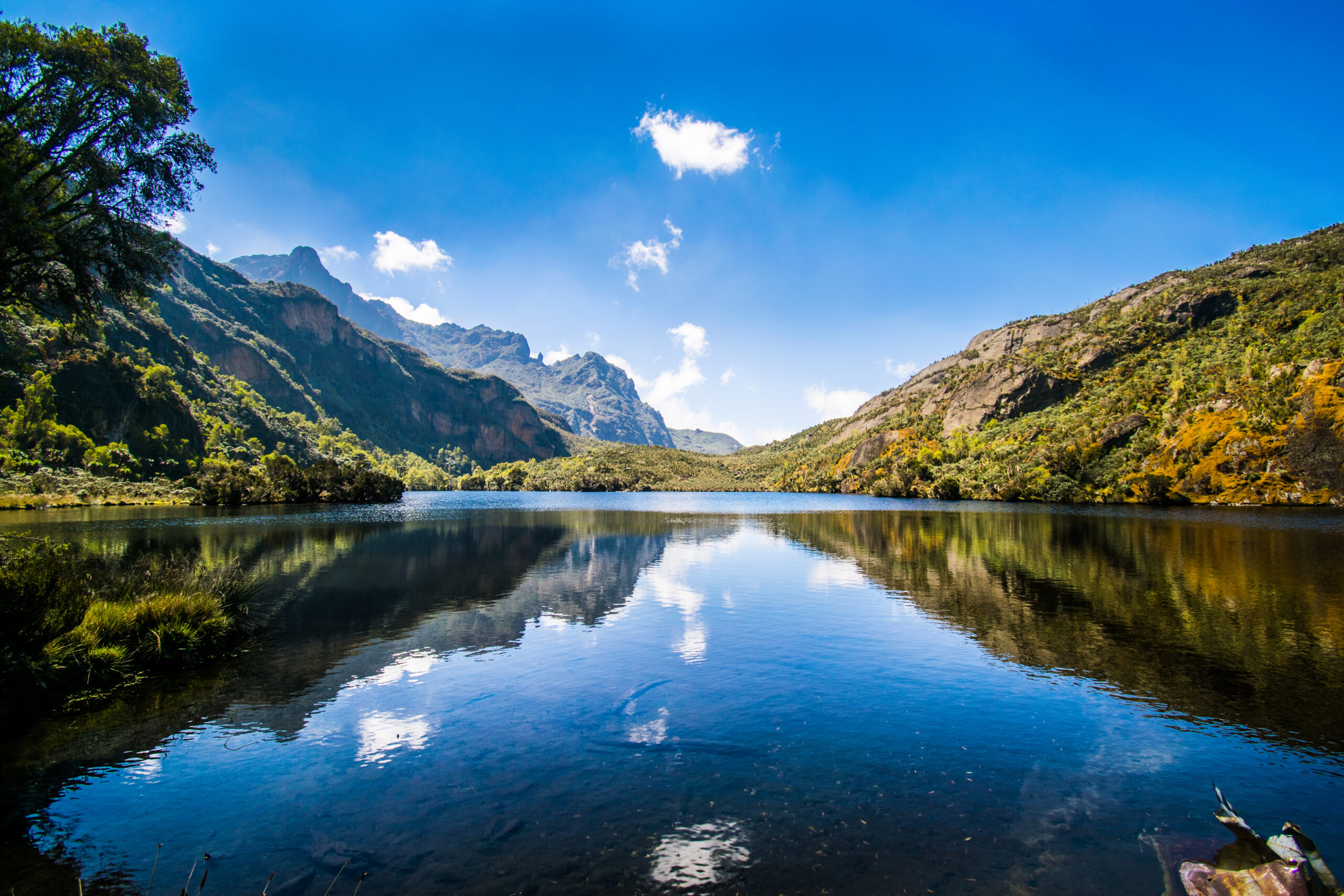
Lac de Luna (‘Lake of the Moon’) appears as you crest a final ridge: a small, intensely blue alpine lake set in a rocky glacial basin at approximately 4,200 m, with the ridgelines of Mount Gessi‘s Bottego Peak rising above to the north. This is your summit launch camp, and it is one of the most remarkable places you will sleep in your life. Your guide team prepares a hot dinner, delivers the summit briefing, and ensures all technical equipment is assembled and ready. Early bed tomorrow’s alarm is set for 3:30 AM.
Key highlights: Steep rocky terrain above 4,000 m · DRC border panorama from western approach · Giant groundsels in rocky alpine setting · First sight of Lac de Luna · Summit briefing at camp · Extraordinary night sky at 4,200 m
Day 5: Summit Day: Lac de Luna (~4,200 m) → Bottego Peak, Mount Gessi (4,715 m) → Return to Lac de Luna
Distance: ~8–10 km round trip | Elevation Gain: ~515 m to summit | Hiking Time: 8–10 hours | Terrain: Steep rocky ridges, fixed ropes, summit scramble
The alarm sounds at 3:30 AM. Tea and porridge by headlamp. Final equipment check: harness, ice axe, helmet, gloves, headlamp batteries, and emergency whistle. By 4:00–4:30 AM, your team moves out of Lac de Luna into the darkness above the lake. The pre-dawn sky at 4,200 m on a clear night is one of those Rwenzori experiences that language does not adequately serve: just stars, silence, and the mountain above.
The initial ascent from Lac de Luna climbs rocky terrain above the lake’s western shore, gaining elevation rapidly on a steep trail that alternates between scree, boulder fields, and exposed rock ridges. Your guide sets the pace and route; the path to Bottego Peak is not always obvious from below, and the local guide’s knowledge is what makes this summit safe and achievable. Fixed ropes appear on the most technically demanding sections of the upper approach, where the exposure increases and the rock steepens beyond comfortable scrambling.
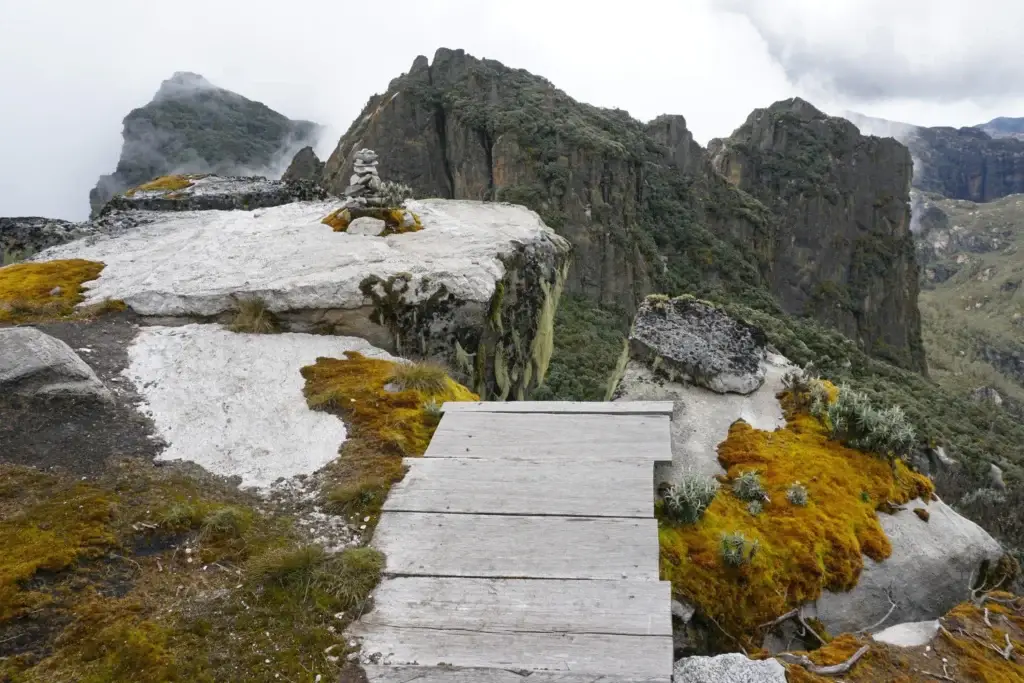
The summit ridge of Mount Gessi narrows as you approach the final metres of Bottego Peak. Rocky, exposed, and requiring full concentration, this area is not a place to move carelessly. Your guide clips you in for the fixed sections and moves ahead to anchor each pitch. The final steps to the summit cairn on Bottego Peak (4,715 m) are the ones that carry the full weight of the expedition behind them: seven days of forest, bog, bamboo, heather, wild camp, altitude, and effort, all resolved in a moment of arrival at 4,715 m above sea level.
From Bottego Peak, the view west into the Democratic Republic of the Congo is the summit’s defining feature. Congolese homesteads dot the foothills on clear mornings. To the east and north, the Rwenzori’s main mass fills the horizon. Mount Stanley’s west wall, the ridges of Mount Baker, and the distant northern peaks are all part of the same mountain range. The Rwenzori’s second summit, Iolanda Peak (4,706 m), is visible across the narrow ridge. Take your time. Capture the moment.
The controlled descent returns via the same ridge, fixed-rope descent, careful boulder-field navigation, and a steady pace back to Lac de Luna. Lunch at camp, rest, and then dinner. Your guide team has earned their tip. Sleep is deep and early tonight; tomorrow begins the long return.
Key highlights: Pre-dawn departure from Lac de Luna · Fixed-rope summit approach · Bottego Peak, a 4,715 m summit · DRC border panorama from the top · Iolanda Peak across the summit ridge · Full Rwenzori massif view east to north
Day 6: Lac de Luna (~4,200 m) to John Matte Camp (3,505 m)
Distance: ~11 km | Elevation Loss: ~695 m | Hiking Time: 7–8 hours | Terrain: Rocky descent, boggy heather zone, heather forest
Day 6 carries the expedition’s post-summit momentum: a long but gentler descent from Lac de Luna back to John Matte, retracing the Day 3–4 approach in reverse. The perspective on the way down is always different from the ascent. The formidable terrain going up becomes navigable and even beautiful in descent, particularly the boggy heather zone that challenged so many on Day 3.
The descent from Lac de Luna through the upper alpine zone passes the giant groundsels and lobelias of the approach in reverse, now familiar landmarks rather than strange new discoveries. Your guide leads the way back through the rocky terrain above the bog, reading the ground carefully on the steeper sections where wet rock after overnight condensation or morning rainfall requires slow, deliberate footwork.
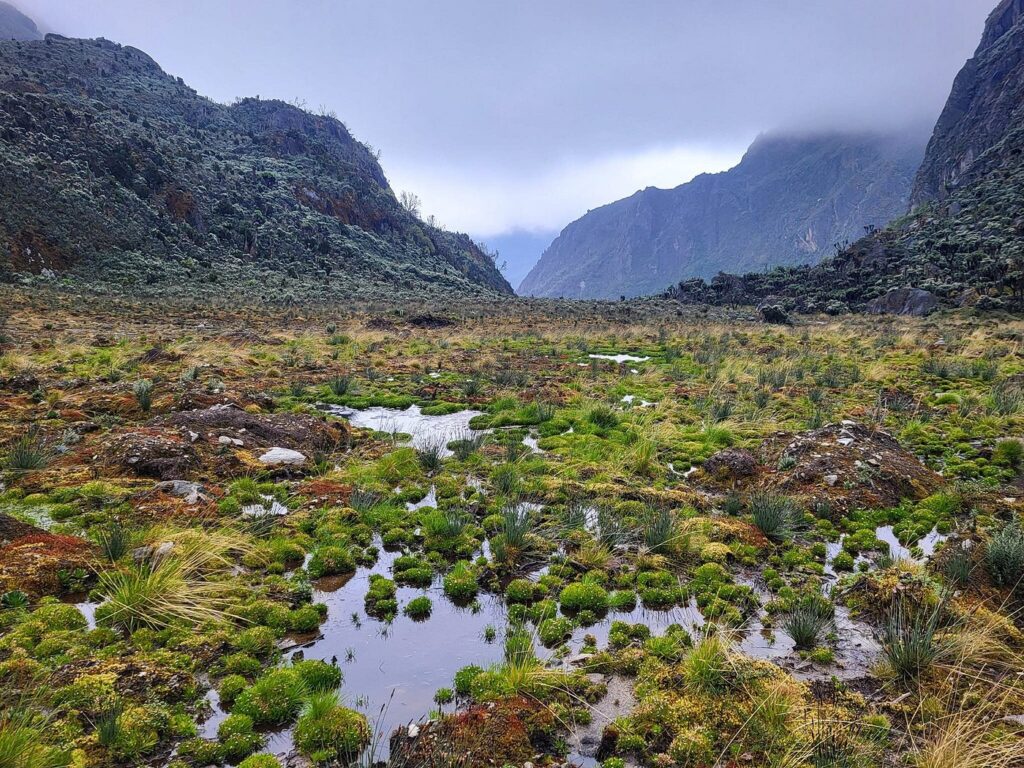
Back through the boggy heather zone, easier in descent but still requiring gumboots or gaiters for the deepest sections and down through the increasingly dense heather forest toward John Matte. The classic views of Mount Baker to the south and Mount Stanley with its glacier-wrapped walls to the north open up from the higher heather sections as you descend. Portal Peaks, the dramatic rock towers visible near the camp, frame John Matte’s setting beautifully on clear evenings.
John Matte (3,505 m) on Day 6 has a different quality than Day 2’s arrival: the mountain hut feels like civilization with wooden walls, a roof that doesn’t need a tent peg, and the knowledge that you have summited and are descending safely. A hot dinner and a proper night’s sleep in the hut before the final long day back to the trailhead.
Key highlights: Post-summit descent energy · Giant groundsel and lobelia landscape in reverse · Mount Baker and Stanley views from heather zone · Portal Peaks backdrop at John Matte · Return to mountain hut comfort
Day 7: John Matte Camp (3,505 m) → Nyabitaba Camp (2,650 m) → Nyakalengija Trailhead (1,650 m)
Distance: ~17.5 km | Elevation Loss: ~1,855 m | Hiking Time: 7–8 hours | Terrain: Heather zone descent, bamboo, Afro-Montane forest, river valley
The final day of the 7-Day Mount Gessi Trek is the longest, 17.5 km from John Matte all the way down through the heather, bamboo, and forest zones to the Nyakalengija trailhead, with a brief stop at Nyabitaba Camp. It is a sustained descent of 1,855 m; the knees and ankles will feel it by afternoon, but the descent through each vegetation zone is also a kind of farewell journey through the mountain’s full ecological biography.
Leaving John Matte after an early breakfast, the trail descends past the River Bujuku and back through the heathered plateau. The morning light on the heather zone at this elevation has a particular quality; the moss-draped trees catch the early light, and the valley below is often still in shadow, creating depth and contrast that makes the heather forest feel especially primeval. Trekking poles are invaluable on the steep heather descent sections.
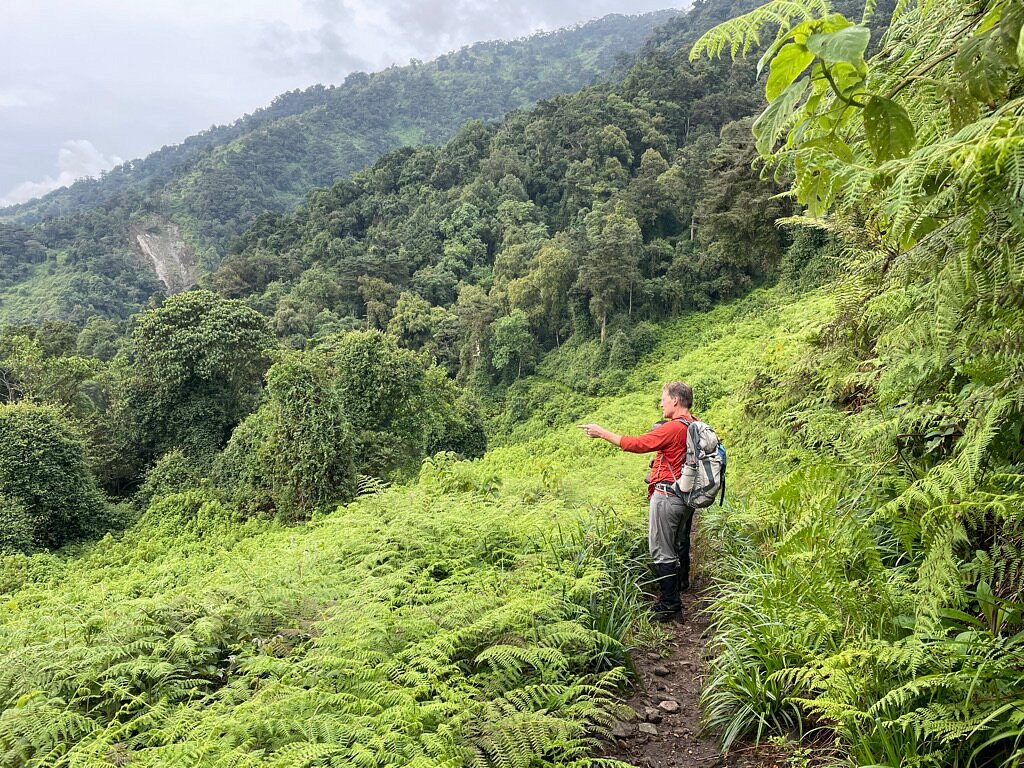
The bamboo zone welcomes you back with humidity and the return of dense birdsong after the relative silence of the upper alpine camps. Bird activity in the bamboo-heather transition zone on the way down is typically higher than on the ascent. The morning feeding hours produce some of the best turaco and sunbird sightings of the entire trek. The Kurt Shaffer Bridge crossing is a ritual marker: you are back in the forest world, with the summit already receding into the distance behind and above you.
There will be a rest and packed lunch at Nyabitaba Camp before the final descent through the lower Afro-Montane forest to Nyakalengija. The Mihunga Gate of Rwenzori Mountains National Park marks the end of both the park and the expedition. At the Nyakalengija ranger station: UWA summit records are logged, completion certificates issued, and the guide and porter team formally farewelled. Tips are distributed here. Your transfer back to Kasese takes 30–40 minutes. Many trekkers choose to spend the evening in Kasese before onward travel to gorilla trekking in Bwindi, Queen Elizabeth National Park, or Kampala.
Key highlights: Dawn heather zone descent from John Matte · Bamboo zone birding · Kurt Shaffer Bridge return crossing · Nyabitaba lunch stop · UWA completion certificate · Guide and porter farewell
Elevation Profile: 7-Day Mount Gessi Trek
Day 1: Nyakalengija (1,650 m) → Nyabitaba (2,650 m): ~10 km, 1,000 m gain, 5–6 hours. Forest approach and ridge climb.
Day 2: Nyabitaba (2,650 m) → John Matte (3,505 m): ~7.5 km, 855 m gain, 6–7 hours. Bamboo and heather zone ascent via Kurt Shaffer Bridge.
Day 3: John Matte (3,505 m) → Skull Cave (~3,900 m): ~6 km, 395 m gain, 6–7 hours. Western departure from the circuit leads into a remote, boggy heather zone.
Day 4: Skull Cave (~3,900 m) → Lac de Luna (~4,200 m): ~5 km, 300 m gain, 7–8 hours. Steep rocky alpine ascent with DRC border views.
Day 5: Summit Day — Lac de Luna (~4,200 m) → Bottego Peak (4,715 m) → Lac de Luna: ~8–10 km round trip, 515 m gain to the summit, 8–10 hours total. Fixed ropes, technical summit approach.
Day 6: Lac de Luna (~4,200 m) → John Matte (3,505 m): ~11 km, 695 m loss, 7–8 hours. Long descent through alpine and heather zones.
Day 7: John Matte (3,505 m) → Nyabitaba (2,650 m) → Nyakalengija (1,650 m): ~17.5 km, 1,855 m loss, 7–8 hours. Full descent through all lower zones to the trailhead.
Total: ~62 km | Max elevation: 4,715 m (Bottego Peak) | Total ascent: ~3,065 m | Total descent: ~3,065 m
Camps & Accommodation on the 7-Day Mount Gessi Trek
⛺ Wild Camping on the 7-Day Mount Gessi TrekSkull Cave and Lac de Luna are wild campsites, not mountain huts. Your guide team carries lightweight tents, sleeping pads, and full catering equipment for these nights. This wild camping element is one of the defining features of the Mount Gessi trek and gives these nights a quality of solitude and remoteness that hut-based treks simply cannot match. Bring a sleeping bag rated to a minimum of -5°C, as temperatures at Lac de Luna can drop well below freezing. |
Nyabitaba Camp 2,650 m (Wooden Hut)
Set on a forested ridge above the Mubuku Valley, Nyabitaba is the standard first overnight stop on the Central Circuit. Wooden mountain hut with bunk-style sleeping, mattresses, and blankets provided. Porter’s Rest Bridge nearby offers valley views. Temperatures: 10–15°C. Facilities: pit latrines, outdoor kitchen, no electricity.
John Matte Camp, 3,505 m (Wooden Hut)
A broad heather-plateau camp with panoramic views toward Mount Stanley and the northern massif. Wooden huts with bunk beds and blankets. The camp’s position provides it some of the finest horizon views on the Central Circuit. Portal Peaks are visible to the south. Temperatures: 5–10°C. Facilities: pit latrines, a camp kitchen, no electricity, and no phone signal.
Skull Cave ~3,900 m (Wild Camp / Tents)
A natural rock overhang or cave feature in the upper heather and rocky zone of the western Rwenzori, used as the Day 3 campsite. Your porter team pitches tents on relatively flat ground near the cave feature. This is a raw, remote wild camp with no permanent infrastructure. The setting is dramatically atmospheric: exposed ridges, open sky, and the sense of genuine wilderness. Temperatures: 0–5°C. All equipment was carried by porters. -5°C sleeping bag mandatory.
Lac de Luna ~4,200 m (Wild Camp / Tents)
The expedition’s high camp is one of the most remarkable sleeping sites on any Rwenzori trekking itinerary. A glacially carved alpine lake at approximately 4,200 m, surrounded by rocky ridges in the western Rwenzori. The lake’s surface reflects the surrounding peaks at dawn on clear mornings. Views westward to the DRC. Complete silence except for wind and water. Your porter team pitches tents on flat ground near the lakeshore and prepares all meals on expedition equipment. Temperatures can drop to -5°C or below. A -5°C sleeping bag is absolutely essential. For the full overview of Rwenzori camp options across all routes, see our Mountain Huts & Campsites Guide.
Flora & Wildlife on the 7-Day Mount Gessi Trek
This trek passes through all five of the Rwenzori’s major vegetation zones. For full species listings and zone maps, see our Wildlife & Biodiversity Guide and Vegetation Zones of the Rwenzori.
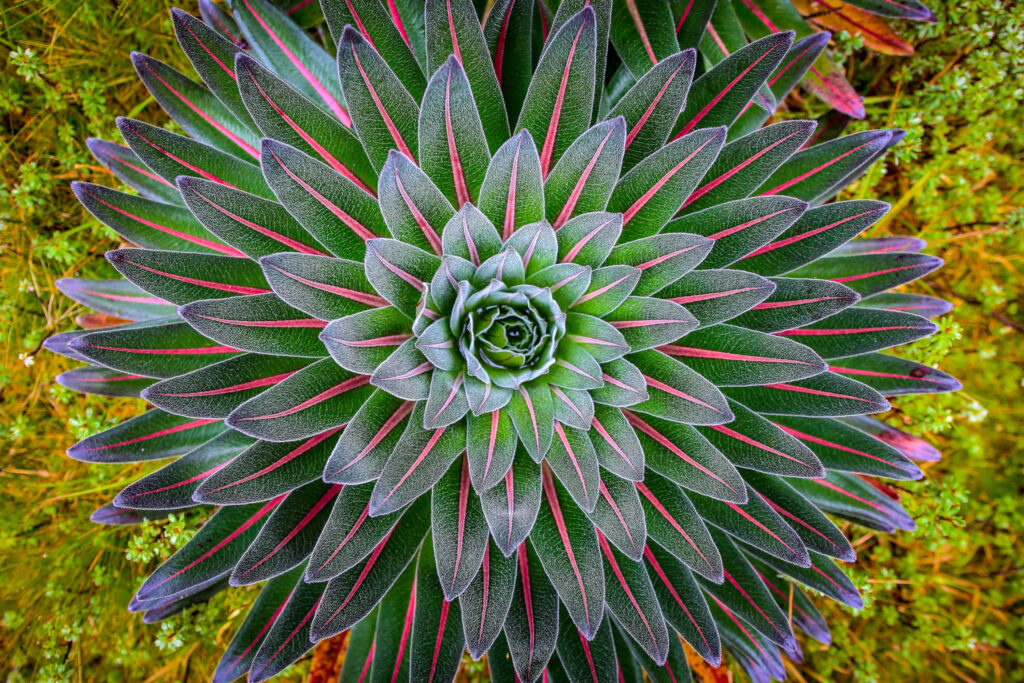
Afro-Montane Forest Zone (~1,650~2,800 m) Days 1 & 7
Trees: Podocarpus latifolius, Symphonia globulifera, Hagenia abyssinica, Macaranga kilimandscharica. Dense moss and lichen on all surfaces.
Mammals: Blue monkeys (Cercopithecus mitis), black-and-white colobus (Colobus guereza), African civet, red duiker.
Birds: Rwenzori turaco (Ruwenzorornis johnstoni), African green broadbill, handsome francolin, African hill babbler, Rwenzori nightjar.
Reptiles: Three-horned Rwenzori chameleon (Trioceros johnstoni) is endemic and common on low branches.
Bamboo Zone (~2,700–3,000 m) Days 2 & 7
Giant mountain bamboo (Arundinaria alpina) in dense stands. High bird activity including Rwenzori turaco and malachite sunbird. Forest elephants have historically used bamboo zone trails; rare but possible sightings.
Heather Zone (~3,000–3,800 m) Days 2, 3, 6 & 7
Giant tree heathers (Erica arborea and Erica trimera) draped in sphagnum moss and Usnea lichen. Carduus afromontanus thistles. Duikers are visible near camp at dusk. The Rwenzori double-collared sunbird (Nectarinia stuhlmanni) is the zone’s most reliably seen bird.
Afroalpine / Giant Lobelia & Groundsel Zone (~3,800–4,300 m) Days 3, 4, 5 & 6
Giant lobelias (Lobelia wollastonii, 2–3 m tall) and giant groundsels (Senecio adnivalis, up to 6 m) dominate the open valley floors and boggy areas. These plants are endemic to Afro-alpine zones across East Africa’s high mountains, found at this latitude-altitude combination nowhere else on Earth.
Upper Alpine / Summit Zone (above 4,300 m) Days 4, 5 & 6
Sparse cushion plants, scree, exposed rock, and residual snow or ice in some seasons. Rock hyrax (Procavia capensis) is occasionally spotted in boulder fields near the summit. The open sky and DRC border panorama make this zone the trek’s most visually dramatic ecological setting.
Physical Difficulty & Fitness Requirements: 7-Day Mount Gessi Trek
The 7-Day Mount Gessi Trek is rated strenuous to technically demanding, making it the most serious and remote 7-day expedition in the Rwenzori Mountains National Park portfolio. Here is an honest, day-by-day assessment:
Who This Trek Is For
- Experienced multi-day trekkers with prior 5+ day alpine expedition experience at 3,500 m+
- Trekkers specifically seeking the Rwenzori’s most remote and least-visited summit objective
- Mountaineers comfortable with wild camping, cold temperatures, and a -5°C sleeping bag environment
- Those who have completed the 7-Day Margherita Peak climb and want a completely different Rwenzori experience on a second visit
- Expedition members of the 13-Day 6-Peaks Grand Traverse who are targeting all major Rwenzori summits
- Trekkers who have read our How Hard Is the Rwenzori Trek? and Medical Guide to Rwenzori Trekking and are prepared for both
Day-by-Day Physical Demands
Days 1–2: Moderate to strenuous. Standard Central Circuit approach. Manageable for well-prepared trekkers with prior hiking experience.
Day 3: Strenuous. The boggy heather zone section is physically and mentally demanding. Altitude (camp at ~3,900 m) means AMS becomes a meaningful risk from tonight on.
Day 4: Very strenuous. Steep rocky terrain above 4,000 m with significant exposure. The combination of altitude and technical terrain makes this one of the hardest non-summit days in the portfolio.
Day 5: The summit day was technically demanding. Fixed ropes were used, and the altitude exposure was at 4,715 m, with a pre-dawn start. Expect 8–10 hours total.
Days 6–7: Strenuous by distance and elevation loss. Long descents require focus on knee protection and footwork. Day 7 is the longest day at 17.5 km.
Altitude & Acclimatisation
The 7-Day Mount Gessi itinerary reaches 4,715 m on Day 5, with camp at ~4,200 m on Days 4 and 5. AMS, HAPE, and HACE are real risks above 4,000 m on this schedule. Discuss Diamox (acetazolamide) with your doctor before departure. Descend immediately if severe symptoms develop at any camp. Read our Altitude Acclimatization Guide for full strategy.
Training Recommendation (12 Weeks Before)
4× weekly cardiovascular sessions (60–90 min); 1× weekly long mountain hike (15–20 km, 1,000–1,500 m gain, with full pack); dedicated knee and core strength training. Wild camping experience beforehand is a significant advantage for cold-night preparation. See our Fitness & Training Guide.
Best Time to Attempt the 7-Day Mount Gessi Trek.

For a full month-by-month breakdown, see our Best Time to Visit the Rwenzori guide.
Prime Window: June–August (Long Dry Season)
Most stable weather for wild camping nights and summit days. Trail conditions at their firmest. Strongest summit success rate for Bottego Peak. The most popular window is 3–6 months in advance.
Second Best: December–February (Short Dry Season)
Excellent conditions in December and January. Fewer trekkers than June–August. The DRC border panorama from the summit is particularly clear in early dry season morning conditions.
Wet Seasons (March–May & September–November)
The boggy terrain between John Matte and Skull Cave becomes significantly more challenging in heavy rain, and wild camp nights at Skull Cave and Lac de Luna in wet conditions are genuinely uncomfortable without top-tier waterproof equipment. Summit-day success rates drop in the wet season. We can guide this route year-round, but we strongly advise using the dry season for a first attempt. Contact us for current mountain conditions at any time of year.
What’s Included in Your Trek Package
Included
| ✔ UWA-registered lead mountain guide all 7 days |
| ✔ Trained porters (1 per 2 trekkers, max 15 kg per load) |
| ✔ All meals on the mountain: breakfast, packed lunch, dinner, and hot drinks throughout |
| ✔ Wooden mountain hut accommodation at Nyabitaba and John Matte (4 nights) |
| ✔ Wild camping with tents and sleeping pads at Skull Cave and Lac de Luna (2 nights) |
| ✔ Uganda Wildlife Authority (UWA) park entry fees and Central Circuit trail permit |
| ✔ Technical summit equipment: ropes, ice axes, helmets, harnesses (summit approach) |
| ✔ Free use of rubber gumboots at Nyakalengija trailhead if required |
| ✔ Emergency first-aid kit carried by guide for all 7 days |
| ✔ Pre-trek briefing and gear check at Nyakalengija |
Not Included
| ✘ Tips and gratuities for guides and porters (strongly encouraged; see Tipping Guide) |
| ✘ Personal travel insurance and medical evacuation cover (mandatory) |
| ✘ Accommodation in Kasese before and after the trek |
| ✘ Transfers to/from the Nyakalengija trailhead (can be arranged on request) |
| ✘ Personal trekking and mountaineering gear (see Gear List section) |
| ✘ Alcoholic beverages and personal snacks beyond standard meals |
| ✘ Any costs from weather-related postponement or voluntary early descent |
| ✘ International flights, Uganda visa fees, and airport transfers |
Community CommitmentA 10% portion of all trek proceeds from Rwenzori Trekking Safaris is directed to the local Bakonzo mountain community, funding orphanages, primary schools, and homes in the Kasese region. When you climb Mount Gessi with us, your expedition directly sustains the people who call these mountains home. |
Full Packing & Gear List: 7-Day Mount Gessi Expedition
The Mount Gessi trek demands the most complete cold-weather and mountaineering kit of any 7-day Rwenzori itinerary due to the wild camping component and the sub-zero night temperatures at Skull Cave and Lac de Luna. Technical summit equipment (ropes, ice axe, harness, and helmet) is provided by Rwenzori Trekking Safaris. For the full master gear guide, see our Full Rwenzori Packing List, Footwear & Boot Guide, and How to Stay Warm at the Summit.
| Footwear & Gaiters | • Waterproof hiking or mountaineering boots with ankle support and a crampon-compatible sole recommended
• Rubber gumboots available free at Nyakalengija; essential for boggy sections below Skull Cave • Full-length neoprene gaiters mandatory for the boggy heather zone sections • Thick wool or synthetic hiking socks (3+ pairs minimum, wet conditions guaranteed) |
| Clothing Layers | • 3× moisture-wicking base layer shirts
• 1× mid-layer fleece or insulated jacket • 1× heavyweight down jacket (mandatory for Skull Cave and Lac de Luna wild camps, where sub-zero is possible) • 1× hardshell waterproof jacket with sealed seams • Waterproof shell trousers • Thermal base layer leggings (for summit day and cold camp nights) |
| Head, Hands & Face | • Warm knit beanie and balaclava (sub-zero nights at wild camps)
• Helmet provided for summit approach; bring your own if preferred • Insulated waterproof gloves for summit and cold camp mornings • Liner gloves for layering • UV sunglasses or glacier goggles • High-SPF sunscreen and lip balm |
| Wild Camp Sleep | • Sleeping bag rated to -5°C minimum (wild camp nights at Skull Cave and Lac de Luna can approach freezing)
• Sleeping liner for hygiene and additional warmth • Sleeping pad/mat provided by guide team, but a personal inflatable pad adds comfort at wild camps |
| Technical Gear (Provided) | • Ice axe provided; guide will brief on self-arrest technique
• Harness provided for fixed sections on summit approach • Ropes managed by guide team • Helmet provided • Crampons assessed at Lac de Luna night before summit; available if conditions require |
| Pack & Carry | • Daypack 30–40 litres for summit day (porters carry main luggage between camps)
• Dry bags and waterproof pack liner mandatory for 7-day wet exposure • Trekking poles invaluable on boggy terrain and long descents • Hydration bladder or 2-litre bottle minimum |
| Health & Hygiene | • Personal first-aid kit: blister plasters, ibuprofen, antihistamine, loperamide, Diamox (consult doctor)
• Altitude medication guidance: see Medical Guide for Diamox discussion • Insect repellent (lower forest, Days 1 and 7) • Water purification tablets as backup • Biodegradable soap and hand sanitiser • Toilet paper and waste bags (leave no trace at wild camps) |
| Electronics & Documents | • Headlamp with fresh batteries + full spare set (mandatory for 3:30–4:30 AM summit day start)
• Camera in waterproof case / dry bag • Power bank: no electricity on the mountain for 7 days (bring fully charged) • Emergency whistle • Passport copy and booking confirmation for UWA park entry • Emergency contact information in pack lid |
Permits, Park Fees & Costs
Your Rwenzori Trekking Safaris package includes all UWA park entry fees and Central Circuit trail permits. You do not arrange permits independently.
Package-Included Cost Components
- UWA Park Entry: USD $35 per person per day (foreign non-resident) 7 days = $245 per trekker
- Central Circuit & Extended Western Area Permit: Included in UWA fee structure
- Hut Fees: Nyabitaba and John Matte overnight fees included
- Wild Camp Equipment: Tents, sleeping pads, cooking equipment for Skull Cave and Lac de Luna nights included
- Guide Fee: UWA-registered lead guide for all 7 days
- Porter Fee: 1 porter per 2 trekkers for main luggage (15 kg max per load)
- Technical Equipment: Ropes, ice axe, harness, helmet for summit approach
- All Meals: Full board throughout, including breakfast, packed lunch, dinner, hot drinks every day
Additional Budget to Plan For
- Guide & Porter Tips: USD $175–$252 per trekker (7 days with wild camp portering). See our Porter Services & Tipping Guide
- Travel Insurance: Mandatory; must include medical evacuation cover to 5,000 m. See our Rwenzori Travel Insurance Guide
- Kasese Pre/Post-Trek Accommodation: USD $30–80 per night. See our pre- & Post-Trek Accommodation Guide
- Kasese → Nyakalengija Transfer: ~USD $20–30; arrangeable through Rwenzori Trekking Safaris
For the complete 2026 cost breakdown, see our Full Cost Guide: How Much Does It Cost to Climb the Rwenzori?
Getting There: Nyakalengija Trailhead
For complete transport logistics, see our How to Get to the Rwenzori Mountains and Kasese Gateway Town Guide.
From Kasese to Nyakalengija (~22 km)
- Private vehicle: 30–40 minutes; pickup from your Kasese hotel arranged by Rwenzori Trekking Safaris
- Shared taxi / boda-boda: Available from Kasese town taxi park for Nyakalengija
From Kampala to Kasese
- Private charter vehicle: 5–6 hours via Kampala–Fort Portal–Kasese highway
- Scheduled coach bus: 6–7 hours from Kisenyi Bus Terminal; several operators daily
- Via Fort Portal: Excellent overnight base; combine with chimpanzee trekking in Kibale
From Entebbe International Airport: allow 7–8 hours by road. Arrive in Kasese the night before Day 1 for final gear assembly and rest.
Book Your Slot
Respond within Minutes
From
$1,400
per person
- Duration 7 Days / 6 Nights
- Group Size 1–12 people
- Start Point Nyakalengija
- Departures Year-round
- Summits Margherita Peak
No booking fee. Free cancellation up to 30 days before departure. We respond within Minutes.
Going Further: Related Rwenzori Expeditions
The 7-Day Mount Gessi Trek sits within a growing portfolio of Rwenzori peak expeditions. Natural extensions and comparisons:
7-Day Mount Emin Trek (4,798 m)
$1200 Per Person
Pair with Mount Gessi for a western Rwenzori two-peak expedition. Emin’s Umberto Peak is the range’s fourth-highest at 4,798 m.
Pair with Mount Gessi for a western Rwenzori two-peak expedition. Emin’s Umberto Peak is the range’s fourth-highest at 4,798 m.
13-Day 6-Peaks Grand Expedition
$3350 Per Person
Summit all six major Rwenzori peaks including Gessi, Emin, Speke, Stanley, Luigi di Savoia, and Baker.
Summit all six major Rwenzori peaks including Gessi, Emin, Speke, Stanley, Luigi di Savoia, and Baker.
12-Day Rwenzori & Gorilla Trekking Combo
$5800 Per Person
Pair your Rwenzori summit with mountain gorilla trekking in the Bwindi Impenetrable Forest.
Pair your Rwenzori summit with mountain gorilla trekking in the Bwindi Impenetrable Forest.
Rwenzori Hike (7 Days Central Circuit)
$1400 Per Person
Africa’s third-highest summit at 5,109 m. The classic Rwenzori expedition.
Africa’s third-highest summit at 5,109 m. The classic Rwenzori expedition.
Frequently Asked Questions: 7-Day Mount Gessi Trek, Rwenzori Mountains.
How difficult is the 7-Day Mount Gessi trek in the Rwenzori Mountains?
The 7-Day Mount Gessi trek is rated strenuous and is one of the most demanding and remote trekking expeditions available in Rwenzori Mountains National Park. Unlike the standard Central Circuit, which follows well-maintained hut-to-hut trails, the Mount Gessi route extends into the western reaches of the park territory that receives very few visitors each year. Days 1 and 2 follow the familiar Nyakalengija–Nyabitaba–John Matte approach (moderate to strenuous), but Days 3 and 4 push into the boggy heather zone and steep terrain toward Skull Cave and Lac de Luna with no permanent hut infrastructure, requiring wild camping only. Day 5 is the summit day: a steep, rocky ascent to Bottego Peak (4,715 m) involving fixed ropes and technical terrain on the upper approach. Days 6 and 7 are sustained descents. This trek demands genuine mountaineering fitness, comfort with remote wild camping, and strong mental resilience. Previous high-altitude experience is highly recommended.
What is the correct summit elevation of Mount Gessi, and how does it rank among Rwenzori peaks?
Mount Gessi’s highest summit, Bottego Peak, stands at 4,715 m (15,469 ft) above sea level. It is the fifth-highest mountain in the Rwenzori range, ranking after Mount Stanley (5,109 m), Mount Speke (4,890 m), Mount Baker (4,843 m), and Mount Emin (4,798 m). Mount Gessi has two summits, Bottego (4,715 m) and Iolanda (4,706 m), both named by the Duke of Abruzzi’s 1906 Italian expedition, which made the first ascents of the Rwenzori’s major peaks. Despite its significant altitude, Mount Gessi is the least-climbed of the six major Rwenzori peaks, making it one of the most exclusive high-altitude summit objectives in equatorial Africa.
What is wild camping on the Mount Gessi trek, and what does it involve?
Wild camping on the 7-Day Mount Gessi trek occurs at two sites: Skull Cave and Lac de Luna. Unlike the wooden mountain huts at Nyabitaba and John Matte, these are not permanent infrastructure camps; your guide and porter team carry lightweight tents, cooking equipment, and all necessary supplies to establish a functioning camp at each site. Skull Cave is a natural rock overhang or cave feature used as a camp reference point in the remote heather zone, set in dramatic open terrain above the standard circuit. Lac de Luna (‘Lake of the Moon’) is a high-altitude alpine lake at approximately 4,200 m, one of the most spectacularly positioned campsites on any Rwenzori trekking itinerary, a small glacially carved lake surrounded by rocky ridges with direct views toward the DRC border mountains. Temperatures at both wild camps can approach or fall below freezing, making a -5°C sleeping bag mandatory. Your porter team carries all tents, cooking equipment, and food.
What is Lac de Luna, and what makes it special on the Mount Gessi route?
Lac de Luna, literally ‘Lake of the Moon,’ is a small, high-altitude alpine lake in the upper western Rwenzori, situated at approximately 4,200 m in a remote, glacially carved basin that is accessible only via the extended Mount Gessi approach. It serves as the high camp for the Bottego Peak summit attempt on Day 5 of this trek. What makes Lac de Luna exceptional is its combination of rarity and setting: extraordinarily few trekkers have ever camped here, the view across the lake toward the DRC border mountains is one of the finest high-altitude panoramas in the Rwenzori range, and the experience of waking at this altitude in a wild camp with no other trekking parties in sight is genuinely one-of-a-kind in equatorial African mountaineering. Camping here is only possible on guided expeditions with a fully equipped porter team.
What can I see from the summit of Mount Gessi (Bottego Peak)?
The summit of Bottego Peak (4,715 m) on Mount Gessi offers one of the most distinctive panoramic views in the entire Rwenzori range and one that differs significantly from what you see from the more frequently climbed summits. From Bottego Peak, the view westward looks directly into the Democratic Republic of Congo, with Congolese homesteads and the rolling hills of the DRC border territory visible on clear days. To the north and east, the Rwenzori’s main massif fills the horizon: Mount Stanley’s west face, Mount Baker’s ridgelines, and the upper circuit of the Central Circuit valley. Lake Bujuku, far below and to the east, is visible as a dark mirror on clear mornings. The relative isolation of Mount Gessi’s position in the western Rwenzori gives the summit a panoramic character unlike any other peak on the circuit; you are looking outward toward Africa’s Great Rift rather than inward toward the mountain’s own glaciers.
How does the 7-Day Mount Gessi trek compare to the 7-Day Margherita Peak climb?
The 7-Day Mount Gessi trek and the 7-Day Margherita Peak climb share the same Nyakalengija trailhead and the same approach to John Matte Hut (via Nyabitaba) but diverge completely from Day 3 onward. The Margherita Peak climb continues north from John Matte to Bujuku and Elena Camps, targeting the Rwenzori’s highest summit at 5,109 m via the standard Central Circuit. The Mount Gessi route turns west from the circuit into significantly more remote and less-visited terrain, passing through the boggy heather zone to Skull Cave and on to Lac de Luna, targeting Bottego Peak (4,715 m), 394 m lower but considerably more isolated. The Mount Gessi trek involves wild camping, which the Margherita route does not. In terms of total difficulty, both are strenuous 7-day expeditions; the Margherita route has a higher summit and slightly better infrastructure, while the Gessi route offers more remoteness, wilder camp settings, and a DRC border perspective. Serious trekkers sometimes choose to attempt both over separate visits.
What altitude sickness risk does the 7-Day Mount Gessi trek carry?
The 7-Day Mount Gessi trek carries significant altitude risk from Day 3 onward, escalating through Days 4 and 5. By the time you reach Lac de Luna camp at approximately 4,200 m, you are at an elevation where acute mountain sickness (AMS), high-altitude pulmonary edema (HAPE), and high-altitude cerebral edema (HACE) are all potential concerns for susceptible individuals. The summit day to Bottego Peak at 4,715 m increases this risk further. Key risk factors on this specific itinerary: the progression from 3,505 m (John Matte) to ~4,200 m (Lac de Luna) in two days is relatively fast, and the wild camping environment provides less comfort margin if symptoms develop. If you experience a persistent headache, loss of coordination, confusion, or difficulty breathing, descend immediately; do not attempt the summit. Discuss Diamox (acetazolamide) with your doctor before departure. Read our full Altitude Acclimatization Guide and Medical Guide to Rwenzori Trekking for a comprehensive AMS management strategy.
What wildlife and vegetation will I encounter on the 7-Day Mount Gessi trek?
The 7-Day Mount Gessi trek passes through all five major Rwenzori vegetation zones. In the Afro-Montane forest (Days 1 and 7), expect blue monkeys (Cercopithecus mitis), black-and-white colobus monkeys, Rwenzori turaco (Ruwenzorornis johnstoni), African green broadbill, handsome francolin, and three-horned Rwenzori chameleons (Trioceros johnstoni). The bamboo zone on Day 2 is excellent for turacos and malachite sunbirds. The heather zone above John Matté features giant tree heather (Erica arborea) draped in sphagnum moss and old man’s beard lichen, with Carduus afromontanus thistles. The approach toward Skull Cave and Lac de Luna takes you into the Afro-alpine zone; giant lobelias (Lobelia wollastonii) and giant groundsels (Senecio adnivalis) stand in dense colonies across the upper valley approaches. At Lac de Luna and on the summit approach, vegetation becomes sparse on the rocky upper ridges. Rock hyraxes are occasionally spotted in the boulder fields near the summit.
When is the best time to attempt the 7-Day Mount Gessi trek?
The best months for the 7-Day Mount Gessi trek are December to February and June to August, Uganda’s two dry seasons. The dry seasons provide the most stable conditions for the wild camp sections at Skull Cave and Lac de Luna, where wet weather significantly increases cold-weather discomfort and can make the summit approach dangerous. June–August is the most reliable window for summit-day visibility and firm upper-mountain terrain. December–January is often the driest period and offers the best views from Bottego Peak toward the DRC border. The wet seasons (March–May and September–November) are technically possible with expert guidance and proper gear, but the boggy terrain between John Matte and Skull Cave becomes considerably more challenging, and summit-day conditions on the upper Gessi ridges are less predictable. We strongly advise booking this route in a dry season window for a first attempt.
How do I get to the Nyakalengija trailhead for the Mount Gessi trek?
The Central Circuit trailhead at Nyakalengija is approximately 22 km from Kasese town, a 30–40 minute drive by private vehicle along the road into the Rwenzori foothills. Rwenzori Trekking Safaris can arrange a pickup from your Kasese accommodation on the morning of Day 1. From Kampala, Kasese is 4.5–5 hours by private charter vehicle via the Fort Portal highway, or 6–7 hours by scheduled bus from Kisenyi Bus Terminal. From Entebbe International Airport, allow 7–8 hours by road. Arriving in Kasese the night before the trek begins allows for a full rest and final gear assembly, which makes a significant difference for an early start on Day 1.
How much should I tip my guide and porter team on the 7-Day Mount Gessi trek?
Tipping is not included in the package price but is an important and expected part of Rwenzori trekking culture. On a 7-day expedition to a remote peak like Mount Gessi, the guide and porter team work harder than on any standard hut-based circuit carrying tents, sleeping equipment, and cooking gear into wild camp territory in addition to the usual loads. Recommended tipping guidelines for a 7-day trek: USD $15–$20 per day for your lead guide, USD $5–$8 per day per porter. For a solo trekker with one guide and two porters over 7 days, a total tip budget of approximately USD $175–$252 is appropriate. Tips are distributed at the Nyakalengija trailhead on the final afternoon. For full guidance on fair wages, porter welfare, and tipping etiquette, see our Porter Services & Tipping Guide.
Can the 7-Day Mount Gessi trek be extended or combined with other Rwenzori peaks?
Yes, Mount Gessi is one of six major Rwenzori peaks, and serious mountaineers often target it as part of a multi-peak expedition. The most natural extension is the 13-Day 6-Peaks Grand Expedition, which summits all six major Rwenzori peaks (Gessi, Emin, Speke, Stanley, Luigi di Savoia, and Baker) in a single, continuous expedition. Mount Gessi and Mount Emin are often paired because of their shared western Rwenzori location. Emin’s Umberto Peak at 4,798 m sits in the same general zone and can be incorporated into an extended itinerary. For those who have already climbed Margherita Peak via the 7-Day Central Circuit, the Mount Gessi expedition is an outstanding second Rwenzori objective, accessing entirely different terrain, a different perspective on the range, and a summit that almost no international trekker has ever stood on. Contact Rwenzori Trekking Safaris to design a custom multi-peak itinerary.