Complete guide to the 2-day Rwenzori hike to Lake Mahoma (2,988 m) on the Mahoma Loop Trail. The full itinerary includes birdwatching, gear, costs, and answers to 10+ frequently asked questions (FAQs). From $280 per person.
2-Day Rwenzori Hike to Lake Mahoma | Mahoma Loop Trail Guide
Overview of the 2-Day Rwenzori Hike to Lake Mahoma | Mahoma Loop Trail.
This is a quick Rwenzori hike. A Strong Bond with Nature.
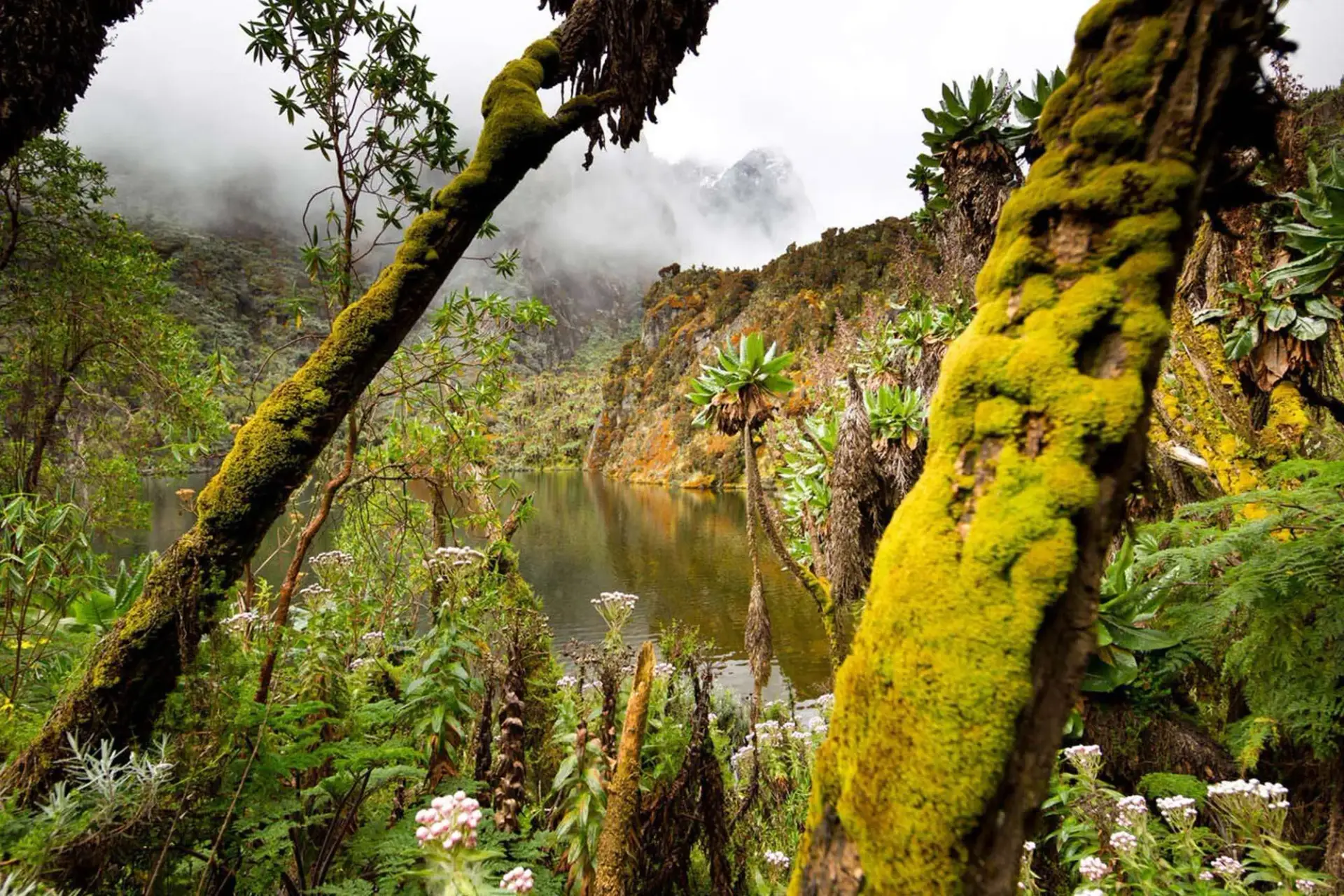
Spend two extraordinary days walking into the heart of the Rwenzori Mountains National Park on a trail that leads to one of the most striking and rarely visited mountain lakes in Africa. Lake Mahoma is a volcanic crater lake at 2,988 metres, ringed by moss-draped Afro-montane forest, home to wildlife found nowhere else on Earth, and cloaked in a silence that only a mountain receiving fewer than 2,500 trekkers per year can offer. The 2-Day Rwenzori hike to Lake Mahoma via the Mahoma Loop Trail is the most complete short, overnight trekking experience that the Rwenzori offers.
This 2-day hike to Lake Mahoma in Uganda’s Rwenzori Mountains is an excellent way for visitors to experience the country’s stunning, untouched “Mountains of the Moon.” For two thrilling days, you’ll trek through deep montane forest, bamboo groves, and misty ridges with our expert Rwenzori guides.
This Rwenzori hike follows the Mahoma Loop, an isolated trail through dense forest that leads to Lake Mahoma, the largest and deepest of the Rwenzori range’s 52 alpine lakes. During the trek, you can expect to witness black & white colobus monkeys, three-horned chameleons, and uncommon Rwenzori birds, as well as breathtaking vistas of valleys covered in trees and moss.
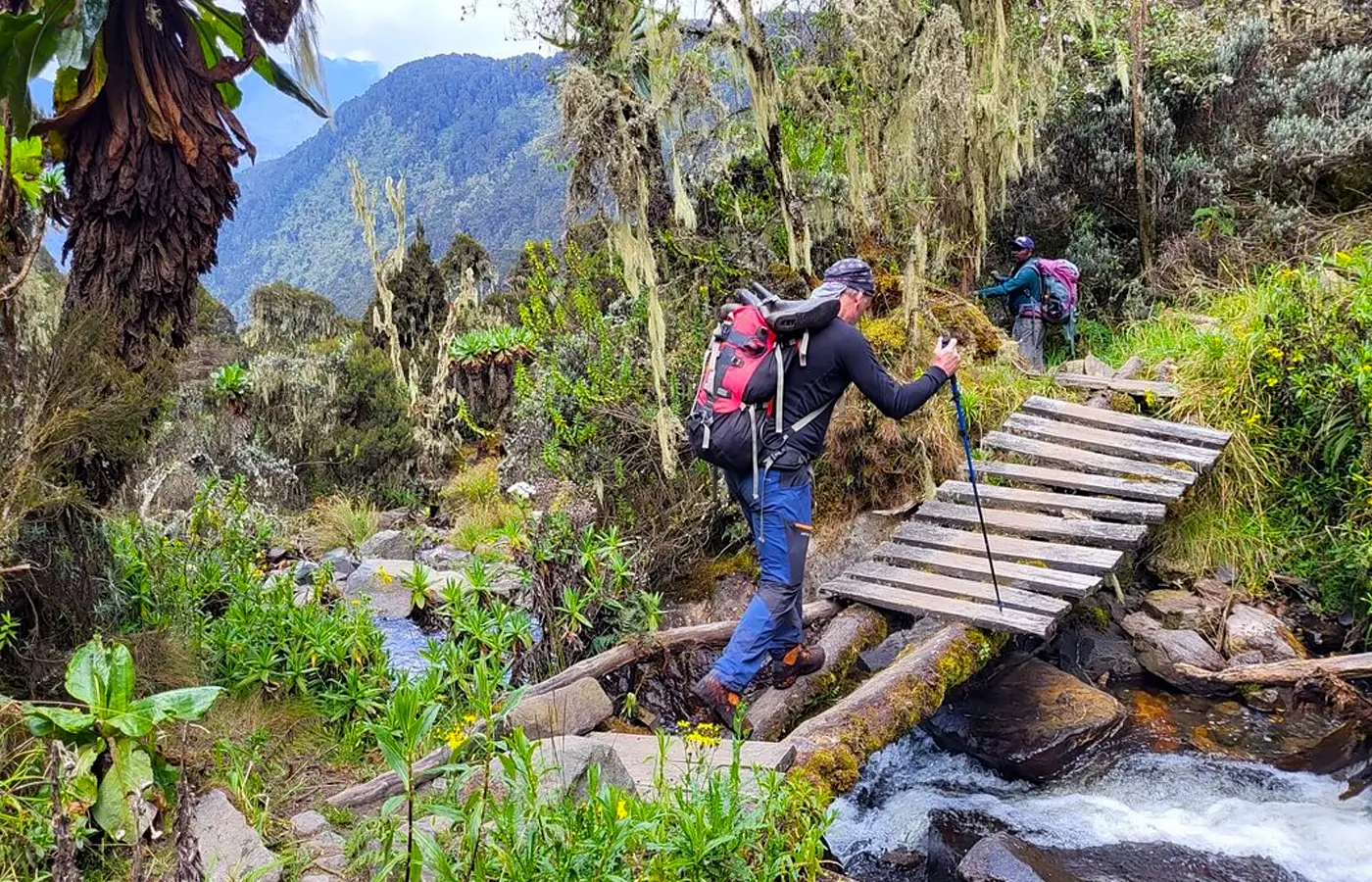
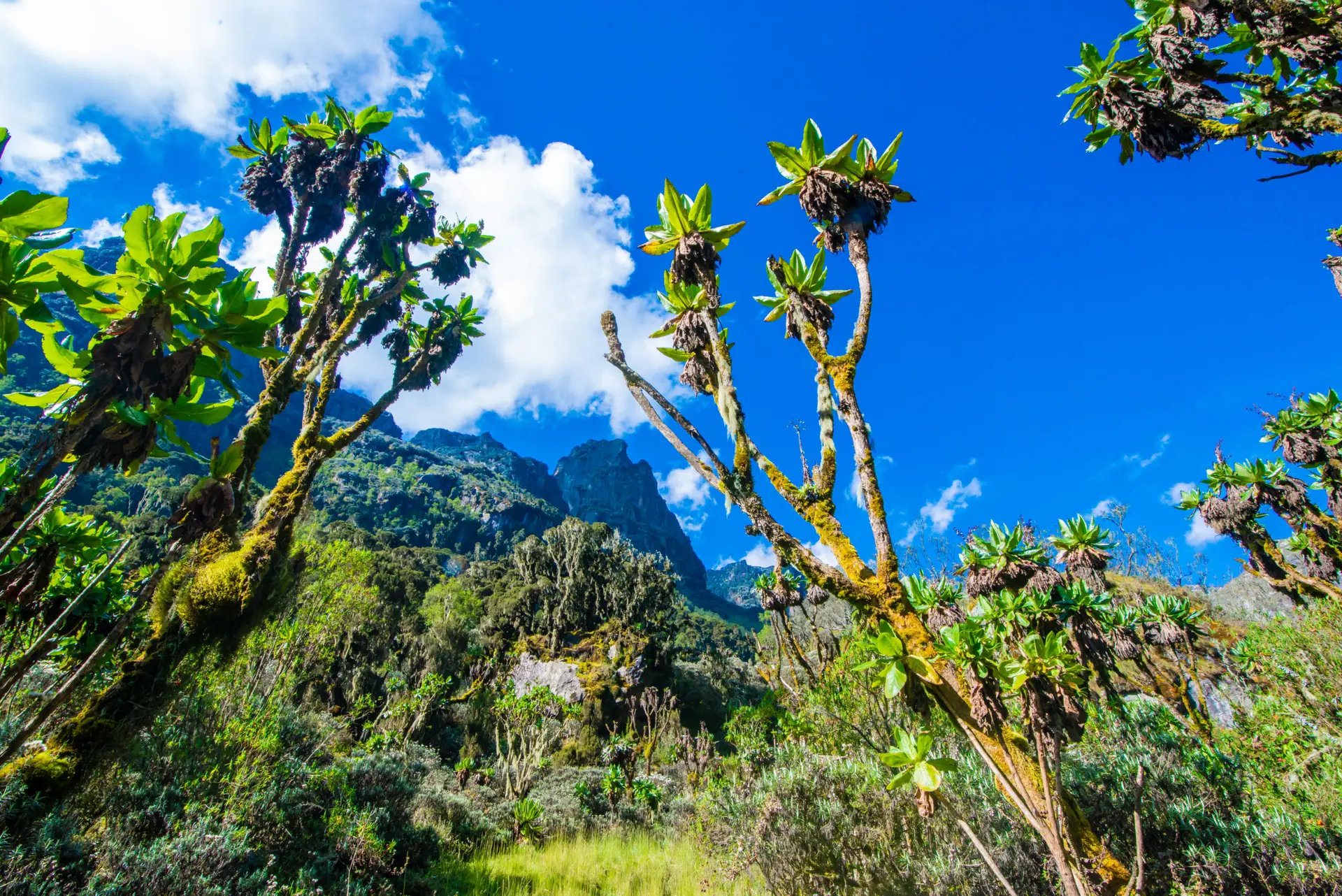
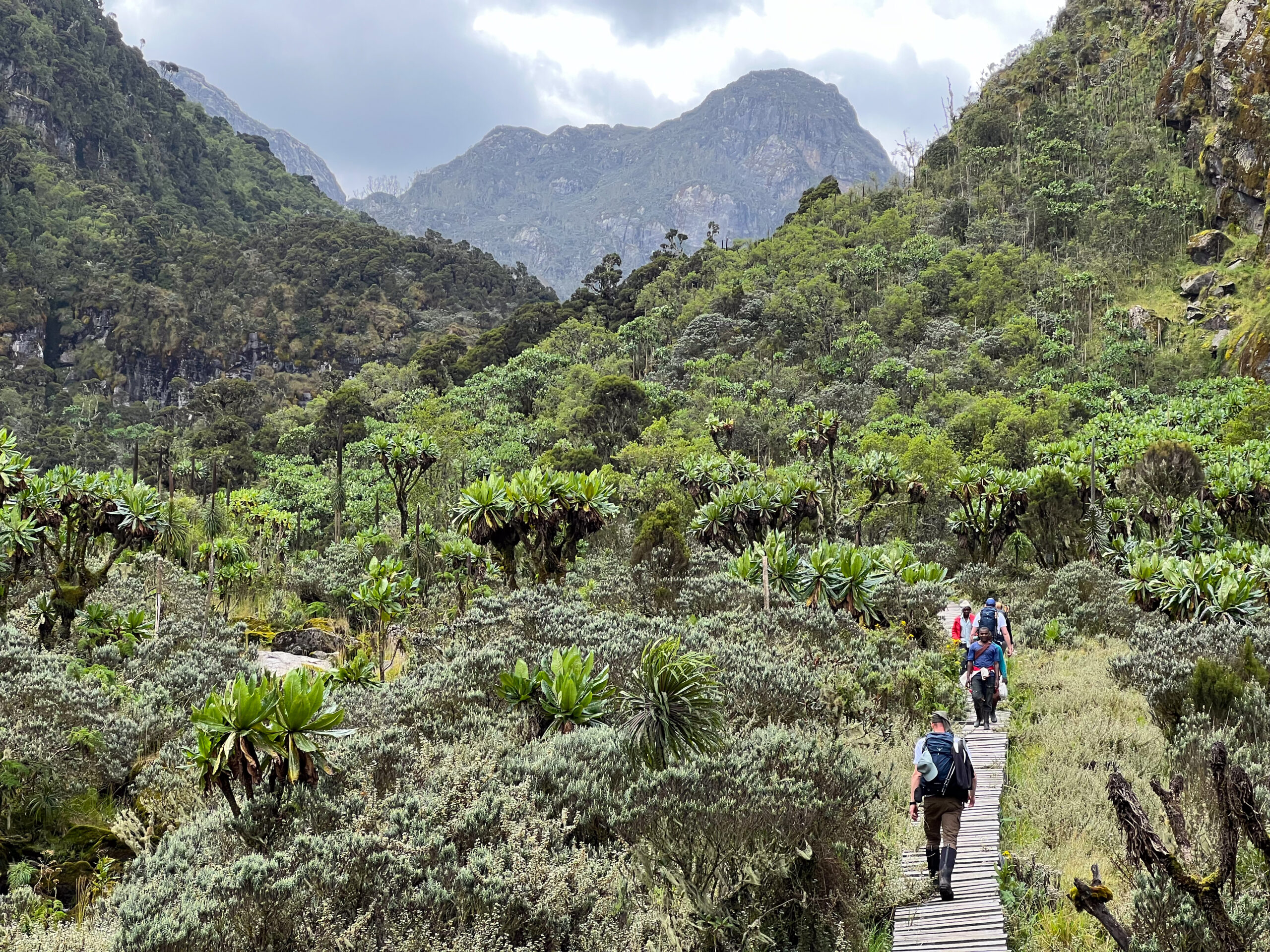

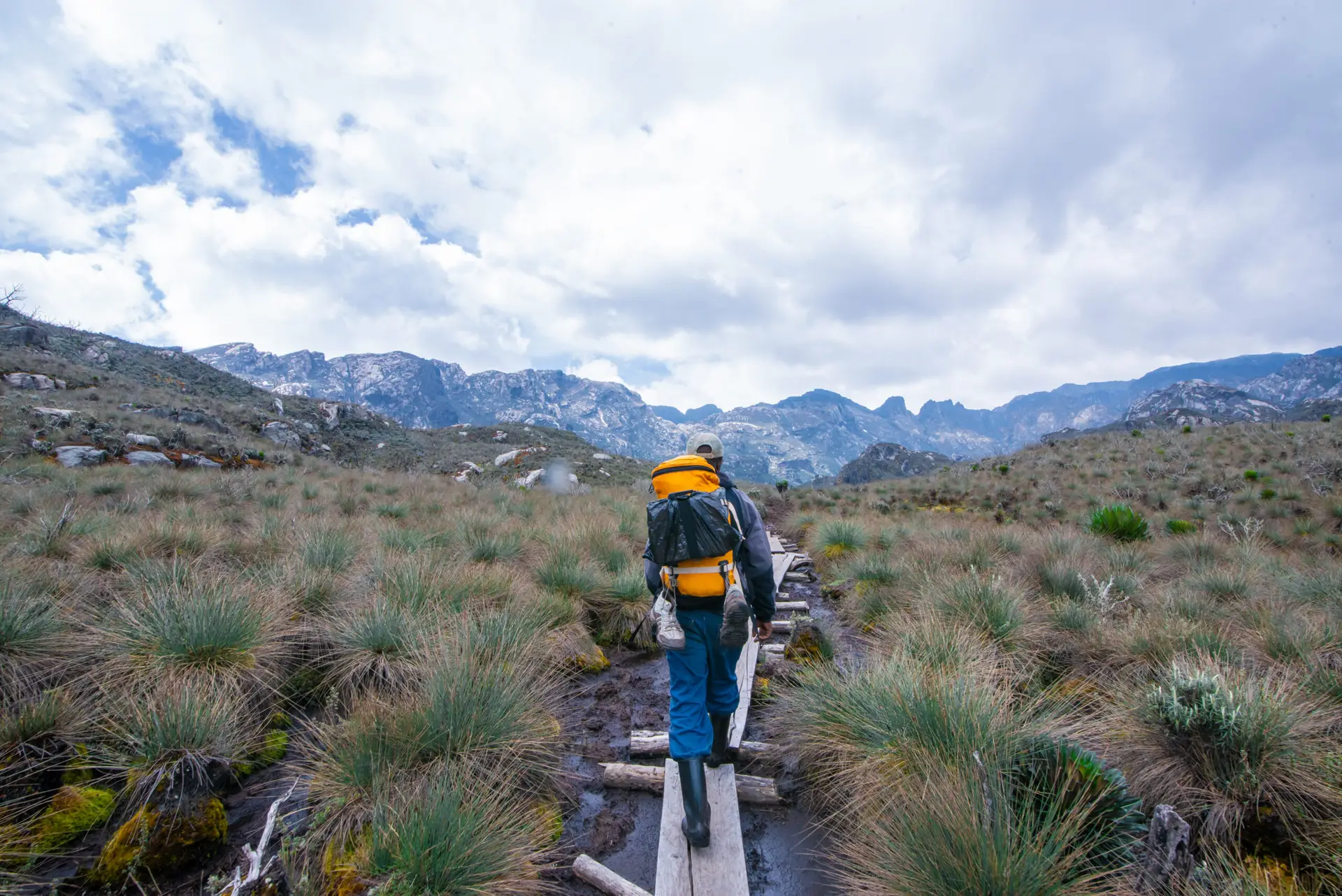
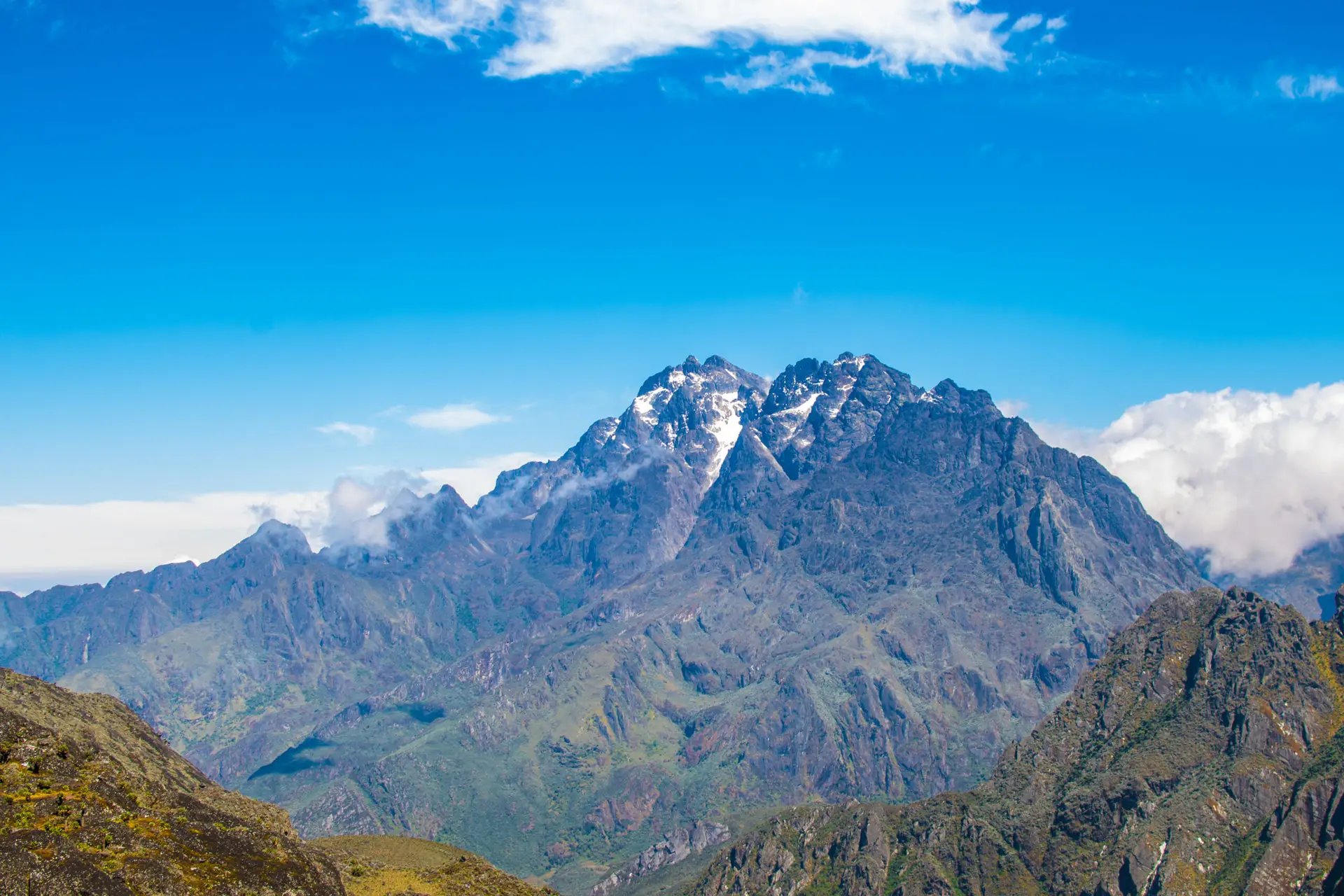
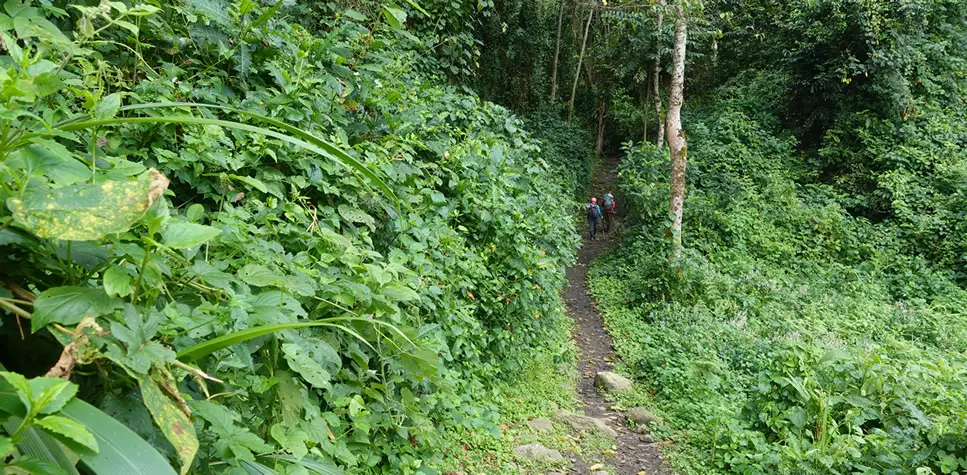
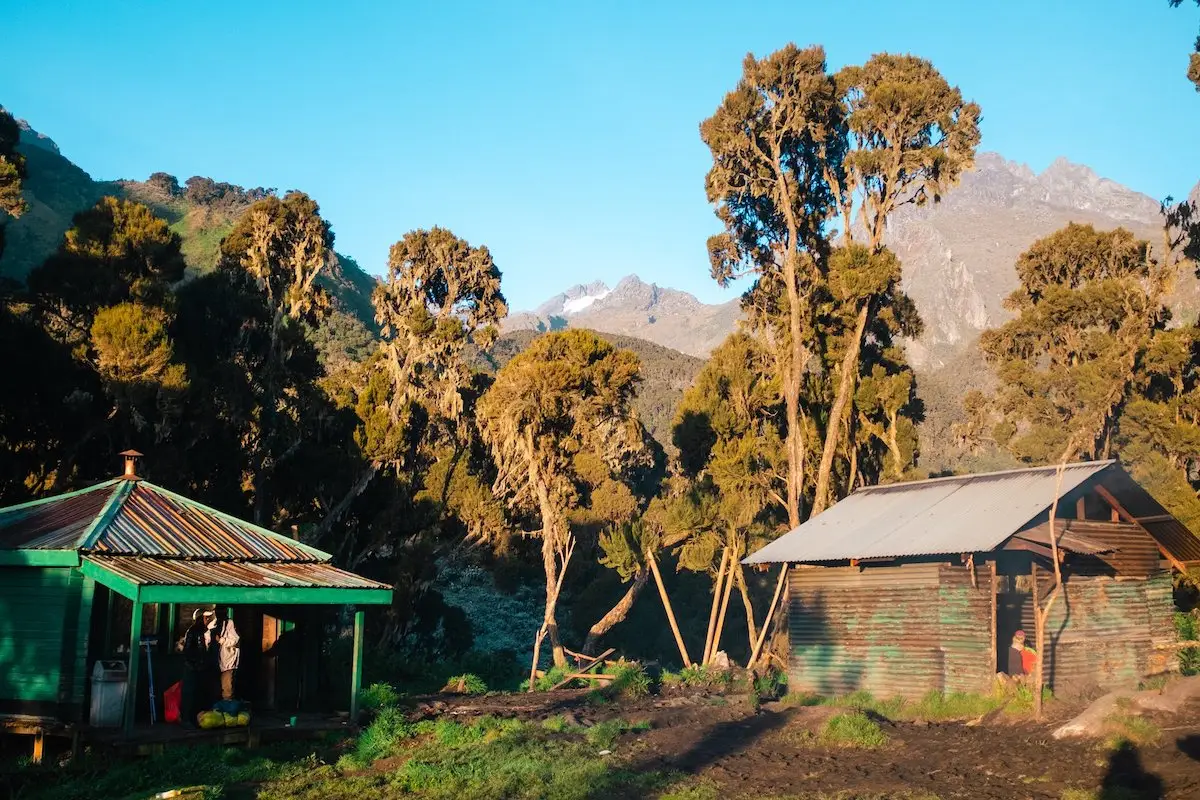
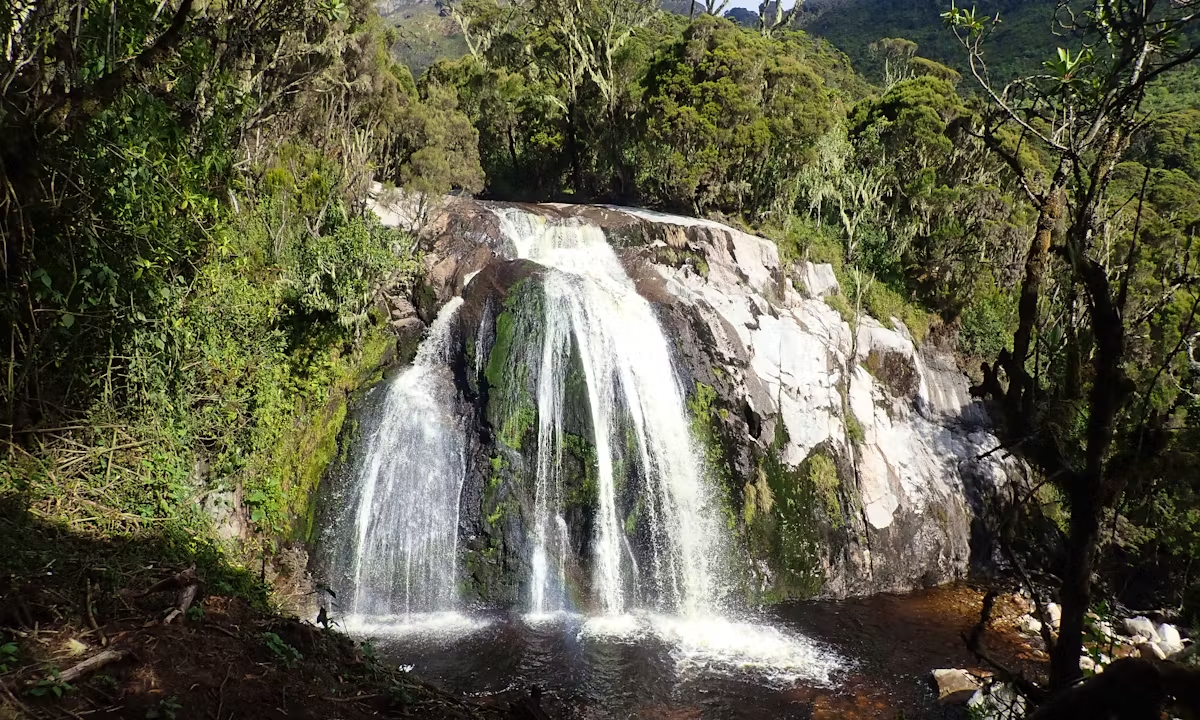
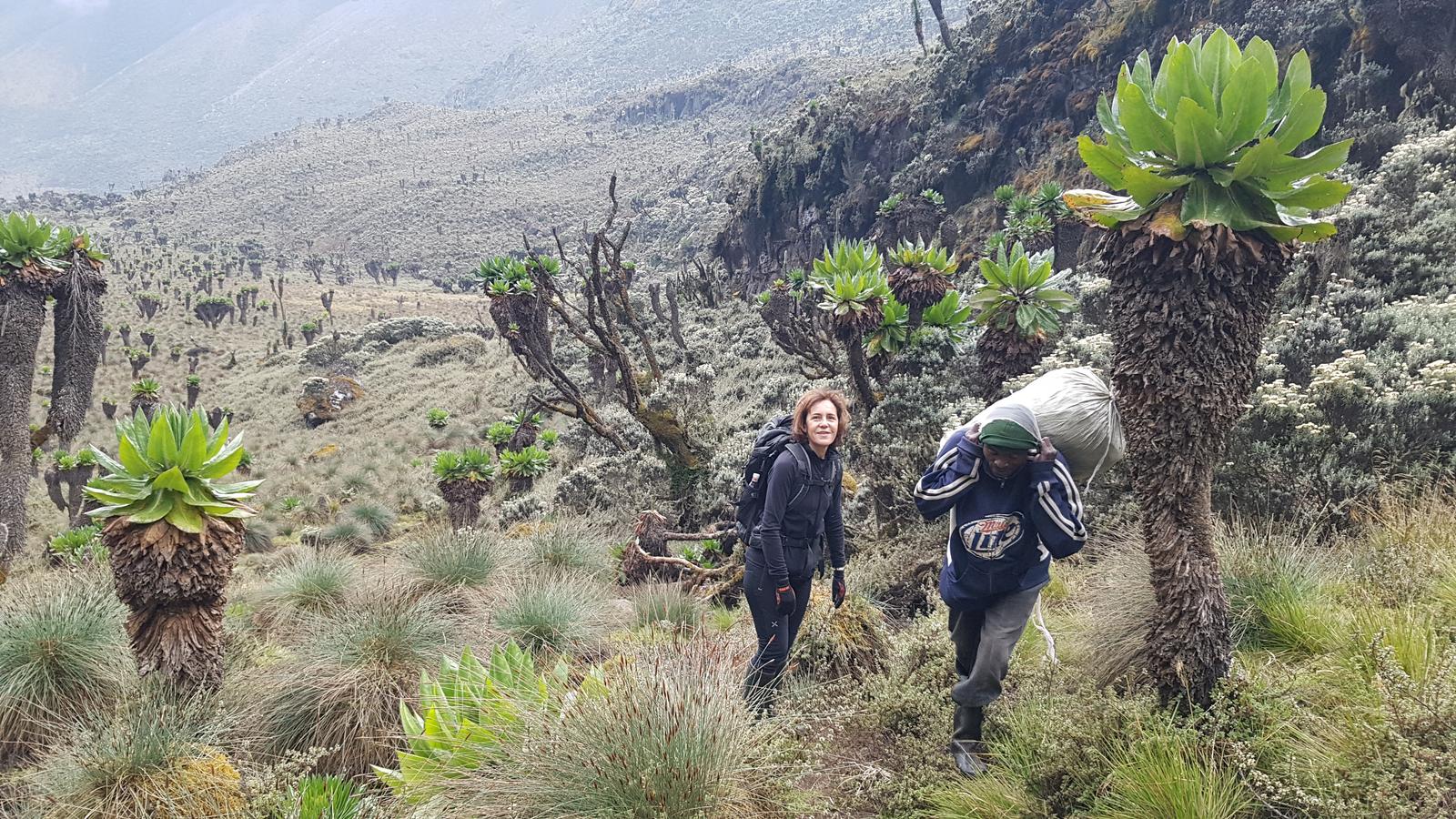
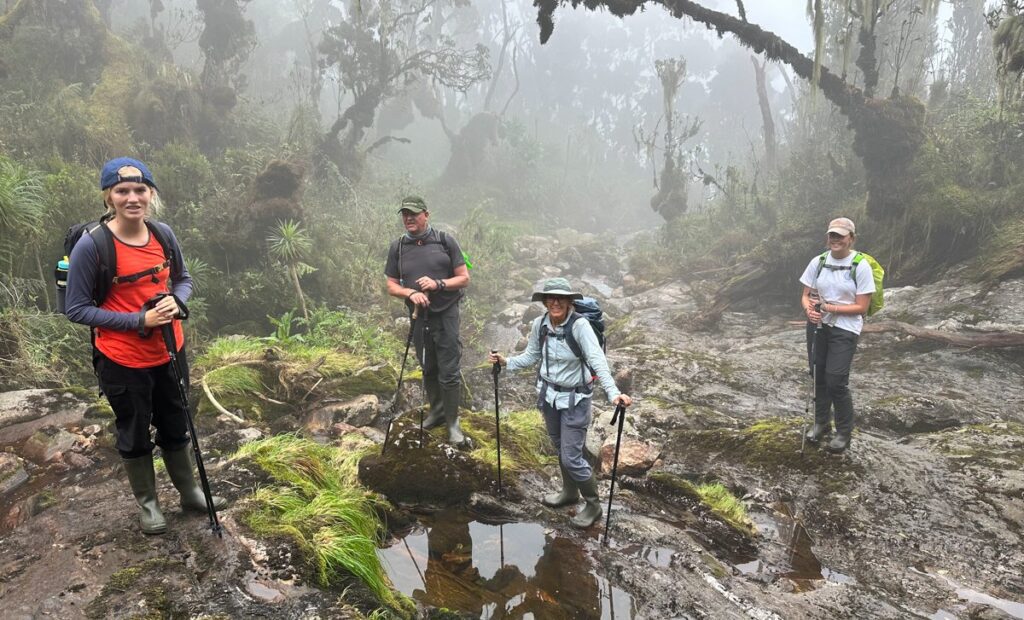
This 2-day Rwenzori hike provides an excellent opportunity to see Uganda’s most stunning mountain range without climbing the highest peaks. It is ideal for short safaris or weekend holidays.
The Rwenzori Central Circuit, Kilembe Trail, and Bukurungu Trail are among the most popular paths in Rwenzori Mountains National Park. All hikers who embark on the Stanley Ascent find them appealing. The Mahoma Trail and the Kazingo Trail are two minor trails in the Mountains of the Moon that people enjoy for nature walks and birdwatching excursions.
Trek Snapshot: 2-Day Lake Mahoma Hike at a Glance
| Detail | Information |
| Duration | 2 days / 1 night |
| Total Distance | Approx. 22 km (loop route) |
| Max Elevation | 2,988 m (Lake Mahoma Crater) |
| Elevation Gain (Day 1) | Approx. 1,338 m (1,650 m to 2,988 m) |
| Difficulty | Moderate to Challenging |
| Start / End Point | Mihunga Park Gate, Nyakalengija (1,650 m) |
| Route / Trail | Mahoma Loop Trail, Rwenzori Mountains National Park |
| Day 1 Hiking Time | 5 to 7 hours (ascent to lake) |
| Day 2 Hiking Time | 4 to 5 hours (descent via loop) |
| Best Season | December to February & June to August (dry seasons) |
| Group Size | 1 to 12 trekkers |
| Accommodation | Lake Mahoma Camp (wooden hut, overnight at the crater) |
| Price Indicator | From US $280 per person |
| Booking | Email: rwenzoritrekkingsafaris@gmail.com / WhatsApp: +256 773 256 104 |
Why the 2-Day Rwenzori Hike to Lake Mahoma?
Lake Mahoma is one of those places that genuinely belongs in the category of Africa’s hidden wonders. Formed in a volcanic crater at 2,988 metres above sea level in the heart of the Rwenzori range, it sits surrounded by primeval Afro-montane forest that has changed little since the first European explorers arrived in the late nineteenth century. The lake is black and perfectly still in the early mornings, reflecting the moss-covered trees that descend directly to its banks before the afternoon mist rolls in and reduces the world to ten metres in every direction. For trekkers seeking a genuine first encounter with the Rwenzori, this two-day route is the most accessible and complete introduction the mountain offers.
The combination of genuine altitude, exceptional biodiversity, and the near-complete absence of crowds distinguishes the 2-day Rwenzori hike to Lake Mahoma from other short East African treks. You walk through a UNESCO World Heritage Site that receives only a fraction of the visitors compared to comparable mountains on the continent. On the Mahoma Loop Trail you share the forest with black-and-white colobus monkeys, three-horned chameleons, Rwenzori turacos, and an avifauna so rich and so endemic that serious birdwatchers fly from across the world specifically to walk this trail. The loop format means the two days cover different terrain in each direction, giving a broader cross-section of the mountain’s forest zones than any out-and-back route achieves.
Overnight camping at Lake Mahoma itself is the centerpiece. The camp sits metres from the crater rim, and waking before dawn to find the lake completely glassy in the pre-sunrise light is one of the finest moments of Rwenzori trekking. By sleeping at the lake, you have time to explore the crater rim, watch the evening light shift across the surface, and experience the mountain’s nocturnal soundscape: tree hyraxes calling through the dark, condensation dripping through the canopy, complete separation from the world below. For those ready to go deeper into the range, this trek connects naturally to the 3-Day Mahoma Loop Hike or the full 7-Day Margherita Peak Climb via the Central Circuit.
This is also the most beginner-accessible overnight trek in the Rwenzori range. The total elevation gain is distributed across two days, and the maximum altitude of 2,988 metres sits well below the threshold where altitude sickness becomes a significant concern for most trekkers. If you are considering a longer Rwenzori expedition but want to test yourself on the mountain first, the 2-Day Lake Mahoma hike is the most logical and rewarding starting point. Our beginners’ guide to climbing the Rwenzori discusses exactly this progression.
Mahoma Route OverviewThe Mahoma Loop Trail uses an ascent route through the eastern valley to Lake Mahoma and a separate descent route that completes the loop back to Nyakalengija. Day 1 climbs through farmland, bamboo forest, and Afro-montane forest to the crater. Day 2 descends via a different valley with fresh panoramic views. Total loop: approximately 22 km. |
Full Day-by-Day Itinerary: 2-Day Rwenzori Hike to Lake Mahoma
Day 1: Nyakalengija to Lake Mahoma Camp | 1,650 m to 2,988 m | ~11 km | 5 to 7 hours
Your two days on the Mahoma Loop Trail begin before sunrise in Kasese. A 20-minute drive delivers you to Nyakalengija village and Mihunga Park Gate, the main Central Circuit entry point to Rwenzori Mountains National Park. Arrive by 07:00 to complete registration, meet your certified Uganda Wildlife Authority ranger guide, and make final equipment checks.
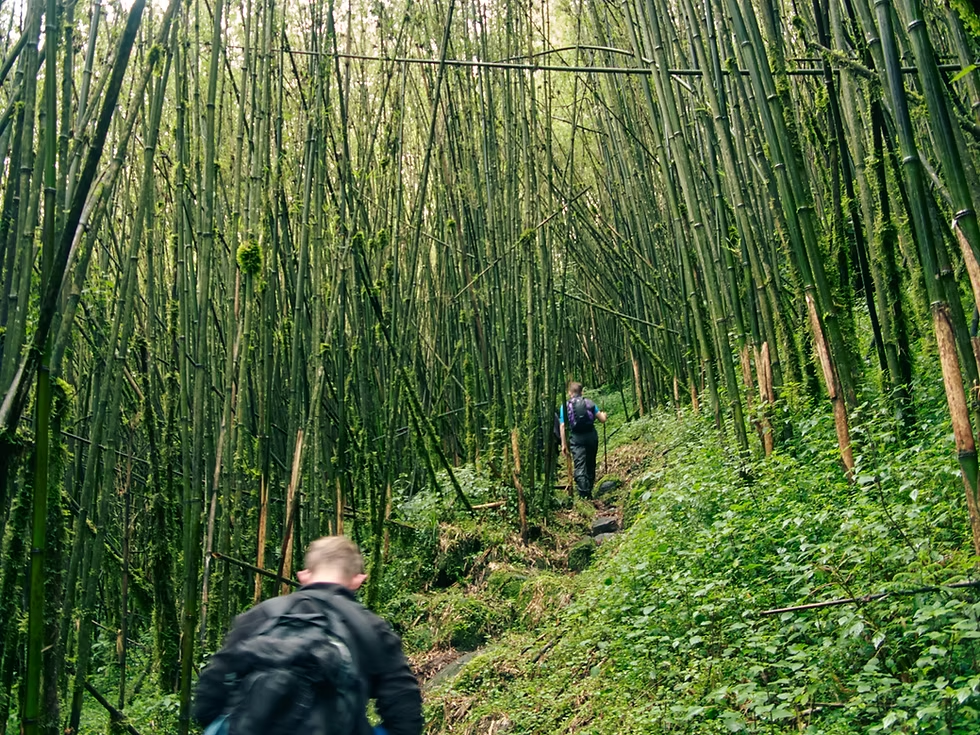
From Mihunga Gate, at 1,650 metres, the trail heads north through the farmland buffer zone between Kasese’s cultivated slopes and the protected forest boundary. For the first 40 minutes you walk through smallholder Bakonzo family plots of bananas, beans, and maize under the mountain’s shadow. The park boundary marks an immediate and dramatic shift: the trail enters dense montane forest, temperature drops, and the path narrows into a rooted, wet, and considerably more demanding track.
The lower montane forest zone, between 1,650 and 2,200 metres, is dominated by Podocarpus trees draped in hanging moss, giant tree ferns forming a prehistoric understory, and an abundance of orchids and epiphytes on every surface. Watch for three-horned chameleons at ground level. Within 2 to 3 hours of departure you enter the mountain bamboo forest, one of the most atmospheric sections of the Mahoma Loop Trail. Stands of giant bamboo (Arundinaria alpina) rise 10 to 15 metres above the path, creating a cathedral-like green tunnel. This is prime territory for the African emerald cuckoo and Rwenzori sunbirds. Our full Rwenzori wildlife guide catalogues every species by elevation zone.
Above the bamboo, the trail climbs steeply through upper Afro-montane forest, where the environment becomes increasingly mossy and cold. The gradient is relentless, but the forest scenery fully rewards the effort. Black-and-white colobus monkeys are almost always present in the high canopy. After a total ascent of approximately 1,338 metres, you reach the crater rim at around 2,988 metres. The view is one of the most dramatic moments in all of Rwenzori short trekking: the crater drops sharply to the perfectly circular dark lake below, which is enclosed by forest on all sides. Lake Mahoma Camp is perched on the rim above the northern shore.
Lunch is taken at camp after arrival. The afternoon is free for exploring the crater rim or the short path to the lake shore. Evening temperatures at 2,988 metres drop to between 8 and 12 degrees Celsius. Dinner is prepared by your camp cook. Sunset over the crater and valley is spectacular when conditions allow.
Highlight: Sunrise at the CraterWake at 05:30 and walk to the crater edge before the forest begins its morning noise. The lake surface is completely still and black as obsidian, reflecting the last stars. Few moments in East African trekking match this experience. |
Day 2: Lake Mahoma Camp to Nyakalengija | 2,988 m to 1,650 m | ~11 km | 4 to 5 hours
After breakfast, most trekkers spend 30 to 45 minutes revisiting the crater rim and lake shore in the morning light before beginning the descent. The second day of the 2-Day Rwenzori hike to Lake Mahoma uses the return loop of the Mahoma Loop Trail, which follows a different valley south and west back to Nyakalengija, providing completely fresh terrain and perspectives.
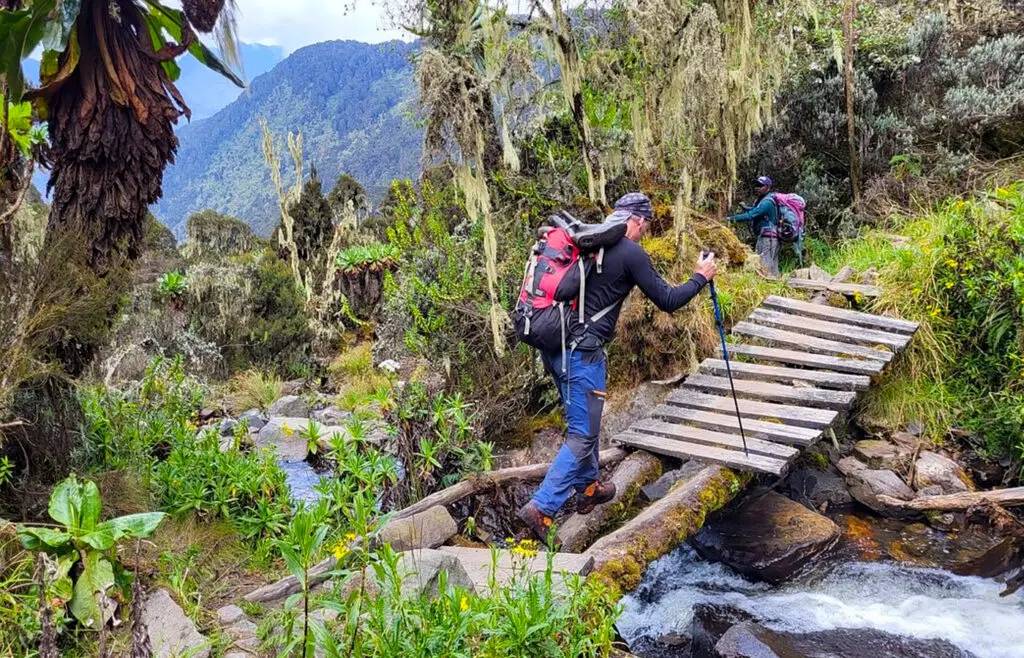
The descent passes through a series of ridge sections at 2,400 to 2,600 metres, offering open views across forested valleys toward Lake George and the Rift Valley floor on clear mornings. The path re-enters the bamboo forest and lower montane zone on the return routing, providing different birdwatching angles and wildlife encounters. Trekking poles are as essential on the descent as on the ascent due to wet and rooted trail surfaces. You arrive back at Mihunga Gate typically between 12:00 and 14:00.
This is a natural decision point: if the experience has been exhilarating and you want more of the mountain, our guides are ready to discuss the 3-Day Mahoma Loop or planning a full expedition on the Central Circuit Trail toward Margherita Peak. A transfer back to your Kasese accommodation follows the gate return.
Elevation Profile Summary: Mahoma Loop Trail
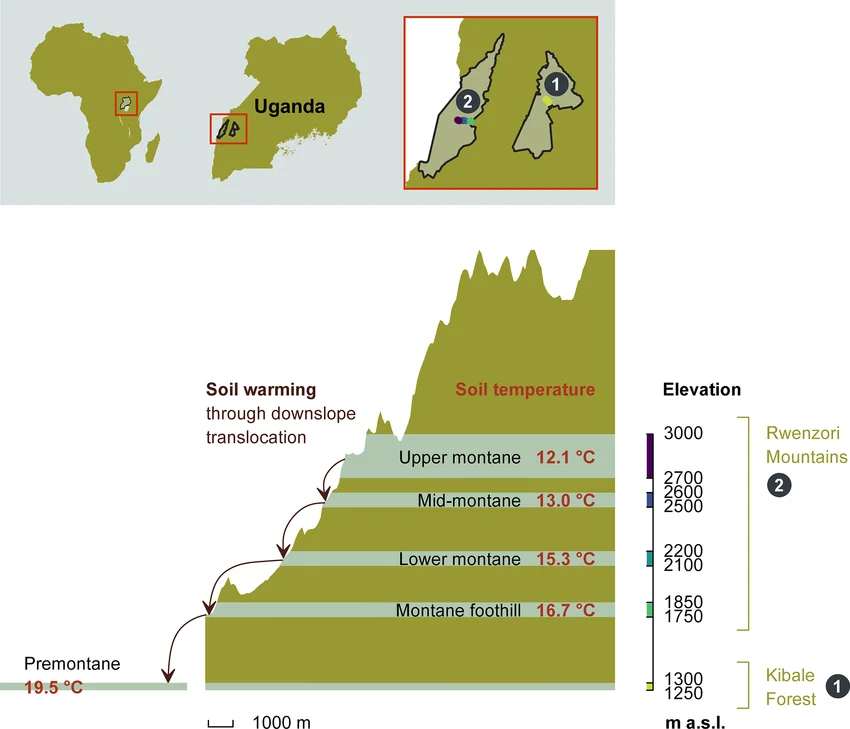
The 2-Day Rwenzori hike to Lake Mahoma follows a clear and logical elevation arc. Day 1 ascends continuously from 1,650 metres at Mihunga Gate to 2,988 metres at the crater rim, a gain of 1,338 metres over approximately 11 kilometers. The gradient is steady in the lower forest, steeper through the bamboo zone, and sharply ascending in the final push to the crater. Day 2 descends via the loop’s return path from 2,988 metres back to 1,650 metres over the same distance, with a mid-section ridge traverse at 2,400 to 2,600 metres that adds a natural rest section and panoramic viewpoint before the final forest descent.
The maximum altitude of 2,988 metres means trekkers spend their overnight camp at nearly 3,000 metres, within a safe acclimatization range for most healthy adults arriving from Kasese at approximately 1,000 metres. Mild breathlessness is possible on arrival at the crater rim. Our complete acclimatization guide provides full guidance for those with altitude concerns.
Lake Mahoma Camp: Facilities and What to Expect
Camp ProfileName: Lake Mahoma Camp | Elevation: 2,988 m | Location: Eastern crater rim, above the northern shore | Type: Overnight wooden hut camp | Facilities: Sleeping platforms, pit latrines, stream water (treat before use) | Managed by: Uganda Wildlife Authority |
Lake Mahoma Camp is one of the most scenically positioned campsites in the Rwenzori range. It sits on the crater rim directly above the lake, with a steep drop to the water on one side and the forested slope rising behind. The camp is small, quiet, and completely isolated. Accommodation is in UWA wooden huts with sleeping platforms and foam mattresses. Sleeping bags rated to a minimum of 0 degrees Celsius are essential. There is no mobile signal, electricity, or shops.
A short footpath descends from camp to the lakeshore, taking approximately 10 to 15 minutes. The rocky shore meets the deep, cold water. The crater walls are densely forested and host the endemic birdlife that makes this site prized by ornithologists worldwide. For the full infrastructure guide across all Rwenzori camps, see our mountain huts and campsites guide.
Flora and Wildlife on the 2-Day Lake Mahoma Hike
The Mahoma Loop Trail is one of the finest birdwatching routes in East Africa. Three distinct forest types, a crater lake habitat, and an exceptionally high density of Rwenzori endemic species make this trail world-class for wildlife observation. Our complete Rwenzori wildlife guide covers the full species inventory, and the Rwenzori vegetation zones guide details each plant community in depth.
Vegetation Zones on the Mahoma Loop
Lower Montane Forest (1,650 m to 2,200 m): Tall Podocarpus and Ficalhoa trees, giant tree ferns, orchids, and dense epiphytic moss colonizing every surface. The warmest and most humid section of the trail.
Mountain Bamboo Zone (2,200 m to 2,600 m): Giant bamboo (Arundinaria alpina) stands up to 15 metres, creating a cathedral-like tunnel environment. This is the richest zone for bamboo-specialist bird species.
Upper Afro-Montane Forest (2,600 m to 2,988 m): Hagenia, Hypericum, and mossy Podocarpus forests saturated in lichen. Giant lobelias appear at the upper edge, signaling the beginning of the Rwenzori’s iconic giant plant communities. The crater rim hosts exceptional moss and liverwort specimens.
Key Wildlife Species on the Mahoma Loop Trail
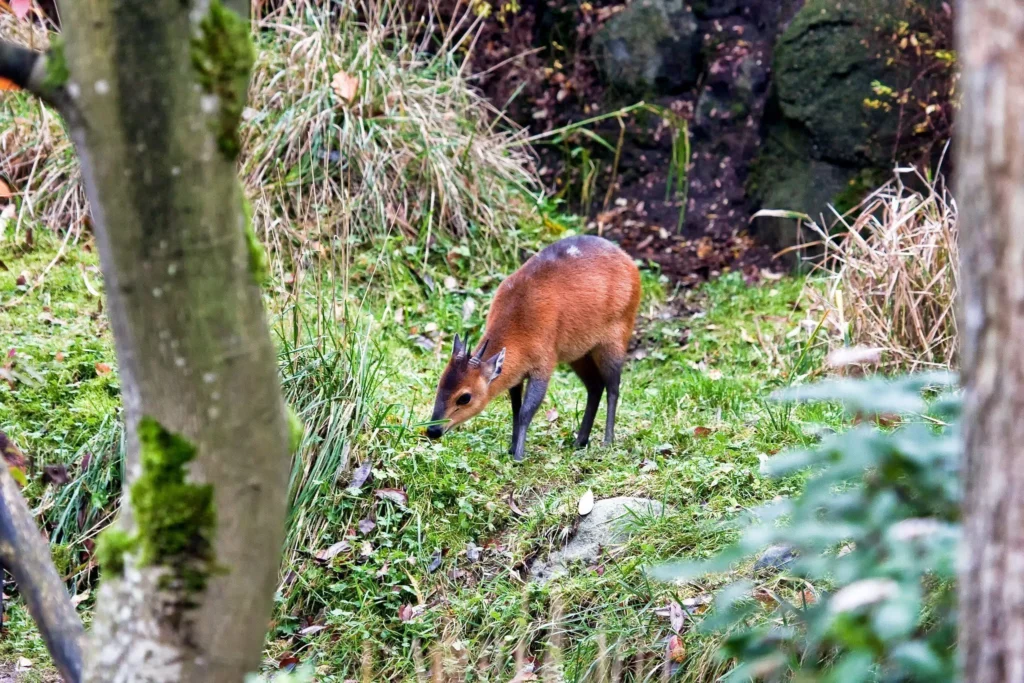
- Black-and-white colobus monkey (Colobus guereza): present throughout the upper forest; dramatically visible in the canopy.
- Blue monkey (Cercopithecus mitis): common in lower and mid-altitude forests.
- Rwenzori turaco (Ruwenzorornis johnstoni): endemic to the Rwenzori with crimson wing flashes; the most sought-after species on this trail.
- African emerald cuckoo (Chrysococcyx cupreus): brilliant metallic green; bamboo zone specialist.
- Rwenzori double-collared sunbird and northern double-collared sunbird: feeding on flowering plants of the upper forest.
- Mountain buzzard (Buteo oreophilus): soaring over valley ridges, particularly on Day 2.
- Three-horned chameleon (Trioceros johnstoni): Rwenzori endemic; frequently seen on the trail.
- Handsome francolin: often heard in lower forest sections.
- African civet and servaline genet: nocturnal; tracks visible near the lake camp in the morning.
- Tree hyrax (Dendrohyrax arboreus): heard calling from the crater rim at night.
Birdwatching TipThe highest-probability zones for Rwenzori endemics are the sections immediately above and below the bamboo zone. Early morning (06:30 to 09:00) is consistently the most productive window. Request a specialist birding guide when booking. |
Physical Difficulty and Fitness Requirements
The 2-day Rwenzori hike to Lake Mahoma is rated as moderate to challenging. The total elevation gain of 1,338 metres on Day 1 over 11 kilometers, combined with the Rwenzori’s wet, rooted, and steep terrain, makes this a serious overnight trek. The distribution of climbing across two days makes it significantly more accessible than a single-day attempt at a comparable altitude, such as the 1-Day Nyabitaba hike. Our complete Rwenzori fitness and training guide covers full preparation protocols.
Recommended Fitness Preparation
- Six to eight weeks of consistent cardiovascular training
- Three to four training hikes of 5 to 8 hours on hilly terrain
- Practice with a loaded 10 to 15 kg daypack
- Comfort on wet, rooted, and uneven surfaces
Who This Trek Suits Best
- Active travellers with good general fitness but limited technical mountain experience
- Birdwatchers and naturalists seeking maximum biodiversity in a short itinerary
- Trekkers assessing the Rwenzori before committing to a longer expedition
- Older trekkers with good fitness who want an overnight mountain experience without a summit climb
- Families with fit teenagers (14 and above recommended)
Altitude Acclimatisation Notes
At 2,988 metres, some trekkers will experience mild headaches or breathlessness on arrival at the crater. This condition is not dangerous at this altitude and typically resolves after a night’s sleep. Serious altitude illness is extremely rare below 3,500 metres in healthy adults. Good physical fitness, adequate hydration, and a measured pace on Day 1 are the best preventions. See our acclimatization guide and complete medical guide for full health preparation information.
Best Time for the 2-Day Rwenzori Hike to Lake Mahoma
The Rwenzori is trekable year-round. For a full seasonal breakdown, read our best time to visit the Rwenzori guide.

| Season / Month | Conditions & Notes |
| December to February (Dry) | Optimal. Firmest trails, clearest views, and best lake reflections. Prime photography window. |
| June to August (Dry) | Excellent. Slightly warmer. Green bamboo forest and active birdlife. Ideal for birdwatching-focused trips. |
| March to May (Wet) | Harder but possible. Heavy rain, a muddy trail, and an extraordinary forest atmosphere. Full waterproofs and rubber boots are essential. |
| September to November (Wet) | Similar to March-May. Frequent rain and mist at the crater. Beautiful for those prepared for wet conditions. |
The forest that makes this mountain extraordinary exists because of the rain. Wet season trekking to Lake Mahoma, when the crater mist is thickest and the forest most saturated, has an atmosphere that dry season visitors never fully experience. What matters more than season is appropriate gear and the right mindset.
What’s Included and What’s Not Included
| INCLUDED IN THE PACKAGE | NOT INCLUDED |
| Uganda Wildlife Authority park entry fees (both days) | International flights and Uganda transfers |
| UWA ranger guide (mandatory, certified) | Travel insurance (strongly recommended) |
| Rwenzori Trekking Safaris lead guide | Personal trekking gear and clothing |
| All park permits and documentation | Personal medications and first aid supplies |
| Porter service for camp equipment and food | Gratuities for guides and porters |
| Overnight accommodation at Lake Mahoma Camp | Pre/post-trek hotel in Kasese |
| All meals: Day 1 dinner through Day 2 lunch | Alcoholic beverages |
| Return road transfer: Kasese to Nyakalengija | Optional rubber boot hire at gate (~$5) |
Travel Insurance NoteTravel insurance covering emergency medical evacuation and high-altitude trekking is strongly recommended. While the Mahoma Loop sits below serious altitude illness thresholds, remote forest terrain means any injury requires professional evacuation coordination. Our travel insurance guide explains what cover you need. |
Full Packing and Gear List: 2-Day Lake Mahoma Hike
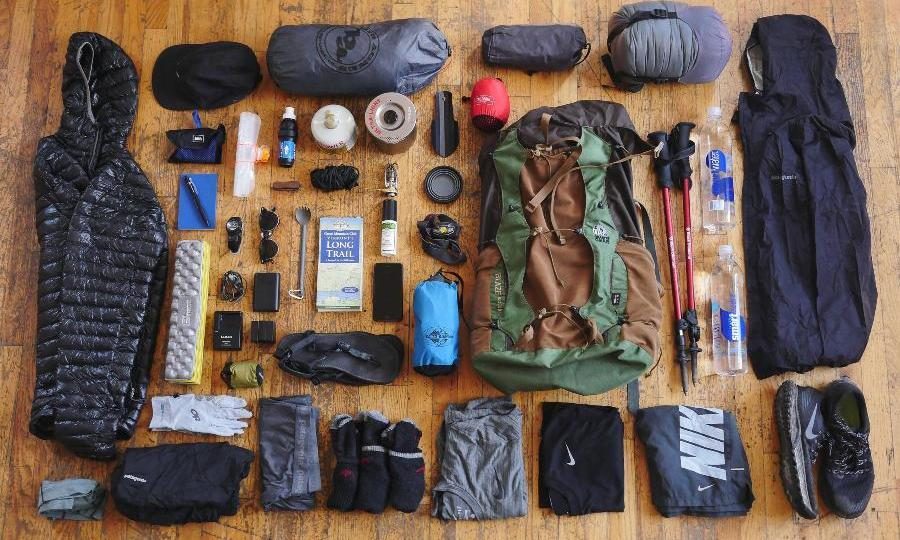
Our master Rwenzori packing list covers all trek lengths in full. For this two-day overnight route:
Footwear
- Rubber boots or waterproof hiking boots with ankle support and deep lug soles
- Two pairs of wool or synthetic hiking socks (spare pair for overnight)
- Lightweight camp shoes or sandals
Clothing
- Moisture-wicking base layer (synthetic or merino wool; never cotton)
- Warm mid-layer fleece or light down jacket (essential at 2,988 m in the evenings)
- Quality waterproof hardshell jacket with hood
- Waterproof trousers or hardshell pants
- Lightweight gloves (fleece or wool)
- Warm hat and sun hat
- Quick-dry hiking trousers
Sleeping and Camp
- Sleeping bag rated to 0 degrees Celsius minimum (-5 degrees recommended)
- Sleeping bag liner for added warmth and comfort
- Headlamp with spare batteries
- Earplugs (hyraxes are vocal throughout the night)
Equipment
- Two trekking poles (strongly recommended for ascent and descent)
- Daypack 20 to 30 litres
- Dry bags for electronics, sleeping bag, and spare clothing
- Water bottle or hydration reservoir (minimum 2 litres)
- Water purification tablets or portable filter
Health, Nutrition and Photography
- Personal first aid kit with blister treatment and pain relief
- Energy bars, trail mix, and personal snacks for both days
- Electrolyte tablets (recommended for Day 1 ascent)
- Sunscreen SPF 30+ and insect repellent
- Binoculars (strongly recommended for birdwatching)
- Camera with weather sealing or waterproof housing
Permits, Park Fees and Costs
All trekkers in Rwenzori Mountains National Park require Uganda Wildlife Authority permits. For the full cost guide, see our complete Rwenzori cost breakdown.
| Cost Component | Amount (USD, approximate) |
| UWA Park Entry Fee | $40 per person per day x 2 = $80 per person |
| UWA Ranger Guide Fee | Included in package |
| RTS Lead Guide | Included in package |
| Porter Fee (per porter, per day) | $15 to $20 (1 porter recommended per trekker) |
| Camp Fees (Lake Mahoma Camp) | Included in package |
| Total RTS Package | From US $280 per person |
| Optional Rubber Boot Hire | $5 at Mihunga Gate |
Porter support is strongly recommended. Your porter carries overnight camp equipment and cooking supplies, leaving you to focus on the hiking and wildlife experience. See our Rwenzori porters and tipping guide for rates and the cultural importance of the porter system.
Getting to the Lake Mahoma Trailhead: Logistics and Transport
The trailhead is Mihunga Park Gate, Nyakalengija, 22 km north of Kasese. Our guide to getting to the Rwenzori Mountains covers all transport options in full.
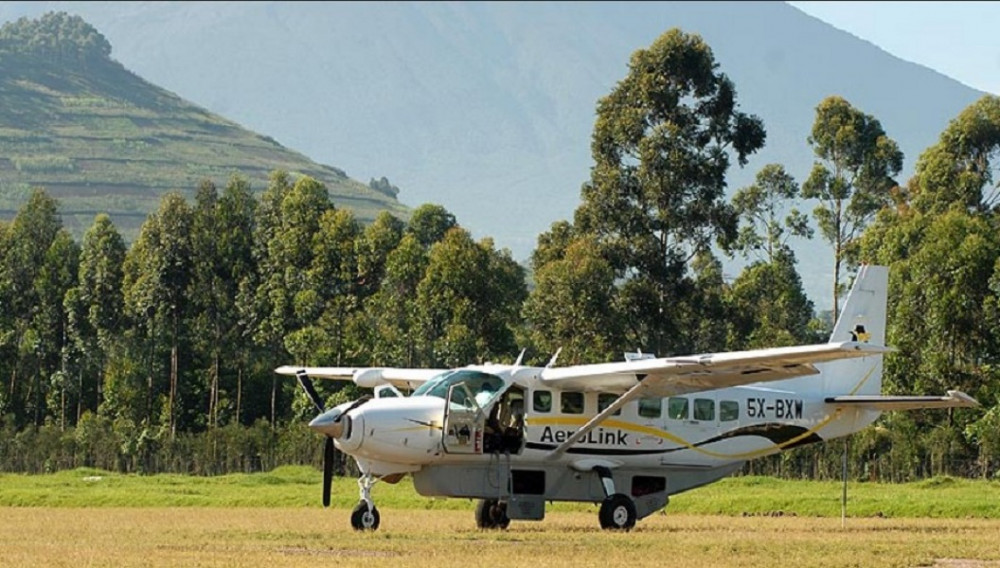
From Kampala to Kasese
Kampala to Kasese is approximately 415 km via the Mbarara highway: 5.5 to 6.5 hours by private vehicle. Coach services (Horizon Bus, Link Bus) from Kisenyi Bus Terminal take 6 to 7 hours. The overnight bus from Kampala arrives in Kasese by dawn, allowing a same-day trek start. Private transfers can be arranged through Rwenzori Trekking Safaris.
From Entebbe Airport to Kasese
Entebbe to Kasese is approximately 370 km and takes about 5 hours. We recommend an overnight stop in Kasese before the trek for acclimatization and to avoid arriving fatigued. Private airport transfers can be arranged on request.
From Kasese to Mihunga Gate
22 km from Kasese center, 20 to 30 minutes by vehicle. A return road transfer is included in all RTS packages.
For Kasese accommodation, see our pre- and post-trek accommodation guide. Our Kasese town guide for trekkers covers everything you need for logistics and local services in Kasese.
Book Your Trek
Respond within Minutes
From
$280
per person
- Duration 2 Days / 1 Nights
- Group Size 1–12 people
- Start Point Nyakalengija
- Departures Year-round
- No Summits Lake Mahoma
No booking fee. Free cancellation up to 30 days before departure. We respond within Minutes.
Our Popular Rwenzori Treks
Magheritah Peak (8 Days Kilembe Trail)
$1705 Per Person
Mutinda LookOut (4 Days)
$645 Per Person
Short Magherita Hike (5 Days Central Circuit)
$1200 Per Person
Rwenzori Hike (7 Days Central Circuit)
$1400 Per Person
Frequently Asked Questions: 2-Day Rwenzori Hike to Lake Mahoma
How difficult is the 2-Day Rwenzori hike to Lake Mahoma for a beginner trekker?
The 2-day Rwenzori hike to Lake Mahoma is rated moderate to challenging and is more demanding than a casual weekend hike but accessible to fit beginners who prepare specifically for it. The main challenge is 1,338 metres of elevation gain on Day 1 over approximately 11 kilometers on steep, wet, and rooted Rwenzori terrain. The distribution of climbing across a full day, with no summit push, and the maximum altitude of 2,988 metres being below the serious altitude sickness threshold, makes this significantly more manageable than most trekkers expect once they are on the trail. A beginner who trains consistently for 6 to 8 weeks on hilly terrain and is comfortable carrying a daypack for 5 to 7 hours will complete this trek and thoroughly enjoy it.
What is Lake Mahoma and what makes it special?
Lake Mahoma is a volcanic crater lake at 2,988 metres in the Rwenzori Mountains National Park, Uganda. It sits within a nearly circular crater ringed on all sides by dense Afro-montane forest that descends directly to the water. The lake is remarkable for its visual drama, a perfectly enclosed dark body of water in the forest with no visible inflow or outflow, and its ecological significance as a habitat for Rwenzori endemic and near-endemic bird species in extraordinary density. Guides and naturalists consistently describe it as one of the most beautiful and least-visited mountain lakes in Africa.
Is the 2-Day Lake Mahoma hike good for birdwatching?
The 2-Day Rwenzori hike to Lake Mahoma is widely regarded as one of the best birdwatching treks in all of East Africa. The trail passes through three distinct forest types, including the bamboo zone, which is a globally significant habitat for forest specialists. Key target species include the Rwenzori turaco, African emerald cuckoo, Rwenzori double-collared sunbird, handsome francolin, mountain buzzard, and African olive pigeon. The overnight stay at the crater provides access to the dawn chorus at the lakeshore, consistently one of the highest-variety birdwatching windows on the entire route. If birdwatching is a primary objective, request a specialist birding guide when booking.
What are the meals and food arrangements on the 2-Day Lake Mahoma trek?
All meals from dinner on Day 1 through lunch on Day 2 are included in the Rwenzori Trekking Safaris package. Your camp cook prepares meals at Lake Mahoma Camp using portable gas stoves with ingredients carried by porters: hot dinner on Day 1 evening, breakfast on Day 2 morning, and a packed lunch for the Day 2 descent. For Day 1 you should bring your own packed lunch and snacks to eat on the trail before reaching camp. Water is available from treated streams on the route and at camp; carry at minimum 2 liters and treat all water before drinking.
Is a guide compulsory on the Lake Mahoma hike?
Yes. A guide is legally required and enforced at Mihunga Gate for all trekking within Rwenzori Mountains National Park. No trekker may enter without a Uganda Wildlife Authority-certified ranger guide accompanying them. In addition, Rwenzori Trekking Safaris provides an experienced trail guide who handles logistics, camp coordination, wildlife interpretation, and pacing throughout both days. Attempting to trek independently is not possible under park regulations.
What is the best season for the 2-Day Rwenzori hike to Lake Mahoma?
The best seasons are the two dry periods: December through February and June through August. During these months trail conditions are firmest, crater views are clearest, and the risk of heavy overnight rain at camp is lowest. The lake is most photogenic in the still, dry-season mornings. However, the trek is fully viable in the wet seasons with full waterproofs and rubber boots. Wet season trekking offers a dramatically atmospheric experience with misty forests and complete solitude, which many experienced trekkers actively prefer.
How cold is it at Lake Mahoma Camp overnight?
Night temperatures at Lake Mahoma Camp (2,988 m) range between 6 and 12 degrees Celsius in the dry season and can drop to 4 degrees Celsius with wet-season cloud cover. A sleeping bag rated to 0 degrees Celsius is the minimum; -5 degrees is recommended for cold-sensitive trekkers. A thermal liner, warm base layers worn inside the bag, and a mid-layer fleece jacket provide additional comfort if temperatures drop.
What is the difference between the 2-Day Lake Mahoma Hike and the 3-Day Mahoma Loop?
Both itineraries have Lake Mahoma as their destination. The 2-Day hike reaches the lake on Day 1, spends one night at the crater, and returns on Day 2. The 3-Day Mahoma Loop adds a full extra day at the lake, allowing for a more leisurely pace, extended birdwatching, and deeper exploration of the crater rim in both directions. For trekkers with the time, the 3-day version is usually the better choice. For those with a tighter schedule, the 2-day version delivers the full Lake Mahoma experience efficiently and completely.
Can I do the 2-Day Lake Mahoma hike if I have never trekked in Africa before?
Yes. The 2-Day Rwenzori hike to Lake Mahoma is well suited to first-time Africa trekkers who are physically prepared. The logistics are handled entirely by your guide team, the terrain is challenging but not technical, and the maximum altitude is within safe range for most fit adults. The most important preparation is specific cardiovascular fitness training, appropriate gear, and an honest self-assessment of difficulty expectations. For context, read our full overview of the Rwenzori Mountains to understand why this range is genuinely different from any other African trekking destination.
How do I book the 2-Day Rwenzori hike to Lake Mahoma?
The 2-day Rwenzori hike to Lake Mahoma can be booked directly through Rwenzori Trekking Safaris. Contact us via WhatsApp at +256 773 256 104 for the fastest response, by email at rwenzoritrekkingsafaris@gmail.com, or through the contact form.
Our team will confirm available dates, answer specific questions about fitness and gear, and handle all park permits and logistics. We recommend booking at least 2 to 4 weeks in advance, particularly for peak season departures in December through February and June through August.
Ready to Wake Up Beside Lake Mahoma? Book Your Trek Today
Book the 2-Day Rwenzori Hike to Lake MahomaFrom US $280 per person | Guided | Meals & Camp Included | Year-Round Two days. One of Africa’s most beautiful crater lakes. A forest of colobus monkeys, turacos, and three-horned chameleons. We handle every detail from the permit to the porters. You bring the curiosity. WhatsApp: +256 773 256 104 |