Honest, expert guide to hiking the Rwenzori Mountains over 50 or 60. It covers fitness, routes, training, medical advice, and real success stories.
A frank, experience-based assessment for the mature adventurer seriously considering Africa’s Mountains of the Moon
There is a particular kind of email that arrives in our inbox several times each month. The writer is usually in their mid-fifties or early sixties. They have done some hiking, perhaps the Inca Trail, in their forties, or a few days in the Alps or Kilimanjaro years ago, and they have spent the intervening years building careers, raising families, and quietly filing away the idea of a serious mountain expedition for “someday.” Someday has arrived. They have found the Rwenzori, and now they are asking honestly, not rhetorically, whether a person of their age can actually do this.
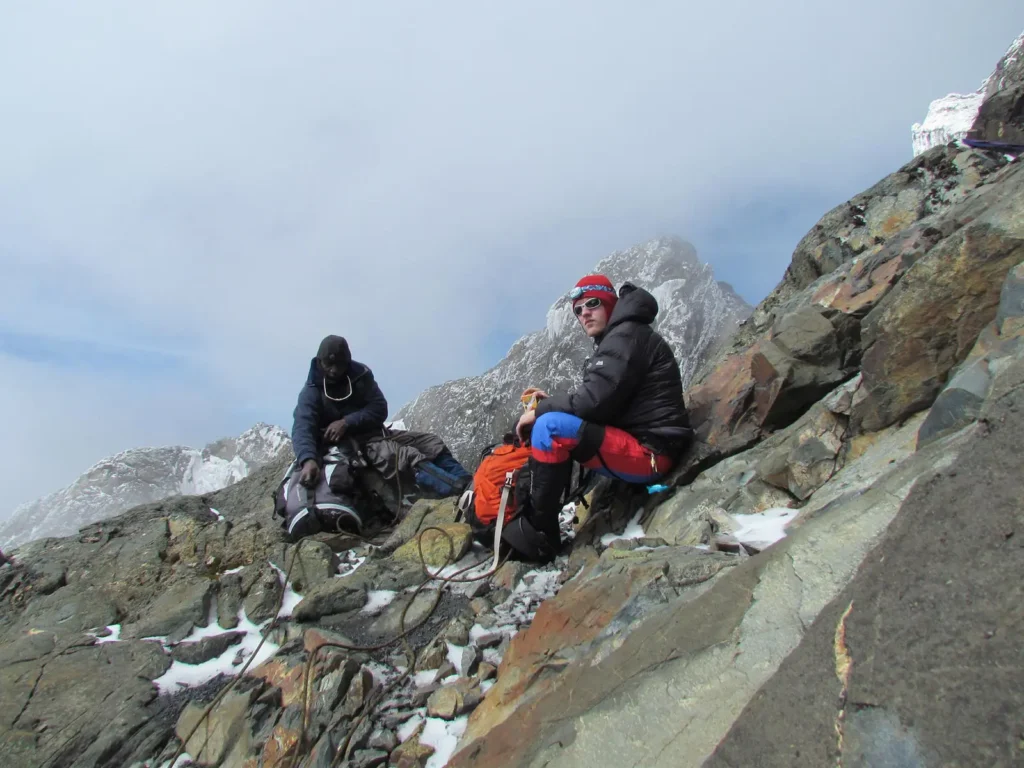
The answer is not simple, and anyone who gives you a simple one is either selling you something or has not spent enough time on this mountain to know better. The Rwenzori is a demanding, technically complex, and genuinely challenging environment. Fit, determined trekkers have successfully completed the Rwenzori, even in their sixties and seventies on shorter routes. The question is never simply about age. It is a question of fitness, preparation, health, route choice, pacing, and perhaps most importantly, honesty with yourself about where you currently stand on all of those dimensions.
This guide is written for the trekker who wants a real answer, not a marketing pitch. It draws on years of guiding experience in the Rwenzori Mountains, a UNESCO World Heritage Site in western Uganda, and it aims to be the most complete, candid resource available for older trekkers seriously evaluating whether the Mountains of the Moon belong on their next expedition list. It does for many of you. But getting there requires understanding what the mountain actually demands and what you need to do to meet them.
The 50+ and 60+ Adventurer: A Growing Force in Expedition Trekking
The adventure travel industry has undergone a quiet revolution over the last two decades, and anyone paying attention knows that the fastest-growing segment of serious international trekkers is not twenty-somethings with gap-year budgets. It is men and women in their fifties and sixties, people with financial resources, extended leave, serious motivation, and increasingly sophisticated physical conditioning programmes. The cliche of an elderly traveller on a package tour has given way to a generation of mature adventurers who approach mountains with the same methodical seriousness they bring to their professional careers.
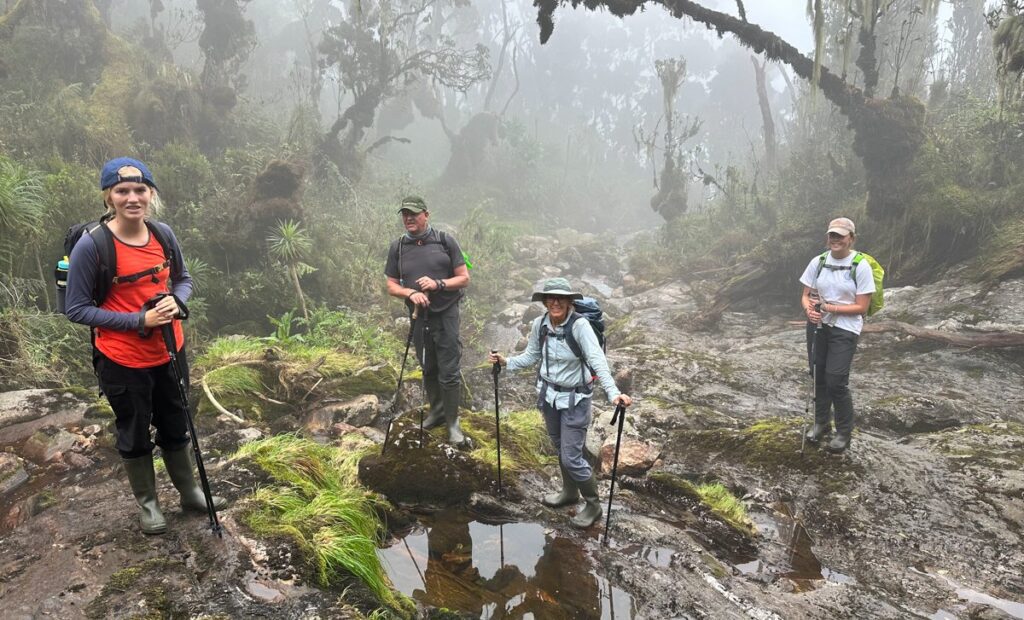
Data from major adventure travel operators worldwide consistently shows that the 50–70 age bracket represents a substantial and growing proportion of high-altitude trekkers on routes from Patagonia to the Himalayas. On the Rwenzori, where the total annual visitor number hovers around 1,000–1,500 trekkers, we see this demographic prominently represented, particularly among those who have already climbed Kilimanjaro in their younger years and are now looking for a challenge that combines genuine technical demand with the satisfaction of discovering one of Africa’s least-known wilderness areas. These are not people seeking an easy adventure. They are seeking an honest one.
What the research and our guiding experience both confirm is that chronological age is a less reliable predictor of success on a mountain than functional fitness, cardiovascular health, joint integrity, and mental resilience. A physically active 62-year-old who runs regularly, hikes at weekends, and has no significant cardiovascular or respiratory conditions will often outperform a sedentary 45-year-old on the same route. The Rwenzori isn’t concerned about your birth year. It cares about what your body and mind can sustain across eight or ten consecutive days of demanding mountain terrain.
What the Rwenzori Actually Demands: A Physically Honest Assessment
Before discussing what older trekkers can do on this mountain, it’s important to clarify its demands. Our full difficulty guide to trekking the Rwenzori covers the subject comprehensively, but the core physical demands break down into five categories that every trekker regardless of age must honestly evaluate before they commit.
Cardiovascular Endurance
The Rwenzori is not a sprint. The shortest meaningful multi-day route involves consecutive days of sustained uphill effort, often in humid, cold, and aerobically taxing conditions. Daily trekking durations range from four hours on the shorter approach days to eight or nine hours on longer traverses between huts. The cardiovascular system is under continuous load. Older trekkers, especially those who have experienced age-related reductions in VO2 max, face this sustained aerobic demand as their primary physical challenge. The good news is that it responds directly to training, and we will discuss exactly what that training should look like later in this guide.
Muscular Strength and Joint Load
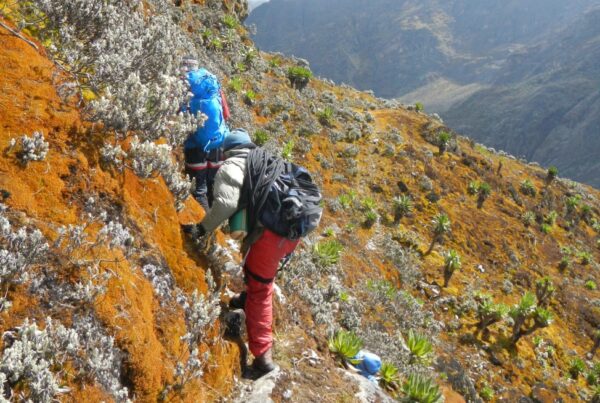
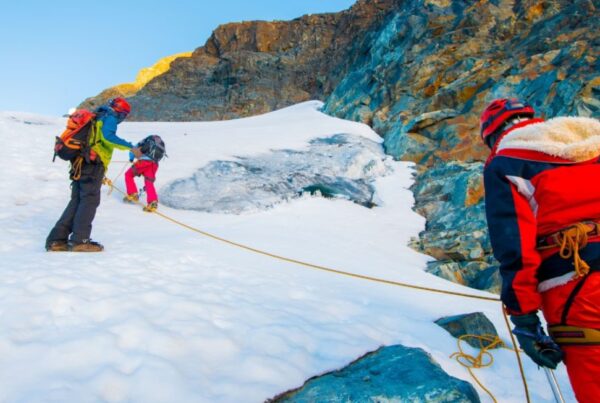
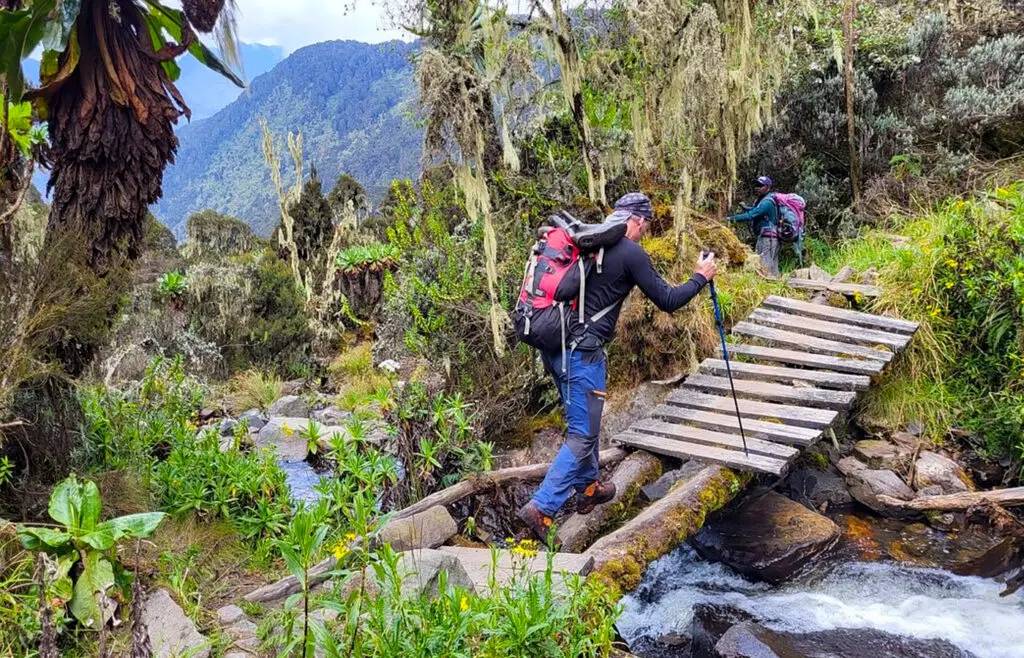
The Rwenzori’s trails are not smooth mountain paths. They are root-laced, boulder-strewn, bog-crossed corridors through some of the densest and most botanically extraordinary terrain in Africa. Sections of the trail involve pulling yourself up root ladders with both arms, descending steeply on wet rock with trekking poles, and crossing bog bridges that demand balance and ankle stability. The muscular demands are more total-body than a straightforward uphill trek, and the joint loading, particularly on the knees and hips, is significant. For trekkers with any history of knee or hip issues, this terrain is the aspect of the mountain that deserves the most serious advance attention. Crampons and fixed ropes on the upper glacier sections add an additional physical and technical layer for those targeting the high summits.
Balance and Proprioception
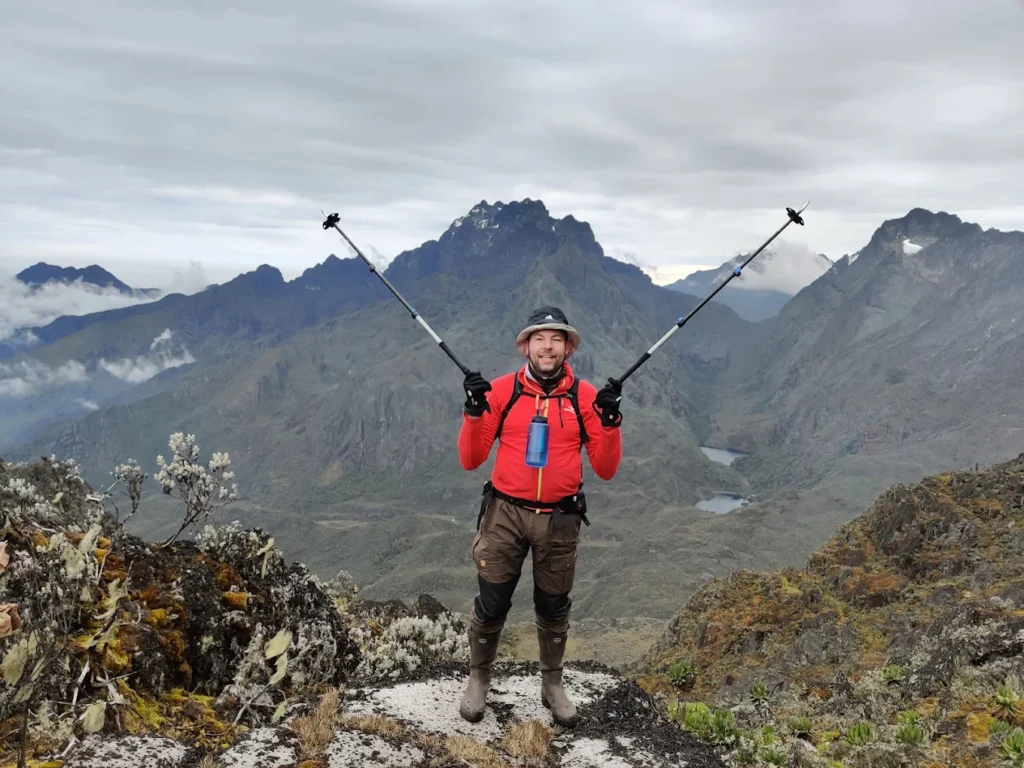
Age-related changes in balance and proprioception are well-documented and clinically significant, and the Rwenzori is a mountain that demands excellent balance. Bog crossings on narrow wooden bridges above thigh-deep peat, boulder-hopping in cloud, and steep wet rock descents all require a stable, responsive sense of body position. This region is an area where targeted training and the right equipment, particularly well-fitted, ankle-supporting trekking boots and properly adjusted trekking poles, can make a meaningful difference.
Thermoregulatory Capacity
The Rwenzori is famously wet and cold at altitude, with temperatures at the Elena Hut (4,541m) dropping well below freezing on summit nights and exposure to rain and wind possible on any day of the year. The ability to maintain core body temperature through sustained physical effort while wet is something that older trekkers can handle well, but it requires the right layering system and an awareness that older bodies may cool more quickly during rest stops. Our detailed guide to how cold it gets on Margherita Peak gives specific temperature ranges and clothing recommendations that apply regardless of age but are particularly relevant for trekkers whose cold tolerance may have changed over the years.
Altitude Response
Altitude sickness does not discriminate by age in any reliable way; it is fundamentally a genetic and physiological response that varies between individuals of any age group. However, older trekkers may have additional considerations: pre-existing cardiovascular conditions, medications that interact with altitude physiology, and a potentially reduced physiological reserve that means early symptoms of altitude sickness should be taken more seriously than in a healthy twenty-five-year-old. Our comprehensive medical guide to Rwenzori trekking covers altitude illness in detail, and every trekker, but particularly older ones, should read it in full and discuss their specific medical history with their doctor before committing to a high-altitude route. Rwenzori’s summit altitude of 5,109 metres puts it firmly in the high-altitude category, where acclimatisation matters enormously.
Route-by-Route Assessment for Trekkers Over 50
Not all Rwenzori routes are created equal, and the most important decision an older trekker makes is not whether to come but which route to choose and how much time to build into the itinerary. The following assessment is based on firsthand guiding experience and is intended to give you an honest picture of how each major route suits different fitness levels within the 50+ demographic.
| Route | Difficulty for 50+ | Suitability | Notes for Older Trekkers |
| 3-Day Mahoma Loop | Moderate | Excellent | Ideal entry point: forest-level, no glacier, manageable daily distances |
| 4-Day Mutinda Lookout (Kilembe) | Moderate-Hard | Suitable | Good acclimatisation profile; requires strong knees for descent |
| 7-Day Central Circuit (Margherita) | Hard | Good with prep | Summit only for fit 50+; extra acclimatisation days recommended |
| 8-Day Kilembe Trail (Margherita) | Hard | Good with prep | Excellent hut infrastructure; more time = better acclimatisation |
| 13-Day 6-Peak Expedition | Very Hard | Challenging | For the exceptional 50+, serious pre-expedition conditioning is required. |
The Mahoma Loop Where Many Older Trekkers Begin
The 3-day Mahoma Loop is, in our experience, the single best starting point for any older trekker approaching the Rwenzori for the first time or returning after a long gap in mountain experience. The route explores the lower montane forest zone and the spectacular Lake Mahoma, a jewel-green crater lake set in ancient rainforests, without venturing above 2,600 metres. The physical demands are real, full hiking days across sometimes steep and rooted trails, but they are manageable for a trekker with a reasonable base of walking fitness, and the absence of altitude stress means the cardiovascular system is tested on its own terms rather than in the thin air of the higher zones. For trekkers who want to assess their mountain fitness in an authentic Rwenzori environment before committing to a summit expedition, this route is invaluable.
The Mutinda Lookout via Kilembe: The Ideal Proving Ground
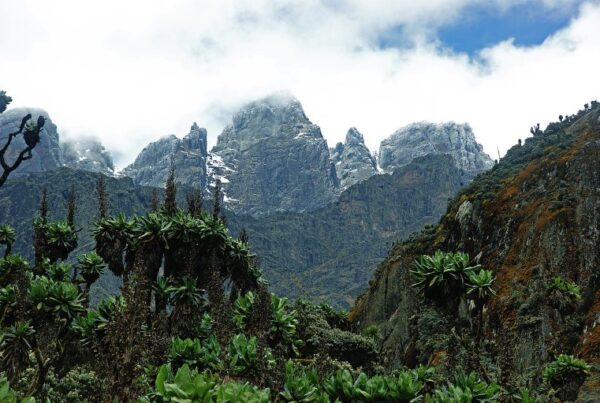
The 4-day trek to Mutinda Lookout via the Kilembe Trail takes trekkers up to approximately 4,000 metres, providing a genuine high-altitude experience and the classic Afro-alpine moorland scenery, the giant lobelias, the towering heathers, and the sense of being in a landscape from another era without the technical demands of glacier travel. This journey is the perfect test for a fit trekker over 50 who is not yet certain whether a summit expedition is right for them. The views from Mutinda Lookout reward the effort generously, the hut infrastructure along the Kilembe route is excellent, and the route’s pacing allows for the kind of gradual altitude gain that older bodies handle better than rapid ascent profiles.
The Central Circuit: The Classic Route to Margherita
The 7-day Central Circuit is the most established route to Margherita Peak, departing from the Nyakalengija trailhead and progressing through Nyabitaba, John Matte, Bujuku, and Elena huts before the glacier push to the summit. For fit trekkers over 50, this route is entirely achievable, but it demands honest preparation. The standard seven-day itinerary is on the tight end of what we recommend for older hikers because it leaves a limited buffer for acclimatisation. We routinely recommend that older clients consider extending their stay to eight or nine days by adding an additional rest or acclimatisation day at John Matte or Bujuku, which allows the body to spend an extra 24 hours at each altitude band before pushing higher. This small extension makes a substantial difference to both comfort and summit success probability.
The Kilembe Trail: Our Preferred Route for Mature Trekkers
The 8-day Kilembe Trail has become our most frequently recommended route for trekkers over 50 who are targeting the summit. The reasons are practical and accumulate: the route’s hut infrastructure (Kalalama, Mutinda, Bugata, Hunwicks, and Margherita camps) is among the best on the mountain, with solar charging, better sleeping conditions, and a more comfortable base from which to recover between days. The eight-day itinerary provides a more gradual altitude profile than the standard Central Circuit, giving older bodies more time to adapt at each elevation. The route’s approach from the south creates a different, and in many ways superior, acclimatisation profile, beginning at a lower altitude and gradually gaining altitude, which suits mature physiology better than a faster ascent.
What Older Trekkers Should Train For: A Twelve-Week Framework
The most common mistake older trekkers make in preparing for the Rwenzori is training too narrowly, doing only what they find comfortable, rather than targeting the specific physical demands the mountain will place on them. Our Rwenzori fitness guide covers general fitness requirements, but older trekkers benefit from a more targeted approach that addresses the specific age-related vulnerabilities that the mountain will expose.
Cardiovascular Base: The Foundation of Everything
Twelve weeks before your Rwenzori departure, you should be capable of sustained aerobic effort for three to four hours without stopping. Not racing, hiking pace, or its cardiovascular equivalent. If you are not there yet, build toward it progressively over the preceding weeks, starting with sixty-to-ninety-minute sessions and adding fifteen minutes per week. Running, cycling, swimming, and rowing are all effective cardiovascular conditioners for mountain trekking, but hiking is the most specific, particularly if you can do it on hilly terrain with a loaded pack. The goal is not to become an elite athlete; it is to build the aerobic base that will carry you through consecutive challenging days without accumulating a physical debt you cannot recover from overnight.
Eccentric Knee Strength: The Most Critical Element for Older Knees
The single most important strength element for any trekker over 50 preparing for the Rwenzori is eccentric quadriceps strength, the ability to control the knee joint during descent. Descending steep, wet, rooted terrain puts enormous load through the quadriceps in an eccentric contraction (the muscle lengthening under load), and this is the movement pattern that causes the knee pain, instability, and occasional injury that sidelines older trekkers on big mountain descents. Single-leg squats, step-downs, and controlled reverse lunges, performed slowly and with emphasis on the downward phase, are the most effective exercises for building this capacity. Start with bodyweight and add load gradually. By the time you arrive at the Nyakalengija trailhead, your legs should be capable of two hundred controlled eccentric repetitions without significant fatigue, a reasonable proxy for the thousands of knee-loading steps a Rwenzori descent will demand.
Hip Stability and Glute Activation
Clinically documented age-related reductions in gluteal activation significantly impact mountain terrain. Weak or under-recruited glutes shift load to the knees and lower back on every step of an uneven trail, accelerating fatigue and increasing injury risk. Doing hip bridges, clamshells, single-leg deadlifts, and lateral band walks regularly during your twelve-week training will help strengthen your glutes, which is essential for maintaining proper body alignment on tough trails. These exercises are not glamorous. They are, however, some of the most important preparation you can do for a mountain like the Rwenzori.
Balance and Proprioceptive Training
Single-leg balance exercises, standing on one leg with eyes closed, progressing to standing on an unstable surface, directly address the proprioceptive demands of bog crossings, root bridges, and wet rock. Yoga and Pilates are both effective supplements for older trekkers because they combine balance training with the core stability that supports safe movement on uneven terrain. If you currently struggle to balance on one leg for thirty seconds with your eyes open, this skill is an area requiring urgent attention before you come to the Rwenzori.
Load Carrying: The Forgotten Element
Many trekkers train without a pack and then arrive on the mountain with eight to ten kilograms of weight that changes their biomechanics significantly. On the Rwenzori, porters carry the majority of the kit, but your daypack will still carry water, layers, camera equipment, snacks, and first aid supplies, often five to seven kilograms. To translate your unloaded fitness into on-mountain performance, it is essential to train at least once per week with this weight, particularly on downhill sections.
⏱️ 12-Week Training Benchmark for Trekkers Over 50Week 1–4: 3 aerobic sessions/week (60–90 min each) + 2 strength sessions targeting knees, glutes, and balance. Week 5–8: Extend aerobic sessions to 2–3 hours on weekends; add loaded day hikes on hilly terrain. Continue strength work. Week 9–12: At least one 4-hour loaded hike per week on rough terrain. Two aerobic sessions mid-week. Taper final 10 days. Throughout: Single-leg balance work daily (5–10 minutes); eccentric step-downs 3x per week. Medical: Full cardiovascular check-up with your doctor 8–10 weeks before departure. Discuss altitude medication options. |
Medical Considerations Specific to Trekkers Over 50.
There are medical realities to trekking at altitudes over fifty that deserve honest, specific discussion. This is not a reason to stay home; it is a reason to prepare with the same rigour for any serious project.
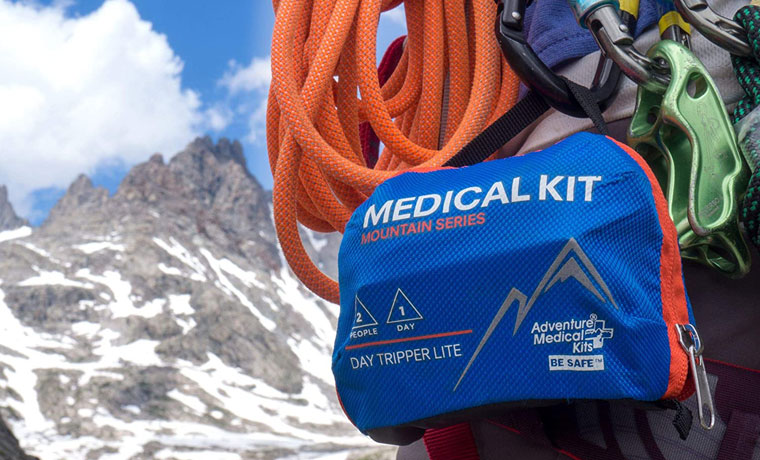
Pre-Trek Medical Assessment
A cardiovascular assessment, including a resting ECG and, in some cases, stress testing, is advisable for trekkers over 55 who are planning to reach altitudes above 4,000 metres. Your GP or a travel medicine specialist can advise on whether any of your current medications interact with altitude physiology. Certain blood pressure medications, diuretics, and sedatives warrant specific attention. Our medical guide to trekking the Rwenzori provides a detailed list of conditions and medications to discuss with your doctor, and we recommend sharing this information with your physician at least eight weeks before departure.
Acetazolamide (Diamox): A Practical Conversation
Acetazolamide, commonly known by the brand name Diamox, is a medication widely used in altitude medicine to reduce the risk and severity of acute mountain sickness. It works by stimulating faster and deeper breathing, which accelerates the acclimatisation process. For older trekkers, particularly those who are new to high altitude or who have had symptoms of altitude sickness in the past, discussing Diamox prophylaxis with their doctor is worthwhile. It is not a magic solution, and it has side effects (tingling extremities, increased urination, and an aversion to carbonated drinks are the most common), but for some trekkers it meaningfully improves the altitude experience. The decision to use it is always personal and made in consultation with a physician. It is never a substitute for the most effective altitude countermeasure available: giving your body adequate time to acclimate.
Joint Health and Anti-Inflammatories
Trekkers with managed osteoarthritis in the knees or hips can and do complete the Rwenzori successfully, but preparation requires additional attention to joint conditioning and load management. Trekkers with joint conditions commonly carry non-steroidal anti-inflammatory drugs (NSAIDs) like ibuprofen, but they should exercise caution when using them at altitude. Some evidence suggests they may mask early symptoms of altitude sickness, and they carry gastrointestinal risks, particularly at elevation. Discuss your specific joint health and pain management strategy with your doctor, and consider consulting a physiotherapist who works with older athletes in the months before your trek.
Hydration and the Older Trekker
Age-related changes in thirst perception mean that older trekkers are more vulnerable to dehydration than their younger counterparts, not because they need more water, but because they often don’t feel thirsty even when they are significantly underhydrated. On the Rwenzori, where physical output is high and altitude further increases fluid requirements, conscious hydration, drinking on a schedule rather than on thirst, is essential. A knowledgeable guide will prompt you to drink at rest stops, but building the habit before you arrive is the most reliable approach.
🩺 Medical Checklist for Trekkers Over 50Complete a full cardiovascular assessment with a GP or sports medicine physician at least 8 weeks prior. Review all current medications for altitude interactions (consult a travel medicine specialist). Discuss acetazolamide (Diamox) prophylaxis with your doctor. Dental check-up: altitude significantly worsens toothache; avoid bringing a pending dental problem to the mountains. Vision and eye health: cold, wind, and UV exposure at altitude can affect contact lens wearers. Travel insurance: ensure your policy explicitly covers high-altitude trekking above 4,000m and emergency evacuation. Comprehensive trip insurance covering pre-existing conditions if applicable. |
Pacing, Guide Support, and the Rwenzori System
One of the structural advantages the Rwenzori offers older trekkers is a guiding system that is fundamentally built around small groups and high professional guide ratios. Because the mountain receives only around 1,000 to 1,500 trekkers per year, the guide corps consists of specialists who know every metre of their routes and who have extensive experience adapting pace, itinerary, and support to individual trekker needs.
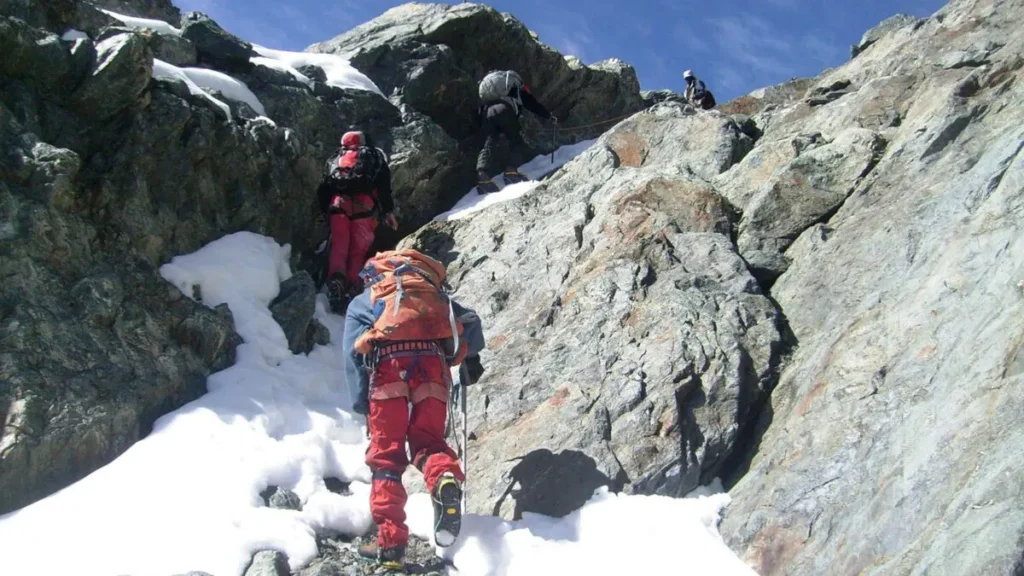
The approach that works best for older trekkers on any Rwenzori route is what experienced altitude guides call the “pole pole” principle, a Swahili expression meaning “slowly, slowly”, adopted across East African mountain guiding culture as the foundational pacing philosophy. Moving slowly and steadily, pausing frequently and briefly rather than stopping for long rests that allow the body to cool, consuming small amounts of food and fluid continuously throughout the day, and finishing each day’s trek before exhaustion sets in rather than pushing to the edge of reserves: these are the habits that distinguish successful older trekkers from those who struggle. They are also habits that our guides actively support, prompt, and model throughout your expedition.
Porter support on the Rwenzori means that your personal equipment load on any given day is minimal, typically just your daypack. The physical labour of carrying sleeping bags, tent equipment, food supplies, and group cooking kits falls to a well-organised porter team whose members know the mountain as well as any guide. This load sharing is particularly significant for older trekkers, for whom the difference between carrying five kilograms and twenty kilograms across a demanding day can be the difference between arriving at camp fresh or depleted. If you have concerns about whether the Rwenzori trek is safe for your specific circumstances, this information is one of the most practical reassurances we can offer: You will not be carrying a heavy pack through any of it.
The Profile of Success: What Older Trekkers Bring to the Rwenzori
Every season, our guide teams escort older trekkers to remarkable achievements on this mountain. The profiles vary, but the common threads provide valuable insights. Successful older trekkers on the Rwenzori almost universally share the following characteristics: they have prepared specifically and seriously for a minimum of three months; they have been completely honest with their guide about any health concerns, fitness limitations, or anxieties before and during the trek; they pace themselves without ego, accepting that their summit-day speed may be slower than that of younger companions without interpreting this as failure; and they bring to the mountain the thing that decades of life experience uniquely provides the ability to persist through discomfort without catastrophising, to find meaning in difficulty, and to savour an extraordinary environment rather than simply enduring it.
A 62-year-old retired schoolteacher from the Netherlands completed our 7-day Central Circuit two seasons ago, reaching Margherita Peak in clear weather after a summit start at 3:30 in the morning. She had spent six months training for it, running three times a week, doing strength work with a physiotherapist, and completing two significant hiking weekends in the Ardennes to test her load-carrying capacity. Her success was not despite her age; in several ways, it was because of it. The patience she brought to the acclimatisation process, the absence of a competitive ego that might have pushed a younger trekker to move too fast, and the genuine joy she took in every stage of the journey rather than fixating only on the summit these are qualities that mature trekkers often bring in abundance.
A 58-year-old cardiologist from Germany completed the Kilembe Trail the same season, reaching the glacier on day seven and making his summit attempt on day eight. He had spent months discussing his own cardiovascular readiness with colleagues before departing, carried Diamox as prophylaxis, and wore a heart rate monitor throughout to manage his exertion. He reached the summit safely and descended with a calm, methodical efficiency that is characteristic of the best older trekkers we guide. His medical background was an advantage in understanding altitude physiology, but the fundamental qualities that got him to 5,109 metres, preparation, honesty, and patience, are available to any trekker willing to invest the time.
Not every older trekker reaches the summit, and this fact is important to acknowledge. Some arrive insufficiently prepared. Some encounter altitude symptoms that, combined with age-related physiological factors, make it responsible for their guide to recommend turning back below the glacier. And some discover, partway through the trek, that their knees or cardiovascular system is not yet ready for the summit push and choose the dignified, intelligent option of enjoying the mid-mountain experience and planning a return when better prepared. The success rate on Margherita Peak is a function of preparation and conditions, not age, and the good news is that preparation is entirely within your control.
Choosing the Right Itinerary for Your Age and Fitness Level
Choosing the right itinerary is the most consequential decision an older trekker makes. Our routes and trails give a full overview of available options, from the introductory 1-day Nyabitaba walk to the ambitious 13-day six-peak expedition. For trekkers over 50, the following principle holds across all route choices: build in more time than you think you need. The standard itineraries on the Rwenzori are designed for trekkers in their twenties and thirties moving at a reasonable pace. For older trekkers, adding one or two days to the standard itinerary, whether by including an acclimatisation rest day at mid-mountain or simply by choosing an eight-day route over a seven-day one, dramatically improves both safety and summit success probability.
For those who are uncertain whether a summit expedition is the right goal, the Mutinda Lookout trek and the Mahoma Loop offer deeply satisfying experiences that showcase the Rwenzori’s extraordinary ecology and landscapes without the pressure or physical demands of a summit objective. The giant lobelias and towering heathers of the Afro-alpine zone, the endemic wildlife of the lower forest belt, and the profound solitude of this little-visited mountain are available on shorter routes as much as on the summit push. You do not need to stand on Margherita to have had a transformative Rwenzori experience.
For those who do want the summit, our mountaineering team will give you a frank, personal assessment of which route best matches your current fitness level, your timeline, and your specific health considerations. This assessment is not a box-ticking exercise; it is a genuine professional evaluation that draws on years of guiding people of all ages and backgrounds up this mountain. We have a strong commercial interest in getting you to the summit. We have an equally strong professional and ethical interest in making sure you go home safely, and those two interests are best served by being honest with you from the start about what you need to do to succeed.
Gear Considerations for Older Trekkers
The Rwenzori’s extreme wetness and the cold of its high zones create gear requirements that are non-negotiable regardless of age, but a few considerations are particularly relevant for older trekkers. Waterproofing is more critical than insulation weight. A dry trekker at 4,000 metres is warm; a wet trekker at 4,000 metres will become hypothermic regardless of how many layers they are wearing. Invest in genuinely waterproof outerwear, test it before you come, and carry a spare dry mid-layer in a waterproof bag inside your pack.
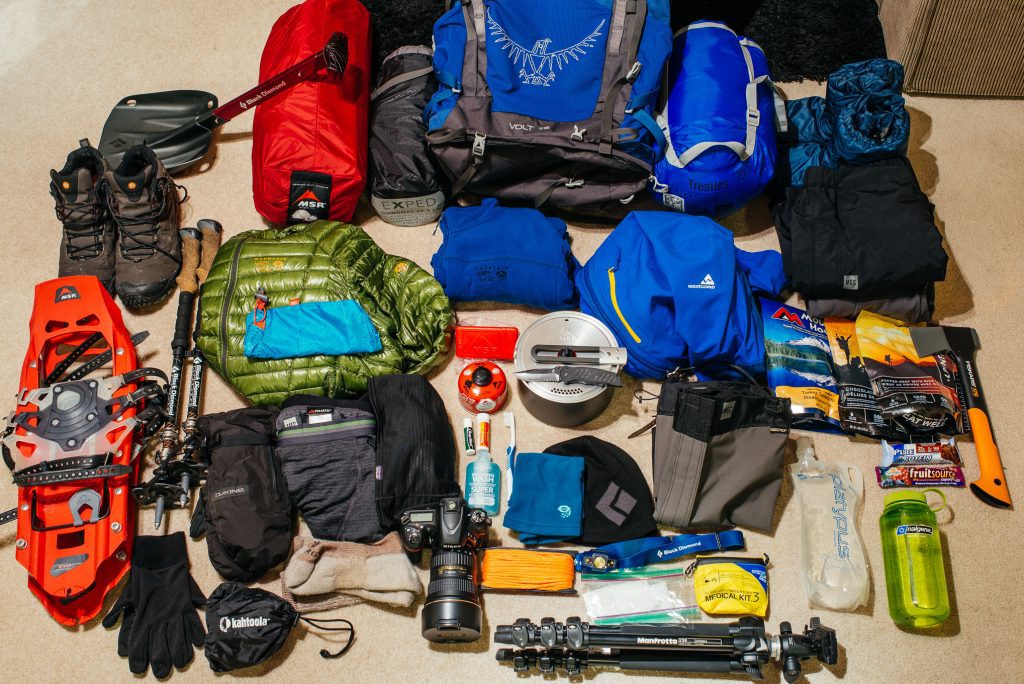
Boot fit matters more for older feet. Many older trekkers have experienced some degree of foot broadening, arch change, or nerve sensitivity over the years, and a boot that fitted perfectly in their forties may not provide the same support now. Get your boots fitted by a specialist retailer at least three months before your departure, and break them in properly, not on the Rwenzori, where blisters and boot-related injuries are a genuine nuisance. Insoles that provide additional arch support and cushioning can make a meaningful difference to comfort across ten-hour mountain days.
Trekking poles are standard equipment on the Rwenzori for all trekkers, but they are particularly valuable for older hikers. Properly used, actively planted trekking poles support each step rather than being dragged passively. Trekking poles reduce knee load on descents by a clinically measured twenty to thirty percent, improve balance on unstable ground, and provide meaningful support during the bog crossings and root-ladder sections that characterise the mountain’s mid-altitude zones. Adjust them to the right length (elbow at ninety degrees when the tip is planted) and practise using them actively before you arrive. A trekker who arrives on the mountain with well-fitted poles and the technique to use them effectively is physiologically better protected than one who does not, regardless of age.
Frequently Asked Questions from Older Trekkers
Can a 60-year-old hike the Rwenzori Mountains?
Yes, a 60-year-old can absolutely hike the Rwenzori Mountains, and many do, including on routes that reach Margherita Peak at 5,109 metres. The determining factors are not age but fitness, preparation, health status, and route choice. A 60-year-old who has maintained cardiovascular fitness through regular exercise, who has no significant cardiovascular or respiratory conditions, and who has specifically prepared over three to six months for the physical demands of the mountain has an excellent chance of success on an appropriate route. We regularly guide trekkers in their sixties to significant Rwenzori summits. The key is to match the route to your current fitness level, build in adequate acclimatisation time, and arrive with a preparation program that specifically targets the mountain’s demands.
What is the minimum fitness level required for older trekkers?
For shorter routes like the Mahoma Loop or Mutinda Lookout, the minimum fitness level for a trekker over 50 is the ability to hike for four to five hours consecutively on hilly terrain with a light pack, without significant joint pain or cardiovascular distress. For summit routes reaching Margherita Peak, the minimum is significantly higher: you should be capable of sustained hiking for seven to eight hours across consecutive days, comfortable with significant elevation gain and loss, and free of any untreated cardiovascular, respiratory, or joint conditions that would be exacerbated by sustained high-altitude exertion. If you are not there yet, a structured 12-week training program will make a substantial difference.
Is altitude sickness more common or serious in older trekkers?
Altitude sickness does not become more common simply as a function of age; individual response to altitude is primarily determined by genetics and prior exposure, not years of life. However, older trekkers who have pre-existing cardiovascular or respiratory conditions may observe that altitude compounds those conditions in ways that are more serious than in younger trekkers with no underlying health issues. This is why a thorough medical check-up before any high-altitude expedition is particularly important for trekkers over 50. The most effective protection against altitude sickness at any age remains the same: ascend gradually, give your body adequate time to acclimate to each elevation band, stay well hydrated, and descend immediately if symptoms become moderate or severe.
Which Rwenzori route is best for someone over 60?
For a first-time Rwenzori trekker over 60, we most commonly recommend the 8-day Kilembe Trail for those targeting the summit, or the Mutinda Lookout trek for those wanting a high-altitude experience without the glacier section. The Kilembe Trail’s superior hut infrastructure, more gradual altitude profile, and longer itinerary create conditions that suit older physiology better than the faster ascent of the standard Central Circuit. For those over 60 who are not certain whether a summit objective is appropriate, the Mahoma Loop is a magnificent introduction to the mountain that can be combined with a longer itinerary in a subsequent visit once comfort and confidence have been established.
Should I tell my guide about my age and health conditions?
Yes, unambiguously and completely. Your guide’s ability to support you safely and effectively depends entirely on their knowledge of your specific situation. This includes any medications you are taking, any significant medical history, any joint or cardiovascular conditions, and any previous experience of altitude sickness. A professional Rwenzori guide who knows you have managed hypertension will monitor your symptoms with a different calibration than one who does not. This is not about being judged or restricted; it is about giving your guides the information they need to keep you safe and maximise your chances for a successful expedition. Concealing health information from your guide on a technical mountain is a decision with potentially serious consequences.
How long should I train before attempting the Rwenzori over 50?
For a summit objective, we recommend a minimum of twelve weeks of specific preparation, and sixteen to twenty weeks is better. This does not mean twelve weeks of occasional exercise; it means twelve weeks of structured training that progressively builds cardiovascular endurance, muscular strength (particularly eccentric knee strength), balance, and load-carrying capacity. For trekkers who are starting from a low base of fitness, twenty to twenty-four weeks of preparation is not excessive. The Rwenzori is a demanding mountain. The preparation investment is proportional to what the mountain asks of you, and the reward for arriving well-prepared, performing well on the mountain, and returning home with summit success and an intact body is entirely worth it.
Can I combine the Rwenzori with gorilla trekking if I am over 60?
Combining a Rwenzori trek with gorilla trekking in Bwindi Impenetrable National Park is one of the most rewarding itinerary combinations available in East Africa, and it is entirely manageable for fit trekkers over 60. Gorilla trekking involves hiking through dense forest for one to eight hours depending on where the gorilla family has moved, so it carries its own physical demands, but these are generally less sustained than the multi-day exertion of the Rwenzori, and the one-hour gorilla encounter at the end makes the effort very worthwhile. We offer several combined Rwenzori and gorilla trekking itineraries that are well-suited to older adventurers wanting to make the most of their Uganda expedition.
Ready to Plan Your Rwenzori Expedition?
If you have read this far, you are not casually curious about the Rwenzori. You are seriously considering it, and that seriousness is precisely the right starting point for a successful expedition. The Mountains of the Moon have been receiving mature, determined hikers for as long as people have been guiding them, and some of the most memorable summit moments our team has witnessed have been with hikers in their fifties and sixties, for whom reaching Margherita Peak represented not just a physical achievement but the fulfilment of something they had been carrying for years.
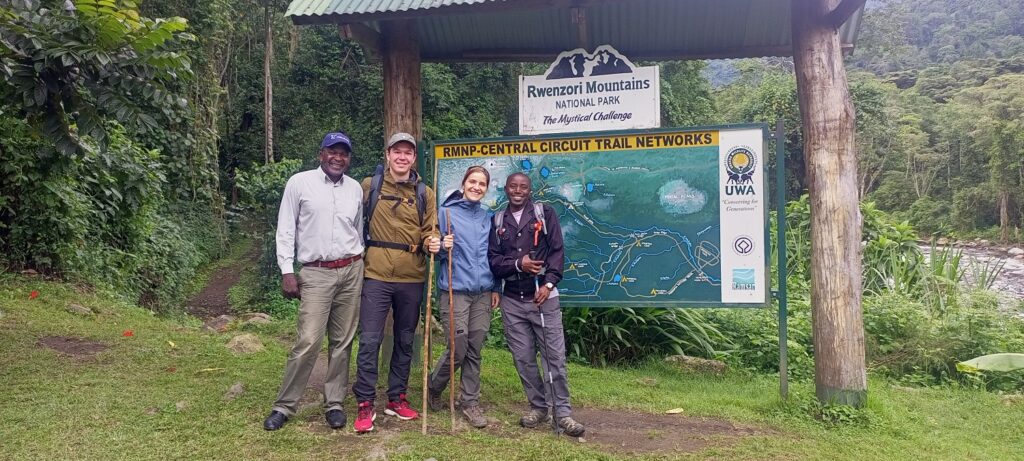
This guide’s honest message is clear: if you’re fit, ready, and honest with yourself and your guide, the Rwenzori is attainable. The mountain isn’t concerned about your age. It ‘s about your preparation. And the preparation is entirely within your control. Get in touch with our team to start that conversation. Tell us your fitness level, your health history, your timeline, and your ambitions, and we will create an honest, personalised assessment of which route gives you the best chance for a safe and successful Rwenzori expedition.
Browse our full range of Rwenzori trekking itineraries, review our route comparison guide, read our medical guide and our complete FAQ, and then reach out. The mountain is waiting, and it does not discriminate by age.