
Climb Margherita Peak (5,109 m), Uganda’s highest mountain. Experience a comprehensive 7-day Margherita itinerary through the Central Circuit, accompanied by expert guides and ensured by glacier safety.

7-Day Margherita Peak Climb (5,109 m) via the Central Circuit.
Margherita Peak Climb | Africa’s Most Atmospheric
Summit Challenge
The Margherita Peak is the highest and most technical ascent in the Rwenzori Mountains. This 7-day itinerary is designed specifically to allow proper acclimatization and a safe glacier trek to the summit of Margherita Peak (5,109 m) via the Central Circuit Trail.
As the highest and most technically challenging peak in the Rwenzori Mountains, Margherita Peak is the pinnacle of Ugandan mountaineering. Rising to 5,109 meters on Mount Stanley, this climb involves glacier travel, fixed ladders, exposed rock sections, and cold alpine conditions. We specifically designed this 7-day Margherita Peak itinerary to ensure proper acclimatization, safe glacier access, and a realistic summit attempt via the Central Circuit route. Every day of the climb plays a role in preparing the body and mind for summit day.
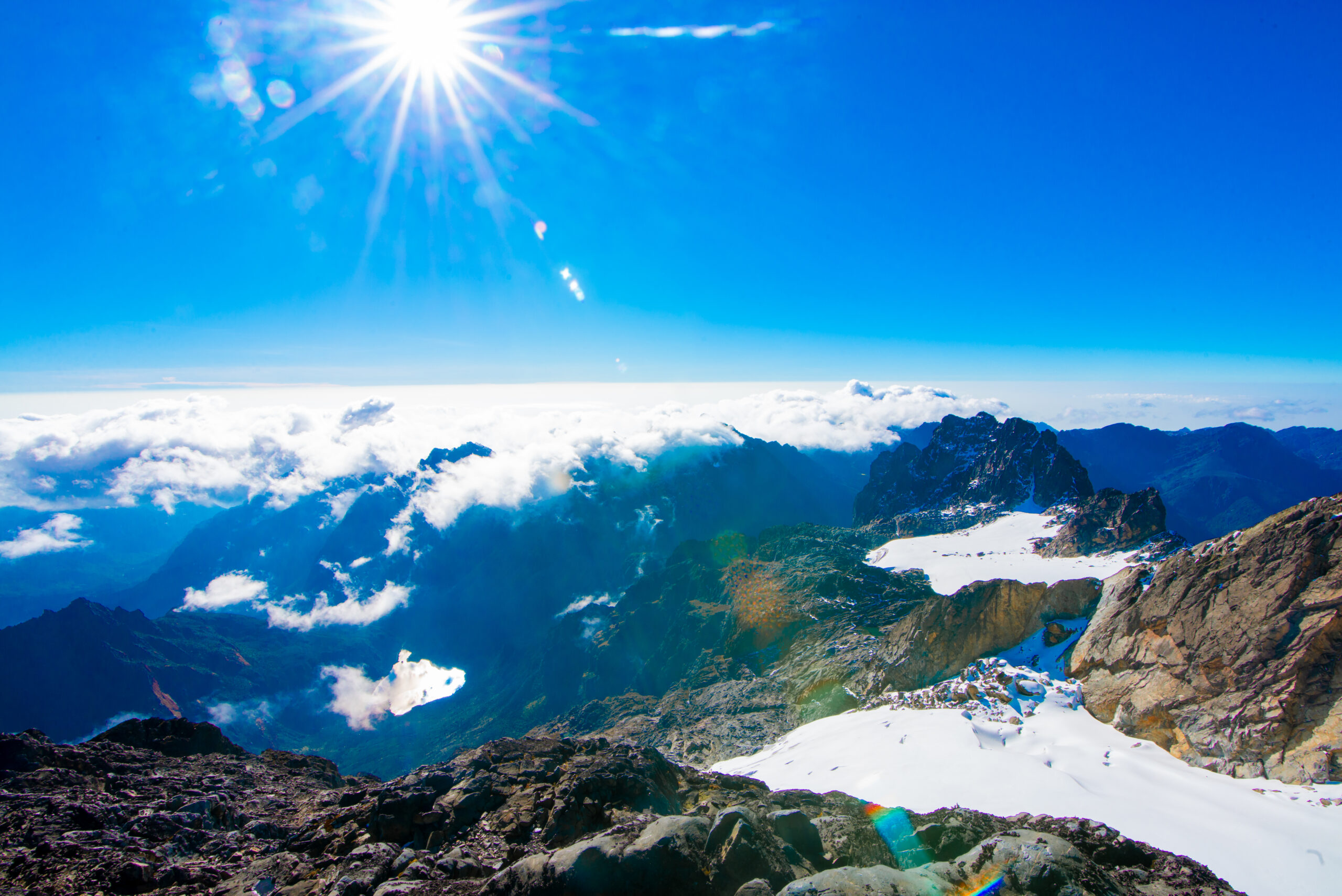
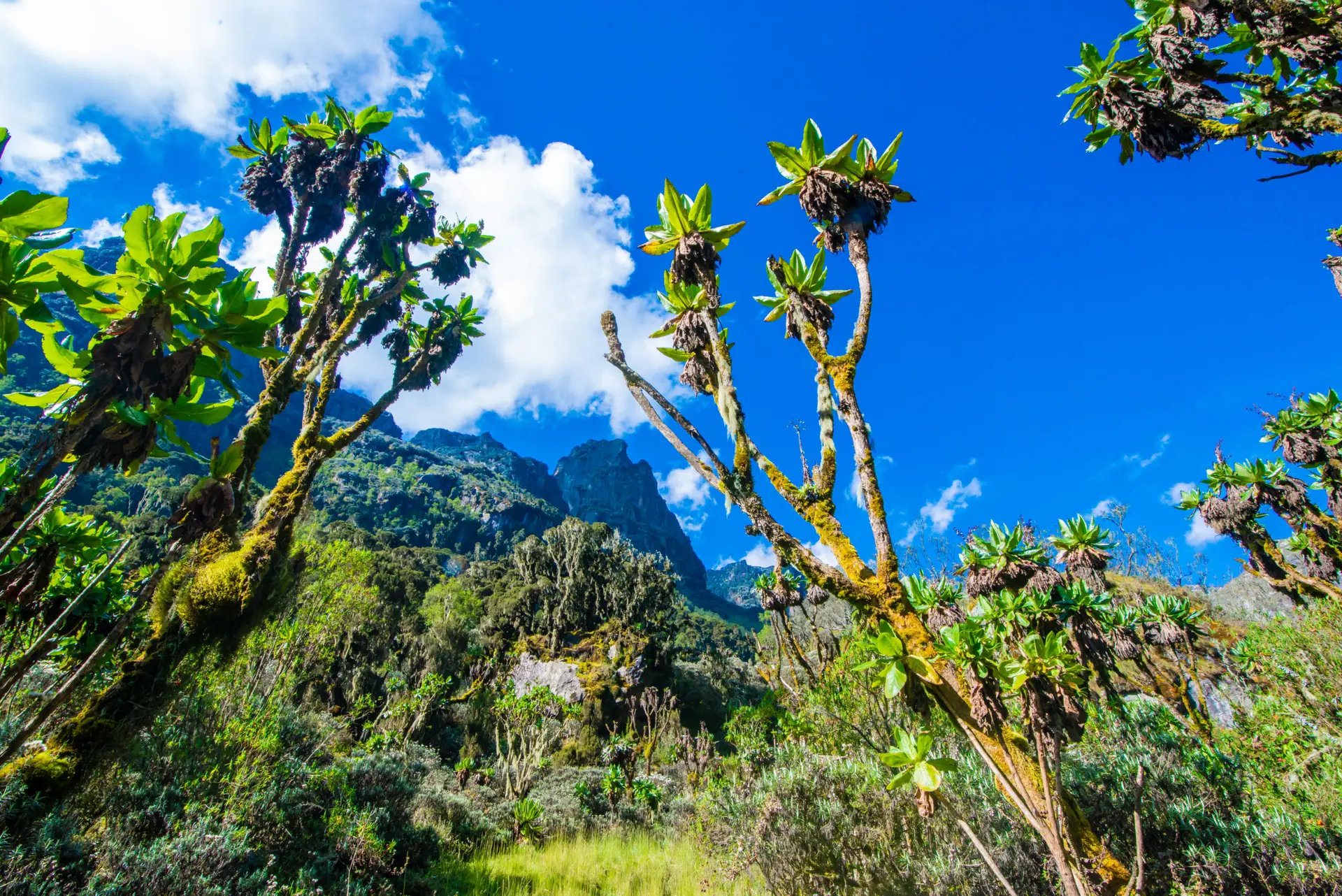
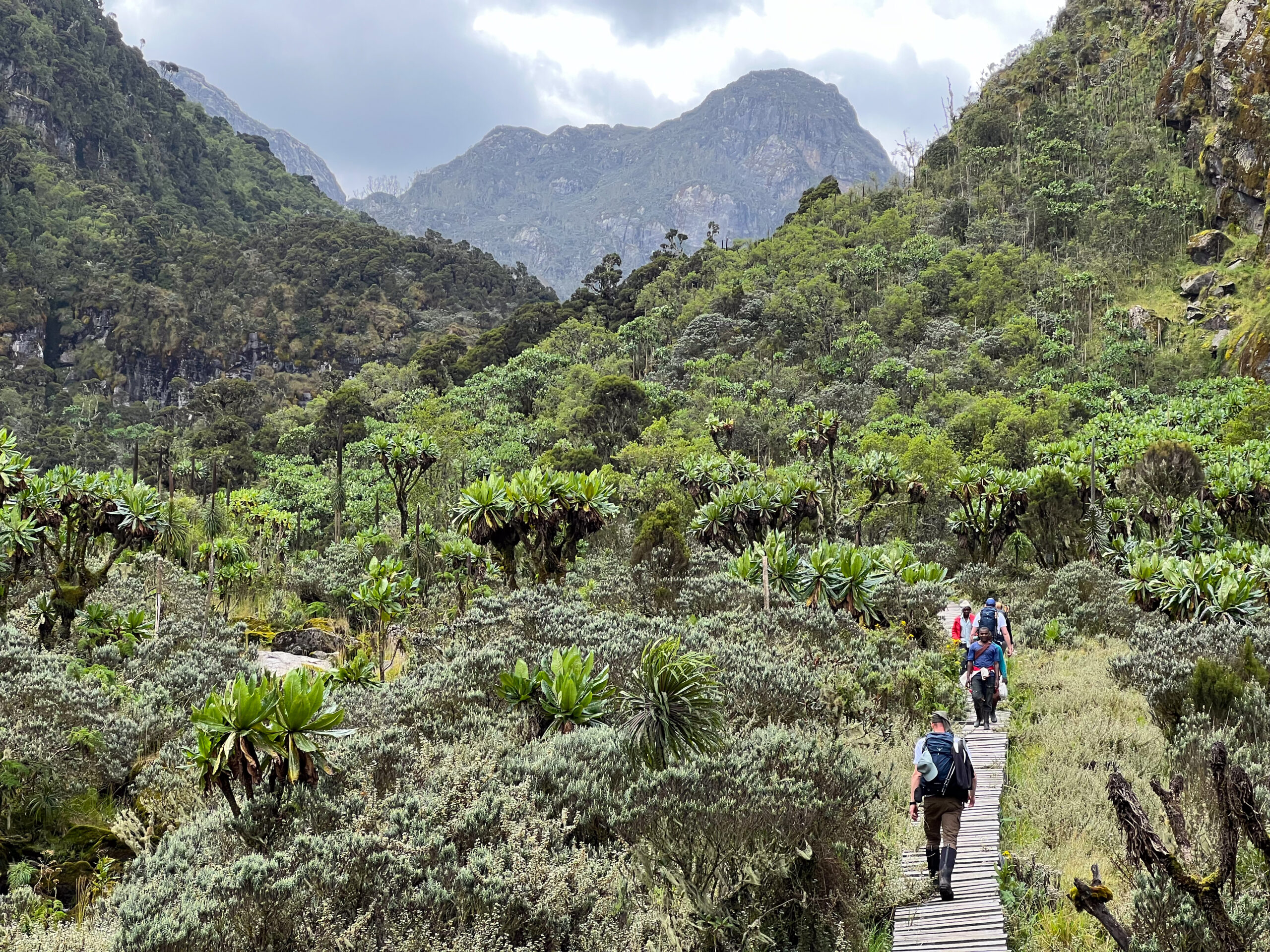
Rising through equatorial rainforest, alien heathlands cloaked in giant lobelias and groundsels, and finally onto the glaciated slopes of Mount Stanley, the ascent of Margherita Peak (5,109 m) is unlike any other summit experience on the continent. This is Uganda’s highest point and one of Africa’s most technically demanding alpine objectives. We engineer our 7-day itinerary via the legendary Central Circuit Trail for success. We calibrate every camp, rest day, and altitude gain for proper acclimatization, glacier safety, and an unforgettable summit day. Expert guides, professional porters, and quality mountain hut accommodation ensure you arrive at the top prepared and come home with a story for a lifetime.
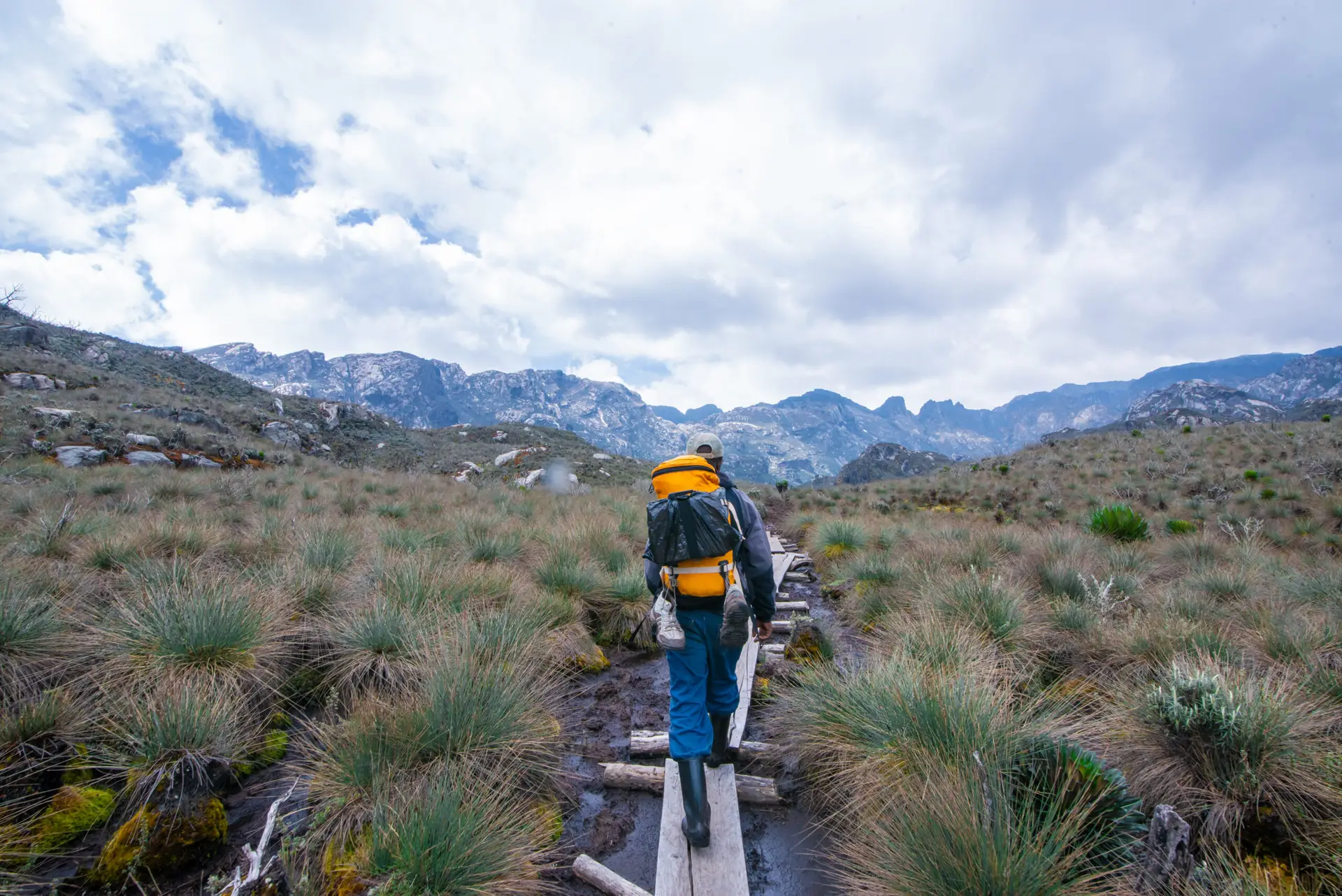
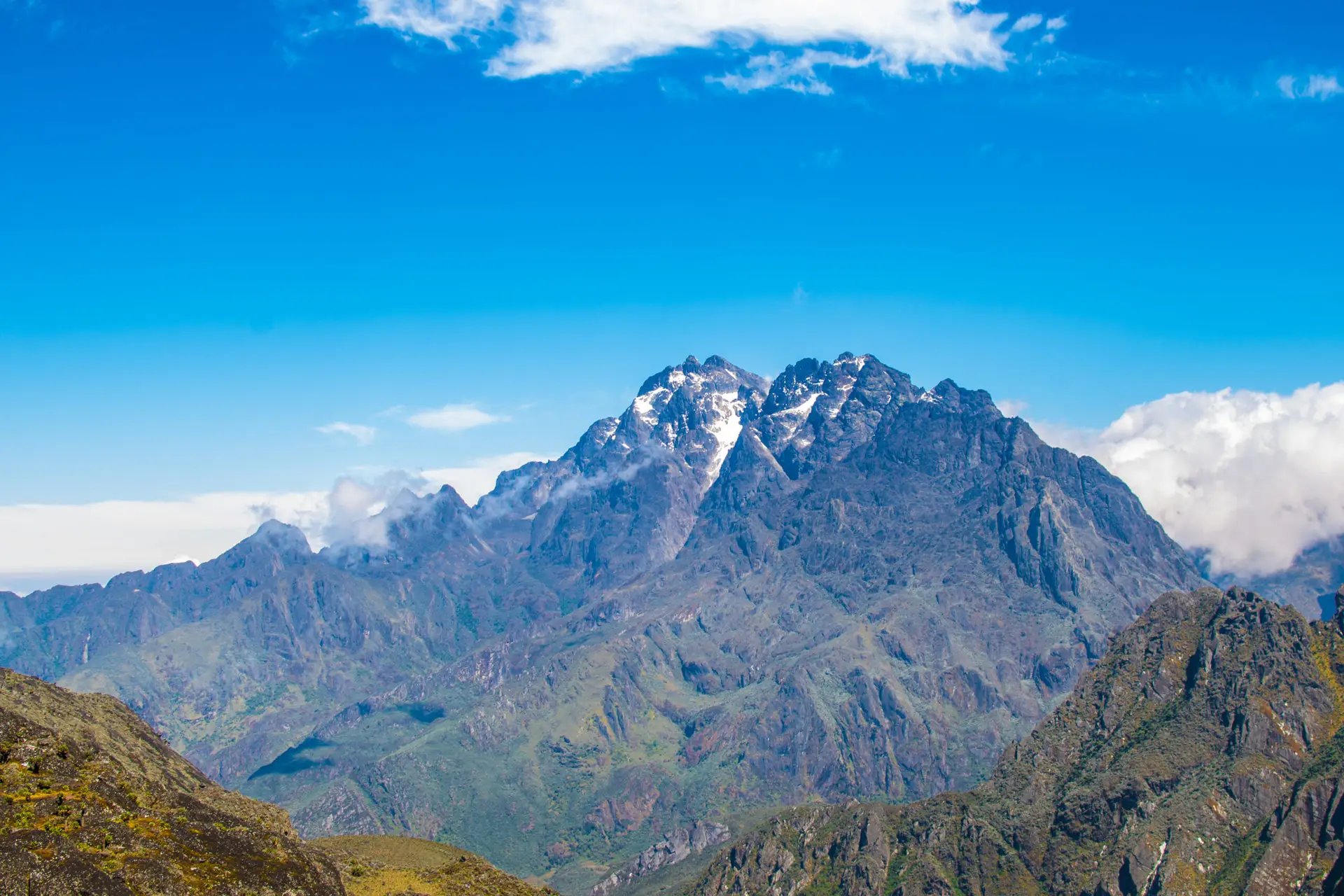
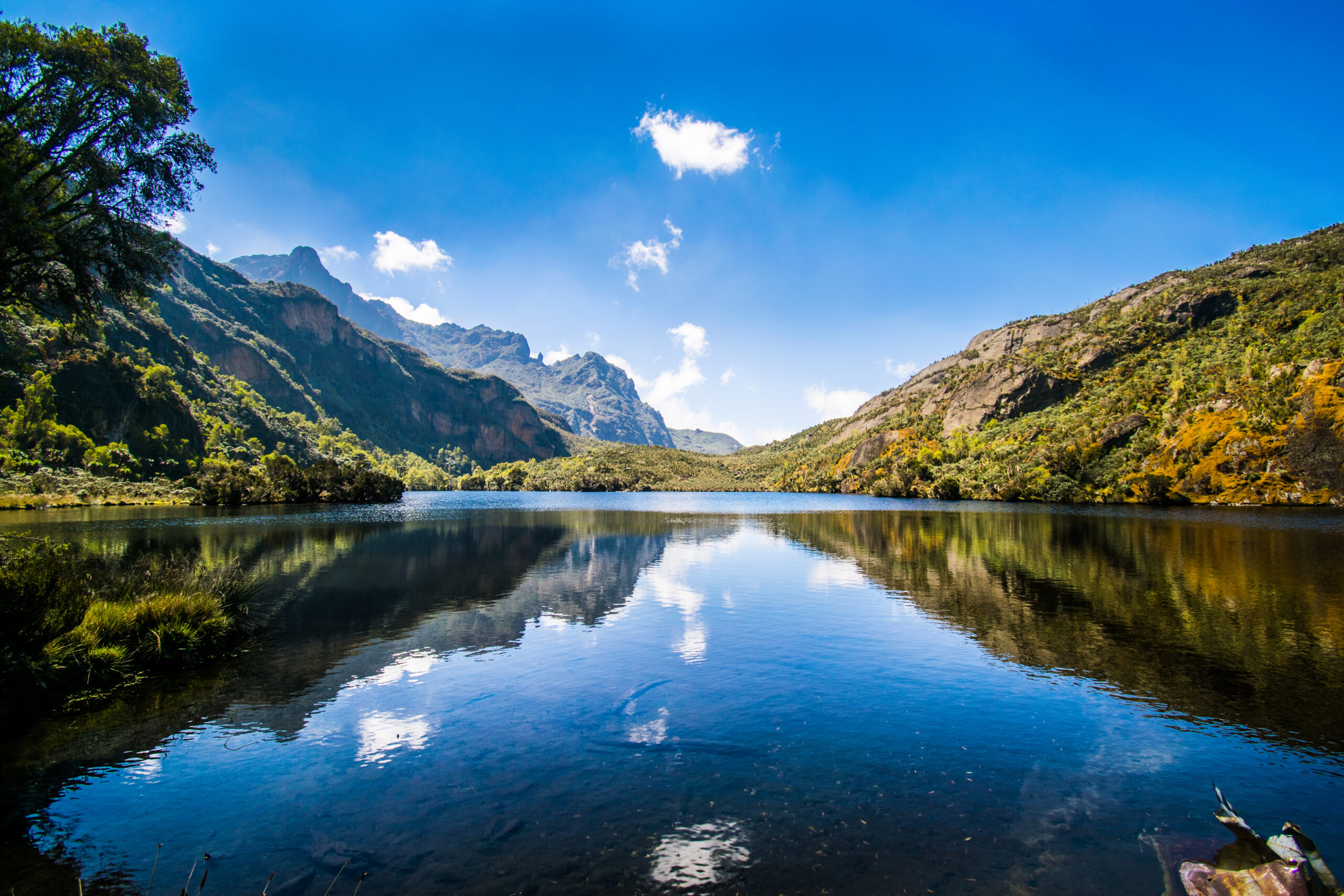
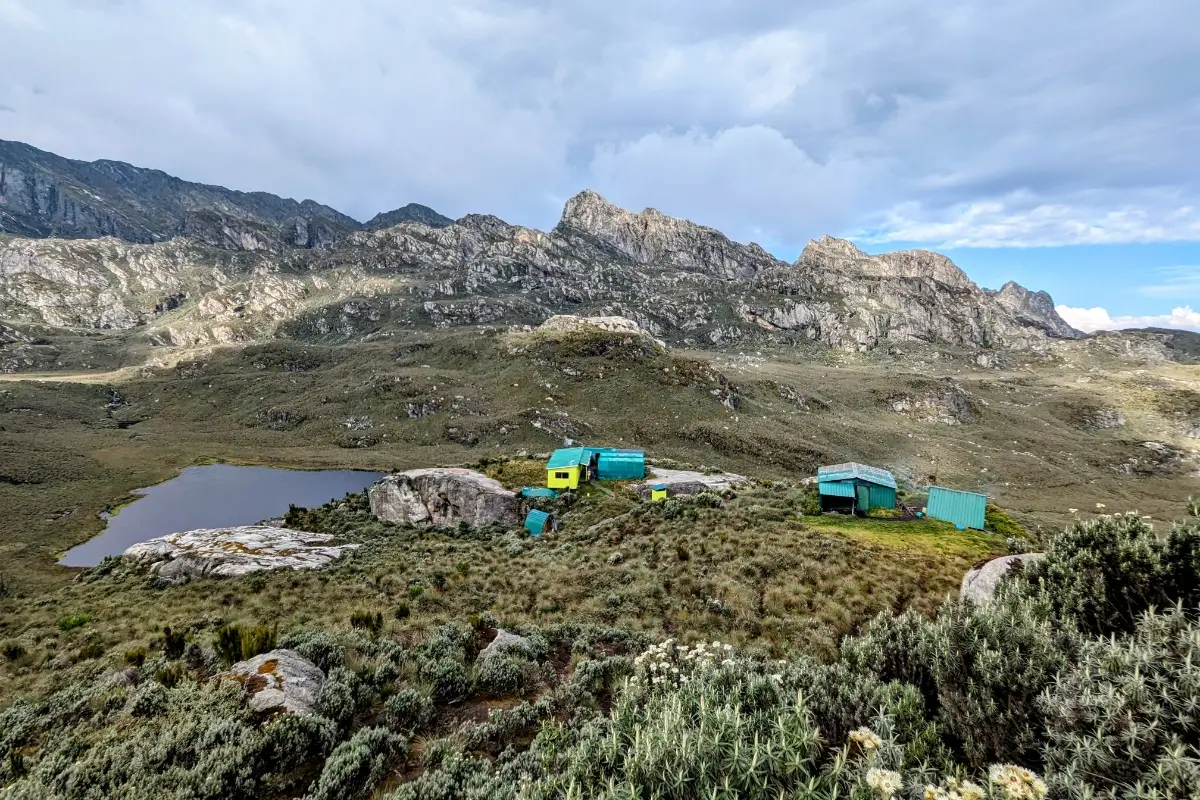
Margherita Peak Climb Overview
Summit: Margherita Peak (Mount Stanley)
Altitude: 5,109 meters
Duration: 7 days/6 nights.
Route: Central Circuit (Mount Stanley sector)
Climbing style: Guided alpine expedition.
Technical difficulty: Moderate to high.
Best seasons: January–February, June–August.
This Rwenzori trekking expedition to Margherita Peak, which lasts 7 days, is open to all mountaineers of all experiences. The Central Circuit Trail begins in Nyakalengija and winds its way through the Rwenzori Mountain ranges until Magheritah Peak. While climbing, you will see gorges that divide the peaks of several Rwenzori mountains, including Baker (4843 meters), Speke (4890 meters), Luigi di Savoia (4627 meters), Gessi (4715 meters), and Emin (4798 meters). Among the numerous peaks that make up Mount Stanley, the highest mountain in Uganda, lies Margherita Peak, which stands at 5,109 meters.
7-Day Margherita Trek Highlights at a Glance
Margherita Peak, Uganda’s Roof:
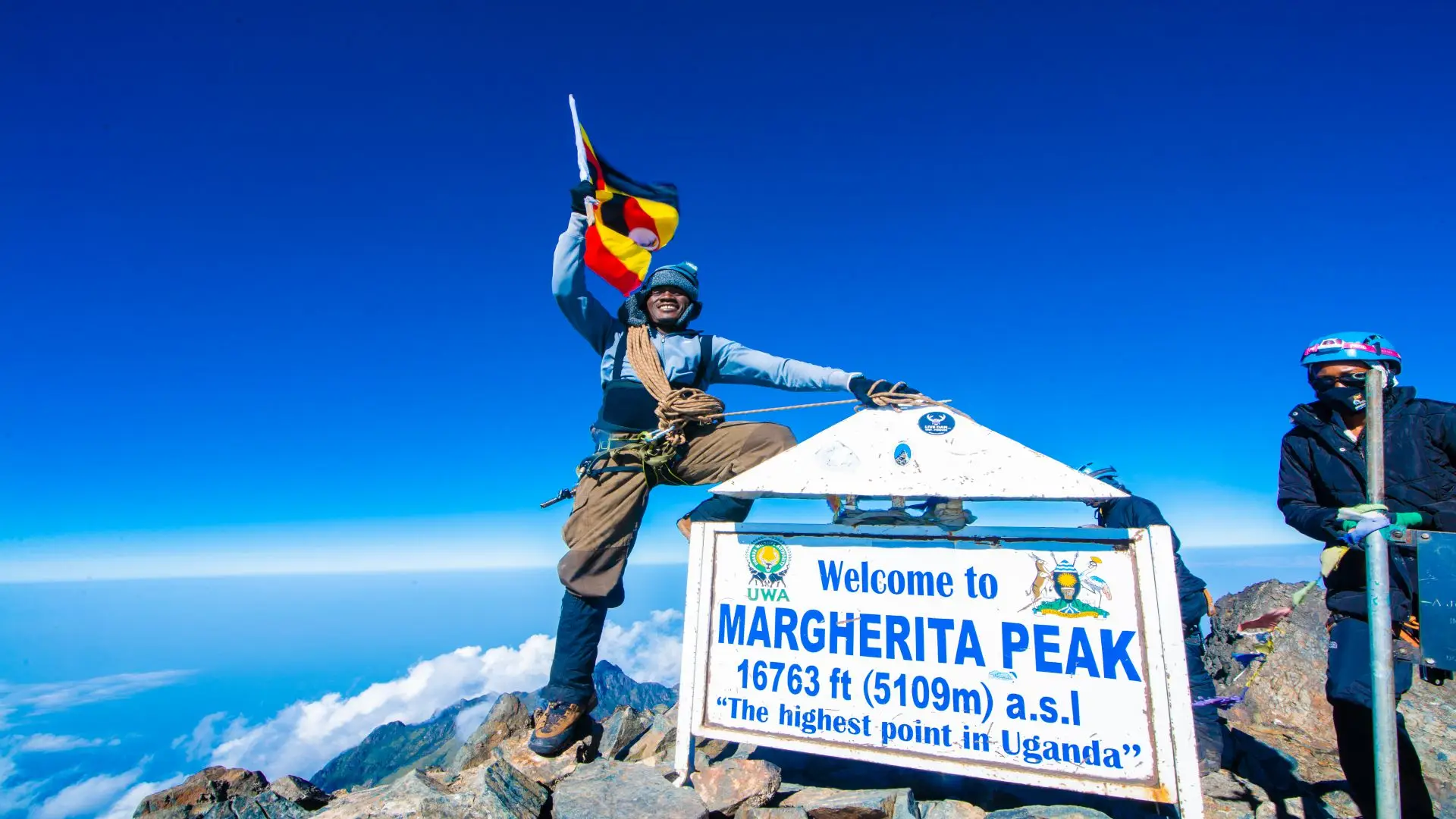
Stand on the highest point in Uganda and the third highest in Africa at 5,109 m. One of only a handful of glaciated summits on the entire continent.
Glacier Travel & Technical Climbing:
Use crampons, ropes, and harnesses to cross the Stanley Plateau glacier. Navigate fixed ladders over crevasses in a true alpine environment.
Prehistoric Vegetation Zones:
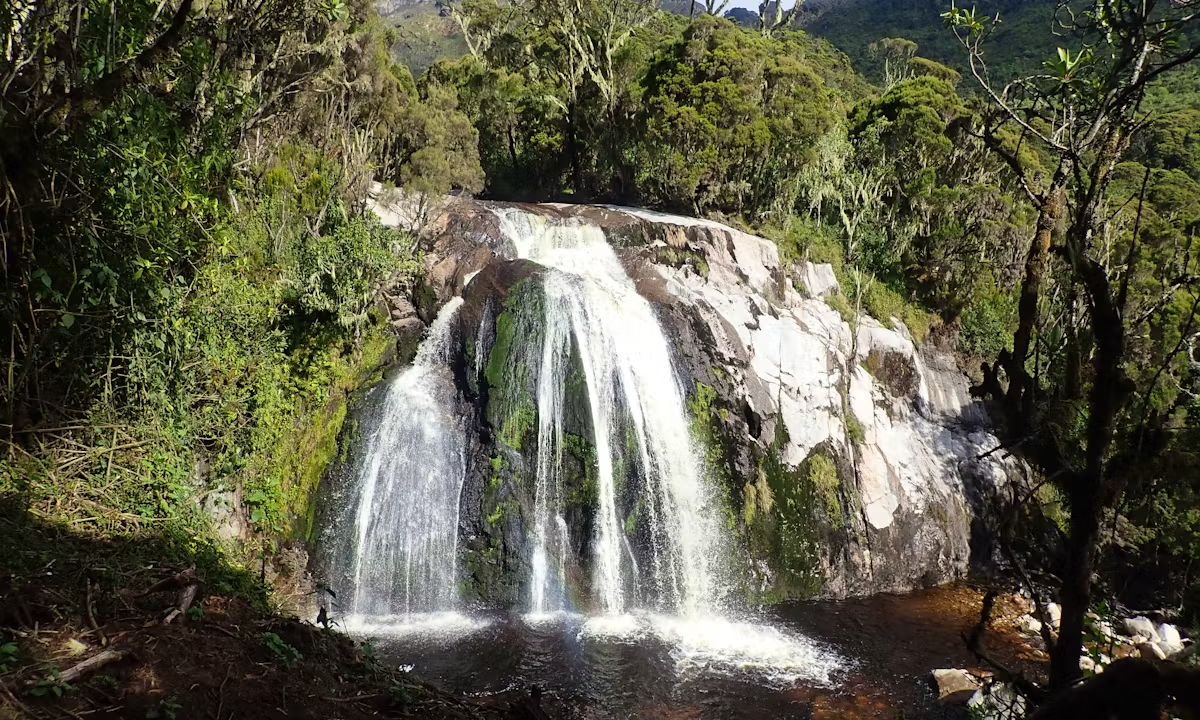
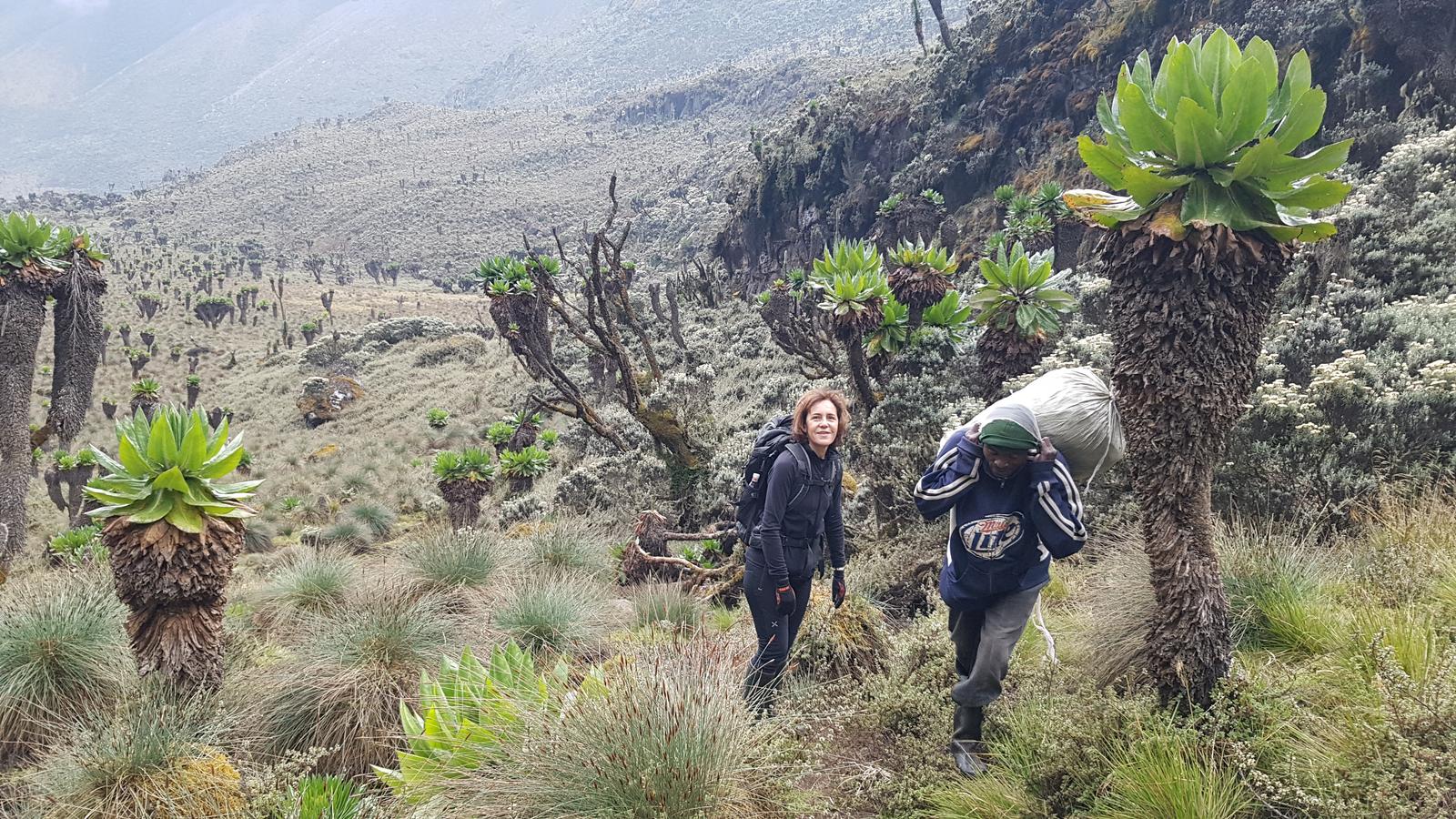
Trek through five distinct ecological zones: tropical rainforest, bamboo, heather moorland, giant lobelia fields, and the bare alpine zone.
Endemic Wildlife & Birdlife:
Spot chimpanzees, colobus monkeys, the rare Rwenzori turaco, and three-horned chameleons found nowhere else on Earth.
Kitandara Lakes, Hidden Jewels:
Descend to the twin Kitandara Lakes, high-altitude glacial lakes set in a dramatic valley ringed by the peaks of Mount Stanley and Mount Baker.
Walk in Historic Footsteps:
Pass Bujongolo Rock Shelter, used by the Duke of Abruzzi’s 1906 expedition that first mapped these peaks, the original “Mountains of the Moon.”
Scott-Elliot Pass Views:
Cross one of Africa’s most dramatic high passes at 4,372 m, with panoramic views of Bujuku Lake, Mount Speke, Mount Baker, and deep into the Congo Basin.
Full Detailed 7-Day Margherita Peak Climb Itinerary (Day-by-Day)
Day 1: Nyakalengija (1,615m) → Nyabitaba Camp (2,651m)
Approach & Trekking begins
The 7-day Margherita Peak climb begins at the Rwenzori Mountaineering Services offices in Nyakalengija. Climbers must arrive in the morning for registration, equipment allocation, and a full briefing with the guiding team.
The approach hike passes through farmland before entering the park’s dense montane forest. The trail follows the Mubuku River and gradually introduces altitude gain while keeping the pace controlled, which is essential for early acclimatization.
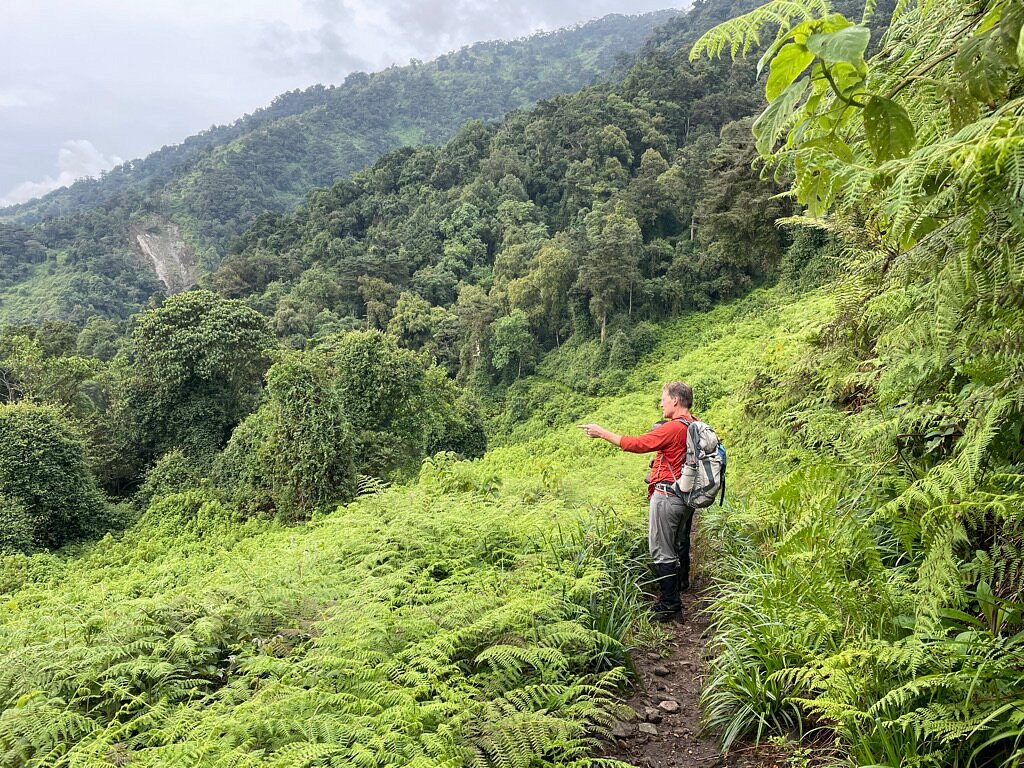
Wildlife sightings may include chimpanzees, black-and-white colobus monkeys, blue monkeys, and the Rwenzori turaco.
-
Average time: 6–7 hours
- Altitude Gain: +1,036m
-
Focus: Gentle ascent, rhythm, and hydration
-
Overnight: Nyabitaba Camp
Day 2: Nyabitaba Camp → John Matte Camp (3,505m)
Transition to alpine terrain
From Nyabitaba, the trail descends to the Kurt Shafer Bridge at the confluence of the Mubuku and Bujuku Rivers. The climb then steepens through bamboo forest and into moss-covered rock sections that demand careful footing.
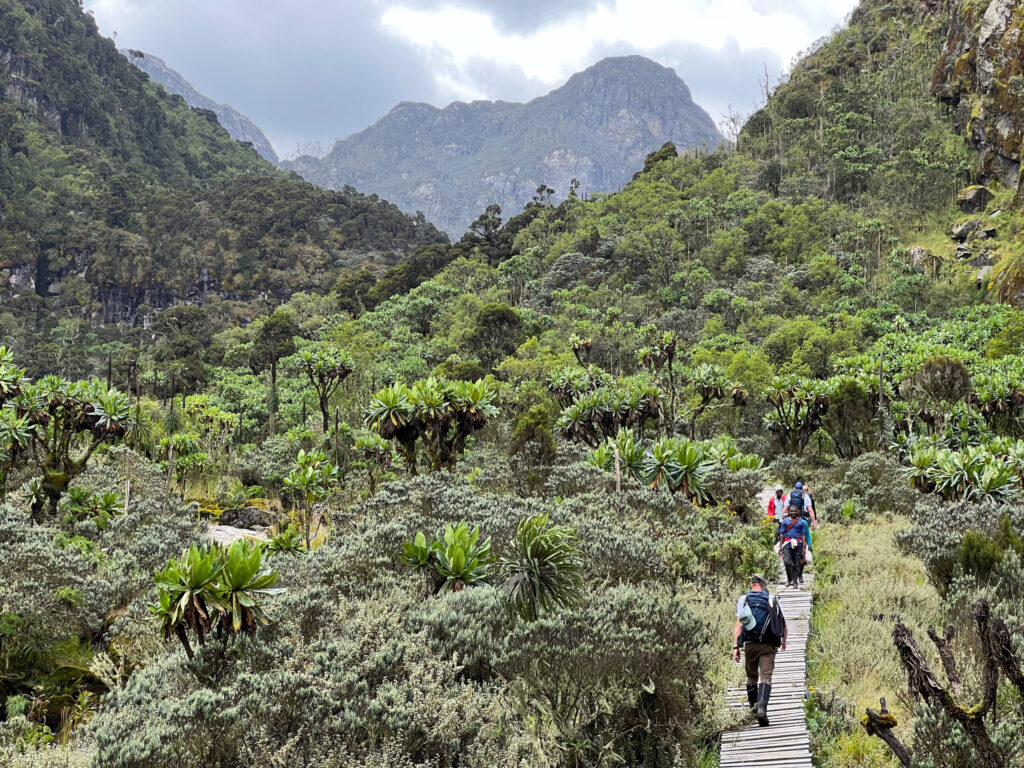
This day marks the climber’s transition from forest trekking to true alpine terrain. The physical demand increases, and altitude effects become more noticeable exactly as intended in a properly staged Margherita Peak ascent.
Mount Stanley and Mount Speke begin to appear, reinforcing the objective ahead.
-
Average time: 7–8 hours
- Altitude Gain: +854m
-
Focus: Endurance and altitude adaptation
-
Overnight: John Matte Camp
Day 3: John Matte Camp → Bujuku Camp (3,962m)
High-altitude acclimatization phase
The trail drops briefly to cross the Bujuku River before entering the Lower and Upper Bigo Bogs. These bogs, dominated by giant lobelias, are slow and energy-draining, creating an important physiological stress that aids acclimatization.
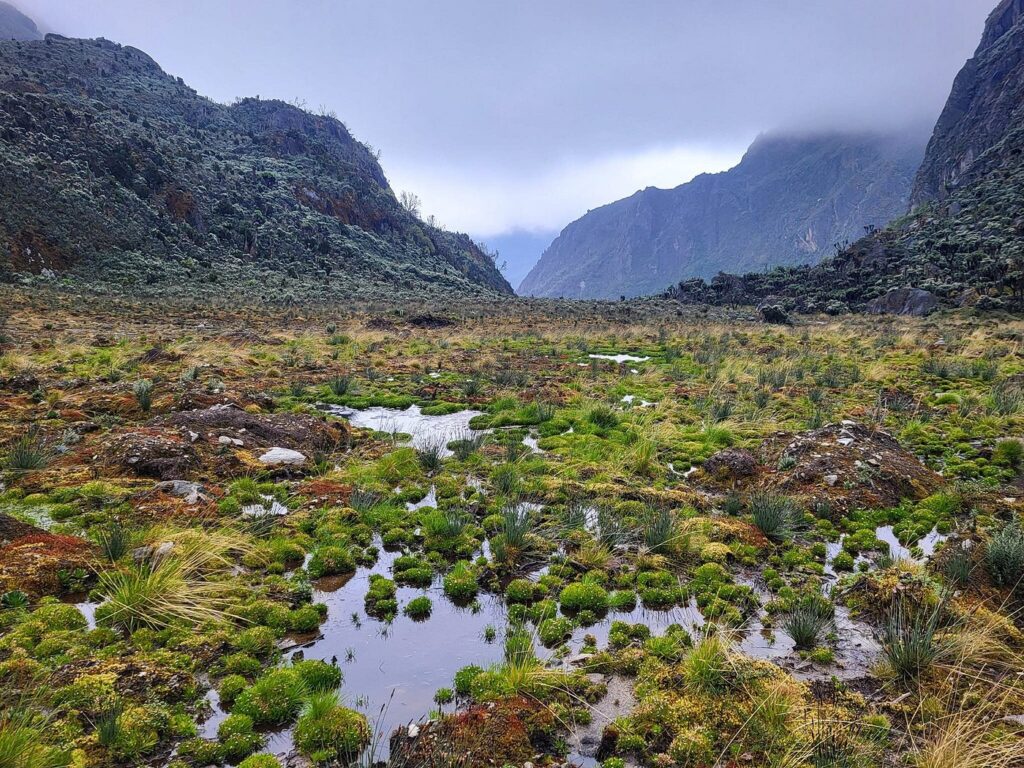
Bujuku Camp sits in a narrow valley beneath Mount Stanley and Mount Speke, directly below Stuhlmann Pass. This location is critical for climbers attempting Margherita Peak, as it positions the team close to the summit staging camps.
-
Average time: 4–5 hours
- Altitude Gain: +457m
-
Focus: Acclimatization and recovery
-
Overnight: Bujuku Camp
Day 4: Bujuku Camp → Elena Camp (4,541m)
Summit staging camp
Leaving Bujuku, the ascent continues through boggy ground before climbing steeply into the alpine zone. The vegetation thins, temperatures drop, and rock exposure increases.
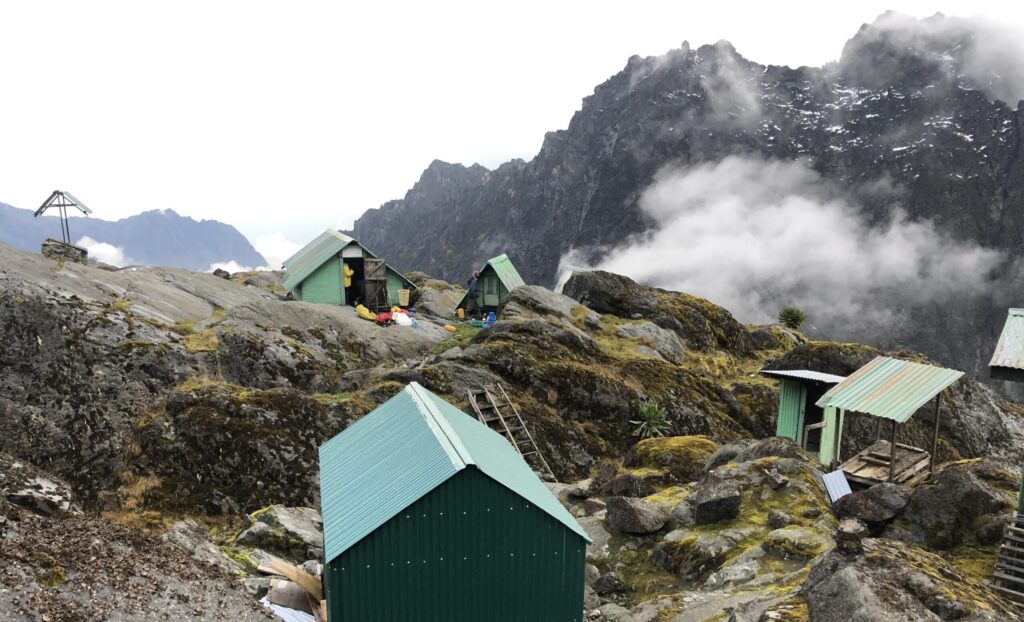
Elena Camp is the primary staging point for the Margherita Peak summit attempt. From here, climbers prepare mentally and physically for glacier travel, rope work, and a very early summit start.
This stage is where the climb becomes serious.
-
Average time: 5–6 hours
- Altitude Gain: +579m
-
Focus: Summit preparation and rest
-
Overnight: Elena Camp (cold, high-altitude conditions)
Day 5: Elena Camp → Margherita Peak (5,109m) → Kitandara Camp (4,430m)
Summit day
Summit day begins very early, often before midnight, depending on weather conditions. The ascent involves:
-
Glacier crossings
-
Use of ropes, harnesses, and crampons
-
Fixed ladders over deep crevasses
-
Exposed rock and ice sections
Climbers traverse the Stanley Plateau before making the final push to the summit of Margherita Peak, the highest point in Uganda and one of Africa’s most demanding alpine summits.
Weather, visibility, and team condition dictate the pace and final summit decision. Safety always overrides ambition.
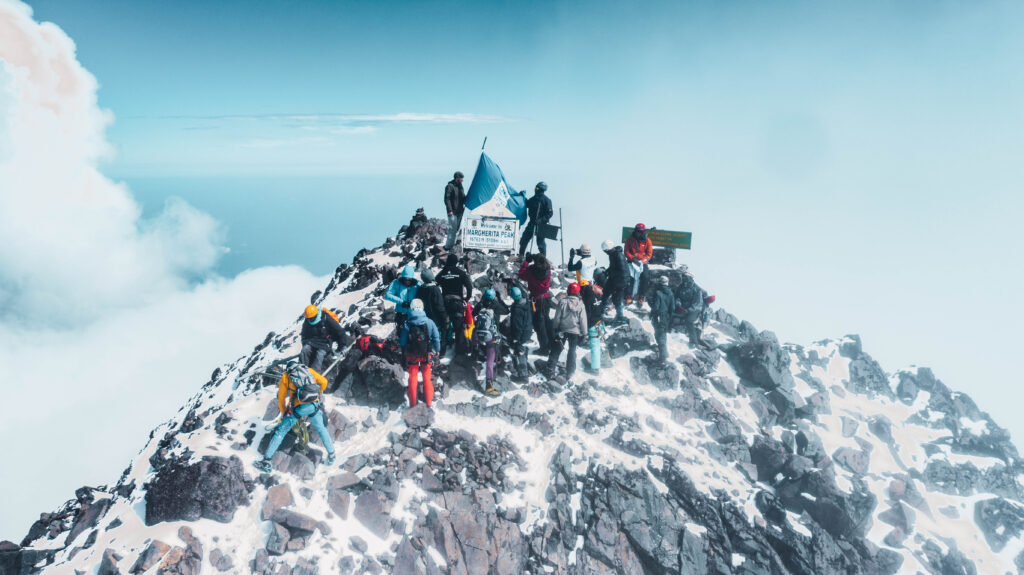
After summiting, climbers descend carefully back to Elena Camp for a short rest and lunch, then continue over the Scott-Elliot Pass with spectacular views of Bujuku Lake and Mount Speke before descending to Kitandara Camp.
-
Summit ascent: 4–5 hours
-
Descent to Elena: 2–3 hours
-
Descent to Kitandara: 3–4 hours
-
Overnight: Kitandara Camp
Day 6: Kitandara Camp → Guy Yeoman Camp (3,261m)
Descent and recovery
From Kitandara, the trail ascends steeply to Freshfield Pass (4,282 m), offering views into the Congo Basin and back toward Mount Stanley. The route then descends through high alpine moss zones and rocky terrain.
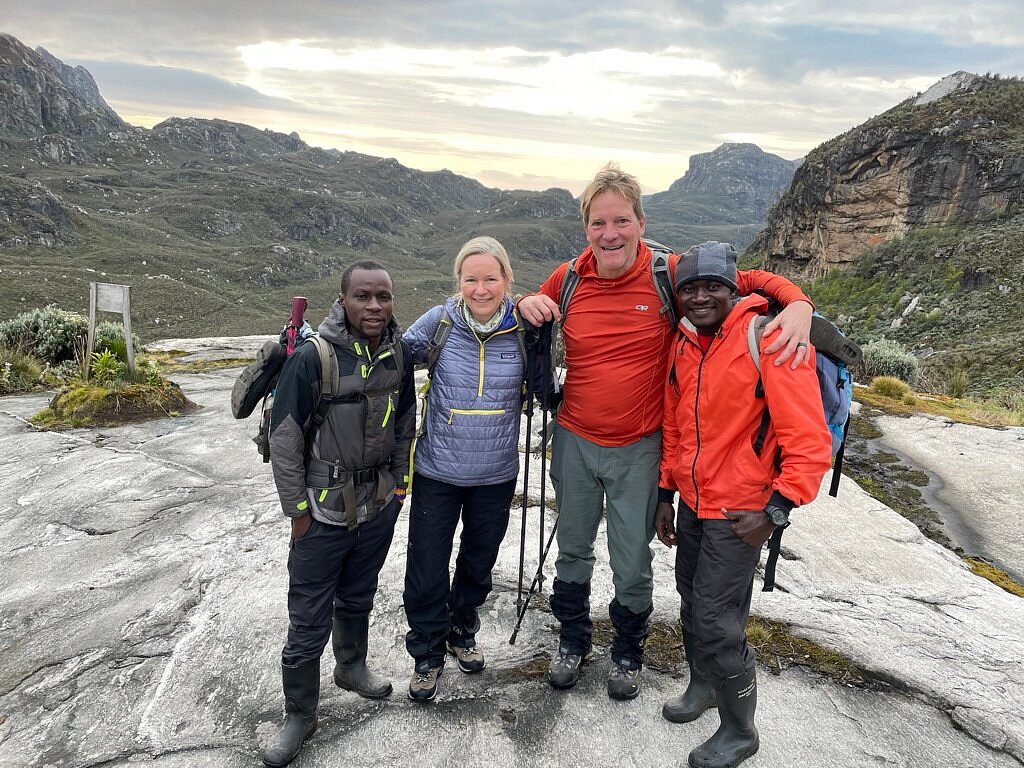
This section passes Bujongolo Rock Shelter, historically used during the Duke of Abruzzi expedition in 1906.
-
Average time: 6–7 hours
-
Focus: Controlled descent and recovery
-
Overnight: Guy Yeoman Camp
Day 7: Guy Yeoman Camp → Nyabitaba → Nyakalengija
Exit from the Rwenzori Mountains
The final day descends the steep Kichuchu cliffs before re-entering the bamboo forest and crossing the Mubuku River. The circuit is completed at Nyakalengija by late afternoon.
-
Average time: 7–8 hours
-
End of the 7-day Margherita Peak expedition
What’s Included in the Hiking Fees
- Professional, licensed mountain guide for the full 7 days
- Licensed Uganda Wildlife Authority ranger guide
- Dedicated porter team, personal gear and camp supplies
- All meals on the mountain (breakfast, lunch, dinner, hot drinks)
- Mountain hut accommodation all 6 nights on-route
- Full technical summit equipment: crampons, ropes, ice axes, helmets
- Harnesses and belay devices for glacier section
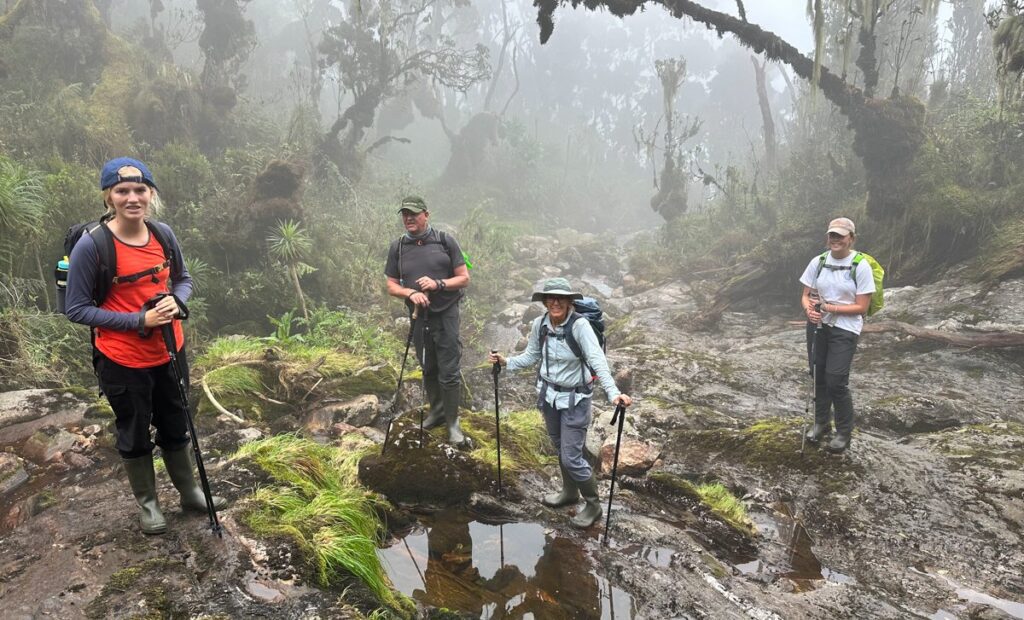
- Complimentary use of rubber boots (Rwenzori essential)
- National Park entry fees and climbing permits
- Summit achievement certificate upon completion
- Emergency first aid kit and oxygen on mountain
- Pre-trek equipment and safety briefing
Not Included in the Package Fees:
- International flights and Uganda entry visa
- Accommodation before and after the trek
- Transfers to/from Nyakalengija trailhead (available on request)
- Personal trekking gear: sleeping bag, jacket, hiking boots, poles
- Warm and waterproof clothing (essential; see packing list)
- Medical evacuation and travel insurance (required)
- Personal expenses and snacks on the mountain
- Tips and gratuities for guides and porters (encouraged)
- Alcoholic beverages
- Any costs arising from itinerary changes due to weather or medical reasons
Book Your Slot
Respond within Minutes
From
$1,400
per person
- Duration 7 Days / 6 Nights
- Group Size 1–12 people
- Start Point Nyakalengija
- Departures Year-round
- Summits Margherita Peak
No booking fee. Free cancellation up to 30 days before departure. We respond within Minutes.
Our Popular Rwenzori Treks
Magheritah Peak (8 Days Kilembe Trail)
$1705 Per Person
Mutinda LookOut (4 Days)
$645 Per Person
Short Magherita Hike (5 Days Central Circuit)
$1200 Per Person
Rwenzori Hike (7 Days Central Circuit)
$1400 Per Person
Everything you need to know before booking your Margherita Peak climb.
Do I need Prior Mountaineering Experience to Climb Margherita Peak?
Prior technical mountaineering experience is not required, but you must have a strong base of hiking fitness and be comfortable on rugged, steep terrain. The glacier section involves the use of crampons, ropes, and harnesses, all of which our guides will brief and train you on before and during the ascent. Good physical conditioning, a positive attitude, and the ability to follow safety instructions are more important than a technical climbing résumé. We recommend completing several multi-day mountain treks before attempting Margherita.
What is the best time of year to climb Margherita Peak?
The two optimal climbing windows are January–February and June–August. During these periods, precipitation is lower, visibility on the summit is clearest, and glacier conditions are most stable. That said, the Rwenzori is known as one of the wettest mountain ranges on Earth; some rainfall should be expected year-round. We operate expeditions throughout the year with appropriate adjustments to conditions. Avoid the heaviest rain months of April and November if possible.
How fit do I need to be? What physical preparation is recommended?
This trek is rated challenging. You should be able to hike 6–8 hours per day for multiple consecutive days with a daypack on uneven, muddy, and rocky terrain. Summit day is the most demanding, with up to 13 hours of combined hiking, glacier travel, and high-altitude effort. We recommend three to four months of preparation, including regular long-distance hiking with elevation gain, cardiovascular training (running or cycling), and ideally one or two altitude hikes above 3,000 m before your Rwenzori departure.
Is altitude sickness a real concern? How is it managed?
Altitude sickness (acute mountain sickness) is a genuine risk above 3,000 m and should be taken seriously. Our 7-day itinerary is specifically designed with gradual altitude gain to minimize this risk; we never gain more than 1,100 m of net altitude per day, and we include strategic lower-altitude camp nights before the high push to Elena Camp.
Our guides are trained to monitor all symptoms: headache, nausea, loss of appetite, fatigue, and dizziness. Emergency oxygen is carried on all expeditions. In serious cases, descent is the definitive treatment and is always prioritized over summit ambition. Do not take acetazolamide (Diamox) without first consulting your doctor.
What gear and equipment do I need to bring personally?
We provide all technical summit equipment (crampons, ice axes, ropes, harnesses, and helmets) and complimentary rubber boots for the boggy sections. You are responsible for personal trekking gear: a quality sleeping bag rated to -10°C, waterproof hiking boots, waterproof jacket and trousers, insulating mid-layer, base layers (moisture-wicking), warm hat, gloves, trekking poles, headlamp, sunscreen, sunglasses, and personal medications. A full detailed packing list is provided upon booking. Gear hire is available locally in Kasese for items you don’t own.
What accommodation is like on the mountain, are the huts comfortable?
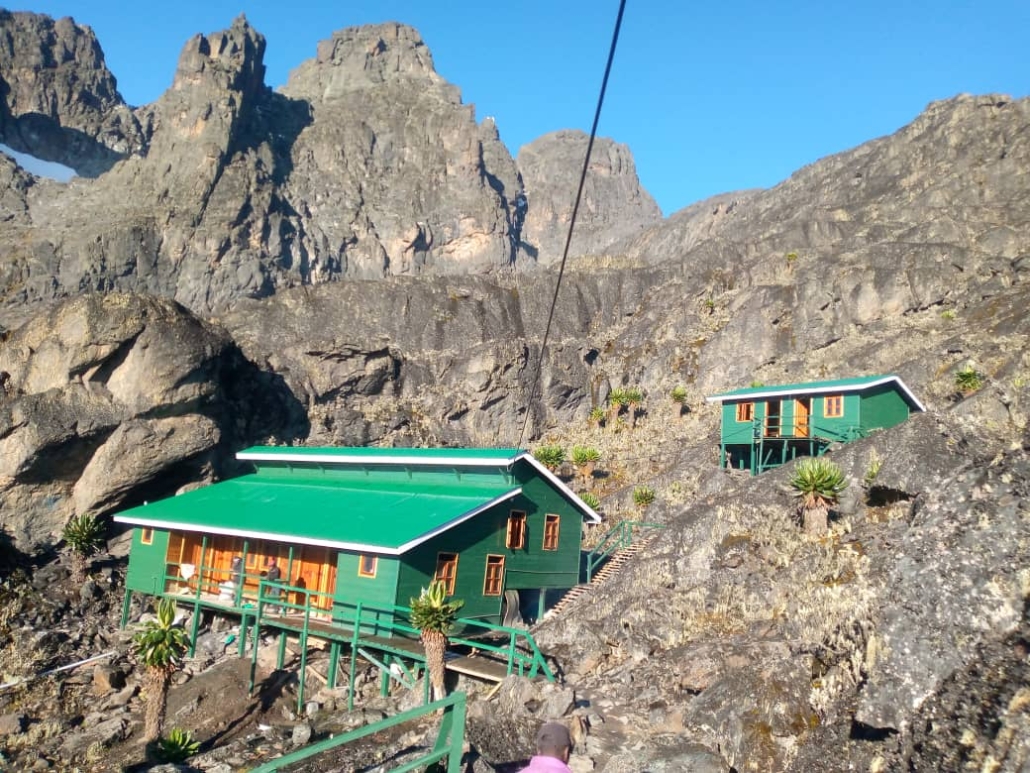
The mountain huts along the Central Circuit are wooden structures equipped with sleeping platforms and foam mattresses. They provide solid shelter from the notoriously wet Rwenzori weather. Conditions are rustic rather than luxurious; expect shared dormitory-style sleeping, basic but wholesome meals prepared by your cook team, and no electricity or running hot water.
At higher camps, it gets cold at night. A good sleeping bag and warm layers make an enormous difference. Most climbers consider the huts cozy and characterful parts of the authentic Rwenzori experience.
What food is provided on the mountain?
Our cook team prepares three hot meals per day throughout the trek. Breakfasts typically include porridge, eggs, bread, fruit, and hot drinks (tea, coffee, and cocoa). Lunches are packed meals eaten on the trail or at camp. Dinners are hot, filling dishes such as rice, pasta, beans, lentils, vegetables, and meat where available.
Special dietary requirements (vegetarian, vegan, gluten-free) can be accommodated with advance notice. High-altitude days often suppress appetite; our cooks are experienced at providing calorie-dense, appealing food to keep energy levels high.
What is the summit success rate on this itinerary?
Our 7-day Margherita itinerary has been designed specifically to maximize summit success through proper acclimatization staging. With well-prepared climbers following guide instructions, our summit success rate is very high. The primary factors that prevent summiting are adverse weather windows (which can develop rapidly on summit day), acute mountain sickness, and pre-existing injury or illness.
Our guides will always make the final call on summit conditions; safety is never compromised for achievement. The 5-day itinerary has a lower success rate; the 7-day is our recommended format for any serious summit attempt
How many people will be in my group, and can I book a private trek?
Groups range from 1 to 12 people. We accept solo climbers, couples, and small groups. Private, exclusive treks are available; simply indicate these options in your booking request. Smaller groups receive more personalized guide attention on summit day, which is particularly valuable during the glacier section. The guide-to-climber ratio is maintained to ensure safety and a quality experience regardless of group size.
Is Travel and Medical Evacuation Insurance Required?
Comprehensive travel insurance that specifically covers high-altitude trekking (to at least 5,200 m) and helicopter medical evacuation is not just recommended; it is strongly required for all participants. Evacuation from the Rwenzori Mountains is challenging and potentially expensive, although it rarely happens.
Policies from providers such as World Nomads, Battleface, or Allianz typically cover this level of activity. Please confirm your policy covers technical mountaineering and helicopter evacuation before arriving. Evidence of insurance may be requested at the time of booking confirmation.